
Category: community colleges

  • More international students find home on US community college campuses

    More international students find home on US community college campuses

    As Thu Thu Htet, “T”, was nearing graduation at her high school in Burma, she knew she wanted to go abroad to study engineering. She wanted to study at the Rochester Institute of Technology in New York State, but didn’t want to spend tens of thousands of dollars a year in tuition, since international students don’t qualify for federal aid. 

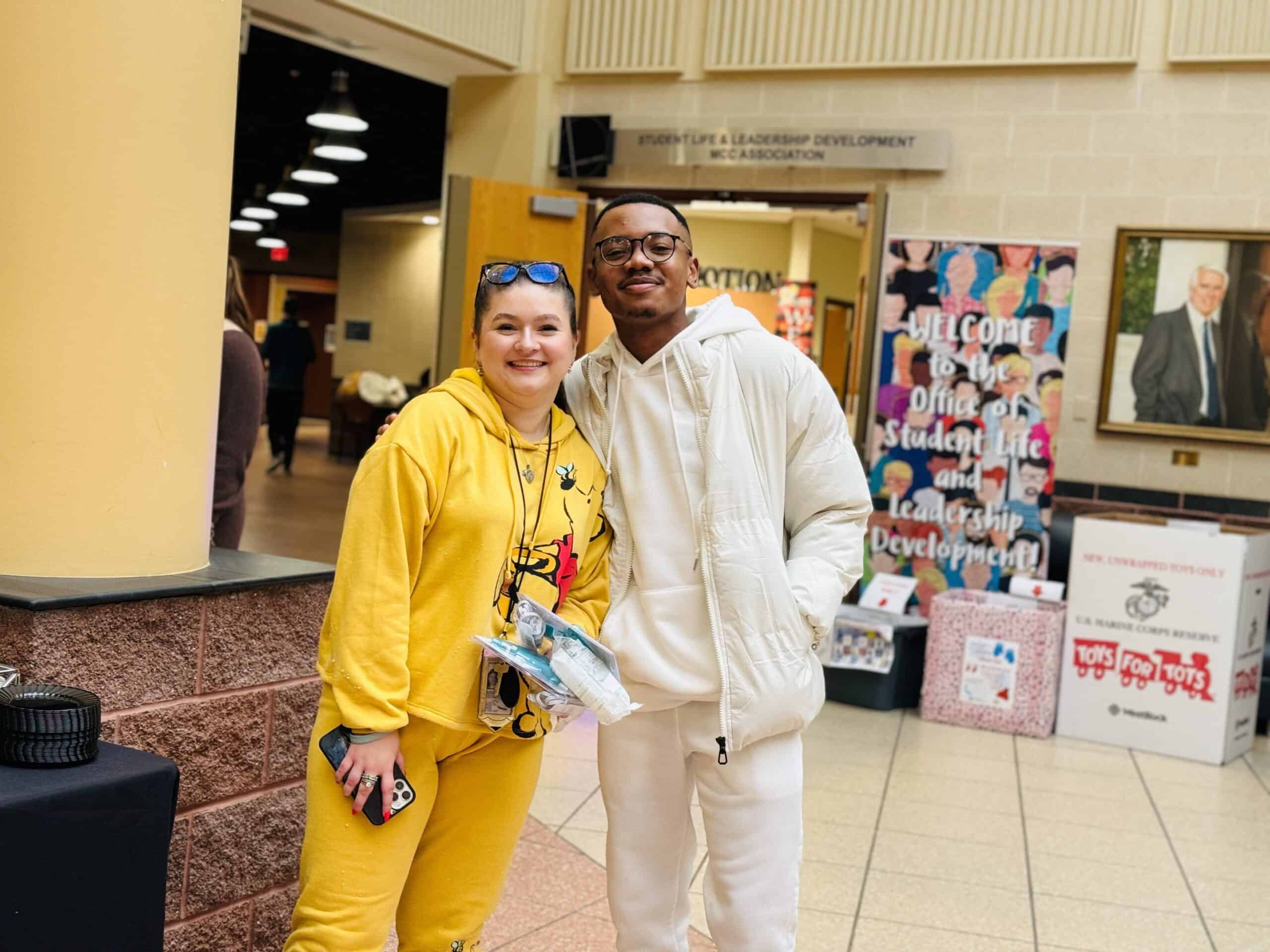
    Instead, she decided to start her higher education journey at Monroe Community College, also in Rochester, where tuition is cheaper. T, now in her second semester, has made friends with dozens of other international students at MCC, who have helped her feel less lonely being so far away from family. 

    “There are times where I don’t feel like I fit in. Or I feel alone sometimes. The most important thing is the friends that you have,” she said.

    International student enrolments have surged at US community colleges ever since the pandemic, including this fall. As community colleges host more international students, administrators are looking for ways to make them feel welcome on campuses where most students are local commuters.

    One way international students at MCC can find support is through campus life. T serves as the president of the Global Union – a student-run club for international students, immigrant students, and anyone interested in learning about other cultures. Through her role, she greets new students, helps them to overcome challenges, and organises events to help them showcase their cultures. 

    “Sometimes, you need to be around people that have the same feeling as yours. When we are in the same club with immigrants, refugees, or other international students, we feel like we fit in with each other,” T said.

    An unexpected increase

    Because of President Trump’s policies, analysts predicted a 15% drop in total international students at American colleges and universities this fall. Experts warned that the Trump administration’s near month-long pause on visa interviews, travel bans, and war against many of the nation’s most prestigious universities would harm enrolment. 

    Instead, this fall’s international student enrolment across all degree programs, including OPT, grew by 0.8%, according to the Student and Exchange Visitor Information System (SEVIS) data that the Department of Homeland Security publishes.

    Community colleges have helped to move the needle. For associate degree programs, international student enrolment increased by 9.1%, with community colleges welcoming nearly 5,500 more students than last year. Meanwhile, enrolment shrunk slightly for master’s programs and hardly changed for bachelor’s programs.

    Rather than choosing not to study in the US this fall, it seems like students are choosing different kinds of degrees or schools. That’s according to Chris Glass, director of Boston College’s higher education program, who recently analysed the latest SEVIS data.

    “If we’re to take this data at face value, the system is far more resilient than the tumultuous headlines would suggest,” Glass previously told The PIE News .

    Based on his analysis, the over 9% growth of international students at community colleges may not be a fluke. Glass argues that international students gravitate toward schools with less political spotlight, more affordable tuition, and access to opportunities after graduation. Community colleges check all of those boxes.

    MCC is hosting more international students now than before the pandemic. This fall, the campus’ international student body grew by 35%, hosting 120 students from over 30 countries.

    MCC’s international recruiting efforts for soccer, baseball, and other sports has helped to draw students from across continents, said Carly O’Keefe, MCC’s assistant director of global education and international services. The current men’s and women’s soccer team roster has a combined 34 international students.

    In addition, unlike many other community colleges, MCC has dorms. For T, attending a college with on-campus dorms was critical, since she had no family or friends in Rochester to live with.

    O’Keefe said international students at MCC bring ideas and culture from across the globe, enriching a campus where most students are local. Some local students – limited by jobs, financial constraints, or family obligations – have never traveled overseas.

    “They’re able to make friendships with people from other countries that they maybe would have never connected with otherwise,” she said.

    Finding a community through campus life 

    The wall of the Global Union office is decorated with dozens of paintings of hot air balloons containing flags, created by students to represent their countries. Colourful cloth flags and souvenirs from across the world fill the room.

    “At the time when I saw the Korean flag, I was so proud,” said Onyu Cha, a first-semester international student from South Korea studying nursing.

    Hot air balloon paintings at Global Union office. Photo: MCC Global Union

    Onyu made friends with other Koreans through campus life and through her sister, who also lives in Rochester. Recently, she and other Korean students went to her sister’s house to cook food for the holiday of Chuseok, a mid-autumn harvest festival often referred to as Korean Thanksgiving. 

    Through her role as the vice-president of the Global Union, Onyu has got to learn about the cultures of other students. Currently, the club is planning for an event to celebrate holidays from across the world, all on one day. That’s similar to last year’s Global Fusion Festival – an event in the campus atrium to celebrate the cultures of all MCC students. It featured African drummers, Ukrainian dancers, and food from across the globe.

    Judichael Razafintsalama – a student from Madagascar who graduated from MCC last May – said serving as the Global Union president allowed him to support his fellow international students.

    Having international students on campus at a community college can be really enriching to a local community

    Dr. Melissa Whatley, William & Mary

    The summer before starting his first year at MCC, Razafintsalama landed in Rochester around 2am. When he got to his dorm, he realised he had no food. The vending machines were empty, the campus’ food services were closed, and he hadn’t set up rideshare on his phone. To get groceries, he walked two hours to a Walmart and back, carrying four bags while jet lagged. 

    Now, international students come together to help the Office of Global Education provide packages of canned food, granola bars and utensils for incoming international students. 

    “We even helped two of our students move into their apartment and make sure that everything is settled after going through what I went through,” Razafintsalama said.

    Razafintsalama said he’s had the chance to teach others at MCC about his country and his culture. Most students he encountered had never met anyone from Madagascar, the island nation off the southeastern coast of Africa.

    “They usually attach it to the cartoon movie,” he said. “It’s great because I can see that people are interested in my country and to see what it actually is like.”

    Supporting international students’ social and housing needs is critical to making them feel welcome, said Dr. Melissa Whatley, an assistant professor of higher education at William & Mary University. Her research group recently released a report on international education at community colleges, finding that 82% hosted international students. 

    Whatley hopes that these colleges are providing international students with campus life opportunities and, if they don’t have dorms, are helping students to find housing.

    “Having international students on campus at a community college can be really enriching to a local community, to the extent that the community is equipped to welcome them,” she said. 

    Concerns over travel ban

    Currently, the US hosts over 1.2 million international students or recent graduates, according to SEVIS data. The dataset doesn’t distinguish between students and graduates working temporarily through Optional Practical Training (OPT). More in-depth statistics will become available once the Institute of International Education publishes its annual report later in November

    However, because of President Trump’s travel ban, some prospective international students have been restricted from studying in the US. That includes Burmese students who didn’t secure a visa before June 9

    MCC has seen an uptick in Burmese students ever since a civil war broke out in the country, interrupting higher education for many students. The war began in 2021 when military forces toppled the country’s democratically elected government. Last spring, MCC still hosted more students from Burma than from any other country, O’Keefe said.

    Now, Burma is among the 12 countries included in Trump’s travel ban, impacting all immigrant and non-immigrant visas. Seven more countries are under a partial travel ban that impacts international student visas.

    As for international enrolments at MCC? “We’ll see how the trends change over the next few semesters. I would be surprised to see such a significant level of continued growth but we can hope things at least stay stable,” O’Keefe said in an email.

    The takeaway from this fall’s enrolment data is that students’ perceptions take a long time to change, said Gerardo Blanco, academic director of the Centre for International Higher Education at Boston College. He previously told The PIE that the 0.8% international student increase revealed in SEVIS records came as a surprise, but that doesn’t mean there won’t be a decline in coming years.

    “I hope the takeaway message is not that the US is invincible, in that even hostile policies towards international students cannot change perceptions,” he said.
    Source link

  • Achieving the Dream Names 23 Colleges as Leaders in Student Success; Bellevue College Among Honorees

    Achieving the Dream Names 23 Colleges as Leaders in Student Success; Bellevue College Among Honorees

    Highlighting excellence in community college education, Achieving the Dream (ATD) has named 23 institutions as either Leader Colleges or Leader Colleges of Distinction for 2025, celebrating their commitment to student success and institutional reform. The announcement was made last week at the organization’s annual meeting in Philadelphia.

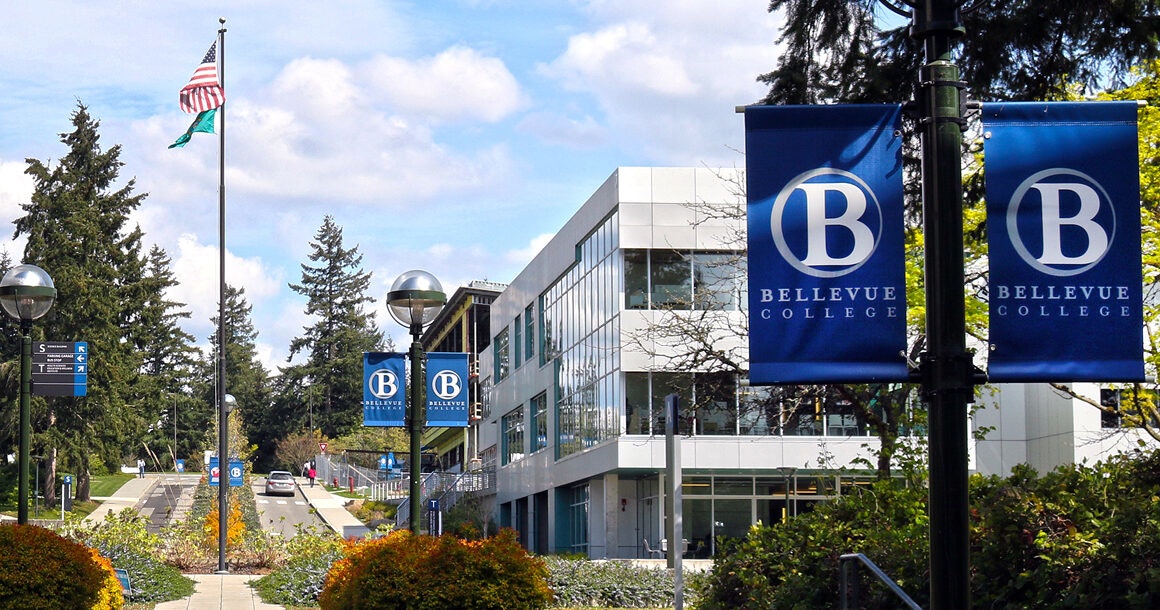
    Among the honorees is Bellevue College, which earned its first Leader College designation since joining the ATD Network in 2017.

    The honor recognizes institutions that have demonstrated measurable gains in student outcomes and fostered meaningful institutional change. Eight colleges achieved the prestigious Leader College of Distinction status, including three first-time recipients: College of Lake County (Illinois), Little Priest Tribal College (Nebraska), and Southwestern Oregon Community College.

    Bellevue College’s recognition as one of ten new Leader Colleges reflects its successful efforts to transform the student experience.

    “We are honored Achieving the Dream selected our institution as a Leader College,” said Bellevue College Provost Dr. Jess Clark. “Since joining ATD, Bellevue College has seen increased markers of student success and retention. We look forward to continuing our commitment to transforming the student experience so that all students will find success at Bellevue College.”

    The designation as a Leader College is particularly significant as these institutions play a crucial role in accelerating the adoption of effective practices across higher education. Leader Colleges are recognized for their work in whole-college reform and their innovative approaches to sharing knowledge about evidence-based reform strategies with other institutions.

    Dr. Karen A. Stout, president and CEO of Achieving the Dream, noted the importance of these recognitions.

    “These colleges exemplify excellence within the ATD Network, achieving measurable gains in student outcomes and fostering impactful change within their institutions and communities,” she said. “Their dedication to using data-informed approaches to create meaningful opportunities for students and their communities serves as a powerful example for all institutions of higher education.”

    The 2025 cohort also includes five colleges that have recertified their Leader College status: Community College of Beaver County (Pennsylvania), Highline College (Washington), Lone Star College System (Texas), Passaic County Community College (New Jersey), and Wallace State Community College (Alabama).

    ATD’s Leader College of Distinction award, created in 2018, sets an even higher bar for institutional achievement. Recipients must demonstrate improvement in three or more student outcome metrics, including completion or transfer rates, and show reduced equity gaps for at least two student groups. This year’s five returning Leader Colleges of Distinction include Chattanooga State Community College (Tennessee), Lemoore College (California), North Central State College (Ohio), Odessa College (Texas), and Pierce College (Washington).

    As a partner to more than 300 community colleges nationwide, Achieving the Dream focuses on what it calls “Whole College Transformation,” providing integrated support for everything from leadership and data analysis to equity initiatives and student support strategies. The organization’s vision centers on helping colleges become catalysts for equitable and economically vibrant communities, driving improvements in access, completion rates, and employment outcomes for all students.

    For institutions like Bellevue College, this recognition validates their ongoing commitment to student success and institutional improvement. As part of the ATD Network, these colleges continue to work toward creating meaningful opportunities that transform not just individual students’ lives, but entire communities through the power of education.

    Source link

  • Prioritizing Mental Health Support in Community Colleges: Key Data from 2023

    Prioritizing Mental Health Support in Community Colleges: Key Data from 2023

    Title: Supporting Minds, Supporting Learners: Addressing Student Mental Health to Advance Academic Success

    Source: Center for Community College Student Engagement

    The 2023 Community College Survey of Student Engagement (CCSSE) and Survey of Entering Student Engagement (SENSE) gathered essential data to guide community colleges in supporting student mental health and well-being. The surveys collected responses from 61,085 students at 149 community colleges in spring 2023 and 13,950 students at 61 community colleges in fall 2023, respectively.

    Key findings include:

    • Mental health concerns are prevalent among CCSSE and SENSE respondents. In the two weeks before taking the survey, half of CCSSE students and 47 percent of SENSE students reported feeling down, depressed, or hopeless for at least several days. Additionally, 66 percent of students in both groups felt nervous, anxious, or on edge for at least several days.
    • Approximately 26 percent of CCSSE respondents and 23 percent of SENSE respondents likely have a depressive disorder. Over half (53 percent) of students who identify with a gender identity other than man or woman have a probable depressive disorder, compared with 28 percent of women and 25 percent of men. Traditional college-age students (31 percent) and those with a GPA of C or lower (39 percent) are more likely to have a depressive disorder, compared with 19 percent of nontraditional-age students and 23 percent of students with a GPA of B or higher.
    • Overall, 32 percent of CCSSE respondents and 29 percent of SENSE respondents likely have generalized anxiety disorder. Among CCSSE students, 62 percent of those identifying with another gender likely have an anxiety disorder, in contrast to 36 percent of female and 25 percent of male students. Students identifying with two or more races saw the highest levels of generalized anxiety disorder, at 36 percent. Among SENSE respondents, traditional-age students were more likely to have generalized anxiety disorder, at 30 percent, compared to 23 percent of nontraditional-age students.
    • Over half of CCSSE respondents (56 percent) reported that emotional or mental health challenges affected their academic performance in the previous four weeks. 30 percent noted these issues impacted their performance for three or more days. Nearly two-thirds of women (63 percent) and almost half of men (47 percent) reported performance declines due to mental health issues, while 85 percent of students identifying with another gender faced academic impacts. Lower GPA students were more likely to report that mental health issues affected their academic performance.
    • Students with likely generalized anxiety disorder are twice as likely, and those with a depressive disorder are almost twice as likely, to report academic performance declines due to emotional or mental difficulties compared to students likely without these disorders.
    • 63 percent of students identifying with another gender reported that mental health challenges could lead them to withdraw from classes, compared to 39 percent of women and 29 percent of men. More than half of students with a GPA of C or lower (53 percent) stated they were at least somewhat likely to consider withdrawal due to mental health concerns, in contrast to 33 percent of students with a GPA of B or higher.
    • High percentages of students felt their college prioritizes mental health, yet about three in 10 CCSSE respondents and slightly more SENSE respondents said they wouldn’t know where to seek help if needed. Hispanic or Latino students were most likely among racial/ethnic groups to report not knowing where to turn for mental health support.
    • Over one-third of students with likely depressive or generalized anxiety disorders reported not knowing where to find professional mental health assistance if needed. Among CCSSE respondents who needed mental health support in the past year, 42 percent never sought help, with Hispanic or Latino students and men more likely than other groups to indicate they hadn’t pursued support. Approximately one-third of students with probable depressive or generalized anxiety disorders reported never seeking help.Many students cited limited resources as the main barrier to seeking mental health support. Students, especially traditional-age students and men, also frequently mentioned concerns about others’ perceptions and uncertainty about what kind of help they need.
    • Across all groups, students expressed a strong preference for in-person individual counseling or therapy over teletherapy and other support options.
    • Only 16 percent of CCSSE respondents considered it essential that their mental health provider understands their cultural background. However, students with another gender identity and Black or African American students were more likely to value culturally informed mental health support.

    Check out the full report on the CCSSE website.

    —Nguyen DH Nguyen


    If you have any questions or comments about this blog post, please contact us.

    Source link