Category: Content Development

  • Next-Gen Student Recruitment Strategies for Schools

    Next-Gen Student Recruitment Strategies for Schools

    Reading Time: 17 minutes

    The next wave of prospective students is already taking shape: Generation Alpha, born between 2010 and 2024. They’re poised to become the most digitally fluent, diverse, and tech-immersed generation in history, raised on smartphones, voice assistants, and AI from day one. By 2028, the first Gen Alpha freshmen will be setting foot on college campuses, bringing entirely new expectations for how learning happens and how schools communicate their value.

    Here’s the thing: education marketers can’t afford to wait. Gen Alpha’s habits and motivations differ sharply from Millennials or even Gen Z. In this article, we’ll unpack who Gen Alpha is, what drives their choices, and why institutions must start adapting their recruitment strategies now.

    Drawing on Higher Education Marketing (HEM)’s latest research and webinar insights, we’ll introduce our recommended “PAC” framework, Platform, Algorithm, Culture, a model designed to help schools reach Gen Alpha effectively. We’ll also explore strategies like dual-audience messaging (targeting both students and their Millennial parents), along with content tactics centered on authenticity, user-generated content (UGC), answer-first communication, and AI-ready web experiences.

    These ideas will be grounded in real-world examples, from universities using Roblox campus tours to schools experimenting with Snapchat AR lenses, and illustrated through HEM client success stories across K–12, language, and higher education sectors.

    By the end, you’ll have a clear roadmap to engage both Gen Alpha and their parents through an integrated approach that connects CRM lead nurturing, SEO, social media, and multilingual content into a cohesive next-gen recruitment strategy.

    Let’s dig into what makes Generation Alpha unique and how your institution can get ready now.

    Who Is Generation Alpha?

    Generation Alpha refers to children born between 2010 and 2024. They are the first cohort raised entirely in the 21st century, often called the first true digital natives.

    From iPads in the crib to AI assistants in the living room, Gen Alpha has never known life without touchscreens or high-speed internet. Many learned to navigate apps and streaming platforms before they could read, making technology an effortless part of everyday life.

    Early experiences with remote and hybrid learning have also shaped them. Even in primary school, they joined online video classes, used learning apps, and explored online games, giving them a comfort with digital learning that feels natural.

    Raised largely by Millennial parents, Gen Alpha is globally minded and culturally diverse. They are aware of issues like climate change and social justice, value inclusivity, and seek purpose in education.

    Their aspirations are high, and so are their expectations. They and their parents will assess the return on investment of higher education carefully. College decisions will be shared within the family, meaning recruitment messages must appeal to both the student and the parent.

    Gen Alpha’s Behavior, Media Use, and Decision Drivers

    To connect with Generation Alpha, institutions need to meet them on their terms. Let’s look at how they interact with media, information, and the factors shaping their decisions.

    1. Authenticity Over Polish

    Gen Alpha can spot inauthenticity a mile away. Surrounded by social media from birth, they value honesty over gloss. Highly produced marketing materials feel distant to them; real voices earn trust. Peer content matters more than official content, and a student’s testimonial filmed on a phone will often outperform a polished promo video. Schools that feature current students or young alumni as micro-influencers tend to resonate most. A student-led TikTok dorm tour, for instance, can do more to inspire confidence than a scripted campus video.

    1. Short-Form Video and Shared Screens


    Raised on YouTube and TikTok, Gen Alpha consumes information in quick bursts. They use short-form videos to learn, discover, and be entertained. Yet, they also share viewing time with family, watching longer videos together on smart TVs. This dual habit creates an opportunity for schools to publish family-friendly content on YouTube while using TikTok or Instagram Reels for short, high-impact storytelling.

    1. Social Means Conversational and Interactive

    Gen Alpha doesn’t just scroll; they participate. They use Snapchat for authentic chats and AR filters for creative expression. Gaming worlds such as Roblox and Minecraft double as social spaces where they collaborate and build together. This generation expects to engage, not just observe. Recruitment content should invite participation through polls, challenges, or interactive Q&As rather than simply broadcasting messages.

    1. Digital-Native, but Still Campus-Curious
      Although they are digital natives, Gen Alpha still craves real-world experiences. Campus visits remain important, but they expect them to be hands-on and immersive. They want to test a lab, attend a mini class, or pilot a drone. For them, visiting campus feels like trying on an experience to see if it fits. Schools should design events that blend physical and virtual engagement to appeal to this tactile curiosity.
    2. Instant Answers and Micro-Decisions
      This generation grew up with instant search and voice assistants. They want quick, direct answers, not lengthy explanations. They prefer content structured as questions and answers, such as “What scholarships does this college offer?” followed by a concise response. This approach supports both their research style and the shift toward AI-driven search engines that prioritize clear, digestible information.
    3. Values-Driven and Proof-Oriented
      Gen Alpha deeply cares about social impact. Issues such as sustainability, inclusion, and mental health influence their decisions. However, they don’t take claims at face value. They expect evidence through authentic stories, real programs, and visible results. Institutions that demonstrate genuine action, rather than marketing slogans, will earn their trust.

    Bottom line: Gen Alpha lives online but thinks critically. They move fast, multitask across screens, consult their parents, and expect authenticity at every turn. To earn their attention and trust, institutions must create marketing that is honest, interactive, and evidence-based.

    Why Institutions Must Start Preparing Now

    Why should institutions start preparing now? It might seem like there’s still time before Generation Alpha reaches college. The oldest are only about 15 or 16 today, but the time to prepare is now.

    The Oldest Are Already in High School

    Those born in 2010 are entering the college research phase alongside their Millennial parents. By 2028, they’ll be enrolling in universities. For K–12 private schools, Gen Alpha isn’t the future; they’re your current students. Enrollment strategies, open houses, and outreach events already need to align with their digital-first expectations.

    Strategy Shifts Take Time

    Building authentic social channels, redesigning content ecosystems, and integrating CRM workflows can’t happen overnight. Starting now means time to test and refine. Schools experimenting with TikTok, YouTube Shorts, or AI-powered content today will lead the field when Gen Alpha applications surge.

    Gen Z Is the Bridge

    Current college students have already pushed institutions to modernize through video storytelling and social media. Those adaptations laid the groundwork. Now, Gen Alpha’s shorter attention spans and AI fluency require schools to go further. If you’ve successfully reached Gen Z, you’re ahead. If not, there’s catching up to do.

    Early Adopters Will Stand Out

    Institutions that embrace next-gen tactics, from interactive chat tools to UGC-driven campaigns and dynamic FAQ hubs, will gain a visible edge. These schools appear more innovative and student-centered to both teens and parents.

    Parent Expectations Are Rising Too

    Millennial parents expect quick, personalized communication. Text alerts, Instagram Live Q&As, and ROI-focused content all resonate. Preparing now allows you to fine-tune messaging for both audiences: students and parents.

    In short, every admissions cycle will include more Gen Alpha students. The strategies that worked for Millennials and Gen Z must evolve now, and Higher Education Marketing (HEM) is ready to help institutions future-proof recruitment.

    HEM’s Next-Gen Recruitment Strategies: The PAC Framework and Beyond

    At Higher Education Marketing (HEM), our research into Generation Alpha’s habits has led to the development of the PAC Framework, short for Platform, Algorithm, Culture. This model helps institutions design content and campaigns that genuinely connect with Gen Alpha and get noticed in today’s media environment. Around PAC, we integrate complementary tactics such as dual-audience messaging, authenticity systems, answer-first content, immersive campus experiences, and AI search optimization.

    1. Platform: Go Where Gen Alpha Is

    It sounds simple, yet many institutions still miss this step. “Platform” means existing where Gen Alpha spends their time, on platforms like TikTok, YouTube, Snapchat, or even Roblox. Don’t just create accounts; learn how each ecosystem works. What’s trending? What humor or language feels native? Explore these platforms like a student would. Then decide how your institution should engage, through creator collaborations, banner placements, or sponsored events. The key is to meet students where they are, not where you’re comfortable.

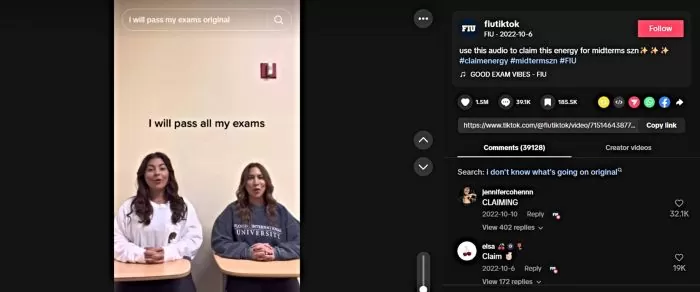
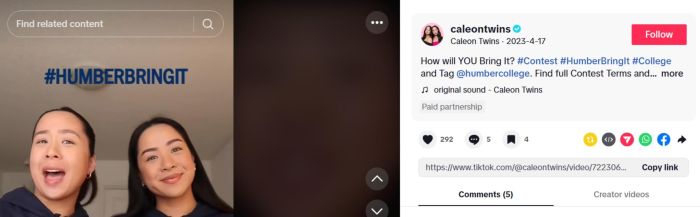
    Example: Florida International University (USA): FIU has adopted TikTok to connect with Gen Alpha, where they spend their time. FIU’s social team went viral by leveraging a trending audio challenge on TikTok aimed at students hoping to excel on their midterms. The result was a TikTok that garnered over 10 million views and 1.46 million engagements, demonstrating how being present on Gen Alpha’s favorite platforms can massively boost reach.

    HEM Image 2

    Source: TikTok

    2. Algorithm: Design for Distribution

    Algorithms decide who sees your content. Success depends on understanding how each platform’s system rewards engagement. On TikTok, videos with high watch time and early comments rise quickly. On Google, structured Q&A pages and strong metadata perform best. Research shows attention spans among younger audiences now average two to three seconds. Lead with a hook, such as a bold question, emotion, or relatable visual. Keep captions tight and content shareable. Treat the algorithm like a person you need to impress fast.

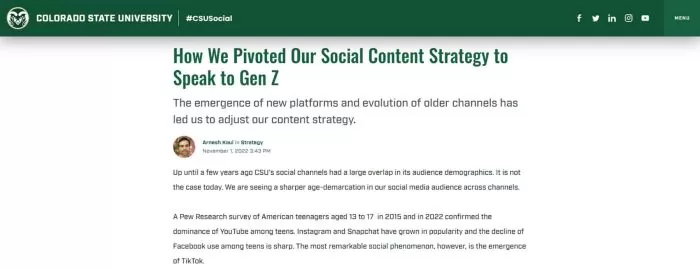
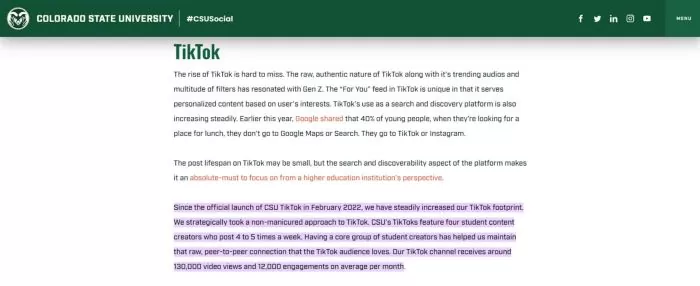
    Example: Colorado State University (USA): CSU has strategically designed content to please each platform’s algorithm and grab attention within seconds. Seeing the rise of TikTok’s algorithm-driven “For You” feed, CSU shifted heavily to short-form vertical video and front-loaded content with hooks. The social team launched an official TikTok in 2022 with a “non-manicured” approach: four student creators post 4–5 raw, authentic videos per week. This consistency and emphasis on trending audios and quick, relatable hooks led to about 130,000 video views and 12,000 engagements per month on CSU’s TikTok. By tailoring content format (e.g., snappy cuts, engaging captions) to each platform’s algorithmic preferences, CSU ensures its posts get maximum distribution in Gen Alpha’s feeds.

    HEM Image 3HEM Image 3

    Source: Colorado State University

    3. Culture: Co-Create and Stay Current

    Culture is where authentic connection happens. Gen Alpha responds to real voices, humor, and values. Collaborate with students to produce takeovers, TikToks, or short vlogs. Reflect diversity and align with current conversations. Join cultural moments carefully, whether that’s referencing a popular meme or spotlighting sustainability initiatives. Imperfection, such as a slightly unpolished student video, signals truth and authenticity.

    As HEM puts it, algorithms get you seen, but culture gets you remembered. Using PAC as a creative checklist ensures your marketing is visible, relevant, and real.

    2. Craft Dual-Audience Messaging (Students + Parents)

    Because Generation Alpha’s education decisions will be co-driven by their Millennial parents, Gen Alpha student recruitment messaging must speak to both audiences at once. HEM’s approach, dual-audience messaging, ensures every touchpoint, from websites to ads, connects with both teens and parents in harmony.

    For Students

    Gen Alpha students care about community, creativity, and experience. They’re asking, “Will I fit in? Will this be exciting?” Highlight student life, clubs, and hands-on learning opportunities through visuals and peer perspectives. Use quotes or short video clips from current students discussing campus life or real projects. Peer voice matters more than institutional formality; a student testimonial will always carry more weight than a dean’s welcome.

    For Parents

    Millennial parents want reassurance. Their questions are about safety, credibility, and ROI. Showcase graduation rates, career outcomes, accreditation, and alumni success stories. Include details on support services, mental health resources, and campus security. Demonstrating both value and care builds confidence.

    How to Integrate Both

    Every major recruitment asset should serve both audiences. You can segment sections (“For Students” vs. “For Parents”) or blend them seamlessly. For instance, a video might open with student testimonials, transition into outcomes and parental perspectives, and end with a message that resonates with both.

    Action Step: Audit your current materials for balance. Ensure students feel inspired and parents feel assured.

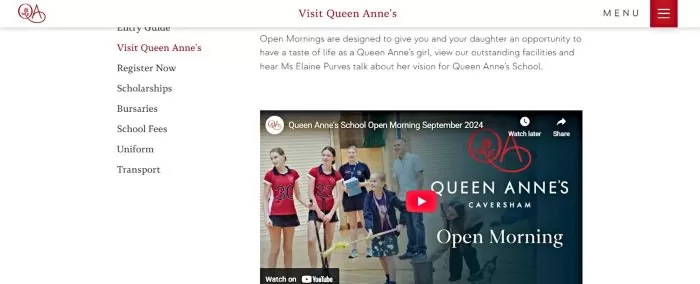
    Example: Queen Anne’s School (UK): This independent girls’ school in England structures every recruitment touchpoint to speak to both Gen Alpha students and their millennial parents in tandem. For example, Queen Anne’s hosts Open Mornings that explicitly cater to “you and your daughter.” During these events, girls sample classes and campus life (answering the student’s “Will I have fun and fit in?”), while parents tour facilities and hear the Head’s vision for the school (addressing the parents’ concerns about values and outcomes). The school offers a wide range of visit options – from personal family tours to student “taster days” where 11–13 year olds spend a day on campus – ensuring both audiences are engaged.

    HEM Image 4HEM Image 4

    Source: Queen Anne’s School

    3. Establish an “Authenticity System” (UGC and Influencers)

    For Generation Alpha, authenticity is the ultimate trust signal. To deliver it consistently, HEM recommends building an Authenticity System, a structured process that continuously produces genuine, student-driven content.

    User-Generated Content (UGC) Cadence

    Plan for a steady flow of unpolished, real moments. Repost student photos or short TikToks weekly to show campus life through their eyes. Campaigns like #MyCampusMondays, where students share everyday snapshots, keep your content authentic and current. The goal is to make sure that whenever a Gen Alpha prospect visits your social channels, they see real students, not PR gloss.

    Student Ambassadors and Creators

    Empower students to take part in marketing. Invite ambassadors or micro-influencers to run Instagram takeovers, film vlogs, or stream events. These voices carry credibility because they feel peer-to-peer, not top-down. As HEM research shows, student creators can dramatically increase engagement by making your institution feel accessible and alive.

    Authentic Voice and Visuals

    Encourage content that sounds natural and looks real. A video filmed on a phone, with casual language or inside jokes, often performs better than a polished shoot. Include candid photos or unscripted clips, authenticity over perfection every time.

    Integrate Authentic Content Across Channels

    Don’t let UGC live in isolation. Embed student testimonials, quote cards, or video clips directly on program or FAQ pages. Pairing factual info with real student stories creates a persuasive one-two punch.

    In short, authenticity shouldn’t happen by accident, it should already be built into your system.

    Example: Colorado State University (USA): CSU has built a systematic pipeline for authentic, student-driven content. After officially launching its TikTok, CSU deliberately adopted a “raw” content style – no slick ads, just students with smartphones. It set up a core group of student content creators who post unfiltered clips multiple times a week, giving a continuous stream of real campus moments. In addition, CSU regularly reposts user-generated content from students: from dorm room mini-blogs to everyday campus snapshots. Every week, prospective Gen Alpha students checking CSU’s socials will see new posts by their peers, not just the PR team. By baking student UGC into the content calendar, CSU continuously projects an honest, peer-to-peer voice that Gen Alpha trusts.

    HEM Image 5HEM Image 5

    Source: Colorado State University

    4. Embrace Answer-First Content and AI Search Readiness

    Generation Alpha searches differently. They ask full questions and expect immediate, concise answers. To connect with them and perform well in AI-driven search, schools need an answer-first content strategy.

    Build Q&A Hubs

    Create web pages organized by questions and answers, not long paragraphs. For example:

    • What hands-on experiences will I get in the Nursing program?
    • What are the career outcomes for graduates?
      This structure helps both humans and AI bots find what they need quickly. HEM calls these “answer-first hubs,” expanded FAQ-style pages covering dozens of micro-questions. Use data from inquiries and chats to identify what prospects ask most often.

    Add Video and Micro-Content

    Gen Alpha prefers short, visual responses. Embed 30–60 second video answers from students or staff directly on your pages. A student selfie explaining “What’s the first-year experience like?” feels more authentic than text alone. For parents, include short clips addressing safety or support topics. Repurpose each Q&A across platforms like YouTube Shorts or Reddit for added reach.

    Implement Structured Data

    Make content machine-readable. Adding FAQ schema markup tells Google and AI assistants what each Q&A covers, improving visibility in featured snippets and AI chat results. HEM research shows this can increase AI-driven visibility by up to 30%.

    Write for Voice and Natural Language

    Use conversational phrasing such as “How do I apply for financial aid?” instead of standard titles. Ensure each answer short but complete, ideal for AI summaries or voice assistants. Schools already applying this approach have seen measurable boosts in organic traffic and “People Also Ask” placements.

    Bottom line: think like an answer engine. Gen Alpha asks questions, so make sure your content answers first.

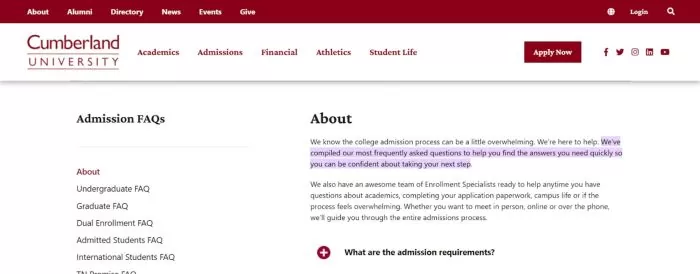
    Example: Cumberland University (USA): Cumberland makes information instantly accessible by structuring its admissions content around questions and direct answers. Its website features a comprehensive Admission FAQs hub that compiles “our most frequently asked questions to help you find the answers you need quickly”. Prospective students and parents can click categories like Undergraduate, Graduate, International, etc., and find dozens of bite-sized Q&As (e.g., “What are the application requirements?”, “Is there housing for freshmen?”). Each answer is concise and written in plain language – perfect for Gen Alpha’s tendency to ask full questions in Google or AI assistants. By adopting this answer-first approach (instead of burying info in long paragraphs), Cumberland not only improves user experience but also boosts its visibility on search engines. Many of its FAQ entries use structured data markup, so they often appear as featured snippets or “People Also Ask” results on Google.

    HEM Image 6HEM Image 6

    Source: Cumberland University

    5. Treat Your Campus as a Product: Demos and Immersive Experiences

    For Generation Alpha, choosing a school feels like choosing a lifestyle brand. They want to experience it before committing. That’s why HEM recommends marketing your campus like a product demo, through in-person and virtual experiences that let students and parents “test-drive” what you offer.

    Creator-Hosted Events

    Make campus events hybrid and interactive. Invite student creators to livestream open houses or campus days on TikTok, YouTube, or Instagram Live. A student host with a GoPro or phone camera gives the experience authenticity and energy. Let online viewers ask questions in real time while seeing dorms, labs, or the dining hall rush. It’s immersive, engaging, and feels like hanging out with a trusted peer.

    Hands-On Campus Trials

    When prospects visit in person, let them participate. Replace passive tours with interactive demos, mini labs, culinary workshops, or creative challenges. Some schools have gamified tours, turning them into scavenger hunts or student-led challenges. Participation builds emotional connection and makes visits memorable.

    Augmented Reality (AR) and Virtual Worlds

    Add AR filters or lenses during events to blend play with information. Imagine scanning a building to reveal fun facts or seeing your mascot in AR. Schools like Kent State University have used Snapchat AR lenses to boost engagement while lowering recruitment costs.

    Take it further by creating virtual campuses in platforms like Roblox or Minecraft. Students can explore, play, and imagine life at your school long before applying.

    Use Existing Tools

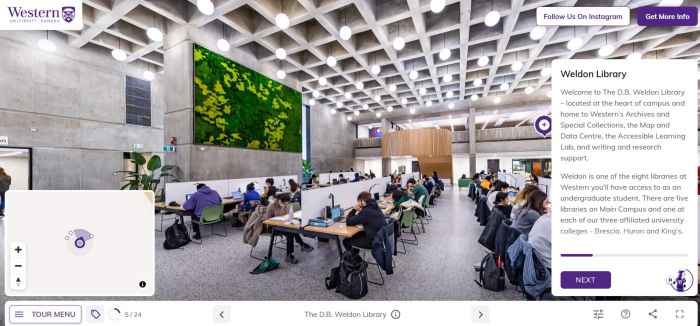
    360° tours and virtual events on platforms like YouVisit or CampusTours make immersion easy.

    The goal is to let Gen Alpha see themselves on campus. When they can explore, touch, and interact, even virtually, they’re far more likely to enroll.

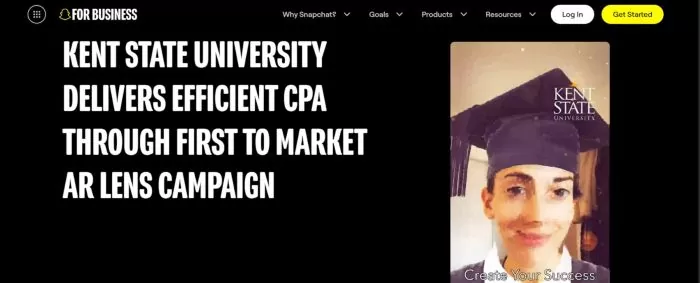
    Examples: Kent State turned its campus into an interactive product demo via augmented reality on Snapchat. In a pioneering campaign (the first of its kind in higher ed), Kent State built a custom AR lens that let prospective students virtually “try on” a piece of the college experience – in this case, placing a Kent State graduation cap on their heads, tassel and all. Users could move and see the tassel shake, and with one tap, were prompted to “apply to the university” right from Snapchat. This immersive lens was deployed to Snapchatters aged 16–18 in Kent State’s key recruiting regions. The results were astounding: engagement soared, and the AR campaign achieved a cost-per-application 24% lower than the university’s goal.

    HEM Image 7HEM Image 7

    Source: Snapchat

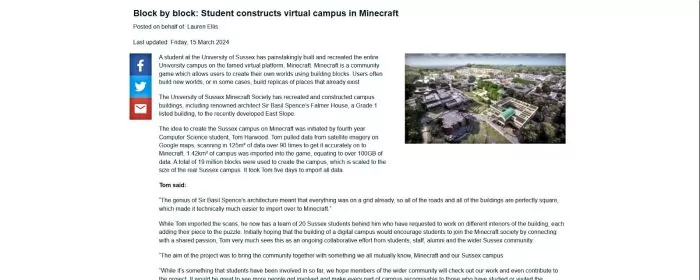
    University of Sussex (UK): At Sussex, students themselves have helped create a virtual campus that anyone can explore – effectively offering a perpetual, gamified open house. In 2024, a Sussex Computer Science student led a project to recreate the entire university campus in Minecraft, block by block. Using satellite data, the team imported ~1.4 km² of campus into the game (over 19 million blocks), achieving a 1:1 scale replica of Sussex’s buildings and grounds. Now, a group of 20+ students (and even alumni) is collaboratively adding interiors and details to bring it fully to life.

    HEM Image 8HEM Image 8

    Source: University of Sussex

    6. Integrate CRM, SEO, Social Campaigns, and Multilingual Content

    Creating next-gen content for Generation Alpha is only half the battle. To convert attention into enrollment, schools need to align these tactics with the systems that power modern digital marketing. Here’s how HEM integrates CRM, SEO, social media, and multilingual strategy into a single recruitment engine.

    CRM for Lead Nurturing

    A robust education CRM is essential for tracking Gen Alpha inquiries and engaging them across multiple touchpoints—social DMs, event sign-ups, web forms, and more. Automated workflows can send personalized follow-ups instantly, such as a welcome video from a student ambassador or a link to a virtual Q&A. HEM often implements Mautic or HubSpot to manage this process. The result: faster responses, stronger engagement, and less manual work. Segment Gen Alpha students and their parents into complementary streams—student-life content for one, academic and ROI-focused messaging for the other.

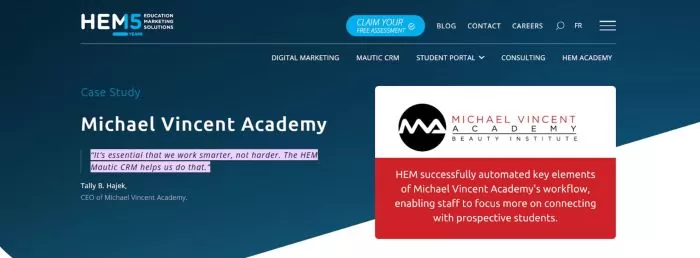
    Example: Michael Vincent Academy: Michael Vincent Academy, a private career school in Los Angeles, partnered with HEM to deploy a customized Mautic CRM for student recruitment. “It’s essential that we work smarter, not harder. The HEM Mautic CRM helps us do that,” said Tally B. Hajek, the academy’s CEO. HEM’s CRM solution automated key marketing workflows (such as follow-ups with prospective students) and provided reports to track lead progress and team activities. The system also included a lead-scoring mechanism to identify and prioritize high-value leads, ensuring staff focus on serious, good-fit applicants. As a result, core recruitment processes became automated, allowing the admissions team to spend more time building personal connections with prospects.

    HEM Image 9HEM Image 9

    Source: Higher Education Marketing

    SEO and Content Clusters

    All that great content needs visibility. Use SEO to make it discoverable through optimized site structure, keyword strategy, and internal linking. Develop content clusters, interconnected pages and blogs built around key topics, to boost authority. HEM’s SEO overhauls have helped clients like Cumberland College achieve double-digit growth in organic traffic. Technical SEO, schema markup, and fast mobile performance are nonnegotiable for Gen Alpha’s on-demand expectations.

    Social Media Campaigns

    Meet Gen Alpha where they live: TikTok, YouTube, Snapchat, and Instagram. Blend organic storytelling with paid targeting. Use TikTok Spark Ads or Snapchat placements to amplify authentic student content that already performs well. Combine this with parent-focused Facebook and Google campaigns for a full-funnel strategy. HEM’s campaign for Queen Anne’s School used this dual approach, improving conversion rates from inquiry to enrollment.

    Multilingual and International Reach

    Gen Alpha is global. Translate or localize key pages and ads to reach families in multiple languages. Include subtitles, translated summaries, and multilingual SEO to capture diverse search traffic. HEM’s work with Wilfrid Laurier University demonstrated that localized messaging in Portuguese and Spanish drove stronger ROI in international markets.

    Integrating these elements (CRM, SEO, social, and multilingual content) creates a seamless ecosystem that attracts, nurtures, and converts Gen Alpha prospects efficiently. It’s how institutions move from generating attention to generating results.

    Actionable Takeaways for Reaching Gen Alpha

    Generation Alpha may still be young, but the time to reach them is now. To connect authentically, schools must meet them where they are and communicate in ways that feel human, immediate, and real.

    Be present on the platforms they love, such as YouTube, TikTok, Snapchat, and even gaming spaces, featuring student creators who speak their language. Empower current students and recent graduates to share their stories, building trust through authenticity. 

    Balance messaging for both students and parents, addressing excitement and reassurance in equal measure. Adopt an answer-first content model using structured FAQs and schema to increase visibility in AI and voice search. Treat campus tours like product demos, creating interactive, hands-on, or virtual experiences that bring your institution to life. 

    Finally, measure what matters by tracking engagement, conversions, and insights from data to refine continuously. Above all, stay authentic and adaptable. The institutions that start now will lead the next generation of recruitment success.

    Frequently Asked Questions

    Question: Who is Generation Alpha?

    Answer: Generation Alpha refers to children born between 2010 and 2024. They are the first cohort raised entirely in the 21st century, often called the first true digital natives.

    Question: Why should institutions start preparing now?

    Answer: Institutions must start preparing now because Generation Alpha is already entering the college decision phase, and adapting strategies early allows schools to refine digital, authentic, and parent-inclusive recruitment approaches before their enrollment surge.


    Source link

  • 10 Proven School Marketing Ideas to Boost Enrolment in 2025

    10 Proven School Marketing Ideas to Boost Enrolment in 2025

    Reading Time: 16 minutes

    Competition for students has never been tougher. With rising parent expectations and limited budgets, school marketing ideas need to do more than get attention. They have to inspire trust and drive enrolment.

    At its core, school marketing includes every effort your institution makes to strengthen brand visibility and attract families. Today’s parents research online, compare schools carefully, and look for authenticity at every touchpoint.

    That’s why the most successful private schools are shifting toward creative, data-driven marketing strategies that meet families where they are. The goal isn’t just to promote your programs; it’s to tell your story in a way that highlights your school’s true value, whether that’s academic excellence, a close-knit community, or innovative extracurriculars.

    So how can your school stand out? Through inbound marketing, strategies that pull families in rather than push messages out. Inbound marketing builds trust by being genuinely helpful: answering parents’ questions, showcasing real student stories, and creating an online experience that feels personal and sincere.

    Even with modest resources, schools that use inbound methods see stronger engagement and higher enrolment.

    In this guide, we’ll break down 10 proven school marketing ideas to help boost private school enrolment, from optimizing your website and social channels to using testimonials, events, and storytelling that connect on an emotional level.

    Struggling with enrollment?

    Our expert digital marketing services can help you attract and enroll more students!

    1. Create a High-Quality, SEO-Optimized Website

    Your school’s website is your digital front door, the first real impression most families will have of your community. It’s where curiosity turns into consideration, so design and usability matter. A great school website should feel both professional and personal: clean visuals, simple navigation, and all the essentials easy to find, such as tuition, programs, admissions steps, and contact details.

    But here’s where many schools fall short: visibility. Even the most beautiful site won’t help if parents can’t find it on Google. That’s where search engine optimization (SEO) comes in. Most families begin their search online, typing things like “best private schools near me” or “bilingual schools in Toronto.” To show up for those queries, your site needs relevant keywords, descriptive titles and meta tags, and fast load times.

    Localization also helps. If your school attracts families across regions, tailor content by geography. And don’t stop at information. Your website should engage visitors visually and emotionally. Use dynamic photos and videos of real students, candid campus moments, and parent or alumni testimonials to bring your story to life. Clear calls to action: Book a Tour, Request Info, Apply Now, guide families naturally toward the next step.

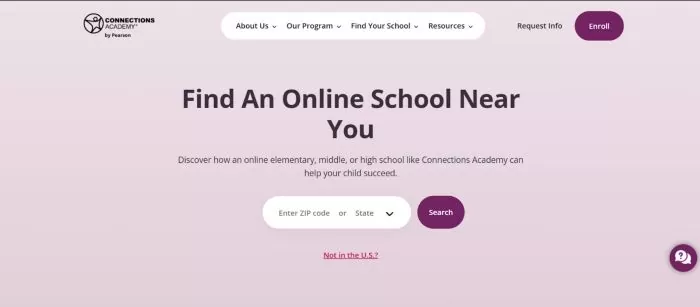
    Example: Connections Academy (K–12 Online Public Schools): This online school network uses a geo-targeted approach on its site to connect families with their nearest program. A “Find Your School” tool routes visitors to state-specific pages based on ZIP code, ensuring that parents quickly find relevant information like curricula and enrolment steps for their locality. By organizing content by region and using local keywords (e.g., Georgia Connections Academy), the school boosts its presence in local search results.
    HEM Image 2HEM Image 2

    Source: Connections Academy

    Finally, make sure it’s mobile-first. Parents are browsing between meetings or from the car. A responsive, regularly updated website signals not only professionalism but also vitality, proof that your school is active, thriving, and ready to welcome new families.

    2. Develop Valuable Blog Content and Resources

    If your website is the front door, your blog is the conversation that happens once families walk in. It’s your chance to build trust, show expertise, and let your school’s personality shine.

    Content marketing works because it educates while it engages. Blog posts, news stories, or downloadable guides can position your school as a thought leader on topics parents actually care about. From how to choose the right private school to how your teachers nurture student confidence. Every post is also an SEO opportunity: each new article gives Google another reason to show your site to searching parents.

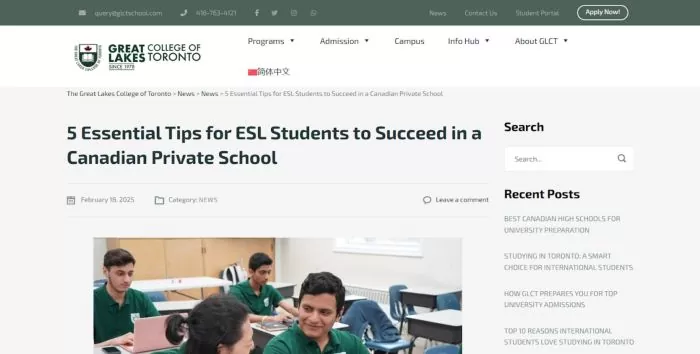
    Example: Great Lakes College of Toronto (Private High School, ON): GLCT’s blog targets the needs of international students and parents. The school regularly publishes practical articles, from “5 Essential Tips for ESL Students to Succeed in a Canadian Private School” to guides on university admissions. Each post provides valuable advice (e.g., study strategies, application how-tos) while naturally highlighting GLCT’s supportive programs. By answering real questions (like how to improve English or navigate applications) in its content, GLCT attracts the right audience via SEO and builds trust.

    HEM Image 3HEM Image 3

    Source: GLCT

    Here’s the key: write content that answers parents’ real questions and reflects your school’s strengths. End each post with a next step: Book a Tour, Download Our Admissions Guide, or Join Our Mailing List.

    The result? A blog that informs while also converting curiosity into connection.

    3. Leverage Social Media to Build Community

    In 2025, a strong social media presence is essential. Parents (especially millennials) and students spend hours every day scrolling through platforms like Facebook, Instagram, YouTube, and TikTok. The majority of students say they use social media when researching schools. For K–12 families, these platforms are often their first window into your community, and leveraging them effectively is one of the most effective school marketing ideas.

    Here’s the thing: social media is where your school’s story comes alive. Share moments that reflect your culture: a championship win, a robotics project, a candid classroom laugh. Posts with real photos and videos consistently outperform text-only updates, and they help families visualize what life at your school feels like.

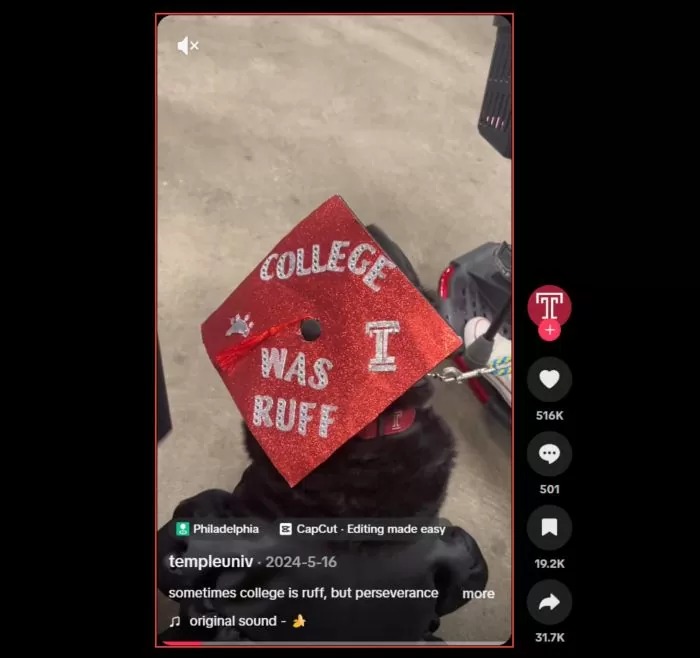
    Example: Temple University (Higher Ed, PA): Temple’s social media team has achieved award-winning success by sharing vibrant, authentic content that resonates with students and parents alike. One viral example was a TikTok video of a service dog at graduation, which garnered 3.2 million views and helped Temple achieve a top TikTok engagement rank. More importantly, Temple treats social media as a storytelling and outreach platform: posts across TikTok, Instagram, Facebook, and YouTube showcase campus life and student achievements in ways that help prospective students “see themselves” at Temple.

    HEM Image 4HEM Image 4

    Source: TikTok

    Consistency and tone matter just as much as creativity. Keep your voice genuine and community-driven, never overly promotional. Use a content calendar to maintain regular posting and highlight diverse voices from your community. Finally, don’t overlook targeted ads. Platforms like Meta and TikTok let you reach local parents by age, location, or interests, which makes them perfect for promoting open houses or admissions deadlines.

    But above all, remember this: social media isn’t just about reach, it’s about connection. When families see a living, breathing community on your feeds, they’re provided the opportunity to imagine being part of it.

    4. Implement Email Marketing & Lead Nurturing Campaigns

    How do you market a private school? By combining digital strategies like SEO, email nurturing, and social media with in-person tactics like open houses and community events. Tailor messaging to families’ needs, use authentic storytelling, and provide clear calls-to-action to drive inquiries and enrolment.

    When a prospective family fills out an inquiry form, downloads a guide, or subscribes to your newsletter, they’ve taken the first step, but they’re not ready to apply yet. That’s where email marketing and lead nurturing come in.

    Most families need five or more touchpoints before they decide to apply or enrol. The key is staying in touch consistently, offering value each time, not just reminders to “apply now.”

    Start by segmenting your email list. Group families by grade level, interests, or where they are in the admissions process, from first inquiry to scheduled tour. This allows you to send messages that actually matter. A parent curious about scholarships will appreciate updates about financial aid or payment plans. Another, interested in athletics, will engage more with stories about your latest championship or coaching philosophy. Modern CRM tools make this kind of personalization simple.

    Effective lead nurturing happens through a drip campaign, a planned series of emails spaced over several weeks. The sequence might look like this:

    1. A thank-you email and link to your virtual tour.
    2. A week later, a student or parent testimonial.
    3. Then, an update about upcoming events or key deadlines.

    Track metrics like open and click-through rates to see what resonates. If engagement dips, tweak your subject lines or timing.

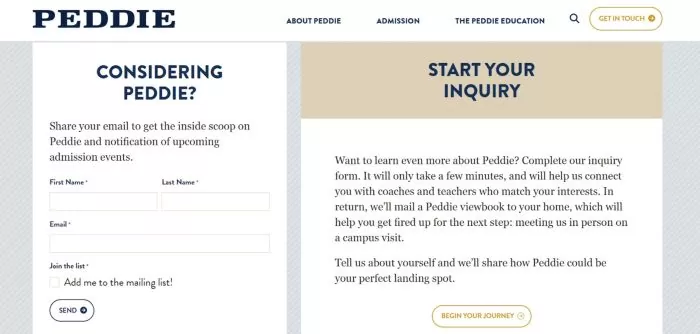
    Example: Peddie School (Boarding High School, NJ): Peddie personalizes its follow-up emails based on each family’s interests. When inquiries come in, the admissions CRM captures details like academic or athletic interests. The school then connects prospects with relevant community members (coaches, teachers) and sends tailored content. For instance, a family noting interest in basketball might receive an email invite to a game and a note about Peddie’s sports facilities. This segmented approach (made clear on Peddie’s inquiry form, which promises to “connect you with coaches and teachers who match your interests”) makes families feel understood and keeps them engaged. A series of drip emails: thank-yous, student stories, deadline reminders, then nurtures each lead from initial inquiry to campus visit to application.

    HEM Image 5HEM Image 5

    Source: Peddie School

    Finally, make your emails two-way. Encourage replies, invite questions, and link to live chats or calls. When families feel heard and guided rather than “marketed to,” they’re far more likely to see your school as their future community.

    5. Use Video Marketing to Showcase Your School’s Culture

    If a picture is worth a thousand words, a video can tell the whole story. Video marketing gives prospective families an inside look at your school,  its energy, community, and heart, in a way that text simply can’t. A great video captures what it feels like to be on campus, walking through halls, meeting teachers, or cheering at a game. It builds an emotional bridge between your school and the viewer, and harnessing it properly is another of the more impressive marketing ideas for schools

    Video doesn’t have to be flashy to work. Start small. Create short, story-driven clips: student testimonials, “day in the life” vlogs, quick faculty interviews, or highlight reels from school events. Keep them engaging and under three minutes when possible. Post across platforms: your website, YouTube, Instagram, even TikTok. Videos with strong storytelling and emotional authenticity consistently build trust and drive inquiries.

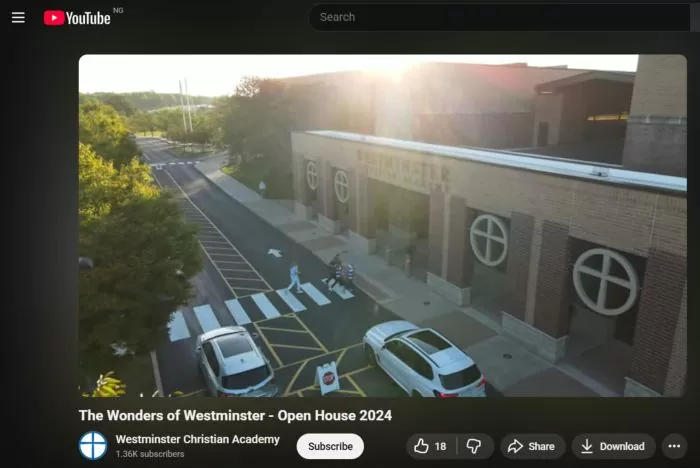
    Example: Westminster Christian Academy (Day School, MO): Westminster created a cinematic short film called “The Wonders of Westminster” to encapsulate its school spirit. Premiered at an open house event to 550+ attendees, this nine-minute video weaves together stunning visuals of campus life with heartfelt student and teacher narratives. Beyond this feature film, Westminster produces numerous short clips: alumni testimonials, “day in the life” vlogs, and event highlight reels, all shared on YouTube and social media. These videos let viewers virtually walk the halls and imagine themselves as part of the community.

    HEM Image 6HEM Image 6

    Source: YouTube

    Authenticity is what matters. Even a smartphone-shot interview can outperform a high-budget ad if it’s real, relatable, and human. Use live streams, student-led content, and candid storytelling to show your school’s true culture, and let families see themselves as part of it.

    6. Optimize Your Local Presence (Google Profile & Reviews)

    When parents search “private schools near me,” your school should be one of the first names they see, complete with photos, reviews, and all the right details. That’s where your Google Business Profile (formerly Google My Business) comes in. Think of it as your school’s digital front door.

    Here’s what to do: claim your profile, verify it, and fill out every field: address, phone number, website, hours, and category. Upload high-quality photos of your campus, classrooms, and events. An optimized Google profile gives prospects “an easily digestible snapshot of your institution and makes it much easier for your target audience to find you” online. Schools that post regularly and add fresh visuals tend to appear more prominently in local search results and get more clicks.

    Next, turn your attention to reviews. Parents trust other parents. Encourage satisfied families to share their experiences on Google, and respond to every review (good or bad) with professionalism and gratitude. It shows transparency and genuine care.

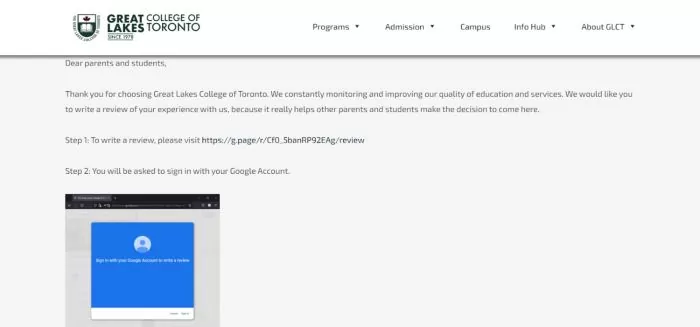
    Example: Great Lakes College of Toronto (ON): GLCT leverages its happy families to boost local and global reputation. On its site, GLCT prominently links to external review platforms and showcases testimonials from international graduates. In fact, GLCT encourages parents to share their experiences on Google and Facebook, knowing that “parents trust other parents.” The school provides step-by-step instructions (via a dedicated page) on writing a Google review for GLCT, making it easy for busy parents to post feedback. By managing its online presence through accurate info on Google, active responses to every review, and abundant testimonials, GLCT ensures that when families search “best international high school Toronto,” they not only find GLCT but also see proof of its quality through peer reviews.

    HEM Image 7HEM Image 7

    Source: GLCT

    In short, managing your local presence is one of the simplest, most powerful enrolment tools you have. When families see accurate information, warm reviews, and vibrant imagery, your school instantly feels credible and worth exploring.

    7. Host Open Houses and Community Events (Virtual & In-Person)

    There’s nothing quite like seeing a school in action. Open houses, school tours, and community events let families feel what your school is really about. The energy in classrooms, the warmth of the community, the values that guide every interaction. That experience often does more to drive enrolment than any ad campaign ever could.

    Today, the most effective schools blend in-person and virtual options. A well-run virtual open house allows busy or distant parents to attend from anywhere, while in-person events create the emotional connection that seals decisions. The key is to make every visit interactive, structured, and personal.

    Start with a short welcome presentation from your head of school, followed by Q&A panels with teachers and students. Offer guided tours — physical or via livestream — and create themed “stations” where families can explore specific programs like arts, athletics, or STEM. Virtual attendees? Use breakout rooms or session links so they can choose what interests them most.

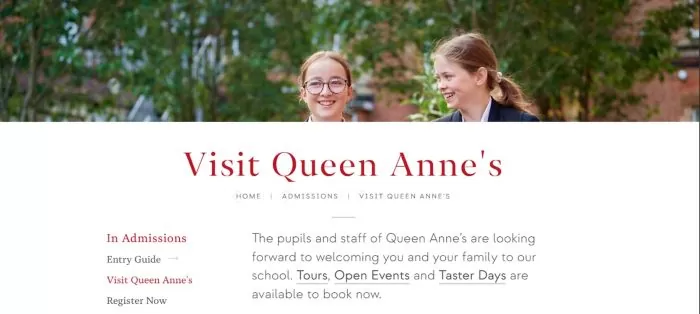
    Example: Queen Anne’s School (Boarding, UK): Queen Anne’s offers a wide range of visit opportunities to fit every family’s needs. They host large Open Morning events each term (e.g., a Friday or Saturday with campus tours, student panels, and the Head’s welcome) and personal “bespoke” tours by appointment. For students, Queen Anne’s runs Taster Days: full school days where prospective girls join real classes, meet future classmates, and even try boarding for a night. This flexibility ensures that whether a family is local or overseas, busy weekdays or only free on weekends, they can experience the school. The Queen Anne’s website makes it easy to book tours or taster days online, and even features a 360° Virtual Tour so families can explore facilities remotely.

    HEM Image 8HEM Image 8

    Source: Queen Anne’s School

    Finally, don’t limit yourself to admissions events. Sponsor local fairs, host workshops, or open performances to the community. Every event is a brand moment. Capture contact info, follow up with thank-you messages and next steps, and keep the conversation going.

    When families walk away feeling welcomed and informed, they’re already picturing themselves and their children as part of your school’s story.

    8. Invest in Targeted Online Advertising (Including Retargeting)

    Organic marketing builds awareness over time, but sometimes you need an extra push to reach the right families fast. That’s where targeted digital advertising comes in. Platforms like Google Ads, Facebook, and Instagram let you put your school in front of parents who are actively researching options, not just scrolling aimlessly.

    Think of it this way: when someone searches “private schools in [Your City]” or browses parenting and education pages on Facebook, you can show them a perfectly timed ad for your next open house. These platforms let you narrow by location, age of children, and interests, ensuring your message hits families most likely to engage. Even a few hundred dollars can make a measurable impact when ads are well-targeted and optimized.

    How much should a school spend on marketing? Most schools allocate 1–10% of their overall budget to marketing, depending on goals and enrolment needs. Competitive schools aiming to grow or reach new markets may invest more, especially in digital advertising, content, and lead-nurturing systems.

    Make every ad count. Use inviting visuals, happy students, engaging classrooms, welcoming teachers, paired with clear headlines (“Discover [School Name]”) and direct CTAs (“Schedule a Tour,” “Join Our Open House”). Test two or three variations at once to see which version gets more clicks, then double down on the winner.

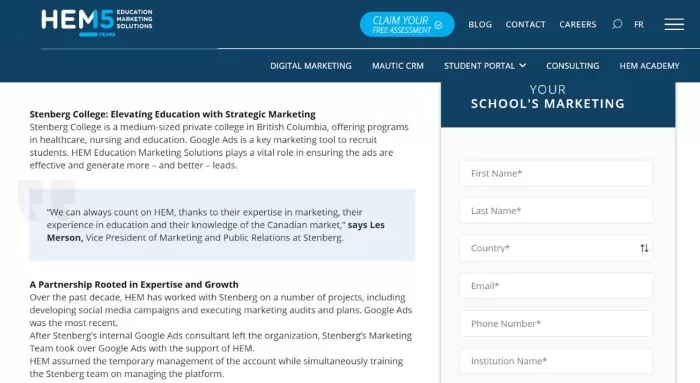
    Example: Stenberg College (Private College): Stenberg partnered with HEM to elevate its Google Ads campaigns for student enrolment, ensuring the ads attracted more and higher-quality student leads. With HEM’s support in restructuring and managing these paid search campaigns, Stenberg’s marketing saw “record-breaking enrolments and lead flow” beyond previous levels. The refined advertising strategy also achieved a 28% reduction in cost per lead, demonstrating the efficiency of targeted online ads.

    HEM Image 9HEM Image 9

    Source: Higher Education Marketing

    Beyond new audiences, retargeting helps you reconnect with families who already visited your site or clicked on an earlier ad but didn’t inquire. Maybe they browsed your tuition page or watched your virtual tour. A gentle reminder later that week (“Still exploring schools? Visit us this fall!”) can bring them back.

    Pro tip: segment retargeting by behavior. Parents who downloaded your admissions guide might see an ad about financial aid, while those who viewed athletics pages could get one about campus life. The more relevant your messaging, the better your conversion rates.

    According to Google, every $1 spent on search advertising can generate up to $8 in value. For schools, that often means more inquiries, more tours, and more applications, without overspending. In short: targeted ads aren’t about throwing money at the problem; they’re about placing your story in front of the right families, right when they’re ready to listen.

    9. Create Downloadable Guides and Lead Magnets

    Want a steady stream of new inquiries from your website? Offer something valuable first. Downloadable resources like e-books, checklists, or planning guides give parents useful information and give your admissions team qualified leads to nurture.

    Here’s how it works: you create a helpful resource (“5 Things to Consider When Choosing a Private School,” for example), place it behind a short form asking for a name and email, and voilà, you’ve started a conversation. It’s a win-win: parents get expert advice, and you get insight into who’s exploring your school.

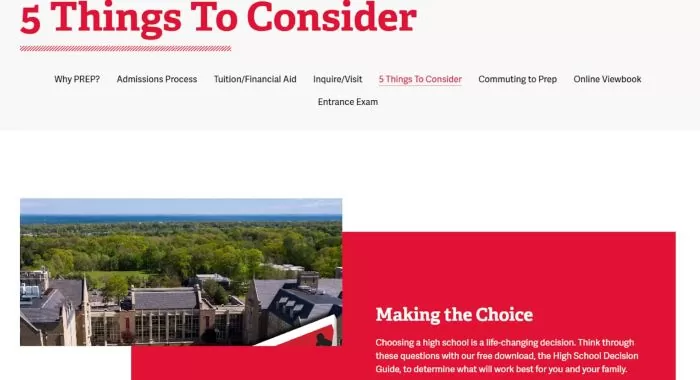
    Example: Fairfield Prep (High School, CT): Fairfield Prep entices prospective families with a free e-book called the “High School Decision Guide.” On its admissions page, a prompt acknowledges that “choosing a high school is a life-changing decision” and invites visitors to download the guide to help them weigh their options. To get the guide, parents simply fill out a short form (name, email, child’s grade), providing Prep with a valuable lead. The guide itself, “5 Things to Consider When Choosing a High School,” offers general tips on factors like academics, community, and fit – not a pure advertisement, but a genuinely useful resource for any 8th-grade parent.

    HEM Image 10HEM Image 10

    Source: Fairfield Prep

    The best lead magnets solve real questions: a “School Visit Checklist,” a “Private vs. Public Comparison Chart,” or a “Financial Aid Planning Worksheet.” Even quizzes like “What’s Your Child’s Learning Style?” can engage parents while introducing your school’s philosophy.

    Design matters too. Make your guide visually appealing, branded, and easy to read. Include a final call-to-action inviting families to take the next step, like booking a tour or contacting admissions.

    Finally, promote your downloads across your website, blog posts, and pop-ups. Each new subscriber is a potential applicant, and your content positions your school as the trusted expert helping them get there.

    10. Encourage Reviews, Testimonials, and Word-of-Mouth

    At the end of the day, no marketing tool is more powerful than a happy parent or student sharing their story. Families trust real voices over polished ads. It’s why word-of-mouth remains one of the strongest enrolment drivers for private schools.

    Start by collecting testimonials from your most satisfied families, students, and alumni. These can take many forms: written quotes, short videos, or casual social posts. Display them prominently. Sprinkle parent quotes across your website, include testimonial snippets in your newsletters, or dedicate a full webpage or YouTube playlist to success stories. The goal is to help prospects think, “That could be us.”

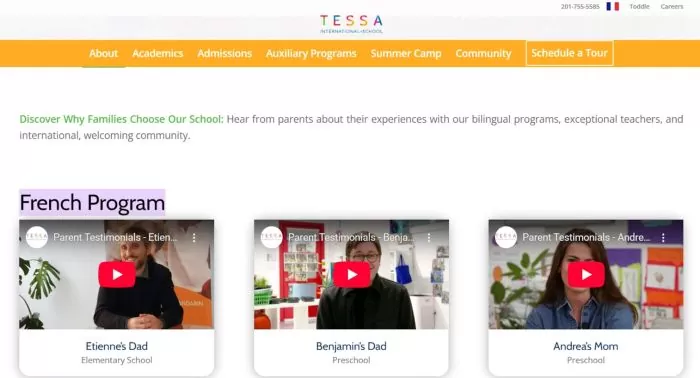
    Example: Tessa International School (Preschool & Elementary, NJ): Tessa turns its parent community into its best ambassadors. The school’s website features a dedicated Testimonials page with dozens of short parent videos and quotes. Each testimonial is labeled with the family’s name and program (e.g., “Etienne’s Dad – Elementary”, “Zoe & Sophia’s Mom – Preschool & Elementary”), adding a warm personal touch. Tessa promotes these stories on social media as well, regularly sharing “Thank you” posts to parents who give shout-outs on Facebook. Additionally, the school links to external reviews on Niche.com and invites new parents to talk to veteran parents. This open celebration of parent voice not only builds trust with prospects (they see real satisfaction) but also fuels a virtuous cycle: Tessa’s parents feel valued and are even more likely to spread the word.

    HEM Image 11HEM Image 11

    Source: Tessa

    Encourage satisfied families to leave Google and Facebook reviews after positive milestones such as a great report card or a successful event. Monitor those reviews and respond thoughtfully. An active, appreciative reply tells others that your school listens and cares.

    Don’t stop there. Turn your current community into ambassadors. Offer small referral incentives or create shareable moments, photo days, spirit challenges, and alumni shoutouts that naturally spark pride and conversation.

    The result? A thriving network of advocates. When people talk about your school with genuine enthusiasm, it builds credibility and attracts families who already believe in what you stand for.

    Partner with HEM to Build Momentum That Lasts

    Attracting new families is about consistency, connection, and authenticity. Every piece of your marketing matters: a clear website that tells your story, social media posts that capture daily life, thoughtful emails that guide parents, and real voices from your community that build trust. When all of these elements work together, they create something powerful: a lasting impression.

    Schools that commit to steady, strategic communication see results that compound over time. Keep testing, refining, and listening to what families respond to. When your marketing reflects the real experience, your students and parents love, it shows, and it resonates.

    If you’re ready to take your private school marketing to the next level, Higher Education Marketing (HEM) can help. We specialize in crafting digital strategies that combine creativity, data, and storytelling to boost visibility, engagement, and enrolment. 

    From SEO and content creation to paid ads and automation, we’ll help you connect with families who are searching for exactly what your school offers. Because when your marketing feels genuine, families don’t just notice, they believe. And that’s what turns interest into enrolment.

    Struggling with enrollment?

    Our expert digital marketing services can help you attract and enroll more students!

    Frequently Asked Questions

    Question: What is school marketing?

    Answer: At its core, school marketing includes every effort your institution makes to strengthen brand visibility and attract families. It involves branding, outreach, and communications across channels like websites, ads, email, social media, and events to connect with prospective families.

    Question: How do you market a private school?

    Answer: By combining digital strategies like SEO, email nurturing, and social media with in-person tactics like open houses and community events. Tailor messaging to families’ needs, use authentic storytelling, and provide clear calls-to-action to drive inquiries and enrolment.

    Question: How much should a school spend on marketing?

    Answer: Most schools allocate 1–10% of their overall budget to marketing, depending on goals and enrolment needs. Competitive schools aiming to grow or reach new markets may invest more, especially in digital advertising, content, and lead-nurturing systems.


    Source link

  • What They Do & Why You Need Them

    What They Do & Why You Need Them

    Reading Time: 14 minutes

    Prospective students no longer make decisions based on glossy brochures or carefully scripted marketing campaigns. They want real stories from real people, and they want to picture themselves as part of campus life before they ever set foot on it. That’s why student ambassadors have become indispensable.

    A student ambassador is more than a tour guide or spokesperson – they’re the authentic voice of your institution: a current student or recent graduate who shares lived experiences, highlights your community, and gives prospective students a glimpse of what life is really like. By acting as both storyteller and guide, ambassadors help institutions build trust at a time when trust is critical.

    This article explores who student ambassadors are, what they actually do, and why creating a program can give your institution a competitive edge. We’ll also cover how to select the right ambassadors, highlight the qualities that make them effective, and provide examples of schools that have successfully built and implemented programs.

    Struggling to stand out in a crowded market?

    Boost enrollment with digital student ambassador strategies!

    What Is a Student Ambassador Program?

    A student ambassador program is a structured initiative where carefully selected students serve as official representatives of their school. These ambassadors, whether current students or recent alumni, act as the institution’s authentic storytellers, sharing first-hand experiences with prospective students, parents, alumni, and the wider community.

    At its core, the program creates a bridge between the school and its audiences. Ambassadors embody the institution’s values and culture, providing insights that go far beyond brochures or websites. They might guide campus tours, host Q&A sessions, or showcase their daily life through social media takeovers. In every interaction, they give others a genuine window into what it’s like to be part of the community.

    The structure of these programs can vary, but most are run through admissions or marketing departments. Some rely on volunteers, while others pay ambassadors through work-study arrangements. Training is usually provided, ensuring ambassadors are prepared to represent the school across recruitment events, digital campaigns, and peer-to-peer outreach.

    The benefits are mutual. Institutions gain trusted, relatable voices that enhance visibility and build trust with future students. Meanwhile, ambassadors themselves develop leadership, communication, and professional skills that strengthen their résumés. Done well, these programs turn students into a school’s most powerful advocates.

    Roles and Responsibilities of Student Ambassadors

    So, what exactly do student ambassadors do? The short answer: a lot. They wear many hats, all focused on building connections and giving prospective students an authentic glimpse into campus life. Let’s break down their core responsibilities.

    Welcoming Campus Hosts

    Ambassadors lead tours, host orientation sessions, and share personal stories that bring campus life to life. Whether guiding a group across campus or welcoming students on a shadow day, they create a sense of belonging from the very first interaction.

    Outreach and Q&A

    Ambassadors are often the friendly voices behind follow-up calls, emails, or DMs. They answer questions about academics, housing, or student life, providing honest, peer-to-peer advice that builds trust.

    Event Support

    From open houses to admitted student days, ambassadors are the student face of recruitment events. They staff tables, join panels, and even help run virtual sessions, adding energy and relatability that administrators alone can’t replicate.

    Content Creation and Promotion

    Many student ambassador programs now include a digital storytelling component. Ambassadors create Instagram takeovers, vlogs, blogs, or TikTok snippets that showcase “a day in the life” through authentic eyes. This user-generated content is gold. It resonates far more than polished marketing materials.

    Peer Mentorship

    Beyond recruitment, ambassadors often mentor new students, particularly freshmen or international students. They answer questions, point peers toward resources, and serve as friendly guides who help boost retention and ease the transition into campus life.

    Liaisons with Administration

    Ambassadors also act as bridges between students and staff. They communicate common concerns to the administration and relay updates back to peers, fostering two-way communication and trust.

    At their core, student ambassadors represent and connect. They don’t just speak about the institution, they embody it. Every tour they lead, message they send, or video they post becomes a living example of the school’s values in action.

    Students want to see themselves in your school’s story. Ambassadors make that possible. They provide the human touch that no brochure or website ever could, turning curiosity into connection, and connection into enrolment.

    Qualities of an Effective Student Ambassador

    Not every student is the right fit for the ambassador role. Schools need to carefully select students who can represent their institution with authenticity and professionalism. So, what qualities set great student ambassadors apart?

    Strong Communication Skills: Effective ambassadors are clear, confident communicators. Whether chatting one-on-one with a nervous high schooler or speaking to a room of parents, they know how to connect. Online, their warmth and clarity shine through in emails, chats, or social media posts.

    Positivity and Enthusiasm: The best ambassadors radiate genuine excitement about their school. Their positivity is contagious, making visitors feel welcome and leaving a memorable impression.

    Leadership and Initiative: Great ambassadors don’t wait to be told what to do. Whether it’s helping a lost visitor or jumping into an online Q&A, they show reliability and initiative.

    Inclusivity and Empathy: Ambassadors ensure everyone feels valued. They’re sensitive to cultural differences, welcoming to all, and empathetic toward students navigating the uncertainty of big transitions.

    Professionalism: Even as students, ambassadors understand they represent the school’s brand. They arrive prepared, dress appropriately, and conduct themselves with courtesy, on campus and online.

    Knowledgeable and Resourceful: Ambassadors know the school’s programs, services, and traditions. And if they don’t know an answer, they know how to find it quickly.

    Digital Fluency: Today’s ambassadors are digital natives. They’re comfortable creating TikToks, hosting webinars, or managing Instagram takeovers. Their ability to adapt to new platforms is a vital asset.

    When these qualities come together, communication, enthusiasm, leadership, empathy, professionalism, knowledge, and tech skills, you get a true embodiment of the school’s values, someone who can make every interaction personal and every prospective student feel like they belong.

    Why Student Ambassadors Are Important (Benefits for Your Institution)

    Why should your institution invest in a student ambassador program? The answer is simple: ambassadors are one of the most effective ways to bring authenticity, engagement, and trust into your recruitment and marketing efforts. Let’s break down the key benefits.

    Authenticity in Marketing

    Prospective students are savvy. They don’t just want glossy brochures; they want honest voices. Student ambassadors bring that authenticity by sharing real stories, challenges, and triumphs. Their perspective humanizes your institution’s brand and makes every piece of content, whether a social media post or campus tour, more relatable and trustworthy.

    Increased Engagement

    When prospects hear directly from peers, engagement skyrockets. A student-led social media post, blog, or Q&A session feels personal, not promotional. For example, the University of Guelph’s student ambassador program boosted digital interactions dramatically, with a 45% increase in Twitter engagement and a 560% surge in Instagram likes within one semester. That’s the power of peer-driven content.

    Better Recruitment & Enrolment Outcomes

    A personal connection can make the difference between “I’m interested” and “I’m applying.” Ambassadors help prospects imagine themselves on campus, creating bonds that admissions staff alone can’t replicate. Schools like John Cabot University in Rome showcase ambassadors prominently in their recruitment strategy, even encouraging prospective students to contact ambassadors directly. That accessibility fosters trust and can translate into higher application and enrolment rates.

    Stronger Community & Retention

    Ambassadors bring new students and help keep them. By welcoming newcomers, offering guidance, and serving as peer mentors, ambassadors ease the transition to college life. At Bishop O’Dowd High School in California, nearly 400 student ambassadors reshaped the campus environment, creating what leaders called “a culture of positivity and engagement.” Programs like this build pride, morale, and stronger student retention.

    Expanded Reach (Especially Online)

    Your admissions team can’t be everywhere at once, but ambassadors can extend your reach digitally. From Instagram takeovers to late-night chats with international prospects, ambassadors provide real-time, student-to-student communication across time zones. They also bring the institution into spaces where prospects already spend time, such as YouTube, TikTok, and Discord, ensuring no question goes unanswered.

    Leadership Development (A Two-Way Benefit)

    It’s not just the institution that benefits. Ambassadors gain professional skills in leadership, communication, and digital engagement. Many list the role on resumes, use it to network with alumni, and carry their ambassador pride into their alumni years. That growth feeds back into your institution: the more empowered the ambassadors feel, the stronger advocates they become during and after their studies.

    More than just friendly faces, student ambassadors are powerful storytellers, culture shapers, and recruitment catalysts. They infuse authenticity into marketing, build personal bridges with prospects, enrich campus life, and extend your institution’s digital footprint. In the higher ed landscape, their influence can be the deciding factor in whether a prospect chooses your school.

    How to Build a Successful Student Ambassador Program

    So you’re ready to launch a student ambassador program. Where do you start? Building a program that feels authentic, sustainable, and effective requires more than just asking a few enthusiastic students to help at open houses. It needs strategy, structure, and a focus on both institutional goals and student development. Here’s a roadmap to help you design a program that works.

    1. Define Clear Objectives

    Before recruiting a single ambassador, clarify why your program exists.

    • Is your priority to boost applications?
    • Do you want to increase engagement at open houses and virtual events?
    • Or is the goal to expand your reach internationally?

    Your objectives shape everything else, from who you recruit to the channels you emphasize. For example, if international recruitment is a focus, it makes sense to involve multilingual students or those who’ve studied abroad.

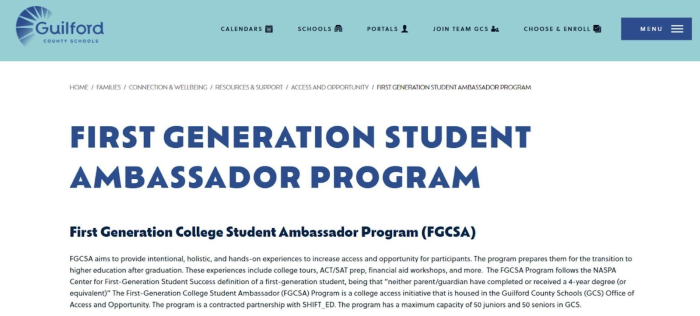
    Example: The First Generation College Student Ambassador Program in Guilford County Schools was launched with a specific objective: to increase access to college for first-generation students. The program “aims to provide intentional, holistic, and hands-on experiences to increase access and opportunity” for participants and prepares them for the transition to higher education. By explicitly stating this purpose, the district kept the program focused, offering college tours, SAT/ACT prep, and workshops, all designed to meet the clear goal of empowering first-gen students to succeed after graduation.

    HEM IMAGE 1HEM IMAGE 1

    Source: Guilford County Schools

    2. Establish Selection Criteria

    Not every student is ambassador material. Create eligibility guidelines that reflect the qualities you need.

    Look for:

    • Strong communication and interpersonal skills
    • Academic reliability (solid GPA)
    • Active involvement in campus life
    • A positive, professional online presence

    Diversity matters, too. Aim for a team that represents different programs, backgrounds, and perspectives so prospective students can connect with someone who reflects their own journey.

    Example: Vance-Granville Community College (NC): VGCC’s Student Ambassador Leadership Program sets strict selection criteria to ensure ambassadors have the right qualities. Applicants must “maintain a 3.0 GPA minimum” and be enrolled half-time, and they are evaluated on attributes like effective speaking skills, a positive first impression, adaptability, responsibility, and dependability. By codifying these requirements, VGCC attracts top student leaders who are academically solid and genuinely motivated to represent the college.

    HEM IMAGE 2HEM IMAGE 2

    Source: Vance-Granville Community College

    3. Application and Interview Process

    Treat ambassador recruitment like a competitive job search.

    • Ask for an application form where students share why they want the role.
    • Request a short essay, or even better, a one-minute video to showcase personality and enthusiasm.
    • Review their social media presence; as they’ll likely use it in the role.
    • Conduct interviews or group activities to evaluate how they interact under pressure.

    The mix of application, interview, and review helps you select students who are genuinely passionate and prepared to represent your school.

    Example: Florida International University: FIU treats ambassador recruitment like a job hiring process, requiring candidates to go through multiple interview stages. Prospective FIU Student Ambassadors must “commit to participating in a phone interview, group interview, and a panel interview” as part of the application. Only students who successfully navigate all rounds and meet other requirements (e.g., 3.0 GPA, full-year commitment) are selected.

    HEM IMAGE 3HEM IMAGE 3

    Source: Florida International University

    4. Provide Training and Ongoing Support

    Even the most outgoing students need preparation. Invest in structured training that covers:

    • Public speaking and communication skills
    • Diversity, equity, and inclusion awareness
    • Social media and digital etiquette
    • Detailed campus knowledge (history, traditions, key services)

    Provide ambassadors with FAQ sheets on admissions, housing, or financial aid so they feel confident answering questions. Assign a staff coordinator as a mentor and check in regularly. Occasional refresher sessions help keep everyone sharp.

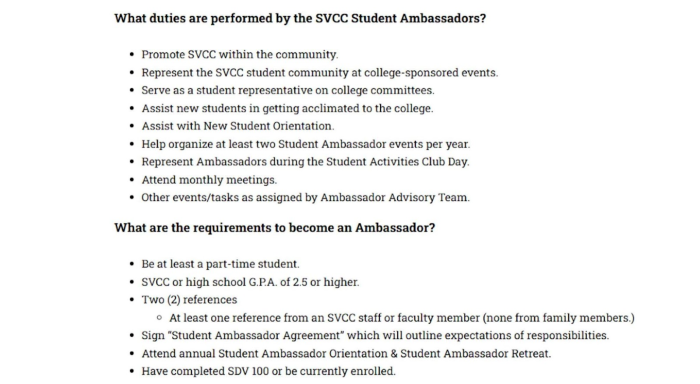
    Example: Southside Virginia Community College: SVCC invests in training and team development for its ambassadors by mandating an orientation and an annual retreat. All new ambassadors must “attend annual Student Ambassador Orientation & Student Ambassador Retreat” and participate in monthly meetings. During these sessions, students receive guidance in public speaking, event hosting, and campus knowledge. The retreat, in particular, serves as both training and bonding – a dedicated time to build skills and camaraderie. Ongoing support from staff advisors (assigned at each campus) further ensures ambassadors have mentorship throughout the year.

    HEM IMAGE 4HEM IMAGE 4

    Source: Southside Virginia Community College

    5. Define Roles and Set Expectations

    Clarity is essential. Outline exactly what ambassadors will do and how often.

    Examples include:

    • Weekly or monthly campus tours
    • Required participation in a set number of events per semester
    • Social media contributions (Instagram stories, blog posts, TikTok takeovers)
    • Optional extras like mentoring first-year or international students

    Compensation can be financial (work-study wages or stipends) or perks like free merch, event tickets, or professional development opportunities. Make sure the role feels rewarding and achievable alongside academics.

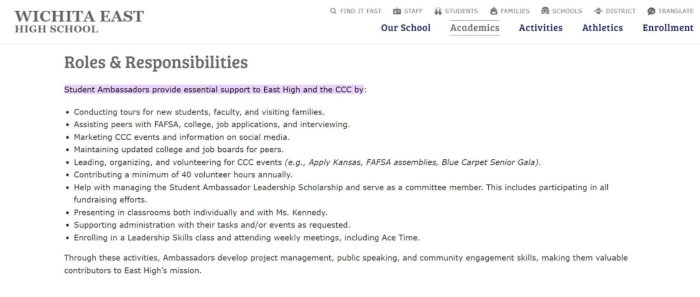
    Example: Wichita East High School: East High’s ambassadors operate under a clear set of responsibilities and expectations. According to the program description, ambassadors lead campus tours for new students and visitors, assist peers with college and job applications (including FAFSA help), promote school events on social media, maintain information boards, and volunteer at key events like college fairs. They are required to contribute a minimum of 40 volunteer hours annually in these activities. Ambassadors must also uphold school conduct standards and serve as role models.

    HEM IMAGE 5HEM IMAGE 5

    Source: Wichita East High School

    6. Foster Team Spirit

    A successful ambassador program is also a community. Encourage bonding through:

    • Regular team meetings
    • Social gatherings or retreats
    • Recognition events or ambassador spotlights

    A strong sense of camaraderie boosts morale and translates into better representation at events. 

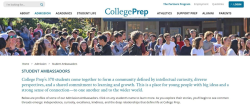
    Example: The College Preparatory School: At College Prep, fostering community is central to the ambassador program. The school’s Admission Ambassadors represent a student body of 370, where connection, curiosity, and collaboration are defining values. Each ambassador profile highlights not only individual strengths but also the shared culture of independence, kindness, and deep relationships that tie the community together. By spotlighting ambassadors’ personal stories and the values they embody, College Prep nurtures a sense of team identity that extends beyond recruitment events. This approach creates cohesion among ambassadors themselves while reflecting the school’s wider commitment to inclusivity and connection, ensuring the program is both a showcase and a unifying force for the entire student body.

    HEM IMAGE 6HEM IMAGE 6

    Source: The College Preparatory School

    7. Integrate Ambassadors into Marketing

    Think beyond tours and open houses. Ambassadors can be powerful storytellers for your brand.

    • Invite them to contribute blogs, vlogs, or Q&As for your website.
    • Run student social media takeovers for a “day in the life” view.
    • Feature ambassadors in recruitment videos or email campaigns.
    • Have them moderate online communities for admitted students, such as Facebook or Discord groups.

    Encouraging ambassadors to share personal milestones, like landing an internship or study abroad experience, also strengthens your brand with authentic proof points.

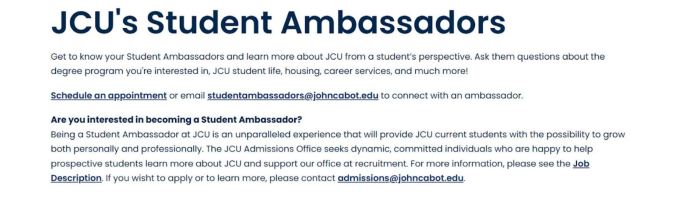
    Example: John Cabot University: JCU has woven student ambassadors directly into its admissions and marketing communications. The university’s website features a “Meet Your Student Ambassadors” page with profiles of current students (including photos, majors, hometowns, and personal stories) and actively invites prospects to connect with them. Interested students can schedule a one-on-one video call via Calendly or send an email to reach a JCU ambassador. This approach makes ambassadors a front-line part of marketing – essentially living testimonials that lend authenticity. JCU ambassadors also create content: they share their experiences through blogs and social media takeovers, giving an inside look at life in Rome.

    HEM IMAGE 7HEM IMAGE 7

    Source: John Cabot University

    8. Collect Feedback and Evolve

    Don’t let your program run on autopilot. Measure its impact and adjust.

    • Ask prospective students if ambassador interactions influenced their decision.
    • Gather feedback from ambassadors about training, workload, and support.
    • Monitor metrics: event attendance, social media engagement, and application trends.

    If you notice gaps, like not enough STEM majors on your team or weak performance at virtual events, adapt accordingly. A good ambassador program evolves with your institution’s needs and with changes in student behavior.

    Example: University of Guelph: Guelph’s social media ambassador initiative shows the importance of measuring impact and iterating. After launching the program, Guelph didn’t just celebrate a surge in likes and follows – they dug into analytics to see what prospective students cared about. For example, by tracking which web pages prospects visited via ambassadors’ posts, the admissions team discovered an unexpectedly high interest in student housing information. With that insight, they adjusted their content strategy: ambassadors began creating more posts about dorm life and residence tours.

    HEM IMAGE 8HEM IMAGE 8

    Source: Higher Ed Experts

    Bringing It All Together

    When structured thoughtfully, a student ambassador program becomes a win-win. Prospective students see a genuine, welcoming face of your institution. Current students gain leadership skills and professional growth. And your institution benefits from more authentic marketing, stronger recruitment outcomes, and an energized campus culture.

    It’s more than a marketing tactic; it’s an investment in your community. Build it right, and your ambassadors will become some of your strongest advocates, now and well into their alumni years.

    Turning Students Into Your Strongest Advocates

    Student ambassador programs are far more than a recruitment tool. They are a way to put authentic student voices at the heart of your institution’s story. Ambassadors connect with prospects in ways no brochure or campaign ever could, offering real-life perspectives that build trust and spark genuine interest.

    For institutions, the benefits are clear: more authentic marketing, stronger engagement, improved recruitment outcomes, and a livelier campus community. For students, it’s a chance to develop leadership, communication, and professional skills while giving back to the school they love.

    The key is to be intentional. Define your goals, select the right ambassadors, support them with training, and continually refine the program. Done well, an ambassador initiative can become one of your institution’s most impactful long-term assets. Creating student advocates who not only help today’s prospects but remain champions of your brand long after graduation.

    Struggling to stand out in a crowded market?

    Boost enrollment with digital student ambassador strategies!

    Frequently Asked Questions

    Question: What is a student ambassador program? 

    Answer: A student ambassador program is a structured initiative where carefully selected students serve as official representatives of their school. These ambassadors, whether current students or recent alumni, act as the institution’s authentic storytellers, sharing first-hand experiences with prospective students, parents, alumni, and the wider community.

    Question: What is the role of a student ambassador? 

    Answer: The short answer: a lot. They wear many hats, all focused on building connections and giving prospective students an authentic glimpse into campus life. 

    Question: What qualities does a student ambassador have?

    Answer: A student ambassador has strong communication skills, enthusiasm, leadership, inclusivity, professionalism, knowledge of their institution, resourcefulness, and digital fluency, allowing them to authentically represent their school and connect meaningfully with prospective students.

    Source link

  • 8 Research-Backed Ways to Boost Student Retention

    8 Research-Backed Ways to Boost Student Retention

    Reading Time: 14 minutes

    Student retention remains one of the most pressing challenges in higher education. While institutions devote considerable resources to attracting new students, ensuring those students persist through to graduation is just as vital for institutional health and student success.

    When students leave before completing their programs, colleges and universities lose tuition revenue and see diminished returns on their investments in recruitment and instruction. For students, the stakes are even higher: they often walk away without the credentials or skills they set out to earn, leaving personal and professional goals unfulfilled.

    Retention, typically measured by the percentage of students who return to the same institution each year, is now a key performance indicator in higher education. It reflects how well a school supports and engages its students and can influence institutional rankings, funding, and public perception.

    Recent data offers a mixed picture. In the United States, the national first-year retention rate for first-time students reached 69.5% in 2022, the highest level in nearly a decade and a slight increase over previous years. Still, that means nearly one in three students don’t return for a second year. In Canada, the pattern is comparable: 15–20% of university freshmen leave after their first year, with even higher attrition rates in colleges.

    There is both urgency and opportunity here. This blog explores eight strategic, research-backed approaches that institutions can take to significantly improve student retention, strengthening institutional outcomes and ensuring more students reach the finish line.

    Struggling with enrollment and retention?

    Our Digital Marketing team can help you generate more leads!

    What Causes Students to Leave?

    Why is student retention important in higher education? Student retention reflects institutional effectiveness and student success. High retention means students are achieving their goals and institutions are providing strong support. Low retention signals issues like academic or financial struggle. It’s both an ethical responsibility and a financial imperative, reducing dropout rates and maximizing investment in recruitment and instruction.

    Student retention is a complex challenge influenced by a range of academic, social, and personal factors. While no two students leave college for exactly the same reason, research has consistently identified several common barriers to persistence. Understanding these roadblocks is essential for developing interventions that work.

    Financial Barriers

    For many students, the cost of education is a deciding factor. Difficulty paying tuition, fees, and living expenses remains one of the most significant drivers of attrition—particularly for those from lower-income backgrounds. Even small outstanding balances can prevent students from registering for the next semester, pushing them to stop out or drop out entirely.

    Lack of Engagement and Belonging

    Students who feel disconnected from campus life are far less likely to persist. A strong sense of community, whether through clubs, student organizations, residence life, or peer support networks, has been shown to significantly improve retention. When students feel isolated or out of place, their motivation to stay enrolled often wanes.

    Insufficient Academic Support

    Academic struggles can quickly lead to frustration and withdrawal if students don’t receive timely help. Without access to tutoring, mentoring, academic advising, or remedial coursework, those who fall behind may begin to doubt their ability to succeed.

    Campus Culture and Climate

    The broader institutional culture also plays a pivotal role. A welcoming, inclusive environment supported by compassionate faculty and staff can boost student morale and engagement. In contrast, campuses that feel unwelcoming or where students sense a lack of support often see higher rates of attrition.

    Life Outside the Classroom

    External pressures, including mental health concerns, family responsibilities, work conflicts, or physical health issues, can interfere with students’ ability to continue their studies. When schools lack the flexibility or resources to help students manage these challenges, even the most motivated learners may be forced to leave.

    The First-Year Experience

    The transition into higher education is a make-or-break period. Students who struggle during their first year, due to academic shock, poor orientation programs, or difficulty making friends, are at greater risk of not returning for a second year. Supporting students during this critical period can make a long-term difference.

    What Is the Difference Between Persistence and Retention?

    Retention refers to students returning to the same institution, while persistence tracks students continuing in higher education, even if they transfer. A student may not be retained by one college but still persist by enrolling elsewhere. Persistence offers a broader view of student progress beyond a single campus. 

    What Are the Factors Affecting Student Retention?

    Student retention is influenced by academics, finances, social belonging, mental health, and institutional climate. Academic unpreparedness, isolation, financial strain, and life challenges are leading causes of dropout. The first-year experience is especially critical. Successful retention strategies address multiple areas, supporting students academically, socially, and personally to help them stay enrolled.

    With these contributing factors in mind, it’s clear that improving student retention requires a holistic, proactive approach. Fortunately, institutions have a range of strategies at their disposal. In the next section, we’ll explore eight of the most effective ways colleges and universities are addressing these issues, complete with real-world examples from Canada, the U.S., and beyond.

    1. Personalize Communication and Support for Students

    Today’s students are used to receiving customized experiences in almost every aspect of their lives, from social media feeds to online shopping recommendations. They now expect the same level of personalized communication from their college or university. When schools meet students with timely, tailored support, they show that they care, and that can make all the difference in whether a student stays or leaves.

    This kind of proactive outreach can take several forms. Some institutions segment their automated email campaigns by group, such as first-years, international students, or those on academic probation, to deliver more relevant content and reminders. Others implement 24/7 text messaging systems or AI-powered chatbots that answer routine questions, offer words of encouragement, and send reminders about key deadlines. More advanced platforms go a step further, using predictive analytics to monitor signs of disengagement or academic trouble, alerting advisors to intervene before it’s too late.

    These tools offer a concierge-style model of support: always on, always responsive. Students can get help after hours or over the weekend, when live staff may not be available, which helps reduce frustration and drop-off.

    Example: Forsyth Technical Community College in the U.S. revamped its approach to student communication by adopting a “customer service” mindset, ensuring that both staff and automated systems responded quickly, kindly, and proactively to student needs. This overhaul included faster response times, friendly messaging, and a systematic effort to check in on students rather than waiting for problems to surface. The result? A 9% increase in student retention after implementing this new communication model.

    HEM Image 2HEM Image 2

    Source: Enrollify

    Putting It into Practice

    To replicate this approach, consider implementing a CRM (Customer Relationship Management) or student engagement platform that allows advisors to monitor student status and send targeted messages. This could be as simple as congratulating a student on a strong midterm, or as critical as reaching out after several missed classes.

    Even small gestures like a personalized check-in from a faculty member can make students feel they belong. When institutions shift from one-size-fits-all messaging to individualized outreach, they build a sense of care and connection that reinforces students’ decisions to stay enrolled.

    2. Foster a Strong Sense of Community and Belonging

    A strong sense of belonging is one of the most powerful predictors of student retention. When students feel connected, through friendships, mentors, and shared campus culture, they’re more likely to persist despite academic or personal challenges. Conversely, loneliness and disconnection are key drivers of attrition.

    To support student connection, institutions should create structured opportunities for involvement: orientation, residence life, clubs, intramurals, volunteer work, and student leadership. Participation in these activities increases engagement and reinforces a sense of purpose. Social media can amplify this by highlighting student life and celebrating individual voices.

    Example: The University of Toronto supports student retention by building community and belonging for underrepresented students through mentorship. In particular, U of T offers programming for first-generation students that connects them with mentors and resources across campus. This First Generation Student Engagement program focuses on helping students navigate barriers to access and inclusion by linking them to academic support, career guidance, wellness services, and peer networks. The goal is to ensure first-gen and other marginalized students feel a strong sense of belonging and are supported throughout their journey.

    HEM Image 3HEM Image 3

    Source: University of Toronto

    Ultimately, when students feel they matter to peers, faculty, and the institution, they’re more likely to stay. Belonging isn’t a bonus; it’s foundational to retention.

    3. Offer Robust Academic Support and Advising

    Academic challenges are a leading cause of student attrition. When students feel lost, overwhelmed, or unsupported, they’re more likely to withdraw. That’s why proactive academic support is one of the most effective student retention strategies.

    Effective strategies include offering accessible tutoring (in-person and 24/7 online), writing assistance, and supplemental instruction for high-failure courses. Just as crucial is structured academic advising. When advisors monitor progress and flag early signs of struggle, like low grades or unbalanced course loads, they can intervene with timely solutions.

    Institutions must also normalize help-seeking by actively promoting support services. Social media, email campaigns, and website content can encourage students to use academic resources without stigma.

    Example – UC Berkeley has built an ecosystem of academic support services combined with faculty mentorship to improve student success and retention. On the academic side, Berkeley provides extensive tutoring, peer advising, and dedicated study spaces in residence halls, free for students and readily accessible where they live.

    HEM Image 4HEM Image 4

    Source: UC Berkeley

    Early alert systems are another retention tool. By analyzing attendance and coursework in the first weeks, schools can identify at-risk students and reach out before they disengage.

    The message is simple: when students know help is available and feel encouraged to use it, they’re more likely to succeed.

    4. Provide Career Development Opportunities From Day One

    Career uncertainty is a major driver of student attrition. To counter this, institutions must integrate career development early, ideally from the first year.

    Career workshops, alumni networking, LinkedIn training, and highlighting the career potential of different majors help students connect academics to future employment. Research confirms that uncertainty about career direction strongly correlates with dropout risk.

    Example: DePaul University launched the Future Forward program, a year-long career incubator for first-year students, to bolster their sense of purpose and keep them enrolled. The idea is to help freshmen find their “why” for attending college by engaging them in self-discovery, skill-building, and career exploration starting in their first quarter. Future Forward combines online learning modules (on topics like growth mindset, design thinking, networking) with mentorship from older student peers and staff. By integrating career development into the first-year experience, DePaul addresses a major attrition risk: lack of direction. Many freshmen enter undecided about their field, which can sap motivation. Future Forward helps students clarify goals and see how their studies link to future careers, thereby increasing their commitment to persist.

    HEM Image 5HEM Image 5

    Source: DePaul University

    Mentorship is another effective strategy. Toronto Metropolitan University’s Tri-Mentoring Program connects upper-year students with professionals to support the transition to work. 

    Example: Toronto Metropolitan University (TMU) – formerly Ryerson University – pioneered the Tri-Mentoring Program (TMP) to support student retention through layered mentorship and inclusion. The educational priority of TMP is “to mentor each student using their individual experience to find their sense of belonging on campus.”

    HEM Image 6HEM Image 6

    Source: Toronto Metropolitan University

    In practice, the “Tri” refers to three tiers of mentoring: Peer Mentoring (matching first-year students with trained upper-year mentors in the same program or with similar backgrounds), Group Mentoring (regular group sessions and community events for students from equity-deserving groups, facilitating peer networking and mutual support), and Career Mentoring (matching third-year or higher students with industry professionals, often alumni, for guidance as they prepare for careers).

    Similarly, internships, job shadowing, and embedded career-planning courses give students confidence in their trajectory. Institutions can also integrate career goals into academic advising and marketing, using alumni stories to reinforce long-term value. When students see a clear path from degree to career, their motivation and likelihood of staying enrolled dramatically improve.

    5. Leverage Data and Early Alerts to Identify At-Risk Students

    Predictive analytics enables institutions to proactively support students showing signs of disengagement or academic risk. By monitoring GPA, class attendance, LMS activity, or even ID card swipes, colleges can detect early warning signs and act before a student drops out.

    Many platforms offer dashboards and AI-driven messaging to flag risks and send targeted resources. When paired with advisor outreach, this approach becomes highly effective.

    Example: Georgia State University’s Predictive Analytics: Georgia State tracks over 800 risk indicators, triggering alerts when students show signs of academic or financial distress. This system led to the Panther Retention Grant, which helps students with small outstanding balances, one of the biggest dropout triggers. Combined with advisor follow-ups, this strategy has significantly improved retention, especially for underrepresented students.

    HEM Image 7HEM Image 7

    Source: Georgia State University

    Even basic early alert systems can help. Faculty-initiated midterm warnings and proactive outreach have been shown to improve persistence by making students feel supported. Benchmarking tools like the IPEDS database can also guide institutions on where to improve.

    In short, using data transforms retention from reactive to proactive. With the right tools and team, schools can identify challenges early, intervene meaningfully, and prevent students from slipping through the cracks.

    6. Enhance Financial Aid Awareness and Support

    Financial strain is a top reason students consider stopping out. To improve retention, institutions must ensure students are aware of, and able to access, funding options before small financial issues force them out.

    Colleges should proactively promote scholarships, bursaries, emergency grants, and flexible payment plans. Hiring financial aid coaches or sending alerts to students with incomplete forms or unpaid balances can help prevent unnecessary dropouts. Georgia State University’s Panther Retention Grants exemplify this approach, offering micro-grants to students at risk of losing enrollment over modest fees. Over 10,000 students have benefited, with research showing faster graduations and lower debt loads as a result.

    COVID-era aid also proved powerful: community colleges and HBCUs that used relief funds to clear student debts saw thousands stay enrolled. Additionally, financial literacy programs, like budgeting workshops or one-on-one counselling, equip students to manage limited resources wisely and reduce financial stress.

    Example: Queen’s University has focused on reducing financial barriers and the misinformation around them by proactively promoting financial aid opportunities to students, using channels like social media, email, and digital signage. The goal is to ensure students know about and utilize available aid (scholarships, bursaries, grants), thereby decreasing the number who drop out due to financial strain. In practice, Queen’s Student Affairs runs ongoing Instagram awareness campaigns about bursary deadlines, loan applications, and financial wellness tips. Below we see Queen’s official Student Affairs Instagram has posts reminding students “it’s not too late to apply for the 2023–24 General Bursary for winter and summer terms” and to apply for government aid like OSAP (Ontario Student Assistance Program).

    HEM Image 8HEM Image 8

    Source: Instagram

    Bottom line: funding support and strong communication are critical tools in retaining financially vulnerable students.

    7. Offer Flexible and Inclusive Learning Options

    Modern college students are diverse; many are part-time, working, parenting, or have accessibility needs. Rigid policies and teaching methods can alienate these learners, making flexibility and inclusivity essential to retention.

    Flexible scheduling options, like evening, weekend, online, or hybrid classes, help students balance education with life responsibilities. Allowing part-time enrollment, asynchronous learning, or summer online courses can reduce dropout risk, especially among non-traditional learners. 

    Credit for prior learning (e.g., PLAR in Canadian colleges) also supports older students by recognizing experience and accelerating time to completion. Inclusive learning environments ensure students of all abilities and styles thrive. 

    Example: Academy of Learning Career College (AOLCC) uses its proprietary Integrated Learning System (ILS) to maximize student retention by offering flexibility, personalization, and one-on-one support in the learning process. The ILS is a self-directed, multi-sensory training system that lets each student learn at their own pace on a schedule that suits them. A crucial feature since many AOLCC students are adult learners, working, or have family obligations.

    HEM Image 9HEM Image 9

    Source: AOLCC

    Support for online students is also critical. Strong virtual infrastructure; 24/7 tech help, online tutoring, and proactive instructor check-ins help remote learners feel connected. Some schools have engagement teams dedicated to online students.

    Additionally, flexible academic policies such as compassionate leaves or grading options (used during the pandemic) can prevent student loss under strain. By adapting to student realities rather than enforcing a traditional mold, colleges show they care and turn potential stop-outs into future graduates.

    8. Strengthen Faculty-Student Engagement and Mentorship

    Faculty play a pivotal role in student retention through their daily interactions with students. Strong faculty-student engagement, including mentorship, accessibility, and supportive instruction, helps students feel seen, guided, and motivated to persist, especially when challenges arise.

    Research shows that meaningful faculty contact improves students’ sense of integration and commitment to college. Gen Z students, in particular, value professors who demonstrate authenticity and personal interest. Without that, disengagement and dropout risk increase.

    Colleges can enhance engagement through mentorship programs, pairing students with faculty advisors who offer academic, career, and personal guidance. Faculty training in inclusive teaching and student outreach empowers instructors to recognize and assist struggling students early. Simple actions, like checking in on absences, can make a big difference. 

    Example: Faculty as Mentors at Berkeley: As noted earlier, UC Berkeley emphasizes that its faculty are among the most accessible, citing programs like the Resident Faculty Program where professors live in residence halls to interact with students outside of class. They highlight that faculty often serve as mentors and even friends to students, and note statistics such as a 19:1 student-faculty ratio and many small classes. This environment of approachability contributes to student success and retention at Berkeley; students feel supported academically and personally by instructors of that caliber, which deepens their commitment to staying.

    HEM Image 10HEM Image 10

    Source: UC Berkeley

    Interactive teaching methods, such as discussions or group work, foster stronger connections. Faculty who use student names, encourage participation, and integrate feedback build rapport and community. Schools like UC Berkeley go further, housing faculty in residence halls and maintaining small class sizes to promote mentorship.

    Faculty should be viewed as frontline retention agents. By celebrating teaching and providing tools for meaningful student relationships, institutions can greatly boost persistence through a caring, connected academic culture. In retention, relationships matter, and faculty are key.

    Retention Starts With Intention and the Right Support

    Improving student retention isn’t about a single silver bullet. As we’ve explored, it takes a coordinated, research-driven strategy, one that centers students at every point of their journey. Whether it’s delivering personalized outreach, fostering belonging, offering early career guidance, or using data to proactively intervene, the most successful institutions treat student retention as both a mission and a metric.

    But knowing what works is only half the equation. Implementing these strategies at scale, consistently and effectively, requires the right tools, technology, and expertise. That’s where Higher Education Marketing can help.

    At HEM, we equip colleges and universities with the CRM systems, marketing automation, and digital engagement strategies needed to nurture students from application to graduation. From crafting segmentation-based communications to building data-informed retention workflows, our solutions are built for institutions ready to prioritize persistence.

    If you’re looking to boost your retention rates, build stronger student connections, and create a more responsive campus experience, explore how HEM’s services can support your goals. Together, we can help more students reach the finish line and help your institution thrive in the process.

    Do you want to explore strategic and effective university student retention strategies?

    Contact HEM for more information.

    Struggling with enrollment and retention?

    Our Digital Marketing team can help you generate more leads!

    Frequently Asked Questions 

    Question: Why is student retention important in higher education?

    Answer: Student retention reflects institutional effectiveness and student success. High retention means students are achieving their goals and institutions are providing strong support. Low retention signals issues like academic or financial struggle.

    Question: What is the difference between persistence and retention?

    Answer: Retention refers to students returning to the same institution, while persistence tracks students continuing in higher education, even if they transfer.

    Question: What are the factors affecting student retention?

    Answer: Student retention is influenced by academics, finances, social belonging, mental health, and institutional climate. Academic unpreparedness, isolation, financial strain, and life challenges are leading causes of dropout.


    Source link

  • Generative Engine Optimization (GEO) for Higher Education

    Generative Engine Optimization (GEO) for Higher Education

    Preparing for an AI-Powered Evolution in How Students Search

    If you’ve ever been involved in your institution’s digital marketing efforts, you’ve undoubtedly heard of search engine optimization — otherwise known as SEO. 

    But after more than a decade of optimizing keywords and backlinks in content for search engines like Google and Bing, we’re now at the dawn of a new age spurred on by artificial intelligence (AI) and a new approach is required: generative engine optimization (GEO). 

    As prospective students turn to AI tools and large language models (LLMs) to guide their college search, traditional SEO tactics are no longer enough. Digital marketing teams must also incorporate new GEO-focused tactics into their strategies.

    In an increasingly competitive and LLM-driven world, institutions must now rethink their visibility, branding, and recruitment strategies for a digital landscape that continues to evolve.

    Understanding Generative Engines and Their Impact on Students’ Search Behavior

    Generative engine optimization is emerging as a critical response to the way AI is reshaping how prospective students find and evaluate colleges. Unlike traditional search engines, generative engines powered by large language models deliver conversational, synthesized responses — often without requiring users to click through to a website. 

    This shift is impacting how institutions need to approach their digital visibility and student engagement efforts.

    The Rise of LLMs

    As students move away from traditional search engines toward AI search tools, LLMs and LLM-powered tools like ChatGPT, Claude, Perplexity, and Google’s Gemini and Search Generative Experience (SGE) are leading the way. 

    These platforms generate real-time, AI-powered answers that summarize information from across the web — often citing sources, but not always linking to them directly. Their growing popularity signals a move away from standard search engine results toward fluid, question-driven discovery.

    The Impact of LLMs on Students’ Search Experiences

    Prospective students are already turning to generative engines to ask nuanced questions such as, “What are the top 20 online MSW programs?” or “Which colleges have the best student support services for veterans?” 

    Instead of having to navigate a list of blue links, they’re receiving direct, synthesized answers to their questions. This introduces key shifts that digital marketers must consider, including: 

    For colleges and universities, adapting to this new behavior is essential to staying prominent in students’ minds during their decision-making process.

    SEO vs. GEO in Higher Education

    Search engine optimization and generative engine optimization share a common goal: to ensure content is discoverable, relevant, and credible. Both approaches rely on strategic keyword usage, high-quality content, and data-driven refinement to increase visibility.

    SEO was built for traditional search engines that return ranked lists of links. GEO is designed for AI-powered engines that synthesize information and deliver complete answers. 

    For universities, this change requires a new, blended approach — one that takes both SEO and GEO into account when creating admissions materials, program pages, and search rankings-focused content such as blog posts.

    How Generative Engines Pull and Rank University Content

    Generative engines like ChatGPT and Google’s SGE don’t rank web pages the same way traditional search engines do. Instead, they synthesize information from multiple sources to deliver a single, cohesive answer. 

    To be included in these AI-generated responses, university content needs to strike a balance between academic credibility and an accessible, student-friendly structure. AI prioritizes information that is well-organized, clearly written, and backed by authoritative sources, such as: 

    Institutions that prioritize clarity and credibility in their content are more likely to be cited and surfaced in generative search results.
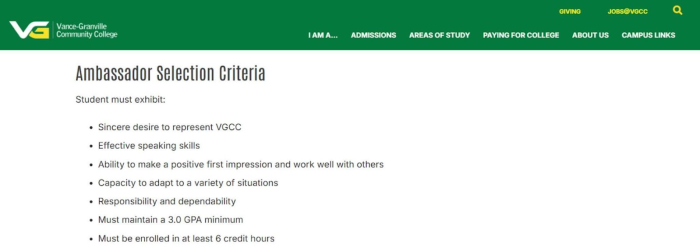
    Key GEO Strategies for Colleges and Universities

    To stay visible in AI-driven searches, institutions need to adopt innovative content strategies tailored to how generative engines interpret and deliver information. Here are some core GEO tactics:

    Showcase Faculty Within Content

    Ensure AI- and LLM-Friendly Structure and Markup

    Create Concise and Clear Content

    Use Content Formats That Perform Well in GEO

    Build Brand Authority and Trust

    Measuring GEO Performance in Enrollment Marketing

    As with every digital marketing initiative, it’s not enough to just roll out a GEO strategy — institutions need to measure its success. Here’s how it’s done in the GEO world:

    Create LLM-Focused Dashboards via GA4 and Looker Studio

    Institutions can build LLM-focused dashboards using Google Analytics 4 (GA4) and Looker Studio by creating filters for platforms like ChatGPT, Perplexity, Microsoft Copilot, Google Gemini, and Claude. 

    Google currently doesn’t provide direct data for AI Overview referrals, and they have been neutral in response to questions on if they will ever release AI Overview data.  

    While LLMs are still evolving, isolating referral traffic from these tools can provide institutions with early insight into how students are discovering their content through AI.

    Use Attribution Models for AI-Influenced Student Journeys

    To fully understand how GEO affects students’ enrollment behavior, marketers need to evolve their attribution models, or how enrollment conversions are attributed to different channels. AI-generated responses often play a role at the top of the enrollment funnel, influencing students before they ever land on a university’s website. 

    Measuring that influence through multitouch attribution and long-view funnel analysis will become increasingly important as AI tools reshape how students explore, compare, and commit to higher education programs.

    Challenges and Ethical Considerations

    As generative engines continue to shape how students discover universities, inherent challenges will likely arise. 

    AI tools can misrepresent data or present outdated information, raising concerns about their accuracy and whether they can be trusted. There’s also the risk that well-resourced, elite institutions may disproportionately dominate generative search results, reinforcing existing inequities. Lack of transparency in how algorithms surface and prioritize content makes it difficult for institutions to ensure they are receiving fair and accountable representation.

    Future Trends in Higher Education GEO

    When it comes to emerging digital marketing techniques like GEO, early investments can help institutions stay ahead of the curve.  

    Multimodal Optimization for Virtual Campus Tours and Visual Content

    As generative engines evolve, optimizing for multimodal content — such as images, video, and virtual tours — will become increasingly important. 

    This goes beyond traditional desktop experiences. In Meta’s first quarter 2025 earnings call, Mark Zuckerberg predicted that smart glasses will eventually replace smartphones, describing them as ideal for AI and the metaverse. 

    With Meta already partnering with Ray-Ban on AI-integrated eyewear, higher ed marketers need to start preparing content that’s not just LLM-friendly but also immersive, interactive, and wearable-ready.

    AI-Driven Personalization for Students

    Rather than relying on static rankings or one-size-fits-all search experiences, AI is ushering in a wave of hyperpersonalization. Prospective students may soon interact with personalized advisors, see school rankings tailored to their goals, and receive customized digital content that aligns with their academic and career interests. 

    This shift will push institutions to deliver flexible, student-centered content that adapts to each individual’s intent and pathway.

    Search by Outcome, Not Degree

    Generative tools are beginning to trace backward from desired career outcomes by identifying what roles successful professionals hold, then linking those roles to specific programs, professors, and institutions. 

    For colleges and universities, this means alumni outcomes, employer partnership information, and job title visibility are essential signals. Institutions that surface these elements clearly will be better positioned to show up in outcome-based searches and AI-generated guidance.

    Ready to Get Ahead of the Curve

    The use of AI and large language models in search is only going to increase, fundamentally reshaping how students discover, evaluate, and engage with higher education institutions. 

    Developing a strong generative engine optimization strategy is essential. GEO needs to be seamlessly integrated into your existing SEO and digital marketing efforts to ensure your institution stays visible and relevant in a rapidly shifting landscape.

    With generative engines evolving at an unprecedented pace, now is the time to prepare for how you’ll reach the next generation of students.

    Want to talk through how GEO fits into your broader enrollment strategy? Contact Archer Education to start the conversation.

    Sources 

    Search Engine Journal, “How LLMs Interpret Content: How to Structure Information for AI Search”

    Search Engine Land, “What Is Generative Engine Optimization (GEO)?”

    The Verge, “Why Mark Zuckerberg Thinks AR Glasses Will Replace Your Phone”

    Yahoo Tech, “What Mark Zuckerberg Said About Smartglasses This Week Reveals His Opinion on AI”

    Subscribe to the Higher Ed Marketing Journal:

    Source link

  • Top 10 Best Summer Camp Marketing Strategies

    Top 10 Best Summer Camp Marketing Strategies

    Reading Time: 11 minutes

    Marketing your summer camp successfully requires a well-rounded approach  integrating digital strategies to maximize reach and engagement. With families and students searching online for the perfect summer experience, schools must stay ahead of the competition by adopting fresh, innovative methods. 

    This blog explores ten of the best summer camp marketing strategies to ensure your program stands out.

    Struggling with enrollment?

    Our expert digital marketing services can help you attract and enroll more students!

    1. Leverage Content Marketing to Build Trust and Authority

    You’ve probably heard this before, but we’ll say it again: Content is king! One of the most effective ways to promote your summer camp is by creating blog posts, videos, and articles about the benefits of attending your camp. This helps engage prospective attendees and parents. Highlight success stories, showcase daily camp activities, and provide insights into what makes your program unique. 

    The first step to creating an effective summer content marketing campaign is choosing what platforms to use. You might be wondering, “Where can I promote my summer camp?” The best places include social media sites like Facebook, Instagram, and TikTok, as well as Google Ads and YouTube for targeted paid campaigns. 

    Local community websites, parenting blogs, and school newsletters are effective promotional channels. Focus on building credibility and encouraging trust among parents evaluating different options.

    Example: Here is a simple way to garner interest in your summer camp program. Visual Arts Mississauga posts a video of the activities they provide, including studio and outdoor creative activities, a variety of themes (a new one each week), and special guests. Try filming a few brief snippets of your daily camp activities and list some of your campers’ favorite things about the experience. With minimal editing and some upbeat music, you can certainly catch the attention of a parent searching for a positive camp experience for their child. It worked for Visual Arts Mississauga!

    As you can see in the comments, a parent inquired for pricing information. The great thing about social media platforms like TikTok? You can answer questions directly. Don’t forget to obtain permission from parents and campers before posting them.

    Image 11Image 11

    Source: Visual Arts Mississauga | TikTok

    2. Optimize Your Website for Search Engines

    If your website isn’t optimized for search engines, you’re missing a significant number of potential campers. Search Engine Optimization (SEO) ensures that your summer camp appears when families search for programs online. By enhancing your site’s structure, improving page speed, and using long-tail keywords like “summer camp programs in (insert your location here),”  you can improve visibility. 

    To further enhance visibility, you should optimize your summer camp program pages by structuring them with clear headings, engaging descriptions, and high-quality images of camp activities. Adding frequently asked questions (FAQs) to the page improves user experience and provides quick answers to common inquiries. 

    Internal linking to other relevant pages, such as registration forms or blog posts, boosts SEO by keeping visitors engaged. Additionally, integrating schema markup allows search engines to understand the content better, increasing the chances of appearing in featured snippets.

    Example: This is what an FAQ section could look like on your camp landing page. Adding structured data to your FAQs increases the likelihood of appearing as a featured snippet on search engines. Be sure to use conversational language to optimize for voice search results. Don’t forget to leverage your FAQs for content planning. This is a great way to add value for site visitors – providing the answers they’re searching for in detail in more detail.
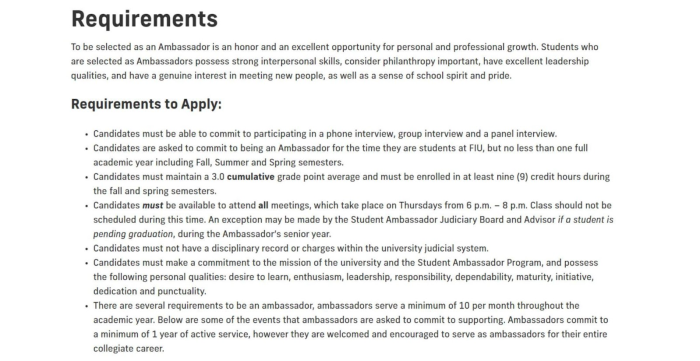
    Image 2Image 2

    Source: Kustermans

    3. Create a Strong Social Media Presence

    Beyond posting regularly, an effective social media strategy involves using platform-specific features to maximize engagement. Instagram Stories and Reels allow you to share real-time updates, camper testimonials, and behind-the-scenes glimpses of camp life. 

    Facebook Groups can build a community of returning campers and interested parents, fostering discussion and sharing updates. TikTok offers a creative space to showcase fun camp activities through short, engaging videos that appeal to younger audiences.

    Additionally, paid social media advertising is a great way to extend your reach. By running targeted ad campaigns on platforms like Facebook and Instagram, you can ensure your summer camp marketing efforts reach families actively looking for programs. 

    Geo-targeting and interest-based targeting allow you to refine your audience, ensuring your ads reach parents who are most likely to enroll their children. Running contests and giveaways on social media can also increase engagement and word-of-mouth promotion as parents and campers share your content with their networks.

    Example: Here, Western University uses its active Facebook page to maintain a strong presence, notify parents of important dates, build anticipation for the summer, and show off all of the fun activities in store. Their page features consistent branding setting them apart from other school summer camps.

    Image 3Image 3

    Image 4Image 4

    Source: Sport Western Summer Camp | Facebook

    4. Utilize Email Marketing Campaigns

    Email marketing remains a powerful tool for reaching prospective campers and their families. Sending out newsletters with enrolment updates, discounts, and testimonials keeps your audience informed and engaged. 

    An effective email marketing strategy involves segmentation, where prospective families are grouped based on their engagement levels, preferences, and past interactions. You can ensure that each recipient receives relevant messaging by tailoring content to different segments, such as new inquiries, returning campers, and families who haven’t yet completed registration.

    Drip email campaigns are particularly valuable for nurturing leads. These automated sequences gradually provide information about your camp, from program details to testimonials, making it easier for parents to commit. Additionally, incorporating visually appealing emails with compelling subject lines improves open rates and engagement.

    5. Targeted Digital Advertising Campaigns

    Traditional advertising is still effective, relevant, and part of a well-rounded marketing campaign. “How do I advertise my summer camp?” you ask. To advertise your summer camp using targeted ads, leverage platforms like Google Ads, Facebook, and Instagram to target parents actively searching for summer programs. By utilizing geo-targeting, interest-based segmentation, and retargeting campaigns, you can maximize ad visibility, drive inquiries, and increase enrolment conversions efficiently.

    Google Ads enables your summer camp to appear at the top of search results when parents look for camp programs, increasing visibility. Running display ads and retargeting campaigns ensures that those who have previously visited your website are reminded of your offerings, improving conversion rates. Additionally, YouTube Ads allow you to showcase engaging video content of camp activities, testimonials, and program highlights to attract more interest.

    Facebook and Instagram Ads offer detailed audience segmentation tools, allowing you to reach parents based on location, interests, and browsing behavior. Carousel, video, and story ads create immersive experiences that engage prospective campers and their families. To further boost engagement, A/B testing different ad creatives and copy variations helps refine messaging to determine what resonates best with your audience.

    A/B testing involves creating multiple versions of an advertisement, landing page, or email to determine which version performs best. In digital advertising, A/B testing can compare different ad headlines, images, calls to action, and audience targeting strategies. 

    Advertisers can analyze performance metrics such as click-through rates (CTR), conversion rates, and engagement levels by running multiple variations simultaneously. The winning version can then be scaled for maximum impact, ensuring your budget is allocated to the most effective ad variations.

    Example: When you invest in YouTube ads like the one pictured below, you can show up at the top of the platform’s summer camp search results and greatly expand your reach.

    Image 5Image 5

    Source: YouTube

    6. Encourage Camper and Parent Testimonials

    Word-of-mouth remains a powerful marketing tool. Encouraging past campers and their parents to leave reviews on Google, Facebook, and your website adds credibility to your program. Video testimonials are particularly effective at providing an authentic look into the camp experience. Families researching camps trust peer reviews, and showcasing positive experiences helps establish trust and attract new registrations.

    Example: Encourage happy campers to leave high-value testimonials highlighting how your program has positivly impacted their lives. The two pictured below are excellent examples of moving word-of-mouth endorsements that improve your program’s public reception and potentially incite desired action.

    Image 6Image 6

    Source: Double H Ranch

    7. Develop an Ambassador Program

    Leveraging past campers as ambassadors can create a community-driven summer camp marketing effect that builds long-term brand loyalty. Encouraging past attendees to share their experiences and recommend your camp to friends and family fosters authentic promotion. 

    One of the most effective approaches is a structured referral program, where returning campers receive discounts or perks when they bring a friend. Offering rewards such as camp merchandise, VIP experiences, or exclusive access to special activities can further incentivize participation. 

    When working with minors as ambassadors, schools should obtain parental consent, follow child privacy regulations such as COPPA, and ensure that all promotional activities align with ethical guidelines to protect student identity and well-being.

    Beyond peer referrals, partnering with local influencers, parenting bloggers, and community leaders can significantly amplify your reach. Inviting these ambassadors to visit your camp, create content, and share their experiences with their followers can increase visibility among parents searching for reputable programs. Providing them with branded hashtags, social media templates, and storytelling prompts ensures consistent and compelling messaging.

    To sustain engagement, camps should maintain an ongoing relationship with ambassadors by featuring them in newsletters, social media posts, and alumni spotlights. Creating private groups or online communities for ambassadors fosters a sense of belonging and motivates them to continue advocating for your camp. Implementing an easy-to-use referral tracking system helps measure success and refine strategies for maximum impact.

    8. Highlight Your Camp’s Unique Selling Points (USPS)

    In a competitive summer camp market, it is crucial to clearly define and communicate your camp’s unique selling points (USPs) to stand out from the rest. Parents and campers have many choices, so highlighting what makes your camp different will help you attract the right audience and increase enrolment.

    A USP is a distinct feature or quality that sets your camp apart. To effectively market your camp, you must identify and promote these features across your website, social media, and advertising campaigns. Below are some strong examples of USPs that summer camps can highlight:

    • Specialized Programs 
    • Small Camper-to-Counselor Ratio
    • Exclusive Locations
    • Highly Qualified Staff
    • Customizable Camp Experiences
    • Unique Themes or Storylines
    • Exclusive Partnerships 
    • All-Inclusive Pricing and Amenities 

    Once you’ve identified your USPs, ensure they are featured prominently on your website homepage, camp brochures, social media posts, and digital advertising. Use testimonials from past campers and parents to reinforce the uniqueness of your offerings.

    Example: The School of Magic is unique because of its emphasis on connecting with nature and developing real-world skills. Those unique selling points are evident in the Instagram post below. What sets your summer camp program apart?

    Image 7Image 7

    Source: The School of Magic

    9. Partner With Schools and Community Organizations

    Collaborating with schools and local community centers broadens your marketing reach. Schools can distribute flyers and email newsletters promoting your camp, while community organizations can help you reach families looking for summer activities. Building partnerships with educational institutions ensures that your camp gains credibility and visibility in trusted spaces where families make enrolment decisions. Create a buzz around any partnerships in your content across various platforms. 

    Example: On its website, the Canadian Adventure Camp has a tab called Memberships and Partnerships. There, they list and explain their collaborations and community involvement, showcasing how they add value for campers, families, and those in need. If you’re collaborating with any organization or if you’re involved in charity work, be sure to highlight how you make a difference!

    Image 8Image 8

    Image 9Image 9

    Image 10Image 10

    Source: Canadian Adventure Camp

    10. Optimize Your Camp’s Mobile Experience

    With more parents researching and booking camps on their smartphones, having a mobile-optimized digital presence is essential. A slow or non-responsive website can drive potential campers away, leading to lost enrolment opportunities. To ensure a seamless mobile experience, camps should prioritize mobile usability in all aspects of their digital marketing strategy.

    Responsive web design is the foundation of a successful mobile experience. Your website should automatically adjust to different screen sizes, ensuring readers can easily browse your camp’s programs, pricing, and enrolment details on any device. Without this adaptability, parents may abandon their search in favor of a competitor with a more mobile-friendly platform.

    Fast load times are another critical factor. If a webpage takes too long to load, parents may become frustrated and leave before completing the registration process. Optimizing images, minimizing unnecessary code, and leveraging browser caching can significantly improve site speed. Google prioritizes fast-loading websites in search results, meaning that a well-optimized mobile site can enhance your summer camp advertisement efforts by increasing visibility in search rankings.

    Once a parent arrives on your site, easy navigation and registration are essential. Mobile users should be able to access key pages; such as program descriptions, schedules, and pricing, within a few taps. Registration forms should be concise, requiring only necessary information, and offer autofill features to streamline the process.

    Providing click-to-call and chat features offers immediate communication options for parents with questions. A simple button allowing users to call directly from their mobile device or engage in a live chat session with a representative can make a huge difference in converting inquiries into sign-ups. Chatbots can also be used for quick responses outside of business hours, ensuring prospective campers receive the information they need when they need it.

    Finally, mobile-friendly payment options make transactions seamless. Integrating secure, one-click payment solutions like Apple Pay, Google Pay, or PayPal can speed up registration and reduce drop-offs. Parents should be able to complete payment without switching devices or navigating through a complex checkout system.

    Boost Your Camp Enrolment Today!

    Marketing a summer camp successfully requires a well-rounded, strategic approach that meets parents and campers where they are—online! By leveraging SEO, content marketing, social media, email campaigns, paid advertising, and mobile optimization, you can increase visibility, boost engagement, and ultimately drive more enrolments. Highlighting your camp’s unique selling points, developing a strong ambassador program, and ensuring a seamless mobile experience will set your camp apart in a competitive market.

    With the right mix of digital marketing techniques, your summer camp can attract the right audience and maximize registrations year after year. Whether refining your summer camp advertisement strategy, improving your website, or launching targeted ad campaigns, a data-driven approach ensures long-term success.

    At Higher Education Marketing, we specialize in helping camps and educational institutions implement proven digital marketing strategies that deliver results. If you’re ready to take your summer camp marketing to the next level, reach out to us today to learn how we can help you achieve your enrolment goals.
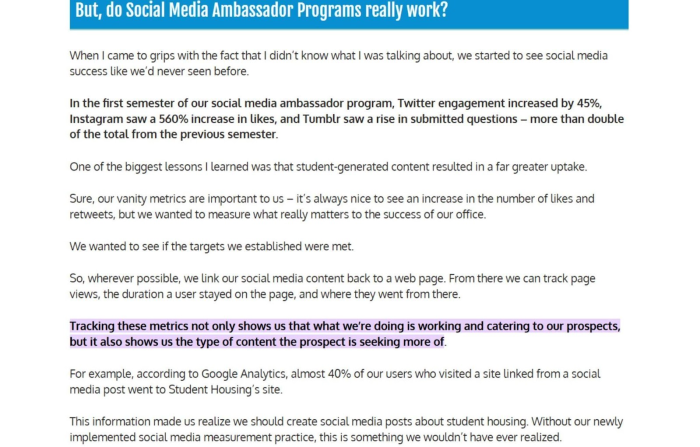
    Struggling with enrollment?

    Our expert digital marketing services can help you attract and enroll more students!

    Source link

  • The Importance of an Alumni Network

    The Importance of an Alumni Network

    Reading Time: 9 minutes

    With your experience in the education field, you likely understand the benefits of cultivating strong relationships with current members of your school community. What many school administrators and marketers forget is that alumni, though they no longer attend a school, are invaluable to educational marketing strategy and an institution’s overall growth. If you haven’t already, it’s time to examine how your school can build a strong alumni network as part of your marketing efforts and general institutional development. 

    An alumni network is one of the most valuable assets a school can cultivate. Your graduates are living proof of your programs’ effectiveness. Their journeys from classroom to career serve as compelling testimonials that not only strengthen institutional reputation but also attract prospective students who seek assurance that your school can set them up for success. Join us as we discuss what an effective alumni network should look like, the benefits you can expect, and how to get started.

    Struggling with enrollment?

    Our expert digital marketing services can help you attract and enroll more students!

    What’s an Alumni Network?

    At its core, an alumni network is a community of former students who remain engaged with their alma mater. This engagement can take many forms, from mentorship opportunities and career support to networking events and fundraising initiatives. A well-developed alumni network fosters lifelong connections, enabling graduates to support each other while strengthening the institution that provided their foundation.

    HEM MARCH 15 - Image 2HEM MARCH 15 - Image 2

    Enriching Education: The Power of an Alumni Network

    When alumni feel connected to their school, they become brand ambassadors, willingly sharing their success stories and contributing to a culture of loyalty and pride. These graduates are more likely to participate in career panels, donate to scholarship funds, and advocate for your institution within their professional circles. Most importantly, their success becomes a tangible example of your school’s impact, which is a powerful marketing tool in itself.

    Alumni relationships create a dynamic ecosystem of support, mentorship, and career growth. So in summary, why is alumni networking important? It plays a crucial role in helping graduates navigate their professional journeys, opening doors to job opportunities, industry insights, and collaborative ventures. An engaged alumni network ensures students are stepping into a lifelong professional community that enhances their career trajectory. For schools, this network fosters goodwill and credibility, proving that your programs produce graduates who thrive in competitive industries.

    Do you need support navigating alumni networks and other aspects of your school’s marketing strategy? Ask about our tailored digital marketing services for schools!

    Example: On a dedicated alumni network page on their website, Ivey Business School plainly states the objective of their program” To encourage and promote continuous professional and personal enrichment by connecting alumni with each other and the school”. The alumni network is positioned as a resource for career development and support for graduates.

    HEM MARCH 15 - Image 3HEM MARCH 15 - Image 3

    Source: Ivey Business School

    The Unique Marketing Benefits of Alumni Networks

    Now that higher education is increasingly competitive, the ability to showcase real-world success is crucial. What is the value of alumni networks when it comes to your marketing strategy? Alumni networks are excellent social proof, providing great opportunities for organic traffic, and showcasing how your school facilitates career development. Here’s how: 

    Your Alumni Network Offers Valuable Social Proof

    In an education marketing context, social proof refers to the credibility and trust institutions build by showcasing the success and satisfaction of their alumni, current students, and faculty. When prospective students see tangible examples of graduates thriving in their careers, testimonials from successful alumni, or high employer satisfaction rates, they gain confidence that choosing your school is a worthwhile investment.

    Social proof can take many forms, including video testimonials, alumni spotlights, employer endorsements, rankings, and word-of-mouth referrals. A strong alumni network serves as a powerful form of social proof, demonstrating that your institution provides quality education and equips graduates with the skills, knowledge, and professional connections necessary for long-term success.

    Alumni success stories create a compelling narrative that validates the effectiveness of your curriculum, the strength of your career support services, and the credibility of your institution as a whole. Whether through personal testimonials, LinkedIn endorsements, or employer recommendations, alumni reinforce the value of your educational offerings in a way that no traditional marketing message can replicate. 

    Example: On their website, Boston University showcases alumni success stories that highlight educational and career development opportunities like internships and networking events. The success of graduates provides valuable social proof for prospective students, who can identify with and look up to these role models.

    HEM MARCH 15 - Image 4HEM MARCH 15 - Image 4

    Source: Boston University

    Driving Organic Traffic

    An engaged alumni network plays a crucial role in generating organic traffic through word-of-mouth marketing. When alumni have a positive experience with your institution, they naturally become enthusiastic advocates, sharing their journey with peers, family members, and colleagues. This organic promotion is highly credible because it comes from real-life experiences rather than institutional messaging. 

    Beyond personal referrals, alumni contribute to organic traffic through their online presence. When they mention your school on LinkedIn, post about their achievements on social media, or participate in professional discussions related to their field, they create a ripple effect that drives interest in your institution. Schools can amplify this impact by encouraging alumni to tag their alma mater in their career updates, engage in school-sponsored events, and contribute to online discussions within alumni groups.

    Additionally, search engines favor authentic, frequently updated content. When alumni success stories are featured on your website, blog, or social media channels, they provide valuable, keyword-rich content that enhances search visibility. Prospective students searching for insights on career outcomes in their chosen field may stumble upon these stories, further reinforcing your school’s credibility and increasing inquiries and applications.

    Example: Here an alumni from Koç University in Turkey posts a very valuable testimonial, even tagging her alma mater and citing it as the #1 medical school in the country. In addition to an official alumni network, encouraging UGC from graduates is an effective strategy that comes across as authentic and therefore, trustworthy. Ask alumni to tag your school in graduation posts or list you in the education section of their LinkedIn profiles for organic traffic.

    HEM MARCH 15 - Image 5HEM MARCH 15 - Image 5

    Source: Instagram

    Mentorship and Career Services as a Unique Selling Point

    An active alumni network can significantly enhance a school’s career services by establishing mentorship opportunities and creating a direct pathway for graduates to secure employment. When alumni hold influential positions in various industries, they become a valuable resource for current students and recent graduates looking to break into their fields. Schools that foster strong alumni engagement can tap into this network to offer students real-world insights, industry-specific guidance, and professional connections that go beyond what traditional career services can provide.

    By collaborating with alumni who have become hiring managers, entrepreneurs, or industry leaders, schools can develop a reliable talent pipeline that benefits both graduates and employers. Alumni who feel a deep connection to their alma mater are more likely to offer internship programs, job placements, and networking opportunities tailored specifically to students from their former institution. These partnerships not only enhance job placement rates but also reinforce the credibility of your programs, proving to prospective students that your institution delivers real career outcomes.

    Moreover, alumni mentors can serve as role models, helping students navigate their career paths through professional guidance and hands-on training. Schools can structure formal mentorship programs where alumni are paired with students based on career interests, fostering long-term professional relationships that extend well beyond graduation. These interactions boost student confidence, provide practical career advice, and offer an inside look at industry trends and expectations.

    When alumni return to recruit from their alma mater, it strengthens the institution’s reputation as a trusted source of skilled professionals. This cyclical relationship, where alumni continuously contribute to the success of new graduates, creates a sustainable ecosystem of career support and growth.

    Example: McMaster University has an Alumni Services page that highlights all of the career advantages that come with being part of their alumni network. Be sure to put all of the career benefits that your alumni network offers on full display so that you can leverage them as part of the FAB marketing strategy (features, advantages, and benefits), an effective form of brand storytelling that encourages prospective students to vividly imagine their success at your institution.

    HEM MARCH 15 - Image 6HEM MARCH 15 - Image 6

    Source: McMaster University

    Building a Strong Alumni Network

    If you want to harness the power of alumni networks, it starts with cultivating meaningful relationships from the moment students enroll. Establishing a culture of connection early on makes it easier to keep graduates engaged long after they receive their diplomas.

    One of the most effective ways to build a thriving alumni network is through dedicated alumni associations. These groups should not merely exist on paper but should be actively nurtured with opportunities for engagement, such as career workshops, networking events, and mentorship programs. Leveraging digital platforms, such as LinkedIn and exclusive alumni portals, helps create spaces where former students can stay in touch, share job openings, and collaborate on projects.

    Personalized outreach is key to maintaining long-term engagement. Schools that take the time to check in with alumni (through newsletters, exclusive events, or professional development opportunities) demonstrate continued investment in their graduates’ success. This encourages reciprocity, as alumni become more willing to give back, whether through donations, guest lectures, or referrals.

    Video testimonials featuring alumni discussing how your programs shaped their careers are incredibly effective. Highlighting their professional achievements, career transitions, and personal growth builds trust with prospective students who are weighing their options. Success stories can be embedded into your website, showcased on social media, and included in email campaigns.

    Featuring alumni in live webinars or Q&A sessions allows prospective students to ask direct questions about career outcomes. This real-time engagement adds credibility to your institution’s claims, reinforcing the message that your graduates excel in their fields. Schools that leverage alumni networks in these ways transform passive viewers into engaged applicants.

    Example: Get creative with your alumni recruitment strategy! Here, Stellenbosch University promotes its alumni network app, Maties Alumni, on YouTube – an exclusive, all-in-one platform for nurturing alumni relationships, career opportunities, mentorship, and personal connections.

    HEM MARCH 15 - Image 7HEM MARCH 15 - Image 7

    Source: Stellenbosch University | YouTube

    Elevating Your School’s Reputation Through Alumni Success

    Ultimately, the strength of your alumni network is a reflection of the strength of your institution. Schools that prioritize alumni engagement are not only fostering lifelong relationships but are also investing in an authentic, powerful marketing strategy. By celebrating alumni achievements, maintaining strong communication channels, and integrating success stories into recruitment efforts, you can build lasting credibility and attract the next generation of students eager to follow in their graduates’ footsteps.

    If your institution is looking for ways to enhance engagement and incorporate alumni networks into your marketing strategy, Higher Education Marketing can help you develop targeted campaigns that amplify your alumni success stories and drive enrollment growth. Your graduates are your greatest success. Make sure their voices are heard!

    Struggling with enrollment?

    Our expert digital marketing services can help you attract and enroll more students!

    Frequently Asked Questions

    Question: Why is alumni networking important? 

    Answer: It plays a crucial role in helping graduates navigate their professional journeys, opening doors to job opportunities, industry insights, and collaborative ventures.

    Question: What is the value of alumni networks?

    Answer: Alumni networks are excellent social proof, provide great opportunities for organic traffic, and showcase how your school facilitates career development.

    Source link

  • Leverage Student Ambassadors and UGC in Education Marketing

    Leverage Student Ambassadors and UGC in Education Marketing

    Reading Time: 11 minutes

    Authenticity has become a cornerstone of successful education marketing campaigns. Nothing speaks louder to prospective students than real experiences shared by current students. That’s why we recommend the combined use of two powerful tools: student ambassador programs and user-generated content (UGC). 

    These strategies harness the voices of your students to create compelling, authentic narratives that resonate. In this blog, we’ll explore the enrollment-boosting potential of student ambassadors and UGC for education marketing, the benefits they offer, and actionable steps to integrate them into your strategy. Let’s get started!

    Struggling with enrollment?

    Our expert digital marketing services can help you attract and enroll more students!

    Understanding the Role of a Student Ambassador

    What is a student ambassador? A student ambassador is a current student who represents your institution in various capacities, from marketing and recruitment to campus events. These individuals are typically chosen for their enthusiasm, communication skills, and ability to connect with diverse audiences. 

    What do student ambassadors do? As the face of your school, student ambassadors embody its culture and values, offering prospective students and their families an authentic glimpse into campus life. 

    The roles of student ambassadors are varied. They may host campus tours, participate in Q&A sessions during open houses, or even create content for your social media platforms. By sharing their personal experiences, they help humanize your institution, breaking down barriers and building trust.

    HEM Image 2HEM Image 2

    HEM Image 3HEM Image 3

    Source: University of Waterloo

    Example: On its website, the University of Waterloo has a dedicated page for members of its community who are interested in its student ambassador program. This page details the role of a student ambassador, the requirements for candidates, their workload, and compensation. When you launch your student ambassador program, use site content to provide vital information to potential candidates and the students they’ll support in their roles. Use social media to keep your audience updated on the application process and involve student ambassadors in content creation to establish a relationship between them and the rest of your student body. 

    Reach out for help implementing effective enrollment-boosting digital marketing strategies! 

    What Is User-Generated Content (UGC)?

    User-generated content (UGC) refers to any content created by your students, alumni, or even staff, rather than your marketing team. This can include photos, videos, testimonials, social media posts, or blogs that showcase their authentic experiences. Unlike polished advertising campaigns, UGC is often raw and unfiltered, making it highly relatable and trustworthy.

    Now that audiences are bombarded with promotional material, UGC stands out. It delivers a level of authenticity that professionally crafted content simply cannot replicate. For prospective students, seeing someone “just like them” thriving at your institution can be the deciding factor in their enrollment journey.

    HEM Image 4HEM Image 4

    Source: University of Oxford | TikTok

    Example: Take a look at the comments on this TikTok video. The bottom one shows how many prospective students are turning to current students for advice and insights into their journey with your institution. This “day in the life” video from a University of Oxford student offers a glimpse into campus life from a personal perspective. Videos shared on a student’s personal page often feel more genuine since they don’t come across as promotional content.

    That’s not to say your school shouldn’t engage with these posts! Use hashtags, like #universityofoxford, to find UGC created by your community and reshare it on your school’s profile. To encourage more of this content, promote specific hashtags and even run contests or challenges to inspire creativity and engagement.

    The Benefits of Student Ambassadors and UGC

    Though their methodology is different, both student ambassador programs and UGC help to tell your school’s unique story authentically.

    These methods are particularly effective at humanizing your school’s brand. Discover some more of the unique benefits you can see when you combine these strategies correctly.

    • Authenticity and Trust: Both student ambassadors and UGC provide unfiltered insights into your institution. Prospective students are more likely to trust the words of a peer than a marketing brochure. When real students share their stories, it creates a sense of transparency and trust.
    • Increased Engagement: Content created by student ambassadors and peers often performs better on social media platforms. Audiences are more likely to engage with posts that feel genuine and relatable. This increased engagement can translate to higher visibility for your institution.
    • Cost-Effectiveness: Leveraging the voices of your students can reduce the need for extensive advertising budgets. While there may be costs associated with training or compensating ambassadors, the return on investment through increased applications and enrollment often outweighs the initial expenditure.
    • Community Building: By involving students in your marketing efforts, you foster a sense of pride and belonging. Ambassadors feel more connected to your institution, and their enthusiasm is infectious, positively influencing both their peers and prospective students.

    How to Build a Successful Student Ambassador Program

    Building a student ambassador program involves creating a structured initiative that aligns with your school’s marketing goals and fosters authentic engagement. A successful program requires careful planning, clear objectives, and ongoing support to empower ambassadors as true representatives of your institution. Here, we’ll walk you through the essential steps to design and implement a program that connects with prospective students and amplifies your school’s story.

    Define Clear Objectives

    Clear objectives are the cornerstone of a student ambassador program, aligning with your marketing goals and guiding ambassadors toward success. Start by clearly outlining the program’s purpose. For example, increasing applications, enhancing campus tour experiences, or boosting social media engagement. 

    This clarity of intent should be paired with measurable goals, to help ambassadors understand what success looks like. Measurable goals could be increasing tour attendance by 20% or generating a set number of social media posts each month 

    Tailor these objectives to match the unique strengths of each ambassador, assigning roles that play to their talents, such as public speaking for campus tours or storytelling for blog posts and videos. Providing a clear role description that details their responsibilities, tasks, and time commitments is equally critical to avoid confusion and set expectations. 

    To foster motivation, explain the “why” behind their tasks, helping them see how their efforts impact prospective students, build trust in the institution, and contribute to enrollment goals. Regular check-ins or feedback sessions can also ensure ambassadors stay on track, allowing for adjustments and maintaining engagement. With clearly defined objectives and the right support, ambassadors can confidently represent your institution and drive meaningful results.

    Recruit the Right Ambassadors

    Select ambassadors who reflect the diversity and values of your institution. Look for individuals who are enthusiastic, articulate, and comfortable sharing their experiences. Peer recommendations, faculty referrals, and application processes can help identify the best candidates.

    Foster Collaboration

    Facilitate collaboration between ambassadors and your marketing team. Regular meetings can help align their content with your broader campaigns while maintaining authenticity. Ambassadors should feel supported but not micromanaged.

    HEM Image 5HEM Image 5

    Source: University of Windsor

    Example: The University of Windsor demonstrates trust in its student ambassadors with a unique feature on its website. It allows current and prospective students to select an ambassador to chat with for answers to their school-related questions. To replicate this success, implement a comprehensive training program to ensure consistency and quality. Clear expectations enable your ambassadors to take on key responsibilities confidently, delivering a strong return on your investment.

    Provide Comprehensive Training

    • Familiarize Ambassadors with Your Institution’s Key Messaging and Values
      Begin by familiarizing ambassadors with your institution’s key messaging and values. This includes providing them with a clear understanding of your school’s mission, vision, and what sets it apart from competitors. Equip them with talking points about academics, extracurricular offerings, campus facilities, and student life, ensuring consistency in how they communicate your brand. Role-playing exercises can be particularly effective here, helping ambassadors practice delivering messages in a variety of scenarios, such as open houses, campus tours, or online Q&A sessions.
    • Train Ambassadors on Social Media Best Practices
      Training should also include social media best practices, especially if ambassadors are creating content for your platforms. Teach them how to craft posts that are engaging and aligned with your school’s tone and style. Provide guidelines on appropriate language, photo and video quality, and compliance with privacy policies.
    • Develop Public Speaking Skills
      Since many ambassadors will engage with prospective students and families in person, public speaking training is invaluable. Help them refine their communication skills with workshops that focus on clarity, confidence, and storytelling. Encourage them to share personal anecdotes about their experiences at your school, as these authentic stories are often the most memorable. Practice sessions with constructive feedback can significantly boost their comfort in delivering presentations or handling impromptu questions.
    • Build Soft Skills for Diverse Audiences
      Effective training also involves building soft skills like empathy, adaptability, and cultural awareness, especially for ambassadors interacting with diverse audiences. 

    Include scenarios that challenge them to navigate different cultural perspectives or address sensitive questions tactfully. By fostering these skills, you ensure ambassadors can create welcoming and inclusive experiences for prospective students and their families.

    • Incorporate Interactive Training Methods
      To make training engaging and practical, use a mix of interactive methods such as role-playing, group discussions, and hands-on activities. Incorporate real-world examples and success stories from past ambassadors to inspire new recruits and show them what’s possible. Providing a training manual or digital resource hub can also serve as a handy reference for ambassadors as they grow into their roles.
    • Provide Ongoing Support and Refreshers
      Finally, ongoing support and refreshers are critical. Schedule periodic check-ins to provide additional guidance, address challenges, and celebrate successes. The more prepared they are, the more effectively they’ll represent your school.

    Empower Ambassadors to Create

    Empowering student ambassadors to create their own content is one of the most effective ways to showcase the authentic, lived experiences that resonate with prospective students. By trusting ambassadors with creative freedom, you enable them to craft content that feels genuine and relatable—qualities that polished marketing campaigns often struggle to replicate.

    Start by encouraging ambassadors to focus on their personal experiences and unique perspectives. Heartfelt testimonials are another powerful form of content. Whether it’s a written story, a video, or a social media post, ambassadors sharing their personal journeys—why they chose your school, how it’s impacted their lives, and what they’ve learned—can create an emotional connection with viewers. 

    To provide inspiration and structure, consider giving student ambassadors a content calendar – a detailed content plan that outlines the where, what, and when of your posts. Highlighting diverse voices within your ambassador team ensures a broad range of experiences and perspectives are represented, appealing to a wider audience.

    Celebrate Their Contributions

    Recognize and reward your ambassadors for their efforts. This can range from financial compensation to exclusive perks like access to networking events or career development opportunities. Publicly celebrating their work reinforces their value and motivates others to get involved.

    HEM Image 6HEM Image 6

    Source: New York University

    Example: Here, New York University’s School of Global Public Health welcomes a new student ambassador, celebrating her accomplishments in the field, describing her role in the NYU community, and directing the audience to her student blog post. In addition to monetary rewards, student ambassadors appreciate public acknowledgments of their contributions. 

    Measure Success

    Track the impact of your ambassador program using metrics such as social media engagement, website traffic, and application rates. Use this data to refine your approach, ensuring continuous improvement.

    Incorporating UGC into Your Marketing Strategy

    A UGC marketing campaign can be a goldmine for schools looking to leverage their communities to tell their story. By encouraging students to share their experiences, you tap into a wealth of relatable and engaging material that resonates with prospective students. Let’s explore how to integrate UGC into your marketing strategy for maximum impact.

    Create Opportunities for UGC

    Encourage your students to share their experiences by hosting contests, themed hashtag campaigns, or student takeovers on social media. The more accessible you make the process, the more likely students are to participate.

    HEM Image 7HEM Image 7

    Source: Caleontwins | TikTok

    Example: Here, Humber College has paid well-known influencers to promote a contest called Humber Bring It. The aim was to showcase all the unique skills students brought to their community. In their video, the Caleon twins shared all the essential details of the contest such as the deadline, prizes for winners (a 5000 dollar tuition credit or a laptop), and the hashtag that each contestant should use. Contests like this are the perfect way to create a UGC buzz around your institution. 

    Showcase UGC Across Platforms

    To maximize the impact of user-generated content (UGC), feature it prominently across your marketing platforms. Incorporate student stories, photos, and videos on your website’s homepage, within program pages, and in blog posts to provide a genuine glimpse into campus life. Social media channels are another natural home for UGC, where they can drive engagement and create relatable touchpoints with prospective students. Consider integrating this content into admissions brochures, emails, and campus tour presentations to ensure consistent messaging.

    Before sharing any UGC, prioritize student consent. Always seek permission from contributors, clearly explaining where and how their content will be used. Providing written guidelines and gaining explicit agreement ensures transparency and builds trust. By celebrating your students’ experiences respectfully and prominently, you showcase your school’s vibrant community and also create a foundation of authenticity and ethical storytelling that resonates with your audience.

    Maintain Quality Control

    While UGC is inherently less polished, maintaining a level of quality ensures it aligns with your institution’s values and messaging. Begin by establishing clear guidelines for students contributing content. 

    These guidelines should outline your school’s tone, branding, and expectations for appropriateness, while still encouraging creativity and individuality. For example, provide tips on photography and video basics, such as lighting and framing, to enhance visual appeal without compromising authenticity.

    Review content before publication to ensure it represents your school positively. This doesn’t mean heavily editing or sanitizing the material—rather, it’s about ensuring the content reflects your institution’s culture, is free of inappropriate language or imagery, and avoids unintentional misrepresentation.

    Offering feedback to students can also be a valuable learning experience, helping them refine their work while staying true to their voice. By balancing authenticity with quality, you showcase the best of your community in a way that’s both relatable and professional.

    Engage with UGC Creators

    Show appreciation for students who contribute content by engaging with their posts, sharing their work, or even spotlighting them in dedicated campaigns. This not only boosts their morale but also encourages others to participate.

    Use UGC to Tell Stories

    Go beyond individual posts by weaving UGC into cohesive narratives. For example, compile videos and testimonials into a series showcasing different aspects of campus life. Storytelling adds depth and emotional resonance to your campaigns.

    Bringing It All Together

    Student ambassador programs and UGC are avenues for building authentic connections with your audience. By leveraging the voices of your students, you showcase your institution’s unique story in a way that resonates deeply with prospective students and their families.

    At Higher Education Marketing, we specialize in helping schools like yours unlock the potential of these strategies and many others. Whether you’re just starting or looking to refine your approach, our expertise ensures your campaigns drive meaningful engagement and results.

    Your students are your greatest storytellers. Let their voices elevate your brand and inspire the next generation to join your community.

    Struggling with enrollment?

    Our expert digital marketing services can help you attract and enroll more students!

    Frequently Asked Questions 

    What is a student ambassador

    A student ambassador is a current student who represents your institution in various capacities, from marketing and recruitment to campus events.

    What do student ambassadors do? 

    As the face of your school, student ambassadors embody its culture and values, offering prospective students and their families an authentic glimpse into campus life.

    Source link

  • How to Create an Education Marketing Plan for 2025

    How to Create an Education Marketing Plan for 2025

    Reading Time: 9 minutes

    It’s 2025! Now is the perfect time to reevaluate your strategies and set a fresh, bold new vision for your institution’s success. This year, education marketing will continue to evolve rapidly, and staying ahead means adapting to the latest trends, technologies, and audience expectations. Keeping this in mind as you follow the 4 stages of the marketing planning process will help you boost your school’s digital marketing campaign results. 
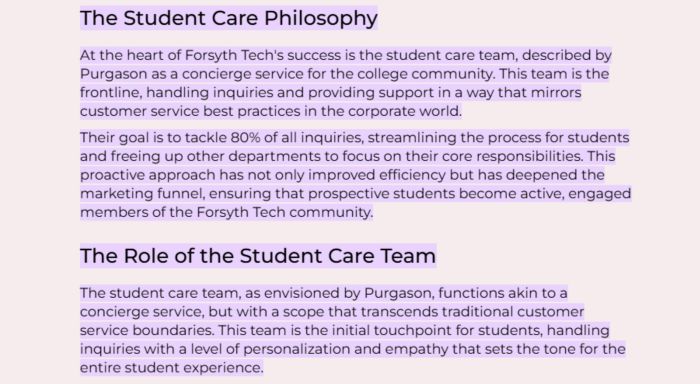
    What are the 4 stages of the marketing planning process? Follow these steps: Analyze, plan, implement, and control. The advice we’re sharing today is applicable during each of these phases.

    As a school marketer or administrator, you have the opportunity to refresh your education marketing plan, making it more dynamic, personalized, and impactful. This guide will walk you through actionable steps to rethink your approach and leverage the tools that will define success in 2025. Let’s get started!

    Struggling with enrollment?

    Our expert digital marketing services can help you attract and enroll more students!

    Evaluating 2024’s Performance to Shape 2025 Goals

    How do you create a marketing plan for education? Any successful education marketing plan involves a data-driven evaluation of the previous year’s performance, an analysis of current digital marketing trends, and a targeted investigation into what your particular audience needs.

    To start your school’s reimagined marketing plan, conduct an honest evaluation of the previous year’s performance. Begin by reviewing their analytics from 2024, identifying what strategies brought the most engagement, where the most valuable leads originated, and what channels seemed underutilized. Metrics such as lead-to-enrollment conversion rates, social media engagement trends, and website traffic sources can illuminate what strategies resonated most effectively with prospective students and parents.

    To make this evaluation productive, a methodical approach should be applied. Your team can organize findings by categorizing successful campaigns, unexpected successes, and areas where they fell short. This allows you to use data to guide your decisions. This data-driven assessment will form a solid foundation for crafting strategies that are both visionary and practical in 2025.

    HEM Image 6HEM Image 6

    HEM Image 8HEM Image 8

    Source: HEM

    Example: Digital marketing audits such as the one we completed for one of our clients are an excellent way to reflect on last year’s performance and enter the new year with a data-informed plan. Our digital marketing audits include traffic insights, keyword rankings, and personalized suggestions for optimizing your school site. This provides a solid starting point to creating a marketing plan that drives results.
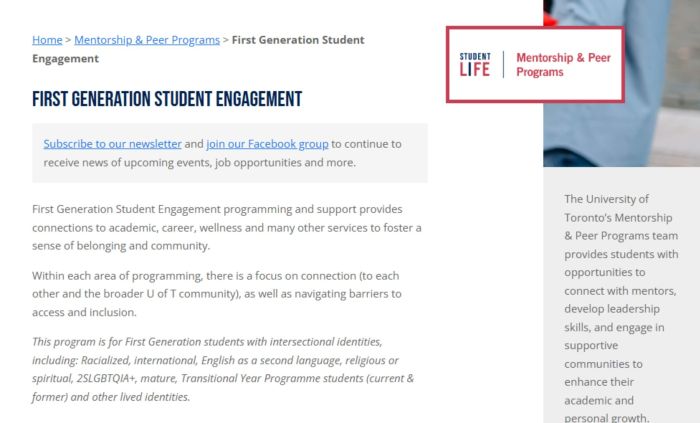
    Do you need support as you create a new digital marketing plan for your school? Reach out to see how our digital marketing services can help

    Reimagine How You Engage with Prospective Students

    In 2025, your audience expects you to meet them where they are. To stay relevant, you need to embrace a digital-first strategy that prioritizes engagement over promotion. Emerging technologies like augmented reality (AR) and virtual reality (VR) can bring your campus to life for prospective students, offering immersive experiences that go beyond static images or videos.

    HEM Image 5HEM Image 5

    Source: University of Western University

    Example: This AR campus tour, complete with 360º images, audio guidance, and detailed written descriptions of your campus as Western has done is a convenient, immersive way to share your school with prospects. Take full advantage of new technology when creating an education marketing plan. Though not as revolutionary as AR and VR, social media is another tool you should never neglect when creating a school marketing campaign.

    Social media is where the most authentic connections happen, especially on platforms like TikTok and Instagram. But the key to standing out in 2025 will be authenticity. Think about how you can use short-form videos to showcase real student experiences, faculty achievements, or day-in-the-life snapshots. Consider hosting live Q&A sessions or interactive events to foster direct engagement. The more you humanize your institution, the stronger the connection you’ll create with your audience.

    Leverage Artificial Intelligence for Smarter Marketing

    Artificial intelligence (AI) has moved beyond being a buzzword—it’s now a vital part of successful marketing. This year, take advantage of AI to transform how you interact with prospective students. Predictive analytics, powered by AI, can help you understand student behavior and target your campaigns with unprecedented precision. You can predict the types of students most likely to enroll, what they care about, and how they prefer to engage with your school.

    Chatbots are another way AI can streamline your communication. Today’s chatbots don’t just answer basic questions—they guide prospective students through complex processes like application submission or program selection. You can also use AI to personalize your outreach efforts, crafting content tailored to each prospect’s unique interests and behaviors. AI provides efficiency and more; it helps you create an experience that feels relevant and meaningful.

    Make Accessibility and Inclusivity a Priority

    Your prospective students come from diverse backgrounds and circumstances, and they expect your marketing to reflect that. In 2025, it’s more important than ever to create campaigns that are accessible to everyone. Take a close look at your website and digital content. Is it optimized for screen readers? Does it work seamlessly on mobile devices? These small adjustments can make a big difference in how inclusive your institution feels to prospective students.

    Inclusivity also means speaking to the values your audience cares about. Highlighting diversity, equity, and inclusion initiatives on your campus can help students see themselves as part of your community. International students, in particular, will appreciate content that acknowledges their unique needs, whether it’s visa support, language resources, or cultural events. By showing that you’re committed to creating an inclusive environment, you’ll build trust and strengthen your brand.

    HEM Image 4HEM Image 4

    Source: Syracuse University |  Instagram

    Example: Here, Syracuse University demonstrates its commitment to diversity and inclusion with a dedicated office for championing these principles. On its Instagram page dedicated to its Office of Diversity and Inclusion, Syracuse University provides updates on how it fosters acceptance and respect in meaningful, action-oriented ways. 

    Adapt Your SEO Strategy for the Future of Search

    Search engine optimization (SEO) is evolving, and your strategy needs to keep pace. In 2025, the way people search for information is increasingly conversational. With voice search growing in popularity, you need to focus on optimizing for natural language queries. Prospective students are asking questions like, “What’s the best school for me in New York?” or “How can I study abroad in Italy?” Tailoring your content to match these queries will make it easier for them to find you.

    Video SEO is also a critical area to watch. Platforms like YouTube and TikTok are now major search engines for younger audiences. By creating engaging video content and optimizing it with descriptive titles, tags, and captions, you can expand your reach significantly. Don’t forget to prioritize user experience—your website should load quickly, look great on mobile, and provide intuitive navigation.

    HEM Image 3HEM Image 3

    Source: TikTok

    Example: As you create your 2025 SEO strategy, don’t underestimate the importance of video SEO on platforms such as TikTok and YouTube. Your young prospects are searching for information about schools in an easy-to-digest, engaging format. This means that video platforms the perfect place for you to make your first impression on them. 

    Stay Ahead with Innovative Advertising Strategies

    If paid advertising is part of your student recruitment strategy, now is the time to rethink how you’re using it. Interactive ads—featuring live polls, quizzes, or even augmented reality filters—can capture attention and drive engagement. Streaming platforms and connected TV are also gaining traction as advertising spaces, giving you new ways to reach prospective students and their families.

    Retargeting campaigns will be even smarter in 2025, thanks to AI. Imagine delivering ads that dynamically adjust based on a prospective student’s previous interactions with your website or social media. These personalized ads feel more relevant, increasing the chances of conversion. At the same time, new privacy regulations mean you’ll need to adopt ethical, transparent practices when handling user data. Building trust with your audience will be just as important as getting their attention.

    Use Data to Continuously Improve

    Marketing isn’t static—it’s an ongoing process of learning and refining. This year, make data-driven decision-making the backbone of your strategy. Use your analytics tools to track key metrics like website traffic, social media engagement, and lead conversions. What’s working? What’s falling flat? By identifying education marketing trends and adjusting your approach in real time, you can ensure that your efforts are always aligned with your goals.

    Predictive analytics can help you go even further by forecasting future trends and identifying areas for growth. For example, if your data shows that a specific program is generating high interest but low conversions, you can adjust your messaging to address potential concerns. The more you rely on insights, the more effective your campaigns will be.

    HEM image 2HEM image 2

    Source: Google Analytics

    Example: In 2025, analytics tools will continue to be essential for making informed decisions about your school’s digital marketing strategy. As you can see in the example above, Google Analytics provides information about traffic volume and sources, audience demographics, and user behavior for your site. 

    Showcase Your Brand’s Values Through Partnerships

    Students in 2025 want more than just a degree—they want to join a community that aligns with their values. Highlighting your partnerships with industry leaders, alumni, and global institutions can help reinforce your school’s credibility and reach. Think about how you can collaborate with partners to launch new initiatives, co-host events, or create content that appeals to your target audience.

    For international students, partnerships with schools abroad or study-abroad programs can be particularly compelling. Promoting these opportunities shows that you’re forward-thinking and globally minded, which can resonate with students looking for diverse and enriching experiences.

    HEM Image 1HEM Image 1

    Source: Instagram | Ivy Campus USA

    Example: Partnerships are a highly effective way to demonstrate your institution’s commitment to continuous academic enrichment for students. Here, Ivy Campus USA announces a partnership with Artal International Preparatory School that offers young students unique skills. Try forging partnerships that can provide valuable and unique learning opportunities for your prospects. 

    Anticipate What Students Will Want in 2025

    The next generation of students expects your institution to care about issues that affect them directly such as mental health, career development, and sustainability. Incorporating these priorities into your marketing campaigns can help you stand out. Highlight your mental health resources, career placement rates, and green initiatives. Transparency is key—students and their families want clear, honest information about tuition costs, scholarships, and program outcomes.

    By anticipating their needs and addressing them upfront, you can create a marketing plan that not only attracts attention but builds trust.

    Create a Seamless Multi-Channel Experience

    Your audience moves seamlessly between platforms, and they expect your marketing to do the same. Whether someone is exploring your website, scrolling through Instagram, or attending a virtual open house, they should encounter consistent messaging and visuals that reinforce your brand. In 2025, it’s critical to ensure that all your channels work together to provide a unified experience.

    Real-time engagement will also be a game-changer. Live events—like virtual Q&A sessions or webinars—offer opportunities to connect directly with prospective students and answer their questions. By creating these interactive moments, you can leave a lasting impression and strengthen their connection to your school.

    By embracing new technologies, prioritizing inclusivity, and building campaigns that reflect the values of modern students, you can create a strategy that resonates deeply and drives real results. The new year is your opportunity to reimagine what’s possible, and with the right approach, you’ll not only meet your goals but exceed them.
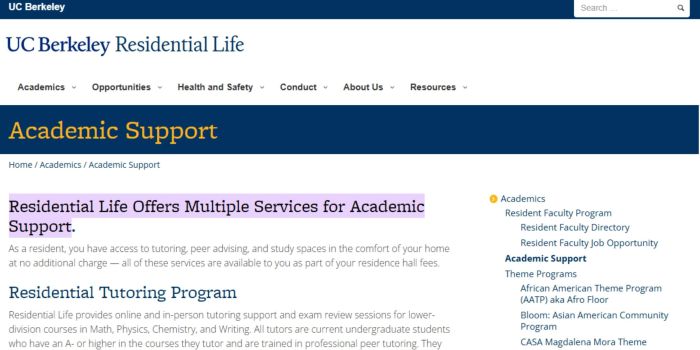
    We’re here to help!

    Struggling with enrollment?

    Our expert digital marketing services can help you attract and enroll more students!

    FAQ

    What are the 4 stages of the marketing planning process?

    Follow these steps: Analyze, plan, implement, and control.

    How do you create a marketing plan for education?

    Any successful education marketing plan involves a data-driven evaluation of the previous year’s performance, an analysis of current digital marketing trends, and a targeted investigation into what your particular audience needs.

    Source link

  • College Recruitment Strategies and Ideas to Boost Enrollment

    College Recruitment Strategies and Ideas to Boost Enrollment

    Student Recruitment Ideas for Better Enrollment Marketing

    College recruitment strategies have undergone a seismic shift in recent years with the rise of an always-on digital audience and the growing accessibility of online programs. Fewer geographical constraints and heightened competition have fueled this realignment, prompting institutions to craft student recruitment strategies that are as dynamic as the students they aim to enroll. 

    In the modern, digital-first landscape of higher education, recruitment season is no longer confined to the traditional August to December window. Students are applying and enrolling year-round, and your institution must constantly assess which strategies are driving results and which are falling flat. 

    By embracing smarter, data-driven marketing tactics, you can stand out in the crowded landscape of online education, uniting students under the shared mission of your institution. 

    The Importance of Student Recruitment Strategies 

    You’ve been working in higher education for over a decade, but recently, student recruitment seems harder. You’re not alone. Prospective students are going in less traditional directions and finding cheaper, faster ways to become qualified for the workforce through modalities such as online certificates and boot camp programs. Inflation isn’t helping either. 

    But through a realignment of strategy to meet digital native consumers, you can meet students where they are and capitalize on projected enrollment growth

    Don’t get scared into sticking with outdated ways of reaching prospective students. Instead, rise to the challenge, get a better understanding of the landscape you’re working with, and refresh your enrollment marketing strategy. 
    3 Student Recruitment Strategies

    We won’t tell you that all traditional marketing strategies are outdated, but we do want to make it crystal clear that students are online. They’re surfing the web on their smartphones and discovering new universities and programs through (mostly mobile) online journeys. If your enrollment strategy isn’t rooted in this reality, you’re at risk of losing more than half of your potential students. 
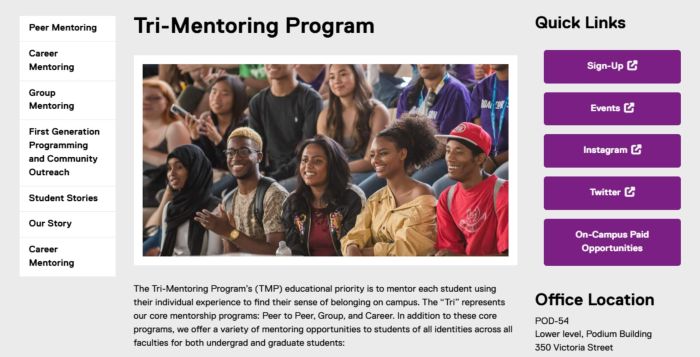
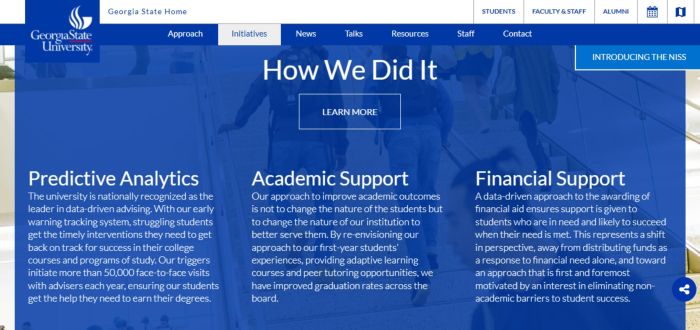
    1. Meet Them Where They’re At (On Their Phones!)

    With 91% of the U.S. residents owning a smartphone, it’s no surprise prospective students are surfing the web from their mobile devices. In fact, a recent report by Oberlo tells us that over 60% of all internet traffic comes from mobile devices. 

    Most of the time, however, our web developers, brand managers, and marketing professionals are viewing and building websites on their desktop computers. While working from a computer is convenient, it’s imperative that every single UX/UI change made to your university/program website is tested on both desktop and mobile. 

    Don’t lose out on prospects just because you didn’t consider both desktop and mobile website views in your design process. It may seem obvious, but plenty of colleges and universities aren’t considering this important strategic detail. 

    2. Consider Utilizing Paid Media

    Now that you’ve cleaned up your mobile site, you’re ready to start pushing students from other platforms to your program pages through a key college recruitment strategy: paid media. While paid media isn’t the cheapest option, it’s often one of the most effective. Google Ads, LinkedIn, and Facebook provide fairly straightforward ways to spend for clicks. 

    We recommend starting with PPC (pay per click) campaigns to attract prospective students to your site. These campaigns help the most with bringing in entirely new audience members whom you may not have been able to reach through organic efforts. The internet is vast, and it’s not always easy to track down potential candidates without some extra help. 

    After bringing in new prospects from platforms like Google and LinkedIn, your job is to create a journey where they’ll sign up for your newsletter or respond to a survey so you can effectively follow up and make their click worthwhile. It may seem pricey at first, but once the leads start coming in and you’re able to connect with them well after that first click, you’ll see the return on investment. 

    PPC campaigns can also help speed up the process if you’re finding yourself behind on your goals this quarter.

    3. Tap Into Popular Platforms and Their Users

    If paid media feels a bit too far out of reach, some high-growth organic options can help your student recruitment strategy. 

    Use Instagram to Engage With Students

    Most institutions now have a presence on LinkedIn and Facebook, but university marketers may be missing a huge opportunity with Instagram. A recent article from RivalIQ cited higher ed’s impressive average engagement rate of 2.43% on Instagram, compared with the median across all industries of 0.43%. 

    Instagram should be used in a completely different way than Facebook and LinkedIn, which can be deterring for content teams, but clearly prospective students are interested in engaging there. Be sure to connect with them and provide tailored content.

    Harness the Power of Testimonials

    When you hear the words “influencer marketing,” you may think of famous teenagers with millions of followers dancing their hearts out to a 15-second song. While plenty of those influencers are out there, so are users who share their educational journeys, financial tips and tricks, and personal stories about their lives and experiences. 

    With the number of graduates, administrators, and staff members your school has on social media, you’re sure to find some influential users who are willing to share their satisfaction with your program on their channels. It doesn’t require millions of followers either. 

    Nano influencers (influencers with a following between 1K and 10K) are “everyday people” who come across as more authentic and with much more enthusiasm than the players in the big leagues (micro/macro influencers). According to a recent study from Matter Communications, 69% of consumers depend on recommendations from influencers, family members, and friends over information provided by brands. That means two of every three consumers want to read reviews from online personalities they see as trustworthy sources — an amplified version of word-of-mouth marketing.

    Use Short-Form Video to Reach New Audiences

    Short-form video is an important college recruitment strategy for engaging with students. Though the style of content may seem daunting and the editing may seem like a lot of work, recent studies have indicated that Gen Z users prefer TikTok for search over Google — making it an indispensable part of your strategy. 

    Although prospective student demographics look different across universities, your target students are likely on TikTok. And more importantly, they’re using it as a source of information. The hashtag #LearnOnTikTok had over 360 billion views as of 2024, according to The Leap

    Think of the reasons users visit your website — and the questions they have — and use that insight to inform the kinds of content you can provide to educate prospective students. 

    We Can Help Build Your Online College Recruitment Strategies

    The higher-ed landscape is still undergoing unexpected shifts at a faster rate than most of us are ready for. Some days, you might feel like you’ll be playing catch-up for ages, and evolving marketing tactics might make that race feel even harder. It’s a lot to manage a robust omnichannel college recruitment strategy, but you don’t have to do it all internally. 

    At Archer Education, we partner with colleges and universities to create effective messaging that will illuminate your brand’s strengths and unique values to attract and convert high-quality students. Our experts are always in the know, employing tech-enabled, modern enrollment tactics to attract prospective students’ attention, drive engagement, and facilitate action. Don’t overstretch your team members — let us help. Contact us today for more information.

    Source link