Category: Contest winners

  • Paradise on Earth: A student podcast

    Paradise on Earth: A student podcast

    This prize-winning student podcast explores how faith and power — forces that can be used for good — may be misused for personal gain. The result is tragic.

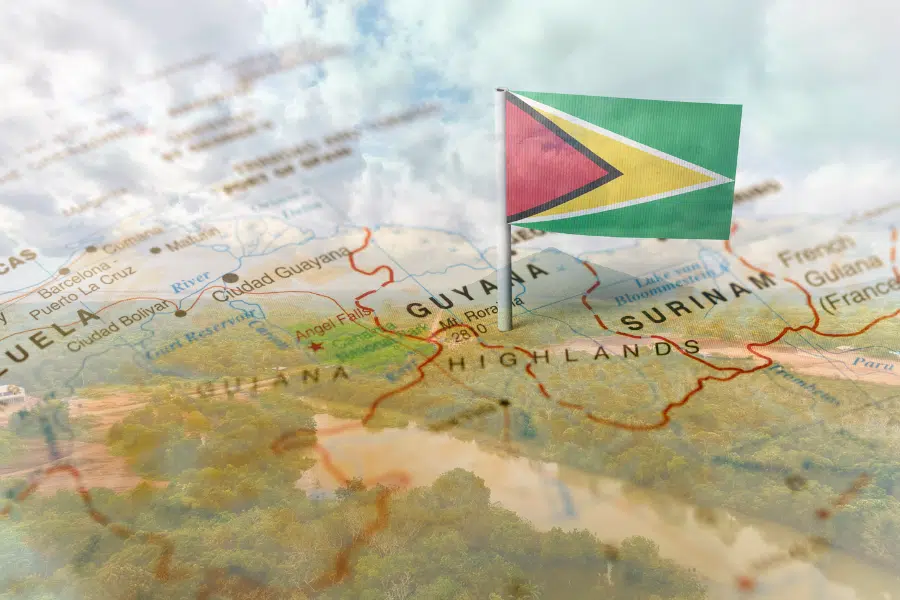
    A photo of the Guyanese rainforest superimposed on a map showing Guyana. (Image adapted from Canva/Getty Images)

    This podcast, by high school student Catherine Dowuona-Addison, tied for third place in the 18th News Decoder Storytelling competition. The story was produced out of News Decoder’s school partnership program. Catherine is a student at SOS-Hermann Gmeiner International College in Ghana. Learn more about how News Decoder can work with your school.

    The Jonestown massacre took place in northwest Guyana on 18 November 1978. Jim Jones, leader of the Peoples Temple, an American religious cult, convinced 918 of his followers to take their own lives in what is the largest cult mass murder-suicide to date.

    This tragedy is at the heart of a podcast submitted to News Decoder’s 18th Non-Fiction Storytelling Contest. Student Catherine Dowuona-Addison of SOS-Hermann Gmeiner International College in Ghana takes on the topic of the Jonestown massacre and explores how faith can be used for personal gain and lead to such tragedy.

    The 20-minute podcast has been split into four parts. To read along with the podcast, click on the links to access the PDF transcripts.

    Making a podcast.

    Hear from Catherine about her experience of researching, writing and recording her podcast by watching the YouTube short (right)


    Want to create your own podcast?

    Check out News Decoder’s WePod Guide to Audio Storytelling, a mini podcast series and accompanying PDF booklet that covers the basics of how to create a podcast — everything from finding a story and crafting your piece to recording and editing your podcast.

    Questions to consider:

    1. What was the Jonestown massacre?

    2. Why did Jim Jones and his followers move to Guyana?

    3. What makes a cult a cult?

    Headshot of an ND student.

    Catherine Dowuona-Addison is a student at SOS-Hermann Gmeiner International College with a passion for crime and investigative journalism. She enjoys sharing stories through podcasts and mini-documentaries, shedding light on topics of equal opportunity and human rights abuses across the globe.


    Source link

  • Are you aware of your level of climate ignorance?

    Are you aware of your level of climate ignorance?

    Do you know which country emits the most greenhouse gases per capita? If not, you aren’t alone.

    I’m a student at The Climate Academy, an international organization founded by philosopher and climate activist Matthew Pye who teaches students about climate change from a systems point of view.

    This year, we surveyed almost 500 people in Brussels, Varese and Milan to analyse the level of climate literacy among populations across Europe. Many people we surveyed pointed at large emitters such as the United States, China and India.

    Yes, these are big emitters in quantity, but when it comes to per capita emissions — the amount divided by the population of the country — the top three are smaller, wealthy countries: Singapore, the United Arab Emirates and Belgium.

    These numbers can be explained by the extremely consumeristic, luxury lifestyle of the overwhelming majority of their citizens and the over-reliance on fossil fuels for generating energy. Yet, in our survey, 378 people out of 468 — 81% — named the United States, China or India.

    We must refocus the lens.

    What does this mean? That the media attention is on the wrong players. As stated by the World Economic Forum:

    “When India surpassed the European Union in total annual greenhouse gas (GHG) emissions in 2019 becoming the third largest emitting country after China and the United States, that statistic only told part of the story. India’s population is nearly three times larger than that of the EU, so based on emissions per person, India ranks much lower among the world’s national emitters.”

    It is crucial to look at per capita emissions. That’s the conclusion of the Global Change Data Lab, a nonprofit organization that produces Our World in Data. It argues that annual national emissions do not take population size into account.

    “All else being equal, we might expect that a country with more people would have higher emissions,” it reported. “Emissions per person are often seen as a fairer way of comparing. Historically — and as is still true in low- and middle-income countries today — CO2 emissions and incomes have been tightly coupled. That means that low per capita emissions have been an indicator of low incomes and high poverty levels.”

    Europe often points at big emitters, but the comfortable lifestyles Europeans have due to their higher living standards aren’t sustainable.

    Who to blame for climate change?

    There’s a misconception that the more a country emits, the more responsible the country is for climate change.

    This is the result of intense lobbying and voluntary misdirection by the richest. The wealthiest individuals are undoubtedly responsible for a considerably higher share of global emissions. But we’re often told that countries like China and India are the most responsible, as they are some of the world’s biggest polluters, a fact which is widely recognized.

    Pye said it isn’t a surprise that the focus is on numbers at the macro level, as international organizations like the United Nations were created by the main global powers and they are still funded mainly by them.

    “Keeping the language and the numbers about the problem general and global masks the fact that the majority of our [per capita] emissions are still from these rich nations,” he said. “This lack of clarity about who is responsible is reflected right across global media coverage. It is not by chance that we don’t have a clear view of the vital statistics, it is by subtle and powerful design.”

    The UN is founded on the principle of human rights, he said.

    “Should it not think and act on climate change with everyone having an equal right to the air?” Pye said. “When you look at per capita and consumption emissions the whole landscape of responsibility is radically different.”

    Surveying people about greenhouse gases

    I conducted my part of the survey in a middle-class neighborhood of Brussels.

    When I asked a 20-year-old, “What would the consequences of a two degree increase in global temperature be?” I got this answer: “More meteorites.” When I put the same question to someone 50 years of age, the answer was, “It’s going to be cold.”

    A 75-year old told me: “I don’t believe in climate change. There were examples of extreme heat in the 17th century, it is natural. Climate change is a tool of the government to control us.”

    All of these are misconceptions about weather events, temperature patterns and the source and type of climate change we experience.

    Now, this survey included only a small sample of the population. But it already shows that the misconceptions in education about climate change are real and existent across every generation and in many ways. Many other surveys made by reputable organizations have supported this conclusion.

    What people don’t know

    A 2010 report by the Yale University Program on Climate Change Education found that 63% of Americans believed that global warming was happening, but many did not understand why. In this assessment, only 8% of Americans had knowledge equivalent to an A or B, 40% would receive a C or D, and 52% would get an F.

    A report by King’s College in London, based on a 2019 survey, found a similar level of ignorance.

    Misconceptions are still here, waiting to be tackled. It starts in schools, where new, fresh generations without bias or misconceptions are formed. It starts at home, where parents should adapt and teach their kids the basics. Proper educational programs should be set up by governments.

    This seems natural. But just a few months ago, in the United States, the Trump administration cut funding for schools that hold educational programs on climate change and greenhouse gas emissions reduction.

    Educational systems, too, spread misconceptions about climate change. Because we never stop learning, educational systems shouldn’t have such flaws and should provide accurate information.

    As we dive deeper into the climate crisis, proper knowledge and understanding will be key to systemic change and governmental response.

    Until information on climate change becomes a public good, we will continue to “debate what kind of swimming costume we will wear as the tsunami comes.” Those are the words of then-U.S. Treasury Secretary Hank Paulson before the 2008 financial crisis.


    Questions to consider:

    1. Why is it important to consider the size of a population when considering responsibility for climate change?

    2. What is meant by “climate ignorance”?

    3. How can you learn more about climate change?


    Source link

  • Climate change brings new worries to an old industry

    Climate change brings new worries to an old industry

    It is another early harvest for the Vignoble des Agaises, a vineyard in the region of Mons in Belgium. While the country is widely known for its variety of Trappist beers, the proximity that Mons and the region of Wallonia bears to French Burgundy and Picardie influences the local drinking culture. 

    Indeed, wine means a great deal to Arnaud Leroy, the vineyard’s sales manager. He and his family have, for 20 years now, pioneered the potential of the frontier that is Southern Belgium in the production of champagne and other sparkling wines. 

    Wine has been a staple of the regional economy and culture for centuries and has been a vital part of Leroy’s life and that of millions of other people around the world. Recently, however, a series of early frosts have decimated large quantities of the harvests in the lands stretching from Lombardy to Flanders. 

    These poor harvests have left many local vineyards in a state of financial uncertainty. Such events aren’t unique to the regions of Western Europe. Similar problems and hardships have been experienced in most other winemaking regions of Europe and have caused harm to winemaking communities around the world.

    Europe has been hit by what may only be compared to a “tidal wave” of change as previously predictable and constant meteorological conditions that have allowed winemaking to prosper in these regions for millennia have been altered significantly in the span of nearly a few decades.

    “In the last 10 years we have always harvested in October,” Leroy said. “But recent harvests have systematically been earlier and earlier into September, this year’s harvest being around the third of September.” This seemingly light change may have an outsized impact on the nature of the wine produced, deeply affecting the wine’s taste and composition.

    With wine, climate is everything.

    Wine is widely regarded as one of the most climate-sensitive crop cultures, experiencing possible changes to its texture, taste and tannin density from even the smallest constant meteorological change. 

    Earlier harvests can affect the wine’s taste, as a low maturation of the grapes may cause an increased sourness and a less sweet taste as well as a lighter, less-defined aroma, while spring frosts like the ones experienced in the last few years may cause the exact opposite, making a much sweeter, less-acidic and more tannin heavy wine. 

    Thus, the taste of many well-established sorts and brands of wines may be inconsistent and altered significantly by the seasonal changes brought by the climate crisis. Renowned regions such as Tuscany, Burgundy, Greece, the Rhine Valley, California and many more may be considerably different — and potentially even in danger of being displaced in a few decades.

    Indeed, it would seem one of Europe’s oldest industries is in a crisis. Wine has been a luxury product for thousands of years and holds a cultural, economic, social and historical value that few other comparable goods hold. 

    Associated with the higher class and nobility for centuries and being a valued good for over 10 millennia, wine is arguably one of Europe’s most important goods. It holds a vital place in Christian tradition and practice and — having two saints and a multitude of deities of hundreds of religions and mythologies — it is perhaps one of the most important components to the cultural development of the continent and perhaps, of the world.

    Addressing climate change

    The changes experienced in the last decades have not gone unnoticed. Many oenologists and vintners have called for more attention and action in the fight against climate change and the seasonal changes it may bring. What is now often called a crisis is even further fueled by other external causes.

    “The younger generation simply consumes less alcohol,” Leroy said. This makes the financial impact of said seasonal effects even more devastating to the smaller domaines and vineyards while bigger producers cling on to what is left of their harvests. 

    This year’s harvest has been plentiful and record-breaking in some regions such as Champagne, mostly due to favourable conditions and the development of better technology. But this success has taken media attention away from the longer term crisis.

    In the summer of 2025 large floods hit the regions of Picardie in Belgium and Champagne in France, causing two deaths and large amounts of damage to private property and agricultural lands, further hindering the European wine market.

    Even worse, in the case of an increase of two degrees Celsius (35 degrees Fahrenheit) of global temperatures, scientists warn that the world may pass a tipping point (a point of irreversibility) in the patterns of ocean currents, potentially causing drastic change to the European climate as we know it — a threat that has been mostly ignored by mass media and climatological institutions. 

    And that threat is only about 20 years from now.

    Some grapes suffer, others thrive.

    This doesn’t mean, however, that absolutely all regions will suffer and that there are no solutions. In some southern parts of Sweden for instance, a multitude of new, more resilient vines have laid the foundation for a Scandinavian wine industry, made possible due to the changes experienced in the local climate. 

    “While there have been some exceptions, notably in 2024, wine production has been top quality,” Leroy said. “The earlier harvests have their advantages.”

    As older, more renowned wine producing regions lose their significance, this instability may prove a good time for newer regions and producers with other defined traits such as Scandinavia, the Balkans and the Agaises vineyard with their chalky ground and distinct latitude to fill in the gap left by the older producers. 

    Of course, a solution to the entire issue would be the halting or at least the delaying of climate change through the lowering of consumption and of carbon emissions. But such halting would take a tremendous individual and national effort that is lacking in Europe and in the world. 

    Thus, this problem presents us with yet another reason to continue the costly yet imperative fight against the climate crisis and all effects that it causes.


    Questions to consider:

    1. What does the author mean by a “tidal wave” of change that has hit Europe?

    2. How can climate change help grape growing in some regions when it devastates other regions?

    3. Can you think of other long-time industries that have been affected by climate change?

    Source link

  • Can the sea’s rise be a language’s demise?

    Can the sea’s rise be a language’s demise?

    A language is not merely a collection of words; it is a symphony of memories, a melody that holds the heartbeat of a nation. It is a living chronicle of history, breathed across the ages, inscribed on the rhythms of life and sung by the winds that dance upon the sacred lands.

    Picture a serene village cradled among ancient mountains, where elders speak a tongue as timeless as the rocks beneath their feet. Each syllable is a thread, knitted into a rich tapestry of legends, lore and traditions that bind them to the soil they call home.  

    But what becomes of this language when the land itself starts to crumble? When the waves rise to consume coasts, or parched earth splits under a blistering sun, does the song fall silent? Today, as the planet warms, it is not only ice caps and forests that vanish — but languages, and with them, entire ways of perceiving the world.

    Around the globe, ancient languages — the essence of human history — are vanishing. Climate change, a tenacious force reshaping landscapes, frays the delicate cultural threads that root communities to their identity. Rising seas engulf islands where indigenous tongues blossom like rare flowers. Wildfires sweep away more than homes, reducing sacred spaces and oral histories to ash. Each vanished habitat is a stilled voice, an erased library of metaphors, idioms and songs that offered a unique lens on life.

    Language extinction

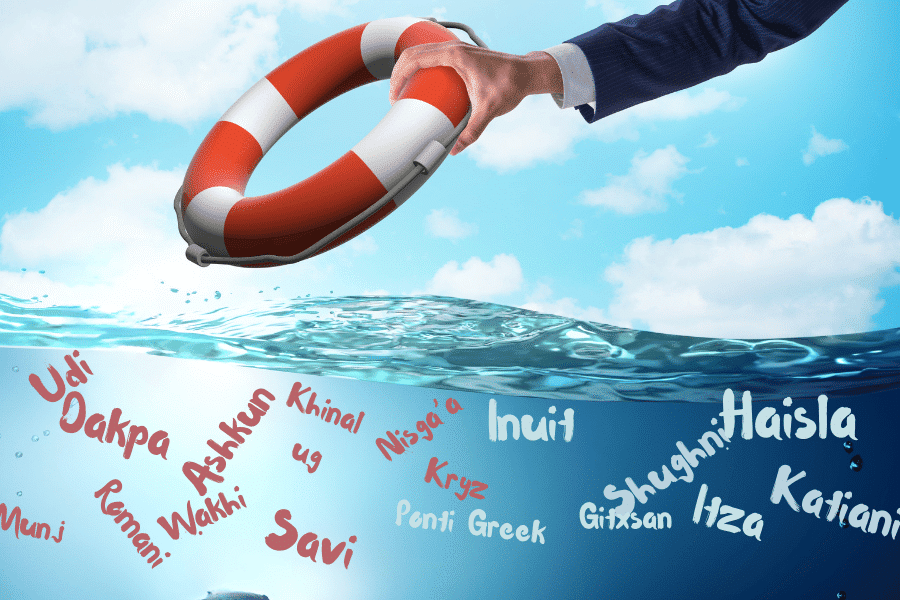
    According to a 2021 report by the UN Permanent Forum on Indigenous Issues, more than 40% of the world’s estimated 7,000 languages are at risk of disappearing. “When a language dies,” said linguist K. David Harrison, “a unique vision of the world is lost.”

    While globalisation and modernisation are often blamed for the erosion of ancient languages, environmental destruction plays an even more insidious role, quietly displacing communities and severing their linguistic roots. When climatic disasters scatter people, they do not only lose their home — they lose the vessel of their shared soul. Dispersed and assimilating, their words, their tales, their melodies — once carried across centuries — fade into echoes long forgotten.

    Today, nearly half of all languages spoken globally are endangered. According to UNESCO, one language disappears every two weeks — a rhythm of loss as steady as the ticking of a clock. In this tide of vanishing voices, climate change surges as an unrecognised adversary, disrupting the habitats where these languages are rooted.

    Consider the small island nations of the Pacific — Tuvalu, Kiribati, the Marshall Islands — where languages are inseparable from the ocean’s ebb and flow. As seas rise up to threaten these vulnerable islands, the inhabitants must depart, and with them, their distinct vision of the world drifts away. Words that once named the tides, the winds, the colour of the sky before monsoon, these vanish as the speakers are displaced.

    Likewise, in the Arctic, the Sámi and Inuit communities confront an ugly truth: their languages, like their frozen lands, are melting under the pressure of a warming world. The vocabulary used to describe different types of snow, hunting rituals or the behaviour of migrating herds holds ancestral wisdom. As the landscape changes, the words that once matched its rhythms no longer apply — and are slowly lost.

    Worldviews and wisdom

    When languages are lost, they take with them entire worldviews and centuries of wisdom encoded in words. The knowledge of forests, of skies, of seas — how to farm to the beat of nature, how to heal using the plants that grow in secret groves — is lost.

    For instance, in the Amazon rainforest, indigenous languages such as Kayapo contain the secrets of life-abundant ecosystems. According to Survival International and linguistic researchers, these languages encode unique ecological wisdom that cannot be translated. Each word is a secret to decoding the harmony of nature and each lost language shelves an irreplaceable piece of the puzzle.

    In the Philippines, the Agta people hold oral traditions that teach sustainable fishing and forest stewardship. Their language contains knowledge passed down through chants and stories that teach children when to harvest, what to leave behind and how to give back. Without their land, without their rituals, such teachings dissolve.

    In Vanuatu, where the rising tide of the ocean promises to wash away land and language, communities are in a mad dash to record their heritage. Elders and linguists collaborate, transcribing words into digital platforms, preserving the poetry of their world for future generations. Stories once passed from mouth to ear around firelight are now finding their way into apps, audio archives and cloud storage — fragile vessels carrying ancient truths.

    A fading past and uncertain future

    Technology, too, becomes a bridge between the fading past and an uncertain future. Apps like Duolingo and platforms like Google’s Endangered Languages Project breathe new life into ancient words, making them accessible to the young and curious.

    Augmented reality and virtual storytelling spaces are beginning to preserve not just the language, but the experience of being immersed in it. But technology alone cannot carry the weight of this preservation. It must be paired with policies that protect the vulnerable — giving displaced communities a voice not only in language preservation but in shaping climate action itself.

    Governments must go beyond digitisation and invest in cultural resilience. Language must be taught in schools, inscribed in constitutions, spoken on airwaves and celebrated in ceremonies. We need climate policies that understand that saving ecosystems and saving languages are part of the same struggle. Both are about preserving what makes us human.

    In the end, saving a language is an act of defiance against the erasure of identity. It is a way to honour the past while forging a path to a sustainable future. These languages do not merely recount history — they carry the wisdom of living in harmony with the Earth. In their poetry and proverbs, in their songs and silences, they have answers to questions we have not even thought to ask yet.

    To preserve these voices, we must become their echoes. We must act before it’s too late. Before the last storytellers fall silent. Before the rivers can no longer remember the songs they once inspired. To save a language is to save a piece of ourselves — the spirit of who we are, where we’ve been and the dreams of where we might go.

    When we lose a language, we don’t just lose words — we lose the Earth’s voice itself. If these voices vanish, who will remember the names of the stars? Who will tell us how the mountains mourned or the forests sang? The Earth is listening and its languages are calling. 

    Let us not forget how to answer.


    Questions to consider:

    1. Why are languages at risk of extinction due to climate change?

    2. How are preservation of language connected to whole cultures?

    3. Why might someone want to master a language that is not widely spoken?



    Source link