Category: creativity

  • Games for Change Opens 2026 Student Challenge to Game Creators and Innovators Ages 10–25

    Games for Change Opens 2026 Student Challenge to Game Creators and Innovators Ages 10–25

    The annual global game design awards $20,000 in grand prizes for creative and impactful games that advance the UN Sustainable Development Goals

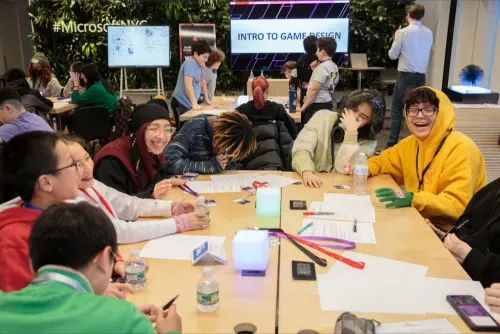
    NEW YORK, NY — [NOV 10, 2025] — Games for Change (G4C), the leading nonprofit that empowers game creators and innovators to drive real-world change, today announced the kick off of the 2025- 2026 Games for Change Student Challenge, a global game design program inviting learners ages 10–25 years old to tackle pressing world issues that address the United Nations Sustainable Development Goals, through creativity, play, and purposeful design.

    Now in its eleventh year, the Student Challenge has reached more than 70,000 students and almost 2,000 educators and faculty across 600cities in 91 countries, inspiring the creation of over 6,600 original student-designed games that connect learning to action. From November to April 2026, participants will design and submit games for consideration in regional and global competitions, with Game Jams taking place worldwide throughout the season.

    “The G4C Student Challenge continues to show that when young people design games about real-world issues, they see themselves not just as players, but as problem solvers and changemakers,” said Arana Shapiro, Chief Operations and Programs Officer at Games for Change. “Through game design, students learn to think critically, collaborate, and build solutions with purpose. In a world shaped by AI and constant change, durable skills like problem solving, critical thinking, and game design will allow all learners to thrive in their communities and worldwide.”

    This year, students will explore three new themes developed with world-class partners to inspire civic imagination and problem-solving:

    Two grand-prize winners will receive a total of $20,000 in scholarships, generously provided by Take-Two Interactive and Endless. Winners and finalists will be celebrated at the Student Challenge Awards on May 28, 2026, in recognition of exceptional creativity, social impact, and innovation in student game design.

    “With 3.4 billion players worldwide, the video games industry has an unprecedented ability to reach and inspire audiences across cultures and our next generation of leaders,” said Lisa Pak, Head of Operations at Playing for the Planet. “We’re excited about our collaboration with Games for Change, empowering students to use their creativity to spotlight the threats to reefs, rainforests, and our climate. Together, we’re transforming play into a powerful tool for awareness, education, and action.”

    More than 319 million people face severe hunger around the world today,” said Jessamyn Sarmiento, Chief Marketing Officer at World Food Program USA. “Through the ‘Outgrow Hunger’ theme, we’re giving the next generation a way to explore the root causes of food insecurity and imagine solutions through research, game design, and play. This collaboration helps students connect their creativity to one of the most urgent challenges of our time—ending hunger for good.”

    Additionally, G4C is expanding its educator support with the launch of the G4C Learn website, the world’s largest online resource library featuring lesson plans, tutorials, and toolkits to guide students, teachers, and faculty on topics like game design, game-based learning, esports, career pathways, and more. In partnership with Global Game Jam, educators worldwide can receive funding, training, and support to host Student Challenge Game Jams in their classrooms and communities.

    “Games turn learning into challenges students actually want to take on,” said Luna Ramirez, CTE teacher at Thomas A. Edison CTE High School based in New York City. “When students design games to tackle pressing global problems affecting their communities, they become curious about the world around them, experimenting, and bringing ideas to life. The best learning happens when students take risks, fail forward, and collaborate, and that’s exactly what the Games for Change Student Challenge empowers.”

    Educators, parents, and learners ages 10–25 can now registerfor the 2026 Games for Change Student Challenge and access free tools and resources at learn.gamesforchange.org.

    This year’s Student Challenge is made possible through the generous support of key partners, including Endless, General Motors, Verizon, Motorola Solutions Foundation, Take-Two Interactive, World Food Program USA, Playing for the Planet, Unity, and Global Game Jam.

    About Games for Change

    Since 2004, Games for Change (G4C) has empowered game creators and innovators to drive real-world change through games and immersive media, helping people learn, improve their communities, and make the world a better place. G4C partners with technology and gaming companies, nonprofits, foundations, and government agencies to run world-class events, public arcades, design challenges, and youth programs. G4C supports a global community of developers using games to tackle real-world challenges, from humanitarian conflicts to climate change and education. For more information, visit: https://www.gamesforchange.org/.

    Media contact(s):

    Alyssa Miller

    Games for Change

    [email protected]

    973-615-1292

    Susanna Pollack
    [email protected]

    Latest posts by eSchool News Contributor (see all)

    Source link

  • 4 ways to transform your classroom through playful gamification 

    4 ways to transform your classroom through playful gamification 

    Key points:

    Every educator hopes to instill a lifelong love of learning within their students. We strive to make each lesson engaging, while igniting a sense of curiosity, wonder, and discovery in every child.

    Unfortunately, we don’t always succeed, and recent reports suggest that today’s students are struggling to connect with the material they’re taught in school–particularly when it comes to STEM. While there are many potential culprits behind these numbers (shortened attention spans, the presence of phones, dependency on AI, etc.), educators should still take a moment to reflect and strategize when preparing a new lesson for their class. If we truly want to foster a growth mindset within our students, we need to provide lessons that invite them to embrace the learning process itself.

    One way to accomplish this is through gamification. Gamification brings the motivational elements of games into your everyday lessons. It increases student engagement, builds perseverance, and promotes a growth mindset. When used strategically, it helps learners take ownership of their progress and encourages creativity and collaboration without sacrificing academic rigor.

    Here are just 4 ways that educators can transform their classroom through playful gamification:

    1. Introduce points and badges: Modern video games like Pokémon and Minecraft frequently use achievements to guide new players through the gaming process. Teachers can do the same by assigning points to different activities that students can acquire throughout the week. These experience points can also double as currency that students can exchange for small rewards, such as extra free time or an end-of-year pizza party.
    2. Create choice boards: Choice boards provide students with a range of task options, each with a point value or challenge level. You can assign themes or badges for completing tasks in a certain sequence (e.g., “complete a column” or “complete one of each difficulty level”). This allows students to take ownership of their learning path and pace, while still hitting key learning targets.
    3. Host a digital breakout: Virtual escape rooms and digital breakouts are great for fostering engagement and getting students to think outside the box. By challenging students to solve content-based puzzles to unlock “locks” or progress through scenarios, they’re encouraged to think creatively while also collaborating with their peers. They’re the ideal activity for reviewing classwork and reinforcing key concepts across subjects.
    4. Boss battle assessments: This gamified review activity has students “battle” a fictional character by answering questions or completing tasks. Each correct response helps them defeat the boss, which can be tracked with points, health bars, or progress meters. This engaging format turns practice into a collaborative challenge, building excitement and reinforcing content mastery.

    When implemented correctly, gamification can be incredibly fun and rewarding for our students. With the fall semester drawing closer, there has never been a better time to prepare lessons that will spark student curiosity, creativity, and critical thinking.

    We can show our students that STEM learning is not a chore, but a gateway to discovery and excitement. So, get your pencils ready, and let the games begin.

    Latest posts by eSchool Media Contributors (see all)

    Source link

  • Do we still value original thought?

    Do we still value original thought?

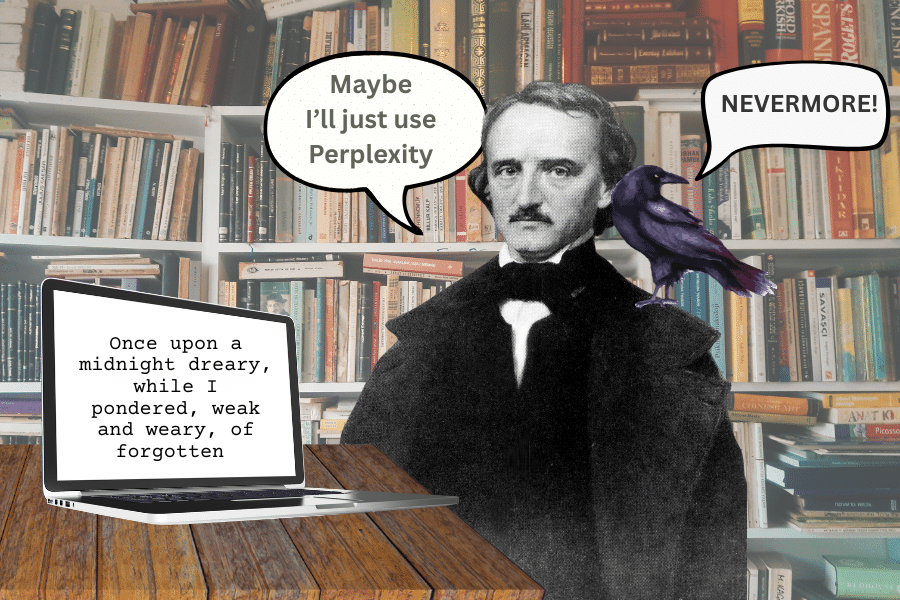
    I have written the piece that you are now reading. But in the world of AI, what exactly does it mean to say that I’ve written it? 

    As someone who has either written or edited millions of words in my life, this question seems very important. 

    There are plenty of AI aids available to help me in my task. In fact, some are insinuating themselves into our everyday work without our explicit consent. For example, Microsoft inserted a ‘Copilot’ into Word, the programme I’m using. But I have disabled it. 

    I could also insert prompts into a service such as ChatGPT and ask it to write the piece itself. Or I could ask the chatbot direct questions and paste in the answers. Everybody who first encounters these services is amazed by what they can do. The ability to synthesise facts, arguments and ideas and express them in a desired style is truly extraordinary. So it’s possible that using chatbots would make my article more readable, or accurate or interesting.

    But in all these cases, I would be using, or perhaps paraphrasing, text that had been generated by a computer. And in my opinion, this would mean that I could no longer say that I had written it. And if that were the case, what would be the point of ‘writing’ the article and putting my name on it?

    Artificial intelligence is a real asset.

    There is no doubt that we benefit from AI, whether it is in faster access to information and services, safer transport, easier navigation, diagnostics and so on. 

    Rather than a revolution, the ever-increasing automation of human tasks seems a natural extension of the expansion of computing power that has been under way since the Second World War. Computers crunch data, find patterns and generate results that simulate those patterns. In general, this saves time and effort and enhances our lives.

    So at what point does the use of AI become worrying? To me, the answer is in the generation of content that purports to be created by specific humans but is in fact not. 

    The world of education is grappling with this issue. AI gathers information, orders and analyses it, and is able to answer questions about it, whether in papers or other ways. In other words, all the tasks that a student is supposed to perform! 

    At the simplest level, students can ask a computer to do the work and submit it as their own. Schools and universities have means to detect this, but there are also ways to avoid detection. 

    The human touch

    From my limited knowledge, text produced with the help of AI can seem sterile, distanced from both the ‘writer’ and the topic. In a word, dehumanised. And this is not surprising, because it is written by a robot. How is a teacher to grade a paper that seems to have been produced in this way?

    There is no point in moralising about this. The technologies cannot be un-invented. In fact, tech companies are investing hundreds of billions of dollars in vast amounts of additional computing power that will make robots ever more present in our lives. 

    So schools and universities will have to adjust. Some of the university websites that I’ve looked at are struggling to produce straightforward, coherent guidance for students. 

    The aim must be, on the one hand, to enable students to use all the available technologies to do their research, whether the goal is to write a first-year paper or a PhD thesis, and on the other hand to use their own brains to absorb and order their research, and to express their own analysis of it. They need to be able to think for themselves. 

    Methods to prove that they can do this might be to have hand-written exams, or to test them in viva voce interviews. Clearly, these would work for many students and many subjects, but not for all. On the assumption that all students are going to use AI for some of their tasks, the onus is on educational establishments to find new ways to make sure that students can absorb information and express their analysis on their own.

    Can bots break a news story?

    If schools and universities can’t do that, there would be no point in going to university at all. Obtaining a degree would have no meaning and people would be emerging from education without having learned how to use their brains.

    Another controversial area is my own former profession, journalism. Computers have subsumed many of the crafts that used to be involved in creating a newspaper. They can make the layouts, customise outputs, match images to content, and so on. 

    But only a human can spot what might be a hot political story, or describe the situation on the ground in Ukraine.  

    Journalists are right to be using AI for many purposes, for example to discover stories by analysing large sets of data. Meanwhile, more menial jobs involving statistics, such as writing up companies’ financial results and reporting on sports events, could be delegated to computers. But these stories might be boring and could miss newsworthy aspects, as well as the context and the atmosphere. Plus, does anybody actually want to read a story written by a robot? 

    Just like universities, serious media organisations are busy evolving AI policies so as to maintain a competitive edge and inform and entertain their target audiences, while ensuring credibility and transparency. This is all the more important when the dissemination of lies and fake images is so easy and prevalent. 

    Can AI replace an Ai Weiwei? 

    The creative arts are also vulnerable to AI-assisted abuse. It’s so easy to steal someone’s music, films, videos, books, indeed all types of creative content. Artists are right to appeal for legal protection. But effective regulation is going to be difficult.  

    There are good reasons, however, for people to regulate themselves. Yes, AI’s potential uses are amazing, even frightening. But it gets its material from trawling every possible type of content that it can via the internet. 

    That content is, by definition, second hand. The result of AI’s trawling of the internet is like a giant bowl of mush. Dip your spoon into it, and it will still be other people’s mush. 

    If you want to do something original, use your own brain to do it. If you don’t use your own intelligence and your own capabilities, they will wither away.

    And so I have done that. This piece may not be brilliant. But I wrote it.


    Questions to consider:

    1. If artificial intelligence writes a story or creates a piece of art, can that be considered original?

    2. How can journalists use artificial intelligence to better serve the public?

    3. In what ways to you think artificial intelligence is more helpful or harmful to professions like journalism and the arts?


    Source link

  • Embracing complexity in writing instruction

    Embracing complexity in writing instruction

    Key points:

    Early in our careers, when we were fresh-faced and idealistic (we still are!) the prepackaged curriculum and the advice of more experienced colleagues was the go-to resource. Largely, we were advised that teaching writing was a simple matter of having students walk through and complete organizers, spending about one day for each “stage” of the writing process. At the end of the writing unit, students had finished their compositions–the standardized, boring, recreated ideas that we taught them to write.

    As we matured and grew as teachers of writing, we learned that teaching writing in such simplistic ways may be easier, but it was not actually teaching students to be writers. We learned with time and experience that writing instruction is a complex task within a complex system.

    Complex systems and wicked problems

    Complexity as it is applied to composition instruction recognizes that there is more than just a linear relationship between the student, the teacher, and the composition. It juggles the experiences of individual composers, characteristics of genre, availability of resources, assignment and individual goals, and constraints of composing environments. As with other complex systems and processes, it is non-linear, self-organizing, and unpredictable (Waltuck, 2012).

    Complex systems are wicked in their complexity; therefore, wicked problems cannot be solved by simple solutions. Wicked problems are emergent and generative; they are nonlinear as they do not follow a straight path or necessarily have a clear cause-and-effect relationship. They are self-organizing, evolving and changing over time through the interactions of various elements. They are unpredictable and therefore difficult to anticipate how they will unfold or what the consequences of any intervention might be. Finally, they are often interconnected, as they are symptoms of other problems. In essence, a wicked problem is a complex issue embedded in a dynamic system (Rittel & Webber, 1973).

    Writing formulas are wicked

    As formulaic writing has become and remains prevalent in instruction and classroom writing activity, graphic organizers and structural guides, which were introduced as a tool to support acts of writing, have become a wicked problem of formula; the resource facilitating process has become the focus of product. High-stakes standardized assessment has led to a focus on compliance, production, and quality control, which has encouraged the use of formulas to simplify and standardize writing instruction, the student writing produced, and the process of evaluation of student work. Standardization may improve test scores in certain situations, but does not necessarily improve learning. Teachers resort to short, formulaic writing to help students get through material more quickly as well as data and assessment compliance. This serves to not only create product-oriented instruction, but a false dichotomy between process and product, ignoring the complex thinking and design that goes into writing.

    As a result of such a narrow view of and limited focus on writing process and purpose, formulas have been shown to constrain thinking and limit creativity by prioritizing product over the composing process. The five-paragraph essay, specifically, is a structure that hinders authentic composing because it doesn’t allow for the “associative leaps” between ideas that come about in less constrained writing. Formulas undermine student agency by limiting writers’ abilities to express their unique voices because of over-reliance on rigid structures (Campbell, 2014; Lannin & Fox, 2010; Rico, 1988).

    An objective process lens: A wicked solution

    The use of writing formulas grew from a well-intentioned desire to improve student writing, but ultimately creates a system that is out of balance, lacking the flexibility to respond to a system that is constantly evolving. To address this, we advocate for shifting away from rigid formulas and towards a design framework that emphasizes the individual needs and strategies of student composers, which allows for a more differentiated approach to teaching acts of writing.

    The proposed framework is an objective process lens that is informed by design principles. It focuses on the needs and strategies that drive the composing process (Sharples, 1999). This approach includes two types of needs and two types of strategies:

    • Formal needs: The assigned task itself
    • Informal needs: How a composer wishes to execute the task
    • “What” strategies: The concrete resources and available tools
    • “How” strategies: The ability to use the tools

    An objective process lens acknowledges that composing is influenced by the unique experiences composers bring to the task. It allows teachers to view the funds of knowledge composers bring to a task and create entry points for support.

    The objective process lens encourages teachers to ask key questions when designing instruction:

    • Do students have a clear idea of how to execute the formal need?
    • Do they have access to the tools necessary to be successful?
    • What instruction and/or supports do they need to make shifts in ideas when strategies are not available?
    • What instruction in strategies is necessary to help students communicate their desired message effectively?

    Now how do we do that?

    Working within a design framework that balances needs and strategies starts with understanding the type of composers you are working with. Composers bring different needs and strategies to each new composing task, and it is important for instructors to be aware of those differences. While individual composers are, of course, individuals with individual proclivities and approaches, we propose that there are (at least) four common types of student composers who bring certain combinations of strategies and needs to the composition process: the experience-limited, the irresolute, the flexible, and the perfectionist composers. By recognizing these common composer types, composition instructors can develop a flexible design for their instruction.

    An experience-limited composer lacks experience in applying both needs and strategies to a composition, so they are entirely reliant on the formal needs of the assigned task and any what-strategies that are assigned by the instructor. These students gravitate towards formulaic writing because of their lack of experience with other types of writing. Relatedly, an irresolute composer may have a better understanding of the formal and informal needs, but they struggle with the application of what and how strategies for the composition. They can become overwhelmed with options of what without a clear how and become stalled during the composing process. Where the irresolute composer becomes stalled, the flexible composer is more comfortable adapting their composition. This type of composer has a solid grasp on both the formal and informal needs and is willing to adapt the informal needs as necessary to meet the formal needs of the task. As with the flexible composer, the perfectionist composer is also needs-driven, with clear expectations for the formal task and their own goals for the informal tasks. Rather than adjusting the informal needs as the composition develops, a perfectionist composer will focus intensely on ensuring that their final product exactly meets their formal and informal needs.

    Teaching writing requires embracing its complexity and moving beyond formulaic approaches prioritizing product over process. Writing is a dynamic and individualized task that takes place within a complex system, where composers bring diverse needs, strategies, and experiences. By adopting a design framework, teachers of writing and composing can support students in navigating this complexity, fostering creativity, agency, and authentic expression. It is an approach that values funds of knowledge students bring to the writing process, recognizing the interplay of formal and informal needs, as well as their “what” and “how” strategies; those they have and those that need growth via instruction and experience. Through thoughtful design, we can grow flexible, reflective, and skilled communicators who are prepared to navigate the wicked challenges of composing in all its various forms.

    These ideas and more can be found in When Teaching Writing Gets Tough: Challenges and Possibilities in Secondary Writing Instruction.

    References

    Campbell, K. H. (2014). Beyond the five-paragraph essay. Educational Leadership, 71(7), 60-65.

    Lannin, A. A., & Fox, R. F. (2010). Chained and confused: Teacher perceptions of formulaic writing. Writing & Pedagogy, 2(1), 39-64.

    Rico, G. L. (1988). Against formulaic writing. The English Journal, 77(6), 57-58.

    Rittel, H. W. J., & Webber, M. M. (1973). Dilemmas in a general theory of planning. Policy Sciences, 4(2), 155–169.

    Sharples, M. (1999). How we write : writing as creative design (1st ed.). Routledge. https://doi.org/10.4324/9780203019900

    Waltuck, B. A. (2012). Characteristics of complex systems. The Journal for Quality & Participation, 34(4), 13–15.

    Latest posts by eSchool Media Contributors (see all)

    Source link

  • 5 AI tools for classroom creativity

    5 AI tools for classroom creativity

    Key points:

    • AI tools enhance K-12 creativity and innovation through interactive projects
    • A new era for teachers as AI disrupts instruction
    • Report details uneven AI use among teachers, principals
    • For more news on AI and creativity, visit eSN’s Digital Learning hub

    As AI becomes more commonplace in classrooms, it gives students access to creative tools that enhance learning, exploration, and innovation. K-12 students can use AI tools in various ways to boost creativity through art, storytelling, music, coding, and more.

    More News from eSchool News

    HVAC projects to improve indoor air quality. Tutoring programs for struggling students. Tuition support for young people who want to become teachers in their home communities.

    Almost 3 in 5 K-12 educators (55 percent) have positive perceptions about GenAI, despite concerns and perceived risks in its adoption, according to updated data from Cengage Group’s “AI in Education” research series.

    Our school has built up its course offerings without having to add headcount. Along the way, we’ve also gained a reputation for having a wide selection of general and advanced courses for our growing student body.

    Ensuring that girls feel supported and empowered in STEM from an early age can lead to more balanced workplaces, economic growth, and groundbreaking discoveries.

    In my work with middle school students, I’ve seen how critical that period of development is to students’ future success. One area of focus in a middle schooler’s development is vocabulary acquisition.

    For students, the mid-year stretch is a chance to assess their learning, refine their decision-making skills, and build momentum for the opportunities ahead.

    Middle school marks the transition from late childhood to early adolescence. Developmental psychologist Erik Erikson describes the transition as a shift from the Industry vs. Inferiority stage into the Identity vs. Role Confusion stage.

    Art has a unique power in the ESL classroom–a magic that bridges cultures, ignites imagination, and breathes life into language. For English Language Learners (ELLs), it’s more than an expressive outlet.

    In the year 2025, no one should have to be convinced that protecting data privacy matters. For education institutions, it’s really that simple of a priority–and that complicated.

    Teachers are superheroes. Every day, they rise to the challenge, pouring their hearts into shaping the future. They stay late to grade papers and show up early to tutor struggling students.

    Want to share a great resource? Let us know at [email protected].

    Source link

  • Reaching peak engagement in K-12 science education

    Reaching peak engagement in K-12 science education

    Key points:

    More than half of science teachers believe the most important value of science education is how it contributes to students’ curiosity, critical thinking, and creativity, according to a new report from LEGO Education. But are today’s students truly engaging with science education?

    LEGO Education’s State of Classroom Engagement Report: Science Edition surveyed more than 6,000 global teachers, parents, students, and U.S. administrators to gather data that can offer insight to support educators as they strive to engage their students in science learning.

    Science learning builds life skills students will use even if they do not pursue the science in college or as a career. It also increases student engagement and well-being, but here’s the catch: Students have to feel connected to the material in order to build these skills.

    Just over half of global science teachers say their students are engaged in science, which points to a critical need to boost engagement in the subject, according to the report. Interestingly, students say they are more engaged in science than they are in school overall. Only one-third of teachers worldwide indicate that their students are engaged in the classroom. Schools could leverage students’ interest in science to build schoolwide engagement–a key factor tied to student well-being.

    When students aren’t engaged in science, what’s behind that lack of engagement? Often, they’re intimidated before they even learn the material, and they assume the topics are too challenging. Students lose confidence before they even try. Of students who say science is their least-favorite topic, 45 percent say science is too hard and 37 percent say they are bad at science. What’s more, 77 percent of global teachers say they believe students struggle because of complex concepts and curricula, and they’re searching for for impactful resources that support every student’s success.

    “If students think they’re not good at the subject or avoid it, we risk losing an entire generation of innovators and problem solvers,” said Victor Saeijs, president of LEGO Education, in the report.

    How can educators reach students who struggle to engage with science? Hands-on science learning is the key to piquing student curiosity, prompting them to engage with learning material and build confidence as they explore science concepts. Sixty-two percent of science teachers say hands-on activities drive student engagement in science. Seventy-five percent of science teachers who do incorporate hands-on activities believe this approach leads to higher test scores and grades.

    More students need access to hands-on science learning. Only 55 percent of students say they regularly get hands-on experiences–these experiences usually require extra time and resources to plan and execute. Eighty-two percent of science teachers say they need more ways to teach science with play and hands-on methods.

    Having access to hands-on science learning experiences increases students’ confidence, giving them the boost they often need to tackle increasingly tough-to-learn concepts:

    • 73 percent of students with access to hands-on learning opportunities report feeling confident in science
    • Just 52 percent of students who do not have access to hands-on learning report feeling confident in science

    Hands-on experiences in science drive:

    • Learning outcomes: 71 percent of science teachers who incorporate hands-on, playful learning believe the methodology supports higher test scores and grades
    • Engagement for all learners: 84 percent of U.S. teachers and 87 percent of administrators think that hands-on experiences help all types of learners engage with science concepts
    • Love of science: 63 percent of students who love science credit their passion to regular hands-on experiences
    • Confidence: 79 percent of students who have hands-on science experiences are confident in the subject

    Administrators and science teachers are short on time and need hands-on tools and resources to quickly engage students in learning:

    • 59 percent of U.S. administrators and 54 percent of science teachers say they need more tools to engage students in science
    • Nearly one-third of U.S. students do not get hands-on science experiences.
    Laura Ascione
    Latest posts by Laura Ascione (see all)

    Source link