Category: CRM for Schools

  • Choosing the Right Enrollment Management System

    Choosing the Right Enrollment Management System

    Reading Time: 12 minutes

    Enrollment is no longer a funnel. It’s a journey.

    One shaped by search queries, digital experiences, instant communication, and high expectations. Today’s prospective students demand speed, personalization, and clarity from their first interaction. For institutions that want to grow, scale, and compete, relying on spreadsheets or legacy databases is no longer sustainable.

    You need a system that works as hard as your team does. One that doesn’t just manage applicants, but empowers strategy, fosters connection, and drives retention.

    That’s the promise of a modern Enrollment Management System (EMS), but only if you choose the right one.
    What Is an Enrollment Management System?

    An Enrollment Management System is more than a tool for admissions; it’s a digital backbone for your recruitment, application, and onboarding processes. Think of it as an intelligent, data-powered engine that drives student acquisition and supports institutional growth goals.

    While many systems include basic applicant tracking and form building, a true EMS integrates across departments, touching admissions, marketing, student services, financial aid, and beyond. It’s designed to give your team a real-time view of the applicant pipeline while also enabling automation, analytics, and multichannel communication.

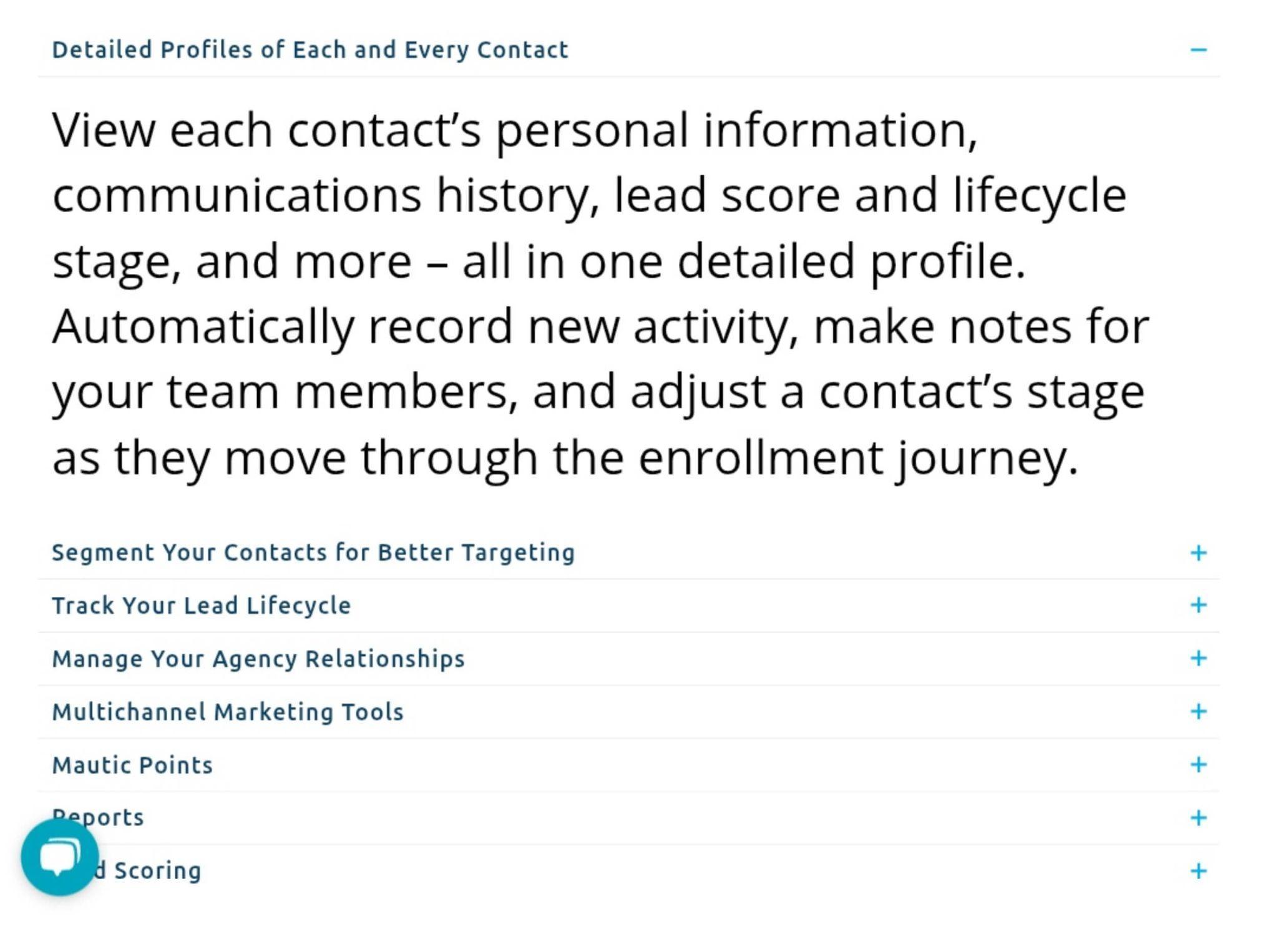
    Example: Mautic by HEM is a dedicated, all-in-one CRM and marketing automation platform for education, built on the open-source Mautic tool. It facilitates thorough applicant tracking by letting schools define custom stages and funnels for the enrollment journey: admissions teams can monitor each contact’s progress through stages (inquiry, application, accepted, etc.) and even apply lead scoring to prioritize the most engaged prospects.
    Source: HEM

    The best platforms don’t just move information. They orchestrate outcomes.

    A modern EMS aligns your people, data, and processes so that your team spends less time chasing forms and more time building relationships. It adapts to your enrollment strategy, whether that’s growing international reach, increasing diversity, boosting conversion, or all of the above.

    What Does an Enrollment System Do?

    It streamlines student recruitment and admissions, enabling your team to launch campaigns, collect inquiries, and track applicant engagement without toggling between multiple platforms. While “enrollment management” is often associated with software, it’s fundamentally a strategic function, and the right EMS becomes a catalyst for this function to succeed.

    Here’s how:

    • It streamlines student recruitment and admissions, enabling your team to launch campaigns, collect inquiries, and track applicant engagement without toggling between multiple platforms. From inquiry to enrollment, every stage is logged, measured, and improved.
      • Example: Tools like TargetX make it easy to launch campaigns, track lead engagement, and move prospects from inquiry to enrollment. TargetX is built on Salesforce and tailored for higher education, especially career colleges that need efficient outreach.
    • It enables marketing and communications teams to segment audiences, trigger campaigns, and personalize outreach across email, text, and student web portals, all with full visibility into what converts.
      • Example: EMS platforms such as Finalsite Enrollment combine CRM and marketing automation to segment audiences and personalize outreach across email, SMS, and web. Designed for independent K–12 schools, Finalsite ensures your message resonates from the first click.
    • It supports financial aid and yield strategy by syncing with your student information system (SIS) or CRM. That means your staff can track aid packages, award statuses, and net tuition impact, all within the same ecosystem.
      • Example: Integrated EMS like Anthology allows institutions to view aid packages, tuition forecasts, and academic data in one place. Anthology is especially powerful for institutions with complex admissions models or rolling start dates.
    • It strengthens student retention by providing advisors with access to academic history, risk indicators, and automated nudges that support at-risk students from the very start of their academic journey.
      • Example: By giving advisors access to risk flags and real-time data, platforms like Salesforce Education Cloud enable timely interventions that support students long after they’ve enrolled.
    • And most importantly, it delivers data analysis and forecasting that lets institutional leaders plan with precision. From demographic breakdowns to conversion rates, it provides insight into not just who applied but why they enrolled.
      • Example: With advanced analytics, tools like Technolutions Slate offer actionable insights into yield, demographics, and conversion rates, helping you refine your enrollment strategy over time.

    What is the point of strategic enrollment management? The point of strategic enrollment management (SEM) is to align an institution’s recruitment, admissions, retention, and graduation strategies with its long-term goals, using data and coordinated planning to optimize student success and institutional sustainability. An effective EMS ensures that your strategic enrollment plan becomes an operational reality, daily, seamlessly, and at scale.

    Core Features to Look For in an EMS

    1. Centralized Database and CRM

    A unified database helps you keep track of every applicant and their journey, from interactions and submitting forms to uploading documents and communication history. Look for systems that include robust CRM tools with inquiry tracking, source attribution, and segmentation capabilities.

    Example: TargetX (Liaison): Provides a single dashboard with a 360° view of each student, consolidating everything from event registrations and communication touchpoints to financial aid info, all in the same place. This unified database supports data-driven decision making in recruitment and admissions.

    Source: TargetX

    2. Online Application and Form Management

    Choose a system with customizable forms, document upload functionality, e-signature support, and user-friendly applicant portals. Features like drag-and-drop form builders and application status tracking can greatly improve the experience for both students and staff.

    Example: Classe365 supports paperless admissions with custom online application forms. Students can easily apply from home, and submitted form data is automatically mapped into the school’s SIS to avoid manual re-entry. This makes the entire application-to-enrollment workflow smooth and efficient for both applicants and staff.

    Source: Classe365

    3. Automated Multichannel Communication

    A strong student enrollment management system allows you to send personalized, automated messages via email, SMS, or in-app notifications. You should be able to build workflows, for example, a welcome message on inquiry, a reminder to complete an application, or an invitation to an open house. Some systems even offer AI chatbots for 24/7 engagement.

    Example: Mautic by HEM features built-in email and text messaging automation, enabling schools to send personalized emails or SMS updates triggered by prospect behavior.

    Source: HEM

    4. Workflow Automation and Task Management

    Look for features that reduce manual work, automatic task assignment, follow-up reminders, and to-do lists. These help your admissions team stay on top of deadlines and reduce errors.

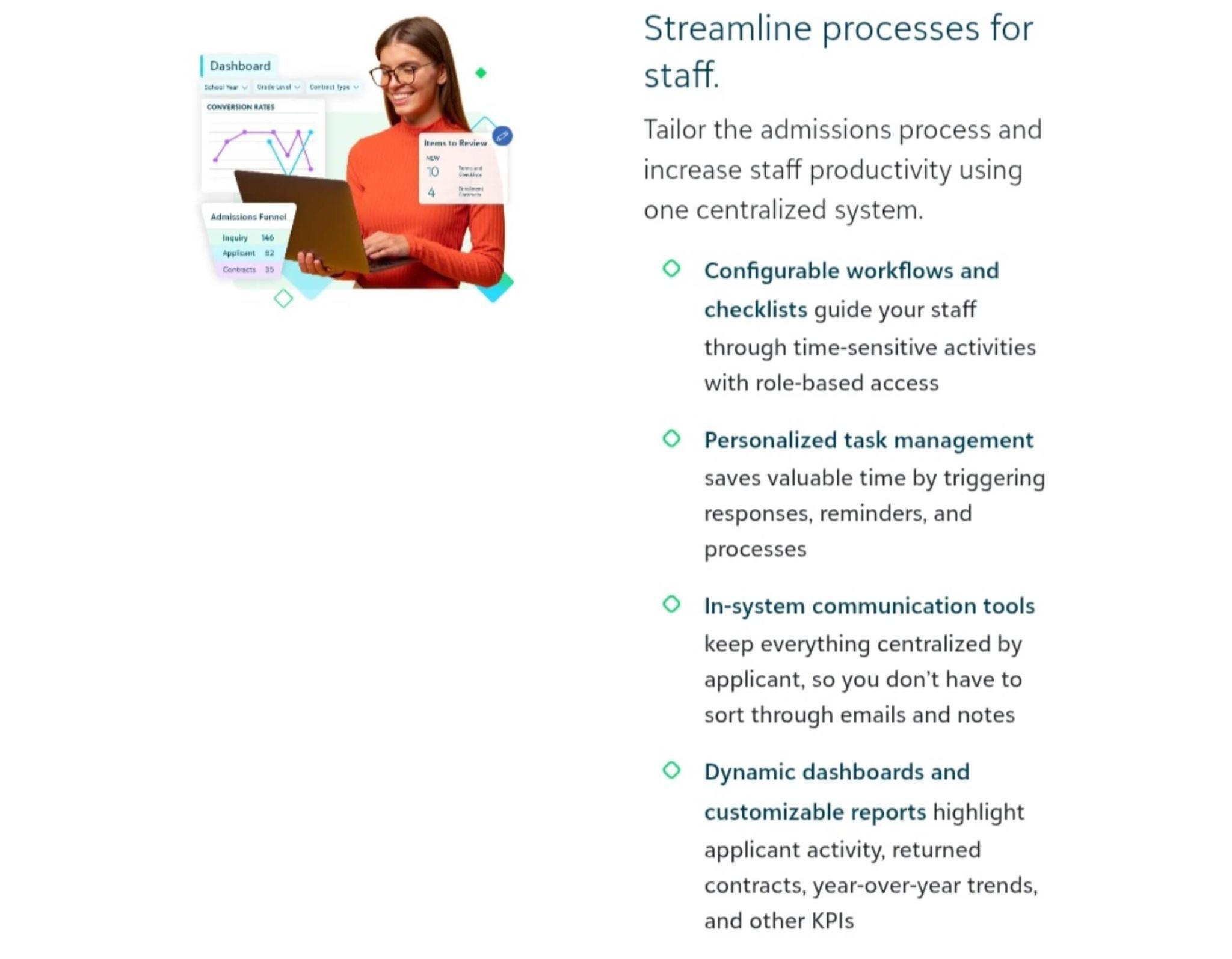
    Example: Blackbaud Enrollment Management allows schools to tailor their admissions process with configurable workflows and checklists in one centralized system. Staff have personalized task dashboards, and the system automatically triggers next steps, sending follow-up reminders, updating statuses, or notifying counselors based on defined rules. This saves time and keeps the team on schedule
    Source: Blackbaud

    5. Seamless Integration

    Your EMS should integrate with your SIS, LMS, financial software, and marketing tools. Data should flow without duplication. Look for open APIs or pre-built integrations with platforms you already use.

    Example: Slate supports bi-directional data exchange with campus systems. It can push and pull data to external SIS, LMS, financial aid systems, content management systems, and more via its Integration Center. This means application data or status updates in Slate can automatically appear in the SIS, and vice versa, ensuring consistency across all systems.

    Source: Slate

    6. Analytics and Reporting

    Analytics tools allow you to track conversion rates, demographic trends, and recruitment performance. Some EMS platforms even offer predictive analytics to identify at-risk applicants or forecast yield.

    Example: TargetX goes beyond basic reporting by incorporating predictive analytics features. It includes a Prospect Scoring tool that lets schools apply tailored scoring models to their applicant pool. This means the system can automatically evaluate and rank prospective students based on likelihood to enroll (or other success indicators), helping admissions teams focus their efforts on the best-fit leads. Of course, standard reports and real-time dashboards are also available in TargetX for monitoring application trends and campaign performance at a glance.

    Source: TargetX

    7. Customization and Scalability

    No two schools are the same. Ensure your EMS allows you to customize application workflows, add custom fields, configure user roles, and scale as your institution grows.

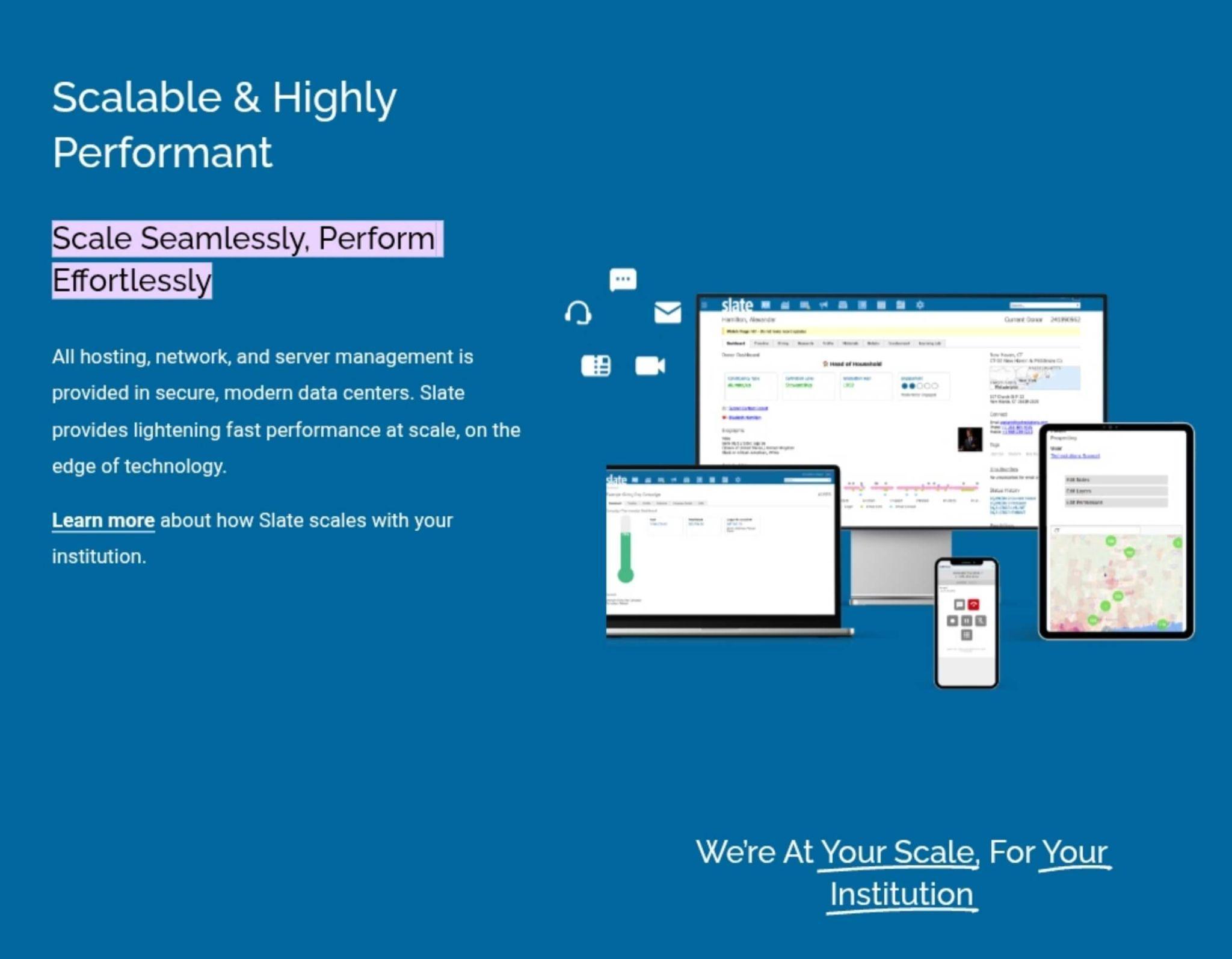
    Example: A cloud-based SaaS platform, Slate, is designed to “scale seamlessly” with an institution’s growth. All technical infrastructure is managed in modern, secure data centers, and Slate regularly updates with new features at no extra cost. This means an organization can start small and trust that Slate will accommodate more applicants, programs, or campuses over time without needing a major system overhaul. In short, EMS vendors focus on both customization (to meet unique local needs) and scalability (to support more users, records, and features as needed).
    Source: Slate

    8. User-Friendly Design

    Adoption hinges on usability. During demos, pay attention to how intuitive the interface is for both staff and applicants. If the system is difficult to use, your team simply won’t use it to its full potential.

    Example: User experience drives adoption. During evaluations, platforms like Classe365 and Class by Infospeed regularly earn praise for intuitive interfaces, which is important when your team has limited tech support.

    Source: Classe365

    9. Mobile Accessibility

    Modern students (and parents) expect mobile-friendly platforms. Responsive design or dedicated mobile apps improve application completion rates and accessibility.

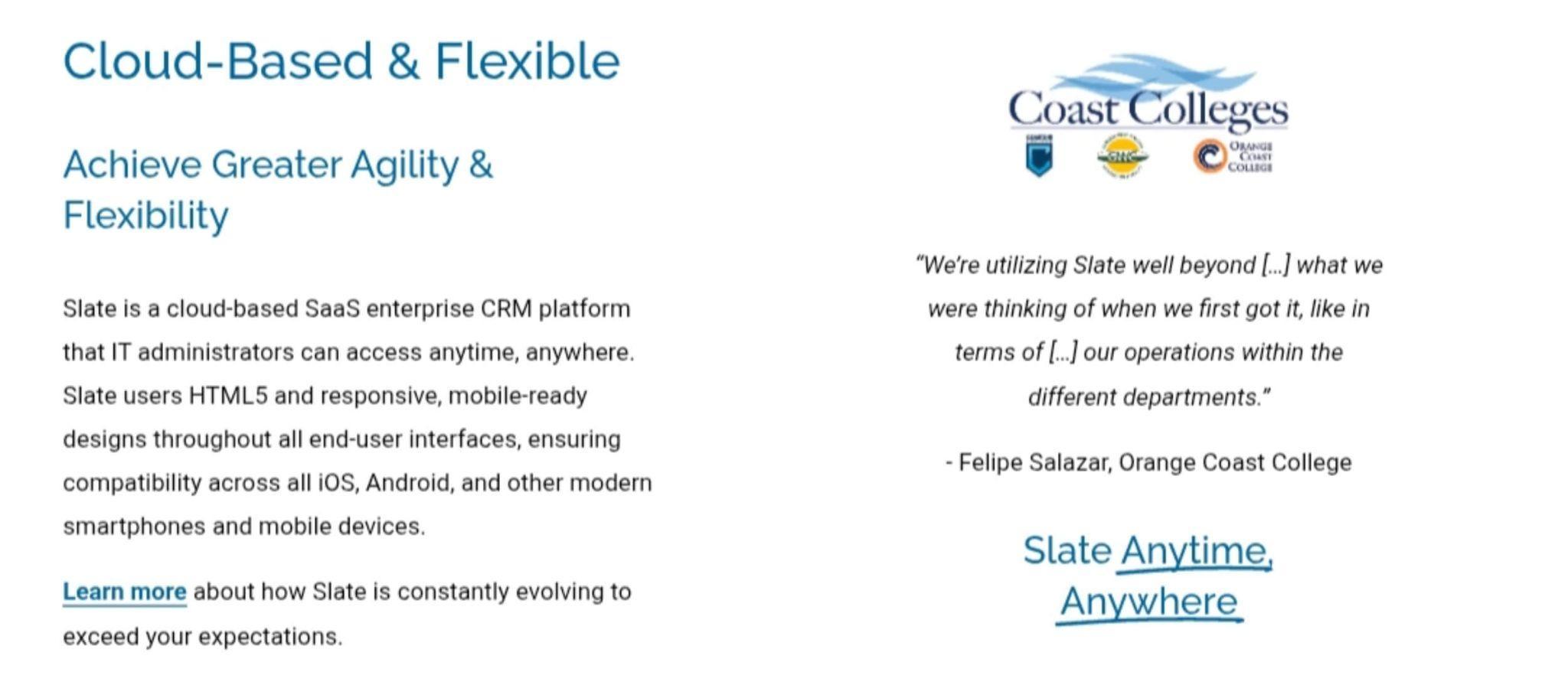
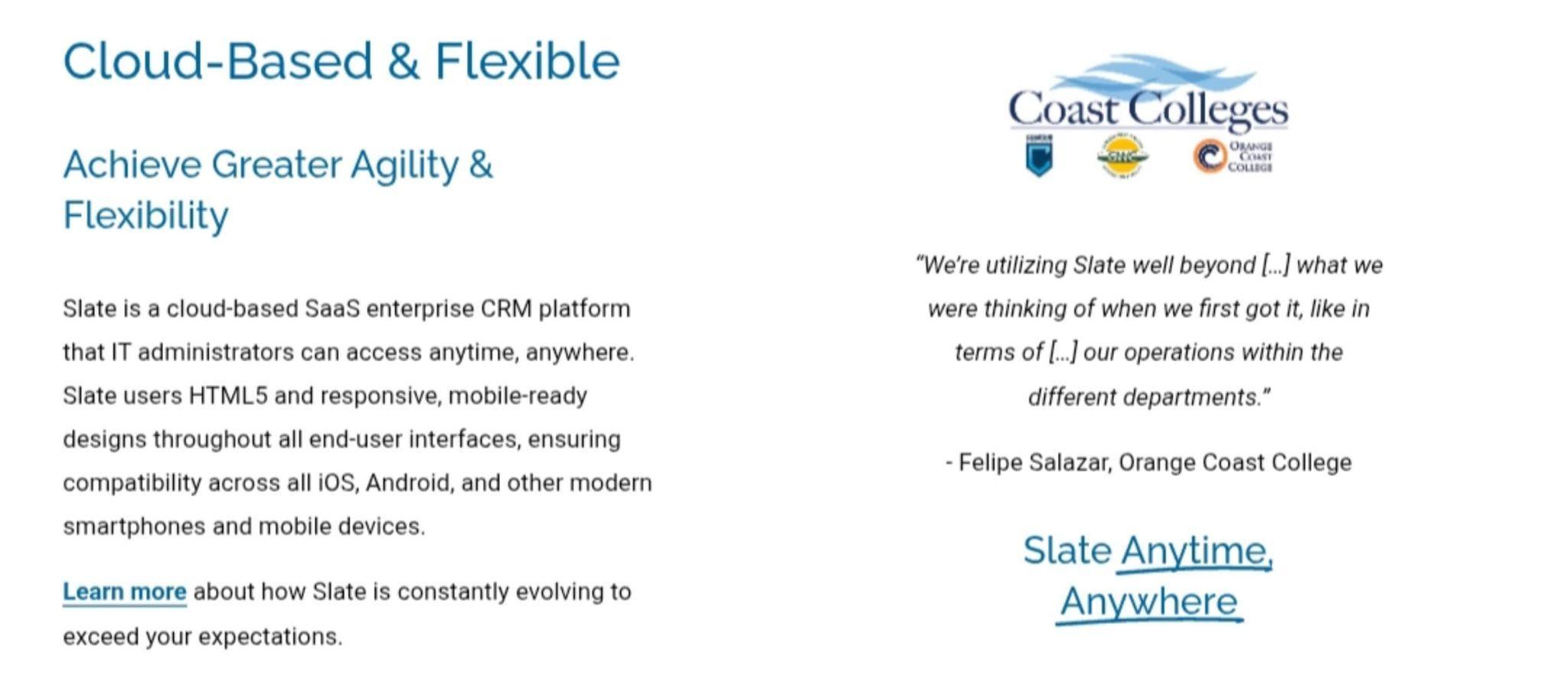
    Example: Slate: Entirely web-based and built with responsive HTML5 design, so all end-user interfaces are mobile-ready by default. Admissions officers and applicants can access Slate “anytime, anywhere,” and the system is compatible across iOS, Android, and other modern smartphones without any special app required.

    Source:
    Slate

    10. Security and Compliance

    Data privacy is critical. Look for FERPA, GDPR, or other compliance features, role-based access controls, encryption, and regular security audits.

    Example: Slate emphasizes that security is an “absolute commitment.” Slate encrypts all data in transit and at rest, and is fully compliant with regulations including PCI-DSS, NACHA, FERPA, GDPR, ADA Section 508, and more. Each client institution’s data is siloed in its own private database, and features like single sign-on integration and multi-factor authentication are supported, all to protect sensitive student information.
    Source: Slate

    How to Choose the Right System: The Smart Institution’s Guide

    Too often, institutions jump into vendor demos before clearly understanding their own needs. But choosing an EMS isn’t like buying a software license. It’s like hiring a new department, one that will touch nearly every part of your student journey.

    Too many schools choose an EMS the way they might buy a printer—look at features, pick the cheapest, hope for the best.

    That’s a mistake.

    Here’s how to do it right:

    1. Audit Your Current Process

    Bring your admissions, marketing, IT, and registrar teams together. Map the journey from first touch to enrolled student. Identify bottlenecks, duplicate data entry, communication gaps, and missed opportunities.

    Ask:

    • Where are we losing leads?
    • What’s manual that should be automated?
    • What data are we not capturing?

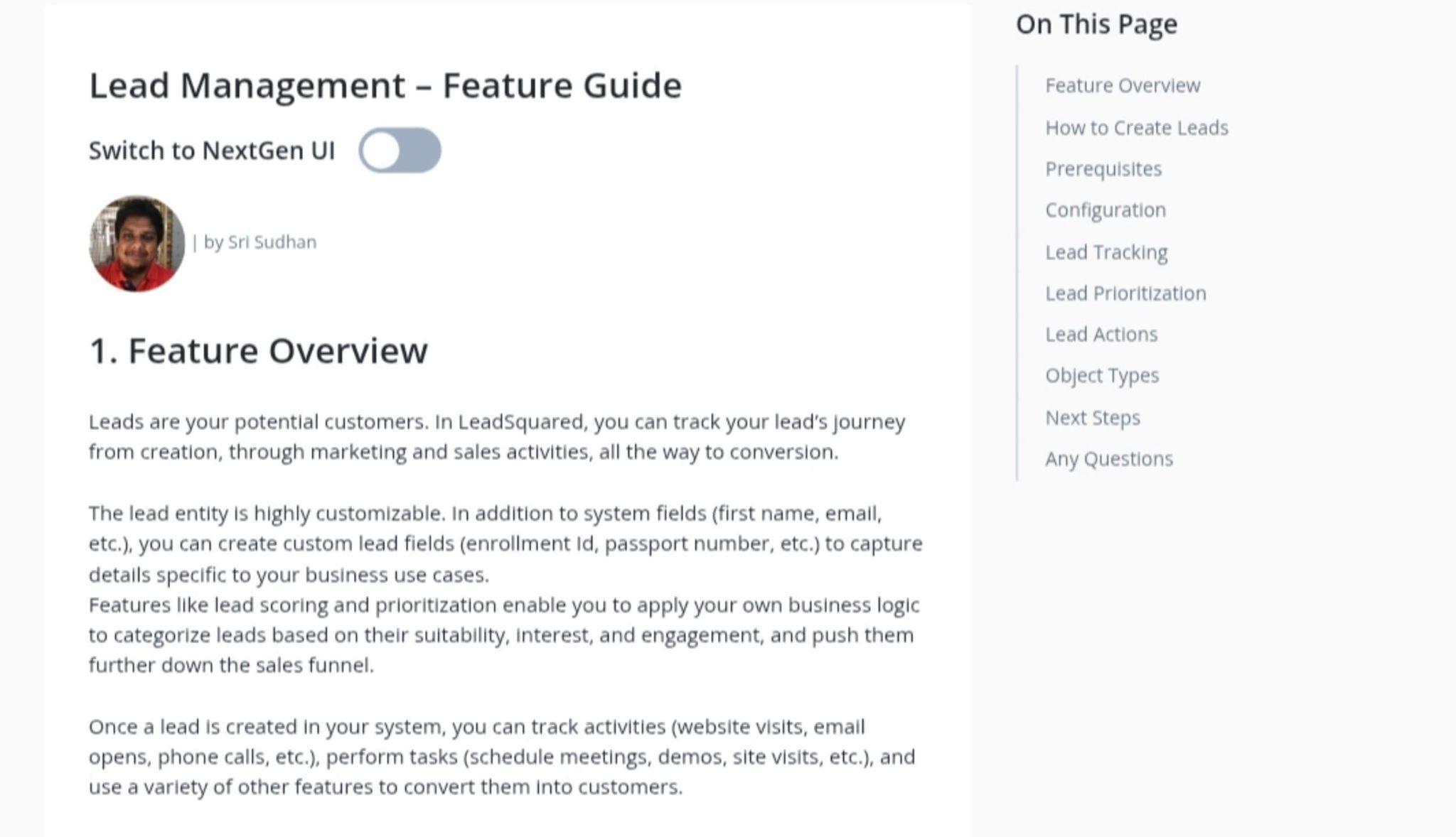
    Example: EMS tools like LeadSquared often shine here by centralizing fragmented workflows.
    Source: LeadSquared


    2. Define (and Prioritize) Your Needs

    Don’t go in with a wishlist. Go in with a mission-critical checklist. Keep these in mind when choosing features:

    • Must-haves (SIS integration, mobile access)
    • Nice-to-haves (AI-driven insights, alumni modules)
    • Deal-breakers (data residency, language support)

    Example: If your institution works with international agents, Class by Infospeed is built for managing agent relationships and complex course offerings, a crucial feature for language schools and ESL programs.

    Source: Class Systems

    3. Involve Your End-Users

    Admissions staff. Recruiters. Advisors. These are the people who will live in the system every day. Their input is gold. Make them part of demos. Let them ask tough questions. Choosing a solution like SchoolMint, praised for its intuitive design, becomes easier when usability is prioritized.

    4. Research Vendors Strategically

    Not all systems serve all markets equally. Some are better for K-12. Others shine in graduate admissions. Some are strong in portfolio management; others in agent tracking.

    Look for:

    • Reviews from schools like yours
    • Live or recorded demos
    • Transparent pricing models
    • Implementation timelines

    Shortlist 3–5 vendors. Your shortlist should reflect your institution’s specific context. For graduate schools, Liaison CAS platforms are especially effective. For community colleges, TargetX offers a powerful combination of CRM and enrollment tools without requiring heavy configuration.

    5. Evaluate Integration and Migration

    Ask each vendor:

    • How do you integrate with our SIS, LMS, and payment gateways?
    • Can you support our CRM, or replace it?
    • How will you handle data migration?
    • Do you offer API access?

    A disconnected EMS is a ticking time bomb. Ask vendors like Technolutions Slate or Salesforce Education Cloud about APIs and migration support—they’re known for smooth onboarding and flexibility.

    6. Test the User Experience

    Never buy blind. Ask for a sandbox account or personalized demo. Simulate key tasks: submitting an application, assigning leads, pulling a report. Include both staff and mock student journeys.

    What feels intuitive? What’s clunky? What’s fast?

    Your system is only as good as the people who use it.

    7. Scrutinize Support and Training

    Great technology without support is useless. Ask:

    • Who handles onboarding?
    • Is training included or extra?
    • What’s your support SLA?
    • Can we talk to a current client?

    Look for a partner, not just a vendor. Look to vendors like Anthology, which are known for offering detailed implementation timelines, role-based training, and strong post-launch support.

    8. Evaluate Total Cost and ROI

    Look beyond license fees. Consider:

    • Implementation and training costs
    • User seat pricing
    • Support packages
    • Future upgrade fees
    • Opportunity cost of inefficiency

    For example, Classe365 offers bundled modules that can be more cost-effective for institutions seeking an all-in-one platform.

    Then flip the question:

    How much time, enrollment yield, and data quality could we gain?

    What to Avoid: Mistakes That Derail Enrollment Success

    Let’s be clear: choosing the wrong EMS won’t just slow you down, it can undermine your enrollment goals for years.

    Common mistakes include:

    • Prioritizing brand over fit. The best-known system is not always the best match for your institution’s size, staff capacity, or audience.
    • Skipping the discovery phase. Without understanding your real process needs, you risk choosing a tool that solves the wrong problems.
    • Overcomplicating the solution. Feature-rich platforms are great—if your team has the time and training to use them. Don’t choose complexity over usability.
    • Neglecting integration. A system that doesn’t talk to your CRM or SIS will create data silos and extra work.
    • Ignoring security and compliance. Your EMS will hold sensitive student data. Ensure it meets regulatory requirements like FERPA or GDPR, and ask vendors for proof of their data protection protocols.
    • Leaving end-users out of the process. If admissions and marketing staff don’t weigh in, you may end up with a system that leadership likes, but staff resents.
    • Rushing implementation. A fast deployment might sound appealing, but skipping onboarding, testing, and training will lead to low adoption and missed ROI.

    A better approach? Take your time. Do the homework. Involve your people. And choose a system that solves your real problems, not just your imagined ones.

    A Strategic Investment, Not Just a Tech Upgrade

    The right Enrollment Management System is more than a technology purchase. It’s a strategic accelerator. When implemented well, it becomes the operating system for your admissions engine, fueling smarter campaigns, stronger applicant engagement, faster decision-making, and ultimately, better student outcomes.

    Institutions that invest intentionally in their EMS see tangible results: higher yield rates, improved retention, deeper applicant insights, and more efficient operations. They don’t just fill classes, they shape them.

    But none of this happens by chance. It requires a clear vision, a methodical evaluation, and a commitment to ongoing improvement.

    Partnering for Enrollment Success

    Choosing an EMS is just the beginning. Implementing it well, and aligning it with your enrollment strategy requires experience, insight, and a steady hand.

    That’s where Higher Education Marketing (HEM) comes in. We’ve helped institutions across Canada and beyond design, implement, and optimize enrollment solutions that work. Whether you need a student-facing CRM portal, a smarter communication strategy, or guidance on vendor selection, our team can help.

    Book a free consultation with HEM today, and let’s build an enrollment strategy that’s as forward-thinking as your institution. Because better tools don’t just make your job easier, they make your goals achievable.

    Need help sorting through the multitudes of enrollment management systems for the right one for your school? Contact HEM today for more information. 
    Frequently Asked Questions

    Question: What is an enrollment management system?

    Answer: An Enrollment Management System is more than a tool for admissions; it’s a digital backbone for your recruitment, application, and onboarding processes

    Question: What does an enrollment system do?

    Answer: It streamlines student recruitment and admissions, enabling your team to launch campaigns, collect inquiries, and track applicant engagement without toggling between multiple platforms.

    Question: What is the point of strategic enrollment management?

    Answer: The point of strategic enrollment management (SEM) is to align an institution’s recruitment, admissions, retention, and graduation strategies with its long-term goals, using data and coordinated planning to optimize student success and institutional sustainability. 

    Source link

  • What Do Universities Use CRM Systems For?

    What Do Universities Use CRM Systems For?

    Reading Time: 7 minutes

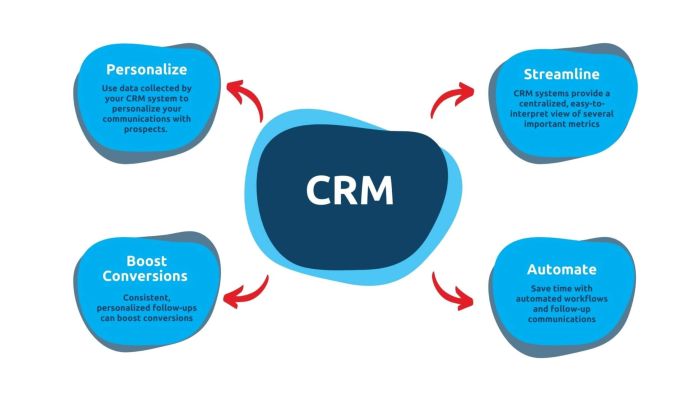
    Customer Relationship Management (CRM) systems have become essential tools in higher education, transforming how universities interact with prospective students, current students, alumni, and other stakeholders. Whether you’re trying to track your enrollment funnel, streamline your recruitment process, or boost retention, CRM systems offer many unique marketing benefits for your institution. 

    You may have already encountered discussions about CRM platforms, but understanding their full potential in an educational context is key to optimizing your institution’s outreach, recruitment, and engagement efforts. Keep reading to learn more about higher education CRM systems, the unique marketing benefits they offer, and how you can get started.

    Struggling with enrollment?

    Our expert digital marketing services can help you attract and enroll more students!

    Understanding Higher Education CRM

    What is a CRM in higher education? It’s a powerful software solution that helps universities manage relationships at every stage of the student lifecycle. Traditionally associated with sales and customer service in corporate settings, CRM technology has evolved to meet the specific needs of educational institutions. In higher education, a CRM can track interactions with prospective students, automate communication, and analyze data to improve engagement and conversion rates.

    Unlike a standard student information system (SIS), which focuses on administrative tasks like enrollment and grades, a CRM is designed for relationship-building. It allows universities to personalize outreach, streamline marketing efforts, and nurture students from the moment they express interest until they become engaged alumni. By integrating CRM technology into your institution’s marketing strategy, you can enhance recruitment efforts, improve retention rates, and foster long-term alumni engagement.

    HEM Image 2HEM Image 2

    Source: HEM

    Are you wondering how your university can unlock the benefits of a CRM? Reach out to learn about our tailored digital marketing solutions.

    The Benefits of CRM Systems for Universities

    What are universities using CRM for? Well, to be successful as an educational institution, building and maintaining positive relationships with prospective students is necessary. CRMs help schools manage those relationships at various stages of the enrollment funnel and offer valuable marketing benefits. 

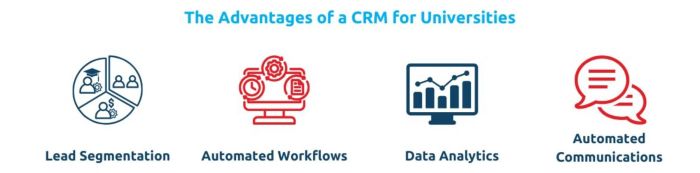
    One of the most significant advantages of implementing a CRM in higher education marketing is the ability to centralize and manage vast amounts of student data efficiently. Rather than relying on disparate spreadsheets, email threads, and manual tracking, a CRM consolidates all interactions into a single platform, ensuring every team member has up-to-date information.

    A well-implemented CRM system helps streamline the recruitment process by automating lead nurturing. When prospective students submit inquiries through your website, attend a virtual event, or download a brochure, a CRM can trigger personalized email sequences, follow-up reminders, and targeted content recommendations based on their interests. This level of automation ensures that no lead is left unattended, allowing admissions teams to focus on high-value interactions.

    Beyond recruitment, CRM systems are crucial in improving student engagement and retention particularly when data from a Student Information System is integrated. Universities can use CRM and SIS analytics to monitor student behaviour, such as class attendance, engagement with academic advisors, or extracurricular activities. If a student begins to disengage, automated alerts can prompt intervention from faculty or student services, helping to improve retention rates and overall student satisfaction.

    Another key area where CRMs add value is in alumni relations and fundraising. By tracking alumni career paths, donation history, and event participation, universities can segment their alumni base and tailor communications accordingly. For instance, an alumni relations team can identify graduates likely to contribute to fundraising campaigns based on past engagement, ensuring that outreach efforts are strategic and effective.

    HEM Image 3HEM Image 3

    Source: HEM

    Implementing a CRM System in Your University

    Integrating a CRM into your university’s operations requires careful planning and execution. The first step is selecting a CRM that aligns with your institution’s needs. Some CRMs, like Salesforce Education Cloud, HubSpot, or Slate, are specifically designed for higher education, offering features tailored to student recruitment, engagement, and alumni relations.

    Prioritize Data Integration 

    Data integration is another challenge that universities must address. Many institutions already have multiple systems for student records, financial aid, and course management. Ensuring that the CRM integrates seamlessly with these existing platforms prevents data silos and a smooth flow of information across departments. This might require working closely with IT teams or investing in middleware solutions to facilitate integration.

    Measure Results and Plan Accordingly 

    Once a CRM is chosen, establishing clear goals and key performance indicators (KPIs) is crucial. Universities should determine what they want to achieve with their CRM, whether it’s increasing application rates, improving response times for inquiries, or boosting alumni donations. Setting measurable objectives ensures that the CRM is used strategically.

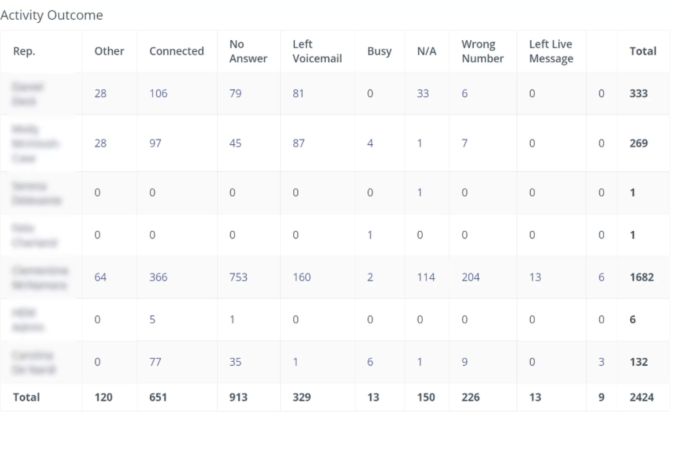
    Example: A great way to measure the success of your marketing efforts using a CRM is to track the outcomes of your communications as pictured below. This data is extremely valuable as now, you know how many prospects you were able to reach, how they responded to your communications, and whether you need to obtain more accurate contact information. This is just one of the metrics you can track using our Mautic CRM system.

    HEM Image 4HEM Image 4

    Source: HEM | Mautic

    Get Your Whole Team Involved 

    Staff training is another essential component of successful CRM implementation. A CRM is only as effective as the people using it, so ensuring that admissions teams, marketing departments, and student services personnel are comfortable navigating the system is paramount. Conducting regular training sessions, creating user guides, and designating CRM champions within each department can help drive adoption and maximize efficiency.

    Focus on Personalization

    To fully leverage the potential of a CRM, universities should also focus on personalization. With the data collected through a CRM, institutions can tailor communications to different student segments. For instance, a prospective student interested in business programs should receive targeted content about faculty research, alumni success stories, and upcoming application deadlines for the business school rather than generic university-wide messaging. Personalized engagement fosters stronger connections and increases the likelihood of conversion.

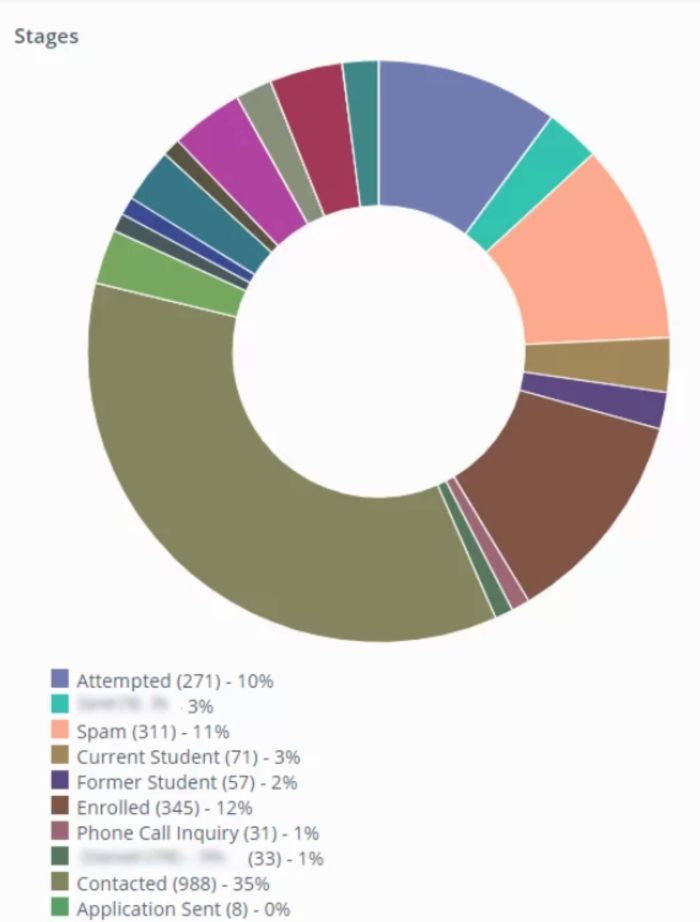
    Example: How do you personalize your university marketing efforts? A great place to start if you’re still learning about your ideal prospect is tailoring marketing communications for the stage of the enrollment funnel they’re in. Through segmentation, a CRM system like Mautic can divide your contacts into groups based on their current relationship with your institution. This approach ensures you reach each lead at the right time with the right message.

    HEM Image 5HEM Image 5

    Source: HEM | Mautic

    Automate for Efficiency

    Another best practice for CRM implementation is utilizing automation for efficiency. Many CRM platforms offer workflow automation features that simplify tasks such as sending event reminders, scheduling advisor meetings, and managing follow-ups. Automating repetitive processes reduces the administrative burden on staff, allowing them to focus on more strategic initiatives.

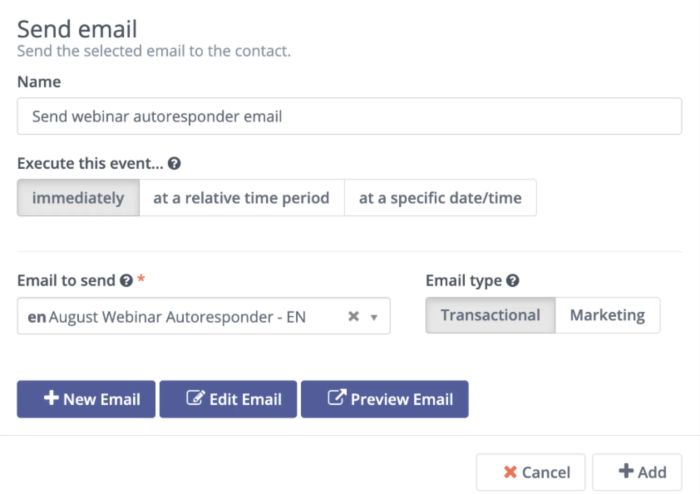
    Example: A CRM system will enable you to craft automated email and SMMs to increase efficiency and ensure timely, carefully worded responses every time. Here, you can see how Mautic allows you to personalize your messages, time them, and tailor them to the purpose of your communication – to promote your university or to collect specific admission information.

    HEM Image 6HEM Image 6

    Source: HEM | Mautic

    The Future of CRMs in Higher Education

    As technology continues to evolve, the role of CRMs in higher education will only expand. The rise of artificial intelligence and predictive analytics is already enhancing CRM capabilities, allowing universities to forecast enrollment trends, identify at-risk students before they drop out, and personalize outreach on a deeper level. Chatbots and AI-driven communication tools integrated into CRMs improve response times, ensuring prospective students receive instant answers to their inquiries.

    Moreover, the shift towards hybrid and online education models has made digital engagement more critical. Universities that effectively utilize their CRM systems can provide seamless virtual experiences, track online learning engagement, and maintain meaningful connections with students regardless of physical location.

    Choose a CRM Built for Higher Education

    Unique needs call for unique solutions. A CRM for universities offers specialized features such as student lifecycle tracking, automated admissions workflows, alumni engagement tools, and seamless integration with existing student information systems, ensuring a more efficient and personalized approach to student recruitment, retention, and engagement.

    One example of a CRM tailored specifically for higher education is Mautic by HEM. Developed from the Mautic open-source platform, Mautic by HEM offers a powerful combination of CRM and marketing automation designed to help universities streamline their lead management, supercharge their marketing efforts, and improve follow-up processes. 

    With tools for segmentation, automated workflows, email marketing, and analytics, Mautic by HEM enables institutions to track prospective students throughout the enrollment journey while optimizing team productivity. By leveraging this CRM, universities can enhance engagement, improve efficiency, and gain deep insights into recruitment and admissions efforts.

    For university marketers and administrators looking to stay competitive, embracing CRM is an absolute must. With the right approach, a CRM can transform how your institution engages with students, streamline processes, and ultimately achieve enrollment and retention goals.

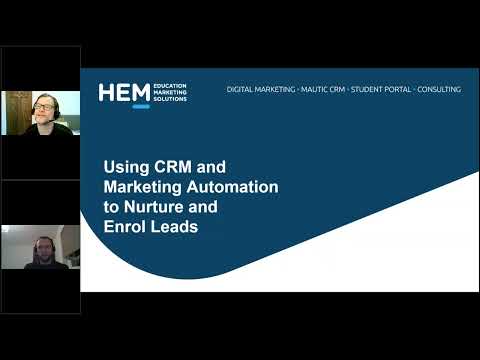
    Example: For a complete view of how our CRM system can help you to reinvent your marketing strategy. In one of our previous webinars, we explored how Mautic can help you boost enrollment through effective relationship management.

    YouTube videoYouTube video

    Source: HEM | YouTube

    Struggling with enrollment?

    Our expert digital marketing services can help you attract and enroll more students!

    Frequently Asked Questions

    Question: What is a CRM in higher education?

    Answer: It’s a powerful software solution that helps universities manage relationships at every stage of the student lifecycle.

    Question: What are universities using CRM for?

    Answer: Well, to be successful as an educational institution, building and maintaining positive relationships with prospective students is necessary. CRMs help schools manage those relationships at various stages of the enrollment funnel and offer valuable marketing benefits.

    Source link

  • Roles in Educational Marketing Strategies

    Roles in Educational Marketing Strategies

    Reading Time: 8 minutes

    Are you wondering what sort of systems your school needs to streamline processes, enhance communication, and maximize student success? Two critical tools in this digital transformation are Customer Relationship Management (CRM) systems and Learning Management Systems (LMS). If you’re thinking about which kinds of systems to implement – CRM vs LMS

    While both play vital roles in educational institutions, their functions, benefits, and implementation strategies differ significantly. Understanding the difference between CRM and LMS and integrating them into your educational marketing strategy can provide a powerful edge. In this blog, we provide all of the guidance you’ll need to get started.

    Simplify student management and boost recruitment efficiency!

    Transform your student portal experience. Get a FREE HEM-SP demo today.

    What Is a CRM System?

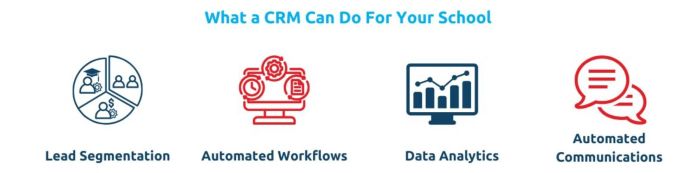
    In an educational marketing context, a Customer Relationship Management (CRM) system is designed to manage interactions with prospective and current students. You can use CRM systems to track leads, nurture relationships, and streamline admissions workflows. These tools are indispensable if you’re looking to optimize your marketing and recruitment efforts by ensuring every prospective student receives personalized attention at the right time.

    CRM systems often include features such as lead tracking, segmentation, automated workflows, communication tools, and analytics. By providing insights into the enrollment journey, CRMs help schools allocate resources more effectively and improve conversion rates. A robust CRM can also support long-term engagement by keeping alumni connected to the institution.

    What is the best CRM for schools? Every school is different but generally, to choose the best CRM platform for your school, you should prioritize a system tailored to the education sector, like Mautic by HEM, which offers tools for lead management, personalized communication, and data-driven insights to streamline your admissions and marketing efforts.

    Built on the Mautic open-source marketing automation platform, it offers a comprehensive solution for managing leads, automating communication, and gaining insights into recruitment performance. With features such as contact management, campaign workflows, and lead scoring, Mautic by HEM helps schools supercharge their marketing and admissions efforts.

    HEM IMAGE 2HEM IMAGE 2

    Do you want to know how to use CRM and LMS to take your student experience to the next level? Contact us for a demo

    What Is an LMS?

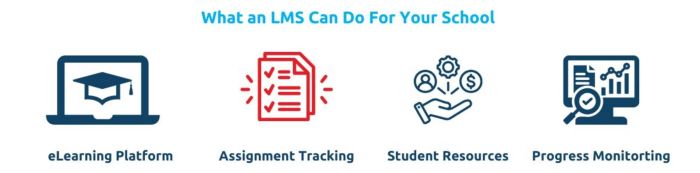
    What is the purpose of LMS in education? A Learning Management System (LMS) is a platform designed to deliver, track, and manage educational content and student learning experiences. LMS platforms provide the infrastructure for online learning, offering tools for course creation, assignment tracking, progress monitoring, and student engagement. Schools use LMS platforms to enhance in-person and online education by providing a centralized hub for learning resources and communication.

    In addition to managing educational delivery, an LMS can provide valuable data on student performance and engagement, allowing educators to tailor instruction and support to individual needs. HEM’s Student Portal System, which includes a Student Information System (SIS), is an example of how an LMS can be integrated into an institution’s broader ecosystem. It streamlines everything from course scheduling to attendance tracking, creating a seamless experience for educators and learners.

    HEM IMAGE 3HEM IMAGE 3

    CRM vs LMS: Key Differences

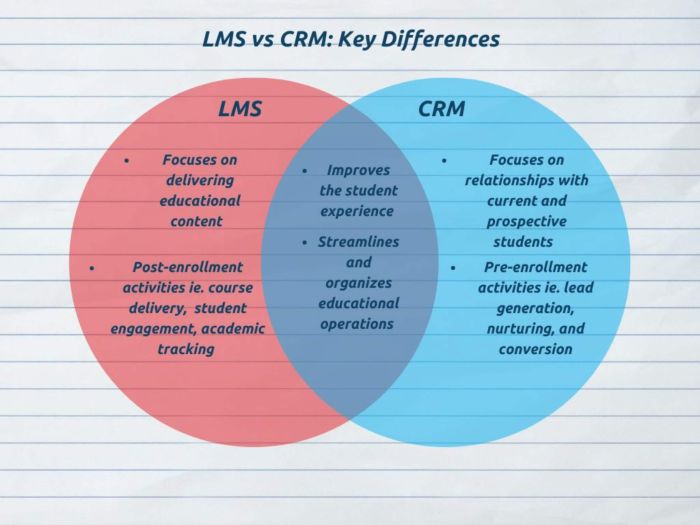
    Although CRM and LMS systems serve different purposes, they often complement each other in educational marketing strategies. The primary distinction lies in their focus: CRM systems are designed to manage relationships with prospects and current students, while LMS platforms are dedicated to managing the delivery of educational content.

    A CRM system focuses on pre-enrollment activities, such as lead generation, nurturing, and conversion. It ensures prospective students receive timely, relevant information encouraging them to apply and enroll. By contrast, an LMS supports post-enrollment activities, including course delivery, student engagement, and academic tracking.

    Despite their distinct roles, both systems share a common goal: improving the student experience. By integrating CRM and LMS platforms, schools can create a cohesive journey from initial contact to graduation and beyond.

    HEM IMAGE 4HEM IMAGE 4

    Source: HEM

    Benefits of a CRM System in Educational Marketing

    Implementing a CRM system in your school’s marketing strategy can yield several benefits. CRMs streamline lead management by organizing contacts, tracking interactions, and automating follow-ups. This allows your admissions team to focus on high-priority leads while ensuring no prospect falls through the cracks.

    Mautic by HEM, for instance, empowers schools to create automated workflows for tasks such as email marketing, SMS campaigns, and event registrations. These tools help nurture leads effectively, moving them through the enrollment funnel. The platform’s robust reporting capabilities provide deep insights into the success of your marketing efforts, enabling data-driven decision-making.

    CRMs also enhance personalization. By segmenting leads based on criteria such as program interest, location, or stage in the admissions process, schools can deliver tailored messages that resonate with each prospect. This level of customization increases engagement and improves conversion rates.

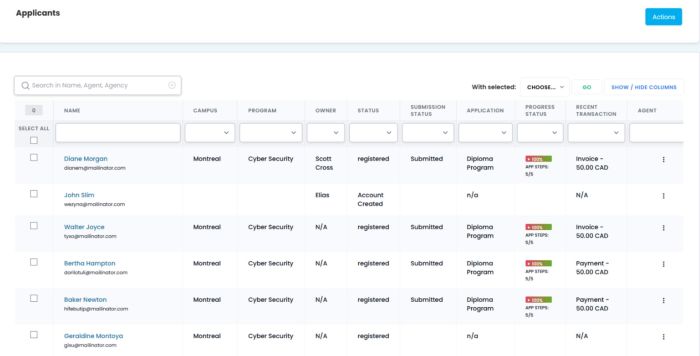
    Example: One principal benefit of using a CRM for your school is access to detailed data that you can use to make your next move. The report below demonstrates how you can track registrations, what program the prospect has registered for, the prospects’ registration progress, and payment statuses. This is enough to craft and send a personalized follow-up message – a process that can be automated on CRMs like Mautic.

    HEM IMAGE 5HEM IMAGE 5

    Source: Mautic | Higher Education Marketing

    Benefits of an LMS for Educational Institutions

    An LMS enhances the learning experience by providing a centralized platform for educational content and resources. Students can access course materials, submit assignments, and communicate with instructors from anywhere, fostering flexibility and accessibility.

    LMS platforms also facilitate data collection, allowing educators to monitor student performance and identify areas for improvement. By tracking metrics such as course completion rates, assessment scores, and engagement levels, schools can make informed decisions to improve outcomes.

    HEM’s Student Portal System exemplifies how an LMS can integrate seamlessly into an educational institution. With features such as course scheduling, attendance tracking, and performance reporting, it streamlines administrative tasks while enhancing the student experience. This dual functionality ensures that both educators and learners have the tools they need to succeed.

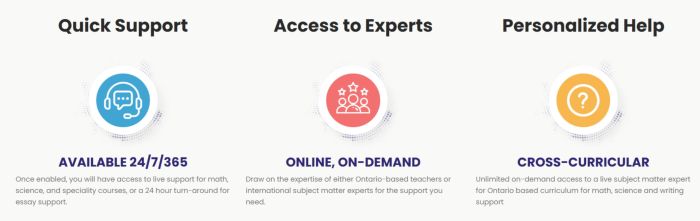
    Example: Here, the learning benefits of Ontario eSecondary School are outlined plainly – they offer quick support, access to expert teachers, and personalized help. An LMS significantly improves the student experience by providing resources that enrich lessons and offer support from staff. 

    An LMS is particularly essential for online academies like Ontario eSecondary School in order to provide structure and necessary resources to students; however, with an increasingly tech savvy student population that tends to expect online options, an LMS can benefit any school. 

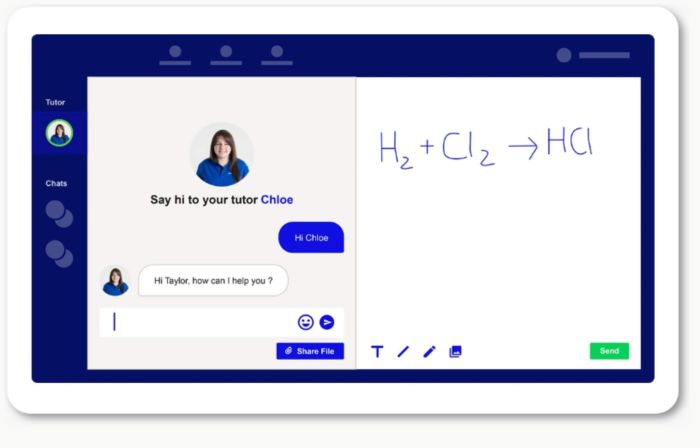
    The second image demonstrates how courses can be delivered using LMS tools. Your aim should be to improve student experience by creating an interactive learning experience. This can be accomplished by integrating communications and multi-media tools with your LMS.

    HEM IMAGE 6HEM IMAGE 6

    HEM IMAGE 7HEM IMAGE 7

    Source: Ontario eSecondary School

    Implementing a CRM System: Actionable Advice

    To implement a CRM system effectively, start by identifying your school’s specific needs and goals. Consider factors such as the size of your admissions team, the complexity of your enrollment process, and the channels you use to communicate with prospects.

    Next, select a CRM system designed for the education sector. Mautic by HEM is an excellent choice, offering features such as automated workflows, lead scoring, and detailed reporting tailored to the unique challenges of student recruitment. Requesting a demo is a great way to explore the platform’s capabilities and determine how it aligns with your goals.

    Once you’ve chosen a CRM, focus on integration and training. Ensure the system integrates with your existing tools, such as your website and email marketing platforms. Provide thorough training for your team to ensure they can use the CRM effectively. Finally, monitor performance and gather feedback to refine your processes over time.

    Implementing an LMS: Actionable Advice

    When implementing an LMS, start by defining your educational goals. Consider the types of courses you offer, the level of interactivity you want to provide, and the needs of your students and instructors.

    Select an LMS that aligns with these goals. HEM’s Student Portal System, for example, offers a comprehensive solution for managing courses, tracking attendance, and monitoring student progress. By integrating these functions into a single platform, the system simplifies administration while enhancing the learning experience.

    Ensure your LMS is user-friendly and accessible. Provide training for instructors and students to maximize adoption. Regularly review performance metrics to identify areas for improvement and ensure the platform continues to meet your institution’s needs.

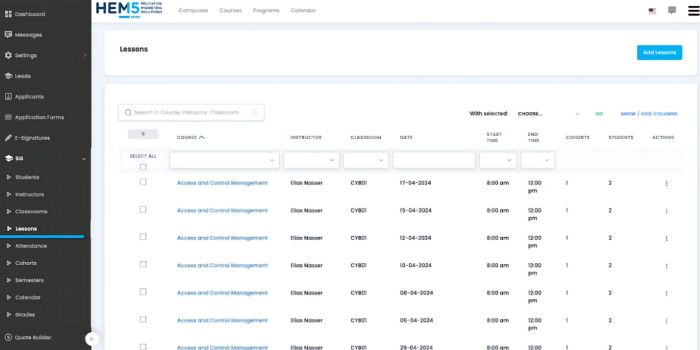
    Example: Here, the SP Student Information System is being used for course planning. LMS systems like this help you centralize the information that students need to retain lessons and complete their assignments. Be detailed and clear when providing lesson information.

    HEM IMAGE 8HEM IMAGE 8

    Source: Student Information System

    Combining CRM and LMS for Maximum Impact

    While CRM and LMS systems serve different purposes, integrating them can create a seamless experience for both prospective and current students. For example, data from your CRM can inform personalized communication with enrolled students through your LMS. Similarly, insights from your LMS can help you refine your marketing efforts by highlighting the types of content and courses that resonate most with learners.

    HEM’s suite of solutions, including Mautic by HEM and the Student Portal System, offers an integrated approach to educational marketing and administration. By combining the strengths of CRM and LMS platforms, schools can create a unified strategy that supports students at every stage of their journey.

    It’s Time to Get Started!

    LMS vs CRM? Instead of choosing one over the other, try focussing on how each system contributes to your educational marketing strategy. A CRM system like Mautic by HEM helps schools attract and convert prospective students, while an LMS like HEM’s Student Portal System ensures those students have an exceptional learning experience. By leveraging both tools, schools can optimize their processes, enhance engagement, and achieve their goals more effectively.

    If you’re ready to take your school’s marketing and administrative efforts to the next level, consider exploring HEM’s Mautic and Student Portal solutions. With the right tools and strategies in place, your institution can thrive in today’s competitive educational landscape.

    Simplify student management and boost recruitment efficiency!

    Transform your student portal experience. Get a FREE HEM-SP demo today.

    Frequently Asked Questions

    Question: What is the best CRM for schools? 

    Answer: Every school is different but generally, to choose the best CRM platform for your school, you should prioritize a system tailored to the education sector, like Mautic by HEM, which offers tools for lead management, personalized communication, and data-driven insights to streamline your admissions and marketing efforts.

    Question: What is the purpose of LMS in education?

    Answer: A Learning Management System (LMS) is a platform designed to deliver, track, and manage educational content and student learning experiences.

    Source link

  • CRM and SIS Solutions for Schools

    CRM and SIS Solutions for Schools

    Reading Time: 8 minutes

    As a school striving to broaden its reach, you likely already understand the importance of personalized communication to attract and retain students. That may sound like a lot of work because, without the right tools, it certainly can be. Fortunately, our team, with over fifteen years of experience working closely with educational institutions, has developed specialized solutions that address key challenges faced by schools looking to streamline their processes and boost enrollment.

    HEM’s custom-built solutions—Mautic by HEM, a powerful Customer Relationship Management (CRM) and marketing automation system, and HEM’s Student Portal, an all-in-one Student Information System (SIS)—offer the tools you need to manage your admissions and student engagement efforts seamlessly. Let’s explore how you can give yourself the gift of efficiency this holiday season with these systems!

    Simplify student management and boost recruitment efficiency!

    Transform your student portal experience. Get a FREE HEM-SP demo today.

    Understanding CRMs and How They Benefit Your Institution

    What is a CRM and how can it benefit educational institutions? A CRM, or Customer Relationship Management system, is a platform that helps organizations manage and analyze customer interactions and data throughout the customer lifecycle.

    For educational institutions, a CRM is essential in managing prospective student relationships, tracking their progress through the admissions funnel, and keeping detailed records of interactions. At its core, a CRM enables schools to create personalized experiences for prospective students, allowing them to engage in meaningful ways at every stage of their journey.

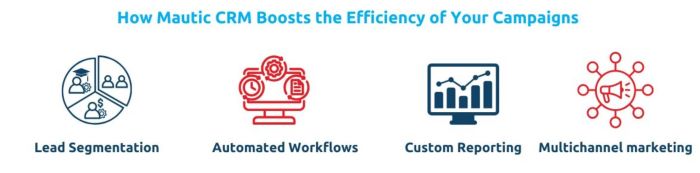
    Mautic by HEM, our tailored CRM for educational institutions leverages the open-source marketing automation platform Mautic to deliver a seamless experience designed specifically for the education sector. With features like lead segmentation, automated workflows, custom reporting, and multichannel marketing, Mautic by HEM empowers schools to enhance their lead management and marketing efficiency.

    By segmenting contacts based on their stage in the admissions process, program of interest, or geographical location, your institution can ensure that each prospect receives targeted messages that are more likely to result in conversions.

    HEM Image 1HEM Image 1

    Reach out to us for a demo to see how Mautic can boost efficiency for your school’s marketing campaign!

    Mautic by HEM: Supercharge Your Lead Management and Marketing

    Mautic by HEM goes beyond a standard CRM, combining powerful customer relationship management with advanced marketing automation to help you maximize your student recruitment efforts.

    Mautic makes it easy to manage a large number of prospective students by allowing you to segment, organize, and follow up with prospects efficiently. By automating workflows and assigning follow-up tasks, your team can manage their workload better, ensuring that each prospect receives timely attention.

    HEM Image 5HEM Image 5

    Source: Mautic | HEM

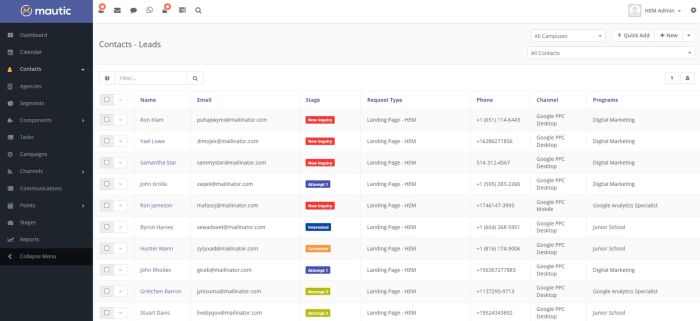
    Example: Do you see how centralizing prospect information helps you track the effectiveness of your campaigns and determine the next step in the enrollment funnel? Here, prospects are categorized by their current stage in the enrollment process, their program of interest, the channel through which they first interacted with your institution, and what sort of contact they are. That’s all the information you need to craft an appropriate and compelling follow-up message tailored to each unique responsibility. Mautic helps you with that part too!

    In addition, Mautic by HEM’s marketing automation tools enable you to scale up your email marketing, create dynamic landing pages, design forms, and automate workflows. This allows your institution to maintain a high level of personalized engagement with prospects across multiple channels, thereby improving your reach and effectiveness in digital recruitment.

    The solution’s custom reporting features also give you detailed insights into your admissions pipeline. With Mautic by HEM, you can monitor productivity, track lead progress, and evaluate channel performance, which will help you refine your approach and allocate resources to high-impact activities.

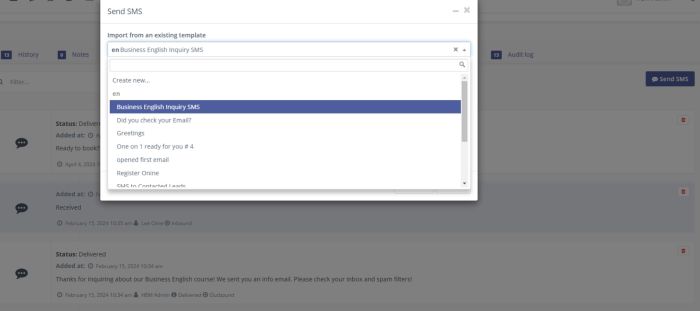
    Ensuring timely follow-up is essential for converting leads to students, and Mautic by HEM enables automated SMS and email follow-ups, allowing you to communicate with leads through their preferred channels. Whether it’s sending reminders, booking meetings, or making calls, Mautic by HEM has the tools your team needs to maintain a consistent communication flow.

    HEM Image 3HEM Image 3

    Source: Mautic | HEM

    Example: Viewing the contact history for each prospect lets you know how they prefer to communicate. In addition to other vital data such as name and contact information, you can craft a highly personalized message such as the SMS pictured above. 

    Finally, Mautic by HEM also helps your team manage their daily tasks and workload. With integrated calendars, workflow assignments, and productivity tracking, your staff can stay organized and focused on what matters most—building relationships and driving enrollments.

    Why You Need an SIS for Your School

    Now, what is a Student Information System (SIS)? Student Information System software is designed to manage student data from application through graduation. An SIS handles everything from enrollment and class scheduling to academic records and financial management. This centralized database makes it easy for staff to track student progress and streamline administrative tasks.

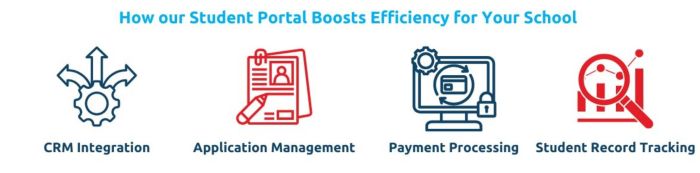
    HEM’s Student Portal integrates CRM and SIS functionalities to provide an all-in-one admissions and student management platform. Tailored to meet the demands of educational institutions, the portal includes tools for application management, payment processing, and student record tracking. This integrated solution enables institutions to centralize and simplify operations, allowing your staff to focus on building meaningful relationships with prospective and current students.

    HEM Image 2HEM Image 2

    HEM’s Student Portal: Revolutionizing Student Management

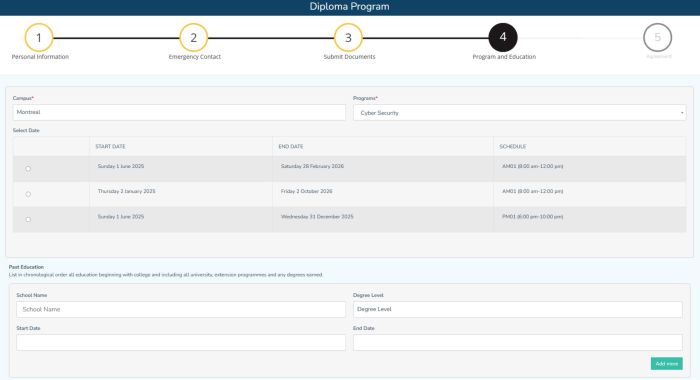
    HEM’s Student Portal takes SIS integration to a new level, offering an all-encompassing admissions and student management system designed specifically for educational institutions. The Student Portal simplifies the application process, offering a virtual admissions assistant that guides students from start to finish. Students can inquire, apply, pay, and even enroll through an easy-to-use interface.

    HEM Image 4HEM Image 4

    Source: Student Portal | HEM

    Example: A customized Student Portal will guide students through your application process from initial form submission to payment in a user-friendly format as pictured above. 

    Customizable forms and a centralized management system make it easy for your staff to track applications, ensuring nothing falls through the cracks. Additionally, the portal seamlessly integrates with Mautic by HEM, allowing you to manage marketing and admissions in one place. By streamlining communication and automating workflows, this system supports your institution’s goals for efficiency and high-quality engagement with prospective students.

    The Student Portal allows for comprehensive data management, tracking all aspects of student data from initial inquiry to graduation. With detailed records and customizable reports, your team can monitor application status, manage payment processing, and keep detailed academic records, providing staff with a complete view of each student’s journey.

    HEM Image 6HEM Image 6

    Source: Student Portal | HEM

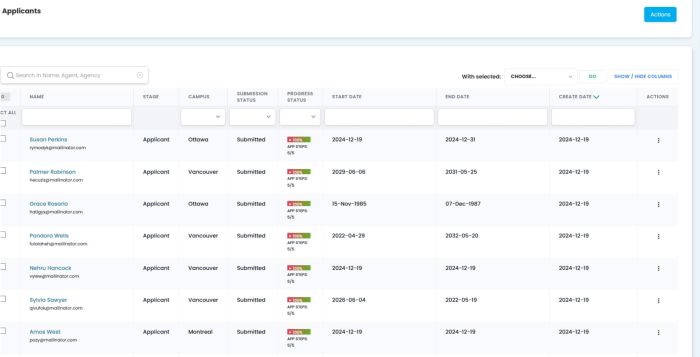
    Example: Here, you can see our centralized application management system. See all incoming applications and determine which applications were started and not completed. In addition, the Student Portal platform allows you to track prospects based on name, program, whether they’ve been sent an invoice, and whether that invoice has been paid. This information is valuable as it clarifies the next step for each contact.

    Furthermore, the portal’s quote builder tool allows prospective students to calculate program costs, offering them a transparent view of financial requirements. This provides clarity and builds trust, making it easier for students and their families to plan for the financial aspects of their education.

    Designed to improve efficiency across all departments, the Student Portal facilitates better collaboration by centralizing data and providing tools for managing projects and tracking progress. This comprehensive approach allows staff to work towards strategic institutional goals, fostering a collaborative environment that drives both student success and institutional growth.

    Experience the HEM Advantage: Efficiency 

    Mautic by HEM and the HEM Student Portal offer transformative CRM and SIS solutions that empower educational institutions to work smarter, not harder. By combining lead management, marketing automation, admissions tracking, and student data management, HEM’s tools create a cohesive system designed to meet the unique needs of schools. That’s what we accomplished for Micheal Vincent Academy.

    Founded by Tally B. Hajek, a multi-talented recording artist and makeup artist, and her husband Michael Vincent, a renowned celebrity photographer, MVA teaches around 350 students annually. Each student gains expert instruction and builds a professional portfolio, launching them toward successful careers in beauty and media.

    MVA sought an organized, streamlined solution to manage its student recruitment efforts, and they found the answer in Mautic by HEM. This customized CRM software, specifically tailored for educational institutions, allows MVA to efficiently automate its marketing efforts and seamlessly follow up with prospective students.

    Transformative Results for a Thriving Institution

    With Mautic, MVA’s team can now easily track and manage leads. The CRM’s powerful reporting tools give the academy a clear view of each lead’s journey through the admissions process. Staff can track the progress of every prospective student, monitor recruitment team activities, and measure productivity—all crucial for a private institution focused on cost-effective outreach. Furthermore, the lead-scoring feature in Mautic enables the recruitment team to identify and prioritize high-value leads, allowing MVA to concentrate on students who are genuinely interested and likely to succeed within the academy’s creative programs.

    As Tally Hajek highlights, the organizational capabilities of Mautic are essential to building meaningful connections with prospective students. “We value connections with prospective students, but connections cannot happen without organization,” she explains. The system enables her team to foster relationships with students who are both committed and well-suited to the academy’s professional and artistic environment.

    Moreover, HEM’s attentive and supportive customer service has made the partnership especially rewarding. “We love working with the HEM team,” says Hajek. “We feel like they really understand us and want us to succeed.” With HEM’s customized solutions, MVA has significantly increased staff efficiency in student recruitment, giving their team the tools to excel in a competitive educational market and helping the academy continue to thrive as a leader in beauty and media education.

    Imagine a system that handles every step of the student journey—engaging prospective students, nurturing leads, simplifying applications, and supporting students through their academic journey—all from a single platform. HEM is dedicated to providing solutions that help you enhance recruitment, boost enrollment, and offer the seamless digital experience that students expect.

    To see how Mautic and the HEM Student Portal can transform your institution, request a demo today and discover the possibilities of giving yourself the gift of efficiency.

    Give Yourself the Gift of Efficiency

    This holiday season, give your institution the ultimate gift: the power to work smarter, not harder. HEM’s custom-built solutions, including Mautic CRM and the HEM Student Portal, are designed to streamline your operations and boost your team’s effectiveness. 

    From managing prospective student leads to enhancing engagement and improving communication, these tools empower your staff to focus on what truly matters—building connections and driving success.

    Simplify student management and boost recruitment efficiency!

    Transform your student portal experience. Get a FREE HEM-SP demo today.

    FAQ 

    Question: What is a CRM and how can it benefit educational institutions?

    Answer: A CRM, or Customer Relationship Management system, is a platform that helps organizations manage and analyze customer interactions and data throughout the customer lifecycle.

    Question: What is a Student Information System (SIS)?

    Answer: Student Information System software is designed to manage student data from application through graduation.

    Source link