Category: Culture & Community

  • Creating Human-Centered Workplaces: Takeaways From CUPA-HR’s Spring Conference – CUPA-HR

    Creating Human-Centered Workplaces: Takeaways From CUPA-HR’s Spring Conference – CUPA-HR

    by Christy Williams | May 7, 2025

    At the 2025 CUPA-HR Spring Conference in Seattle, our keynote speakers shared their insights into the future of the higher ed workplace. They encouraged HR practitioners to step boldly into brave leadership, to investigate neuroscience’s insights into human behavior, to embrace advances in artificial intelligence, and to use data to enhance the employee experience.

    But the key message was that innovation should be people-centered and align with HR’s fundamental goal: creating workplaces where people feel safe, valued and free to thrive.

    The Brain Needs to Belong 

    The brain is a social organ, Dr. Jessica Sharp stressed in her opening keynote. Whether or not we’re conscious of it, we’re always searching for connection and belonging — for psychological safety.

    “Our brains need affirmation that we belong. Without it, we don’t feel safe,” Dr. Sharp said.
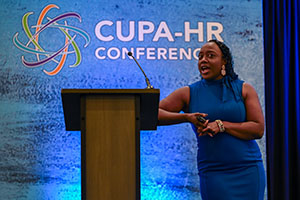
    Because our brains interpret emotional threats in the same way as physical threats, feeling unsafe at work can provoke a similar feeling to walking alone in a dark parking garage or seeing a snake on a hiking trail. But when we feel a sense of psychological safety and social belonging, our brains shift into connected mode. When we feel safe, we’re more likely to collaborate with our team, be less resistant to change and feel creative.

    Dr. Sharp invited higher ed HR to step into the future of work through neuroleadership. Neuroleadership is a model of talent management that understands the connection between the brain’s inner workings and people’s best work.

    Takeaway: The brain can’t be inspired when it’s in survival mode. Prioritize safety and belonging to encourage creativity.

    Further reading: Explore more ways to strengthen resilience and enhance psychological safety.

    AI Is Your Time-Saving HR Assistant
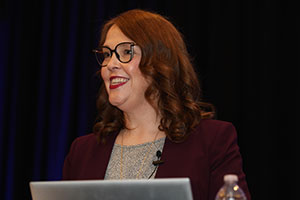
    AI is the future of work, said Jennifer Parker, the assistant director of HR operations at Colorado Community College System. While this may sound intimidating, it’s important to know that AI won’t replace you, but rather free up time and mental energy so that you can focus on strategy and long-term projects.

    Here’s how Parker uses AI to simplify routine HR tasks:

    • As a brainstorming partner. For example, you can say to AI, “help me write my leadership statement.” Provide context about your career to enhance the responses.
    • To write or revise emails. Parker’s communication mode tends to be folksy, so she has ChatGPT rewrite her emails to be more formal in tone.
    • As a software coach. Ask AI to give you step-by-step directions on creating an Excel formula.
    • To develop presentations, trainings and professional development sessions. ChatGPT helped Parker write microsessions for an online civility campaign, create slide decks and a video explaining benefits to employees.
    • As an employee engagement assistant. Tell AI the dynamics of your culture and ask how you can help foster a healthy workplace.
    • As an event planner. Ask AI to create a training calendar or other complex timeline. For events like open enrollment, ask it for an invitation to the health fair or to craft an inspiring message to remind employees to review their benefits.

    AI can also summarize complex information, break down survey results, act as a career coach or problem solver, offer advice, and more. Get creative! But always review what AI generates for accuracy, and make it your own.

    Takeaway: AI can simplify HR’s daily tasks and free up time for strategic thinking.

    Further reading: Read this step-by-step guide to learn how Parker used ChatGPT as her assistant in creating a virtual civility training program.

    Benchmark Your Employee Experience Using CUPA-HR’s Data 

    What does it take to attract top talent to higher ed? CUPA-HR’s new survey — the Benefits, Employee Experience, and Structure Survey — gives higher ed a snapshot of what it takes to be an employer of choice in a competitive employment landscape, explained Melissa Fuesting, associate director of research at CUPA-HR.
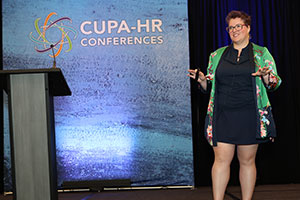
    Using the BEES Survey, colleges and universities can benchmark traditional benefits. And now, for the first time, explore data on:

    • Flexible work
    • Professional development
    • Campus and community engagement
    • Hiring metrics
    • Performance reviews
    • Institutional structure (such as where HR is housed)
    • Policies

    The BEES survey also allows you to take a deep dive on these topics. For example, when it comes to flexible work, you can find answers to questions such as: Which employees have the ability to work flexible schedules or flexible hours? Who determines the policies around hybrid and remote work? Which employee groups can be hybrid or remote?

    Takeaway: To enhance your employee value proposition, benchmark your benefits and employee experience using data from CUPA-HR’s new BEES Survey with DataOnDemand.

    Further reading: For more on attracting and retaining talent, check out the results of the 2023 Employee Retention Survey and stay tuned for the results of the 2025 survey coming this fall.

    “Who We Are Is How We Lead” 

    Cheryl Cofield closed this year’s spring conference with a compelling message: “Who we are is how we lead.” In her powerful keynote, Cofield challenged higher ed HR professionals to examine the leadership armor we wear — the protective behaviors that keep us from leaning into vulnerability and courage. Instead of avoiding difficult conversations or striving for unattainable perfection, brave leaders must be willing to get uncomfortable, speak honestly and model the values they profess.

    Drawing from Brené Brown’s research, Cofield identified four key skill sets that support courageous leadership: vulnerability, values, trust and learning. She described how emotional armor — such as perfectionism, detachment, or a need to always be right — gets in the way of connection, inclusion and growth.

    Through self-reflection and practical tools like emotional literacy, empathy and curiosity-based conversation cues, Cofield encouraged attendees to identify their own “call to courage.” She reminded us that courage in leadership is not only a personal practice but a collective force. When one person shows up bravely, others are more likely to do the same.

    Takeaway: Courage is contagious. When leaders remove their armor and lead with vulnerability, they create more inclusive, trusting and human-centered workplaces.

    Further reading: Learn why leadership development is essential in higher ed and how it strengthens engagement, inclusion and institutional resilience.




    Source link

  • Adapting With Heart | CUPA-HR

    Adapting With Heart | CUPA-HR

    by CUPA-HR | April 14, 2025

    Editor’s Note: This is the conclusion of a three-part series by Maureen De Armond, chief human resources officer at Des Moines University Medicine and Health Sciences, on adapting during changing times. The series begins with Adapting for Survival and Adapting With Purpose.  

    In Robert Pirsig’s “Zen and the Art of Motorcycle Maintenance,” the concept the main character — a professor — struggled with was identifying the essence of quality. Why did brilliant students sometimes turn in average work? How could average students sometimes produce brilliant work? He grappled with this riddle to the point of a breakdown, eventually concluding that the essence of quality is caring.

    If you want something to be good, you must do it with care. This is a similar answer to the question, “Why did grandma’s cookies taste so good?” The answer is because she made them with love.

    While caring is difficult to quantify, measure or predict, we know it when we see it, feel it and are on the receiving end of it. The employees we serve experience the same thing. As the saying goes, “People will forget what you said, people will forget what you did, but people will never forget how you made them feel.”

    There is no state or federal law, no executive order, no external action that can regulate — let alone limit — our ability to care about the work we do and the people we support. At the local level, on our campuses, in our offices and during face-to-face interactions, we are still fully empowered to serve with compassion, empathy and care. People will notice.

    Begin With Listening

    There are likely many employee engagement and retention efforts that can be explored or revived that can help offset some of the workplace angst, increase HR’s visibility, and help the HR team feel like they are contributing in a meaningful way.

    While below is a high-level list of ideas, HR teams should start by consulting with campus stakeholders. What would they love to see HR spend time and energy on? How can HR support them during these times of change and uncertainty?

    Institutional branches of shared governance may have ideas. Include student affairs, academic affairs, affinity groups, deans and department heads, and others. With summer approaching, a pulse survey or a few focus groups may be helpful tools to collect the voice of campus customers and let their responses inform HR’s plan for the fall.

    Some ideas to ponder:

    • Expand your emphasis on well-being and mental health. Offer more trainings, partner with campus experts, summarize and package benefits, and dig into your EAP provider’s resources to maximize that benefit.
    • Renew campus partnerships and collaborations in organizing employee events, such as bite-size topics for casual lunch and learns, book clubs, wellness events, and events that are just for fun and community-building (bingo, puzzles, drawing, afternoon walks, friendship bracelets, adult recess, etc.).
    • Consider offering more soft-skill trainings, with input from your campus stakeholders on topics. These can include emotional intelligence, navigating change, stress management and mindfulness.
    • Make a special effort to seek out ways to provide service to the institution, including attending student events, supporting student career services, and volunteering to be guest speakers in classes or student clubs.
    • Get to some of those “nice to have” ideas. It may be time to finally prioritize them: create a mentoring program, assign buddies for new hires, update onboarding materials, reimagine new employee orientation.
    • Tap into your campus experts who may also be hungry to contribute through informal brown bag lunch conversations, passion projects or hobbies. Pulling campus experts in engages them, acknowledges their talents and expertise, and demonstrates respect. These events also build community.
    • Offer community service leave, or explore community service projects employees can participate in. If you already offer this benefit, promote it.

    These ideas aren’t new or revolutionary, and they won’t solve all your problems or undo damage. But HR can make a difference when we are visible, caring and thoughtful in trying to engage all members of campus. Make a collaborative effort to contribute in a positive way — it matters.

    Make Time to Rest

    “When you get tired, learn to rest, not to quit.” – Banksy

    Helpers often tend to everyone else first and themselves last. Take care of yourself. Take inventory of what you need to rest and recharge. Make time to do the following:

    • Work with your team as soon as possible to hammer out rest days throughout the next year. Everyone can have days blocked off for intentional self-care.
    • Check on your team’s leave balances and usage if you are in a leadership position. You likely have people who do not take nearly enough time off. They may benefit from some encouragement to do so.
    • Lean into the HR community when you need the extra support, as many of us did during the pandemic. A community of helpers is a powerful force. CUPA-HR is an excellent place to connect with higher ed HR colleagues.

    Even though we are in boats of differing sizes, equipped with varying resources, a common storm binds us. I choose to find solace in Maya Angelou’s timeless wisdom. “Every storm runs out of rain,” she once said. We can make it through.

    Related CUPA-HR Resources

    Managing Stress and Self-Care: “No” Is a Complete Sentence — This highly rated webinar shows how and why setting boundaries is critical to thriving.

    Mental Health Toolkit — This HR toolkit includes resources on sustaining mental health programs on campus and addressing problems like burnout.

    Trauma-Informed Leadership for Higher Education — This webinar explores how to develop a supportive leadership style and how to create a culture where team members can depend on each other for support during times of hardship.


    Source link

  • Adapting With Purpose | CUPA-HR

    Adapting With Purpose | CUPA-HR

    by CUPA-HR | April 14, 2025

    Editor’s Note: This is the second of a three-part series by Maureen De Armond, chief human resources officer at Des Moines University Medicine and Health Sciences, on adapting during changing times. The series begins with Adapting for Survival and continues in Adapting With Heart

    While each institution’s situation is unique, there are common challenges that unite HR teams across state lines and between private and public institutions.

    Many of us may now be called upon to reevaluate the words we use in job postings, on our websites, within position titles, in trainings, and more. Some of us may be called upon to eliminate offices or positions. We may face losses of state or federal funding. We may have employees who feel particularly vulnerable. In some areas, there may be heightened retention challenges if people move or leave higher education altogether.

    In short, it is unlikely that any HR office will fully escape implementing changes and grappling with difficult responsibilities. Even so, opportunities abound to make a positive impact, to be true helpers and show we care. To quote Arthur Ashe, “Start where you are, use what you have, do what you can.” Here are some ideas.

    Maintain Your Focus on People and Culture

    HR has an obligation to continue to be keepers of the work culture and cultivate an environment that is welcoming and respectful of all employees. It’s time to get creative.

    One area you can rethink creatively is language describing campus culture, both in your internal communications and in recruitment materials. One may draw some inspiration from these examples, both from Nintendo:

    Nintendo is proud to be an equal opportunity employer. We offer a welcoming and inclusive environment in service to one another, our products, the diverse consumers we represent, and the communities we call home. We do all of this with kindness, empathy and respect for each other.

    Nintendo is for everyone. We believe that our results are better when our teams represent our potential consumers and fans. We’re actively building a culture where employees contribute their knowledge, ideas and perspectives so innovation and creativity thrive. We’re welcoming, approachable and respectful — we’re Nintendo. All characters welcome.

    Kudos to Nintendo for investing time and creativity into statements painting a vivid picture of warmth and kindness. Could a college or university channel its values and institutional culture into similar language while avoiding today’s live wires? I think so.

    University X is a place anyone can call home. We are always looking for talented, innovative and kind individuals to join our team and help us build a better tomorrow [or other mission language]. We know our campus and students are best served by faculty and staff representing a wide range of experiences, backgrounds and talents. If you are interested in joining and contributing to a welcoming, respectful and thriving organization, please apply. Anyone can be a/an [insert mascot]. Why not you?

    The reader can feel a welcoming culture, right?

    Wherever you talk about culture — in your employee value proposition, recruitment resources, internal policies, and websites — review the language and consider how you can paint the same picture of a welcoming and inclusive environment, even if you need to bust out a thesaurus to do so.

    Vet Applicants for Alignment of Values 

    Another way to adapt creatively may be to revisit interview questions. Institutions should still strive to recruit people who share their values and priorities, whatever those may be.

    Some questions that may provide insight into an applicant’s character could include the following:

    • Tell us about one of your favorite experiences working with a team and the contributions you made.
    • When you have had new employees join your team, what did you do to make them feel welcome and help them be successful?
    • Can you describe how your career has been enhanced by working with people who are different from you?
    • Tell me about a time when you were communicating with someone, and you felt like you were not being understood. What did you do?
    • What do you like most and least about your current work culture?
    • How would your current co-workers describe your strengths and weaknesses as a colleague?
    • What attracts you most to this job and our institution?
    • Which of our core values do you identify with the most and the least and why?
    • Our institution has students, faculty and staff who come from all over. Do you feel equipped to serve all campus stakeholders on day one, or do you think you would benefit from additional training?
    • What’s the ideal working environment to best benefit your working and personality style?
    • What soft skills are you interested in developing in the next couple of years?
    • Tell us about a time when you were challenged by a situation where others were behaving in an inappropriate or uncivil way. Describe the situation, the actions you took and the outcome.
    • What are your workplace superpowers?
    • Describe the most difficult colleague you’ve ever had to deal with at work. Why were they challenging? What did you do?
    • Most people want to work in an environment that is respectful and kind. Can you tell us how you try to create such an environment for others?
    • Describe a time when you needed to work cooperatively with someone who did not share the same ideas as you. Describe the situation, the actions you took and the outcome.

    Asking applicants a variety of questions that get to their character is nothing new. It may be a good time to review recommended questions to help protect the hiring process while also spending more intentional time assessing alignment with institutional values. There is no sense in hiring people into an organization who do not already share the institution’s values.

    Related CUPA-HR Resources

    Recent Executive Orders and Higher Ed HR’s Role in Creating and Sustaining an Inclusive Campus Community — A message from CUPA-HR President and CEO Andy Brantley.

    Update on DEI-Related Executive Orders: How Recent Developments Impact Compliance Strategies for Higher Education — This CUPA-HR webinar offers insights into steps institutions can take to ensure they are in compliance.

    Next Steps: A Practical Guide for Ensuring Access and Opportunity for All Employees— A brief guide to creating a welcoming workplace now.


    Source link

  • Adapting for Survival | CUPA-HR

    Adapting for Survival | CUPA-HR

    by CUPA-HR | April 14, 2025

    Editor’s Note: This is the first of a three-part series by Maureen De Armond, chief human resources officer at Des Moines University Medicine and Health Sciences, on adapting during changing times. The series continues in Adapting With Purpose and Adapting With Heart.  

    You have to change with the times.

    Roll with the punches.

    Go with the flow.

    This is just the new normal.

    These are not uncommon sentiments during times of change. They’re even reasonable bits of advice and encouragement. However, for many in higher education today, these words may feel inadequate.

    For many years, higher ed has been under pressure to adapt rapidly to change. From the COVID-19 pandemic to declining enrollment, technological advancements, and political and compliance demands, the pace of change seems unrelenting.

    How do we “adapt” when external pressures challenge our accustomed practices? How do we respond to the demands on our profession across the higher education landscape? How do we navigate the need to adjust without feeling like we’re compromising or settling? Where do we go from here?

    Adapt for Survival

    In 2022, as the worst of the pandemic seemed to pass, I wrote a piece about adaptability and referenced the Stockdale Paradox, as shared in Jim Collins’ management book “Good to Great.” Let us briefly return to that story to assess what additional insights it may provide during this new chapter of change.

    Admiral James Stockdale served in the military and was a prisoner of war in Vietnam for seven and a half years. During this time, he observed that there was a certain kind of soldier that did not tend to survive the ordeal. These were the soldiers who tried to muster up the strength to just make it to Thanksgiving, as, surely, they would be rescued by then. Thanksgiving would come and go, and they remained imprisoned. Then, they would convince themselves if they could just make it to the end of the year, surely they would be rescued by then. December would come and go, and they remained imprisoned.

    Admiral Stockdale referred to these soldiers as the optimists. Eventually, the optimists gave up.

    Admiral Stockdale, even if he did not use the terminology, recognized that resilience (a burst of energy or strength to help a person through a temporary crisis) was not the right tool for their predicament. Instead, to make it through captivity — with no end in sight and no idea what the next day may bring — what one needed to do was adapt.

    Make no mistake about it, Admiral Stockdale did not adapt with a smile on his face. He did not do it to settle, to compromise or to get used to being a POW. He did it with a mission in his heart — to endure. He adapted for survival. And he adapted not just for his own survival but also the survival of as many of his fellow soldiers as possible — men who looked to him for strength and guidance even while he, too, was powerless and wrought with despair.

    Admittedly, comparing higher education HR professionals to prisoners of war is a clear stretch. But the analogy reveals powerful insights into what tools may be most suitable to help us navigate these uncertain times. We should resist a mindset of trying to just make it through the summer term, through the fall semester, or to the end of the academic year. Wishing away time is a futile practice and with no guaranteed results.

    We should equally resist the temptation to pin our hopes on a miraculous rescue team to come and save the day. That is also wishful thinking.

    But we shouldn’t give up. Admiral Stockdale shared that he never lost hope — not even during the darkest days of captivity.

    Consider channeling the bigger picture, the one Admiral Stockdale never lost sight of: Survival is paramount. To survive, one must adapt. We have no way of knowing what lies ahead. We may feel powerless some days, like that poor animal in the experiment who gets shocked no matter what it touches. Other days, we may feel like we are busying ourselves with the deck chairs on the Titanic. But even in these moments, we cannot shut down.

    People count on us. They trust us to do our jobs to the best of our abilities. Our efforts matter and we still have work to do.

    Be the Helpers

    There is a Fred Rogers quote from his “Mister Rogers’ Neighborhood” days that resurfaces from time to time: “When I was a boy and I would see scary things in the news, my mother would say to me, ‘Look for the helpers. You will always find people who are helping.’”

    This is a reassuring view of humankind. No matter how dark or how frightening the world is, there will always be people wanting to help. But it is important to remember that Mister Rogers was talking to children when he shared this observation, not adults.

    When scary things happen, we are not supposed to just sit there and hope someone else comes around to help. Mister Rogers was talking about us. We are supposed to be the helpers.

    The good news is that the human resources field attracts helpers. The most dedicated among us are those who love to serve others. Whether we specialize in benefits, talent acquisition, training, leadership development, or any other facet of HR, we are drawn to this profession because we want our work to matter and because we enjoy helping people.

    Right now, there is a need for helpers — and we are the helpers.

    Related CUPA-HR Resources

    Resilience in the Workplace — This CUPA-HR webinar, recorded in 2021, was designed to serve as resilience training for attendees, as well as a model that could easily be replicated at your institution for HR teams and other employees.

    Why Psychological Safety Matters Now More Than Ever — This article offers practical advice for increasing psychological safety, specifically for the higher ed workplace.

    The Great Pivot from Resilience to Adaptability — This article explains how to move from resilience to adaptability and, ultimately, growth in challenging times for higher education.


    Source link

  • Your Work Counts More Than Ever: Lessons From a Lifetime in HR

    Your Work Counts More Than Ever: Lessons From a Lifetime in HR

    by Christy Williams | April 2, 2025

    With the constant flow of breaking news impacting higher ed recently, maintaining focus on your mission-driven work and its importance is increasingly difficult. That’s why taking a breather every once in a while — and reminding yourself (and your team!) that your work matters more than ever — is essential.

    As Cheryl Guerin, associate vice president of human resources at Dartmouth College, reminds us in Our Work Matters: Gems From a Lifetime in Higher Ed HR, “The work we do matters, and people matter more.” She emphasizes the relationship aspect of HR, insisting that the sometimes-intangible work matters most.

    In stressing the power of relationships, Guerin also asserts that our willingness to learn from those relationships is vital. Here are some of the lessons she has learned over her 30-year career in higher ed HR.

    Connection Is Key

    Higher ed HR professionals often handle sensitive and complex issues, but that doesn’t mean the workplace has to be devoid of camaraderie. In fact, fostering a positive and connected work environment can strengthen our teams, build trust and even improve problem-solving.

    • Keep It Simple — Offer time for connection — and food if you can. These two seemingly small things can make a huge impact. A workplace survey found that “three types of social opportunities were almost universally ranked highest on the list, no matter how we cut the data: free communal lunches, meetings that devote time to personal chitchat and happy hours.”
    • Recognize Employees — Recognition doesn’t have to be expensive or difficult. Your enterprise software might offer ways of sending customized thank-you notes, for example. If the budget allows, consider purchasing thank-you cards with your institution’s branding — a tangible way for colleagues and supervisors to show appreciation that also provides a lasting reminder of someone’s impact.

    The Power of Self-Reflection

    Not every workplace relationship is easy, and for higher ed HR professionals, navigating challenging dynamics can be emotionally draining. When tensions arise, you might feel frustrated or stuck. That’s why self-reflection is key to maintaining professionalism, resilience and personal well-being.

    Rather than reacting emotionally or feeling powerless, taking a step back — what Guerin calls “getting up in the balcony” — allows for a shift in perspective. This approach encourages curiosity over frustration, helping you assess situations more objectively and question assumptions rather than jumping to conclusions.

    • Develop a Reflective Practice — When workplace tensions arise, take a moment to assess your reactions. Ask yourself, “What else might be true?” to challenge assumptions and consider different perspectives.
    • Embrace Acceptance Without Complacency — Not every difficult relationship can or needs to be changed. Sometimes, the best approach is to acknowledge the situation as it is while focusing on what is within your control — your response and your mindset.

    Your Teammates Are Your Safety Net

    The most enduring and meaningful work relationships go beyond just collaboration — they become a foundation of trust, support and shared experiences. Whether you’re covering lunch breaks for one another, offering help in times of need, or simply being a consistent presence through years of change, connections with colleagues reinforce that, while the work is important, the people behind it matter even more.

    • Invest in Your Work Relationships — Make time to build connections with colleagues beyond daily tasks. Small acts of support and camaraderie can create a lasting foundation of trust.
    • Recognize the Human Side of HR — HR professionals spend so much time supporting others, but you also need a strong network. Cultivating relationships within your team and with your CUPA-HR colleagues ensures that when challenges arise, you have a reliable safety net.

    In higher ed HR, the work you do is critical, but the relationships you build along the way are just as important. By fostering connection, practicing self-reflection and supporting your teammates, you create a stronger, more resilient workplace. Investing in these relationships not only makes the challenges more manageable but also makes our shared journey more meaningful.

    Related CUPA-HR Resources

    Our Work Matters: Gems From a Lifetime in Higher Ed HR (CUPA-HR’s Higher Ed HR Magazine)

    Leading With Kindness: Characteristics of Caring Work Cultures (CUPA-HR’s Higher Ed HR Magazine)

    Organizational Culture & Climate Toolkit

    Recalibrating Employee Recognition in Higher Education (CUPA-HR’s Higher Ed HR Magazine)


    Source link

  • Resources for Addressing Workplace Conflict

    Resources for Addressing Workplace Conflict

    by Christy Williams | March 5, 2025

    As your institution processes its response to recent executive orders and the reactions of employees and students across campus, increasing workplace tensions may make it more challenging for your HR team to maintain a positive and collaborative environment.

    These challenges are not novel for higher ed HR, but they can be used as a springboard to examine the approaches you’ve used in the past and reimagine how they should — or could — evolve now. So, how can we support each other in our collective need for respectful discourse and civil disagreement? Here are some valuable insights and resources to help you along the way.

    Develop Conflict-Savvy Leaders

    Conflict is an inevitable part of any workplace, and higher ed institutions are no exception. Erica Hines, chief human resources and personnel success officer at Community College of Aurora, recommends that rather than attempting to avoid conflict altogether, we recognize the importance of embracing conflict as an opportunity for growth. And creating a conflict-savvy culture like that begins at the top.

    It’s important for leaders not only to be prepared to address conflict, but also to model that behavior for everyone in your institution — administration, faculty, staff and students.

    As Hines details in her webinar, Developing Conflict-Savvy Leaders, when your institution’s leadership is prepared for conflict, a culture of trust can be built. When leaders are willing to face conflict head-on and focus on finding win-win solutions, fewer issues escalate.

    Train for Conflict Resolution

    It’s not enough, however, for only administration to be conflict-savvy and model civil conversations. Managers and employees should be provided with strategies for de-escalating workplace tensions.

    Tulane University’s conflict resolution program supports its employees with a variety of conflict resolution services, including consultations to learn about their program, coaching to help employees with specific challenges, mediation to help employees through a disagreement, and facilitated conversations led by a professionally trained specialist. Tulane’s HR team believes that “conflict can be a tool for positive change when employees have the resources to build upon their conflict competence.”

    Establish Clear Norms Around Communication and Feedback

    In the Developing Conflict-Savvy Leaders webinar, Erica Hines stresses that employees at all levels need to understand how to give and receive input in a constructive way. One norm she suggests is to use “I” or “my” when offering feedback. For example, “Here’s what I noticed…” or “Here’s what I felt when…” A norm you might establish for receiving feedback could focus on active listening, summarizing what you just heard, and then asking how you can reach a win-win solution. For example, “What would you prefer I do in that situation?” Or “What ideas do you have for managing this situation in the future?”

    When teams have a shared understanding of how to navigate difficult conversations, they can address issues proactively instead of letting them escalate. By integrating these practices into daily interactions, you can cultivate an environment where open dialogue and mutual respect thrive.

    Prioritize Professionalism and Civility

    Creating a culture of professionalism is the foundation of a kinder campus. As Jennifer Parker, assistant director of HR operations at the Colorado Community College System, highlights in her article, A Kinder Campus, professionalism is more than just following policies. Professionalism is how faculty, staff and administrators treat one another daily. Respect, integrity and ethical conduct should guide every interaction, ensuring that civility remains a cornerstone of your culture.

    Beyond professionalism, Parker emphasized the role of active listening and empathy in conflict resolution. When employees take the time to truly listen and seek to understand different perspectives, they’re not just resolving disputes — they’re “building bridges of trust.” Demonstrating empathy during difficult conversations helps diffuse tension and encourages constructive dialogue. When you prioritize professionalism, you create an environment where trust and collaboration flourish.

    From Conflict to Meaningful Conversations

    Addressing workplace conflict isn’t just about resolving disputes — it’s about creating an environment where open dialogue is encouraged, and employees feel heard and supported. Because of this, conflict resolution training shouldn’t be a one-time event, but an ongoing practice woven into workplace culture. While difficult conversations may never be easy, the more everyone practices, the more natural those conversations become. By setting clear expectations, proactively guiding discussions, and championing a culture of respect, you can help transform workplace tensions into opportunities for growth and collaboration.

    Related CUPA-HR Resources

    Developing Conflict-Savvy Leaders — This CUPA-HR webinar explores how HR can help leaders address conflict head-on, thus minimizing the need for HR intervention down the line.

    Ushering in the New Wave of Conflict Resolution: Tulane University’s Restorative Approach — This article details the launch of Tulane University’s conflict-resolution program.

    A Kinder Campus: Building an AI-Powered, Repeatable and Fun Civility Training Program — This magazine article outlines how the Colorado Community College System created a campaign to address incivility on their campuses.

    Civility in the Workplace Toolkit — This HR toolkit provides practical strategies for fostering respectful communications and managing workplace conflicts.

    Managing Difficult Conversations Toolkit — This HR toolkit provides basic strategies that can be widely used as starting points for many challenging conversations.

    Next Steps: A Practical Guide for Ensuring Access and Opportunity for All Employees — This CUPA-HR blog post offers considerations for ensuring that you are providing equal access and opportunity for all.

    Resilience and Psychological Safety: Navigating Uncertainty — This blog post explores how resilience and psychological safety can be particularly useful in times of change and uncertainty.


    Source link

  • Resilience and Psychological Safety: Navigating Uncertainty

    Resilience and Psychological Safety: Navigating Uncertainty

    by Julie Burrell | February 26, 2025

    The first two months of 2025 have brought no shortage of change and uncertainty to higher ed institutions. Amid that uncertainty, you may find yourself not only navigating a wave of new compliance requirements, but also supporting employees who are feeling overwhelmed or worried. When change is happening at a rapid pace, it can be challenging to think strategically about how to manage emotional responses to change.

    However, two approaches you probably honed during the COVID-19 pandemic — fostering resilience and psychological safety — can be particularly useful in times like these.

    Resilience is a set of tools we use to regulate our response to stress. It’s what allows us to survive during moments of crisis and learn to grow. Psychological safety is a management approach that allows employees to thrive and adapt to stressful situations. We feel psychologically safe when we’re able to take risks knowing we’ll be supported.

    Combined, these workplace strategies tap into emotional resources we already have and can further develop and strengthen.

    Strengthening Internal Resilience

    You may never have stopped to reflect on how you endured the pandemic, but it likely took a great deal of resilience. Learning to survive, and even flourish, in tough times calls for a store of personal resilience, which the American Psychological Association defines as “successfully adapting to difficult or challenging life experiences, especially through mental, emotional, and behavioral flexibility.”

    Some people just appear to be more naturally resilient than others. Maybe they seem tougher or more inclined to go with the flow. But resilience isn’t an innate trait we’re born with. It’s a skill that can be learned and practiced.

    In her Resilience in the Workplace webinar, Maureen De Armond, chief human resources officer at Des Moines University Medicine and Health Sciences, identified the four key factors that make up resilience:

    1. Identifying your purpose and values
    2. Gaining confidence
    3. Seeking support from your networks
    4. Learning adaptability

    A Quick Resilience Exercise on Personal Values

    Even a 15-minute resilience-building exercise can be effective, such as this brief reflection shared in the webinar.

    First, write down a list of five answers to the question, “why is it worth it to persevere and get through this challenging time?” For example, do you want to model certain behavior for your children? Do you want to be compassionate to your coworkers? Do you want to steward your team through change? Do you want to support your friends and family?

    Second, figure out the why behind each of these five answers by identifying the value behind each. Values can include achievement, compassion, economic security, humor, leadership, passion, etc. (Here’s a handy checklist.)

    Finally, be proactive about reminding yourself of these values:

    • Display photos that represent your values so that you see them every day — a loved one, beloved pet, a favorite spot on a hike, a trip you’re planning, an inspirational public figure.
    • Place quotes that illustrate these values around your workspace.
    • Craft an inspiration board, either on a digital whiteboard or as a physical craft, that contains photos, symbols, images and words that demonstrate your values.
    • Get out of your office and take a walk. Especially if you work on campus, this can be a reminder of your community and of the student population the higher ed workforce serves.

    Think of these proactive reminders as a “battery pack,” De Armond says, that will give you a boost or a nudge to get out of a negative head space. Helping employees tap into and strengthen their own resilience will equip them for whatever lies ahead.

    The Role of Psychological Safety in Managing Uncertainty

    While it’s natural for people to seek safety and solace in a time of upheaval, psychological safety isn’t about providing comfort or promoting kindness, as important as these are. Rather, it’s about candor, trust and accountability among teams. It allows team members to speak up about mistakes (including their own), tolerate risk, and embrace discomfort and change.

    Amy Edmonson, an expert on team psychological safety in the workplace, defines psychological safety as “the shared belief that’s it’s okay to take risks, express ideas and concerns, speak up with questions, and admit mistakes without fear of negative consequences.”

    For example, what happens when a team member goes to their supervisor with a question, admits a mistake, or notices a colleague’s error? If that supervisor gets angry or becomes dismissive, the employee may stay quiet in the future and even cover up mistakes to avoid that reaction again. But if the supervisor adopts some of the tips below, the team feels safe enough to take risks and can weather storms as a group.

    Recommendations to Increase Psychological Safety

    • Encourage people to come to you with problems and thank them for doing so. Also ask, “how can I help?”
    • Adopt a learning mindset. In the example above, an angry or dismissive supervisor also missed the chance to ask, “what did you learn?” As psychological safety experts know, “organizations characterized by a learning orientation focus on curiosity and continuous improvement, and they make it safe for organizational members to admit what they do not know or perhaps got wrong.” If you have a Learning and Development team, they can offer practices for adopting a learning mindset.
    • Listen rather than talk. Leaders are expected to have all the answers, but unless immediate action is needed, pausing and getting all the facts, and listening to feelings, can be an important leadership tool. Reflective listening — repeating or paraphrasing what’s said or reflecting a feeling that’s expressed — is a particularly useful skill for creating trust.
    • Say, “I don’t know.” Leaders modeling psychological safety admit when they don’t know something, allowing others in their organization to adopt a curious mindset. This is what Brené Brown calls “the courage to not know.”
    • Celebrate small wins. Appreciating your employees matters now more than ever.
    • Take care of yourself and your team. HR is often expected, fairly or not, to manage tension and conflicting emotions. How are you showing up for yourself and your team?

    For more tips on increasing psychological safety, see the article Why Psychological Safety Matters Now More Than Ever by Allison M. Vaillancourt, vice president and senior consultant at Segal.

    Finally, Give Grace

    Giving grace to others during stressful and uncertain times can be a small but critical daily practice, one that builds compassion and trust. But we need to extend that same grace to ourselves. Set boundaries, take breaks, practice going slow, and share the load.

    Related CUPA-HR Resources

    Resilience in the Workplace — This CUPA-HR webinar, recorded in 2021, was designed to serve as resilience training for attendees, as well as a model that could easily be replicated at your institution for HR teams and other employees.

    Why Psychological Safety Matters Now More Than Ever — This article offers practical advice for increasing psychological safety, specifically for the higher ed workplace.

    Recent Executive Orders and Higher Ed HR’s Role in Creating and Sustaining an Inclusive Campus Community — A message from CUPA-HR President and CEO Andy Brantley.

    Mental Health Toolkit — This HR toolkit includes resources on sustaining mental health programs on campus and addressing problems like burnout.

    The Great Pivot from Resilience to Adaptability — This article explains how to move from resilience to adaptability and, ultimately, growth in challenging times for higher education.

    Managing Stress and Self-Care: “No” Is a Complete Sentence — This highly rated webinar shows how and why setting boundaries is critical to thriving.

    Trauma-Informed Leadership for Higher Education — This webinar explores how to develop a supportive leadership style and how to create a culture where team members can depend on each other for support during times of hardship.


    Source link

  • Next Steps: A Practical Guide for Ensuring Access and Opportunity for All Employees

    Next Steps: A Practical Guide for Ensuring Access and Opportunity for All Employees

    by Julie Burrell | February 19, 2025

    The wave of new executive orders on DEI, immigration and gender identity has already significantly impacted the higher ed workplace. While the pace of change may feel overwhelming, HR departments are taking a leading role — just as they did during the COVID-19 pandemic — in navigating change and making sure all employees feel valued and supported at work.

    As CUPA-HR President and CEO Andy Brantley affirmed in his message about the recent executive orders, higher ed workplaces can still:

    • Promote equitable work and career pathing opportunities and pay for all employees.
    • Cultivate inclusive learning and working communities.
    • Create a workplace culture that embraces respect and civil discourse.
    • Level the playing field for everyone by working to remove bias, reviewing outdated policies, and creating transparency.
    • Reinforce institutional values by ensuring that all employees feel connected and supported.

    As you strategize your response to changes taking place on your campus, here are some considerations for ensuring that you are providing equal access and opportunity for all.

    Conduct an Audit of Your Institution’s DEI Efforts

    If you haven’t started already, conducting an audit of programs, policies and procedures can help identify areas of concern. Design a simple spreadsheet to help you organize and track your findings in areas such as training and development, hiring, performance management, communications and website content. For each item, indicate where it falls on the legal spectrum. Does it violate the law? Is it in compliance but in need of adjustments? Is it in compliance and effective as it stands?

    When reviewing your programs and processes, the central question to ask is, do they provide equal access and opportunity to all employees without giving special advantages to any one person or group?

    Here’s one example. The language of the recent DEI-focused executive orders emphasizes merit. Merit has always been critical to hiring, reviewing performance and making promotion decisions. Do your policies around hiring and promotion reflect that focus on merit? Are hiring and promotion processes fair and transparent? Are hiring and promotion decisions documented, and do they reflect those policies and processes?

    Connect with Campus Partners

    Your institution’s general counsel can help ensure any changes made to policies and procedures are in compliance with the new executive orders and mitigate risk for your institution.

    If you’re undertaking a website audit, consult your chief information officer. Is there AI-enabled software that might help identify noncompliant wording or outdated programs?

    Is your institution a federal contractor or subcontractor? If so, you may face additional oversight, including new contract terms certifying that your institution is following federal antidiscrimination laws. If your status is unclear, first check with the office of research.

    Consider creating a neutral body of campus stakeholders to help suggest, implement and communicate changes in response to the executive orders, but also expect that employees and administrators will have strong opinions and feelings about these changes.

    Reframe Inclusion

    As you review policies and communications to ensure compliance, take the opportunity to make your workplace even more welcoming and accessible.

    Align with your institution’s values. What are your institution’s core values and mission? It’s likely they involve respecting diversity of thought and perspective, creating a welcoming environment, and providing equal access and opportunity to all regardless of identity. Affirming and communicating these values can be an important way to stay focused on what matters during times of change.

    Consider accessibility. When revising programs and processes to be more inclusive, envision accessibility for all. For example, if your goal is to make career development programs accessible to all employees, look for gaps in access across your employee population. Just as holding trainings in non-ADA compliant buildings may limit the ability of some people to participate in career development, so might neglecting the needs of groups like non-exempt employees and working parents and caregivers. Are there more flexible options? Can you support supervisors to make it easier for an employee to take time away from regular duties?

    Ensure clarity and transparency. Equity in compensation, hiring and promotion is an effective way to bolster recruitment and retention. For example, hiring and promotion practices that are not transparent, written down, and consistently followed can negatively affect the workforce. Women are less likely than men to be promoted if clear, fair criteria aren’t used. Neurodivergent candidates are disadvantaged when job interviews rely on indirect measures like succeeding at small talk rather than a skills-based assessment. In both of these instances, vague criteria such as “culture” and “fit” may prevent qualified, highly skilled employees from being hired and from moving up the ladder. Finally, be sure that your institution’s job descriptions and job requirements are up to date and are being used as the basis for decisions related to hiring and pay.

    Focus on purpose. To avoid misinterpretation, your efforts at creating an inclusive workplace should be characterized in ways that are purpose driven. For example:

    • Communities of people with varied backgrounds and life experiences create opportunities for community members to grow personally and professionally. When employees thrive, institutions thrive.
    • Parity and equity, in opportunity and pay, support job satisfaction, recruitment and retention.
    • A safe and welcoming work environment fosters community and collaboration.

    Emphasize outcomes. Lily Zheng, author of the book DEI Deconstructed, encourages those invested in fair and healthy workplaces to strengthen outcomes. Zheng recommends an outcomes-based approach “focusing on measurable results like pay equity, physical and psychological safety, wellness, and promotion rates, rather than … a one-time training, posting on social media, or other behaviors that signal commitment without demonstrating results.”

    Take Steps to Educate Employees

    Review the ways managers and senior leadership are implementing the policies and processes that are in place. Is additional training required? If you have made changes to policies and processes, how will you communicate those to supervisors and other campus leaders?

    Be sure to evaluate anti-harassment and antidiscrimination trainings you have in place. These trainings should continue, although they may need to be adjusted to emphasize even more strongly the importance of opportunity and respect for all.

    Know That You’re Not Alone

    The higher ed HR community has been through challenging times before, most recently as the pandemic reshaped the workplace. If you have resources or ideas to share with other CUPA-HR members regarding ways that you and your HR colleagues are creating and sustaining an inclusive campus community, please email them to [email protected]. Your submission will be treated as confidential and, if shared, will be described in terms that will not identify your institution.

    Related CUPA-HR Resources

    Recent DEI-Focused Executive Orders: Next Steps for Higher Ed HR — This CUPA-HR webinar, recorded on February 13, offers excellent insights into steps institutions can take to ensure they are in compliance.

    Recent Executive Orders and Higher Ed HR’s Role in Creating and Sustaining an Inclusive Campus Community — A message from CUPA-HR President and CEO Andy Brantley.

    CUPA-HR Data — CUPA-HR is the premier source of higher ed workforce and workplace data.

    Compensation Toolkit — This HR toolkit includes resources to help ensure that compensation plans are fair and transparent.

    Recruitment Toolkit and Interviewing Toolkit — These HR toolkits include resources to help ensure that hiring practices are fair and transparent.

    Performance Management Toolkit — This HR toolkit includes resources to help ensure that performance management practices are fair and transparent.

    Layoffs/RIF/Furloughs Toolkit — This HR toolkit includes valuable resources for managing workforce reductions.

    Resilience in the Workplace — This CUPA-HR webinar, recorded in 2021, was designed to serve as resilience training for attendees, as well as a model that could easily be replicated at your institution for HR teams and other employees.


    Source link

  • HR Book Recommendations for Winter Break

    HR Book Recommendations for Winter Break

    by Julie Burrell | December 4, 2024

    The holiday break is a perfect time for leveling up your knowledge, igniting your HR spark, and collecting wisdom to share with your team. These book recommendations have been hand-picked by CUPA-HR colleagues for their insights into topics like change management, inclusion and belonging, and daring leadership. They make great team book club reads, too!

    Grab a warm beverage and cozy up with one of these HR reads.

    For bold leaders…

    Vulnerability might not spring to mind as the most important trait in a leader, but in Dare to Lead, Brené Brown encourages leaders to tune into their hearts as much as their minds.

    For the everyday superstar…

    In Hidden Potential, Adam Grant, a Wharton School of Business professor, says that we all have the ability to improve. You don’t have to be a prodigy or work yourself to the point of burnout, but instead be willing to learn and develop your character.

    For the inventor…   

    If you’ve ever pondered creative ways to do more with less, check out A Beautiful Constraint by Adam Morgan and Mark Barden. Jay Stephens, vice president of people and culture at the University of Montana, says “it’s a great book for higher ed, where we tend to live with a scarcity mindset.”

    For the team leader who’s always learning…

    The Five Dysfunctions of a Team by Patrick Lencioni is a perennially popular book. Written in the form of a fable, it addresses some common team issues, like lack of trust, fear of conflict, and avoidance of accountability.

    For those looking to stress less…

    Jennifer Moss, a keynote speaker at the 2024 CUPA-HR Annual Conference and Expo, is a leading voice in fighting burnout. The Burnout Epidemic argues that organizations must take the lead in developing an anti-burnout strategy that moves beyond apps, wellness programs, and perks.

    For out-of-the-box thinkers…

    Miranda Arjona, assistant director of HR at Rollins College, encourages embracing the qualities that make children special (and that we tend to forget when we’re all grown up). Oh, the Places You’ll Go by Dr. Seuss “encourages readers to embrace new experiences, face obstacles with courage, and keep moving forward,” while Curious George by H.A. Rey and Margret Rey “emphasizes the importance of curiosity, exploration, and learning from one’s mistakes.” Winnie-the-Pooh by A.A. Milne “offers insights into the importance of enjoying the present moment, valuing simple pleasures, and appreciating the quirks of those around us.”

    Bonus tips for the book club leader (no required reading!)…

    As the content specialist in training and development, Corrie Grint hosts two different book clubs at the University of Utah. Here are her tips for success.

    • Vary book choices. Grint chooses a mix of classic leadership books, new and popular books, and untraditional books.
    • Build in flexible participation. Grint bases her questions on the general principles of books like Atomic Habits, “so anyone can participate, even if they haven’t read the book.”
    • Structure clubs inclusively. Participation is virtual and capped at one hour.
    • Offer pre-session and during-session support. A week before, Grant emails out other options to supplement or replace the reading, such as a book summary PDF or YouTube video. She also provides questions similar to the ones they’ll discuss. During the meeting, she provides a summary of the principles taught, along with quotes, and asks questions along the way.


    Here’s the full list of recommendations, chosen by CUPA-HR colleagues:

    An Astronaut’s Guide to Life on Earth: What Going to Space Taught Me About Ingenuity, Determination, and Being Prepared for Anything by Chris Hadfield

    Atomic Habits: An Easy and Proven Way to Build Good Habits and Break Bad Ones by James Clear

    A Beautiful Constraint: How To Transform Your Limitations Into Advantages, and Why It’s Everyone’s Business by Adam Morgan and Mark Barden

    Big Feelings: How to Be Okay When Things Are Not Okay by Liz Fosslien and Molly West Duffy

    The Burnout Epidemic: The Rise of Chronic Stress and How We Can Fix It by Jennifer Moss

    Career Self-Care: Find Your Happiness, Success, and Fulfillment at Work by Minda Zetlin

    Crucial Conversations: Tools for Talking When Stakes are High by Joseph Grenny and others

    Curious George by H.A. and Margaret Rey

    Dare to Lead: Brave Work. Tough Conversations. Whole Hearts. by Brené Brown

    Daring Greatly: How the Courage to Be Vulnerable Transforms the Way We Live, Love, Parent, and Lead by Brené Brown

    Do Better: Spiritual Activism for Fighting and Healing from White Supremacy by Rachel Ricketts

    The Dream Manager: The Secret to Attracting, Engaging, and Retaining Talent by Matthew Kelly

    Emotional Intelligence 2.0 by Travis Bradberry and Jean Greaves

    Endurance: A Year in Space and a Lifetime of Discovery by Scott Kelly

    The Energy Bus: 10 Rules to Fuel Your Life, Work, and Team with Positive Energy by Jon Gordon

    First, Break All the Rules: What the World’s Greatest Managers Do Differently by Marcus Buckingham

    Fish!: A Proven Way to Boost Morale and Improve Results by Lundin, Christensen, and Paul

    The Five Dysfunctions of a Team: A Leadership Fable by Patrick M. Lencioni

    The 5 Languages of Appreciation in the Workplace: Empowering Organizations by Encouraging People by Gary Chapman and Paul White

    Ghost Soldiers: The Epic Account of World War II’s Greatest Rescue Mission by Hampton Sides

    Goodnight Moon by Margaret Wise Brown

    The Guide to Good Leading series by Ari Weinzweig

    Hidden Potential: The Science of Achieving Greater Things by Adam Grant

    HR on Purpose: Developing Deliberate People Passion by Steve Browne

    I’m No Philosopher, But I Got Thoughts: Mini-Meditations for Saints, Sinners, and the Rest of Us by Kristen Chenoweth

    Invisible Women: Data Bias in a World Designed for Men by Caroline Criado-Perez

    Just Mercy: A Story of Justice and Redemption by Bryan Stevenson

    Leadership and Self-Deception, Fourth Edition: The Secret to Transforming Relationships and Unleashing Results by The Arbinger Institute

    The Life-Changing Magic of Tidying Up: The Japanese Art of Decluttering and Organizing by Marie Kondo

    The Long-Distance Teammate: Stay Engaged and Connected While Working Anywhere by Kevin Eikenberry and Wayne Turmel

    Managing Transitions: Making the Most of Change by William Bridges

    No Ego: How Leaders Can Cut the Cost of Workplace Drama, End Entitlement, and Drive Big Results by Cy Wakeman

    Oh, the Places You’ll Go! by Dr. Seuss

    The Outward Mindset: Seeing Beyond Ourselves by The Arbinger Institute

    Own Your Own Work Journey! The Path to Meaningful Work and Happiness in the Age of Smart Technology and Radical Change by Edward D. Hess

    The Power of Habit: Why We Do What We Do in Life and Business by Charles Duhigg

    Radical Candor: Be a Kick-Ass Boss Without Losing Your Humanity by Kim Scott

    Set Boundaries, Find Peace: A Guide to Reclaiming Yourself by Nedra Glover Tawwab

    The 7 Habits of Highly Effective People by Stephen R. Covey

    Smart Brevity: The Power of Saying More with Less by Jim VandeHei and others

    Supercommunicators: How to Unlock the Secret Language of Connection by Charles Duhigg

    Thanks for the Feedback: The Science and Art of Receiving Feedback Well by Douglas Stone and Sheila Heen

    Think Again: The Power of Knowing What You Don’t Know by Adam Grant

    Unreasonable Hospitality: The Remarkable Power of Giving People More Than They Expect by Will Guidara

    When Everyone Leads: How The Toughest Challenges Get Seen and Solved by Ed O’Malley and Julia Fabris McBride

    Who Moved My Cheese? by Spencer Johnson

    Winnie-the-Pooh by A. A. Milne


    Source link

  • A Guide to Engagement and Climate Surveys That Inspire Action

    A Guide to Engagement and Climate Surveys That Inspire Action

    by Julie Burrell | October 30, 2024

    Surveys can be a powerful tool for improving workplace culture and employee satisfaction, but they can have unintended consequences if no action planning follows. In fact, the lack of tangible — and rapid — action planning often lead to a cycle of employee disengagement and eroded trust, which results in fewer employees taking future surveys, and ultimately weakens their effectiveness overall.

    But getting surveys right is possible. By implementing targeted surveys and following up with action planning, higher ed workplaces can earn a reputation for valuing employee insights. CUPA-HR’s recent webinar Turning Insights Into Action: Designing and Implementing Impactful Employee Climate/Engagement Surveys explains how to build, or regain, employee trust and confidence in surveys, increase response rates, and create a campus culture in which employees’ perspectives are prized.

    Ask These Two Questions First

    Before launching a survey, ask these critical questions: Does our institution need a survey? And, if the answer is yes, does our institution have the resources to act on the survey results?

    Without a solid “yes” to both questions, consider pausing survey efforts. It’s better not to conduct a survey at all than to conduct one and not follow it with action planning.

    Surveys should also focus on clear objectives, addressing one to three specific topics in depth. They should be topics the institution is ready to act promptly on once the survey is concluded. It’s also best to avoid questions with predictable answers. For example, you may already know that employees want parking that’s both closer and less expensive. Asking more refined or open-ended questions might lead to actionable results. In the case of employee satisfaction around parking, the right question might reveal that safety is a primary concern, something that can be addressed by installing more lighting in lots or strengthening security for employees using parking garages after dark.

    Increase Response Rates by Building Trust

    Effectively communicating the survey rollout and offering incentives can boost completion rates, but responses are ultimately determined by the trust employees have in your institution and the survey process itself.

    Make it anonymous. Clearly communicate how the survey will be kept anonymous and confidential. This is especially important for open-ended or text-based responses. If you’re not using an outside vendor, consider adding a survey analyst to your committee — you probably already have employees with these skills.

    Know that timing is everything. The survey should be sent out at the right time to avoid clashing with other surveys and to steer clear of any big campus plans or events that might skew results (for example, a recently announced capital project like a new stadium). A timely response from leadership is key, as are timelines in action planning. Any follow-up items should have target completion dates.

    Be clear on when and how employees will see the results. Don’t wait for a grand reveal when action items have been completed. This might take months, long after employees remember how they’ve answered survey questions. Instead, publicize the survey results as soon as possible and begin listening sessions to both refine results and include departments and divisions in planning.

    Build in accessibility and offer time to complete it. Consider if you need to translate the survey into multiple languages or if employees working outside of an office might benefit from a hard copy. Encourage supervisors to offer incentives like an early departure after completing the survey and ask them to send calendar invites to block off time for completion.

    Take Action. This is by far the most important way to build trust. The webinar offers concrete processes for building and planning a survey, impact planning (including templates to send to campus leadership for quarterly tracking), ideas for holding listening sessions, and proven employee engagement strategies.

    Discover More Resources for Data-Informed Decisions

    Read the article Employee Engagement/Satisfaction/Climate Assessment: Producing Actionable Results, which offers a six-step guide to creating and implementing effective surveys.

    Explore other webinars in CUPA-HR’s Data and HR series: Data You Can Count On: Using CUPA-HR’s Data Resources for Strategic Decision-Making and Data Visualization and Storytelling Tips and Tools for HR.


    Source link