Category: Culture & Community

  • Finding Shared Purpose at the 2024 Annual Conference

    Finding Shared Purpose at the 2024 Annual Conference

    by Julie Burrell | October 9, 2024

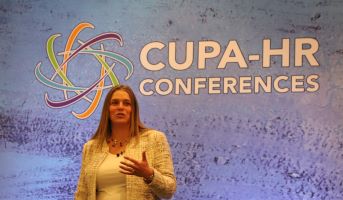
    At the CUPA-HR Annual Conference and Expo 2024, the three keynote sessions offered insights on how higher ed can articulate its value proposition for employees. How can HR, campus leaders and other culture architects ensure their institutions are places where candidates want to work and where employees want to stay? And how can we bridge the cultural, political and intergenerational divides so many of us are experiencing on campus to help our communities thrive?

    There isn’t a one-size-fits-all solution to these challenges, but the keynote speakers reminded higher ed HR pros not to underestimate the value of a shared purpose. Here are a few of their insights into remaking workplace culture through deliberate community-building, connecting through traditions and reinforcing our collective values.

    Fighting Burnout and Finding Community

    Workplace culture strategist Jennifer Moss opened the conference in Orlando with a reminder that, while it’s been many years since the COVID-19 pandemic, its lessons still linger. During that time, many of us asked, is what I’m doing important? Does it make a difference?
    For so many in higher ed, the answer is yes. But Moss also shared a hard truth: the passion that leads people to work in higher ed may lead to burnout or passion fatigue. The solutions offered for burnout are often focused on the individual (“take a bath” or “meditate”), when they need to be systemic and even societal. Burnout isn’t about having a bad day — it’s chronic stress, classified as a disease by the World Health Organization. A strange irony is that burnout from overperforming at work often looks like underperformance (exhaustion, disengagement and cynicism).

    One solution that Moss proposed is to encourage employees to deliberately build stronger community and positive social connections, both essential to building bridges and combatting loneliness. According to the data Moss shared, eating just one lunch per week with coworkers, rather than alone at a desk, can aid employee happiness and performance. So can spreading positive gossip (saying nice things about others behind their backs), which subconsciously supports psychological safety.

    Takeaway: It’s key that workplaces tie efforts to reduce employee burnout to specific objectives and key results so that individuals aren’t responsible for solving the crisis on their own.

    Great Storytelling for a Shared Purpose

    Annual conference attendees experienced the magic of Disney firsthand during the closing night EPCOT excursion. But what makes Disney so magical? According to keynote speakers Jeff Williford and Jay Pyka of the Disney Institute, it’s all in the details. Disney excels in the finer points, with each park and resort providing a unique and immersive experience, from what music guests hear, to what smells are piped in, to the thatched roofs in Animal Kingdom made by South African artisans.
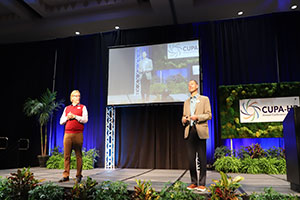
    How does Disney engage over 70,000 employees — aka, cast members — to ensure that the details are done right? While cast members’ jobs may be different, from serving food at EPCOT to directing riders on Space Mountain, they all share in one common goal: creating happiness. In their talk, Williford and Pyka emphasized that culture is defined by how people behave, and training is critical to achieving desired behaviors. Caring and communication are also vital elements of culture. The extent to which organizations genuinely care for their people is the extent to which those people will, in turn, care for customers and each other. And high-quality communication can reinforce culture as much as lack of communication will undermine it.

    Disney uses their expertise in storytelling to train and unite cast members in the common goal of creating happiness and embracing Disney culture. In fact, the first class new employees attend as part of their onboarding is one on Disney traditions because it helps them connect with the history and culture.

    Takeaway: Higher ed workplaces can create a powerful connection between employees and the institution’s mission, fostering a sense of belonging and commitment.

    Gen Z and the Future of Work

    In her closing keynote, Heather McGowan, a future-of-work expert, offered a hopeful vision of work — and of a society where more of us are united than divided. But she also admitted that “it’s difficult to be a human right now.” There’s a profound lack of connection among people, an uptick in loneliness and disconnection, and social divisions stemming from the pandemic, politics and social media.

    Why? One reason is that work has replaced what people once found in community, whether through church or bowling leagues or book clubs. McGowan said that’s why current and future generations entering the workforce seek jobs that reflect the totality of their values and personality.

    Gen Z is especially known for seeking greater meaning in work. They desire mentorship, they want to be part of something bigger than themselves (meaning), and they want to live their values through work (mission). They’re rejecting the work contract of previous generations, which promised job security in exchange for employee loyalty. Why, McGowan asked, are workplaces still demanding loyalty without offering the same security they did in previous generations?

    In asking for work to be meaningful, Gen Z is sending a critical lesson for the future of work, McGowan believes, one that workplaces need to take seriously to recruit new employees and retain existing ones. The data show that what employees want most in a job is growth, autonomy, achievement and respect.

    Takeaway: The future of work might just be in listening to what Gen Z is trying to convey: We all need a shared purpose and meaning in work.  

    Looking for More on Work Culture?

    Jennifer Moss’s new book, Why Are We Here?: Creating a Work Culture Everyone Wants, will be published in January. You can also check out these CUPA-HR articles and resources:




    Source link

  • Building a Connected Workplace: HR’s Role in Reducing Loneliness – CUPA-HR

    Building a Connected Workplace: HR’s Role in Reducing Loneliness – CUPA-HR

    by Julie Burrell | August 28, 2024

    Editor’s Note: This is the second of two posts that explore the loneliness epidemic and practical ways HR can help combat it in the workplace.

    Social bonds are as necessary to our well-being as a healthy diet, exercise and sleep, according to the Surgeon General’s 2023 report on the loneliness epidemic. The report recommends that workplaces make decreasing loneliness a strategic priority at all levels. Here is how higher ed HR can help prioritize social connection as a vital tool in supporting employee happiness and well-being.

    Increase Inclusion to Fight Loneliness

    Groups most at-risk for social isolation include “people with poor physical or mental health, disabilities, financial insecurity, those who live alone, single parents, as well as younger and older populations,” according to the report. Additionally, marginalized groups like the LGBTQ+ community may feel increased isolation.

    Your inclusion and belonging initiatives might be the natural place to begin strengthening social connection on campus. Foreground accessibility in these initiatives by asking:

    • Is social programming accessible for people with disabilities and people with mental health challenges?
    • Is your programming inclusive of people who are neurodivergent?
    • Are working parents, caregivers and remote employees unable to participate in on-site or off-hours socialization?
    • Is cost a prohibitive factor for socializing?
    • Are Employee Resource Groups or affinity groups supported in terms of budget and time within the workday?

    Making Connections

    Intergenerational Connections. Research suggests that making connections outside of our own age or social group may reduce the risks associated with loneliness. One inclusion strategy is to help bridge generational gaps by bringing younger and older people together, which also targets two of the most at-risk populations.

    Volunteering with community groups that serve young and older people can also be effective in helping employees forge intergenerational connections (bonus: volunteering enhances employee satisfaction and engagement).

    Campus and Community. Connecting with people of different social statuses has also been shown to improve well-being. How are leaders connecting with employees across campus in low-stakes ways?

    Also consider how partnerships with your leadership, health centers, research faculty and student groups can make the dangers of loneliness a campus-wide concern.

    How is your campus connecting with and enriching the larger community? According to the Surgeon General’s report, upward mobility is improved through relationship-building among people of differing socioeconomic status. (Register for our upcoming webinar to learn more about Duquesne University’s Minority Professional Development Internship Program, which was awarded CUPA-HR’s 2024 Inclusion Cultivates Excellence Award.)

    Hybrid and Remote Employees

    According to Gallup, fully remote employees report a higher level of loneliness (25%) than fully on-site employees (16%). At the same time, hybrid, remote and flexible work is an important strategy to retain top talent. And flexible work can be a boon to people with disabilities and neurodivergent employees.

    This means that special considerations should be made for those workers who may not be on site every day.

    Encourage online connections. Water cooler conversations are more difficult virtually. Consider establishing a rotating committee who can schedule casual chats online. Your internal communication tools, such as Teams and Slack, should have social spaces as well.

    Model setting boundaries between work and home. Hybrid and remote opportunities are important in maintaining work-life balance, but remote employees may feel like they’re always “on.” The Surgeon General’s report recommends that workplaces “put in place policies that protect workers’ ability to nurture their relationships outside work.”

    Beware of treating employees inconsistently. It’s important that managers find ways to boost face time with their remote or hybrid employees. For those employees who must be on site, provide what flexibility you can, such as summer Fridays off. Learn more about success in managing hybrid teams in Roadblocks to Supervision: Clearing a Path for Peer-to-Supervisors, New Supervisors and Hybrid Team Supervisors.

    Starting With HR

    Let’s face it: HR can sometimes feel like a lonely place. Whether you’re a CHRO, a department of one, or a member of a team navigating the increased scrutiny of a role in HR, you might feel like few people understand your own daily challenges beyond the CUPA-HR community. HR is so often tasked with helping others, but HR pros need support too.

    Raising awareness about the basic need for social connection might help you and your team reframe social connections at work from a luxury to a basic tool for retention and employee happiness. Socializing replenishes our emotional stores and our physical resilience. Leaders can model setting healthy boundaries at work and convey that self-care is not selfish, but rather a critical tool in the HR toolbelt. (Learn how to use “no” as a complete sentence in this on-demand webinar.)


    Source link

  • Making Sense of the Loneliness Epidemic – CUPA-HR

    Making Sense of the Loneliness Epidemic – CUPA-HR

    by Julie Burrell | August 21, 2024

    Editor’s Note: This is the first of two posts that will explore the loneliness epidemic and practical ways HR can help combat it in the workplace.

    Loneliness can be as bad for you as smoking 15 cigarettes a day, according to a Surgeon General’s report from last year.

    The report identifies loneliness as a national epidemic experienced by about one in two adults. Loneliness is “associated with a greater risk of cardiovascular disease, dementia, stroke, depression, anxiety, and premature death.” That means human connection is as necessary for your long-term survival as food and water.

    Feeling isolated can also decrease general well-being. People who say they’re lonely are more likely to experience sadness, worry, stress, anger and physical pain, according to a recent Gallup poll. Their research shows that over one in five people globally feel lonely “a lot.”

    When Loneliness Is Worrisome

    Of course, we have all felt lonely sometimes, when changing jobs, getting a divorce, moving to a new city, or recovering from an illness. But when does a temporary feeling of loneliness become chronic?

    Chronic loneliness occurs when the feeling of isolation goes on for a long time and the inability to connect to other people is constant or prolonged. Chronic loneliness can occur even among very social people — you can still feel lonely in a crowd — and is often connected to self-doubt or low self-esteem.

    Taking Away the Stigma 

    Feeling lonely can come with a sense of shame. However, it’s important to understand that loneliness isn’t about who you are, but about a lack of deep social connection driven by factors in our sociocultural environment.

    Even though loneliness has been on rise since before COVID-19, the pandemic and recent political divisiveness have contributed to the epidemic. Social media is likely exacerbating the problem. People who report more than two hours of social media use a day are twice as likely to report feelings of isolation (versus people who use social media less than a half hour).

    The good news is that loneliness can be addressed in part by deliberately strengthening engagement in our workplaces, communities and other social networks.

    While workplace changes alone won’t combat political and social divisions, it’s still a key starting point for helping to decrease loneliness — especially considering how much time we spend at work. When implementing programs targeted at the loneliness epidemic, it can be best to frame your efforts as a positive: increasing social connection.

    One Small First Step

    Efforts to boost connection may help increase employees’ job satisfaction. The Surgeon General’s report stresses that “supportive and inclusive relationships at work are associated with employee job satisfaction, creativity, competence, and better job performance.” Connection at work prevents stress and burnout and can even be linked to fewer missed days of work after injury or illness.

    In the next post in this two-part series, we’ll focus on concrete steps that higher ed HR can take to combat loneliness at work, including for hybrid and remote employees.

    But you can take a meaningful first step by making a small personal change, such as tracking how much time you spend on social media, practicing short mindfulness sessions, or scheduling one phone-free lunch per month with a work friend. Even a positive interaction with a colleague you don’t know well, a barista or cashier, or someone in line with you at the coffee shop can have lasting mental health benefits by expanding your “relational diversity” — the variety of relationship categories you have daily.


    Source link

  • Taking Steps Toward Equity on Juneteenth – CUPA-HR

    Taking Steps Toward Equity on Juneteenth – CUPA-HR

    by Julie Burrell | June 18, 2024

    Juneteenth commemorates the end of slavery in the United States and is now recognized as a federal holiday — Juneteenth National Independence Day. Observing Juneteenth’s historical significance is a meaningful step in understanding American history. But for its history to mean something in our present moment, its lessons must be translated into tangible action. CUPA-HR offers the following resources, tools and research data to help confront and change racial inequities in the higher ed workforce.

    Racial Composition and Compensation  

    Lingering historical inequities remain in higher ed’s current-day compensation, hiring and promotion practices. Juneteenth is a reminder that we need urgent solutions to these persistent inequities. Here’s a snapshot of the composition and pay for people of color in the higher ed workforce:

    • Progress in both representation and pay has been sluggish for people of color, according to our data on administrators, faculty, professionals and staff collected in CUPA-HR’s signature surveys. Our interactive graphics track gender and racial composition as well as pay of administrators, faculty, professional and staff roles. (Read the executive summary.)
    • Women of color have consistently been paid inequitably, with Black women paid 76 cents on the dollar in our most recent data.

    CUPA-HR research also digs down into sectors of the higher ed workforce in terms of composition and pay. Recent research reports include:

    • The Higher Education Financial Aid Workforce: Pay, Representation, Pay Equity, and Retention (read now)
    • Representation and Pay Equity in Higher Education Faculty: A Review and Call to Action (read now)
    • Higher Ed Administrators: Trends in Diversity and Pay Equity From 2002 to 2022 (read now)
    • The Higher Ed Admissions Workforce: Pay, Diversity, Equity, and Years in Position (read now)

    Fostering Inclusion

    Long-term solutions to a more representative and equitably compensated workforce include adopting inclusive hiring and retention strategies, analyzing and auditing both compensation and promotion practices, and enacting policies that support your employees’ well-being. In these resources, we offer best practices and data-driven recommendations for a more equitable future.


    Source link

  • Celebrating Pride Month: Spotlight on Transgender and Nonbinary Employees – CUPA-HR

    Celebrating Pride Month: Spotlight on Transgender and Nonbinary Employees – CUPA-HR

    by Julie Burrell | June 4, 2024

    June is Pride Month, dedicated to celebrating the richness and history of the LGBTQIA+ community. In addition to ensuring regulatory compliance, higher ed HR has an important role to play in creating a truly inclusive campus. A fundamental part of celebrating Pride is actively learning from and listening to this community, especially as the population of LGBTQIA+ employees continues to grow.

    This Pride, CUPA-HR is spotlighting the voices of transgender and nonbinary employees by offering resources to empower HR in improving culture, policies and procedures for this group. Even if significant institutional change is not something you’re in a position to initiate, individual actions can add up. In addition to learning from the below resources, you can network with your colleagues at other institutions to provide support, personally recognize national days of awareness or remembrance, and encourage allyship.

    Inclusion of Transgender and Nonbinary Employees in the Workplace: A Critical Conversation (Watch Now)

    In this webinar, recorded in May, Jon Humiston of Central Michigan University and Aaric Guerriero of the Froedtert Health System explore ways to celebrate and embrace transgender and nonbinary employees.

    They address frequently asked questions about transgender and nonbinary issues, including what terms are commonly used within the LGBTQIA+ community and what happens if you accidentally misgender someone. They also recommend best practices for inclusion, including:

    • Using gender-neutral language. For example, instead of “ladies and gentleman,” Jon suggests “amazing humans,” “everyone,” or “y’all.”
    • Changing paperwork and job descriptions if they mention just two gender pronouns — for example, he or she — to inclusive language like “they.”
    • Sharing your pronouns in your email signature and Zoom profile, so others feel comfortable doing the same.

    Gender-Inclusive HR Strategies: Are You on the Right Track? (Read Now)

    This blog post proposes a framework for higher ed HR practitioners to address their gender inclusion strategies. A checklist of questions will help you audit your efforts on campus, covering: policies and procedures (for example, do you have a name-in-use policy or chosen-name policy that is easy to access and navigate?); programmatic support (e.g., do you have LGBTQIA+ safe-zone training available for all employees?); and visibility (e.g., does your institution have a presence at local LGBTQIA+ pride events?). Reviewing these questions will help you identify gaps in your inclusion efforts.

    Gender Identity and Sexual Orientation in the Workplace (Explore the Toolkit)

    This Knowledge Center toolkit, while not specifically about trans and nonbinary employees, covers legal obligations under Title VII and Title IX and supplies applicable guidelines from the Equal Opportunity and Employment Commission and Office for Civil Rights. Best practices and example policies are also included — for example, on name changes in official forms.


    Source link

  • How Three Institutions Built Winning Retention Programs – CUPA-HR

    How Three Institutions Built Winning Retention Programs – CUPA-HR

    by Julie Burrell | May 21, 2024

    New CUPA-HR data show some improvement in turnover in the higher ed workforce, but staffing hasn’t fully bounced back to pre-pandemic levels. Managers still face challenges filling positions and maintaining morale, while employees are seeking jobs where their satisfaction and well-being are prioritized.

    CUPA-HR’s recent webinar offers solutions that may move the needle on employee retention. Retaining Talent: Effective Employee Retention Strategies From Three Institutions brings together HR pros who showcase their high-impact, cost-effective approaches to increasing satisfaction and well-being, including:

    • Professional development programs driven by employees’ interests
    • Effective supervisor-employee communication, including stay interviews
    • Actionable campus climate surveys using liaisons
    • Mentoring programs and leadership pipelines
    • Recognition programs and community-building events
    • Employee Resource Groups to enhance belonging

    Here are some of the highlights from their programs.

    Stay Interviews at Drake University

    A stay interview is a structured, informal conversation between an employee and a trained supervisor — and can be key to retaining top talent. Maureen De Armond, executive director of human resources at Drake, considers stay interviews to be a critical tool that nevertheless go underused in higher ed. Overall, only 8% of employees stated that they participated in a stay interview in the past year, according to The CUPA-HR 2023 Higher Education Employee Retention Survey.

    De Armond stresses that stay interviews can build trust, increase communication, and show that you care about employees as people, not just their job performance. If you’re looking to get started, De Armond recommends checking out the Stay Interviews Toolkit.

    Actionable Climate Surveys at the University of Texas Rio Grande Valley

    What’s worse than not conducting a climate survey? Not doing anything with the answers employees have taken the time to provide, says Nicole Englitsch, organizational development manager at UTRGV. To make surveys actionable, they’ve enlisted campus climate liaisons.

    These liaisons, who are mostly HR professionals, are assigned to specific departments. The liaisons have been trained by their external survey partners to help their departments understand the results and engage in action planning, guided by a three-year timeline. This network of partners helps ensure that UTRGV’s goals of making survey results both transparent and actionable are achieved.

    For more on their employee engagement and retention efforts, see Building Leaders From Within: UT Rio Grande Valley Blends Leadership Development With a Master’s in Higher Ed Administration.

    Recognition and Community-Building at Rollins College

    How can institutions create a culture of belonging and valuing employees? David Zajchowski, director of human resources at Rollins, explains how their high-impact recognition and community-building programs range from informal coffee-and-doughnuts gatherings to special awards ceremonies for employees.

    Probably the most popular way of valuing employees while increasing connection is Rollins’s annual Fox Day. On a random day in spring, the president surprises employees and students with a day off from work and class to participate in community-building college traditions.

    Despite the effectiveness of employee recognition, many employers may be leaving this low-cost retention incentive on the table, as only 59% of higher ed employees said they received regular verbal recognition for their work in the Employee Retention Survey. Wondering how your employee recognition program stacks up? See a comparison of recognition programs and take a self-assessment here.


    Source link

  • My Aha Moments From the Spring Conference – CUPA-HR

    My Aha Moments From the Spring Conference – CUPA-HR

    by CUPA-HR | May 8, 2024

    This blog post was contributed by Jennifer Addleman, director of human resources at Rollins College and 2024-25 chair-elect for the CUPA-HR Southern Region board.

    Spring had sprung in Minneapolis, Minnesota, at the CUPA-HR Spring Conference, where more than 400 higher ed HR pros had the opportunity to connect with and learn from some of the brightest HR leaders in higher education. From three dynamic keynotes to 29 interactive concurrent sessions, the conference provided a platform to engage in meaningful discussions, network with peers and gain valuable knowledge to help navigate the dynamic profession of higher ed HR.

    The conference was full of aha moments, and here are some of my key takeaways:

    • Kris McGuigan, founder and principal owner of Professional Courage, kicked off the conference by sharing tips on leading with purpose and confidence. During her keynote, we had the opportunity to reflect on our own personal values and how they align with change, and reviewed the principle of A.C.E.: acknowledge change, connect to change and embrace failure. Reminding us that there is no perfect time to start, Kris stressed that not changing is still choosing.
    • During the first concurrent session, Washington State University’s Paul Fleming McCullagh and Laura Hamilton shared how they created a professional development program for all employees. “If you can dream it, do it!”
    • Kevin McClure, Murphy distinguished scholar of education and associate professor of higher education at the University of North Carolina Wilmington, gave a thought-provoking keynote on creating the “caring university.” He warned against toxic positivity and emphasized that creating a culture of care is a shared responsibility of the entire institution, and we reviewed the U.S. Surgeon General’s framework for mental well-being in the workplace. Kevin also suggested that institutions should humanize policies for real people and not ideal worker norms.
    • The affinity group lunch provided an opportunity for folks to connect with HR professionals who have similar interests and skills. I met HRIS colleagues who shared their challenges and best practices with systems. Data, data, data!
    • Andy Brantley (president and CEO of CUPA-HR), Jazzmine Clarke-Glover (vice president of workplace culture and inclusion at Wagner College), and Helena Rodrigues (senior vice president and chief human resources officer at the University of Arizona) led a roundtable discussion regarding HR’s role in creating inclusive campus communities. How do we reinforce our institutional values by ensuring all employees feel connected and supported? Some comments shared by the group included focusing on outcomes, making your institution a great place to work for everyone, fostering a safe space for challenging conversations, encouraging employees to build relationships, and developing inclusive policies.
    • We had the opportunity to network, connect and sing karaoke at the Punch Bowl Social reception, where I learned that we have some talented singers among our profession!
    • Keynote speaker Amy Wrzesniewski, William and Jacalyn Egan Professor at the Wharton School of the University of Pennsylvania, shared her research findings on job crafting and what makes our work meaningful. We were able to take a quiz to determine our career, calling, and job scores and how they impact our job satisfaction. Amy also shared that job crafting is an employee-driven activity but should be supported by managers. I left the session reflecting on the question, how I do I make the job my own?
    • John Whelan, vice president and CHRO at Yale University, and Michael Rask of Aon described the importance of a strategic plan for HR and how it’s like the sails on the organizational sailboat. They warned against committing to things we can’t deliver and shared that folks appreciate change when it is for them and through them, not to them.
    • This was my first time visiting Minneapolis, and I was pleasantly surprised by the art, culture and walkability. Thank you for the hospitality!
    • CUPA-HR continues to provide invaluable resources and conference experiences where everyone is willing to help each other and share their expertise. I feel energized catching up with friends I have come to know over the years and meeting new colleagues who share passion for what we do. Thank you to the CUPA-HR team, sponsors and presenters for a great event.
    • Finally, Andy Brantley summed up the Spring Conference well: “Your work matters. You matter more.”


    Source link

  • Living Our Values: Courage, Care and Calling at CUPA-HR’s Spring Conference – CUPA-HR

    Living Our Values: Courage, Care and Calling at CUPA-HR’s Spring Conference – CUPA-HR

    by Julie Burrell | May 2, 2024

    “Wherever we go, we are CUPA-HR.” That’s what CUPA-HR President Andy Brantley reminded members at the recent Spring Conference in Minneapolis. Though institutions differ in mission and scope and despite daily crises that threaten to divert attention from long-term goals, CUPA-HR members live their values every day.

    The keynote speakers struck a similar theme, encouraging attendees to align their internal values with work, tapping into courage, care and a sense of calling.

    The Courage to Embrace Failure

    In her opening keynote, Kris McGuigan, an author, executive coach and corporate trainer, emphasized the power of authenticity in helping to overcome fear. At some point in our lives, we have all allowed our fears — including of failure, inadequacy and uncertainty — to dictate our future. “How often do we identify that a path is not serving us, but we stay the course, we cling to the status quo?” But clinging to the status quo out of fear can lead to apathy and disengagement. This lack of motivation and confidence can be tied to the engagement crisis at work.

    Facing Down Fear of Failure

    McGuigan believes courageously embracing failure can help move employees past apathy and disengagement. One way to start embracing failure is by taking a cue from tech. In their relentless testing and pushing out new releases, tech adopts a model of “perpetual beta.” This allows for constant innovation, with failure built into the model. If something doesn’t work, it’s scrapped and fixed — think of your smart phone’s frequent software updates. McGuigan asked, how can higher ed leaders bring this model of embracing failure to their teams?

    Takeaway: Having the courage to embrace failure can increase engagement and satisfaction and decrease apathy and disengagement.

    Creating a Caring Campus

    In his keynote, Dr. Kevin R. McClure, Murphy distinguished scholar of education and associate professor of higher education at the University of North Carolina Wilmington, drew from his forthcoming book, The Caring University, for which he interviewed staff, faculty and administrators. What he found will likely sound familiar. Higher ed employees were working tirelessly and generously, and frequently sacrificed their physical and mental health for their jobs. Consistent with CUPA-HR’s findings, McClure cited higher ed employees’ primary concerns as overwork, inadequate compensation, lack of recognition for their contributions, and lack of career pathways, among others.

    The Work “Just Kept Coming”

    McClure interviewed one higher ed staff member who said the work “just kept coming.” Her campus leaders talked about care, but there was no structural change to her workload, so she started looking for a new job. Many of his interviewees felt they were required to be superhuman — a worker without a body or personal life — who “exists only for the job.”

    Structural changes are needed in policies and procedures, he emphasized. What happens when practices like service awards and merit pay reward only ideal workers and not real people, or when leave policies don’t account for people’s caregiving or health needs? Employees will disengage and look for jobs elsewhere. HR has a crucial role to play in transforming the workforce, he says, and institutions need to empower HR as experts.

    Takeaway: Structural change is urgently needed to transform higher education into a workplace that values the well-being of its employees.

    Living your Calling Through Job Crafting

    In the closing keynote, Dr. Amy Wrzesniewski shared insights into what makes work meaningful for the individual. In her research, Wrzesniewski, who is William and Jacalyn Egan professor at the Wharton School of the University of Pennsylvania, identifies three main ways people understand their work: as a job, career or calling.

    Out of these, it is people who see their work as a calling who are more satisfied with the work and with their lives, tending to be absent less and engaged more. So how do people come to treat their work as a calling? That’s where “job crafting” comes in.

    Finding Purpose in Work

    Wrzesniewski interviewed members of a cleaning crew in a university hospital. This work is often stigmatized as non-meaningful, but employees who found a calling in the work were engaged in job crafting, often doing a different job than their job description, while still completing their required duties. For example, one cleaning crew member said that she tailored the cleaning schedule around patients who might be sensitive to the smell of cleaning chemicals. She made a tangible difference in the lives of others, even though she risked getting written up for doing so.

    Wrzesniewski argues job crafting has several benefits. It can increase satisfaction and commitment to the job, intensify happiness at work, boost job mobility, and even maintain or increase performance.

    Takeaway: Job crafting — the practice of living out your values by making work your own — can help make a work a calling, not just a job.


    Source link

  • At Hudson County Community College, Inclusion Drives Recruitment and Retention – CUPA-HR

    At Hudson County Community College, Inclusion Drives Recruitment and Retention – CUPA-HR

    by Julie Burrell | February 27, 2024

    The motto at Hudson County Community College is “Hudson is Home,” a saying created by their students that reflects HCCC’s commitment to community across their three New Jersey campuses. Located in one of the densest and most ethnically diverse counties in the country, HCCC uses inclusive strategies to boost employee recruitment and retention.

    HCCC’s focus on promoting a culture of care and belonging positions them well to contend with voluntary turnover, which remains on the rise nationally as higher ed employees report feeling overworked and undervalued. HCCC’s inclusion and belonging initiatives, including their new peer-to-peer recognition program, address the top three predictors that employees will seek work elsewhere: recognition for contributions, being valued at work, and having a sense of belonging.

    In their recent CUPA-HR webinar, HCCC’s Anna Krupitskiy, vice president for human resources, and Stephanie Sergeant, assistant director of human resources, explained how they use inclusive strategies to engage their approximately 1,000 employees, including:

    Prioritizing a Culture of Care

    Addressing the needs of parents is one way HCCC creates a culture of care through inclusion. In the past, parents who were employees or students were confronted with unclear and inconsistent guidelines. But the institution’s new parent-friendly children on campus policy makes it clear that children are welcome on HCCC’s three campuses. With the new policy, Krupitskiy says, “we wanted to make sure that there’s a strong message that we do allow children on campus.” HR has also collaborated with campus partners on their Take Your Child to Work Day program, where children of employees engage in a range of campus activities, like participating in science projects or watching a nursing demonstration, before ending the day with an ice cream social.

    Using Checkpoints During Recruitment to Ensure Inclusive Hiring

    HCCC has created checkpoints to ensure there are meaningful milestones to reflect on inclusion during the recruitment and selection process. The first checkpoint is the composition of the hiring committee itself. Krupitskiy and Sergeant stress that screening committees should be representative of HCCC, not just in terms of demographics, but also such characteristics as how long a person has been employed at HCCC, what role or level of position they hold, what union affiliation they have, etc. They’ve also invited students to participate in searches when appropriate.

    Job descriptions are another area they’ve scrutinized, asking if certain minimum qualifications inherently limit a pool of applicants. Might a minimum qualification, like years of experience, be listed as a preferred qualification instead?

    Implementing a Peer-to-Peer Recognition Program  

    Recognizing employee contributions is a critical retention tool. Only 59% of higher ed employees say they receive regular verbal recognition for doing good work, according to CUPA-HR data. To address recognition, HCCC holds a years-of-service event, with awards for five to 40-plus years of service for both part-time and full-time employees. Their new Hudson is Home employee recognition program allows colleagues to nominate each other for awards ranging from Collaboration and Team Achievement to a Part-Time Spotlight award. Employees receive an email notification when they’ve been nominated, which has driven up participation overall.

    To learn more about the programs and initiatives at HCCC — including working to close pay equity gaps and establishing professional development funds — view the recording of Retention Strategies for an Inclusive and Engaged Workforce. For data on higher ed retention challenges and recommendations, see The CUPA-HR 2023 Higher Education Employee Retention Survey.


    Source link

  • Ten Higher Ed HR Stories That Defined 2023 – CUPA-HR

    Ten Higher Ed HR Stories That Defined 2023 – CUPA-HR

    by Julie Burrell | January 17, 2024

    Last year brought major changes to the higher education landscape. Turnover reached a peak, prompting more attention than ever to retention and recruitment, while looming policy changes in overtime pay and Title IX regulations further complicated long-term planning. And, though it may feel like unprecedented change is the new normal, timeless HR topics like onboarding and compensation strategy also captured readers’ attention in 2023.

    We’ve rounded up the CUPA-HR articles, resources and research that defined 2023 and will continue to shape your 2024. These are the most-viewed stories on our website as well as some resources you may have missed.

    Top Stories

    CUPA-HR members were understandably concerned about the impact of two issues — the retention crisis and the potential shake-up to overtime pay rules — on their campuses.

    1. The Higher Ed Employee Retention Crisis — And What to Do About It

    Key Takeaway: Turnover in higher ed reached a peak last year — the highest level since we started tracking it in 2017 — so it’s no surprise that talent management and recruitment was top of mind. This article marshals a wealth of insights from our members and the CUPA-HR research team to aid HR pros, including a blueprint for employee recognition, as well as strategies for rethinking compensation and flexible work.

    1. The CUPA-HR 2023 Higher Education Employee Retention Survey

    Key Takeaway: The data provided here help explain the record-high turnover. The report also digs into the factors that most impact retention, offering a model for understanding higher ed retention. Analyzing data from 4,782 higher ed employees — administrators, professionals and non-exempt staff, with faculty excluded — from 529 institutions, the survey found that more than half (56%) of employees are at least somewhat likely to search for a new job in the coming year. (Looking for an overview of report findings? Check out our press release.)

    1. Overtime and Title IX Final Rules Targeted for Early 2024 Release in Fall Regulatory Agenda

    Key Takeaway: Last year, the Department of Labor announced that they would target April 2024 for the release of a final rule to update the Fair Labor Standards Act’s overtime pay regulations. The rule seeks to substantially increase the minimum salary threshold required for white-collar professionals to maintain exempt status. To stay abreast of any updates, don’t forget to register for our Washington Update webinars and visit our FLSA overtime resources page.

    Relationships and Well-Being

    The demands on HR pros are at an all-time high. Last year, our members sought ways to care for themselves, their team and their campuses. Two of the most popular resources of 2023 addressed mental health and resolving interpersonal conflict.

    1. Managing Stress and Self-Care: “No” Is a Complete Sentence

    Key Takeaway: In this highly rated recorded webinar, Jennifer Parker, professional development and training manager of the Colorado Community College system, gives practical tools for minimizing stress and leads participants in creating a self-care plan.

    1. Ushering in the New Wave of Conflict Resolution: Tulane University’s Restorative Approach

    Key Takeaway: Learn how Tulane University’s Office of Human Resources and Institutional Equity launched a conflict resolution program, all while successfully managing the pivot to virtual offerings during the pandemic. One of the few university programs in the country to provide a restorative approach, Tulane’s program is a roadmap for fostering and maintaining campus relationships.

    Retention and Recruitment

    Our members offered real-world case studies of talent management and attraction in these feature articles in Higher Ed HR Magazine. They provide success stories and practical tips you can tailor to fit your needs.

    1. Modernizing Workplace Culture and the Employee Experience — Strategies for HR

    Key Takeaway: Workplace culture encompasses so much that it’s tricky to pin down. Jacob Lathrop, consultant to the vice president/CHRO at Michigan State University, defines workplace culture as the feeling employees are left with when they leave work. It’s how they describe their days to family or friends. Old ways of doing things may be harmful to employees’ well-being, while modernizing workplace culture might mean retaining and attracting talent. Lathrop’s tips include embracing flexibility and autonomy, evolving your paid-leave policies, and updating career exploration programs, among others.

    1. A Tale of Two Onboarding Programs: North Carolina State University and
    2. A Tale of Two Onboarding Programs: The University Of St. Francis

    Key Takeaway: A perennially popular topic, onboarding can look very different depending on the institution. In the first article, North Carolina State University’s onboarding manager Amy Grubbs tells the story of their efforts to create consistent new-hire experiences, get supervisors involved in the onboarding process, and bring a full-service Onboarding Center to life through strategic campus partnerships. (Check out Amy’s webinar too, which provides even more information on the Onboarding Center and strategic partnerships.) With more limited resources, Carol Sheetz, formerly of the small, private University of St. Francis, shares her solo effort to build USF’s onboarding program from scratch. This article contains her top tips and resources for other HR pros in the same situation.

    1. Investing in Employees During an Economic Downturn: How We Implemented Our Living Wage Strategy

    Key Takeaway: A decade ago, the Maricopa County Community College District committed to a $30,000 livable wage for its full-time employees, but employees found it challenging to keep up with inflationary pressures and the COVID-related economic downturn. Maricopa responded by raising the livable wage by 15.5 percent, from $14.42 to $16.65. This article explains how HR managed to implement this raise, while preventing additional pay compression and reduced employee morale. (The second phase of MCCCD’s plan, focusing on progressive pay practices, internal pay equity and market alignment, is explored here.)

    1. Recalibrating Employee Recognition in Higher Education

    Key Takeaway: “Most of us continue churning out the same recognition programs — many decades old — often without questioning their value, validating their impact or reviewing for bias,” says author Sharri Margraves, the executive director of organization and professional development for Michigan State University’s human resources. She surveyed 65 higher education institutions to find out how they formally and informally recognize employees. This article not only presents these findings, but also suggests ways to redesign your own recognition program, including a self-audit tool to assess your strengths and weaknesses.


    Source link