Category: Culture

  • Do we still value original thought?

    Do we still value original thought?

    I have written the piece that you are now reading. But in the world of AI, what exactly does it mean to say that I’ve written it? 

    As someone who has either written or edited millions of words in my life, this question seems very important. 

    There are plenty of AI aids available to help me in my task. In fact, some are insinuating themselves into our everyday work without our explicit consent. For example, Microsoft inserted a ‘Copilot’ into Word, the programme I’m using. But I have disabled it. 

    I could also insert prompts into a service such as ChatGPT and ask it to write the piece itself. Or I could ask the chatbot direct questions and paste in the answers. Everybody who first encounters these services is amazed by what they can do. The ability to synthesise facts, arguments and ideas and express them in a desired style is truly extraordinary. So it’s possible that using chatbots would make my article more readable, or accurate or interesting.

    But in all these cases, I would be using, or perhaps paraphrasing, text that had been generated by a computer. And in my opinion, this would mean that I could no longer say that I had written it. And if that were the case, what would be the point of ‘writing’ the article and putting my name on it?

    Artificial intelligence is a real asset.

    There is no doubt that we benefit from AI, whether it is in faster access to information and services, safer transport, easier navigation, diagnostics and so on. 

    Rather than a revolution, the ever-increasing automation of human tasks seems a natural extension of the expansion of computing power that has been under way since the Second World War. Computers crunch data, find patterns and generate results that simulate those patterns. In general, this saves time and effort and enhances our lives.

    So at what point does the use of AI become worrying? To me, the answer is in the generation of content that purports to be created by specific humans but is in fact not. 

    The world of education is grappling with this issue. AI gathers information, orders and analyses it, and is able to answer questions about it, whether in papers or other ways. In other words, all the tasks that a student is supposed to perform! 

    At the simplest level, students can ask a computer to do the work and submit it as their own. Schools and universities have means to detect this, but there are also ways to avoid detection. 

    The human touch

    From my limited knowledge, text produced with the help of AI can seem sterile, distanced from both the ‘writer’ and the topic. In a word, dehumanised. And this is not surprising, because it is written by a robot. How is a teacher to grade a paper that seems to have been produced in this way?

    There is no point in moralising about this. The technologies cannot be un-invented. In fact, tech companies are investing hundreds of billions of dollars in vast amounts of additional computing power that will make robots ever more present in our lives. 

    So schools and universities will have to adjust. Some of the university websites that I’ve looked at are struggling to produce straightforward, coherent guidance for students. 

    The aim must be, on the one hand, to enable students to use all the available technologies to do their research, whether the goal is to write a first-year paper or a PhD thesis, and on the other hand to use their own brains to absorb and order their research, and to express their own analysis of it. They need to be able to think for themselves. 

    Methods to prove that they can do this might be to have hand-written exams, or to test them in viva voce interviews. Clearly, these would work for many students and many subjects, but not for all. On the assumption that all students are going to use AI for some of their tasks, the onus is on educational establishments to find new ways to make sure that students can absorb information and express their analysis on their own.

    Can bots break a news story?

    If schools and universities can’t do that, there would be no point in going to university at all. Obtaining a degree would have no meaning and people would be emerging from education without having learned how to use their brains.

    Another controversial area is my own former profession, journalism. Computers have subsumed many of the crafts that used to be involved in creating a newspaper. They can make the layouts, customise outputs, match images to content, and so on. 

    But only a human can spot what might be a hot political story, or describe the situation on the ground in Ukraine.  

    Journalists are right to be using AI for many purposes, for example to discover stories by analysing large sets of data. Meanwhile, more menial jobs involving statistics, such as writing up companies’ financial results and reporting on sports events, could be delegated to computers. But these stories might be boring and could miss newsworthy aspects, as well as the context and the atmosphere. Plus, does anybody actually want to read a story written by a robot? 

    Just like universities, serious media organisations are busy evolving AI policies so as to maintain a competitive edge and inform and entertain their target audiences, while ensuring credibility and transparency. This is all the more important when the dissemination of lies and fake images is so easy and prevalent. 

    Can AI replace an Ai Weiwei? 

    The creative arts are also vulnerable to AI-assisted abuse. It’s so easy to steal someone’s music, films, videos, books, indeed all types of creative content. Artists are right to appeal for legal protection. But effective regulation is going to be difficult.  

    There are good reasons, however, for people to regulate themselves. Yes, AI’s potential uses are amazing, even frightening. But it gets its material from trawling every possible type of content that it can via the internet. 

    That content is, by definition, second hand. The result of AI’s trawling of the internet is like a giant bowl of mush. Dip your spoon into it, and it will still be other people’s mush. 

    If you want to do something original, use your own brain to do it. If you don’t use your own intelligence and your own capabilities, they will wither away.

    And so I have done that. This piece may not be brilliant. But I wrote it.


    Questions to consider:

    1. If artificial intelligence writes a story or creates a piece of art, can that be considered original?

    2. How can journalists use artificial intelligence to better serve the public?

    3. In what ways to you think artificial intelligence is more helpful or harmful to professions like journalism and the arts?


    Source link

  • At the library you can take out a book … or dissect a body?

    At the library you can take out a book … or dissect a body?

    When Janet Calderon first visited the X̱wi7x̱wa Library in Vancouver, Canada it was different than anything she had ever seen before. It is the only Indigenous branch of an academic library in all of Canada. Pronounced “whei-wha,” its name is from the language of the Squamish people who have inhabited the region for thousands of years. 

    Calderon is a humanities librarian at Reed College near Portland in the U.S. state of Oregon and earned a master’s degree in Library & Information Studies from the University of British Columbia in Canada, which oversees the X̱wi7x̱wa Library. Experiencing this library was transformational in many ways for Calderon.

    “Everything about how this knowledge is put together reflects a unique perspective,” Calderon said. 

    The X̱wi7x̱wa Library is one of many examples from around the world of the transformation of libraries from collections of books to comprehensive learning centers and hubs for diverse communities. 

    British Columbia, where this library is located, has an Indigenous population of nearly 300,000 people, which is approximately 5.9% of the province’s overall population. The library embeds Indigenous knowledge in everything, from the use of Indigenous terms in its classification system to a building design that represents a pit house of the Interior Salish people.

    Hubs of enlightenment

    Libraries have a rich history of serving as gathering spaces. Early libraries, such as the Library of Alexandria in Egypt and Bayt al-Hikmah (House of Wisdom) in Iraq, were hubs for knowledge and enlightenment that attracted scholars from near and far. 

    Libraries today continue to serve as gathering places for communities by fostering the exchange of information and ideas. Many libraries are modifying their spaces so that they can be meeting places, information centers or culture centers, or serve other purposes for members of a given community. Depending on where you live, how a library chooses to configure its spaces and for what purposes can vary widely.

    Libraries across Kenya, for example, promote environmental sustainability through efforts such as adopting green building standards and by housing atriums within the library, as well as installing green roofs on top of the building itself.

    In Shanghai, China, a city known for strong ties to business and the global economy, public libraries serve different demographics such as the elderly, homeless and students by providing them space and access to information and resources that help them meet specific needs, such as applying for jobs.   

    In Santa Clara, Cuba, the central patio and surrounding spaces of the Marti Provincial Library were renovated. As a result, the Library is now able to host motivational and cultural activities, as well as events that meet specific needs such as workshops on job skills.

    The public library in Umeå, Sweden is housed within the Väven Cultural Center, which enables library visitors to check out books, tour the Women’s History Museum, watch a film in a theater and more, all under the same roof.

    Reassessing how space is used

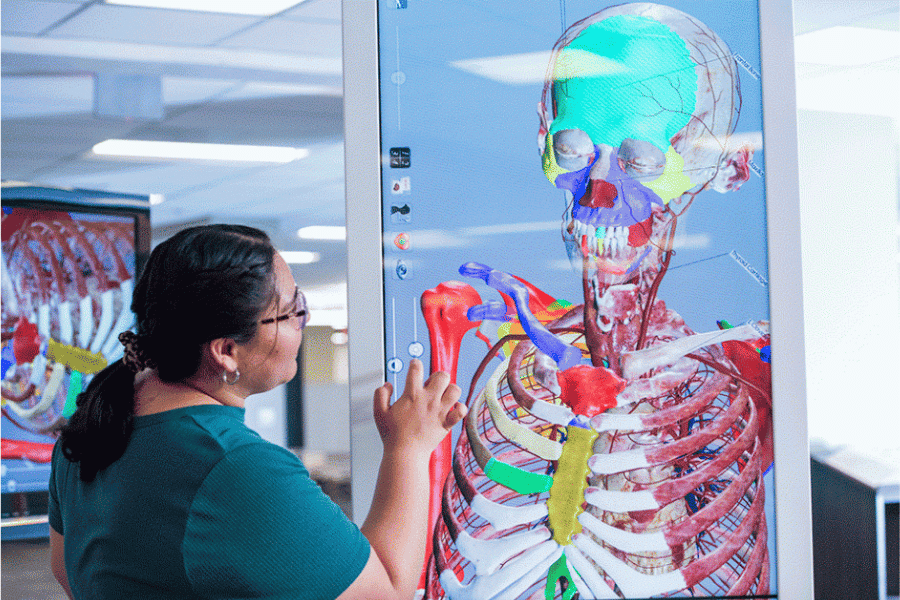
    At my library at the California State Polytechnic University, Humboldt in California, visitors to the Hall of Simulation can use a flight simulator, digitally dissect an animal or cadaver and simulate wildfires, an annual problem in the state. The library’s spaces also host student-centered workshops, research symposiums and events, including an annual celebration of campus and community authors.

    Transformations at the Cal Poly Humboldt Library have been aided through the development of SpaceUse, software that enables the library to track and analyze how its spaces are utilized by patrons. For many library workers, changing and adapting existing library spaces allows them to reimagine how a library can serve its community.  

    Michell Hackwelder, the interpretation unit head at the Education & Outreach Department for the Abu Dhabi Department of Culture and Tourism in the United Arab Emirates, helped renovate libraries used by international peacekeeping forces in Egypt to create community hubs for the many people who came there for recreational activities and to find a quiet space. 

    Hackwelder has spent over 40 years in the library field and has helped guide many library transformations across the Middle East and North Africa. This includes creating maker spaces and programming areas for afterschool and computer and sciences programs at elementary schools in Saudi Arabia and upgrading the early childhood and technology areas at the Abu Dhabi Children’s Library. 

    Hackwelder said that people in the community get excited about the space transformations and more people from different demographics end up using the library.

    Some people miss the stacks.

    It should be noted that changes to library spaces are not without some controversy. Libraries have limited space to work with, so decisions about what to change can be difficult to navigate. Younger people who grow up in a digital world might not connect to books the way older generations did. However, the removal of books and shelves to make room for new spaces can anger the many book lovers who rely on libraries.

    As communities and societies change, libraries will be expected to do the same. 

    Samantha Mendiola is an architect at HGA that focuses on library design. Mendiola has worked on several library redesigns across the United States, from a high school library in Massachusetts to college libraries in Minnesota.  

    Mendiola said that many of the libraries she has worked with are focusing on renovations with existing spaces to better serve changing community demographics and technology needs while also fostering community engagement and accommodating diverse learning styles. 

    “Libraries have always been adaptable and they’re evolving even faster now, post-pandemic, to meet new expectations,” Mendiola said.


    Questions to consider:

    1. In what ways are libraries adapting to meet the needs of the people they serve?

    2, What is the primary role of a library?

    3. If you were to create a new library in your town, what would you want it to have?


    Source link

  • Music as the lifeblood of a nation

    Music as the lifeblood of a nation

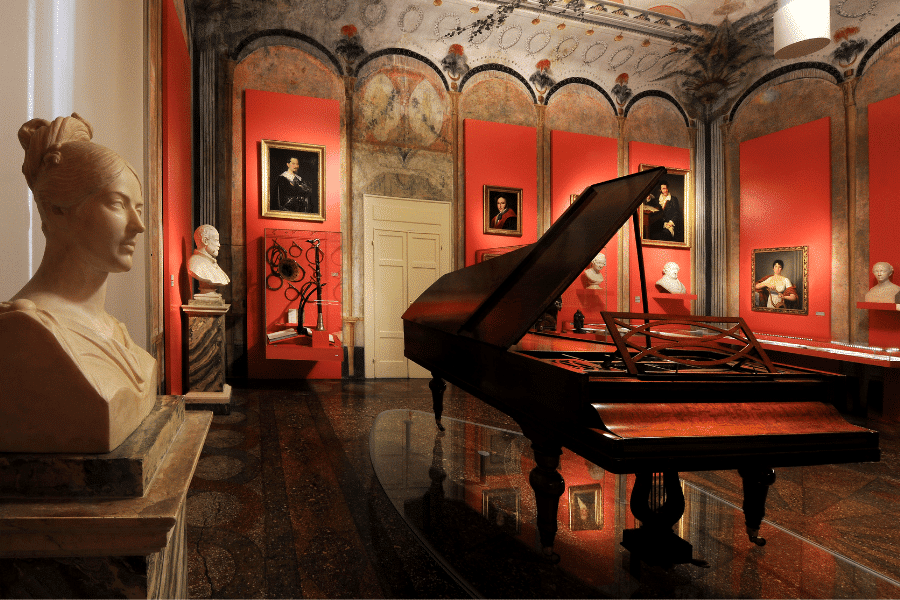
    The museum’s collection includes over 300 portraits of musicians — Vivaldi, Mozart, Rossini, Verdi — most of which are searchable online but rarely known to be housed in Bologna. “We are the Facebook of music history,” Tabellini joked. Some visitors come just for a selfie with Vivaldi’s portrait. “But they end up being amazed by everything else too.”

    One way the museum connects past and present is by bringing centuries-old traditions into modern classrooms and rehearsal spaces. Ancient manuscripts, Renaissance songs and Baroque instruments become starting points for young people to experiment, perform and imagine their own musical future.

    To reach new generations, the museum doesn’t just display music. It puts it in the hands of young people.

    “If you bring a 10-year-old into a museum filled with incomprehensible scores and portraits of musicians, you’re basically telling them that music isn’t for them,” Tabellini said.

    Connecting to music by playing it

    The museum invites students to make music before they study it. Its educational programs include workshops in singing, building instruments, experimenting with electronic music and more.

    “Only afterward do they visit the museum, already equipped with experience. That way the visit isn’t punitive but engaging,” Tabellini said. Many of these programs take place directly in schools and involve thousands of children each year.

    “You understand music by doing it. That’s our approach — accessible, inclusive, active. The museum visit should be a destination, not a starting point.”

    Today, the museum includes over 110,000 volumes — manuscripts, scores, treatises and rare documents. Only a fraction is on display, and much of the experience depends on guided interpretation. 

    “You need cultural mediation to really understand what you’re looking at,” Tabellini said.

    But two decades later, the title’s meaning has changed. “The UNESCO title has generally become a sort of brand, a designer label like those of high fashion,” he said. “It should be an incentive to preserve cultural heritage, but it doesn’t impose any real obligation to do so. It’s now a marketing tool, useful for tourism but not always returning value to the local community.”

    Exploring music by creating it

    The museum’s collections also hold stories that humanize even the greatest musicians. One of the most memorable involves a 14-year-old prodigy named Wolfgang Amadeus Mozart.

    In 1770, Mozart stayed in Bologna to study with Giovanni Battista Martini, a Franciscan friar and music theorist who laid the foundation for the city’s historic music archive. Mozart hoped to join the Accademia Filarmonica, but he had to pass a grueling composition exam.

    “These exams were called clausura, meaning ‘locked room’,” Tabellini said. “Candidates were literally locked in to write their scores. They could last hours, even days.”

    Mozart had spent the summer preparing with Martini, who was also the head of the Accademia. Still, the results were mixed.

    “We hold two of the three versions of Mozart’s exam,” Tabellini said. “The first is Mozart’s autograph — full of mistakes. The second, in Martini’s handwriting, is musically correct but full of corrections. The third, kept at the Accademia, is identical to Martini’s version, but written by Mozart. That version earned him admission.”

    The conclusion? “Mozart copied,” Tabellini said. “It’s one of the most fascinating musical mysteries we preserve. And telling it to visitors brings history to life. If even Mozart needed a helping hand … then there’s hope for all of us.”

    Breathing life into old music

    Connecting the old to today also means finding new ways to let historical documents speak to modern audiences. Through live events and storytelling, the museum ensures that ancient music isn’t just studied — it’s experienced in real time.

    The museum displays some 300 instruments, including one-of-a-kind rarities like the Clavemusicum omnitonum — a 16th-century “perfect keyboard” capable of playing every pitch imaginable. Unfortunately, its keys are too far apart to be playable by human hands.

    Other instruments, however, do come to life in the museum’s many live events: over 100 each year. These include concerts, lectures and series like Wunderkammer and Insolita.

    “In Insolita, we select a document from our collection and pair it with a live concert,” Tabellini said.

    Before the performance, we show the original manuscript and explain its history. It’s a way to give life to what would otherwise remain silent.”

    One audience favorite is “O felici occhi miei” by Arcadelt, a Renaissance madrigal — a form of secular, polyphonic vocal music — with 40 known editions. “We hold 19 of them,” Tabellini said. “When people see the actual pages before hearing the music, they realize that without those sheets, the music itself might never have survived.”

    Visitors sometimes wonder why music doesn’t constantly play in a museum of music. But there’s a reason.

    “If you just pipe background music through the rooms, it becomes ‘muzak’ — like in a supermarket,” Tabellini said.

    Instead, the museum is exploring meaningful ways to integrate sound: virtual manuscripts, interactive instruments and multimedia displays. 

    “We want to integrate music into the experience — but on our own terms,” Tabellini said. “It’s not just about hearing. It’s about understanding why you’re hearing it.”

    The challenge is to make a quiet space sing — not loudly, but purposefully. “We don’t want to entertain. We want to create an experience. Every object we preserve has something to say, and we want its voice to be heard.”


    Questions to consider:

    1. How do labels like “opera” or “love songs” influence — or distort — how we see Italian music today?

    2. In what way is highlighting cultural heritage important to for cities that rely on tourism?

    3. When was the last time you found yourself liking old music? What about it did you like?


    Source link

  • Empowering school staff with emergency response protocols

    Empowering school staff with emergency response protocols

    Key points:

    Safety response protocols are foundational to creating a culture of safety in schools. District leaders should adopt and implement response protocols that cover all types of emergencies. Schools should have building-level response protocols and protocols for incidents when first responders are needed. These practices are critical to keeping the community safe during emergencies.

    When staff members are empowered to participate in emergency planning and response, their sense of safety is improved. Unfortunately, many staff members do not feel safe at school.

    Thirty percent of K-12 staff think about their physical safety when at work every day, and 74 percent of K-12 staff said they do not feel supported by their employer to handle emergency situations at work.

    Staff disempowerment is a “central problem” when it comes to district emergency planning, said Dr. Gabriella Durán Blakey, superintendent of Albuquerque Public Schools: “What does safety mean for educators to really be able to feel safe in their classroom, to impact student achievement, the well-being of students? And how does that anxiety play with how the students feel in the classroom?”

    School leaders should implement response protocols that empower staff to understand and participate in emergency response using a two-tiered system of emergency response:

    • A building-level emergency planning and response team should develop an Emergency Operations Plan, which includes an emergency response protocol
    • Administrators should adopt protocols to follow when they need first responders to intervene

    For guidance on crafting emergency response protocols and plans, click here.

    Laura Ascione
    Latest posts by Laura Ascione (see all)

    Source link

  • Is social media turning our hearts to stone?

    Is social media turning our hearts to stone?

    As global digital participation grows, our ability to connect emotionally may be shifting. Social media has connected people across continents, but it also reshapes how we perceive and respond to others’ emotions, especially among youth. 

    Empathy is the ability to understand and share another’s feelings, helping to build connections and support. It’s about stepping into someone else’s shoes, listening and making them feel understood.

    While platforms like Instagram, TikTok and X offer tools for global connection, they may also be changing the way we experience empathy.

    Social media’s strength lies in its speed and reach. Instant sharing allows users to engage with people from different backgrounds, participate in global conversations and discover social causes. But it also comes with downsides. 

    “People aren’t doing research for themselves,” says Marc Scott, the diversity, equity and community coordinator at the Tatnall School, the private high school that I attend in the U.S. state of Delaware. “They see one thing and take it for fact.”

    Communicating in a two-dimensional world

    That kind of surface-level engagement can harm emotional understanding. The lack of facial expressions, body language and tone — key elements of in-person conversation — makes it harder to gauge emotion online. This often leads to misunderstandings, or worse, emotional detachment.

    In a world where users often post only curated highlights, online personas may appear more polished than real life. “Someone can have a large following,” Scott said. “But that’s just one person. They don’t represent the whole group.” 

    Tijen Pyle teaches advanced placement psychology at the Tatnall School. He pointed out how social media can amplify global polarization. 

    “When you’re in a group with similar ideas, you tend to feel stronger about those opinions,” he said. “Social media algorithms cater your content to your interests and you only see what you agree with.” 

    This selective exposure limits empathy by reducing understanding of differing perspectives. The disconnect can reinforce stereotypes and limit meaningful emotional connection.

    Over exposure to media

    Compounding the problem is “compassion fatigue” — when constant exposure to suffering online dulls our emotional response. Videos of crisis after crisis can overwhelm users, turning tragedy into background noise in an endless scroll.

    A widely cited study published in the journal Psychiatric Science in 2013 examined the effects of exposure to media related to the 9/11 attacks and the Iraq War. The study led by Roxanne Cohen Silver, found that vicariously experienced events, such as watching graphic media images, can lead to collective trauma.

    Yet not all emotional connection is lost. Online spaces have also created powerful support systems — from mental health communities to social justice movements. These spaces offer users a chance to share personal stories, uplift one another and build solidarity across borders. “It depends on how you use it,” Scott said.

    Many experts agree that digital empathy must be cultivated intentionally. According to a 2025 Pew Research Center study, nearly half of U.S. teens believe that social media platforms have a mostly negative effect on people their age, a significant increase from 32% in 2022. This growing concern underscores the complex nature of online interactions, where the potential for connection coexists with the risk of unkindness and emotional detachment. ​

    So how do we preserve empathy in a digital world? It starts with awareness. Engaging critically with content, seeking out diverse viewpoints and taking breaks from the algorithm can help. “Social media can expand your perspectives — but it can also trap you in a single mindset,” Scott said. 

    I initially started thinking about this topic when I was having the same conversations with different people and feeling a sense of ignorance. It wasn’t that they didn’t care — it was like they didn’t know how to care. 

    The way they responded to serious topics felt cold or disconnected, almost like they were watching a video instead of talking to a real person. 

    That made me wonder: has social media changed the way we understand and react to emotions?

    Ultimately, social media isn’t inherently good or bad for empathy. It’s a tool. And like any tool, its impact depends on how we use it. If we use it thoughtfully, we can ensure empathy continues to grow, even in a world dominated by screens.


    Questions to consider:

    1. What is empathy and why is it important?

    2. How can too much time spent on social media dull our emotional response?

    2. How do you know if you have spent too much time on social media? 


    Source link

  • Student-created book reviews inspire a global reading culture

    Student-created book reviews inspire a global reading culture

    Key points:

    When students become literacy influencers, reading transforms from a classroom task into a global conversation.

    When teens take the mic

    Recent studies show that reading for pleasure among teens is at an all-time low. According to the National Assessment of Educational Progress (NAEP), only 14 percent of U.S. students read for fun almost every day–down from 31 percent in 1984. In the UK, the National Literacy Trust reports that just 28 percent of children aged 8 to 18 said they enjoyed reading in their free time in 2023.

    With reading engagement in crisis, one group of teens decided to flip the narrative–by turning on their cameras. What began as a simple classroom project to encourage reading evolved into a movement that amplified student voices, built confidence, and connected learners across cultures.

    Rather than writing traditional essays or book reports, my students were invited to create short video book reviews of their favorite titles–books they genuinely loved, connected with, and wanted others to discover. The goal? To promote reading in the classroom and beyond. The result? A library of student-led recommendations that brought books–and readers–to life.

    Project overview: Reading, recording, and reaching the world

    As an ESL teacher, I’ve always looked for ways to make literacy feel meaningful and empowering, especially for students navigating a new language and culture. This video review project began with a simple idea: Let students choose a book they love, and instead of writing about it, speak about it. The assignment? Create a short, personal, and authentic video to recommend the book to classmates–and potentially, to viewers around the world.

    Students were given creative freedom to shape their presentations. Some used editing apps like Filmora9 or Canva, while others recorded in one take on a smartphone. I offered a basic outline–include the book’s title and author, explain why you loved it, and share who you’d recommend it to–but left room for personal flair.

    What surprised me most was how seriously students took the project. They weren’t just completing an assignment–they were crafting their voices, practicing communication skills, and taking pride in their ability to share something they loved in a second language.

    Student spotlights: Book reviews with heart, voice, and vision

    Each student’s video became more than a book recommendation–it was an expression of identity, creativity, and confidence. With a camera as their platform, they explored their favorite books and communicated their insights in authentic, impactful ways.

    Mariam ElZeftawy: The Fault in Our Stars by John Green
    Watch Miriam’s Video Review

    Mariam led the way with a polished and emotionally resonant video review of John Green’s The Fault in Our Stars. Using Filmora9, she edited her video to flow smoothly while keeping the focus on her heartfelt reflections. Mariam spoke with sincerity about the novel’s themes: love, illness, and the fragility of life. She communicated them in a way that was both thoughtful and relatable. Her work demonstrated not only strong literacy skills but also digital fluency and a growing sense of self-expression.

    Dana: Dear Tia by Maria Zaki
    Watch Dana’s Video Review

    In one of the most touching video reviews, Dana, a student who openly admits she’s not an avid reader, chose to spotlight “Dear Tia,” written by Maria Zaki, her best friend’s sister. The personal connection to the author didn’t just make her feel seen; it made the book feel more real, more urgent, and worth talking about. Dana’s honest reflection and warm delivery highlight how personal ties to literature can spark unexpected enthusiasm.

    Farah Badawi: Utopia by Ahmed Khaled Towfik
    Watch Farah’s Video Review

    Farah’s confident presentation introduced her classmates to Utopia, a dystopian novel by Egyptian author Ahmed Khaled Towfik. Through her review, she brought attention to Arabic literature, offering a perspective that is often underrepresented in classrooms. Farah’s choice reflected pride in her cultural identity, and her delivery was clear, persuasive, and engaging. Her video became more than a review–it was a form of cultural storytelling that invited her peers to expand their literary horizons.

    Rita Tamer: Frostblood
    Watch Rita’s Video Review

    Rita’s review of Frostblood, a fantasy novel by Elly Blake, stood out for its passionate tone and concise storytelling. She broke down the plot with clarity, highlighting the emotional journey of the protagonist while reflecting on themes like power, resilience, and identity. Rita’s straightforward approach and evident enthusiasm created a strong peer-to-peer connection, showing how even a simple, sincere review can spark curiosity and excitement about reading.

    Literacy skills in action

    Behind each of these videos lies a powerful range of literacy development. Students weren’t just reviewing books–they were analyzing themes, synthesizing ideas, making connections, and articulating their thoughts for an audience. By preparing for their recordings, students learned how to organize their ideas, revise their messages for clarity, and reflect on what made a story impactful to them personally.

    Speaking to a camera also encouraged students to practice intonation, pacing, and expression–key skills in both oral language development and public speaking. In multilingual classrooms, these skills are often overlooked in favor of silent writing tasks. But in this project, English Learners were front and center, using their voices–literally and figuratively–to take ownership of language in a way that felt authentic and empowering.

    Moreover, the integration of video tools meant students had to think critically about how they presented information visually. From editing with apps like Filmora9 to choosing appropriate backgrounds, they were not just absorbing content, they were producing and publishing it, embracing their role as creators in a digital world.

    Tips for teachers: Bringing book reviews to life

    This project was simple to implement and required little more than student creativity and access to a recording device. Here are a few tips for educators who want to try something similar:

    • Let students choose their own books: Engagement skyrockets when they care about what they’re reading.
    • Keep the structure flexible: A short outline helps, but students thrive when given room to speak naturally.
    • Offer tech tools as optional, not mandatory: Some students enjoyed using Filmora9 or Canva, while others used the camera app on their phone.
    • Focus on voice and message, not perfection: Encourage students to focus on authenticity over polish.
    • Create a classroom premiere day: Let students watch each other’s videos and celebrate their peers’ voices.

    Literacy is personal, public, and powerful

    This project proved what every educator already knows: When students are given the opportunity to express themselves in meaningful ways, they rise to the occasion. Through book reviews, my students weren’t just practicing reading comprehension, they were becoming speakers, storytellers, editors, and advocates for literacy.

    They reminded me and will continue to remind others that when young people talk about books in their own voices, with their personal stories woven into the narrative, something beautiful happens: Reading becomes contagious.

    Latest posts by eSchool Media Contributors (see all)

    Source link

  • Can the sea’s rise be a language’s demise?

    Can the sea’s rise be a language’s demise?

    A language is not merely a collection of words; it is a symphony of memories, a melody that holds the heartbeat of a nation. It is a living chronicle of history, breathed across the ages, inscribed on the rhythms of life and sung by the winds that dance upon the sacred lands.

    Picture a serene village cradled among ancient mountains, where elders speak a tongue as timeless as the rocks beneath their feet. Each syllable is a thread, knitted into a rich tapestry of legends, lore and traditions that bind them to the soil they call home.  

    But what becomes of this language when the land itself starts to crumble? When the waves rise to consume coasts, or parched earth splits under a blistering sun, does the song fall silent? Today, as the planet warms, it is not only ice caps and forests that vanish — but languages, and with them, entire ways of perceiving the world.

    Around the globe, ancient languages — the essence of human history — are vanishing. Climate change, a tenacious force reshaping landscapes, frays the delicate cultural threads that root communities to their identity. Rising seas engulf islands where indigenous tongues blossom like rare flowers. Wildfires sweep away more than homes, reducing sacred spaces and oral histories to ash. Each vanished habitat is a stilled voice, an erased library of metaphors, idioms and songs that offered a unique lens on life.

    Language extinction

    According to a 2021 report by the UN Permanent Forum on Indigenous Issues, more than 40% of the world’s estimated 7,000 languages are at risk of disappearing. “When a language dies,” said linguist K. David Harrison, “a unique vision of the world is lost.”

    While globalisation and modernisation are often blamed for the erosion of ancient languages, environmental destruction plays an even more insidious role, quietly displacing communities and severing their linguistic roots. When climatic disasters scatter people, they do not only lose their home — they lose the vessel of their shared soul. Dispersed and assimilating, their words, their tales, their melodies — once carried across centuries — fade into echoes long forgotten.

    Today, nearly half of all languages spoken globally are endangered. According to UNESCO, one language disappears every two weeks — a rhythm of loss as steady as the ticking of a clock. In this tide of vanishing voices, climate change surges as an unrecognised adversary, disrupting the habitats where these languages are rooted.

    Consider the small island nations of the Pacific — Tuvalu, Kiribati, the Marshall Islands — where languages are inseparable from the ocean’s ebb and flow. As seas rise up to threaten these vulnerable islands, the inhabitants must depart, and with them, their distinct vision of the world drifts away. Words that once named the tides, the winds, the colour of the sky before monsoon, these vanish as the speakers are displaced.

    Likewise, in the Arctic, the Sámi and Inuit communities confront an ugly truth: their languages, like their frozen lands, are melting under the pressure of a warming world. The vocabulary used to describe different types of snow, hunting rituals or the behaviour of migrating herds holds ancestral wisdom. As the landscape changes, the words that once matched its rhythms no longer apply — and are slowly lost.

    Worldviews and wisdom

    When languages are lost, they take with them entire worldviews and centuries of wisdom encoded in words. The knowledge of forests, of skies, of seas — how to farm to the beat of nature, how to heal using the plants that grow in secret groves — is lost.

    For instance, in the Amazon rainforest, indigenous languages such as Kayapo contain the secrets of life-abundant ecosystems. According to Survival International and linguistic researchers, these languages encode unique ecological wisdom that cannot be translated. Each word is a secret to decoding the harmony of nature and each lost language shelves an irreplaceable piece of the puzzle.

    In the Philippines, the Agta people hold oral traditions that teach sustainable fishing and forest stewardship. Their language contains knowledge passed down through chants and stories that teach children when to harvest, what to leave behind and how to give back. Without their land, without their rituals, such teachings dissolve.

    In Vanuatu, where the rising tide of the ocean promises to wash away land and language, communities are in a mad dash to record their heritage. Elders and linguists collaborate, transcribing words into digital platforms, preserving the poetry of their world for future generations. Stories once passed from mouth to ear around firelight are now finding their way into apps, audio archives and cloud storage — fragile vessels carrying ancient truths.

    A fading past and uncertain future

    Technology, too, becomes a bridge between the fading past and an uncertain future. Apps like Duolingo and platforms like Google’s Endangered Languages Project breathe new life into ancient words, making them accessible to the young and curious.

    Augmented reality and virtual storytelling spaces are beginning to preserve not just the language, but the experience of being immersed in it. But technology alone cannot carry the weight of this preservation. It must be paired with policies that protect the vulnerable — giving displaced communities a voice not only in language preservation but in shaping climate action itself.

    Governments must go beyond digitisation and invest in cultural resilience. Language must be taught in schools, inscribed in constitutions, spoken on airwaves and celebrated in ceremonies. We need climate policies that understand that saving ecosystems and saving languages are part of the same struggle. Both are about preserving what makes us human.

    In the end, saving a language is an act of defiance against the erasure of identity. It is a way to honour the past while forging a path to a sustainable future. These languages do not merely recount history — they carry the wisdom of living in harmony with the Earth. In their poetry and proverbs, in their songs and silences, they have answers to questions we have not even thought to ask yet.

    To preserve these voices, we must become their echoes. We must act before it’s too late. Before the last storytellers fall silent. Before the rivers can no longer remember the songs they once inspired. To save a language is to save a piece of ourselves — the spirit of who we are, where we’ve been and the dreams of where we might go.

    When we lose a language, we don’t just lose words — we lose the Earth’s voice itself. If these voices vanish, who will remember the names of the stars? Who will tell us how the mountains mourned or the forests sang? The Earth is listening and its languages are calling. 

    Let us not forget how to answer.


    Questions to consider:

    1. Why are languages at risk of extinction due to climate change?

    2. How are preservation of language connected to whole cultures?

    3. Why might someone want to master a language that is not widely spoken?


    Source link

  • The silencing of voices through the banning of books

    The silencing of voices through the banning of books

    When I was in fifth grade in northern Kentucky, I walked into my school library, excited to check out my favorite book — Drama by Raina Telgemeier — only to find it missing. My librarian told me it had been removed because someone had complained it wasn’t appropriate for our age group.

    The shelves looked emptier without it and I remember the sting of frustration in my chest as I asked question after question, my voice growing unsteady. That book was my only access to a world I love and now it was gone. 

    At the time, I didn’t understand why it had disappeared. Now, I realize that moment was part of a much larger battle playing out across the country.

    A surge in book bans across the U.S. is forcing educators and librarians into a heated debate over censorship and intellectual freedom, as restrictions on books about race, gender and LGBTQ+ topics increase.

    “Books don’t hurt people. People hurt people,” said Joyce McIntosh, assistant program director for the Freedom to Read Foundation.

    Bans across the nation

    As book bans and censorship debates arise across the country, independent K-12 schools, like the Tatnall School in Wilmington, Delaware where I go to school, must balance open access to information with concerns over age-appropriate content — a challenge that mirrors broader societal tensions over education and free expression.

    Over the past few years, book challenges have significantly increased, with reports from the American Library Association showing a record-breaking number of book bans in 2023, documenting 1,247 demands to censor library books and resources.

    While these debates are heating up in the U.S., similar efforts to restrict access to information are occurring across the globe, from government crackdowns in China to classroom censorship in Brazil. McIntosh said these bans disproportionately target books focused on BIPOC and LGBTQ communities, limiting students’ access to diverse perspectives. 

    “Bans often target books focused on [black, indigenous and people of color]  and LGBTQ communities, preventing students from seeing themselves represented,” McIntosh said. 

    Groups advocating for more restrictions counter that certain topics seen in school books promote inappropriate themes or political agendas. On the other hand, organizations like the Freedom to Read Foundation work to educate library workers and community members about the importance of intellectual freedom. 

    Local schools navigate the debate

    For educators, the tension between intellectual freedom and parental concerns seems like a tightrope act. While public schools in the United States must follow government and state regulations, independent schools have more flexibility in curating their libraries and media centers. That flexibility comes with its own challenges and doesn’t provide much leeway.

    Instead, it forces school administrations to set their own guidelines, often navigating difficult conversations with parents, teachers, and students to figure out what’s best for their school environment. 

    Ensign Simmons, the director of innovation and technology and library coordinator at the Tatnall School, emphasized the school’s approach to book selection. While the library strives to provide students with diverse perspectives in education, it also considers community concerns as well as the age-appropriateness of the content, Simmons said. 

    Simmons said that while Tatnall is not a public institution, the school still has a responsibility to prepare students to think critically and be open-minded when they enter the world.

    Tatnall hasn’t faced formal book bans, but the school remains aware of the growing national trends. Instead of outright censorship, Simmons said that the school encourages dialogue between students, parents and educators. Maintaining this balance means that while some books may contain more mature content, the overall goal is to promote discussion among students of different perspectives rather than restrictions.

     “Even if you disagree with something, that doesn’t mean we should take it off the shelves,” Simmons said. “We should keep them out there because that does spark a conversation and that conversation is what’s important at the end of the day.”

    The role of parents play

    While anti-ban activists argue that restricting and banning books violates an individual’s access to intellectual freedom, pro-ban supporters see it as a step taken that is necessary to protect children and youth from inappropriate and controversial material.

    Moms for Liberty, a conservative advocacy group, has led efforts to remove books like The Bluest Eye by Toni Morrison from certain school districts and libraries, arguing that educators should not have the final say in what the students read.  

    McIntosh said that many schools already have policies allowing parents to opt their child out of specific reading materials and select an alternative that aligns with the curriculum. However, when one parent’s choice limits access for all students, it crosses into censorship, she said. Parents have the right to choose that for their child, however, it starts becoming more like censorship when they decide they don’t want anyone reading the book, making a decision for others based on their own beliefs. 

    Censorship is a global issue, not confined to the United States. In China, writers who challenge the government’s narrative have been imprisoned. In Tanzania, the government banned children’s books on sex education, citing violations of cultural norms, while in Brazil, attempts have been made to remove books addressing race and gender from classrooms. This is similar to the problem in the United States.

    These efforts to restrict access to information emphasize the broader, international pattern of controlling stories, especially those of marginalized communities. Whether driven by political power, cultural conservatism or fear of open dialogue, these global examples underscore the dangers of erasing perspectives that are vital for understanding diverse human experiences, just as we are witnessing in the U.S.

    What the future holds

    As the debate over book bans intensifies, many wonder what the future for school libraries will look like. In the future, instead of banning books outright, restrictions could shift toward regulation of digital content, as our world’s use of technology grows and as more controversial material becomes accessible online.

    Schools, like Tatnall, might continue to shift and shape their policies, cultivating discussions among the youth rather than enforcing strict bans and censoring intellectual content.

    Years ago, I didn’t understand why my favorite book was taken away. Now, I see that removing a single book is never just about a book — it’s about whose voices get heard and whose stories remain untold. 

    “One of the most dangerous aspects of book bans is that they often target marginalized voices,” McIntosh said. “When we remove these stories, we’re not just censoring books. We’re erasing experiences and perspectives that are crucial for understanding the world around us.”

    The ongoing debate over book bans isn’t only about stories; it’s about who gets to decide what topics are worth exploring. And that struggle isn’t limited to the United States. Across continents, governments and school systems are making similar decisions about which perspectives are allowed to exist and which are erased.

    As long as books continue to disappear from shelves, that debate will continue shaping free expression and education for years to come.


    Questions to consider:

    • Why would some groups want to ban whole classrooms from access to particular books?

    • Why are books about people of color or are about themes of gender identity often the target of bans?

    • Do you think some books should be kept from children? Which ones and why?


    Source link

  • Can we keep live music venues from dying out?

    Can we keep live music venues from dying out?

    What is happening to the local music scene?

    I remember my parents telling me when I was a child that one of the best ways to spend a Saturday night as an adult was to visit a local bar and watch live bands with friends. However, as I grew older, I found it increasingly difficult to find such venues.

    With the music industry generating billions in global revenue — from Taylor Swift’s stadium tours to Coldplay’s international sellouts — one might expect local scenes to benefit.

    Instead, small venues from Pennsylvania to rural Ireland are shuttering at alarming rates. Vibrant shows, diverse crowds and strong community support for musicians should be the norm. Yet, in recent years, the opposite has happened. Attendance at small venues has plummeted and emerging artists are finding fewer opportunities to perform publicly.

    While the COVID-19 pandemic accelerated this decline, the trend had already been in motion for years. Fewer people are as interested in local music these days. But why?

    One major factor is the rise of social media. With music accessible at our fingertips, listeners no longer rely on their local scene to discover new artists. Instead of attending live performances, they can explore endless music from home.

    Digitized music

    Bassist and lead singer of the band Heaven’s Gate, 21-year-old Mike Danocwzi, offers insight on the matter. “People have forgotten what it’s like to have to leave their home to experience a song,” Danocwzi said. “Instead, they get too lost in their feed to even appreciate the vibes.”

    Having played guitar alongside Danocwzi at several shows, I can’t help but agree. Turnout is often disappointing and those who do attend seem more focused on their phones — texting, scrolling or recording — than on the performance itself. 

    A study by the Pew Research Center found that 99% of Americans and Canadians over 18 have a cell phone with social media. The Deloitte Center for Technology and Communications reported that 86% of Gen Z listeners discover new music through social media rather than live shows.

    Economic factors have also played a role. The rising cost of living has left many young adults with less disposable income for entertainment. This, combined with the skyrocketing cost of college — nearly triple what it was in the 1990s — has created a growing divide between artists and audiences.

    Another issue is the commercialization of the modern music industry. The so-called “middle class” of musicians is disappearing, mirroring the growing wealth gap in society. There is an ever-widening divide between mega-stars and independent artists.

    People flock to the big stars.

    Superstars like Drake, Taylor Swift and Metallica dominate the industry, leaving little room for smaller musicians to thrive. Music is no longer about unity through sound but rather unity through the artist — a shift that has changed how people engage with the industry.

    Virginia musician and local staple Jerry Reynolds believes this change has altered the very definition of being an artist. “These new stars don’t understand what made the industry fucking great,” Reynolds said. “I remember starting in bars not so I could make fucking money, just so I could fucking play in my damn community.”

    Reynolds, who chose to stay in the local circuit rather than chase stardom, argues that music should be about the song, not commercial success. He believes today’s artists have lost sight of what truly matters.

    The decline of guitar-driven music is another factor. Before social media, being a skilled guitarist was one of the coolest things a person could do, often launching musicians to stardom. Legends like Eddie Van Halen, Jimi Hendrix and Eric Clapton became icons through sheer talent and showmanship.

    Now, however, technical skill alone is no longer enough. The internet has accelerated the exchange of musical ideas to such an extent that virtuoso guitarists are no longer a rarity. As a result, the spectacle of live performance has lost some of its magic.

    Local venues struggle across the globe.

    This isn’t just a local issue. Around the world, small music venues and local cultural hubs are in decline. A 2023 Guardian article reported that the UK lost over 120 grassroots music venues in a single year — roughly 15% of its total. In Ireland, the closure of rural pubs — many of which double as performance spaces — is becoming a social crisis. These establishments often serve as the heart of small communities, acting as gathering places for conversation, connection and live music.

    Similar stories have emerged in Australia, Canada and parts of Europe, where independent venues are battling rising rents, insurance costs and shrinking audiences. The Music Venue Trust in the UK warns that without intervention, the cultural backbone of the live music scene could collapse entirely.

    At the same time, the stadium concert economy is booming. Taylor Swift’s Eras Tour grossed over $1 billion globally. Coldplay has sold out massive stadiums with capacities of over 70,000, with average ticket prices reaching several hundred dollars. The contrast is stark: while the biggest names in music break records, many local artists struggle to draw a crowd or even cover travel costs for a performance.

    What does this mean for the future of local music? And more importantly, can anything be done to reverse this trend?

    The short answer is simple: support your local scene. Look up small venues, ask about upcoming shows and show up for independent artists. Better yet, start a band or organize a local event.

    This isn’t just a problem in your neighborhood — it’s a global cultural shift. But change can start small. 

    The biggest obstacle facing live music is our own reluctance to step outside the comfort of our homes. If more people make the effort to rediscover the excitement of live performances, the local music scene could experience a revival. And with that resurgence, small artists may once again find a home within their communities.


    Questions to consider:

    1. Why are many small music venues struggling?

    2. What is one reason younger people are not going to clubs to see live music?

    3. What was the last live music you saw? How was it different from streaming the music?


    Source link

  • Are smart phones at schools all bad?

    Are smart phones at schools all bad?

    If Bill Schluter had his way, cellphones would be banned five days a week. Schluter is head of Tatnall Upper School, a private high school in the U.S. state of Delaware. He wants cellphones out of school. 

    As increasing numbers of young people seem tied to their phones, researchers have found correlations between cellphone use and cases of depression, anxiety, cyberbullying and decreasing attention span.

    A 2019 study by the nonprofit organization Common Sense found that 84% of teenagers in the United States already possess a cellphone.

    Psychologist Jean Twenge, in her 2017 book “iGen“, wrote that increased phone use by teenagers directly correlates to a recent increase in adolescent anxiety, depression and inability to focus.

    Teens themselves, though, think cellphones have a place in the classroom — if used responsibly and with permission. 

    “I noticed people use them a lot in math class when they forget their calculator,” said Tatnall student Camille Johnson. “If their math teacher allows them to pull out their phone just for the calculator portion, they use it for that as long as you know they’re not being silly and going on other apps. We had a physics lab the other day where we were needing to use it to record our lab.”

    Social media replaces human connections

    Research also suggests that a hybrid class model that integrates technology into classwork, such as Teach to One or Google Classroom, leads to successful test scores as it personalizes the learning journey. 

    Twenge found that phones hinder teenagers’ ability to socially engage with each other. Schulter agreed. “Your ability to talk to each other, hear each other and have productive conversations is lessened with cellphones,” he said. 

    Twenge also found that the recent rise of technological advancements of cellphones and the COVID-19 pandemic encouraged teenagers to shut themselves in and only engage with their devices, as social media has replaced other forms of entertainment such as magazines and books. This leads to a wired, smartphone-dominant society, causing a significant spike in teenage mental health problems.

    A June 2024 Pew Research Center survey shows that 72% of public school teachers report that phones are a major distraction in class and make learning less effective. And a March 2024 report from Thorn, a nonprofit organization that works to fight online sexual abuse of children and teens, emphasized a disturbing increase in the creation and distribution of AI-generated child pornography. 

    The report said that with its ease of use, almost anyone can generate intimate deepfake images of others, whether it be of someone they know or a stranger. Child predators or children interested in their peers can create these pictures with the click of a button. 

    These images are commonly used in “sextortion”, a form of extortion in which the creator or owner of the photos threatens to publicly release them if the victim refuses their demands. 

    Abuse of technology

    Schluter recalled a story about a local and reputable school in which a male student used AI to superimpose nude pictures of his female classmates from the shoulder up to distribute online, resulting in chaos among the school board. “Board members of the school have resigned and everybody’s at each other’s throats,” he said. 

    In recent years, schools have responded to the cell phone issue. In many states across the country, such as California, New York, Maine and Pennsylvania, school districts have been able to limit the usage of cell phones among students, whether that be a phone-free day or an outright ban. 

    My high school, The Tatnall School, has implemented phone-free Wednesdays into the school week, forbidding students from having a cellphone in sight anytime during the day. 

    Schluter said that another local high school has banned smartphones five days a week.  

    “They started right off the school year with having a couple days in the school year, and then within a month, they had gone to a cellphone free policy at the school in its entirety, and it’s working great from all sources,” he said. 

    Resistance to phone bans

    Many students, and parents, aren’t entirely on board with banning phones, even one day a week.  “It just so happens that every single Wednesday, I’m like, oh my gosh, I need to do something really quick, and I can’t have my phone,” Johnson said. 

    She admitted that without a phone people learn to be more present in the moment. “But I don’t believe in completely banning them,” she said.

    Other students noted that the cellphone policy has caused some problems. Some use their phones as keys to their cars, for example, and having their phones confiscated makes that difficult. Some students have have seen teachers collecting phones from students even when they were simply outdoors during lunch. 

    Many parents are concerned that smartphone bans limit communication between them and their children, fearing they cannot contact them during an emergency. With a disturbing number of recent school shootings, this fear is understandable. To dampen parents’ worries, school faculty assure them that communication between parent and child will most likely be unnecessary if school safety precautions are followed.

    “If we’re cellphone free, the school would, if we do a good job of maintaining our safety precautions for the school, we would be a safe environment,” Schluter said.

    Finding a happy medium

    Naturally, parents still worry for their child’s safety and desire to keep constant contact, even if it’s a simple text that tells them that their child is safe. 

    While many educators and some parents believe that phones only impair learning and have no place in a productive academic environment, others argue that the correct classroom model can allow cellphones to enhance education. 

    Consider online programs such as Duolingo or Google Classroom. These apps prove that technology can be effectively integrated into lesson plans to teach new skills while indulging the attachment young people have to phones and capturing their attention, a precious resource. If teachers worry about students using their cellphones for non-academic purposes, they can employ programs to restrict access to certain websites or apps. 

    So what is the best best course of action to solve this problem? While the issues related to cellphones prove problematic, many believe that phones aren’t necessarily the root cause. The spike in cellphone usage may merely be an effect of the issues often associated with them.

    “Cellphones may be a symptom and not the cause of the shift, but the two are very interrelated,” Schluter said.

    Bans are only as effective as their enforcement and only encourage some teens to find ways around the bans. And despite teachers’ efforts to hold students responsible for their actions, this is also not a guaranteed fix. 

    Perhaps the best solution is a happy medium. Schools can allow teachers to create their own classroom phone policies and punish as they see fit. Or they can limit cell phone use while establishing specific areas or periods when people can be on their phones. 

    No matter which solution is most effective, technology is improving, and social media and smartphones are on track to become increasingly prevalent in our lives.

    “High school education has changed in huge ways in the past 30 or 40 years, and cellphones have been have been part of that,” Schluter said. “But I’m curious to know, not how we get back to the way things were in the 1990s necessarily, but to an atmosphere where students are more engaged.”


    Three questions to consider:

    1. Why do many schools trying to ban students’ use of phones?

    2. In what ways can phones by used responsibly in a class?

    3. In what ways do you feel tied to your phone? 


    Source link