Category: Current Issue

  • International Student Mobility Data Sources: A Primer

    International Student Mobility Data Sources: A Primer

    Part 1: Understanding the Types of Sources and Their Differences

    There has perhaps never been more of a need for data on globally mobile students than now. In 2024, there were about 6.9 million international students studying outside their home countries, a record high, and the number is projected to grow to more than 10 million by 2030. Nations all around the world count on global student mobility for a number of reasons: Sending nations benefit by sending some of their young people abroad for education, particularly when there is less capacity at home to absorb all demand. Many of those young people return to the benefit of the local job market with new skills and knowledge and with global experience, while others remain abroad and are able to contribute in other ways, including sending remittances. Host nations benefit in numerous ways, from the economic contributions of international students (in everything from tuition payments to spending in the local economy) to social and political benefits, including building soft power.

    At the same time, economic, political, and social trends worldwide challenge the current ecosystem of global educational mobility. Many top destinations of international students, including Canada and the United States, have developed heavily restrictive policies toward such students and toward migrants overall. The COVID-19 pandemic demonstrated that one global challenge can upend international education, even if temporarily.

    Data plays a key role in helping those who work in or touch upon international education. All players in the space—from institutional officials and service providers to policymakers and researchers—can use global and national data sources to see trends in student flows, as well as potential changes and disruptions.

    This article is the first in a two-part series exploring global student mobility data. In this first article, I will delve into considerations that apply in examining any international student data source. In the second, forthcoming article, we will examine some of the major data sources in global student mobility, both global and national, with the latter focused on the “Big Four” host countries: the United States, Canada, the United Kingdom, and Australia.

    In utilizing any global student mobility data source, it is crucial to understand some basics about each source. Here are some key questions to ask about any source and how to understand what each provides.

    Who collects the data?
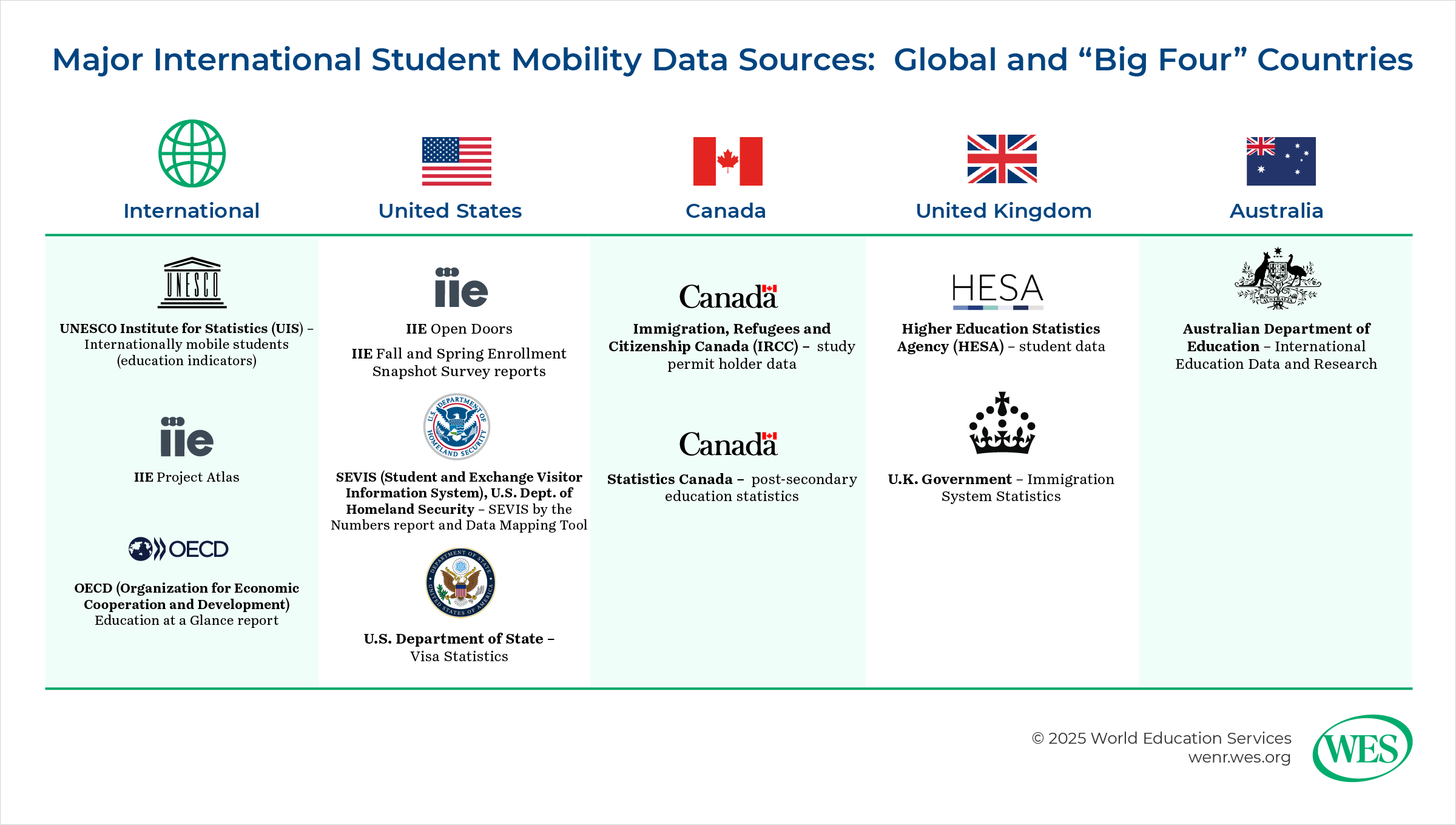
    Table displaying major international student mobility data sources for trends around the world and in the "Big Four" countries.

    There are three main types of entities that collect student mobility data at a national level:

    • Government ministries or agencies: These entities are generally mandated by law or statute to collect international student data for specific purposes. Depending on the entity’s purview, such data could include student visa or permit applications and issuances, students arriving at ports of entry (such as an airport or border crossing), enrollment in an educational institution, or students registered as working during or after completing coursework.
    • Non-governmental organizations (NGOs): Non-profit entities focused on international education or related fields such as higher education or immigration may collect international student data, sometimes with funding or support from relevant government ministries. One good example is the Institute of International Education (IIE) in the U.S., which has collected data on international students and scholars since 1948, much of that time with funding and support from the U.S. Department of State.
    • Individual institutions: Of course, individual universities and colleges usually collect data on all their students, usually with specific information on international students, sometimes by government mandate. In countries such as the U.S. and Canada, these institutions must report such data to governmental ministries. They may also choose to report to non-governmental agencies, such as IIE. Such data may or may not otherwise be publicly available.

    At the international level, the main data sources are generally an aggregation of data from national sources. There are three main efforts:

    How are the data collected?

    The method in which mobility data are collected affects the level of accuracy of such data. The sources that collect data internationally or on multiple countries, such as UNESCO Institute for Statistics (UIS) and IIE’s Project Atlas, are primarily aggregators. They collect the data from national sources, either government ministries or international education organizations, such as the British Council or the Canadian Bureau for International Education (CBIE).

    For primary data collection, there are three main methods:

    • Mandatory reporting: Certain government entities collect data by law or regulation. Data are naturally collected as part of processing and granting student visas or permits, as the S. State Department and Immigration, Refugees and Citizenship Canada (IRCC) do. In other cases, postsecondary institutions are required to track and report on their international students—from application to graduation and sometimes on to post-graduation work programs. This is the case in the U.S. through SEVIS (the Student and Exchange Visitor Information System), overseen by the U.S. Department of Homeland Security (DHS), through which deputized institutional officials track all international students. The data from this system are reported regularly by DHS. In other cases, data are collected annually, often through a survey form, as Statistics Canada does through its Postsecondary Student Information System (PSIS).
    • Census: Some non-profit organizations attempt to have all postsecondary institutions report their data, often through an online questionnaire. This is the method by which IIE obtains data for its annual Open Doors Report, which tracks both international students in the U.S. and students enrolled in U.S. institutions studying abroad short-term in other countries.
    • Survey: A survey gathers data from a sample, preferably representative, of the overall population—in this case, higher education institutions—to form inferences about the international student population. (This should not be confused with the “surveys” issued by government agencies, usually referring to a questionnaire form, typically online nowadays, through which institutions are required to report data.) This method is used in IIE’s snapshot surveys in the fall and spring of each year, intended to provide an up-to-date picture of international student enrollment as a complement to Open Doors, which reflects information on international students from the previous academic year.

    When are the data collected and reported?
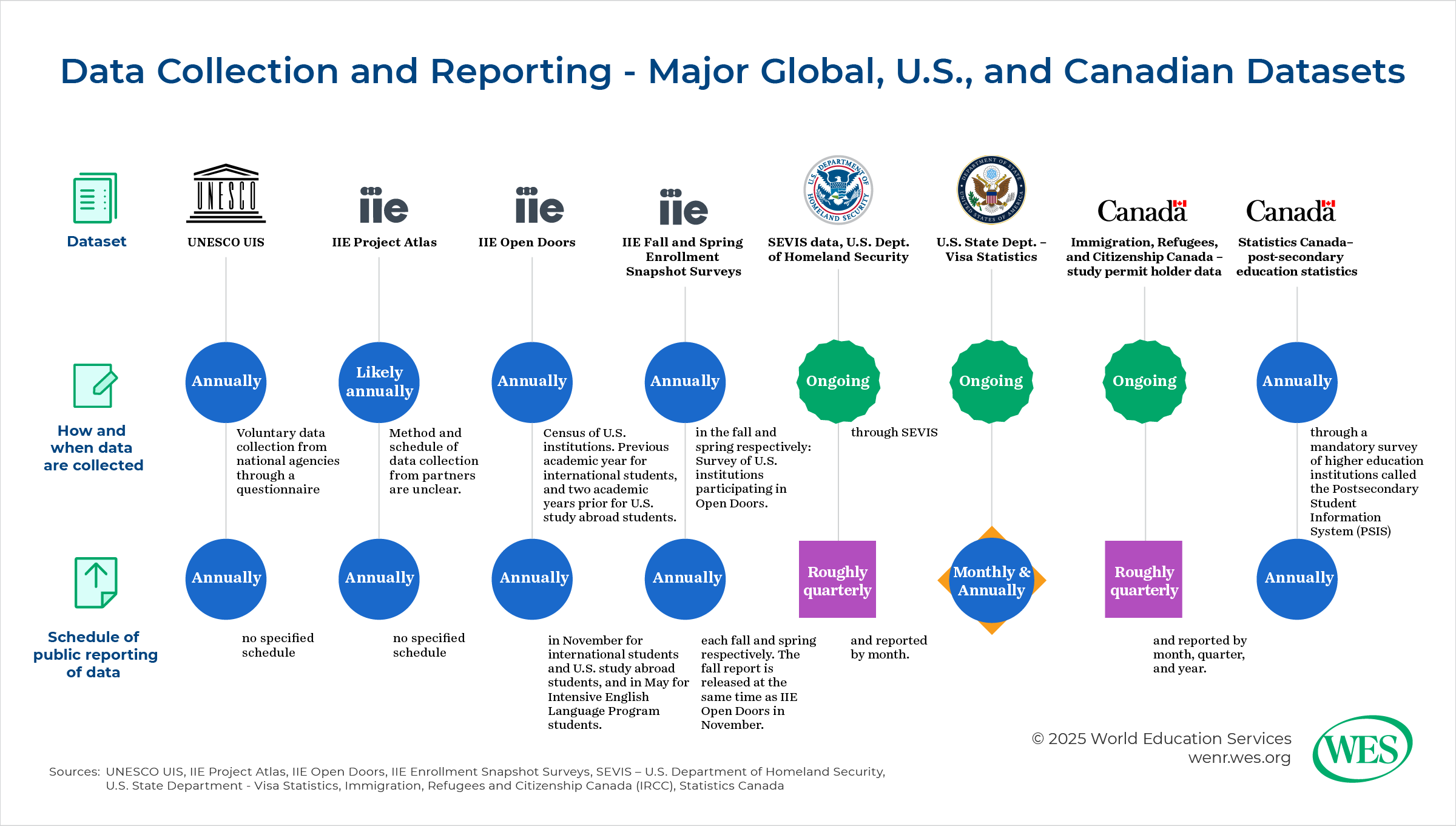
    Chart showing the data collection and reporting practices of major global, U.S., and Canadian international student datasets.

    In considering data sources, it is important to know when the data were collected and what time periods they reflect. Government data sources are typically the most up-to-date due to their mandatory nature. Data are often collected continuously in real time, such as when a student visa is approved or when an international student officially starts a course of study. However, each ministry releases data at differing intervals. Australia’s Department of Education, for example, is well known for releasing new data almost every month. USCIS and IRCC tend to release data roughly quarterly, though both provide monthly breakdowns of their data in some cases.

    Non-governmental entities generally do not collect data continuously. Instead, they may collect data annually, semiannually, or even less frequently. IIE’s Open Doors collects data annually for the previous academic year on international students and two years prior on U.S. study abroad students. The results for both are released every November.

    The international aggregated sources receive data from national sources at widely varying times. As a result, there can be gaps in data, making comparison between or among countries challenging. Some countries don’t send data at all, often due to lack of resources for doing so. Even major host countries, notably China, send little if any data to UNESCO.

    What type of student mobility data are included in the source?

    Sources collect different types of student mobility data. One such breakdown is between inbound and outbound students—that is, those whom a country hosts versus those who leave the country to go study in other countries. Most government sources, such as IRCC, focus solely on inbound students—the international students hosted within the country— due to the organizations’ mandate and ability to collect data. Non-governmental organizations, such as IIE, often attempt to capture information on outbound (or “study abroad”) students. Many international sources, such as UNESCO UIS, capture both.

    Another important breakdown addresses whether the data included degree-seekers, students studying abroad for credit back home, or those going abroad not explicitly for study but for a related purpose, such as research or internships:

    • Degree mobility: captures data on students coming into a country or going abroad for pursuit of a full degree.
    • Credit mobility: captures information on those abroad studying short-term for academic credit with their home institution, an arrangement often called “study abroad” (particularly in the U.S. and Canada) or “educational exchange.” The length of the study abroad opportunity typically can last anywhere from one year to as little as one week. Short-duration programs, such as faculty-led study tours, have become an increasingly popular option among students looking for an international experience. In most cases, the home institution is in the student’s country of origin, but that is not always the case. For example, a Vietnamese international student might be studying for a full degree in the U.S. but as part of the coursework studies in Costa Rica for one semester.
    • Non-credit mobility: captures information on those who go abroad not for credit-earning coursework but for something highly related to a degree program, such as research, fieldwork, non-credit language study, an internship, or a volunteer opportunity. This may or may not be organized through the student’s education institution, and the parameters around this type of mobility can be blurry.

    It’s important to know what each data source includes. Most governmental data sources will include both degree and credit mobility—students coming to study for a full degree or only as part of a short-term educational exchange. The dataset may or may not distinguish between these students, which is important to know if the distinction between such students is important for the data user’s purposes.

    For outbound (“study abroad”) mobility, it’s easier for organizations to track credit mobility rather than degree mobility. IIE’s Open Doors, for example, examines only credit mobility for outbound students because it collects data through U.S. institutions, which track their outbound study abroad students and help them receive appropriate credits for their work abroad once they return. There is not a similar mechanism for U.S. degree-seekers going to other countries. That said, organizations such as IIE have attempted such research in the past, even if it is not an ongoing effort. Typically, the best way to find numbers on students from a particular country seeking full degrees abroad is to use UNESCO and sort the full global data by country of origin. UNESCO can also be used to find the numbers in a specific host country, or, in some cases, it may be better to go directly to the country’s national data source if available.

    Non-credit mobility has been the least studied form of student mobility, largely because it is difficult to capture due to its amorphous nature. Nevertheless, some organizations, like IIE, have made one-off or periodic attempts to capture it.

    Who is captured in the data source? How is “international student” defined?

    Each data source may define the type of globally mobile student within the dataset differently. Chiefly, it’s important to recognize whether the source captures only data on international students in the strictest sense (based on that specific legal status) or on others who are not citizens of the host country. The latter could include permanent immigrants (such as permanent residents), temporary workers, and refugees or asylum seekers. The terms used can vary, from “foreign student” to a “nonresident” (sometimes “nonresident alien”), as some U.S. government sources use. It’s important to check the specific definition of the students for whom information is captured.

    Most of the major student mobility data sources capture only data on international students as strictly defined by the host country. Here are the definitions of “international student” for the Big Four:

    • United States: A non-immigrant resident holding an F-1, M-1, or certain types of J-1 (The J-1 visa is an exchange visa that includes but is not limited to students and can include individuals working in youth summer programs or working as au pairs, for example.)
    • Canada: A temporary resident holding a study permit from a designated learning institution (DLI)
    • United Kingdom: An individual on a Student visa
    • Australia: An individual who is not an Australian citizen or permanent resident or who is not a citizen of New Zealand, studying in Australia on a temporary visa

    Some countries make a distinction between international students enrolled in academic programs, such as at a university, versus those studying a trade or in a vocational school; there might also be distinct categorization for those attending language training. For example, in the U.S., M-1 visas are for international students studying in vocational education programs and may not be captured in some data sources, notably Open Doors.

    Understanding the terminology used for international students helps in obtaining the right type of data. For example, one of the primary methods of obtaining data on international students in Canada is through IRCC data held on the Government of Canada’s Open Government Portal. But you won’t find any such dataset on “international students.” Instead, you need to search for “study permit holders.”

    Does the data source include students studying online or at a branch campus abroad, or who are otherwise physically residing outside the host country?

    Some universities and colleges have robust online programs that include significant numbers of students studying physically in other countries. (This was also true for many institutions during the pandemic. As a result, in the U.S., IIE temporarily included non-U.S. students studying at a U.S. institution online from elsewhere.) Other institutions have branch campuses or other such transnational programs that blur the line between international and domestic students. So, it’s important to ask: Does the data source include those not physically present in the institution’s country? The terminology for each country can vary. For example, in Australia, where such practices are very prominent, the term usually used to refer to students studying in Australian institutions but not physically in Australia is “offshore students.”

    What levels of study are included in the dataset?

    The focus of this article is postsecondary education, but some data sources do include primary and secondary students (“K-12 students” in the U.S. and Canada). IRCC’s study permit holder data includes students at all levels, including K-12 students. The ministry does provide some data broken down by level of study and other variables, such as country of citizenship and province or territory.

    What about data on international students who are working?

    Many host countries collect data and report on international students who are employed or participating in paid or unpaid internships during or immediately after their coursework. The specifics vary from country to country depending on how such opportunities for international students are structured and which government agencies are charged with overseeing such efforts. For example, in the U.S., the main work opportunities for most international students both during study (under Curricular Practical Training, or CPT) and after study (usually under Optional Practical Training, or OPT) are overseen by the student’s institution and reported via SEVIS. IIE’s Open Doors tracks students specifically for OPT but not CPT. By contrast, the main opportunity for international students to work in Canada after graduating from a Canadian institution is through the post-graduation work permit (PGWP). Students transfer to a new legal status in Canada, in contrast with U.S.-based international students under OPT, who remain on their student visa until their work opportunity ends. As a result, IRCC reports separate data on graduate students working under the PGWP, though data are relatively scant.

    At some point, students who are able to and make the choice to stay and work beyond such opportunities in their new country transition to new legal statuses, such as the H-1B visa (a specialty-occupation temporary work visa) in the U.S., or directly to permanent residency in many countries. The data required to examine these individuals varies.

    What about data beyond demographics?

    While most international student datasets focus on numbers and demographic breakdowns, some datasets and other related research focus on such topics as the contributions of international students to national and local economies. For example, NAFSA: Association of International Educators, the main professional association for international educators in the U.S., maintains the International Student Economic Value Tool, which quantifies the dollar amounts that international students contribute to the U.S. at large, individual states, and congressional districts. Part of the intention behind this is to provide a tool for policy advocacy in Washington, D.C., and in state and local governments.

    How can I contextualize international student numbers within the broader higher education context of a country?

    Many countries collect and publish higher education data and other research. Each country assigns this function to different ministries or agencies. For example, in Canada, most such data are collected and published by Statistics Canada (StatCan), which is charged with data collection and research broadly for the country. In the U.S., this function falls under the Department of Education’s National Center for Education Statistics (NCES), which runs a major higher education data bank known as IPEDS, the Integrated Postsecondary Education Data System. StatCan does provide some data on international students, while IPEDS in the U.S. reports numbers of “nonresident” students, defined as “a person who is not a citizen or national of the United States and who is in this country on a visa or temporary basis and does not have the right to remain indefinitely.” This term likely encompasses mostly those on international student visas.

    I will discuss some of these higher education data sources in Part 2 of this series.

    How do I learn what I need to know about each individual dataset?

    Each major data source typically provides a glossary, methodology section, and/or appendix that helps users understand the dataset. In Part 2 of this series, we will examine some of the major international and national data sources, including where to locate further such information for each.

    It’s critical for users of student mobility data sources to understand these nuances in order to accurately and appropriately utilize the data. In the second part of this series, we will examine several prominent data sources.
    Source link

  • Rebuilding Syria’s Education System: Navigating Challenges and Embracing Opportunities

    Rebuilding Syria’s Education System: Navigating Challenges and Embracing Opportunities

    Rebuilding Syria’s education system is not just about restoring classrooms, but about offering a chance for a lost generation to rebuild their lives and secure a better future for the country.

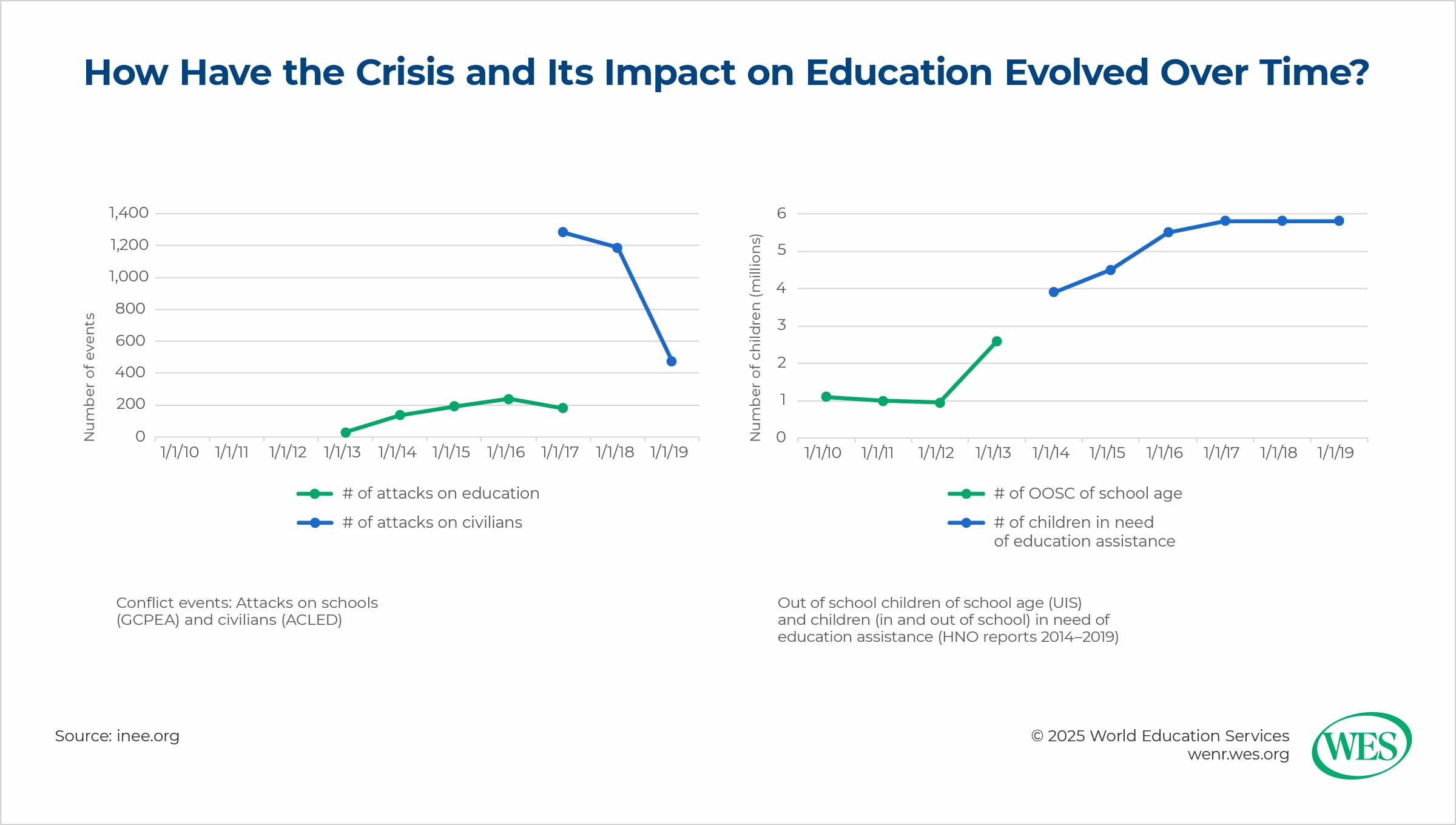
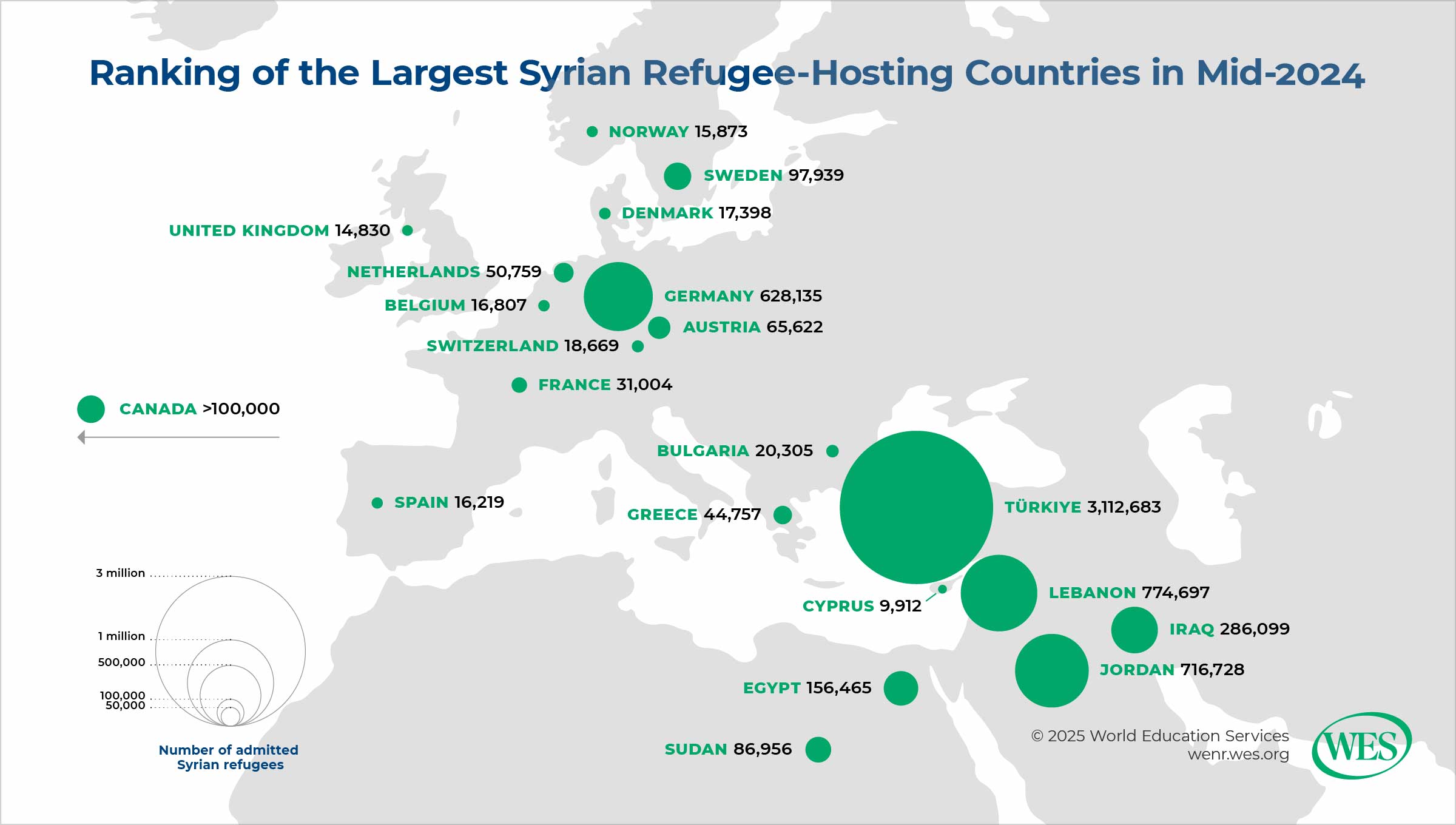
    For over a decade, the Syrian conflict has cast a shadow over the future of an entire generation. The conflict began in 2011 as part of a wider wave of uprisings in the Arab world, with Syrians protesting the oppressive rule of President Bashar al-Assad. What started as peaceful demonstrations quickly escalated into a brutal war, pitting opposition groups, including extremist organizations like the Islamic State in Iraq and Syria (ISIS) and foreign powers against the Assad regime and its supporters in Russia and Iran. The ensuing violence and destruction has resulted in one of the largest refugee displacements since World War II, with over 5.6 million Syrians seeking refuge in neighboring countries and beyond, and over 7.4 million displaced internally.

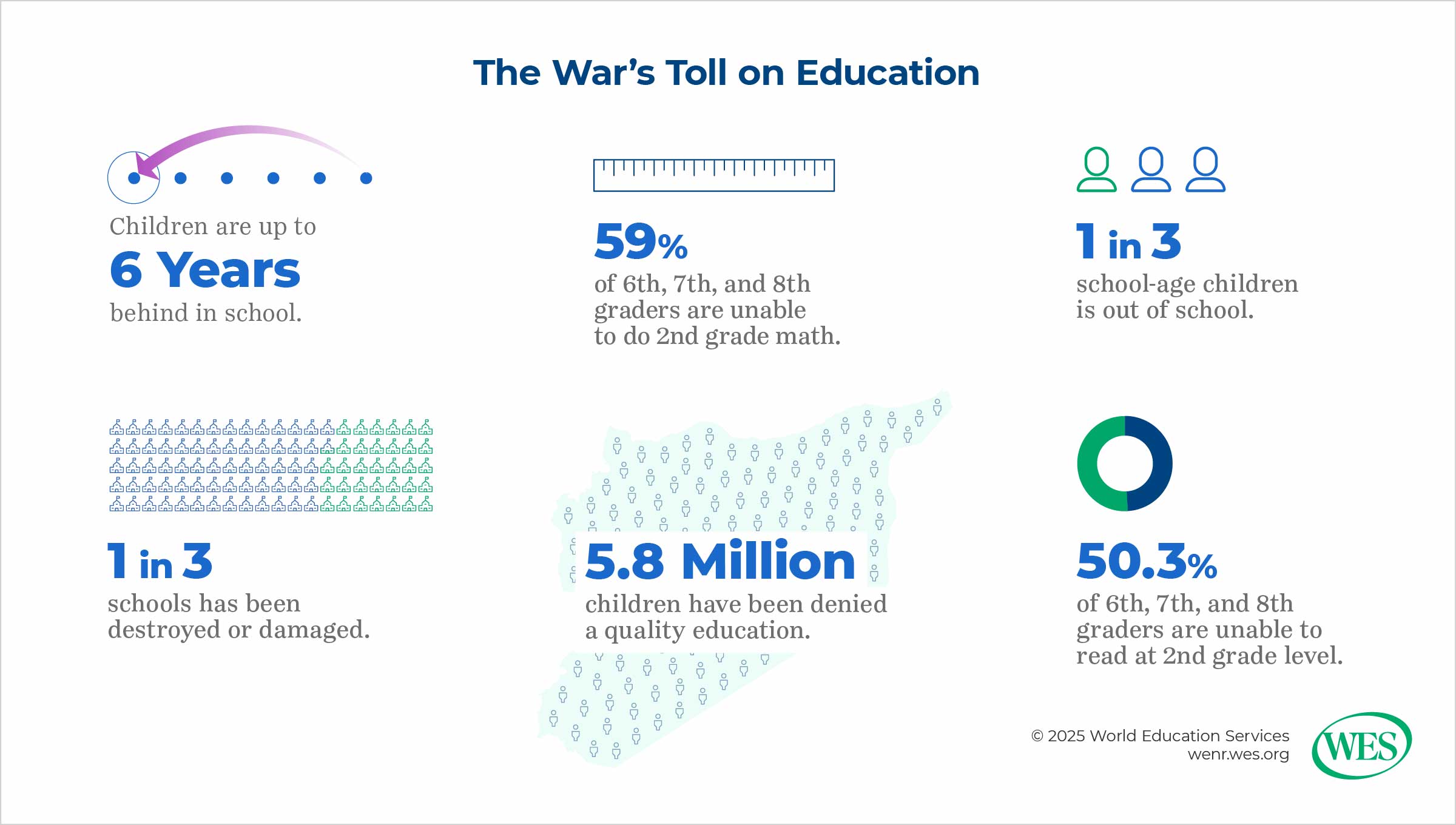
    Syrian children—once filled with dreams of careers in medicine, science, and the arts—have had their education upended. The war destroyed or severely damaged nearly 50 percent of the country’s schools, leaving millions of children without access to education. Deprived of their right to learn, grow, and prepare for a better future, these children are at risk of becoming a “lost generation,” aid groups have worried.

    Although finally over, the conflict has left the entire nation fractured and struggling to rebuild. Still, with the fall of the Assad regime in December 2024, a unique opportunity now exists to rebuild not just Syria’s infrastructure and political systems, but the very foundation of its future: education.

    “The deterioration of education in Syria stands as one of the most profound consequences of the prolonged 14-year conflict,” Radwan Ziadeh believes. A senior analyst at the Arab Center in Washington, D.C., Ziadeh is also founder of the Damascus Center for Human Rights Studies. “Addressing and prioritizing the restoration and reform of the education system is essential for the country’s recovery and long-term stability.”

    However, this opportunity is fraught with challenges. Despite the tremendous potential for Syria now, there are critical concerns about the country’s future. The emergence of new power dynamics and competing interests could influence the direction of educational reforms. Amid these complexities, rebuilding an education system that meets the needs of displaced youth and others who have spent years in uncertainty will require careful planning and coordination among all stakeholders.

    Syria’s Education System: A Snapshot Before the War

    To rebuild successfully, Syria will need to learn from the strengths and weaknesses of its pre-war education system. Before the war, Syria’s education system was considered one of the most developed in the Arab world, marked by significant investment and broad access. In 2009, Syria allocated 5.1 percent of its GDP to education, considerably more than most other Arab countries even in 2022, reflecting the government’s focus on strengthening its educational infrastructure.

    Elementary education, which spanned grades 1 to 6, was free and compulsory in pre-war Syria, and enrollment at that level reached nearly 100 percent by the time the conflict began. Secondary education, where pre-war enrollment reached 70 percent, was largely public and free, although students could pay fees to access certain programs based on academic performance. By 2014, over 2.5 million students were enrolled in elementary education, with nearly 3 million in secondary education. (To learn more, read “Education in Syria.”)

    Higher education was also state funded, with seven public universities and 20 private. One of the most prominent institutions in the region, Damascus University, founded in 1923, attracted students from across the Arab world. By the 2012/13 academic year, about 659,000 students were enrolled in both public and private higher education institutions.

    Despite its many successes, Syria’s education system faced a number of widely acknowledged challenges. For example, a defining feature of Syria’s pre-war education system was the use of Arabic as the language of instruction at all levels, not only elementary and secondary education but also higher education. All disciplines—including medicine, engineering, and the sciences—were taught in Arabic. While this policy was intended to promote the national language, it also faced criticism, particularly in higher education, as many Arab countries use English in scientific disciplines. Some critics argued that reliance on Arabic limited students’ access to global academic research and hindered their ability to participate in international academic and professional communities, where English or other languages were commonly used.

    In Syria’s highly centralized higher education system, political interference, including political control over admissions and staff appointments, was also commonplace. “The education system was heavily influenced by the ideological preferences of the ruling regime, often resulting in an approach that focused more on indoctrination than critical thinking,” said Talal al-Shihabi, an engineering professor at Damascus University who obtained a doctoral degree from Northeastern University, in the United States.

    The system also faced structural problems, such as overcrowded classrooms, outdated curricula, and limited research capacity. “The university admission policy, which aimed to accommodate a large number of students, contributed to a decline in the overall quality of education,” according to Al-Shihabi. “This challenge was further exacerbated by insufficient infrastructure and limited human resources, hindering the ability to provide quality education for all students.”

    Finally, although public higher education was nominally free, the rise of private universities and paid pathways into public universities, such as parallel and open learning, led to greater numbers of students paying fees. By 2009, 44 percent of students were paying fees. This shift deepened social inequalities, as access to education became increasingly dependent on one’s financial resources, with only those who could afford to pay higher fees gaining enrollment.

    “In reality, the success of education in Syria was largely driven by the individual efforts of Syrians to learn and develop skills, rather than by the education system itself,” al-Shihabi said.

    Destruction of Educational Infrastructure Due to War

    The conflict changed Syria’s education system profoundly. Across the country, fighting severely damaged infrastructure, including schools, universities, and educational facilities. Educational institutions were targeted, either directly by bombings or indirectly through the breakdown of local security and governance. UNICEF and other international bodies have reported that more than 7,000 schools have been damaged or destroyed by the fighting, with many located in the most affected areas: Aleppo, Idlib, and Daraa.

    The war caused massive displacement of students and teachers, both within Syria and to neighboring countries. More than 7.4 million Syrians were internally displaced, while 5.6 million sought refuge abroad, according to the UNHCR. As a result, millions of children and young adults have been cut off from the opportunity to obtain an education.

    Refugee children, especially in countries like Jordan, Lebanon, and Türkiye, faced overcrowded classrooms and a shortage of educational resources, exacerbating the difficulties involved in continuing their studies. In many cases, refugee children had to deal with language barriers, lack of qualified teachers, and shoddy facilities.

    Continuing or accessing university education has proven even more difficult for Syrian refugees, especially for those lacking adequate documentation, such as birth certificates, identification, and academic records, which are often lost or unavailable. (Read two related articles: “The Importance of Higher Education for Syrian Refugees” and “The Refugee Crisis and Higher Education: Access Is One Issue. Credentials Are Another.”)

    Furthermore, in some countries, like Lebanon and Türkiye, Arabic is not the medium of instruction. In these countries, students are required to demonstrate proficiency in the language of instruction before enrolling, creating yet another barrier to higher education.

    Financing is also a common hurdle. Countries like Jordan and Lebanon treat refugees as if they are international students and charge them high tuition fees. Since 2015, a wave of scholarships from European organizations has offered some financial relief, but the funding has not been sufficient to meet the needs of all refugees. And as philanthropic support declined over the following years, the interest in university education among Syrian refugee students also waned. Many Syrian refugees in neighboring countries, where job opportunities after graduation were limited, began to question the value of a degree and to redirect their limited resources towards finding a way to migrate to Europe instead. Although educational opportunities for refugees in European countries, for those who reached one, were better, university education remained costly and unattainable for many.

    “Education was merely focused on access at the expense of quality and continuity while being approached in a clustered manner rather than being holistic and integrated with protection, psychosocial support, and parents’ engagement,” said Massa Al-Mufti, founder and president of the Sonbola Group for Education and Development, which supports refugee education in Lebanon. “This limited view overlooked the fact that education in emergencies is not just about literacy and numeracy, it requires an understanding of the broader needs of the children, needs that encompass social, emotional, and family engagement,” she explained.

    Children who remained in Syria throughout the war faced their own difficulties. The fragmentation of the country’s education system into regime-controlled and opposition-held areas further complicated matters, resulting in a disjointed sector with varying levels of access and quality.

    In areas under opposition control, school closures were widespread. Teachers, facing threats from both government forces and armed opposition groups, struggled to teach. In some areas, opposition groups, including ISIS, imposed their own education policies, restricting or altering curricula to align with their ideology.

    Still, new universities did emerge in non-regime-controlled areas, but they faced difficulties, including a lack of recognition, insufficient resources, and a shortage of qualified academic staff. This has further fractured the educational system in Syria, leaving large portions of the student population without access to an accredited education.

    In areas controlled by the Assad regime, officials increasingly militarized the higher education sector, using it as a tool to control and suppress opposition movements. The regime intensified its control over universities, with security apparatuses, including Assad’s Ba’ath Party and the National Security Bureau, increasing their influence. Students and faculty members opposing the government were subjected to violence, purges, and imprisonment, while academic freedom was stifled.

    The war also led to a rise in corruption within the education sector. Reports of forged certificates, bribery for grade manipulation, and favoritism in university admissions were common, especially with the government’s increasing reliance on loyalty to the regime as a condition for access to education and job opportunities. This deepened social inequalities, particularly for students who did not have the financial means or political connections to secure places at universities.

    Despite the destruction and displacement, the number of students enrolling in higher education increased in government-controlled areas, partly because of relaxed entrance policies aimed at keeping students occupied and delaying their potential military conscription. In recent years, the number of enrolled students reached approximately 600,000, even though education quality had plummeted.

    Brain drain, with many qualified academics fleeing the country, has further deteriorated the educational environment, leaving universities understaffed and underfunded. The ongoing political isolation of Syria, compounded by Western sanctions, has shifted the country’s academic relationships to other allies, such as Russia and Iran.

    “The increase in the number of students coincided with a shortage of qualified teachers. A significant number of those sent abroad for doctoral studies before the war did not return, and the limited availability of scholarship opportunities, exacerbated by sanctions and the country’s isolation, has further reduced the pool of qualified new candidates,” said al-Shihabi. “As a result, some specialized fields, such as engineering and health disciplines, are left with very few teaching staff members over the last decade,” he noted.

    “Over the past 14 years, continuing education inside Syria has been a constant struggle for both students and teachers. The ongoing lack of security, deteriorating living conditions, and the collapse of infrastructure have led to an unprecedented decline in the quality of education, resulting in a crisis of immeasurable proportions,” he said.

    Rebuilding Syria’s Education Post-Assad

    On December 8, 2024, opposition rebels advanced on Damascus and forced the collapse of the Assad regime. The Assad family fled to Russia. The rebels have since been in the process of attempting to take leadership of the country and form a new government.

    The fall of the Assad regime presents Syria with a unique opportunity to rebuild after over a decade of conflict. Despite widespread destruction, schools and universities resumed operations shortly after the regime’s collapse, highlighting the resilience of Syria’s education sector. The government has also reinstated students expelled for political reasons, signaling a commitment to reconciliation.

    Additionally, the new government has taken steps to remove any vestiges of the Assad rule. It has already begun revising the national curriculum, removing content tied to the former regime. Universities, such as Tishreen University in Latakia and Al-Baath University in Homs, have been renamed, to Latakia University and Homs University, respectively, to distance themselves from the Assad regime’s Ba’athist ideology. At the same time, the new government, composed largely of Islamist groups, has sparked controversy due to the increasing influence of Islamist themes in the new curriculum.

    Significant work remains to fully capitalize on the opportunity to rebuild the country’s education system. A critical challenge in the rebuilding process is addressing the millions of children who missed years of schooling during the conflict. The return of refugees, many of whom have spent years in exile, further complicates this task. Many of these children are academically behind, having missed vital years of education. Specialized support will be necessary to help these returnees catch up academically, culturally, and psychosocially. Trauma-informed teaching and mental health support will be essential to ensure effective reintegration into classrooms. Language barriers also pose a significant challenge, as many returnee students are now fluent in languages such as English, French, or Turkish, making it difficult for them to adapt to the local curriculum in Arabic. Addressing these gaps through targeted language programs will be crucial for the returnees’ successful reintegration.

    Al-Shahabi emphasizes the need for a comprehensive survey to assess both material damage in the education sector and human losses, highlighting the significant shortage of teaching staff due to emigration during the war, the suspension of foreign missions, and the return of those who went abroad.

    Al-Shahabi also believes that meeting the immediate needs of Syria’s youth should be prioritized. This includes the development of alternative educational pathways, like vocational training and online learning platforms. Establishing training centers, funding e-learning initiatives, and offering sector-specific workshops will equip students with the practical skills necessary for Syria’s recovery, particularly in key sectors such as health care, construction, technology, and infrastructure repair.

    Others echo his thoughts. “As we work toward Syria’s recovery, it is critical to focus on building practical skills for youth and offering them opportunities for real-world training,” Firas Deeb, executive director of Hermon Team, wrote in an email.

    Deeb was a moderator at the IGNITE Syria: Rise & Rebuild conference held in Damascus on February 15. The conference highlighted other challenges, including regional disparities that complicate rebuilding efforts across the country. Urban centers like Damascus, Aleppo, and Latakia have more universities still standing, but the institutions still rely on outdated curricula. Access to private sector internships is limited, particularly in certain fields. Regions like Hasakah, Tartous, and Qamishli, which enjoy some economic stability, show potential in sectors like agriculture and renewable energy, but lack sufficient vocational training programs. In contrast, conflict-affected and rural areas such as Idlib, Raqqa, Deir ez-Zor, and Southern Syria face severely damaged educational infrastructure, a shortage of trained teachers and materials, and security risks that hinder students’ ability to pursue higher education.

    “Many regions still lack vital resources such as electricity, clean water, and reliable internet, all of which are essential for effective education. Restoring these basic utilities must be prioritized to ensure that rebuilt schools can function effectively,” said Deeb. Still, he noted, “Rebuilding Syria’s educational infrastructure is crucial, but so too is reshaping curricula and teaching methods to create a modern, inclusive system.”

    Others agree. “One of the most crucial areas for intervention is the professional development of teachers, which has been neglected in the past but is now a top priority,” said Al-Mufti. “Empowering teachers with advanced skills is vital for driving meaningful change in the education sector.”

    Syria’s future depends on rebuilding an education system capable of preparing its youth to meet the challenges ahead. In the long term, the system must focus on developing its students’ critical thinking, problem-solving, and practical skills—key elements necessary for the country’s reconstruction and for preparing a generation to lead Syria’s recovery. Universities will play a key role in training future professional engineers, doctors, scientists, and teachers who will help restore the country’s infrastructure and economy. Additionally, specialized fields such as medical care for war victims (including burn treatment and prosthetics), construction, urban planning, and technology will be essential in addressing the aftermath of the war.

    “Rebuilding Syria’s education system goes beyond restoring institutions—it requires a fundamental redesign to align education with economic recovery,” Deeb said.

    Collaborating for Syria’s Educational Recovery

    The impact of rebuilding Syria’s education system could extend beyond the country’s borders. It could be a catalyst for stability and peace, offering hope not only for Syria’s future but also for the broader region and the world.

    “Education should be prioritized alongside other urgent issues such as security and infrastructure, as it holds the potential to serve as a pathway to peacebuilding and reconciliation,” said Al-Mufti. “Education can play a transformative role in rebuilding Syria and providing its children with the skills needed for a peaceful future.”

    This means that the international community also has a pivotal role to play in Syria’s recovery, particularly in rebuilding its educational infrastructure. “After years of isolation, it’s time for Syria to build partnerships with global universities and education systems to modernize curricula, emphasizing problem-solving and critical thinking. The support of the international community is essential to strengthening the education system,” Ziadeh said.

    Lifting sanctions imposed on the former government will be vital to enabling investment to create a stable environment conducive to long-term educational reforms. This will open avenues for partnerships between Syrian and international universities, allowing for the development of programs tailored to the country’s educational needs, including curriculum reform and teacher training.

    International organizations like UNESCO and the United Nations will play a pivotal role in providing technical expertise and resources to rebuild Syria’s education system. Collaboration with NGOs focused on education will also be essential in implementing localized programs for displaced populations and affected communities.

    International cooperation will also be vital when addressing the needs of Syrians who were forced to flee during the war. While many advocate the return of refugees to Syria, it is important to recognize that the country is not yet fully stable. Many regions remain insecure, lacking essential services for a safe return. Refugees who have built lives in other countries also need continued local support, such as scholarships and other means of access to educational program. This will help ensure that Syria’s next generation is equipped to contribute to the country’s recovery. The focus should be on providing opportunities for refugees to acquire valuable skills abroad which they can bring back to Syria when conditions improve.

    Ultimately, Syria’s education system will be central to the country’s long-term recovery. An educated, empowered youth will play a key role in rebuilding the nation’s infrastructure, revitalizing its economy, and ensuring its long-term stability. Investing in scholarships, vocational training, and international exchange programs will help rebuild Syria’s educational identity and equip the next generation to lead the country forward.

    Rebuilding Syria’s education system is not just about restoring schools; it’s about empowering the next generation with the tools to rebuild a better, more united Syria. The support of the international community is essential to make this process inclusive, forward-thinking, and sustainable, ensuring that Syria heals and thrives once again.

    Source link