Category: curriculum

  • Some social emotional lessons improve how kids do at school, Yale study finds

    Some social emotional lessons improve how kids do at school, Yale study finds

    Social emotional learning — lessons in soft skills like listening to people you disagree with or calming yourself down before a test — has become a flashpoint in the culture wars. 

    The conservative political group Moms for Liberty opposes SEL, as it is often abbreviated, telling parents that its “goal is to psychologically manipulate students to accept the progressive ideology that supports gender fluidity, sexual preference exploration, and systemic oppression.” Critics say that parents should discuss social and emotional matters at home and that schools should stick to academics. Meanwhile, some advocates on the left say standard SEL classes don’t go far enough and should include such topics as social justice and anti-racism training. 

    While the political battle rages on, academic researchers are marshalling evidence for what high-quality SEL programs actually deliver for students. The latest study, by researchers at Yale University, summarizes 12 years of evidence, from 2008 to 2020, and it finds that 30 different SEL programs, which put themselves through 40 rigorous evaluations involving almost 34,000 students, tended to produce “moderate” academic benefits.

    Related: Our free weekly newsletter alerts you to what research says about schools and classrooms.

    The meta-analysis, published online Oct. 8 in the peer-reviewed journal Review of Educational Research, calculated that the grades and test scores of students in SEL classes improved by about 4 percentile points, on average, compared with students who didn’t receive soft-skill instruction. That’s the equivalent of moving from the 50th percentile (in the middle) to the 54th percentile (slightly above average). Reading gains were larger (more than 6 percentile points) than math gains (fewer than 4 percentile points). Longer-duration SEL programs, extending more than four months, produced double the academic gains — more than 8 percentile points. 

    “Social emotional learning interventions are not designed, most of the time, to explicitly improve academic achievement,” said Christina Cipriano, one of the study’s four authors and an associate professor at Yale Medical School’s Child Study Center. “And yet we demonstrated, through our meta-analytic report, that explicit social emotional learning improved academic achievement and it improved both GPA and test scores.”

    Cipriano also directs the Education Collaboratory at Yale, whose mission is to “advance the science of learning and social and emotional development.”

    The academic boost from SEL in this 2025 paper is much smaller than the 11 percentile points documented in an earlier 2011 meta-analysis that summarized research through 2007, when SEL had not yet gained widespread popularity in schools. That has since changed. More than 80 percent of principals of K-12 schools said their schools used an SEL curriculum during the 2023-24 school year, according to a survey by the Collaborative for Academic, Social, and Emotional Learning (CASEL) and the RAND Corporation. 

    Related: A research update on social-emotional learning in schools

    The Yale researchers only studied a small subset of the SEL market, programs that subjected themselves to a rigorous evaluation and included academic outcomes. Three-quarters of the 40 studies were randomized-controlled trials, similar to pharmaceutical trials, where schools or teachers were randomly assigned to teach an SEL curriculum. The remaining studies, in which schools or teachers volunteered to participate, still had control groups of students so that researchers could compare the academic gains of students who did not receive SEL instruction. 

    The SEL programs in the Yale study taught a wide range of soft skills, from mindfulness and anger management to resolving conflicts and setting goals. It is unclear which soft skills are driving the academic gains. That’s an area for future research.

    “Developmentally, when we think about what we know about how kids learn, emotional regulation is really the driver,” said Cipriano. “No matter how good that curriculum or that math program or reading curriculum is, if a child is feeling unsafe or anxious or stressed out or frustrated or embarrassed, they’re not available to receive the instruction, however great that teacher might be.”

    Cipriano said that effective programs give students tools to cope with stressful situations. She offered the example of a pop quiz, from the perspective of a student. “You can recognize, I’m feeling nervous, my blood is rushing to my hands or my face, and I can use my strategies of counting to 10, thinking about what I know, and use positive self talk to be able to regulate, to be able to take my test,” she said.

    Related: A cheaper, quicker approach to social-emotional learning?

    The strongest evidence for SEL is in elementary school, where the majority of evaluations have been conducted (two-thirds of the 40 studies). For young students, SEL lessons tend to be short but frequent, for example, 10 minutes a day. There’s less evidence for middle and high school SEL programs because they haven’t been studied as much. Typically, preteens and teens have less frequent but longer sessions, a half hour or even 90 minutes, weekly or monthly. 

    Cipriano said that schools don’t need to spend “hours and hours” on social and emotional instruction in order to see academic benefits. A current trend is to incorporate or embed social and emotional learning within academic instruction, as part of math class, for example. But none of the underlying studies in this paper evaluated whether this was a more effective way to deliver SEL. All of the programs in this study were separate stand-alone SEL lessons. 

    Advice to schools

    Schools are inundated by sales pitches from SEL vendors. Estimates of the market size range wildly, but a half dozen market research firms put it above $2 billion annually. Not all SEL programs are necessarily effective or can be expected to produce the academic gains that the Yale team calculated. 

    Cipriano advises schools not to be taken in by slick marketing. Many of the effective programs have no marketing at all and some are free. Unfortunately, some of these programs have been discontinued or have transformed through ownership changes. But she says school leaders can ask questions about which specific skills the SEL program claims to foster, whether those skills will help the district achieve its goals, such as improving school climate, and whether the program has been externally evaluated. 

    “Districts invest in things all the time that are flashy and pretty, across content areas, not just SEL,” said Cipriano. “It may never have had an external evaluation, but has a really great social media presence and really great marketing.” 

    Cipriano has also built a new website, improvingstudentoutcomes.org, to track the latest research on SEL effectiveness and to help schools identify proven programs.

    Cipriano says parents should be asking questions too. “Parents should be partners in learning,” said Cipriano. “I have four kids, and I want to know what they’re learning about in school.”

    This meta-analysis probably won’t stop the SEL critics who say that these programs force educators to be therapists. Groups like Moms for Liberty, which holds its national summit this week, say teachers should stick to academics. This paper rejects that dichotomy because it suggests that emotions, social interaction and academics are all interlinked. 

    Before criticizing all SEL programs, educators and parents need to consider the evidence.

    Contact staff writer Jill Barshay at 212-678-3595, jillbarshay.35 on Signal, or [email protected].

    This story about SEL benefits was produced by The Hechinger Report, a nonprofit, independent news organization focused on inequality and innovation in education. Sign up for Proof Points and other Hechinger newsletters.

    The Hechinger Report provides in-depth, fact-based, unbiased reporting on education that is free to all readers. But that doesn’t mean it’s free to produce. Our work keeps educators and the public informed about pressing issues at schools and on campuses throughout the country. We tell the whole story, even when the details are inconvenient. Help us keep doing that.

    Join us today.

    Source link

  • Higher Education must help shape how students learn, lead and build the skills employers want most

    Higher Education must help shape how students learn, lead and build the skills employers want most

    For the first time in more than a decade, confidence in the nation’s colleges and universities is rising. Forty-two percent of Americans now say they have “a great deal” or “quite a lot” of confidence in higher education, up from 36 percent last year.  

    It’s a welcome shift, but it’s certainly not time for institutions to take a victory lap. 

    For years, persistent concerns about rising tuition, student debt and an uncertain job market have led many to question whether college was still worth the cost. Headlines have routinely spotlighted graduates who are underemployed, overwhelmed or unsure how to translate their degrees into careers.  

    With the rapid rise of AI reshaping entry-level hiring, those doubts are only going to intensify. Politicians, pundits and anxious parents are already asking: Why aren’t students better prepared for the real world?  

    But the conversation is broken, and the framing is far too simplistic. The real question isn’t whether college prepares students for careers. It’s how. And the “how” is more complex, personal and misunderstood than most people realize.  

    Related: Interested in innovations in higher education? Subscribe to our free biweekly higher education newsletter. 

    What’s missing from this conversation is a clearer understanding of where career preparation actually happens. It’s not confined to the classroom or the career center. It unfolds in the everyday often overlooked experiences that shape how students learn, lead and build confidence.  

    While earning a degree is important, it’s not enough. Students need a better map for navigating college. They need to know from day one that half the value of their experience will come from what they do outside the classroom.  

    To rebuild America’s trust, colleges must point beyond course catalogs and job placement rates. They need to understand how students actually spend their time in college. And they need to understand what those experiences teach them. 

    Ask someone thriving in their career which part of college most shaped their success, and their answer might surprise you. (I had this experience recently at a dinner with a dozen impressive philanthropic, tech and advocacy leaders.) You might expect them to name a major, a key class or an internship. But they’re more likely to mention running the student newspaper, leading a sorority, conducting undergraduate research, serving in student government or joining the debate team.  

    Such activities aren’t extracurriculars. They are career-curriculars. They’re the proving grounds where students build real-world skills, grow professional networks and gain confidence to navigate complexity. But most people don’t discuss these experiences until they’re asked about them.  

    Over time, institutions have created a false divide. The classroom is seen as the domain of learning, and career services is seen as the domain of workforce preparation. But this overlooks an important part of the undergraduate experience: everything in between.  

    The vast middle of campus life — clubs, competitions, mentorship, leadership roles, part-time jobs and collaborative projects — is where learning becomes doing. It’s where students take risks, test ideas and develop the communication, teamwork and problem-solving skills that employers need.  

    This oversight has made career services a stand-in for something much bigger. Career services should serve as an essential safety net for students who didn’t or couldn’t fully engage in campus life, but not as the launchpad we often imagine it to be. 

    Related: OPINION: College is worth it for most students, but its benefits are not equitable 

    We also need to confront a harder truth: Many students enter college assuming success after college is a given. Students are often told that going to college leads to success. They are rarely told, however, what that journey actually requires. They believe knowledge will be poured into them and that jobs will magically appear once the diploma is in hand. And for good reason, we’ve told them as much. 

    But college isn’t a vending machine. You can’t insert tuition and expect a job to roll out. Instead, it’s a platform, a laboratory and a proving ground. It requires students to extract value through effort, initiative and exploration, especially outside the classroom.  

    The credential matters, but it’s not the whole story. A degree can open doors, but it won’t define a career. It’s the skills students build, the relationships they form and the challenges they take on along the way to graduation that shape their future. 

    As more college leaders rightfully focus on the college-to-career transition, colleges must broadcast that while career services plays a helpful role, students themselves are the primary drivers of their future. But to be clear, colleges bear a grave responsibility here. It’s on us to reinforce the idea that learning occurs everywhere on campus, that the most powerful career preparation comes from doing, not just studying. It’s also on us to address college affordability, so that students have the time to participate in campus life, and to ensure that on-campus jobs are meaningful learning experiences.  

    Higher education can’t afford public confidence to dip again. The value of college isn’t missing. We’re just not looking in the right place. 

    Bridget Burns is the founding CEO of the University Innovation Alliance (UIA), a nationally recognized consortium of 19 public research universities driving student success innovation for nearly 600,000 students. 

    Contact the opinion editor at [email protected]. 

    This story about college experiences was produced by The Hechinger Report, a nonprofit, independent news organization focused on inequality and innovation in education. Sign up for Hechinger’s weekly newsletter. 

    The Hechinger Report provides in-depth, fact-based, unbiased reporting on education that is free to all readers. But that doesn’t mean it’s free to produce. Our work keeps educators and the public informed about pressing issues at schools and on campuses throughout the country. We tell the whole story, even when the details are inconvenient. Help us keep doing that.

    Join us today.

    Source link

  • Celebrating heritage means honoring students’ languages

    Celebrating heritage means honoring students’ languages

    Key points:

    Every year, Hispanic Heritage Month offers the United States a chance to honor the profound and varied contributions of Latino communities. We celebrate scientists like Ellen Ochoa, the first Latina woman in space, and activists like Dolores Huerta, who fought tirelessly for workers’ rights. We use this month to recognize the cultural richness that Spanish-speaking families bring to our communities, including everything from vibrant festivals to innovative businesses that strengthen our local economies.

    But there’s a paradox at play.

    While we spotlight Hispanic heritage in public spaces, many classrooms across the country require Spanish-speaking students to set aside the very heart of their cultural identity: their language.

    This contradiction is especially personal for me. I moved from Puerto Rico to the mainland United States as an adult in hopes of building a better future for myself and my family. The transition was far from easy. My accent often became a challenge in ways I never expected, because people judged my intelligence or questioned my education based solely on how I spoke. I could communicate effectively, yet my words were filtered through stereotypes.

    Over time, I found deep fulfillment working in a state that recognizes the value of bilingual education. Texas, where I now live, continues to expand biliteracy pathways for students. This commitment honors both home languages and English, opening global opportunities for children while preserving ties to their history, family, and identity.

    That commitment to expanding pathways for English Learners (EL) is urgently needed. Texas is home to more than 1.3 million ELs, which is nearly a quarter of all students in the state, the highest share in the nation. Nationwide, there are more than 5 million ELs comprising nearly 11 percent of the U.S. public school students; about 76 percent of ELs are Spanish speakers. Those figures represent millions of children who walk into classrooms every day carrying the gift of another language. If we are serious about celebrating Hispanic Heritage Month, we must be serious about honoring and cultivating that gift.

    A true celebration of Hispanic heritage requires more than flags and food. It requires acknowledging that students’ home languages are essential to their academic success, not obstacles to overcome. Research consistently shows that bilingualism is a cognitive asset. Those who are exposed to two languages at an early age outperform their monolingual peers on tests of cognitive function in adolescence and adulthood. Students who maintain and develop their native language while learning English perform better academically, not worse. Yet too often, our educational systems operate as if English is the only language that matters.

    One powerful way to shift this mindset is rethinking the materials students encounter every day. High-quality instructional materials should act as both mirrors and windows–mirrors in which students see themselves reflected, and windows through which they explore new perspectives and possibilities. Meeting state academic standards is only part of the equation: Materials must also align with language development standards and reflect the cultural and linguistic diversity of our communities.

    So, what should instructional materials look like if we truly want to honor language as culture?

    • Instructional materials should meet students at varying levels of language proficiency while never lowering expectations for academic rigor.
    • Effective materials include strategies for vocabulary development, visuals that scaffold comprehension, bilingual glossaries, and structured opportunities for academic discourse.
    • Literature and history selections should incorporate and reflect Latino voices and perspectives, not as “add-ons” during heritage month, but as integral elements of the curriculum throughout the year.

    But materials alone are not enough. The process by which schools and districts choose them matters just as much. Curriculum teams and administrators must center EL experiences in every adoption decision. That means intentionally including the voices of bilingual educators, EL specialists, and, especially, parents and families. Their life experiences offer insights into the most effective ways to support students.

    Everyone has a role to play. Teachers should feel empowered to advocate for materials that support bilingual learners; policymakers must ensure funding and policies that prioritize high-quality, linguistically supportive instructional resources; and communities should demand that investments in education align with the linguistic realities of our students.

    Because here is the truth: When we honor students’ languages, we are not only affirming their culture; we are investing in their future. A child who is able to read, write, and think in two languages has an advantage that will serve them for life. They will be better prepared to navigate an interconnected world, and they carry with them the ability to bridge communities.

    This year, let’s move beyond celebrating what Latino communities have already contributed to America and start investing in what they can become when we truly support and honor them year-round. That begins with valuing language as culture–and making sure our classrooms do the same.

    Latest posts by eSchool Media Contributors (see all)

    Source link

  • The advantages of supplementing curriculum

    The advantages of supplementing curriculum

    Key points:

    Classroom teachers are handed a curriculum they must use when teaching. That specific curriculum is designed to bring uniformity, equity, and accountability into classrooms. It is meant to ensure that every child has access to instruction that is aligned with state standards. The specific curriculum provides a roadmap for instruction, but anyone who has spent time in a classroom knows that no single curriculum can fully meet the needs of every student.

    In other words, even the most carefully designed curriculum cannot anticipate the individual needs of every learner or the nuances of every classroom. This is why supplementing curriculum is a vital action that skilled educators engage in. Supplementing curriculum does not mean that teachers are not teaching the required curriculum. In fact, it means they are doing even more to ensure student success.

    Students arrive with different strengths, challenges, and interests. Supplementing curriculum allows teachers to bridge inevitable gaps within their students.  For example, a math unit may assume fluency with multiplying and dividing fractions, but some students may not recall that skill, while others are ready to compute with mixed numbers. With supplementary resources, a teacher can provide both targeted remediation and enrichment opportunities. Without supplementing the curriculum, one group may fall behind or the other may become disengaged.

    Supplementing curriculum can help make learning relevant. Many curricula are written to be broad and standardized. Students are more likely to connect with lessons when they see themselves reflected in the content, so switching a novel based on the population of students can assist in mastering the standard at hand.   

    Inclusion is another critical reason to supplement. No classroom is made up of one single type of learner. Students with disabilities may need graphic organizers or audio versions of texts. English learners may benefit from bilingual presentations of material or visual aids. A curriculum may hit all the standards of a grade, but cannot anticipate the varying needs of students. When a teacher intentionally supplements the curriculum, every child has a pathway to success.

    Lastly, supplementing empowers teachers. Teaching is not about delivering a script; it is a profession built on expertise and creativity. When teachers supplement the prescribed curriculum, they demonstrate professional judgment and enhance the mandated framework. This leads to a classroom where learning is accessible, engaging, and responsive.

    A provided curriculum is the structure of a car, but supplementary resources are the wheels that let the students move. When done intentionally, supplementing curriculum enables every student to be reached. In the end, the most successful classrooms are not those that follow a book, but those where teachers skillfully use supplementary curriculum to benefit all learners. Supplementing curriculum does not mean that a teacher is not using the curriculum–it simply means they are doing more to benefit their students even more.

    Latest posts by eSchool Media Contributors (see all)

    Source link

  • The push to expand school choice should not diminish civic education

    The push to expand school choice should not diminish civic education

    From Texas to Florida to Arizona, school voucher policies are reshaping the landscape of American education. The Trump administration champions federal support for voucher expansion, and many state-level leaders are advancing school choice programs. Billions of public dollars are now flowing to private schools, church networks and microeducation platforms.  

    The push to expand school choice is not just reallocating public funds to private institutions. It is reorganizing the very purpose of schooling. And in that shift, something essential is being lost — the public mission of education as a foundation of democracy. 

    Civic education is becoming fragmented, underfunded and institutionally weak.  

    In this moment of sweeping change, as public dollars shift from common institutions to private and alternative schools, the shared civic entities that once supported democratic learning are being diminished or lost entirely — traditional structures like public schools, libraries and community colleges are no longer guaranteed common spaces. 

    The result is a disjointed system in which students may gain academic content or career preparation but receive little support in learning how to lead with integrity, think across differences or sustain democratic institutions. The very idea of public life is at risk, especially in places where shared experience has been replaced by polarization. We need civic education more than ever. 

    Related: A lot goes on in classrooms from kindergarten to high school. Keep up with our free weekly newsletter on K-12 education.  

    If we want students who can lead a multiracial democracy, we need schools of every type to take civic formation seriously. That includes religious schools, charter schools and homeschooling networks. The responsibility cannot fall on public schools alone. Civic formation is not an ideological project. It is a democratic one, involving the long-term work of building the skills, habits and values that prepare people to work across differences and take responsibility for shared democratic life. 

    What we need now is a civic education strategy that matches the scale of the changes reshaping American schooling. This will mean fostering coordinated investment, institutional partnerships and recognition that the stakes are not just academic, they are also democratic. 

    Americans overwhelmingly support civic instruction. According to a 2020 survey in Texas by the Center of Women in Politics and Public Policy and iCivics, just 49 percent of teachers statewide believed that enough time was being devoted to teaching civics knowledge, and just 23 percent said the same about participatory-democracy skills. This gap is not unique to Texas, but there is little agreement on how civics should be taught, and even less structural support for the schools trying to do it. 

    Without serious investment, civic formation will remain an afterthought — a patchwork effort disconnected from the design of most educational systems. 

    This is not an argument against vouchers in principle. Families should have options. But in the move to decentralize education, we risk hollowing out its civic core. A democratic society cannot survive on academic content alone. It requires citizens — not just in the legal sense, but in the civic one. 

    A democratic society needs people who can deliberate, organize, collaborate and build a shared future with others who do not think or live like they do. 

    And that’s why we are building a framework in Texas that others can adopt and adapt to their own civic mission. 

    The pioneering Democracy Schools model, to which I contribute, supports civic formation across a range of public and private schools, colleges, community organizations and professional networks.  

    Civic infrastructure is the term we use to describe our approach: the design of relationships, institutions and systems that hold democracy together. Just as engineers build physical infrastructure, educators and civic leaders must build civic infrastructure by working with communities, not for or on them. 

    We start from a democratic tradition rooted in the Black freedom struggle. Freedom, in this view, is not just protection from domination. It is the capacity to act, build and see oneself reflected in the world. This view of citizenship demands more than voice. It calls for the ability to shape institutions, policies and public narratives from the ground up. 

    Related: STUDENT VOICE: My generation knows less about civics than my parents’ generation did, yet we need it more than ever 

    The model speaks to a national crisis: the erosion of shared civic space in education. It must be practiced and must be supported by institutions that understand their role in building public life. Historically Black colleges and universities like Huston-Tillotson University offer a powerful example. They are not elite pipelines disconnected from everyday life. They are rooted in community, oriented toward public leadership and shaped by a history of democratic struggle. They show what it looks like to educate for civic capacity — not just for upward mobility. They remind us that education is not only about what students know, but about who they become and what kind of world they are prepared to help shape. 

    Our national future depends on how well we prepare young people to take responsibility for shared institutions and pluralistic public life. This cannot be accomplished through content standards alone. It requires civic ecosystems designed to cultivate public authorship. 

    We have an enormous stake in preparing the next generation for the demands of democratic life. What kind of society are we preparing young people to lead? The answer will not come from any single institution. It will come from partnerships across sectors, aligned in purpose even if diverse in approach. 

    We are eager to collaborate with any organization — public, private or faith-based — committed to building the civic infrastructure that sustains our democracy. Wherever education takes place, civic formation must remain a central concern. 

    Robert Ceresa is the founding director of the Politics Lab of the James L. Farmer House, Huston-Tillotson University. 

    Contact the opinion editor at [email protected].  

    This story about civic education was produced by The Hechinger Report, a nonprofit, independent news organization focused on inequality and innovation in education. Sign up for Hechinger’s weekly newsletter.

    The Hechinger Report provides in-depth, fact-based, unbiased reporting on education that is free to all readers. But that doesn’t mean it’s free to produce. Our work keeps educators and the public informed about pressing issues at schools and on campuses throughout the country. We tell the whole story, even when the details are inconvenient. Help us keep doing that.

    Join us today.

    Source link

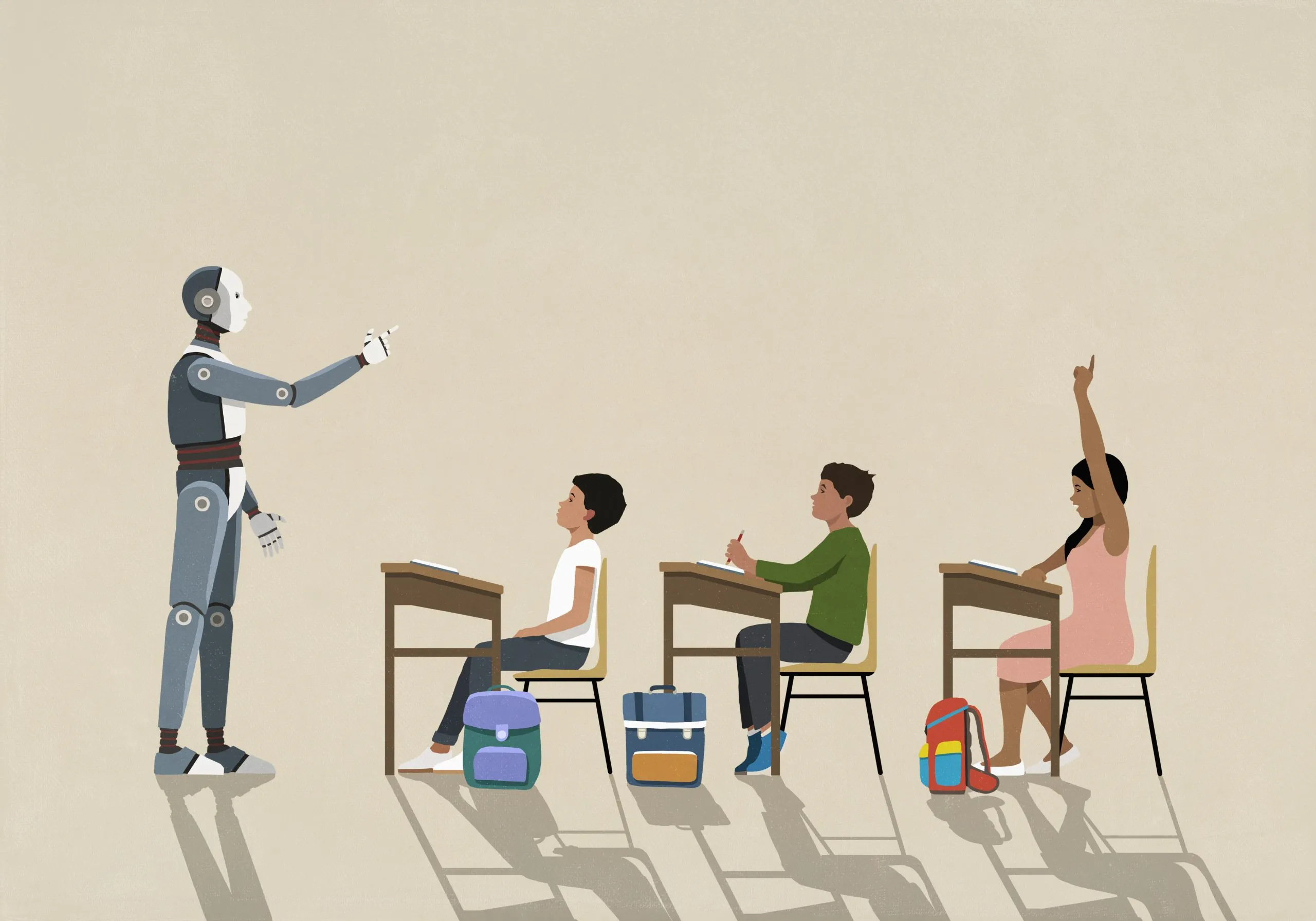
  • We cannot address the AI challenge by acting as though assessment is a standalone activity

    We cannot address the AI challenge by acting as though assessment is a standalone activity

    How to design reliable, valid and fair assessment in an AI-infused world is one of those challenges that feels intractable.

    The scale and extent of the task, it seems, outstrips the available resource to deal with it. In these circumstances it is always worth stepping back to re-frame, perhaps reconceptualise, what the problem is, exactly. Is our framing too narrow? Have we succeeded (yet) in perceiving the most salient aspects of it?

    As an educational development professional, seeking to support institutional policy and learning and teaching practices, I’ve been part of numerous discussions within and beyond my institution. At first, we framed the problem as a threat to the integrity of universities’ power to reliably and fairly award degrees and to certify levels of competence. How do we safeguard this authority and credibly certify learning when the evidence we collect of the learning having taken place can be mimicked so easily? And the act is so undetectable to boot?

    Seen this way the challenge is insurmountable.

    But this framing positions students as devoid of ethical intent, love of learning for its own sake, or capacity for disciplined “digital professionalism”. It also absolves us of the responsibility of providing an education which results in these outcomes. What if we frame the problem instead as a challenge of AI to higher education practices as a whole and not just to assessment? We know the use of AI in HE ranges widely, but we are only just beginning to comprehend the extent to which it redraws the basis of our educative relationship with students.

    Rooted in subject knowledge

    I’m finding that some very old ideas about what constitutes teaching expertise and how students learn are illuminating: the very questions that expert teachers have always asked themselves are in fact newly pertinent as we (re)design education in an AI world. This challenge of AI is not as novel as it first appeared.

    Fundamentally, we are responsible for curriculum design which builds students’ ethical, intellectual and creative development over the course of a whole programme in ways that are relevant to society and future employment. Academic subject content knowledge is at the core of this endeavour and it is this which is the most unnerving part of the challenge presented by AI. I have lost count of the number of times colleagues have said, “I am an expert in [insert relevant subject area], I did not train for this” – where “this” is AI.

    The most resource-intensive need that we have is for an expansion of subject content knowledge: every academic who teaches now needs a subject content knowledge which encompasses a consideration of the interplay between their field of expertise and AI, and specifically the use of AI in learning and professional practice in their field.

    It is only on the basis of this enhanced subject content knowledge that we can then go on to ask: what preconceptions are my students bringing to this subject matter? What prior experience and views do they have about AI use? What precisely will be my educational purpose? How will students engage with this through a newly adjusted repertoire of curriculum and teaching strategies? The task of HE remains a matter of comprehending a new reality and then designing for the comprehension of others. Perhaps the difference now is that the journey of comprehension is even more collaborative and even less finite that it once would have seemed.

    Beyond futile gestures

    All this is not to say that the specific challenge of ensuring that assessment is valid disappears. A universal need for all learners is to develop a capacity for qualitative judgement and to learn to seek, interpret and critically respond to feedback about their own work. AI may well assist in some of these processes, but developing students’ agency, competence and ethical use of it is arguably a prerequisite. In response to this conundrum, some colleagues suggest a return to the in-person examination – even as a baseline to establish in a valid way levels of students’ understanding.

    Let’s leave aside for a moment the argument about the extent to which in-person exams were ever a valid way of assessing much of what we claimed. Rather than focusing on how we can verify students’ learning, let’s emphasise more strongly the need for students themselves to be in touch with the extent and depth of their own understanding, independently of AI.

    What if we reimagined the in-person high stakes summative examination as a low-stakes diagnostic event in which students test and re-test their understanding, capacity to articulate new concepts or design novel solutions? What if such events became periodic collaborative learning reviews? And yes, also a baseline, which assists us all – including students, who after all also have a vested interest – in ensuring that our assessments are valid.

    Treating the challenge of AI as though assessment stands alone from the rest of higher education is too narrow a frame – one that consigns us to a kind of futile authoritarianism which renders assessment practices performative and irrelevant to our and our students’ reality.

    There is much work to do in expanding subject content knowledge and in reimagining our curricula and reconfiguring assessment design at programme level such that it redraws our educative relationship with students. Assessment more than ever has to become a common endeavour rather than something we “provide” to students. A focus on how we conceptualise the trajectory of students’ intellectual, ethical and creative development is inescapable if we are serious about tackling this challenge in meaningful way.

    Source link

  • Racial bias affects early math education. Researchers are trying to stop that

    Racial bias affects early math education. Researchers are trying to stop that

    The early years are a critical time to teach the foundations of math. That’s when children learn to count, start identifying shapes and gain an early understanding of concepts like size and measurement. These years can also be a time when children are confronted with preconceived notions of their abilities in math, often based on their race, which can negatively affect their math success and contribute to long-standing racial gaps in scores. 

    These are some of the motivating factors behind the Racial Justice in Early Math project, a collaboration between the Erikson Institute, a private graduate school focused on child development, and the University of Illinois Chicago. The project aims to educate teachers and provide resources including books, teacher tips and classroom activities that help educators combat racial bias in math instruction.  

    I sat down with Danny Bernard Martin, professor of education and mathematics at the University of Illinois Chicago, project director Priscila Pereira and Jennifer McCray, a research professor at the Erikson Institute, to learn more about their work. This conversation has been edited for length and clarity.

    What are some of the key examples of racial injustice that you see in early math education?

    Martin: If I say to you, ‘Asians are good at math,’ that’s something that you’ve heard, we know that’s out there. When does that kind of belief start? Well, there’s something called ‘racial-mathematical socialization’ that we take seriously in this project, that we know happens in the home before children come to school. Parents and caregivers are generating messages around math that they transmit to children, and then those messages may get reinforced in schools.

    Even at the early math level, there are research projects beginning to construct Black children in particular ways, comparing Black children to white children as the norm. That is a racial justice issue, because that narrative about white children, Black children, Asian American children, Latinx children, then filters out. It becomes part of the accepted truth, and then it impacts what teachers do and what principals and school leaders believe about children.  

    What does this look like in schools?

    McCray: Perhaps the math curriculum doesn’t represent them or their experience. We all know that often schools for children of color are under-resourced. What often happens in under-resourced schools is that the curriculum and the teaching tends to focus on the basics. There might be an overemphasis on drilling or doing timed tests. We also have those situations where people are doing ability grouping in math. And we know what the research says about that, it’s basically ‘good education for you, and poor education for you.’ It’s almost impossible to do any of that without doing harm. 

    One line of research has been to watch teachers interact with children and videotape or study them. And in diverse classrooms with white teachers … often it is observed that children who are Black or Latina aren’t called on as often, or aren’t listened to as much, or don’t have the same kind of opportunity to be a leader in the classroom.  

    What should teacher prep programs, administrators and families do to address racial justice issues in early math? 

    McCray: Maybe the white teacher is reflecting on themselves, on their own biases … trying to connect with families or communities in some way that’s meaningful. We want teachers to have that balance of knowing that sometimes you do want to teach a procedure, but you never want to be shutting down ideas for creative ways to solve a math problem, or culturally distinct ways to solve a math problem that might come from your students.

    It might be something like, you’re working on sorting in an early childhood classroom. And what if a child is thinking about a special craft that their parent does that’s like the [papel picado], or papers that get cut in very elaborate designs in Mexico. … If the teacher doesn’t have space to listen, it could be a shutdown moment, instead of a moment of connection, where the child is actually bringing something … that is associated with their own identity.

    Pereira: I do feel that sometimes the conversations of racial justice really put the weight on teachers and teachers alone. Teaching is part of a larger structure. Maybe your school will not allow you to do the work that is needed. I’m thinking about [a teacher] who was required to follow a scripted curriculum that did not promote the positive math identity for Black children. It needs to be a whole community effort.

    How is your initiative changing this?

    Pereira: There are resources in terms of opportunities that we offer to teachers to engage with our content and ideas: webinars, a fellowship and an immersive learning experience in the summer of 2026. These spaces are moments in which educators, researchers and people that are engaged in the education of young learners, can come together … and disrupt mainstream notions of understanding what is racial justice and how one gets that in the classroom.  

    Right now, research and initiatives zeroing in on race are under scrutiny, especially at the college level. Do you foresee any additional challenges to this work?

    Pereira: There was a National Science Foundation grant program focused on racial equity in STEM and we had been planning to apply for funds to do something there. … It’s gone. … The only place we’re welcome is where there’s a governor who is willing to take on Trump. We just have to keep doing the work, because we know what’s right. But it is challenging, for sure.

    Contact staff writer Jackie Mader at 212-678-3562 or [email protected]

    This story about racial justice in math was produced by The Hechinger Report, a nonprofit, independent news organization focused on inequality and innovation in education. Sign up for the Early Childhood newsletter.

    The Hechinger Report provides in-depth, fact-based, unbiased reporting on education that is free to all readers. But that doesn’t mean it’s free to produce. Our work keeps educators and the public informed about pressing issues at schools and on campuses throughout the country. We tell the whole story, even when the details are inconvenient. Help us keep doing that.

    Join us today.

    Source link

  • KU researchers publish guidelines to help responsibly implement AI in education

    KU researchers publish guidelines to help responsibly implement AI in education

    This story originally appeared on KU News and is republished with permission.

    Key points:

    Researchers at the University of Kansas have produced a set of guidelines to help educators from preschool through higher education responsibly implement artificial intelligence in a way that empowers teachers, parents, students and communities alike.

    The Center for Innovation, Design & Digital Learning at KU has published “Framework for Responsible AI Integration in PreK-20 Education: Empowering All Learners and Educators with AI-Ready Solutions.” The document, developed under a cooperative agreement with the U.S. Department of Education, is intended to provide guidance on how schools can incorporate AI into its daily operations and curriculum.

    Earlier this year, President Donald Trump issued an executive order instructing schools to incorporate AI into their operations. The framework is intended to help all schools and educational facilities do so in a manner that fits their unique communities and missions.

    “We see this framework as a foundation,” said James Basham, director of CIDDL and professor of special education at KU. “As schools consider forming an AI task force, for example, they’ll likely have questions on how to do that, or how to conduct an audit and risk analysis. The framework can help guide them through that, and we’ll continue to build on this.”

    The framework features four primary recommendations.

    • Establish a stable, human-centered foundation.
    • Implement future-focused strategic planning for AI integration.
    • Ensure AI educational opportunities for every student.
    • Conduct ongoing evaluation, professional learning and community development.

    First, the framework urges schools to keep humans at the forefront of AI plans, prioritizing educator judgment, student relationships and family input on AI-enabled processes and not relying on automation for decisions that affect people. Transparency is also key, and schools should communicate how AI tools work, how decisions are made and ensure compliance with student protection laws such as the Individuals with Disabilities Education Act and Family Education Rights and Privacy Act, the report authors write.

    The document also outlines recommendations for how educational facilities can implement the technology. Establishing an AI integration task force including educators, administrators, families, legal advisers and specialists in instructional technology and special education is key among the recommendations. The document also shares tips on how to conduct an audit and risk analysis before adoption and consider how tools can affect student placement and identification and consider possible algorithmic error patterns. As the technologies are trained on human data, they run the risk of making the same mistakes and repeating biases humans have made, Basham said.

    That idea is also reflected in the framework’s third recommendation. The document encourages educators to commit to learner-centered AI implementation that considers all students, from those in gifted programs to students with cognitive disabilities. AI tools should be prohibited from making final decisions on IEP eligibility, disciplinary actions and student progress decisions, and mechanisms should be installed that allow for feedback on students, teachers and parents’ AI educational experiences, the authors wrote.

    Finally, the framework urges ongoing evaluation, professional learning and community development. As the technology evolves, schools should regularly re-evaluate it for unintended consequences and feedback from those who use it. Training both at implementation and in ongoing installments will be necessary to address overuse or misuse and clarify who is responsible for monitoring AI use and to ensure both the school and community are informed on the technology.

    The framework was written by Basham; Trey Vasquez, co-principal investigator at CIDDL, operating officer at KU’s Achievement & Assessment Institute and professor of special education at KU; and Angelica Fulchini Scruggs, research associate and operations director for CIDDL.

    Educators interested in learning more about the framework or use of AI in education are invited to connect with CIDDL. The center’s site includes data on emergent themes in AI guidance at the state level and information on how it supports educational technology in K-12 and higher education. As artificial intelligence finds new uses and educators are expected to implement the technology in schools, the center’s researchers said they plan to continue helping educators implement it in ways that benefit schools, students of all abilities and communities.

    “The priority at CIDDL is to share transparent resources for educators on topics that are trending and in a way that is easy to digest,” Fulchini Scruggs said. “We want people to join the community and help them know where to start. We also know this will evolve and change, and we want to help educators stay up to date with those changes to use AI responsibly in their schools.”

    Latest posts by eSchool Media Contributors (see all)

    Source link

  • Why high schools should use teaching assistants

    Why high schools should use teaching assistants

    Key points:

    Exam scores always seem to go up. Whether it’s the SAT when applying for college or an AP score to earn college credit, competitive scores seem to be creeping up. While faculty are invaluable, students who recently completed classes or exams offer insight that bridges the gap between the curriculum and the exam. I believe students who recently excelled in a course should be allowed and encouraged to serve as teaching assistants in high school.

    Often, poor preparation contributes to students’ disappointing exam performance. This could be from not understanding content, being unfamiliar with the layout, or preparing the wrong material. Many times, in courses at all levels, educators emphasize information that will not show up on a standardized test or, in some cases, in their own material. This is a massive issue in many schools, as every professor has their own pet project they like to prioritize. For example, a microbiology professor in a medical school may have an entire lecture on a rare microbe because they research it, but nothing about it will be tested on the national board exams, or even their course final exams. This was a common theme in high school, with history teachers loving to share niche facts, or in college, when physics professors loved to ask trick questions. By including these things in your teaching, is it really benefiting the pupil? Are students even being tested correctly over the material if, say, 10 percent of your exam questions are on information that is superfluous?

    Universities can get around this issue by employing teaching assistants (TAs) to help with some of the confusion. Largely, their responsibilities are grading papers, presenting the occasional lecture, and holding office hours. The lesser-known benefit of having and speaking with TAs is the ability to tell you how to prioritize your studying. These are often older students who have been previously successful in the course, and as a result, they can give a student a much better idea of what will be included on an exam than the professor.

    When I was a TA as an undergrad, we were required to hold exam prep sessions the week of a big test. During these sessions, students answered practice questions about concepts similar to what would show up on the exam. All the students who showed up to my sessions performed extremely well on the tests, and they performed well because they were prepared for the exam and knew the concepts being tested. As a result, they would finish the course with a much higher grade because they knew what they should be studying. It is much more effective to give a student a practice question that uses similar concepts to what will be on their exam than it is for a professor to give a list of topics that are covered on a test. For example, studying for a math test is more impactful when answering 50 practice questions versus a teacher handing you a list of general concepts to study, such as: “Be able to manipulate inequalities and understand the order of operations.”

    Universities seem to know that professors might not provide the best advice, or at the least, they have used TAs as a decent solution to the problem. It is my opinion that having this style of assistance in high school would be beneficial to student outcomes. Having, say, a senior help in a junior-level class may work wonders. Teachers would have a decrease in their responsibilities based on what they trust their TA to do. They could help grade, run review sessions, and make and provide exam prep materials. In essence, all the unseen work in teaching that great teachers do could be done more efficiently with a TA. Every student has had an amazing teacher who provides an excellent study guide that is almost identical to the test, making them confident going into test day. In my experience, those guides are not completed for a grade or a course outcome, and effectively become extra work for the educator, all to help the students who are willing to use them effectively. Having a TA would ease that burden–it would encourage students to consider teaching as a profession in a time when there is a shortage of educators.

    There are many ways to teach and learn, but by far the best way to be prepared for a test is by talking to someone who has recently taken it. Universities understand that courses are easier for students when they can talk to someone who has taken it. It is my opinion that high schools would be able to adopt this practice and reduce teacher workload while increasing the student outcomes. 

    Latest posts by eSchool Media Contributors (see all)

    Source link

  • Why student engagement starts with teacher clarity

    Why student engagement starts with teacher clarity

    Key points:

    In Alpine School District, we serve a wide range of students, from Title I to highly affluent communities. While our population has traditionally been predominantly white and middle income, that’s changing. In response to this growing diversity and shifting needs, one of my missions as professional learning and curriculum director for secondary schools has been to provide needs-based professional learning, just in time for educators, and to give them a real voice in what that looks and feels like.

    I lead a team of full-time educator equivalents across every discipline: math, science, social studies, ELA, the arts, health, and PE. Together, we guide professional learning and instructional support. Over the past several years, we’ve had to take a hard look at how we teach, how we engage students, and how we prepare educators for long-term success.

    Where we started: Tier 1 challenges and high turnover

    When I first became curriculum director, I noticed in our data that our schools were not making much progress, and in some cases had stagnated in growth scores. We were leaning heavily on Tier 2 interventions, which told us that we needed to shore up our Tier 1 instruction.

    At the same time, we were hiring between 400 and 500 teachers each year. We’re located near several universities, so we see a continuous flow of new educators come and go. They get married, they relocate, or a spouse gets into medical school, which translates to a constant onboarding cycle for our district. To meet these challenges, we needed professional learning that was sound, sustainable, and meaningful, especially early in a teacher’s career, so they could lay a strong foundation for everything that would come after.

    Teacher clarity and engagement by design

    Several years ago, we joined the Utah State Cohort, doing a deep dive into the Teacher Clarity Playbook. That experience was a real turning point. We were the only team there from a district office, and we took a train-the-trainer approach, investing in our strongest educators so they could return and lead professional learning in their content areas. Since then, we’ve used Engagement by Design as the framework behind much of our PD, our classroom walkthroughs, and our peer observations. It helped us think differently: How do we support teachers in crafting learning intentions and success criteria that are actually meaningful? How do we align resources to support that clarity? We’ve embedded that mindset into everything.

    Coming out of the pandemic, Alpine, like many districts around the country, saw decreased student engagement. To focus deeply on that challenge, we launched the Student Engagement Academy, or SEA. I co-designed the Academy alongside two of our content specialists, Anna Davis and Korryn Coates. They’re both part-time teacher leaders at the district office and part-time visual arts teachers in schools, so they live in both worlds. That was important because we believe professional learning should always be contextualized. We don’t want teachers burning extra bandwidth trying to translate strategies across subject areas.

    SEA is a yearlong, job-embedded learning experience. Teachers participate in PLCs, conduct peer observations, and complete a personalized learning project that showcases their growth. Our PLC+ coaches work directly with our lead coach, Melissa Gibbons, to gather and analyze data that shapes each new round of learning. We also included classroom observations, not for evaluation, but to help teachers see each other’s practice in action. Before observations, Anna and Korryn meet with teachers in small groups to talk through what to look for. Afterward, they debrief with the teachers: What did we see? What evidence did we see of student engagement? What did we learn? What are we still wondering? As we answer these questions about teaching, we’re also asking students about their experience of learning.

    Learning from student surveys

    Hearing from our students has been one of the most powerful parts of this journey. With the support of our Director of Student and Educator Well-eing, we created a student survey. We asked a random group of students questions such as:

    • What are you learning?
    • How are you learning it?
    • How do you know how you’re doing?
    • Why does it matter?

    The responses were eye-opening. Many students didn’t know why they were learning something. That told us our teachers weren’t being as clear or as intentional as they thought they were. One specific question we asked was based on the fact that attendance in world language classes stayed high during the pandemic, while it dropped in other subjects. We asked students why. The answer? Relationships, expectations, and clarity. They said their world language teachers were clear, and they knew what was expected of them. That led other disciplines to reflect and recalibrate.

    Today, teachers across subjects like ELA, math, and social studies have participated in a SEA cohort or aligned learning. We’re seeing them plan more intentionally, better target skills, and align instruction with assessment in thoughtful ways. They’re starting to see how mirroring instruction with how learning is measured can shift outcomes. It’s been truly exciting to witness that change. Engaging students through improved teacher clarity, positive classroom relationships (with each other, the teacher, and the content), and providing the students with appropriate levels of rigor has been a game changer.

    Building teacher leadership teams

    Next year, we’re focusing on developing teacher leadership skills, knowledge, and dispositions across the full geographic area of our district. We’re building professional capacity through leadership teams using the PLC+ model, with an emphasis on facilitation skills, research-based practice, and advocacy for strong instruction in every discipline.

    If you’re a district leader looking to boost student engagement through professional development, my advice is simple: You can’t do it alone. You need a team that shares your values and your commitment to the work. You also have to be guided by research–there’s too much at stake to invest in strategies that don’t hold water. Finally, this is a marathon, not a sprint. Aim for small, incremental changes. There’s no silver bullet, but if you stay the course, you’ll see real transformation.

    Latest posts by eSchool Media Contributors (see all)

    Source link