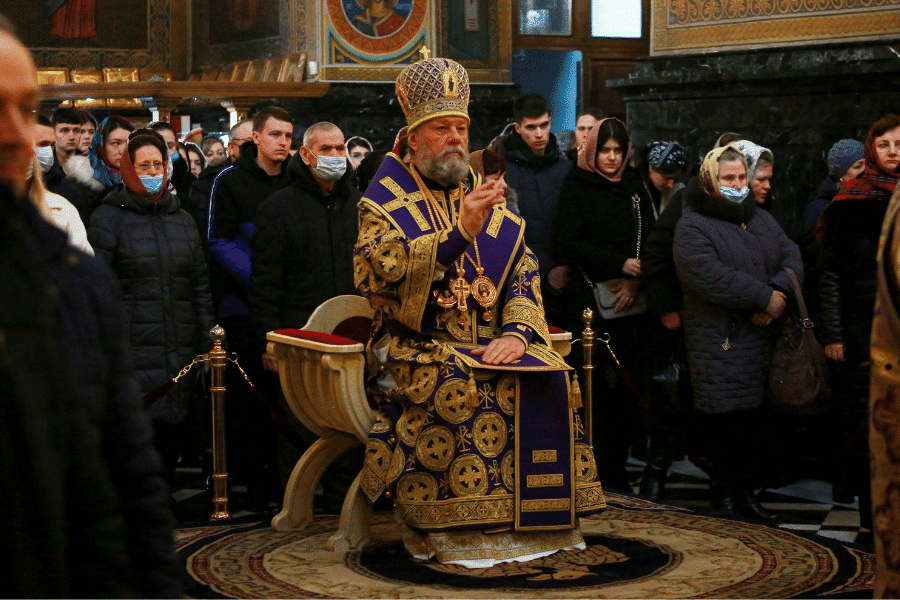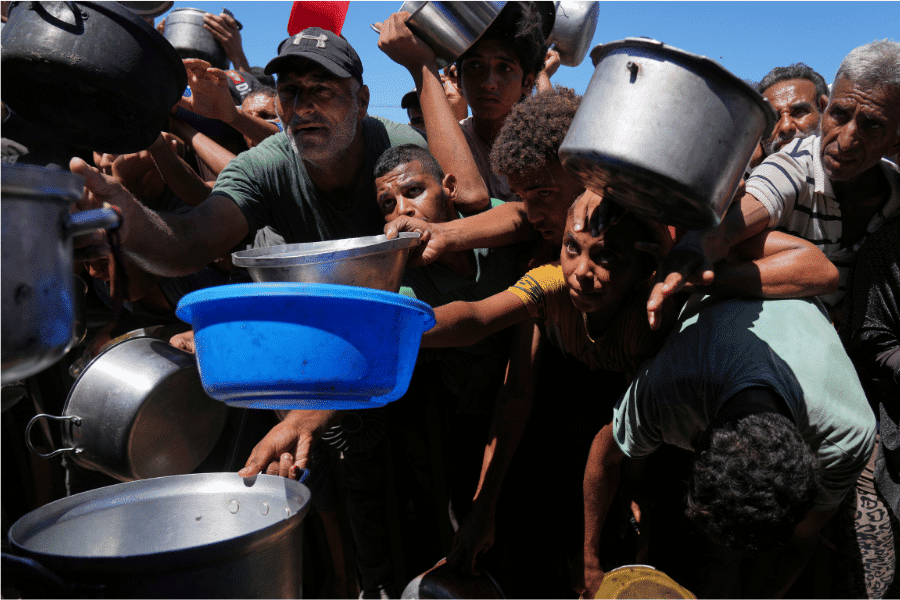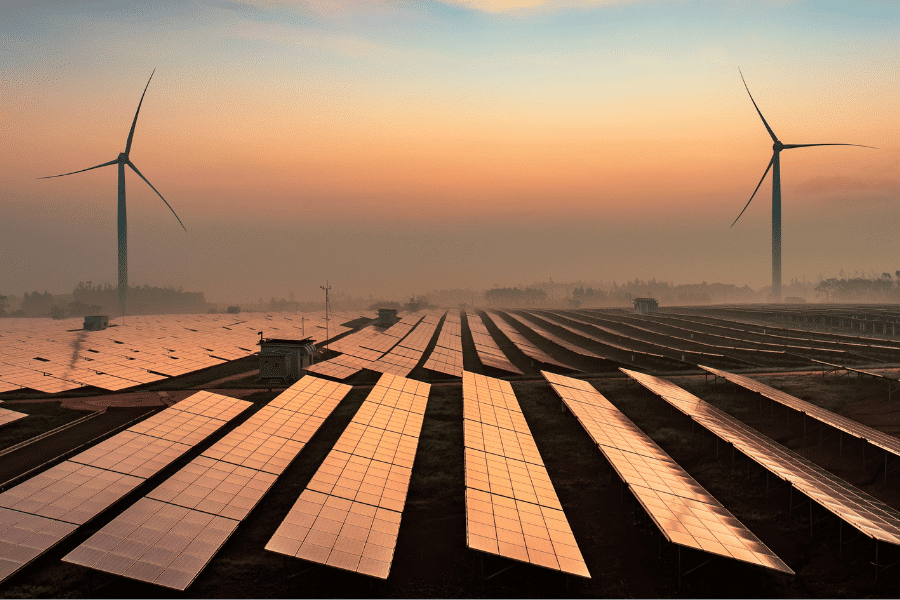
We’re marking World Water Week, a gathering in Sweden intended to solve water-related challenges such as droughts, floods and food security. Let’s invest in it.
Source link
Category: Decoder Replay
-

Decoder Replay: Gold is valuable. But you can’t drink it.
-

Is peace in the Middle East even possible?
The State of Israel was created in 1948. The key word is created. While countries come into being in many different ways, such as violence, revolutions and treaties, the creation of the state of Israel was unique and has proven highly controversial.
To understand the chaos that is now taking place in Israel and the Palestinian territories, one needs to return to that original creation.
The British government ruled the territory known as Palestine under the League of Nations from 1922 until 1948. Already in 1917, the British government issued what is known as the Balfour Declaration which envisioned a Jewish state in what had been claimed a historic Jewish homeland.
Jewish organisations had argued that the land called Israel has been the religious and spiritual center for Jews for thousands of years. While many countries recognized the new State of Israel in 1948, its creation did not effectively redress the dislocation of those who had been living on the territory that Israelis would inhabit.
Following the end of World War II, European Jews who had been displaced during the Holocaust flocked to Israel. The United Nations divided the land into two states, one Jewish, one Arab, which further divided the Arab territory into three sections — the Golan Heights at the Syrian border, the West Bank at the Jordanian border and the Gaza Strip at the Egyptian border.
The creation of deep divisions
The division gave more than 50% of the land to Israel, leaving the Arabs with 42% even though they made up two-thirds of the population.
This resulted in massive Arab displacement and is why the Jewish Independence Day of May 14 is followed by the marking of Nakba Day by Arabs, translated as “The Catastrophe”.
Since Israel’s founding in 1948, there have been several outbreaks of violence between Israel and its neighbors. Among them were the 1948–49 War of Israeli Independence; 1956 Suez Canal Crisis; 1967 Six-Day War; 1973 Yom Kippur War; 1982 Lebanon War and various large-scale Palestinian uprisings known as Intifadas.
None of these conflicts resulted in reparations for the hundreds of thousands of Arabs displaced by Israel’s creation, many of whom ended up in crowded refugee camps in Gaza, the West Bank and neighboring countries.
Further inflaming tensions, Israeli settlers have continued establishing communities in the West Bank, which was conquered by Israel in the 1967 Six-Day War. The international community considers these colonies illegal, and some of the settlers have been found guilty of violence against the Arabs who live there.
Working towards peace
There have been several attempts to have peace agreements between Israel and its neighbors.
The most important are the Camp David Accords of 1978 which was finally reduced to simple diplomatic relations between Egypt and Israel, and the 1993 Oslo accords which established formal relations between Israel and the Palestinian leadership, giving the latter self-governance over the Gaza Strip and the West Bank. Recently, there were talks about a larger regional agreement including Saudi Arabia.
Then came 7 October 2023, when Hamas, an Islamist militant group, attacked Israeli settlers killing more than a thousand people, many of them women and children, and taking over 200 Israeli hostages.
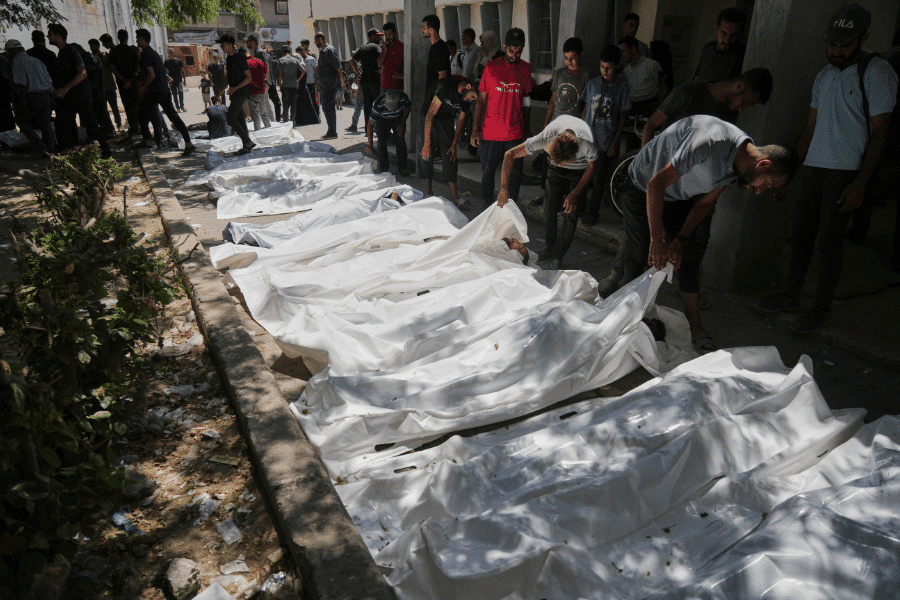
Israel’s response to the Hamas attack, which it justified as legitimate self-defense, has seen more than 32,000 Gazans killed with over 70,000 wounded, mostly civilians with many elderly and children. Much of Gaza’s infrastructure has been destroyed, including hospitals and humanitarian aid has been blocked. Fighting has continued for more than six months as Israel seeks to destroy Hamas and at the same time free the hostages.
The emotions behind the conflict are extreme. The Israelis condemn Hamas as a terrorist organisation whom they argue are out to kill all Jews and destroy the State of Israel. Hamas, which was the official ruling organisation in the Gaza Strip, maintains that Palestinians have been reduced to living in an open-air prison since it took control of Gaza in 2005 when Israel disengaged.
Israel and the international community
The fighting in Gaza has raised many questions relevant to international humanitarian law. South Africa brought a case before the International Court of Justice in The Hague accusing Israel of genocide. The Court ruled that there was “plausible” genocide and ordered several provisional measures Israel must follow, among them increasing access to humanitarian aid.
Beyond Israel, Hamas and the International Court of Justice, various resolutions have been proposed before the United Nations Security Council concerning a ceasefire. Although the latest resolution did pass, with the United States abstaining and not using its veto power, no ceasefire has taken place, although increased humanitarian aid is now entering Gaza.
But the situation of the Palestinians remaining in Gaza remains precarious at best.
The Israel/Hamas conflict has spread to other countries in the region, including Iran, which has long been a supporter of Hamas. On 1 April 2024, Israeli warplanes destroyed a building in Damascus, Syria, part of an Iranian Embassy complex, killing several Iranian officers involved in covert actions in the Middle East.
Shortly after, Iran sent hundreds of drones and cruise missiles towards Israel, which were largely intercepted by Israeli and U.S. air defenses. Subsequently, several drones were downed by Iran’s air defense system near Isfahan, but it is not clear whether they came from Israel or other sources.
What is clear is that there has been enormous international pressure to de-escalate the current situation in order to stop the Israel/Hamas conflict from growing into a regional conflict involving Iran and other countries, or even a more global escalation of violence.
Questions to consider:
1. How did the United Nations divide Palestine to create the state of Israel?
2. What happened to the people displaced in 1948 when Isreal was created?
3. What kind of compromises do you think might have to take place for there to be peace between Israelis and Palestinians?
-

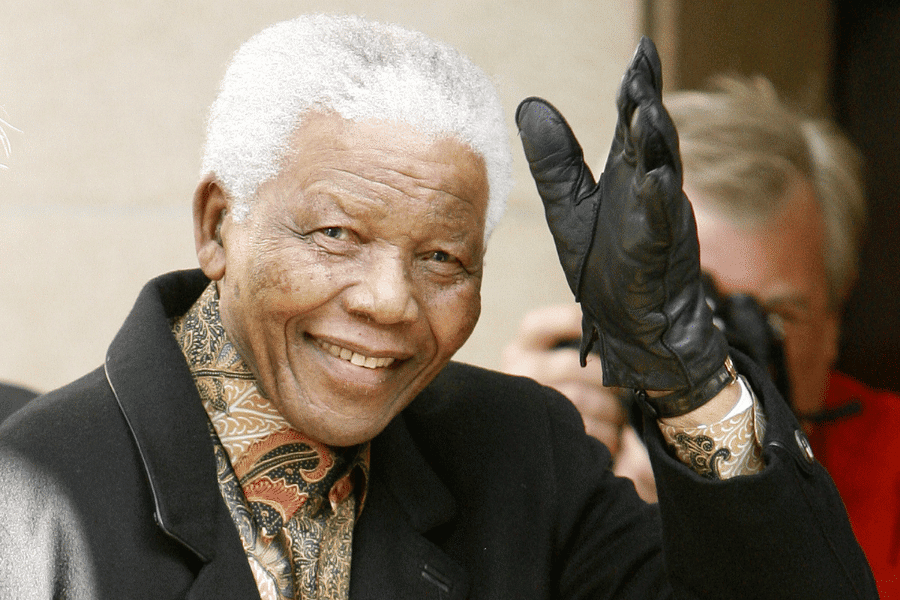
Decoder Replay: Let’s celebrate Mandela Day
February 11, 1990 was truly a turning point in the history of South Africa.
For decades the nation at the southern tip of the continent had been pilloried by much of the rest of the world. This was because of its apartheid racial segregation laws that hugely favoured the white population over the far larger and mostly black majority.
Apartheid means “separateness” in Afrikaans, the language rooted in Dutch that evolved when the country was a colony.
By 1989 — itself a remarkable year for the wave of revolutions in communist East Europe — South Africa had made significant steps in its effort to end its pariah status. International sanctions were costing it dearly economically, culturally and in sporting terms.
As a taste of events to come, the government freed senior figures in the African National Congress (ANC), the exiled organisation waging a low-level guerrilla campaign against apartheid.
The fight against apartheid
A favourite weapon of the ANC was small mines. One of them exploded in a shopping mall in the commercial capital Johannesburg just as I had finished shopping there and was safely in the mall’s car park.
But there was no word when ANC leader Nelson Mandela — who ultimately spent 27 years incarcerated, much of it in an island prison — would be freed.
Lawyer Mandela entered the world stage with a famous speech at his 1963 trial for sabotage acts against the state in which he stated that freedom and equality were “an ideal for which I am prepared to die.”
Releasing Mandela from prison was a key card that South Africa could play to regain respectability, and the government would play it “soon,” Anton Lubowski, an anti-apartheid activist and human rights advocate, told me.
Lubowski did not live to see his forecast fulfilled. In September 1989, gunmen pumped AK-47 rifle rounds into him, with the coup de grace a pistol bullet. He was the latest in a long list of opposition figures in southern Africa to fall victim to unnamed assassins.
Freedom as news
Knowing that Mandela was expected to be released — his freedom would be a huge news story — but not knowing how or when it would happen was particularly frustrating for a news agency reporter like me.
Reuters and its rivals compete tooth and nail to get stories first, and to get them right. Being just one minute behind another news agency on a major story rates as a failure.
What I dreaded most was that Mandela would be released from prison unannounced, just as his ANC colleagues had been. This possibility made it necessary for me and my colleagues to be constantly alert, straining to catch the first authentic information.
The problem was that, then as now, the pressure to get hard information was compounded by a fog of fake news and hoaxes, saying that the release of Mandela was imminent or indeed had actually happened.
These claims were typically relayed on pagers, the messaging devices of the pre-smartphone age. Such messages, no matter how bogus-sounding, had to be checked. This took time and energy and shredded nerves.
Recognizing a hero
It was one such scare that prompted reporters to flock to an exclusive clinic outside Cape Town where Mandela was known to be undergoing treatment.
It was then that another problem surfaced: Nobody among us knew what Mandela looked like after his marathon spell in prison. There had been no pictures of him. Would we even recognise him if he walked out of the clinic?
The hilarious result was that every black man leaving the clinic — whether porter, delivery man, cleaner or whatever — came under intense scrutiny from the ranks of the world’s press assembled outside.
But on the timing of the release, I had a lucky break. A local journalist friend introduced me to a senior member of a secretive police unit who was willing to share with me whatever information he had on when Mandela would be a free man.
The police official’s name was Vic — I did not then know his full name. But he was no fake policeman. He introduced me to his staff in his offices, which were in a shopping arcade concealed behind what looked like a plain mirror but was in fact also a door.
Verifying fake claims.
All cloak-and-dagger stuff. With enormous lack of originality, my Reuters colleagues and I referred to Vic as our “Deep Throat,” the pseudonym of the informant who provided Washington Post reporters Bob Woodward and Carl Bernstein with information about the 1972 Watergate scandal.
Some time in the latter half of 1989, Vic told me in the less than cloak-and-dagger setting of a Holiday Inn coffee shop that Mandela was likely to be released in January or February of 1990.
This was not precise information, but at least it was better than anything that I had, or apparently anybody else in the news business.
In later meetings, Vic refined the information without disclosing the exact day of the release, which apparently was known to just four people in the South African government.
One of the ways Vic was valuable to us was that whenever a fake claim about Mandela’s whereabouts surfaced, I could call him, day or night, to check. And it was Vic who told me on February 10 that “it looked like” Mandela would be a free man the next day.
And so it proved.
Mandela instantly became universally recognisable, South Africa disbanded apartheid, elections were held in which all races voted, the ANC won, and Mandela became South Africa’s first fully democratically elected president.
February 11, 1990 is indeed a day to remember.
Three Questions to Consider
1. Why did apartheid last so long?
2. What was the reaction of South African whites to Mandela’s release?
3. Can you think of someone today who is trying to fight against an system of oppression?
-

How important could one court be?
A polarized electorate
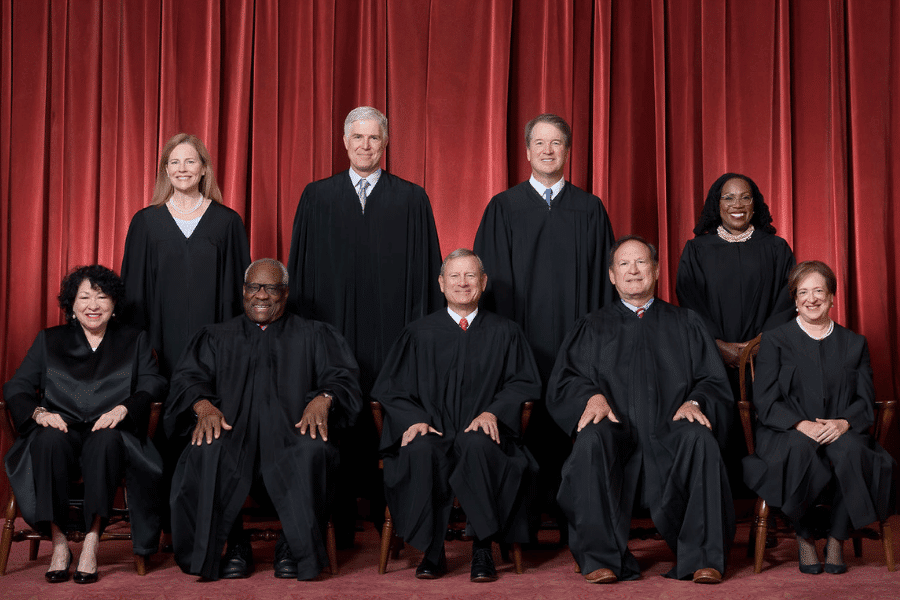
The first Italo-American to serve on the Supreme Court, Scalia had been appointed by Ronald Reagan, a Republican president. Of the eight remaining justices, four were appointed by Republican presidents and four by Democrats.
Both parties recognize that Scalia’s successor could tip the scales in close votes. Cases currently before the Court involve climate change, affirmative action, abortion, unions, immigrants and contraception — issues where the electorate is deeply divided.
Although the Constitution stipulates that the president nominates Supreme Court justices, Republican candidates for the presidency have said the choice of Scalia’s successor should be left to whoever succeeds Barack Obama in the White House next January. Obama, a Democrat, has said he will send a nomination to the Senate in due course.
That partisan split can be explained by the weight of the Court’s decisions and the polarization of the U.S. electorate.
Whereas historically the two major parties have been able to agree, sometimes begrudgingly, on the choice of justices, the process has become far more partisan and divisive in recent decades.
Unfavorable opinions
The gaping ideological split in the current Congress and an increasingly vitriolic presidential campaign ensure a bitter fight in coming months.
The political acrimony was reflected in a nationwide poll conducted last year by the Pew Research Center.
Following recent Supreme Court rulings on Obamacare and same-sex marriage, unfavorable opinions of Court have reached a 30-year high, the survey found. And opinions about the court and its ideology have never been more politically divided.
“Republicans’ views of the Supreme Court are now more negative than at any point in the past three decades,” it said. Little wonder that Republican presidential candidates are keen to put a conservative in the vacant seat.
While the Supreme Court is an independent branch of government, its composition is not — and has never been — immune from politics. The nomination of justices is part of the system of checks and balances.
But at the end of the day, the system requires the willingness of voters and their representatives to adhere to laws, executive orders and court rulings, however deep the political divide. If that faith ever crumbled, the U.S. experiment in democracy would be under threat.
-

Decoder Replay: Is truth self-evident?
Fake news is dangerous. But it’s hardly new.
More than 3,000 years ago, the largest chariot battle ever pitted the forces of one of the most powerful pharaohs of ancient Egypt — Ramesses the Great — against the Hittite Empire in Kadesh, near the modern-day border between Lebanon and Syria.
The battle ended in stalemate.
But once back in Egypt, Ramesses spread lies portraying the battle as a major victory for the Egyptians. He had scenes of himself killing his enemies put up on the walls of nearly all his temples.
It was propaganda. “It is all too clear that he was a stupid and culpably inefficient general and that he failed to gain his objectives at Kadesh,” Egyptologist John A. Wilson wrote.
Disinformation in ancient Rome
The Roman general Mark Antony killed himself with his sword after his defeat in the Battle of Actium upon hearing false rumors — fake news — propagated by his lover Cleopatra claiming that she had committed suicide.
American patriots, including the esteemed U.S. statesman and inventor Benjamin Franklin, and their British enemies swapped spurious allegations during the American Revolution that murderous Native Americans were working in league with their adversaries, scalping allies.
How about the 1938 radio drama, “The War of the Worlds”? Adopted from a novel by H.G. Wells, the radio broadcast fooled some listeners into believing that Martians had landed in America. Newspapers of the day said the broadcast sparked panic.
But historians today say the panic was exaggerated. So it was fake news about fake news!
There is no shortage of modern-day instances of fake news. In Myanmar in 2018, the military spearheaded a campaign of fake news, mainly on Facebook, claiming the Rohingya minority had murdered and raped members of the Buddhist majority. The Rohingya were described as dogs, maggots and rapists. The fake news helped trigger violence against the Rohingya that forced 700,000 people to flee their homes.
The irony is that many in Myanmar had turned to Facebook for information because the military had alienated many citizens with its control of the media. But the same military took advantage of the false reports to crack down on the Muslim minority.
Election falsehoods
Similarly, fake news has been used in the Philippines, Indonesia, Malaysia and Sri Lanka to influence the outcome of elections, hide corruption and stir up religious animosity.
One of the ironies of fake news is it can embolden authoritarian governments to turn the tables and use made-up news as an excuse to crack down on the media. That can enable the regime to control the media message. In other words, fake news to the rescue of autocrats.
But we should not fool ourselves into thinking that fake news can be cured merely through technological solutions, that it’s a product of our times, that it’s mainly political and that it’s peddled only by our opponents. It’s not the property of any one political party or interest.
Fake news takes root in the gray area between truth and fiction, an area we can be quite comfortable in. There is something very enticing about fake news, especially if it aligns with our pre-conceived notions. Yet we are apt to think that fake news is the exception, a new aberration.
We can easily fall victim to fake news in part because we are not always disgusted by lies. We are taught at a very early age that deceit – deception, dishonesty, disinformation – is all around us. And that not all lies are as harmful as others. Our parents read us fairy tales from the earliest of ages, and many tales involve lies.
The telling of fairy tales
Take the ancient fable of “The Cock and the Fox,” included in the medieval collection of Middle Eastern folk tales, “One Thousand and One Nights.”
A hungry fox tries to coax a rooster out of a tree by telling him a tall tale — that there is universal friendship now among hunters and the hunted. The cock has nothing to fear, the wily fox says. It’s a lie, of course.
So, the equally wily cock resorts to his own lie: he tells the fox that he sees greyhounds running towards them, surely with a message from the King of Beasts. The fox, outwitted, runs away in fear. So here we have two lies in a single story. The moral? “The best liars are often caught in their own lies.”
Children and their parents are quite comfortable surrounded by lies. Is Santa Claus a malicious or harmless lie?
Do you know the story of the Wizard of Oz? That classic U.S. movie about a young girl lost in a fantasy world, pursued by witches, struggling to go home? The entire plot relies on a deceit – a supposedly powerful wizard who is nothing more than a bumbling, ordinary conman, who uses magic tricks to make himself seem great and powerful.
Deceit at the service of entertainment.
Advertisements are often innocent exaggerations, fiction if you will in the service of business and profit-making. But sometimes ads can veer into falsehoods.
So fake news is not new. And we’re no strangers to lies. What does that mean for those of us interested in making the world a better place? Should we simply give up because the task is too great?
Hardly. The lesson is that truth is not black and white, but grey, and it’s a moving target.
Take, for example, colonialism. From the 15th century on, white Europeans conquered huge swathes of the Americas, Africa, the Middle East, Asia and Oceania. They subjugated millions of people, using brutal violence in many places to subdue indigenous populations. They brought diseases that wiped out millions.
They exploited natural resources, using native labor and pocketing most of the profit from sales into a global trading network that they established. By 1914, Europeans had gained control of 84% of the globe.
We know all of that now because colonized peoples have revolted against their colonial rulers and won independence. The wars of independence have been won, yet so many countries around the world are still grappling with the shameful effects of colonialism and racism.
The ambiguity of truth
But would everyone have agreed on that depiction of Europeans as rapacious colonialists before the wars of independence?
Certainly not most of the Europeans, who believed they were exporting a superior civilization to backward natives. Missionaries who led many colonial ventures believed they were doing God’s will by converting native populations to Christianity. And not a few natives turned a blind eye to atrocities and benefited financially.
For a glaring example of the ambiguity of truth, take the United States. Its Declaration of Independence, borrowing from the French enlightenment, states that “all men are created equal,” with “unalienable Rights” to “Life, Liberty, and the pursuit of Happiness.” It put notions of freedom and equality at the heart of the American experiment. Yet it was written by a slave owner, Thomas Jefferson, and represented 13 colonies that all, to one degree or another, allowed slavery.
Convinced of their superiority and driven by an almost unquenchable appetite for wealth, white settlers drove Native Indians from their homes. The U.S. government authorized more than 1,500 attacks and raids on Indians. By the end of the 19th century, fewer than 238,000 indigenous people remained, down from some 5-15 million living in North America when Columbus arrived in 1492.
What is more, settlers in the South imported slaves from Africa, forcing them to work on vast plantations and denying them the very rights to life and liberty spelled out in the Declaration of Independence.
Rights and repercussions
Both Native Indians and African Americans are struggling to this day to come to terms with the treatment they suffered at the hands of the white colonials.
Would a white settler have seen himself or herself as a murderer? Hardly. In their minds, they were doing God’s work.
Mind you, the desire to colonize is not peculiar to Europeans. Imperial Japan and imperialist China both established overseas empires. The Empire of Japan seized most of China and Manchuria. To this day, Chinese nationals and South Koreans harbor ill feelings towards the Japanese. Chinese dynasties won control over parts of Vietnam and Korea.
There’s an expression in newsrooms around the world: “One man’s terrorist is another man’s freedom fighter.” Put another way, the same individual might seem a terrorist to some, a hero to others.
Take Yagan, a 19th century indigenous Australian warrior from the Noongar people. He played a key role in early resistance to British colonial rule in an area that is now Perth. His execution by a young settler figures in Australian history as a symbol of the unjust treatment of indigenous peoples by colonial settlers.
A hero to his people, he was a murderer in the eyes of the British.
Different perspectives on history
Or take the Incan emperor, Atahualpa, who resisted the explorer and conquistador Francisco Pizarro, to this day a Spanish hero. Pizarro forced Atahualpa to convert to Christianity before eventually killing him, hastening the end of one of the greatest imperial states in human history.
How you view Pizarro may depend on where you are sitting and when you lived.
There are countless modern examples of radically different perspectives on events. Such discrepancies may be inevitable. Dogged journalists can shed light on events and protagonists, and help shape history – for better or for worse.
Joseph McCarthy was a U.S. senator who in the early years of the Cold War spearheaded a smear campaign against alleged Communist and Soviet spies. Only courageous reporting by a small group of journalists who dared question McCarthy’s tactics and risked being tarred as Communist sympathizers themselves led to McCarthy’s downfall.
Joseph McCarthy (L) with his attorney Roy Cohn, who later mentored Donald Trump (Wikimedia Commons)
The New York Times and Washington Post went out on a legal limb when in 1971 they published the Pentagon Papers, a U.S. government history of the Vietnam War that laid bare official lies that drove American policy for more than a decade in Southeast Asia.
The government called the man who leaked the government documents a criminal and sought to prevent the newspapers from publishing the damning revelations.
The newspapers won their case before the Supreme Court, and their reporting increased public pressure on the government to withdraw from Vietnam.
Watergate upended a presidency.
You’ve perhaps heard of Watergate? Literally speaking, it’s a hotel in Washington, DC. But it has come to stand for the dogged and courageous news reporting by two journalists with the Washington Post who exposed crimes by President Richard Nixon and helped lead to his resignation in 1974.
Courageous investigative journalism is hardly confined to the United States. A non-profit news outfit called AmaBhungane — in Zulu, “dung beetle,” an animal that digs through shit – has reported on corrupt business deals at the highest levels of South Africa’s government.
In the Arab world, investigative journalists in Egypt, Yemen, Tunisia, Syria, Lebanon, Jordan, Iraq, Bahrain, Palestine, Mauritania, Algeria, Kuwait and Sudan have uncovered tax evasion, money laundering, drug smuggling, torture and slavery. They have unmasked doctors who have removed the wombs of mentally disabled girls with the consent of parents.
But it’s not all easy sailing. According to Freedom House, in 2017 there were only 175 investigative journalists in all of China, down 58% since 2011.
What does this mean for you, a young activist who wants to help change the world?
Truth is murky.
The lesson is that the truth may not lie squarely on one side or the other, but rather in a murky, grey area. It can take courage to shine a light in the shadows, teeming with lies. And you may have to hear viewpoints that differ radically from your own. It pays to listen.
Progress against racism, inequality and injustice depends on an informed public.
The best journalists recognize their responsibility to uphold the Universal Declaration of Human Rights, which state that: all human beings are born free and equal in dignity and rights; and everyone has the right to freedom of opinion and expression; this right includes freedom to hold opinions without interference and to seek, receive and impart information and ideas through any media and regardless of frontiers.
As the third U.S. President Thomas Jefferson said: “Were it left to me to decide whether we should have a government without newspapers or newspapers without a government, I should not hesitate a moment to prefer the latter.”
So stick up for your rights, including the right to free expression. Be fair. And remember that one man’s terrorist may be another man’s freedom fighter. You don’t have a lock on the truth.
Questions to consider:
1. Why is it important to understand that fake news is nothing new?
2. Do you think there is any way to stamp out fake news?
3. What does it mean to say, “One man’s terrorist is another man’s freedom fighter”?
-

Decoder Replay: Australia waltzes with two superpowers
The index ranks 26 countries and territories in terms of their capacity to shape their external environment. It evaluates international power through 133 indicators across themes including military capability and defense networks, economic capability, diplomatic and cultural influence, as well as resilience and future resources.
The portrait that emerges from its latest survey is that while China’s overall power still lags the United States, it is not far behind, even though the current economic slowdown is holding it back in the short term.
After the two superpowers, trailing a long way back as the next most powerful countries in the Asia-Pacific are Japan, India, Russia and then Australia.
Economic versus military power
The index confirms that China draws its power from its central place in Asia’s economic system, while that of the United States comes from its military capability and unrivaled regional defense networks.
Australia’s relationship with the two mirrors the dilemma facing the whole region.
The United States is far and away Australia’s main strategic partner and has been since the Second World War.
In a deal signed in March 2023, Australia is set to acquire a conventionally-armed, nuclear-powered submarine capability with help from the United States through the AUKUS Treaty, which also involves the United Kingdom.
This was followed by plans to station more U.S. forces in Australia, especially in air bases in northern and western Australia. There are also moves to increase cooperation between both countries in space, speed up efforts for Australia to develop its own guided missile production capability and work with the United States to deepen security relationships with other countries in the region — most notably Japan.
This comes as Australia has been working hard to get trade restrictions eased with China after it imposed tariffs on a range of Australian products in 2020 during a standoff with the previous government.
Dining with Joe and Jinping
China is still Australia’s largest two-way trading partner in goods and services, accounting for almost one third of its trade with the world. Two-way trade with China grew 6.3% in 2020-21 to A$267 billion (about US$180 billion), mostly due to the coal and iron ore sectors.
So as it stands, Australia’s security relies on the United States but its economic prosperity is heavily influenced by China.
It’s no surprise then that Prime Minister Albanese had to walk a fine line in 2023 — going from a state dinner at the White House with U.S. President Biden on 26 October to meeting with Chinese president Xi Jinping 11 days later.
Colin Heseltine, a former Deputy Head of Mission at the Australian Embassy in Beijing and now senior advisor for independent think tank Asialink, said Australia is in a conundrum over China.
“Australia’s major trading partner is also perceived as our No.1 security threat,” he said.
Normalizing relations before an abnormal U.S. election
Heseltine believes there is a mood of cautious optimism about the growing relationship between Australia and China since the election of the Albanese government, but expects the future will not be completely free of headwinds.
In the end, Australia, like many other nations in the region, is pragmatically making the situation work. It has seen relations with Beijing normalize, or as some prefer to describe it, stabilize.
As for the United States, relations between Canberra and Washington remain vibrant and strong.
The next big issue for Australia in managing this twin policy of improving ties with the Asia-Pacific’s two diverse superpowers could well be the 2024 U.S. presidential election — who wins it and if China features in it.
And those things are outside its control.
Three questions to consider:
1. What is the emerging dilemma facing most democratic nations in the Asia-Pacific region?
2. Is China likely to overtake the United States as the Asia-Pacific’s major superpower anytime soon?
3. What is the biggest threat to the current status quo facing nations in the region?
-

What happens when tyrants fall from power?
“The despot is dead. Long live … er, who?“
Unlike kings or queens, dictators and autocrats find it helpful not to have a clear successor or rival who might soften their hold on power.
Much as that iron-fisted ruler may be loathed, their abrupt departure from the throne can bring significant risk of subsequent turmoil. They have created a system that puts them alone at the centre of power.
The White House in March was very quick to deny that President Joe Biden was pressing for regime change when he said that his Russian counterpart, Vladimir Putin, should not remain in power.
There is no shortage of countries in recent decades where fallen autocrats have left a power vacuum all too quickly filled by chancers, thugs and weird ideologues, or simply some drab toady of the old regime.
Covering tyranny
As a reporter, it was impossible for me not to get caught up in the excitement after popular unrest had driven out yet another long-serving despot in power so long that they had forgotten who was serving whom. It really is exhilarating.
During a long career as a journalist, I reported in a number of countries where autocratic, often staggeringly corrupt, leaders were forced unwillingly out of office. Sometimes, I’ve been there at the moment, more often to report on the aftermath.
The first time was just over 30 years ago in Bangladesh, whose military dictator Hussain Ershad had lost power in the face of mass protests. And in a rarity for the impoverished country, whose relatively short period of independence had been marked by violence and assassinations, the leader’s downfall had been almost bloodless.
By the time I arrived in Dhaka, crowds were cheerfully marching through the capital’s streets. The two people who would dominate Bangladeshi politics until today — the widow of one assassinated leader and the daughter of another — were happily giving interviews to visiting journalists, promising a new era for their country.
Since then, Bangladesh’s economy has indeed grown. But the country’s politics remain plagued by autocratic leadership, corruption and a drawn-out feud between those two women.
The lingering influence of despotism
In the Philippines, a reporter colleague liked to tell stories about joining a crowd streaming through the Malacanang presidential palace, vacant after President Ferdinand Marcos and his wife Imelda fled the country in the face of a People’s Power revolt in 1986 following more than 20 years of rule marked by excess and rampant graft.
This month, their son was elected president with little to offer by way of a platform beyond the promise of a return to those “halcyon days” when his parents were in charge some four decades earlier.
In neighbouring Indonesia, the family of President Suharto, who led another Southeast Asian kleptocracy into near financial ruin until he was forced to step down in 1998 after more than 32 years of iron rule, continues to try to get back into politics. Suharto’s downfall came with mass protests, violence and fears the giant archipelago would split apart. The country has largely recovered, but some of the elites established during the Suharto years remain a powerful influence.
Later, I was involved in reporting on the “colour” revolutions of former Soviet states, including Georgia and Ukraine. In both cases, infectious enthusiasm for change and the end of the old regimes did not take all that long to sour.
The leader of the 2003 Georgian revolution, Mikheil Saakashvili, eventually fled into exile. He is now back in his country where he was jailed on charges of abuse of power.
Sidelining of opposition
Ukraine struggled to find a competent leader after casting aside the old guard from the Soviet era with its Orange Revolution, which began the following year.
Paradoxically, and very unexpectedly, it has taken this year’s Russia’s invasion of Ukraine to reveal a leader of commanding stature in President Volodymyr Zelenskiy, a former comedian.
In many of these countries and others ruled by long-serving autocracies, the incentive is for leaders to crush any emerging threat to their hold on power. Rising political stars are sidelined, opponents are exiled, jailed or killed and domestic news coverage is limited to the official line.
And Russia? Rumours abound that Putin, ever tightening his control during more than 20 years in power, is seriously ill or even faces a coup. As with the likes of Suharto or Marcos, Putin took office when his country was lurching through economic crisis. He was a bit dull. Unlike his predecessor, Boris Yeltsin, Putin didn’t make a habit of rolling up drunk.
He was smart, focused on the economy, not in thrall to Russia’s plundering oligarchs and able to bring stability to the lives of ordinary Russians exhausted and disoriented by the collapse of the Soviet Union. He became hugely popular.
But there was a sense that his inner circle didn’t quite trust that popularity. By most accounts, Putin would easily have won a second term in the 2004 presidential election. But the Kremlin could not resist making sure the deck was stacked in his favour. He won 71.9% of the vote.
What would Russia be like post-Putin
Putin has run the country ever since, either as president or prime minister. Such is the state’s grip on Russian media that it is not really possible to be sure how popular Putin may be now. One recent poll suggested his star, which had started to look a bit faded, has brightened considerably since the invasion of Ukraine.
His government is clearly in no mood to put that popularity up for too much public scrutiny, throttling the remaining independent Russian media and introducing a law to hand long prison terms to those who openly oppose the war on Ukraine.
Prominent Russians who might credibly challenge Putin’s grip on the country live abroad, are in prison or dead. His most recent serious opponent, Alexei Navalny, is looking at years in a Russian prison. It isn’t all that clear, either, whether the bulk of Russians would prefer Navalny as their next leader.
If Putin is no longer in office for whatever reason, who would be in the running to replace him?
It seems very unlikely that the current political elite would readily allow a reformer to sweep them from power. Quite possibly, the average Russian — sympathetic to the view that the West has for years been treating their country with contempt — would prefer stability, a job and some international prestige.
When Russia faced revolution more than a century ago, an estimated 10 million people died after the autocrat Tsar Nicholas II was removed from power.
Perhaps that’s why Biden officials were so quick to rule out regime change. Better the devil you know than the devil you don’t.
Questions to consider:
• If you were working for local media in Moscow, how would you write about the war in Ukraine?
• Do you think your country’s mainstream media can be relied on to be factual in reporting? Why?
• If the current leader of your nation loses power, how peaceful do you think the aftermath will be?
Correction: The editor’s note at the top of the story was changed to correct the date the article was originally published.
-

China-U.S. animosity goes way back
The United States and China are increasingly at each other’s throats because of deep-seated distrust, a growing range of disputes and festering wounds from the 19th Century. The current deterioration in bilateral relations risks jeopardizing the global economy and could presage a new chapter in post-1945 great-power competition.
Their mutual antagonism has not been deeper since U.S. President Richard Nixon embarked on a landmark trip to “Red China” in 1972 to pave the way to normalized relations.
Ahead of the U.S. presidential election on November 3, disputes have flared over the handling of the coronavirus pandemic, Taiwan, the South China Sea, digital security, trade, journalist expulsions and human rights in Xinjiang, Hong Kong and Tibet.
Some experts describe the rancor as verging on a “new Cold War”, with the potential to disrupt bilateral cooperation in the fight against COVID-19, climate change, terrorism and the spread of nuclear weapons.
U.S. President Nixon in China
Nixon traveled to China during the Cold War struggle between the United States and the former Soviet Union. The start of formal ties between China and the United States was a game-changer: the two had been on opposite sides during the Vietnam War, but each was at odds with Moscow.
The trip set the stage for an effort to shape China’s strategic choices after the upheaval spurred by Chinese Communist Party Chairman Mao Zedong. Mao had sought to instill the spirit of China’s revolution in the younger generation during his tumultuous last decade in power (1966-76).
Mindful that the two countries’ systems were radically at odds, Nixon said in his 1972 icebreaking toast in Beijing: “If we can find common ground to work together, the chance of world peace is immeasurably increased.”
Nearly 50 years later, the relationship lies largely in tatters. Tensions have risen in recent days over self-ruled, U.S.-armed Taiwan, which China deems a breakaway province that must return to the fold. Taiwan scrambled fighter jets last week after Chinese aircraft buzzed the island in response to a visit by the highest-level U.S. State Department official in four decades.
“Washington and Beijing have entered into a fundamentally new phase of their relationship, and that strategic distrust between them is likely to intensify regardless of who wins this November’s presidential election,” Kurt Campbell, a former U.S. assistant secretary of state for East Asian and Pacific Affairs, and Ali Wyne of the Atlantic Council’s Scowcroft Center for Strategy and Security, wrote recently.
Trump and Xi
Analysts attribute the mounting friction to a more confrontational U.S. administration under U.S. President Donald Trump and a more assertive China under President Xi Jinping.
Xi became General Secretary of the Chinese Communist Party in 2012 and added the state presidency in March 2013. Later in 2013, China began building military outposts in the contested South China Sea, and Xi launched the Belt and Road Initiative, a vast plan to build infrastructure links — and increase China’s influence — across the globe.
The China-U.S. rift could put pressure on some nations to choose sides, as during the 1947-91 Cold War, or to tweak the hedging strategies that some have adopted to remain neutral.
The path to warmer China-U.S. ties is very narrow, “as the required compromises go against the instincts of both countries’ current leaders,” Carnegie Asia research program’s Yukon Huang, a former World Bank country director for China, wrote this month in an analysis.
Both Xi and Trump came to power with strong populist agendas, each vowing to return their countries to some vision of past greatness. Seeking reelection, Trump has accused his Democratic opponent, former Vice President Joe Biden, of being soft on China.
“If Joe Biden becomes president, China will own the United States,” Trump said last month.
COVID provocations
Referring to COVID-19 by turns as “the China virus,” “Wuhan virus” and “Kung Flu,” Trump has faulted China for “secrecy, deceptions, and cover-up” in its handling of the disease that emerged in the central Chinese city of Wuhan late last year.
“We must hold accountable the nation which unleashed this plague onto the world, China,” Trump said in taped remarks delivered to the United Nations General Assembly this week. More than 200,000 Americans have died from COVID-19, more than in any other country.
Xi, in his address to the General Assembly, called for enhanced cooperation over the pandemic and said China had no intention of fighting “either a Cold War or a hot war with any country.”
At home, Xi cannot afford to appear weak in the face of foreign demands, and he is bound to his signature “Great Chinese dream,” a drive for greater prosperity for the 1.3 billion Chinese, a larger role on the world stage and international respect consistent with China’s military, financial and economic influence.
Beijing is angry over what it calls foreign provocations, including protests in Hong Kong it claims were stirred by outsiders, growing U.S. arms sales to Taiwan, visits by senior U.S. officials to Taipei and U.S. moves against Chinese companies including telecom giant Huawei and social media apps TikTok and WeChat.
Hostility in diplomacy
U.S. Secretary of State Mike Pompeo has stepped up criticism of the ruling Communist Party of China, which he says is seeking global hegemony.
“We must admit a hard truth that should guide us in the years and decades to come,” he said in a July 23 speech at Nixon’s boyhood home and library at Yorba Linda, California.
“That if we want to have a free 21st century, and not the Chinese century of which Xi Jinping dreams, the old paradigm of blind engagement with China simply won’t get it done. We must not continue it and we must not return to it,” he said.
Alluding to the 90 million-plus member Chinese Communist party, Pompeo added: “We must also engage and empower the Chinese people – a dynamic, freedom-loving people who are completely distinct from the Chinese Communist Party.”
In Beijing’s eyes, the Trump administration has been meddling in Chinese internal affairs, threatening its core interests and leading efforts to contain China, which still smarts from what it calls “a century of humiliation,” largely at Western hands.
“Century of National Humiliation”
The “long century” of 110 years was marked by carve-ups of Chinese territory by Britain, the United States and other Western powers, as well as by Russia and Japan, from 1839 to 1949, when Mao’s Communist Party seized power after a five-year civil war.
A trade war that roiled the world in 1839 pitted Britain against China’s Qing Dynasty. Britain had been buying silks, porcelain and tea from China. But Chinese consumers had scant interest in British-made goods, and Britain started running a significant trade deficit with China.
To address the trade imbalance, British firms began illegally smuggling in Indian-grown opium, fueling drug addiction in China. The balance of trade soon turned in Britain’s favor, but a Chinese crackdown led to the first Opium War between Britain and China from 1839 to 1842.
After defeating the Chinese in a series of naval conflicts, the British put a series of demands to the weaker Qing Government in what became the Anglo-Chinese Treaty of Nanjing. Not to be outdone, U.S. negotiators sought to conclude a similar treaty with the Chinese to guarantee the United States many of the favorable terms awarded the British, according to “Milestones in the History of U.S. Foreign Relations,” a U.S. State Department publication.
Long underpinning the Chinese Communist Party’s hold on power have been inequitable treaties, lingering resentment over the earlier era’s losses and extraterritorial laws imposed on China.
“China learnt its lessons from this period of time,” Lu Jingxian, deputy editor of the state-controlled Global Times tabloid, wrote in a column last year. “Lagging leaves you vulnerable to bullying.”
“Chinese people have walked out of the pathos of century of humiliation, though the West seemingly wants its century of bullying to continue,” he said.
Meteoric rise
China stunned the world with the depth and breadth of its economic growth after embracing market-based reforms in 1978, just before formal relations with the United States began in January 1979.
It is now projected to supplant the United States as the world’s biggest economy by 2030 or 2040. Scholars consider the bilateral relationship to be the 21st Century’s most consequential for the international order.
China’s meteoric rise began under Deng Xiaoping, who gradually rose to power after Mao’s death and earned the reputation as the architect of modern China. His market-oriented policies transformed one of the world’s oldest civilizations from crushing poverty to a modern powerhouse in military matters, finance, technology and manufacturing.
China has become the world’s largest manufacturer, merchandise trader, holder of foreign exchange reserves, energy consumer and emitter of greenhouse gases.
It became the world’s largest economy on a purchasing power parity basis in 2014, according to the McKinsey Global Institute.
With economic growth averaging almost 10% a year since 1978, China has doubled its Gross Domestic Product every eight years and lifted an estimated 850 million people out of poverty, according to the World Bank.
China is the largest foreign holder of U.S. Treasury securities, which help fund U.S. federal debt and keep U.S. interest rates low — reflecting the interdependence of the two economies.
South China Sea
Since Trump was elected in 2016, tensions have risen in the disputed, resource-rich South China Sea (SCS).
They spiked in mid-July when the U.S. State Department for the first time formally opposed China’s claim to almost all of these waters, calling it “completely unlawful, as is its campaign of bullying to control them.”
The United States will keep up the pace of its freedom of navigation operations in the SCS, which hit an all-time high last year, U.S. Defense Secretary Mark Esper said at the time.
Four Southeast Asian states — Brunei, Malaysia, the Philippines and Vietnam — have maritime claims that conflict with China’s, as does Taiwan. An estimated $3.37 trillion worth of global trade passes through the SCS annually, which accounts for as much as a third of global maritime trade.
Over the next 18 months, “a let-up in tensions is unlikely,” Ian Storey, co-editor of Contemporary Southeast Asia at Singapore’s ISEAS Yusof Ishak Institute, wrote in a recent survey of the dispute.
“China and the United States will increase their military activities in the South China Sea, raising the risk of a confrontation,” regardless of who wins the U.S. presidential election, he said.
Beijing’s actions in the region have strengthened a conviction on the part of some U.S. strategists that Beijing is seeking control of an area of strategic, political and economic importance to the United States and its allies.
Taiwan
The future of Taiwan, an island democracy of 23.6 million people, is a core concern for Beijing.
Taiwan has been ruled separately since Chiang Kai-shek’s Nationalists fled there after losing the Chinese civil war in 1949. Beijing views Taiwan as sovereign territory that must eventually be unified with the mainland.
Last month, Alex Azar, the U.S. Secretary of Health and Human Services, met President Tsai Ing-wen of Taiwan in the highest-level visit by a U.S. official since Washington cut formal ties to the island in 1979. As a condition for establishing bilateral relations with Beijing at the time, the United States committed to maintaining only unofficial relations with Taiwan.
In a further poke at Beijing, a senior State Department official traveled to the island this month in another high-profile visit. The decision to send Keith Krach, Under Secretary of State for Economic Growth, Energy and the Environment, amounted to a rebuke of China’s efforts to isolate Taiwan.
Chinese military drills off Taiwan’s southwest coast this month were a “necessary action” to protect China’s sovereignty, Beijing said on September 16, after Taiwan complained about large-scale Chinese air and naval drills.
Hong Kong, Xinjiang
Another rub has involved Hong Kong, a former British colony and a world financial center that was guaranteed a measure of autonomy by China as part of negotiations for its 1997 return from Britain.
In May, Trump said he was taking steps to end Hong Kong’s preferential trading status with the United States after China enacted a harsh new security law. The law in effect rolls back the semiautonomous status that had been promised to Hong Kong by Beijing under the mantle of “one country, two systems.”
In June, Beijing threatened retaliation after Trump signed legislation calling for sanctions against those responsible for repression of ethnic Uighurs and other Muslims in western China’s Xinjiang region. The U.S. State Department has accused Chinese officials of subjecting Muslims to torture, abuse and “trying to basically erase their culture and their religion.”
Trump did not hold a ceremony to mark his signing of the legislation, which came as newspapers published excerpts from a new book by Trump’s former national security adviser John Bolton. Among other allegations, Bolton said Trump sought Xi’s help to win reelection during a closed-door 2019 meeting and that Trump said Xi should go ahead with building camps in Xinjiang.
Trump and Xi have refrained so far from ad hominem personal attacks on each other, leaving a door ajar for possible one-on-one efforts to halt the deterioration in ties.
Three questions to consider:
1. Why have Chinese-U.S. relations spiraled downward?
2. What are the main concerns of each country?
3. What are the implications of the situation for the world?
-

Globalization peaked before Trump’s tariffs
“The Russian invasion of Ukraine has put an end to the globalization we have experienced over the last three decades,” according to Larry Fink, the boss of BlackRock, the world’s largest asset manager.
If Fink means an end to the cross-border movement of goods, services, money and data, he is almost surely wrong. Economies are too intertwined to make economic self-sufficiency an option; the advances in computing that underpin global manufacturing, logistics and markets cannot be “uninvented.”
But if he means the war could turn out to be the high-water mark for globalization, Fink is on firmer ground.
The shockwaves Moscow’s war has touched off are likely to prompt firms to re-examine their supply chains and bring more business closer to home, even if that means lower profits.
The trend towards greater economic self-reliance will have far-reaching consequences. Shifting production away from emerging economies will be costly, boosting inflation.
But it will also create well-paid manufacturing jobs, reducing income inequality. Overall growth will suffer as efficiency is sacrificed for economic security, but neglected post-industrial regions could get a new lease on life.
Russia’s invasion of Ukraine will accelerate trends.
Signs that globalization is past its peak were mounting before the West curtailed economic links with Russia.
Notably, COVID-19 highlighted the drawbacks of outsourcing manufacturing to the other side of the world; the West relied heavily during the pandemic on China for medical kit and basic personal protective equipment such as face masks.
Likewise, as economies have bounced back from the pandemic, factories in Asia have struggled to meet red-hot demand, clogging up global supply chains for everything from building materials to bicycle parts.
Policymakers have been especially shocked to learn just how badly the West depends on Asia, principally Taiwan, for computer chips.
The upshot is a push by governments to encourage companies to build factories at home (“reshoring”), in neighbouring countries (“nearshoring”) or in countries that are political allies (“friendshoring,” US Treasury Secretary Janet Yellen’s neologism.)
Thus, Intel is investing $36 billion to boost chip-making in Europe, including a pair of factories in Germany, and another $20 billion on two new plants in Ohio, while Apple has started manufacturing iPhones in India, reducing its dependence on China.
The invasion of Ukraine can only magnify these trends.
Sanctions on Russia form part of a trend.
Europe, in particular, has been made painfully aware that it counts on Russia for about a quarter of its oil imports and 40% of its natural gas imports.
Similarly, countries in North Africa, the Middle East and South Asia are perilously dependent on grain supplies from Russia (and Ukraine). Governments are scrambling to diversify supplies and find ways to hold down fast-rising prices.
Sanctions on Russia speak for themselves, given Moscow’s naked aggression. But they form part of a pattern.
Western governments have been increasingly willing to use trade and investment policies to try to get recalcitrant countries to change their ways. China has been the main target, and globalization has been the casualty.
Exhibit A is the tariffs imposed on imports from China by former U.S. President Donald Trump and maintained by his successor, Joe Biden, aimed at persuading Beijing to end subsidies and intellectual property abuses that, in Washington’s eyes, give Chinese companies an unfair advantage.
But Washington wants a lot more than a level playing field for trade.
It regards China as a growing threat to America’s military, economic and geopolitical dominance and wants to slow its rise. Hence a slew of restrictions on technology exports to companies deemed to have links to the Chinese military, as well as steps to deter Americans from investing in China and vice versa. European policy is moving in the same direction.
At the same time, Chinese leader Xi Jinping has proclaimed a policy of “dual circulation” that boils down to China relying more on its domestic market for growth and less on export demand. Foreign companies in China report a distinctly chillier business environment.
No wonder, then, that some are scaling back in China, especially as labour costs are rising.
The heyday of globalization may be over.
Moving production to countries like Vietnam can be seen as an extension of globalization, not the end of it.
But China remains the key link in global supply chains thanks to its unrivalled manufacturing scale. So any weakening of this link supports the case that the heyday of globalization — if defined as the quest for maximum production efficiency — is over.
Many analysts go further and conclude that the U.S. and Chinese economies are decoupling and could end up forming, and dominating, their own economic blocs with separate trade alliances and digital standards.
If China’s tacit support for Russia’s invasion of Ukraine leads to closer trade, energy and political ties between Beijing and Moscow, the splintering of the global economy will only get worse. Other countries could be forced to take sides.
“Much like the pandemic, the invasion of Ukraine will deepen the global rift between U.S.-led rules-based economies and their authoritarian adversaries,” according to Diana Choyleva, chief economist at Enodo Economics in London.
A tell-tale sign that decoupling is for real will be if China makes progress in its long-standing aim to reduce its dependence on the U.S. dollar and persuades global investors and central banks to make more use of its own currency, the renminbi, in trade, investment and financial markets.
For now, the dollar shows no sign of losing its lustre. But until recently few were predicting the retreat of globalization. Russian President Vladimir Putin has piloted the world economy and political order into uncharted waters.
Three questions to consider:
1. Has globalization been good for the man in the street in rich countries and in developing economies?
2. Why doesn’t Apple make iPhones in the United States or in Europe?
3. Are Western consumers willing to take the economic pain that a ban on importing Russian oil and gas would involve?
-

The military footprint of the United States
The United States is keen to withdraw troops from Afghanistan and end its longest war ever, but the number of American soldiers in the South Asian country is dwarfed by many thousands stationed elsewhere across the globe.
The 200,000 U.S. troops overseas are testimony to Washington’s persistent international commitment despite deep-seated isolationist impulses reflected in President Donald Trump’s “America First” campaign.
The costly U.S. military footprint is a legacy of its status as Western leader that America inherited, at times reluctantly, after the two world wars in the last century.
If Washington ever significantly reduced its network of military bases around the world, it would reflect a major turning point in history and possibly a destabilizing shift in the balance of power.
The United States, Afghanistan and Taliban insurgents hit a roadblock recently as they tried to implement a face-saving pact leading to the partial withdrawal of American troops in the Asian nation after nearly two decades of hostilities.
U.S. troops stationed around the world
The anticipated pullout of about 3,400 of the remaining 12,000 U.S. troops was threatened by continuing violence, a squabble over a prisoner swap and the spread of COVID-19.
But the American troops in Afghanistan are just the tip of an iceberg. Some 200,000 U.S. troops are stationed in overseas bases across Asia, the Middle East, Europe and Latin America.
Current lists of U.S. troops overseas by the Defense Manpower Data Center include: 38,000 in Japan, 34,000 in Germany, 24,000 in South Korea, 12,000 in Afghanistan, 12,000 in Italy, 8,000 in Britain, 6,000 in Kuwait, 5,000 in Bahrain, 5,000 in Iraq and 3,000 in Spain.
Smaller deployments are in Qatar, Turkey, Djibouti, Jordan, United Arab Emirates, Australia, Belgium, Cuba, Romania and El Salvador.
The overseas deployments are a legacy of global military engagement dating back to the first years of the U.S. republic in the early 19th century.
A fight against pirates
U.S. founding fathers were no strangers to warfare. With significant French support, they defeated Britain to win control of the 13 original colonies, but they were soon challenged by pirates.
“We can trace the roots of overseas conflict back to the skirmishes with the Barbary Pirates in the Jefferson years,” Michael O’Hanlon, a military historian at the Brookings Institution, said in an interview.
In 1801, Thomas Jefferson, the third U.S. president, sent warships to free U.S. merchant seamen held hostage by North African Barbary Coast pirates.
Between 1812 and 1814, U.S. troops and warships again sent British forces packing, although the White House was burned.
“But those skirmishes were not really indicative of any major overseas ambition – just yet,” said O’Hanlon.
The United States becomes a world leader.
The next military challenge with standing armies was the U.S. Civil War in the 1860s. Then, a strongly isolationist American public was dragged into two world wars in the 20th century, first in 1917 when the German navy began targeting neutral ships, and then in 1941 when the Japanese bombed the American fleet in Pearl Harbor, Hawaii.
After the world wars, U.S. isolationists sought to keep America out of foreign conflicts and shrink the size of its standing army. “That stopped,” said O’Hanlon, “with the descent of the Iron Curtain in Europe, the communist takeover in China, the Soviet testing of a nuclear bomb and of course the North Korean attack on South Korea, all in the late 1940s or 1950s.”
Soon the United States joined the North Atlantic Treaty Organization (NATO) and signed military treaties with Japan, the Philippines, Germany and South Korea, leaving U.S. troops in some cases as a “trip wire” to warn off aggressors that an attack on U.S. or NATO bases would mean war.
The latest expansion of U.S. military forces overseas is the Pentagon’s Africa Command. It is working with French troops to patrol the Sahara region, where Islamist militants have launched attacks in several former French colonies including Mali, Niger, Burkina Faso, Algeria and Tunisia.
But a proposal to reduce the U.S. military’s involvement in Africa has stoked fears that militants could end up destabilizing or controlling large parts of the sub-Saharan Sahel.
The spokesman for U.S. forces in Afghanistan, Col. Sonny Leggett, recently tweeted that despite the risks of the COVID-19 pandemic, the United States will pursue its plan to withdraw troops until 8,600 are left.
Under the deal signed at the end of February, the U.S. is to cut its forces in Afghanistan to 8,600 service members within 135 days of the deal, and the international coalition backing the United States is to draw down by a commensurate amount, the Hill newspaper reported last month.
Three questions to consider:
1. Who were the Barbary pirates?
2. Why did the United States enter World War One and World War Two?
3. Why did the United States not revert to form and retreat into an isolationist shell after World War Two?