Category: Decoder Replay

  • A dangerous time for the press

    A dangerous time for the press

    The media landscape in the Balkans, however, paints a different picture. According to the World Media Freedom Index for 2023 that is compiled by Reporters Without Borders, among the Western Balkan countries only Serbia — with more than 2,500 media outlets registered in the country — saw its standing on the Index drop. It now stands at number 91 out of 180 countries.

    Other Balkan countries were labeled under the category of “satisfactory” press freedom in 2023, but that left me both intrigued and somewhat skeptical.

    Having walked the corridors of Balkan newsrooms, I find it hard to align with such a rosy classification.

    You can talk truth to power but does it answer back?

    Allow me to rewind to a particular moment that epitomizes the uphill battle faced by journalists in the Balkans. It was during a presidential election in the Balkans, where I, as a reporter, faced a common challenge.

    I wanted to know what a candidate planned to do for education reform if he won. To my surprise, he brushed off the question, saying he didn’t have time for “those things.”

    This incident reflects a broader issue journalists in the Balkans deal with. It’s not just about getting information; it’s about holding politicians accountable to their promises. This encounter showed how some crucial topics get ignored in the fast-paced world of politics.

    In the bigger picture, it represents the challenges journalists face in the Balkans. Beyond the struggle for information, there’s a sense that politicians are sometimes disconnected from the issues that really matter to the people they represent.

    As we talk about press freedom in the Balkans, this story highlights the need for a media environment where politicians are not only accessible but also willing to discuss important matters. The challenges in the newsroom go beyond just finding information; journalists dig into the heart of the region’s political scene, where uncovering the truth often faces significant obstacles.

    The tension between media and politics

    In Bosnia and Herzegovina, I share common ground with others who have navigated the multifaceted challenges, including economic pressures, political interference and a lack of public understanding of the vital role of journalism.

    The erosion of institutions, with government services often ignoring or withholding information from journalists, further compounds the difficulties. There’s an urgent need for public support and understanding, essential components often lacking in a society where journalists struggle to assert a role in shaping a transparent and accountable governance structure.

    Progress has been made, but an undercurrent of danger and hostility still defines the media landscape in many parts of the Western Balkans.

    One cannot dissect the state of press freedom in the Balkans without acknowledging the omnipresent forces of political and economic pressure. It’s a delicate dance where journalists strive to maintain their professional integrity amidst the looming shadows of political influence. While Western counterparts may experience a healthy tension between media and politics, in the Balkans, the scales often tip in favor of political dominance.

    Press freedom is more than a legal framework; it’s a delicate ecosystem that requires protection from both overt and subtle threats. Even with seemingly robust legal safeguards, journalists in the Balkans find themselves grappling with political pressures, compromising the very essence of an independent press. The contrast between what is envisioned in theory and what actually happens in practice is evident, posing a challenge for journalists as they navigate intricate situations.

    An informed citizenry relies on information.

    Economic challenges further compound the struggle for press freedom. The media landscape is fragmented, with limited resources allocated to quality journalism. The survival of news outlets often hinges on their ability to generate revenue. That results in pushing stories towards sensationalism and entertainment to capture audience attention. It’s a dilemma where the pursuit of truth clashes with the demands of a market-driven media economy.

    It is noteworthy though that the people of the Balkans believe in the role of the press. In 2023, the Friedrich-Ebert-Stiftung in Bosnia and Herzegovina conducted a survey on the level of media freedom and trust in the media among the citizens of Bosnia and Herzegovina.

    They found that citizens trust the media more than they do religious groups, government institutions and the international community and that most people believe that politicians violate journalistic rights.

    As the political landscape in the Balkans continues to shape the narrative, journalists walk a tightrope between reporting the facts and navigating the intricate web of political sensitivities.

    The advent of digital platforms offers a glimmer of hope, yet challenges persist. Around 200 podcasts have emerged in the Balkans, attempting to carve a space in a landscape still dominated by traditional media. The struggle to monetize content and the scarcity of advanced recording technology remain barriers, hindering the potential growth of this burgeoning form of media.

    These days, I’m directing News Decoder’s part in a project called WePod that brings together nine organizations from seven European countries to study and hopefully nurture the podcasting industry in Europe, create collaborative audio content and train and connect podcasting professionals.

    In some ways it brings me back to where I began. From exploring the buzzing airwaves of radio I am now doing so with its digital counterpart. But what hasn’t changed is the need for people to support journalism by purchasing content that offers quality, verified information and sharing content from trusted sources. They are the are essential steps that every informed citizen can take to bolster independent media. Because without this type of media, we won’t have informed citizens.


    Questions to consider:

    1. What was different about how the press operated in Paris that surprised the author?
    2. What is one thing that makes reporting in the Balkans challenging for journalists?
    3. In your country do you think people trust the press more than they do the government? Why is that?


    Source link

  • What stories can teach us about the world

    What stories can teach us about the world

    In a time of widespread misinformation, disinformation, fake news and outright lies throughout the world, many people are wondering what the truth really is and how to find it.

    In Africa, it is embedded in the power of story.

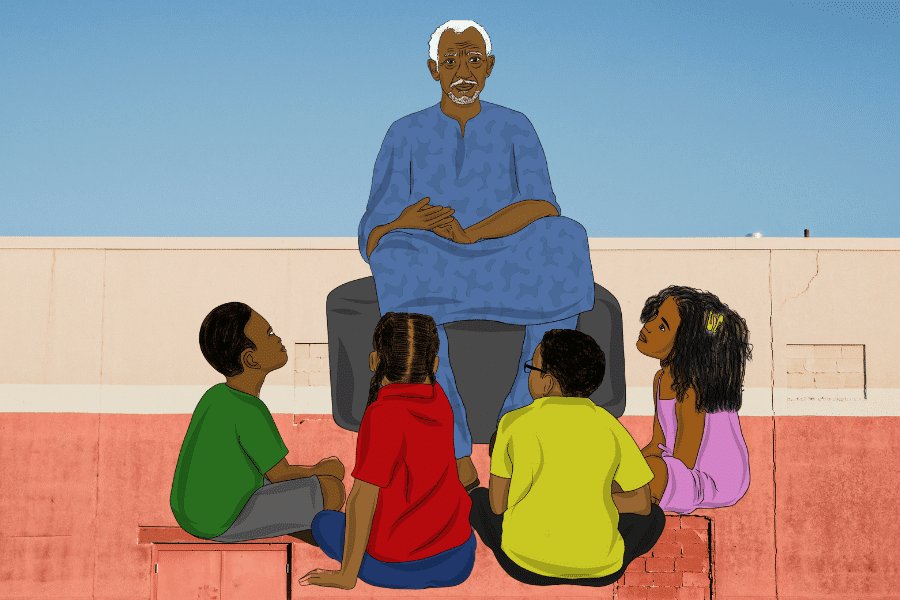
    “The oral tradition has always been a hallmark of West African culture for generations long before colonization, and so storytellers have been the truth tellers,” said Dr. Geremie Sawadogo, a World Bank talent manager and storyteller, who, as a child growing up in Burkina Faso, would gather with his family to listen to story hour on national radio every Tuesday evening.

    David Thuku, an executive coach and storyteller in Nairobi, Kenya, agreed. “Stories are a very structured system of managing life and giving knowledge about such things as governance, values, laws, social sciences and medicine. Medicine men, for example, would tell people which plants to use for different illnesses,” Thuku said.

    “They also taught us morals and our code of acceptable behaviours,” Sawadago added. For many, they are a form of timeless, universal truth.

    African stories can come in many different forms: two- to three-hour speeches, long monologues, oral renditions, poems, sayings, proverbs, fables, folklore tales, visual language, songs and even dance.

    Source link

  • Can France accept its past as an oppressor?

    Can France accept its past as an oppressor?

    The captives were taken to a centre where masked Algerian informers picked out suspected rebels. “Those were detained, interrogated, with a lot of violence. The rest were released.”

    Worse followed. Kihn was on guard duty when he first saw a suspect being tortured with electricity from a hand-cranked generator. “It was unbearable. The man was yelling, jerking around. I had tears in my eyes,” he said, his eyes filling again as he re-lived the moment.

    When he was discharged, no one in his village wanted to hear his war stories, so for decades he clammed up. But memories, nightmares and panic attacks kept tormenting him. When he was 70, a film-maker cajoled him into an interview. He later wrote a book and found a measure of relief.

    Kihn, disgusted by his experiences, would not touch his military pension. Instead, he and some other former soldiers send the money to local NGOs in Algeria.

    “What we need is recognition of the truth,” he said. “Yes, we were criminals in Algeria.”

    France has tried to turn the page, but the past will not die.

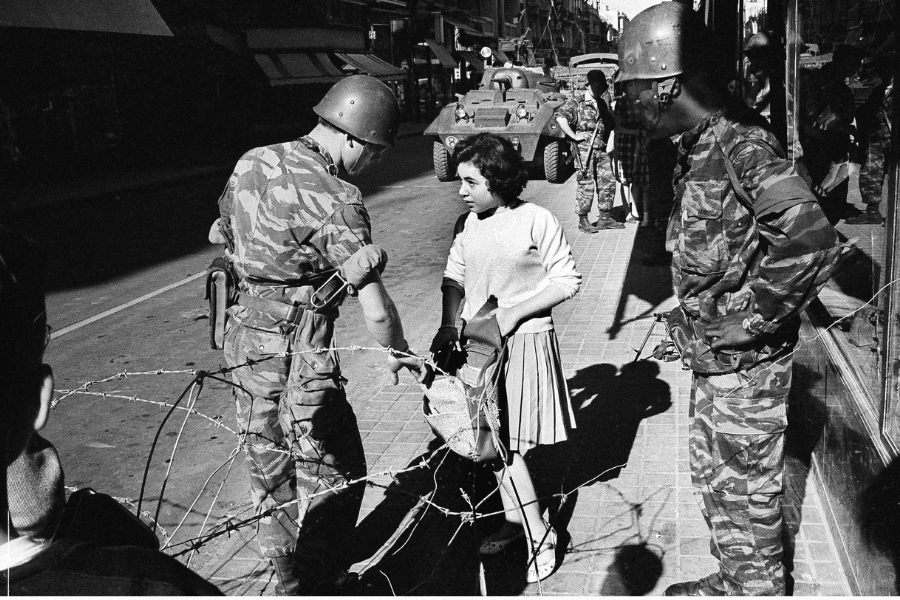
    It took France until 1999 to recognise formally that its struggle in Algeria had been a “war,” even though it had mobilised up to two million conscripts for “operations to restore order” against the independence-seeking fighters of the Front de Libération Nationale (FLN).

    The French campaign led to widespread torture, the forced displacement of two million civilians to cut the FLN from its rural base and countless summary executions and “disappearances.”

    The FLN was ruthless, too, terrorising French and Algerian civilians and eliminating its political rivals and eventually factions within its own ranks.

    The conflict, which brought violence to both sides of the Mediterranean, exposed deep divisions within France, toppled the country’s Fourth Republic and raised the spectre of civil war.

    After President Charles de Gaulle set Algeria on course for independence with a 1961 referendum, some French die-hards formed the Organisation de l’Armée Secrète (OAS), an armed group that mounted bomb attacks and assassinations, including at least one attempt to kill the French leader.

    OAS members eventually benefited from sweeping post-war amnesties. France sought to draw a veil and forget, but the past refused to die.

    Keeping the past alive

    Suzy Simon-Nicaise, 67, who heads one of the main associations of pieds-noirs, is determined to preserve a particular vision of the lost world of French Algeria, its culture, history and lifestyle.

    In her memory, it was a cosmopolitan place where Europeans mixed freely with Muslims based on mutual respect, where the French colonists had promoted development from the ground up.

    France, she concedes, may have committed some “not very glorious” deeds early on in its conquest of Algeria. “But Algeria did some things that were just as unbearable, if not more so,” she said.

    At a memorial event in Perpignan, Simon-Nicaise, wearing a dress as bright as her red hair, recounted a massacre of pieds-noirs in the mainly European city of Oran on July 5, 1962, the day Algeria became independent.

    She said 700 to 1,200 people were killed that day while French troops, in their barracks since the ceasefire in March, stood by with orders not to intervene. An exact toll has never been established. Macron, in his address to the pieds-noirs this year, said “hundreds” had died.

    Simon-Nicaise’s family had planned to stay on after independence, but an Algerian friend working with her father warned them to leave urgently, advice driven home by a French official who told her father that his name was on an FLN death-list. The family raced to the port with four suitcases.

    Around 800,000 pieds-noirs, the vast majority of the Europeans living in Algeria, also voted with their feet, believing their only choice was “la valise ou le cercueil (the suitcase or the coffin).”

    The French government had not anticipated such an exodus, and the flood of new arrivals met a chaotic and chilly reception.

    “We were treated worse than foreigners,” Simon-Nicaise said, recalling how she, then five, and her family were put up in a holiday village. “My family was crying, and everyone else was dancing the twist.”

    Later, her family had to share a cramped, squalid apartment with another family in Le Havre. Simon-Nicaise went to school there, where she heard a classmate declare: “Don’t talk to her. She’s a dirty pied-noir.”

    France’s rejected allies in Algeria

    If the pieds-noirs were mostly unwelcome in France, the harkis — Algerians who had served with the French military were doubly so. De Gaulle had rejected any idea of taking them in, effectively abandoning tens of thousands of men and their families to FLN vengeance.

    Nevertheless, up to 90,000 harkis made it to France, many helped by their French commanders. They were consigned to grim army camps behind barbed wire, most of them for many years.

    “There were no toilets, one washbasin for 10 families,” said Abdelkrim Sid, who was six on arrival and spent the next 15 years with his sprawling family in isolated camps.

    His father, like many other harkis, was later put to work in forestry settlements on the minimum wage but never fully integrated into the wider economy.

    “My father was a spahi (cavalryman). He really believed in France,” said Sid at the bleak Rivesaltes camp near Perpignan.

    In Rivesaltes, a museum now commemorates successive waves of inmates dumped there from 1939 onwards, among them refugees from the Spanish civil war, Gypsies and Jews interned by the wartime Vichy régime, German prisoners of war and then harkis.

    Sid, a burly retired truck-driver, says he can’t forget how shamefully the harkis were treated in the camps, which he likened to pens for animals.  “It was as if we had the plague.”

    Troubled identity

    The war deeply marked the Algerian diaspora, swelled by migration that also drew in Moroccans and Tunisians whose labour was in demand as the French economy revived after World War Two.

    North Africans today make up the bulk of France’s estimated 5-6 million Muslim citizens, roughly 8% of its total population, the biggest ratio in any European country.

    France, which prides itself on its principle of laïcité, which makes the secular state neutral towards religion, has found it difficult to come to terms with its Muslim minority. The complex relationship is made no easier by mutual mistrust that has lingered since the colonial venture in Algeria.

    Magyd Cherfi has tried hard to integrate in his native France, with outward success as a musician and songwriter, a devotee of French literature and an author in his own right.

    Yet as he explained at a café in a mostly Arab quarter of Toulouse, the city where he grew up, he has never felt fully accepted as French. Ironically, he knows that many in the deprived milieu of his childhood resent him as a traitor to his origins.

    “It’s as if being French is a mountaintop. You climb and climb, and it’s never far enough,” he said.

    “In the street, they ask, ‘Oh, where are you from?’ That means you are not French, because if you are, no one asks that question.”

    Cherfi’s father, a building worker, fled to France after four of his brothers were killed fighting in the maquis, or underground, during the Algeria war. “He only told us fragments of what happened then, about bad things the French did to his family, girls raped, cousins killed, imprisoned, tortured.”

    So Cherfi grew up with an uneasy sense of difference from his French chums because France had been the enemy in Algeria. Yet when his parents decided to stay in France, when he was about 15, they told him, “You must respect the French. They give us work. They feed us.”

    He admires much of what France offers, notably freedom and secularism, but says it fails to honour its own principles when it comes to its non-white citizens.

    “That’s the big rip-off of the republic. France is unable to build a narrative that is anything other than exclusively white. We barely exist in French history,” he said.

    “So France is still sausages, accordions, traditions, villages, and now, with millions of Muslims here, you feel they cling to this even more. So it’s quick, get out the accordions!”


    Questions to consider:

    • What was Algeria’s relationship to France before it gained independence in 1962?

    • How were the post-war experiences of the pieds-noirs and harkis similar and different?

    • Why do you think it took until 1999 for France to recognize the conflict over Algeria as a war?

    • What would you do to improve the integration of France’s Arab/African-origin citizens?


    Source link

  • The importance of Ukraine to the world

    The importance of Ukraine to the world

    A radical violation of international law

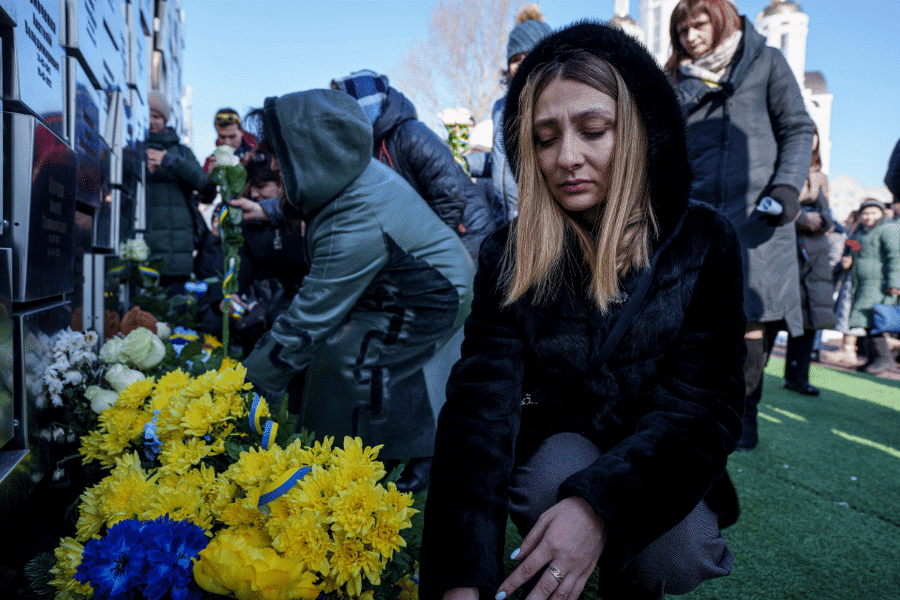
    Daniel Warner: Since the end of World War Two in 1945, the relations between countries have been more or less governed by certain norms. The United Nations and international law have been the foundations for over 70 years of relative peace. While there have been small outbreaks of violence, there have been no major violent confrontations. The Cold War was not a hot war.

    The Russian attacks on Ukraine violate numerous parts of that established order. While the Russian president claims that Ukraine is not a real state and is part of Russia, Ukraine, since the end of the Soviet Union in 1991, is a country recognized by the international community. A country bombing another country is a radical violation of international law.

    How to respond? While the government of Ukraine will attempt to respond militarily, other countries will try to impose sanctions on Russia in order to stop the fighting while not engaging in a major conflict.

    The implications around the world will vary. But the most damaging implication for everyone will be the lack of respect for international norms that have been the bedrock of peace for over 70 years.

    Inconsistent champions of international norms

    Alistair Lyon: Putin’s invasion of Ukraine is an unconscionable violation of international law, the integrity of national borders and any respect for the rules of the United Nations, where Russia sits as a veto-wielding member of the Security Council.

    Anglo-Saxon outrage at the Russian leader’s use of military power would carry more weight if the United States and Britain had themselves proved consistent champions of international norms since the Cold War ended with the collapse of the Soviet Union in 1991.

    The U.S.-British invasion of Iraq in 2003 punched a huge hole in the post-Cold War security system. The war, launched on spurious grounds and without U.N. authorisation, was opposed not only by Russia and China, but also by France and other NATO allies such as Germany.

    The assault on Ukraine might seem more shocking to some because it threatens peace in Europe, but the Iraqi debacle helped destabilise the Middle East, spurred Islamic militancy and crippled U.S. influence in the region, leaving a vacuum filled by others, including Turkey, Iran and Russia.

    The commitment of the United States to international law also came into question when former President Donald Trump endorsed Israel’s 1981 annexation of Syria’s Golan Heights and recognised Jerusalem as the Jewish state’s capital, including the city’s occupied eastern sector, which Palestinians see as their future capital. President Joe Biden has not reversed those moves.

    A fear of democracy

    Julian Nundy: What if the reason for invading Ukraine was nothing to do with NATO after all? What if it was just a fear that the functioning democracy that has developed in Russia’s southwestern neighbor could be contagious?

    Amid all the media attention given to Moscow’s calls for NATO to renounce any idea of admitting Ukraine into the western military alliance, there have been commentaries, stirring less debate, that it is President Vladimir Putin’s obsession with “color” revolutions in former Soviet republics — especially the 2004 Orange Revolution in Ukraine that led to a re-run of a presidential election and the final inauguration of a westward-looking government — that prompted his decision to use force to bring Ukraine into line.

    “On the whole, strategic stability is maintained … NATO forces are not building up, and they are not showing threatening activity,” wrote one commentator at the end of January. And not just any commentator. It was retired Colonel General Leonid Ivashov, chairman of the All-Russian Officers’ Assembly, who as a serving general occupied several of the most senior command posts in the Soviet and Russian armies.

    The statement was given prominent coverage on Ekho Moskvy (Moscow Echo) radio, which is owned by the Gazprom gas giant’s media arm, suggesting that Putin had less than total backing for his policy in very high places. Ivashov said Putin threatened to make “Russians and Ukrainians mortal enemies” and turn Russia “into a pariah of the world community.”

    If the invasion really was motivated by a fear of democracy, then Russia itself — where there are now reported to be more political prisoners than in the Soviet Union 40 years ago and where free speech and other rights are being reined in on a regular basis — can expect yet more erosion of basic freedoms. And if Putin succeeds in bringing Ukraine under control, who will be next? The former communist states of eastern Europe, most probably, and then, perhaps, the rest of Europe.

    Climate change will go on the back burner.

    Helen Womack: Quite apart from the suffering of Ukraine, this war may go well beyond its borders. If Putin attacks the Baltic States or Poland, NATO will be obliged to come in militarily.

    NATO member Hungary, which under Prime Minister Viktor Orbán has in the past sought friendly relations with Putin, will be forced to make clear where it really stands.

    War between Russia and NATO would amount to a third world war, and let us not forget that Russia has nuclear weapons. But Putin is NOT Russia, and his war is not likely to be popular with ordinary Russians. The only hope is that internal opposition will grow.

    Ultimately, this war will bring Putin down but at what cost? The world has better things to be thinking about than war, but again climate change will go on the back burner while we focus on this.

    Ukraine does matter.

    Alex Nicoll: Does Ukraine matter to the wider world? Well, if armed gangsters took over your neighbour’s house, what would you do?

    Would you, like Donald Trump, say “genius move,” shrug your shoulders and go back to your golf game? Or might you think that your house, and your friends’ houses, could be next?

    This is the situation facing all western governments today as they watch the invasion of a democratic European country. We live in a sophisticated, digitised world. But we can see plainly that our comforts can be undone by old-style tanks, missiles and bombs. The atrocities of war have not been consigned to history.

    If you are American, your reaction might be that this is happening a long way away, so why should I care? Someone else’s problem! But remember that the United States too was attacked in 1941 and 2001, resulting each time in American involvement in long global conflicts and the loss of many American lives. Because of past traumas, the U.S. is party to numerous alliances, agreements and friendships. These benefit Americans just as much as other people around the world. Thanks to strong alliances, a third world war has been averted.

    So far. It is for mutual self-preservation — leaving aside moral outrage at Russia’s attack on Ukraine — that Western countries now need to unite to starve Putin of money and support, so that the venture in Ukraine fails and global conflict is averted. It does matter.

    None of this bodes well economically.

    Bryson Hull: The conflict in Ukraine is already raising energy prices and that in turn will make climate change policies, which entail higher costs or wholesale energy system changes such as eliminating oil and natural gas, less palatable to voters. Politicians will correspondingly find it less attractive to support aggressive steps to mitigate climate risks until energy prices trend lower.

    The realities of war in Ukraine and the global economic spillover will necessarily put more aggressive carbon-zero efforts to the wayside because of cost concerns. The tradeoff there is that practical, achievable energy and climate policies will fall back into vogue with politicians — who fear high energy costs as the election risk they are — instead of activist/pressure group-driven policies like those that are faring disastrously in the UK and Europe. Good sense and appropriate urgency may now be able to coexist in the sphere of energy prices versus climate ambitions.

    There are already about 20 U.S. liquified natural gas cargoes diverted to Europe from Asia on a pure arbitrage market play because of Ukraine. Already they’re running up against offloading capacity issues. High crude prices fund the war, and you can already see the Biden Administration greens doing everything they can to avoid the U.S. stepping into the gas supply breach with Democratic Senators urging a liquefied natural gas export ban.

    With the highest inflation in 40 years and gasoline (petrol) back at seven-year highs, none of this bodes well economically unless Biden goes Keynesian and cranks up the war machine.

    Europe needs Russian gas.

    Jeremy Lovell: Putin has very openly been using energy as an economic and political lever on Europe for some time. I reckon Europe needs Russian gas on balance rather more than Russia needs Europe’s gas market. It has VAST resources of untapped gas such as the Shtokman field and can always supply elsewhere given time. China is a good option there.

    But both Putin and Xi appear to have megalomaniac tendencies — although one is rather more thuggish than the other, at least on the surface — and an alliance between the two might be a bit fragile in much more than the immediate term.

    Given that the Ukraine venture seems rather unlikely to have been a spur-of-the-moment thing, I assume Putin calculates Europe will fold quietly in a relatively short time, giving him carte blanche to act at will and isolating the U.S. even further.

    The Brits may crow about the fact the UK does not import much if any Russian gas. But gas is a pure commodity. Supplies of floating liquefied natural gas (LNG) frequently change destination several times on any given voyage. So if Russia fiddles with gas supplies — or Ukraine taps off even more than it usually does — then Qatari LNG heading for South Wales or London will simply divert to Belgium or France, and the UK, which has minuscule storage facilities, will be left hanging.

    No legal standing

    Robert Holloway: Putin’s legal justification for the invasion is very flimsy, to say the least. He said he acted “in accordance with Article 51 of the United Nations Charter” after two provinces in eastern Ukraine sought Russia’s help.

    The UN Charter recognises the right of a member state to self-defence in case of armed attack. Even allowing Putin’s breath-taking claim that Ukraine was the aggressor, the breakaway provinces are not UN member states and have no legal standing under the Charter. And Russia, which is a member, is not under attack.

    The Charter goes on to say that an attack on a member state must be reported to the UN Security Council so it can take measures to maintain international peace and security.

    But even if Ukraine reports the invasion to the UN, Russia is one of the five permanent members of the Security Council with the power to veto any of its decisions.

    A carnivore among herbivores

    Tom Heneghan: Before leaving Paris last week, I heard the French philosopher Luc Ferry say on French radio: “Putin is a carnivore in a world of herbivores.” That goes to the heart of what is happening now. Since the fall of the Soviet Union, it seemed that most countries were playing by the post-World War Two rules that say borders are inviolable and problems between countries should be solved peacefully. That has not always been the case, of course, but all knew the rules and mostly kept by them. The speech by the Kenyan ambassador to the U.N. the other day was a good example of that.

    Biden keeps on saying we will not send U.S. troops to Ukraine, and that’s both a recognition of reality in U.S. politics and admission that Russia should not be unduly provoked. But the U.S. has been willing to send U.S. troops to a lot of countries in recent decades, like Kuwait, Iraq, former Yugoslavia and Afghanistan. They were smaller and the wars were theoretically winnable. The wars did not always turn out as planned. Both the U.S. and its adversaries in those countries were carnivores — think Saddam Hussain or Slobodan Milosovic — but the forces were unequal and politics messy.

    Russia has been a carnivore in recent years — Georgia, Crimea, in a lesser way Belarus — and continues now. NATO now shows admirable resolve in standing up for the rules-based world order. But how long will that last? Putin is thinking of history and ready to play a long game here. The West — for lack of a better term — has to adjust to the long term too. This doesn’t mean the West has to become a carnivore as well, but it has to think far more strategically about Russia than it has so far. Ukraine is bigger and more central than those smaller wars. That Putin opted for a full invasion rather than more green-man salami tactics tells us that his goal is to turn the clock back to bloc-style divisions.

    A lot of commentators have been saying this crisis is like the Cuban Missile Crisis of 1962, and in many ways that’s true. But I think another important comparison is with the 1948 Berlin Blockade, when the USSR blocked Allied rights to ship goods through East Germany to West Berlin. The Cuban Missile Crisis was a perilous standoff that ended quickly. The Berlin Blockade lasted about a year and a half and required sustained Allied solidarity and the famous airlift to West Berlin. We’re going to need that kind of sustained solidarity to ensure we can hold the line on the rules-based world order.

    One of the elements in any sustained strategy is weeding the Russian oligarchs out of the Western economic system. Suspending Nordstream 2 was a good start. How about stopping all the money laundering the oligarchs get away with in Western countries? All the property they’ve bought up in London, New York and elsewhere to squirrel their money abroad? And what about their relatives, like the children who get to study in the best universities we have? Part of Putin’s power lies in the way he has allowed oligarchs make money as long as they do not play politics and contribute to soft-power causes he likes, such as the “Russkii Mir” (Russian World) projects promoting Russian culture and the massive church-building of the Russian Orthodox Church? These non-governmental organizations are not non-political.

    A carnivore among herbivores. Not all carnivores have won against smart herbivores, but Moscow has a far more crafty carnivore in power this time around. We need sustained solidarity now to deal with this challenge, probably more than we seem to be capable of these days. Let’s hope we can do it.

    A major blow to Pax Americana

    Jim Wolf: Russia’s armed thrust into Ukraine marks a major blow to the so-called Pax Americana, the state of relative peace since the end of World War Two. That’s when the United States became the world’s top economic and military power.

    The land, air and sea attack on an increasingly pro-Western Ukraine supercharges a Great Power rivalry as U.S. clout has been slipping and China-Russia solidarity is growing.

    The old Soviet Union dissolved in 1991 after a 40-year “Cold War” with the U.S. — a geopolitical struggle that also dominated the world view of both powers’ respective allies and blocs. With the Soviet Union’s collapse, its 15 former Communist-controlled republics gained independence, leaving the U.S. the sole remaining superpower.

    Russian leader Vladimir Putin has called that fall “the greatest geopolitical catastrophe” of a 20th century that was also wracked by two world wars. In launching the biggest attack by one state against another since the end of World War Two, Putin said he was protecting Russian citizens among others subjected to “genocide” in Ukraine, which has infuriated Moscow by aiming to join the U.S-led NATO military alliance.

    Putin warned against outside interference, saying Russia is “a powerful nuclear state.

    Off the Earth, for the Earth

    Tira Shubart: At the moment onboard the International Space Station is a crew of seven: two Russians, four Americans and a German. Other than the German and one American – who is a doctor – they are bred and trained in the military.

    The crew all speak English and Russian.

    In fact, one of the Americans, Kayla Barron, is a Submarine Warfare officer. The doctor has been working with Russians — and on joint missions with the Russians since 1997. His Russian is particularly good.

    The United States and Russia — NASA and Roscosmos — were in the process of negotiating more crew exchanges. And at the moment there are three Russian cosmonauts — who are certainly military as all cosmonauts are — training at the Johnson Space Center in Houston.

    Finally, on March 30, one of the Americans, Mark Vande Hei — also a professor at West Point — will be landing in Kazakhstan with the two Russians. Traditionally, a NASA team flies in through Russia and joins their recovery team, then bounces back through Russia to the United States. It will be interesting to see what happens.

    Twitter posts today from the international space community were saddened and alarmed by the Ukraine crisis but agreed that solidarity in space, which one called “the pinnacle of human cooperation” would not be threatened. After all, the U.S. Astronauts and the Russian Cosmonauts of the Cold War era held each other in high regard and the crew members onboard “have trained together for years and are personal friends.”

    There is a club of Space Explorers which are all the astronauts and cosmonauts who have flown. They say they simply regard themselves as earthlings after looking down and seeing no borders on our planet. But surely the ISS motto of “Off the Earth, For the Earth” will be in their minds now.

    Embers of dead empires

    Jeremy Solomons: An immediate African perspective on the Ukraine invasion was shared by Kenyan U.N. Ambassador Martin Kimani, who used a speech at the UN Security Council on Tuesday to warn Russia to respect its border with Ukraine, using Africa’s colonial past to highlight the dangers of stoking the “embers of dead empires.”

    More controversially, he went on to say: “At independence, had we chosen to pursue states on the basis of ethnic, racial or religious homogeneity, we would still be waging bloody wars these many decades later. Instead, we agreed that we would settle for the borders that we inherited. But we would still pursue continental political, economic and legal integration. Rather than form nations that looked ever backwards into history with a dangerous nostalgia, we chose to look forward to a greatness none of our many nations and peoples had ever known … not because our borders satisfied us, but because we wanted something greater, forged in peace.”

    For some commentators, who are concerned about neo-colonialism on the African continent, this invoked the somewhat cynical conclusion of the late Tanzanian leader, Julius Nyerere, who said: “You multiply national anthems, national flags and national passports, seats at the UN and individuals entitled to 21 guns salute, not to speak of a host of ministers, prime ministers and envoys, you have a whole army of powerful people with vested interests in keeping Africa balkanised.”

    Floods, COVID-19, Ukraine

    Robert Hart: Obviously the UK government, as a committed member of NATO and a devoted ally of the United States, has joined the international clamour denouncing Russia’s attack.

    Prime Minister Boris Johnson has labelled the Russian offensive as “a tidal wave of violence” and declared that a “massive package” of sanctions will be introduced against Moscow.

    No doubt many young UK graduates and university students will see the Russian attack with alarm and deep concern about where this will all lead and how it may affect their future. But many others, young and older, will be reaching for an atlas to check where Ukraine is and wondering how much this matters.

    The UK itself has just come through a period of three consecutive typhoon strength storms which have caused major damage and severe flooding in many parts and given millions of people, young and old, plenty to worry about in their own lives.

    And those who follow national politics at all will have been hooked by the still ongoing saga of the prime minister’s involvement in a string of illicit drinks parties held in No.10 Downing Street during the peak months of COVID-19 lockdown. Smart young people don’t have to be super-cynical to see how the floods and now the Ukraine drama could divert public attention from Boris Johnson’s role in the lockdown parties scandal.

    Russian nuclear missiles feel very close to home.

    Tiziana Barghini: News of Russia’s invasion of Ukraine is an awful awakening. Putin has shown total disdain for international borders, agreements and customs. I wonder what his real motivations are – a way to build domestic consensus? I do not understand who is benefitting from this.

    This morning at a bakery in Milan, someone attached a sign – “Putin = Hitler”. World War Two — a story often told by my parents and grandparents. I feel relieved that I am burying my Mom today. My parents are not here anymore to see the world going on that path again. They were sincerely convinced that wars were something of the past.

    I feel thrown back into the Cold War years. Russian nuclear missiles feel very close to home in Milan and even closer to Germany, where my son lives. First the pandemic and now the war. I can’t believe we are really living this.


    Questions to consider:

    1. What reasons did Russian President Vladimir Putin give for invading Ukraine?
    2. How has the West and its allies reacted to the Russian aggression?
    3. Does the conflict in Ukraine matter to you, and if so, why?


    Source link

  • Decoder Replay: Bacteria doesn’t stop at the border

    Decoder Replay: Bacteria doesn’t stop at the border

    During the Covid pandemic, nations realized they needed to work together to keep their people safe. That’s where the World Health Organization comes in. 

    Source link