Category: democracy

  • Where are our young leaders?

    Where are our young leaders?

    Why is it that young leaders are in such short supply? 

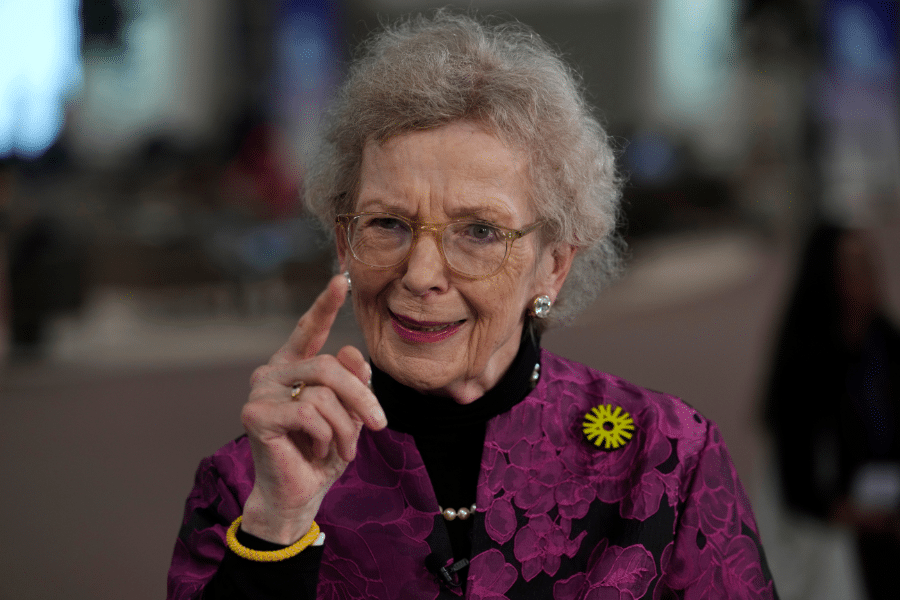
    Former Irish President Mary Robinson recently gave one of the most forceful condemnations of Israel’s war on Gaza. Now the UN High Commissioner for Human Rights, Robinson visited Egypt and the Rafah border and called on states to implement “decisive measures” to halt the genocide and famine in Gaza

    “Governments that are not using all the tools at their disposal to halt the unfolding genocide in Gaza are increasingly complicit,” she said.  

    Robinson is a member of an organization that calls itself “The Elders.” Founded in 2007 by Nelson Mandela, the South African political prisoner turned president, the group advocates peace, human rights and environmental sustainability. 

    In her comments, Robinson chided today’s leaders for not fulfilling their legal obligations. “Political leaders have the power and the legal obligation to apply measures to pressure this Israeli government to end its atrocity crimes,” she said. 

    Robinson is 81 years old. Where are the young leaders making such statements? Where are they organizing groups like The Elders? 

    Youth power

    The media’s attention to Robinson was impressive. Her August press conference was followed by several lengthy interviews on major networks. An independent group like The Elders — whose members include former presidents, UN officials and civil society activists — deserves recognition. It also invites reflection on the role of age in today’s accelerated time. 

    Being elderly and having once held an important position was not always politically positive. “Don’t trust anyone over 30,” was a popular expression in the 1960s. Dr. Martin Luther King Jr. was just 26 when he led the 1955 Montgomery bus boycott and 34 when he delivered his  “I Have a Dream” speech during the 1963 Washington rally in front of the Lincoln Memorial. John F. Kennedy was 30 when he was elected to the U.S. Congress and 43 when he was elected president. Student leaders made their marks on U.S. politics in the 1960s. 

    Mario Savio was 21 when he led the Berkeley Free Speech Movement in California, which demonstrated the political power of student protests. 

    Mark Rudd was a 20-year-old junior when he led strikes and student sit-ins at Columbia University to push for student involvement in university decision making.  

    Tom Hayden was 20 when he cofounded Students for a Democratic Society (SDS), a national student movement that opposed the Vietnam War and pushed for a complete reform of the political system. At age 22, he wrote the Port Huron Statement, a political manifesto that called for non-violent student activism and widespread civil disobedience achieve the international peace and economic equality that government leaders had failed to achieve. 

    Savio, Rudd and Hayden were more than just campus activists; they were front page national news. 

    Age politics

    Where are the student leaders opposing Trump’s attack on universities and freedom of expression now? College presidents, professors and boards of trustees are shouldering the burden. There is a generational vacuum. 

    Youth and youthful dynamism are no longer viewed as political positives. Today, no one could imagine the 79-year-old Donald Trump playing touch football on a beach in Florida as John F. Kennedy and family did at Hyannis Port on Cape Cod when he was president.

    In reality, Kennedy suffered from many serious medical conditions but they were largely hidden from the public; it was crucial that he maintain his youthful image. Trump swinging a golf club and riding in a golf cart is not a youthful image; even his awkward swing shows his age. 

    Nor are the pictures of the members of his Mar-a-Lago crowd youthful; they look like a meeting of grandparents. As slogans reflecting their times, Make America Great Again is far from the New Frontier which called for an end to poverty and investing in technology and science to send humans to the moon.

    Robinson visited the Rafah crossing with another member of The Elders, Helen Clark. Clark is 75 years old, the former Prime Minister of New Zealand and United Nations Development Program administrator. 

    Generational change

    Of her visit Clark said that she was horrified to learn from United Nations Sexual and Reproductive Health Agency that the birth rate in Gaza had dropped by over 40% in the first half of 2025, compared to the same period three years ago. “Many new mothers are unable to feed themselves or their newborn babies adequately, and the health system is collapsing,” Clark said. “All of this threatens the very survival of an entire generation.”

    Based on her years of experience, Clark wisely talked of generational change.

    Age benefits people who, like Robinson and Clark, have held important positions. Because of that experience, members of The Elders take no political risks by speaking out. 

    The 83-year-old U.S. Senator Bernie Sanders is a notable exception of an elder speaking out in the United States while still in office. For whatever reasons, the elderly members of the Senate — there are currently seven senators who are in their 80s and 17 are in their 70s — have been particularly silent on issues like Gaza. 

    In fact, they have been particularly silent on most issues. 

    Where are the Savio/Rudd/Haydens today? A comparable young leader is Greta Thunberg. Greta was only 15 when she initiated the climate strike movement Fridays for Future. But while Greta initiated the movement, she did not organize it as Tom Hayden did with the formation of the SDS. Thunberg is an important symbol and example of courage — the drone attack on her Gaza-bound “Freedom Flotilla” is beyond reprehensible and consistent with Israel’s total war — but she is not a movement organizer on a national or global level. 

    What makes statements by people like Robinson and Clark so impressive is that they stand out in a realm of stunning silence. 

    The New Frontier

    The Democratic Party in the United States, for example, has no serious leadership. (The same might be said for Socialists in Europe and the Labour Party in Great Britain.) The Democrats inability to rally around 33-year-old Zohran Mamdani who is running for mayor of New York City is an example of the Party’s cowardice and/or lack of vision. 

    While the older, established Democrats are quick to criticize Trump, they offer no new strategies or actions.

    We are desperately waiting for something new. JFK’s motto The New Frontier touched a foundational American embrace of the frontier, the space between the known and new. Back in 1893, historian Frederick Jackson Turner came up with a theory that the continual expansion of the American frontier westward allowed for continual reinvention and rebirth, and that shaped the character of the American people. This frontier theory is essential to an America’s identity built on always moving forward. In contrast, Trump’s return to the past is anti-frontier. MAGA is nostalgia and passé. 

    Where are today’s young progressives presenting new political possibilities as Hayden and his cohorts did with Port Huron and SDS? Or does asking that question show that I am being too nostalgic about the past as well?   

    A version of this article was published previously in the magazine Counterpunch.


    Questions to consider:

    1. Who are “The Elders” and what are they trying to achieve?

    2. What was “The New Frontier” and what did it say about the American character?

    3. Do you think you would be more likely to vote for some very old over someone very young for political office? Why?
     

    Source link

  • There’s all kinds of ways to bleep out speech

    There’s all kinds of ways to bleep out speech

    This morning we woke to the news that the ABC television network in the United States had suspended late night talk show host Jimmy Kimmel indefinitely over a statement he made about the accused assassin of right-wing political activist Charlie Kirk. In July, the CBS network announced that it would end The Late Show with Stephen Colbert in May. Colbert has for years mocked and criticized Donald Trump. These two announcements got us thinking about all the different ways governments and those in power try to silence speech.

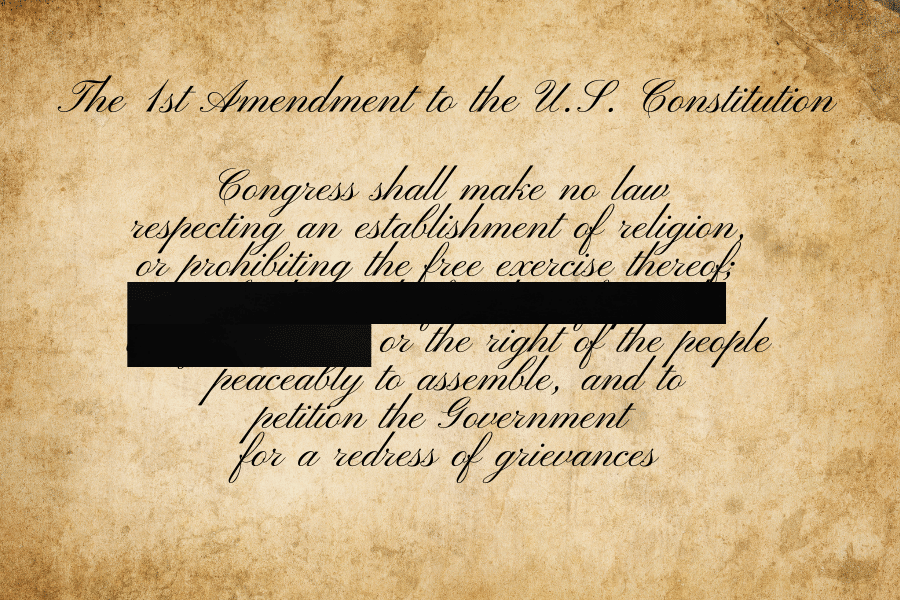
    The very first amendment to the U.S. Constitution begins with this phrase:

    Congress shall make no law respecting an establishment of religion, or prohibiting the free exercise thereof; or abridging the freedom of speech, or of the press …

    Because of that amendment, the world has long considered the United States the model for free speech — few countries live up to the standard that the United States has historically set. But across the world now, free speech seems to be endangered. So to put into perspective the many ways censorship can occur and in the many places we see this happening, we decided to offer up an assortment of News Decoder stories on this topic by both our professional correspondents and student authors.

    Source link

  • How Redistricting Threatens Democracy in the 2026 US House Elections

    How Redistricting Threatens Democracy in the 2026 US House Elections

    As the 2026 midterm elections approach, efforts to manipulate congressional district boundaries—under the guise of redistricting—pose a serious threat to representative democracy in the United States. These efforts are not simply a matter of partisan politics; they represent a calculated attack on the principle of one person, one vote, and on the fragile trust working Americans place in democratic institutions.

    Across multiple states, redistricting maps are being drawn to favor incumbents and dominant political parties, most often through a practice known as gerrymandering. While both major parties have been guilty of gerrymandering, the recent wave of redistricting efforts has intensified in key battleground states, particularly following the 2020 Census and court rulings that rolled back federal oversight.

    Some of the most blatant manipulations are unfolding in Southern and Midwestern states, where legislatures have redrawn districts to dilute the voting power of Black, Latino, and low-income communities. In states like Alabama, Georgia, Louisiana, North Carolina, and Ohio, courts have intervened—only to be ignored, delayed, or overruled by higher courts, including the U.S. Supreme Court. The result: districts that favor white conservative voters while silencing diverse urban and working-class voices.

    These distortions in representation aren’t merely political—they have real consequences for education policy, healthcare, labor rights, and civil rights. When working families and students find themselves in districts designed to neutralize their votes, their needs are less likely to be met by elected officials. Funding for public education, protections for contingent workers, and relief from student loan debt are often neglected in favor of corporate interests and ideological agendas.

    The U.S. Supreme Court’s 2019 Rucho v. Common Cause decision paved the way for even more aggressive gerrymandering, ruling that federal courts could not adjudicate claims of partisan gerrymandering. That decision effectively gave state legislatures a green light to draw lines with political intent, even when the result undermines basic democratic principles. And with the Voting Rights Act gutted in Shelby County v. Holder (2013), many communities of color no longer have a legal shield against discriminatory maps.

    In a just system, redistricting would be handled by independent commissions. In some states, this is happening—California, Michigan, Arizona, and a handful of others have taken steps toward fairer maps. But in most of the country, the party in power controls the process and uses sophisticated data tools—often developed by private firms with little transparency—to fine-tune districts down to the household level. This isn’t democracy. It’s data-driven voter suppression.

    For students, low-income voters, and working-class Americans, the implications are profound. A House of Representatives that does not reflect the electorate cannot be expected to act on behalf of its needs. Adjunct professors, student debtors, gig workers, rural teachers, and public librarians already operate on the margins. When their political voices are diluted, they are pushed even further to the periphery.

    These redistricting battles also have an educational cost. In states where partisan gerrymandering has secured one-party rule, legislatures have targeted curriculum content, attacked diversity and inclusion programs, cut higher education funding, and undermined faculty tenure—all without meaningful opposition. Political disempowerment leads directly to institutional decay.

    The Higher Education Inquirer calls attention to these developments not only because they distort elections, but because they warp the social and economic future of the country. The 2026 House elections may be won or lost not at the ballot box but on a redistricting map drafted behind closed doors in state capitals.

    The right to vote is hollow if the outcome is predetermined. The promise of representative government collapses if districts are engineered to deny equal voice. Without public awareness and pressure, these efforts to undermine democracy will go unchecked.

    It’s time to speak plainly: Unless there is a national movement to restore fairness to the process, the House of Representatives in 2026 will be even less representative of the people it claims to serve.

    Sources:

    • Brennan Center for Justice. “The Redistricting Landscape, 2023–2026.”

    • ProPublica. “How Politicians Use Redistricting to Lock in Power.”

    • NPR. “Supreme Court Ruling Lets Partisan Gerrymandering Stand.”

    • Southern Coalition for Social Justice. “Voting Maps and Racial Disenfranchisement.”

    • ACLU. “Gerrymandering: How It Works and Why It Harms Democracy.”

    • U.S. Census Bureau. “Apportionment and Redistricting Data.”

    Source link

  • How important could one court be?

    How important could one court be?


    A polarized electorate

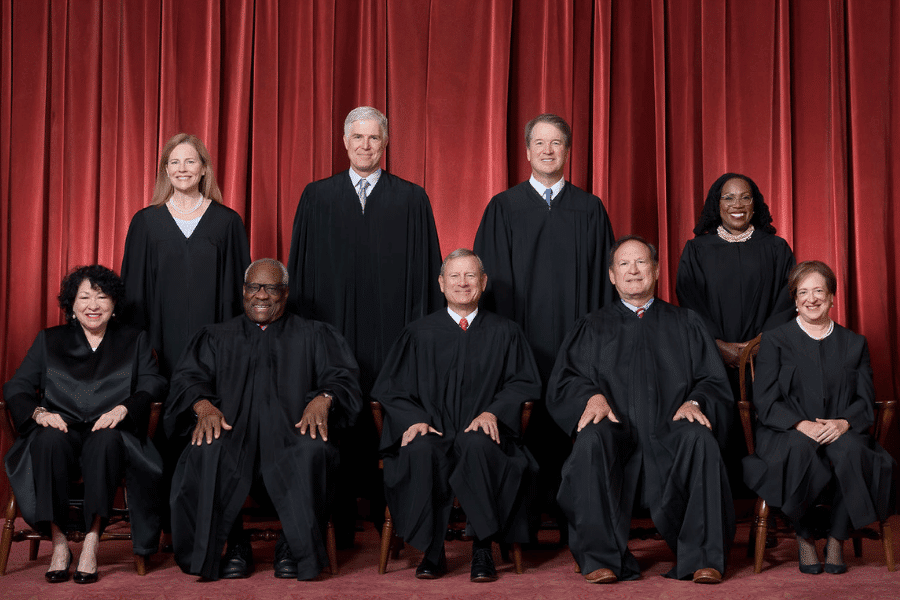
    The first Italo-American to serve on the Supreme Court, Scalia had been appointed by Ronald Reagan, a Republican president. Of the eight remaining justices, four were appointed by Republican presidents and four by Democrats.

    Both parties recognize that Scalia’s successor could tip the scales in close votes. Cases currently before the Court involve climate change, affirmative action, abortion, unions, immigrants and contraception — issues where the electorate is deeply divided.

    Although the Constitution stipulates that the president nominates Supreme Court justices, Republican candidates for the presidency have said the choice of Scalia’s successor should be left to whoever succeeds Barack Obama in the White House next January. Obama, a Democrat, has said he will send a nomination to the Senate in due course.

    That partisan split can be explained by the weight of the Court’s decisions and the polarization of the U.S. electorate.

    Whereas historically the two major parties have been able to agree, sometimes begrudgingly, on the choice of justices, the process has become far more partisan and divisive in recent decades.

    Unfavorable opinions

     The gaping ideological split in the current Congress and an increasingly vitriolic presidential campaign ensure a bitter fight in coming months.

    The political acrimony was reflected in a nationwide poll conducted last year by the Pew Research Center.

    Following recent Supreme Court rulings on Obamacare and same-sex marriage, unfavorable opinions of Court have reached a 30-year high, the survey found. And opinions about the court and its ideology have never been more politically divided.

    “Republicans’ views of the Supreme Court are now more negative than at any point in the past three decades,” it said. Little wonder that Republican presidential candidates are keen to put a conservative in the vacant seat.

    While the Supreme Court is an independent branch of government, its composition is not — and has never been — immune from politics. The nomination of justices is part of the system of checks and balances.

    But at the end of the day, the system requires the willingness of voters and their representatives to adhere to laws, executive orders and court rulings, however deep the political divide. If that faith ever crumbled, the U.S. experiment in democracy would be under threat.


    Source link

  • Decoder Replay: Is truth self-evident?

    Decoder Replay: Is truth self-evident?

    Fake news is dangerous. But it’s hardly new.

    More than 3,000 years ago, the largest chariot battle ever pitted the forces of one of the most powerful pharaohs of ancient Egypt — Ramesses the Great — against the Hittite Empire in Kadesh, near the modern-day border between Lebanon and Syria.

    The battle ended in stalemate.

    But once back in Egypt, Ramesses spread lies portraying the battle as a major victory for the Egyptians. He had scenes of himself killing his enemies put up on the walls of nearly all his temples.

    It was propaganda. “It is all too clear that he was a stupid and culpably inefficient general and that he failed to gain his objectives at Kadesh,” Egyptologist John A. Wilson wrote.

    Disinformation in ancient Rome

    The Roman general Mark Antony killed himself with his sword after his defeat in the Battle of Actium upon hearing false rumors — fake news — propagated by his lover Cleopatra claiming that she had committed suicide.

    American patriots, including the esteemed U.S. statesman and inventor Benjamin Franklin, and their British enemies swapped spurious allegations during the American Revolution that murderous Native Americans were working in league with their adversaries, scalping allies.

    How about the 1938 radio drama, “The War of the Worlds”? Adopted from a novel by H.G. Wells, the radio broadcast fooled some listeners into believing that Martians had landed in America. Newspapers of the day said the broadcast sparked panic.

    But historians today say the panic was exaggerated. So it was fake news about fake news!

    There is no shortage of modern-day instances of fake news. In Myanmar in 2018, the military spearheaded a campaign of fake news, mainly on Facebook, claiming the Rohingya minority had murdered and raped members of the Buddhist majority. The Rohingya were described as dogs, maggots and rapists. The fake news helped trigger violence against the Rohingya that forced 700,000 people to flee their homes.

    The irony is that many in Myanmar had turned to Facebook for information because the military had alienated many citizens with its control of the media. But the same military took advantage of the false reports to crack down on the Muslim minority.

    Election falsehoods

    Similarly, fake news has been used in the Philippines, Indonesia, Malaysia and Sri Lanka to influence the outcome of elections, hide corruption and stir up religious animosity.

    One of the ironies of fake news is it can embolden authoritarian governments to turn the tables and use made-up news as an excuse to crack down on the media. That can enable the regime to control the media message. In other words, fake news to the rescue of autocrats.

    But we should not fool ourselves into thinking that fake news can be cured merely through technological solutions, that it’s a product of our times, that it’s mainly political and that it’s peddled only by our opponents. It’s not the property of any one political party or interest.

    Fake news takes root in the gray area between truth and fiction, an area we can be quite comfortable in. There is something very enticing about fake news, especially if it aligns with our pre-conceived notions. Yet we are apt to think that fake news is the exception, a new aberration.

    We can easily fall victim to fake news in part because we are not always disgusted by lies. We are taught at a very early age that deceit – deception, dishonesty, disinformation – is all around us. And that not all lies are as harmful as others. Our parents read us fairy tales from the earliest of ages, and many tales involve lies.

    The telling of fairy tales

    Take the ancient fable of “The Cock and the Fox,” included in the medieval collection of Middle Eastern folk tales, “One Thousand and One Nights.”

    A hungry fox tries to coax a rooster out of a tree by telling him a tall tale — that there is universal friendship now among hunters and the hunted. The cock has nothing to fear, the wily fox says. It’s a lie, of course.

    So, the equally wily cock resorts to his own lie: he tells the fox that he sees greyhounds running towards them, surely with a message from the King of Beasts. The fox, outwitted, runs away in fear. So here we have two lies in a single story. The moral? “The best liars are often caught in their own lies.”

    Children and their parents are quite comfortable surrounded by lies. Is Santa Claus a malicious or harmless lie?

    Do you know the story of the Wizard of Oz? That classic U.S. movie about a young girl lost in a fantasy world, pursued by witches, struggling to go home? The entire plot relies on a deceit – a supposedly powerful wizard who is nothing more than a bumbling, ordinary conman, who uses magic tricks to make himself seem great and powerful.

    Deceit at the service of entertainment.

    Advertisements are often innocent exaggerations, fiction if you will in the service of business and profit-making. But sometimes ads can veer into falsehoods.

    So fake news is not new. And we’re no strangers to lies. What does that mean for those of us interested in making the world a better place? Should we simply give up because the task is too great?

    Hardly. The lesson is that truth is not black and white, but grey, and it’s a moving target.

    Take, for example, colonialism. From the 15th century on, white Europeans conquered huge swathes of the Americas, Africa, the Middle East, Asia and Oceania. They subjugated millions of people, using brutal violence in many places to subdue indigenous populations. They brought diseases that wiped out millions.

    They exploited natural resources, using native labor and pocketing most of the profit from sales into a global trading network that they established. By 1914, Europeans had gained control of 84% of the globe.

    We know all of that now because colonized peoples have revolted against their colonial rulers and won independence. The wars of independence have been won, yet so many countries around the world are still grappling with the shameful effects of colonialism and racism.

    The ambiguity of truth

    But would everyone have agreed on that depiction of Europeans as rapacious colonialists before the wars of independence?

    Certainly not most of the Europeans, who believed they were exporting a superior civilization to backward natives. Missionaries who led many colonial ventures believed they were doing God’s will by converting native populations to Christianity. And not a few natives turned a blind eye to atrocities and benefited financially.

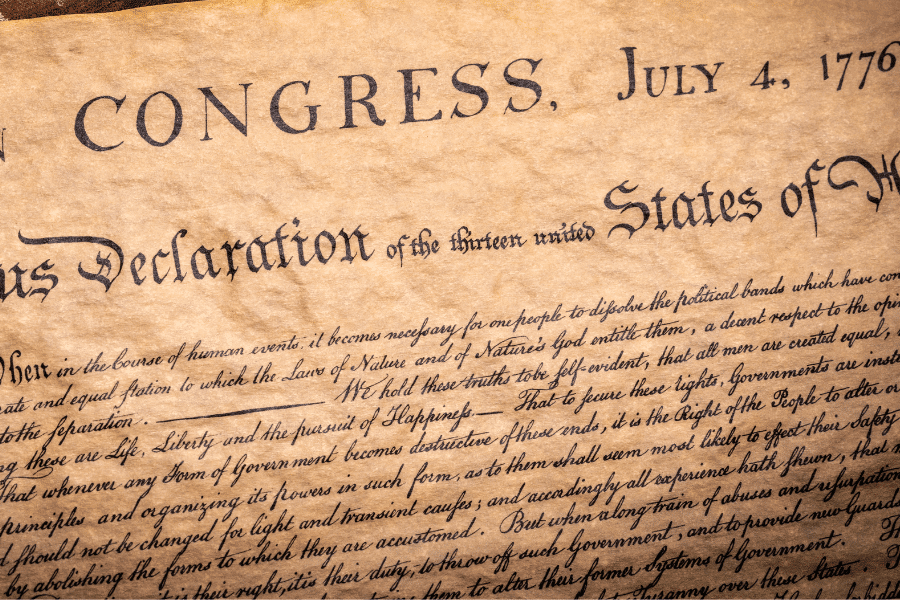
    For a glaring example of the ambiguity of truth, take the United States. Its Declaration of Independence, borrowing from the French enlightenment, states that “all men are created equal,” with “unalienable Rights” to “Life, Liberty, and the pursuit of Happiness.” It put notions of freedom and equality at the heart of the American experiment. Yet it was written by a slave owner, Thomas Jefferson, and represented 13 colonies that all, to one degree or another, allowed slavery.

    Convinced of their superiority and driven by an almost unquenchable appetite for wealth, white settlers drove Native Indians from their homes. The U.S. government authorized more than 1,500 attacks and raids on Indians. By the end of the 19th century, fewer than 238,000 indigenous people remained, down from some 5-15 million living in North America when Columbus arrived in 1492.

    What is more, settlers in the South imported slaves from Africa, forcing them to work on vast plantations and denying them the very rights to life and liberty spelled out in the Declaration of Independence.

    Rights and repercussions

    Both Native Indians and African Americans are struggling to this day to come to terms with the treatment they suffered at the hands of the white colonials.

    Would a white settler have seen himself or herself as a murderer? Hardly. In their minds, they were doing God’s work.

     Mind you, the desire to colonize is not peculiar to Europeans. Imperial Japan and imperialist China both established overseas empires. The Empire of Japan seized most of China and Manchuria. To this day, Chinese nationals and South Koreans harbor ill feelings towards the Japanese. Chinese dynasties won control over parts of Vietnam and Korea.

    There’s an expression in newsrooms around the world: “One man’s terrorist is another man’s freedom fighter.” Put another way, the same individual might seem a terrorist to some, a hero to others.

    Take Yagan, a 19th century indigenous Australian warrior from the Noongar people. He played a key role in early resistance to British colonial rule in an area that is now Perth. His execution by a young settler figures in Australian history as a symbol of the unjust treatment of indigenous peoples by colonial settlers.

    A hero to his people, he was a murderer in the eyes of the British.

    Different perspectives on history

    Or take the Incan emperor, Atahualpa, who resisted the explorer and conquistador Francisco Pizarro, to this day a Spanish hero. Pizarro forced Atahualpa to convert to Christianity before eventually killing him, hastening the end of one of the greatest imperial states in human history.

    How you view Pizarro may depend on where you are sitting and when you lived.

    There are countless modern examples of radically different perspectives on events. Such discrepancies may be inevitable. Dogged journalists can shed light on events and protagonists, and help shape history – for better or for worse.

    Joseph McCarthy was a U.S. senator who in the early years of the Cold War spearheaded a smear campaign against alleged Communist and Soviet spies. Only courageous reporting by a small group of journalists who dared question McCarthy’s tactics and risked being tarred as Communist sympathizers themselves led to McCarthy’s downfall.

    Joseph McCarthy (L) with his attorney Roy Cohn, who later mentored Donald Trump (Wikimedia Commons)

    The New York Times and Washington Post went out on a legal limb when in 1971 they published the Pentagon Papers, a U.S. government history of the Vietnam War that laid bare official lies that drove American policy for more than a decade in Southeast Asia.

    The government called the man who leaked the government documents a criminal and sought to prevent the newspapers from publishing the damning revelations.

    The newspapers won their case before the Supreme Court, and their reporting increased public pressure on the government to withdraw from Vietnam.

    Watergate upended a presidency.

    You’ve perhaps heard of Watergate? Literally speaking, it’s a hotel in Washington, DC. But it has come to stand for the dogged and courageous news reporting by two journalists with the Washington Post who exposed crimes by President Richard Nixon and helped lead to his resignation in 1974.

    Courageous investigative journalism is hardly confined to the United States. A non-profit news outfit called AmaBhungane — in Zulu, “dung beetle,” an animal that digs through shit – has reported on corrupt business deals at the highest levels of South Africa’s government.

    In the Arab world, investigative journalists in Egypt, Yemen, Tunisia, Syria, Lebanon, Jordan, Iraq, Bahrain, Palestine, Mauritania, Algeria, Kuwait and Sudan have uncovered tax evasion, money laundering, drug smuggling, torture and slavery. They have unmasked doctors who have removed the wombs of mentally disabled girls with the consent of parents.

    But it’s not all easy sailing. According to Freedom House, in 2017 there were only 175 investigative journalists in all of China, down 58% since 2011.

    What does this mean for you, a young activist who wants to help change the world?

    Truth is murky.

    The lesson is that the truth may not lie squarely on one side or the other, but rather in a murky, grey area. It can take courage to shine a light in the shadows, teeming with lies. And you may have to hear viewpoints that differ radically from your own. It pays to listen.

    Progress against racism, inequality and injustice depends on an informed public.

    The best journalists recognize their responsibility to uphold the Universal Declaration of Human Rights, which state that: all human beings are born free and equal in dignity and rights; and everyone has the right to freedom of opinion and expression; this right includes freedom to hold opinions without interference and to seek, receive and impart information and ideas through any media and regardless of frontiers.

    As the third U.S. President Thomas Jefferson said: “Were it left to me to decide whether we should have a government without newspapers or newspapers without a government, I should not hesitate a moment to prefer the latter.”

    So stick up for your rights, including the right to free expression. Be fair. And remember that one man’s terrorist may be another man’s freedom fighter. You don’t have a lock on the truth.


    Questions to consider:

    1. Why is it important to understand that fake news is nothing new?

    2. Do you think there is any way to stamp out fake news?

    3. What does it mean to say, “One man’s terrorist is another man’s freedom fighter”?


    Source link

  • What happens when tyrants fall from power?

    What happens when tyrants fall from power?

    “The despot is dead. Long live … er, who?“

    Unlike kings or queens, dictators and autocrats find it helpful not to have a clear successor or rival who might soften their hold on power.

    Much as that iron-fisted ruler may be loathed, their abrupt departure from the throne can bring significant risk of subsequent turmoil. They have created a system that puts them alone at the centre of power.

    The White House in March was very quick to deny that President Joe Biden was pressing for regime change when he said that his Russian counterpart, Vladimir Putin, should not remain in power.

    There is no shortage of countries in recent decades where fallen autocrats have left a power vacuum all too quickly filled by chancers, thugs and weird ideologues, or simply some drab toady of the old regime.

    Covering tyranny

    As a reporter, it was impossible for me not to get caught up in the excitement after popular unrest had driven out yet another long-serving despot in power so long that they had forgotten who was serving whom. It really is exhilarating.

    During a long career as a journalist, I reported in a number of countries where autocratic, often staggeringly corrupt, leaders were forced unwillingly out of office. Sometimes, I’ve been there at the moment, more often to report on the aftermath.

    The first time was just over 30 years ago in Bangladesh, whose military dictator Hussain Ershad had lost power in the face of mass protests. And in a rarity for the impoverished country, whose relatively short period of independence had been marked by violence and assassinations, the leader’s downfall had been almost bloodless.

    By the time I arrived in Dhaka, crowds were cheerfully marching through the capital’s streets. The two people who would dominate Bangladeshi politics until today — the widow of one assassinated leader and the daughter of another — were happily giving interviews to visiting journalists, promising a new era for their country.

    Since then, Bangladesh’s economy has indeed grown. But the country’s politics remain plagued by autocratic leadership, corruption and a drawn-out feud between those two women.

    The lingering influence of despotism

    In the Philippines, a reporter colleague liked to tell stories about joining a crowd streaming through the Malacanang presidential palace, vacant after President Ferdinand Marcos and his wife Imelda fled the country in the face of a People’s Power revolt in 1986 following more than 20 years of rule marked by excess and rampant graft.

    This month, their son was elected president with little to offer by way of a platform beyond the promise of a return to those “halcyon days” when his parents were in charge some four decades earlier.

    In neighbouring Indonesia, the family of President Suharto, who led another Southeast Asian kleptocracy into near financial ruin until he was forced to step down in 1998 after more than 32 years of iron rule, continues to try to get back into politics. Suharto’s downfall came with mass protests, violence and fears the giant archipelago would split apart. The country has largely recovered, but some of the elites established during the Suharto years remain a powerful influence.

    Later, I was involved in reporting on the “colour” revolutions of former Soviet states, including Georgia and Ukraine. In both cases, infectious enthusiasm for change and the end of the old regimes did not take all that long to sour.

    The leader of the 2003 Georgian revolution, Mikheil Saakashvili, eventually fled into exile. He is now back in his country where he was jailed on charges of abuse of power.

    Sidelining of opposition

    Ukraine struggled to find a competent leader after casting aside the old guard from the Soviet era with its Orange Revolution, which began the following year.

    Paradoxically, and very unexpectedly, it has taken this year’s Russia’s invasion of Ukraine to reveal a leader of commanding stature in President Volodymyr Zelenskiy, a former comedian.

    In many of these countries and others ruled by long-serving autocracies, the incentive is for leaders to crush any emerging threat to their hold on power. Rising political stars are sidelined, opponents are exiled, jailed or killed and domestic news coverage is limited to the official line.

    And Russia? Rumours abound that Putin, ever tightening his control during more than 20 years in power, is seriously ill or even faces a coup. As with the likes of Suharto or Marcos, Putin took office when his country was lurching through economic crisis. He was a bit dull. Unlike his predecessor, Boris Yeltsin, Putin didn’t make a habit of rolling up drunk.

    He was smart, focused on the economy, not in thrall to Russia’s plundering oligarchs and able to bring stability to the lives of ordinary Russians exhausted and disoriented by the collapse of the Soviet Union. He became hugely popular.

    But there was a sense that his inner circle didn’t quite trust that popularity. By most accounts, Putin would easily have won a second term in the 2004 presidential election. But the Kremlin could not resist making sure the deck was stacked in his favour. He won 71.9% of the vote.

    What would Russia be like post-Putin

    Putin has run the country ever since, either as president or prime minister. Such is the state’s grip on Russian media that it is not really possible to be sure how popular Putin may be now. One recent poll suggested his star, which had started to look a bit faded, has brightened considerably since the invasion of Ukraine.

    His government is clearly in no mood to put that popularity up for too much public scrutiny, throttling the remaining independent Russian media and introducing a law to hand long prison terms to those who openly oppose the war on Ukraine.

    Prominent Russians who might credibly challenge Putin’s grip on the country live abroad, are in prison or dead. His most recent serious opponent, Alexei Navalny, is looking at years in a Russian prison. It isn’t all that clear, either, whether the bulk of Russians would prefer Navalny as their next leader.

    If Putin is no longer in office for whatever reason, who would be in the running to replace him?

    It seems very unlikely that the current political elite would readily allow a reformer to sweep them from power. Quite possibly, the average Russian — sympathetic to the view that the West has for years been treating their country with contempt — would prefer stability, a job and some international prestige.

    When Russia faced revolution more than a century ago, an estimated 10 million people died after the autocrat Tsar Nicholas II was removed from power.

    Perhaps that’s why Biden officials were so quick to rule out regime change. Better the devil you know than the devil you don’t.


    Questions to consider:

    • If you were working for local media in Moscow, how would you write about the war in Ukraine?

    Do you think your country’s mainstream media can be relied on to be factual in reporting? Why?

    • If the current leader of your nation loses power, how peaceful do you think the aftermath will be?


    Correction: The editor’s note at the top of the story was changed to correct the date the article was originally published.

    Source link

  • The one thing that unites French voters

    The one thing that unites French voters

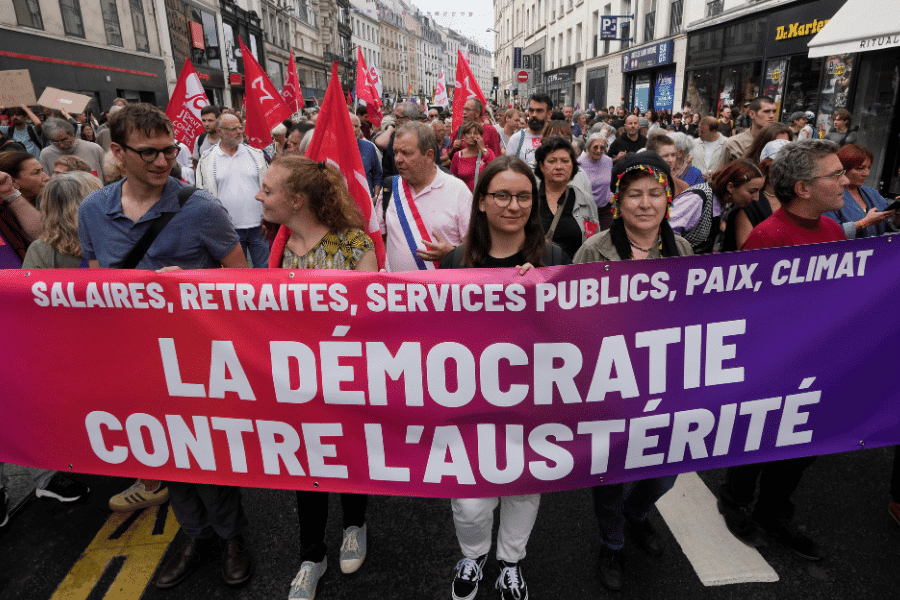
    French President Emmanuel Macron’s grip on stability, progress and voter approval seems to be slipping.

    His party lost its absolute majority in the National Assembly and, following snap elections in the summer of 2024, its relative majority as well. Now, he faces a budget crisis, voter pushback and a geopolitical crisis involving Europe, the United States and Russia.

    Macron had once hoped to bridge France’s political divides and reinvigorate its economy but is now mired in political quicksand and many French voters feel helpless. That’s what I discovered while interviewing people on the street in Rennes, France, where I’m spending a year studying abroad and trying to make sense of French politics.

    One elderly woman I spoke to described what was happening as a catastrophe. “It’s embarrassing,” she said. “All we can do is wait for the next presidential election.”

    My interviews aligned with a November 2024 IPSOS survey, which found that 74% of respondents lack confidence in the presidency, while an overwhelming 86% distrust political parties. Trust in the National Assembly has plummeted as well, with 74% of respondents expressing no faith in the institution.

    What voters say

    People are frustrated. A middle-aged man told me: “Macron has lost his authority. France is unstable, gridlocked and hostile.”

    Back in September, Macron appointed Michel Barnier as prime minister in an attempt to stabilize his government but it backfired. By December, Barnier’s government had collapsed after losing a no-confidence vote, ousting him and his ministers and triggering yet another governmental reset.

    The vote came in response to Barnier’s use of Article 49.3 of the French Constitution, which allows the executive to pass a budget without parliamentary approval.

    It wasn’t until February 2025 that lawmakers finally agreed on a budget — one met with widespread discontent over spending cuts and reallocations. Now, many French citizens are asking: What’s next for the Republic?

    A law student I spoke with who goes to the University of Rennes expressed uncertainty about the country’s future. “I’m scared because we’re walking back on progress,” he said.

    A nation disunited

    Political divisions seem to be deepening, amplified by social media.

    A political science student at Rennes 2 University noted that people seem unable to talk to each other. “It’s harder than ever to have conversations with people who disagree with us,” the student said. “We don’t just see differing opinions, we see them as attacks on who we are.”

    Another student said that at university, now, you find yourself attacked or excluded if you don’t agree.

    This polarization was evident in the most recent European elections. The far-right Rassemblement National secured 31.5% of the vote — a 40-year record for any French party in a European election. Their campaign focused on hard-line immigration policies, crime reduction and tax cuts on fossil fuels.

    Despite shared dissatisfaction, French citizens are divided on the changes they seek. One university student emphasized the need for a more equitable education system.

    “We’ve made strides in accessibility, but students are locked into career paths too early,” she said. “My younger brother, for example, always dreamed of becoming a pilot. But because his undiagnosed ADHD hurt his test scores, he was placed in a vocational high school instead of a general one. Now he’s studying to be an air steward.”

    Some want a strong government.

    A retired woman expressed concern over global instability. “Russia’s invasion of Ukraine is terrifying,” she said. “And with Trump distancing the U.S. from the EU, I worry our military isn’t strong enough. France and the EU need to invest in defense.”

    To put what I found on the streets into perspective, I spoke with Alistair Lyon, a News Decoder correspondent and former reporter with the Reuters international news service who lives in France.

    He highlighted the long-term consequences of the gridlock in French politics. “In a time when France faces huge challenges like a budget deficit and a major geopolitical crisis involving the U.S., Europe and Russia, now is not a great time to have a political stalemate,” Lyon said.

    He expects the stalemate to continue until the 2027 presidential election, given Macron’s loss of both absolute and relative majorities in the National Assembly.

    He pointed to two major sources of division: growing disillusionment with politicians and resistance to reform. Many French voters feel politically homeless, fueling a cycle where reforms are met with fierce backlash, ultimately deterring further change.

    Disinformation breeds distrust.

    Compounding the problem is the erosion of independent journalism.

    “You have to be very careful reading the news,” Lyon said. “Journalists that remain anchored to traditional values of accuracy and impartiality are becoming few and far between.”

    In France, billionaire and right-wing proponent Vincent Bolloré has bought up news and media outlets, raising concerns about bias and misinformation. In a way, Lyon said, the media is fueling the fires of divisions in new ways because now the press is controlled and owned by people with vested political interests.

    France finds itself at a crossroads. Uncertainty, frustration and political polarization are creating more gloom than ever.

    Whether stability can be restored depends on Macron, the parliament and their willingness to compromise. If cooperation remains minimal, France may continue down a path of deepening division, one with consequences far beyond its borders.


    Three questions to consider:

    1. Why has French President Emmanuel Macron lost significant support from voters?

    2. What is one thing voters are in France want from their government?

    3. As a citizen of your country, what do you expect your government to do for you?


    Source link

  • Decoder: The Silence of America

    Decoder: The Silence of America

    Iconic photos from the Cold War cover the corridors of the Prague headquarters of Radio Free Europe and Radio Liberty, news networks created by the U.S. government to counter censorship and disinformation from the Soviet Union and their East European satellite nations during the Cold War.

    Images from 1989, the year communist rule melted away in more than a dozen countries, were reminders of earlier days when Radio Free Europe and Radio Liberty had broadcast news in Polish, Czech, Slovakian and the Baltic languages; those countries are now robust democracies as well as members of the European Union and NATO.

    Those historic photos jostle with more recent images from countries where human rights and democracy are not observed, including Russia, Belarus, Iran, Afghanistan and other nations across Central and South Asia. In total, the two networks broadcasted in 27 languages to 23 countries providing news coverage and cultural programming where free media doesn’t exist or is threatened.

    The journalists who broadcast there often do so at great risk. 

    Many are exiles unable to return to their own countries. Three of their journalists are currently jailed in Russian-occupied Crimea, Russia and Azerbaijan. The charges against them are viewed as politically motivated.

    Countering power with news

    On 14 March 2025, U.S. President Donald Trump signed an executive order which cut the funding for the U.S. Agency for Global Media, the parent agency of Radio Free Europe and Radio Liberty. It also cut the funding of Radio Free Asia and the Middle East Broadcasting Network, the Voice of America — the “official” voice of the United States — as well as Radio & Television Marti which broadcasts to Cuba.

    The funding cuts would effectively silence these networks. In response, Radio Free Europe and Radio Liberty filed a lawsuit in Washington, D.C. 18 March that argued that Congress has exclusive authority over federal spending and that cannot be altered by a presidential executive order. Voice of America Director Michael Abramowitz filed suit 26 March. 

    On March 27, the Trump administration announced it had restored the funding for Radio Free Europe and Radio Liberty. 

    Radio Free Europe and Radio Liberty came into being after the end of the second World War when Europe became a divided continent. While the wartime allies, including Britain and the United States, focused on rebuilding their economies after years of war, Soviet leader Joseph Stalin sent his army to occupy most of Eastern Europe. 

    Despite promises made at a meeting in the Crimea, known as the Yalta Conference, during the final months of the war in 1945, Stalin refused to allow free elections in East Germany, Romania, Bulgaria, Poland, Hungary and Czechoslovakia. 

    Neither were free elections held in the three Baltic countries — Estonia, Latvia and Lithuania — which the Soviet Union had annexed in 1940. The crushing of democratic rule in so many nations was characterised by British Prime Minister Winston Churchill as “an iron curtain” that had “descended across the continent.” 

    After years of fighting Nazi Germany, half of Europe was now ruled under a Soviet dictatorship.

    Containing communism

    The United States responded with a policy of ‘containment’ that aimed to halt the spread of communism without using soldiers and tanks. Radio Free Europe started broadcasting in 1950 followed by Radio Liberty in 1953. 

    With a system of transmitters pointing east, news programmes that countered the state propaganda were beamed to the countries in the Soviet bloc, eventually in 17 languages. These were tactics that came to be known as ‘soft power’.

    Based in Munich, Radio Free Europe and Radio Liberty, or RFE/RL as they became known, attracted dissidents who opposed the Soviet-imposed governments. Their audiences grew during the Cold War, despite threats of prosecution. 

    In addition to news, broadcasts covered music, sports and science. Banned literature written by dissidents who challenged the communist systems could be heard on RFE/RL. Czech dissident Vaclav Havel was one of those voices.

    The Berlin Wall tumbled down in November 1989. It was followed by the Velvet Revolution that overthrew the Czech government and installed as its president, the former political prisoner Haval. He invited RFE/RL to move their base from Munich to Prague. 

    “My confinement in prison might have lasted longer had it not been for the publicity I had through these two stations,” Haval said at the time. 

    An outcry in Europe and elsewhere

    The news that the Trump administration would shut down the radio networks spread quickly. Listeners, viewers and supporters who had lived through the Cold War years when only pro-government broadcasts were legal, shared their stories on social media:

    “In Romania, they [RFE] lightened communism with the hope of freedom.”

    “As a small girl, living under a communist regime in Poland, I remember my grandfather listening every night to Radio Free Europe, to get uncensored news from around the world, to get different opinions on the world’s affairs, and probably hoping that one day, he would live in a free world. It was illegal to listen to this Radio, and the quality was very poor, and yet, he would do it every night … ” 

    Polish Foreign Minister Radek Sikorski recalled how his father had listened to Radio Free Europe and Voice of America. “This is a great shame,” he wrote. “My grandfather was listening to RFE in Soviet-occupied Poland in 80s. It’s how we learned basic facts about our own countries because communist propaganda was so tightly controlled.”

    On 17 March the Czech Republic asked the foreign ministers of the European Union to support RFE/RL so the journalism could continue. 

    One diplomat who was in the meeting said that stopping RFE/RL’s broadcasts would “be a gift to Europe’s adversaries.” Already Russia’s state broadcaster, Russia Today, had tweeted that cutting the funding for RFE/RL was an “awesome decision by Trump.”

    When Vaclav Havel welcomed Radio Free Europe and Radio Liberty to Prague after democracy had been restored to Czechoslovakia, he said that having RFE/RL in the Czech capital was equivalent to having three NATO divisions. 

    The supporters of the networks are hoping that the soft power of free media is indeed able to pack a powerful punch for free media.

    Update to this story: As of 30 March, Radio Free Liberty has informed News Decoder that, while two weeks worth of funds have been received, the rest of U.S. government funding had not yet been restored. We will continue to update this story as we learn of further developments. 


    Three questions to consider:

    1. Why, during the Cold War, were radio broadcasts across closed borders one of the few ways people could receive news that was not controlled by the government?
    2. In what ways are people limited in accessing news, culture and music?
    3. In what ways might a free media be important in a democracy?


    Source link

  • Our navigators in the sea of information

    Our navigators in the sea of information

    While my educational experience is limited in both time and geographic scope, I have been alarmed by the lack of general knowledge and culture among many journalism students. 

    They are unaware of what has happened in the world over the last 50 years, so they don’t understand current events and their potential consequences. We must return to basics, ensuring journalists have an excellent general culture that allows them to make the most of their work.

    Third, and related to acquiring a broad general culture, new journalists must be much better at prioritizing and categorizing news. 

    They need to be out on the streets, taking the pulse of people’s reality, talking to them, empathizing with them and experiencing the world as the majority of people do. This is how one truly understands what is important and what people prioritize. 

    Reconnect the public to the press.

    The detachment between journalists and the public is one of the reasons for the decline in newspaper readership.

    Unfortunately, this is not taught in journalism schools, yet it is essential. Most journalists spend their days in front of screens whether in newsrooms or remotely in their homes. They rely on secondary sources of information that are often produced by organizations with interests different from those of the general public.

    A fourth area for improvement is the permanent implementation of critical thinking throughout journalistic processes. In many daily news articles essential information — the traditional five Ws (who, what, when, where and why) — are missing. Most important, the stories often lack context. 

    Journalists should ask themselves why they report on a given topic, who provides the information, what hidden interests might be involved and what value this information holds for the public.

    It is true that journalists alone cannot change the current media landscape. But in their role as the central actors in the system, they can do much to improve the quality of information and support citizens. 

    A well-rounded “classical” education, coupled with a curious and critical mind, should produce good journalists. These “new professionals” would be better equipped to face the current economic model of information, which favors powerful entities controlling information, the overwhelming information saturation, the prevailing negativity and cynicism and the constant distractions in the form of screens that affect our lives.

    If concerned citizens also make an effort to support and reward this new form of quality journalism, we will all benefit. And our societies will gain a stronger democratic and peaceful coexistence. This is why it is worth valuing and improving journalism education.


    Three questions to consider:

    1. What is meant by an “information ecosystem”?
    2. Why does the author argue that many journalists are disconnected from the public they are trying to reach?
    3. If you were a journalist, what stories would you want to tell?


    Source link