

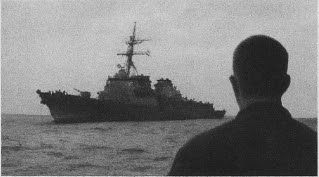
The Western Hemisphere is entering a new and dangerous phase of global rivalry—one shaped by old imperial habits, new economic pressures, and resurgent great-power maneuvering. From Washington to Beijing to Caracas, political leaders are escalating tensions over Venezuela’s future, reviving a familiar script in which Latin America becomes the proving ground for foreign powers and a pressure cooker for working-class people who have no say in the geopolitical games unfolding above them.
What looks like a confrontation over oil, governance, or regional security is better understood as a collision of neoliberal extraction, colonial legacies, and competing empires, each claiming moral authority while pursuing strategic advantage. In this moment, it is essential to remember what history shows again and again: ordinary people—soldiers, students, workers—pay the highest price for elite ambitions.
The U.S. role in Latin America cannot be separated from its imperial foundations. Over more than a century, Washington has repeatedly intervened—militarily, covertly, and financially—to shape political outcomes in the region:
1898–1934: The “Banana Wars.” U.S. Marines were deployed throughout the Caribbean and Central America to secure plantations, protect U.S. investors, and maintain favorable governments in Cuba, Puerto Rico, Nicaragua, Haiti, the Dominican Republic, Panama, and Honduras.
1954: Guatemala. The CIA overthrew democratically elected President Jacobo Árbenz after he challenged United Fruit Company landholdings.
1961: Bay of Pigs Invasion. A failed U.S.-backed attempt to overthrow Fidel Castro.
1973: Chile. U.S. support for the coup against Salvador Allende ushered in the Pinochet dictatorship and a laboratory for neoliberal economics.
1980s: Nicaragua, El Salvador, Guatemala. Funding death squads, supporting Contra rebels, and fueling civil wars that killed hundreds of thousands.
1989: Panama. A full-scale U.S. invasion to remove Manuel Noriega, with civilian casualties in the thousands.
2002: Venezuela. U.S. officials supported the brief coup against Hugo Chávez.
2020s: Economic warfare continues. Sanctions, diplomatic isolation, and support for factions opposing Nicolás Maduro all sustain a long-running pressure campaign.
This is not ancient history. It is the operating system of U.S. hemispheric influence.
While the U.S. escalates military signaling toward Venezuela, China is expanding soft power, economic influence, and political relationships throughout Latin America—including with Venezuela. Beijing’s strategy is centered not on direct military confrontation but on long-term infrastructure, trade, and diplomatic partnerships designed to reduce U.S. dominance.
Recent statements from Beijing underscore this shift. Chinese President Xi Jinping publicly backed Venezuelan President Nicolás Maduro, describing China and Venezuela as “intimate friends” as the U.S. intensifies military pressure in the region. China’s role extends beyond rhetoric: loans, technology transfers, energy investments, and political support form a web of influence that counters U.S. objectives.
This is the new terrain: the U.S. leaning on sanctions and military posture, China leveraging soft power and strategic alliances.
Any honest assessment of the current geopolitical climate must include Russia, which has expanded its presence in Latin America as part of its broader campaign to counter U.S. power globally. Moscow has supplied Venezuela with military equipment, intelligence support, cybersecurity assistance, and diplomatic cover at the United Nations. It has strengthened ties with Nicaragua, Cuba, and other governments willing to challenge U.S. regional dominance.
Russia’s involvement is not ideological; it is strategic. It seeks to weaken Washington’s influence, create leverage in distant theaters, and embed itself in the Western Hemisphere without deploying large-scale military forces. Where China builds infrastructure and invests billions, Russia plays the spoiler: complicating U.S. policy, reinforcing embattled leaders when convenient, and offering an alternative to nations seeking to escape U.S. hegemony.
The result is a crowded geopolitical arena in which Venezuela becomes not just a domestic crisis but a theater for multipolar contention, shaped by three major powers with very different tools and interests.
Viewed in historical context, today’s crisis is simply the newest iteration of a long-standing pattern:
Colonial logics justify intervention. The idea that Washington must “manage” or “stabilize” Latin America recycles the paternalism of earlier eras.
Neoliberal extraction drives policy. Control over energy resources, access to markets, and geopolitical leverage matter more than democracy or human well-being.
Foreign powers treat the region as a chessboard. The U.S., China, and Russia approach Latin America not as sovereign equals but as terrain for influence.
People—not governments—bear the cost. Sanctions devastate civilians. Military escalations breed proxy conflicts. Migration pressures rise. And working-class youth are recruited to fight battles that are not theirs.
This is why today’s developments must be understood as part of a wider global system that treats nations in the Global South as resources to exploit and battlegrounds to dominate.
In moments like this, the pressure on young people—especially working-class youth—to join the military increases. Recruiters frame conflict as opportunity: tuition money, job training, patriotism, adventure, or stability. But the truth is starker and more political.
Muhammad Ali’s stance during the Vietnam War remains profoundly relevant today. He refused the draft, famously stating that the Vietnamese “never called me [a slur]” and declaring that he would not fight a war of conquest against people who had done him no harm.
The same logic applies to today’s geopolitical brinkmanship. Young Americans are asked to risk their lives in conflicts that protect corporate interests, reinforce imperial ambitions, and escalate global tensions. Venezuelan workers, Chinese workers, Russian workers, and U.S. workers are not enemies. They are casualties-in-waiting of decisions made by governments and corporations insulated from the consequences of their actions.
Before enlisting—or joining ROTC—young people deserve to understand the historical cycle they may be pulled into. Wars in Latin America, proxy or direct, have never served the interests of everyday people. They serve empires.
Firstpost. “Xi Backs Maduro, Calls China and Venezuela ‘Intimate Friends’ as Trump Steps Up Military Pressure.”
Greg Grandin, Empire’s Workshop: Latin America, the United States, and the Rise of the New Imperialism
Naomi Klein, The Shock Doctrine
Stephen Kinzer, Overthrow: America’s Century of Regime Change
U.S. Congressional Research Service reports on U.S. policy in Venezuela and China-Latin America relations
UN Human Rights Council documentation on sanctions and civilian impact
For many young Americans, the Reserve Officers’ Training Corps (ROTC) or other military‑linked opportunities can look like a ticket to education, steady income, and a chance to “see the world.” But the allure of scholarships, structure, and economic opportunity often hides a deeper reality — one that includes moral danger, personal risk, and long-term uncertainty.
This episode is striking not only because of Kelly’s prominence, but because it shows how even after leaving active service, a veteran’s speech and actions can be subject to military law — a stark reminder that joining the military (or training through ROTC) can carry obligations and consequences long after “service” ends.
When you consider military service — through ROTC or otherwise — it’s important to weigh the full scope of what you may be signing up for:
Potential involvement in illegal or immoral wars: ROTC graduates may eventually be deployed in foreign conflicts — possibly ones controversial or condemned internationally (for example, interventions in places like Venezuela). Participation in such wars raises real moral questions about complicity in human rights abuses, “regime-change,” or other interventions that may lack democratic or legal legitimacy.
Domestic deployment and policing: Military obligations are increasingly stretching beyond foreign wars. Service members — even reservists — can be called in to deal with domestic “disputes,” civil unrest, or internal security operations. This raises ethical concerns about policing one’s own communities, and potential coercion or suppression of civil and political rights.
Long-term oversight and limited freedom: The investigation of Senator Kelly shows that veterans and officers remain under DoD jurisdiction even after service ends. That oversight can restrict free speech, dissent, or political engagement. Those seeking to escape economic hardship or limited opportunities may overlook how binding and enduring those obligations can be — even decades later.
Psychological and bodily danger: Military service often involves exposure to combat, trauma, physical injury — not to mention risks such as sexual assault, racism, sexism, and institutional abuse. Mental health consequences like PTSD are common, and the support systems for dealing with them are widely criticized as inadequate.
Institutional racism, sexism, and inequality: The military is an institution with historic and ongoing patterns of discrimination — which can exacerbate systemic injustices rather than alleviate them. For individuals coming from marginalized communities, the promise of “a way out” can come with new forms of structural violence, exploitation, or marginalization.
Career precarity and institutional control: Even after completing education or training, the reality of “limited choices” looms large. Military obligations — contractual, legal, social — can bind individuals long-term, affecting not just their mobility but their agency, conscience, and ability to critique the system.
For many, the draw of ROTC is economic: scholarships, stable income, a way out of challenging socioeconomic circumstances, or a ticket out of a hometown with limited opportunity. These incentives are real. But as the recent case with Mark Kelly makes clear, the costs — legal, moral, social — can be far greater and more enduring than advertised. What looks like an escape route can become a lifetime of obligations, constraints, and potential complicity in questionable policies.
Prospective enlistees deserve full transparency. The decision to join ROTC or the military should not be sold merely as an educational contract or a job opportunity — it is an entrance into a deeply entrenched institution, one with power, obligations, and potential for harm. The new controversy around Mark Kelly ought to serve as a wake-up call: if even a decorated former officer and sitting U.S. senator can be threatened decades after service, young people should consider carefully what they may be signing up for.
If you — or someone you care about — is thinking of joining, ask: What kind of wars might I be asked to fight? What does “service” really cost — and who pays?
Sources:
The Higher Education Inquirer is calling on both the National Collegiate Athletic Association (NCAA) and the U.S. Department of Defense (DoD) to explain the suspension of the Concussion Assessment, Research and Education (CARE) Consortium, the largest concussion study in U.S. history. Since 2014, CARE has sought to illuminate the effects of concussion and repetitive head impact exposure (HIE) on student-athletes and military service members.
Funded through an initial $30 million “Grand Alliance,” CARE enrolled more than 53,000 athletes and cadets and tracked over 5,500 diagnosed concussions across more than two dozen universities and four service academies. Its successive phases—CARE 1.0 (acute effects), CARE 2.0 (cumulative impacts), and CARE-SALTOS Integrated (long-term outcomes)—provided unprecedented insights into how concussions affect recovery, cognition, mood, sleep, and overall well-being.
The CARE study generated more than 90 peer-reviewed publications, influencing safety protocols, athletic training practices, and public health debates in both NCAA settings and the U.S. military.
The suspension comes at a critical moment. Concerns about chronic traumatic encephalopathy (CTE)—a degenerative brain disease linked to repetitive head trauma—are rising. Because CTE’s symptoms often surface decades after injuries, researchers emphasize that only long-term, continuous studies can reveal who develops CTE and why.
Pausing or dismantling CARE risks losing continuity in precisely the kind of data needed to connect the dots between adolescent or collegiate injuries and late-life neurodegenerative conditions.
The disruption of CARE has already produced casualties beyond lost data. At the University of Michigan, one of the leading CARE sites, about two dozen research workers were abruptly laid off. Without union protections, they had little recourse. This underscores how fragile large research consortia can be—dependent not only on grants and institutional goodwill, but also on a workforce often treated as disposable.
These layoffs raise troubling questions: If the workers who made CARE possible are discarded without warning, what does that say about the broader commitment to athlete and cadet safety?
The Higher Education Inquirer is pressing for answers:
Why was CARE suspended? Was this due to funding shortfalls, shifting priorities, or political pressure?
Will existing data remain accessible? The CARE Consortium has been a vital contributor to the Federal Interagency Traumatic Brain Injury Research (FITBIR) database.
What about the workforce? Why were employees terminated without protections, and what obligations do the NCAA, DoD, and participating universities have to them?
What is the long-term plan for concussion research? Without decades-long studies, the risks of CTE and other late-life conditions will remain poorly understood.
If CARE is permanently suspended, the consequences will extend far beyond academia. Athletes and cadets will lose a vital source of protection, science will lose irreplaceable data, and workers will continue to bear the costs of institutional indifference.
The Higher Education Inquirer urges the NCAA and DoD to clarify CARE’s future and recommit to the kind of decades-long research that brain science demands. Anything less is a betrayal—to athletes, to service members, and to the very workers who made this research possible.
NCAA. NCAA-DOD Grand Alliance: CARE Consortium. ncaa.org
CARE Consortium. About the Consortium. careconsortium.net
NCAA. NCAA and Department of Defense expand concussion study with $22.5 million. (October 31, 2018). ncaa.org
U.S. Army Medical Research and Development Command. Research Supporting a Lifetime of Brain Injury. mrdc.health.mil
NIH. Concussion Assessment, Research, and Education Consortium (CARE) Study Data. ncbi.nlm.nih.gov

Every day brings revelations about how corrupt the US government is. Every day the Department of Government Efficiency ( DOGE) reports on one agency or another that they have taken over and plan to eliminate or downsize. The first targets were the USAID and the US Department of Education.
But this is just the beginning.
Every day is a spectacle, with Elon Musk and a handful of young men taking control over federal agencies. Some call it a coup, though President Trump has granted them the power through executive privilege. Others may call it a mission from God.
There is no telling how far this DOGE takeover will continue, but as long as folks are not protesting, we can expect it to last indefinitely. President Trump has recently mentioned corruption in the Department of Defense, which would be an interesting target to investigate.
In the meantime, President Trump has relaxed enforcement of US law banning bribery of foreign officials.
You can watch the DOGE boys in action through the DOGE tracker. You can also follow crypto trading and prices, which appear to be a key part of the DOGE movement.

