A research contract valued at about $200,000 has been lost by Charles Darwin University (CDU) as a result of US President Donald Trump’s “America First” agenda.
Please login below to view content or subscribe now.
Membership Login

A research contract valued at about $200,000 has been lost by Charles Darwin University (CDU) as a result of US President Donald Trump’s “America First” agenda.
Please login below to view content or subscribe now.
Get stories like this delivered straight to your inbox. Sign up for The 74 Newsletter
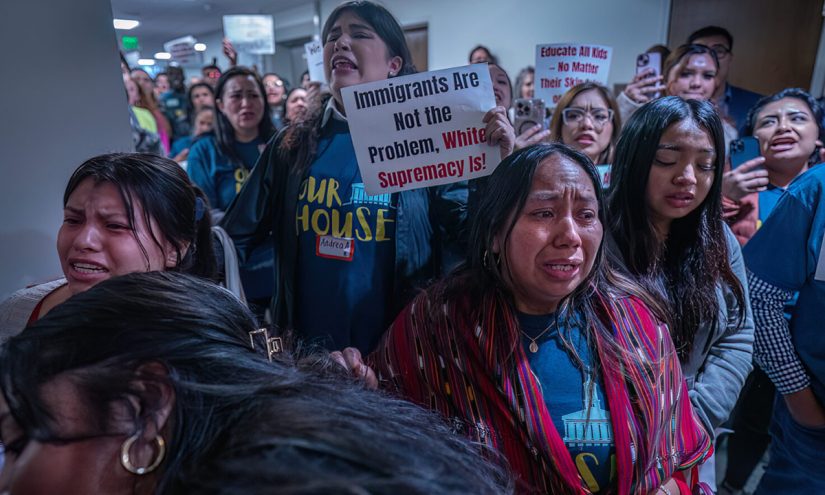
Tennessee lawmakers on Wednesday voted to advance a bill that would require public K-12 and charter schools to verify student immigration status and allow them to bar children who cannot prove they lawfully reside in the United States unless they pay tuition.
The 5-4 vote by the Senate Education Committee came despite the Legislature’s own fiscal analysis, which said the proposed legislation “may jeopardize federal funding to the state and to local governments” and violate the federal Civil Rights Act, which specifically prohibits discrimination based on national origin in programs receiving federal dollars. Three Republicans joined the committee’s sole Democrat in voting “no.”
Immediately after the vote was cast, shouts of “so shameful” and “that’s trash” erupted inside the hearing room. Others, including school-age children in attendance, streamed out of the room in tears.
The bill (HB793/SB836) by Sen. Bo Watson, a Hixson Republican, and House Majority Leader William Lamberth, a Portland Republican, says that local school districts and public charter schools “shall require” students to provide one of three forms of documentation: proof of U.S. citizenship, proof the student is in the process of obtaining citizenship or proof they have legal immigration status or a visa.
Students who lack one of the three forms of documentation could then be barred by their local school district from enrolling unless their parents paid tuition.
Watson, the bill’s sponsor, said he brought the measure in response to the increasing cost to the state of providing English-as-a-second-language instruction.
“Remember, we are not talking about people who are here lawfully,” Watson said. “What I’m trying to discuss here is the financial burden that exists with what appears to be an increasing number of people who are not lawfully here.”
In response to a question from Sen. Raumesh Akbari of Memphis, the sole Democrat on the panel, Watson said he had received no formal request from any school official to introduce the measure.
“In an official capacity, this is one of those issues people do not talk about,” Watson said. “This is a very difficult bill to present. It is very difficult to have all these eyes on you.”
“In an unofficial capacity at numerous events, have people mentioned this problem to me? Absolutely,” Watson said.
Akbari responded: “I’m from the largest school district in the state. I have not had those conversations.”
“I am offended by this legislation,” Akbari said. “I find that it is so antithetical to the very foundation of this country….This is saying that babies – you start school at five years old – that you do not deserve to be educated.”
The bill’s sponsors have acknowledged the measure is likely to face a legal challenge if enacted. The proposed legislation, they have said, is intended to serve as a vehicle to potentially overturn the Supreme Court’s Plyler v. Doe decision, which established a constitutional right to a public school education for all children. The 1982 decision was decided by a 5-4 vote, Watson noted.
“Many 5-4 decisions taken to the court today might have a different outcome,” Watson said.
The proposed legislation is part of an unprecedented slate of immigration-related bills introduced in the Tennessee legislature this year as Gov. Bill Lee and the General Assembly’s GOP supermajority seek to align with the Trump Administration’s immigration policies.
Lee last month signed into law legislation to create a state immigration enforcement office to liaise with the Trump administration, create distinct driver’s licenses for noncitizens and levy felony charges at local elected officials who vote in favor of sanctuary policies.
Among nearly three dozen other immigration-related bills still being considered is one to require hospitals that accept Medicaid payments to report on the immigration status of their patients. Another bill would open up charitable organizations, including churches, to lawsuits if they have provided housing services to an individual without permanent legal immigration status and that individual goes on to commit a crime.
Following Wednesday’s hearing in the Senate Education Committee, hundreds congregated in a hallway of the Legislature, chanting “education for all” and pledged to return as the bill winds through the committee process.
The bill “instills fear and hopelessness in these students,” said Ruby Aguilar, a Nashville teacher who testified against the bill during the hearing. “Education is not merely a privilege, it is a shared human right every child should have access to.”
Tennessee Lookout is part of States Newsroom, a nonprofit news network supported by grants and a coalition of donors as a 501c(3) public charity. Tennessee Lookout maintains editorial independence. Contact Editor Holly McCall for questions: [email protected].
Get stories like these delivered straight to your inbox. Sign up for The 74 Newsletter
United States President Donald Trump’s first six weeks of his second term has been defined by 76 executive orders, the disestablishment of the national education department and establishment of the Department of Government Efficiency (DOGE).
One of the most controversial executive orders, which is a written directive signed by a president that orders immediate governmental action, was titled “Ending Radical And Wasteful Government DEI Programs And Preferencing,” signed on President Trump’s first day back in office on January 20, 2025.
He directed all federal DEI staff be placed on paid leave and, eventually, laid off. He has also signed another Executive Order, titled “Ending Illegal Discrimination and Restoring Merit-Based Opportunity.”
DEI stands for diversity, equity and inclusion, and refers to programs and committees that help people from underrepresented backgrounds (women, Indigenous, Black, for instance) get into, and stay in, jobs or courses those people wouldn’t traditionally participate in. It is largely similar to the strategy of the Australian Universities Accord.
President Trump has also cut funding to schools and universities that do not cancel DEI programs. He labelled the programs “radical,” “wasteful” and said they demonstrate “immense public waste and shameful discrimination.”
The full effects of these Executive Orders and DEI changes are yet to be seen because decisions regarding DEI will ultimately be made by the court.
However, private companies in the US have walked away from internal DEI programs, including Meta (which has worked closely with Trump as of late), Google (which provides some services to the US government), Pepsi, Disney and multiple prominent banks.
There has been no significant walk away from DEI in Australian private companies, and many universities continue to discuss how to bolster and “future-proof” internal DEI programs.
Australia’s ambassador to the US from 2020 to 2023, Arthur Sinodinos, told the Universities Australia Solutions Summit last week that institutions are best off making decisions “based off their objectives,” but should enact genuine change, not just tick diversity boxes.
“My view on DEI is that [universities should] start from a posture that they want to make the best use of all the talent and resources available to them,” he said.
“If you’re also interested in trying to expand the reach of higher education to groups that might otherwise be disadvantaged, you have to find ways to do that, but in a way that also addresses the genuine issue.
“I think access to higher education is still important for a country like Australia, which has to make – given its population – the best use of the resources it’s got.
“The argument that you can just leave it to the market, the meritocracy will still be there [is wrong]. Frankly, in the market, some people start with a head start with with inbuilt advantages.”
President Trump’s former White House chief of staff Mick Mulvaney, who was also on the panel at the UA summit, said he thinks DEI programs in the US have gone “too far to one side.”

“One of the reasons you’re seeing the pushback against it in my country is that it went too far to one side. I don’t know where it is in this country, but at some point it may go too far, and the pushback will come.”
He also explained why this Trump term is already more action-packed than his first was at this time: the President expected to win in November, 2024, but not in 2016.
“Not only did [Trump] expect to win, [his team has] been working for four years on what they would do when they won,” he said.
“What are we gonna do the first day? The first week, the first month, the first 100 days? Which is why we’re seeing all these executive orders. It’s actually four years worth of planning coming forward.”
Mr Mulvaney said he thinks DEI could survive if its reasoning for existing is communicated in a tailored way.
He said Trump’s administration is receptive to initiatives that improve efficiency, productivity and merit.
“You could have a program that is good on on the climate, [for example,] but that’s not your selling pitch. That doesn’t register with the person you’re talking to,” he explained.
Related stories: “Unis are not Centrelink offices”: Coalition’s pitch to university leaders | Q&A: Bill Shorten talks VC pay cuts and politics in HE | Report card: Accord recommendations 12 months on
“You have to learn how to speak the language of the person you’re talking to. Don’t change what you’re doing, perhaps just simply change how you explain it.”
UA chief executive Luke Sheehy was asked after his National Press Club address last Wednesday whether he thinks an “anti-woke” sentiment will affect how universities function.

“Obviously there’s a major disruption that’s happened in America with Trump 2.0 … One of the things we’ve learned is, once articulated in a certain way, positive sentiment skyrockets for universities,” he responded.
“If you offer a simple proposition: we have 4,000 fewer teachers than we need today ,and universities are the only way to get those skilled workers into the workforce to support young people; we need 132,000 more nurses, etc.
“Then remove yourself from what happens on the front pages of newspapers and what occupies political pundits, and think about what the real Australian people need and want from the university sector.
“My hope is that the more we talk about the important role of universities and our core mission in education and research, the more Australians, irrespective of whether or not they went to university or not, they see the value for us as part of our future.”
The university sector’s declining “social license” has been a major topic of discussion of late for university leaders.
There is a growing sentiment that universities, and the knowledge economy, needs to “show” society why they’re worth the funding and enrolments.
“We always have more work to do. In an era where there is declining trust in institutions, I think it’s really important that universities invest in themselves in terms of how they engage with their communities,” Mr Sheehy continued.
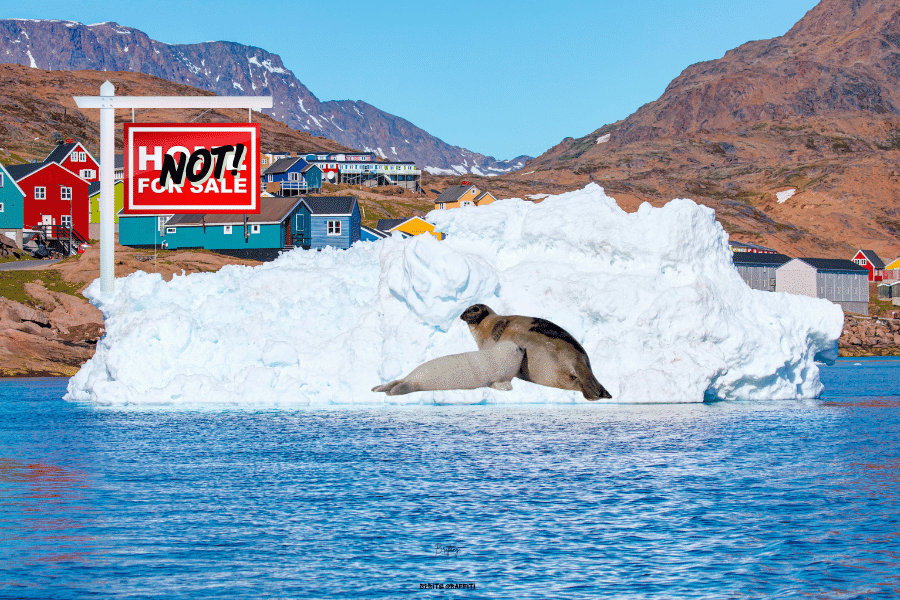
Greenland is three times the size of the U.S. state of Texas, making it the world’s largest island if you don’t count the continent of Australia.
It sits on critical rare earth minerals and fossil fuel reserves. Its retreating ice, due to global warming, is opening up new trade routes and longer shipping seasons.
No wonder U.S. President Donald Trump wants it for the United States. A purchase price would be steep. Based on past purchases of territory and Greenland’s economic potential, it is estimated that the price of Greenland could be anywhere between $12.5 billion and $77 billion. And he only has to convince the 56,000 people who live there that they would prosper under U.S. rule.
Greenland is a former Danish colony that still relies heavily upon Denmark for its economy.
If Trump were able to buy it, he’d have to take it as is, and the country suffers from high rates of suicide, alcoholism and sexual abuse.
A Google map of Greenland.
Trump made an offer in December, called “absurd” by Danish Prime Minister Mette Frederiksen. It was the second time he broached this subject, having first spoken of it during the lead up to his first presidential term.
This time, he said he won’t rule out using economic or military force to buy the world’s biggest island based on the logic that Greenland is necessary for “national security and freedom” of the United States. Greenland and the United States are separated by about 2,289 kilometers (1,422 miles) of water between the two closest points — Grand Manan in the U.S. state of Maine and Nanortalik in Greenland.
Much of the world has been laughing at Trump’s demand but it is no laughing matter for Denmark. This week, Danish Prime Minister Mette Frederiksen visited German Chancellor Olaf Scholz, French President Emmanuel Macron and NATO General Secretary Mark Rutte, to talk about strengthening the EU’s security and defence and to further prioritise the Arctic.
In the meantime, Greenlanders are feeling their value to Denmark has risen.
Greenland was a Danish colony until 1953, when it became a self-governing region of Denmark. This means that it has its own local government and two seats in the Danish parliament. The relationship also means that Greenlanders are citizens of the European Union, with the benefits that come with that.
The relationship between Greenland and Denmark is still recovering from that colonial past. The majority of Greenlanders support full independence from Denmark despite its deep reliance on the Danish government.
Denmark is still responsible for Greenland’s foreign, security and defence policy, and provides Greenland an annual financial aid of DKK 3.9 billion (roughly €522 million), which makes up around 20% of Greenland’s gross domestic product. That’s the value of all the goods and services a country produces and it is used as a measurement of a nation’s economic health.
The scars of colonialism are still fresh for many Greenlanders. In 1953 Denmark allowed the forced relocation of an Indigenous population from the Dundas area in Greenland, for a U.S. military base. The Thule tribe had been semi-nomadic catchers in the Dundas area for thousands of years. Their relocation took place over just a few days.
Later, in the 1960s and 70s, Danish health authorities fitted thousands of Inuit women and girls the IUD contraceptive device, many without proper notification or consent. An investigation into the procedure suggests that its aim was to curb a growing population — which worked. Many of these women went on to suffer health issues due to the IUD.
Now Greenlanders are being told that their future is theirs to decide.
What does Trump want with Greenland?
Greenland’s ice sheet covers nearly 80% of the country, which is losing mass at a rate of around 200 gigatonnes per year due to climate change. That seems like an incomprehensible amount. It is the equivalent of 200 billion metric tons or, according to NASA, if you could picture it, two million fully-loaded aircraft carriers.
Trump has framed his interest in Greenland as a matter of national security and freedom. By this, he points to the island’s strategic value: its untapped reserves of rare earth minerals and fossil fuels, as well as emerging trade routes enabled by retreating ice.
Greenland’s mineral reserves are largely untouched. The island harbors significant deposits of rare earth elements, essential for various high-tech applications, including electronics, renewable energy technologies and defence systems.
Owning Greenland would ease U.S. concerns over China’s dominance in the rare earth market, with China currently controlling 70–80% of the world’s critical rare earth minerals. Acquiring access to Greenland’s mineral reserves could serve to diversify and secure the U.S. supply chain, reducing reliance on Chinese exports.
Exploiting Greenland’s mineral wealth still presents considerable challenges. The island’s harsh climate and limited infrastructure means large start-up costs for mining projects.
Having control over new trade routes in the Arctic is also appealing, as well as having an expanded military presence in the region to monitor Russian navy vessels and nuclear submarines.
Is it possible to buy another country?
This isn’t the first time the United States has offered to buy Greenland. In 1946, President Harry Truman offered Denmark $100 million for the island. Denmark rejected the proposal but permitted the construction of the Pituffik Space Base which is responsible for missile warning systems and monitoring of satellites in space.
But for an exchange from Greenland to the United States to happen, both Denmark and Greenland would need to agree to the sale, with an Act on Greenland Self-Government stating that the people of Greenland have a right to self-determination.
And right now, Greenlanders don’t want to be under anyone’s rule but their own.
The international news service Reuters reported 29 January that a poll commissioned by the Danish paper Berlingske, found that 87% of Greenlanders would turn down Trump’s offer and another 9% are undecided.
But they’re not telling the United States to go away. While Greenland’s Prime Minister Mute Egede said that his country is not for sale, Greenlanders are open to cooperating with the United States on defence and exploration of its minerals.
And then there’s golf. With all that melting ice, maybe Trump is picturing a fabulous par-72 resort. Right now Greenland only has two courses. Just picture those sand traps on the edge of the Arctic.
1. How would the United States benefit from controlling Greenland?
2. What’s Greenland’s relationship with Denmark?
3. If you were a Greenlander, would you vote to become part of the United States? Why?