Category: Early Education

  • 5 cheat sheets for parents of preschoolers

    5 cheat sheets for parents of preschoolers

    by Jackie Mader, The Hechinger Report
    November 27, 2025

    When my oldest child was a 2-year-old, we relocated to a new state and I found myself back at square one with my search for child care. In my new city, I now had a very good problem: There was an abundance of programs with availability, and I had a choice of where to enroll my son. As I toured a half-dozen of them, however, I worried that even as an early childhood reporter, I wasn’t asking the right questions or paying attention to the right thing. 

    A few months later, our early childhood team at Hechinger launched a project digging into the elements of a high-quality preschool. That article and the corresponding video became a quick and easy guide as I looked at options for my second child. It’s what I sent to friends who asked me for advice while navigating their own searches. 

    While I love telling stories from the field, my colleagues and I are also passionate about providing helpful tools and guides for teachers and caregivers. Here are a few of my favorite early ed “cheat sheets” from our decade of reporting on early childhood.

    1.  The five elements of a good preschool: What should you look for when you step inside a preschool classroom? What clues can you find on the walls or bookshelves? What questions should you ask teachers and school administrators? This video and article break it down. While classrooms and programs will vary by setting, many of these elements, like the way teachers talk to children and an emphasis on play, apply everywhere.

    2. Cracking down on unsafe sleep products: As an anxious new parent, nothing scared me more than hearing about infant deaths due to unsafe sleep products. Still, when desperate and exhausted, I tried several items that I heard would help my babies sleep, including some that the American Academy of Pediatrics later discouraged in updated safe sleep guidelines in 2022. While reporting this article, I was stunned by the lack of evidence and oversight of products that many parents like myself believe are tested before they are available to buy.

    3. How to boost math skills by talking about math with your kids: Most parents know how important it is to read to children. But did you know that there are easy ways caregivers can develop math skills? Earlier this year, my colleague Jill Barshay looked at a wave of research from the past dozen years on simple things adults can do to lay an early foundation in math. 

    4. How to answer tough questions about race and racism with your children: Research shows racial stereotypes start early, and that’s why it’s important to talk to young children about different races and read books and offer toys that have diverse characters. Many parents feel ill equipped for these conversations, however. In 2020, I asked three experts how they would respond to real questions from young kids about race and racism so adults feel better prepared for the questions that children inevitably ask.

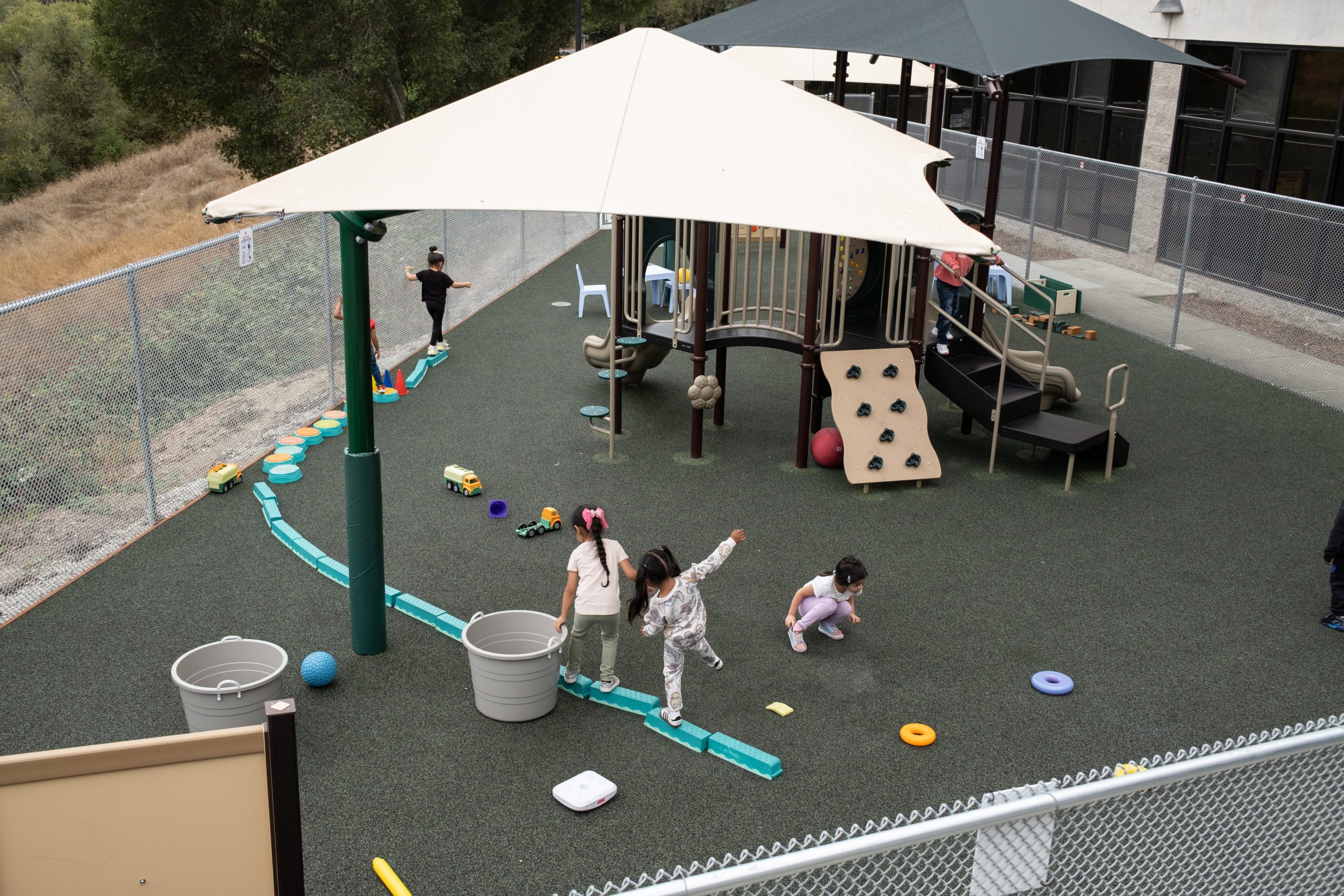
    5. How parents can support their kids with play: With all the challenges of being a parent, it can be hard to hear there’s yet another thing we should be doing. But this 2023 conversation with researcher Charlotte Anne Wright helped me reframe the way I think about play and my role in it with my own children. While it’s important to give children opportunities for free play, Wright’s research shows “guided play,” or play with a learning goal in mind and light support from a parent, can have benefits for children, too. It’s not as heavy of a lift as it sounds, and Wright provides simple ways parents can engage in playful learning with their children on bus rides and trips to the laundromat.

    This story about preschoolers was produced by The Hechinger Report, a nonprofit, independent news organization focused on inequality and innovation in education. Sign up for the Hechinger newsletter.

    This <a target=”_blank” href=”https://hechingerreport.org/5-cheat-sheets-for-parents-of-preschoolers/”>article</a> first appeared on <a target=”_blank” href=”https://hechingerreport.org”>The Hechinger Report</a> and is republished here under a <a target=”_blank” href=”https://creativecommons.org/licenses/by-nc-nd/4.0/”>Creative Commons Attribution-NonCommercial-NoDerivatives 4.0 International License</a>.<img src=”https://i0.wp.com/hechingerreport.org/wp-content/uploads/2018/06/cropped-favicon.jpg?fit=150%2C150&amp;ssl=1″ style=”width:1em;height:1em;margin-left:10px;”>

    <img id=”republication-tracker-tool-source” src=”https://hechingerreport.org/?republication-pixel=true&post=113560&amp;ga4=G-03KPHXDF3H” style=”width:1px;height:1px;”><script> PARSELY = { autotrack: false, onload: function() { PARSELY.beacon.trackPageView({ url: “https://hechingerreport.org/5-cheat-sheets-for-parents-of-preschoolers/”, urlref: window.location.href }); } } </script> <script id=”parsely-cfg” src=”//cdn.parsely.com/keys/hechingerreport.org/p.js”></script>
    Source link

  • I didn’t think I needed the help or advice, but a new literacy teaching coach from afar gave me the self-confidence I lacked

    I didn’t think I needed the help or advice, but a new literacy teaching coach from afar gave me the self-confidence I lacked

    by Thomas MacCash, The Hechinger Report
    November 24, 2025

    I was the only guy in my education classes at Missouri State University, and until this year I was the only male out of nearly 100 teachers in my school. My approach to teaching is very different, and more often than not was met with a raised brow rather than a listening ear.  

    I teach kindergarten, and there are so few men in early childhood education that visitors to my classroom tend to treat me like a unicorn. They put me in a box of how I am “supposed” to be as a male in education without knowing the details of my approach to teaching.  

    As a result, I’d grown skeptical about receiving outside help. When someone new came into my classroom to provide unsolicited “support,” my immediate thought was always, “OK, great, what are they going to cook up? What are they trying to sell me?” I’d previously had former high school administrators come into my classroom to offer support, but they didn’t have experience with the curriculum I used or with kindergarten. The guidance was well-intentioned, but not relevant. 

    Related: A lot goes on in classrooms from kindergarten to high school. Keep up with our free weekly newsletter on K-12 education.  

    My entire view of getting help and support changed when Ashley Broadnax, a literacy coach from New Orleans, nearly 700 miles away, came into my class in St. James, Missouri, population 3,900. Ashley works for The New Teacher Project, or TNTP, a nonprofit aiming to increase students’ economic and social mobility. Once a month for a full academic year, she came in to help us transition to a “science of reading” approach, as part of a special pilot program, the Rural Schools Early Literacy Collaborative. 

    I never thought I would love having a literacy coach and their feedback, but I now believe it is something that can work for many teachers. I hope that as Missouri and other states transition to new ways of teaching reading, more coaches will be available for others who could use the support. The state says that over 15,000 teachers may get trained in the science of reading to help build our knowledge of how children learn to read and what type of instruction is most effective.  

    Ashley had used the curriculum herself and was on hand to provide timely support. This was the first time I received relevant feedback from a former teacher who had firsthand experience with the lessons I was leading.  

    It completely changed my approach and my students’ learning. Although I come from a family of teachers — my mom, grandma and brother all taught — I had started teaching two weeks out of college, and I wasn’t familiar with the new reading curriculum and didn’t have a lot of self-confidence. 

    When Ashley came in for the very first visit, I knew working with her was going to be different. Even though she had never been to St. James, she was sensitive to the rural context where I’ve spent all my life. We’re 90 minutes southwest of St. Louis and a little over an hour southeast of Jefferson City, the state capital. In St. James, you may see a person on a horse riding past a Tesla a few times a year. I’ve seen this world of extremes play out in school open houses and in the learning gaps that exist in my kindergarten classroom.  

    Ashley had researched our community and was open to learning more about our nuances and teaching styles. She was also the first coach I’d met who actually had taught kindergarten, so she knew what worked and what didn’t. As a young teacher with a significant number of students with special needs, I really appreciated this.  

    Related: How coaches for teachers could improve reading instruction, close early academic gaps 

    Ashley provided me with a pathway to follow the new curriculum while also maintaining my unique approach to teaching. Everything came from a place of ensuring that teachers have what they need to be successful, rather than an “I know better than you do” attitude. She would let me know “I loved how you did this” and she’d ask, “Can you extend it in this way?” or tell me, “This was great, here’s how you can structure it a bit further.” 

    Not everything she did to help was profound. But her little tips added up. For example, the curriculum we used came with 10 workbooks for each student as well as stacks of literature, and I needed help integrating it into my lessons.  

    I soon noticed a shift in my ability to teach. I was learning specific ways to help students who were on the cusp of catching on, along with those who weren’t getting it at all.  

    Throughout the course of the year, we saw how our students were more quickly achieving proficiency in English language arts. In my school, according to the Missouri Department of Elementary and Secondary Education, the percentage of kindergartners reading on grade level went from 82 percent in the fall to 98 percent in the spring; the percentage of first graders on grade level went from 41 percent to 84 percent.  

    There were similar gains across the other schools in my county participating in the pilot program; one school had all of its kindergarten and first grade students demonstrate growth on reading assessments. Those students, on average, made gains that were more than double typical annual growth, TNTP found. 

    I attribute a great deal of this progress to the support from Ashley and her peers. I know I am a better educator and teacher for my students. Her support has made a change for the better in my grade and classroom. 

    Thomas MacCash is a kindergarten teacher at Lucy Wortham James Elementary in St. James, Missouri.  

    Contact the opinion editor at [email protected].  

    This story about literacy teaching coaches was produced by The Hechinger Report, a nonprofit, independent news organization focused on inequality and innovation in education. Sign up for Hechinger’s weekly newsletter.

    This <a target=”_blank” href=”https://hechingerreport.org/teacher-voice-im-a-new-male-kindergarten-teacher-in-rural-missouri-extra-support-made-a-huge-difference-to-my-class/”>article</a> first appeared on <a target=”_blank” href=”https://hechingerreport.org”>The Hechinger Report</a> and is republished here under a <a target=”_blank” href=”https://creativecommons.org/licenses/by-nc-nd/4.0/”>Creative Commons Attribution-NonCommercial-NoDerivatives 4.0 International License</a>.<img src=”https://i0.wp.com/hechingerreport.org/wp-content/uploads/2018/06/cropped-favicon.jpg?fit=150%2C150&amp;ssl=1″ style=”width:1em;height:1em;margin-left:10px;”>

    <img id=”republication-tracker-tool-source” src=”https://hechingerreport.org/?republication-pixel=true&post=113481&amp;ga4=G-03KPHXDF3H” style=”width:1px;height:1px;”><script> PARSELY = { autotrack: false, onload: function() { PARSELY.beacon.trackPageView({ url: “https://hechingerreport.org/teacher-voice-im-a-new-male-kindergarten-teacher-in-rural-missouri-extra-support-made-a-huge-difference-to-my-class/”, urlref: window.location.href }); } } </script> <script id=”parsely-cfg” src=”//cdn.parsely.com/keys/hechingerreport.org/p.js”></script>

    Source link

  • Can gifted testing spot potential in young children?

    Can gifted testing spot potential in young children?

    by Sarah Carr, The Hechinger Report
    November 13, 2025

    In New Orleans, a few hundred dollars could once help a family buy a “gifted” designation for their preschooler.

    As an education reporter for the city’s Times-Picayune newspaper several years ago, I discovered that there was a two-tiered system for determining whether 3-year-olds met that mark, which, in New Orleans, entitled them to gifted-only prekindergarten programs at a few of the city’s most highly sought-after public schools.

    Families could sit on a lengthy waitlist and have their children tested at the district central office for free. Or they could pay the money for the private test. In 2008, the year that I wrote about the issue, only a few of the more than 100 children tested at the central office were deemed gifted; but dozens of privately tested kiddos — nearly all of them tested by the same psychologist for $300 — met the benchmark.

    Since working on that story, I’ve been interested in the use of intelligence testing for high-stakes decisions about educational access and opportunity — and the ways that money, insider knowledge and privilege can manipulate that process.

    But I knew less about what the research shows about a broader question: Should gifted-only programming for the youngest students exist at all and, if so, what form should it take? When New York City Mayor-elect Zohran Mamdani announced in October that he would end long-standing gifted programming for kindergartners (while preserving it for the older grades), I reached out to some leading researchers in search of answers to those questions. Read the story.


    More on gifted education

    Hechinger reporter Jill Barshay, who covers education research, has written several stories about different facets of gifted education, which she captured in a column earlier this month.

    In 2020, The Hechinger Report and NBC News produced a three-part series on the ways that gifted education has maintained segregation in American schools and efforts to diversify gifted classes. 

    More early childhood news

    Federal immigration agents pulled an infant teacher out of her classroom at a Chicago child care, pinning her arms behind her — and traumatizing the families who witnessed the incident, report Molly DeVore and Mack Liederman for Block Club Chicago.

    Growing numbers of child care workers are running for elected office, hoping to work directly on behalf of change and more support for a sector that desperately needs it, writes Rebecca Gale for The 74

    Colorado voters approved two sales tax levies to support child care providers and families with young children, reports Ann Schimke with Chalkbeat Colorado.

    Research quick take

    Contrary to perception, there’s little evidence that an increased academic focus in the early elementary years disadvantages boys, write researchers in a new working paper published by Brown University’s Annenberg Institute. The researchers, Megan Kuhfeld and Margaret Burchinal, examined growth in reading and math test scores for a sample of 12 million students at 22,000 schools between 2016 and 2025. They found that boys are surpassing girls in math by the end of elementary school, and that girls maintain an advantage in reading through fifth grade. 

    This story about gifted testing was produced by The Hechinger Report, a nonprofit, independent news organization focused on inequality and innovation in education. Sign up for the Hechinger newsletter.

    This <a target=”_blank” href=”https://hechingerreport.org/how-young-is-too-young-for-gifted-testing/”>article</a> first appeared on <a target=”_blank” href=”https://hechingerreport.org”>The Hechinger Report</a> and is republished here under a <a target=”_blank” href=”https://creativecommons.org/licenses/by-nc-nd/4.0/”>Creative Commons Attribution-NonCommercial-NoDerivatives 4.0 International License</a>.<img src=”https://i0.wp.com/hechingerreport.org/wp-content/uploads/2018/06/cropped-favicon.jpg?fit=150%2C150&amp;ssl=1″ style=”width:1em;height:1em;margin-left:10px;”>

    <img id=”republication-tracker-tool-source” src=”https://hechingerreport.org/?republication-pixel=true&post=113347&amp;ga4=G-03KPHXDF3H” style=”width:1px;height:1px;”><script> PARSELY = { autotrack: false, onload: function() { PARSELY.beacon.trackPageView({ url: “https://hechingerreport.org/how-young-is-too-young-for-gifted-testing/”, urlref: window.location.href }); } } </script> <script id=”parsely-cfg” src=”//cdn.parsely.com/keys/hechingerreport.org/p.js”></script>

    Source link

  • Child care crisis deepens as funding slashed for poor families

    Child care crisis deepens as funding slashed for poor families

    by Jackie Mader, The Hechinger Report
    November 1, 2025

    The first hint of trouble for McKinley Hess came in August. 

    Hess, who runs an infant and toddler care program in Conway, Arkansas, heard that the teen moms she serves were having trouble getting their expected child care assistance payments. Funded by a mix of federal and state dollars, those subsidies are the only way many low-income parents nationwide can afford child care, by reimbursing providers for care and lowering the amount parents have to pay themselves.

    In Arkansas, teen parents have long been given priority to receive this aid. But now, Hess heard, they and many other families in need were sitting on a growing wait-list.

    Hess had just enrolled eight teen moms at her central Arkansas site, Conway Cradle Care, and was counting on state subsidies to pay for their children’s care. As the moms were stuck waiting for financial assistance, Hess had two options: kick them out, or care for their infants for free so their mothers wouldn’t have to drop out of school. She chose the latter. 

    Just a month later, another hit: Arkansas government officials announced they were going to cut the rates they pay providers on behalf of low-income families. Beginning Nov. 1, Hess will get $36 a day for each infant in her care and $35 a day for toddlers, down from $56 and $51 a day respectively. She’s already lost out on more than $20,000 by providing free care for 8 infants for the past two months.

    “Financially, it really is going to hurt our day care,” Hess said. But the stakes are also high for the parents who need child care assistance, she said: “For them to be able to continue school, these vouchers are essential.” 

    As states face having to cut spending while bracing for fewer federal dollars under the budget bill President Trump signed in July, some, including Arkansas, view early learning programs as a place to slash funding. They’re making these cuts even as experts and providers predict they will be disastrous for children, families and the economy if parents don’t have child care and can’t work. 

    The same families face other upheaval: The ongoing government shutdown means states may not receive their Nov. 1 shares of federal money for the Supplemental Nutrition Assistance Program, also known as food stamps, meaning families may not get that aid. Across the country, more than 100 Head Start centers, part of a federally funded preschool program that provides free child care, may have to close, at least temporarily, if the shutdown drags on as expected and they do not get expected federal cash by the start of next month. 

    Related: Young children have unique needs and providing the right care can be a challenge. Our free early childhood education newsletter tracks the issues. 

    Elsewhere, Colorado, Maryland and New Jersey recently stopped accepting new families into their child care assistance programs. In June, Oregon’s Democratic-led legislature cut $20 million from the state’s preschool program for low-income families. In September, Indiana joined Arkansas in announcing reductions in reimbursement rates for providers who care for low-income children. This summer, the governor of Alaska vetoed part of the state’s budget that would have given more money to child care and early intervention services for young children with developmental disabilities. Washington state legislators cut $60 million last month from a program that provides early learning and family support to preschoolers. Additional cuts or delays in payments have cropped up in Ohio, Nevada and the District of Columbia.

    “Almost every state is facing a very, very, very significant pullback of federal dollars,” said Daniel Hains, chief policy officer at the D.C.-based National Association for the Education of Young Children. “It does not help families when you cut provider reimbursement rates, when you cut funds going to providers, because it makes it less likely that those families are going to access the high-quality child care that they need.”

    This trend could further devastate America’s fragile child care industry, which has been especially slow to recover since the pandemic due to a lack of funding. Child care programs are expensive to run and, with limited public support, providers rely heavily on tuition from parents to pay their bills.

    In many parts of the country, parents already pay the equivalent of college tuition or a second mortgage on child care and have little ability to pay more. Yet child care staff generally make abysmally low wages and have high turnover rates. There’s often little wiggle room in program budgets.

    One of the only sources of federal funding for child care centers comes from the federally funded Child Care and Development Fund. Each year, Congress sets the level of block grants to states, which add matching funds. Arkansas officials said recent cuts to their subsidy program are in response to an unexpected $8 million decrease in federal CCDF funding this year after post-pandemic changes to the way state payouts are calculated.

    In September, Arkansas Secretary of Education Jacob Oliva told lawmakers that without cutting rates to providers, the state would be unlikely to be able to sustain the program. “The last thing I want to do is set up a reimbursement rate that at Christmas we have to call everybody and say we’re done, we spent all our money,” he said during a hearing.

    In addition to cutting payments to providers, the state increased family co-payments, the amount parents must pay toward child care in addition to what their subsidy covers. It’s far from a perfect solution, Oliva told lawmakers. “But we have to do something.”

    Related: How early ed is affected by federal cuts

    During the pandemic, child care programs and states received a fresh infusion of public funds from the American Rescue Plan Act and the Child Care and Development Block Grant, helping to stabilize those businesses. Many states used the influx to bolster their subsidy programs, allowing more children to use them and increasing what providers were paid.

    As that aid expired over the last two years, some states found money to sustain that expansion, but others did not. Indiana was left with a $225 million gap between the cost of its child care subsidy program and the state money dedicated to filling it. In October, officials cut reimbursement rates by 10 to 35 percent, saying in a statement that “there is only one pot of money — we could either protect providers or kids, and we chose kids.”

    Experts and child care directors say, however, that in the child care business it’s impossible to decouple kids from providers. The decision to cut reimbursement rates will ultimately hurt both, they insist, especially as providers find it hard to keep their doors open. Already, some programs have shuttered or announced plans to close by the end of the year. At others, families have left in search of more affordable care.

    Cori Kerns, a senior staff consultant at Little Duckling Early Learning Schools in Indianapolis, said that now that schools are receiving less money from the state, parents must make up the difference. Since the changes were announced in September, Little Duckling has lost 26 children — nearly 18 percent of its enrollment — because parents cannot afford that increase. 

    “That could be a tank of gas to them, that could be some groceries, that could be school supplies or medical needs. Some of them have had to literally stop and stay home with their child in order to survive and also not pay for child care,” Kerns said. “Those kids are suffering” as they stay home with stressed parents who are worrying about lost income, she added.  

    As families pulled their children, Kerns merged two buildings of her program into one, creating larger class sizes and new teacher assignments. That’s led to challenging behavioral problems for children who must adjust to new environments. Kerns anticipates losing teachers now that the work environment has become more stressful.

    Experts warn this trend in some states of scaling back early childhood investments is widening an existing nationwide disparity in the availability of affordable, high-quality child care. While states like Arkansas and Indiana pull back, a handful of others are moving the opposite direction, putting more money toward early learning. In New Mexico, for example, the nation’s first free universal child care program will launch on Nov. 1, paid for by oil and gas revenue that is routed to the state’s Early Childhood Education and Care Fund. In 2023, Vermont passed a payroll tax to increase child care funding in the state, while Connecticut established an endowment this year to route surplus state funds into early learning programs. 

    States have already been diverging in their approach to the child care industry since the pandemic. Rather than invest in more qualified workers, some states have opted to deregulate child care and bring teenagers in to care for young children. At the same time, places like the District of Columbia have increased qualifications for child care providers.

    Related: Rural Americans rely on Head Start. Federal turmoil has them worried

    “This is what happens when you don’t have public federal dollars in the system,” said NAEYC’s Hains. In states that are clawing back child care funds, “it’s going to result in lower quality care for children, or it’s going to result in families pulling back from the workforce and facing greater economic insecurity,” Hains said. “We’re going to see a real harmful impact on children and families as these investments are pulled back.”

    In Mooresville, Indiana, Jen Palmer calculated that her program, The Growing Garden Learning Center, will lose about $260,000 from its annual budget because of cuts in state contributions to care for children from low-income families. 

    “If nothing changes as of today, I can sustain for a year,” Palmer said. “Past that, I’m going to start dipping into my retirement savings.” She’s hesitant to discuss closing the program, one of highest-quality centers in the area. “I believe in this place. What we do is amazing. We just have to make it through this.”

    The lower subsidy rate is just the latest of a series of changes that Palmer has endured. Last December, Indiana stopped accepting new applicants into the care aid program and instead launched a waiting list. Palmer stopped getting calls from parents who wanted to enroll their children, as they couldn’t pay for care on their own. 

    Earlier this year, Indiana also announced cuts to reimbursement rates for its pre-K program, which is run in schools and child care programs throughout the state. Palmer now receives about $148 a week for each pre-K student she serves, down from more than $300 a week last year. Over the past three months, she’s had to lay off seven teachers and has taken over teaching in a pre-K classroom in the mornings. “We’re going to do our darndest that the kids don’t feel the impact,” she said. 

    She hasn’t been able to completely shield them. One toddler in her program recently shocked and delighted his teachers when he said his first word in English: a bold “no.” Concerned that the child had language delays, they were thrilled that he was starting to make progress. 

    Then the child’s family pulled him out of the program. His mother, who works as a delivery driver, had previously qualified for free child care paid for by state. With the state now paying less, her tuition jumped to $167 a month. 

    Instead of interacting with other children and teachers, playing and learning new skills, the toddler is now “sitting in mom’s car in a car seat driving around all over the county while she delivers for Uber,” said Palmer. “That just set that little guy years back. When he enters school, he’s no longer going to be on par with his classmates. That’s not fair. That can’t be the answer.”

    Contact staff writer Jackie Mader at 212-678-3562 or [email protected] 

    This story about child care was produced by The Hechinger Report, a nonprofit, independent news organization focused on inequality and innovation in education. Sign up for the Hechinger newsletter.

    This <a target=”_blank” href=”https://hechingerreport.org/child-care-crisis-deepens-as-funding-slashed-for-poor-families/”>article</a> first appeared on <a target=”_blank” href=”https://hechingerreport.org”>The Hechinger Report</a> and is republished here under a <a target=”_blank” href=”https://creativecommons.org/licenses/by-nc-nd/4.0/”>Creative Commons Attribution-NonCommercial-NoDerivatives 4.0 International License</a>.<img src=”https://i0.wp.com/hechingerreport.org/wp-content/uploads/2018/06/cropped-favicon.jpg?fit=150%2C150&amp;ssl=1″ style=”width:1em;height:1em;margin-left:10px;”>

    <img id=”republication-tracker-tool-source” src=”https://hechingerreport.org/?republication-pixel=true&post=113184&amp;ga4=G-03KPHXDF3H” style=”width:1px;height:1px;”><script> PARSELY = { autotrack: false, onload: function() { PARSELY.beacon.trackPageView({ url: “https://hechingerreport.org/child-care-crisis-deepens-as-funding-slashed-for-poor-families/”, urlref: window.location.href }); } } </script> <script id=”parsely-cfg” src=”//cdn.parsely.com/keys/hechingerreport.org/p.js”></script>

    Source link

  • We’re testing preschoolers for giftedness. Experts say that doesn’t work

    We’re testing preschoolers for giftedness. Experts say that doesn’t work

    by Sarah Carr, The Hechinger Report
    October 31, 2025

    When I was a kindergartner in the 1980s, the “gifted” programming for my class could be found inside of a chest. 

    I don’t know what toys and learning materials lived there, since I wasn’t one of the handful of presumably more academically advanced kiddos that my kindergarten teacher invited to open the chest. My distinct impression at the time was that my teacher didn’t think I was worthy of the enrichment because I frequently spilled my chocolate milk at lunch and I had also once forgotten to hang a sheet of paper on the class easel — instead painting an elaborate and detailed picture on the stand itself. The withering look on my teacher’s face after seeing the easel assured me that, gifted, I was not.

    The memory, and the enduring mystery of that chest, resurfaced recently when New York City mayoral front-runner Zohran Mamdani announced that if elected on Nov. 4, he would support ending kindergarten entry to the city’s public school gifted program. While many pundits and parents debated the political fallout of the proposal — the city’s segregated gifted program has for decades been credited with keeping many white and wealthier families in the public school system — I wondered what exactly it means to be a gifted kindergartner. In New York City, the determination is made several months before kindergarten starts, but how good is a screening mechanism for 4-year-olds at predicting academic prowess years down the road? 

    New York is not unique for opting to send kids as young as preschool down an accelerated path, no repeat display of giftedness required. It’s common practice at many private schools to try to measure young children’s academic abilities for admissions purposes. Other communities, including Houston and Miami, start gifted or accelerated programs in public schools as early as kindergarten, according to the National Center for Research on Gifted Education. When I reported on schools in New Orleans 15 years ago, they even had a few gifted prekindergarten programs at highly sought after public schools, which enrolled 4-year-olds whose seemingly stunning intellectual abilities were determined at age 3. It’s more common, however, for gifted programs in the public schools to start between grades 2 and 4, according to the center’s surveys.

    There is an assumption embedded in the persistence of gifted programs for the littles that it’s possible to assess a child’s potential, sometimes before they even start school. New York City has followed a long and winding road in its search for the best way to do this. And after more than five decades, the city’s experience offers a case study in how elusive — and, at times, distracting — that quest remains. 

    Three main strategies are used to assign young children to gifted programs, according to the center. The most common path is cognitive testing, which attempts to rate a child’s intelligence in relation to their peer group. Then there is achievement testing, which is supposed to measure how much and how fast a child is learning in school. And the third strategy is teacher evaluations. Some districts use the three measures in combination with each other.

    For nearly four decades, New York prioritized the first strategy, deploying an ever-evolving array of cognitive and IQ tests on its would-be gifted 4-year-olds — tests that families often signed up for in search of competitive advantage as much as anything else.

    Several years ago, a Brooklyn parent named Christine checked out an open house for a citywide gifted elementary school, knowing her child was likely just shy of the test score needed to get in. (Christine did not want her last name used to protect her daughter’s privacy.) 

    The school required her to show paperwork at the door confirming that her daughter had a relatively high score; and when Christine flashed the proof, the PTA member at the door congratulated her. That and the lack of diversity gave the school an exclusive vibe, Christine recalled. 

    “The resources were incredible,” she said. “The library was huge, there was a room full of blocks. It definitely made me envious, because I knew she was not getting in.” Yet years later, she feels “icky” about even visiting.

    Eishika Ahmed’s parents had opportunities of all kinds in mind when they had her tested for gifted kindergarten nearly two decades ago. Ahmed, now 23, remembers an administrator in a small white room with fluorescent lights asking her which boat in a series of cartoonish pictures was “wide.” The then 4-year-old had no idea. 

    “She didn’t look very pleased with my answer,” Ahmed recalled. She did not get into the kindergarten program.

    Related: Young children have unique needs and providing the right care can be a challenge. Our free early childhood education newsletter tracks the issues. 

    Equity and reliability have been long-running concerns for districts relying on cognitive tests.

    In New York, public school parents in some districts were once able to pay private psychologists to evaluate their children — a permissiveness that led to “a series of alleged abuses,” wrote Norm Fruchter, a now-deceased activist, educator and school board leader in a 2019 article called “The Spoils of Whiteness: New York City’s Gifted and Talented Programs.”

    In New Orleans, there was a similar disparity between the private and public testing of 3-year-olds when I lived and reported on schools there. Families could sit on a waitlist, sometimes for months, to take their children through the free process at the district central office. In 2008, the year I wrote about the issue, only five of the 153 3-year-olds tested by the district met the gifted benchmark. But families could also pay a few hundred dollars and go to a private tester who, over the same time period, identified at least 64 children as gifted. “I don’t know if everybody is paying,” one parent told me at the time, “but it defeats the purpose of a public school if you have to pay $300 to get them in.”

    Even after New York City districts outlawed private testers, concerns persisted about parents paying for pricey and extensive test prep to teach them common words and concepts featured on the tests. Moreover, some researchers have worried about racial and cultural bias in cognitive tests more generally. Critics, Fruchter wrote, had long considered them at least partly to assess knowledge of the “reigning cultural milieu in which test-makers and applicants alike were immersed.”

    Across the country, these concerns have led some schools and districts, including New York City, to shift to “nonverbal tests,” which try to assess innate capacity more than experience and exposure. 

    But those tests haven’t made cognitive testing more equitable, said Betsy McCoach, a professor of psychometrics and quantitative psychology at Fordham University and co-principal investigator at the National Center for Research on Gifted Education.

    “There is no way to take prior experience out of a test,” she said. “I wish we could.” Children who’ve had more exposure to tests, problem-solving and patterns are still going to have an advantage on a nonverbal test, McCoach added. 

    And no test can overcome the fact that for very young children, scores can change significantly from year to year, or even week to week. In 2024, researchers analyzed more than 200 studies on the stability of cognitive abilities at different ages. They found that for 4-year-olds, cognitive test scores are not very predictive of long-term scores — or even, necessarily, short-term ones. 

    There’s not enough stability “to say that if we assess someone at age 4, 5, 6 or 7 that a child would or wouldn’t be well-served by being in a gifted program” for multiple years, said Moritz Breit, the lead author of the study and a post-doctoral researcher in the psychology department at the University of Trier in Germany.

    Scores don’t start to become very consistent until later in elementary school, with stability peaking in late adolescence.

    But for 4-year-olds? “Stability is too low for high-stakes decisions,” he said.

    Eishika Ahmed is just one example of how early testing may not predict future achievement. Even though she did not enroll in the kindergarten gifted program, by third grade she was selected for an accelerated program at her school called “top class.”

    Years later, still struck by the inequity of the whole process, she wrote a 2023 essay for the think tank The Century Foundation about it. “The elementary school a child attends shouldn’t have such significant influence over the trajectory of their entire life,” she wrote. “But for students in New York City public schools, there is a real pipeline effect that extends from kindergarten to college. Students who do not enter the pipeline by attending G&T programs at an early age might not have the opportunity to try again.”

    Partly because of the concerns about cognitive tests, New York City dropped intelligence testing entirely in 2021 and shifted to declaring kindergartners gifted based on prekindergarten teacher recommendations. A recent article in Chalkbeat noted that after ending the testing for the youngest, diversity in the kindergarten gifted program increased: In 2023-24, 30 percent of the children were Black and Latino, compared to just 12 percent in 2020, Chalkbeat reported. Teachers in the programs also describe enrolling a broader range of students, including more neurodivergent ones. 

    The big problem, according to several experts, is that when hundreds of individual prekindergarten teachers evaluate 4-year-olds for giftedness, any consistency in defining it can get lost, even if the teachers are guided on what to look for. 

    “The word is drained of meaning because teachers are not thinking about the same thing,” said Sam Meisels, the founding executive director of the Buffett Early Childhood Institute at the University of Nebraska.

    Breit said that research has found that teacher evaluations and grades for young children are less stable and predictive than the (already unstable) cognitive testing. 

    “People are very bad at looking at another person and inferring a lot about what’s going on under the hood,” he said. “When you say, ‘Cognitive abilities are not stable, let’s switch to something else,’ the problem is that there is nothing else to switch to when the goal is stability. Young children are changing a lot.”

    Related: PROOF POINTS: How do you find a gifted child? 

    No one denies that access to gifted programming has been transformative for countless children. McCoach, the Fordham professor, points out that there should be something more challenging for the children who arrive at kindergarten already reading and doing arithmetic, who can be bored moving at the regular pace.

    In an ideal world, experts say, there would be universal screening for giftedness (which some districts, but not New York, have embraced), using multiple measures in a thoughtful way, and there would be frequent entry — and exit — points for the programs. In the early elementary years, that would look less like separate gifted programming and a lot more like meeting every kid where they are. 

    “The question shouldn’t really be: Are you the ‘Big G’?” said McCoach. “That sounds so permanent and stable. The question should be: Who are the kids who need something more than what we are providing in the curriculum?”

    But in the real world, individualized instruction has frequently proved elusive with underresourced schools, large class sizes and teachers who are tasked with catching up the students who are furthest behind. That persistent struggle has provided advocates of gifted education in the early elementary years with what’s perhaps their most powerful argument in sustaining such programs — but it reminds me of that old adage about treating the symptom rather than the disease. 

    At some point a year or two after kindergarten, I did get the chance to be among the chosen when I was selected for a pull-out program known as BEEP. I have no recollection of how we were picked, how often we met or what we did, apart from a performance the BEEP kids held of St. George and the Dragon. I played St. George and I remember uttering one line, declaring my intent to fight the dragon or die. I also remember vividly how much being in BEEP boosted my confidence in my potential — probably its greatest gift.

    Forty years later, the research is clear that every kid deserves the chance — and not just one — to slay a dragon. “You want to give every child the best opportunity to learn as possible,” said Meisels. But when it comes to separate gifted programming for select early elementary school students, “Is there something out there that says their selection is valid? We don’t have that.” 

    “It seems,” he added, “to be a case of people just fooling themselves with the language.” 

    Contact contributing writer Sarah Carr at [email protected]. 

    This story about gifted education was produced by The Hechinger Report, a nonprofit, independent news organization focused on inequality and innovation in education. Sign up for the Hechinger newsletter.

    This <a target=”_blank” href=”https://hechingerreport.org/were-testing-preschoolers-for-giftedness-experts-say-that-doesnt-work/”>article</a> first appeared on <a target=”_blank” href=”https://hechingerreport.org”>The Hechinger Report</a> and is republished here under a <a target=”_blank” href=”https://creativecommons.org/licenses/by-nc-nd/4.0/”>Creative Commons Attribution-NonCommercial-NoDerivatives 4.0 International License</a>.<img src=”https://i0.wp.com/hechingerreport.org/wp-content/uploads/2018/06/cropped-favicon.jpg?fit=150%2C150&amp;ssl=1″ style=”width:1em;height:1em;margin-left:10px;”>

    <img id=”republication-tracker-tool-source” src=”https://hechingerreport.org/?republication-pixel=true&post=113170&amp;ga4=G-03KPHXDF3H” style=”width:1px;height:1px;”><script> PARSELY = { autotrack: false, onload: function() { PARSELY.beacon.trackPageView({ url: “https://hechingerreport.org/were-testing-preschoolers-for-giftedness-experts-say-that-doesnt-work/”, urlref: window.location.href }); } } </script> <script id=”parsely-cfg” src=”//cdn.parsely.com/keys/hechingerreport.org/p.js”></script>

    Source link

  • ‘The clock is ticking’: Shutdown imperils food, child care for many

    ‘The clock is ticking’: Shutdown imperils food, child care for many

    For families in more than a hundred Head Start programs across the country, November could mark the beginning of some hard decisions.

    On Saturday, 134 Head Start centers serving 58,400 children would normally receive their annual federal funding, but the ongoing government shutdown has put that money in jeopardy. The federally funded Head Start provides free preschool and child care for low-income families, and is particularly important to rural communities with few other child care options. 

    At the same time, the federal government has said that because of the shutdown, it cannot distribute Supplemental Nutrition Assistance Program (SNAP) benefits that families also expect on the first of the month. Plus, a program that provides extra money for families to buy milk, baby formula, and fruit and vegetables is also running out of $300 million in emergency funding provided to it earlier this month.

    Related: Young children have unique needs and providing the right care can be a challenge. Our free early childhood education newsletter tracks the issues. 

    All this means low-income families are facing upheaval on multiple fronts, said Christy Gleason, the vice president of policy, advocacy and campaigns for the nonprofit group Save the Children. Families in Head Start often receive other federal benefits, so they could simultaneously be facing a disruption in child care — and the meals provided there — and public food assistance.

    “You’re going to end up with parents and caregivers who are skipping meals themselves, because that’s the way they put food on the table for their kids,” Gleason said. Save the Children manages Head Start programs in rural Arkansas, Indiana, Louisiana, North Carolina, Oklahoma and Tennessee, but its programs are not among those affected by the Nov. 1 annual funding deadline. Head Start has 1,600 programs that receive their yearly funding throughout the calendar year.

    There are still a few days left to avert the crisis, Gleason said. More than two dozen states are suing the government to force it to use a pot of money that had been set aside for paying SNAP benefits in an emergency. President Donald Trump also said this week that the food aid situation would be fixed, but didn’t offer details. Federal lawmakers have also introduced different proposals to keep food assistance money flowing. A handful of states said they will continue to pay for the supplemental milk and formula program, known as WIC. Head Start programs may be able to tap local money, but that isn’t expected to last long. 

    “The clock is ticking,” Gleason said. “Every hour that goes by is an hour where the stress for these families grows, but it’s not too late for government action to change course and make sure children are not the ones to suffer the consequences of political decisions.”

    New data quantifies child care gaps

    Nearly 15 million ages 5 and under in the United States have “all available parents” — both adults in a two-parent household, or one if the child has one adult caregiver — in the workforce. The country has about 11 million licensed or registered child care slots.

    That leaves about 4 million children whose families may need child care — a hard-to-grasp number that obscures the fact that some parts of the country may have greater needs than other regions because child care providers are concentrated in some areas and sparse in others.

    The Buffett Early Childhood Institute, based at the University of Nebraska, is trying to address that problem. It has created a map that it says will give a more accurate view of where child care is needed the most, down to the congressional district. 

    The map captures the number of children with working parents and the number of available spots in licensed child care. What it cannot capture is demand — not every family needs child care, even families with parents in the workforce — but the map does allow policymakers a starting place for a more nuanced evaluation of their community’s needs.

    “We know the limitations of the data, but we also know in order to address the gap, this needs to be broken down into bite-sized pieces,” said Linda Smith, director of policy at the Buffett Institute.

    This story about the government shutdown was produced by The Hechinger Report, a nonprofit, independent news organization focused on inequality and innovation in education. Sign up for the Hechinger newsletter.

    The Hechinger Report provides in-depth, fact-based, unbiased reporting on education that is free to all readers. But that doesn’t mean it’s free to produce. Our work keeps educators and the public informed about pressing issues at schools and on campuses throughout the country. We tell the whole story, even when the details are inconvenient. Help us keep doing that.

    Join us today.

    Source link

  • How a San Diego Preschool Serves Kids After Trauma – The 74

    How a San Diego Preschool Serves Kids After Trauma – The 74


    Join our zero2eight Substack community for more discussion about the latest news in early care and education. Sign up now.

    Almost 20 years ago a San Diego nonprofit created a preschool to focus on the “little guys” — children who experience domestic violence and other serious traumatic events before kindergarten. 

    Today, Mi Escuelita is still going strong and it’s something of a model in showing other schools how to address childhood trauma.

    Mi Escuelita provides services for kids in a single location that for most other families would require intricate coordination among multiple health care providers, educators and social programs. 

    The children learn in a classroom that is always staffed with at least one therapist, they participate in one-on-one therapy, and join group therapy sessions. Their parents take part in special classes, too, where they learn ways to support their children.

    Researchers from UC San Diego have paid close attention to Mi Escuelita and followed how its graduates fared after leaving the preschool. The university also works with the school to evaluate outcomes from each cohort of students. Here are four takeaways from those reports.

    The kids leave ready for kindergarten

    Students who graduate from Mi Escuelia outperform or do at least well as their peers in kindergarten, according to a UC San Diego analysis of their scores in reading and math tests.

    It looked at kindergarten students in the Chula Vista Elementary School District from 2007 to 2013 and found a higher percentage of Mi Escuelita met math, reading and writing standards than the district’s general population.

    That’s not a given because research shows that children exposed to domestic violence have lower verbal ability than their peers, which can set them back in school. 

    And they do well for years

    The length of UC San Diego’s study allowed its team to follow Mi Escuelita graduates through fifth grade. The results suggested that their preschool experience helped the kids throughout their childhoods. 

    Their average scores on several standardized tests exceeded those of the general population at Chula Vista Elementary School District, especially in math.

    “Taken together, the Mi Escuelita program demonstrates clear benefits to children who may otherwise fall quickly and unsparingly behind with regard to school readiness,” the UC San Diego researchers wrote. 

    Better relationships at home

    Some families turn to Mi Escuelita in moments of distress, such as after experiencing domestic violence. The preschool provides counseling for parents and students alike, which may contribute to behavioral improvements at home.

    Over the past five years, 64% of the families in the program reported sensing fewer conflicts and 83% of them noticed an increase in closeness. 

    “Families reported that children’s communication, behavior, and listening skills improved both at home and at school,” a UC San Diego team wrote in an evaluation of student and parent surveys that spanned 2020 to 2024. 

    It takes a village

    Running Mi Escuelita costs about $1.3 million a year, a sum that nonprofit South Bay Community Services raises through a mix of donations and government funding. That cost — along with the challenge of hiring trained educators and therapists — makes the program difficult to replicate. 

    But, other schools and government agencies are watching Mi Escuelita to see what kind of services they can carry over to other venues. 

    “We can spend less later on intervention programs and alternative facilities,” said Hilaria Bauer, chief early learning services officer at Kidango, a Bay Area nonprofit childcare provider. “There will be less truancy, less big behaviors or expulsions or alternative programs, and all of those ‘fix’ initiatives if we really focus on the time in the life of a child that really makes a change.”


    Get stories like these delivered straight to your inbox. Sign up for The 74 Newsletter

    Source link

  • Preemies often miss out on the help they need

    Preemies often miss out on the help they need

    Every year, tens of thousands of infants are born prematurely, at a low birthweight, or with other conditions that would make them automatically eligible for therapeutic services that could help them thrive. 

    When everything goes smoothly, early intervention provides those services, required by federal law for children ages birth to 3. Funding sources for the program can vary, but it’s often paid for by a mix of federal, state, local, and private insurance dollars.

    But far too few of the youngest children actually receive that help. (It’s an issue I wrote about earlier this year.) One particular gap is in services provided to infants from birth to 1. Only about 1.3 percent of babies that age receive early intervention services, compared to 7.5 percent of 2- to 3-year-olds, according to a new report from the think tank New America.

    Kayla Khan, a long-time speech therapist, has experienced that gap herself. 

    When her infant daughter was released after a month and a half in neonatal intensive care, she asked the discharge team about early intervention services. Because of her background, she knew about the therapies. 

    At the time, the family lived in the Washington D.C. area, and no one at the hospital was helpful. “They said, ‘You don’t want that,’ or, ‘It’s not going to help you,’” Khan recalled.

    After moving to Seattle a few months later, Khan finally connected with early intervention services that provided physical and feeding therapy to her daughter. She now helps lead a decade-old effort in Seattle to provide care and support specifically to families of “tiny babies” who are transitioning from the hospital to home.

    The program relies on building trust and communication with hospital staff to ensure eligible babies get referred to early intervention and speeding up the evaluation timeline so babies get seen within three days of a referral — “really, really, really fast” for a system where the requirement for referral is 45 days, Khan said. Her program also connects families with therapists who are skilled and trained in the specific needs of newborns. 

    “We’re making this process that was designed for all children, birth to 3, work for the tiniest babies,” Khan said.

    This kind of targeted attention for the youngest is desperately needed, according to the New America report and another that focused on Illinois, from early nonprofit advocacy group Start Early. (I recently completed a reporting fellowship with New America which supported some of my writing on early intervention, among other topics.)  

    Among the two reports’ recommendations:

    Make the list of conditions that automatically qualify a baby for early intervention easy to understand and find. States have identified scores of different qualifying conditions that make a child more likely to develop a delay, including extreme prematurity, low birthweight, a parent with a substance use disorder, and child welfare involvement. But, as the New America report points out, finding a user-friendly list of the conditions can be a challenge. “The eligibility criteria and the way things work varies so much from one state to the next,” said report co-author Carrie Gillispie, the Early Development & Disability project director at New America.   

    The Start Early report noted that in a related study, two families were judged ineligible for early intervention despite their children having medical conditions that should have made them automatically eligible.

    Consider co-locating early intervention staff in the NICU to make the transition as smooth as possible. Coordinators would be physically present in NICUs to build relationships, participate in medical rounds, and lead the process to enroll children in early intervention programs, the Start Early authors wrote. Both reports stress the importance of providing the family with a personal connection to early intervention before a baby gets discharged from the hospital.

    Improve coordination and communication with the early intervention system, hospitals and pediatricians. Pediatricians are not always notified when doctors in the hospital refer a child to early intervention services. And well-child visits are often so short that physicians miss the full developmental picture. Too often, referrals come after a child is already starting to struggle, said Sarah Gilliland, a senior policy analyst in the New Practice Lab at New America, who co-wrote the report.

    Bridge cultural and language barriers with families by hiring more multilingual hospital and early intervention staff. Cultural divides are pervasive throughout the early intervention system, where the overwhelming majority of the therapists and other providers in many communities are white, English-speaking women. But even simple forms often go untranslated: One survey found that nearly three-quarters of state early intervention referral forms are only available in English, the New America report noted. The  report also stressed that families should be reassured that early intervention services are meant to be support, not surveillance. “Hesitant families might benefit from a connection with families within their own communities who can explain what to expect from early intervention,” the authors wrote.

    Strengthen electronic referral systems and centralize enrollment in early intervention programs. When I reported on the too-often broken path from the NICU to early intervention in Chicago, I heard stories of a system that relied heavily on faxing paper forms. NICU physicians often had no idea what happened with referrals they made. Indeed, surveys have found that only a fraction of early intervention coordinators have access to technology that links children’s electronic health records to the referral system.

    Some states and communities are introducing technological advances which could be implemented more widely, the New America report noted. For instance, one state is trying to address the problem using “e-referrals,” which share an infant’s medical records directly with the early intervention system. 

    We want to hear from you

    We want to help you make sense of the first year of the Trump administration and the effects on education. What have you experienced? What do you want to know more about? Tell us, and you will help inspire reporting by our journalists. Email [email protected].

    This story about preemies was produced by The Hechinger Report, a nonprofit, independent news organization focused on inequality and innovation in education. Sign up for the Hechinger newsletter.

    The Hechinger Report provides in-depth, fact-based, unbiased reporting on education that is free to all readers. But that doesn’t mean it’s free to produce. Our work keeps educators and the public informed about pressing issues at schools and on campuses throughout the country. We tell the whole story, even when the details are inconvenient. Help us keep doing that.

    Join us today.

    Source link

  • Many children with ADHD miss a crucial step in treatment

    Many children with ADHD miss a crucial step in treatment

    When pediatricians diagnose preschoolers with attention deficit hyperactivity disorder, there are clear steps they are supposed to take.

    Families should first be referred to behavior therapy, which teaches caregivers how to better support their children and manage challenging behaviors that may be related to ADHD. If therapy isn’t making a significant difference, the American Academy of Pediatrics advises, pediatricians can then consider medication.

    Nationwide, this process — behavior therapy, then medication if needed — isn’t being followed as often as it should, according to a study recently released by Stanford Medicine and published in JAMA Network Open. Instead, more than 42 percent of 3- to 5-year-olds with ADHD were prescribed medication within a month of their diagnosis.

    Missing out on behavior therapy has worrisome implications for children and families, said Dr. Yair Bannett, assistant professor of pediatrics at Stanford Medicine and lead author of the study. Behavioral management training for parents over the course of several months has been found to reduce children’s ADHD symptoms and behavioral problems, and improve parent skills and their relationships with their children. 

    Without that support, families may be left facing additional challenges. Behavioral training “reduces the chaos in the house and can improve the quality of life for the parents and the child,” Bannett said. 

    There are several reasons families may be missing this intervention. Some pediatricians aren’t familiar with the purpose of behavior therapy, Bannett added, which is specifically aimed at the adults who support children with ADHD, not the children. “It’s really more of an advanced type of parenting course,” he said. Families also may have trouble finding affordable local therapists.

    Bannett said parents should use three key practices to support young children with ADHD. (These strategies also work well for teachers, he added.)

    Focus on building a strong, positive relationship: Having a strong attachment between the child and parent or teacher is an important first step to managing behavior, Bannett said. That means spending quality one-on-one time with the child. “That’s the child’s motivation, they want to please you,” he added. “Without that first piece, none of this will work.”

    Use positive reinforcement: Rather than punishing a child’s negative behavior, Bannett said, parents and teachers will see more success if they praise good behaviors and develop reward systems to encourage them.  

    Adjust the child’s environment: Children with ADHD may thrive with simple environmental changes, such as “visual schedules” — charts that use pictures to show a child daily activities or tasks — and a consistent, structured routine.

    Parents who can’t find in-person therapists can substitute online therapy, Bannett said. The training is also useful for families even after their children are prescribed medication. 

    To make sure more families have access to helpful strategies, Bannett would like to see more education for doctors and clinicians on these best practices. 

    “The pediatricians could also counsel families in the office about these techniques,” Bannett said. “Some written materials and resources could be enough” to at least introduce these practices, he added. “That’s what I’m hoping could make a change.”

    Reading list

    This story about children with ADHD was produced by The Hechinger Report, a nonprofit, independent news organization focused on inequality and innovation in education. Sign up for the Hechinger newsletter.

    The Hechinger Report provides in-depth, fact-based, unbiased reporting on education that is free to all readers. But that doesn’t mean it’s free to produce. Our work keeps educators and the public informed about pressing issues at schools and on campuses throughout the country. We tell the whole story, even when the details are inconvenient. Help us keep doing that.

    Join us today.

    Source link

  • Rural Americans support more government spending on child care

    Rural Americans support more government spending on child care

    Hello! This is Christina Samuels, the early education editor here at Hechinger.

    By now, I hope you’ve had a chance to read my colleague Jackie Mader’s story about the important role that Head Start plays in rural communities. While Jackie set her story in western Ohio, she also interviewed Head Start parents and leaders in other parts of the country and collected their views for a follow-up article.

    In a fortunate bit of timing, the advocacy group First Five Years Fund published the results of a survey it commissioned on rural Americans and their feelings on child care access and affordability. Like the people Jackie interviewed, the survey respondents, more than half of whom identified as supporters of President Donald Trump, said they had very positive views of Head Start. The federally funded free child care program received positive marks from 71 percent of rural Republicans, 73 percent of rural independents and 92 percent of rural Democrats.

    The survey also found that 4 out of 5 respondents felt that finding quality child care is a major or critical problem in their part of the country. Two-thirds of those surveyed felt that spending on child care and early education programs is a good use of taxpayer dollars, and a little more than half said they’d like to see more federal dollars going to such programs.

    First Five Years Fund was particularly interested in getting respondents to share their thoughts on Head Start, said Sarah Rubinfield, the managing director of government affairs for First Five Years Fund. The program has been buffeted by regional office closures and cuts driven by the administration’s Department of Government Efficiency. 

    “We recognize that these are communities that often have few options for early learning and care,” Rubinfield said.

    In the survey, rural residents said they strongly supported not just the child care offered by Head Start, but the wraparound services such as healthy meals and snacks and the program’s support for children with developmental disabilities. Though Head Start programs are federally funded, community organizations are the ones in charge of spending priorities.

    “Rural voters want action. They support funding for Head Start and for child care. They want Congress to do more,” Rubinfield said. Though the “big beautiful bill” signed into law in July expands the child care tax credit for low-income families, survey respondents “recognized that things were not solved,” she added.

    The First Five Years Fund survey was released just a few days before a congressional standoff led to a government shutdown. The shutdown is not expected to touch Head Start immediately, said Tommy Sheridan, the deputy director of the National Head Start Association, in an interview with The New York Times. The 1,600 Head Start programs across the country receive money at different points throughout the calendar year; eight programs serving about 7,500 children were slated to receive their federal funding on Oct. 1, Sheridan told the Times. All should be able to continue operating, as long as the shutdown doesn’t last more than a few weeks, he said. 

    “We’re watching with careful concern but trying not to panic,” Rubinfield said. “We know the impacts may not be immediate, but the longer this goes on, the harder the impacts may be for families and programs.”

    This story about rural Americans was produced by The Hechinger Report, a nonprofit, independent news organization focused on inequality and innovation in education. Sign up for the Hechinger newsletter.

    The Hechinger Report provides in-depth, fact-based, unbiased reporting on education that is free to all readers. But that doesn’t mean it’s free to produce. Our work keeps educators and the public informed about pressing issues at schools and on campuses throughout the country. We tell the whole story, even when the details are inconvenient. Help us keep doing that.

    Join us today.

    Source link