Category: Early Education

  • Child care centers often reject kids with disabilities. Ohio and other states are trying to change that

    Child care centers often reject kids with disabilities. Ohio and other states are trying to change that

    This story about children with disabilities was produced by The Hechinger Report, a nonprofit, independent news organization focused on inequality and innovation in education. Sign up for the Hechinger newsletter.

    COLUMBUS, Ohio — When Selina Likely became director of the Edwards Creative Learning Center six years ago, she knew there was one longstanding practice that she wanted to change. For as long as she had taught at the thriving child care center, it had turned away many children with disabilities such as autism and Down syndrome. The practice was even encoded in the center’s handbook as policy.

    Likely, the parent of a child with a disability, wanted to stop telling families no, but she knew that to do that she and her staff would need more support. “I said, ‘Let’s start getting training and see what we can do.’” 

    Not too long after, her effort received a big boost from a state-funded initiative in Ohio to strengthen child care teachers’ knowledge and confidence in working with young kids with disabilities and developmental delays. That program, Ohio PROMISE, offers free online training for child care workers in everything from the benefits of kids of all abilities learning and playing together to the kinds of classroom materials most helpful to have on hand. It also offers as-needed mentorship and support from trained coaches across the state.  

    Related: Young children have unique needs, and providing the right care can be a challenge. Our free early childhood education newsletter tracks the issues. 

    Child care providers across the country — including large, established centers and tiny home-based programs — struggle to meet the needs of children with disabilities, according to a 2024 report from the U.S. Government Accountability Office. More than a quarter of parents of children with disabilities said they had a lot of difficulty finding appropriate care for their kids. And even those who do find a spot regularly encounter challenges, like having their children excluded from extracurricular activities such as field trips and even academic instruction. 

    “It’s really hard to find child care for this population, we heard that loud and clear,” said Elizabeth Curda, a director on the GAO’s Education, Workforce and Income Security team and a coauthor of the report. Even the most well-resourced centers report that they struggle to meet the needs of children with disabilities, according to Curda. 

    There’s a lot of desire at the grassroots level to change that. Ohio PROMISE and a few other recent initiatives provide models for how to expand the capacity — and the will — of child care centers to serve the more than 2 million U.S. children age 5 or below who have a disability or developmental delay.

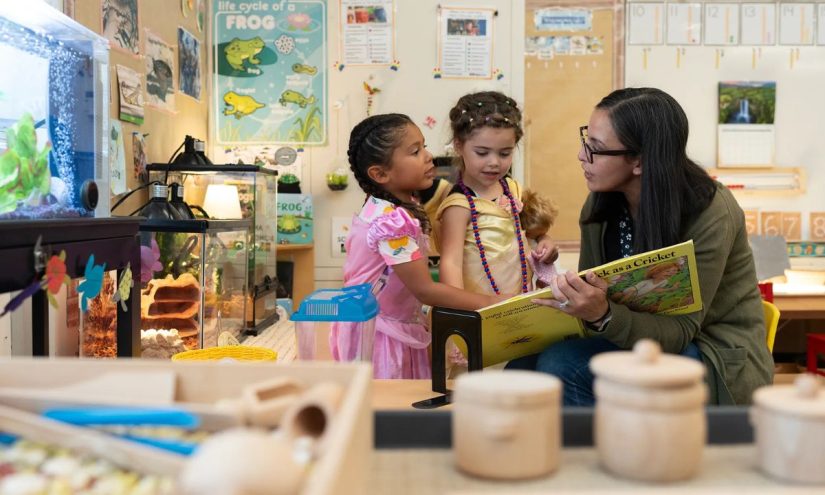
    Cards on the walls at Edwards Creative Learning Center display the signs for different letters so students — whether nonverbal or not — can all learn sign language. Credit: Sarah Carr/The Hechinger Report

    In Vermont, for instance, officials hope to soon unveil a free, on-demand training program aimed at helping child care teachers have more inclusive classrooms. And officials in Ohio’s Summit County, home to Akron, report growing interest from other counties in creating programs based on Summit’s more than decade-old model that provides in-person training for child care operators in inclusion of children with disabilities. 

    “We’re helping to create child care centers that feel they can handle whatever comes their way, especially when it comes to significant behavior concerns,” said Yolanda Mahoney, the early childhood center support supervisor for Summit County’s disabilities board.

    The federal government until recently encouraged the creation of such models. In 2023, the federal Department of Education and Department of Health and Human Services issued a joint statement urging states to take steps to support inclusion in early childhood settings, including strengthening training and accountability. 

    Also, a year-old provision of the Child Care and Development Fund, the primary federal funding source for child care, requires that states increase the availability of child care for children with disabilities as a prerequisite for receiving funds. (However, 43 states have received waivers allowing them to delay implementation of that provision.) 

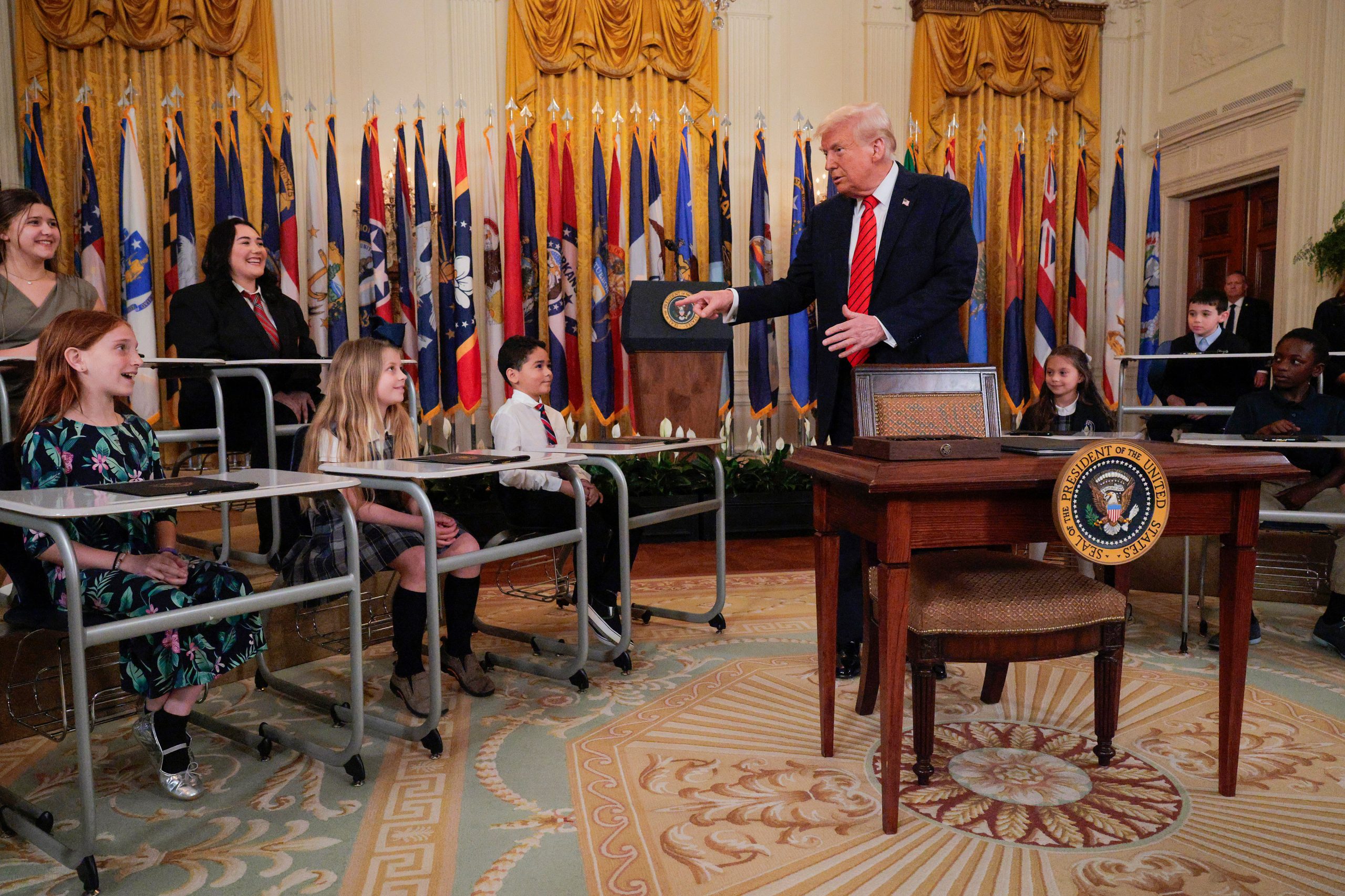
    Under the current president, federal momentum on the issue has largely stalled. While the administration of President Donald Trump hasn’t directly attacked inclusion in the context of special education, the president has criticized the term more broadly — especially when it comes to diversity, equity and inclusion. That can create uncertainty and a chilling effect on advocates of inclusion efforts of all kinds.   

    Funding for some inclusion efforts is also in jeopardy. States rely on Medicaid, which faces nearly $1 trillion in cuts over the next decade, to pay for early intervention programs for children birth to age 3 with developmental delays and disabilities. Trump has also proposed eliminating Preschool Development Grants, which states such as Vermont and Illinois have used to expand support of young children with disabilities. 

    That means over the next few years, progress on inclusion in child care settings could hinge largely on state and local investment. It helps that there’s a “real desire” among providers to enroll more children with disabilities, said Kristen Jones, an assistant director on the GAO’s education, workforce and income security team, who also worked on the report. “But there’s also a concern that currently they can’t do that in a safe way” because of a lack of training and resources.

    Related: For kids with disabilities, child care options are worse than ever

    In Ohio, the idea for Ohio PROMISE came after an appeal in 2022 from Republican Gov. Mike DeWine. He reported that families were coming to him saying they couldn’t find child care for their kids with disabilities. 

    “He said, ‘Come to me with ideas to solve that problem,’” recalled Wendy Grove, a senior adviser in the Ohio Department of Children and Youth who spearheaded development of the program.

    Grove and her colleagues had already been working on a related effort. In 2020, Ohio won a federal grant that included help exploring how well — or not — children with disabilities were being included in child care and early education settings. DeWine liked the idea Grove’s team presented of morphing that work into a state-led effort to strengthen training and support for child care teachers. They also proposed more direct support to families, including the extension of child care vouchers to families with incomes above the poverty level, with a higher reimbursement rate for children with disabilities. 

    The training, which debuted about two years ago, is provided in three levels. Jada Cutchall, a preschool teacher at Imaginative Beginnings, an early learning center just outside of Toledo, recently completed the third tier, which for her included customized coaching. Cutchall’s coach helped her create communication tools for a largely nonverbal student, she said, including a board with pictures children can point to if, for example, they want to go to the bathroom or try a different playground activity. 

    As a result, Cutchall said, she has watched kids with disabilities, including those with speech impairments and autism, engage much more directly with their classmates. “They have the courage to ask their peers to play with them — or at least not distance themselves as much as they usually would,” she said. All of the children in the classroom have benefited, she added, noting that kids without disabilities have taken an interest in learning sign language, strengthening their own communication skills and fostering empathy. 

    Child care programs where one teacher and one administrator have completed some of the training earn a special designation from the state, which may eventually be tied to the opportunity to get extra funding to serve children with disabilities. In Ohio PROMISE’s first year, 1,001 child care centers — about 10 percent of the total number in Ohio — earned that designation, according to Grove.

    For the last six years, Selina Likely has overseen the Edwards Creative Learning Center, where she’s steadily tried to enroll more children with disabilities and developmental delays. Credit: Sarah Carr/The Hechinger Report

    The effort costs a little over $1 million in state dollars each year, with most of that paying for several regional support personnel who work directly with centers as mentors and advisers. Over the last two years, Ohio has seen a 38 percent increase in the number of children in publicly funded centers who qualify for the higher voucher reimbursement rate for children with disabilities, which can be double the size of the standard voucher.

    Grove hopes that ultimately the effort plays a role in narrowing a critical and stubborn gap in the state: about 27 percent of children without disabilities show readiness on state standards for kindergarten; only 14 percent of children with disabilities do. Since so few disabilities exhibited at that age are related to intellectual or cognitive functioning, “we shouldn’t see that gap,” said Grove. “There’s no real reason.”  

    One goal of the new efforts is to reduce the number of young children with disabilities who are expelled from or pushed out of care. Those children are frequently asked to leave for behaviors related to their disability, the GAO report found.

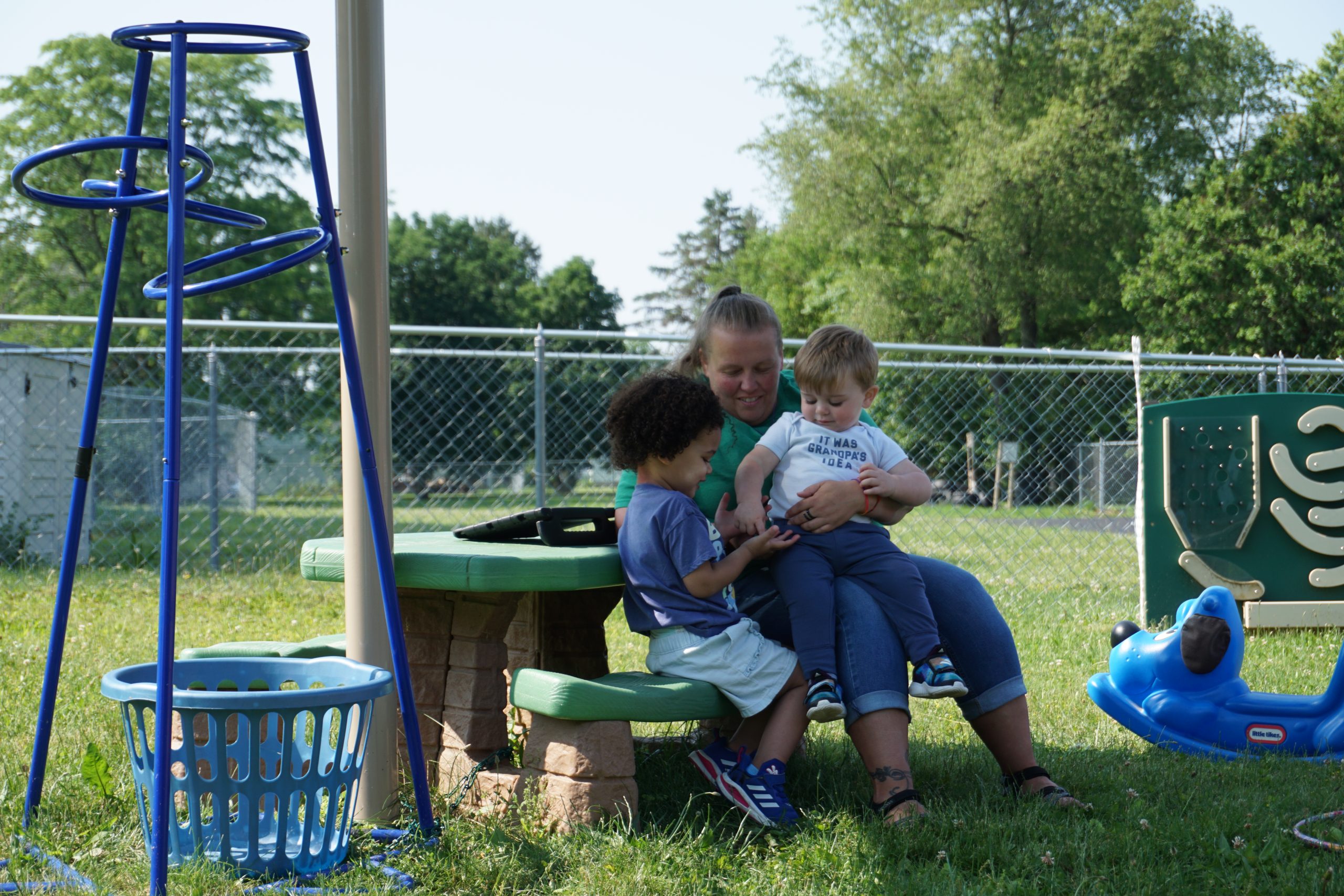
    Several years ago, a child care center in Columbus expelled Meagan Severance’s 18-month-old son for biting a staff member. The boy has several special needs, including some related to attention deficit hyperactivity disorder. Severance brought him to Edwards Creative Learning Center, where not too long after Selina Likely shifted into the role of director. The boy also bit a staff member there — not uncommon behavior for toddlers, especially those with sensory sensitivities and communication challenges. 

    Likely was determined to work with the child, not expel him. “They put in time and effort,” said Severance. “The response wasn’t, ‘He bit someone, he’s gone.’” 

    Likely empathized. Decades earlier, her own daughter had been expelled from a child care center in her hometown of Mansfield, Ohio, for biting.

    “I was so angry and mad at the time — how are you going to kick out a 1-year-old?” she said. The center director didn’t think at all about how to help her child, Likely recalled, instead asking Likely what might be happening at home to make the child want to bite. She said she got no notice or grace period to find a new placement. “That left me in a disheartened place,” she said. “I was like, ‘I still have to go to work.”

    Seventeen years old at the time, she was inspired by the injustice of the situation to quit her job in a factory and apply to be an assistant in a child care program. She’s been in the industry ever since, gradually trying to make more space for children like her daughter, who was later diagnosed with autism.  

    Meagan Severance, a parent and teacher at the Edwards center, has worked in recent years to make her classroom more inclusive for children with all different abilities. Credit: Sarah Carr/The Hechinger Report

    As director, Likely displays the nameplate “chaos coordinator” on her desk. And she’s taken the stance that the center should at least try to work with every kid. She and some of her teachers have completed the first two tiers of the Ohio PROMISE training, as well as some related sessions available from the state. Likely estimates that about 10 percent of the children in her center have a diagnosed disability or developmental delay.

    Liasun Meadows, whose son has Down syndrome, chose Edwards several years ago for her then 1-year-old over another program better known for its work with children with disabilities. She has not been disappointed.

    Parents of kids with disabilities watch their children like a hawk, she said. “There are certain things you notice that you don’t expect others to notice, but they do at Edwards. They’ve been growing and learning alongside him.”  

    Severance, whose son is now 8, works at the center these days, leading the 3-year-old room, which includes two children who are largely nonverbal. She’s made the classroom more inclusive, adding fidget toys for children with sensory issues, rearranging the classroom to create calming areas, providing communication books to nonverbal children so they can more easily express needs and wants, and teaching everyone some sign language. 

    “For a while there was segregation in the classroom” between the kids with disabilities and those without, Severance said. But that’s lessened with the changes. “Inclusion has been good for the kids who are verbal — and nonverbal,” she said.

    Related: Where do kids with disabilities go for child care?  

    As in Ohio, state officials in Vermont turned to online training to help ensure young children with disabilities aren’t denied quality care. The state should soon debut the first parts of a new training program, focusing on outreach to child care administrators and support for neurodivergent children. The state wanted to focus on center leaders first because “directors that are comfortable with inclusion lead programs that are comfortable with inclusion,” said Dawn Rouse, the director of statewide systems in Vermont’s Child Development Division.   

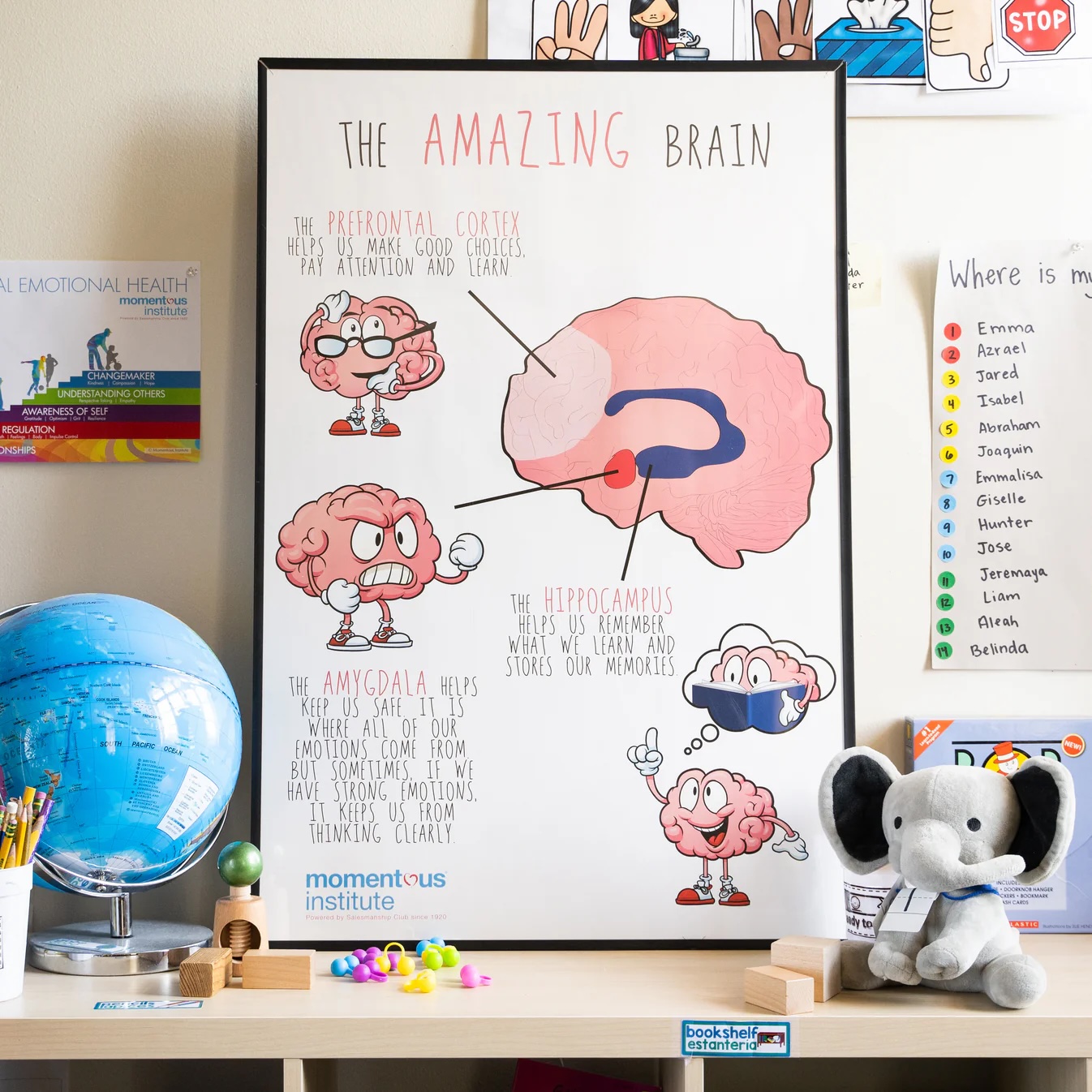
    One tool for supporting and calming children with sensory issues is keeping a healthy supply of fidget toys and Pop-Its on hand. Credit: Sarah Carr/The Hechinger Report

    Vermont also pumped millions of dollars into a separate program, known as the Special Accommodations Grant, that supports young children with disabilities. Since 2009 the state has set aside $300,000 a year that child care centers can tap to provide services for individual children with disabilities. It might help buy specialized equipment for a child with cerebral palsy, for instance, or be used to hire a full- or part-time aide.

    The $300,000 has been maxed out every year, Rouse said. And after the pandemic, the need — and the number of applications — surged.

    As a result, the state allocated some federal American Rescue Plan and Preschool Development Grant dollars to increase spending on the program by about sevenfold — to between $2 million and $2.5 million annually — an amount Rouse still describes as a “Band-Aid.” Without access to the grants, “we see a lot of children being asked to leave programs,” Rouse said. “That’s not good for any child, but for children with specialized developmental needs it’s particularly bad.” 

    Over time, Likely hopes, her Ohio center can play a small role in reducing that instability, although the center hasn’t yet been able to work with all such children it wants to. Likely recalls one toddler with a severe disability who climbed up anything he could. There wasn’t enough money to pay for what the child really needed: a full-time aide. “It’s hard when you know you’ve tried but still have to say no,” she said. “That breaks my heart more than anything.” 

    On one June morning, the center’s teachers acknowledged and celebrated several milestones in its work on inclusion, big and small. One child in the 3-year-old classroom with fine and gross motor challenges was drinking independently from a bottle. The preschool classroom held its first graduation ceremony, translated partly into sign language. All of the kids, no matter their challenges, were set to go on field trips to Dairy Queen and the zoo.

    Likely dreams of someday running a center where about half of the children have a disability or delay. It may be years off, she said, but as with the milestones she sees scores of children at the center reach every day, “There’s a way — if there’s a will.” 

    Sarah Carr is a fellow at New America, focused on reporting on early childhood issues. 

    Contact contributing editor Sarah Carr at [email protected].   

    This story about children with disabilities was produced by The Hechinger Report, a nonprofit, independent news organization focused on inequality and innovation in education. Sign up for the Hechinger newsletter.

    The Hechinger Report provides in-depth, fact-based, unbiased reporting on education that is free to all readers. But that doesn’t mean it’s free to produce. Our work keeps educators and the public informed about pressing issues at schools and on campuses throughout the country. We tell the whole story, even when the details are inconvenient. Help us keep doing that.

    Join us today.

    Source link

  • New book argues child care is a ‘societal imperative’

    New book argues child care is a ‘societal imperative’

    The other day, I came across an article about child care that felt so familiar I let out an exasperated sigh. Child care, the article announced, is now more expensive than college tuition and rent in most states. Many of us had just read another version of the article in March. And before that, in November 2024. Then there’s the one that dates back a little further — to 2013

    Many of these stories, which seem to come out on an annual basis, fail to mention that this is a problem that spans decades. The real news is that it hasn’t gotten any better, and many American lawmakers don’t seem to care enough to take action. 

    I asked Elliot Haspel his thoughts on this a few weeks ago when I interviewed him about his new book, “Raising a Nation,” which will be available Aug. 11. In the book, he presents 10 arguments — some of them well known and others less intuitive — for why child care needs to be a more supported part of American society. His book starts with an anecdote that echoes my observation on the dispiriting lack of momentum around the issue: In 1998, President William Jefferson Clinton stood in the Rose Garden and declared in an address that child care was essential to the nation’s economy. President Barack Obama made the same argument in 2015. President Donald Trump did the same in 2019. Yet as the years go by, little changes.

    “We have been having many of the same child care battles for a long time, for decades and decades and decades,” Haspel told me.

    Haspel’s arguments in “Raising a Nation” include “The Economic Case,” where he digs into how child care affects business productivity and the labor force; and the “The Patriotic Case,” where he presents parenthood as patriotic and argues child care is important for American democracy.

    He cites numerous worrisome examples of the consequences of insufficient policy and investment. In making “The Community Case,” for instance, he tells a jarring story from Montrose, Colorado, where the lack of child care has led to difficulties recruiting and retaining police officers. That, in turn, negatively affects the city’s crime rate and response time to emergency calls. And in arguing “The Antipoverty Case,” he highlights extensive research on how a lack of child care is a key theme for families who are unable to move out of poverty.  

    “Care is, in fact, just as important to our social infrastructure as having a public education system, having public libraries, having public parks,” he told me.

    As he writes, it’s clear why we haven’t made much progress as a nation, and why we remain behind nearly every other wealthy country in investing in child care: “We have never established that good child care belongs among the pantheon of American values.” 

    While Haspel’s book focuses more on why we need more robust child care policy than how we get there, he provides a few ideas for the latter: giving child care educators a wage that could support their own families, investing in stay-at-home parents and informal caregivers along with licensed care, and including before- and after-school care and summer care in the system. While those seem like lofty goals, Haspel argues it is indeed fully “American” to embrace such policies. Access to high-quality child care, he argues, is not an “individual family obligation but rather a societal imperative.”

    Contact staff writer Jackie Mader at 212-678-3562 or [email protected]

    This story about child care was produced by The Hechinger Report, a nonprofit, independent news organization focused on inequality and innovation in education. Sign up for the Hechinger newsletter.

    The Hechinger Report provides in-depth, fact-based, unbiased reporting on education that is free to all readers. But that doesn’t mean it’s free to produce. Our work keeps educators and the public informed about pressing issues at schools and on campuses throughout the country. We tell the whole story, even when the details are inconvenient. Help us keep doing that.

    Join us today.

    Source link

  • PRINCIPAL VOICE: Inviting families into our classrooms slashed absenteeism and raised reading levels

    PRINCIPAL VOICE: Inviting families into our classrooms slashed absenteeism and raised reading levels

    Two years ago, I bought each of the teachers at Hamilton Elementary in San Diego’s City Heights neighborhood a blue chair. I told them to put it in the back of their classrooms, and that if a parent or caregiver wanted to visit to see how their children are learning — no matter what the reason — that this would be a dedicated space for them.

    I may have earned some exaggerated eye-rolls from educators that day. After all, I can appreciate the disruption to learning that classroom visitors can sometimes cause, especially among excitable elementary schoolers.

    But school is our home, and it is our responsibility to invite families into our home and welcome them. And this was a necessary olive branch, my way of saying to families: “From here on out, things are going to be different.”

    And they were. They also can be different at other schools, because the benefits of family engagement go well beyond student achievement.

    Related: A lot goes on in classrooms from kindergarten to high school. Keep up with our free weekly newsletter on K-12 education.

    Research has long shown that when parents and caregivers are involved and engaged with their children’s education — whether that’s by attending parent-teacher conferences or participating in school events — student achievement, motivation and social-emotional well-being increase.

    Parent involvement with reading activities has a positive impact on reading achievement, language comprehension, expressive language skills and level of attention in the classroom, according to the National Literacy Trust.

    Research also shows that educators enjoy increased job satisfaction and are more likely to keep teaching at the school, families enjoy stronger relationships with their children and feel less isolated, and even school districts themselves become better places to live and raise children.

    None of this was the case when we returned to normalcy following Covid. Just 13 percent of students were reading on grade level, and 37 percent were chronically absent. I knew right away that before we even attempted to tackle academics, we needed to engage families and make them feel deeply connected and committed to the community I envisioned building here.

    Today, 45 percent of students are reading at grade-level, and chronic absenteeism, at 12 percent on the most recent official numbers, is down to 10 percent in our own tracking, with a goal of pushing it down to 8 percent in 2025-26.

    But it wasn’t easy given the distrust that had boiled over during the pandemic, with families skeptical of our ability to effectively support their children and school staff feeling defensive and exhausted.

    It was clear to me that families weren’t excited to send their kids to school, didn’t feel informed about what was happening on our campus and, moreover, didn’t feel comfortable — let alone capable — of communicating their needs to us.

    Complicating matters further was the need to share information across many languages other than English, which can make relationship-building and communicating expectations difficult.

    Roughly half of our students are English learners, and while the majority of their families are Spanish-speakers, there are growing populations of students whose first languages are Haitian-Creole, Pashto and Vietnamese.

    Related: What the research says about the best way to engage parents

    The first thing I did was establish open communication with parents using ClassDojo, a mobile app that gives families an easy, intuitive central access point to our teachers and staff, automatically translates all messages into parents’ native languages and allows us to share stories about what is happening in school.

    It became an easy way to build trust and collaboration between families and staff.

    Creating that type of visibility was key to breaking down walls between us. And in those early days, we didn’t post about literacy, math or anything related to academics. Instead, we focused solely on attendance and getting families to come inside the school as much as possible.

    We focused on relationship-building activities and joyful learning. We hosted after-school art classes and monthly family Fridays, when families could come to school to engage in a fun activity.

    We organized a Halloween costume drive with candy and fun games for kids; we hosted a Read Across America event where we passed out Play-Doh; and we organized other low-stakes events at school, rooted in building a partnership between home and school.

    Again, our goal wasn’t learning during these meet-ups. It was all in service of building trust and creating meaningful relationships with students and their families.

    Once we had the foundation in place, we added a focus on academics — though we rooted that learning in family engagement, too. For example, our schoolwide focus last year was phonics, so we sent activities home for families to complete with their children that were tied specifically to concepts the students needed reinforced, based on their individual assessments, like long vowel patterns and sight words.

    These activities were taught by the students and their teachers to family members during conferences.

    Beyond helping students, the exercise challenged a false narrative so many families had assumed — that they either didn’t know enough about what was happening in school to help, weren’t confident enough to help or didn’t have enough time.

    Today, the atmosphere at Hamilton feels radically different than when I first walked through the doors. When we first started hosting Family Fridays, about 10 family members and their children showed up.

    Now, we have roughly 200 caregivers at every meet-up. Families run most of the community-based initiatives at the school — from a boutique where families can shop among donated clothes twice a month, to a food distribution center, to a book club, English classes and a monthly meet-up where families can socialize.

    When district leaders visit, they’re always impressed by the participation. I tell them, if you care about family engagement, it has to be so deeply embedded into the system that people don’t have a choice but to do it.

    That’s why I’m constantly thinking about how to center family engagement in staff meetings, in attendance meetings, in literacy and math plans, in behavioral and counseling plans and in meetings about school procedures and budgets.

    It’s a strategy that not only involves families but also supports academic achievement and student well-being. For me, family engagement is the ultimate strategy for academics.

    Sometimes in the K-12 world we keep outreach and academics separate, but in reality, engagement is the key that unlocks our ability to hit academic goals and create a joyful school community.

    Dr. Brittany Daley is the principal of Hamilton Elementary School in San Diego, California.

    Contact the opinion editor at [email protected].

    This story about family engagement was produced by The Hechinger Report, a nonprofit, independent news organization focused on inequality and innovation in education. Sign up for Hechinger’s weekly newsletter.

    The Hechinger Report provides in-depth, fact-based, unbiased reporting on education that is free to all readers. But that doesn’t mean it’s free to produce. Our work keeps educators and the public informed about pressing issues at schools and on campuses throughout the country. We tell the whole story, even when the details are inconvenient. Help us keep doing that.

    Join us today.

    Source link

  • America’s child care system relies on immigrants. Without them, it could collapse

    America’s child care system relies on immigrants. Without them, it could collapse

    ALBUQUERQUE, N.M. — Maggi’s home in a suburban neighborhood here is a haven for local families. It’s a place where after just a few weeks in Maggi’s family-run child care program this spring, one preschooler started calling Maggi “mama” and Maggi’s husband “papa.” Children who have graduated from Maggi’s program still beg their parents to take them to her home instead of school.

    Over the past few months, fewer families are showing up for care: Immigration enforcement has ramped up and immigration policies have rapidly changed. Both Maggi and the families who rely on her — some of whom are immigrants — no longer feel safe. 

    “There’s a lot of fear going on within the Latino community, and all of these are good people — good, hard-working people,” Maggi, 47, said in Spanish through an interpreter on a recent morning as she watched a newborn sleep in what used to be her living room. Since she started her own child care business two years ago, she has dedicated nearly every inch of her common space to creating a colorful, toy-filled oasis for children. Maggi doesn’t understand why so many immigrants are now at risk of deportation. “We’ve been here a long time,” she said. “We’ve been doing honest work.”

    Immigrants like Maggi play a crucial role in home-based child care, as well as America’s broader child care system of more than 2 million predominantly female workers. (The Hechinger Report is not using Maggi’s last name out of concern for her safety and that of the families using her care.) Caregivers are notoriously difficult to find and keep, not only because the work is difficult, but because of poverty-level wages and limited benefits. Nationwide, immigrants make up nearly 20 percent of the child care workforce. In New York City, immigrants make up more than 40 percent of the child care workforce. In Los Angeles, it’s nearly 50 percent. 

    The Trump administration’s far-reaching war on immigration, which includes daily quotas for immigrant arrests, new restrictions on work permits and detainment of legal residents, threatens America’s already-fragile child care system. Immigrant providers, especially those who serve immigrant families, have been hit especially hard. Just like at Maggi’s, child care providers nationwide are watching families disappear from their care, threatening the viability of those businesses. In America, 1 in 4 children under the age of 6 has at least one foreign-born parent. Some kids who could benefit from experienced caregivers are now instead at home with older siblings or elderly relatives, losing out on socialization and kindergarten preparation. Some immigrant workers, regardless of status, are too scared to come to work, exacerbating staffing shortages.  And in recent days, the administration announced that it would bar undocumented children from Head Start, the federally funded child care program for children from low-income families.

    Related: Young children have unique needs and providing the right care can be a challenge. Our free early childhood education newsletter tracks the issues. 

    “Anti-immigrant policy can and will weaken our entire caregiving infrastructure,” said Karla Coleman-Castillo, senior policy analyst at the National Women’s Law Center. Home-based programs in particular will feel the squeeze, she said, since they tend to serve more immigrant families. “Anything that threatens the stability of families’ ability and comfort accessing early childhood education — and educators’ comfort entering or remaining in the workforce — is going to impact an already precarious sector.”

    For Maggi, the fallout has been swift. In February, just a few weeks after the first changes were announced, her enrollment dropped from as many as 15 children each day to seven. Some families returned to Mexico. Others became too nervous to stray from their work routes for even a quick drop off. Some no longer wanted to give their information to the state to get help paying for care.

    Maggi plays with a child in the back yard of her child care program. Maggi runs one of a few child care programs that provides 24/7 care in her town. Credit: Jackie Mader/The Hechinger Report

    By May, only two children, an infant and a 4-year-old, were enrolled full time, along with six kids who came for before- or after-school care. She accepts children who pay privately and those who pay with child care subsidies through the state program for low-income children. She brings in about $2,000 a month for the infant and preschooler, and a couple hundred more each week for after-school care — down significantly from the $9,000 to $10,000 of late 2024. For parents who don’t receive a state subsidy, she keeps her rates low: less than $7 an hour. “They tell me that I’m cheap,” Maggi said with a slight smile. But she isn’t willing to raise her rates. “I was a single mom,” she said. “I remember struggling to find someone to care for my children when I had to work.” 

    Related: 1 in 5 child care workers is an immigrant. Trump’s deportations and raids have many terrified

    Like many child care providers who emigrated to the United States as adults, Maggi started her career in an entirely different field. As a young mother, Maggi earned a law degree from a college in Mexico and worked in the prosecutor’s office in the northern Mexico state of Coahuila. Her job required working many weekends and late evenings, which took a toll on her parenting as a single mother. “I really feel bad that I was not able to spend more time with my daughters,” she added. “I missed a lot of their childhood.” 

    For a year when her girls were in elementary school, Maggi enrolled them in a boarding school, dropping them off Sunday nights and picking them up Friday afternoons. On some weekends, she took the girls to her office, even though she knew it wasn’t a place for children. Maggi longed for a different job where she could spend more time with them. 

    She started thinking seriously of emigrating about 15 years ago, as violence escalated. Her cousin was kidnapped and police officers she worked with were killed. Maggi received death threats from criminals she helped prosecute. Then one day, she was stopped by men who told her they knew where she lived and that she had daughters. “That’s when I said, this is not safe for me.”

    In 2011, Maggi and the girls emigrated to America, bringing whatever they could fit into four suitcases. They ended up in El Paso, Texas, where Maggi sold Jell-O and tamales to make ends meet. Three years later, they moved here to Albuquerque. Maggi met her husband and they married, welcoming a son, her fourth child, shortly after. 

    In Albuquerque, Maggi settled into a life of professional caregiving, which came naturally and allowed her to spend more time with her family than she had in Mexico. She and her husband went through an intensive screening process and became foster parents. (New Mexico does not require individuals to have lawful immigration status to foster.) Maggi enrolled her youngest in a Head Start center, where administrators encouraged her to start volunteering. She loved being in the classroom with children, but without a work permit could not become a Head Start teacher. Instead, after her son started elementary school, she started offering child care informally to families she knew. Maggi became licensed by the state two years ago after a lengthy process involving several inspections, a background check and mandatory training in CPR and tenets of early childhood care.

    It didn’t take long for Maggi to build up a well-respected business serving an acute need in Albuquerque. Hers is one of few child care programs in the area that offers 24/7 care, a rarity in the industry despite the desperate need. The parents who rely on her are teachers, caregivers for the elderly and people answering 911 calls.  

    In Maggi’s living room, carefully curated areas allow children to move freely between overflowing shelves of colorful toys, art supplies parked on a miniature table and rows of books. Educational posters on her walls reinforce colors, numbers and shapes. She delights in exposing the children to new experiences, frequently taking them on trips to grocery stores or restaurants. She is warm, but has high expectations for the children, insisting they clean up after themselves, follow directions and say “please” and “thank you.”

    “I want them to have values,” Maggi said. “We teach them respect toward animals, people and each other.” 

    By the end of 2024, Maggi’s business was flourishing, and she looked forward to continued growth. 

    Then, Donald Trump took office.

    Related: Child care centers were off limits to immigration authorities. How that’s changed

    Data has yet to be released about the extent to which the current administration’s immigration policies have affected the availability of child care. But interviews with child care providers and research hint at what may lie ahead — and is already happening. 

    After a 2008 policy allowed Immigration and Customs Enforcement to check the immigration status of people taken into custody by local police, there was a marked decline in enrollment in child care among both immigrant and non-immigrant children. There was also a decrease in the supply of child care workers. Even though women were the minority of those deported, researchers found the policy sparked fear in immigrant communities, and many pulled back from their normal routines.

    In the child care sector, that’s problematic, experts say. Immigrants in the industry tend to be highly educated and skilled at interacting with children positively, more so even than native workers. If a skilled portion of the workforce is essentially “purged” because they’re too afraid to go to work, that will lower the quality of child care, said Chris Herbst, an associate professor at Arizona State University who has studied immigration policy’s effect on child care. “Kids will be ill-served as a result.”  

    Home-based programs like Maggi’s are among the most vulnerable. Children of immigrants are more likely to be in those child care settings. In the decade leading up to the pandemic, however, the number of home-based programs declined by 25 percent nationwide, in part due to financial challenges sustaining such businesses

    Related: Trump’s deportation plan could separate millions of families, leaving schools to pick up the pieces 

    On a recent morning, Maggi stood in her living room, wearing white scrubs adorned with colorful cartoon ladybugs. Last year, the room would have been buzzing with children. Now, it’s quiet, save for chatter from Kay, the sole preschooler in her care each day. (The Hechinger Report is not using Kay’s full name to protect her privacy.) While Kay sat at a table working on a craft, Maggi cradled the infant, who had just woken up from a nap. The baby’s eyes were latched onto Maggi’s face as she fawned over him. 

    “Hello little one!” she cooed in Spanish. He cracked a smile and Maggi’s face lit up. 

    As one of her daughters took over to feed the newborn, Maggi followed Kay outside. The preschooler bounced around from the sandbox to the swings to a playhouse, with Maggi diligently following and playing alongside her.

    Advocates and experts say upticks in immigration enforcement can cause stress and trauma for young children. In America, 1 in 4 children under the age of 6 has at least one foreign-born parent. Credit: Jackie Mader/The Hechinger Report

    Finally Kay came to a standstill, resting her head against Maggi’s hip. Maggi gently patted her head and asked if she was ready to show off her pre-kindergarten skills. The pair sat down at a small table in the shade and Kay watched eagerly as Maggi poured out small plastic trinkets. Kay pulled three plastic toy turtles into a pile. “Mama, look! They’re friends!” Kay said, giggling. 

    Kay came to Maggi’s program after her mother pulled her out of another program where she felt the girl wasn’t treated well. Here, Kay is so happy, she hides when her mom comes back to get her. Still, a key aspect of the child care experience is missing for Kay. Normally, the girl would have several friends her own age to play with. Now when she is asked who her friends are, she names Maggi’s adult daughters.

    Maggi worries even more about the children she doesn’t see anymore. Most are cared for by grandparents now, but those relatives are unlikely to know how to support child development and education, Maggi said. Many are unable to run around with the children like she does, and are more likely to turn to tablets or televisions for them.

    She has seen the effects in children who leave her program and come back later having regressed. “Some of them are doing things well with me, and then when they come back, they have fallen behind,” she said. One child Maggi used to care for, for example, had just started to walk when the mother pulled them out of full-time care earlier this year, at the start of the immigration crackdown. In the care of a relative, Maggi found out they now spend much of the day sitting at home. 

    Related: They crossed the border for better schools. Now some families are leaving the US 

    Before the second Trump administration began, the child care landscape looked bright in New Mexico, a state with a chronically high child poverty rate. In 2022, New Mexico started rolling out a host of child care policy changes. Voters approved a constitutional amendment guaranteeing a right to early childhood education, with sustained funding to support it. The state now allows families earning up to 400 percent of the federal poverty level, or nearly $125,000 a year, to qualify for free child care. That includes the majority of households in the state. Among the other changes: Providers are now paid more for children they enroll via the state’s assistance program. 

    The increase has been helpful for many providers, including Maggi. Before the pandemic, she received about $490 a month from the state for each preschooler enrolled in her program, compared to $870 a month now. If she enrolls infants who qualify for child care assistance, she gets paid $1,100 a month, nearly $400 more than pre-pandemic. She needs children enrolled to get the payments, however. Running her program 24 hours a day, seven days a week helps. She earns extra money from the state when caring for children evenings and weekends, and she is paid monthly to cover the cost of housing foster children.

    Child care advocates in New Mexico are concerned that immigration policy will affect the industry’s progress. “I am worried because we could be losing early childhood centers that could help working families,” said Maty Miranda, an organizer for OLÉ New Mexico, a nonprofit advocacy organization. “We could lose valuable teachers and children will lose those strong connections.” Immigration crackdowns have had “a huge impact emotionally” on providers in the state, she added. 

    State officials did not respond to a request for data on how many child care providers are immigrants. Across the state, immigrants account for about 13 percent of the entire workforce. 

    Many local early educators are scared due to more extreme immigration enforcement, as are the children in their care, Miranda said. They are trying to work regardless. “Even with the fear, the teachers are telling me that when they go into their classrooms, they try to forget what’s going on outside,” she added. “They are professionals who are trying to continue with their work.”

    Maggi said she’s so busy with the children who remain in her care that there is no extra time to work an additional job and bring in more income. She won’t speculate on how long her family can survive, instead choosing to focus on the hope that things will improve.

    Maggi’s biggest fear at the moment is the well-being of the children of immigrants she and so many other home-based providers serve. She knows some of her kids and families are at risk of being detained by ICE, and that interactions like that, for kids, can lead to post-traumatic stress disorder, disrupted brain development and behavior changes. Some of Maggi’s parents have left her with emergency numbers in case they are detained by immigration officials. 

    Many of the children Maggi cares for after school are old enough to understand that deportation is a threat. “They show fear, because their parents are scared,” Maggi said. “Children are starting to live with that.” 

    Amid the dizzying policy changes, Maggi is trying to keep looking forward. She is working on improving her English skills. Her husband is pursuing a credential to be able to help more in her program. All three of her daughters are studying to become early childhood educators, with the goal to join the family business. Eventually, she wants to serve pre-K children enrolled in the state’s program, which will provide a steady stream of income. 

    In spite of all the uncertainty, Maggi said she is sustained by a bigger purpose. “I want them to enjoy their childhood,” she said on a sunny afternoon, looking fondly at Kay as the girl flung her tiny pink shoes aside and hopped into a sandbox. It’s the type of childhood Maggi remembers from her earliest days in Mexico. Kay giggled with delight as Maggi crouched down and poured cool sand over the little girl’s feet. “Once you grow up, there’s no going back.” 

    Contact staff writer Jackie Mader at 212-678-3562 or [email protected]

    This story about immigrants in New Mexico  was produced by The Hechinger Report, a nonprofit, independent news organization focused on inequality and innovation in education. Sign up for the Hechinger newsletter.

    The Hechinger Report provides in-depth, fact-based, unbiased reporting on education that is free to all readers. But that doesn’t mean it’s free to produce. Our work keeps educators and the public informed about pressing issues at schools and on campuses throughout the country. We tell the whole story, even when the details are inconvenient. Help us keep doing that.

    Join us today.

    Source link

  • Speech therapy association proposes eliminating ‘DEI’ in its standards

    Speech therapy association proposes eliminating ‘DEI’ in its standards

    Scores of speech therapists across the country erupted last month when their leading professional association said it was considering dropping language calling for diversity, equity and inclusion and “cultural competence” in their certification standards. Those values could be replaced in some standards with a much more amorphous emphasis on “person-centered care.” 

    “The decision to propose these modifications was not made lightly,” wrote officials of the American Speech-Language-Hearing Association (ASHA) in a June letter to members. They noted that due to recent executive orders related to DEI, even terminology that “is lawfully applied and considered essential for clinical practice … could put ASHA’s certification programs at risk.” 

    Yet in the eyes of experts and some speech pathologists, the change would further imperil getting quality help to a group that’s long been grossly underserved: young children with speech delays who live in households where English is not the primary language spoken. 

    “This is going to have long-term impacts on communities who already struggle to get services for their needs,” said Joshuaa Allison-Burbank, a speech language pathologist and Navajo member who works on the Navajo Nation in New Mexico where the tribal language is dominant in many homes.

    In a written statement after this story published, a spokesperson for the association stressed that the proposed changes have not been finalized, and said that member feedback is currently under review.

    “ASHA remains steadfast in our belief that all health care services should be non-discriminatory and address the needs of every individual,” the spokesperson added. She characterized the proposed changes as “an evolution, not a retreat,” and noted that person-centered care aims to ensure “clinicians are equipped to deliver services tailored to each person’s context, including their lived experience, language background, cultural identity, and home environment.”

    Across the country, speech therapists have been in short supply for many years. Then, after the pandemic lockdown, the number of young children diagnosed annually with a speech delay more than doubled. Amid that broad crisis in capacity, multilingual learners are among those most at risk of falling through the cracks. Less than 10 percent of speech therapists are bilingual.

    A shift away from DEI and cultural competence — which involves understanding and trying to respond to differences in children’s language, culture and home environment — could have a devastating effect at a time when more of both are needed to reach and help multilingual learners, several experts and speech pathologists said. 

    They told me about a few promising strategies for strengthening speech services for multilingual infants, toddlers and preschool-age children with speech delays — each of which involves a heavy reliance on DEI and cultural competence.

    Embrace creative staffing. The Navajo Nation faces severe shortages of trained personnel to evaluate and work with young children with developmental delays, including speech. So in 2022, Allison-Burbank and his research team began providing training in speech evaluation and therapy to Native family coaches who are already working with families through a tribal home visiting program. The family coaches provide speech support until a more permanent solution can be found, said Allison-Burbank.

    Home visiting programs are “an untapped resource for people like me who are trying to have a wider reach to identify these kids and get interim services going,” he said. (The existence of both the home visiting program and speech therapy are under serious threat because of federal cuts, including to Medicaid.) 

    Use language tests that have been designed for multilingual populations. Decades ago, few if any of the exams used to diagnose speech delays had been “normed” — or pretested to establish expectations and benchmarks — on non-English-speaking populations.

    For example, early childhood intervention programs in Texas were required several years ago to use a single tool that relied on English norms to diagnose Spanish-speaking children, said Ellen Kester, the founder and president of Bilinguistics Speech and Language Services in Austin, which provides both direct services to families and training to school districts. “We saw a rise in diagnosis of very young (Spanish-speaking) kids,” she said. That isn’t because all of the kids had speech delays, but due to fundamental differences between the two languages that were not reflected in the test’s design and scoring. (In Spanish, for instance, the ‘z’ sound is pronounced like an English ‘s.’)

    There are now more options than ever before of screeners and tools normed on multilingual, diverse populations; states, agencies and school districts should be selective, and informed, in seeking them out, and pushing for continued refinement.

    Expand training — formal and self-initiated — for speech therapists in the best ways to work with diverse populations. In the long-term, the best way to help more bilingual children is to hire more bilingual speech therapists through robust DEI efforts. But in the short term, speech therapists can’t rely solely on interpreters — if one is even available — to connect with multilingual children.

    That means using resources that break down the major differences in structure, pronunciation and usage between English and the language spoken by the family, said Kester. “As therapists, we need to know the patterns of the languages and what’s to be expected and what’s not to be expected,” Kester said.

    It’s also crucial that therapists understand how cultural norms may vary, especially as they coach parents and caregivers in how best to support their kids, said Katharine Zuckerman, professor and associate division head of general pediatrics at Oregon Health & Science University. 

    “This idea that parents sit on the floor and play with the kid and teach them how to talk is a very American cultural idea,” she said. “In many communities, it doesn’t work quite that way.”

    In other words, to help the child, therapists have to embrace an idea that’s suddenly under siege: cultural competence,

    Quick take: Relevant research

    In recent years, several studies have homed in on how state early intervention systems, which serve children with developmental delays ages birth through 3, shortchange multilingual children with speech challenges. One study based out of Oregon, and co-authored by Zuckerman, found that speech diagnoses for Spanish-speaking children were often less specific than for English speakers. Instead of pinpointing a particular challenge, the Spanish speakers tended to get the general “language delay” designation. That made it harder to connect families to the most tailored and beneficial therapies. 

    A second study found that speech pathologists routinely miss critical steps when evaluating multilingual children for early intervention. That can lead to overdiagnosis, underdiagnosis and inappropriate help. “These findings point to the critical need for increased preparation at preprofessional levels and strong advocacy … to ensure evidence-based EI assessments and family-centered, culturally responsive intervention for children from all backgrounds,” the authors concluded. 

    Carr is a fellow at New America, focused on reporting on early childhood issues. 

    Contact the editor of this story, Christina Samuels, at 212-678-3635, via Signal at cas.37 or [email protected].

    This story about the speech therapists association was produced by The Hechinger Report, a nonprofit, independent news organization focused on inequality and innovation in education. Sign up for the Hechinger newsletter.

    The Hechinger Report provides in-depth, fact-based, unbiased reporting on education that is free to all readers. But that doesn’t mean it’s free to produce. Our work keeps educators and the public informed about pressing issues at schools and on campuses throughout the country. We tell the whole story, even when the details are inconvenient. Help us keep doing that.

    Join us today.

    Source link

  • New Jersey has the lowest rates of inclusion for students in special education in the country

    New Jersey has the lowest rates of inclusion for students in special education in the country

    New Jersey students with disabilities are the least likely in the nation to spend their days surrounded by peers without disabilities. 

    One underlying reason: a sprawling network of separate schools that allows districts to outsource educating them.

    New Jersey has more than a hundred private schools, plus eight county-run districts specifically for students with disabilities. 

    Districts spend hundreds of millions of dollars placing students in private schools rather than investing in their own staffing and programs — placements that cost New Jersey taxpayers $784 million in 2024, not including transportation. That’s up from about $725 million the year before. This can create a self-perpetuating cycle that increases reliance on separate schools and, experts say, may violate students’ federal right to spend as much time as possible learning alongside students without disabilities.

    In many cases, parents say school administrators are too quick to send children out of district and pressure families to agree to those settings. Other times, parents choose to send their child to a separate school, sometimes feeling that they have no choice after repeatedly failing to get their kids the help they need in their local school.

    “Whatever it is that their kids need within the district, they’re not getting,” said special education parent and advocate Amanda Villamar, who works with families throughout New Jersey. “The question becomes: Why are these services in private schools and not necessarily integrated into our public school system?” 

    Related: A lot goes on in classrooms from kindergarten to high school. Keep up with our free weekly newsletter on K-12 education.

    In all, about 30,000 students with disabilities in New Jersey — or 13 percent— attend separate private or public schools, according to The Hechinger Report’s analysis of federal data. That’s the highest percentage in the country. Nationwide, 4 percent attend separate schools. 

    New Jersey’s history of failing to include children with disabilities in public school classrooms dates back to the 1910s. That’s when the state began promoting separate schools for students with disabilities as a more humane alternative to barring them from schools altogether. 

    Nationwide, only 1 in 5 students with disabilities were enrolled in the public school system in the 1970s, when Congress passed the Individuals with Disabilities in Education Act or IDEA. The law enshrines integration by saying students with disabilities have a right to learn alongside students without disabilities to the “maximum extent” possible and that they should be placed in the “least restrictive environment.” 

    Across the nation, parents and children fought state laws excluding students with disabilities from public schools — with fights in Washington D.C. and Pennsylvania fueling the passage of IDEA. It wasn’t until 1992 that New Jersey repealed its statutes allowing public schools to exclude “untrainable” children with disabilities. By then, separate schools were an integral part of the state’s highly decentralized education system, which today comprises roughly 600 districts. 

    New Jersey Department of Education officials said the state is committed to ensuring students with disabilities are in the most appropriate school setting based on individual needs, and that includes out-of-district programs. 

    “New Jersey is uniquely positioned in this regard, with a longstanding infrastructure of out-of-district options and many small local public school districts,” department spokesman Michael Yaple said in an email. “These and other factors have contributed to the state’s historical reliance on a wide array of specialized programs designed to offer diverse, individualized educational options for students with disabilities.”

    The rate at which New Jersey school districts place students in separate schools has declined over the past two decades. In the same period, however, more parents chose to send their children to private schools, sometimes because they felt they had no other viable options. 

    Related: Young kids with and without disabilities can learn side by side. One state has instead kept them apart for years

    Some parents say there are significant trade-offs when their child leaves their district school.

    Ellen Woodcock’s son, a fifth grader, attends a county-run school for students with disabilities where she says teachers understand his autism much better than they did in her home district.* Despite her son’s fascination with geography, however, teachers spend little time on science or social studies. The school has no library, and the day ends an hour earlier than his district elementary school. School staff focus on teaching social skills, but he’s lost the chance to model the behavior of peers without disabilities. 

    “I feel like he’s not being challenged, like he’s kind of pigeonholed,” Woodcock said. “We just felt like we didn’t have a choice.”

    Her son spent kindergarten through second grade learning in general education classrooms at his local neighborhood school in Haddonfield, New Jersey, and she was happy with the social and academic progress he was making. In third grade, however, things changed. The school shifted him into a separate classroom for significant parts of the day. Woodcock said school staff seemed unable, or unwilling, to address how his autism affected his learning and provide the right support to account for it. She felt he was unwanted.

    In the middle of fourth grade, she said she reluctantly transferred him to a specialized school where he spent his day with other students with autism.

    “It was almost out of desperation,” Woodcock said. “It was like, let’s get him out of the school district, because we feel like they can’t support him. It was a fight all the time to get him what he needed.”

    Haddonfield district officials said privacy laws prevent them from commenting on individual students but noted that the percentage of students with disabilities who spend almost all of their time in general education classrooms is significantly higher than the state’s average. About 69 percent of Haddonfield students with disabilities spend at least 80 percent of the school day in general education classrooms, compared with 45 percent statewide, according to state Education Department data

    “We are proud of our inclusive practices and the strong sense of belonging we strive to create for all students,” district officials said in a statement. “The least restrictive environment can look different for each student.”

    In Haddonfield, 19 percent of parents with students with disabilities choose to enroll their children in private schools, compared with 7 percent statewide.

    Woodcock decided to move her son back to the district next year, where he’ll start sixth grade at the local middle school. She understands that her son may need to be pulled out of class to learn a subject like math in a special education resource room — but she believes he can, and should, learn in general education classrooms as well. 

    Related: Special education and Trump: What parents and schools need to know

    Under IDEA, students with disabilities should be placed in separate schools or classes only if their disability makes it too difficult for them to learn in a regular classroom, even with extra help and support. A team made up of a child’s parents, teachers, school district officials and, when appropriate, the child, decide on a placement together and must review it each year. 

    The federal Department of Education says those teams have to make this decision based on an individual child’s needs — not solely because of the kind of disability, how significant the child’s needs are or whether the school has the money or the staff. In New Jersey, however, some parents say schools too often determine placement on a child’s diagnosis alone.

    Observers, including special education advocates and attorneys, say school districts and leaders of separate schools tend to argue it would be too difficult for all of New Jersey’s hundreds of public school districts to provide services for all types of disabilities. That’s fueled a reliance on private and county-run separate schools, many of which have classrooms or programs focused on a specific disability, such as autism or dyslexia, with specially trained teachers.  

    Districts sometimes launch specific special education programs — applied behavioral analysis classrooms for students with autism, for example — only to abandon them after challenges paying for them or finding qualified staff, said Paul Barger, a special education lawyer in Irvington, New Jersey.

    “Instead of continuing to develop their own programs in the districts, they went ahead and just said they’re placing out into state-approved private school programs,” Barger said.

    Returning some students with disabilities to in-district schools would require more money. Lawmakers in New Jersey are debating the governor’s proposal to boost funding for special education services in public schools by $400 million for the next school year. Advocates say that’s an opportunity to build stronger special education systems in public schools. The governor also proposed flat funding of $420 million for private school tuition payments for students with disabilities.

    Related: OPINION: Students with disabilities should not lose their rights when they are placed in private settings by public school systems

    Some parents, unhappy with the services they see in public districts, prefer private schools: A growing number pay for their children to attend. That’s despite the fact that those parents who choose private schools lose federal protections, including the rights to raise formal complaints. 

    ASAH, the group representing New Jersey private schools for students with disabilities, which enroll more than 10,000 students, points out the lack of special education services in public districts. It tells parents that poorly trained paraprofessionals in public schools can be stigmatizing, and placing students in self-contained classrooms doesn’t make students feel valued or included. The group, formerly known as the Association of Schools and Agencies for the Handicapped, argues private schools may not be more costly to the state than public schools once pensions are factored in.

    Students with disabilities have the right to options like private schools, the association’s executive director John Mulholland said in an interview. 

    “It really is an individualized determination, and merely just being a part of your home district isn’t always a least restrictive environment,” he said. 

    Unlike for public schools, the federal government doesn’t collect data from private schools about how often their students interact with peers without disabilities. According to the association’s recent study of 5,300 students served by ASAH schools, 262 students planned to leave their private schools in the 2022-23 school year to return to their home district. That report suggests such a move was less likely for children with autism and multiple disabilities.

    Mulholland said private schools may offer some interaction with students without disabilities through community service or sporting events. His association’s analyses have found that students who start at a private school earlier are more likely to return to their public school district. 

    “If students come to us younger, they can get the intensive support they need or return to their school districts — many of our members pride themselves on that turnaround,” Mulholland said.

    Nicole Lannutti, of Washington Township in Gloucester County, said her daughter Sophia, who is non-verbal and has multiple disabilities, attended a private preschool for one year at a cost to the district of roughly $90,000. (New Jersey requires school districts to provide preschool for students with disabilities.) 

    Lannutti pushed to get Sophia into the public school system for a second year of preschool and then elementary school, where she said her daughter thrived in a school that prioritized inclusion. But that changed in middle school, where her mom says she’s had to push to have her daughter included even in lunch, recess and extracurricular activities. Washington Township school district did not respond to requests for comment. 

    Lannutti said her local public school is still the most appropriate setting for her child, who will enter seventh grade in the fall and has made friends by participating in the school play. The school agrees, and said as much in her education plan. Lannutti said private schools play an important role, but public schools should work harder to serve more students and fulfill their civil right to an education. “When it comes to my kid, it’s not that she should go because this district can’t handle it,” Lannutti said. “They should learn how to do it.” 

    *Correction: This story has been updated to correct Ellen Woodcock’s son’s current grade level.

    Contact investigative reporter Marina Villeneuve at 212-678-3430 or [email protected] or on Signal at mvilleneuve.78

    Contact senior investigative reporter Meredith Kolodner at 212-870-1063 or [email protected] or on Signal at merkolodner.04

    This story about special education and inclusion was produced by The Hechinger Report, a nonprofit, independent news organization focused on inequality and innovation in education. Sign up for the Hechinger newsletter.

    The Hechinger Report provides in-depth, fact-based, unbiased reporting on education that is free to all readers. But that doesn’t mean it’s free to produce. Our work keeps educators and the public informed about pressing issues at schools and on campuses throughout the country. We tell the whole story, even when the details are inconvenient. Help us keep doing that.

    Join us today.

    Source link

  • New Jersey students in special education stuck in separate classrooms

    New Jersey students in special education stuck in separate classrooms

    CINNAMINSON, N.J. — Terri Joyce believed that her son belonged in a kindergarten classroom that included students with and without disabilities.

    The year before, as a 4-year-old, he happily spent afternoons in a child care program filled with typically developing children, without any extra support. Like other kids his age, her son, who has Down syndrome, was learning about shapes and loved sitting on the rug listening to the teacher read books aloud. His speech delay didn’t prevent him from making friends and playing with children of differing abilities and, during the summer, he attended the same program for full days and would greet her with big smiles at pick up time.

    But when Joyce met with school district administrators ahead of her son’s kindergarten year, they told her that he would need to spend all day in a classroom that was only for students with significant disabilities.

    “They absolutely refused to even consider it,” Joyce said. “They told us, ‘We move so fast in kindergarten, he needs specialized instruction, he’ll get frustrated.’”

    It was the separate classroom that left him frustrated.

    Terri Joyce said her son, who has Down syndrome, has thrived after she fought for him to be included in a general education classroom. Credit: Yunuen Bonaparte for The Hechinger Report

    Under federal law, students with disabilities — who once faced widespread outright exclusion from public schools — have a right to learn alongside peers without disabilities “to the maximum extent” possible. That includes the right to get accommodations and help, like aides, to allow them to stay in the general education classroom. Schools must report crucial benchmarks, including how many students with disabilities are learning in the general education classroom over 80 percent of the time.

    More than anywhere else in the country, New Jersey students with disabilities fail to reach this threshold, according to federal data. Instead, they spend significant portions of the school day in separate classrooms where parents say they have little to no access to the general curriculum — a practice that can violate their civil rights under federal law.

    Just 49 percent of 6- and 7-year-olds with disabilities in the state spend the vast majority of their day in a general education classroom, compared with nearly three-quarters nationally. In some New Jersey districts, it was as low as 10 percent for young learners. Only 45 percent of students with disabilities of all ages are predominantly in a general education classroom, compared to 68 percent nationwide.

    For over three decades, the state has faced lawsuits and federal monitoring for its continued pattern of unnecessarily segregating students with disabilities and regularly fails to meet the targets it sets for improving inclusion.

    Surrounded mostly by children who had trouble communicating, Terri Joyce’s son’s speech development stalled. He wasn’t exposed to what his peers in the general education classroom were learning — like science and social studies.

    For Terri Joyce, getting her son included in a general education classroom “was a part-time job” and meant staying on top of, and documenting, his academic and social progress. Credit: Yunuen Bonaparte for The Hechinger Report

    Joyce tried mediation with the Cinnaminson district but they refused to budge. In the end, she hired a lawyer, filed a due process claim with the state and succeeded in having her son placed in a classroom that included students with and without disabilities the next year, repeating kindergarten to see if he could regain the skills he had lost. The process cost her family thousands of dollars.

    Related: Become a lifelong learner. Subscribe to our free weekly newsletter featuring the most important stories in education.

    The Hechinger Report spoke with more than 80 parents, researchers, lawyers, advocates and school officials across the state who described a widespread failure to devote resources to integrating students with disabilities — and a decentralized system that gives enormous power to district leaders, who have long been able to refuse to prioritize inclusion without facing consequences from the state or federal government.

    New Jersey is known nationally as a leader in public education, but the state’s governance system has led to inclusion rates that vary dramatically between districts. As a result, a child who is placed in a separate classroom for the entire day in one district could be included all day in a general education classroom in a neighboring one.

    “Mindset is the biggest barrier,” said Michele Gardner, executive director of All In for Inclusive Education and previously an administrator for 15 years in the Berkeley Heights district. “There are educators, parents, administrators and physicians who truly believe that separate is better for children with and without disabilities. With more than 600 districts, local control makes change harder.”

    Experts say integrating students with disabilities in general education should be easiest, and can be the most beneficial, in the early years. Researchers have found students with and without disabilities — particularly the youngest learners — can benefit when inclusion is done with enough staffing and commitment. Young children also learn from watching each other, and parents worry denying students with disabilities this chance can have lasting damage on them academically and emotionally. Worldwide, inclusion is considered a human right helping all children develop empathy and prepare for society after graduation.

    Too often, New Jersey parents say, young learners are placed right away in separate classrooms based on a diagnosis — as Joyce’s son was — rather than an assessment of what support they actually need.

    Just over a decade ago, New Jersey settled a class-action lawsuit filed by parents and advocacy groups over student placement, which required years of state monitoring, a new stakeholder committee, and training and technical assistance for districts with the lowest rates of inclusion.

    But since then, the proportion of young students in the general education classroom the vast majority of the day actually decreased by about 5 percentage points, from 54 percent in the 2013-14 school year. Nationwide, there was no such drop.

    “We are certainly seeing a trend that, even at younger ages, students are being shuttled into segregated schooling and never really starting in inclusive experiences,” Syracuse University inclusive special education professor Christine Ashby said of New Jersey and other states. 

    Ashby, who also runs the university’s Center on Disability and Inclusion, said students then tend to stay in separate — commonly called self-contained — classrooms, where they may receive individualized instruction alongside peers with disabilities but may be less prepared for life after high school.

    Related: Hundreds of thousands of students are entitled to training and help finding jobs. They don’t get it      

    For Terri Joyce, the opportunity she fought for her son to have proved worth it. It took him time to adjust, but with the help of an aide, he settled in and, now in first grade, is thriving alongside his general education peers once again.

    “It was like night and day,” said Joyce. “His speech improved. He loves school. He has friends. He gets invited to birthday parties.”

    Terri Joyce is happy with how her son’s writing skills have developed in first grade while learning in a general education classroom. Credit: Yunuen Bonaparte for The Hechinger Report

    New Jersey Department of Education officials declined a request for an interview, but said in a statement that the agency is working with schools statewide to improve how often students with disabilities are placed in general education classrooms through training, technical assistance and programs promoting inclusion. A new website provides a detailed look at each district’s data, broken down by grade and type of disability.

    “All placement decisions must be made on an individual basis and there is no one-size-fits all standard or outcome that should be applied to every district, school or student,” Laura Fredrick, the department’s communication director, said in the emailed statement.

    Fredrick said districts that fail to meet state goals for increasing inclusion may face more intensive monitoring, but there are no direct financial penalties or automatic consequences for failing to improve. She also noted that the state pays for voluntary training to increase inclusion in K-12 schools.

    That program has helped in some districts, but a limited number of schools have participated so far and space is limited — some that have applied for the training have been turned away.

    In Cinnaminson, district officials said they could not comment on specific students but that school officials and parents work together on placement decisions.

    “To the fullest extent possible, we strive to place students in general education classrooms for the most inclusive educational experience,” Superintendent Stephen Cappello said in a statement.

    Some experts said the data suggests that, unlike other states, New Jersey districts do a good job providing individualized services that students need. Autism New Jersey clinical director Joe Novak said in contrast, “There are certain districts, or states, where the default may simply be to place the child in general education and say, ‘Well, best of luck.’”

    Indeed a frequent complaint from some parents is the lack of specialized services in general education classrooms, especially because of staffing shortages or lack of expertise. In those cases a student may be counted as included in a general education classroom but without the support they need, which advocates on both sides of the debate say can be harmful. 

    “New Jersey is probably doing a lot of things right, because it means we’re probably really customizing what makes sense for the individual,” Novak said

    Yet others say the state can improve inclusion rates that are sharply lower than the nation’s.

    Related: Special education and Trump: What parents and schools need to know    

    The federal government doesn’t say how many students should be included or for how much of the school day. States set targets for inclusion rates but typically don’t fine or sanction districts for not meeting them. States can also take other steps like requiring training or administrative changes for districts. Advocates say New Jersey districts have little to lose for repeatedly falling below the state’s own targets for including children with disabilities.

    Oversight from the federal government could also diminish going forward. Although the Trump administration pledges to continue funding special education, advocates warn the planned dismantling of the Department of Education, including its civil rights enforcement arm, will harm students with disabilities.

    “It’s sort of petrifying, from my end, for these families,” said Jessica Weinberg, a former New Jersey school district attorney who now runs a special education law firm.

    “It could be completely disbanded,” she said of the Education Department. “The uncertainty is really unsettling.”

    Federal law says students should be placed in separate classrooms “only if” they can’t learn in the general education classroom with services detailed in IEPs, or individualized education programs — the document that outlines a student’s needs, the services they should receive and where they’ll receive them. Teachers, school officials and parents sit on their child’s IEP team, which is supposed to review placement decisions each year.

    And parents across New Jersey say it takes time and money to fight for access to general education classrooms — which means whether a child is included can reflect existing racial disparities and whether families can afford lawyers and advocates. Parents say when a school argues their child must be taught separately, their best way of fighting that decision is lawyers and experts — if they can afford it.

    Districts with less poverty and a larger share of white students tend to have higher inclusion rates and test scores, according to The Hechinger Report’s analysis of state data. Overall, just 37 percent of Black students in kindergarten, first or second grade in New Jersey are included in the general education classroom for the vast majority of the school day, compared to half of white students.

    It’s challenging to get special education services in urban and lower-income districts in the first place, said Nicole Whitfield, a mother of a child with a disability who founded an advocacy group in Trenton for families fighting for special education services.

    Urban “districts are so overloaded with so many kids, they don’t do a good job in managing it,” she said.

    In all districts, arguments against including more students often hinge on money. Administrators may say they can’t afford all the services every child needs, like an aide assigned to work with one child, and some parents worry providing comprehensive services could strain budgets or cut services for students without disabilities. As special education costs rise, the federal government has long failed to provide as much special education funding as it pledged.

    Related: How a disgraced method of diagnosing learning disabilities persists in our nation’s schools

    The way New Jersey funds schools doesn’t consider how many students have disabilities. The governor’s proposed budget for the upcoming school year would take that into account and increase overall special education spending by about $400 million — though some districts will lose money. Lawmakers are debating the governor’s proposal, which has some support from the chair of the state Senate Education Committee, Sen. Vin Gopal.

    Yet districts spend hundreds of millions of dollars a year to pay tuition at private schools ($784 million last year statewide) and fight legal battles — money advocates say could boost public special education.

    It cost Washington Township school district about $90,000 to send Nicole Lannutti’s daughter, who is non-verbal and has a developmental delay, to a private preschool for a year rather than educate her in one of its schools.

    “If you can come up with the money for lawsuits, why can’t you put it into the district right now?” Lannutti said. “That makes no sense.”

    Washington Township school district did not respond requests for comment.

    Whittier Elementary School in Teaneck, New Jersey, rearranged its classrooms to improve how many students with disabilities are included in classes with their peers. Credit: Meredith Kolodner/The Hechinger Report

    In some districts, officials say inclusion doesn’t cost more in the long run, even if there are upfront costs. Administrators in Sparta Township, for example, said improving inclusion rates didn’t require more spending. Its schools got help from the New Jersey Inclusion Project — the state-funded training program that helps districts provide students with the least restrictive learning environment appropriate for them.

    “[It] has really changed the way we educate our students,” said Adrienne Castorina, Sparta’s director of special services. Teachers found that they were able to provide specialized instruction in reading inside a general education classroom, for example, instead of pulling children out and teaching them in separate rooms. 

    In 2024, a special education parent advisory committee in Bernards Township School District asked administrators to apply to the New Jersey Inclusion Project. Parents thought the program would be a no-cost, collaborative path forward.

    District officials refused.

    Many parents in the wealthy district say Bernards’ classroom staff are committed and skilled, but they also say there’s an unwritten policy of separating children based on their diagnosis — close to three-quarters of children with autism, for example, spend the vast majority of their day without contact with their general education peers.

    For years, Trish Sumida pleaded with staff at her daughter’s elementary school in Bernards to allow her to have contact with her non-disabled peers. But every day, starting in kindergarten, she learned only alongside other children with autism. Most years, she was the only girl in the room, and she longed for someone to play with who shared her interests.

    “Those early years are so important,” said Sumida, whose daughter is now in fifth grade and still spends most of her time in a separate classroom. “I feel like we’ve missed our window.”

    Many Bernards parents are particularly frustrated by the refusal to set up co-taught classrooms, a nationally used approach where a general education and special education teacher work together to educate students with and without disabilities.

    Jean O’Connell, Bernards’ director of special services, rejected the idea of co-taught classes in elementary school, saying they made it harder to support individual students, particularly in reading. “We had this model in place for many years and found it ineffective,” she said in an email.

    Related: For kids with disabilities, child care options are worse than ever    

    Research suggests even students with significant disabilities can learn alongside general education peers with help from co-teachers or paraprofessionals. And a large body of evidence suggests inclusion doesn’t harm learners with or without disabilities.

    Some scholars say inclusion research is flawed because students who appear to benefit may need less support and have fewer academic struggles. Such experts point out that a separate classroom may be the appropriate setting for some children, who could languish without intensive support in a general education classroom. And schools with high inclusion rates on paper may place students with disabilities in general education without needed aides and accommodations — which federal data does not capture.

    Even a prominent researcher who has questioned the benefits of inclusion, however, said most children don’t need to be taught separately all day.

    “Most students with disabilities do not need very intensive forms of instruction,” said Vanderbilt University special education professor Douglas Fuchs.

    O’Connell did not respond to questions about why Bernards refused to participate in the New Jersey Inclusion Project and said only that the district has participated in inclusion workshops. She added that the district has no “blanket district-wide policy on inclusion” and involves parents in all placement decisions.

    Yet several Bernards parents said they met intense resistance from administrators. One mom said her child who has autism that requires limited support was in an inclusion classroom for pre-K without any problems, but Bernards administrators insisted he be placed in a self-contained classroom for kindergarten.

    “He would cry to me every morning and say he didn’t want to go to school,” said the mom, who asked not to be named, afraid her child could experience discrimination because of his disability if identified. “I just felt heartbroken every day.”

    She tried repeatedly to have him moved, eventually turning to mediation and filing a complaint with the state. Ultimately, she felt her child couldn’t wait for a resolution. She moved to another district last fall, where he learns alongside his general education peers all day. She said her child is now happy and doing well academically and socially.

    Related: Students with disabilities often snared by subjective discipline rules         

    Other districts that have struggled with low levels of inclusion have embraced outside help — including from the Inclusion Project. The program helped Whittier Elementary School in Teaneck create its first co-taught classrooms two years ago. Teachers there said the shift requires a lot of planning and they wish they had more staff to provide support, but they’ve seen their students develop academically and socially.

    “When you think about the conversations that kids have — turn to your partner, talk to your table, those opportunities aren’t there in self-contained,” said Janine Lawler, who has been a special education teacher for 18 years, mostly in self-contained classrooms, and is now co-teaching in a first-grade class.

    Janine Lawler teaches math to a group of first graders in Teaneck, New Jersey. Her classroom includes students with and without disabilities. Credit: Meredith Kolodner/The Hechinger Report

    Educators say they can provide intensive instruction without having to separate children for large portions of the day.

    “Do we have to isolate young people to give them a service, or can we include them and provide the same service or greater service?” said André Spencer, superintendent of Teaneck Public Schools. “We believe we can include them.”

    For decades, New Jersey education officials have failed to support or pressure districts to improve their inclusion rates. A 2004 report found a lack of consequences — such as financial penalties — for New Jersey districts who repeatedly failed to increase inclusion of students with disabilities despite years of promises to improve.

    “There’s a culture in New Jersey, which is that you teach kids with impairments in segregated classes,” said Carol Fleres, a long-time special education administrator in New Jersey who is now a special education professor and department co-chair at New Jersey City University.

    A 2018 report by the National Council on Disability, an independent federal agency, found “serious contradictions” in New Jersey’s regulations that lay out how schools have to provide special education services. For example: The state categorizes students as having mild, moderate or severe disabilities and says that students with similar behavioral or academic needs should be grouped together.

    Those issues make it easy for New Jersey schools to lump students with disabilities together in violation of federal requirements, according to the report.

    A spokesman for New Jersey’s education department defended the regulations as doing the opposite. “This arrangement helps ensure that students who require more individualized instruction, especially those whose needs cannot be met in a general education setting, even with supplementary aids and services, are educated in smaller, more supportive environments,” Michael Yaple said in an email.

    Despite settlements and scrutiny, advocates want more accountability: New Jersey’s State Special Education Advisory Council, which advises the state Education Department on special education issues, recommended required training for districts with low inclusion rates.

    Special education parent and advocate Amanda Villamar, who works with families throughout New Jersey, said education officials try to educate the state’s over 600 school districts — but those efforts only go so far.

    “We have a lot of districts that just say: ‘Well, it’s guidance. We don’t have to do it,’” Villamar said. “They literally just don’t even give it the time of day. Then you have other districts that put a lot of work and thought and effort into it.”

    Related: OPINION: Students with disabilities should not lose their rights when they are placed in private settings by public school systems

    Lawyers representing families said young children with behavioral challenges or intellectual disabilities often wind up in separate classrooms for years, even if behaviors improve. Promises of inclusion in gym class or at lunch don’t always happen, they said.

    Many parents said they felt forced to agree to separate classrooms, with the promise of inclusion, eventually. That day never came.

    “Once you start restricting them, how are you going to get them back and get them increasingly more time within the classroom?” said Elizabeth Alves, a member of the State Special Education Advisory Council.

    For Terri Joyce’s son, learning in the co-taught classroom meant accessing the general education curriculum, including social studies. The lessons on civil rights inspired him.

    “He became obsessed with Martin Luther King,” she said. “He still will sit for hours and watch YouTube videos of his speeches.”

    Like other students with disabilities, her son’s IEP is subject to an annual review, which means that inclusion in the general education classroom isn’t guaranteed in the years to come. Joyce says that means constant vigilance in a process that feels like a part-time job.

    But her efforts to have her son included are about more than academics. He’s on the flag football team. He rides the school bus. Other kids recognize him and say hello in the grocery store.

    “It’s much bigger than just his education and being included in the classroom,” she said. “Being included in school means he’s more included in life, and he’s more included in our community, and he’s more valued.”

    Contact investigative reporter Marina Villeneuve at 212-678-3430 or [email protected] or on Signal at mvilleneuve.78

    Contact senior investigative reporter Meredith Kolodner at 212-870-1063 or [email protected] or on Signal at merkolodner.04

    This story about special education classrooms was produced by The Hechinger Report, a nonprofit, independent news organization focused on inequality and innovation in education. Sign up for the Hechinger newsletter.

    The Hechinger Report provides in-depth, fact-based, unbiased reporting on education that is free to all readers. But that doesn’t mean it’s free to produce. Our work keeps educators and the public informed about pressing issues at schools and on campuses throughout the country. We tell the whole story, even when the details are inconvenient. Help us keep doing that.

    Join us today.

    Source link

  • A South Dakota museum takes students on flights to the stars, but future trips are in question because of cuts from the Trump administration cuts

    A South Dakota museum takes students on flights to the stars, but future trips are in question because of cuts from the Trump administration cuts

    HAYTI, S.D. — “Are we actually in space?”

    The kindergartners of South Dakota’s Hamlin County are, in fact, in space. To be specific, they are on planet Earth, near the geographic center of North America, sitting crisscross applesauce inside an 11-foot-high inflatable planetarium set up in their school gym.

    The darkness is velvety. Childish whispers skitter around the dome like mice. The kids are returning from a short mission to Jupiter, piloted by Kristine Heinen, a young museum educator with a ponytail who knows how to make her voice BIG AND EXCITED and then inviting and quiet to hold little ones’ attention. 

    “Now we’re over China!” Heinen says.

    “My friend went to China!” a girl calls out.

    “The other side is nighttime and this side’s bright,” expounds a boy with a crew cut. “The sun shines here so it can’t shine over there.“

    The school is in eastern South Dakota, 34 miles northeast of the settlement where Laura Ingalls Wilder grew up and attended a one-room schoolhouse. The sprawling Hamlin Education Center is a modern-day analogue, serving an entire district in one building, with just under 900 students, pre-K through 12. Notable graduates include U.S. Homeland Security Secretary Kristi Noem, the former governor of South Dakota.

    The center is roughly equidistant from four tiny towns, surrounded by open fields where cornstalks shine in the sun; 95 percent of students arrive by bus, from up to 20 miles away. Over a third of them qualify for free or reduced-price lunch, said Dustin Blaha, the elementary school’s principal.

    Blaha said that most of these children have never been to the South Dakota Discovery Center, a hands-on science museum three hours west in the state capital. But thanks to a federal agency called the Institute of Museum and Library Services, a part of the museum can come to them.

    The IMLS was established in 1996, combining previously separate programs. The small agency became the largest source of federal funding for museums and libraries, last year awarding $266.7 million in program grants, research and policy development across all 50 states. IMLS awarded the South Dakota Discovery Center about $45,000 in 2023 to upgrade this traveling planetarium.

    But students around the state may be waiting a long time for the next upgrade.

    Related: Young children have unique needs and providing the right care can be a challenge. Our free early childhood education newsletter tracks the issues.

    President Donald Trump signed an executive order in mid-March calling for the agency to be “eliminated to the maximum extent consistent with applicable law.” Mass firings followed.

    On May 1, the U.S. District Court in Washington, D.C., issued a temporary restraining order to block the agency’s dismantling, followed on May 6 by a second federal judge finding the dismantling of this and two other agencies unconstitutional. On May 20, the American Library Association reported that employees are returning to work and some grants have been restored.

    But the administration is continuing its legal battle to all but shutter the IMLS. The latest post on the agency’s Instagram account is captioned, “The era of using your taxpayer dollars to fund DEI grants is OVER,” holding up for criticism grants that were aimed at addressing systemic racism in museums, equitable library practices, and diverse staff development. The IMLS and the Department of Government Efficiency did not respond to requests for comment.

    A veteran of the agency who asked to remain anonymous because of fear of reprisal said they first saw DOGE staffers meeting with leadership on March 28. “On the 31st, we were put on administrative leave. We had about two hours to turn in your key cards, your ID, get everything off your laptop you’re ever going to need. We were locked out of our computer systems by 3:30 and told to get out of the building.” A skeleton crew was hastily rehired the next day.

    The ex-staffer points out that the Institute of Museum and Library Services spends, or spent, just 7 percent of its budget on its 70 staff, passing the rest along as grants. “We are not a bloated agency.” They have two kids at home, one with special needs and are married to another federal employee whose job is also at risk; but they are almost as worried about their grantees as themselves.

    “After 20 years, I didn’t even get to put an out-of-office response up. Is someone emailing me right now and getting nothing, because all of a sudden their grant just ended? I hate that,” the former IMLS employee said. 

    Almost all grants awarded required a one-to-one cost share out of the local institution’s budget, the staffer said. Plus, typically the grantees pay for activities first and then apply to get reimbursed. “We’re leaving these often small rural museums and libraries on the hook.”

    Related: Facing declines in reading proficiency, rural libraries step in

    Anne Lewis, executive director of the South Dakota Discovery Center, said that organizations like hers would be “wobbly” without federal funding and would have to scale back on ambitious programs like the planetarium upgrade.

    “The new system has much better interaction and control,” said Heinen, the museum educator. An earlier version had a static point of view, but upgraded visual effects means that “now we have spaceship mode,” she said. “We can travel to destinations including planets, and go in a full 360-degree mode around galaxies.”

    With a flick of the touchscreen menu, she can also display the constellations of a dozen different cultures including Lakota, a significant benefit especially when she visits tribal schools.

    The South Dakota Discovery Center, based in Pierre, has used federal support from the Institute for Museum and Library Services to pay for a traveling planetarium exhibit. Credit: Anya Kamenetz for The Hechinger Report

    It’s a lean operation: Heinen drove solo nearly 200 miles from Pierre to Watertown the evening before and spent the night at an Econo Lodge. From there, it was another 20-some miles to Hayti, where she arrived at 7:30 in the morning, set up the dome herself, and ran 30-minute programs all day.

    The whole elementary school, about 500 kids in total, saw the planetarium, with each show customized to the children’s interest and grade level; and she also conducted a parent engagement program in the afternoon. Heinen said she never tires of being a “Santa Claus” for science. ”As soon as they see me, they know something fun is going to happen.”

    During this visit, the fan favorites were Jupiter, Mars and the sun. “It was cool when we went to Mars,” said Nash Christensen, 6. “And the volcano on that one moon, and the big hurricane on Jupiter. I think Jupiter is a dangerous place to live.”

    Grant recipients of the Institute of Museum and Library Services say the support from the federal government has been critical to running their programs. For example, the Boston Children’s Museum, the second-oldest children’s museum in the country, has used federal grant money to improve school readiness. One of the outcomes was a new exhibit in the museum, “Countdown to Kindergarten,” that mimics a kindergarten classroom, complete with a school bus you can sit in out front.

    “It’s helpful not only for the kids, but some of our caregivers who came from other countries and may not have gone to a school like this,” said Melissa Higgins, the museum’s vice president of programs and exhibits.

    Related: Tracking Trump: His actions to dismantle the Education Department, and more

    At the Madison Children’s Museum in Wisconsin, federal funds paid for a multistate partnership that provides climate education for young children and their families. In Fort Lauderdale, Florida, a grant covered five “STEMobiles,” which offer hands-on science activities for children ages 3-5 in low-income parts of Broward County. The Philadelphia School District won a two-year planning grant to try to improve its pipeline of school librarians; they were down to only a handful for a district of 200,000 students.

    But the greatest impact may come in rural, often deep-red areas.

    “Rural communities have particularly unique challenges,” said Lewis at the South Dakota Discovery Center. “There’s 800,000 people in the state, and they’re dispersed. We don’t have a concentration of funders and donors who can help support these enrichment activities.”

    She said the teachers she serves are “passionate, committed and, like every other place in the world, underfunded.” If not for institutions like hers, students would probably go without this kind of hands-on science experience, she said.

    Blaha, the elementary school principal, concurred. “The planetarium brings excitement and expertise that we don’t typically have in a community like this,” he said.

    For now, the excitement is coming to an end. The class has “landed” on a green lawn, under a deep blue sky. Heinen announces “It’s time to leave.” She’s met with a chorus of, “Noo!”

    “You guys, we were in here for a full 30 minutes.”

    “It felt like 10!”

    “It felt like a second!”

    Tonight, many of them will be able to look up at the dark sky over the prairie and show their parents Jupiter, Ursa Major and Mars. 

    Contact the editor of this story, Christina Samuels, at 212-678-3635 via Signal at cas.37 or [email protected].

    This story about South Dakota museums was produced by The Hechinger Report, a nonprofit, independent news organization focused on inequality and innovation in education. Sign up for the Hechinger newsletter.

    The Hechinger Report provides in-depth, fact-based, unbiased reporting on education that is free to all readers. But that doesn’t mean it’s free to produce. Our work keeps educators and the public informed about pressing issues at schools and on campuses throughout the country. We tell the whole story, even when the details are inconvenient. Help us keep doing that.

    Join us today.


    Source link

  • States try to tackle child care shortages — by lowering standards

    States try to tackle child care shortages — by lowering standards

    When this year’s legislative session launched in Idaho, early childhood experts and advocates were hopeful that the state, which has a shortage of child care, would invest more in early learning programs. Instead, lawmakers proposed what may be the most extreme effort yet to deregulate child care in America: The bill called for eliminating state required staff-to-child ratios altogether, instead allowing child care providers to set their own.

    While the effort was met with fierce opposition in the state, it represents a trend gaining momentum in the country. Rather than investing in the struggling child care industry, more than a dozen states have proposed lowering the minimum age to work with children, easing education and training requirements, and raising group sizes and ratios. (Read my December story on this growing deregulation movement. I investigated such efforts in states including Kansas and Iowa.)

    The deregulation measures come at a time when many early childhood programs face federal funding and staffing cuts. Head Start programs were hit by a federal funding freeze and struggled to draw down payments even after the Trump administration announced Head Start was exempt from the freeze. Then, earlier this month, the Trump administration closed five of the Administration for Children and Families’ (ACF) regional offices and placed staff from those offices on leave, threatening support for Head Start, which is overseen by ACF, as well as programs that receive federal child care subsidies. Last week, USA Today reported that President Donald Trump is considering a budget proposal that would eliminate funding for Head Start altogether.

    At the state level, Idaho lawmakers are not the only ones to propose child care deregulation legislation this year. Minnesota lawmakers also issued similar proposals, including increasing family child care capacity limits and relaxing ratios in rural areas. Another bill in the state proposes lowering the age requirement of assistant teachers from 18 to 16. In Kansas, where a lawmaker proposed hiring 14-year-olds to help in child care classrooms in 2023, a new bill aims to reduce training requirements. An Indiana measure would loosen staff-to-child ratios based on the ratios set in neighboring states, and one in North Carolina would increase maximum group sizes for young children. And in Florida, lawmakers have called for an abbreviated inspection plan for some child care programs.

    While deregulation is more common in red states, there have also been some recent efforts to invest in early learning programs that transcend the red-blue divide. In Georgia, Gov. Brian Kemp proposed an additional $14 million aimed at reducing preschool class sizes and $5.5 million to address issues with the state’s child care subsidy program for lower-income families. Indiana Gov. Mike Braun called for more spending to eliminate the state’s waitlist for child care subsidies. And South Carolina Gov. Henry McMaster proposed $20 million to continue a program that provides wage supplements to child care workers.

    In Idaho, the deregulation legislation was eventually amended to loosen the state-mandated ratios — without eliminating them altogether. It also forbids municipalities from setting more stringent child care regulations than the state, something that was allowed in the past and allowed cities to set a “higher standard” for programs, said Martin Balben, director of strategic initiatives for the Idaho Association for the Education of Young Children.

    “I think municipalities are still kind of reeling with how to confront that reality,” he said. “It remains to be seen how [they] are going to handle their lack of local control in this area moving forward.”

    Experts say while deregulation is nothing new, the recent momentum is troubling. “We absolutely want to make sure that states are not rolling back their health and safety measures,” said Diane Girouard, state policy senior analyst at Child Care Aware of America. “We want to make sure that they’re not compromising children. … There are no quick fixes.”

    Contact staff writer Jackie Mader at 212-678-3562 or [email protected].

    This story about child care services was produced by The Hechinger Report, a nonprofit, independent news organization focused on inequality and innovation in education. Sign up for the Hechinger newsletter.

    The Hechinger Report provides in-depth, fact-based, unbiased reporting on education that is free to all readers. But that doesn’t mean it’s free to produce. Our work keeps educators and the public informed about pressing issues at schools and on campuses throughout the country. We tell the whole story, even when the details are inconvenient. Help us keep doing that.

    Join us today.

    Source link

  • Head Start is in turmoil

    Head Start is in turmoil

    In 1965, President Lyndon Johnson launched “Project Head Start,” a summer program intended to help children from low-income families prepare for school. Sixty years later, Head Start has expanded into a multi-billion program operating in all 50 states, serving preschoolers as well as infants, toddlers and pregnant women.

    But the program is facing serious challenges, such as recent disruptions in federal funding, and cuts among staffers who oversee the program. In a recent feature story for The Hechinger Report, reporter Anya Kamenetz delved into Head Start’s uncertain future. I asked Anya what she learned from her reporting. Her responses have been edited for length and clarity.

    Q: Head Start is celebrating its 60th anniversary this year, and has persevered through both Democratic and Republican presidential administrations. However, it seems to be uniquely vulnerable this year. What is happening that puts the program at risk?

    A: A lot of the federal staff has been fired. And Project 2025, which the Trump administration has been following closely, calls for eliminating the program altogether. (Editor’s note: this week, the Department of Health and Human Services, which oversees Head Start, placed staffers at five of Head Start’s 10 regional offices on administrative leave.)

    Q: Critics of Head Start say that the program is poorly run and that the money could be better spent at the local level. According to its supporters, why is Head Start still an important program?

    A: The program has always been severely underfunded, serving only a fraction of eligible children. The lapses in quality that we know about have come to light in part because the program has better oversight and higher quality standards than the existing patchwork of subsidized, nonprofit and for-profit programs otherwise available across the country. Head Start has been shown to improve long-term educational outcomes. In addition, lawmakers are threatening cuts to Head Start alongside cuts to programs that support families across the board, from food stamps to Medicaid

    Q: States and local communities are stepping in to expand their early childhood offerings. Did state officials share with you if they are ready to step in should Head Start be cut or if the funding shifts?

    A: Yes, a bright spot in my article was that in states like Vermont and New Mexico where they have been committed to expanding access to childcare, they are intending to keep this a priority even if federal funding shifts.

    Read the full story about the future of Head Start.

    This story about Head Start was produced by The Hechinger Report, a nonprofit, independent news organization focused on inequality and innovation in education. Sign up for the Hechinger newsletter.

    The Hechinger Report provides in-depth, fact-based, unbiased reporting on education that is free to all readers. But that doesn’t mean it’s free to produce. Our work keeps educators and the public informed about pressing issues at schools and on campuses throughout the country. We tell the whole story, even when the details are inconvenient. Help us keep doing that.

    Join us today.

    Source link