RESTON, Va.(GLOBE NEWSWIRE) — K12, a portfolio brand of Stride, Inc. has been recognized for its steadfast commitment to quality education. In a recent review by Cognia, a global nonprofit that accredits schools, K12 earned an impressive Index of Education Quality (IEQ) score of 327, well above the global average of 296. Cognia praised K12 for creating supportive environments where students are encouraged to learn and grow in ways that work best for them.
For over 25 years, K12 has been a pioneer in online public education, delivering flexible, high-quality learning experiences to families across the country. Having served more than 3 million students, K12 has helped shape the future of personalized learning. This long-standing presence in the field reflects a deep understanding of what families need from a modern education partner. The recent Cognia review further validates K12’s role as a trusted provider, recognizing the strength of its learning environments and its commitment to serving all students.
“What stood out in this review is how clearly our learning environments are working for students,” said Niyoka McCoy, Chief Learning Officer at Stride, Inc. “From personalized graduation plans to real-time feedback tools and expanded course options, the Cognia team saw what we see every day, which is students being supported in ways that help them grow, stay engaged, and take ownership of their learning.”
K12’s impact extends well beyond the virtual classroom. In 2025, the organization was honored with two Gold Stevie® Awards for Innovation in Education and recognized at the Digital Education Awards for its excellence in digital learning. These awards highlight K12’s continued leadership in delivering meaningful, future-focused education. What sets K12-powered online public schools apart is a curriculum that goes beyond the basics, offering students access to STEM, Advanced Placement, dual-credit, industry certifications, and gamified learning experiences. K12’s program is designed to spark curiosity, build confidence, and help students thrive in college, careers, and life.
Through student-centered instruction and personalized support, K12 is leading the way in modern education. As the learning landscape evolves, K12 adapts alongside it, meeting the needs of today’s students while shaping the future of education.
To learn more about K12 and its accredited programs, visit k12.com.
About Stride, Inc.
Stride Inc. (LRN) is redefining lifelong learning with innovative, high-quality education solutions. Serving learners in primary, secondary, and postsecondary settings, Stride provides a wide range of services including K-12 education, career learning, professional skills training, and talent development. Stride reaches learners in all 50 states and over 100 countries. Learn more at Stridelearning.com.
eSchool Media staff cover education technology in all its aspects–from legislation and litigation, to best practices, to lessons learned and new products. First published in March of 1998 as a monthly print and digital newspaper, eSchool Media provides the news and information necessary to help K-20 decision-makers successfully use technology and innovation to transform schools and colleges and achieve their educational goals.
When a white teacher at Decatur High School used the n-word in class in 2022, students walked out and marched in protest. But Reyes Le wanted to do more.
Until he graduated from the Atlanta-area school this year, he co-led its equity team. He organized walking tours devoted to Decatur’s history as a thriving community of freed slaves after the Civil War. Stops included a statue of civil rights leader John Lewis, which replaced a Confederate monument, and a historical marker recognizing the site where Rev. Martin Luther King, Jr. was jailed for driving with an out-of-state license.
Reyes Le, a Decatur High graduate, sits at the base of Celebration, a sculpture in the town’s central square that honors the city’s first Black commissioner and mayor. (Linda Jacobson/The 74)
But Le feared his efforts would collapse in the face of the Trump administration’s crackdown on diversity, equity and inclusion. An existing state law against “divisive concepts” meant students already had to get parent permission to go on the tour. Then the district threw out two non-discrimination policies April 15.
“I felt that the work we were doing wouldn’t be approved going into the future,” Le said.
Decatur got snared by the U.S. Department of Education’s threat to pull millions of dollars in federal funding from states and districts that employed DEI policies. In response, several organizations sued the department, calling its guidance vague and in violation of constitutional provisions that favor local control. Within weeks, three federal judges, including one Trump appointee, blocked Education Secretary Linda McMahon from enforcing the directives, and Decatur promptly reinstated its policies.
The reversal offers a glimpse into the courts’ role in thwarting — or at least slowing down — the Trump education juggernaut. States, districts, unions, civil rights groups and parents sued McMahon, and multiple courts agreed the department skirted the law in slashing funding and staff. But some observers say the administration is playing a long game and may view such losses as temporary setbacks.
“The administration’s plan is to push on multiple fronts to test the boundaries of what they can get away with,” said Jeffrey Henig, a professor emeritus of political science and education at Teachers College, Columbia University. “Cut personnel, but if needed, add them back later. What’s gained? Possible intimidation of ‘deep state’ employees and a chance to hire people that will be ‘a better fit.’ ”
A recent example of boundary testing: The administration withheld nearly $7 billion for education the president already approved in March.
But the move is practically lifted from the pages of Project 2025, the right-wing blueprint for Trump’s second term. In that document, Russ Vought, now Trump’s director of the Office of Management and Budget, argues that presidents must “handcuff the bureaucracy” and that the Constitution never intended for the White House to spend everything Congress appropriated.
The administration blames Democrats for playing the courts. White House Deputy Chief of Staff Stephen Miller accused “radical rogue judges” of getting in the president’s way.
The end result is often administrative chaos, leaving many districts unable to make routine purchases and displaced staff unsure whether to move on with their lives.
While the outcome in the lower courts has been mixed, the Supreme Court — which has looked favorably on much of Trump’s agenda — is expected any day to weigh in on the president’s biggest prize: whether McMahon can permanently cut half the department’s staff.
In that case, 21 Democratic attorneys general and a Massachusetts school district sued to prevent the administration from taking a giant step toward eliminating the department.
“Everything about defunding and dismantling by the administration is in judicial limbo,” said Neal McCluskey, director of the libertarian Cato Institute’s Center for Educational Freedom. As a supporter of eliminating the department, he lamented the slow pace of change. “If the Supreme Court allows mass layoffs, though, I would expect more energy to return to shrinking the department.”
The odds of that increased last week when the court ruled that mass firings at other agencies could remain in effect as the parties argue the case in the lower courts.
While the lawsuits over the Education Department are separate, Johnathan Smith, chief of staff and general counsel at the National Center for Youth Law, said the ruling is “clearly not a good sign.” His case, filed in May, focuses on cuts specifically to the department’s Office for Civil Rights, but the argument is essentially the same: The administration overstepped its authority when it gutted the department without congressional approval.
Solicitor General John Sauer, in his brief to the Supreme Court, said the states had no grounds to sue and called any fears the department couldn’t make do with a smaller staff merely “speculative.”
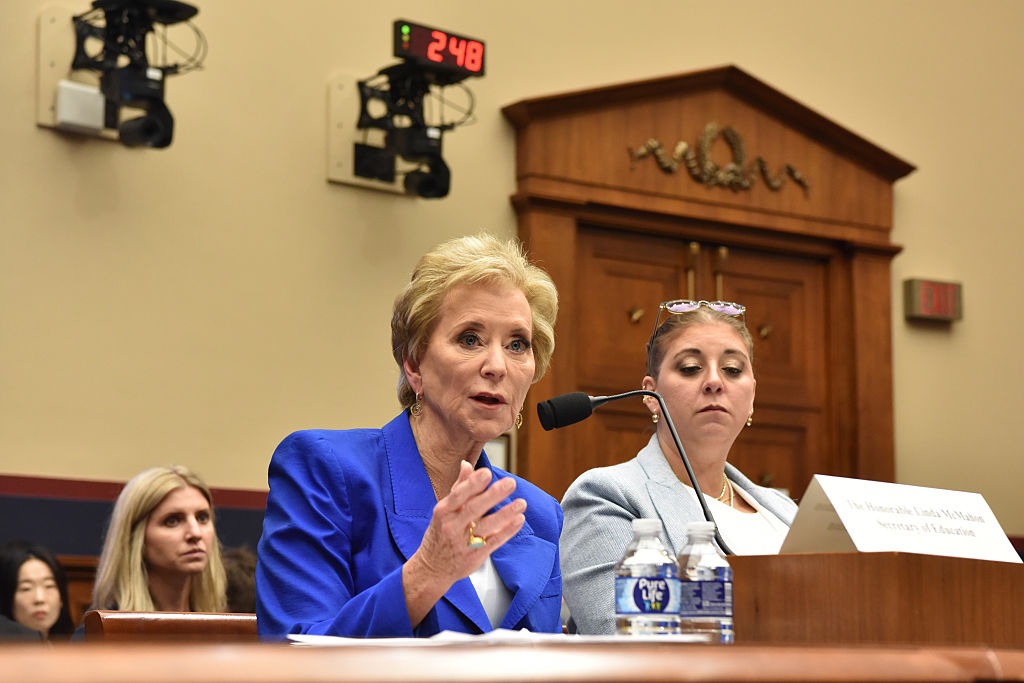
Education Secretary Linda McMahon defended her cuts to programs and staff before a House education committee June 4. (Sha Hanting/China News Service/VCG via Getty Images)
Even if the Supreme Court rules in McMahon’s favor, its opinion won’t affect previous rulings and other lawsuits in progress against the department.
Here’s where some of those key legal battles stand:
COVID relief funds
McMahon stunned states in late March when she said they would no longer receive more than $2 billion in reimbursements for COVID-related expenses. States would have to make a fresh case for how their costs related to the pandemic, even though the department had already approved extensions for construction projects, summer learning and tutoring.
On June 3, a federal judge in Maryland blocked McMahon from pulling the funds.
Despite the judicial order, not all states have been paid.
The Maryland Department of Education still had more than $400 million to spend. Cherie Duvall-Jones, a spokeswoman, said the agency hasn’t received any reimbursements even though it provided the “necessary documentation and information” federal officials requested.
The cancellation forced Baltimore City schools to dip into a reserve account to avoid disrupting tutoring and summer school programs.
Madison Biedermann, a spokeswoman for the department, declined to comment on why it had yet to pay Maryland or how much the department has distributed to other states since June.
Mass firings
In the administration’s push to wind down the department, McMahon admits she still needs staff to complete what she calls her “final mission.” On May 21, she told a House appropriations subcommittee that she had rehired 74 people. Biedermann wouldn’t say whether that figure has grown, and referred a reporter to the hearing video.
“You hope that you’re just cutting fat,” McMahon testified. “Sometimes you cut a little in the muscle.”
The next day, a federal district court ordered her to also reinstate the more than 1,300 employees she fired in March, about half of the department’s workforce. Updating the court on progress, Chief of Staff Rachel Oglesby said in a July 8 filing that she’s still reviewing survey responses from laid off staffers and figuring out where they would work if they return.
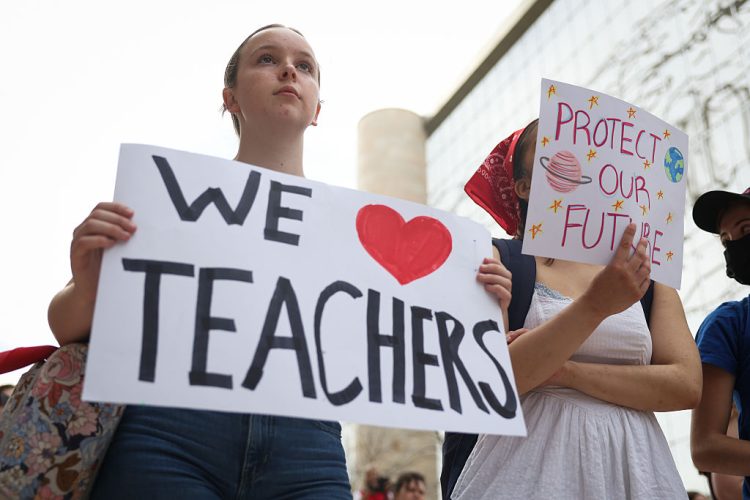
Student protestors participate in the “Hands Off Our Schools” rally in front of the U.S. Department of Education on April 4 in Washington, D.C. (Getty Images)
But some call the department’s efforts to bring back employees lackluster, perhaps because it’s pinning its hopes on a victory before the Supreme Court.
“This is a court that’s been fairly aggressive in overturning lower court decisions,” said Smith, with the National Center for Youth Law.
His group’s lawsuit is one of two challenging cuts to the Office for Civil Rights, which lost nearly 250 staffers and seven regional offices. They argue the cuts have left the department unable to thoroughly investigate complaints. Of the 5,164 civil rights complaints since March, OCR has dismissed 3,625, Oglesby reported.
In a case brought by the Victim Rights Law Center, a Massachusetts-based advocacy organization, a federal district court judge ordered McMahon to reinstate OCR employees.
Even if the case is not reversed on appeal, there’s another potential problem: Not all former staffers are eager to return.
“I have applied for other jobs, but I’d prefer to have certainty about my employment with OCR before making a transition,” said Andy Artz, who was a supervising attorney in OCR’s New York City office until the layoffs. “I feel committed to the mission of the agency and I’d like to be part of maintaining it if reinstated.”
DEI
An aspect of that mission, nurtured under the Biden administration, was to discourage discipline policies that result in higher suspension and expulsion rates for minority students. A 2023 memo warned that discrimination in discipline could have “devastating long-term consequences on students and their future opportunities.”
But according to the department’s Feb. 14 guidance, efforts to reduce those gaps or raise achievement among Black and Hispanic students could fall under its definition of “impermissible” DEI practices. Officials demanded that states sign a form certifying compliance with their interpretation of the law. On April 24, three federal courts ruled that for now, the department can’t pull funding from states that didn’t sign. The department also had to temporarily shut down a website designed to gather public complaints about DEI practices.
The cases, which McMahon has asked the courts to dismiss, will continue through the summer. In court records, the administration’s lawyers say the groups’ arguments are weak and that districts like Decatur simply overreacted. In an example cited in a complaint brought by the NAACP, the Waterloo Community School District in Iowa responded to the federal guidance by pulling out of a statewide “read-In” for Black History Month. About 3,500 first graders were expected to participate in the virtual event featuring Black authors and illustrators.
The department said the move reflected a misunderstanding of the guidance. “Withdrawing all its students from the read-In event appears to have been a drastic overreaction by the school district and disconnected from a plain reading of the … documents,” the department said.
Desegregation
The administration’s DEI crackdown has left many schools confused about how to teach seminal issues of American history such as the Civil Rights era.
It was the Civil Rights Act of 1964 that established “desegregation centers” across the country to help districts implement court-ordered integration.
In 2022, the Biden administration awarded $33 million in grants to what are now called equity assistance centers. But Trump’s department views such work as inseparable from DEI. When it cancelled funding to the centers, it described them as “woke” and “divisive.”
Judge Paul Friedman of the U.S. District Court for the District of Columbia, a Clinton appointee, disagreed. He blocked McMahon from pulling roughly $4 million from the Southern Education Foundation, which houses Equity Assistance Center-South and helped finance Brown v. Board of Education over 70 years ago. His order referenced President Dwight Eisenhower and southern judges who took the ruling seriously.
“They could hardly have imagined that some future presidential administration would hinder efforts by organizations like SEF — based on some misguided understanding of ‘diversity, equity, and inclusion’ — to fulfill Brown’s constitutional promise to students across the country to eradicate the practice of racial segregation.”
He said the center is likely to win its argument that canceling the grant was “arbitrary and capricious.”
Raymond Pierce, Southern Education Foundation president and CEO, said when he applied for the grant to run one of the centers, he emphasized its historical significance.
“My family is from Mississippi, so I remember seeing a ‘colored’ entrance sign on the back of the building as we pulled into my mother’s hometown for the holidays,” Pierce said.
Trump’s Justice Department aims to dismiss many of the remaining 130 desegregation orders across the South. Harmeet Dhillon, assistant attorney general for civil rights, has said the orders force districts to spend money on monitoring and data collection and that it’s time to “let people off the hook” for past discrimination.
But Eshé Collins, director of Equity Assistance Center-South, said the centers are vital because their services are free to districts.
“Some of these cases haven’t had any movement,” she said. “Districts are like ‘Well, we can’t afford to do this work.’ That’s why the equity assistance center is so key.”
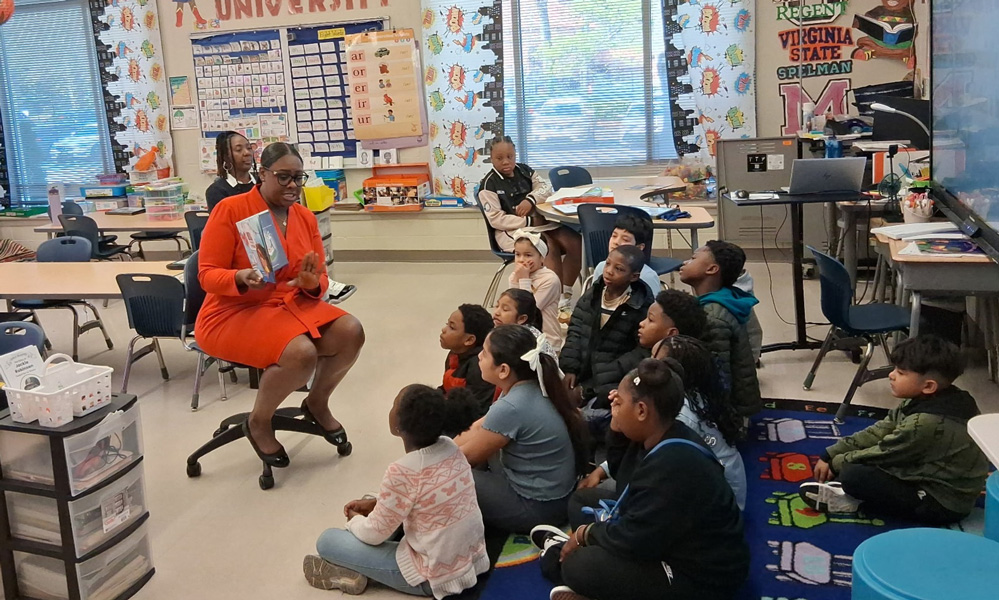
Eshé Collins, director of Equity Assistance Center-South and a member of the Atlanta City Council, read to students during a visit to a local school. (Courtesy of Eshé Collins)
Her center, for example, works with the Fayette County schools in Tennessee to recruit more Black teachers and ensure minority students get an equal chance to enroll in advanced classes. The system is still under a desegregation order from 1965, but is on track to meet the terms set by the court next year, Collins said. A week after Friedman issued the injunction in the foundation’s case, Ruth Ryder, the department’s deputy assistant secretary for policy and programs, told Collins she could once again access funds and her work resumed.
Research
As they entered the Department of Education in early February, one of the first moves made by staffers of the Department of Government Efficiency was to terminate nearly $900 million in research contracts awarded through the Institute for Education Sciences. Three lawsuits say the cuts seriously hinder efforts to conduct high-quality research on schools and students.
Kevin Gee from the University of California, Davis, was among those hit. He was in the middle of producing a practice guide for the nation on chronic absenteeism, which continues to exceed pre-pandemic levels in all states. In a recent report, the American Enterprise Institute’s Nat Malkus said the pandemic “took this crisis to unprecedented levels” that “warrant urgent and sustained attention.” Last year’s rate stood at nearly 24% nationally — still well above the 15% before the pandemic.
Gee was eager to fully grasp the impact of the pandemic on K-3 students. Even though young children didn’t experience school closures, many missed out on preschool and have shown delays in social and academic skills.
Westat, the contractor for the project, employed 350 staffers to collect data from more than 860 schools and conduct interviews with children about their experiences. But DOGE halted the data collection midstream — after the department had already invested about $44 million of a $100 million contract.
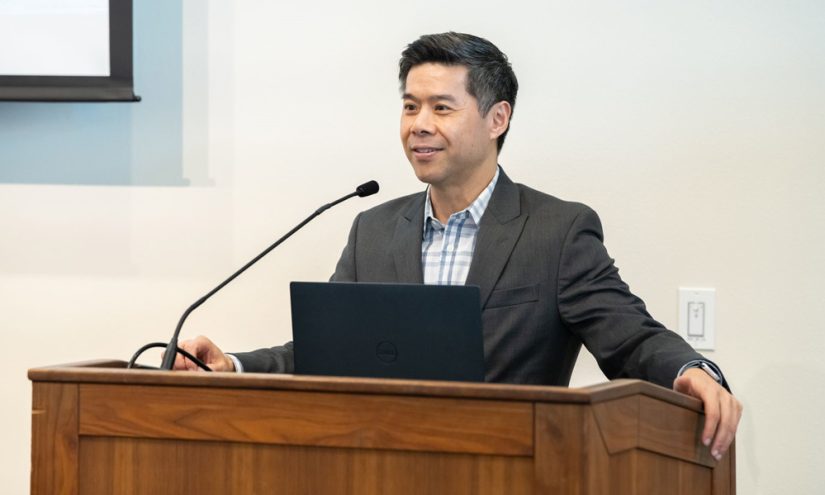
Kevin Gee, an education researcher at the University of California, Davis, had to stop his research work when the Trump administration cancelled grants. (Courtesy of Kevin Gee)
“The data would’ve helped us understand, for the first time, the educational well-being of our nation’s earliest learners on a nationwide scale in the aftermath of the pandemic,” he said.
The department has no plans to resurrect the project, according to a June court filing. But there are other signs it is walking back some of DOGE’s original cuts. For example, it intends to reissue contracts for regional education labs, which work with districts and states on school improvement.
“It feels like the legal pressure has succeeded, in the sense that the Department of Education is starting up some of this stuff again,” said Cara Jackson, a past president of the Association for Education Finance and Policy, which filed one of the lawsuits. “I think … there’s somebody at the department who is going through the legislation and saying, ‘Oh, we actually do need to do this.’ ”
Mental health grants
Amid the legal machinations, even some Republicans are losing patience with McMahon’s moves to freeze spending Congress already appropriated.
In April, she terminated $1 billion in mental health grants approved as part of a 2022 law that followed the mass school shooting in Uvalde, Texas. The department told grantees, without elaboration, that the funding no longer aligns with the administration’s policy of “prioritizing merit, fairness and excellence in education” and undermines “the students these programs are intended to help.”
The secretary told Oregon Democratic Sen. Jeff Merkley in June that she would “rebid” the grants, but some schools don’t want to wait. Silver Consolidated Schools in New Mexico, which lost $6 million when the grant was discontinued, sued her on June 20th. Sixteen Democrat-led states filed a second suit later that month.
The funds, according to Silver Consolidated’s complaint, allowed it to hire seven mental health professionals and contract with two outside counseling organizations. With the extra resources, the district saw bullying reports decline by 30% and suspensions drop by a third, according to the district’s complaint. Almost 500 students used a mental health app funded by the grant.
A judge has yet to rule in either case, but Republican Rep. Brian Fitzpatrick of Pennsylvania and other members of a bipartisan task force are holding McMahon to her word that she’ll open a new competition for the funds.
“These funds were never intended to be a theoretical exercise — they were designed to confront an urgent crisis affecting millions of children,” Fitzpatrick said in a statement. “With youth mental health challenges at an all-time high, any disruption or diversion of resources threatens to reverse hard-won progress and leave communities without critical supports.”
Common Sense Media has released its first AI Toolkit for School Districts, which gives districts of all sizes a structured, action-oriented guide for implementing AI safely, responsibly, and effectively.
Common Sense Media research shows that 7 in 10 teens have used AI. As kids and teens increasingly use the technology for schoolwork, teachers and school district leaders have made it clear that they need practical, easy-to-use tools that support thoughtful AI planning, decision-making, and implementation.
Common Sense Media developed the AI Toolkit, which is available to educators free of charge, in direct response to district needs.
“As more and more kids use AI for everything from math homework to essays, they’re often doing so without clear expectations, safeguards, or support from educators,” said Yvette Renteria, Chief Program Officer of Common Sense Media.
“Our research shows that schools are struggling to keep up with the rise of AI–6 in 10 kids say their schools either lack clear AI rules or are unsure what those rules are. But schools shouldn’t have to navigate the AI paradigm shift on their own. Our AI Toolkit for School Districts will make sure every district has the guidance it needs to implement AI in a way that works best for its schools.”
The toolkit emphasizes practical tools, including templates, implementation guides, and customizable resources to support districts at various stages of AI exploration and adoption. These resources are designed to be flexible to ensure that each district can develop AI strategies that align with their unique missions, visions, and priorities.
In addition, the toolkit stresses the importance of a community-driven approach, recognizing that AI exploration and decision-making require input from all of the stakeholders in a school community.
By encouraging districts to give teachers, students, parents, and more a seat at the table, Common Sense Media’s new resources ensure that schools’ AI plans meet the needs of families and educators alike.
eSchool Media staff cover education technology in all its aspects–from legislation and litigation, to best practices, to lessons learned and new products. First published in March of 1998 as a monthly print and digital newspaper, eSchool Media provides the news and information necessary to help K-20 decision-makers successfully use technology and innovation to transform schools and colleges and achieve their educational goals.
Students need more support around education paths and career options, including hands-on experiences, according to a new nationwide survey from the nonprofit American Student Assistance.
The survey of more than of 3,000 students in grades 7-12 offers insights into teens’ plans after high school. The research, Next Steps: An Analysis of Teens’ Post-High School Plans, uncovers evolving trends in teenagers’ attitudes, perceptions, and decision-making about their post-high school plans.
“This analysis of teens’ post high school plans reveals shifts in students’ thinking and planning. We need to change the way we help young people navigate the complex and evolving landscape of education and career options,” said Julie Lammers, Executive Vice President of ASA. “Starting in middle school, our young people need early access to opportunities that empowers them to explore careers that match their interests and strengths; hands-on, skills-based experiences in high school; and information and resources to navigate their path to postsecondary education and career. All of this will enable them to graduate informed, confident, and empowered about what they want to do with their futures.”
The survey offers notable findings regarding parental influence on teens’ planning, perceptions of nondegree pathways like trade or technical school, apprenticeships, and certificate programs, and a continued drop-off in kids’ plans to go to college immediately after high school graduation.
Key findings include:
Teens’ interest in college is down while nondegree paths are on the rise. Nearly half of all students said they aren’t interested in going to college, with just 45 percent saying two- or four-year college was their most likely next step. Meanwhile 38 percent of teens said they were considering trade or technical schools, apprenticeships, and technical bootcamp programs, although only 14 percent say that such a path is their most likely next step.
Parents are one of teens’ biggest influencers—and they’re skeptical of nondegree options. A vast majority (82 percent) of teens said their parents agree with their plans to go to four-year college, while only 66 percent said parents supported plans to pursue a nondegree route. In fact, teens reported parents were actually more supportive (70 percent) of foregoing education altogether right after high school vs. pursuing a nondegree program.
A concerning number of young people don’t have plans for further education or training. Nearly one quarter (23 percent) said they have no immediate plans to continue formal education or training upon graduation. Teens not planning to continue education after high school indicated they were thinking of beginning full-time work, entering a family business, starting their own business, or joining the military.
Teens, and especially middle schoolers, are feeling better prepared to plan their futures. In recent years policymakers, educators, employers, and other stakeholders have pushed to make career-connected learning a more prominent feature of our education to workforce system. Survey results say it’s paying off. Agreement with the statement “my school provides me with the right resources to plan for my next steps after high school” grew from just 59 percent in 2018, to 63 percent in 2021, to 82 percent in 2024. Notably, the largest increase occurred at the middle school level, where confidence in in-school planning resources jumped from 60 percent in 2018 to 90 percent in 2024.
Girls are much more likely to plan to attend college than boys. Boys and girls are equally interested in college when they’re in middle school, but by high school, more than half (53 percent) of girls say they’re likely to attend college compared to just 39 percent of boys. The gender gap is smaller when it comes to nondegree pathways: 15 percent of high school boys say they will likely attend vocational/trade school, participate in an apprenticeship, or take a certificate program, compared to 10 percent of high school girls.
City kids aren’t as “into” college. Urban teens were least likely (39 percent) to say they plan to go to college. Suburban teens are much more likely to plan to attend a college program (64 percent) while 46 percent of rural students planned on college.
Students of color are college bound. More than half (54 percent) of Black teens and 51 percent of Hispanic youth are planning to go to college, compared to 42 percent of White teens.
eSchool Media staff cover education technology in all its aspects–from legislation and litigation, to best practices, to lessons learned and new products. First published in March of 1998 as a monthly print and digital newspaper, eSchool Media provides the news and information necessary to help K-20 decision-makers successfully use technology and innovation to transform schools and colleges and achieve their educational goals.
To understand the chaos that is the world today it helps to look back a decade.
This past year, world representatives met at COP29 to fight climate change in a place led by an authoritarian regime dependent on fossil fuels. The Israeli government under Prime Minister Benjamin Netanyahu has been massacring Palestinians in Gaza. The United States bombed Iran in an attempt to eliminate its nuclear capability. And U.S. President Donald Trump and an increasing number of European leaders have closed their doors to immigrants and refugees.
In great contrast, when News Decoder launched 10 years ago, 196 nations signed onto the landmark agreement known as the Paris Accords, ushering in the hope that together we could cool down the planet. The administration of then-U.S. President Barack Obama signed a historic agreement with Iran, in which Iran would get rid of 97% of its supply of enriched uranium. A million refugees flooded into Europe from conflicts in Syria and elsewhere.
In the years in between, the world locked down during the Covid-19 pandemic, Great Britain exited the European Union, the #MeToo movement erupted across the world, nations across the globe began legalizing same sex marriage, Russia invaded Ukraine, Trump got elected, tossed out and re-elected and we began ceding everything to artificial intelligence.
Can you imagine coming of age in that world?
Decoding world events
When Nelson Graves founded News Decoder to help young people “decode” the world through news, it seemed that we lived in an age of optimism. Now young people feel helpless and disconnected. In April 2024, the World Economic Forum reported that young people worldwide are increasingly unhappy and this trend would have real consequences for the future.
“We live in a world where teenagers grapple with a sense of crisis before adulthood; a time when young people, historically beacons of optimism, report lower happiness than their elders,” the report said.
But even back in 2015, Nelson knew things would change. He’d spent years as a foreign correspondent covering world events.
“Anyone with a sense of history and someone with experience in following current events — especially a foreign correspondent — would have known that the world is most likely to change when you’re least expecting it,” he said. “Nothing is immutable — except the truism that the political pendulum is always swinging.”
The roots of Brexit, the Make America Great Again movement in the United States and antipathy towards immigrants were already deep in 2015, even if they were largely underground and out of sight, he said.
A decade later, News Decoder’s mission of connecting young people to the world around them seems more relevant than ever.
For 10 years, the high school students News Decoder has worked with have explored — through articles, podcasts, videos and photo essays and in live, cross-border dialogues — how problems in their communities connect to things happening elsewhere in the world. In 2016, for instance, a student studying abroad in China worked with News Decoder to explore how growing consumerism was leading to mountains of trash and created an army of people who mined that trash building up around them.
That same year in an online roundtable, News Decoder brought together students from the Greens Farms Academy in the United States with students from Kings Academy in Jordan, Aristotle University in Greece and School Year Abroad in France to discuss the ongoing war in Syria and the worldwide crisis of Syrian refugees.
Kindling curiosity
One of the Greens Farms Academy students who participated, Samyukt Kumar, further explored the topic in an article News Decoder published that year. Looking back, he now tells, the practical experience it gave him was valuable.
“Less for the substance but more for the practical experience,” he said. “My views on these topics evolved significantly as I received greater education and real-world exposure. But I still reap the benefits from gaining more confidence in my writing, learning to embrace the editing process and engaging my curiosity about the world.”
In 2017, a News Decoder student at Haverford College in the United States explored the problem of migrants flooding into her home country of Italy. She came to this conclusion:
“The roots of the problem lie outside of Italy, which nonetheless bears a heavy burden as the first EU destination for thousands of Africans crossing the Mediterranean,” she wrote. “A solution to the migration crisis depends not only on Italy’s good will — now being stretched to the limits — but also on the willingness of the rest of Europe and the international community to tackle the armed conflicts, poverty and human rights abuses that stir so many Africans to attempt the perilous Mediterranean crossing.”
Fast forward to 2025. News Decoder worked with high school students in the British Section at the Lycée International Saint-Germain-en-Laye outside of Paris to take what they learned about the United Nations Sustainable Development Goals and find and tell narrative stories through podcasts. They explored such things as the problem of poverty in resource-rich areas of Africa and the connection between actions of multinational corporations and climate change.
Crossing borders
In Switzerland, News Decoder worked with students at Realgymnasium Rämibühl Zürich on a series of articles that explored gender inequity in sports, the connection between social media and the decline of democracy, how a local community is affected when it hosts a world conference and the connection between the quality of life in a country and the people’s willingness to pay for that through high prices and high taxes.
And in monthly “Decoder Dialogues” News Decoder put together students from countries such as the United States, Colombia, France, India, Belgium and Rwanda in online roundtables to discuss such topics as the future of journalism, climate action, censorship, leadership and artificial intelligence.
Through the exploration of a problem in the world, by seeking out experts who can put it into context and by seeking out different perspectives from other places, students make sense out of chaos. They begin to see that there are people out there thinking about these problems in different ways and seeking solutions to them.
Ultimately, the message News Decoder wants students to take away is that you don’t need to run from complicated problems. You don’t need to disengage from the news and the events happening around you. By delving more into a topic or issue or controversy, you can begin to understand it and see the path forward.
At News Decoder, we believe people should be able to listen to each other and exchange viewpoints to work through problems across differences and borders. Back in 2015, Graves posed this challenge: How to tap into the intellectual energy of the generation that will soon assume leadership in business, government, academia and social enterprise?
For the past 10 years we have worked to empower young people by giving them the information they need, connecting them to the world around them and providing them a forum for expression. For a decade we have helped them find coherence out of the chaos around them — and we intend to continue doing that for the next 10 years.
One thing we know: 10 years from now the world will be a lot different from what it is now.
“While no one has a perfect crystal ball, you can be sure that nothing remains unchanged for long,” Graves said. “Yesterday’s mortal enemy can become a fast friend — think of U.S. relations with Vietnam since the 1950s. Lesson: Always expect change, even if you can’t anticipate the precise contours, and don’t project linearly into the future. As ever, keep an open mind and beware confirmation bias.”
That’s the message News Decoder tries to instill in the young people we work with. After all, a decade from now, they will be the ones making that change happen.
“To me the essential ingredient is that two persons or two teams from different countries collaborate, right?” Ricci said. “So who’s doing the podcast itself makes it really a cross-border operation.”
A podcast becomes cross-border, he said, when you bring different perspectives from different countries together in one story. There are two ways to make that story compelling to both the audiences and to Europe as a whole.
The first way, he said, is to have a strong story that articulates across borders and is relevant for two countries. It can be a very specific story that relates to feelings and notions interesting to anyone. The second way is to start from a general topic and then find a story within that topic.
“I’d really love that all podcasts speak to every audience we aim to target,” Ricci said. “I think it’s the biggest challenge to make sure that every podcast finds its audience in every national context.”
At WePod, the team divided the production process into stages.
First there was a pre-editorial stage where they brainstormed ideas. Then came a pre-production phase, where within the topic they reflected more concretely about the characters of each podcast.
“How do the different episodes talk to each other?” Ricci said.
Provide room for perspectives.
That was followed by the production phase. That involved going on the ground, setting up interviews and working on scripts and language transcriptions.
Finally, in the post-production phase everything textual became a finished podcast, ready to be promoted and distributed.
Caminero said that every podcast WePod did was produced in at least two languages, the first in the native language of the podcast producer and in English for a cross-border audience. “Obviously, this creates specific challenges because not all versions can be identical,” Caminero said. “You need to make room for adaptations.”
Ricci said that it was important in a big production like WePod, with people from different nationalities, to give people room to express themselves. “I think it takes time just to sit around the table, understand each other,” Ricci said.
This becomes important when you have deadlines and deliverables. “You’re pretty much kind of freaking out to meet everything, every deliverable you have to meet, every deadline,” Ricci said. If you try to impose a top down approach, it won’t work.
“So, I think it just takes a lot of talking before action,” Ricci said.
Questions to consider:
1. What does it mean to be cross-border?
2. How can a story that is interesting in one country have resonance in another?
3. Can you think of a topic important to your region that would also be important to people elsewhere?
More than 3,000 years ago, the largest chariot battle ever pitted the forces of one of the most powerful pharaohs of ancient Egypt — Ramesses the Great — against the Hittite Empire in Kadesh, near the modern-day border between Lebanon and Syria.
The battle ended in stalemate.
But once back in Egypt, Ramesses spread lies portraying the battle as a major victory for the Egyptians. He had scenes of himself killing his enemies put up on the walls of nearly all his temples.
It was propaganda. “It is all too clear that he was a stupid and culpably inefficient general and that he failed to gain his objectives at Kadesh,” Egyptologist John A. Wilson wrote.
Disinformation in ancient Rome
The Roman general Mark Antony killed himself with his sword after his defeat in the Battle of Actium upon hearing false rumors — fake news — propagated by his lover Cleopatra claiming that she had committed suicide.
American patriots, including the esteemed U.S. statesman and inventor Benjamin Franklin, and their British enemies swapped spurious allegations during the American Revolution that murderous Native Americans were working in league with their adversaries, scalping allies.
How about the 1938 radio drama, “The War of the Worlds”? Adopted from a novel by H.G. Wells, the radio broadcast fooled some listeners into believing that Martians had landed in America. Newspapers of the day said the broadcast sparked panic.
But historians today say the panic was exaggerated. So it was fake news about fake news!
There is no shortage of modern-day instances of fake news. In Myanmar in 2018, the military spearheaded a campaign of fake news, mainly on Facebook, claiming the Rohingya minority had murdered and raped members of the Buddhist majority. The Rohingya were described as dogs, maggots and rapists. The fake news helped trigger violence against the Rohingya that forced 700,000 people to flee their homes.
The irony is that many in Myanmar had turned to Facebook for information because the military had alienated many citizens with its control of the media. But the same military took advantage of the false reports to crack down on the Muslim minority.
Election falsehoods
Similarly, fake news has been used in the Philippines, Indonesia, Malaysia and Sri Lanka to influence the outcome of elections, hide corruption and stir up religious animosity.
One of the ironies of fake news is it can embolden authoritarian governments to turn the tables and use made-up news as an excuse to crack down on the media. That can enable the regime to control the media message. In other words, fake news to the rescue of autocrats.
But we should not fool ourselves into thinking that fake news can be cured merely through technological solutions, that it’s a product of our times, that it’s mainly political and that it’s peddled only by our opponents. It’s not the property of any one political party or interest.
Fake news takes root in the gray area between truth and fiction, an area we can be quite comfortable in. There is something very enticing about fake news, especially if it aligns with our pre-conceived notions. Yet we are apt to think that fake news is the exception, a new aberration.
We can easily fall victim to fake news in part because we are not always disgusted by lies. We are taught at a very early age that deceit – deception, dishonesty, disinformation – is all around us. And that not all lies are as harmful as others. Our parents read us fairy tales from the earliest of ages, and many tales involve lies.
The telling of fairy tales
Take the ancient fable of “The Cock and the Fox,” included in the medieval collection of Middle Eastern folk tales, “One Thousand and One Nights.”
A hungry fox tries to coax a rooster out of a tree by telling him a tall tale — that there is universal friendship now among hunters and the hunted. The cock has nothing to fear, the wily fox says. It’s a lie, of course.
So, the equally wily cock resorts to his own lie: he tells the fox that he sees greyhounds running towards them, surely with a message from the King of Beasts. The fox, outwitted, runs away in fear. So here we have two lies in a single story. The moral? “The best liars are often caught in their own lies.”
Children and their parents are quite comfortable surrounded by lies. Is Santa Claus a malicious or harmless lie?
Do you know the story of the Wizard of Oz? That classic U.S. movie about a young girl lost in a fantasy world, pursued by witches, struggling to go home? The entire plot relies on a deceit – a supposedly powerful wizard who is nothing more than a bumbling, ordinary conman, who uses magic tricks to make himself seem great and powerful.
Deceit at the service of entertainment.
Advertisements are often innocent exaggerations, fiction if you will in the service of business and profit-making. But sometimes ads can veer into falsehoods.
So fake news is not new. And we’re no strangers to lies. What does that mean for those of us interested in making the world a better place? Should we simply give up because the task is too great?
Hardly. The lesson is that truth is not black and white, but grey, and it’s a moving target.
Take, for example, colonialism. From the 15th century on, white Europeans conquered huge swathes of the Americas, Africa, the Middle East, Asia and Oceania. They subjugated millions of people, using brutal violence in many places to subdue indigenous populations. They brought diseases that wiped out millions.
They exploited natural resources, using native labor and pocketing most of the profit from sales into a global trading network that they established. By 1914, Europeans had gained control of 84% of the globe.
We know all of that now because colonized peoples have revolted against their colonial rulers and won independence. The wars of independence have been won, yet so many countries around the world are still grappling with the shameful effects of colonialism and racism.
The ambiguity of truth
But would everyone have agreed on that depiction of Europeans as rapacious colonialists before the wars of independence?
Certainly not most of the Europeans, who believed they were exporting a superior civilization to backward natives. Missionaries who led many colonial ventures believed they were doing God’s will by converting native populations to Christianity. And not a few natives turned a blind eye to atrocities and benefited financially.
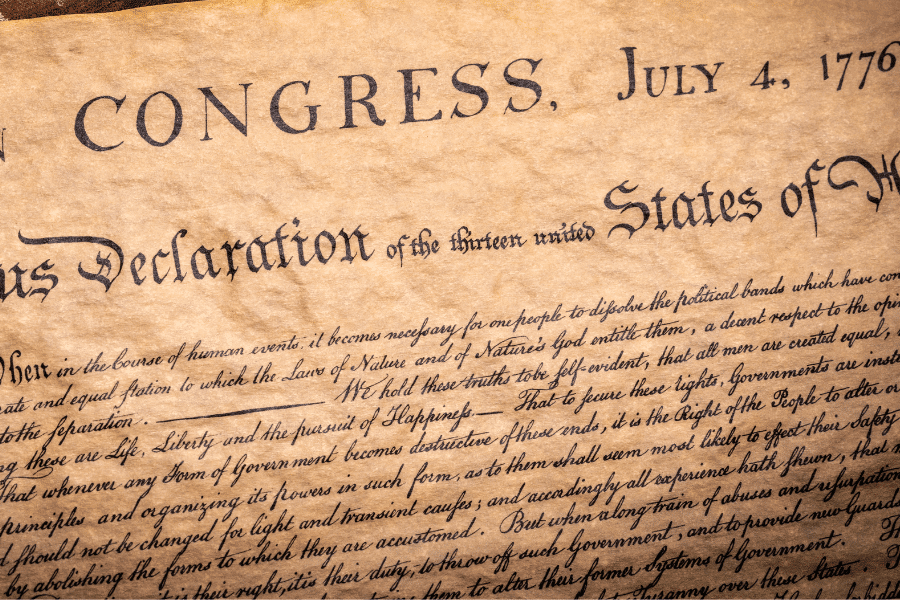
For a glaring example of the ambiguity of truth, take the United States. Its Declaration of Independence, borrowing from the French enlightenment, states that “all men are created equal,” with “unalienable Rights” to “Life, Liberty, and the pursuit of Happiness.” It put notions of freedom and equality at the heart of the American experiment. Yet it was written by a slave owner, Thomas Jefferson, and represented 13 colonies that all, to one degree or another, allowed slavery.
Convinced of their superiority and driven by an almost unquenchable appetite for wealth, white settlers drove Native Indians from their homes. The U.S. government authorized more than 1,500 attacks and raids on Indians. By the end of the 19th century, fewer than 238,000 indigenous people remained, down from some 5-15 million living in North America when Columbus arrived in 1492.
What is more, settlers in the South imported slaves from Africa, forcing them to work on vast plantations and denying them the very rights to life and liberty spelled out in the Declaration of Independence.
Rights and repercussions
Both Native Indians and African Americans are struggling to this day to come to terms with the treatment they suffered at the hands of the white colonials.
Would a white settler have seen himself or herself as a murderer? Hardly. In their minds, they were doing God’s work.
Mind you, the desire to colonize is not peculiar to Europeans. Imperial Japan and imperialist China both established overseas empires. The Empire of Japan seized most of China and Manchuria. To this day, Chinese nationals and South Koreans harbor ill feelings towards the Japanese. Chinese dynasties won control over parts of Vietnam and Korea.
There’s an expression in newsrooms around the world: “One man’s terrorist is another man’s freedom fighter.” Put another way, the same individual might seem a terrorist to some, a hero to others.
Take Yagan, a 19th century indigenous Australian warrior from the Noongar people. He played a key role in early resistance to British colonial rule in an area that is now Perth. His execution by a young settler figures in Australian history as a symbol of the unjust treatment of indigenous peoples by colonial settlers.
A hero to his people, he was a murderer in the eyes of the British.
Different perspectives on history
Or take the Incan emperor, Atahualpa, who resisted the explorer and conquistador Francisco Pizarro, to this day a Spanish hero. Pizarro forced Atahualpa to convert to Christianity before eventually killing him, hastening the end of one of the greatest imperial states in human history.
How you view Pizarro may depend on where you are sitting and when you lived.
There are countless modern examples of radically different perspectives on events. Such discrepancies may be inevitable. Dogged journalists can shed light on events and protagonists, and help shape history – for better or for worse.
Joseph McCarthy was a U.S. senator who in the early years of the Cold War spearheaded a smear campaign against alleged Communist and Soviet spies. Only courageous reporting by a small group of journalists who dared question McCarthy’s tactics and risked being tarred as Communist sympathizers themselves led to McCarthy’s downfall.
Joseph McCarthy (L) with his attorney Roy Cohn, who later mentored Donald Trump (Wikimedia Commons)
The New York Times and Washington Post went out on a legal limb when in 1971 they published the Pentagon Papers, a U.S. government history of the Vietnam War that laid bare official lies that drove American policy for more than a decade in Southeast Asia.
The government called the man who leaked the government documents a criminal and sought to prevent the newspapers from publishing the damning revelations.
The newspapers won their case before the Supreme Court, and their reporting increased public pressure on the government to withdraw from Vietnam.
Watergate upended a presidency.
You’ve perhaps heard of Watergate? Literally speaking, it’s a hotel in Washington, DC. But it has come to stand for the dogged and courageous news reporting by two journalists with the Washington Post who exposed crimes by President Richard Nixon and helped lead to his resignation in 1974.
Courageous investigative journalism is hardly confined to the United States. A non-profit news outfit called AmaBhungane — in Zulu, “dung beetle,” an animal that digs through shit – has reported on corrupt business deals at the highest levels of South Africa’s government.
In the Arab world, investigative journalists in Egypt, Yemen, Tunisia, Syria, Lebanon, Jordan, Iraq, Bahrain, Palestine, Mauritania, Algeria, Kuwait and Sudan have uncovered tax evasion, money laundering, drug smuggling, torture and slavery. They have unmasked doctors who have removed the wombs of mentally disabled girls with the consent of parents.
What does this mean for you, a young activist who wants to help change the world?
Truth is murky.
The lesson is that the truth may not lie squarely on one side or the other, but rather in a murky, grey area. It can take courage to shine a light in the shadows, teeming with lies. And you may have to hear viewpoints that differ radically from your own. It pays to listen.
Progress against racism, inequality and injustice depends on an informed public.
The best journalists recognize their responsibility to uphold the Universal Declaration of Human Rights, which state that: all human beings are born free and equal in dignity and rights; and everyone has the right to freedom of opinion and expression; this right includes freedom to hold opinions without interference and to seek, receive and impart information and ideas through any media and regardless of frontiers.
As the third U.S. President Thomas Jefferson said: “Were it left to me to decide whether we should have a government without newspapers or newspapers without a government, I should not hesitate a moment to prefer the latter.”
So stick up for your rights, including the right to free expression. Be fair. And remember that one man’s terrorist may be another man’s freedom fighter. You don’t have a lock on the truth.
Questions to consider:
1. Why is it important to understand that fake news is nothing new?
2. Do you think there is any way to stamp out fake news?
3. What does it mean to say, “One man’s terrorist is another man’s freedom fighter”?
In her 23 years as an educator at Hunter College High School, a highly-competitive coeducational high school in New York City, Jana Lucash has found that boys in her class will often participate even when they are not prepared. Her female students, in contrast, seem to be unwilling to participate unless they absolutely know the correct answer.
This is one reason that many parents choose to send their daughters to all-girls schools. These schools are known for fostering connections and developing academic success.
But do social pressure, competition and other negative consequences outweigh the benefits of a predominantly female environment?
I attend an all-girls school and so I decided to explore the positive and negative aspects of being a part of this type of environment.
All-girls schools are educational institutions catering exclusively to female students, allowing them to grow intellectually and socially in a single-gender environment.
Gender segregation
These schools generally have a reputation for creating a supportive and empowering atmosphere for young girls and women. The purpose of an all-girls school is to encourage academic excellence, build confidence and teach leadership skills to their students.
While these institutions around the world often leave positive impacts on their attendees, like increased participation in class and eliminating distractions, they are also critiqued for their competitive nature, which could negatively affect student mental health.
These issues raise serious concerns and questions about how beneficial and positively impactful these all-girls schools truly are for the population that they serve.
Research has shown that all-girls schools increase student participation in the STEM field and other male-dominated fields after graduation. A study conducted by Goodman Research Group, back in 2005 asked some 1,000 recent graduates of all-girl schools to participate in a survey, which focused on the academic and social impact of single-gender institutions.
After conducting the survey, the authors found that 74% of the grads felt more encouragement in math, science and technology by attending an all-girls school. Additionally, they found that all-girls school graduates were six times more likely to major in science, math and technology, in comparison to girls attending coeducational schools.
Girl empowerment
All-girls institutions cultivate an environment where female students feel empowered to explore their interests and academic pursuits, specifically in male-dominated fields. This not only encourages young women to follow their aspirations, but allows them to challenge the stereotypical gender barriers in professional fields where women are underrepresented.
All-girls schools also offer students a social environment with a strong sense of community and an emphasis on building strong relationships. Many young women feel more connected to their peers and lose the social pressures that are typically present in coeducational schools.
A 2013 survey, which was conducted on behalf of the National Coalition for Girls Schools, asked a series of questions to 2,000 students from schools that were all-girls, with an additional 5,000 girls who attended coed private schools and another 5,000 girls who attended coed public schools.
The study concluded that almost 97% of all-girls school students felt their ideas and opinions were more respected at their single-gender school compared to 58% of girls at coeducational schools.
Without feeling pressure and judgement from their male counterparts, female students tend to feel more safe and are more inclined to express themselves and their ideas. This environment allows students to feel a sense of belonging, confidence and power that is not always found in a coed environment.
Coed education versus single-gender schools
At coeducational schools, girls’ voices and opinions might be self silenced or silenced by the more rambunctious boys in the room. In addition, these institutions and faculty can further undermine the confidence and self-worth of their female students.
Lucash at Hunter College High School, for example, found that girls tend to self-silence and boys have no trouble expressing themselves throughout class.
This sentiment is echoed by a 10th-grade student at The Hewitt School, which I attend. Abby Potenza attended a coeducational school prior to switching to Hewitt.
“Being at an all-girls school has given me both confidence and a sense of comfort to express my opinions and ask questions, which I did not receive at a coed school,” Potenza said. “I feel the environment, both social and educational, is stronger and more supportive at an all-girls school.”
When I was an elementary school student in a progressive, coeducational environment, I too experienced the detrimental impact of being silenced, both institutionally and by an educator.
Being silenced and self-silencing
In an advanced math class in fourth grade, I found myself one of three girls in a class of 20 students. For a school which valued diversity and equity, it was disturbing that the institution itself could not see that as a problem.
This shows that many institutions in the 21st century do not prioritize creating a supportive and empowering environment for girls.
Most positive associations with single-gender education can be countered by certain challenges and all-girls schools are no exception. While these schools empower young women and can foster a supportive environment, a sense of competition can often emerge.
Miriam Walden teaches English at The Hewitt School and sees a similar competitive nature.
“Even when you take away the boys in the classroom, there is still competition between girls, a lot of competition,” Walden said. “It’s very subtle and it’s very insidious and so there is a lot of harm that happens at the school, socially, around status, academic success, wealth, where you are going to college. All of this stuff becomes extremely damaging to many students.”
The global popularity of single-gender education
Outside of the United States, single-gender education is popular in many countries. The reasoning for attending these single-gender schools varies from community to community, country to country. Some of the variables that impact the choice to attend these schools include religion, socio-economic status and geography.
In 2022, University of Oslo researcher Sadaf Basharat looked at math achievement in Saudi Arabia where single-gender education is mandatory and found that girls do better than boys in math, according to international assessment standards known as TIMSS.
Other countries in the Middle East, such as Oman, Iran, Kuwait and Bahrain, which have a high proportion of single-gender schools, have also seen female students in recent years outperforming their male classmates in math.
While single-gender schools open the opportunity for girls and young women to be educated, countries such as Afghanistan are prohibiting women from attending secondary schools, whether single-gender or coeducational.
The academic effect single-gender schools in the United States have on their students is equal to the ones at international single-gender schools. A 2016 study in the Caribbean Educational Research Journal found that students at all-girls schools in the Caribbean have a higher passing rate than both girls attending coeducational schools, as well as boys in coeducational schools and single-gender schools.
Due to the demographics of the students who attend all-girls schools outside of the United States, the data is not as conclusive as to the negative impact of these types of schools on their students’ competitive nature.
For instance, UNESCO published a study by the London Business School’s Global Entrepreneurship Monitor that found that all-girl’s schools in countries such as Trinidad and Tobago and Thailand attract a wealthier subset of the population, which could create a false representation of what the possible positive outcomes are.
Competition between girls
All-girls schools offer an educational environment with both important benefits and possible limitations for students. On one hand, these institutions offer students a supportive atmosphere which encourages them to reach their full potential and cultivate a strong sense of confidence. This environment can lead to higher academic success and a greater likelihood of breaking gender norms in the workplace.
They also encourage young women to move past gendered expectations regarding future intellectual pursuits and challenges them to break societal barriers by moving into STEM-based fields specifically.
On the other hand, all-girls schools can create a bubble of competition and rivalry that can limit a young woman’s development and aspirations. The focus on academic achievement is only intensified in a single-gender educational environment and can be pressuring and damaging.
Weighing out the benefits and drawbacks of an all-girls school is important when making the decision on whether to attend one, or in determining how you perceive single-gender schools in general. The question is, what would be best for you or your daughter?
The views and citations expressed by this student journalist are their own and not those of their school or any person or organization affiliated or doing business with their school.
Questions to consider:
1. Why might a parent choose to send a child to a single-gender school?
2. Why do some teachers think girls don’t do as well when there are boys in the class?
3. Do you think you would do better or worse by changing to an single-gender school if you attend a coed school now or vice versa? Why?
Everyone makes mistakes. To be credible you have to fess up when you get things wrong. Doing so doesn’t make you look bad. It shows you care about the truth.
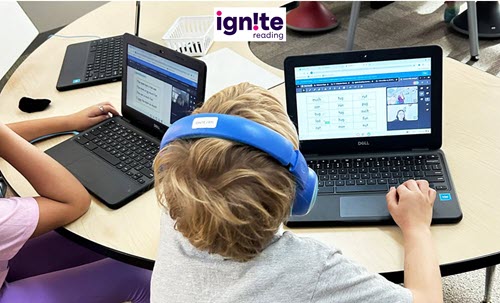
BOSTON — Ignite Reading — a Science of Reading-based virtual tutoring program serving students in 18 states nationwide — today announced its approval by the Massachusetts Department of Elementary and Secondary Education (DESE) to continue providing 1:1 high-dosage evidence-based literacy tutoring to K-3 students across the commonwealth.
Massachusetts Governor Maura Healey’s administration called on her state to invest heavily in high-dosage tutoring (HDT) earlier this year, earmarking $25 million in her state budget proposal to help accelerate literacy growth, “complementing the more systemic, long-term improvement work” being supported under the administration’s five-year literacy improvement campaign, Literacy Launch.
In its approval process, DESE evaluated Ignite Reading’s services to Massachusetts districts over the past three school years and approved the literacy company to again provide school districts and charter schools with tutoring that is focused on building foundational skills — including phonological awareness, phonics knowledge and decoding skills — to help students become independent fluent readers in the early grades.
Since Ignite Reading first gained DESE approval during the 2022-23 school year:
30 Massachusetts schools and districts have partnered with Ignite Reading to provide students with 15 minutes of daily, 1:1 virtual tutoring.
Ignite Reading’s tutor educators have delivered differentiated, evidence-based early literacy instruction to more than 7,800 Massachusetts students.
Researchers at Johns Hopkins University’s Center for Research and Reform in Education have followed approximately 2,000 Massachusetts 1st graders enrolled in the program. The quasi-experimental study found the number of students reading on benchmark increased 213% after a year of Ignite Reading tutoring. At the same time, the percentage of students who required intensive reading intervention decreased 55%. All student groups — including Black and Hispanic students, those with IEPs and Multilingual Learners — had equitable skills growth, and those meeting end-of-year reading benchmarks grew more than 125%.
The Healey-Driscoll Administration recently announced that schools and districts in Massachusetts are invited to apply for high-dosage early literacy tutoring for K-3 students with 1st grade as the state’s top priority.
“When we get kids reading proficiently by the end of 1st grade, we set them up for a lifetime of academic success,” said Ignite Reading CEO Jessica Sliwerski. “Our continued approval by DESE means we can keep delivering the intensive, personalized support that Massachusetts 1st graders need to learn to read on grade level and on time. We are honored to be able to continue to partner with Massachusetts districts to ensure all students can access the tools they need to succeed as readers.”
Ignite Reading is on a mission to ensure every student can access the tools they need to be a confident, fluent reader by the end of 1st grade. School districts nationwide depend on Ignite Reading’s virtual tutoring program to deliver literacy support at scale for students who need help learning to read. Our highly trained tutors provide students with 1:1 tutoring in foundational literacy skills each school day, helping them go from learning to read to reading to learn.
A recent study by the Center for Research and Reform in Education at Johns Hopkins University found that Ignite Reading students across demographics — including students who are English Learners, Black, Hispanic, and those with Individualized Education Programs (IEPs) — achieve the same outstanding gains of more than 5 months of additional learning during a single school year. For more information about Ignite Reading, visit www.ignite-reading.com.
eSchool Media staff cover education technology in all its aspects–from legislation and litigation, to best practices, to lessons learned and new products. First published in March of 1998 as a monthly print and digital newspaper, eSchool Media provides the news and information necessary to help K-20 decision-makers successfully use technology and innovation to transform schools and colleges and achieve their educational goals.