Republish This Article
We want our stories to be shared as widely as possible — for free.
Please view The 74’s republishing terms.

We want our stories to be shared as widely as possible — for free.
Please view The 74’s republishing terms.

University systems have long been promoted as the most reliable path to upward mobility and economic security.
Yet for a growing number of students, that promise is part of a troubling paradox: the act of seeking a degree requires a harrowing trade-off between paying for schooling and securing the eating. The result is a lack of physical and economic access to enough safe and nutritious food for a healthy and active life. It is a pervasive crisis of food insecurity,
Today, nearly nine in 10 United States campuses operate food pantries or “basic need hubs,” serving thousands of students each semester.
What began as a grassroots response to hunger is now becoming institutionalized — a subtle but significant shift in how universities define student success and well-being. According to a survey conducted by the Hope Center for Student Basic Needs, a national research center at Temple University focused on transforming higher education to improve student success and well-being, 59% of students of students at 91 institutions across 16 states experience at least one form of basic needs insecurity, while 41% of students experienced food insecurity.
Many campus pantries have transformed into one-stop centers that connect students with food assistance programs, financial aid, child-care resources and mental-health support.
The Lancer Care Center, which began as the Lancer Pantry in 2015 at the Pasedena City College, has now been integrated into a centralized, holistic support center. Today, it provides coordinated assistance and functions as a single hub for various types of basic needs, ranging from housing, food, emergency funding, peer mentoring and financial assistance.
Yet, even as they expand, most remain under-funded and overstretched: 60% of campus food pantries lack adequate refrigeration and many rely on short-term grants and student volunteers to operate.
A survey conducted in 2023 by Swipe Out Hunger, a national non-profit organization dedicated to eliminating student hunger, reported that food pantries face three key challenges: funding, inventory and staffing. More than one in five among the 355 college food pantries surveyed reported that securing stable funding, maintaining streams of funding and obtaining grants remain the most significant challenges.
Beyond calories, these spaces also provide something harder to quantify: trust.
“If you have somebody that trusts a systemic function of your campus, like a food pantry, it is likely that they will also trust other systems that are in place,” said Laura Egan of the Clery Center, an organization that focuses on campus safety and student rights. “If and when they or someone they know needs to make a report of a crime or needs to access a resource because they are a survivor of a crime, they will be more likely to look to and trust their campus, who has already established a system of providing them regular support in a non-judgmental [way].”
For Egan, said accessibility matters just as much as supply.
“What we really appreciate seeing with food pantries on college campuses is the community support that it provides, the ready access that provides a student, with no questions asked about why you might need to access that resource,” she said.
Despite their growing presence, hunger on campus often remains hidden, masked by stigma and assumptions about who is considered food insecure. New York University Izzy Morgan is the administrative coordinator at the College Student Pantry New York City and says that many students don’t even realize that they are food insecure.
“I come from a family with money and, you know, I have all these privileges,” Morgan said. “I’m on a pretty big scholarship at school, and even if all of that is true, you could still be insecure.”
The College Student Pantry, operated by New York City’s Trinity’s Services and Food for the Homeless, serves college and graduate students across the city.
For Morgan, that self-realization came upon discovering that the pantry provided access to fresh vegetables that would otherwise be unaffordable.
“Part of why I got this job was because my boss, who is actually my pastor, came up to me and said, ‘Izzy, I think you’re food insecure’,” Morgan said.
Daniela Bermudez, a volunteer and Outreach and Social Media coordinator at the pantry, said that For many students, hunger is normalized as part of the college experience. “A lot of college students have this (assumption) that they’re supposed to struggle,” Bermudez said. “It’s almost normal to not have a well-balanced meal daily.”
Understanding food insecurity often comes gradually. “It’s kind of hard to almost wrap your head (around the meaning of food insecurity),” Bermudez said. “I’m noticing that (when) I’m not eating the right food groups and I don’t necessarily have the continuous ability to access these foods, that is a sign of food insecurity.”
Universities often measure success through graduation rates and employment outcomes, but for a growing number of students, success must depend on something far more basic: the ability to eat regularly, without shame or uncertainty. As higher education continues to market itself as a pathway out of poverty, the persistence of campus hunger raises an urgent question: Can institutions truly promise opportunity while leaving students to choose between a meal and a degree?
1. Why do many university students struggle to pay for food?
2. What are universities doing to make sure students can eat?
3. Do you think food should be a basic right for everyone? Why?
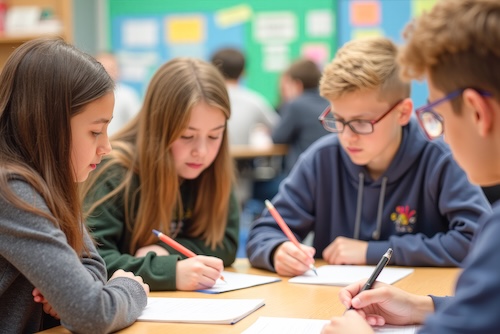
eSchool News is counting down the 10 most-read stories of 2025. Story #4 focuses on making math instruction more relevant to students.
Key points:
How much longer will we keep trying to solve our nation’s dismal math proficiency problem by writing new math problems? Clearly, if that was the answer, it would have worked by now–but it hasn’t, as evidenced by decades of low proficiencies, historic declines post-COVID, and the widest outcome gaps in the world.
The real question students are asking is, “When am I ever going to use this?” As a former math teacher, I learned that addressing this question head-on made all the difference. Students’ success in math wasn’t found in a book–it was found in how math applied to them, in its relevance to their future career plans. When math concepts were connected to real-world scenarios, they transformed from distant and abstract ideas into meaningful, tangible skills.
My first-hand experience proved the premise of education innovator Dr. Bill Daggett’s “rigor-relevance-relationship” framework. If students know what they’re learning has real-life implications, meaning and purpose will ensure that they become more motivated and actively engaged in their learning.
Years later, I founded the nonprofit Pathway2Careers with a commitment to use education research to inform good policy and effective practice. From that foundation, we set out on a path to develop a first-of-its-kind approach to math instruction that led with relevance through career-connected learning (CCL).
In our initial pilot study in 2021, students overwhelmingly responded positively to the curriculum. After using our career-connected math lessons, 100 percent of students reported increased interest in learning math this way. Additionally, they expressed heightened curiosity about various career pathways–a significant shift in engagement.
In a more comprehensive survey of 537 students spanning grades 7–11 (with the majority in grades 8 and 9) in 2023, the results reinforced this transformation. Students reported a measurable increase in motivation, with:
Educators also noted significant benefits. Teachers using the curriculum regularly–daily or weekly–overwhelmingly rated it as effective. Specifically, 86 percent indicated it was “very effective” or “somewhat effective” in increasing student engagement, and 73 percent highlighted improved understanding of math’s relevance to career applications. Other reported benefits included students’ increased interest in pursuing higher education and gaining awareness of various postsecondary options like certificates, associate degrees, and bachelor’s degrees.
Building on these promising indicators of engagement, we analyzed students’ growth in learning as measured by Quantile assessments administered at the start and end of the academic year. The results exceeded expectations:
These outcomes are a testament to the power of relevance in education. By embedding math concepts within real-world career contexts, we transformed abstract concepts into meaningful, tangible skills. Students not only mastered math content at unprecedented levels but also began to see the subject as a critical tool for their futures.
What we found astounded even us, though we shouldn’t have been surprised, based on decades of research that indicated what would happen. Once we answered the question of when students would use this, their mastery of the math content took on purpose and meaning. Contextualizing math is the path forward for math instruction across the country.
And there’s no time to waste. As a recent Urban Institute study indicated, students’ math proficiencies were even more significant than reading in positively impacting their later earning power. If we can change students’ attitudes about math, not just their math problems, the economic benefits to students, families, communities, and states will be profound.
And yet another season’s greeting…
Dear UCEA Colleagues and Friends,
As 2025 comes to a close, we want to take a moment to extend our gratitude to our members who continue to lead with courage, care, and conviction. May this winter break offer time for renewal and strength for the important work that lies ahead for our community.
Wishing you peace, warmth, and hope throughout the holidays and into the year ahead.
See you in 2026,
UCEA Headquarters
[Note: Headquarters will be closed until January 5]
Message sent by UCEA Headquarters, [email protected]
University Council for Educational Administration | 620 Farm Lane | 431 Erickson Hall | East Lansing, Mich 48824
No comments yet.
Today’s News Headlines for School Assembly, December 26, 2025: Here are the news headlines for school assembly on December 26. A Maoist leader was killed in Odisha, Delhi’s fog eased, and Kerala introduced photo identity cards. Tarique Rahman returned to Bangladesh, blasts in Nigeria and Gaza. Australia faces England in cricket on Friday, while young Indians shine in chess. India’s GDP data defended, CTET window reopens, AI courses surge in 2025.
Paka Hanumanthu alias Ganesh alias Chamru, a top Maoist leader hailing from Telangana’s Nalgonda district, and three other Maoists were shot dead in an encounter in Odisha on the intervening night between Wednesday and Thursday, officials said.
After days of recording dense fog conditions, the weather improved in Delhi early Thursday, with hardly any fog over at Indira Gandhi International (IGI) Airport, according to the India Meteorological Department (IMD) forecast.
The Kerala government decided to introduce permanent photo-affixed nativity cards, doing away with the prevailing practice of issuing nativity certificates.
The son of former Bangladeshi president Ziaur Rahman and first woman Prime Minister Khaleda Zia, Tarique Rahman returns Thursday to the nation after a 17-year self-imposed exile.
Blast at mosque in Nigeria kills 5 and injures more than 30 in an apparent suicide attack
Blast in Gaza wounds a soldier as Israel accuses Hamas of ceasefire violation
Story continues below this ad
Steven Smith’s Australia will lock horns with Ben Stokes’ England in the fourth of the five-match Test series at the Melbourne Cricket Ground in Melbourne on Friday.
IM Ethan Vaz, WFM Shubhi Gupta win at National Junior Chess Championship
Calling for a more even and symmetric evaluation of India’s economic performance, Chief Economic Advisor (CEA) V Anantha Nageswaran defended the GDP data and said “we don’t hear too many murmurs” when growth numbers disappoint.
The International Monetary Fund’s (IMF) assessment of India’s official statistics should improve significantly once the ongoing review of the key macroeconomic indicators is complete, according to Mridul Saggar, Chairman of the Technical Advisory Committee on the Index of Industrial Production (IIP).
Story continues below this ad
The Central Board of Secondary Education will reopen the application window for the Central Teacher Eligibility Test (CTET) February registration for candidates who did not fill out the form.
In 2025, courses on generative AI, artificial intelligence, data science, and cybersecurity, among others, were the top choices of Indian learners.
© IE Online Media Services Pvt Ltd
eSchool News is counting down the 10 most-read stories of 2025. Story #5 focuses on a math platform that offers AI coaching for maximum impact.
Math is a fundamental part of K-12 education, but students often face significant challenges in mastering increasingly challenging math concepts.
Many students suffer from math anxiety, which can lead to a lack of confidence and motivation. Gaps in foundational knowledge, especially in early grades and exacerbated by continued pandemic-related learning loss, can make advanced topics more difficult to grasp later on. Some students may feel disengaged if the curriculum does not connect to their interests or learning styles.
Teachers, on the other hand, face challenges in addressing diverse student needs within a single classroom. Differentiated instruction is essential, but time constraints, large class sizes, and varying skill levels make personalized learning difficult.
To overcome these challenges, schools must emphasize early intervention, interactive teaching strategies, and the use of engaging digital tools.
Last year in New York City Public Schools, Franklin Delano Roosevelt High School (FDR) teachers started using a real-time AI math coaching platform from Edia to give students instant access to math support.
Edia aligns with Illustrative Mathematics’ IM Math, which New York City Public Schools adopted in 2024 as part of its “NYC Solves” initiative–a program aiming to help students develop the problem-solving, critical thinking, and math skills necessary for lifetime success. Because Edia has the same lessons and activities built into its system, learning concepts are reinforced for students.
FDR started using Edia in September of 2024, first as a teacher-facing tool until all data protection measures were in place, and now as an instructional tool for students in the classroom and at home.
The math platform’s AI coaching helps motivate students to persevere through tough-to-learn topics, particularly when they’re completing work at home.
“I was looking for something to have a back-and-forth for students, so that when they need help, they’d be able to ask for it, at any time of the day,” said Salvatore Catalano, assistant principal of math and technology at FDR.
On Edia’s platform, an AI coach reads students’ work and gives them personalized feedback based on their mistakes so they can think about their answers, try again, and master concepts.
Some FDR classes use Edia several days a week for specific math supports, while others use it for homework assignments. As students work through assignments on the platform, they must answer all questions in a given problem set correctly before proceeding.
Jeff Carney, a math teacher at FDR, primarily uses the Edia platform for homework assignments, and said it helps students with academic discovery.
“With the shift toward more constructivist modes of teaching, we can build really strong conceptual knowledge, but students need time to build out procedural fluency,” he said. “That’s hard to do in one class session, and hard to do when students are on their own. Edia supports the constructivist model of discovery, which at times can be slower, but leads to deeper conceptual understanding–it lets us have that class time, and students can build up procedural fluency at home with Edia.”
On Edia, teachers can see every question a student asks the AI coach as they try to complete a problem set.
“It’s a nice interface–I can see if a student made multiple attempts on a problem and finally got the correct answer, but I also can see all the different questions they’re asking,” Carney said. “That gives me a better understanding of what they’re thinking as they try to solve the problem. It’s hugely helpful to see how they’re processing the information piece by piece and where their misconceptions might be.”
As students ask questions, they also build independent research skills as they learn to identify where they struggle and, in turn, ask the AI coach the right questions to target areas where they need to improve.
“We can’t have 30 kids saying, ‘I don’t get it’–there has to be a self-sufficient aspect to this, and I believe students can figure out what they’re trying to do,” Carney said.
“I think having this platform as our main homework tool has allowed students to build up that self-efficacy more, which has been great–that’s been a huge help in enabling the constructivist model and building up those self-efficacy skills students need,” he added.
Because FDR has a large ELL population, the platform’s language translation feature is particularly helpful.
“We set up students with an Illustrative Math-aligned activity on Edia and let them engage with that AI coaching tool,” Carney said. “Kids who have just arrived or who are just learning their first English words can use their home languages, and that’s helpful.”
Edia’s platform also serves as a self-reflection tool of sorts for students.
“If you’re able to keep track of the questions you’re asking, you know for yourself where you need improvement. You only learn when you’re asking the good questions,” Catalano noted.
The results? Sixty-five percent of students using Edia improved their scores on the state’s Regents exam in algebra, with some demonstrating as much as a 40-point increase, Catalano said, noting that while increased scores don’t necessarily mean students earned passing grades, they do demonstrate growth.
“Of the students in a class using it regularly with fidelity, about 80 percent improved,” he said.
For more spotlights on innovative edtech, visit eSN’s Profiles in Innovation hub.


eSchool News is counting down the 10 most-read stories of 2025. Story #6 focuses on DEI in education.
Key points:
Diversity, equity, and inclusion (DEI) initiatives have become integral to educational institutions across the United States. DEI aims to foster environments where all students can thrive regardless of their backgrounds. The programs are designed to address systemic inequalities, promote representation, and create inclusive spaces for learning. However, as DEI becomes more prevalent, it also faces scrutiny and debate regarding its effectiveness, implementation, and impact on educational outcomes.
One of the main advantages of DEI in education is the promotion of a more inclusive and representative curriculum. Students gain a broader understanding of the world by integrating diverse perspectives into course materials. This enhances critical thinking and empathy. Furthermore, the approach prepares students to navigate and contribute to our increasingly globalized society. Moreover, exposure to diverse viewpoints encourages students to challenge their assumptions and develop a more nuanced perspective on complex issues.
DEI initiatives also contribute to improved academic outcomes by fostering a sense of belongingness amongst students. When students see themselves reflected in their educators and curricula, they are more likely to feel valued and supported. This leads to increased engagement and motivation. This sense of inclusion can result in higher retention and graduation rates (particularly among historically marginalized groups). Furthermore, diverse learning environments encourage collaboration and communication skills because students learn to work effectively with peers from different backgrounds.
In addition to benefiting students, DEI programs can enhance faculty satisfaction and retention. Institutions that prioritize diversity in hiring and promotion practices create more equitable workplaces. This can lead to increased job satisfaction among faculty members. Mentorship programs and professional development opportunities focused on DEI can also support faculty in creating inclusive classroom environments, which further benefits students.
Despite these benefits, DEI initiatives are not without challenges. One significant concern is the potential for resistance and backlash from individuals who perceive DEI efforts as a threat to traditional values (in other words, a form of reverse discrimination). This resistance can manifest in various ways (opposition to DEI policies, legal challenges, and political pressure). Such opposition can hinder the implementation and effectiveness of DEI programs, thereby creating a contentious atmosphere within educational institutions.
Another challenge is the difficulty in measuring the success of DEI initiatives. Without clear metrics, it can be challenging to assess the impact of these programs on student outcomes, faculty satisfaction, or institutional culture. The lack of quantifiable data can lead to skepticism about the efficiency of DEI efforts, thus resulting in reduced support or funding for such programs. Additionally, the absence of standardized definitions and goals for DEI can lead to inconsistent implementation across institutions.
Resource allocation is also a critical issue in the execution of DEI initiatives. Implementing comprehensive DEI programs often requires significant financial investment (funding for specialized staff, training, and support services). In times of budget constraints, institutions may struggle to prioritize DEI efforts. This may lead to inadequate support for students and faculty. Without sufficient resources, DEI programs may fail to achieve their intended outcomes thus further fueling criticism and skepticism.
The potential for tokenism is another concern associated with DEI initiatives. When institutions focus on meeting diversity quotas without fostering genuine inclusion, individuals from underrepresented groups may feel marginalized or exploited. Tokenism may undermine the goals of DEI by creating superficial diversity that does not translate into meaningful change or equity. To avoid this, institutions must commit to creating inclusive environments where all individuals feel valued and empowered to contribute fully.
Furthermore, DEI programs can sometimes inadvertently reinforce stereotypes or create division among student populations. For example, emphasizing differences without promoting commonalities may lead to increased social fragmentation or feelings of isolation among certain groups. Educators must carefully balance the celebration of diversity with the promotion of unity and shared values to foster cohesive learning communities.
In summary, DEI initiatives in education offer numerous benefits, but these programs also face significant challenges. To maximize the positive impact of DEI efforts, educational institutions must commit to thoughtful, well-resourced, and inclusive implementation strategies that promote genuine equity and inclusion for all members.

eSchool News is counting down the 10 most-read stories of 2025. Story #7 focuses on sustainability in edtech.
Key points:
Educational technology, or edtech, has reshaped how educators teach, offering opportunities to create more sustainable and impactful learning environments.
Using edtech in teaching, educators and school leaders can reduce environmental impact while enhancing student engagement and creativity. The key is recognizing how to effectively leverage edtech learning strategies, from digitized lesson plans to virtual collaboration, and keeping an open mind while embracing new instructional methods.
Rethinking teaching methods in the digital age
Teaching methods have undergone significant transformation with the rise of educational technology. Traditional classroom settings are evolving, integrating tools and techniques that prioritize active participation and collaboration.
Here are three edtech learning strategies:
Sustainability and innovation in education
Have you ever wondered how much paper schools use? There are approximately 100,000 schools in this country that consume about 32 billion sheets of paper yearly. On a local level, the average school uses 2,000 sheets daily–that comes out to $16,000 a year. Think about what else that money could be used for in your school.
Here are ways that edtech can reduce reliance on physical materials:
Additionally, edtech platforms are beginning to incorporate budget-friendly tools designed with sustainability in mind; some of these resources are free. For instance, apps that monitor energy consumption or carbon footprints in school operations can educate students about environmental stewardship while encouraging sustainable practices in their own lives.
Supporting teachers in the shift to edtech
Transitioning to edtech can be a challenging yet rewarding experience for educators. By streamlining administrative tasks and enhancing lesson delivery, technology empowers teachers to focus on what matters most: engaging students.
Circling back to having an open mind–while many teachers are eager to adopt edtech learning strategies, others might struggle more with technology. You need to expect this and be prepared to offer continuous support. Professional development opportunities are essential to ease the adoption of edtech. Schools can offer workshops and training sessions to help teachers feel confident with new tools. For instance, hosting peer-led sessions where educators share best practices fosters a collaborative approach to learning and implementation.
Another way to support teachers is by providing access to online resources that offer lesson plans, tutorials, and templates. Encouraging experimentation and flexibility in teaching methods can also lead to better integration of technology. By allowing teachers to adapt tools to their unique classroom needs, schools can foster an environment where innovation thrives.
If you’re concerned about bumps on this road, remember teachers have common traits that align with edtech. Good teachers are organized, flexible, have communication skills, and are open-minded. Encourage a team approach that’s motivating and leverages their love of learning.
Bringing sustainability and enhanced learning to classrooms
The integration of edtech learning strategies into classrooms brings sustainability and enhanced learning experiences to the forefront. By reducing reliance on physical materials and introducing eco-friendly tools, schools can significantly lower their environmental impact. At the same time, teachers gain access to methods that inspire creativity and collaboration among students.
There’s also this: Edtech learning strategies are constantly evolving, so you’ll want to stay on top of these trends. While many of those focus on learning strategies, others are more about emergency response, safety, and data management,
Investing in modern technologies and supporting teachers through training and resources ensures the success of these initiatives. By embracing edtech learning strategies, educators and administrators can create classrooms that are not only effective but also sustainable–a win for students, teachers, and the planet.
From the Cool Cat Teacher Blog by Vicki Davis
Subscribe to the 10 Minute Teacher Podcast anywhere you listen to podcasts.
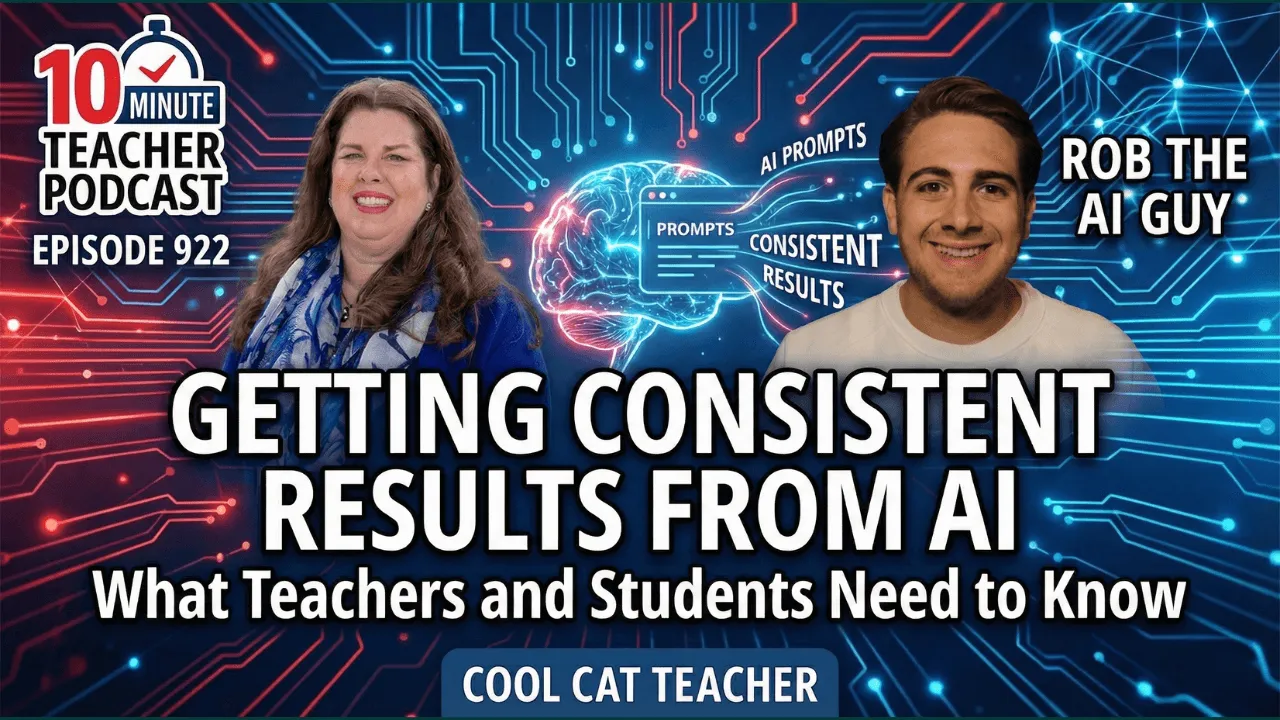
Too many teachers are struggling with getting good results from AI. Sometimes it just goes “off the rails,” or they might get good results one day and not the next. The same thing happens with students as they use AI. Problems caused by not understanding how AI works leads to lost time, confusion, and sometimes even student misuse. Much of this problem is related to the context window of AI. How do we understand AI and the context window? How do we teach about this?
Today’s guest is Rob the AI Guy. He started his work leading a major social media agency but now runs a thriving community focused on AI agents and automation. He is my favorite AI YouTuber, and I joined his Skool this year, which I’ve found to be my most helpful resource for keeping up with everything AI. Rob clearly explains how AI works, but perhaps the most useful concept he shares is how the context window works. If you’re struggling to use AI well, trying to understand it, or grappling with how to explain it to your students, this is the show for you.


Robert Benjamin breaks down the latest in AI automation as a serial entrepreneur and YouTuber known for making complex technology accessible. Having consulted with over 350,000 clients through his social media agency, he now runs a thriving community focused on AI agents and automation, bridging the gap between cutting-edge technology and real-world business applications.
Blog: https://www.skool.com/ai-automation-school
The post Getting Consistent Results from AI: Understanding the AI Context Window appeared first on Cool Cat Teacher Blog by Vicki Davis @coolcatteacher helping educators be excellent every day. Meow!
If you’re seeing this on another site, they are “scraping” my feed and taking my content to present it to you so be aware of this.

What’s the difference between academic writing and writing a news story? How different can they be?
I started out as a student of political science, became a journalist and then taught at university. Having started as an academic, you’d think returning to academic writing would be a snap. But it wasn’t.
As a journalist I’d been trained to say what needed to be said in as few words as possible. My writing needed to be easily read by anybody, regardless of their level of education and whether or not they read English as a first language. But academic writing is meant to impress. An essay is written by a student to impress a teacher, or a professor to impress colleagues or a tenure committee, or by a scientist or social scientist to impress a publisher.
Academic essays, reports and studies are meant to be ready by peers: people at the same or higher education level, who are experts in the same field of specialization and read them in their offices and classes.
News stories are meant to be read by anyone, sitting around the breakfast table as they munch on corn flakes.
You’d think the academic writing would be harder, no?
Imagine talking to a group of friends about something that happened in school. You don’t have to keep explaining who you are talking about or what you are talking about. They know all your references. But try telling the same story to your parents or better yet, adults who don’t know your school or community. It is a bit frustrating, because they don’t know what a stickler for rules Mr. Jackson is, or why most people avoid the third floor bathroom, or how so-and-so was dating you-know-who’s brother on the down low. You know, all that stuff that you need to know to understand why what happened at school was so significant.
It is much more difficult to tell a story when the person you are telling it to has no context. Moreover, when you write an essay or report you expect the person you are writing it for to read it. That’s their job. But no one is expected to read a news story.
As the author, you need to entice readers to choose your story to read. And you need to keep their attention throughout the story, because they aren’t obligated to read it to the end. So the story can’t be boring or tedious to read. Each paragraph has to have something interesting in it. It needs to be a good story worth reading.
I learned quickly as a journalist to read my stories out loud to myself. By doing so, I could hear when my writing was getting tired and dull. I could picture the person who is hearing the story fall asleep or walk away. When that happened I hit the delete button and started the paragraph again.
I would rethink whether the information I had included was really needed. Did my reader need to know that piece of data to understand what was happening?
To see the difference between journalistic and academic writing it is useful to look at a news story that came off of a report.
The news organization Vox published an article 17 December about a new report on poverty that was done by researchers at four California universities.
This is how the report began:
We study poverty minimization via direct transfers, framing this as a statistical learning problem while retaining the information constraints faced by real-world programs. Using nationally representative household consumption surveys from 23 countries that together account for 50% of the world’s poor, we estimate that reducing the poverty rate to 1% (from a baseline of 12% at the time of last survey) would cost $170B nominal per year.
Would you choose to read that with your corn flakes?
Here is how Vox reporter Sara Herschander begins the story:
When it comes to fixing the world’s worst problems, it’s easy to pretend that we’re helpless.
We tell ourselves that global poverty is just too big, too distant and too intractable an issue for us to solve. If the world could afford to solve it, or something like hunger, then surely somebody else would have done it already.
But, it turns out, that’s simply not true. According to a new report by a group of anti-poverty researchers that uses AI tools to achieve unusually granular data of the picture on the ground, the price tag for completely ending extreme poverty would be just $318 billion per year.
The researchers didn’t worry that most people wouldn’t understand the terms “poverty minimization”, “direct transfers”, “statistical learning problem” or “information constraints”.
But try sticking those terms into a story you tell friends in the school hall and they’ll tune you out.
There is another big difference between news stories and academic essays and reports. Journalists don’t footnote sources. That’s because you wouldn’t have footnotes in a story you tell out loud. Just try it.
So instead, when a journalist needs to cite a source they write something like, “that’s according to data from the U.S. Census” or, “a recent study out of Harvard found that.” The journalist would likely hyperlink to the actual study for readers who might want to read it, as I did above for both the Vox article and the report. The idea is that the citation should be as short as possible and it should not break into the story.
The real challenge for a journalist is that the average reader has a very short attention span. Any break in a story is like an exit door. It is the chance for the reader to leave that depressing story about poverty to go to a more uplifting story about football or Bad Bunny.
That’s why journalists write several drafts of a story before it gets published. In the first draft they just try to get all the information they have onto a page. In the second draft, they think about whether the information is needed and start taking things out and adding in others they might have forgotten. In the third, they try to close all those exit doors — all the places in the story that are tedious.
There are some tricks to doing this. It helps to round up or down numbers that have a lot of digits. A number like $1,569,345 is tedious to read. It takes 13 words to say it out loud. Instead, saying about $1.6 million will do the trick. That’s just five words out loud.
And it helps to use analogies and metaphors people can recognize. In a story I once wrote about the volatility of the stock market (doesn’t that sound like a yawner?) I likened the stock chart to Bart Simpson’s hair. For a story about an old technology company that kept getting sold and resold, I likened it to a secondhand sofa not moldy enough to toss into a skip.
But reaching for these analogies isn’t easy; it takes a little extra time and mental effort. In some ways journalists are translators. In general, translators take something in one language and turn it into another — from Japanese to English, for example. A journalist takes something from the language of the boring and tedious and obscure and turns it into the language of interesting and understandable.
It’s kind of like a jigsaw puzzle. You start with a bunch of pieces that seem to make little sense, but if you put them together in the right way you get a clear picture from it. But sometimes to do that you have to keep moving the different pieces around and sometimes you find you have to undo an entire section because something just doesn’t fit.
The result, when you are done, though, is pretty satisfying.
1. Why are news stories so different from essays?
2. In what ways are journalists translators?
3. What do you think makes a story interesting to read or hear?