Category: educators

  • Why should we care about cuts to funding for science education?

    Why should we care about cuts to funding for science education?

    Key points:

    The Trump administration is slashing the funding for new projects focused on STEM education and has terminated hundreds of grants focused on equitable STEM education. This will have enormous effects on education and science for decades to come.

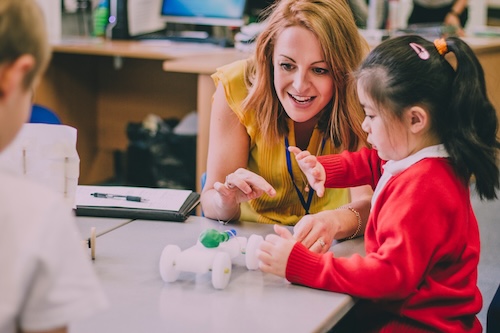
    Meaningful science education is crucial for improving all of our lives, including the lives of children and youth. Who doesn’t want their child or grandchild or neighbor to experience curiosity and the joy of learning about the world around them? Who wouldn’t enjoy seeing their child making careful observations of the plants, animals, landforms, and water in their neighborhood or community? Who wouldn’t want a class of kindergartners to understand germ transmission and that washing their hands will help them keep their baby siblings and grandparents healthy? Who doesn’t want their daughters to believe that science is “for them,” just as it is for the boys in their classroom?

    Or, if those goals aren’t compelling for you, then who doesn’t want their child or grandchild or neighbor to be able to get a well-paying job in a STEM field when they grow up? Who doesn’t want science itself to advance in more creative and expansive ways?

    More equitable science teaching allows us to work toward all these goals and more.

    And yet, the Department of Government Efficiency has terminated hundreds of grants from the National Science Foundation that focused squarely on equity in STEM education. My team’s project was one of them.  

    At the same time, NSF’s funding of new projects and the budget for NSF’s Education directorate are also being slashed.

    These terminations and drastic reductions in new funding are decimating the work of science education.

    Why should you care?

    You might care because the termination of these projects wastes taxpayers’ hard-earned money. My project, for example, was 20 months into what was intended to be a 4-year project, following elementary teachers from their teacher education program into their third year of teaching in classrooms in my state of Michigan and across the country. With the termination, we barely got into the teachers’ first year–making it impossible to develop a model of what development looks like over time as teachers learn to engage in equitable science teaching.

    You might care because not funding new projects means we’ll be less able to improve education moving forward. We’re losing the evidence on which we can make sound educational decisions–what works, for whom, and under what circumstances. Earlier NSF-funded projects that I’ve been involved with have, for example, informed the design of curriculum materials and helped district leaders. Educators of future teachers like me build on findings of research to teach evidence-based approaches to facilitating science investigations and leading sense-making discussions. I help teachers learn how they can help children be change-makers who use science to work toward a more just and sustainable world.  Benefits like these will be eliminated.

    Finally, you might care because many of the terminated and unfunded projects are what’s called NSF Early Career Awards, and CAREER program funding is completely eliminated in the current proposed budget. CAREER grants provide crucial funding and mentoring for new researchers. A few of the terminated CAREER projects focus on Black girls and STEM identity, mathematics education in rural communities, and the experiences of LGBTQ+ STEM majors. Without these and other NSF CAREER grants, education within these fields–science, engineering, mathematics, data science, artificial intelligence, and more, from preschool through graduate school–will regress to what works best for white boys and men.

    To be sure, universities have some funds to support research internally. For the most part, though, those funds are minimal. And, it’s true that terminating existing projects like mine and not funding new ones will “save” the government some money. But toward what end? We’re losing crucial evidence and expertise.

    To support all children in experiencing the wonder and joy of understanding the natural world–or to help youth move into high-paying STEM jobs–we need to fight hard to reinstate federal funding for science and science education. We need to use every lever available to us–including contacting our representatives in Washington, D.C.–to make this happen. If we aren’t successful, we lose more than children’s enjoyment of and engagement with science. Ultimately we lose scientific advancement itself.

    Latest posts by eSchool Media Contributors (see all)

    Source link

  • New teachers’ impact on equitable science learning

    New teachers’ impact on equitable science learning

    Key points:

    New elementary teachers who promote equity in science are proving highly effective at engaging students, no matter their background, a new University of Michigan study shows.

    U-M researchers found that new educators are pioneering paths in science education by offering opportunities for scientific conversations, innovative learning strategies and encouraging children to become active participants in scientific exploration. 

    “When teachers are equipped to foster a more equitable and just learning environment in science, it not only enhances children’s understanding of scientific concepts but also empowers them to see themselves as scientists and to use science to address real-world issues that matter in their communities,” said Elizabeth Davis, a professor at U-M’s Marsal Family School of Education.

    “Beginning teachers use a range of effective strategies to work toward more equitable science teaching. They vary in their emphasis on opportunity and access, representation and identification, expanding what counts as science and engaging children as change-makers using science to support a better world. This variation highlights the multiplicity of entry points into this challenging work and shows these teachers’ many strengths.”

    The study, published in the General Proceedings of the 5th Annual Meeting of the International Society for the Learning Sciences 2025, also identified areas for growth: These teachers were less consistently likely to work to broaden what counts as science and to link science to social justice. 

    Davis and co-authors Jessica Bautista and Victoria Pérez Nifoussi said the study helps understand how different approaches to equity in science education can work together, potentially influencing future teacher training for improved K-12 science learning. 

    They emphasized the clear need for teacher educators and curriculum developers to provide more concrete examples and resources to help future teachers navigate complex, justice-oriented approaches to science.

    “All children deserve to experience the joy and wonder of the natural world, yet science is taught far less often than language arts or math in elementary schools,” Davis said. “Furthermore, many students are marginalized in science, including girls, students of color, children with learning differences and queer or gender nonconforming children.”

    Funding challenges impact long-term research

    The study is part of the U-M ASSETS research, a four-year longitudinal project that began in September 2023. Although it was intended to run for four years, the project, funded by the National Science Foundation, was terminated in its 20th month, just shy of two years from its start.

    “The termination of these NSF projects–focused on STEM education, and in particular equity in STEM education–is going to adversely affect science education and science for generations to come,” Davis said. 

    “We are seeking additional funds for this work. Regardless, we will continue to support the teachers who participate in this project and we’ll continue to collect and analyze data to the extent we’re able to do so.”

    The team is now working on characterizing the participants’ first year of teaching to assess how their approaches to equitable and just elementary science teaching align with and differ from their approaches during teacher education.

    This news release originally appeared on U-M’s news site.

    Latest posts by eSchool Media Contributors (see all)

    Source link

  • Teacher stress levels have surpassed pandemic-era highs

    Teacher stress levels have surpassed pandemic-era highs

    Key points:

    America’s K-12 educators are more stressed than ever, with many considering leaving the profession altogether, according to new survey data from Prodigy Education.

    The Teacher Stress Survey, which polled more than 800 K-12 educators across the U.S., found that nearly half of teachers (45 percent) view the 2024-25 school year as the most stressful of their careers. The surveyed educators were also three times more likely to say that the 2024-25 school year has been the hardest compared to 2020, when they had to teach during the height of the COVID-19 pandemic.

    Student behavior challenges (58 percent), low compensation (44 percent), and administrative demands (28 percent) are driving teacher burnout and turnover at alarming rates. Public school teachers were more likely to report stress from unrealistic workloads, large class sizes, school safety concerns, and student behavior issues than their private school counterparts.

    “The fact that stress levels for so many teachers have exceeded those of the pandemic era should be a wake-up call,” said Dr. Josh Prieur, director of education enablement at Prodigy Education and former assistant principal in the U.S. public school system. “Teachers need tangible, meaningful, and sustained support … every week of the year.”

    Additional key findings include:

    • The vast majority of teachers (95 percent) are experiencing some level of stress, with more than two-thirds (68 percent) reporting moderate to very high stress. K-5 teachers were the most likely to feel extremely/very stressed (33 percent). Sixty-three percent of teachers report that their current stress levels are higher than when they first started teaching. 
    • Nearly one in 10 teachers surveyed (9 percent) are planning to leave the profession this year, while nearly one in four (23 percent) are actively thinking about it. One-third of teachers do not expect to be teaching three years from now, likely because nearly half (48 percent) of teachers don’t feel appreciated for the work that they do.
    • Teachers are finding ways to prioritize their well-being, but time limits and job pressures often get in the way. Seventy-eight percent of teachers say they actively make time for self-care, but nearly half (43 percent) feel guilty for spending time on self-care and 78 percent have skipped self-care due to work demands. Implementing school-provided self-care perks and mandatory self-care breaks would appeal to teachers, with 85 percent and 76 percent taking advantage of each benefit, respectively.
    • Top solutions that would reduce teachers’ stress include a higher salary (59 percent), a four-day school week (33 percent), stronger classroom discipline policies (32 percent), and smaller class sizes (25 percent). Public school teachers were more likely to prefer a shorter week, while private school educators opted for higher pay. 

    “Teacher Appreciation Week should serve as the starting point for building systems that show we value teachers’ time, talent, and well-being,” said Dr. Prieur. “Districts can do this by investing in tools that reduce the burden on teachers, prioritizing time for self-care and implementing policies that reinforce teachers’ value as an ongoing commitment to bettering the profession.”

    This press release originally appeared online.

    Laura Ascione
    Latest posts by Laura Ascione (see all)

    Source link

  • Music as the lifeblood of a nation

    Music as the lifeblood of a nation

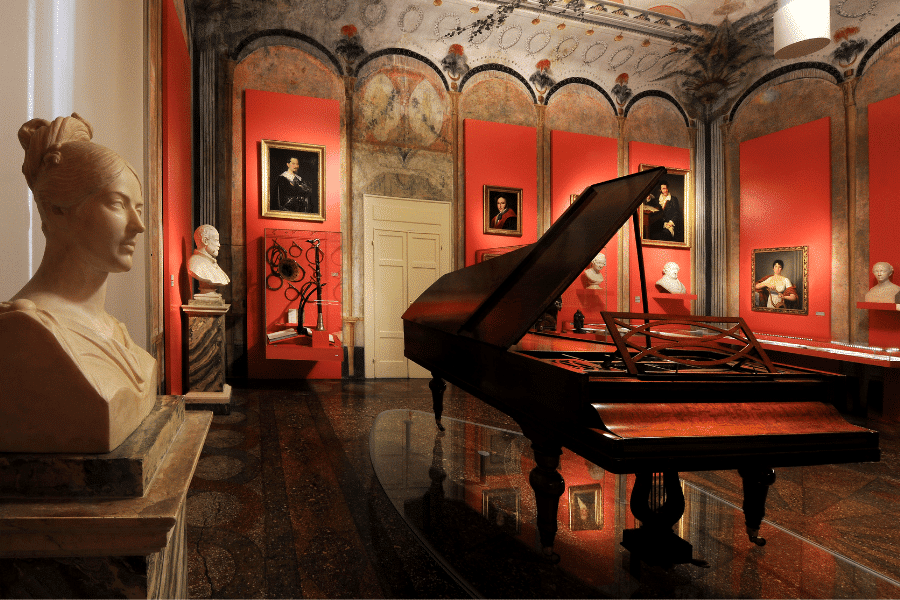
    The museum’s collection includes over 300 portraits of musicians — Vivaldi, Mozart, Rossini, Verdi — most of which are searchable online but rarely known to be housed in Bologna. “We are the Facebook of music history,” Tabellini joked. Some visitors come just for a selfie with Vivaldi’s portrait. “But they end up being amazed by everything else too.”

    One way the museum connects past and present is by bringing centuries-old traditions into modern classrooms and rehearsal spaces. Ancient manuscripts, Renaissance songs and Baroque instruments become starting points for young people to experiment, perform and imagine their own musical future.

    To reach new generations, the museum doesn’t just display music. It puts it in the hands of young people.

    “If you bring a 10-year-old into a museum filled with incomprehensible scores and portraits of musicians, you’re basically telling them that music isn’t for them,” Tabellini said.

    Connecting to music by playing it

    The museum invites students to make music before they study it. Its educational programs include workshops in singing, building instruments, experimenting with electronic music and more.

    “Only afterward do they visit the museum, already equipped with experience. That way the visit isn’t punitive but engaging,” Tabellini said. Many of these programs take place directly in schools and involve thousands of children each year.

    “You understand music by doing it. That’s our approach — accessible, inclusive, active. The museum visit should be a destination, not a starting point.”

    Today, the museum includes over 110,000 volumes — manuscripts, scores, treatises and rare documents. Only a fraction is on display, and much of the experience depends on guided interpretation. 

    “You need cultural mediation to really understand what you’re looking at,” Tabellini said.

    But two decades later, the title’s meaning has changed. “The UNESCO title has generally become a sort of brand, a designer label like those of high fashion,” he said. “It should be an incentive to preserve cultural heritage, but it doesn’t impose any real obligation to do so. It’s now a marketing tool, useful for tourism but not always returning value to the local community.”

    Exploring music by creating it

    The museum’s collections also hold stories that humanize even the greatest musicians. One of the most memorable involves a 14-year-old prodigy named Wolfgang Amadeus Mozart.

    In 1770, Mozart stayed in Bologna to study with Giovanni Battista Martini, a Franciscan friar and music theorist who laid the foundation for the city’s historic music archive. Mozart hoped to join the Accademia Filarmonica, but he had to pass a grueling composition exam.

    “These exams were called clausura, meaning ‘locked room’,” Tabellini said. “Candidates were literally locked in to write their scores. They could last hours, even days.”

    Mozart had spent the summer preparing with Martini, who was also the head of the Accademia. Still, the results were mixed.

    “We hold two of the three versions of Mozart’s exam,” Tabellini said. “The first is Mozart’s autograph — full of mistakes. The second, in Martini’s handwriting, is musically correct but full of corrections. The third, kept at the Accademia, is identical to Martini’s version, but written by Mozart. That version earned him admission.”

    The conclusion? “Mozart copied,” Tabellini said. “It’s one of the most fascinating musical mysteries we preserve. And telling it to visitors brings history to life. If even Mozart needed a helping hand … then there’s hope for all of us.”

    Breathing life into old music

    Connecting the old to today also means finding new ways to let historical documents speak to modern audiences. Through live events and storytelling, the museum ensures that ancient music isn’t just studied — it’s experienced in real time.

    The museum displays some 300 instruments, including one-of-a-kind rarities like the Clavemusicum omnitonum — a 16th-century “perfect keyboard” capable of playing every pitch imaginable. Unfortunately, its keys are too far apart to be playable by human hands.

    Other instruments, however, do come to life in the museum’s many live events: over 100 each year. These include concerts, lectures and series like Wunderkammer and Insolita.

    “In Insolita, we select a document from our collection and pair it with a live concert,” Tabellini said.

    Before the performance, we show the original manuscript and explain its history. It’s a way to give life to what would otherwise remain silent.”

    One audience favorite is “O felici occhi miei” by Arcadelt, a Renaissance madrigal — a form of secular, polyphonic vocal music — with 40 known editions. “We hold 19 of them,” Tabellini said. “When people see the actual pages before hearing the music, they realize that without those sheets, the music itself might never have survived.”

    Visitors sometimes wonder why music doesn’t constantly play in a museum of music. But there’s a reason.

    “If you just pipe background music through the rooms, it becomes ‘muzak’ — like in a supermarket,” Tabellini said.

    Instead, the museum is exploring meaningful ways to integrate sound: virtual manuscripts, interactive instruments and multimedia displays. 

    “We want to integrate music into the experience — but on our own terms,” Tabellini said. “It’s not just about hearing. It’s about understanding why you’re hearing it.”

    The challenge is to make a quiet space sing — not loudly, but purposefully. “We don’t want to entertain. We want to create an experience. Every object we preserve has something to say, and we want its voice to be heard.”


    Questions to consider:

    1. How do labels like “opera” or “love songs” influence — or distort — how we see Italian music today?

    2. In what way is highlighting cultural heritage important to for cities that rely on tourism?

    3. When was the last time you found yourself liking old music? What about it did you like?


    Source link

  • Ryan Lufkin, Vice President of Global Academic Strategy, Brings the Skinny

    Ryan Lufkin, Vice President of Global Academic Strategy, Brings the Skinny

    When the developers of Canvas, the world’s leading web-based learning management system (LMS) software, invite you to a party—July 22-24 this year in Spokane, WA—you might consider the offer. Expected to draw 3,000 attendees across various roles from individual educators to IT leadership, the event promises product reveals, professional development, and collaborative opportunities like Hack Night, designed to help educators and administrators demonstrate tangible value when they return to their institutions. I was able to grab Ryan Lufkin, Vice President of Global Academic Strategy at Instructure, for some pre-show scuttle butt. Have a listen and scroll down for some highlights:

    ➜InstructureCon 2025 is evolving its AI strategy beyond basic features to an “agentic approach,” leveraging partnerships with Anthropic, Microsoft, and Google to create integrated AI experiences across campus environments. Says Ryan: “That’s because our open architecture is the most well-positioned learning platform in the world to really pull in, not just those AI-powered features that we’ve developed, but we also leverage those from our partners.”

    ➜Instructure is responding to educational institutions’ budget constraints by focusing on helping customers maximize their technology investments through better data usage, adoption metrics, and optimization strategies. Says Ryan: “We really want educators and administrators to walk away with just a toolkit of how to use these products better, how to use them more deeply and tangibly show that value because we know the budgets are tight.”

    A few session highlights:  

    Transforming Student Success with Mastery Connect: A Proven Approach to Data-Driven Instruction in Richland One School District

    Get ready to discover how Richland One (R1) School District in South Carolina has been transforming student success with Mastery Connect since 2015! This digital assessment platform has empowered R1 teachers to seamlessly administer standards-based formative and summative assessments, dive into score reports, and collaborate with colleagues. MC has unlocked deeper insights into student mastery, giving teachers and teams the tools they need to drive data-driven instruction. Join us for an exciting session where R1 will share its curriculum map structure and district approach to formative assessments. Discover how to save time on data collection and analysis—whether you’re a teacher or an admin. Learn how newer features like Quick Reassess and Assessment Compare can help you work smarter, not harder! You’ll also explore how to harness real-time data to fuel impactful discussions in your Professional Learning Communities (PLCs), driving focused, results-oriented collaboration.

    Cracking the Code: Turning Data into Action with Mastery Connect

    Drowning in data but struggling to make it meaningful? Join us on a journey to transform numbers into actionable insights using Mastery Connect! In this session, we’ll share how we built educator buy-in, shifted mindsets, and empowered teachers to use data in meaningful ways. Discover practical strategies for making data analysis approachable, actionable, and impactful—without overwhelming teachers. We’ll explore real-world examples, time-saving tips, and effective ways to connect assessment data to instructional decisions. Whether you’re just getting started or looking to refine your approach, this session will equip you with insights and strategies to turn data into a catalyst for student success.

    Beyond the Classroom: Maximizing Canvas for Non-Academic Programs in Resource-Limited Environments.

    As institutions face financial and regulatory challenges, maximizing existing technology investments is essential. While Canvas is primarily used for academic courses, its capabilities extend beyond the classroom. This session explores how a small liberal arts institution has successfully repurposed Canvas for faculty onboarding, professional development, syllabus archiving, student organizations, and institutional assessment—all without additional costs. A key focus will be the development of a syllabus submission portal designed to streamline syllabus collection, ensure compliance with learning outcomes, and create a structured faculty repository. Attendees will gain practical insights into overcoming adoption challenges, achieving measurable ROI, and applying these strategies to institutions of varying sizes.

    Kevin Hogan
    Latest posts by Kevin Hogan (see all)

    Source link

  • Optoma Announces Launch of the New 3-Series Interactive Displays with Google Certification and AI-Enabled Tools

    Optoma Announces Launch of the New 3-Series Interactive Displays with Google Certification and AI-Enabled Tools

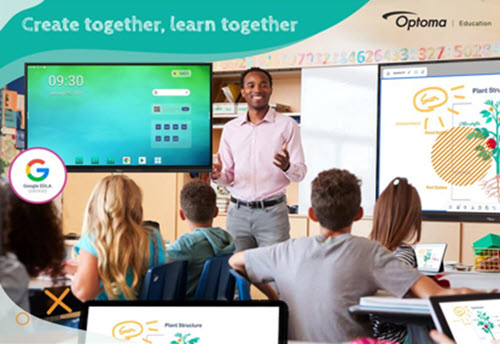
    FREMONT, CA – Optoma, a world-leading provider of visual solutions, today announced its latest Creative Touch 3-Series Interactive Displays designed to empower educators and business professionals with new tools and features to enhance learning, make presentations more effective, and increase collaboration in classrooms, lecture halls, boardrooms, remote working and other business environments.

    With Google’s Enterprise Device Licensing Agreement (EDLA) Certification and added functionality, the new 3-Series empowers professionals and educators to deliver dynamic and impactful content by providing cutting-edge tools that streamline management and elevate engagement. The advanced capabilities of the new 3-Series simplify planning and workflow through wireless collaboration, screen sharing, and innovative meeting solutions in both corporate and educational environments alike, all packed into a robust yet user-friendly platform.

    The 3-Series: Purpose-Built for Corporate and Education Environments

    New features and key highlights include:

    Google EDLA Certification: Ensures compatibility and optimized performance with thousands of educational applications and services available directly from the pre-installed Google Play Store allowing users to experience the full Google Suite for real-time collaboration from practically anywhere in the world.  Without compatibility issues or the hassle of connecting an external PC, users can easily access the entire suite of Google-based applications they are accustomed to – including Google Drive, Google Docs, YouTube, and more!

    The Optoma Solution Suite (OSS®): User-friendly software featuring Artificial Intelligence (AI) enabled tools, such as Sticky Notes* and AI Handwriting Recognition, the OSS package also includes:

    • Whiteboard: Unleash creativity through a digital whiteboard packed with tools that make learning and sharing ideas engaging – facilitating collaboration in real-time from anywhere.
      • Smart Sketch tool is ideal for drawing diagrams as it recognizes shapes and drawings and converts them into clipart images.
      • Floating Toolbar and Infinity Canvas allow you to seamlessly switch between tools to suit your tasks with a virtually limitless writing space.
      • Innovative Annotation and Highlighter Tools make underlining key points or annotating complex diagrams a breeze.
    • File Manager: Easily save, organize, or move files from local storage to networkable storage or to popular cloud services in seconds.
    • Display Share: Connect any device to wirelessly broadcast, share, or stream your content to the big screen. Bringing your own device has never been easier.

    Exceptional Performance: Seamless performance with an 8-core processor, Android 14 OS, and Zero Bonding screen for that natural writing experience.

    “We are excited to announce our new 3-Series and partnership with Raptor Technologies which truly embodies our commitment to supporting education through cutting-edge visual solutions, enhanced software packages and safety and security,” said Maria Repole, Head of Marketing at Optoma.

    A value-added solution, Optoma Management Suite (OMS®) is available out of the box on the 3-Series Interactive Displays, with a free trial available.** OMS offers IT administrators and technicians a real time remote platform to monitor, manage, diagnose, and update multiple or entire fleets of displays simultaneously that are either on the same network or connected through the cloud. OMS makes it easy to broadcast emergency messages, alerts, or announcements across displays worldwide.

    Optoma is thrilled to partner with Raptor® Technologies, the leading innovator in school safety solutions, redefining the landscape of school security with its Raptor School Safety Software Suite. By integrating Raptor’s software with Optoma’s interactive displays, school administrators and students can receive real-time alerts and emergency notifications using CAP protocols to improve the overall safety of the school.

    To experience a demonstration and learn more about Optoma’s new Creative Touch 3-Series Interactive Displays, please schedule a demo or visit: https://www.optomausa.com/products/interactive-flat-panel-displays-3-series/education https://www.optomausa.com/products/interactive-flat-panel-displays-3-series/corporate

    *Some AI features may require the use of an Optoma (OSS) account.

    **Free trial licenses are available for a limited time. Please register your OMS® Cloud account at https://oms.optoma.com or speak with your local representative.

    OMS and OSS are registered trademarks of Optoma Corporation

    DLP is a registered trademark of Texas Instruments

    About Optoma Technology, Inc.  

    Optoma combines cutting-edge technology and innovation to deliver remarkable visual display products designed to connect audiences with engaging video experiences. From the company’s ProScene projectors to its Creative Touch interactive, Professional LCD and LED displays, Optoma’s suite of products can meet the demands of nearly any professional environment, including conference rooms and classrooms, digital signage, corporate, houses of worship, retail, simulation environments and control rooms. Optoma Technology is the U.S. headquarters for The Optoma Group, with continental headquarters also in Europe and Asia. For more information, visit optomausa.com.   

    eSchool News Staff
    Latest posts by eSchool News Staff (see all)

    Source link

  • Otus Wins Gold Stevie® Award for Customer Service Department of the Year

    Otus Wins Gold Stevie® Award for Customer Service Department of the Year

    CHICAGO, IL (GLOBE NEWSWIRE) — Otus, a leading provider of K-12 student data and assessment solutions, has been awarded a prestigious Gold Stevie® Award in the category of Customer Service Department of the Year at the 2025 American Business Awards®. This recognition celebrates the company’s unwavering commitment to supporting educators, students, and families through exceptional service and innovation.

    In addition to the Gold award, Otus also earned two Silver Stevie® Awards: one for Company of the Year – Computer Software – Medium Size, and another honoring Co-founder and President Chris Hull as Technology Executive of the Year.

    “It is an incredible honor to be recognized, but the real win is knowing our work is making a difference for educators and students,” said Hull. “As a former teacher, I know how difficult it can be to juggle everything that is asked of you. At Otus, we focus on building tools that save time, surface meaningful insights, and make student data easier to use—so teachers can focus on what matters most: helping kids grow.”

    The American Business Awards®, now in their 23rd year, are the premier business awards program in the United States, honoring outstanding performances in the workplace across a wide range of industries. The competition receives more than 12,000 nominations every year. Judges selected Otus for its outstanding 98.7% customer satisfaction with chat interactions, and exceptional 89% gross retention in 2024. They also praised the company’s unique blend of technology and human touch, noting its strong focus on educator-led support, onboarding, data-driven product evolution, and professional development.

    “We believe great support starts with understanding the realities educators face every day. Our Client Success team is largely made up of former teachers and school leaders, so we speak the same language. Whether it’s during onboarding, training, or day-to-day communication, we’re here to help districts feel confident and supported. This recognition is a reflection of how seriously we take that responsibility and energizes us to keep raising the bar,” said Phil Collins, Ed.D., Chief Customer Officer at Otus.

    Otus continues to make significant strides in simplifying teaching and learning by offering a unified platform that integrates assessment, data, and instruction—all in one place. Otus has supported over 1 million students nationwide by helping educators make data-informed decisions, monitor progress, and personalize learning. These honors reflect the company’s growth, innovation, and steadfast commitment to helping school communities succeed.

    About Otus

    Otus, an award-winning edtech company, empowers educators to maximize student performance with a comprehensive K-12 assessment, data, and insights solution. Committed to student achievement and educational equity, Otus combines student data with powerful tools that provide educators, administrators, and families with the insights they need to make a difference. Built by teachers for teachers, Otus creates efficiencies in data management, assessment, and progress monitoring to help educators focus on what matters most—student success. Today, Otus partners with school districts nationwide to create informed, data-driven learning environments. Learn more at Otus.com.

    Stay connected with Otus on LinkedIn, Facebook, X, and Instagram.

    eSchool News Staff
    Latest posts by eSchool News Staff (see all)


    Source link

  • AI in Education: Beyond the Hype Cycle

    AI in Education: Beyond the Hype Cycle

    We just can’t get away from it. AI continues to take the oxygen out of every edtech conversation. Even the Trump administration, while actively destroying federal involvement in public education, jumped on the bandwagon this week.

    Who better to puncture this overused acronym than edtech legend Gary Stager. In this conversation, he offers a pragmatic perspective on AI in education, cutting through both fear and hype. Gary argues that educators should view AI as simply another useful technology rather than something to either fear or blindly embrace. He criticizes the rush to create AI policies and curricula by administrators with limited understanding of the technology, suggesting instead that schools adopt minimal, flexible policies while encouraging hands-on experimentation. Have a listen: