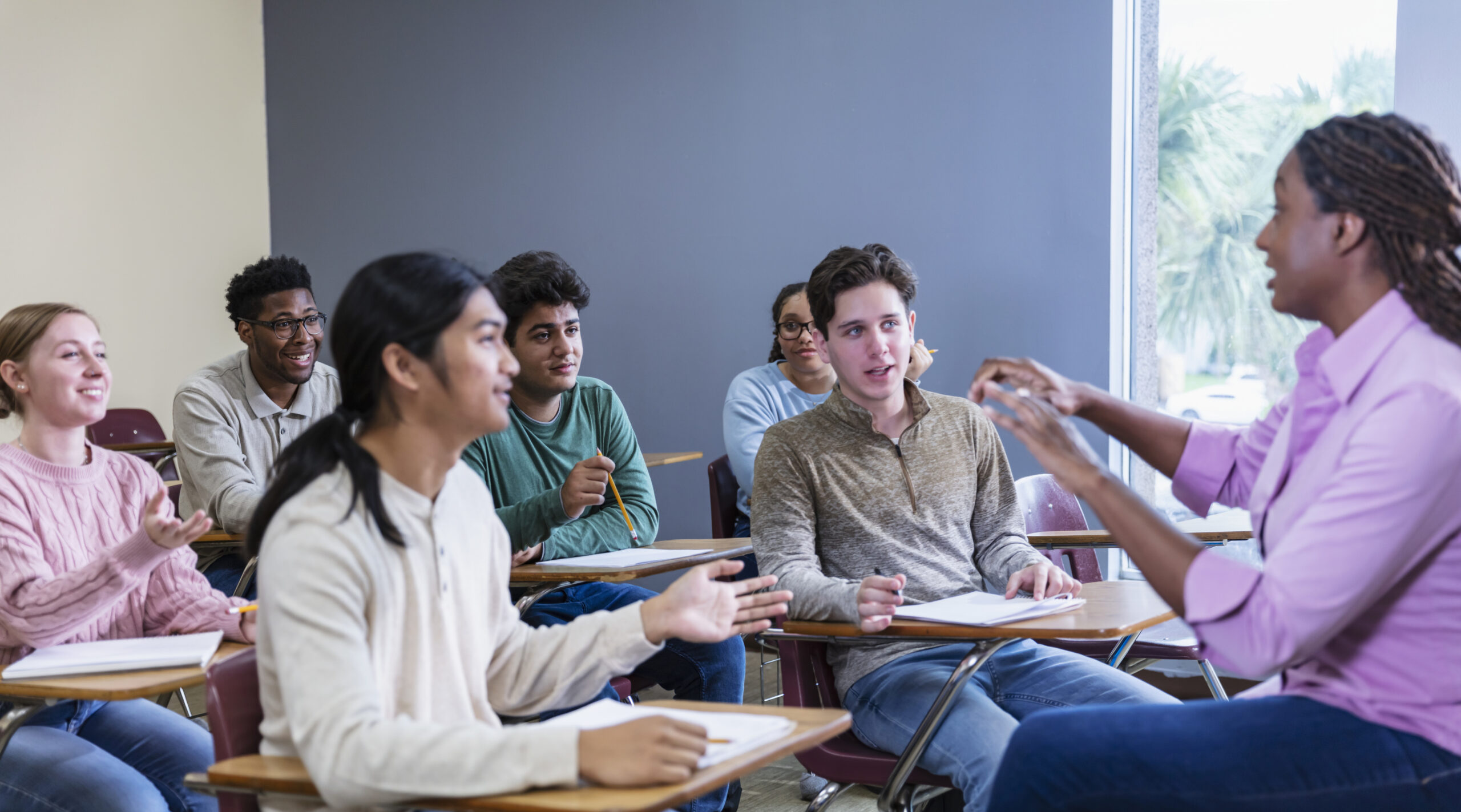
It is that time of year again. I am staring longingly out the window while I sit indoors, on my computer, tweaking syllabi in anticipation of teaching again in the coming semester. This ritual feels different this year because I am coming back from a sabbatical, part of which I spent as a student (again). At this time last year, I was preparing to learn basic statistics for my research as a student, because my chemistry undergraduate degree was curiously bereft of training in statistics. So, I (again) registered for a first-year class as a student. My Day 1 experience as a student (again) was enlightening. My brief foray into the freshman experience, while not quite a full experience including living in a dorm room and eating in the cafeteria (Nathan 2006), gave me a chance to critically reflect on what students experience in my own classes. I would like to share a few of my experiences, what I learned from them, and what I aim to change in my own Day 1 routine in the coming year, with the hope that it helps some of you too.
Facing Day 1 Anxiety
One of the most profound shocks of being a student (again) on Day 1 was the sense of anxiety I experienced before the class started. I knew I was very rusty on the prerequisite material; it has been almost 25 years since I took high school math! I was not feeling at all confident that I still “had it” in terms of my ability to succeed as a student. Looking back now, I realized that my own students must also feel the same way. How many of them have not retained all the prerequisite knowledge they learned a while ago? While probably not a quarter of a century ago, I am certain they do feel like their high school education was a long time ago by the time they are in my class. Similarly, how many of them were always near the top of their classes, and now suddenly realize that might no longer be true?
My Takeaway: Give Students Early Support and Reassurance
My experience reminded me that there is no such thing as too much review of prerequisite material, either in the first few classes at the start of my course or as informal reminders when I am introducing a brand-new concept. My students probably feel it has been a long time since they had to activate that prior knowledge that I am trying to build upon, and I guess some don’t feel anywhere near as confident in their ability to succeed as they did even a year ago. Little reminders and lots of reassurance will go a long way this coming fall when I am back in the class as an instructor.
The Novice Moment
But my anxiety did not only manifest before the class started. On my first day back as a student, I fully panicked when a ‘fellow student’ asked a question of our instructor (“Professor, is that variable nominal, or ordinal?”). I panicked because I realized I had absolutely no idea what the question even meant, and I realized how hard it was being a novice again (Mulnix 2023)! I also missed the answer to the question because I was so busy trying not to get visibly upset in the middle of a crowded lecture hall. I am not somebody prone to panic attacks or severe anxiety, but the sudden realization of how unmoored I felt taught me a valuable lesson.
My Takeaway: Build Student Confidence Day 1
This coming semester, I will be more attentive to how simple questions or off-the-cuff remarks could easily hit my students in unexpected ways. For students already feeling unprepared or uncertain in my class, innocent queries or comments might subtly reinforce underlying feelings that my class will be beyond their capabilities. Phrases such as “this should be easy” or “something you should all know already” shall be completely stricken from my vocabulary. Especially as we seek to educate a generation suffering from higher rates of diagnoses for anxiety and panic, I need to find ways to make sure my students remember that they probably know more than they think. Prerequisite classes, while perhaps feeling long past for them, have provided them with everything they need to succeed in my class. Part of my job is to encourage them to engage in the hard work and remind them that they do fit in my class. Whether this involves an easy content-related quiz on the first day of classes or some similar confidence-building exercise, I now realize how important confidence-building is for the first day of class.
Feeling Out of Place
The last key experience from Day 1 of my second time being a first-year student was linked to my discomfort when I entered the lecture hall. I suspect most of us still remember the shock of walking into our first big lecture hall and being stunned by the sheer size of the hall, and number of other bewildered students. But what I felt was discomfort disconnected from the size of the lecture hall. Rather, I walked into the lecture hall and instantly felt like I did not belong. The grey in my beard was a clear signal to other students that I was different, and they subtly found ways to avoid sitting near me or meeting my eye. I believe these behaviors were unconscious reactions on the part of others, but it felt very real. As a White male living in Western Canada, I have not often felt the sensation of walking into a room and realizing I don’t automatically fit in with other people.
My Takeaway: Ensure Every Student Feels Welcome and Included
I realized some of my students must also feel when they walk into my classroom and are visibly different from their peers or their instructor. That sense of alienation is subtle, but it is very real when you are the one who stands out. In my classes, I have always talked about, and tried to put into action, the message that everybody is welcome. But this semester, I will be trying much harder to convey that message, both implicitly and explicitly. My students who are part of traditionally underrepresented groups based on race, gender, sexual orientation, disability status, age, or some other feature, they need to feel welcome in my class. My syllabus language will be tweaked to be more directly inclusive. My friendly greetings on Day 1 shall be clearly directed to all my students to avoid whatever unconscious biases I may harbor. I will endeavor to arrange the physical classroom to make it easier for everybody to sit next to somebody else, and I will make sure my first day of class icebreaker gives people a chance to talk to each other (Weimer 2017). Even if it is just to exchange pleasantries, getting my students talking to each other is the best thing I can do to help them realize they are all feeling similar anxieties, in addition to excitement at how that first class will go.
As the semester continued and I settled in to learn about things such as the differences between a z-test and a t-test, my experience on Day 1 of being a first-year student (the second time around) stood out as particularly important. What I experienced as a student in statistics gave me a great deal to think about how my students might be feeling when they enter my 1st-year general chemistry classroom this fall. So instead of staring out the window, I had best get back to preparing that course syllabus to incorporate all those non-statistics things I learned this past year.
Brian Rempel, PhD, joined the University of Alberta’s Augustana campus where he primarily teaches general and organic chemistry as an Associate Professor. Brian developed a love for teaching chemistry during his PhD work on enzymology at the University of British Columbia and brought that passion to his teaching-focused role at Augustana in 2009. Brian’s research studies the impact and student perceptions of unique means for evaluating student knowledge, with a particular focus on finding equitable ways of evaluating student knowledge to reduce student anxiety.
Over the past several years, I have had the deep privilege of participating in The Way of Remembering (WOR), a spiritually grounded journey to Benin that looks at intergenerational trauma and healing through the lens of African ways of knowing. Benin is a beautiful country and is the birthplace of Vodún (commonly called Voodoo). It is also home to strong oral traditions and healing practices that focus on community connections. As a site deeply scarred by the transatlantic slave trade, Benin holds the weight of immense suffering and also resonates with profound resilience and the capacity for collective healing and growth. I first learned about WOR from a postdoctoral fellow, Dr. Omavi Bailey, whom I was mentoring and who later invited me to join him on the trip. The Way of Remembering is designed to help people in the African diaspora reconnect with their ancestral heritage and discover healing methods that address harm passed down through families and communities.
The journey follows five stages: recognition, repentance, reparation, reconciliation, and rehumanization. Indigenous healers I’ve met describe these stages as linked and recurring, each one essential in restoring our shared humanity. Although these stages can be viewed in order, each one connects with and affects the others, showing how healing and growth rarely follow a simple path. Over the years, my experiences there have enabled me to broaden my understanding of trauma, helped me see the power and complexity of healing, and inspired me to think about how these ideas apply to higher education—especially since I am reminded every day that everything is connected.
In Benin (and in other West and East African countries I have visited), I have seen practices that stand apart from the dominant Western approach to trauma, which often looks at individual problems and mechanical fixes. On a recent trip, I asked my mentor, Dr. Erick Gbodossou, what trauma meant to him. He explained that it is “disequilibrium”—not just inside one person’s body but also in their ties to the outside world, community, and nature. In many African philosophies, such as Ubuntu (“I am because we are”), an individual’s wellbeing depends on the wellbeing of the entire group. Any imbalance in one person affects and is shaped by the community. This holistic understanding directly challenges a Western dominant view that focuses only on individual symptoms, ignoring the wider ties that keep us healthy or contribute to our suffering.
I immediately saw how Dr. Gbodossou’s answers connect to higher education, where we often separate knowledge, experiences, and wellbeing. As I am sure many of you can attest, in many academic settings the tendency is to separate disciplines and roles and even mind from body, overlooking the fact that learning is deeply interwoven with emotional, social, and environmental factors. The wonderful Laura Rendón, in her article, “Recasting Agreements That Govern Teaching and Learning: An Intellectual and Spiritual Framework for Transformation,” writes about what she calls “the agreement of separation,” the underlying belief that knowledge, people, and experiences exist in isolated compartments rather than being part of a larger, interconnected whole. She quotes Thich Nhat Hanh, who says, “We are here to awaken from the illusion of our separateness.” Rendón reminds us that we often operate from a standpoint that breaks teaching and learning into parts—mind versus spirit, teacher versus student—when real learning calls for a more united view. Thich Nhat Hanh’s words urge us to see that our greatest purpose is to awaken to our shared life. Yet in the current model of education, we seem to move further away from that recognition, asking students (and ourselves) to keep pushing through tasks without pausing to notice our connectedness.
Dr. Gbodossou readily brought up education when talking about trauma and healing and went on to explain how education has the potential to perpetuate cycles of trauma or transform them into healing cycles. And to transform them into positive growth cycles, it’s necessary to understand the relational nature of trauma and healing. Realizing this potential in education made me think about how our teaching practices can either isolate or integrate the diverse dimensions of learners’ experiences. When we recognize how learning connects to our relationships, we can create spaces where students feel a sense of connection—to themselves, to each other, and to the world around them; see cultivating those connections as part of how they learn; and recognize how learning can be one step toward healing and repair.
Viewing things in this more connected way contrasts sharply with the Cartesian model of Western thought, which shaped much of my own study in philosophy and neuroscience. That model often puts the individual first, values objectivity over everything else, and treats the mind and body as separate. African and other Indigenous worldviews, by contrast, invite us to see the world as a network of relationships in which knowledge is shared among groups and passed down through time. They also embrace ideas about how learning does not always happen in a straight line but can unfold in flexible and surprising ways. Again, from this viewpoint, trauma does not affect only one person; it interrupts the bonds among individuals, communities, ancestors, and nature. Healing requires mending these bonds—or even creating new ones—often through rituals that include body and mind and community. Such rituals use beauty, symbols, and group participation to restore balance.
I have been privileged to see and take part in ceremonies and gatherings in Benin, Kenya, Uganda, and Senegal. For many years, I didn’t speak about my experience, because it felt so ethereal, and words often failed me. I realized these ceremonies are not just performances but active interventions that restore social, emotional, and spiritual equilibrium. These practices focus on remembering in a very real sense—not just recalling bits of information stored in the brain but letting the body (seen as an archive) itself serve as a source of healing and integration. Through repeated rhythms, movements, and symbols, people mend memories that feel broken, bringing together everyone involved. Whether they use drumming, dancing, or shared sacred objects, community participants embody an aesthetic that draws everyone together, forging a collective sense of harmony and renewal. What moves me most—and what I have come to value deeply—is the comfort people find in these repeated patterns and symbols, which support the entire community and guide them toward healing by providing familiar rhythms and shared focus.
These ideas have pushed me to explore what they might mean for how we teach. Too often, our classrooms reflect Cartesian separation: not only mind from body, student from teacher, but also rationality from emotion, past from present, us from them. Yet we humans naturally look for connections, meaning, and beauty, and we find comfort in rituals. I could cite dozens of studies from peer-reviewed journals to convince you that rituals improve attention and retention, but many of you already believe in the power of these practices, so I won’t bury you in jargon. From lullabies we hear as children to ceremonies we attend as adults, we are drawn to repetition, symbolic acts, and sensory experiences that help us make sense of the world through connections. We often overlook these in education because they do not seem measurable or directly tied to learning. But I keep thinking about what a Sufi teacher, Kabir Helminski, once said: What if the most important things in life are the things we cannot measure—things like love and empathy? That question lingers in my mind, especially when I think about teaching. These unmeasurable qualities can help address the sense of disconnection that many students feel in academic settings.
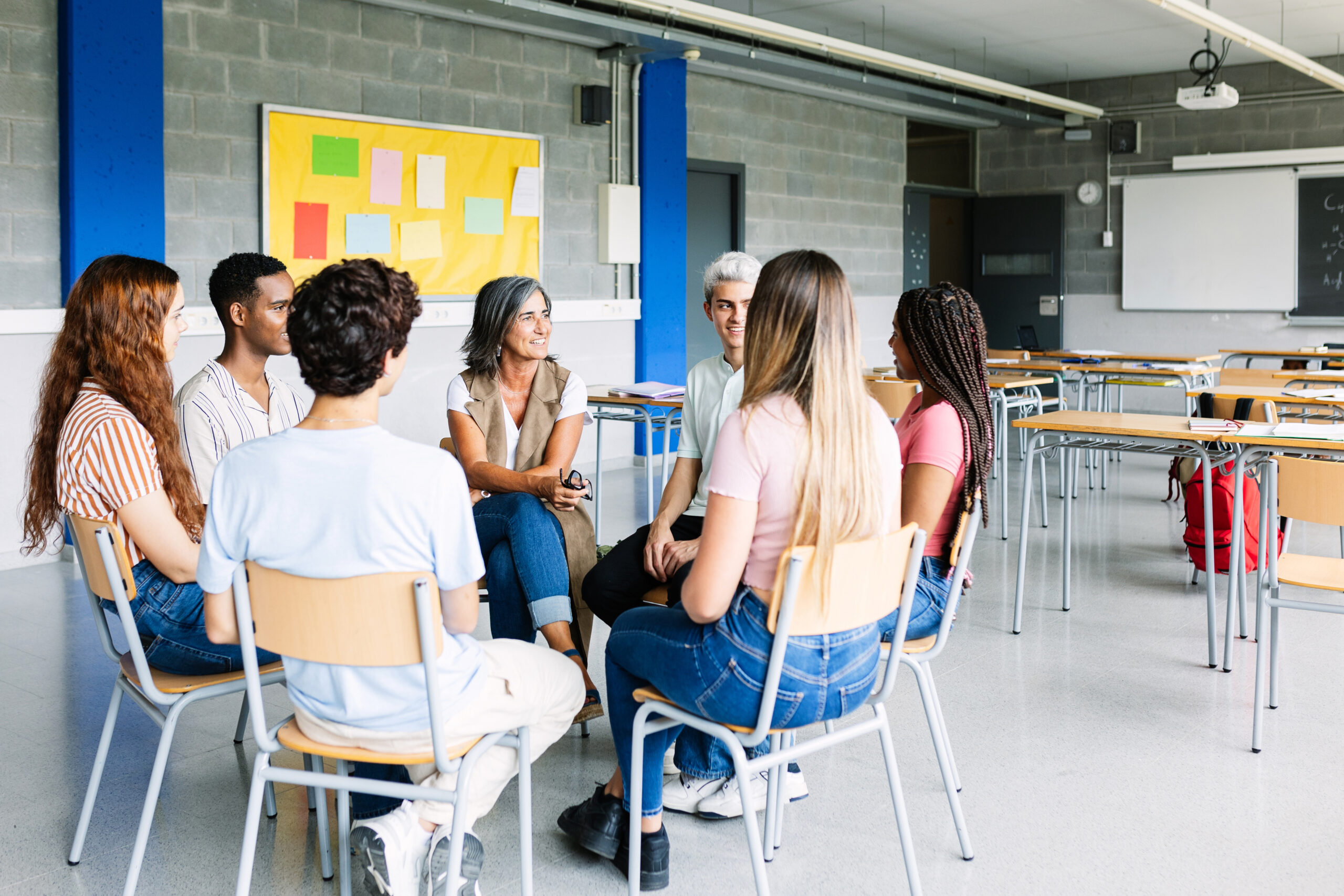
Inspired by my time in Benin, I have started imagining what it could look like to bring beauty and ritual into the classroom. By “beauty,” I mean the elements—visual, auditory, or experiential—that awaken a sense of wonder, joy, curiosity, coherence, and common humanity. By “ritual,” I mean repeated, deliberate actions or gestures that bring participants into a collective rhythm and reflective space, grounding the learning experience in shared purpose. Simple things—like opening class with a moment of silence, gratitude, touching the ground, or playing music—can serve as rituals that center students and help them be truly present. Bringing music, art, or movement into our teaching invites students to feel and experience ideas rather than only think about them, showing us that our bodies play an important part in knowledge, remembering, and knowing. Changing the classroom layout—using a circle of chairs, adding a meaningful centerpiece, or displaying student art—can help turn the room into a place for shared experience, not just a one-way delivery of facts. Involving students in creating classroom rituals or decorating the space can also help them feel ownership and belonging. Such involvement gives students a chance to shape their learning environment, which can boost their sense of being valued and included. That is, when our students help design the rituals or artwork, they can feel they are co-creators in the educational process rather than bystanders.
Over several years, I have been refining a classroom ritual that centers on the heart. At the start of each semester, I talk with my students about why they are here, about finding meaning in what they learn, and about how learning engages their minds and bodies. I share research showing that memory is stored in the brain and in other organs. I describe how my Muslim upbringing highlights the importance of the heart. The Arabic word for heart—Qalb—comes from a root meaning “to turn.” We are always turning toward each other, toward the divine, and toward truth. I give each student a small gem in the shape of a heart and invite them to bring their hearts to the learning journey. The heart gems come in different colors and look a bit like yummy candy. Although some students are uncertain at first, they soon discover how this practice sets a warm tone. It also signals that they can speak from the heart in a science class, which might not be what they expect. Sometimes I even greet them by asking, “How’s your heart?” They come to see that this is a real invitation, and it can spark genuine sharing.
When I first came to this country, I took English as a second language during my sophomore year of high school. My teacher asked us to bring an object that mattered to us and, if we felt comfortable, pass it around to our classmates. This simple activity was a beautiful ritual because it honored who we were, let us show a piece of ourselves, and helped the class feel like a real community. It’s something I remembered years later and see as a moment of true validation.
Similarly, in a literature class, for example, a professor might invite students to bring in their favorite book or share a story from their childhood. If possible, have the student pass the book or object around as they explain its significance. This ritual encourages active listening and signals that every voice counts.
By contrast, in a biology lab, taking a moment to acknowledge the natural resources and the history behind modern scientific research can serve as a ritual of gratitude and humility, connecting students to a broader context. These kinds of rituals and practices may be especially important in STEM fields, where teaching can sometimes feel cold or purely analytical. By adding a sense of wonder, reflection, and shared humanity, we remind students that science is not just about data; it’s about people working to understand life and make discoveries that can benefit us all.
I share these ideas to invite my colleagues—whoever you are—to create your own beautiful rituals in your classes and to encourage your students to do the same. There is no single right way. Your rituals might emerge from your cultural traditions or from your curiosity and imagination. Whatever the source, when we welcome these practices, we create a space for students to feel both a deep sense of purpose and a personal connection to each other and what they are learning.
Even small gestures—like starting class by saying thank you or ending with a reflective exercise—can remind everyone that learning is not just something happening in the mind but something we do together as people. Over time, these actions can build a classroom culture that encourages connection instead of isolation, involvement instead of passive listening, and mindfulness instead of simply going through the motions. These steps indeed deepen students’ learning as well as support their emotional health and strengthen the classroom community. Taking a step back to notice how these seemingly small actions can transform the classroom can remind us that teaching is about forming connections as much as it is about sharing knowledge.
Ritual themselves can bring beauty. Beauty is not just a decoration: It can become a source of healing, inviting wonder, joy, and a sense of unity. Bringing beauty into teaching—through ceremonies, art, music, or group storytelling—helps us resist the mechanistic, transactional models of schooling that can stifle creativity and leave emotional and spiritual dimensions of learning and personal growth unaddressed. Instead, we can build a place where students are seen as whole people and where their emotional and cultural backgrounds—and even their pasts and futures—are honored.
Beauty through ritual is especially important for students who bear the weight of intergenerational trauma. When we hold rituals that allow students to share and be witnessed, we help them imagine new narratives that go beyond their trauma, and we plant seeds of possibility for their futures and the future of all of us. The sense of belonging grows into a sense of agency to rewrite their own stories and become part of a greater healing process that stretches across generations.
Of course, it goes without saying that bringing elements of ritual and beauty into the classroom requires care. That is, when I think about these practices, I want to remain mindful of cultural sensitivity, recognizing that practices drawn from specific traditions should be adapted respectfully and, ideally, with guidance from those who uphold those traditions.
My experiences in Benin have taught me so much—above all that yes, education can be a pathway for intellectual growth as much as it can open possibilities and facilitate personal growth and collective healing. I often cry when I leave Benin. The separation feels wounding, and my mentors often remind me that “we are together.” This year especially, I want to be more intentional to take Benin with me into my teaching and to be more intentional about using African epistemology, which emphasizes community wisdom, ancestral insights, and balance with the environment, to rethink how we teach and learn. What if we let rituals anchor these efforts, creating spaces where I and my students can face previous wounds and imagine fresh possibilities?
I believe this more holistic view of education calls us to move beyond a narrow, overly pedantic approach to learning and into a classroom culture where healing is everyone’s responsibility. By adding beauty and ritual to our teaching, we can affirm that education is about so much more than transferring information. Education can restore a sense of wholeness and give us the chance to nurture a more caring and honest story of who we are as a human family. We can plant seeds that will grow long after our time with students is over, watering a shared garden that will bloom for future generations.
Mays Imad is an associate professor of physiology at Connecticut College. Previously, she taught for 14 years at Pima Community College, where she also founded the teaching and learning center. She is a Gardner Institute Fellow for Undergraduate Education, an Association of American Colleges & Universities Senior STEM Fellow, a Mind and Life Institute Fellow, A scholar-in-residence at Georgetown University’s Red House, and a research fellow with the Centre for the Study of the Afterlife of Violence and the Reparative Quest (AVReQ) at the University of Stellenbosch.
Over the past several years, I have had the deep privilege of participating in The Way of Remembering (WOR), a spiritually grounded journey to Benin that looks at intergenerational trauma and healing through the lens of African ways of knowing. Benin is a beautiful country and is the birthplace of Vodún (commonly called Voodoo). It is also home to strong oral traditions and healing practices that focus on community connections. As a site deeply scarred by the transatlantic slave trade, Benin holds the weight of immense suffering and also resonates with profound resilience and the capacity for collective healing and growth. I first learned about WOR from a postdoctoral fellow, Dr. Omavi Bailey, whom I was mentoring and who later invited me to join him on the trip. The Way of Remembering is designed to help people in the African diaspora reconnect with their ancestral heritage and discover healing methods that address harm passed down through families and communities.
The journey follows five stages: recognition, repentance, reparation, reconciliation, and rehumanization. Indigenous healers I’ve met describe these stages as linked and recurring, each one essential in restoring our shared humanity. Although these stages can be viewed in order, each one connects with and affects the others, showing how healing and growth rarely follow a simple path. Over the years, my experiences there have enabled me to broaden my understanding of trauma, helped me see the power and complexity of healing, and inspired me to think about how these ideas apply to higher education—especially since I am reminded every day that everything is connected.
In Benin (and in other West and East African countries I have visited), I have seen practices that stand apart from the dominant Western approach to trauma, which often looks at individual problems and mechanical fixes. On a recent trip, I asked my mentor, Dr. Erick Gbodossou, what trauma meant to him. He explained that it is “disequilibrium”—not just inside one person’s body but also in their ties to the outside world, community, and nature. In many African philosophies, such as Ubuntu (“I am because we are”), an individual’s wellbeing depends on the wellbeing of the entire group. Any imbalance in one person affects and is shaped by the community. This holistic understanding directly challenges a Western dominant view that focuses only on individual symptoms, ignoring the wider ties that keep us healthy or contribute to our suffering.
I immediately saw how Dr. Gbodossou’s answers connect to higher education, where we often separate knowledge, experiences, and wellbeing. As I am sure many of you can attest, in many academic settings the tendency is to separate disciplines and roles and even mind from body, overlooking the fact that learning is deeply interwoven with emotional, social, and environmental factors. The wonderful Laura Rendón, in her article, “Recasting Agreements That Govern Teaching and Learning: An Intellectual and Spiritual Framework for Transformation,” writes about what she calls “the agreement of separation,” the underlying belief that knowledge, people, and experiences exist in isolated compartments rather than being part of a larger, interconnected whole. She quotes Thich Nhat Hanh, who says, “We are here to awaken from the illusion of our separateness.” Rendón reminds us that we often operate from a standpoint that breaks teaching and learning into parts—mind versus spirit, teacher versus student—when real learning calls for a more united view. Thich Nhat Hanh’s words urge us to see that our greatest purpose is to awaken to our shared life. Yet in the current model of education, we seem to move further away from that recognition, asking students (and ourselves) to keep pushing through tasks without pausing to notice our connectedness.
Dr. Gbodossou readily brought up education when talking about trauma and healing and went on to explain how education has the potential to perpetuate cycles of trauma or transform them into healing cycles. And to transform them into positive growth cycles, it’s necessary to understand the relational nature of trauma and healing. Realizing this potential in education made me think about how our teaching practices can either isolate or integrate the diverse dimensions of learners’ experiences. When we recognize how learning connects to our relationships, we can create spaces where students feel a sense of connection—to themselves, to each other, and to the world around them; see cultivating those connections as part of how they learn; and recognize how learning can be one step toward healing and repair.
Viewing things in this more connected way contrasts sharply with the Cartesian model of Western thought, which shaped much of my own study in philosophy and neuroscience. That model often puts the individual first, values objectivity over everything else, and treats the mind and body as separate. African and other Indigenous worldviews, by contrast, invite us to see the world as a network of relationships in which knowledge is shared among groups and passed down through time. They also embrace ideas about how learning does not always happen in a straight line but can unfold in flexible and surprising ways. Again, from this viewpoint, trauma does not affect only one person; it interrupts the bonds among individuals, communities, ancestors, and nature. Healing requires mending these bonds—or even creating new ones—often through rituals that include body and mind and community. Such rituals use beauty, symbols, and group participation to restore balance.
I have been privileged to see and take part in ceremonies and gatherings in Benin, Kenya, Uganda, and Senegal. For many years, I didn’t speak about my experience, because it felt so ethereal, and words often failed me. I realized these ceremonies are not just performances but active interventions that restore social, emotional, and spiritual equilibrium. These practices focus on remembering in a very real sense—not just recalling bits of information stored in the brain but letting the body (seen as an archive) itself serve as a source of healing and integration. Through repeated rhythms, movements, and symbols, people mend memories that feel broken, bringing together everyone involved. Whether they use drumming, dancing, or shared sacred objects, community participants embody an aesthetic that draws everyone together, forging a collective sense of harmony and renewal. What moves me most—and what I have come to value deeply—is the comfort people find in these repeated patterns and symbols, which support the entire community and guide them toward healing by providing familiar rhythms and shared focus.
These ideas have pushed me to explore what they might mean for how we teach. Too often, our classrooms reflect Cartesian separation: not only mind from body, student from teacher, but also rationality from emotion, past from present, us from them. Yet we humans naturally look for connections, meaning, and beauty, and we find comfort in rituals. I could cite dozens of studies from peer-reviewed journals to convince you that rituals improve attention and retention, but many of you already believe in the power of these practices, so I won’t bury you in jargon. From lullabies we hear as children to ceremonies we attend as adults, we are drawn to repetition, symbolic acts, and sensory experiences that help us make sense of the world through connections. We often overlook these in education because they do not seem measurable or directly tied to learning. But I keep thinking about what a Sufi teacher, Kabir Helminski, once said: What if the most important things in life are the things we cannot measure—things like love and empathy? That question lingers in my mind, especially when I think about teaching. These unmeasurable qualities can help address the sense of disconnection that many students feel in academic settings.
Inspired by my time in Benin, I have started imagining what it could look like to bring beauty and ritual into the classroom. By “beauty,” I mean the elements—visual, auditory, or experiential—that awaken a sense of wonder, joy, curiosity, coherence, and common humanity. By “ritual,” I mean repeated, deliberate actions or gestures that bring participants into a collective rhythm and reflective space, grounding the learning experience in shared purpose. Simple things—like opening class with a moment of silence, gratitude, touching the ground, or playing music—can serve as rituals that center students and help them be truly present. Bringing music, art, or movement into our teaching invites students to feel and experience ideas rather than only think about them, showing us that our bodies play an important part in knowledge, remembering, and knowing. Changing the classroom layout—using a circle of chairs, adding a meaningful centerpiece, or displaying student art—can help turn the room into a place for shared experience, not just a one-way delivery of facts. Involving students in creating classroom rituals or decorating the space can also help them feel ownership and belonging. Such involvement gives students a chance to shape their learning environment, which can boost their sense of being valued and included. That is, when our students help design the rituals or artwork, they can feel they are co-creators in the educational process rather than bystanders.
Over several years, I have been refining a classroom ritual that centers on the heart. At the start of each semester, I talk with my students about why they are here, about finding meaning in what they learn, and about how learning engages their minds and bodies. I share research showing that memory is stored in the brain and in other organs. I describe how my Muslim upbringing highlights the importance of the heart. The Arabic word for heart—Qalb—comes from a root meaning “to turn.” We are always turning toward each other, toward the divine, and toward truth. I give each student a small gem in the shape of a heart and invite them to bring their hearts to the learning journey. The heart gems come in different colors and look a bit like yummy candy. Although some students are uncertain at first, they soon discover how this practice sets a warm tone. It also signals that they can speak from the heart in a science class, which might not be what they expect. Sometimes I even greet them by asking, “How’s your heart?” They come to see that this is a real invitation, and it can spark genuine sharing.
When I first came to this country, I took English as a second language during my sophomore year of high school. My teacher asked us to bring an object that mattered to us and, if we felt comfortable, pass it around to our classmates. This simple activity was a beautiful ritual because it honored who we were, let us show a piece of ourselves, and helped the class feel like a real community. It’s something I remembered years later and see as a moment of true validation.
Similarly, in a literature class, for example, a professor might invite students to bring in their favorite book or share a story from their childhood. If possible, have the student pass the book or object around as they explain its significance. This ritual encourages active listening and signals that every voice counts.
By contrast, in a biology lab, taking a moment to acknowledge the natural resources and the history behind modern scientific research can serve as a ritual of gratitude and humility, connecting students to a broader context. These kinds of rituals and practices may be especially important in STEM fields, where teaching can sometimes feel cold or purely analytical. By adding a sense of wonder, reflection, and shared humanity, we remind students that science is not just about data; it’s about people working to understand life and make discoveries that can benefit us all.
I share these ideas to invite my colleagues—whoever you are—to create your own beautiful rituals in your classes and to encourage your students to do the same. There is no single right way. Your rituals might emerge from your cultural traditions or from your curiosity and imagination. Whatever the source, when we welcome these practices, we create a space for students to feel both a deep sense of purpose and a personal connection to each other and what they are learning.
Even small gestures—like starting class by saying thank you or ending with a reflective exercise—can remind everyone that learning is not just something happening in the mind but something we do together as people. Over time, these actions can build a classroom culture that encourages connection instead of isolation, involvement instead of passive listening, and mindfulness instead of simply going through the motions. These steps indeed deepen students’ learning as well as support their emotional health and strengthen the classroom community. Taking a step back to notice how these seemingly small actions can transform the classroom can remind us that teaching is about forming connections as much as it is about sharing knowledge.
Ritual themselves can bring beauty. Beauty is not just a decoration: It can become a source of healing, inviting wonder, joy, and a sense of unity. Bringing beauty into teaching—through ceremonies, art, music, or group storytelling—helps us resist the mechanistic, transactional models of schooling that can stifle creativity and leave emotional and spiritual dimensions of learning and personal growth unaddressed. Instead, we can build a place where students are seen as whole people and where their emotional and cultural backgrounds—and even their pasts and futures—are honored.
Beauty through ritual is especially important for students who bear the weight of intergenerational trauma. When we hold rituals that allow students to share and be witnessed, we help them imagine new narratives that go beyond their trauma, and we plant seeds of possibility for their futures and the future of all of us. The sense of belonging grows into a sense of agency to rewrite their own stories and become part of a greater healing process that stretches across generations.
Of course, it goes without saying that bringing elements of ritual and beauty into the classroom requires care. That is, when I think about these practices, I want to remain mindful of cultural sensitivity, recognizing that practices drawn from specific traditions should be adapted respectfully and, ideally, with guidance from those who uphold those traditions.
My experiences in Benin have taught me so much—above all that yes, education can be a pathway for intellectual growth as much as it can open possibilities and facilitate personal growth and collective healing. I often cry when I leave Benin. The separation feels wounding, and my mentors often remind me that “we are together.” This year especially, I want to be more intentional to take Benin with me into my teaching and to be more intentional about using African epistemology, which emphasizes community wisdom, ancestral insights, and balance with the environment, to rethink how we teach and learn. What if we let rituals anchor these efforts, creating spaces where I and my students can face previous wounds and imagine fresh possibilities?
I believe this more holistic view of education calls us to move beyond a narrow, overly pedantic approach to learning and into a classroom culture where healing is everyone’s responsibility. By adding beauty and ritual to our teaching, we can affirm that education is about so much more than transferring information. Education can restore a sense of wholeness and give us the chance to nurture a more caring and honest story of who we are as a human family. We can plant seeds that will grow long after our time with students is over, watering a shared garden that will bloom for future generations.
Mays Imad is an associate professor of physiology at Connecticut College. Previously, she taught for 14 years at Pima Community College, where she also founded the teaching and learning center. She is a Gardner Institute Fellow for Undergraduate Education, an Association of American Colleges & Universities Senior STEM Fellow, a Mind and Life Institute Fellow, A scholar-in-residence at Georgetown University’s Red House, and a research fellow with the Centre for the Study of the Afterlife of Violence and the Reparative Quest (AVReQ) at the University of Stellenbosch.
Interpersonal communication theories not only help students navigate personal and professional relationships but also strengthen teacher-student connections. Drawing on Orón (2018) and Orón Semper & Blasco (2018), we encourage instructors to use this one-day activity to shift from a “student-centered” to an “interpersonal relationship-centered” pedagogy. This approach views instructor-student relationships as essential to learning and as a space for students to apply theory with relational intent. The activity promotes self-reflexivity, theory analysis, and collaborative dialogue, resulting in improved theory comprehension, stronger rapport, and communication practices that respect classroom diversity.
Student and instructor diversity in higher education has grown significantly in recent years (Li & Koedel, 2017), with over a million international students enrolled in U.S. universities (Urban, 2016). This diversity—across culture, gender, race, ability, and socioeconomic status—shapes classroom dynamics and presents unique challenges related to language, identity, and cultural differences (Jones et al., 2021). Instructors must respond by creating inclusive learning environments that support all students (Downing & Billotte Verhoff, 2023). Diversity also presents an opportunity to apply communication theories to foster intercultural empathy and improve collaboration. Students may initially struggle to understand and respect differing perspectives, affecting group work and engagement (Gray et al., 2020), but these challenges can become learning opportunities that deepen classroom inclusivity.
Communication scholars often apply interpersonal communication theories in the classroom to strengthen student–teacher relationships (Xie & Derakhshan, 2021). This single class activity integrates uncertainty management, self-disclosure, and communication accommodation theory (CAT) for undergraduate students to (a) to understand and (b) apply these theories to facilitate an inclusive and self-reflexive classroom. Teachers are the leading actors during everyday interaction and play a significant role in shaping communication and enhancing the teaching and learning process (Almas Rizkika Nabila, 2020). This activity encourages students to actively co-create a meaningful learning experience, highlighting the reciprocal nature of classroom interaction (Anyichie & Butler, 2023; Kong, 2021).
Self-disclosure: Communication Privacy Management
Self-disclosure is “any conversation about the self that a person communicates to others” (Ampong et al., 2018). Communication Privacy Management (CPM) theory helps students understand how they set and manage privacy boundaries with peers and instructors (Petronio et al., 2021). The intersection of privacy boundaries and the learning space is complicated as students and instructors navigate privacy. Instructors deliver the lecture and explain the course content, but they also intentionally and willingly share their personal stories (Liu & Zhu, 2021). For instance, the first author, an international graduate assistant, connects class discussions to experiences from his home country, helping students relate and engage. Such instructor self-disclosure encourages student participation and fosters more meaningful classroom communication (Goldstein, 1994) (Liu & Zhu, 2021).
However, instructors and students rarely critically examine the disclosure norms in the classroom and their role in learning and relationship building. For example, disclosure boundaries (i.e., how far instructors can go to share their experiences) (Cayanus, 2004). Additionally, while students may attend to how much information they share in the classroom, this activity challenges them to apply CPM theory to examine their disclosure practices, expectations, and privacy boundary negotiations.
Communication Accommodation Theory
Communication Accommodation Theory (CAT) explains how individuals adjust their communication such as speech, tone, pace, gestures, or body language—to interact effectively with others. Instructors can use CAT to enhance student understanding during lectures (Howard Giles, 2023).The theory outlines two key strategies: convergence, where a speaker adapts to another’s communication style (e.g., simplifying vocabulary, repeating phrases, pausing, smiling, nodding), and divergence, where a speaker maintains differences by avoiding shared cues (e.g., using complex words, changing topics, or not adjusting speaking pace) (Marko Dragojevic, 2016) (Pardo et al., 2022).
Drawing on this research, the goal of this activity is 1) to understand the theories and analyze how they facilitate the teaching process, 2) to explore the perceptions of students about these theories and their inclusion in the classroom, 3) to determine the expectations of students related to characteristics of these theories.
The Activity
This single-class activity applies to various undergraduate courses, such as public speaking, communication among cultures, communication in interpersonal relationships, argument analysis and advocacy, and persuasion. Instructors can do this activity during introduction week as they begin navigating disclosures about themselves and student expectations. Moreover, planning this activity at the beginning will challenge students to examine their positionalities, norms, and expectations critically.
Step 1: Personal Reflection
Before implementing the activity, instructors should familiarize themselves with relevant communication theories and reflect on how their own identities shape their teaching assumptions (Nabila, 2020, Downing & Billotte Verhoff, 2023). We recommend engaging in self-reflexive questions, such as: What disclosure boundaries do I set and why? What uncertainties do I face around privacy or accommodation in teaching? What expectations exist between me and my students regarding communication and flexibility? Instructors should identify what personal information they’re willing to share, why they’re sharing it, and how it might impact classroom relationships. For example, the first author reflected on cultural and linguistic differences and adjusted his teaching by using simpler language, acknowledging English is not his first language, and setting shared guidelines to support mutual understanding and accommodation. This reflective process helps align instructional practices with inclusive, theory-informed pedagogy.
Step 2: Students’ Perceptions About Components of Theories
This activity takes approximately 30 to 40 minutes and is best suited for a full class session. Instructors should introduce the key theories with examples and explain the activity’s purpose and timing. For advanced courses, assigning theory readings beforehand can deepen analysis, making it more effective to conduct the activity later in the semester rather than at the start. During the session, students should be divided into groups of four and asked to write their expectations for the course and the instructor. To guide discussion, instructors can pose prompts such as:
What expectations do you have for your instructor when it comes to using different communication accommodation strategies?
How do you manage your own self-disclosure in the classroom? Where do you draw the line on what you choose to share?
What are your thoughts on instructors’ self-disclosure? What types of disclosures have a positive or negative impact on your learning experience?
How comfortable are you with classroom communication? What strategies could reduce uncertainty or discomfort?
How do you plan to engage with and accommodate diversity in terms of culture, race, gender identity, and sexual orientation in your classroom interactions?
Can you connect your responses to the core ideas of the communication theories we’ve discussed? How do these theories help explain disclosure and accommodation in the classroom context?
These questions will provide space for students to reflect on their experiences. Moreover, during that time, the instructor will also answer these questions from the instructor’s perspective and enlist the convergence techniques they perceive to accommodate. Instructors can give 15 to 20 minutes to answer the provided questions briefly.
Step 3: Describing the Theories and Their Impact
Instructors will invite each group to share their responses, followed by the instructor’s own disclosure of planned strategies—such as accommodation, anticipated uncertainties, and boundaries around self-disclosure. A comparison table with two columns (students vs. instructor) can be used to visually display both perspectives. Instructors then lead a discussion with prompts like: Why do these expectations exist? What differences or overlaps emerge? How do these perspectives interact? This activity encourages students to (a) practice perspective-taking shaped by diverse identities, (b) apply key concepts like co-creating privacy boundaries (CPM), and (c) see how theory fosters a supportive learning environment. Since student familiarity with these theories may vary, instructors should first assess their basic understanding.
Debriefing
At the end of the activity on the same day. Instructors can initiate the debriefing by including the Q&A sessions such as:
How did this activity impact, how you view self-disclosure and accommodation?
What do you understand about embedding these theories in the classroom?
How can this activity help to build a good student-teacher relationship and create an inclusive environment in the classroom?
Appraisal
In the second week, I (the first author) compiled all responses into a table and presented it to the class. I briefly discussed both student and instructor perspectives, then posted reflection prompts on Blackboard for feedback. Students responded positively, noting that the activity was enjoyable and helped them get to know one another. Many emphasized the importance of communication accommodation, agreeing that in a diverse classroom, convergence strategies are essential for fostering inclusion and mutual respect. One student highlighted that accommodation is key to ensuring understanding and promoting respectful interaction (see Table 1).
Table 1: Responses of Students and Instructor
Communication Accommodation
Self-disclosure
Uncertainty
Students
-Speaking slower during a speech even when anxious** -Staying away from slang words to avoid language barriers -Clear annunciation -Respectful of each other’s speaking language** -Appropriate tone/voice -In class participation -Speaking clearly and loudly**** -Visual cue images if doing a speech. -Articulation -Be patient -Stay engaged -Ask him to repeat
-Disclose how comfortable you are speaking in front of a group, so the professor understands your anxiety or emotion towards speech presentation ** -Disclosing where you are from, what languages you, speak, and how much you understand a topic will be very important to critiquing your peers on their speeches -Safe space -No personal information**** -No social media -Should disclose important and relevant events that could affect quality -Establish boundaries
-Topics that peers choose to speak about throughout the semester may be understood less or more by others -How to write a speech -How we will be graded -How heavy the workload will be -Fear of asking questions -Ask for help when needed -Talking in front of people preparation -Speech topics (Range of issues) -Comfort -What is expected of us from the professor -Memorizing speeches -Deadlines -Clear instructions for assignments -Reminders of important dates -Remember to submit assignments -Nervous
Instructor
-Speak slowly -Use clear words -Allow students to ask questions -Repeat my words without asking -Take a break during lecture and ask students if they have any concern or not -Making good eye contact -Listen everyone carefully -Give everyone chance to speak
-If you are comfortable to share your personal information you can, we can make a rule that whatever you share in this class will stay in this class
-How do you feel when I show attendance sheet on BB -How do you feel about forgetting your name -What do you think when it takes time to respond to your email -How you think when you meet me outside of class at court street on weekends
One limitation of this activity is the time required to develop and implement it during the first week of the semester, making early planning essential. Second, the activity is best suited for small classes; in larger classrooms, it may be difficult to follow all steps without modification. Lastly, delayed feedback or response-sharing may reduce the activity’s impact, as students may forget key details over time.
Athar Memon, MBBS, MSPH, is a graduate student in the PhD program in the Scripps School of Communication Studies at Ohio University. Athar Memon research interest is related to health communication specifically health care access, behaviors to access healthcare services among marginalized population, barriers related to patient-provider interpersonal communication, health literacy and its relationship with health outcomes and healthy behaviors. His work has been published in various journals including Professional Medical Journal, Journal of Pakistan Medical Association, Pakistan Journal of Public Health, PEC Innovation, and Eastern Mediterranean Journal.
China C. Billotte Verhoff, PhD, (Purdue University) is an Assistant Professor in the School of Communication Studies at Ohio University. Dr. Billotte Verhoff’s research agenda lies at the intersections of interpersonal and organizational communication. Specifically, she explores how individuals with marginalized and stigmatized identities navigate self-disclosure and social support processes to identify the associated relational, career, and health outcomes. Dr. Billotte Verhoff’s work has been published in peer-reviewed journals such as Communication Monographs, the Journal of Language and Social Psychology, Communication Studies, Sex Roles, Women and Language, and Health Communication.
References
Almas Rizkika Nabila, A. M., Syafi’ul Anam. 2020. “TEACHER’S MOTIVES IN APPLYING COMMUNICATION ACCOMMODATION STRATEGIES IN SECONDARY ELT CLASS. Linguistic, English Education and Art (LEEA) Journal, 3(2), 373-384.”
Ampong, G. O. A., Mensah, A., Adu, A. S. Y, Addae, J. A., Omoregie, O. K., & Ofori, K. S. 2018. “Examining Self-Disclosure on Social Networking Sites: A Flow Theory and Privacy Perspective. Behav Sci (Basel), 8(6).”
Anyichie, A. C., & Butler, D. L.. 2023. Examining culturally diverse learners’ motivation and engagement processes as situated in the context of a complex task. Frontiers in Education,
Cayanus, J. L.. 2004. “Effective Instructional Practice: Using Teacher Self-Disclosure as an Instructional Tool. Communication Teacher, 18(1), 6-9.”
Downing, S. S., & Billotte Verhoff, C. C. 2023. “Incorporating mini lessons on the hidden curriculum in communication classrooms. Communication Teacher, 37(3), 246-253.”
Ewa Urban, L. B. P.. 2016. “International Students’ Perceptions of the Value of U.S. Higher Education Journal of International Students, 6(1), 153-174.”
Gray, D. L., McElveen, T. L., Green, B. P., & Bryant, L. H.. 2020. Engaging Black and Latinx students through communal learning opportunities: A relevance intervention for middle schoolers in STEM elective classrooms. Contemporary Educational Psychology, 60, 101833.
Howard Giles, A. L. E., Joseph B. Walther. 2023. Communication accommodation theory: Past accomplishments, current trends, and future prospects.
Jones, B. D., Krost, K., & Jones, M. W.. 2021. Relationships between students’ course perceptions, effort, and achievement in an online course. Computers and Education Open, 2, 100051.
Kong, Y. 2021. The Role of Experiential Learning on Students’ Motivation and Classroom Engagement. Front Psychol, 12, 771272.
Li, D., & Koedel, C. 2017. “Representation and salary gaps by race-ethnicity and gender at selective public universities. Educational researcher, 46(7), 343-354.”
Liu, X., & Zhu, L. 2021. The Role of EFL Teachers’ Self-Disclosure as Predictors of Student’s Willingness to Communicate and Their Engagement. Front Psychol, 12, 748744.
Marko Dragojevic, J. G., Howard Giles. 2016. Accommodative Strategies as Core of the Theory. Communication Accommodation Theory: Negotiating Personal Relationships and Social Identities across Contexts, 36-59.
Pardo, J. S., Pellegrino, E., Dellwo, V., & Möbius, B. 2022. Special issue: Vocal accommodation in speech communication. Journal of Phonetics, 95, 101196.
Petronio, S., Child, J. T., & Hall, R. D. 2021. Communication privacy management theory: Significance for interpersonal communication. In Engaging theories in interpersonal communication (pp. 314-327). Routledge.
Xie, F., & Derakhshan, A. 2021. A Conceptual Review of Positive Teacher Interpersonal Communication Behaviors in the Instructional Context. Front Psychol, 12, 708490.
Working as a successful team member remains one of the most important skills that employers report that they want when hiring college graduates. This means that when professors create well-executed and high-quality team projects, they can help their students succeed in a challenging job market. However, there are times when professors fail to help students to develop the necessary teamwork skills that our students will need, such as helping them learn how to manage team conflict.
We surveyed college professors a few years ago to better understand the problems they face when running team projects, even learning about why some choose to avoid team projects altogether. Many reported that they struggle because of the issues that students face when working in a team, such as one student taking over the project, figuring out how to grade a team project, motivating social loafers, and including dealing with team conflict.
The reality is that conflict will inevitably occur during team projects. We can help our students work better in teams by teaching them how to manage the conflict that they will face.
Many students think that there is something wrong when conflict occurs on their team. However, conflict can be a positive force for team decision-making when it’s focused on the task, provides new perspectives on the issues, and shows how the team can improve. On the other hand, there are types of conflict that can be destructive, such as when it gets emotional and focuses on people and personal grievances, rather than the work that the team is doing.
In this article, we recommend six easy strategies to help your students try to avoid the destructive emotional conflict and better manage the substantive conflict in their team when it does occur.
1. Focus on Team Goals
It’s important to start your team project by emphasizing the importance of the team project to their work in your class. This requires more than discussing how the project paper or presentation relates to their grade. Instead, help your teams to understand the skills that they will gain from working on the project you’ve assigned. When team members see the value in your team project, they are more likely to work together on it.
2. Create a Team Charter
Start your teams off right by having them create a team charter. This should include at least three components: when and how long they will meet each week, how to contact one another, and a list of behavioral and attitudinal obligations that they have to one another. These obligations may include things like how soon to respond to messages, how responsibilities are assigned, and even how they will resolve disagreements as they work together.
3. Use Frequent Check-ins
Monitoring how well your teams are working together can help you to identify a minor conflict before it becomes a major problem. These check-ins can be accomplished through ongoing peer evaluations, when you attend their team meetings, and/or through team updates they can provide, often as an assignment on your LMS. Once you learn about a potential conflict, you can make some suggestions for how they might move forward. We have often made Google Drive folders for each team with instructor access, and we require students to write their contributions to the instructor each week as one way to keep an eye on potential issues that might derail their projects. We’ve even had these project updates impact a small portion of the final grade of the project.
4. Focus the Team on Their Task
Keep your teams focused on the team task. You can help them to accomplish this by breaking down your project into components and setting intermediary deadlines. Scaffolding a team project this way can help keep your teams moving forward rather than spiraling or stalling. You can also regularly remind them about the main goal of the assignment. Finally, make sure to explain how any conflict that occurs needs to focus on issues with substance (e.g., how to collect data, what recommendations should we give, etc.) because these are important parts of the discussions that will help their team to create a better project. Similarly, remind them that they should not be spending time hurling angry accusations at each other or talking to team members behind others’ backs. We like to use the following quote to help our students with this:
Conflict is inevitable. Anger is a choice. And almost always the wrong choice. — Seth R. Silver
This way, they begin to understand that their conflict is not a problem until it starts to boil over into frustration, anger, and even resentment that derails them.
5. Address Conflict Resolution Strategies in Class
There are many great conflict resolution strategies that you can use to help your students recover when they do in fact face some conflict. One of our favorites is a team-based Start-Stop-Continue exercise. In it, the team discusses what they should start doing (e.g., setting deadlines for completing action items), stop doing (e.g. showing up late to team meetings), and continue doing (e.g. keeping the other team members informed about their work) in order to be successful. Remind students that this is a team discussion, which means that they should use team talk (“we can start setting deadlines”) and it should not include any ‘naming or shaming’ that calls out any one team member by name.
6. Get Involved When Necessary
If you’re following the first five steps, your teams will usually work through most conflicts. But, there are times where you might need to get involved – this should be a last resort and often only when you are asked to intervene. When you get such a request, you should meet with the team outside of class time. Your main role will be listening to their issues and asking open-ended questions. This will help them to find (or maybe even gently guide them towards) a solution on their own, because your students will be more committed to a solution that they help to create. You want to avoid dictating a solution unless the team is ready to self-destruct and it is truly the only way forward.
By incorporating these six strategies into your team project, your students will be more likely to:
Have a better team experience in your class;
Learn important skills that will help them in future teams;
Be more likely to successfully work in teams in other classes; and
Have a compelling story that they can share with potential employers about how well they worked in a team.
In addition, it will improve your own experience with team projects (and make them easier for you to grade, too)!
Tim Franz is Professor of Psychology and Lauren Vicker is Communications Professor Emeritus, both at St. John Fisher University. We started working together to team-teach a course in group dynamics beginning in 2004, coming from the fields of psychology and communications. We have presented, written, and published on teamwork and team projects, with our latest effort being Making Team Projects Work: A College Instructor’s Guide to Successful Student Groupwork, published by Routledge/Taylor & Francis, 2025. Approaching the issue from two different perspectives and teaching beyond our own home disciplines in business, pharmacy, criminology, etc. has given us a broad perspective into the issue.
It is no secret that Artificial Intelligence (AI) technology is transforming college classrooms. AI tools can easily and quickly assist students in various tasks such as essay writing, literature reviews, analyzing data, formulating code, solving equations, image generation, music composition, and so much more. With minimal or no effort, within minutes, students have most assignments, test questions, or discussion problems figured out and done…enter the chaos!
As educators, this means everything that we experienced in our own education and have worked years to develop is changing. We need to rethink our role, assignments, as well as formative and summative assessments of student learning all while AI capabilities change daily.
Through all this, we feel educators can take one concrete step to control the chaos by Communicating How AI Operates in the Syllabus (C.H.A.O.S). This article highlights the significance of AI usage policies and what elements should be considered in the policy. It also provides a few useful tips to implement AI policies.
Is there a need to specify the AI usage policy in the class syllabus?
Including an AI usage policy offers clarity to students regarding acceptable usage of AI tools. Although educators are making attempts to develop campus-wide consensus about AI tools, different sections of the same course may have different AI usage policies and practices depending on the instructor and their comfort level. When an explicit AI usage policy is stated in the syllabus, students (and faculty members) can be held accountable for upholding that policy. Any incidents of inappropriate AI usage or cheating can be dealt with within the framework of the policy mentioned.
What are the elements of an AI policy?
A clear AI usage policy needs to have at least three elements – acceptable use, citations necessary, and consequences of non-adherence to the policy. The first element, a well-formulated AI usage policy, specifies acceptable AI usage in learning processes, e.g. brainstorming and creating outlines. In the policy, it is beneficial to provide examples of unacceptable usage, e.g. using whole paragraphs of AI text or writing the whole essay. To develop the acceptable use portion, faculty need to take time and honestly reflect on how they see AI tools being integrated into classroom learning, career fields, and life in general. This can range from absolutely no AI usage to intentional integration of the tools in the classroom space. Your level of familiarity, acceptance of, and perceived value in AI will help shape what is allowed.
The second element is to determine how AI usage needs to be acknowledged and cited appropriately. Again, it is helpful to provide a sample citation as students may be unfamiliar with the norms of citations while taking initial undergraduate courses.
Furthermore, AI tools often include biases, inaccuracies, or sometimes hallucinations. Humans using AI tools, in this case students, need to be aware of these shortcomings and understand that even with proper citations they will be held accountable for not reviewing and verifying the accuracy of their work before submitting. So, the citation element in the syllabus must explain that the ultimate responsibility of academic rigor for the assignment submitted lies with the student.
The last element should outline information about how the instructor will deal with non-adherence to the policy. As an instructor, will you provide a chance for students to resubmit the work? Will the usage result in a loss of points, a zero for the assignment, or a failing grade in the course? How will AI usage be checked? How will you communicate it to students? What is the process and who is involved? These are a few questions that can help an educator shape their usage policy.
Implementing AI usage policy
A few additional steps can be taken when implementing an AI usage policy to make the process smoother. Given the varied nature of AI use policy in various courses, it would be helpful to have a classroom discussion early on (day 1) and throughout the semester with each assignment and exam. Researchers have suggested using a stoplight framework e.g., Red – No AI is allowed in this course; Green – AI tools are allowed and encouraged; and Yellow- AI is permitted for following activities only (Urbaczewski, 2025).
Regularly talking about AI usage may remove some of the pressure from students who want to express themselves through their essays or art and feel seen/heard but may be afraid that their grades will be poorer if they don’t use AI tools. Sharing stories of how past students have effectively, or ineffectively, utilized AI in their work can be helpful in mitigating inappropriate usage.
Another possible step is to introduce scaffolding in high stakes summative assignments such as end of the semester projects. Instead of a one-time submission worth 100 points, students could submit intermediate steps and include the prompts they may have used to get a response from AI tools such as ChatGPT or Perplexity. Some instructors may offer extra credit for such intermediate steps.
Unlike grading or attendance policies in the syllabus, AI usage policies will be dynamic. As AI technology advances, the definition of academic integrity may need to be revisited. Faculty members may need to revise this policy each semester and update it to ensure that students are meeting learning outcomes. As the educational landscape continues to evolve, remember you can get a handle on the chaos by introducing C.H.A.O.S to keep your syllabi in alignment with the current times.
AI Disclosure: AI tools such as Editor in MS Word were used for checking grammar and spelling. No AI tools were used for brainstorming or writing this article.
Simantini Karve, PhD, is a professor of biology and professional development co-coordinator at Skyline College, San Bruno, CA.
Jessica Hurless was a professor of Communication Studies and currently serves as the Dean STEM division at Skyline College, San Bruno, CA.
Reference
Urbaczewski, Andrew, “Developing a syllabus for is course usage in the ai era” (2025). Proceedings of 2024 AIS SIGED International Conference on Information Systems Education and Research. 16. https://aisel.aisnet.org/siged2024/16
It is no secret that Artificial Intelligence (AI) technology is transforming college classrooms. AI tools can easily and quickly assist students in various tasks such as essay writing, literature reviews, analyzing data, formulating code, solving equations, image generation, music composition, and so much more. With minimal or no effort, within minutes, students have most assignments, test questions, or discussion problems figured out and done…enter the chaos!
As educators, this means everything that we experienced in our own education and have worked years to develop is changing. We need to rethink our role, assignments, as well as formative and summative assessments of student learning all while AI capabilities change daily.
Through all this, we feel educators can take one concrete step to control the chaos by Communicating How AI Operates in the Syllabus (C.H.A.O.S). This article highlights the significance of AI usage policies and what elements should be considered in the policy. It also provides a few useful tips to implement AI policies.
Is there a need to specify the AI usage policy in the class syllabus?
Including an AI usage policy offers clarity to students regarding acceptable usage of AI tools. Although educators are making attempts to develop campus-wide consensus about AI tools, different sections of the same course may have different AI usage policies and practices depending on the instructor and their comfort level. When an explicit AI usage policy is stated in the syllabus, students (and faculty members) can be held accountable for upholding that policy. Any incidents of inappropriate AI usage or cheating can be dealt with within the framework of the policy mentioned.
What are the elements of an AI policy?
A clear AI usage policy needs to have at least three elements – acceptable use, citations necessary, and consequences of non-adherence to the policy. The first element, a well-formulated AI usage policy, specifies acceptable AI usage in learning processes, e.g. brainstorming and creating outlines. In the policy, it is beneficial to provide examples of unacceptable usage, e.g. using whole paragraphs of AI text or writing the whole essay. To develop the acceptable use portion, faculty need to take time and honestly reflect on how they see AI tools being integrated into classroom learning, career fields, and life in general. This can range from absolutely no AI usage to intentional integration of the tools in the classroom space. Your level of familiarity, acceptance of, and perceived value in AI will help shape what is allowed.
The second element is to determine how AI usage needs to be acknowledged and cited appropriately. Again, it is helpful to provide a sample citation as students may be unfamiliar with the norms of citations while taking initial undergraduate courses.
Furthermore, AI tools often include biases, inaccuracies, or sometimes hallucinations. Humans using AI tools, in this case students, need to be aware of these shortcomings and understand that even with proper citations they will be held accountable for not reviewing and verifying the accuracy of their work before submitting. So, the citation element in the syllabus must explain that the ultimate responsibility of academic rigor for the assignment submitted lies with the student.
The last element should outline information about how the instructor will deal with non-adherence to the policy. As an instructor, will you provide a chance for students to resubmit the work? Will the usage result in a loss of points, a zero for the assignment, or a failing grade in the course? How will AI usage be checked? How will you communicate it to students? What is the process and who is involved? These are a few questions that can help an educator shape their usage policy.
Implementing AI usage policy
A few additional steps can be taken when implementing an AI usage policy to make the process smoother. Given the varied nature of AI use policy in various courses, it would be helpful to have a classroom discussion early on (day 1) and throughout the semester with each assignment and exam. Researchers have suggested using a stoplight framework e.g., Red – No AI is allowed in this course; Green – AI tools are allowed and encouraged; and Yellow- AI is permitted for following activities only (Urbaczewski, 2025).
Regularly talking about AI usage may remove some of the pressure from students who want to express themselves through their essays or art and feel seen/heard but may be afraid that their grades will be poorer if they don’t use AI tools. Sharing stories of how past students have effectively, or ineffectively, utilized AI in their work can be helpful in mitigating inappropriate usage.
Another possible step is to introduce scaffolding in high stakes summative assignments such as end of the semester projects. Instead of a one-time submission worth 100 points, students could submit intermediate steps and include the prompts they may have used to get a response from AI tools such as ChatGPT or Perplexity. Some instructors may offer extra credit for such intermediate steps.
Unlike grading or attendance policies in the syllabus, AI usage policies will be dynamic. As AI technology advances, the definition of academic integrity may need to be revisited. Faculty members may need to revise this policy each semester and update it to ensure that students are meeting learning outcomes. As the educational landscape continues to evolve, remember you can get a handle on the chaos by introducing C.H.A.O.S to keep your syllabi in alignment with the current times.
AI Disclosure: AI tools such as Editor in MS Word were used for checking grammar and spelling. No AI tools were used for brainstorming or writing this article.
Simantini Karve, PhD, is a professor of biology and professional development co-coordinator at Skyline College, San Bruno, CA.
Jessica Hurless was a professor of Communication Studies and currently serves as the Dean STEM division at Skyline College, San Bruno, CA.
Reference
Urbaczewski, Andrew, “Developing a syllabus for is course usage in the ai era” (2025). Proceedings of 2024 AIS SIGED International Conference on Information Systems Education and Research. 16. https://aisel.aisnet.org/siged2024/16
When I was handed the class list at the start of term, I sensed it was an opportunity to try something. The list told me that for most of the students taking the Leadership class, this was their only course for the semester. This is in line with the shift to part-time learning we have seen accelerate in the last five years. For this group of students, their only experience of college this semester would be the time we spent together as a class.
Each year at our graduation ceremony, we interview a couple of the graduating students and ask them about their time at college. When asked for a highlight, inevitably, almost without exception, year after year, the answer is the same: the community. It is the friendships they forge with their peers, friendships that often go on for years afterwards. They thrive on studying together. They love sharing life together. And they relish the interaction with the faculty. We all share a common meal area, so at any given lunch time you can find students of each year level sitting at the same table as faculty and staff discussing anything from the content of the morning’s lecture to the health of their family or the agonies of which team they support or some obscure drama they are streaming. Community is a very important value for our college.
Thirty or forty years ago, the experience of learning was summed up in the adage, “one third lecture, one third library, one third lunchroom.” But what happens when a part time student is not around for lunch times? And they don’t hang out in the library but access the journals and e-books remotely? That only leaves the lecture. The classroom becomes the focal point, not just of learning, but of the student’s experience of community and college as a whole. How then do I foster community among a class that will not be around any part of the college week other than this solitary class on a Tuesday afternoon?
Cake.
On Sunday afternoons I would bake a cake and bring it in for class on Tuesday. After the first hour of class, we would stop, make a cup of tea or coffee, and eat cake together. Now let me be very clear, I am no celebrity baker! I was using simple recipes. Across the semester I rotated through four types of cake: cinnamon tea cake, vanilla butter, chocolate, and orange cake. I have a limited repertoire!
The feedback from the students was very positive. A buzz quickly developed around ‘what type of the cake is it this week?’ (cinnamon tea cake proved to be the favourite). It became a ‘social lubricant’ allowing students who had not met before to comfortably chat and move beyond stilted conversations about the next assignment. And their expressions of thankfulness gave me the sense that they felt cared for. The Tuesday afternoon Leadership class developed their own sense of community that reflected the broader fabric of the college.
The success of the ‘cake experiment’ reinforces two important points for me as an educator. First, educational is fundamentally relational. Previous studies have highlighted that student learning is fostered through supportive relationships, both with faculty and student peers (Cranton 2016). As faculty bring authenticity to the classroom, it facilitates trust, openness, and engagement with others and the material (Cranton 2016). Personal authenticity is not just another part of an educator’s skill set, switched on and off when entering and leaving the classroom – authenticity needs to be authentic! I feel privileged in my context that I have the opportunity to get to know students and can genuinely say I enjoy relating to them. They are seeking to be authentic with me, as I with them. This reinforces the finding that “students appreciate feeling cared about and they want to connect with faculty members on a personal level” (Grantham et al 2015).
Of course, cake is only one example of how this can be developed. One of my colleagues teaches a foundation level courses to first years. Each semester, he invites his first-year class to his house for afternoon tea. It’s not compulsory yet most of the students relish taking up the invitation.
Second, the cake experiment fits with discussions about hidden curriculum. This has been a learning point for me as I have reflected on the semester. In our Leadership class we have discussed issues of power and ethics, developing culture, teams, vision and strategy, and patterns and styles of leadership; and the students have brought case studies from their contexts that have prompted excellent discussions. Yet I wonder if the most important thing I taught was through baking cakes. If the hidden curriculum are the behaviors, relationships, and values modelled and emphasized (Shaw, 2022), then perhaps baking cakes aligned with our discussions of how we use power as leaders, how we develop culture as leaders, how we embed vision as leaders and so on. The formal curriculum was reinforced by the hidden curriculum. And the hidden curriculum always overrides the formal curriculum!
It has been a(nother) semester of learning for me: yes, at heart of education is the relationships I enjoy with the students, and who I am is so much of what I bring to the classroom. Speaking of learning, I will need to learn some new cake recipes to expand my range for next semester.
David Wright is Dean of Students and Practical Ministry Lecturer at Bible College SA, Adelaide, Australia. He has taught undergraduate and graduate courses for the last thirteen years. His current research interests include gradeless learning and personal formation, and he is writing a book on the training and equipping of people to complement his earlier work on Integration in theological education.
References
Cranton, P. 2016. Understanding and Promoting Transformative Learning: A Guide to Theory and Practice. Sterling: Stylus.
Grantham, A., Robinson, E. E., Chapman, D., 2015. “That Truly Meant a Lot to Me.”: A Qualitative Examination of Meaningful Faculty-Student Interactions. College Teaching 63: 125-132.
Shaw, P. 2022. Transforming Theological Education: A Practical Handbook for Integrative Learning. 2nd edition. Carlisle: Langham Global.
When I was handed the class list at the start of term, I sensed it was an opportunity to try something. The list told me that for most of the students taking the Leadership class, this was their only course for the semester. This is in line with the shift to part-time learning we have seen accelerate in the last five years. For this group of students, their only experience of college this semester would be the time we spent together as a class.
Each year at our graduation ceremony, we interview a couple of the graduating students and ask them about their time at college. When asked for a highlight, inevitably, almost without exception, year after year, the answer is the same: the community. It is the friendships they forge with their peers, friendships that often go on for years afterwards. They thrive on studying together. They love sharing life together. And they relish the interaction with the faculty. We all share a common meal area, so at any given lunch time you can find students of each year level sitting at the same table as faculty and staff discussing anything from the content of the morning’s lecture to the health of their family or the agonies of which team they support or some obscure drama they are streaming. Community is a very important value for our college.
Thirty or forty years ago, the experience of learning was summed up in the adage, “one third lecture, one third library, one third lunchroom.” But what happens when a part time student is not around for lunch times? And they don’t hang out in the library but access the journals and e-books remotely? That only leaves the lecture. The classroom becomes the focal point, not just of learning, but of the student’s experience of community and college as a whole. How then do I foster community among a class that will not be around any part of the college week other than this solitary class on a Tuesday afternoon?
Cake.
On Sunday afternoons I would bake a cake and bring it in for class on Tuesday. After the first hour of class, we would stop, make a cup of tea or coffee, and eat cake together. Now let me be very clear, I am no celebrity baker! I was using simple recipes. Across the semester I rotated through four types of cake: cinnamon tea cake, vanilla butter, chocolate, and orange cake. I have a limited repertoire!
The feedback from the students was very positive. A buzz quickly developed around ‘what type of the cake is it this week?’ (cinnamon tea cake proved to be the favourite). It became a ‘social lubricant’ allowing students who had not met before to comfortably chat and move beyond stilted conversations about the next assignment. And their expressions of thankfulness gave me the sense that they felt cared for. The Tuesday afternoon Leadership class developed their own sense of community that reflected the broader fabric of the college.
The success of the ‘cake experiment’ reinforces two important points for me as an educator. First, educational is fundamentally relational. Previous studies have highlighted that student learning is fostered through supportive relationships, both with faculty and student peers (Cranton 2016). As faculty bring authenticity to the classroom, it facilitates trust, openness, and engagement with others and the material (Cranton 2016). Personal authenticity is not just another part of an educator’s skill set, switched on and off when entering and leaving the classroom – authenticity needs to be authentic! I feel privileged in my context that I have the opportunity to get to know students and can genuinely say I enjoy relating to them. They are seeking to be authentic with me, as I with them. This reinforces the finding that “students appreciate feeling cared about and they want to connect with faculty members on a personal level” (Grantham et al 2015).
Of course, cake is only one example of how this can be developed. One of my colleagues teaches a foundation level courses to first years. Each semester, he invites his first-year class to his house for afternoon tea. It’s not compulsory yet most of the students relish taking up the invitation.
Second, the cake experiment fits with discussions about hidden curriculum. This has been a learning point for me as I have reflected on the semester. In our Leadership class we have discussed issues of power and ethics, developing culture, teams, vision and strategy, and patterns and styles of leadership; and the students have brought case studies from their contexts that have prompted excellent discussions. Yet I wonder if the most important thing I taught was through baking cakes. If the hidden curriculum are the behaviors, relationships, and values modelled and emphasized (Shaw, 2022), then perhaps baking cakes aligned with our discussions of how we use power as leaders, how we develop culture as leaders, how we embed vision as leaders and so on. The formal curriculum was reinforced by the hidden curriculum. And the hidden curriculum always overrides the formal curriculum!
It has been a(nother) semester of learning for me: yes, at heart of education is the relationships I enjoy with the students, and who I am is so much of what I bring to the classroom. Speaking of learning, I will need to learn some new cake recipes to expand my range for next semester.
David Wright is Dean of Students and Practical Ministry Lecturer at Bible College SA, Adelaide, Australia. He has taught undergraduate and graduate courses for the last thirteen years. His current research interests include gradeless learning and personal formation, and he is writing a book on the training and equipping of people to complement his earlier work on Integration in theological education.
References
Cranton, P. 2016. Understanding and Promoting Transformative Learning: A Guide to Theory and Practice. Sterling: Stylus.
Grantham, A., Robinson, E. E., Chapman, D., 2015. “That Truly Meant a Lot to Me.”: A Qualitative Examination of Meaningful Faculty-Student Interactions. College Teaching 63: 125-132.
Shaw, P. 2022. Transforming Theological Education: A Practical Handbook for Integrative Learning. 2nd edition. Carlisle: Langham Global.
Across college campus classrooms, students of all ages have a deep need to feel welcomed, included, and engaged in their learning communities. In order to best prepare our college students for their professional careers, professors and instructors should foster social and emotional learning in their learning spaces. Social and emotional learning is linked to the success of students, teachers, and school environments (Usakli & Ekici, 2018). Social and emotional learning builds community and fosters collaboration in learning spaces. Faculty can foster that community and connection with their students beginning on the very first day of classes. Students begin to feel included and welcomed in their learning environment immediately upon entering the room.
By engaging in social and emotional learning, students can gain social awareness which increases their empathy and promotes student understanding of people they encounter from diverse backgrounds (Sorbet & Notar, 2022). The Collaborative for Academic, Social and Emotional Learning or CASEL (www.casel.org) introduces five areas of competency. Those five areas include: self-awareness, social awareness, responsible decision making, relationship skills, and self-management. These five competencies are crucial in developing students’ social and emotional knowledge and skills. These social and emotional skills provide students with the ability to understand and regulate their emotions as well as the emotions of others (Schonert-Reichl, 2017; Casel, 2020).
Every classroom is the starting point for a community to come together and form a cohesive group, no matter the age or ability of the students. This is an opportunity for active student engagement and can be utilized no matter the course modality. When students feel like they belong, they are more likely to be present both in attendance and participation. Community is important in every classroom, in-person, synchronous, and asynchronous, as it is both a benefit to the students and the instructors.
This is a space that is committed to achieving academic goals as well as promoting social interaction and collaboration. Building a community means everyone is involved in social and emotional learning (SEL). Engaging in SEL encourages awareness of others, their backgrounds, and allows a place for empathy among students. The classroom is the perfect environment for students to encounter others who may be very similar to themselves, but it is an even better place for them to increase their opportunity to experience other people who are quite different from themselves (Sorbet & Notar, 2022).
How can we practically add some community-building ideas into our classrooms in action? Four core ways of building community and improving social and emotional learning (SEL) in any classroom are discussed below. These strategies can be used in any classroom setting, whether it’s pre-K or college, as most people want to feel included and part of the group.
1. Welcoming Students
Start the first session with a greeting, an icebreaker, set the ground rules for the room, and establish norms and expectations for the community. Verifying the pronunciation of a student’s name, or the name they would prefer to be called, along with personal pronouns, is a great way for a student to be recognized and seen. When having students meet one another, avoid forcing my name is, where you’re from, what’s a fun fact, allow the ice to melt while asking students to work together on a common task such as: completing a puzzle, solving a riddle, or creating something among themselves – keeping the stakes low and encouraging communication. Remind the students that they are a team, and teams work together for one another. What are some examples to get started? Starting with cooperation and connection, this starts them off without having to immediately talk about themselves, establishes a comfortable environment, and eases them into the class/course.
What does this look like?
Personally greet each person as they enter the classroom.
Networking Bingo: Cards with various statements, “same major,” “plays an instrument” “left-handed.”
Visually appealing space with artwork, posters with various people groups, comfortable seating arrangements, etc.
2. Getting to Know Your Students and One Another
Act quickly to learn names so that you can recognize the face and put a name with it quickly. This is likely to happen faster in an elementary classroom, but college students want to be known just as much as adolescents. Do not be afraid to have name cards; utilize the photos from the school’s roster system to create a quick reminder of who is who in your classroom. One other way to learn names is to take a quick video and plan the classroom with their name tags set in front of their table seats. This way, you can go back to the office and watch the videos a few times and get familiar with who sits where and learn their names. Set a goal of having them memorized by the third week of a full semester course.
What does this look like?
Speed Meeting: 2 minutes, 2 people in each group, do this several days in a row or several times in one day. Giving a prompt such as “What’s one thing you are excited to learn about in this class” to get the conversation started.
Think-Pair-Share: A good way to get students to contemplate a topic, question, or concept, so they do not feel put on the spot for an answer. They think to themselves, pair with a partner to discuss, then share with a larger group or the whole class (Kagan, 2017).
Celebrations: Have celebrations for birthdays, accomplishments, achievements.
Small Groups: Have students work together to research and explain a concept.
Mentorships: Encourage mentorships among classmates.
Journal: Encourage students to journal, inspire emotional expression.
3. Words of Affirmation and Praise
Reinforcement and affirmation work well in college classrooms and K-12 classrooms as well. Recognizing and reinforcing appropriate responses, hard work, good citizenship, and positive community involvement are essential. Whether it is a policy to do verbal shout-outs, write notes, or send emails, letting students know that you notice them and their efforts is another way to reinforce their contribution to the community.
What does this look like?
Student Shout-Outs: Class members can share words of encouragement and appreciation to other students for strengthening relationships and building positivity.
Encouraging learning and community outside the classroom can also be incorporated into any age group. Integrating real-world experiences that a student can easily accomplish that connects their content of the course with the real-world adds to the validity of the course content. Encouraging students to engage in service learning by volunteering, engaging in campus or community needs. This may be a campus-wide clean-up day, spring cleaning day if a storm comes through that knocks down limbs off trees, or the like.
What does this look like?
Form study groups, organize optional coffee meet-ups, or other optional ways students can connect outside of the classroom. These may look like a park play date on the 2nd Saturday or each month from 1-3 pm at the City Park for your younger students and families.
No matter what type of community-building efforts are made, the students in the classroom will benefit. As with anything in the teaching world, start small and see what works. If one activity or idea works with one classroom of students, try it again, but know it may not work the same way the next time around. Students are resilient and adaptable; they will observe you, the teacher, as trying to make the classroom fun and friendly.
Dr. Raglena T. Salmans, EdD is an assistant professor in the Department of Parks, Recreation, Exercise & Sport Science at Eastern Kentucky University. She has over 20 years of experience in higher education. Dr. Salmans teaches student success seminars, leadership, event planning, and program management courses and serves as an internship coordinator for the Recreation and Park Administration program. Her research interests consist of college success strategies, professional preparation and leadership development, and building community in classroom settings in preparation for real-world application.
Dr. Stefanie R. Sorbet, EdD is an associate professor in the Department of Elementary, Literacy, and Special Education at the University of Central Arkansas. She has over 25 years of experience in both elementary and higher education combined. Dr. Sorbet instructs positive classroom management courses and supervises interns in their field placement. Her research agenda consists of mentoring novice and preservice teachers in classroom management, social and emotional learning, and building community in classroom settings across all disciplines and grade levels.
References
CASEL. (2020, August 1). Advancing Social and Emotional. Retrieved from www.casel.org
Sorbet, S. R., & Notar, C.E. (2022).Social and Emotional Learning: Meeting and Addressing Educator and Student Concerns While Providing Benefits for All Involved. Social Science, Humanities and Sustainability Research. Vol 3, No 3. https://doi.org/10.22158/sshsr.v3n3p95
Usakli, H., & Ekici, K. (2018). Program on multiple trajectories of social-emotional and misconduct behaviors. Prevention Science, 18, 214-224