This podcast, Sold a Story, was produced by APM Reports and reprinted with permission.
There’s an idea about how children learn to read that’s held sway in schools for more than a generation – even though it was proven wrong by cognitive scientists decades ago. Teaching methods based on this idea can make it harder for children to learn how to read. In this new American Public Media podcast, host Emily Hanford investigates the influential authors who promote this idea and the company that sells their work. It’s an exposé of how educators came to believe in something that isn’t true and are now reckoning with the consequences – children harmed, money wasted, an education system upended.
Episode 14: The Cuts
Education research is at a turning point in the United States. The Trump administration is slashing government funding for science and dismantling the Department of Education. We look at what the cuts mean for the science of reading — and the effort to get that science into schools.
This podcast, Sold a Story, was produced by APM Reports and reprinted with permission.
The Hechinger Report provides in-depth, fact-based, unbiased reporting on education that is free to all readers. But that doesn’t mean it’s free to produce. Our work keeps educators and the public informed about pressing issues at schools and on campuses throughout the country. We tell the whole story, even when the details are inconvenient. Help us keep doing that.
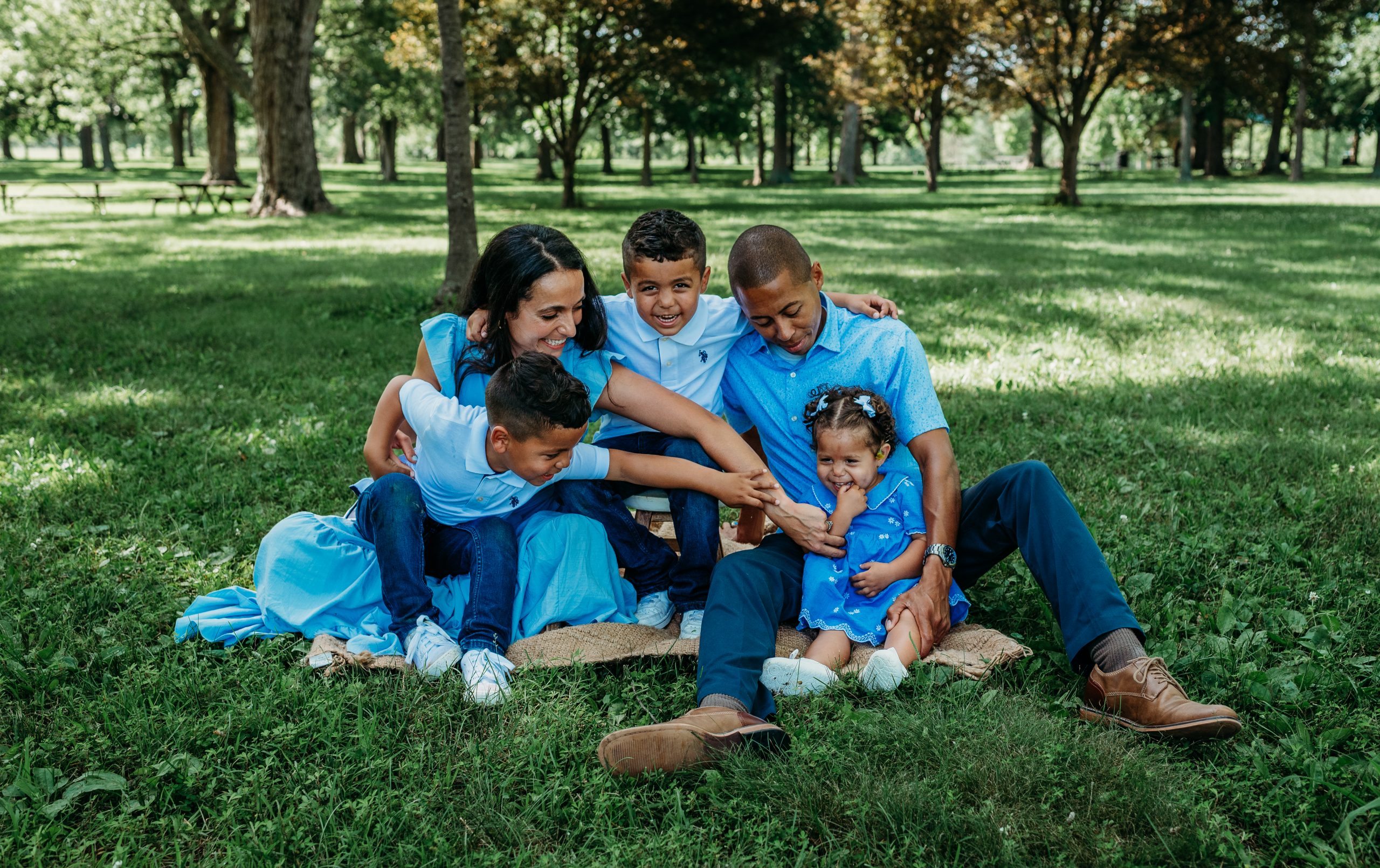
Across the country, Black fathers are too often seen as a threat when they speak up and advocate for their children. And it’s not just in courtrooms and on sidewalks — it’s happening in classrooms, daycares and schools.
I’ve spent my career in education and equity leadership, and I know this is part of a larger, troubling pattern. When Black parents — especially men — assert themselves in spaces not designed for them, they are too often perceived as “aggressive.”
Their advocacy is sometimes interpreted as “rude,” and their presence is framed as disruption rather than partnership, something that has played out in my own experience as a proud Black father of three.
This isn’t about one parent or teacher or even one moment. It’s about what happens when systems designed to support children carry embedded racial assumptions.
I’ll never forget picking my kids up from daycare during a lice outbreak. My wife and I had no experience dealing with lice, and I asked a few questions — just trying to understand what to expect. Instead of getting reassurance or guidance, I was met with suspicion, even subtle blame.
Or the time I raised a safety concern about an emotional child in my son’s class who had a pattern of throwing chairs. Rather than treating my concern as legitimate, it was brushed off — as if I were overreacting.
In both cases, my presence and voice weren’t welcomed. They were managed.
In a society in which Black men are still fighting to be seen as full participants in their children’s lives, we cannot ignore the role that bias plays in shaping who gets welcomed, who gets questioned and who gets believed. Daycares, schools, courts and society at large must actively affirm and restore the voices of Black fathers, rather than dismiss them.
Too often, Black men are portrayed as threats or criminals — rather than as nurturers and protectors. These images become mentally entrenched, shaping public attitudes and institutional responses. This persistent framing contributes to a cultural blind spot that brings confusion to the presence of Black fathers and negatively affects how they are treated in schools, courts and communities.
Despite this anti-Black bias, Black fathers defy stereotypes every day. Black dads, on average, are actually more involved in daily caregiving than fathers of other racial backgrounds, the National Health Statistics Reports from the Centers for Disease Control and Prevention notes. Yet media representation has not caught up with this reality.
As a student pursuing a doctorate in education leadership and policy, I study how identity shapes access to opportunity. And I know that bias against Black men starts early — when we are boys. A 2016 Yale Child Study Center report found that preschool teachers, regardless of race, were more likely to monitor Black boys for misbehavior — even when no misbehavior was apparent.
And in Indiana, studies highlight that nearly four out of every five Black children in the state will be investigated for suspected maltreatment.
These are not just statistical disparities — they’re stories of fractured trust between families and the institutions meant to serve them.
I have explored the concept of “mega-threats” introduced by researchers Angelica Leigh and Shimul Melwani — high-profile, identity-relevant events that trigger lasting psychological stress for people who share that identity. Though typically used to describe major public tragedies, these threats can be individual and personal, too. When a Black father sees himself reduced to a stereotype — his parenting undercut, his words distorted — it becomes an embodied threat, one that lingers and works to fulfill the myth that Black fathers are absent. These corrosive interactions run counter to the heroic influence and legacy that Black men have within their communities as warm demanders — men who emphatically build relationships and uphold high expectations.
If we want to support children, we must support their families. That means ensuring that early childhood professionals are trained not just in child development but in cultural competence and anti-bias practices. It means separating assumptions from observations when writing reports.
And it means reflecting on how language like “rude” or “aggressive” can carry racial undertones that reinforce long-standing stereotypes.
In my work as an educator, leader and former coach, I’ve partnered with countless families across race and class lines. What all parents want — especially those from marginalized communities — is the assurance that when they show up, they’ll be heard, not judged. That their questions will be met with respect, not suspicion.
If we truly believe in family engagement, we must be honest about the ways our systems still punish the very people we say we want more of. Black fathers are showing up.
The question is: are we ready to see them clearly?
Craig Jordan is an educator and doctoral student at Vanderbilt University’s Peabody College. A native of Gary, Indiana, he writes about equity, identity and systemic change in education. His work has been featured in IndyStar and Yahoo News.
This story about Black fathers was produced by The Hechinger Report, a nonprofit, independent news organization focused on inequality and innovation in education. Sign up for Hechinger’s weekly newsletter.
The Hechinger Report provides in-depth, fact-based, unbiased reporting on education that is free to all readers. But that doesn’t mean it’s free to produce. Our work keeps educators and the public informed about pressing issues at schools and on campuses throughout the country. We tell the whole story, even when the details are inconvenient. Help us keep doing that.
After graduating from Knox College in Illinois with a bachelor’s degree, Stephanie Martinez-Calderon’s plans were upended by the pandemic. She hadn’t planned on becoming a teacher but found an opportunity to tutor remotely for the year after college.
Tutoring helped her build confidence and develop instructional skills, and today she’s a middle school teacher in the Washoe County School District in Nevada.
Tutoring can be a powerful training ground for future educators, providing hands-on experience, confidence and a bridge into the classroom. And what might begin as a temporary opportunity can become a career path at a time when teachers are needed more than ever: A recent report noted that nearlyone in five K-12 teachers plan to leave teaching or are unsure if they’ll stay.
Turnover remains a crisis in many districts, one that can be solved by a ready-made pipeline of young future educators with instructional experience and relationship-building skills they’ve gained from tutoring.
How school districts think about tutoring should evolve. Rather than seeing it as a short-term response to pandemic-interrupted learning, they should view it as part of the fabric of school design and future educator development. This requires including tutoring in strategic plans, forming community partnerships and creating a structure to sustain programs that cultivate tutors for careers in education. To fund these programs and pay tutors, districts can redirect Title I funds, use federal work-study and create apprenticeship programs.
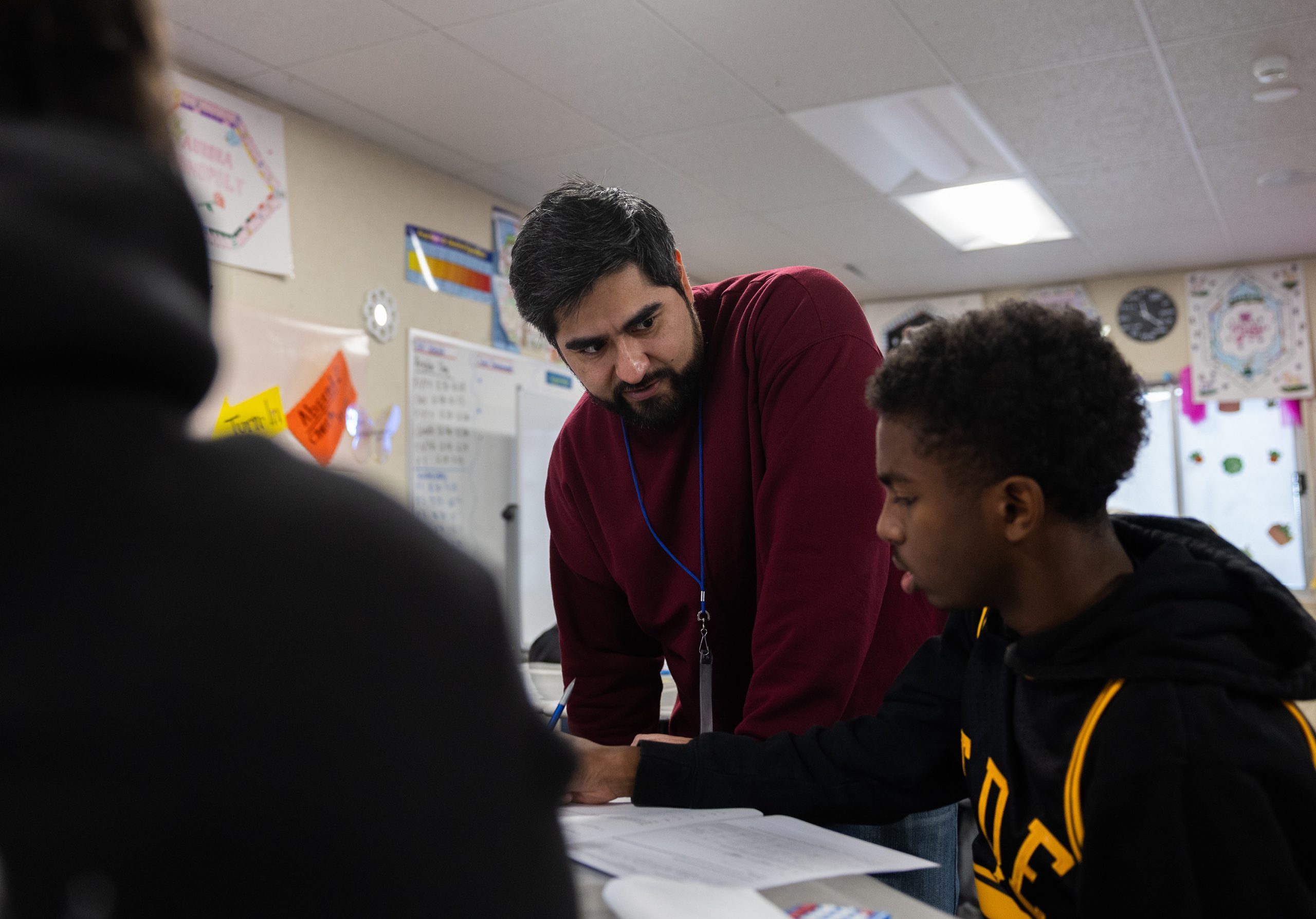
Starting as a tutor allows aspiring educators to build core teaching skills in a supportive, lower-stakes environment. Tutors learn to navigate student relationships and adapt lessons to individual needs. Without having to manage an entire classroom, they can practice asking questions that get students thinking and selecting problems to help students learn. This early practice eases the transition into teaching.
Tutors from Generation Z, born between 1996 and 2012, often bring fresh energy to the profession. As digital natives, they are reimagining how to engage and inspire students, leverage technology and foster creativity and new approaches to learning.
They are alsothe most ethnically and racially diverse generation yet: Many come from backgrounds historically underrepresented in the teaching force; over half of undergraduates identify as first-generation college students. Their engagement broadens the prospects for a more diverse teacher pipeline.
Gen Z’s emphasis on flexibility and remote opportunities is one of the most significant workforce changes since the pandemic. They value mental health, stability and mission-driven work. Part-time, hybrid and wellness benefits help recruit young talent.
At our nonprofit, recruiters hear from education candidates that Gen Z appreciates the chance to try out industries, and that tutoring provides them with a window into the world of teaching.
Public schools could better meet the evolving needs of young professionals entering education by reimagining tutor roles to include hybrid options, mental health supports and collaborative teaching pathways for professional growth. For instance, a tutor might start off working in a part-time online tutoring role, but after interacting with students virtually and gaining more experience, they may be more excited to take on a full-time teaching role on-site.
For school districts, tutoring programs can serve as effective recruitment pipelines. By offering recent graduates a low-barrier entry point into education — one that doesn’t require immediate certification — districts can spark interest in teaching among candidates who may not have previously considered it.
When tutors step into teaching roles, they bring valuable continuity — familiarity with the students and insight into progress and school culture. This seamless transition supports both student learning and district staffing needs.
The idea that tutoring should be built into future educator pipelines is spreading. For example, since the launch of its Ignite Fellowship in 2020, Teach for America says that 550 of its former tutors have become full-time teachers. The program has proven to be especially effective at drawing in nontraditional candidates — those who may not have initially envisioned themselves in the classroom. In Washington, D.C., the school district launched a tutor-to-teacher apprenticeship program after success with high-impact tutoring. In Texas, teacher residents are required to work as tutors and in other support roles while co-teaching with a mentor.
By offering flexible, purpose-driven opportunities, districts can attract Gen Z professionals and give them a meaningful entry point into teaching. And tutoring programs can become more than academic support — they can serve as strategic talent pipelines that strengthen the future of the teaching workforce.
Alan Safran is co-founder, CEO and chair of the board ofSaga Education; Halley Bowman is senior director of academics.
This story about tutoring was produced byThe Hechinger Report, a nonprofit, independent news organization focused on inequality and innovation in education. Sign up for Hechinger’s weekly newsletter.
The Hechinger Report provides in-depth, fact-based, unbiased reporting on education that is free to all readers. But that doesn’t mean it’s free to produce. Our work keeps educators and the public informed about pressing issues at schools and on campuses throughout the country. We tell the whole story, even when the details are inconvenient. Help us keep doing that.
ELKHART, Ind. — The numbers were discouraging, and in some cases getting worse. Nearly 30 percent of Indiana’s high schoolers were chronically absent in 2022. Only about 52 percent of students in the state enrolled in collegein 2023, a 12-percentage-point drop in seven years. Fewer students were pursuing other paths, too: The share of students enlisting in the military, for example, declined by 41 percent from 2018 to 2022.
When Katie Jenner toured the state after becoming education secretary in 2021, she heard from many students who said they simply didn’t value high school or see how it would help them.“That was really hard to hear,” Jenner said. “We had to look in the mirror and say, ‘OK, this is the reality. Let’s do better.’”
Jenner and her team began redesigning what high school looks like in Indiana, in an effort to make it more relevant to young people’s futures and help them gain a better grasp of career paths. For too long, she and others argued, kids had been pushed to plan for four-year college, yet only about half of seniors actually enrolled, and those who did go often dropped out before graduating.
When a draft of the plan was released in early 2024, it drew fierce protest from many parents and educators who worried the state was prioritizing workforce learning over academics. Jenner and her staff reworked the proposal, eventually crafting a plan that alleviated some, though not all, of the concerns.
The “New Indiana Diploma” — which was signed into law in April and goes into effect for all incoming first-year students this academic year — gives students the option to earn different “seals” in addition to a basic diploma, depending on whether they plan to attend college, go straight to work or serve in the military. Jenner describes it as an effort to tailor the diploma to students’ interests, expose students to careers and recognize different forms of student achievement.
Experts said the template is something of a model nationally, at a time when more states are reconsidering how to help students prepare for careers and the federal government is also pushing alternatives to four-year college. Elements of that effort have earned bipartisan support: Presidents from both parties have advocated for expanding work-based learning, and President Donald Trump recently called for the creation of 1 million new apprenticeships.
“The basic architecture of American high school is being questioned and challenged,” said Timothy Knowles, president of the Carnegie Foundation.* Indiana is at the forefront of an effort to incorporate more experiential learning instead of restricting education to school buildings, he said: “Indiana is really breaking ground.”
The initial proposal Jenner’s agency drafted would have created two high school diplomas, “Graduates Prepared to Succeed” and “Graduates Prepared to Succeed Plus.” Both would have scaled back math and science requirements and loosened recommendations for world languages and other electives. Meanwhile, they would have encouraged all students to participate in work-based learning in apprenticeships, internships or job shadowing, with at least 75 hours in such activities required for the “plus” diploma.
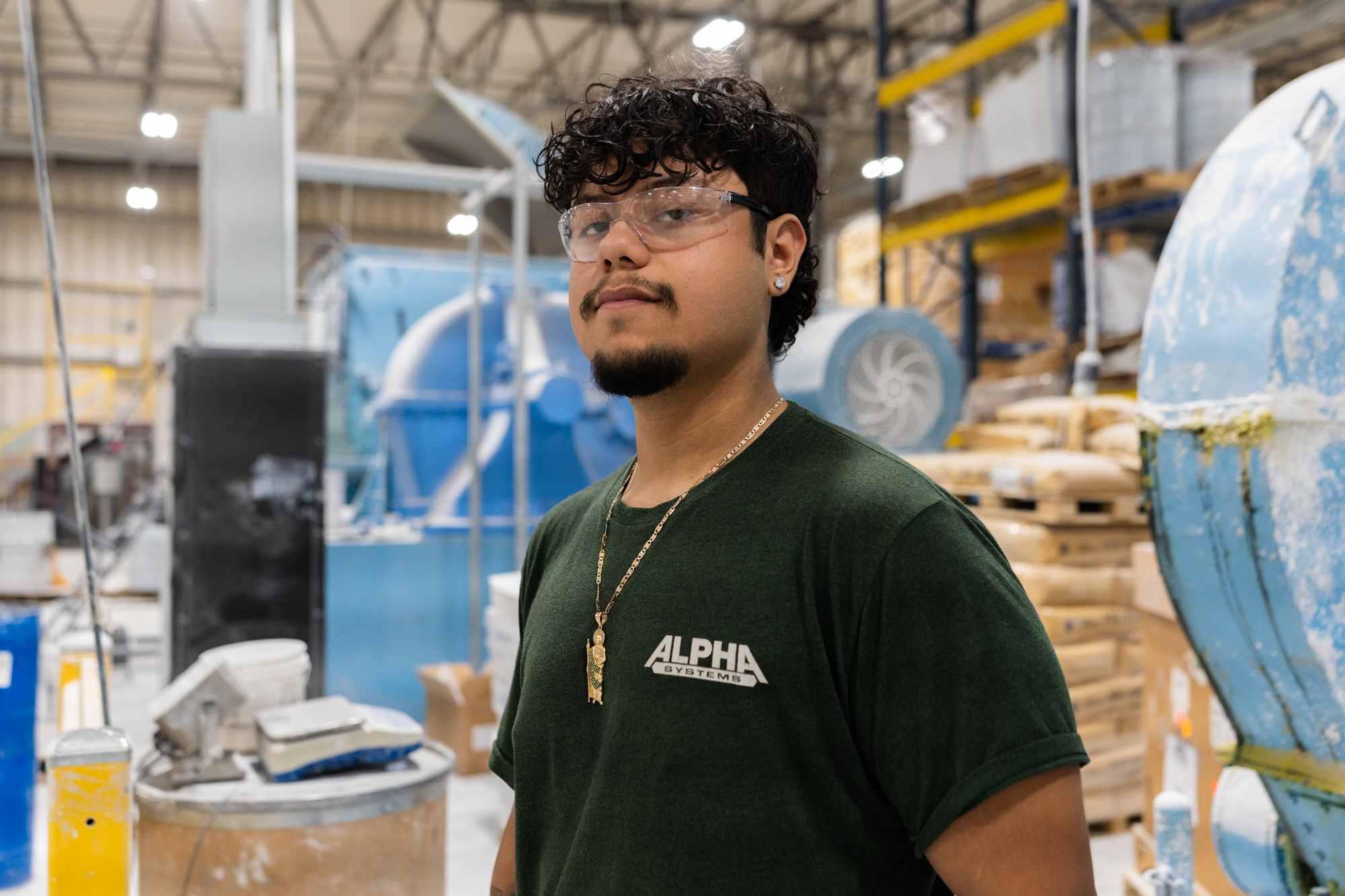
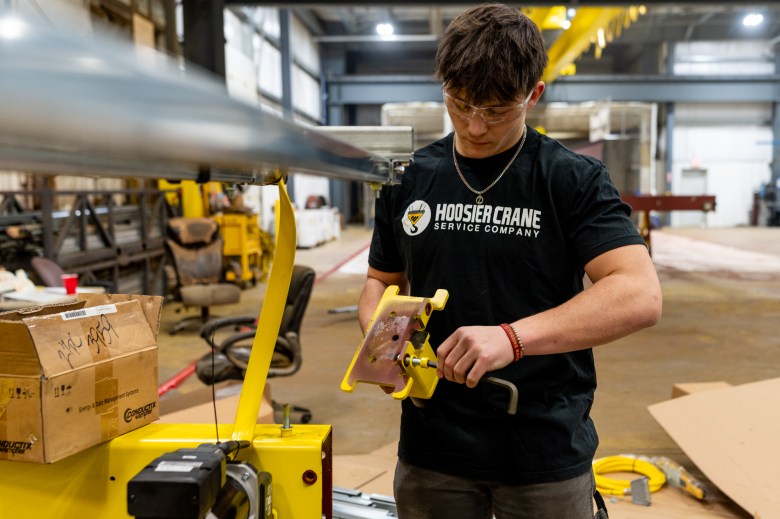
Indiana hopes that work-based learning opportunities at companies like Alpha Systems and Hoosier Crane Service Company, in Elkhart, Indiana, can flourish under the new diploma system. Credit: Camilla Forte/The Hechinger Report
In 2024, the state board of education held dozens of meetings to gather feedback on the proposal for the revamped diplomas — and the backlash was intense. Leaders of higher education institutions, including the state’s flagship schools, Indiana and Purdue universities, said students graduating under the new system would not meet minimum requirements for admission. Purdue’s president, Mung Chiang, wrote a letter to Jenner showing that the proposed diploma system required too few credits in every subject except English.
Hoosier parents were furious that their children might have to sacrifice more challenging courses to fulfill the mandatory work experience requirement under the “plus” option. At an Indiana Department of Education hearing in June 2024, parent Michelae Hill was among dozens who criticized the proposal, calling it “intentionally dumbing down our population” and warning that “what will happen is that we are ensuring a permanent underclass, we are ensuring cheap workers.” There were also questions about the logistics of workplace learning, including transportation and possible safety issues on job sites.
State education policy makers went back to the drawing board. The revised version, adopted last December, establishes one basic diploma that all graduates earn, plus the seals students can pursue depending on their post-high-school plans. Even within each seal, students have several ways of meeting the requirements.
For example, to receive the “enrollment” seal — meant primarily for college-bound students — high schoolers can choose from more advanced classes in math, science, social studies and world languages, and may earn additional credits in Advanced Placement, International Baccalaureate or other such college-level courses. An “enrollment honors plus” seal requires that students concurrently obtain a credential such as an associate’s degree or technical certificate and complete 75 hours of work-based learning in apprenticeships, internships or other such programs.
“We wanted rigor and flexibility and less cookie cutter,” said Jenner.
Even the updated system has critics, though. For the basic diploma, students must earn a minimum of 42 credits, two more than before. But how students reach that threshold is different: Economics, geometry and Algebra II are no longer required, while courses in financial literacy and communication are. Physical education is one credit instead of two, and world languages and fine arts are no longer recommended electives.
Professor Michael Hicks, who runs the Center for Business and Economic Research at Ball State University in Indiana, said he worries about the reduced mathematics rigor in particular. While most states do not require Algebra II for graduation, the class is often seen as a necessity for admission to selective colleges and for certain careers. Hicks said high-achieving, well-resourced students may benefit from the flexibility of the new diploma, as could students committed to the military. But many other students could be harmed, he said, if they are left with the impression that the basic diploma alone will prepare them well for college when it does not.
“It is essentially funneling children away from academic opportunity very early at a time when we really needed to have more kids pushed into the academic options that would get them into college,” he said, arguing that people with college degrees outearn those with only a high school education and have also fueled the state’s and country’s economic growth of the past several decades. “This curriculum will cause the Indiana economy to stall and potentially go into reverse.”
At public meetings last winter, some parents and educators raised concerns that the new system amounted to an unfunded mandate for school districts and would put a huge burden in particular on counselors, who would be working closely with students to help chart their diploma paths. Critics also objected to the de-emphasis of other classes like music and foreign languages. Megan Worcester, the president of the Indiana Foreign Language Teachers Association, said the reduced emphasis on foreign language would hurt the state’s economy; she cited a study in which nearly 1 in 4 employers surveyed said they had lost or couldn’t pursue a business opportunity because of language barriers.
Jenner, a former high school teacher, said the new diploma allows students greater flexibility to choose electives depending on their goals, which could include language and music study. While Algebra II is no longer required, students must take four math credits beyond the required Algebra I and personal finance, she said. Jenner also said the state had allocated a portion of $50 million in discretionary funding to train counselors in helping students navigate the new diploma system. In addition, it dedicated up to $10 million in grants to help students pay for transportation, equipment and certifications related to work-based learning, and also provided financial assistance to companies that take on apprentices. Each school that offers work-based learning will receive an extra $500 per participating student.
The new plan eventually quieted the concerns of many education leaders. Several universities, including Indiana and Purdue, released letters of support. “We appreciate the thoughtful adjustments to the work based learning requirements, AP testing and transferability of dual credits,” wrote Pamela Whitten, president of Indiana University. (Neither university agreed to an interview with its leaders.) All major education groups in the state, including the Indiana State Teachers Association, Indiana School Boards Association and the Indiana Association of Public School Superintendents, endorsed the plan.
Ty Zartman, a student apprentice at Hoosier Crane Service Company in Elkhart, Indiana, decided to go straight to work after graduating high school, despite being a straight A student. Parents and educators objected to Indiana’s first proposal for a new high school diploma system, arguing that the emphasis on workplace experience would crowd out academic learning. Credit: Camilla Forte/The Hechinger Report
In April, Gov. Mike Braun announced that beginning this year, students who earn the state’s “enrollment honors plus” seal will be automatically accepted into the state’s public colleges and universities, including Purdue and Indiana, potentially persuading more students to enroll.
Parent Chantee Eldridge said she believes the new diploma will make higher education more affordable and help students sharpen their career plans at an earlier age. Her son, Micah, is a 16-year-old senior at Brownsburg High School, near Indianapolis, and has already taken dual credit courses through a partnership with Vincennes University. College credits can be expensive, she said, so earning them at no cost in high school can be a big money saver.
Micah, who has a 3.7 GPA and plays semi pro soccer, said he’s always enjoyed challenging classes and plans to go to college. “When things get repeated, that’s when I get bored and start to tap out mentally,” he said. In college, he anticipates studying psychology — a surprise to his mother, who expected him to pursue math or physics, two topics he’s always excelled in. She likes the idea of him doing an internship with a psychologist, so he can learn more about the field and gain practical work experience before he goes to college; that’s the sort of opportunity that will become more common under this new diploma system.
“Very rarely do you know exactly what you want to do between 16 and 18,” Eldridge said. “That will help students and their families make an informed decision.”
For students who want to go straight into the workforce, the employment seals are designed to provide exposure to career options and work experience that boost students more quickly into higher-paying roles. Under the “employment honors” seal, students must: take coursework or earn a credential aligned to a specific occupation; complete 150 hours of work-based learning; and demonstrate communication, collaboration and work ethic skills. The “employment honors plus” seal requires that students also earn an associate’s degree or advanced industry certificate and complete 650 hours of work-based learning.
Matt Mindrum, president and CEO of the Indy Chamber, said that most of the 150,000 vacant jobs in Indiana right now don’t require a four-year degree. “And yet 100 percent of our high school students are pushed through a college preparatory path. That makes no sense,” he said. He believes an alternate path is critical for driving economic growth in the state, by helping to fill existing jobs and attract new businesses.
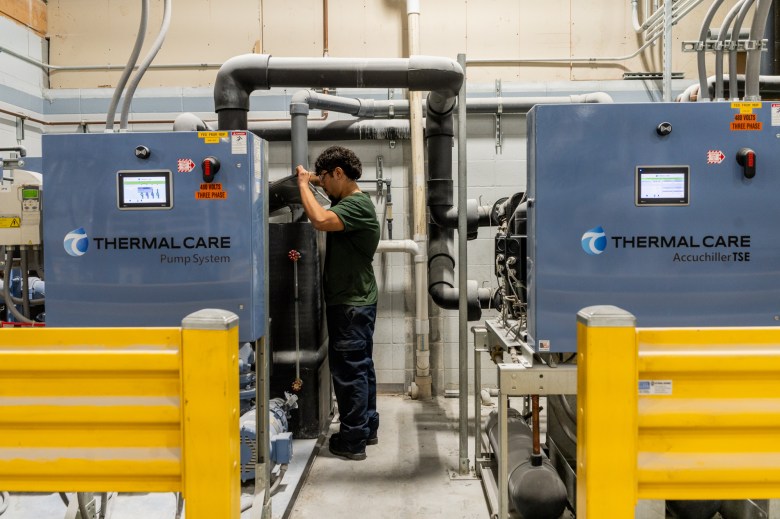
Edgar Soto, a senior at Concord High School in Elkhart, is the kind of student Mindrum has in mind. Soto said he has never wanted to attend a four-year college. To get workforce experience, he enrolled in an apprenticeship through his school and is up before dawn each morning to start work with manufacturing technology company Alpha Systems. “It’s something new every day. I love it,” he said. He earns $17 an hour and gives half his paycheck to his mom for family expenses. When school is in session, he spends his afternoons taking classes back at Concord High.
Indiana’s Elkhart County has been at the forefront of expanding apprenticeships to high schoolers, but it’s had trouble recruiting companies — a challenge for the state as it tries to expand work-based learning. Credit: Camilla Forte/The Hechinger Report
Working has motivated him to study harder at school, he said; he’s never cared for math, but when he realized it was important for his job, he began asking his teacher for extra help. “I got a taste of the real world and I want to be that type of person who does things right,” he said.
Alpha Systems pays for him to take classes in industrial systems through the state community college system, Ivy Tech, and has promised to pay for any further postsecondary education if he stays with the company. In just a few years, company executives said, he could easily make more than $40 an hour, approximately $80,000 a year.
Mindrum is working with employers around the state to try to increase work-based learning opportunities so they match student demand, a particular challenge in rural areas. Communities that have already made a commitment to work-based learning have had trouble recruiting enough employers: For example, in Elkhart County, only 1 in 3 high schoolers who apply for an apprenticeship gets one. Schools will also have to reorganize class schedules and overcome transportation challenges to ensure students can complete the necessary work-based learning under the various seals. The state has a goal of 50,000 apprenticeships by 2030. “It’s an aggressive but achievable target,” Mindrum said.
Supporters hope the revamped diploma will also encourage more students to enlist in military service. Nationally, the military is struggling to recruit, and according to Army data, just 23 percent of 17- to 24-year-olds who apply to the U.S. military meet its medical fitness and academic requirements. In Indiana, the number of students enlisting in the National Guard dropped by 38 percent between 2018 and 2022, the sharpest decline of any state.
Retired Maj. Gen. Dale Lyles, who led the Indiana National Guard and helped create the “enlistment” seal criteria, said students often don’t know much about enlisting and the benefits of military service. In Indiana, for example, serving in the National Guard unlocks free tuition to state colleges.
The new diploma options are meant to fix that: Students in the “enlistment honors” and “enlistment honors plus” seals are taught about each branch of service, what it means to swear an oath to your country and the many different job opportunities available. They also must take a public service course or complete a year of Junior ROTC and receive a certain score on the military’s aptitude test, the Armed Services Vocational Aptitude Battery, among other requirements. Students can receive coaching for the test and have the opportunity to visit Camp Atterbury-Muskatatuck, a nearly 35,000-acre military post, for hands-on learning opportunities.
“Today’s military is much different than it was even five years ago, just because of the high degree of technology,” said Lyles, citing the Indiana National Guard’s platoon that flies automated aerial drones and its cyber warfare battalion. “We are in a battle for talent.” He added that the pathway emphasizes that there are other ways to serve, including as a firefighter, as a police officer or in the Department of Homeland Security.
Nicholas Purdy, a 17-year-old from Marion, has three grandparents who served in the military and said he’s always been interested in enlisting. In his first year of high school, he signed up for JROTC, and he said he loves traveling to other states for competitions and leadership camps where students participate in activities such as rappelling, water operations and land navigation. “It doesn’t matter what your background is, how much money you have, your looks,” he said of the experience. “The only thing that matters is your character.”
His mother, Stephanie Purdy, said she’s seen his confidence deepen as a result of his experiences with JROTC. Nicolas has won ribbons and pins for marksmanship and leadership that he wears on his uniform, and he likes the idea that under the new seals, those accomplishments would be reflected on his high school transcript. Nicholas wants to become a combat medic in the army. “The training set me up for really good opportunities, and it’s all paid for,” he said.
Jenner’s work continues — with a pressing deadline, as schools roll out these changes for first-year students this year. Her office is working on an online advising tool, a pilot program to help communities identify solutions to transportation challenges, guidance for educators on the new diploma options and courses, and incentives for school districts to measure skills like communication, collaboration and work ethic, not just academic outcomes.
It’s a big task. “This is new terrain for our country when you think about the level of scale we’re trying to accomplish,” said Jenner. “We don’t have a model to just copy and paste, so we’re going to learn some lessons along the way.”
*Due to an editing error, an earlier version of this story included an inaccurate description of the Carnegie Foundation.
Contact editor Caroline Preston at 212-870-8965, via Signal at CarolineP.83 or on email at [email protected].
The Hechinger Report provides in-depth, fact-based, unbiased reporting on education that is free to all readers. But that doesn’t mean it’s free to produce. Our work keeps educators and the public informed about pressing issues at schools and on campuses throughout the country. We tell the whole story, even when the details are inconvenient. Help us keep doing that.
(Note: This is the second piece in a two-part series on absenteeism in schools. Read the first part, on seven insights from researchers.)
Chronic absenteeism, when students miss 10 percent or more of the school year, is 50 percent higher across the nation than before the pandemic. Researchers say it’s difficult for schools to address the problem because it is both so intense,with students missing huge chunks of the school year, and so extensive, affecting both rich and poor students and even high achievers.And the reasons vary widely, from asthma and bullying to transportation problems and the feeling that school is boring.
“It’s hard to know where and when to target resources,” said Sam Hollon, a data analyst at the American Enterprise Institute, which hosted a symposium on the problem in May. “Who do you help when every student potentially can be a candidate for help?”
Related: Our free weekly newsletter alerts you to what research says about schools and classrooms.
The Trump administration’s immigration enforcement is exacerbating the problem. A June draft paper by Stanford University professor Thomas Dee calculated that recent raids coincided with a 22 percent increase in daily student absences with particularly large increases in absenteeism among the youngest students.
Talking about the problem isn’t enough. Researchers say they want to study more schools that are making headway. It remains unclear if there are broadly applicablefixesor if each school or eveneach student needs individual solutions. Some underlying root causes for skipping school are more complex than others, requiring psychotherapy or housing assistance, which schools can’t provide alone. Here are a few examples of how very different communities are tackling the problem.
Providence: Bus stops and weekend food bags
Principal W. Jackson Reilly of Nathanael Greene Middle School in Providence, Rhode Island, said that when he arrived in April 2023, half of his 900 students in grades six to eight were chronically absent, up from 30 percent of students before the pandemic. Thirty percent of his teachers were also chronically absent. Achievement scores were in the state’s bottom 1 percent.
Reilly managed to slash his chronic absenteeism rate in half to 25 percent this past 2024-25 year. That’s still high. One in four students missed more than 18 days of school a year. But, it’s better.
He began by identifying 150 kids who were just over the threshold for chronic absenteeism, those who missed between 18 and 35 days, hoping that these kids would be easier to lure back to school than those who were more disengaged. Reilly and a group of administrators and guidance counselors each took 10 to 15 students and showed their families how much school they had missed and how low their grades were. His team asked, “What do you need in order for your kid to be coming to school?’”
The two most common replies: transportation and food.
Many students lived only a mile away, too close to school to qualify for bus service. Yet the walk deterred many, especially if it was raining or snowing. Yellow buses often passed these children’s homes as they were transporting children who lived farther out, and Reilly convinced the district to add stops for these chronically absent children.
Ninety percent of his students come from families who are poor enough to qualify for the federal free or reduced-price lunch program and 80 percent are Hispanic. Although many children were fed breakfast and lunch at school, their families admitted that their kids would get so hungry over the weekend that they didn’t want to wake up and come to school on Mondays. Reilly partnered with a food pantry and sent bags of meat and pasta home with students on Fridays.
Individual attention also helped. At the start of each school day, Reilly and his team check in with their assigned students. Kids who show up get five “green bucks” to spend on snacks and prizes. Administrators call the homes of those who didn’t come to school. “If they did not answer the phone, we’d make a home visit,” said Reilly.
The most dramatic overhaul was scheduling. Reilly scrapped individual schedules for students and assigned four teachers to every 104 students. The kids now move in pods of 26 that take all their classes together, rotating through the same four teachers throughout the day. The classrooms are right near each other, creating a smaller community within the school.
“It’s all about relationship building,” said Reilly. When students look forward to seeing their classmates and teachers, he said, they’re more motivated to come to school.
Researchers say fostering relationships is effective. Hedy Chang, executive director of Attendance Works, a nonprofit organization that advises schools on how to boost attendance rates, said it’s still a battle to persuade some school leaders (and school board members) that making school a more welcoming place is more productive than punishing kids and families for skipping school.*
Reilly said his school now posts the lowest student and teacher chronic absenteeism rates in Providence. And he said his school is the highest performing middle school in the city and among the highest statewide in reading.
New York City: Catching the butterflies
A cluster of New York City high schools are taking a more data-driven approach, guided by New Visions, a consulting organization that supports 71 city high schools.
After some experimentation, New Visions staff saw strong improvement in attendance in one subgroup of students who were on the cusp of missing 10 percent of school days, but had not yet crossed the chronic absenteeism threshold. These are students who might miss a day or two every week or every other week but were relatively engaged at school. Jonathan Green, a New Visions school improvement coach who is spearheading this effort, calls them “butterflies.” “They would flutter in and out every week,” he said.
Green suggested that someone at school meet weekly with these butterflies and show them their attendance data, set goals for the coming week and explain how their attendance was leading to better grades. The intervention took two to five minutes. “There were marked changes in attendance,” said Green.
New Visions built a website where school administrators could print out two-page documents for each student so the data, including monthly attendance and tardiness, appeared in an easy-to-digest format. The quick meetings took place for eight to 10 weeks during the final grading period for the semester. “That’s when there’s the most opportunity to turn those potentially failing grades into passing grades,” said Green. “We were finding these sweet spots within the school calendar to do this very high resource, high-energy intensive weekly check-in. It’s not something that anyone can easily scale across a school.”
Staff had to figure out the bell schedule for each child and intercept them between classes. One succeeded in holding their entire caseload of students below the chronic absenteeism threshold. Not everyone thought it was a good idea: Some school administrators questioned why so much effort should go into students who weren’t yet chronically absent rather than students in greater trouble.
The dramatic results help answer that question. Among schools in the Bronx that volunteered to participate in the butterfly intervention, chronic absenteeism rates dropped 15 percentage points from 47 percent in 2021 to 32 percent in 2025, still high. But other Bronx high schools in the New Visions network that didn’t try this butterfly intervention still had a chronic absenteeism rate of 46 percent.
Green said this solution wouldn’t work for other high schoolers. Some have trouble organizing their study time, he said, and need more intensive help from teachers. “Two- to five-minute check-ins aren’t going to help them,” said Green.
Indianapolis: Biscuits and gravy
The leader of an Indiana charter school told me he used a system of rewards and punishments that reduced the chronic absenteeism rate among his kindergarten through eighth graders from 64 percent in 2021-22 to 10 percent in 2024-25.
Jordan Habayeb, the chief operating officer of Adelante Schools, said he used federal funds for the school breakfast and lunch program to create a made-from-scratch restaurant-style cafeteria. “Fun fact: On homemade biscuit and gravy days, we saw the lowest rates of tardies,” he said.
Researchers recommend avoiding punishment because it doesn’t bring students back to school. But Habayeb said he adheres strictly to state law that requires schools to report 10 absences to the state Department of Child Services and to file a report with the county prosecutor. Habayeb told me his school accounted for a fifth of truancy referrals to the county prosecutor.
The school created an automated warning system after five absences rather than waiting for the critical 10-day loss. And Habayeb said he dispatched the safety and attendance officer in a van to have “real conversations with families rather than being buried in paperwork.” Meanwhile, students who did show up received a constant stream of rewards, from locker decorations to T-shirts.
Parent education was also important. During mandatory family orientations, the school illustrated how regular attendance matters for even young children. “We shared what a child might miss during a three-day stretch in a unit on ‘Charlotte’s Web’ — showing how easily a student could leave with a completely different understanding of the book,” said Habayeb. “This helped shift perspectives and brought urgency to the issue.”
Kansas City: Candy and notes
School leaders in Kansas City, Kansas, shared some tips that have worked for them during a webinar earlier this month hosted by Attendance Works. One elementary school reduced its chronic absenteeism from 55 percent in 2021 to 38 percent in 2024 by assigning all 300 students to an adult in the building, encouraging them to build an “authentic” relationship. Teachers were given a list of ideas but were free to do what seemed natural. One teacher left candy and notes on their assigned students’ desks. A preschoolerproudly pasted his note, which said he was a “genius,” on the front door of his house. “The smiles kids have on their faces are amazing,” said Zaneta Boles, the principal of Silver City Elementary School.
When students do miss school, Boles said educators try to take a “non-blaming approach” so that families are more likely to divulge what is going on. That helps the school refer them to other community agencies for assistance.
Albuquerque: A shining example regroups
Alamosa Elementary School in Albuquerque, New Mexico, was once a shining example of a school that persuaded more families to send their kids to class. Chronic absenteeism fell as low as 1 in 4 students in 2018, when The Hechinger Report wrote about the school.
But Alamosa has not been immune from the surge of absenteeism that has plagued schools around the nation. Chronic absenteeism spiked to 64 percent of students during the 2021-22 school year, when Covid variants were still circulating. And it remained shockingly high with 38 percent of students missing more than 10 percent of the 2024-25 school year — exactly matching the 50 percent increase in chronic absenteeism across the country since 2019.
“We were on a roll. Then life happened,” said Daphne Strader, Albuquerque Public Schools’ director of coordinated school health, who works to reduce absenteeism.
Strader said Alamosa and other Albuquerque schools have made some successful changes to how they’re tackling the problem. But the volume of absenteeism remains overwhelming. “There’s so many kids who have needs,” Strader said. “We need more staff on board.”
Strader said attendance interventions had been “too siloed” and they’re focusing more on the “whole child.” She’s encouraging schools to integrate attendance efforts with other initiatives to boost academic achievement and improve student behavior. “Students are hungry, they’re dysregulated, they don’t have grit,” said Strader, and all of these issues are contributing to absenteeism. But she also concedes that some students have more severe needs, and it’s unclear who in the system can address them.
Her biggest advice for schools is to focus on relationships. “Relationships drive everything,” said Strader. “One of the major consequences of the pandemic was the isolation. If I feel a sense of belonging, I’m more likely to come to school.”
*Clarification: This sentence was modified to make clear the Attendance Worksexecutive director did not say all school leaders oppose the idea of eliminating punishments for absenteeism.
The Hechinger Report provides in-depth, fact-based, unbiased reporting on education that is free to all readers. But that doesn’t mean it’s free to produce. Our work keeps educators and the public informed about pressing issues at schools and on campuses throughout the country. We tell the whole story, even when the details are inconvenient. Help us keep doing that.
Last August, Republican Rep. Gino Bulso looked out at a room filled with dozens of fellow state lawmakers as he touted new legislation he had just helped become a reality in Tennessee. Under the law, a fetal ultrasound or a video of a computer-animated fetus developing in the womb had become mandatory viewing for students in the state’s sex education classes.
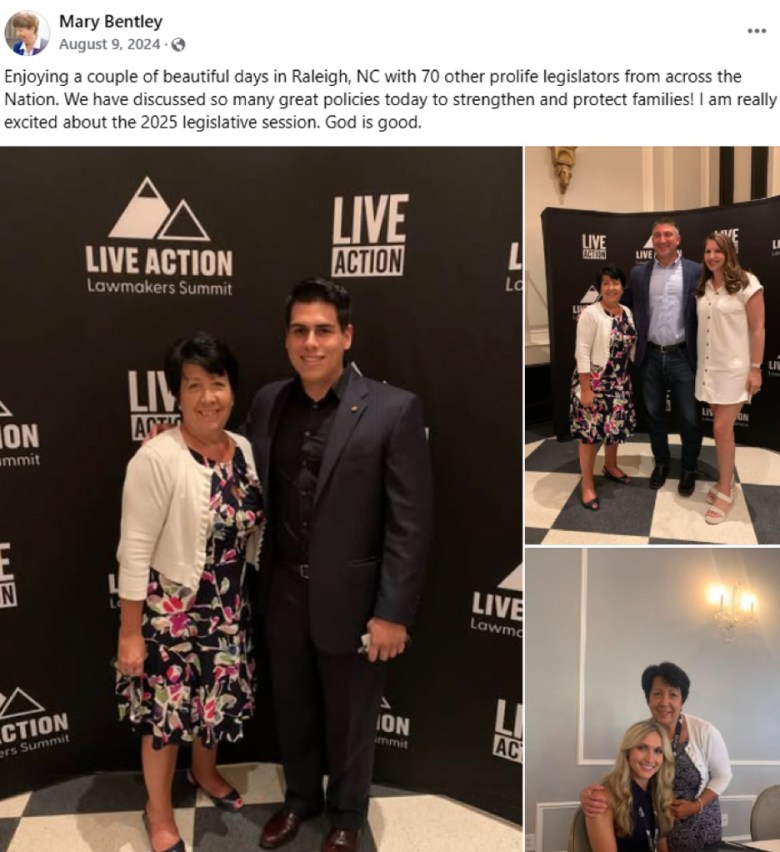
Bulso was there at the request of the event’s host, anti-abortion advocacy nonprofit Live Action. The group had gathered legislators from across the country to provide them “with the policy information and persuasion strategies they need to end abortion,” according to its annual report.
Bulso’s panel, “The Agenda for Life in Schools and Beyond,” focused on how he had successfully shepherded his bill into becoming the second so-called fetal development education law in the country.
When lawmakers returned to their home states after the Live Action event, The Hechinger Report found, at least 10 of them sponsored bills similar to Bulso’s, in some cases proposing that students as young as third grade watch fetal development videos. Another legislator who introduced such a bill had sent his chief of staff and wife to the event. And the volume of legislation stemming from the gathering may be higher: Live Action keeps its list of attendees private, though many lawmakers posted about the event on social media or were featured in Live Action’s promotional materials.
Since 2023, when North Dakota became the first state to pass fetal development education legislation, anti-abortion lawmakers in more than 20 additional states have proposed such bills; 6 of those states, including Bulso’s, have passed them. As a result, this fall, nearly 4 million children will attend school in a state that requires them to watch a video or ultrasound of a fetus in the womb during sex education classes. And this year, legislators in four states tried to go even further: Their proposals would have required students to view depictions of abortions, including computer-animated videos.
After the fall of Roe v. Wade in 2022, public schools have become an increasingly important battleground in the fight over abortion rights. Even though 12 states now ban abortion in all circumstances, the number of procedures has increased nationwide since the Supreme Court’s decision to overturn Roe.Public support for abortion rights has also risen. Many anti-abortion advocates hope that getting their message in front of students can help them win the hearts and minds of young people and change these trends in the long run.
While critics, including medical professionals and some parents, say that the fetal development education materials being introduced to schools are manipulative and little more than propaganda, Live Action and other groups that produce them maintain they are medically accurate and unbiased. Experts in sex education and abortion policy say a related problem is the dearth of sex education in schools — students, on average, receive only about six hours during their high school years — that creates a vacuum for anti-abortion groups to move into.
“They’re attempting to reach children at an age where I would assume most haven’t been exposed to issues of an abortion,” says Alisa Von Hagel, a political science professor at University of Wisconsin-Superior who has studied the strategies of the anti-abortion movement. “They’re attempting to be the first to imprint this quote, unquote ‘knowledge’ or opinion about these issues.”
During a debate earlier this year in the Arkansas Senate, Republican Sen. Alan Clark referred to his state’s proposal as “one of the most important pro-life bills that’s ever come before us.” He also said, “It will shape the minds of kids from now on.”
The proposal would have required showing a video created by Live Action to students starting in sixth grade. In the video, titled “Meet Baby Olivia,” a narrator tells the viewer that life begins at conception and says the fetus, named Baby Olivia, begins playing and exploring as early as 11 weeks.
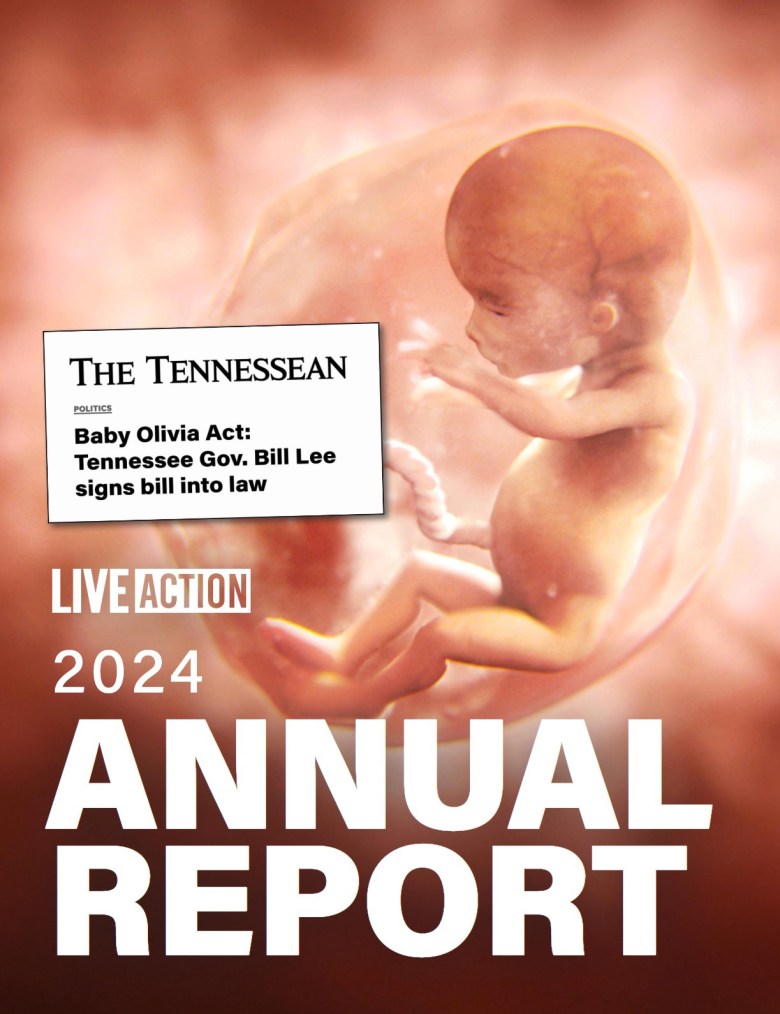
In an annual report, Live Action noted that its “Meet Baby Olivia” video caused a “37-point shift towards the pro-life perspective among viewers.” The organization also highlighted the impact its materials can have on kids, in particular, to help “instill a reverence for life as children at impressionable ages develop their world view.”
Tennessee state Rep. Gino Bulso sponsored the nation’s second fetal development education law. He credits the anti-abortion group Live Action with helping him get it passed. Credit: George Walker IV/AP Images
Both Bulso and Noah Brandt, Live Action’s vice president of communications, have said the only goals of Baby Olivia and fetal development education are to teach and inform students — but they also expected it to leave an impression. “It is intuitive that, after watching that, people would be less likely to support abortion on demand,” Brandt said.
Live Action’s work to connect with students is also part of playbooks for other anti-abortion organizations. Take Heartbeat International, for example, a group that supports clinics known as “crisis pregnancy centers,” which provide limited medical care and encourage people not to have abortions. Heartbeat also offers in-person and online training, including one program on how to “Change the Nation with Pro-life Education,” featuring specific tactics for working with public schools. One speaker at Heartbeat’s 2023 national conference described performing an ultrasound on a pregnant woman in front of public school students to “plant a seed of life.”
Before creating “Meet Baby Olivia,” Live Action was best known for anti-abortion campaigns and undercover stings against Planned Parenthood, and largely worked outside of policymaking. But as the organization has grown in recent years, it has begun to coordinate directly with legislators.
Live Action held its inaugural lawmaker summit in 2022, two months after Roe was overturned. The following spring, North Dakota passed a fetal development education law, the nation’s first.
Many proposed fetal development education bills mention the video “Meet Baby Olivia” by name. Critics say that the video is designed to manipulate the viewer’s emotions, while its creator, Live Action, says it is accurate. Credit: Live Action
By 2024, the summit had doubled in size to host 70 lawmakers at a four-star hotel in Chapel Hill, North Carolina. Lawmakers attended panel discussions titled “Saving Our Children and Helping Their Mothers” and “Communications and Persuasion: Winning the Messaging War.” Live Action also screened its abortion videos, including “Meet Baby Olivia.”
On his panel, Bulso walked through every step of creating Tennessee’s law, from filing the bill to committee deliberations to its eventual passage. He gave Live Action credit for providing him with resources to help make the case that “Meet Baby Olivia” was scientifically accurate.
Most of the proposed fetal development education bills don’t prescribe a specific video, but many suggest the Baby Olivia video. Two bills in Texas do mention alternatives: A 1983 film by PBS’s NOVA called “The Miracle of Life” and a video produced by the St. John Paul II Life Center, a crisis pregnancy center.
Said Brandt, it’s up to “lawmakers, school board members, teachers, that kind of thing, to try to make prudential judgments about, ‘Is the actual resource I’m using a good resource to accomplish the goal that I’ve been tasked to accomplish?’”
“Meet Baby Olivia” in particular, has been sharply criticized by medical experts since Live Action released the video in 2021. Many doctors have raised concerns about its language and portrayal of the timeline of fetal development. Parents and students in Fargo, North Dakota, used arguments such as these to convince the school district to use a different video to meet the state law.
“The Baby Olivia video is designed to manipulate students’ emotions rather than to share objective facts about embryonic and fetal development,” Nisha Verma, senior advisor of reproductive health policy and advocacy for the American College of Obstetricians and Gynecologists, said in a statement. “The video attempts to advance anti-abortion policies such as fetal personhood and uses non-scientific language about conception, pregnancy, embryos, and fetuses to evoke an emotional response.”
Live Action maintains the video is medically accurate — and has its own roster of anti-abortion doctors who endorse it, including a handful who collaborated with the organization on the video’s creation.
The approval of some medical professionals was part of the appeal of “Meet Baby Olivia” and another Live Action video series called “What Is Abortion?” for New Hampshire Rep. John Sellers, another Republican who attended the group’s lawmaker summit. The series shows a computer rendering of three different points in the pregnancy process.
Since 2023, getting fetal development education into public schools has been a priority for the anti-abortion group, Live Action. Credit: Live Action
In January, Sellers filed two bills to make Live Action’s videos required viewing for New Hampshire students — including college students in the case of “Meet Baby Olivia.” Both bills, however, faced opposition: Nearly 700 residents officially recorded their objection with the state or submitted testimony opposing the fetal development bill, and 1,080 registered their opposition to the abortion video legislation. By comparison, the number of residents who registered in favor was 23 and 30, respectively.
Many of those who submitted written testimony called the bill an attempt to indoctrinate students; Sellers maintained the legislation was nonpolitical. “We’re just trying to get the information out to the kids so they’re educated,” he said in an interview. “I don’t know how you indoctrinate somebody with the truth of the development of life … or the truth that these are the types of procedures of abortions. I can’t see that being indoctrination.”
Sellers said further that he hoped education could help people “make a better decision of, ‘Should I get an abortion or not?’”
Several people who opposed Sellers’ bills agreed that the videos contained some factual information and that topics such as fetal development and abortion could be useful to learn about in schools, but it was the presentation of the information — and that it came from an anti-abortion group — that worried them, they explained.
“My biggest concern is that it’s set up to come from a moralistic and fear-based place as opposed to a medical or wellness model,” said Stephanie Vazzano, a therapist who lives in New Hampshire who submitted written testimony opposing the abortion video bill. “They do have some facts. When you watch them you can be really seduced by those facts … but then these other things get slipped in.”
During the hearing for his bills, Sellers repeatedly said he was open to other abortion videos being shown but didn’t know of any. This lack of alternativeshas allowed Live Action to succeed in getting into schools so far, said Mary Ziegler, a law professor at University of California-Davis and author of several books on the history of abortion debates. “Part of what they’ve exposed is that there are gaps in the way we’ve done sex education,” she points out. “There’s truth in the sense that sex education programs across the board, including those favored by progressives, don’t have enough information about pregnancy, childbirth, abortion or fetal development.”
In many ways, Live Action’s efforts — as well as those of Heartbeat International and other organizations working to reach K-12 students — are a response to groups that run comprehensive sex education programs. Five states require comprehensive sex education, and individual districts in other states also provide it. These programs typically cover an array of topics including contraception, gender identity, consent, and options if one becomes pregnant. Planned Parenthood offers such a program to schools and has become the single-largest provider of sex ed nationwide.
“I’m sympathetic if someone says we wouldn’t want any organization that has any point of view creating any materials for our public school system,” Brandt of Live Action said. “But I would just say that’s not the reality that’s happening across the country. It’s tough to find curriculum that is from a group that no one would oppose.”
Even some anti-abortion Republicans have drawn a line at directly promoting the use of Live Action materials in public schools. Among them is Arkansas Sen. Breanne Davis, who led the opposition to a bill that specifically called for “Meet Baby Olivia” to be shown in schools. She raised concerns about requiring content from “a political advocacy group.” Davis said in an interview, “That’s just out of bounds for what we should be putting into law.”
At least 11 state legislators who attended Live Action’s Lawmaker Summit, including Arkansas Rep. Mary Bentley, introduced fetal development legislation during the 2025 legislative session. Credit: Facebook
In hearings, Arkansas representative and bill sponsor Mary Bentley argued it would be easier and better for school districts to be told which video to use rather than have to make that determination themselves. She remains staunchly in support of the Baby Olivia video: “I think it’s so good to help kids understand the process of fetal development,” she said. “I just assumed that it would get the support that we needed in the most pro-life state in the nation.”
Davis proposed a competing bill, one that would require the Arkansas department of education to adopt standards for age-appropriate fetal development education, including showing an ultrasound, in the future. No video would be required, but districts could still show one, such as “Meet Baby Olivia,” if they chose to.
In the end, Bentley’s bill died and Davis’s legislation was signed into law in April.
For Brandt, of Live Action, the law falls short of what he considers the “gold standard” of fetal development education, but “We’re happy that they passed some version of it,” he said. “That is definitely better than nothing, and maybe can even be improved upon in the future.”
Contact investigations editor Sarah Butrymowicz at [email protected] or on Signal: @sbutry.04.
The Hechinger Report provides in-depth, fact-based, unbiased reporting on education that is free to all readers. But that doesn’t mean it’s free to produce. Our work keeps educators and the public informed about pressing issues at schools and on campuses throughout the country. We tell the whole story, even when the details are inconvenient. Help us keep doing that.
After decades of trying, conservatives this year succeeded in creating the first national school voucher program.
The Republican megabill that President Donald Trump signed into law in July will establish new tax credit scholarships for families to use at private schools, including religious ones — a long-held goal of school privatization advocates who argue parents should get taxpayer support if they want to opt out of their neighborhood school.
Under the “big, beautiful bill,” donors can receive dollar-for-dollar tax credits of up to $1,700 for contributions to scholarship-granting nonprofits. Those groups then distribute the money to families seeking help paying for private school, tutoring and other educational expenses.
The program, while significant, is less expansive than in earlier drafts of the legislation. Previous versions gave donors larger tax credits — a match up to $5,000 or 10 percent of their income, whichever is greater — and mandated that all states participate rather than allowing them to opt in.
Here are 10 things to know about the program. If you have other questions or there’s more you’d like to know, write to us: [email protected].
When does it start?
Jan. 1, 2027. Families have until then to research where they might want to spend a scholarship — and if the school in mind even plans to accept one. Taxpayers who want to contribute to support the scholarships can do so beginning in late 2026.
How will the scholarships work?
The law opens the door to churches, universities, education nonprofits, rotary clubs and potentially even public schools (more on that below) to accept and distribute donations for the program. These “scholarship-granting organizations,” or SGOs, can keep up to 10 percent of the donations for administrative costs.
In some states with existing scholarship programs, families apply with a third-party contractor that works with eligible schools and selects students for awards. Other states allow religious groups and other nonprofits to create and manage their own scholarship funds. The federal bill gives states wide flexibility to make those sorts of decisions about how the program is administered, experts say.
Who’s eligible for the scholarships?
To qualify, students need to check these boxes: They must be eligible to attend a public school, their state must opt in to the program, and their families must earn no more than three times the area median income — a threshold that would include households with incomes nearing $500,000 in some parts of the United States.
Students who already attend private school qualify, since they are eligible for public school, even if they don’t attend one. The scholarships also may cover home-schoolers. (Keep reading for more on that.)
How much money will families receive?
While the bill set a $1,700 cap on how much individual donors can contribute through their taxes, it’s unclear whether it limits how much an individual student could collect in scholarships.
In theory, a student could apply for several scholarships. An SGO might also offer a scholarship that reimburses a family for all costs associated with attending their preferred school. In states that already offer similar school choice programs, a student might be able to collect scholarships from both the new program and the existing state program. Still, the average cost of private school tuition is roughly $13,000, so even students who combine several scholarships may not receive enough to cover the full cost of attending.
The Treasury Department is expected to issue regulations on the program, and we may not know these kinds of details until it does.
Quite a lot. The legislation suggests that families could use the money not only to help pay for private school tuition, but also for room and board, services for students with disabilities, transportation, tutoring, and school supplies like books, computers and uniforms.
The rules may depend on the individual state and its definition of an “eligible school.” In some states, home schooling might qualify students for the scholarships, but in other states it might not, said Robert Enlow, president of EdChoice, a pro-school choice group.
It’s also possible that public schools could charge scholarship students — as some do with home-schoolers — for services like tutoring, special education or advanced courses.
So students can use the money at public schools? How would that work?
Yes, potentially. In some states, schools already charge activity or participation fees for non-enrolled students who want to join clubs and sports. Marguerite Roza, director of the Edunomics Lab at Georgetown University, said some states may write their own rules that allow schools to extend the menu of services they could charge for.
Meanwhile, most school districts — roughly 4 in 5 — already partner with foundations that raise money to help students with transportation, school supplies and basic needs. Both Enlow and Roza said they expected nonprofits and districts to partner on finding ways to tap the federal scholarship dollars as well.
“Imagine you could have a public school foundation going out and helping with transportation and books and computers and tutors and all sorts of stuff, right?” Enlow said. “The potential is huge.”
Will all private schools accept the scholarships?
No, private schools are not required to accept the scholarships, and many states that offer school choice don’t require private schools to participate. Private schools generally can accept or reject a student for any reason, whether they have a scholarship or not.
In Arizona, for example, the tax credit program provided scholarships to students at 348 schools last year. More than 400 private schools operated in the state as of 2022.
Roughly 21 states — including Arizona, Georgia and Montana — offer their own tax credit scholarships, according to the group EdChoice, so it’s expected they would opt into the federal program. Conservative lawmakers in North Carolina already introduced a bill to allow families there to take part in the federal scholarships.
If public schools can benefit too, even Democratic governors may consider joining the program, said Roza.
“Ultimately if the state can open this to summer camp and tutoring, obviously there would be a lot of pressure to unlock so much money with this,” she said.
How much will the scholarships cost the government?
It depends on how many taxpayers claim the credit.
While an earlier version of the bill would have capped the tax credits at $10 billion a year, the final legislation contains no such limit — so the exact amount in lost revenue won’t be known until much later. That said, an analysis by the nonpartisan Joint Committee on Taxation found that the legislation would cost the Treasury up to $4 billion per year.
Others think the cost will be higher. The Institute on Taxation and Economic Policy, a left-leaning research group, placed its projection closer to $51 billion, while Roza estimated the cost at $28 billion per year. Still, she hesitated to count that as a direct loss to K-12 funding. “It’s new money in the sense that it doesn’t go into or out of the federal pie,” Roza said.
What’s been the reaction to the plan?
Critics, including teachers unions and many education experts, have been quick to raise alarms about the voucher program, arguing that it’s a handout for wealthy families and will harm public schools by reducing funding for them.
“It’s the centerpiece of the Great American Heist — a privatization scheme wrapped in tax policy,” Denise Forte, president of the left-leaning nonprofit EdTrust, said at a hearing before the Senate Democratic Caucus in July.
Advocates for the separation of church and state worry about the program channeling money from government coffers to religious schools, while disability advocates note that private schools are not required to serve students with disabilities.
Some supporters of school vouchers, meanwhile, wish the legislation had gone further.
“This is a very positive program for taxpayers in America. You can help families get better education and claim a tax credit for it,” said EdChoice’s Enlow. “It’s going to benefit middle- and low-income families.” But he added, “It’s not as generous as we would like, which is universal.”
Others are focused now on encouraging states to participate in the program. “The fight doesn’t end with the passing of the bill,” said Sydney Altfield, national director of Teach Coalition, which advocates for Jewish schools to get access to government funding. “States must opt into the program.”
Contact staff writer Neal Morton at 212-678-8247, on Signal at nealmorton.99, or via email at [email protected].
The Hechinger Report provides in-depth, fact-based, unbiased reporting on education that is free to all readers. But that doesn’t mean it’s free to produce. Our work keeps educators and the public informed about pressing issues at schools and on campuses throughout the country. We tell the whole story, even when the details are inconvenient. Help us keep doing that.
In the race to help students recover from pandemic-related learning loss, education leaders have overlooked one of the most powerful tools already at their disposal: experienced teachers.
For decades, a myth has persisted in education policy circles that after their first few years on the job, teachers stop improving. This belief has undercut efforts to retain seasoned educators, with many policymakers and administrators treating veteran teachers as replaceable cogs rather than irreplaceable assets.
But that myth doesn’t hold up. The evidence tells a different story: Teachers don’t hit a plateau after year five. While their growth may slow, it doesn’t stop. In the right environments — with collaborative colleagues, supportive administrators and stable classroom assignments — teachers can keep getting better well into their second decade in the classroom.
This insight couldn’t come at a more critical time. As schools work to accelerate post-pandemic learning recovery, especially for the most vulnerable students, they need all the instructional expertise they can muster.
That means not just recruiting new teachers but keeping their best educators in the classroom and giving them the support they need to thrive.
In a new review of 23 longitudinal studies conducted by the Learning Policy Institute and published by the Thomas B. Fordham Institute, all but one of the studies showed that teachers generally improve significantly during their first five years. The research review also found continued, albeit slower, improvement well into years 6 through 15; several of the studies found improvement into later years of teaching, though at a diminished pace.
These gains translate into measurable benefits for students: higher test scores, fewer disciplinary issues, reduced absenteeism and increased postsecondary attainment. In North Carolina, for example, students with highly experienced English teachers learned more and were substantially less likely to skip school and more likely to enjoy reading. These effects were strongest for students who were most at risk of falling behind.
While experience helps all teachers improve, we’re currently failing to build that experience where it’s needed most. Schools serving large populations of low-income Black and Hispanic students are far more likely to be staffed primarily by early career teachers.
And unfortunately, they’re also more likely to see those teachers leave after just a few years. This churn makes it nearly impossible to build a stable, experienced workforce in high-need schools.
It also robs novice teachers of the veteran mentors who could help them get better faster and robs students of the opportunity to learn from seasoned educators who have refined their craft over time.
To fix this, we need to address both sides of the equation: helping teachers improve and keeping them in the classrooms that need them most.
Research points to several conditions that support continued teacher growth. Beginning teachers are more likely to stay and improve if they have had high-quality preparation and mentoring. Teaching is not a solo sport. Educators who work alongside more experienced peers improve faster, especially in the early years.
Teachers also improve more when they’re able to teach the same grade level or subject year after year. Unfortunately, those in under-resourced schools are more likely to be shuffled around, undermining their ability to build expertise.
Perhaps most importantly, schools that have strong leadership and which foster time for collaboration and a culture of professional trust see greater gains in teacher retention over time.
Teachers who feel supported by their administrators, who collaborate with a team that shares their mission and who aren’t constantly switching subjects or grade levels are far more likely to stay in the profession.
Pay matters too, especially in high-need schools where working conditions are toughest. But incentives alone aren’t enough. Short-term bonuses can attract teachers, but they won’t keep them if the work environment drives them away.
If we’re serious about improving student outcomes, especially in the wake of the pandemic, we have to stop treating teacher retention as an afterthought. That means retooling our policies to reflect what the research now clearly shows: experience matters, and it can be cultivated.
Policymakers should invest in high-quality teacher preparation and mentoring programs, particularly in high-need schools. They should create conditions that promote teacher stability and collaboration, such as protected planning time and consistent teaching assignments.
Principals must be trained not just as managers, but as instructional leaders capable of building strong school cultures. And state and district leaders must consider meaningful financial incentives and other supports to retain experienced teachers in the classrooms that need them most.
With the right support, teachers can keep getting better. In this moment of learning recovery, a key to success is keeping teachers in schools and consciously supporting their growing effectiveness.
Linda Darling-Hammond is founding president and chief knowledge officer at the Learning Policy Institute. Michael J. Petrilli is president of the Thomas B. Fordham Institute, a visiting fellow at the Hoover Institution and an executive editor of Education Next.
The Hechinger Report provides in-depth, fact-based, unbiased reporting on education that is free to all readers. But that doesn’t mean it’s free to produce. Our work keeps educators and the public informed about pressing issues at schools and on campuses throughout the country. We tell the whole story, even when the details are inconvenient. Help us keep doing that.
The Trump administration moved quickly after taking office to open dozens of investigations into schools and universities nationwide. Most of those announced publicly mark a dramatic shift in priorities from previous administrations.
The Education Department and other agencies are looking into allegations of antisemitism and racial discrimination against white students at dozens of colleges. The agency also has begun investigating policies that protect transgender athletes and, in some cases, targeted entire state departments of education as part of that work.
Related: Become a lifelong learner. Subscribe to our free weekly newsletter featuring the most important stories in education.
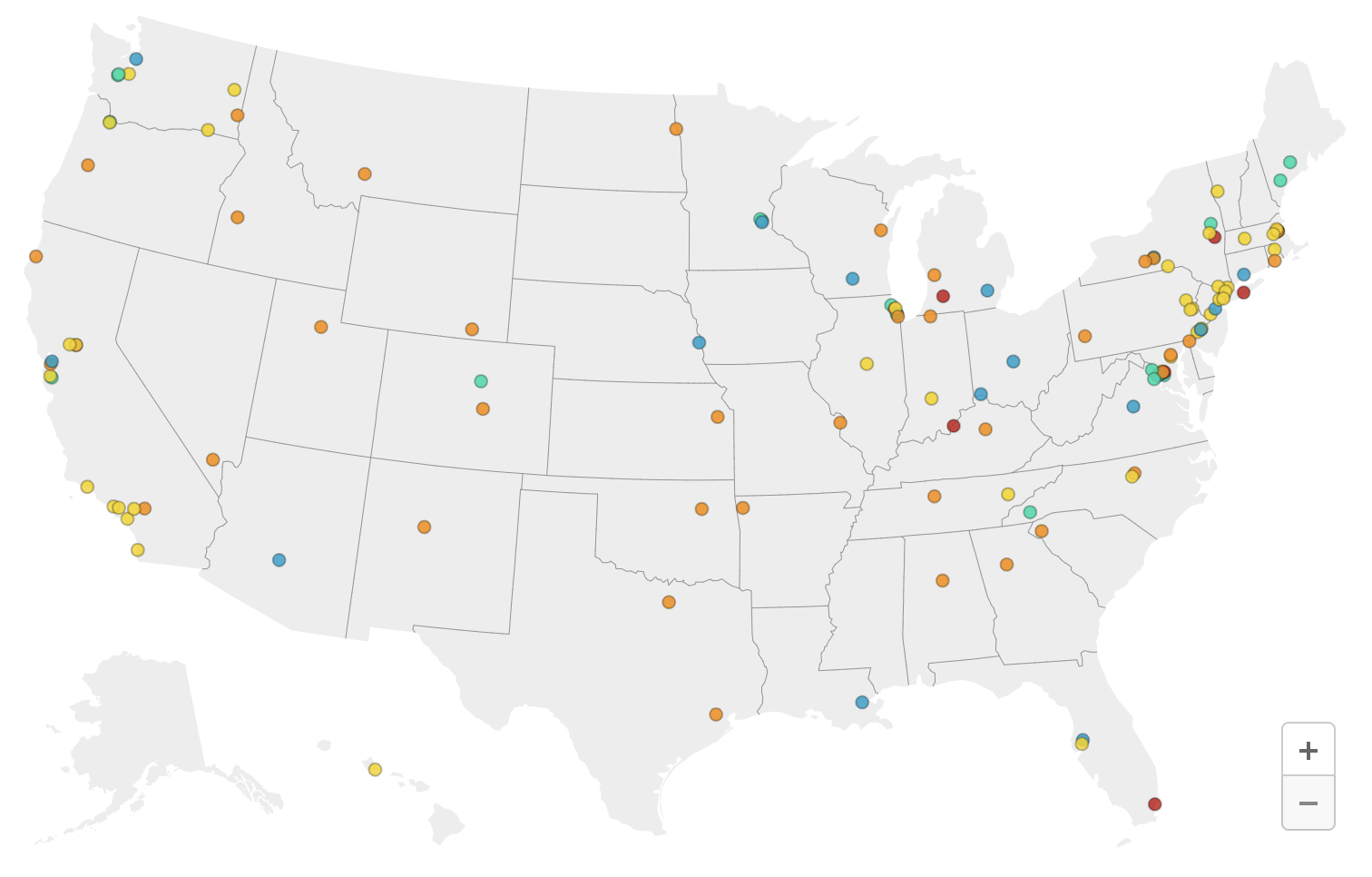
Here’s a look at investigations the Trump administration has announced. This map and list will be updated. Know of an investigation we missed? Tell us: [email protected].
Although the majority of investigations that have been opened are in states considered to be liberal, almost every state in the country has at least one entity under scrutiny. And many institutions face more than one investigation.
To date, colleges and universities have received the most attention from the administration, with more than 60 targeted over alleged incidents of antisemitism and another 45 under scrutiny over their work with a program that aims to increase diversity among Ph.D. candidates. Most of the K-12 investigations involve transgender policies, including those about access to sports and locker rooms.
Contact investigations editor Sarah Butrymowicz at [email protected] or on Signal: @sbutry.04
The Hechinger Report provides in-depth, fact-based, unbiased reporting on education that is free to all readers. But that doesn’t mean it’s free to produce. Our work keeps educators and the public informed about pressing issues at schools and on campuses throughout the country. We tell the whole story, even when the details are inconvenient. Help us keep doing that.
NEW ORLEANS — Kapri Clark used the $50 to help pay for her braces. Lyrik Grant saved half of it, and used the rest for dance classes. Kevin Jackson said he squandered the cash on wings, ride shares for dates and some DJ equipment he later tossed.
For the past five years, Clark, Grant, Jackson and hundreds of high schoolers in New Orleans have shopped — or saved — as part of a project to explore what happens if you give cash directly to young people, no strings attached.
“That was the most helpful thing ever,” said Clark, now a student at the University of Louisiana at Lafayette, who said she could still use that extra cash.
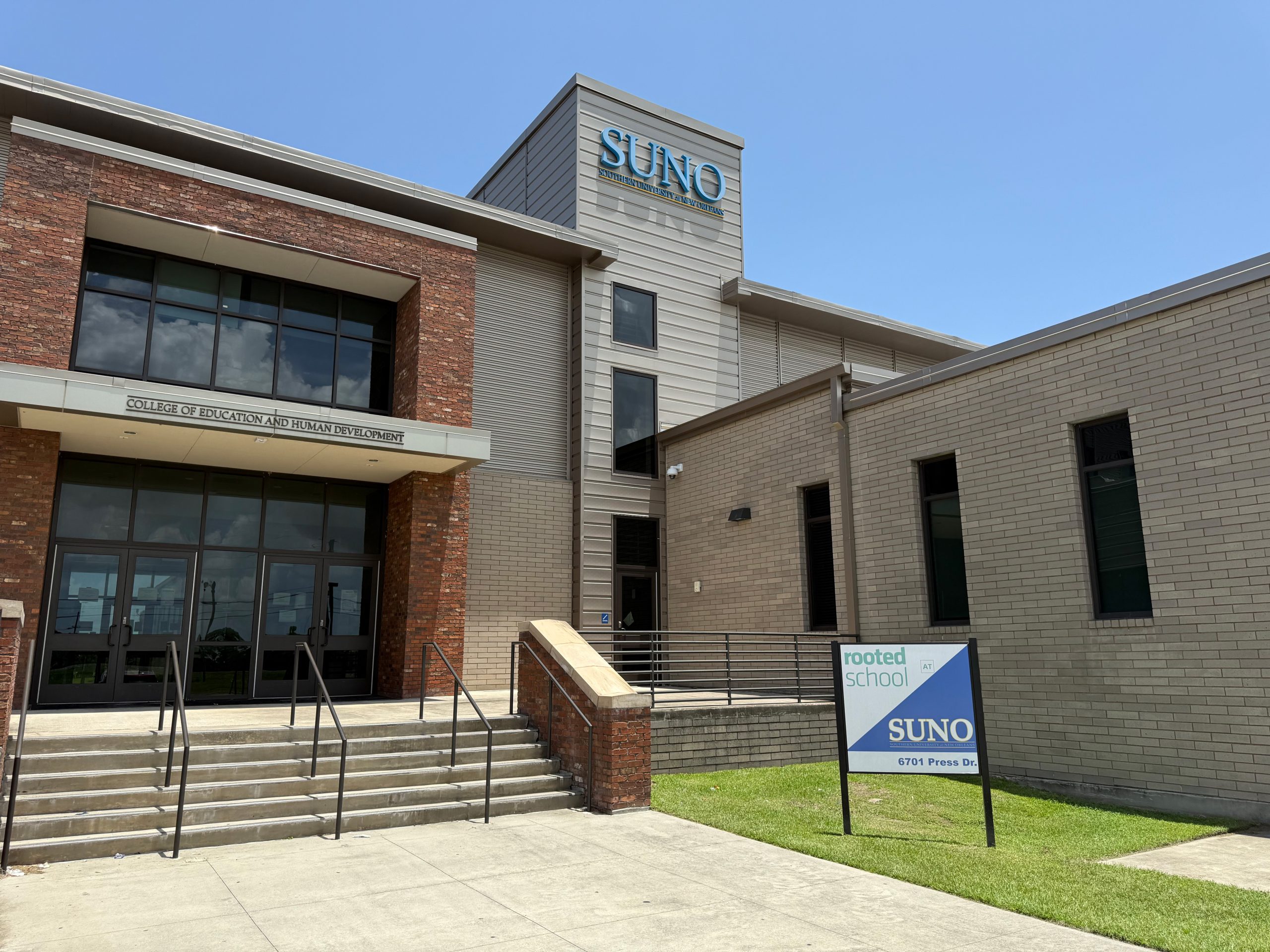
“The $50 study,” as it’s known, began at Rooted School, a local charter school, as an experiment to increase attendance. The study has since grown to eight other high schools in the city, as well as Rooted’s sister campus in Indianapolis, with students randomly selected to receive $50 every week for 40 weeks, or $2,000 total. By comparing their spending and savings habits to a larger control group, researchers wanted to figure out whether the money improved a teen’s financial capability and perception of themselves. They also wanted to know: Could the cash boost their grade-point averages and reading scores?
Now, as the experiment expands to Washington, D.C., and perhaps Texas, a final report of the $50 study suggests a little bit of spending cash can make a difference in young people’s lives.
The report, released Tuesday, shows students who received the cash payments were slightly more likely to attend school than those who didn’t. Academic performance did not differ between the groups. But financially, the extra cash helped students acquire stronger long-term planning skills and familiarity with savings accounts and other financial products. They ended the study, on average, with $300 saved away — a 15 percent savings rate, triple the national average for American adults.
“When young people are given the opportunity to manage money in low-stakes environments, they build the habits that shape long-term financial health,” said Stacia West, an associate professor at the University of Tennessee, Knoxville and co-founder of the Center for Guaranteed Income Research, which partnered with the Rooted School Foundation to run the study. “The short-term habits we’re seeing are laying the foundation for lifelong financial capability.”
Across the United States and the globe, hundreds of communities have tinkered with some form of universal basic income, or UBI, a social welfare program that provides people with regular cash payments to meet their needs. Direct cash transfer programs like the $50 study or the child tax credit for families are similar, but they often provide smaller amounts and target specific populations to boost a person’s income. Many studies have linked UBI to financial stability and better employment and health outcomes.
In the U.S. and Canada, researchers have found links between cash transfer pilots that focus on low-income families and better test scores and graduation rates for their kids. So far, though, few experiments have targeted young people or examined how the programs influence their lives specifically.
Talia Livneh, senior director of programs at the Rooted School in New Orleans, poses for a portrait on the school grounds. Credit: Daniella Zalcman for The Hechinger Report
“There’s a deep, deep distrust that we adults have of young people,” said Jonathan Johnson, CEO of the Rooted School Foundation, which operates the network’s four charter schools. “That distrust is to their detriment.”
In New Orleans, roughly 4 in 5 of Rooted students come from economically disadvantaged families, and during the pandemic, many struggled to prioritize school. Some students skipped class to provide child care for their working parents, or because they needed to work themselves, according to Johnson. With some seed funding from a local education nonprofit, Rooted started a “micropilot” to test whether cash could help students make ends meet and get themselves to school.
The original cohort included 20 students, half of whom received the $50 payment. In that micropilot, those receiving the cash saw their material wellbeing improve, meaning their family could more easily afford rent or utilities, and they gained skills around setting financial goals. Rooted added students from its Indianapolis campus and another high school in New Orleans, G.W. Carver. And for their final report released this week, researchers sifted through the spending and survey data from 170 students who received the cash payments and 210 students who did not.
The two-year report found students in the treatment group attended 1.23 more days of school, and spent close to half their funds on essentials like food and groceries. The report also noted that 70 percent of all students at the participating schools qualify for subsidized meals, suggesting “this spending may reflect efforts to meet immediate nutritional needs.” One 12th grader in a survey mentioned using the money to feed their siblings.
Kapri Clark recalled waiting every Wednesday morning for the $50 deposit to appear in her banking app. And every Wednesday afternoon, during her senior year at Carver High School, she put that money toward her $200 bill for braces she covered out of pocket.
She braided hair to cover the rest, and still books clients when she has time in between her studies to become a nurse at the Lafayette campus. Even in college, Clark can see the need for some supplemental income for herself and her peers.
“I make enough to take care of myself, but I watch every dollar,” said Clark. “There’s a lot of people struggling in life to eat, to live. Think if they got kids.”
Read Irvin, chief of staff for Collegiate Academies in New Orleans, a network of five charter high schools that includes Carver High, said the $2,000 had provided the extra incentive a few students needed to stick it out until graduation. “That’s incredibly impactful for their life trajectories,” she said.
In January 2024, the city of New Orleans invested $1 million to bankroll another extension of the study, as part of an economic mobility initiative that tapped federal Covid relief funding. During the pandemic, a skyrocketing murder rate and spike in overall crime had convinced the city to help more residents, especially young people, find stability.
“Research shows that people who are economically stable are less likely to commit crime,” said Courtney Wong, the city’s deputy director of economic development.
The city funding not only expanded the $50 study to nine high schools, it also set a longer timeline for the research: About 800 seniors who participate will have their data tracked for 18 months after their graduation.
A former high school teacher and administrator, Wong said $50 could have made a difference in the lives of many of her former students.
“This targets young people in that perfect moment,” she said. “They’re in the right spot where even a little amount of help could have big, positive impacts before issues of crime or unemployment or things like that even come up.”
Researchers also found students who received the $50 reported greater agency. They felt more control over their finances and more confidence about making long-term financial decisions. Students, according to the report, aligned their spending to future goals such as college prep classes and getting a driver’s license.
Lyrik Grant, a rising junior at Carver High School, is the second-youngest of six kids with two working parents. She could ask them for help, but the $50 allowed Grant to afford the tights and tops she needed for dance class on her own. The money helped cover a college entrance exam, which she aced, and Grant wants to learn how to drive soon.
“My first thought was: What am I going to do with all this money?” Grant said, adding that the cash helped some of her classmates find financial stability. “Children don’t always want to spend their parent’s money, and some parents don’t always have money to give them.”
Still, for some students, the money wasn’t exactly life-changing. Irvin of Collegiate Academies said many used the cash to “just be teenagers.”
That was true for Kevin Jackson, a rising junior at Rooted School New Orleans.
“It’s cool to get free money,” he said. “I was spending it on the TikTok shop: posters, keyboards, lights — stuff I liked, not stuff I actually needed.”
Despite the studies that show a positive impact from UBI, many Americans appear skeptical of the idea of a federal program that gives unconditional financial support to people. Aditi Vasan, a pediatrician and researcher at PolicyLab at the Children’s Hospital of Philadelphia, said skeptics often worry about recipients using public dollars for drug use or other illicit behavior, even though the data does not support that.
Still, that fear will likely keep any large-scale cash transfer program from being adopted in the United States any time soon, she said.
“That concern exists certainly for cash transfers in general but might be particularly magnified for teens,” Vasan said. “We’ve not seen that play out in the evidence from the quality studies that have been done.”
Next year, in Washington, D.C., the nonprofit Education Forward will fund a pilot of the $50 study with 40 high schoolers. The Rooted school network resumed talks, meanwhile, to take the study to neighboring Texas, after state lawmakers earlier this year failed to pass legislation that threatened to ban local governments from adopting guaranteed income programs.
Talia Livneh, senior director of programs for the Rooted School Foundation, said the politics may need to catch up to the research.
“I don’t think what we’re doing is so radical. I believe this just works,” she said. “Kids don’t lack character. They lack cash,” Livneh added. “They deserve deep, deep trust that students and people know what’s best for them.”
It’s been four years since Vernell Cheneau III received the $50 for 40 weeks while a student at Rooted in New Orleans, and his economic life isn’t easy. He struggled for months to find part-time work in his hometown. But on a recent summer morning, the same day he finally received a job offer, Cheneau recalled what he learned from the study.
Vernell Cheneau III (left) with two other students who participated in the cash transfer program at Rooted School, in New Orleans. Credit: Courtesy of Rooted School
“You learn that money goes fast, especially if it’s free,” said Cheneau, 22.
As a student, he tried to use the money to build some credit history. Since then, he’s learned the full cost of being an adult in America: health care, fuel and maintenance for his car, getting your hair done before a new job. Cheneau has also spent that time trying to convince friends and family to support UBI.
Most oppose giving “free” money to people, he said. “How much does it cost to feed children? Get to work? We can’t just allow people to drown.”
“Everything costs something,” Cheneau added. “If you’re stuck in a rut, it’s expensive to restart. In this country, it’s expensive to be poor.”
Contact staff writer Neal Morton at 212-678-8247, on Signal at nealmorton.99, or via email at [email protected].
The Hechinger Report provides in-depth, fact-based, unbiased reporting on education that is free to all readers. But that doesn’t mean it’s free to produce. Our work keeps educators and the public informed about pressing issues at schools and on campuses throughout the country. We tell the whole story, even when the details are inconvenient. Help us keep doing that.