
Category: energy

  • Can the world wean itself off petroleum?

    Can the world wean itself off petroleum?

    It has been just six years since the Paris Climate Agreement set a race against time to rein in global heating. But the Earth is sending ever-harsher signals of alarm.

    When the accord was signed, we were on course for global heating of 4°C from the start of the industrial era to the end of this century. Now the figure is around 2.7°C. So something has been achieved, but relative safety comes at no more than 1.5°C.

    There is still a gap between the policies put in place over the past six years and what is needed to achieve that lower figure, the International Energy Agency (IEA) said in its annual outlook, published in October.

    Yet we know what to do: substitute renewable energy for the power we get from fossil fuels by mid-century; decarbonize industry and adapt land-use to trap carbon in soil and plants; adapt our means of transport and our growing cities to use less energy; and protect marine areas to enhance carbon absorption in oceans.

    “Two parallel and contradictory processes are in play,” wrote environmentalist and author George Monbiot in a Guardian opinion piece on November 3. “At climate summits, governments produce feeble voluntary commitments to limit the production of greenhouse gases. At the same time, almost every state with significant fossil reserves … intends to extract as much as they can.”

    Everything depends, he concluded, on which process prevails.

    Making strides in renewable energy

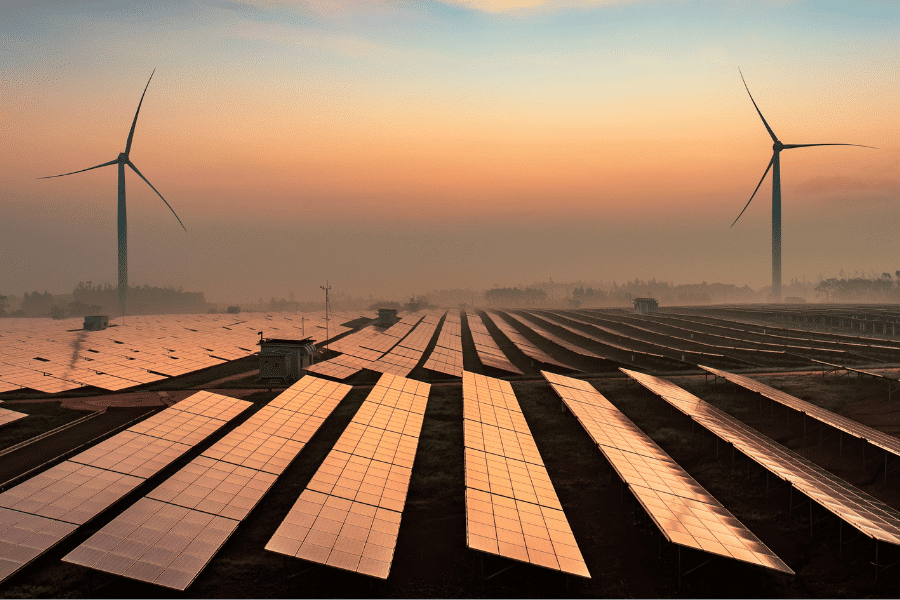
    Similar tensions are in play at industrial and economic levels. On the plus side, there is now a surprisingly strong backstory in renewable wind and solar energy, particularly solar, and particularly in the United States, the heaviest polluter historically per person, and China, the biggest polluter in absolute quantities of its emissions.

    The energy crisis resulting from Russia’s invasion of Ukraine last February has prompted policies that will boost clean energy, the IEA added in its World Energy Outlook, which projects trends out to 2030.

    While the crisis has created a temporary upside for coal, in the long run, production of renewable energy will outpace the production of energy derived from fossil fuels, the report said.

    Another positive sign is the nascent hydrogen industry.

    Widely occurring and carbon-free, this gas could decarbonize long-distance travel and industries that are heavy emitters. Producing it without carbon emissions implies using intermittent renewable energy when it is over-abundant, a virtuous circle.

    However, none of this is yet at industrial scale — barring a few hydrogen-powered trains. Not all claims for hydrogen can be borne out, and it is not yet a viable financial concern.

    There is a significant plus on the political front with the election of Luiz Ignácio Lula da Silva as Brazil’s next president. He promises to end the record deforestation of the Amazon under his predecessor, Jair Bolsonaro, and is to take office in January.

    But there is no slowdown in fossil fuels.

    Yet investment in fossil fuels still dwarfs cash flowing into renewables, even though they offer economic advantages. The United States, for example, has ploughed over $9 trillion into oil and gas projects in Africa since it signed the Paris Agreement, The Guardian found.

    Africa, a continent starved of cash for energy but with vast potential for solar power, is now under pressure — including from international oil companies operating in its national parks — to exploit its fossil fuel resources just to bring electric power to its people.

    The fossil fuel industry’s damage doesn’t end there. There has been drastic under-counting of carbon emissions, a new tracking tool backed by former U.S. Vice President Al Gore has found. Oil and gas companies have underestimated their emissions threefold, Gore said when launching the tool at the United Nations Climate Summit (COP 27) in Egypt this month.

    “For the oil and gas sector it is consistent with their public relations strategy and their lobbying strategy. All of their efforts are designed to buy themselves more time before they stop destroying the future of humanity,” The Guardian quoted Gore as saying.

    Investing in Africa

    Across the world, policies are in place to invest over $2 trillion in clean energy by 2030, half as much again as today, led by the United States and China, but also including the European Union, India, Indonesia and South Korea, according to the IEA.

    In the United States, solar was already becoming the star of the new energy scene, according to an annual report from Berkeley National Labs. The country added 1.25 terrawatts of solar capacity in 2021. That’s more than the installed solar capacity in the entire world, which reached 1 terrawatt in early 2022.

    That was before the Biden Administration enacted the Inflation Reduction Act, which brings extra impetus for the sector. The United States plans to add 2-1/2 times its existing solar and wind capacity every year between now and 2030 and grow its fleet of electric vehicles seven-fold, the IEA said.

    At the same time, Africa is desperate for energy investment.

    To provide access to electricity for its population, the continent would need $25 billion per year, the IEA said in its annual Africa Energy Outlook, published in June. “This is around 1% of global energy investment today, and similar to the cost of building just one large liquefied natural gas (LNG) terminal,” it said.

    The continent has 60% of the world’s best solar resources but only 1% of installed solar photovoltaic capacity. This is already the cheapest source of power in many parts of Africa and would outcompete all other energy sources across the continent by 2030, the IEA said.

    The energy watchdog projects that solar, wind, hydropower and geothermal energy would provide over 80% of new power generation capacity in Africa by 2030. No new coal-fired power plants would be built once those now under construction are completed. Half the cost of adding new solar installations out to 2025 could be covered by investments that would otherwise have gone into discontinued coal plants.

    Yet this assessment leaves out the plans for increased oil and natural gas developments on the continent.

    Pressure from energy companies

    A report just published by Rainforest UK and Earth Insight 2022 found that the area of land allocated across Africa for such developments is set to quadruple under existing plans. That report focuses on the Congo Basin, but in East Africa, French oil major TotalEnergies is pushing ahead with a large-scale oil project and trans-continental pipeline in Uganda.

    A first cargo of liquefied natural gas has just left Mozambique after multiple delays caused by an insurgency in the region of the gas field, in a venture involving several oil companies.

    These oil and gas projects would lock the continent into fossil fuels for decades to come and blow a hole in the bid to keep global heating to no more than 1.5°C.

    These energy projects have wide support among African leaders, who contrast the immediacy of such investments and their benefits for their countries with the reluctance of Western nations to put up the finance agreed over a decade ago for energy transitions and preservation of biodiversity.

    African environmentalists question the wisdom of this carbon bomb. But it is hard to dismiss the idea that broken promises by the countries that have caused the climate crisis has driven Africa into the arms of the fossil fuel industry.

    TotalEnergies’ CEO Patrick Pouyanné argues that the world cannot quit fossil fuels before it has alternative sources of energy.

    “The mistake being made now is to think that the solution for the climate is to abandon fossil fuels,” he said in an interview with French TV station LCI on November 17. “The solution is first to build the new decarbonized energies that we need.”

    “If you do both at the same time, what happens?,” Pouyanné said. “Exactly what you reproach us for — prices rise because of the rarity of supply, because the demand for oil is not falling.”

    The monopoly power of fossil fuel firms

    These energy companies have long fought the switch from fossil fuels to renewables.

    Half a century ago, Total concealed a report it had commissioned that clearly explained how burning fossil fuels would cause global heating and the consequences we are seeing today.

    Other oil and gas companies, notably Exxon, acted similarly and responded to their findings by funding climate-denying think tanks and political lobbyists.

    More recently, as the evidence mounted, they turned their attention to lobbying for exemptions, even though the scientific consensus demands that to achieve the 1.5°C limit on warming, there can be no new oil, gas or coal exploration or extraction.

    A record number of fossil fuel lobbyists attended this month’s climate summit in Egypt (see the graphic here).

    Fossil fuels no longer make economic sense.

    The sector is a good example of reality flouting economic theory, which teaches that if a new technology reaches a point where it outcompetes an existing one, the new technology will replace the older one.

    This should be happening with solar versus coal, oil and gas — and indeed is predicted to happen by 2050. Meanwhile, harmful emissions continue to rise.

    Energy markets and the fossil fuel firms themselves do not obey basic economics for the simple reason that they are monopolies with the power to skew conditions in their favor.

    The oil producers’ monopoly, in the form of OPEC, has controlled production to keep prices higher for decades. In the 1990s, the big Western oil companies went through a frenzy of mega-mergers that created today’s top five — Shell, ExxonMobil, BP, Chevron, and ConocoPhillips — whose sheer size gives them disproportionate bargaining and lobbying power.

    Now activists are trying to gain support for a Fossil Fuel Non-Proliferation Treaty as a way of reining in the root cause of the climate emergency. The initiative was put before the United Nations in September and the COP 27 climate summit in November.

    “Will you be on the right side of history? Will you end this moral and economic madness?” Ugandan climate activist Vanessa Nakate asked global leaders at the summit.

    On that, the jury is still out.

    Landmark deal opens way for loss and damage fund

    It has taken 27 climate summits, but the COP 27 in Egypt finally managed to pull out an agreement to set up a specific fund to aid poor countries hit by damage caused by climate disasters. The deal was approved on November 20 after a marathon negotiating session.

    The proposal had been fought tooth and nail by the rich industrialized countries whose emissions have fostered global heating, stirring resentment among poorer countries who have suffered the most extreme consequences and have the least ability to mitigate the damage. 

    Details will be hammered out over the coming year, and there is as yet no money in the fund. It was nevertheless a major step forward.

    However, the final agreement failed to call for phasing out all fossil fuels and for warming emissions to peak by 2025, both heavily opposed by oil-producing countries, raising fears that the goal of limiting warming to 1.5°C by mid-century will not be achievable.


    Questions to consider:

    1. Where is a major boom in solar energy taking place?
    2. What is Africa’s energy dilemma?
    3. Why do you think fossil fuel majors have so much influence?


    Source link

  • A pipeline of prosperity or plunder

    A pipeline of prosperity or plunder

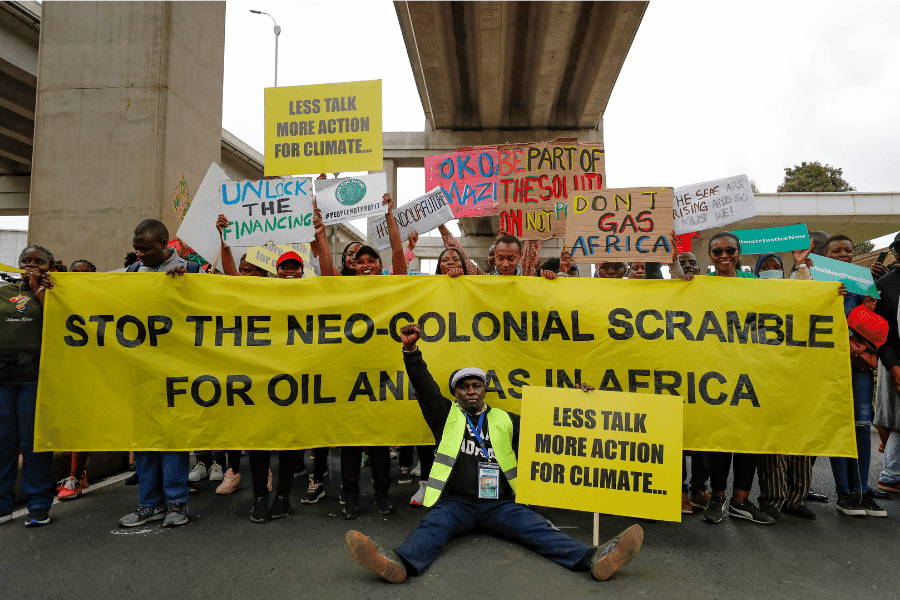
    In the sticky heat of an April afternoon in Kampala, Uganda nine university students stood outside the headquarters of Stanbic Bank, their voices raised in protest. It is a sound that has echoed for more than half a decade.

    Their signs called for an end to the East African Crude Oil Pipeline (EACOP), a $5 billion project: 1,443 kilometers of 24-inch wide, heated and buried steel ambition, snaking from Uganda’s oil-rich Lake Albert basin to the Tanzanian port of Tanga on the Indian Ocean. Before the hour was out, they were in police custody.

    The government has hailed the project as a pillar of economic transformation. But critics — students, activists, and environmental groups — argue it will displace communities, threaten biodiversity and entrench a model of development that sidelines democratic participation. Dissent has been met with arrests, surveillance and a steadily shrinking civic space. The protests, though often silenced, persist, challenging a narrative that equates oil with progress.

    Five days after the arrests, in the same city, a different kind of statement was made. At the Eleventh Africa Regional Forum on Sustainable Development, held from April 7th to 11th, delegates issued a call that seemed — if only for a moment — to resonate with those voices on the street.

    The route of the East Africa Crude Oil Pipeline. Wikimedia Commons

    Members of the UN Economic Commission for Africa urged a shift away from exporting raw materials and toward value addition through manufacturing and industrialisation. Mining, they said, and the export of cash crops like cocoa, tea and coffee must no longer be the end of the story, but the beginning of something built to last.

    Shouting into the void

    For the students arrested, whose protests have long been dismissed as anti-developmental by a government intent on progress-by-pipeline, this sudden harmony of rhetoric might feel like vindication — if only the delegates meant what they propose.

    The students may have been shouting into a void, but the echoes resonate with a wider pattern etched deep into the continent’s political and economic architecture. Back in 2016, journalist Tom Burgis, author of “The Looting Machine”, put it in a 2016 interview with CNN: “There is a pretty straight line from colonial exploitation to modern exploitation.”

    Burgis has long documented the mechanisms of resource extraction in Africa and pointed to the lingering dominance of oil and mining multinationals — entities that, decades after independence, still wield economic and political influence akin to that once held by colonial administrations.

    Zaki Mamdoo, a South African climate justice activist and campaigner with the Stop EACOP coalition, agrees with Burgis’s notion of modern resource imperialism — only now, the governors wear suits and operate through shareholder meetings.

    “How come TotalEnergies owns 62% shareholding power, while Uganda and Tanzania hold just 15% each?” he said.

    Partnership or plunder?

    The numbers speak for themselves. The French oil giant TotalEnergies, with Chinese partner CNOOC in tow, controls the lion’s share of the project. Uganda, the country from which the oil originates, has been cast in the role of host, not owner. Tanzania, whose land will bear the pipeline’s longest stretch, fares no better. For Mamdoo and many others, this is not a partnership; it’s a palatable version of plunder.

    “This is not African-led development,” Mamdoo said. “It’s an extractive model dressed up in nationalist rhetoric.”

    To critics, EACOP is a 21st-century replay of old patterns — resources extracted with little local benefit, profits flowing abroad and environmental costs left with the people. What’s different now is the packaging: marketed as part of an energy transition and a driver of economic empowerment. But on the ground, the reality is displacement, disrupted livelihoods and fragile ecosystems in the pipeline’s path.

    According to EACOP’s official figures, more than 13,600 people have been affected, with 99.4% of compensation agreements signed and paid. But activists argue the numbers mask deeper issues — slow and uneven compensation, uprooted communities and long-term uncertainty.

    “The real number is far higher,” said Mamdoo. “We’re talking well over 100,000 directly impacted — and many more indirectly. But of course, Total reports a few tens of thousands.”

    Differing views on sustainability

    From Uganda’s farmlands to Tanzania’s reserves, the pipeline cuts through forests, wetlands and biodiversity hotspots — what critics see as a trail of ecological and human disruption beneath a polished PR campaign.

    By underreporting those impacted, critics argue, multinationals shrink their obligations — and their compensation budgets. The payments, when they come, have been slow, sporadic and, in some cases, still absent. Yet the construction rolls forward.

    To Morris Nyombi, a Ugandan activist now living in exile for his work opposing EACOP, the narrative of compensation is as hollow as it is dangerous.

    He watches from afar as national television and international media spotlight a few smiling beneficiaries — residents celebrating a new house, a fresh coat of paint, a sense of reward.

    Nyombi sees what isn’t shown. “Let’s state facts, when minerals are found somewhere, just know that’s lost land — it becomes government property,” Nyombi said. “And to the select few given houses, what then? You’re an agriculturist. Giving you a house somewhere else doesn’t mean giving you land to till. You’re killing a way of life.”

    A pipeline of displacement

    Without farmland, families are forced to sell off whatever land remains and move to towns and cities in search of new beginnings.

    “They end up in Kampala renting, looking for what to do,” Nyombi said. “It’s displacement without a plan. Progress for someone else.”

    Farmers who were near the pipeline’s path are now scattered across the Uganda-Congo border, Nyombi said. “They were duped into compensation. When they resisted, they started receiving threats. Husbands arrested. The women and children forced to run, to hide. That’s the reality.”

    These, Nyombi said, are the people the government never talks about. They don’t show up in speeches or glossy brochures about development. But their lives tell the story better than any pipeline prospectus ever could.

    But speaking out against EACOP is dangerous. “It’s a gamble with one’s life,” Nyombi said. Being an activist, he adds, is a kind of social exile. Most organizations won’t hire you — won’t even stand next to you. In much of Africa, governments don’t hesitate to hit below the belt.

    A lake that sustains life

    Nyombi has been on the government’s radar since 2020. He has been threatened and surveilled and been the subject of smear campaigns. As a result, he stepped back from frontline organizing.

    But what if the project were perfectly managed with strict environmental safeguards, zero corruption and full compensation? Would that make EACOP justifiable?

    Mamdoo said that isn’t what is happening, citing reports of oil slicks on Lake Albert and elephants rampaging villages. The very question betrays a fundamental misunderstanding, Mamdoo said. Environmental damage isn’t a hypothetical risk, it’s already unfolding.

    “If oil spills hit Lake Victoria—the region’s largest freshwater body—over 40 million people would be poisoned,” he said.

    Lake Victoria sustains agriculture, fishing, drinking water, and transport across Uganda, Tanzania and Kenya. It’s East Africa’s largest inland water body — and the source of the Nile. Yet while project backers point to EACOP’s technical safeguards, critics like Mamdoo argue that no pipeline cutting through seismically active zones, protected ecosystems and critical watersheds can ever be truly safe.

    “You can’t just contain a pipeline,” Mamdoo adds. “You can’t plug all the holes when the system is built to leak — money, justice, land, people.”

    Keeping oil where it is extracted

    Supporters of the pipeline argue that projects like EACOP could open the door for substantial donations to tourism development and wildlife protection, especially in ecologically sensitive zones where the pipeline runs near or through national parks. The idea is that the extractive industry might fund preservation as part of its footprint.

    But to Mamdoo, that premise is flawed from the start.

    “What’s that compared to the 62% they’re taking?” Mamdoo asks. “You shouldn’t settle for peanuts when you own a resource.”

    Being a funder, he adds, doesn’t make you the owner. Mamdoo would like to see the oil stay in Uganda. “We’d be having an entirely different conversation if the plan was to have our own refineries, process it locally, then sell the products to them,” he said.

    Nyombi isn’t surprised that the government supports EACOP. Historically, leaders who stand up to corporations and the Global North haven’t lasted. “These multinationals don’t want an Africa that sees clearly,” Nyombi continues. “They want us manageable. If you open your eyes and demand real sovereignty, you become a threat to global stability.”

    Taking on global establishment isn’t easy.

    Some critics point to the case of Muammar Gaddafi, the Libyan leader who championed a gold-backed African currency and pan-African resource control before being toppled in a NATO-backed intervention. His fall, they argue, wasn’t just about domestic tyranny — it was about challenging the global status quo.

    Yet among younger Ugandans, particularly students, the legacy of figures like Gaddafi is often blurred or reduced to villainy — taught more as a cautionary tale than a case study in resistance. The narratives they inherit are tightly curated. But still, a shift is happening.

    Especially among those studying environmental science, Nyombi sees a growing restlessness.

    “These students, they want to act,” Nyombi said. “They’re interested in ground action. But more than that — they’re asking deeper questions. They wonder, why keep planting trees that won’t grow?”

    There’s a frustration with symbolic gestures — school-organized clean-ups, ceremonial tree-plantings — that often sidestep the policies creating the very destruction they’re meant to remedy.

    “They’re starting to say, no, the problem isn’t the seedling. It’s the system. So why not challenge policy instead?” Nyombi said. “But to challenge policy, you have to get out there.”

    That’s how the students who were arrested on 2 April while approaching Uganda’s Stanbic Bank came to act.

    Taking protests to the front line

    Mamdoo said that the protest was not just symbolic — it was strategic. Stanbic is one of the banks linked to funding the East African Crude Oil Pipeline. For the students, it was the front line.

    “They’re trying to secure their future,” Mamdoo said.

    But the bank saw it differently. Kenneth Agutamba, Stanbic Uganda’s country manager for corporate communications, defended the institution’s involvement.

    “Our participation aligns with our commitment to a just transition that balances economic development with environmental sustainability,” Agutamba said. “The project has met all necessary compliance requirements under the Equator Principles and our Climate Policy.”

    For the students, though, no statement or principle outweighs what they see as the theft of their future. Their protest, they insist, is not rooted in mere outrage. It’s anchored in a growing global reckoning: at least 43 banks and 29 insurance companies have declined to support EACOP, citing its environmental threats and human rights risks.

    But despite the pressure from abroad, the pipeline — and the crackdowns — continue to move forward.

    “That’s why we’re targeting the funders,” Mamdoo said. “If the money dries up, the project can’t survive.”

    Dissent and disappearance

    The students arrested will likely be released — this time. They’re lucky. Local papers spoke of them. Many others vanish into cells for months, even years, without trial — especially those without lawyers, or whose names never make it into the headlines.

    If there’s a single line that captures the price of resistance, it might be Braczkowski’s blunt warning: “Any oil activist in Uganda will be sniffed out before Total.” Oil, he adds, has become Uganda’s gold — a lifeline that may help service the country’s mounting debt.

    “That’s exactly the problem,” Mamdoo counters. “If all it does is pay off debt, what’s left for the people? There won’t be money for schools, for hospitals — just enough to keep the lights on in their offices.”

    It’s been nearly a decade since EACOP was first proposed. Only now, as shovels hit soil and risks become real, has public scrutiny begun to catch up. And that, Mamdoo and Nyombi agree, is because of activism.

    “Without it,” Nyombi said, “this would’ve gone quietly. Smoothly. Just another deal signed behind closed doors.”

    But things aren’t moving as fast as they once were.

    “Activism has slowed them down,” Nyombi adds. “It’s not moving at the pace they wanted.”

    So what’s the real equation here? A pipeline backed by billions. A government banking on oil. A continent still clawing for control of its wealth. And in the middle — students, farmers, mothers, exiles — bearing the cost of asking the most dangerous question of all:

    What if we said no?


    Three questions to consider:

    1. What is EACOP?

    2. Why are many people in East Africa opposed to a pipeline that promises to bring money to the region?

    3. If you were in charge of natural resources for Uganda, what policies would you put in place?


    Source link