Category: environment

  • Could Trump’s tariffs end up spurring green innovation?

    Could Trump’s tariffs end up spurring green innovation?

    U.S. President Donald Trump has never been a champion of the environment. From gutting climate policies to rolling back crucial environmental protections, the track record of the U.S. president speaks for itself. 

    But his announcement this month of steep tariffs on a sweeping range of foreign-made goods intended to boost U.S. production may also inadvertently fuel a global shift toward green innovation and a more sustainable future.

    During his first term, Trump pulled the United States out of the Paris Agreement, slashed pollution regulations and gave the fossil fuel industry a free pass. One of his most controversial moves was opening up the Arctic National Wildlife Refuge (ANWR) to drilling — a pristine, ecologically-sensitive area home to polar bears, caribou and Indigenous communities that depend on the land.

    Now, he’s back — and this time, his weapon of choice is tariffs. The Trump administration has imposed tariffs on all imports from China, Mexico and Canada, as well as on steel, aluminium and cars from around the world.

    By targeting key imports like clean energy components and critical minerals, Trump’s latest trade war threatens to derail climate progress, drive up costs for renewable energy and push the United States further into fossil fuel dependence. The damage is real and the consequences could be catastrophic.

    Tariffs could hamper climate change efforts.

    The implementation of broad tariffs is poised to significantly hinder efforts against climate change and weaken environmental legislation. Here’s how:​

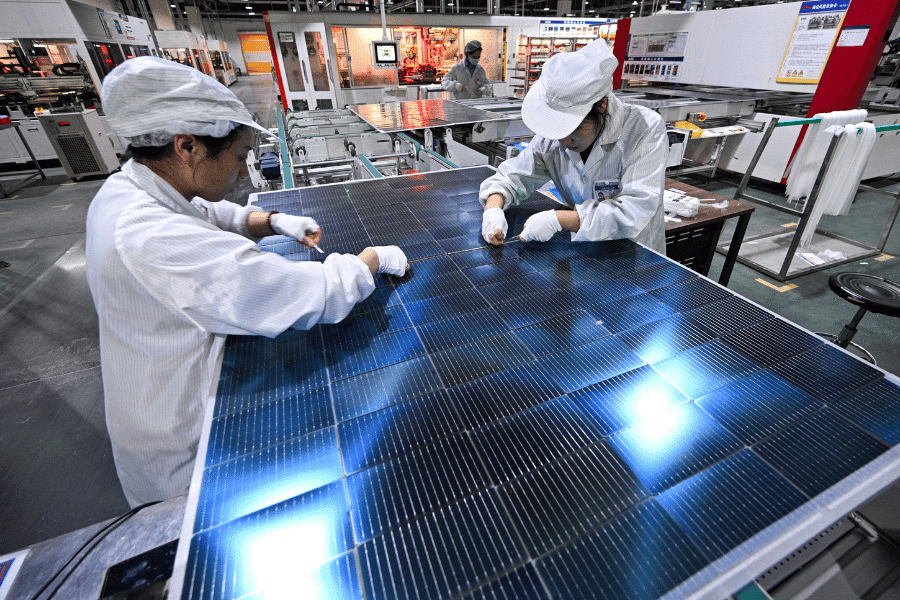
    Disruption of clean energy supply chains: The tariffs, particularly those targeting imports from China like steel, aluminium and lithium directly affect the availability and cost of clean technology components. For instance, the United States imports a substantial amount of lithium batteries from China — $1.9 billion worth in December 2024 alone. Increased tariffs on these imports could raise costs for renewable energy projects and electric vehicles, slowing the transition to cleaner energy sources. ​

    The energy sector is already grappling with shortages of essential parts. New tariffs exacerbate this issue, making it more challenging to procure necessary components for renewable energy infrastructure. This could delay projects and increase reliance on fossil fuels, counteracting efforts to reduce greenhouse gas emissions. ​

    Strain on environmental initiatives: The stock market’s negative reaction to the tariff announcements, with the Dow Jones dropping nearly 1,700 points and erasing approximately $3.1 trillion in market value, indicates broader economic instability. Such financial turmoil can lead to reduced funding and support for environmental programs, as both public and private sectors may prioritize immediate economic concerns over long-term environmental goals. ​

    As Trump imposes tariffs, his administration is also rolling back environmental protections. His Environmental Protection Agency is now questioning a key 2009 ruling that classifies greenhouse gases like carbon dioxide as harmful to human health. If the courts overturn it, this could weaken U.S. climate laws and make it harder to fight climate change.

    Unintended consequences

    While Trump’s tariffs largely threaten climate progress in the United States, they could have unintended environmental benefits elsewhere.

    Boosting green manufacturing in other countries: If U.S. tariffs make Chinese solar panels, batteries and EV components more expensive, other countries — especially in Europe, India and Latin America — may ramp up their own clean energy production. China itself may increase investment and focus on domestic EV adoption, hydrogen technology or battery recycling. 

    This could lead to a more diversified and resilient global supply chain for renewable technologies, while also strengthening domestic energy resilience by encouraging countries to develop and secure their own clean energy resources, reducing reliance on foreign imports.

    Strengthening regional trade alliances for green tech: With the imposing trade barriers, countries looking to avoid tariffs might strengthen regional partnerships, such as the EU-India green energy collaboration or China’s push to supply African and Latin American markets with solar and wind technology. This could decentralize the clean energy economy, reducing reliance on any single country.

    Reducing export-driven deforestation: If tariffs make U.S. imports of commodities like beef, palm oil and timber more expensive, countries that export these products (e.g., Brazil, Indonesia) may face declining demand. Less demand equals less incentive to clear forests for agriculture.

    On the other hand, the EU Deforestation Regulation (EUDR), adopted in June 2023, aims to block imports of commodities linked to deforestation unless they can be verified as deforestation-free. The EU is a huge consumer of these commodities. 

    With two major markets (U.S. and EU) becoming less profitable for deforestation-linked goods, exporters might change their practices to comply with stricter regulations. This could encourage more sustainable supply chains.

    However, this would depend on whether other countries, like China, pick up the slack and implement EUDR-like regulations.

    Backing off petroleum

    If trade wars escalate and tariffs disrupt global markets, long-term investments in fossil fuel projects could become riskier due to economic uncertainty. Tariffs on fossil fuel-related goods — like equipment, machinery or raw materials — can increase production costs for oil and gas companies. 

    As the cost of extraction, refining and transportation rises, companies could face shrinking profit margins, making fossil fuel investments less appealing. This, and shifting focus to clean energy, might push investors toward renewables, which are increasingly seen as more stable and future-proof.

    There’s a catch: These benefits depend on how other countries respond. If the U.S. tariffs cause economic slowdowns, some nations might double down on fossil fuels to stabilize their economies. So while tariffs could have some green silver linings, they’re more of a chaotic wildcard than a deliberate climate strategy.

    While the tariffs imposed by the Trump administration present significant challenges to global climate efforts, they also create opportunities for positive change. The disruptions in the clean energy supply chain, economic instability and rollbacks of environmental protections are certainly concerning. However, the unintended side effects of these actions might just catalyze a shift in global energy dynamics.

    In the long run, this “chaotic wildcard” could make fossil fuel investments riskier and accelerate the global pivot toward renewables. Countries and industries could be forced to innovate and adapt faster than expected. 

    While the path ahead may seem uncertain, there’s a silver lining: resilience, innovation and adaptability are key to overcoming these challenges. As the world adjusts to these new realities, the opportunity to cultivate a cleaner, more sustainable future is within reach — if leaders recognize this moment and take bold action to seize it. 

    So, while the road ahead may be bumpy, there is still reason to hope and act. 


    Questions to consider:

    1. How can governments turn the economic disruptions caused by tariffs into opportunities for advancing clean energy and climate goals?

    2. How can a decentralization of green energy technology be a good thing? 

    3. How can government intervention combined with market forces, like the rising cost of fossil fuels, accelerate the transition to renewable energy?


    Source link

  • The mining of sand scars Kenya’s land

    The mining of sand scars Kenya’s land

    From space, Kenya’s sand-mining crisis is starkly visible. Satellite images reveal scars gouging riverbeds throughout its historic Rift Valley and fully extending border to border, west to east, from the shorelines of Lake Victoria to the Indian Ocean. 

    These growing scars tell the story of the nation’s booming construction sector and of a largely unregulated trade: sand harvesting.

    Sand is the world’s second-most consumed natural resource after water. It fuels construction booms globally, including in Kenya, where urban expansion and large infrastructure projects have surged. Yet sand is also among the most illegally trafficked natural commodities.

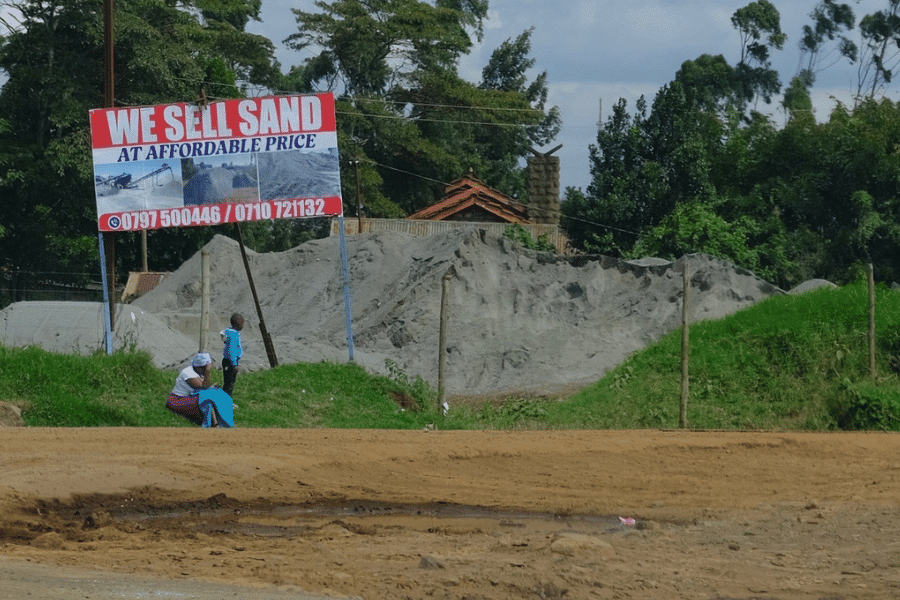
    In Kenya alone, around 50 million metric tonnes of sand worth roughly US$600 million are extracted each year, mainly for expansion of the nation’s capital, Nairobi, and major infrastructure projects. Yet the true cost of this extraction, particularly illegal operations, is far higher in terms of environmental degradation and human impact.

    “The scale of environmental crime related to sand harvesting is significant but poorly understood,” says Dr. Willis Okumu, a senior researcher at ARIN Africa, an organization dedicated to sustainable management of natural resources and environmental governance. 

    A multinational problem

    Okumu describes Lake Victoria — Africa’s largest lake by area, bordering Tanzania and Uganda as well as Kenya — as a convergence point for environmental crimes. These include illicit sand harvesting, charcoal burning and timber smuggling, facilitated by weak enforcement across bordering countries.

    Illegal sand harvesting strips riverbanks and lakeshores. It weakens soil structures, causes landslides and floods and devastates aquatic habitats. River systems feeding into Lake Victoria have suffered badly, threatening fisheries crucial to local livelihoods.

    These operations cause severe environmental impacts. Unregulated extraction weakens riverbanks, disrupts ecosystems, and significantly increases risks of flooding and deadly landslides. 

    River ecosystems, including those around Lake Victoria, suffer profound damage. Aquatic habitats and biodiversity are severely disrupted, jeopardizing livelihoods that rely on fishing and farming. Communities struggle with declining water quality and availability that are directly tied to unregulated sand extraction.

    In Mombasa, a city in southeastern Kenya along the Indian Ocean, unregulated sand extraction has altered river flows. This has disrupted irrigation systems, making it harder for farmers to grow food in a region already hit by drought.

    Sand loss and social ills

    Socially, the consequences are equally dire. The United Nations Environment Programme reports that “sand extraction and its trade are fuelling a myriad of social issues in Kenya, with violence and deaths related to sand trade widely documented.” School dropouts, teenage pregnancies and drug abuse spike as impoverished youth turn to illegal sand mining for quick income.

    Communities in the Rift Valley face a difficult trade-off: short-term survival through sand work or long-term sustainability. In Nakuru County, uncontrolled sand extraction has left homes exposed to erosion and collapse. Residents report that land beneath their feet is quite literally disappearing.

    Consolata Achieng, of Asieko Village in Nakuru County, told a local news reporter that all the land surrounding her property had been sold off to harvesters over the last eight years. “We were assured that harvesting had stopped but we still see workers and lorries every day,” she said. “A lot of people live around here and have nowhere to go. This is the place we call home.”

    Communities can also find themselves caught between environmental concerns and lack of alternatives. “All you need is a spade,” noted one senior Kenyan civil servant, highlighting how easy it is to mine sand. Labourers, including school-aged children, work in dangerous pits for low wages. 

    The lucrative nature of sand mining has attracted organized criminal groups that exploit the resource with impunity. Violent confrontations have occurred between cartels and local communities attempting to protect their resources, leading to injuries and fatalities.  

    These organized crime groups — known locally as “sand cartels” — are central to the illegal trade, often operating under the protection of corrupt state officials, enabling them to bypass regulations and continue illegal activities. 

    Countering illegal mining requires coordinated efforts

    According to ENACT Africa, a program that focuses on addressing transnational organized crime in Africa, weak co-ordination among law-enforcement agencies across borders allows such networks to thrive. Violent confrontations have occurred between cartels and local communities attempting to protect their resources, leading to injuries and even deaths. 

    Efforts to regulate the industry have largely failed due to corruption and ineffective governance. In a UNEP Global Sand Analysis report, a senior official bluntly observed: “All you need to do is pay,” reflecting systemic bribery and regulatory capture, which occurs when a government agency that was created to act in the public’s interest ends up serving the interests of the industry it’s supposed to be regulating. 

    UNEP has warned that sand is becoming dangerously scarce. It advocates for stronger global regulations, regional co-operation and alternative construction materials such as crushed rock and recycled debris.

    In Kenya, sand isn’t just used locally. It’s also smuggled to neighbouring countries and, allegedly, to international markets — further complicating enforcement.

    However, there are signs of hope. Kenyan authorities have created specialized investigative units in the Mining Police Unit to crack down on illegal extraction. Officials are also piloting new tools, such as satellite tracking and GPS monitoring of trucks, to improve oversight.

    Protecting the land

    Some counties are fighting back. In West Pokot county, authorities recently launched new sand-harvesting policies to control extraction and protect the environment. 

    In Makueni County, the government implemented a comprehensive sand regulation act that has significantly reduced illegal activities and environmental damage within its jurisdiction. When the county lifted its decade-long ban on commercial sand mining to boost revenue, the move sparked concern among residents, who fear the return of water shortages and environmental degradation.

    The persistence of illegal sand mining underscores the need for robust enforcement of regulations, community engagement and the promotion of alternative construction materials to reduce reliance on natural sand resources. 

    Without urgent and co-ordinated action, Kenya faces continued ecological destruction and intensified community conflicts. As Okumu emphasized, transparent governance and meaningful community participation are critical. “With currently poor public participation, rehabilitation work rarely follows in Kenya’s land-based sand mining projects,” he said, underscoring the critical need for reform.

    Research across Africa shows a consistent pattern: profits flow to powerful players, while environmental costs fall on the poorest. Labourers risk their lives in collapsing pits. Farmers and fishers lose the very resources they rely on.

    “We are running out of time,” Okumu said. “Without immediate regional action, environmental damage from sand harvesting will become irreversible, devastating ecosystems and the communities dependent upon them.”


    Questions to consider:

    1. Why is sand so valuable?

    2. How are countries like Kenya trying to stop the mining of sand?

    3. Can you think of ways concrete and cement are used near you? Could you think of alternative materials?


    Source link

  • Can fiction help us get to the truth about climate change?

    Can fiction help us get to the truth about climate change?

    Truth in fiction

    That’s where fiction can come in. But most climate fiction presents gloomy scenarios: think the waterless world of Arrakis in Frank Herbert’s “Dune” series or our earth after a virus wiped out most of human life in Margaret Atwood’s “Oryx and Crake” trilogy.

    In contrast, Baden’s story showed more positive solutions. Her own research found that 98% of her readers changed their attitudes. A month after reading the story 60% of readers actually adopted a green alternative.

    She’s set to release “Murder in the Climate Assembly“, a fictional story about the ramifications of a murder that takes place in a citizens’ assembly on climate.

    Some media organizations are now including climate change awareness initiatives that use fictional examples into their marketing campaigns.

    Baden worked with BAFTA, the British Academy of Film and Television Arts, to create social media content that provided solutions with a tinge of humour. For example, they contrasted the carbon footprint of two popular characters from books and movies: James Bond who drives a gas guzzling sports car and has a walk-in wardrobe versus Jack Reacher who traveled by bus and shopped second-hand.

    Making environmentalism fun

    Pilot testing showed interesting results: “If we just presented the negative one like James Bond, some people laughed and thought it was funny, but a few people thought they were being a bit preached at and switched off,” Baden said. “Whereas when you kind of had both together with a bit of humor, that seemed to hit the right spot.”

    Pike agreed: “Comedy too allows us to let our guard down. When we open our mouth to laugh, our mind is open to learn.”

    When Pike was in Chile working on the PhD that led to her book she found that she loved the animated series “The Simpsons“. In 2008, one of the three TV channels played Simpsons episodes endlessly, she said. Simpsons creator Matt Groening intended his show to make people aware of environmental challenges and complications in ways that start conversations, she said.

    Context makes a difference too. “I read ecoactivist discourse in South America and it seemed so darn white and privileged,” Pike said. “If you read “Burning Rage of a Dying Planet” in a comfortable U.S. suburb, it’s one thing. If you read the same book in Chile, it feels different, almost too precious, definitely not the tone I would take in talking about ecology in South American countries.”

    The Center for Health Communication at Harvard University says that showing, not telling induces stronger emotional responses as visual imagery and helps our brains understand abstract and complex associations like those between climate and health.

    Connecting emotion to change

    Telling stories through books, plays or social media also help to create emotion, and change beliefs and behaviours. They may also reduce feelings of anxiety and depression that surface when bombarded with alarmist news about the climate crisis. Focusing on solutions is more effective.

    Pike said the way to get through the barrage of media messages and talk about the climate crisis is with honesty, independence and humour. “Acknowledge the hypocrisy and move on toward solutions,” Pike said. “A solution offers me a choice, agency, a chance to put up a sail and navigate to a goal.”

    Pike taught a class called “Environmental Reporting for a Hopeful Planet” in the spring 2024 semester. One assignment was “Forest Friday”: students were asked to read, watch or listen to examples of environmental storytelling.

    One week, the students were assigned a video of Rebecca Solnit. She’s a writer, historian and activist who has been examining hope and the unpredictability of change for more than two decades. In 2023 she co-edited an anthology called “It’s Not Too Late”, a guide for finding hope even while climate change-induced disasters continue. This is what one student said after they watched that video:

    “I felt reassured by her calmness and her endless lists of knowledge of times and places in which meaningful change has occurred. I think she makes many great points about the way that just because ideas don’t always get the opportunity to fully take shape they are still impactful on society as a whole.”

    So, what’s the best way to write about the climate crisis?

    “Read environmental writing and write,” Pike said. “Be so deeply curious about how ecology works, how nature and culture interact, how businesses and institutions works and their role in the climate crisis.”

    Ways to write effectively

    Having a community of people who also write about and care about the environment can also help. But most importantly, Pike said: “Work to tell a story well.”

    This means reading the publications which interest you and seeing if your story would be a good fit. Try different mediums. Take Dr. Seuss’ “The Lorax”. It’s a children’s book written in 1971 about a character who speaks for the trees as a business tycoon destroys the environment. The story encourages activism and involvement in making the situation better. In it the Lorax tells us: “Unless someone like you cares a whole awful lot, nothing is going to get better. It’s not.”

    More recently, there are films like “Flow“, which won an Academy Award for Best Animated Feature and was nominated for Best International Feature Film, and “The Wild Robot“, which was nominated for three Academy Awards including Best Animated Feature.

    In both, climate change is a world-building element; one showed a submerged Golden Gate Bridge, the other showed a flood of biblical proportions. But they’re both animated films, with cute animals coming together to save the world, reaching a younger audience who will grow up with climate change and its impacts.

    Creating a story that can make people think about our planet and how we can tackle climate change isn’t easy. Pike said it is worth persevering.

    “If you get tired, don’t give up,” Pike said. “Rest and get back to it when you can. We all plant seeds and it’s hard to say which ones will take.”


    Three questions to consider:

    1. What makes you switch off the news when a story about climate change comes on?
    2. What happens to our brain when we show, rather than tell, in our writing on climate change?
    3. What might you learn in a course like “Environmental Reporting for a Hopeful Planet?” 


    Source link

  • Decoder: The Paris (Dis)Agreement

    Decoder: The Paris (Dis)Agreement

    The newspapers dubbed it “unprecedented”, “historic”, “landmark”.

    Then-U.S. President Barack Obama called it a “tribute to strong, principled American leadership”.

    When 195 countries came together nearly 10 years ago to adopt a legally binding agreement to try to avert the worst effects of climate change, it was considered a triumph of diplomacy and a potential turning point for the world. The deal that emerged is now so well-known it is referred to simply as “the Paris Agreement” or “the Paris Accords” — or sometimes just “Paris”.

    But with a stroke — or several — of his black-and-gold pen, U.S. President Donald Trump has taken the United States out of the fight to stop global warming, casting the future of the pact and everything it hoped to accomplish into doubt.

    Has the departure of the United States doomed the campaign to cut greenhouse gas emissions to failure? And if not, who will take up the torch Trump has cast aside?

    Uncharted waters

    The good news is that climate change experts believe the benefits of a transition to renewables — from energy independence to cleaner air — are so compelling the shift will go with or without the United States.

    The bad is that Trump’s actions will give many countries and companies an excuse to leave the battlefield. And that may make it impossible to meet the Paris Agreement’s goal of holding temperature rises to well below 2 degrees Celsius.

    Listing all the steps Trump has taken so far to undermine the climate campaign would take hundreds of words. So here are just a few.

    Since 20 January 2025, the newly-minted U.S. government has:

    Withdrawn from the Paris agreement for the second time – joining the ranks of Yemen, Iran and Libya as the only countries outside the pact.

    • Said the Environmental Protection Agency would look at overturning a 2009 ruling that greenhouse gases threaten the health of current and future generations – effectively gutting the agency’s legal authority to regulate U.S. emissions.

    • Rolled back dozens of Biden-era pollution rules.

    Abandoned a deal under which rich countries promised to help poorer ones afford to make the transition to sustainable energy.

    • Eliminated support for domestic and international climate research by scientists.

    Halted approvals for green energy projects planned for federal lands and waters.

    • Removed climate change references from federal websites.

    • Set the stage to fulfil Trump’s promise to let oil companies “drill, baby, drill” by declaring an energy emergency, which will allow him to fast-track projects.

    Eliot Whittington, chief systems change officer at the Cambridge Institute for Sustainability Leadership, said that the United States is entering genuinely uncharted waters.

    “The Trump administration is making changes far in excess of its legal authority and drawing more power into itself and away from Congress, states and the courts,” Whittington said. “It is doing so in service of an explicitly ideological agenda that is hostile to much green action — despite the popularity of environmental benefits and high level of environmental concern in the U.S.”

    Alibi for inaction

    Trump has repeatedly — and falsely — called the scientifically-proven fact that mankind’s actions are leading to planetary heating a hoax. In November 2024, following the onslaught of deadly Hurricane Helene, he said it was “one of the greatest scams of all time”.

    For a hoax, climate change is packing a painful punch.

    Last year was the hottest on record, and yet even with countries touting net-zero gains, emissions also hit a new high. According to World Weather Attribution, the record temperatures worsened heatwaves, droughts, wildfires, storms and floods that killed thousands, displaced millions and destroyed infrastructure and property.

    In other words, the need to curb emissions is only growing more urgent.

    Alister Doyle, a News Decoder correspondent who authored “The Great Melt: Accounts from the Frontline of Climate Change“, believes Trump’s anti-green policies will slow but not stop the move away from fossil fuels.

    “But while other nations will stick with the Paris Agreement, almost none are doing enough,” he said. “Trump’s decision to quit will provide an alibi for inaction by many other governments and companies.”

    Voters look to their wallets

    Ambivalence about net-zero policies had been on the rise even before Trump took office, stoked by populist political parties.

    There are clear long-term economic benefits of the transition — from faster growth to the avoidance of costs linked to natural disasters. But Whittington said that the short-term sacrifices and infrastructure spending it will require have proven a tough sell when voters are facing difficult financial circumstances at home.

    “After a global inflation shock post-pandemic, governments have little financial space to defray the costs of upfront investment and generally voters feel like they don’t have the space to take on additional costs, even as a down payment on a better future,” Whittington said.

    This is further complicated by a powerful lobby against climate action led by oil and gas companies, which have devoted hundreds of millions of dollars to the effort. While most have also made public commitments to green goals, the sentiment shift has led several to abandon most or all of these in the past few weeks.

    Whittington believes that, despite these setbacks, the energy transition will eventually gain enough momentum that even fossil fuel producers will be unable to step on the brakes. It will be led by multiple countries and propelled by a variety of forces.

    Chief among these is the need in today’s politically fractured world for energy security: the guarantee a country will have access to an uninterrupted — and uninterruptible — supply of energy at a price it can afford. This is particularly important to countries dependent on imported energy.

    China leads the way.

    In its pursuit of energy self-sufficiency, China — both the world’s largest fossil fuel importer and the world’s top greenhouse gas emitter — has earned itself a less dubious distinction: it now leads the globe in the production of renewable energy and electric vehicles.

    “The International Energy Agency says that China could be producing as much solar power by the early 2030s as total U.S. electricity demand today,” Doyle said.

    Europe, meanwhile, has been on a quest to wean itself of Russian oil and gas and has rapidly increased its adoption of renewables. The United Kingdom, meanwhile, is currently the world’s second-largest wind power producer and plans to double capacity by 2030.

    “Europe as a whole — including the UK — generally is leading the world in showing how to cut emissions and grow the economy,” Whittington said.

    The United States, he added, will likely stay involved in areas where it holds a technical edge, such as battery development.

    Even the Middle East will have an increasingly compelling motive for going green(er): the need for other sources of income as fossil fuel demand falls from a peak expected in 2030.

    Public pressure itself may again become a driving force for change.

    As hurricanes, wildfires, droughts, heatwaves and other climate-related disasters increase — and as a younger, more climate-aware generation finds its voice — voters may start worrying less about their personal finances and more about the future of the planet.


    Three questions to consider:

    1. What is meant by the “green economy”?
    2. How can a government encourage or discourage climate action?
    3. What, if any, changes to your lifestyle have you made to help our planet?


    Source link

  • The polycrisis needs you | Wonkhe

    The polycrisis needs you | Wonkhe

    Facing a climate and ecological polycrisis, human society needs to make a transition to restore life on earth to a sustainable footing.

    This is particularly true for those parts of the world sufficiently prosperous to have well-developed higher education systems, both because there is capacity and because the causes and effects of the crisis are uneven.

    Education for this purpose is variously called “education for sustainable development”, “teaching the crisis”, “climate and sustainability education” and other alternatives. There are good conversations to be had about the relative merits of these terms – what they invite, what they close off – but those are for a different piece. For this one we can go with EfS – education for sustainability.

    For those unconvinced

    In addressing the question of how higher education curricula can accelerate this transition, it helps to engage with the reservations. While many professionally oriented degrees already have some variant of sustainability in the criteria set by their accrediting body, it tends to be the harder, purer disciplines that pose the toughest questions about EfS.

    One position is that, as a matter of academic freedom, sustainability should not be imposed on higher education curricula. It’s true that coercion sits problematically with the kind of criticality and individual judgement higher learning demands. Yet students are already implicitly treated as prospective custodians of their discipline, and while on the surface this can look very diverse, there is a common basis of consistent reasoning, intellectual humility, collective endeavour, ethical practice, and academic integrity.

    It seems a small step to include the kind of integrative, future-oriented learning that characterises EfS – especially given that EfS exists to preserve and uphold the existing values. To underline this point, see the revised QAA Subject Benchmark statements, which begin to distinguish what EfS could be for different subject areas.

    Another concern is that there is no space for EfS in a given curriculum. It’s true that EfS needs thinking through to make it relevant to disciplinary teaching and learning. It’s also true that all curricula are all more or less time sensitive and are developed by module and programme leaders drawing on their evolving expertise and foresight. A case in point is the medical degree, perhaps the most pressured of all curricula.

    The General Medical Council takes a position that Education for Sustainable Healthcare and the concept of Planetary Health are key to addressing the greatest threats to health we face, and consequently medical curricula are integrating these.

    Somebody else’s problem

    The assumption that somebody else should do the EfS is common. It often comes from a place of humility and self-doubt – a belief that there are colleagues better qualified to lead this work, with better-suited modules. But in a modularised system this is a trap that needs to be sidestepped. EfS is most meaningful when integrated rather than adjunct, and strongest when it connects deeply with the disciplines students have signed up to study; it belongs in the core of a curriculum at each level. Viewed in this way, supporting core module leaders to develop themselves to teach the climate and environmental crisis through the lens of their discipline, along with ways students and graduates can contribute to addressing it, does not seem much different from any other continuous self-development a disciplinary expert and educator would undertake.

    Another reservation is that students of a given subject or discipline don’t need sustainability as part of that education. In response to that, an appeal: the polycrisis is existential and it needs you.

    This makes sense if we recognise climate breakdown, biodiversity collapse and all that follows from those as a “wicked” (nexus) problem that cannot be addressed by one discipline alone, but needs a plurality of perspectives within and beyond academia.

    For example, the modelling that informs the planetary boundaries framework depends on mathematicians, who in turn depend on scientific researchers collecting data out in the field, who in turn use bespoke equipment and software created by engineers with particular cases in mind. The modelling needs visualisation by scientific communication specialists, and it needs the kind of readiness abundant in arts and humanities to imagine and inculcate the social transformation implied. The transformation requires specialists in economics, law and policy, and the creativity of business and management. The impetus for all of this is health, and its dependency on our life support, a stable planet. So, education for sustainability doesn’t take students away from their discipline but draws deeply on it. This ability and intent to bring their disciplinary learning to the world beyond academia is what any academic hopes their students will do.

    Beyond the UN goals

    In some quarters there is a perception of EfS as teaching about the United Nations Sustainable Development Goals, and this is a misunderstanding which partly explains the reservations about disciplinary fit above. A simple explanation for why the SDGs on their own have not successfully averted the polycrisis is that they are in considerable tension with each other and require trade-offs. Education for Sustainability is an action-oriented education focused on empowering students to navigate these competing goods, cognisant that the basis for all of them is a habitable planet. It recognises that being able to mobilise knowledge does not necessarily follow from knowing alone.

    Hence the EfS emphasis on holistic thinking that recognises disciplinary boundaries and is curious beyond them, dialogue towards a shared, multifaceted understanding of the problem at hand, and the ability to contribute the most relevant of one’s own disciplinary perspectives and methods, in negotiation with others, to arrive at a collective plan of action which deals justly with conflicts of interests.

    This kind of education has always been valuable. In current times, where collective human behaviour is key to averting hunger, forced migration and conflict, it is not only valuable but urgent.

    Source link

  • Workers are cannibalised by the capitalist class (Nancy Fraser)

    Workers are cannibalised by the capitalist class (Nancy Fraser)

    The world is facing multiple crises simultaneously: Climate change, the rise of authoritarian movements, and the exploitation of labor from the Global South, among others. Professor of philosophy and politics at the New School, Nancy Fraser, says “it can’t be a coincidence” – at the root of it all is capitalism.

    Source link

  • ‘Father of Environmental Justice’ Robert Bullard on the Work Behind a Movement (Time)

    ‘Father of Environmental Justice’ Robert Bullard on the Work Behind a Movement (Time)


    Higher Education Inquirer : ‘Father of Environmental Justice’ Robert Bullard on the Work Behind a Movement (Time)


    ‘Father of Environmental Justice’ Robert Bullard on the Work Behind a Movement (Time)


    “This
    isn’t happenstance,” remarked
    Gloria Walton, former TIME Earth Award
    honoree, on the environmental justice movement being recognized as a
    powerful force.

    “It is a reality created by the energy and love of frontline communities
    and grassroots organizations who have worked for decades,” Walton said,
    as she presented an Earth Award to the man known as the “Father of
    Environmental Justice,” Robert Bullard.

    Bullard, who was appointed to the White House Environmental Justice
    Advisory Council in 2021, spoke of the long fight he’s waged for
    environmental justice in his acceptance speech. He discussed the
    challenges that he faced in 1979, when he conducted a study in support
    of the landmark case Bean v. Southwestern Waste Management Corps.— the
    first lawsuit to challenge environmental racism in the United States.

    “I am a sociologist and my sociology has taught me that it is not enough
    to gather the data, do the science and write the books,” he said. “In
    order for us to solve this kind of crisis, we must do our science, we
    must gather our data, we must collect our facts, and we must marry those
    facts with action.”


    Source link

  • The people who live where nickel is mined

    The people who live where nickel is mined

    Etus Hurata, 56, and Tatoyo Penes, 64, gather sago, a starch found in tropical palm, in the forest near the Kali Meja River with bamboo sticks and machetes. They will process the sago they collect into daily food ingredients.

    Daniel Totabo, 27, meanwhile, hunts for Sogili, a type of eel, in the middle of the fast-flowing river.

    According to data from Survival International, 300 to 500 O’Hongana Manyawa people still reside in the forested interior of the island of Halmahera. The tribes have never had direct contact with people outside the forest.

    But mining companies have already taken over increasing parts of their forest. The latest research data from the Association of Indigenous Peoples Defenders of Nusantara reports 21 matarumah (lineages) of this tribe inhabit the entire Halmahera mainland. One matarumah usually consists of 4–5 heads of families.

    Nickel dredging projects in the corners of Halmahera have disrupted their lives. Based on observations on digital maps, there are at least four mining companies operating within a 50–100 kilometers radius of the forests inhabited by indigenous peoples. This number is likely to increase in the next few years as global demand for nickel continues to increase.

    “If it continues like this, the forests in Halmahera will be destroyed,” Sumean said. “The trees will be cut down and the animals will be driven out and die because their homes have been completely cleared. Then where will we live?”

    Moving people to make way for mines

    The Indonesian government has tried to resettle people in other hamlets and villages, like Dodaga Village where Sumean lives. But supporting facilities such as health, economy and education built there are often inadequate. And for a people who lived nomadically, moving from forest to forest, it is difficult to adapt to land and houses in a village.

    “The house is very hot during the day and very cold at night because it uses a zinc roof. It is different from a leaf roof that can adjust to the season,” Sumean said. “We did get a house, but maybe they forgot that we also must find our own food every day.”

    As a result, the indigenous community largely abandoned Dodaga Village. It is now inhabited by immigrants from outside the area.

    Some are pinning their hopes on Tesla which seemed to take a firm stand for Indigenous peoples in its 2023 Impact Report published in May 2024. The electric car manufacturer owned by Elon Musk says it is pushing for a no-go zone for mining system or a mining-free area that can protect the rights of uncontacted Indigenous peoples such as O’Hongana Manyawa.

    The UK-based nonprofit organization Survival International has said that this concept could provide fixed boundaries for the industrial sector and any mining company so that they do not pass through the living space of indigenous peoples.

    But until now, the company has not provided any follow-up regarding the development of the concept in the report. Tesla says it uses around 13% of nickel ore from Indonesia and that energy transition is almost impossible without these nickel supplies. Moreover, they predict that nickel production in Indonesia will continue to increase along with the increasing demand for electric vehicles in the global market.

    The multinational corporations moved in.

    Travel six hours by road from Dodaga Village and the beautiful, green and dense Halmahera plains begin to change shape as the highway reaches the Indonesia Weda Industrial Park (IWIP) located along Weda Bay. In Lelilef Sawai Village, coal-fired power plants and nickel smelters stand where the forest once stood. Thick smoke from chimneys billow without pause.

    This industrial area began operating in 2020 through development carried out by PT Weda Bay Nickel, a joint venture between state-owned company PT Aneka Tambang and Strand Minerals which was initially formed in 1998.

    The two parties then also attracted French mining company Eramet and Chinese stainless steel company Tsingshan Holding Group. Over time, Tshingsan and Eramet took full control of the project. This area, included in the Indonesia’s National Strategic Project since November 2020, is predicted to attract investment worth U.S. $15 billion

    The mountainous area on the north side of IWIP has long been known to be rich in nickel reserves. The world’s nickel needs are predicted to increase drastically by 60% by 2040 to meet carbon reduction requirements of the Paris Agreement.

    While sales of electric vehicles have slowed in the United States and Europe, it is projected that half of all new cars sold in China will be electric. China, Europe and the United States represent the largest markets for electric vehicles, collectively accounting for approximately 95% of all sales in 2023.

    Un-environmental side effects of an environmental push

    The carbon footprint of the nickel smelting in Indonesia could negate much of the carbon reductions the e-cars promise. In addition to the smoke coming out of a total of 12 new coal-fired power plants there, deforestation activities are also clearly visible.

    Seen from satellite imagery monitoring, queues of trucks carrying materials snake along the road. Dozens of heavy equipment are also digging the hills next to it. This view will be visible up to 10 kilometers away.

    Geospatial analysis research conducted by Climate Rights International and the AI ​​Climate Initiative at the University of California, Berkeley revealed that nickel mining activities throughout the island of Halmahera have destroyed 5,331 hectares of tropical forest that act as absorbers of greenhouse gases.

    The industrial area currently employs around 43,000 employees. They are housed in huts built not far from the smelter and power plant chimneys. The huts are built close together with very limited ventilation in each room. In some places, garbage is left to pile up in the open space. The grass and plants growing around it are also covered in road dust.

    The massive deforestation that has taken place, mostly in the upstream areas of large rivers, has increased the risk and frequency of flooding.

    Danger from flooding

    JATAM, an organization that advocates for communities affected by the mining industry, reported that between 2020 and 2024, floods with a height of more than one meter occurred more than 12 times. In the summer of 2024, a flood in the Weda Bay mining area submerged seven villages, sending some 1,670 residents into temporary tents.

    Flood waters completely covered the home of Ahmad Kruwet, 62, a transmigrant from Tegal who now lives in Woe Jarana Village, Central Weda. “I think this is the effect because the forest upstream has been cut down until it is completely gone,” he said.

    Ahmad added that changes in the quality of the groundwater around his house made it unsafe to use. Since the industrial park started operating, he has had to buy gallons of water to meet his daily drinking water need.

    Meanwhile, in Lukolamo Village, Central Halmahera, cocoa farmer Adrian Patapata, 64, also saw a change in the quality of his water, which became smelly and colored.

    “Before, the water in our house was still clean and fresh,” he said “We drank this water. After the mine came here, the water could no longer be used. Let alone for drinking, we couldn’t even bathe.”

    Now he and his family make sure they are prepared for the next flood. They will run to the tent on the hill behind his village where there is a new post set as an initial mitigation site for flood victims.

    Health suffers near nickel plants.

    Mining activities and the disasters that occurred also have physical and health consequences. Beside Adrian, Juni Nadira Patapata, 9, was scratching her feet which looked blistered as result of being submerged in the floodwater for too long. In addition the local health center has been seeing an increase in upper respiratory infections in areas near the industrial areas, mostly in children and the elderly, but some mine workers as well.

    In January 2024 the center saw 174 cases. That increased to 345 in July. He has special attention for them, because every day almost 40% of patients who come to the health center are workers.

    Data from Eramet shows that the company plans to mine around 6,000 hectares of the total area of ​​Weda Bay Nickel’s 45,065-hectare concession over a 25-year period.

    Currently, as many as 2,000 hectares of land and forest have been exploited, both for the construction of new smelters and for mining activities.

    Mining activities in the industrial area and massive deforestation around it have also damaged the ecosystem of agricultural land and plantations owned by residents who live not far from there. Many farmers have experienced crop failures because the plants they planted died or sickened due to declining water and soil quality. Others were lost in the flooding.

    In his plantation in the Trans Kobe area, Adrian saw coconut and chocolate trees that he had cared for destroyed by the flood.

    For many years he has maintained a 5.5-hectare plantation planting cocoa, coconuts, nutmeg and a fuzzy fruit called langsat. “Before the mud flood like now, I could even plant bananas and sweet potatoes. Now I can’t anymore,” he said.

    Adrian said floods occurred even before the logging and nickel extraction but the puddles of water and sand that rose to the surface of would recede quickly. The mud that now inundates his garden takes longer to recede, and inhibits plant growth.

    “When it is already flooded and muddy like this, the roots absorb too much water,” he said. “Now it is just left like that, the children are also lazy to clean the garden because not much is growing anymore.”

    Meanwhile, the same situation is also seen on the coast. The expansion carried out by mining companies coupled with the contamination of liquid waste and heavy metals from the ferronickel processing smelter also polluted the estuary, beach and Weda Bay areas where fishermen would catch fish every day.

    Pollution enters the sea water.

    One day, Hernemus Takuling left his fishing boat abandoned on the beach. Although it was a good season for fishing, the waves were too high and fierce and he was reluctant to fish on the beach. Hundreds of meters from where he stood, a pipe from the smelter was discharging waste into the sea, turning the water around the beach brownish yellow.

    Now, Hernemus and most fishermen on the coastal villages directly adjacent to the industrial park must travel farther to get better quality fish without exposure to hot water radiation from the waste disposal.

    Some even fish as far as other islands. “Now, I rarely fish here,” Hernemus said. “Usually, I take the closest boat up to four kilometers from the end of the beach because there the condition of the fish caught is much better.”

    He leaves every day at 4 AM and returns around 3 PM. In one day, he might only get a few fish with an average weight of just one kilogram. “Now I need more time and energy just to catch fish,” he said. “Moreover, I must buy diesel for boat fuel. When I get fish, it’s sometimes hard to sell. In the end, I just eat it alone with my family at home.”


    Three questions to consider:

    1. How is nickel mining and processing affecting the Indigenous people of Indonesia?
    2. What is being proposed to help the people who live near nickel plants?
    3. Do you think the benefits from electric cars outweigh the damage done from mining the needed metals?


    Source link

  • Bite of the Big Four: India’s deadly snakebite crisis

    Bite of the Big Four: India’s deadly snakebite crisis

    Every year, an estimated 5.4 million people worldwide are bitten by snakes, resulting in as many as 138,000 deaths and three times as many cases of permanent disability.

    The World Health Organization classified snakebite as a neglected tropical disease in 2017 and set a target to halve related deaths by 2030.

    India, home to over 300 snake species, is at the heart of this global health issue, accounting for half of all snakebite-related deaths.

    While 95% of Indian snakes are non-venomous, it’s “The Big Four” species — the Indian cobra, common krait, Russell’s viper and saw-scaled viper — that cause the most harm said Dr. Sushil John, a public health doctor and amateur herpetologist from Vellore.

    “These snakes cohabit in the same spaces as humans, thriving in India’s agricultural fields, forests and urban outskirts,” said John. “So, they often come into close contact with people and might bite them.”

    A study conducted between 1998 and 2014, called the Million Death Study, found that almost 58,000 people in India died from snakebite each year. Second to India in recorded snakebite deaths is Nigeria, with a reported 1,460 deaths per year. 

    The missing data

    “Though India had a severe snakebite problem, accurate data on snakebite deaths in India was elusive for a long time,” said Dr. Ravikar Ralph, a physician at the Poison Control Centre at CMC Vellore.

    In 2011, the official reported number of snakebite deaths was only 11,000. The deaths reported in the Million Death Study highlighted the severe underreporting of snakebite mortality in the country.

    “This is because most studies available at the time were hospital-based, which led to the gross under-reporting of this issue,” said Ralph. “We knew from grassroots work that most patients were not reaching hospitals on time.”

    “Either people didn’t realize that being bitten by a snake required medical management, or they went to traditional healers, causing fatal delays in hospital-based care,” said Ralph. “The Million Death Study used community-based data collection to circumvent that barrier and document accurate numbers.”

    Harvesting the cure

    Snakebites are unique compared to other health issues. Snake venom, a potent mix of proteins, can destroy tissue, paralyze muscles and impair blood clotting, often leading to severe disability which is most likely loss of limbs which were bitten or death if untreated.

    “Unlike diseases caused by other agents such as viruses or bacteria where one can eliminate the causing agent, a similar approach cannot be taken for snakebites,” Ralph said.

    Antivenom is the only specific treatment that can prevent or reverse many of the effects of snakebite, when given early and in the right dosage.

    To produce antivenom, snake venom must be first collected, or “milked,” from live snakes kept in a specialized facility. Only one facility in India, located in Tamilnadu, harvests venom for anti-venom production in India.

    The venom is then diluted and injected in small doses into animals like horses, prompting their immune systems to produce antibodies. These antibodies are then harvested, purified and processed into antivenom.

    But India’s only anti-snake venom treatment targets only The Big Four snakes.

    “There are over 50 venomous snake species in India,” said Gnaneshwar Ch, project lead of the Snake Conservation and Snakebite Mitigation project at the Madras Crocodile Bank Trust.

    “The anti-snake venom’s limited scope means bites from less common species remain inadequately treated,” he said

    Despite its importance, antivenom is also not widely available, and its cost can be prohibitive for many rural families. The gaps in stocking and distribution further worsen the issue.

    While many countries produce antivenom, they tend to cater to the locally available species of snakes making it impractical to import it from other countries to India in order to solve the availability crisis.

    A national action plan

    The WHO has called for concerted global action to reduce deaths and disability in priority nations. In 2019, the WHO launched an international strategy for preventing and controlling snakebite, which was then regionally adapted for Southeast Asia and published in 2022.

    The Indian Union Health Ministry then launched the National Action Plan for the Prevention and Control of Snakebite Envenoming (NAPSE) in March 2024. The NAPSE aligns strategically with the WHO’s global roadmap and its regional adaptation for Southeast Asia.

    Many stakeholders need to join forces in order to balance snakebite mitigation with snake conservation, experts say.

    “Snakes tend to be very important to every ecosystem they are found in,” said Dr. Sushil John. “If snake numbers fall, we would see an increase in rodents which the snakes keep in check by eating. They would then destroy crops and spread diseases to animals and people.”

    While this strategy appears to be heading in the right direction, some experts caution that there might be barriers to implementation.

    “While public hospitals may adopt the reporting system, many Indians seek private health care,” said Professor Sakthivel Vaiyapuri, a venom pharmacologist at the University of Reading in England. “Mechanisms to ensure private hospitals comply with reporting requirements are essential.”

    Vaiyapuri helped work on the National Action Plan. He said health workers who are to report snakebite must understand the significance of their role which will motivate them to record the data accurately. He also said someone must verify the entered data independently to ensure accuracy. He suggests developing a mobile app to streamline data collection.

    While Vaiyapuri worries about the logistics of implementing such a plan for massive surveillance, there are also other worries about unintended consequences for snakebite victims, according to Dr. Anand Zachariah, a toxicologist at CMC Vellore.

    “When India made maternal deaths notifiable, many private clinics in India stopped treating high-risk pregnancies because they worried about the reporting process getting them in trouble if something went south,” said Zachariah. “I fear snakebite becoming a notifiable disease might trigger such defensive practices among physicians.”

    But he admits that at this point, the fear is only theoretical; what will eventually happen remains to be seen.

    “Despite the challenges, I think [the National Action Plan] is a pivotal initiative in tackling snakebite envenomation in India,” Vaiyapuri said.

    “By fostering accurate data collection, promoting intersectoral collaboration and engaging communities, the plan holds significant potential to drive meaningful change — ensuring effective prevention, timely treatment and a significant reduction in snakebite-related deaths and disabilities,” Vaiyapuri said.

    Source link