Category: Equality

  • EHRC is consulting on sex in the Equality Act. Universities should too

    EHRC is consulting on sex in the Equality Act. Universities should too

    24 hours after it promised to, the Equality and Human Rights Commission (EHRC) has launched a consultation on updates to its statutory Code of Practice for services, public functions and associations, following the Supreme Court’s ruling on the meaning of “woman” in the Equality Act.

    As a reminder, the kernel of the ruling was that the definition of sex in the Equality Act 2010 (the Act) should be interpreted as “biological” sex only. This means that, for the purposes of that Act, a person’s legal sex is the one that was recorded at their birth.

    That’s different to the previous interpretation adopted by the courts, which was that the definition of sex also includes people who have obtained a Gender Recognition Certificate (GRC). According to the new ruling, obtaining a GRC does not change your legal sex for Equality Act purposes.

    In this limbo period, the pressure from one side of the debate has been calling for X or Y to change now, and from another side arguing that it’s the Codes of Practice that matter.

    Designed to help individuals, employers, and service providers understand and comply with equality laws, they cover areas like employment, services, education, and public functions – and while they are not legally binding, courts and tribunals often take them into account in discrimination cases.

    Given the pressure, consultation was going to be rapid – open for two weeks – but EHRC has now announced that it will run until 30 June 2025. Once the consultation is done, it will review responses, make amendments to the Code of Practice, and it will then be submitted to the Minister for Women and Equalities for approval and laying in Parliament.

    The consultation specifically focuses on sections of the Code of Practice that need to be updated following the judgment – the rest was consulted on between October 2024 and January 2025.

    The idea is to gather views on whether its proposed updates clearly articulate the practical implications of the judgment and enable those who will use the Code to understand, and comply with, the Equality Act 2010. The EHRC is at pains to point out that the Supreme Court made the legal position on the definition of sex clear, so the EHRC is not seeking views on those legal aspects.

    Thus far, my conversations around the sector indicate a “we’re waiting for the guidance” approach before anyone does anything – though there has been at least one case where a university has had to backtrack and apologise having taken a decision that anticipated the interpretation of the new ruling.

    And that does create both some “race against time” pressure for universities (and SUs) intending to wait for the final guidance given the proximity to Welcome Weeks, and on the expectations people will have for what happens next, which I’ve explained below.

    Enforcement

    One of the major controversies has been about what we might call “enforcement” in a single-sex space, facility or service.

    In other words, if a toilet is marked up as “women”, will those operating said toilet be able to, or even expected to find some way of checking on someone’s biological birth sex?

    In the EHRC draft, asking someone about their birth sex publicly, or in a tone that is rude or combative, could amount to unlawful discrimination or harassment. Policies that apply different questioning standards to different people – for example, asking only those who “don’t look like they belong” in a particular space – also risk breaching indirect discrimination provisions, unless there is clear and justifiable reasoning behind them.

    The draft guidance also stresses that verifying someone’s birth sex – or requesting documents like a birth certificate – is a step that should be taken only in rare cases, and even then with great care. As such, the ability to enforce a single-sex policy by removing someone is more limited than it may initially appear, particularly for those on one side of the debate.

    If a trans person declines to answer a question about birth sex, or answers in a way that is later contested, a provider cannot simply demand proof unless they have a clear, lawful basis for doing so. And even then, their request must be framed within a structured policy that minimises legal risk and respects privacy. The idea that someone can simply be turned away on the basis of an appearance-based suspicion is not really viable under this framework.

    Another complication is that direct discrimination by perception applies to sex, even if the person doesn’t legally hold that characteristic under the Equality Act. The draft confirms that a trans woman, though not considered a woman in law, could still claim sex discrimination if they were treated less favourably because they are perceived to be a woman.

    This widens protection in practice – it confirms that discriminatory treatment based on how someone is seen, not just what they are, can still breach the Act – even where legal definitions of sex or gender reassignment wouldn’t otherwise apply.

    On maternity, protection from pregnancy and maternity discrimination now clearly rests on biological sex – the previous reliance on case law to justify protection for trans men with a GRC has been removed, because under the clarified interpretation, their legal sex remains female for Equality Act purposes.

    This simplifies the legal basis – trans men who are pregnant are now protected as women in law, not by exception or interpretation. It reinforces the Act’s grounding in biological sex across all protected characteristics, aligning pregnancy and maternity provisions with the rest of the guidance.

    Objective discrimination

    Changes to section 5 of the code mean that in EHRC’s view, the Equality Act’s provisions on indirect discrimination now more clearly include people who don’t share a particular protected characteristic but experience the same disadvantage as those who do. This reflects the “same disadvantage” principle that is more commonly understood re race or disability, and applies it explicitly to sex and gender reassignment.

    A case study shows how a trans woman can claim indirect sex discrimination if they are disadvantaged in the same way as women – because of a shared experience with women of feeling unsafe. The protection doesn’t depend on whether they are legally female under the Act, nor on any formal association with women – it just depends on whether they face substantively the same disadvantage from the same policy.

    This extends legal protection in practice – it allows a broader group of individuals to challenge policies that disproportionately harm one group, even if their own legal status differs. It also reinforces the role of objective justification – so organisations must be able to show that their decisions are fair, necessary, and proportionate, or risk breaching the Act.

    Harassment

    Section 8 explains the general test for harassment under the Equality Act, and the change here is that harassment based on perception is now explicitly covered in the context of sex and gender reassignment. A new example involves a trans woman – showing that even if someone is wrongly perceived to have a protected characteristic, such as being biologically female, they are still protected under the Equality Act if they face unwanted conduct related to that perception.

    That broadens the scope of protection for trans people and others facing abuse based on assumptions, and it further clarifies that intent is irrelevant – what matters is the effect of the conduct and its link to a perceived protected characteristic.

    Associations

    Section 12 explains how the Equality Act applies to associations, and makes clear that women-only associations can lawfully refuse membership to trans women, based on the clarified interpretation that sex under the Equality Act means biological sex at birth.

    The example given shows that a trans woman does not share the protected characteristic of “sex as a woman” under the Act and therefore can be excluded from an association that lawfully restricts membership to women.

    But it doesn’t say that a trans woman must be excluded.

    The complicator that isn’t covered in the draft runs something like this. If a women-only association excludes cis men, that is lawful – and always has been – because the Equality Act 2010 explicitly allows associations to restrict membership to people who share a protected characteristic, such as sex.

    But if that the association then permits trans women (whose legal sex is male under the Act, even if they have a GRC) but excludes cis men (also legally male), EHRC says that would be applying inconsistent treatment within the same legal sex category – undermining the justification for using the sex-based restriction in the first place.

    So if that association wants to use the lawful sex-based exception, it in theory has to apply that restriction consistently based on biological sex – exclude all who are legally male under the Act, including both cis men and trans women.

    If it instead admits some individuals with the legal sex of “male” (e.g. trans women), while excluding others (cis men), then the restriction is no longer based solely on sex, but on gender identity or appearance – and that is not a lawful basis for exclusion, and so could lead to claims of direct sex discrimination by cis men, since they are being treated less favourably than other legally male individuals (trans women).

    So if there’s a staff women’s group or an SU has a women’s officer, converting the group or position into one that’s about a topic rather than a membership characteristic looks OK. Even if it was about a membership characteristic, as long as it isn’t actively excluding cis men while including trans women, that would seem to be fine – notwithstanding there may be arguments about feelings of exclusion, or expectations raised in an inappropriate way and so on.

    Sport

    This has been a key issue in the commentary – EHRC’s draft clearly permits organisers of gender-affected competitive sports (i.e. sports where strength, stamina, or physique create a meaningful performance gap) to exclude or treat trans people differently if it is necessary for reasons of fair competition or safety.

    Crucially, the guidance affirms that exclusion must be justified, proportionate, and based on evidence. A blanket ban on trans participation would likely be unlawful unless organisers can show that it is essential to protect fairness or safety. For example, excluding a trans man from a men’s boxing event due to safety concerns is likely lawful – if justified with reference to physical risk.

    The guidance also clarifies that if an event is mixed-sex and so does not invoke the single-sex exception, sex discrimination claims may arise – for example, from cis women disadvantaged by trans women competitors.

    Basically it emphasises the need for clear, evidence-based policies, especially in sports where fairness and safety are contested. Organisers are encouraged to draw on medical guidance and national governing body rules, balancing inclusion with legal duties to all participants. For universities and SUs, there’s clearly a line to be drawn between what we might call “BUCS sport” and “a kickabout organised by reslife”, although that line is not especially clear here.

    Single sex services

    If you are operating a single-sex service, another revised section encourages service providers to develop clear, written policies on when and how they will deliver separate or single-sex services, while also allowing for limited, carefully considered exceptions in individual cases – such as admitting a male child to a women’s changing room – as long as it does not undermine the core purpose of the service (e.g. safeguarding women’s access, privacy, or safety).

    Another section draws a clearer line around how and when trans people may lawfully be excluded from single- or separate-sex services, while reinforcing that such exclusions must always be proportionate, justified, and considered on a case-by-case basis.

    And it reminds that admitting someone of the opposite biological sex – such as a trans person – to a single-sex service may legally change the nature of that service, making it no longer covered by the single-sex exceptions under the Equality Act, itself creating a legal risk of sex discrimination against those excluded from the redefined service.

    Providers are therefore advised to consider less intrusive alternatives, like offering additional mixed or separate services, or adapting facilities (private, unisex toilets), where feasible. But if alternative arrangements would be impractical or undermine the service itself, exclusion may still be proportionate and lawful – but that decision must also consider how the trans person presents, what alternatives exist, and whether the exclusion leaves them without access to essential services like toilets or changing rooms.

    Communal accommodation

    This is less common in these days of cluster flats and ensuite, but again there’s competing rights to weigh up. It’s lawful to restrict access to communal sleeping or sanitary facilities based on biological sex, particularly where shared use would compromise privacy. But excluding someone because of gender reassignment – such as a trans woman from women’s dorms – can also be lawful, but only if it is a proportionate means of achieving a legitimate aim, such as protecting privacy or avoiding distress.

    Upshots and implications

    So what now? The wait and see approach does mean that where universities (and their SUs) are making changes to facilities, groups, services, positions and so on, or not making changes, those decisions will now likely need to be made over the summer – which means a storing up of trouble for the new academic year.

    What’s clear from the guidance is that whether we’re talking about a women’s officer role in an SU, a changing room, a block of toilets or a women’s self defence group, there are going to be options.

    The draft seems to indicate that a sign on a toilet that’s painted pink saying “trans inclusive, use the toilet you are most comfortable with” would be legally fine – but it could also trigger indirect sex discrimination claims, particularly if women argue that the policy has created a space where they no longer feel safe or comfortable, especially in settings where privacy, safeguarding, or trauma concerns are significant.

    And that risk is heightened if an organisation fails to provide alternative single-sex spaces for those who need or expect them.

    In other words, the single sex provisions in the Equality Act are mainly about the ability to enforce and exclude the “other” sex from something, any expectations that are set (and then not met), and the availability of alternatives.

    If you can’t rely on the Equality Act to carry out your exclusion, you can’t exclude. As such if we imagine a block of toilets, there will be choices:

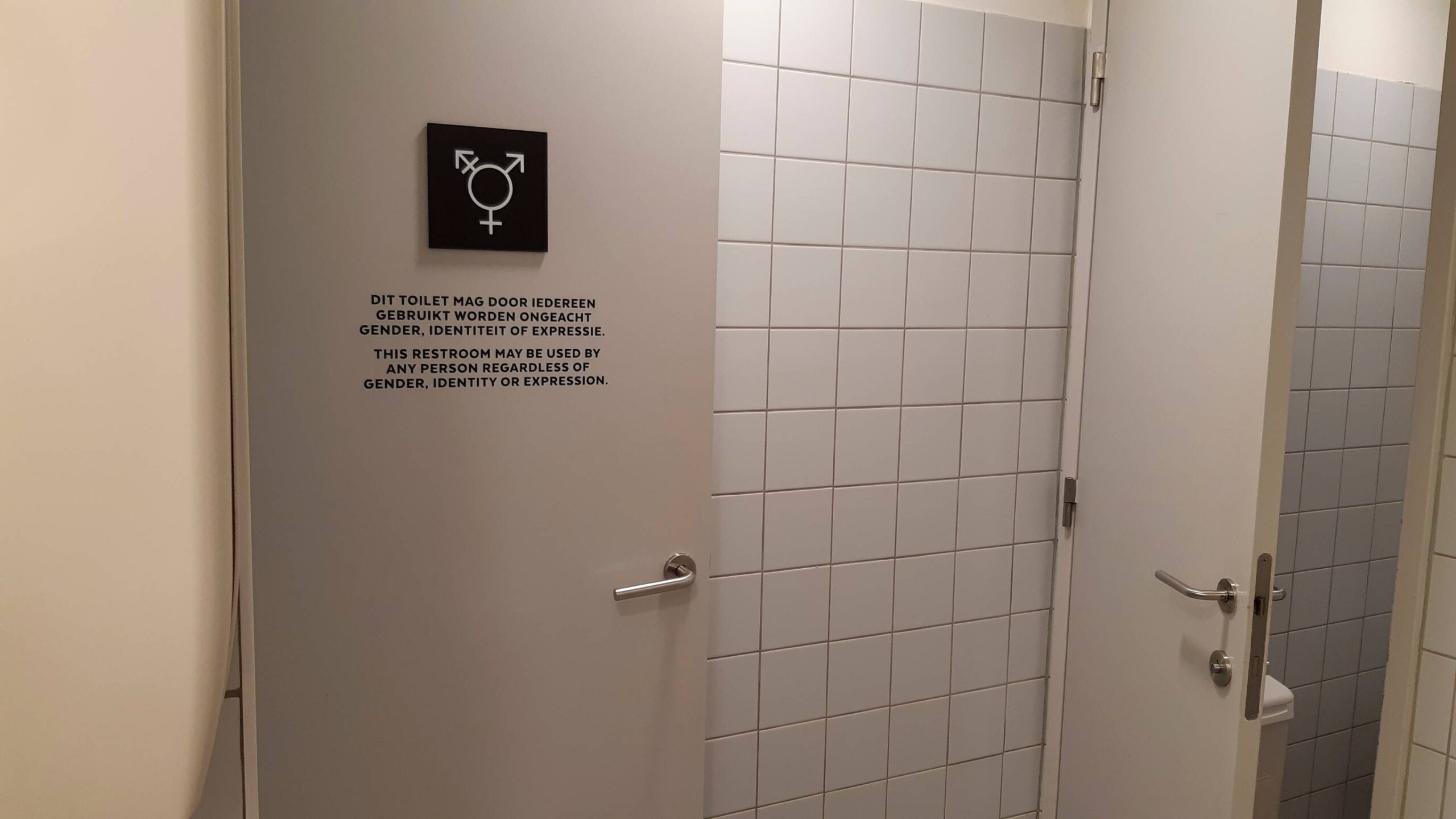
    Option 1 is effectively to say “these toilets are open to all”, or “these are aimed at those who identify as women”. As long as it’s clear that the intention is not to actively exclude men from those toilets, and that people can use which ever toilet they feel most comfortable in, that appears to be legal.

    Option 2 is to take a toilet block currently marked as “women” and to make clear that these are a single sex facility as per the Equality Act 2010 – in other words, these are toilets specifically for biological women.

    The same goes for pretty much everything that’s currently gendered.

    The complicator in the case of toilets is that under UK law, employers are required to provide separate toilet facilities for men and women unless each facility is a fully enclosed, lockable room intended for single occupancy – and the tricky part is that a lot of toilets on a university campus may well act both as staff toilets, and (service provider) student toilets.

    But nevertheless, this still opens up considerable flexibility. Neither the ruling, nor the draft guidance, nor the finalised guidance, is going to tell universities (and their SUs) what to do about a given facility, service, group, scheme or position – and nor will it supply information on the expectations of staff and students on a given campus.

    And that sets up a problem for September.

    • If a toilet block currently marked “women” is marked up in an Option 1 way, some people on campus will be furious that it’s not been defined exclusively for biological women.
    • If a toilet block currently marked “women” is marked up in an Option 2 way, some people on campus will be furious that it’s not been defined in a way that is trans inclusive.

    The decisions across the portfolio of facilities, services, groups, schemes or positions almost by definition can’t be consistent – and so the way those decisions are made, and why, will be crucial – as will careful communication of them.

    In other words, here in the dying days of May, the time to roll sleeves up and get consulting with staff and students is now – not during Welcome Week.

    Source link

  • Steps Toward Creating a More Accessible and Inclusive College Classroom – Faculty Focus

    Steps Toward Creating a More Accessible and Inclusive College Classroom – Faculty Focus

    Source link

  • Steps Toward Creating a More Accessible and Inclusive College Classroom – Faculty Focus

    Steps Toward Creating a More Accessible and Inclusive College Classroom – Faculty Focus

    Source link

  • What Your Students Aren’t Telling You: Listening, Learning, and Leading with Empathy – Faculty Focus

    What Your Students Aren’t Telling You: Listening, Learning, and Leading with Empathy – Faculty Focus

    Source link

  • What Your Students Aren’t Telling You: Listening, Learning, and Leading with Empathy – Faculty Focus

    What Your Students Aren’t Telling You: Listening, Learning, and Leading with Empathy – Faculty Focus

    Source link

  • Inclusivity beyond the buzzwords | Wonkhe

    Inclusivity beyond the buzzwords | Wonkhe

    Universities highlight language support programs as proof of their commitment to inclusivity, yet these offerings are often expensive, overly prescriptive, optional, and poorly integrated.

    Pre-sessional provision comes with hefty price tags, making language support a privilege rather than a right. Students who cannot afford them are either excluded from higher education or forced to struggle in degree programs where linguistic preparedness is assumed rather than supported.

    I once supported a postgraduate student from East Asia who was excelling in her subject knowledge but consistently received vague feedback like “lack of critical engagement” on her assignments.

    She was deeply confused – she had addressed all the questions and provided detailed analysis. In our one-to-one tutorials, it became clear that the issue was not her understanding of the topic, but that she hadn’t been explicitly taught what criticality looks like linguistically in UK academic culture.

    No one had ever shown her how to signal argument structure or contrast ideas subtly in writing. Despite her intelligence and effort, she was left to decode these expectations on her own, and it affected both her grades and her confidence.

    What does it say about our commitment to inclusion when students are expected to navigate invisible academic norms alone?

    Supplementary or fundamental?

    To make matters worse, in-sessional provision, where available, is often treated as an afterthought rather than an integrated resource, leaving students struggling to meet academic demands or seeking help on their own time while managing intensive timetables, packed with lectures, assignments, and deadlines.

    This approach positions language support as a supplementary service rather than a fundamental component of academic success, reinforcing the notion that multilingual students must “catch up” instead of valuing their linguistic abilities as assets.

    In one programme I supported, attendance at in-sessional sessions was minimal at first – not because students didn’t need them, but because they didn’t know they existed. There was limited to zero visibility of these educational initiatives, and many students were unaware of how language development related to academic success.

    It wasn’t until we launched a more systematic approach to promotion – class presentations, VLE announcements, email campaigns, ads on campus screens, fliers, and peer recommendations – that attendance noticeably increased. Word of mouth became our most effective tool, which was both encouraging and telling. If in-sessional provision only gains traction through backdoor advocacy, how inclusive is that, really?

    Shortcomings, however, appear to extend far beyond language provision. Pedagogical practices in many institutions remain stubbornly monolingual, built on the assumption that a single teaching model can work for all students, regardless of their linguistic and cultural backgrounds.

    This one-size-fits-all approach, which assumes uniformity in learning needs and styles, disregards the diverse ways students engage with knowledge. Standardised teaching methods leave little room for flexibility, forcing students to conform rather than allowing for adaptability and meaningful engagement.

    Conformity or critical thinking?

    Nowhere is this more evident than in assessment. Universities continue to rely on rigid, English-centric evaluation methods including essays, presentations, and exams graded against standardised linguistic norms, disadvantaging multilingual students rather than valuing their perspectives.

    If inclusivity truly mattered, assessments would prioritise critical thinking, originality, and academic engagement over strict linguistic conformity. Instead, institutions uphold traditional models that often disadvantage students from diverse linguistic backgrounds. For example, I once co-marked a brilliant essay that presented a nuanced critique of policy frameworks. It was downgraded – not for weak argumentation – but for not aligning with “expected” academic language norms.

    Despite offering original insights and drawing on a range of interdisciplinary sources, the essay was penalised for its occasional non-standard syntax and limited use of discipline-specific vocabulary. Rather than recognising the intellectual rigour of the argument, the feedback focused almost exclusively on surface-level language issues. How does that reflect the critical thinking we claim to value?

    While universities struggle to create truly inclusive academic environments, the burden of making the system work falls on EAP practitioners and frontline educators, who are expected to foster inclusivity despite being overstretched, underpaid, and under-resourced. Many receive either little or no formal training in multilingual pedagogies, yet they are tasked with ensuring student success within a rigid system that resists adaptation. From personal experience, I can say that navigating this contradiction is emotionally and professionally draining.

    I’ve sat in staff meetings where the pressing need to be inclusive was discussed, only to return to classrooms with no budget for updated materials, no time allocation to work on such updates, and no training on how to implement the very principles being endorsed.

    At times, I’ve been expected to “embed inclusive practice” without any clear guidance on what that actually means in context, leaving me to interpret and apply vague directives on my own. This disconnect creates a sense of frustration and helplessness – wanting to support students meaningfully but lacking the structural backing to do so effectively.

    The disconnect is glaring – universities promote inclusivity in their policies while shifting the responsibility of implementation onto educators who lack the necessary resources, training, and structural support to make meaningful change. Institutions seek improvement without providing the means to achieve it.

    On top of this, accreditation bodies, which should act as enforcers of inclusivity, are complicit in this shortcoming. While they promote the idea of inclusivity as a core value, their competency frameworks remain vague and unenforceable, allowing institutions to check superficial boxes rather than implement meaningful change – without ever being truly held accountable.

    Instead of pushing institutions toward equitable assessment strategies, embedded language support, and multilingual pedagogies, accreditation bodies enable them to maintain the status quo while advertising themselves as champions of inclusion.

    Integrating EAP

    If universities and accrediting bodies are serious about inclusivity, they must dismantle their one-size-fits-all approach and invest in flexible, student-centered models. EAP should not be an expensive privilege but an embedded, fully integrated component of degree programs.

    Language support must be available without financial barriers and tailored to students’ actual needs rather than forced into a standardised mold that ignores their diverse experiences. Institutions must move beyond the outdated view that multilingualism is a problem to be fixed and instead embrace it as an academic strength that enhances learning for all students.

    For example, multilingual writing workshops, co-delivered by faculty and language specialists, have shown success in small-scale pilots. Why not scale them? Similarly, peer mentoring across language backgrounds fosters both inclusion and academic development. These are not costly solutions, but they do require intention and planning.

    Assessment practices must undergo reform. Universities should move beyond evaluating students solely through rigid linguistic norms and instead adopt translingual, context-sensitive assessments that measure intellectual engagement, not just English proficiency.

    Traditional assessment models often privilege students who are already proficient in standardised academic English, disregarding the depth of thought, creativity, and critical analysis that can be expressed through diverse linguistic resources.

    If higher education truly values critical thinking and originality, its assessment models must reflect that rather than simply rewarding those who conform to narrow linguistic standards. Practical steps might include offering multilingual glossaries during assessments, encouraging multimodal submissions (like presentations or podcasts), and designing rubrics that focus on analytical rigour rather than grammatical precision. These shifts do not dilute standards—they redefine them to reflect actual learning.

    Beyond reforming teaching and assessment, universities must stop offloading the responsibility for inclusivity onto individual educators. Institutions must invest in faculty development, providing structured training in multilingual pedagogies and equitable assessment models.

    Educators should not be expected to figure out inclusivity on their own – institutions must offer policies with clear, actionable steps that guide them in creating learning environments that serve all students, rather than relying on vague inclusivity statements that sound aspirational but achieve little. This might include mandatory training modules for new staff, collaborative spaces where educators can share inclusive teaching strategies, and formal incentives for inclusive curriculum design.

    At the same time, accreditation bodies must reimagine competency frameworks and accreditation schemes to ensure that inclusivity is not just encouraged but required. These frameworks should move beyond broad, generic statements and introduce enforceable, transparent standards that hold institutions accountable.

    Accreditation should no longer be granted based on superficial inclusivity measures but tied to real, measurable efforts in integrating multilingual pedagogies, equitable assessment strategies, and accessible language support. Regulatory bodies must stop allowing universities to simply claim inclusivity and start demanding that they prove it.

    The future of inclusive higher education hinges on institutions and accrediting bodies being willing to rethink not just their policies but their entire approach to teaching, assessment, and faculty support. Without structural change, inclusivity will remain more of a promise than a practice – a feel-good slogan that limits accountability while leaving students to navigate an inequitable system.

    And for those of us who teach, support, and listen to these students every day, that’s not just a policy failure – it’s a deeply personal one. So, the question remains: are universities truly committed to inclusivity, or are they merely preserving the status quo under the illusion of progress? If it’s the latter, then higher education is not meeting the needs of the very students it claims to support. It’s not enough to say the right things – it’s time to do the right things.

    Source link

  • 5 Strategies to Create Inclusive Learning Environments for International Students – Faculty Focus

    5 Strategies to Create Inclusive Learning Environments for International Students – Faculty Focus

    Source link

  • What women experience in the university estates professions

    What women experience in the university estates professions

    I am as aware as anyone else of the reputation of AUDE (the Association of University Directors of Estates) for being something of a white male club.

    As the Executive Director of that club, I think the reputation is less and less true with every passing year, though of course I would say that. The association is very much on a journey on EDI issues, but we are doing more than you might imagine.

    Our small office team is undertaking ILM Level 4 training on managing equality and diversity. We are looking at inclusive design and have recently published a new guide to neurodiversity design and management. And we are looking more closely at the association membership itself to read between the lines of the demographic patterns available to us.

    What we found

    Our membership identity data is patchy: we’ve only been measuring this since 2022, and it isn’t compulsory for members to share. 47 per cent of those members we can measure are women. That starts to seem something like parity. But at the most senior level of membership, of those colleagues making it through to a director role, the proportion is more like one in six, significantly below the level in other professional services. We wanted to examine the barriers to women’s progress in estates, and did so in the recently published report Well the assumption is…: Conversations with women leaders in estates and facilities which is available to colleagues across the sector on the AUDE website.

    The report looks at the career experiences of women in estates – colleagues that are leading on the fabric and the development of your campuses today, vital to the successful and financially viable functioning of your institution. And it highlighted a very consistent set of obstacles, including the lack of a visible career path, the constantly undermining nature of casual sexism– anything but casual and at its worst deployed in abhorrent and confidence-wrecking verbal hand grenades – as well as issues around health, maternity and menopause, and more.

    Responses to the report

    It taps into the frustration of women telling us their stories and processes them into an emotive document that is quite unlike the tone of anything we’ve published before. I recommend a read. We’ve had several very consistent reactions to this work.

    The first is most common from women. “Yes”, they have told us, “This is the experience exactly. You haven’t missed anything out. I recognise these stories from my own life”. In private we’ve heard further stories, of things happening now, that would bring many of us to an abrupt and shocked halt, and more than reinforce every word of the report. I’ve spoken to many female members of AUDE, and it doesn’t take much work to uncover experience and attitudes that are damaging and have held us back, or acted as entirely unwelcome and unnecessary obstacles, including several in my own career which are referenced in the report.

    A second common reaction has been from male members of the association scrambling to get past the sheer embarrassment of having it spelt out to them how awful other men can be – in their teams, in their universities, now. This group includes colleagues doing great proactive things to quickly learn from the report and have fruitful conversations with others about what needs to improve. Those colleagues are swotting up on pay gap information, talking to HR about family friendly policy and blind recruitment processes. They are opening their eyes to the issues, seeking a greater level of understanding including within their own teams, challenging the status quo, and taking steps towards becoming EDI allies within their institutions.

    But we’ve also had a reaction which can best be expressed as – and in awareness of a very un-Wonkhe-like word coming up – “Why have AUDE been so arsey about this? AUDE have slightly embarrassed themselves here by being so visibly annoyed. What bad taste they’ve shown. We’re going to stay silent and dignified.”

    For me, it takes a particularly adept form of mental gymnastics to be more annoyed by the tone than by the message. Yes, with the help of the dictionary definition, we have been bad-tempered. Collecting and listening to our report participants’ stories as we did, bad-tempered is what we felt.

    Refreshing honesty

    The entire EDI agenda faces more of a pushback, right now, than for decades. Silence in the face of grotesque disadvantage may seem dignified to some. But to others it will seem altogether darker, a caving into the status quo that is impossible to justify. Many people can see the difference and have thanked us for calling out the unacceptable, and our “refreshing, real, human honesty”.

    Those women participating in the report’s production were immensely keen to give full credit to the many men who had acted as career mentors and role models. But such solidarity was far from the only experience. People don’t like being forced to confront difficult issues, but it is what we have asked of the AUDE membership with the publishing of this report. This is a difficult issue, and it is right under our noses. If (male) colleagues will not trust the take of our report, trust other things. Speak to the women in your family as your first port of call. Casually undermined at work by men without the experience or the understanding or the insight of the woman in the conversation? That’s the least of it. When was the last time you truly listened to some of the quieter voices in your institution? What would you hear if you did?

    What’s next?

    We fully acknowledge our shortcomings. The report, about women’s experiences, was commissioned by the man that leads our EDI group and written by the man that leads on the association’s comms. Not everyone will like that. We fully understand we haven’t dealt with intersectional experiences in an attempt to understand the differences that faith or disability or sexuality or ethnicity may add to the mix.

    From my perspective the association is late to the party so can hardly expect congratulations on finally arriving; our (construction) industry is behind the times; our colleagues (via a September 2024 benchmarking report on salary and conditions) tell us that the institutional stance on EDI is highly significant in their decision to stay in HE roles; and corporately, buy-in to EDI is expected of us at every level of seniority, and a gap in this area could rightly hamper our promotion prospects.

    Culture change takes a long time. We don’t want to be an obstacle but an enabler. This is exactly where we should be – learning, changing, and bringing others with us whenever we can. I’m proud the association is on this journey.

    Source link

  • To accelerate action on gender equality, we must consider both sides of the coin. #IWD2025

    To accelerate action on gender equality, we must consider both sides of the coin. #IWD2025

    It’s International Women’s Day. Today on the site, Professor Lisa-Dionne Morris explores the critical role of Black women in academia and industry leadership, particularly in Engineering and STEM, highlighting their groundbreaking contributions and the systemic barriers that persist. Read that piece here.

    Below, HEPI’s own Rose Stephenson challenges us to look at ‘the other side of the coin’ in the fight for gender equality – you can read that piece below.

    Firstly, Happy International Women’s Day 2025.

    The theme this year is ‘Accelerate Action.’ It’s a great theme, and to accelerate action in terms of gender equality, we have got to focus more on ‘the other side of the coin’. Let me explain three examples:

    1. We should do more to ensure that parenting is supportive and inclusive of fathers.

    Joeli Brearly, outgoing CEO of Pregnant then Screwed, recently gave evidence on Shared Parental Leave in parliament. She stated:

    ‘It’s time we asked ourselves a fundamental question about what sort of society we want this to be. Do we want to continue to perpetuate outdated and harmful gender stereotypes that tell us it is women who do the nurturing and the caring and the childrearing and are the homemakers and that men just need to pull their socks up and get back to work? They are strong, stoic breadwinners and don’t need this time [parental leave] to nurture and care for their family. The mental health of men in this country is in crisis. Boys are saying they feel lost and disconnected, and it’s no wonder when our laws are literally telling them: “you don’t need time to nurture and connect with your family.”’

    Inclusive parenting is good for dads, it’s great for kids, and it benefits Mums, too. My mantra is, ‘We will never have equality in the workplace until we have equality in the home’. Until we reach a point where an equal number of dads leave work in time for the school run, take time off for holiday care, or work part-time and flexibly, we will never reach parity in the workplace. And why would we want to? If women collectively reach equal pay, equal status and the resulting equal responsibility at work yet continue to shoulder most domestic and childcare duties, we have significantly undermined progress towards equality.

    The HEPI report I published last year, Show Me the Money, an exploration of the gender pay gap in higher education, demonstrated the importance of increasing paid paternity leave as a lever for narrowing the gender pay gap. If your institution is monitoring the uptake of senior or professorial roles by gender, are they also monitoring the uptake of post-birth parental leave, shared parental leave and statutory parental leave by the same measure? Is there monitoring and reporting on the genderisation of part-time work applications, flexible working requests and the granting of these requests? That is ‘the other side of the coin’ and we should not underestimate the hurdles fathers may have to overcome to ask – or be granted – the flexibility we more commonly expect for mothers.

    2. We should encourage boys and young men to work in teaching and social care roles to the same extent that we encourage women to work in engineering and tech.

    When working as a secondary and sixth-form science teacher, I undertook a project at my school that challenged pupils to critically think about the subject choices they were making at GCSE and A-Level and how this might be affected by gender stereotyping. There was plenty of support and encouragement for female pupils in science and maths subjects (as there should be). However, there was a notable vacuum in the equivalent campaigns to open up opportunities for boys.

    I witnessed first-hand how the gendering of subjects and occupations suppressed the potential of young men. One boy in my tutor group desperately wanted to complete his work experience at a hair salon. This pupil would have benefitted from a ‘hook’ that could have driven his interest in education and the future world of work. Unfortunately, his family disapproved of his choice, and he spent his work experience on a building site. This did nothing to enhance his motivation towards education or work. This was a valuable opportunity for a disengaged young man to pursue something that genuinely sparked his interest, and I have no doubt he would have excelled at. However, this opportunity was lost because it was not deemed ‘masculine’ enough. This was one example, but the boys I taught were quite open about feeling they couldn’t choose the subjects they wanted. There was an element of ‘acceptable’ choices.

    It is tragic that in 2025, UK society is still limiting the possibilities for young men to follow their real interests. As a sector, we should push hard against the narratives perpetuating this. Again, if your institution is monitoring and encouraging the uptake of subjects such as engineering or coding for female students, are they also monitoring the update of nursing courses by male students? Are there considerations of male uptake and completion of courses in your Access and Participation Plans?

    3. We should consider developing ‘Men’s Leadership’ courses.

    I’ve been lucky enough to partake in various forms of ‘Women’s Leadership training’ run by Advance HE and the Women’s Higher Education Network (WHEN), among others. Of course, non-gender-specific leadership training is available. However, women’s leadership courses have existed due to the historic and ongoing underrepresentation of women in leadership positions. Further, they provide a female-only space for women to develop their leadership skills.

    I vividly remember being told by a presenter on the Advance HE Aurora programme to ‘have heft’ and ‘take up space’. (I replay this memory regularly in all the privileged but occasionally intimidating speaking and media events I undertake in my current role.)

    But as we move closer towards gender parity – and I know there is more work to do – should we be thinking about the other side of the coin? Women’s leadership courses can often focus on developing traits deemed to be held by traditional, therefore male, leaders. Having more confidence, making your voice heard, etc. Now that most of society accepts that women can also make great leaders – and there are many stand-out examples in the higher education sector – where is the equivalent training for men?

    Where are the male leadership courses that teach men the skills of making space for others, speaking inclusively, building relationships, the importance of being a mentor, and using coaching techniques to build confidence in their colleagues? Surely, some male colleagues who wish to become leaders can learn skills that may be (stereotypically) more prevalent in female colleagues, and developing these skills would benefit everyone.

    And sure, some men will already possess these skills, just like some women have a natural ability to take up space. My question is, if we accept that women are socialised in a particular way to be missing some leadership or workplace skills, then can we accept that for men? Do we value stereotypically ‘female’ leadership skills enough to offer a platform for developing these skills in male colleagues? Further, should leadership courses for men include panels discussing how to balance leadership roles with childcare responsibilities? (And yes, those panels exist in women-in-leadership courses) Perhaps when we get to this point, we really will be considering the other side of the coin.

    If you found this blog interesting, you may wish to look back at some of our previous International Women’s Day blogs:

    HEPI has also published the report:

    HEPI will soon publish an updated report on educational achievement by boys and young men, a significant and long-standing issue that has been largely ignored by policymakers. The report considers the consequences for individuals and societies and proposes several levers that could be used to drive change. This report will be published this month – March 2025. If you haven’t already, sign up for our blog below to get this report hot off the press.

    If you wish to write a blog for International Men’s Day on November 19th, submissions are very welcome.

    Source link

  • Humane societies are thoughtful about how to promote equality, diversity and inclusion

    Humane societies are thoughtful about how to promote equality, diversity and inclusion

    We all knew that the Trump administration’s attacks on diversity, equality and inclusion would have ramifications in the UK, but we probably didn’t expect it to show up quite so quickly.

    This Saturday’s lead in The Times warned that – in tacit contrast to President Trump’s apparent intention that all federal funding should cease to organisations or projects that champion inclusion – UK universities could now lose public money if they do not.

    This refers, of course, to the ongoing consultation on the people, culture and environment measure in the 2029 Research Excellence Framework. Back in 2023, our tongues firmly in our cheeks, we held a panel session at our Festival of HE titled “Has REF gone woke?” That joke no longer looks so funny.

    DK has explained elsewhere on the site exactly what’s wrong with the claims about the REF in The Times, should you need ammunition to fire over the dinner party table. We should hardly be surprised by now to see half truths and scare tactics mobilised in this particular culture war. Its proponents are not in the main motivated by a concern for evidence as by animus against a particular set of values which it suits them to project as being in opposition to [delete as appropriate] common sense/free market economics/honest working people/standards in public services/The Meritocracy.

    While the spectacle in the US of wealthy white men openly deploying their enormous power against those who are minoritised and disenfranchised is truly horrifying, FT science columnist Anjana Ahuja last week pointed to a larger concern: that scientists, funders and research organisations would quietly divest from equality, diversity and inclusion initiatives, or deprioritise vital research into differential experiences of or outcomes from public health, provision of public services, justice, or education, consciously or unconsciously orienting the scientific endeavour towards the locus of power rather than towards truth or justice. Any such reorientation would have a serious impact, both through loss of talent in research, and loss of knowledge that could improve, and save, many lives.

    The politics in the UK

    You might feel that despite the tendency of part of the UK media to promulgate the culture wars, UK research is unlikely to experience anything like as serious as the US. And that is probably correct in the short term, given the current flavour of the Westminster and devolved governments. The temptation when there is a lot of noise but without much real likelihood of action, is to stay quiet, and wait for the noise to pass. That would be a mistake.

    Despite the size of the Labour government’s majority, the current political battle – including the Labour Party – is on the populist right. The Conservatives under opposition leader Kemi Badenoch are locked in a struggle with Reform, which is currently not only beating the Tories in the polls, but is also neck and neck with Labour as a chunk of (socially, if not necessarily economically) conservative voters become impatient with Labour but are not ready to turn back to the big-C Conservatives.

    None of this should be an immediate cause for concern – the next election is a long way off, and Farage remains a good distance from No 10. But it does appear to mean, unfortunately, that political discourse tends to gravitate to the populist right, as it is these potential Reform voters both parties hope to woo back. Badenoch – whose anti-woke credentials formed part of her appeal to Tory members – has called diversity and inclusion work “woke indoctrination.” Labour has been adamant on the need to cut net migration, a perennial Reform issue, despite the likely impact on its stated priority of economic growth. The next Westminster election may yet be fought on an “anti-woke” platform. And Labour may be a one-term government, as Biden was in the US.

    What could the response be?

    An instance last week in which Secretary of State for Health Wes Streeting was asked about diversity, equality and inclusion activity in the NHS gives a sense of the issues higher education institutions will be working through in this space. Streeting’s measured answer acknowledged the cost of such activity in a time of economic constraint but robustly defended the importance of, for example, anti-racist bullying and harassment work in the NHS. He added that on occasion some “daft things” have been done in the name of equality, diversity and inclusion – the part of his answer which inevitably formed the bulk of media headlines.

    On equality, diversity and inclusion there is a principle at stake and a “political fight” to be had, in Streeting’s words, in which organisations that operate in the public interest must continue to stand up for the idea that any just and humane society makes a meaningful effort to address systemic and structural inequality no matter the economic environment or the political backlash.

    But nor should external pressures dissuade the academic and scientific community, higher education institutions or students’ unions, from examining the evidence, and keeping the public conversation open about how such efforts are best accomplished in practice.

    The culture wars thrive on category slippage between principle and practice – when one or two examples of specific initiatives are held to stand for all forms of equality and inclusion work. Anyone may have doubts about the merits of any given approach, and the best way to engage with those doubts is through evidence and good-faith discussion. Higher education has a responsibility not simply to protect and defend its own practice but to subject equality, diversity and inclusion practice to thoughtful scrutiny in the interests of promoting that principle – to contribute to making the public conversation as informed as possible.

    Research England, in its extended consultation and discussion of its people, culture and environment measure, and its mobilisation of evidence, is therefore a shining exemplar of good practice. Inevitably some will feel that the resultant system puts too much weight on equality, while others will wish that the funding mechanisms would lean in harder.

    What is not really arguable is that our collective approach to the management of research and education – what is prioritised, who is supported – has real-world consequences that shape the future of our society. To suggest that it’s wrong for evidenced consideration of how equality, diversity, and inclusion manifests in the funding mechanisms that drive those decisions is simply absurd.

    Source link