Category: EYES

  • Empowering youth through environmental storytelling

    Empowering youth through environmental storytelling

    Through storytelling, we can bring climate-related data to life. Through storytelling, young people can use their voice and the voices of those around them to turn something complex, global and overwhelming, into something local, tangible and meaningful. Through storytelling, young people can help shift narratives and bring to the forefront stories of action and of hope.

    This is the idea behind the EYES climate storytelling curriculum.

    Now available on the eyesonclimate.org website, the curriculum is the culmination of the Empowering Youth through Environmental Storytelling project (EYES), an Erasmus+ co-funded project by News Decoder, The Environment and Human Rights Academy (TEHRA) and Young Educators European Association.

    The Climate Change 101 unit begins with the basics: human activities driving climate change and what temperature increase means for our planet. Students are tasked with producing an article that explains the topic to a younger audience.

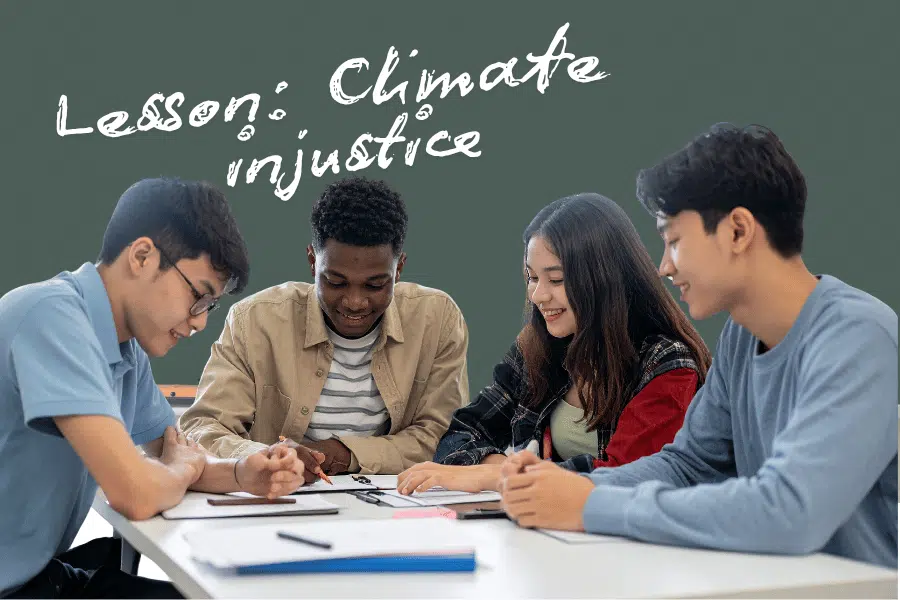
    A unit on Climate Injustice walks students through the uncomfortable reality that those causing climate change are suffering the least from its impacts. Those who have contributed the least? They tend to be in the grip of climate change.

    Human stories from a man-made disaster

    We know that learning about the devastations of the climate crisis can leave young people feeling anxious and angry. We also know from the teachers who piloted the EYES curriculum that it’s important to localise these topics.

    So in the Climate Injustice unit, students are tasked with finding a human story: someone to illustrate climate injustice at play in their local area or region.

    Hearing stories about people lets us understand the reality of an issue. Telling these stories gives young people a device for meaning-making and a platform for agency.

    In our Systemic Change unit, students learn about the interconnected mechanisms that keep our economy rooted in endless economic growth and fossil fuel use. They learn about the ‘deep’ leverage points for making change — the rules, the goals and the mindset of a system. They research case studies on commodity supply chains and form their questions into a story pitch.

    Our curriculum runs across school subjects for students between 15 and 18 years of age. Other units include: Tipping Points, Planetary Boundaries, Human–Nature Connection, The Carbon Budget, Doughnut Economics and a Climate Justice Case Study.

    Solutions are out there.

    In Systemic Solutions to the Climate Crisis, we showcase seven inspiring examples of climate solutions from around the world, from local projects such as community-owned solar panels in Mexico to the transition to renewables in Uruguay, to global movements such as recognising the rights of nature or degrowth in the Global North.

    Meaningful action can happen at any scale. By engaging with these case studies, students can see that stories of just and transformative systems change happen all around them.

    There are so many stories yet to be told, and that in itself is empowering.

    To bolster student projects, the curriculum includes units on journalism and storytelling: The Principles of Journalism, Fact Checking and Misinformation, Interviewing and How to Write a Pitch, Write an Article and Produce a Podcast.

    “Storytelling can turn young people into active users of climate knowledge, and even change makers,” said Andreea Pletea, The Environment and Human Rights Academy programme manager. “Students can even help shift dominant narratives by bringing to the surface systemic solutions to the environmental crises that also address inequalities.”

    Causes and systems

    Aside from storytelling, the main focus of the EYES curriculum is on systems thinking and climate injustice.

    “We invite learners to go upstream to the root causes of the crises we face, and question why, despite increasing awareness, meaningful action often lags behind,” Pletea said. “Seeing the big picture particularly through systems thinking and global justice can also help young people make sense of what’s going on in their own local context.”

    Pletea said that ultimately, the goal is to plant a seed. “That all of us, including young people, are more than consumers,” she said. “We are citizens with a voice and power to act and demand change, and especially when we come together.”

    The EYES project itself began as a seed. TEHRA and News Decoder came together to improve climate change education through storytelling, and created a set of materials that were piloted in multiple education contexts across Europe, Africa and Latin America.

    The seeds to stories

    In Slovenia, Kenya and Colombia, pilot students exchanged letters on their local experiences of climate change. In Kosovo, a Roma community of young people visualised their personal experience of climate change through art.

    At a summer camp in Belgium, students played climate change games, pulled apart the individual carbon footprint and were guided through a nature meditation. In Kenya, students visited the precious Karura national park and wrote stories about tipping points and the value of forests.

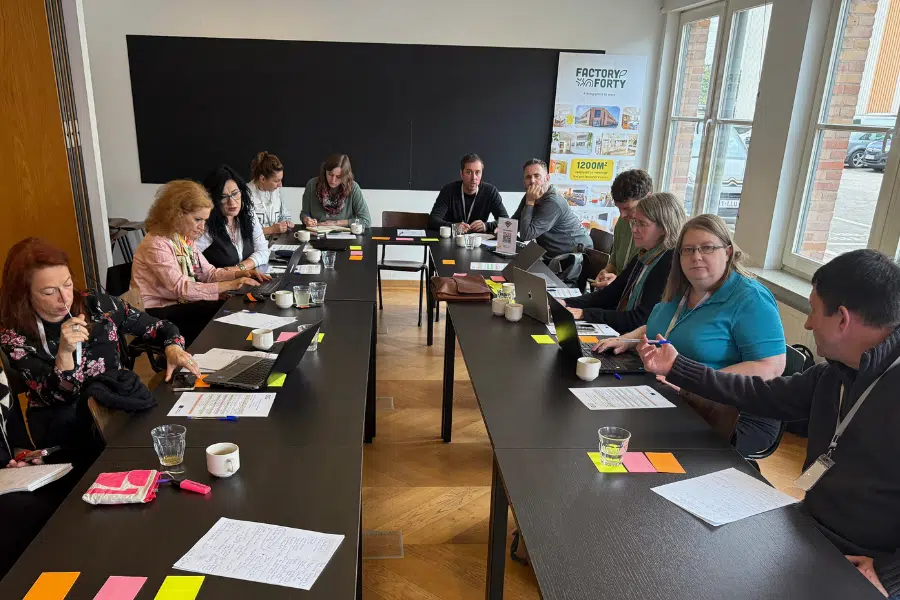
    The feedback from students and educators, including at a three-day educators workshop in Brussels in October, helped shape and restructure the curriculum. It evolved into a set of off-the-shelf resources that can be used by multiple teachers in one school or independently by learners.

    If you are an educator, we invite you to dive into climate change with your students and use the EYES curriculum. Students need to learn about the root causes of the climate crisis so that they know in which direction to head — in their future careers as much as in their personal set of values.

    Through storytelling, young people can engage with the reality that is climate change, both as authors and as listeners. Storytelling is the way we understand ourselves: why we act the way we do and how together we can solve the problems that humankind has caused.


    Questions to consider:

    1. How can storytelling can turn someone into an active user of climate knowledge?

    2. What types of climate activities did students in different countries do through the EYES lessons?

    3. What stories about climate change have you found interesting to read or hear about?


    Source link

  • When a company’s enviro claims sound convincing …

    When a company’s enviro claims sound convincing …

    Many companies contribute to the climate crisis and make a profit doing so. As consumers and governments pressure them to reduce their carbon emissions, they look for ways to make themselves appear environmentally friendly. This is called green marketing.

    As a journalist, you need to learn to spot what a business really means by its green marketing.

    Greenwashing is when a brand makes itself seem more sustainable than it really is, as a way to get consumers to buy their product. For example, let’s look at fashion, an industry that is responsible for between 2 and 8% of global greenhouse gas emissions.

    In the absence of environmental legislation around the fashion industry a business might get themselves certified under a sustainability certification scheme — these are standards developed by governments or industry groups or NGOs to measure such things as energy efficiency or processes that are low carbon or carbon neutral. There are more than 100 different such certification programs.

    Companies tout these certifications. But a 2022 study by the Changing Markets Foundation (CMF) found that the standards set by the majority of the 10 or more popular certification initiatives for the fashion industry aren’t difficult to meet and lack accountability.

    Artificial claims about sustainability

    Fast fashion relies on cheap synthetic fibers, which are produced from fossil fuels such as oil and gas. And while you might assume that clothing with labels such as “eco” or “sustainable” might have fewer synthetics, you’d unfortunately be wrong.

    Another study by CMF found that H&M’s “conscious” clothing range, for example, contained 72% synthetics — which was higher than the percentage in their main collection (61%). And it’s not just H&M. While the same study found that 39% of products made some kind of green claim, almost 60% of these claims did not match the guidelines set out by the UK Competition and Markets Authority.

    The same is happening in the meat and dairy industry. Companies say they are reducing their environmental footprint by engaging in “regenerative agriculture”, a farming approach that aims to restore and improve ecosystem health. They argue that it reduces greenhouse gas emissions and helps store carbon in the soil.

    But relying on carbon storing in soil is not enough. An article in Nature Communications found that around 135 gigatonnes of stored carbon would be required to offset the emissions that come from the agriculture sector. This is roughly equivalent to the amount of carbon lost due to agriculture over the past 12,000 years, according to CMF.

    But companies grab onto these empty promises, perhaps knowing that the general public might only see regenerative agriculture and other “green narratives” as promising.

    Look for real solutions to climate change.

    For example, Nestlé tells their customers that it is addressing the carbon footprint of the agriculture industry by supporting regenerative agriculture, stating on its website that in 2024, some 21% of the ingredients they source come from farmers adopting regenerative agriculture practices.

    When you understand that regenerative agriculture is not the solution it has been made out to be, only then can you see through Nestlé’s branding.

    So how can you spot greenwashing?

    Let’s say you saw a press release from a company in an industry that has historically relied heavily on fossil fuels. It tells its readers that it plans to be carbon neutral by a certain date, or that it’s using recycled materials for a large portion of its production, or that its future is “green”.

    You might first wonder, is this an example of how companies are moving away from fossil fuels and towards a green future? How can you tell?

    1. Be skeptical.

    When something has to tell you that it is green, it might not be. Start your investigation right there.

    For example, if you were looking at Nestlé’s regenerative agriculture campaign, you would need to find out what regenerative agriculture is and how much it is indeed reducing greenhouse gas emissions. You can do this by starting with a good Google search: e.g “regenerative agriculture and greenhouse gas emissions”.

    Once you click on a number of articles that report on this topic, you’ll be able to read about the different studies and data into the topic. Follow the sources used when an article cites a study or data. The article should hyperlink or list the sources. But those hyperlinks might take you to other secondary sources — other articles that cited the same data.

    For example, an article might cite this statistic: sustainability certifications increase consumer willingness to pay by approximately 7% on average. The article might cite as the source this study published in the journal Nature. But that article isn’t the original source of that data. It came from a 2014 study published in the Journal of Retailing.

    So try to find the primary source and see how credible or reputable it is. Who conducted the research in the first place?

    If you wanted to find out what H&M’s “conscious” range really meant, you would start by looking at H&M’s website and reports to look further into their claims. Then, follow those claims.

    2. Research the wider industry.

    Whether you’re reporting on fashion, agriculture or any other industry, look into where its emissions are coming from, which companies are claiming what and what the evidence says needs to be done in order for these industries to reduce their emissions.

    Providing context is important. What percentage of global greenhouse gas emissions is this industry responsible for? Is it getting better or worse? What legislation is in place to reduce emissions from these industries? In order for you and your audience to understand the greenwashing of any company, this background information is vital.

    3. Go straight to the company.

    Once you’ve conducted some initial research, follow up with the company if you are using it as an example or focus for your article. On Nestlé’s website, for example, you can find contact details for their communications, media or PR department. Send them an email saying something like the following:

    “I am writing an article on regenerative agriculture and I’ve found some studies that show that soil sequestration through these practices are in fact not enough to be a real climate solution. Can you please provide me with a comment on what Nestlé thinks about this?”

    They might not answer, but that also says a lot. If they don’t reply to you after one or two follow-up emails, you might try calling them.

    If you try several times and in different ways to contact them and they failed to respond, you can state that in your article. That way your readers know you made the effort.

    Claims from corporations that they are doing all they can to help the planet are easy to make. But if we really want to slow down climate change, significant efforts have to be made. And it is the role of journalists to hold companies to account for the claims they make.


    Questions to consider:

    1. What is “greenwashing”

    2. What is one example of greenwashing?

    3. What criteria do you use when deciding whether to buy a company’s product?


    Source link

  • You have a story idea. Now what?

    You have a story idea. Now what?

    If you have already eaten a lot of cake another piece will make you sick. Maybe you are trying to stay healthy and sugary foods aren’t healthy. But maybe you have eaten healthy all week and deserve a treat. Or it is a new cake recipe your friend came up with. Or it’s your birthday. All those are great reasons to have that piece of cake now.

    Identify a “news angle”

    The achievement of your healthy diet, or the new recipe or your birthday are like news angles. They are the reason you will eat cake now. They also answer the question: What’s so special about this piece of cake?

    If you think of a story topic like this cake, the angle will define which direction the topic will take.

    You could tell your editor that your angle is that the carbon tax is new and experts think it might not be as effective in cutting emissions as politicians promise. Or the carbon tax is the latest in a series of taxes imposed by the government and people are so sick of taxes, they might vote in an anti-tax political party in the next election. Or maybe next week is a big anniversary for the environmental group that pushed for the tax in the first place — it’s kind of like their birthday.

    If your pitch was basically, “I think the carbon tax would make a great story,” your editors would likely pass on it. But maybe these pitches would catch their attention: 

    • A carbon tax just passed in Denmark marks a new way of lowering carbon emissions and other governments and political parties are watching to see if it works. If it doesn’t, it could set back the push for clean energy not only in Denmark, but across Europe.
    • The carbon tax in Denmark is a gamble on the part of the country’s environmental advocates. Increasing numbers of voters believe they are already overtaxed. If it isn’t as effective as promised it could push people to vote for conservative, anti-tax politicians.
    • Next month is the twentieth anniversary of Denmark’s Green Party. But amid the celebrations is some real concern. The environmental movement has placed a big bet on the new carbon tax — which has garnered significant opposition. 

    If it’s difficult to find an angle for your topic, start telling people around you about your topic and about what you’ve discovered through your research. What kinds of questions do they ask about it? What do they seem to be interested in? Do they ask you something that makes you think, hmm, that’s a good question! If so, then you’ve found your angle. 

    Narrow your focus

    There might be so many angles you end up all over the place. Editors won’t okay a story that they think will come in as a confusing mess. So it is also important to narrow your focus. In telling stories we are often tempted to tell people everything, but listeners and readers have short attention spans and limited appetites. How much cake can you eat in one sitting? 

    So think about what you want the focus of your story to be. It’s about a carbon tax. But is your focus on the effectiveness of it in lowering emissions? In that case you want to interview climate scientists. Is the focus about the politics of the tax? Then you want to talk to political experts. Maybe the story is about the cost of the tax on the economy. Then you will want to talk to economists and everyday taxpayers. 

    Before pitching the story, consider the one thing the story will be about, how you will focus on it and why that is important or interesting or relevant to the audience of the publication or show.

    Don’t worry that your focus is too narrow. You can use something small happening in a small place to tell a big story.

    What happens in Denmark could be emblematic of what is happening elsewhere or will likely happen elsewhere. The effects of one tax in one place could help explain the challenges of funding climate solutions in general. 

    Identify the problem and who it affects.

    The smaller the story, the easier it is for people to consume it and understand it and that is what your editors will look for in a pitch. 

    It is important to identify what is at stake and who will be affected by the problem at the heart of your story – the “stakeholders”. In a story about a carbon tax, are the people most affect the companies who pollute? Is it the taxpayers? Is it the environmentalists frustrated by the lack of action on climate change? Is it the politicians who risk losing the next election or the opposition candidates who might win office?

    Finally, do some initial research so you can present to the editors some information that shows the importance of the story and come up with a plan for how you will report it. Before an editor okays a story they want to be confident you can actually do it. 

    Here is how to construct a strong pitch:

    1. State what the problem is and why this is an important story now.: Remember to narrow your focus. Editors won’t likely okay pitches that are too vague or broad. 
    2. State how you plan to find a possible solution
    3. State the main data and the important context – What it is that makes this story important or particularly interesting or relevant to the audience.
    4. Who the problem affects.
    5. The news angle: Why is it relevant now
    6. How you plan to go about reporting the story– the data or reports you will seek the people you plan to interview.
    7. The big question your story will answer.

    Be concise

    Here is the real challenge: You have to keep it all short. Your pitch needs to show your editor that you don’t waste words and that you won’t turn in a story that’s a long, tedious, confusing read. Try to keep it to less than 300 words. 

    Be clear. Say only what you need to say. Don’t make your pitch flowery or use exclamation points. Keep to facts and keep out assumptions or biases. Don’t try too hard to convince. If the story idea is a good one it should convince on its own. 

    Finally, let’s give you an example. Imagine you are my editor and I am pitching a story about how to pitch a story. Here is my pitch. It is 194 words. 

    Young people around the world are itching to tell stories about the problems they see around them. But they find the pitching process intimidating. They’ve got big ideas but don’t know how to come up with an idea out of those big ideas that would grab the attention of an editor. Their story pitches end up too broad, vague and with too many angles.

    The result is that important stories don’t get told. I plan to talk to editors about the pitching process and identify the elements that make a strong pitch and the common problems they see in weak pitches. I will also rely on information put together by News Decoder’s Engaging Youth in Environmental Storytelling (EYES) project. 

    The story is timely because 19 October is World Mental Health Day and reporting and telling non-fiction stories is a great way for young people to think through the big problems they face and that they see in the world around them and to talk to experts who can help them put it all into context. 

    Ultimately, my story will answer this question: Why do some stories get published but other, equally important stories don’t?


    Source link

  • Should you give equal voice to all perspectives?

    Should you give equal voice to all perspectives?

    Journalists are often told to be objective and to tell both sides of a story. They are taught to seek multiple perspectives. This means that when reporters interview an expert about any given topic, they are encouraged to find another source with a different opinion to make it “fair” and “balanced”. 

    Journalists also know that conflict makes a story more interesting and that gets more eyeballs or ears which allows their news organizations to sell more ads and subscriptions. 

    But research any topic and you will find disagreements among scientists, ecologists, business leaders, politicians and everyday people. In other words you can just about always find conflict. 

    Be careful of this. In homing in on conflict you could create a false balance. That’s when you make two sides seem more equal than they are. 

    The classic example is climate change. One of the reasons why it took so long for governments to recognize the danger of climate change is that for years journalists would balance the many, many scientists warning about carbon levels with the very few scientists who said the problem was overblown. 

    So how can you report multiple perspectives without creating a false sense of balance?

    A few suggestions

    Focus on facts, not opinions. And know the difference. 

    A fact can be verified through data and anecdotes of things that happened and that can also be verified. 

    When sources give you information, ask them: “How do you know that?” and “Do you have evidence to back that up?” 

    Even when they have evidence to back up what they say, question why they take the stand they take, or why they came to the conclusions that they did. It is almost as easy to find evidence to support a position as it is to find conflict in a story. I found myself almost believing that the earth is indeed flat when an advocate of that theory seemed to offer up a pile of convincing evidence. 

    To get the public to not worry about the dangers of tobacco, people from the tobacco industry offered up all kinds of evidence for years. People from the fossil fuels industry can offer up all kinds of evidence that human behavior (like driving petrol-powered cars) doesn’t cause climate change. 

    So it is important when you publish information someone has given you, to explain to your audience how that person benefits or is hurt by the issue. 

    Not all experts are equal.

    When seeking opinions or assessments, do so from people with actual expertise. That’s not the same as a level of education or a fancy title. Don’t be afraid to ask people: “How do you know this?” Someone without a university degree might have lived experience with a problem, while someone with a doctorate might never have experienced what you are reporting on. Politicians are fond of talking about the problems of poor people even though many of them came from privileged backgrounds. 

    Don’t be afraid to challenge people’s statements. Let them know when you find contradictory information. When you challenge people it is not a sign of disrespect. It is a sign that you have carefully listened to what they said, have thought about it and are now questioning it. Disrespect is to take something someone says without really listening or thinking about it. 

    Question data people cite or that you find. A census conducted in 2010 in Nabon, a rural area in Ecuador, found that almost 90% of the population was “poor”. That’s an astounding figure, and if used as data in the media, paints a very particular picture. However, a different study in 2013, conducted by the University of Quenca with the Nabon municipal government at the time, found a significantly different figure — that about 75% of the population reported to be highly satisfied with their lives when assessing “subjective wellbeing”. 

    The difference in figures is due to the indicators used to measure satisfaction. The “subjective wellbeing” survey by the University of Quenca measured people’s control over their lives, satisfaction with their occupation, financial situation, their environmental surroundings, family life, leisure time, spiritual life and food security. The census from 2010, however, looked at housing, access to health and education and monetary income.

    So the language used for measuring life satisfaction was important and that the context of the data — how and why it was collected — can change the meaning of the information. To make sure you don’t misreport data, try to avoid overly relying on just one source of numbers or statistics. Instead, check what other data is out there. 

    Report the reality.

    Your job as a journalist is to present the information in such a way that your audience can recognise what is actually happening and why it’s important. 

    Does what the experts say or what people say about their personal experience go against what you have seen out there yourself? People often exaggerate without even realizing that they are doing so. Our memories are often faulty; we might think we know things that we really don’t. 

    Taking all this into account, it is ultimately up to you, as a journalist, to decide how much balance to give to the multiple perspectives you have gathered. If the experiences and evidence and your observations and common sense all point to a reality, then you will mislead your audience if you balance that out equally with people who offer up what seems to be a different reality. 

    That doesn’t mean that you should silence them or keep them out of the story altogether. Understanding and exploring opposing viewpoints is important so that ultimately people can reach an understanding.

    Without that understanding, consensus isn’t possible. And it is difficult to make progress in a society without consensus.

    Source link

  • How to get started making a podcast

    How to get started making a podcast

    She suggests teaming up with a buddy. “Looking back on all the stuff I’ve produced, I’ve never produced it alone or in a silo,” she said. “You really need to connect with other people. And I think that’s a great way to do it.”

    4. Find your mango. Colter said that piece of advice came from climate journalist Katherine Dunn, who runs the Oxford Climate Journalism Network. It means connecting climate to the things that people care about. “Yummy, delicious mangoes are struggling to thrive on a heating planet right now,” Colter said. “So that’s something that actually is under threat. It’s something that people love. The thing I like about it is that mangoes are really visual. Everybody knows them.”

    5. Make small splashes as opposed to big waves. You don’t need to think about a massive climate headline, Colter said. It can and should be stories that you’re personally interested in that have a climate element to them. Climate is everywhere, Colter said. “It’s just about finding your route into it,” she said. “Find small ways to connect the dots to climate change.”

    6. Keep it simple: Listeners want to feel like they are part of a conversation. So talk like you’d normally talk. “It doesn’t need to sound like a science textbook,” Colter said. “Like we’re not all climate scientists and I don’t think we should feel that we have to communicate in such a way.”

    7. Keep it human: We tend to focus climate stories around some aspect of the planet: air, water, wildlife, plants. But it is a mistake to ignore people. “That’s who is mainly suffering and who will suffer,” Colter said. “Nature will go on, humans won’t.” She said center a story around  humans and speak directly to the people that your story affects by reaching out to them and interviewing them. 

    “It’s amazing now you you can pretty much contact anyone all over the world,” she said. “And what I would say is  just go for it because you’d be surprised at who replies.”

    8: Give people ways that take action. Colter said that you don’t want to lecture people or demand that they change the way they live. But you can make suggestions and give them blueprints of how others have taken action. “It’s very much about taking stock of what’s going on in your life and your community and taking action within that,” she said. 

    9. Find technology you are comfortable with. There are seemingly endless apps and software programs and hardware you can buy and download and install and use. But you don’t need expensive equipment or complicated programs. There are simple, inexpensive microphones you can buy or use the one that comes on your laptop or phone. You can use free software that called a digital audio workspace. On an Apple device there is an app for recording called Voice Memos, for example. “So you literally just open that, hit go and you’re good to go,” she said. 

    You will need an editing program. Again there are fancy programs you can get such as Adobe Audition but there are simpler programs as well. Colter pointed to Descript, which allows you to edit the audio by editing the words. “So you can literally highlight a whole sentence and click delete if you don’t want that sentence,” she said. “I think Descript is a really good entry tool if you just want to have a play around.”

    10. Publish. Like with recording and editing technology, there are a lot of publishing platforms like Buzzsprout, Acast and Simplecast and all will enable people to find your podcast on Apple, Spotify and other commonly used streaming services. Some are free and some cost money. You might want to explore and compare. 


    Questions to consider:

    1. Why is there more to podcasting than just talking into a mic?

    2. What are some ways you can connect to an audience?

    3. If you were to create a new podcast, what would it be about?


    Source link

  • Can we de-stress from climate change distress?

    Can we de-stress from climate change distress?

    Consider that BP, one of the world’s biggest oil companies, popularised the term “carbon footprint”, which places the blame on individuals and their daily choices. 

    Anger also comes up a lot, Robinson said, particularly for young people. 

    “They’re angry this is happening,” she said. “They’re angry they have to deal with it. They’re angry that this is their world that they’re inheriting and that all totally makes sense. It’s not fair to burden young people with this. It’s really important that they have support and action by adults in all kinds of ways throughout society.”

    Working through our feelings

    Then there’s sadness and grief. 

    “We have of course loss of life in many climate disasters,” Robinson said. “That’s really significant. And loss of habitat, loss of biodiversity, loss even of traditions and ways of life for a lot of people, often in Indigenous cultures and others as well.”

    One of the most simple and effective ways we can deal with climate distress is by talking about it, and by giving young people the opportunity and space to do so. 

    “One of the hardest things is that people often feel really isolated,” Robinson said. “And so talking about it with someone, whether that’s a therapist or whether that’s in groups … just anywhere you can find to talk about climate emotions with people who get it. Just talk about climate change and your feelings about it.”

    Having a space to discuss climate change and their feelings associated with it can help a young person feel understood. Talking about feelings in general, known as “affect labelling”, can help reduce the activity of the amygdala — the part of the brain most associated with fear and emotions — in stressful times.

    Unplug yourself.

    Unlimited access to the internet does allow young people to connect with like-minded people and engage in pro-environmental efforts, but the amount of information being consumed can also be harmful. 

    Climate change is often framed in the media as an impending environmental catastrophe, which studies say may contribute to this sense of despair and helplessness, which can lead to young people feeling apathetic and being inactive. 

    Robinson said that while you don’t need to completely cut out reading the news and using social media, it is important to assess the role of media consumption in your life. She suggested setting a short period of time every day where you connect to the media, then try your best to refrain from scrolling and looking at your phone for the rest of the day. 

    “Instead, look outside at nature, at the world we’re actually a part of instead of what we’re getting filtered through the media,” she said.

    For some people, looking at social media around climate is a way of connecting with a community that cares about climate, so it can still be a useful tool for many people. 

    “Our nervous systems can get really hijacked by anxiety,” Robinson said. “We know that when mindfulness is a trait for people, when it really becomes integrated into who they are, that it does help. It’s associated with less climate anxiety in general.”

    Take in the nature around you.

    Studies show that mindfulness can improve symptoms of anxiety and depression. Robinson says this is partly due to it allowing us to be present with whatever feelings come up, that it helps us to stay centred throughout the distress. 

    It can be as simple as taking a mindful walk in a nearby forest or green space. While of course forests are helpful in absorbing carbon and reducing emissions, they can also help us reduce stress. Some studies have shown that spending more than 20 minutes in a forestnoticing the smells, sights and sounds — can reduce the stress hormone cortisol

    Robinson said that one of the more powerful things you can do is to band together with others. 

    “Joining together with other people who care and who can have these conversations with you and then want to do something along with you is really powerful,” she said. “We’re social animals as humans, and we need other people and we really need each other now during all of this. And it’s so important to be building those relationships if we don’t have them.”

    It is possible that climate anxiety can increase when young people learn about climate change and the information is just thrown out there, Robinson said, and the opportunity to talk about emotions should be incorporated into learning. 

    “It is different than learning math, or learning a language,” she said. “It’s loaded with all kinds of threat. Kids need to know what to do with that because there is going to be an emotional response.”

    Take climate action.

    It has also been shown that action can be an “antidote” for climate anxiety and that education centred around action empowers youth, when providing ways of engaging with the crisis collectively. 

    Teachers can then help students connect their feelings with actions, whether that be in encouraging their participation in green school projects or on a broader level in their communities. 

    “That action, it helps, it really gives people a sense of agency and they know that they are making a difference,” Robinson said.

    We need to come together, she said, not just to help us feel better, but to find solutions. “I really think that our connection, our systemic issues that we have, are so profound and they really push us away from each other in so many ways.”

    Our societies often favour consumption over connection, she said. “As human beings we developed in the context of nature, evolutionarily,” she said. “We were immersed. We were part of nature, and we are still, but we have increasingly grown apart from that relationship.”

    That changed over time. Now people spend little time in nature even though it’s often all around them.

    “From an eco-psychological sort of point of view, we’re embedded in that system, and we’re harming that system because of that separation that’s developed,” she said. 


    Questions to consider:

    1. What is “climate anxiety”?

    2. What is the connection between climate anxiety and education?

    3. How do you handle the stresses that you are under?


    Source link