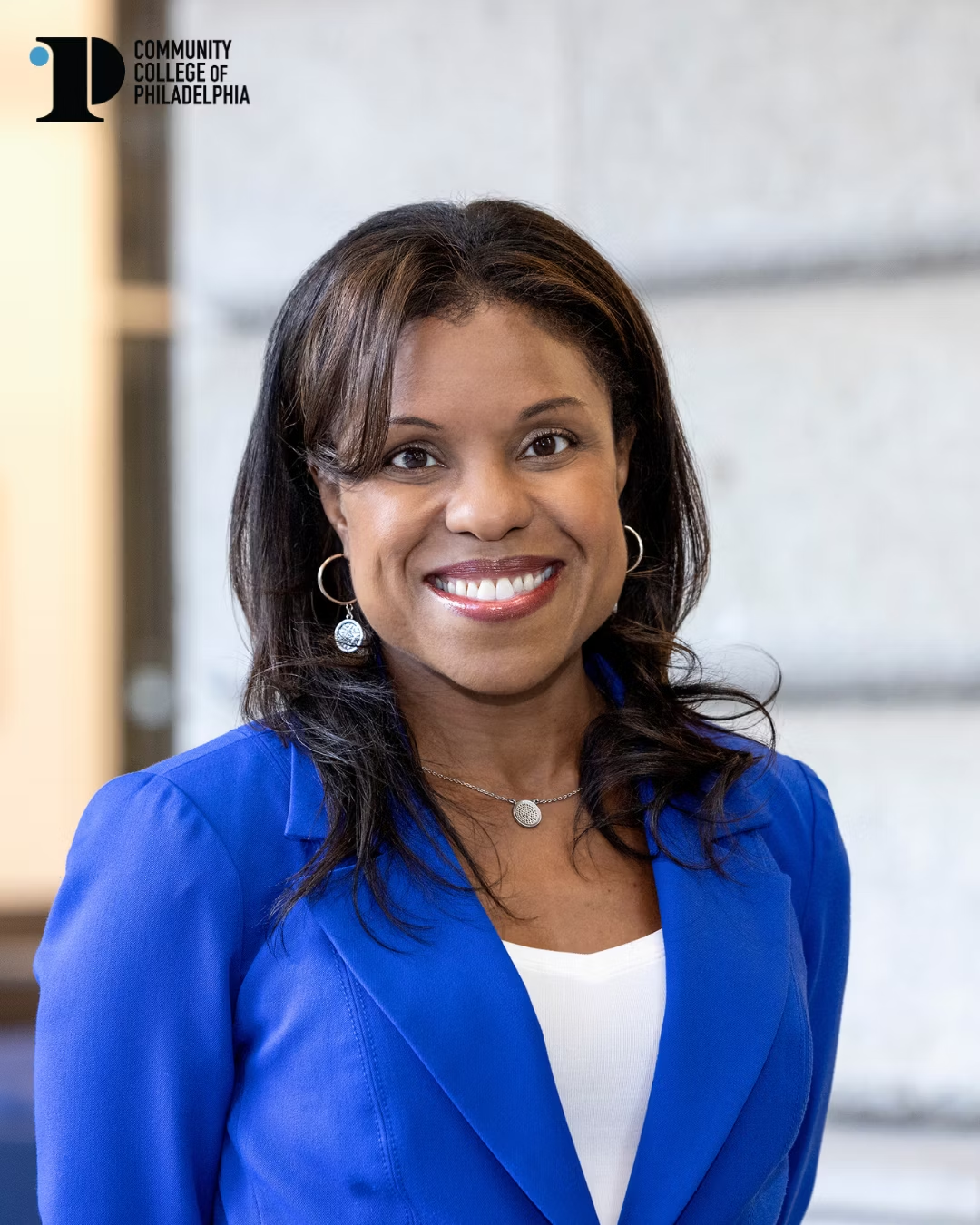
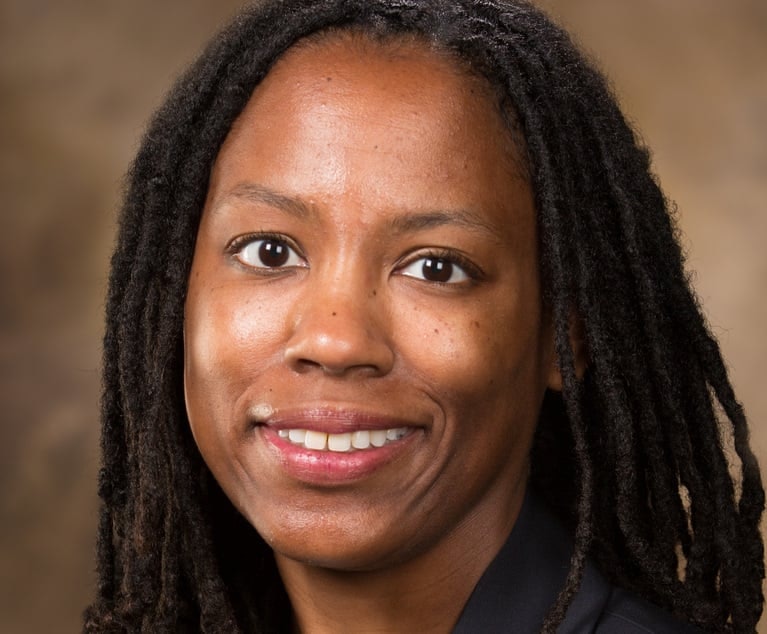
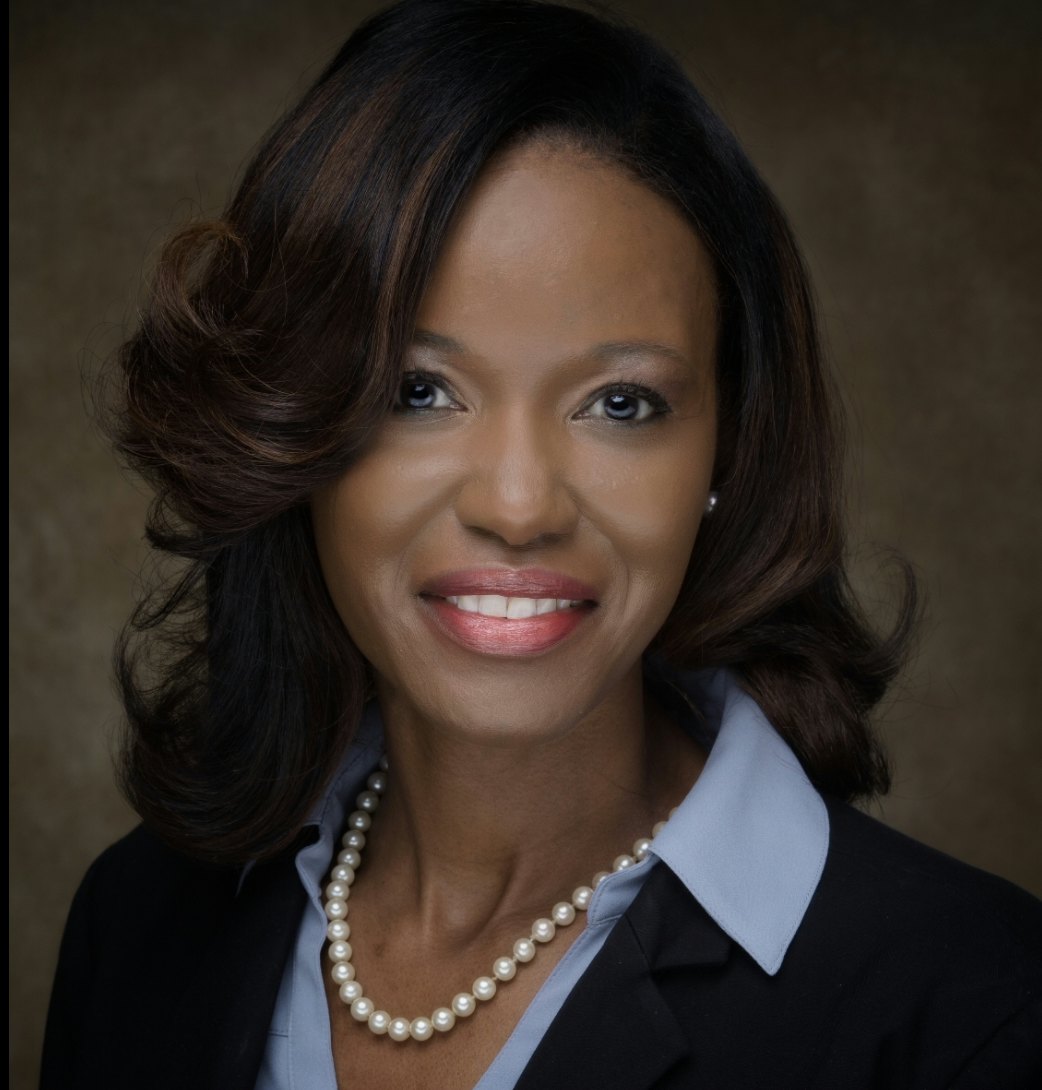
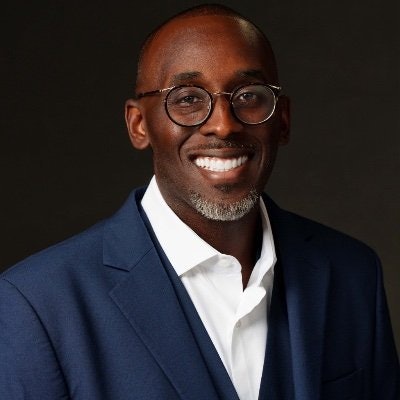
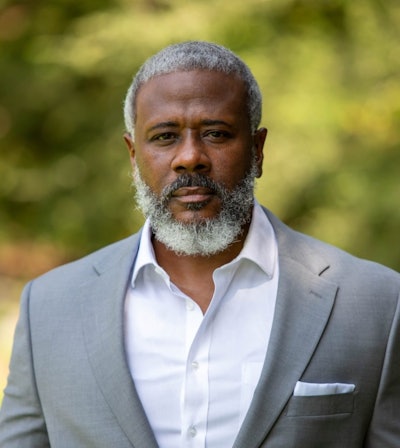
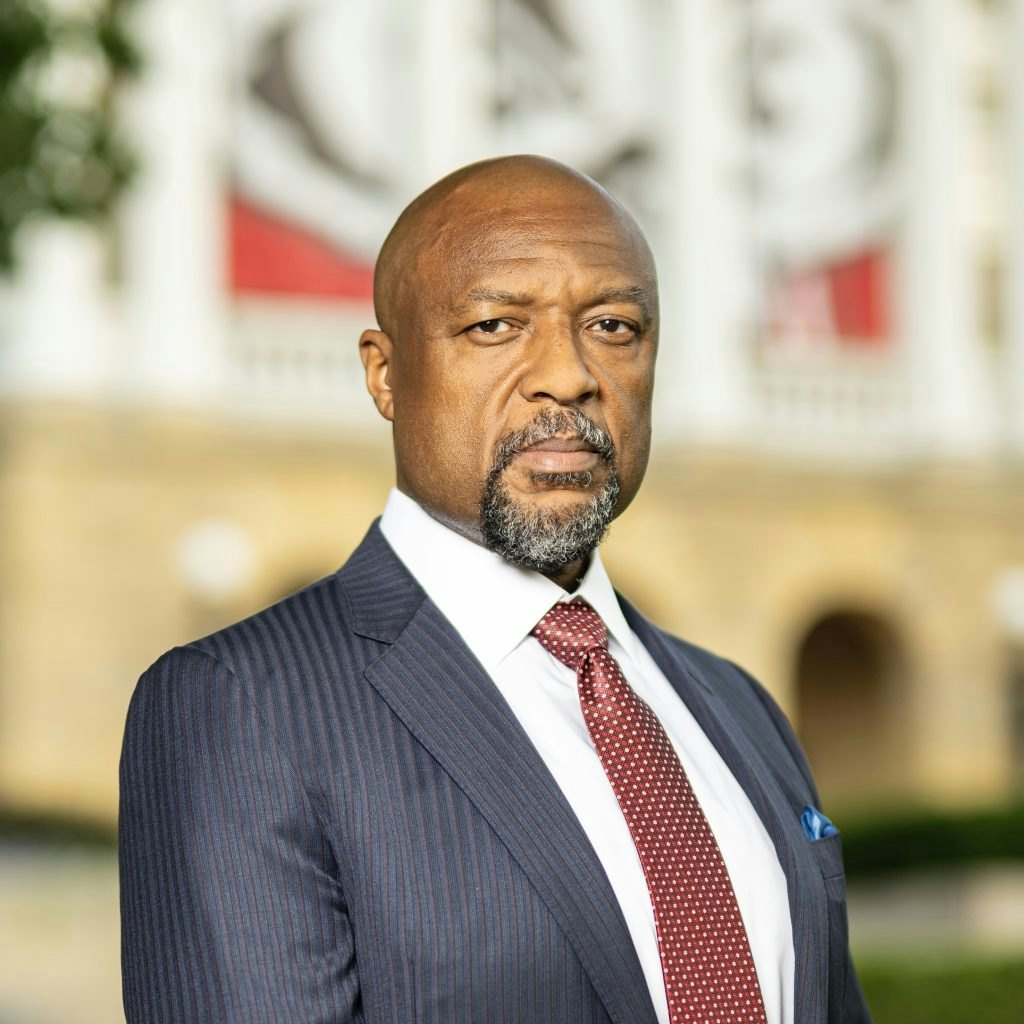
Dr. Alycia MarshallCommunity College of PhiladelphiaThe Community College of Philadelphia Board of Trustees has announced the appointment of Dr. Alycia Marshall as the institution’s new president. Marshall’s selection comes after the Board’s decision to remove Dr. Donald “Guy” Generals from the presidency.
“As Chair of the Board of Trustees, I am proud to officially welcome Dr. Alycia Marshall as the seventh president of Community College of Philadelphia,” said Harold T. Epps. “After a nationwide search, it has become evident that Dr. Marshall demonstrates the clear vision and outstanding leadership needed to guide our institution forward. I look forward to continuing to work with Dr. Marshall and to the positive impact she will have on our students, faculty, staff, and the broader community.”
Marshall has been serving as interim president since Generals’ departure from the college in April. Prior to the interim appointment, she held the position of Provost and Vice President for Academic and Student Success, where she oversaw Academic Affairs, Workforce Development, and Student Support and Engagement.
“I congratulate Dr. Alycia Marshall on her appointment as President of the Community College of Philadelphia,” said Cherelle Parker, Mayor of Philadelphia. “CCP is a beacon of hope and economic opportunity for our students and for everyone seeking to advance their pathways to better lives. The Parker Administration supports CCP, Dr. Marshall, and the Board in its mission.”
Marshall brings extensive higher education experience to the presidency. She began her career at Anne Arundel Community College (AACC) in Maryland, where she served as a tenured Full Professor of Mathematics, Department Chair of Mathematics, and Associate Vice President for Learning and Academic Affairs. She holds a Ph.D. in Mathematics Education from the University of Maryland College Park, a Master of Arts degree in Teaching from Bowie State University, and a Bachelor of Arts degree in Mathematics from the University of Maryland Baltimore County.
“Community College of Philadelphia truly feels like home,” said Marshall. “Every day, I witness the extraordinary dedication of our faculty and staff who work tirelessly to ensure our students are supported, challenged, and inspired to succeed. While my time as interim president has deepened my connections with the college community and our external partners, it is my foundation as an educator that will continue to guide me. I am deeply honored to serve as president of The City’s College—a beacon of access, opportunity, and transformation—as we move forward together.”
Texas A&M University President Dr. Mark A. Welsh III announced his resignation Thursday following intense political pressure from state Republican leaders over a viral confrontation involving gender content in a children’s literature course—the latest in a series of incidents that underscore the mounting challenges facing academic freedom and diversity efforts at public universities across Texas.
Welsh’s departure came just over a week after state Rep. Brian Harrison amplified a video on social media showing a student confronting Professor Melissa McCoul about course content. Despite initially defending McCoul’s academic freedom, Welsh terminated the professor the following day under pressure from Harrison and Lt. Gov. Dan Patrick.
The incident represents part of a broader Republican-led campaign to exert political control over university curricula, faculty hiring, and campus speech—efforts that education advocates warn are undermining the foundational principles of higher education.
Welsh’s tenure, which began in 2023, was marked by repeated clashes with state political leaders over diversity and inclusion initiatives. In January, Gov. Greg Abbott threatened Welsh’s position after the university’s business school planned to participate in a conference aimed at recruiting Black, Hispanic, and Indigenous graduate students. Under pressure, Welsh withdrew the university from the conference entirely.
The pattern reflects what faculty and higher education experts describe as an escalating assault on academic autonomy.
Despite strong support from faculty and students, Welsh’s position became untenable under sustained political attack. On last Wednesday, the university’s Executive Committee of Distinguished Professors—composed of 12 faculty members holding the institution’s highest academic honor—sent a letter urging regents to retain Welsh.
“All members of this Committee write this letter collectively to strongly urge you to retain President Mark Welsh in the wake of recent events,” the faculty letter stated.
Student leaders also rallied behind Welsh, with dozens of current and former student government representatives praising his “steadfast love and stewardship for our University” and expressing “faith and confidence in his leadership.”
However, these expressions of campus support proved insufficient against external political pressure.
Welch’s predecessor, M. Katherine Banks, had resigned following the botched hiring of journalism professor Kathleen McElroy, whose employment offer was undermined after regents expressed concerns about her work on diversity, equity, and inclusion.
Dr. Earl S. Richardson, the visionary leader who transformed Morgan State University during a remarkable 25-year presidency and spearheaded a groundbreaking legal victory that secured hundreds of millions in funding for historically Black colleges and universities, died Saturday. He was 81.
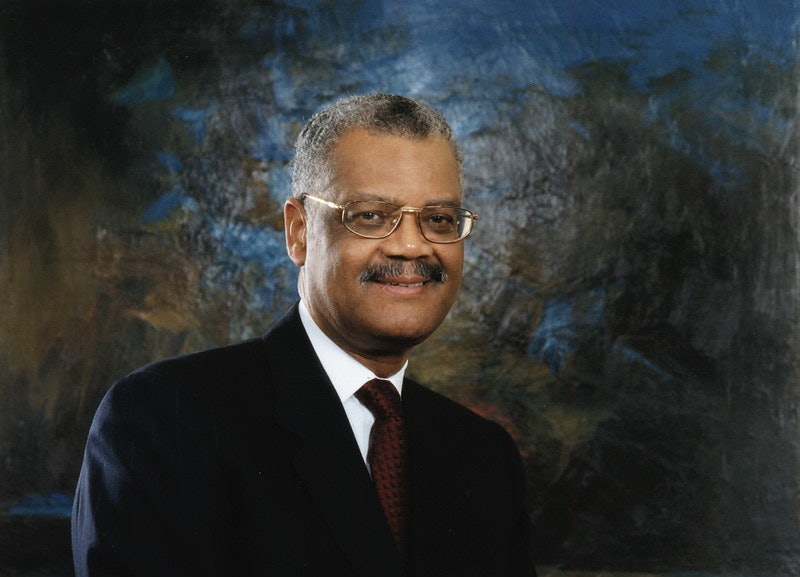
Dr. Earl S. RichardsonRichardson’s death was announced by Morgan State University, where he served as the institution’s ninth president from 1984 to 2010. Under his stewardship, the Baltimore university experienced what became known as “Morgan’s Renaissance”—a period of unprecedented growth that saw enrollment double, the campus expand with new buildings, and the institution elevated to doctoral research university status.
But Richardson’s most enduring legacy may be his role as the architect of a historic 15-year legal battle that resulted in one of the largest settlements ever secured for HBCUs. The lawsuit, filed in 2006 and settled in 2021, compelled the state of Maryland to provide $577 million in supplemental funding over 10 years to four historically Black institutions, addressing decades of systematic underfunding.
The case drew comparisons to Brown v. Board of Education for its challenge to educational disparities, though it focused on higher education rather than K-12 schools. During the trial, state attorneys even attempted to have Richardson removed from the courtroom, though he remained as an expert witness, providing crucial historical testimony.
Richardson’s leadership style combined the tactical wisdom of a seasoned administrator with the moral clarity of a civil rights activist. In 1990, when students occupied Morgan’s administration building for six days to protest deteriorating facilities—leaking roofs, outdated science labs, and dilapidated dorms—Richardson subtly guided their anger toward the real source of the problem: insufficient state funding.
When Richardson arrived at Morgan State in November 1984, he found a struggling institution with 3,000 students housed in aging buildings. By the time he stepped down in 2010, enrollment had grown to more than 7,000 students, and the university had received approximately $500 million for new construction and renovations.
Major projects completed during his tenure included a $54 million school of architecture, a $40 million fine arts building, new engineering facilities, a student union, and stadium expansions. Richardson also oversaw the addition of new academic schools, including programs in architecture and social work, while elevating Morgan’s research profile.
“Our vision has been to transform Morgan from a liberal arts institution to a doctoral research university,” Richardson told Diverse in 2009. “We lead the state in graduating African-Americans.”
His impact extended far beyond physical infrastructure. Richardson strengthened faculty excellence, raised admission standards, and championed the unique mission of HBCUs in educating both the most talented Black students and those who might not otherwise consider higher education accessible.
Richardson’s advocacy extended beyond Morgan State to become a national voice for historically Black colleges and universities. In a 2008 testimony before the U.S. House of Representatives, he articulated the dual mission of HBCUs: serving high-achieving students while also reaching those who faced barriers to higher education access.
“We can make them the scientists and the engineers and the teachers and the professors—all of those things,” he told lawmakers. “But only if we can have our institutions develop to a level of comparability and parity so that we are as competitive as other institutions.”
His legal victory in Maryland put a national spotlight on funding disparities that have long plagued HBCUs, which are more likely than other institutions to rely on government funding and receive smaller portions of their revenue from private donations and grants.
An Air Force veteran, Richardson brought military discipline and strategic thinking to his educational leadership. He often spoke of participating in civil rights demonstrations during his own student years, experiences that shaped his understanding of both the power of organized protest and the importance of strategic action in pursuing justice.
Current Morgan State President Dr. David K. Wilson, who followed Richardson in the presidency, credited his predecessor with building the foundation for continued success.
“The foundation he built allowed us to continue Morgan’s upward trajectory, and much of what we have achieved in recent years is possible because of the strong platform he left behind,” Wilson said in announcing Richardson’s death.
The second line band’s brass instruments gleamed in the morning sun as they led nearly a thousand first-year students out of the Vadalabene Center arena. The festive New Orleans style procession wound its way across Southern Illinois University Edwardsville’s campus, past the towering Cougar statue where students would soon gather for their traditional class photo. Parents lined the walkway, some having extended their stay just to witness this moment—their children’s ceremonial entry into college life.
Among the crowd, one mother approached Dr. James T. Minor with tears in her eyes.
“That’s my son,” she said, pointing to a young man adjusting his position for the photo. “This is so great. I can’t believe what you’re doing. I’m so proud of him.”
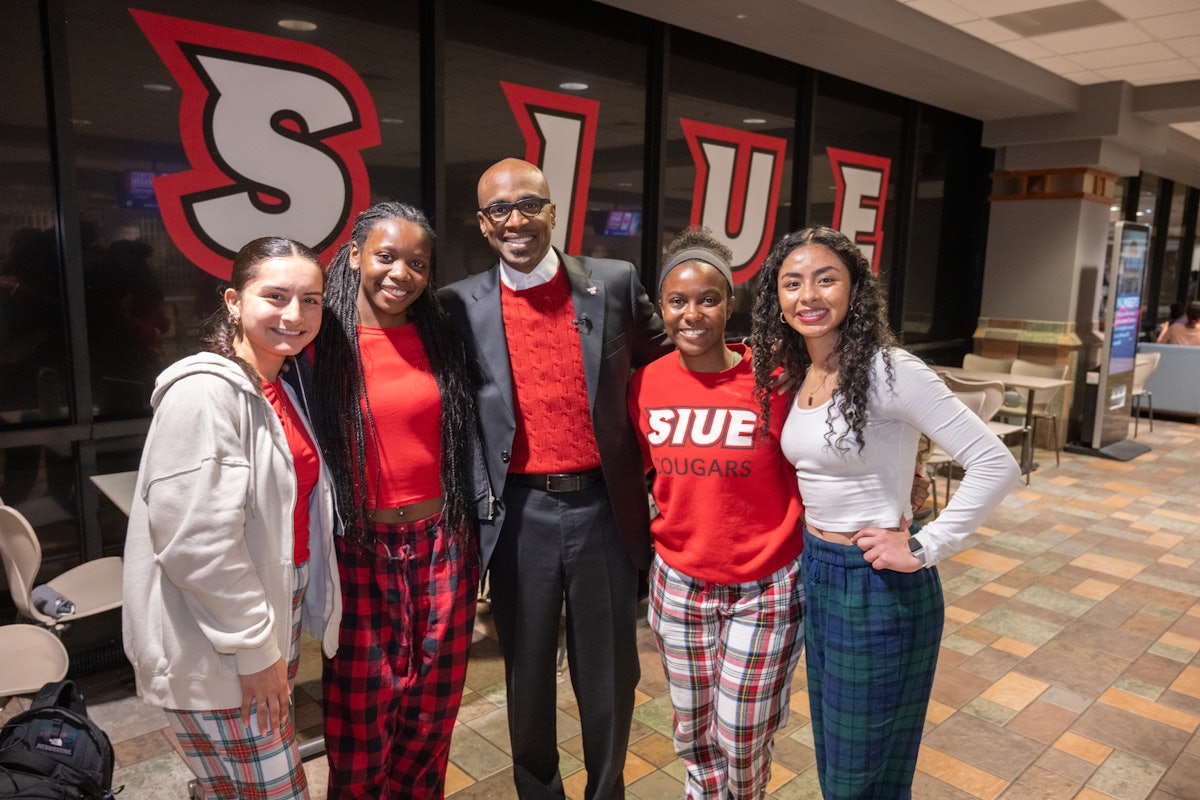
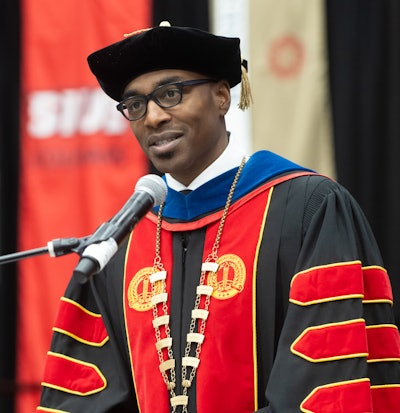
Dr. James Minor talking to a SIUE student. For Minor, SIUE’s first African American chancellor, this moment embodied everything he hopes to achieve at the institution he has led since March 2022. A Detroit native with a Ph.D. from the University of Wisconsin-Madison and a distinguished career spanning federal government, the California State University system, and scholarship in educational policy, Minor brings both academic rigor and practical experience to his transformational vision.
“This is as close as I get to what’s truly special about university communities,” he reflects on the school’s most recent convocation. “You’ve got thousands of young people who have made a decision about their life—that they’re going to pursue a college degree—and the university has a responsibility to facilitate that.”
But behind this celebratory scene lies a story of dramatic transformation, one that has seen SIUE emerge from serious fiscal challenges to become a model for how regional public universities can thrive in challenging times.
A $18 Million Wake-Up Call When Minor arrived on campus in March 2022, he brought credentials that positioned him uniquely for the challenges ahead. As the 10th chancellor in SIUE’s history, his appointment followed distinguished service as deputy assistant secretary at the Department of Education, where he administered more than $7 billion in federal higher education programming. His most recent role as assistant vice chancellor and senior strategist at California State University—where he helped achieve the system’s highest graduation rates in history and secured hundreds of millions of dollars for graduation initiatives—prepared him for the complex work of institutional transformation.
But even this impressive background couldn’t ready him for what he discovered within his first 45 days: an $18 million structural deficit that had been masked by years of poor budget practices.
“I was giving a university budget presentation that was not particularly pleasant,” Minor recalls of those early days in his tenure. “That was not on my list of things to do in the first 100 days—to organize and understand this structural deficit, communicate it to the university community, and then lay out a plan for managing it.”
Dr. James T. Minor at commencement.The distinction between a structural deficit and a spending deficit became crucial to Minor’s communication strategy. Unlike a simple overspend that could be corrected immediately, SIUE faced a fundamental mismatch between fixed expenses and revenue. The number of people, buildings, and courses— the structural components of the budget—exceeded revenue by roughly $18 million.
“We had available cash sources and other things that we could manipulate to cover it,” Minor explains. “We operated that way for a number of years before I arrived, but we all know that’s not sustainable.”
The solution required what Minor calls “environmental responsiveness”— the ability of institutions to expand and contract according to changing conditions. This meant making hard choices about class sizes, graduate assistantships, and operational efficiencies that some within the university community initially resisted.
Fast forward to September 2025, and Minor will soon announce to the campus community that SIUE has effectively resolved its structural deficit, maintains one of the best cash positions among Illinois universities, and accomplished this transformation without spending a single dollar from its cash reserves.
Building a Culture of Student-Centered Data Perhaps even more significant than the financial turnaround has been Minor’s campaign to make SIUE fluent in its own student success metrics. When he arrived, he was stunned by what he discovered during informal surveys of faculty and staff.
“I would walk into a room and ask, ‘Who here can tell me our four-year and six-year graduation rates?’” Minor recalls. “These are people who presumably should have an idea— people who work here, not people shopping at Target or in the grocery store. I would ask about our first-to-second-year retention rate, and it wasn’t meant to embarrass people. It was to underscore the lack of awareness we had as a university community about the most important thing we do.”
Today, when Minor walks into any room on campus, hands shoot up when he asks those same questions. “People expect the question,” he says with satisfaction. “I have promised them, I don’t care if we’re talking about the paint in the stairwell, I will start every conversation here at the university about our student outcome data.”
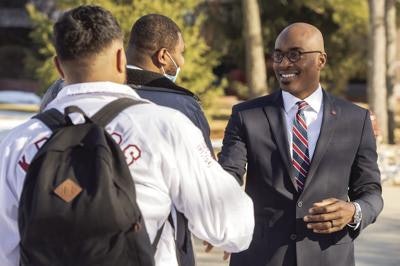
Dr. James Minor meeting students on campus.This data-driven approach has yielded measurable results for the institution that boasts more than 12,000 students. First-to-second-year retention rates have increased, graduation rates have ticked up, and the university is expecting growth—a major accomplishment in today’s challenging enrollment environment.
Dr. Robin Hughes, dean of the School of Education, Health and Human Behavior, sees Minor’s unique combination of scholarship and leadership as precisely what SIUE needed.
“Chancellor Minor is by far what most institutions look for and want in an organizational leader,” Hughes observes. “He is a distinguished scholar whose work focuses on the study of higher education organizations. He is also an experienced organizational leader who brings both academic insight and institutional expertise to his work. A strong advocate for students, he makes organizational decisions that positively impact their success both during their studies and beyond.”
Dr. Jessica Harris, acting chief of staff and vice chancellor for Anti-racism, Diversity, Equity and Inclusion, chaired the search committee that brought Minor to SIUE.
“I remember reading his cover letter and saying to my mom, ‘I think this is our next chancellor,’” Harris recalls. “Every accomplishment he talked about in his career was about how it positively impacted or transformed the experience for students. That was a consistent thread throughout his cover letter.”
Nearly four years into his tenure, Harris sees that student-centered focus as the driving force behind institutional change.
“One of the major shifts I’ve seen is a very clearly articulated and collective focus on student success,” she explains. “Not that it wasn’t a commitment before, but there’s a level of intentionality I didn’t see across all areas before he started. Every presentation starts with mission—this is why we’re here, these are our enrollment numbers, retention and graduation numbers. He keeps it front of mind for us.”
Dr. Earleen Patterson, associate vice chancellor for Student Opportunities, Equity, Diversity and Inclusion, has witnessed this transformation firsthand.
“There’s a reason I’m still here,” she says of her longevity at the university that began in 1990. “Over the course of time, I’ve seen a lot of evolution of this journey of progress toward being inclusive, toward offering opportunities to every sector of our population.”
The results are visible in SIUE’s incoming class, which Patterson describes as having “the highest African American enrollment in the history of the university.” This fall’s freshman class includes nearly 600 Black students in the Boundless Scholars Experience alone—a comprehensive academic program designed to promote belonging, academic achievement and degree completion. At a time when voices opposing diversity, equity and inclusion efforts grow louder across the higher education landscape, SIUE has chosen to double down on its mission, letting results speak louder than rhetoric.
The focus on student success extends far beyond enrollment numbers. Patterson describes a comprehensive approach to retention that begins before students even attend their first class. The Boundless Scholars Experience moved students in early, gathering them with their families in the campus ballroom for what Patterson calls “real talk” about college expectations.
“What they saw was a room that reflected who they are,” Patterson explains. “But we let them know, come Monday, as you walk out into the university community, you may be the only one in your biology course, in your chemistry course, in your economics course. But you have a community, you have a village.”
This village includes strategic course placement with faculty who are particularly effective with first-year students, early warning systems that track attendance and performance, and support staff who can call students by name when they miss class.
“It marvels them when they come into my office, and I already know you missed chemistry on Tuesday,” Patterson says with a chuckle. “They’re like, ‘How do you know?’ I care enough to know about that—about all of these students.”
For Dominic Dorsey, president of the Black Faculty and Staff Association and director of the Access (Disability Services) Department, representation at the leadership level makes a tangible difference for students.
“We’ve been blessed not just to have Dr. Minor as our first Black chancellor, but to have a chancellor that’s an actual thought leader and transformational in the truest sense of the word,” he says.
Dorsey’s own department has seen dramatic growth, with registered students with disabilities increasing from about 650 when he arrived in 2018 to nearly 1,400 today. This growth reflects SIUE’s broader commitment to inclusive excellence that extends beyond traditional diversity metrics.
Town-Gown Collaboration The transformation at SIUE also stretches beyond campus borders through an unprecedented partnership with the city of Edwardsville. Mayor Art Risavy, a small business owner who has served as mayor for five years after a decade as an alderman, describes an intentional effort to strengthen university- city relations.
“Early on, when I became mayor, one of the first things we decided collectively was we wanted to work on our relations with the university,” Risavy explains. “We reached out to the chancellor, and it didn’t take long—Chancellor Minor wants to do stuff pretty quickly—before we had a meeting set up.”
These conversations led to concrete initiatives: improved website integration between city and university, the Hashbrown Huddle breakfast meetings that bring students directly into downtown Edwardsville, and shared committee appointments that give the university voice in city governance.
“We want to see students in our businesses, involved in our organizations,” Risavy says. “We want them to feel comfortable downtown, going through our shops and participating in our events. This is their home for four years or five or six years.”
The collaboration extends to shared programming, with Minor and Risavy regularly attending each other’s events, from the city’s state of the city address to SIUE’s ice cream social that draws over a thousand participants.
Navigating Challenges with Bold Leadership The success story at SIUE is unfolding against a backdrop of national political tensions around higher education, particularly concerning diversity, equity, and inclusion efforts. For leaders like Dorsey and Patterson, this context requires strategic adaptation without abandoning core values.
“The way that we approach the work has not changed,” Dorsey explains. “We just don’t publicize the way the work is done. Our ancestors created an underground railroad for a reason—it’s a reason why it wasn’t an above ground railroad.”
This approach allows SIUE to continue providing scholarships, celebration opportunities, and support systems for underrepresented students while focusing public attention on broader institutional success metrics that benefit all students.
Patterson emphasizes the importance of drowning out external noise.
“If we were to play into that distraction, we wouldn’t be able to focus on the charge that is in front of us. And these students are in front of us,” she said.
Doug James, immediate past president of the Staff Senate, describes an administration focused on “majoring on the major things” while maintaining awareness of smaller concerns.
“I think there was an appetite for honest conversation,” he says. “Let’s get in a room and talk about what are our challenges, where are we winning, what are the things we get to celebrate, and what needs our attention.”
Yet Harris points to concrete evidence of this collective effort.
“You don’t see 10 percentage point increases in Black student retention without people doing work inside and outside of the classroom. We’ve hit historic fundraising goals since Chancellor Minor’s been here. He’s helping to shift our culture. He often talks about us being first and best in class.”
Looking ahead, Harris envisions SIUE becoming “a model regional public institution with a national reputation” within the next three to five years. The university is already approaching 80% retention for domestic students and has set an ambitious goal of 90% first-to-second-year retention—a benchmark that would distinguish SIUE among institutions of its type.
“In the midst of all the challenges facing higher education, all the anti-DEI efforts, all the darts being thrown at us,” Harris reflects, “we are keeping on. We’re not deterred. In fact, we are making really great progress.”
The Price of Progress Minor’s transformation of SIUE hasn’t come without resistance. As the first African American chancellor in the institution’s history, he acknowledges the complexity of his position with remarkable candor.
“Some people think about it individually. I haven’t,” he tells me. “I’ve thought about what it means for other people and what it means for this university community with respect to our ability to move forward.”
Quite frankly, the university community has had to adjust to new leadership and some members have experienced dissonance with the very idea that a Black man is in charge.
“Sometimes it’s passive resistance, sometimes it’s active resistance, sometimes it’s a level of questioning and verifying before we can participate or agree to move in the right direction, and quite honestly, sometimes it’s blatant sabotage,” the chancellor admits.
Yet Minor approaches these challenges with the same organizational theory perspective he brings to budget management and student success metrics. For him, institutional transformation requires acknowledging and managing all forms of resistance while maintaining a clear focus on the core mission.
Still, the significance of this representation isn’t lost on the broader SIUE community, particularly among Black alumni who lived through earlier eras of the institution. Minor recalls one particularly poignant encounter with an alumna from the mid-1960s: “She came up to me, grabbed my hand and started patting my hand as any good grandmother would do, and said, ‘Baby, I’m so proud of you. It’s so wonderful to see you in this role.’ And as she was patting my hand, she leaned in and said, ‘Now, don’t you mess this up.’”
The exchange captures the weight of expectation that comes with being a first—representing not just personal achievement, but the hopes and dreams of those who paved the way.
“For individuals from that era, that generation, I represent their hopes and dreams for equity and equality and opportunity,” Minor reflects.
A Model for Regional Public Universities
The SIUE story offers lessons for similar institutions nationwide. Minor’s approach demonstrates that even universities without massive endowments can achieve significant transformation through strategic focus, data-driven decision- making, and commitment to operational efficiency.
“Regional public institutions don’t have the margin to be inefficient,” Minor argues. “We’ve got 1960s infrastructures and boilers and aging infrastructure that we have to manage. You can’t manage that and be grossly inefficient at the same time.”
As SIUE prepares for its next chapter, the metrics tell a story of remarkable progress. The university maintains a strong financial position, has achieved record fundraising including the largest single gift in institutional history, and expects continued enrollment growth in a challenging market.
But for Minor, the real measure of success remains that moment during convocation when a parent’s pride reflects the transformative power of higher education.
“The idea that I get to help facilitate the environment in which young people have an opportunity to transform their life—it’s a dream job,” he says. “It’s not the title, it’s not the status, it’s not the position. It is having the opportunity to facilitate the environment in which young people have an opportunity to transform their life.
“I love university communities. I love the power of institutions,” he adds. “I love the idea that they could be beacons of social and economic opportunity. I love the idea that the teaching and learning environment can transform the mind, prepare people professionally in a way that changes the trajectory of their life and their children’s lives. That, to me, is powerful in its own right.”
That transformation happens every day, every semester, every academic year at SIUE. And as the second line band plays on, leading another class of students toward their futures, the sound carries a promise—that this institution, this community, this partnership between town and gown will continue rising above the noise to focus on what matters most: changing lives through education.
Northwestern University President Michael Schill announced his resignation Thursday, concluding a three-year tenure that brought record achievements alongside unprecedented federal challenges, including an ongoing $790 million funding freeze imposed by the Trump administration.
Schill, who became Northwestern’s 17th president in September 2022, cited the need for “new leadership to guide Northwestern into its next chapter” in his message to the campus community. His departure adds to a growing list of university presidents who have stepped down amid tensions with the federal government and campus controversies.
The resignation comes as Northwestern grapples with a federal funding freeze that began approximately four months ago, when the Trump administration halted $790 million in federal support. The action was reportedly connected to Title VI investigations, which examine discrimination in federally funded programs.
The frozen funds support what Northwestern describes as “innovative and life-saving research,” including development of the world’s smallest pacemaker and Alzheimer’s disease research. University officials warned that “this type of research is now at jeopardy” due to the funding suspension.
Northwestern joins other elite institutions facing similar federal actions, with universities like Cornell, Harvard, Columbia, and the University of Virginia experiencing funding freezes or leadership changes amid disputes over diversity programs and responses to Gaza-related campus protests.
During Schill’s tenure, Northwestern reached notable milestones while navigating significant challenges. Schill oversaw major academic initiatives, including the establishment of research centers like the Chan Zuckerberg Biohub Chicago and the NSF-Simons AI Institute for the Sky. He also championed free expression initiatives, launching the Litowitz Center for Enlightened Disagreement and establishing the President’s Advisory Committee on Free Expression and Institutional Speech.
However, his presidency was marked by significant controversies. Shortly after arriving on campus, Schill inherited a hazing scandal involving student-athletes, leading to new protective policies. More recently, he navigated campus tensions following the October 7, 2023, Hamas attack on Israel and subsequent protests.
Republican lawmakers, including House Education and Workforce Committee Chairwoman Elise Stefanik, had criticized Schill’s handling of campus antisemitism. Stefanik called his resignation “long overdue,” claiming he “failed to protect Jewish students” and “caved to the demands of the antisemitic, pro-Hamas mob.”
Northwestern officials counter that they have “fully cooperated with investigations by both the Department of Education and Congress” and implemented policy updates that resulted in a “dramatic decrease” in reported antisemitic incidents.
White House spokesperson Liz Huston said the Trump administration “looks forward to working with the new leadership, and we hope they seize this opportunity to Make Northwestern Great Again.”
The Northwestern Board of Trustees will name an interim president soon, with Schill continuing in his role until the transition is complete. Board Chair Peter Barris praised Schill’s leadership through “unparalleled challenges” and credited him with “lasting achievements that contribute robustly to Northwestern’s continued advancement.”
After stepping down, Schill plans to take a sabbatical before returning to teach and conduct research as a faculty member at Northwestern Pritzker School of Law.
Alena AllenAlena Allen, who broke barriers in 2023 as the first Black person and woman to serve as dean of Louisiana State University’s Paul M. Hebert Law Center, will step down from her leadership role against her wishes, citing racial and gender discrimination.
LSU announced Allen’s departure in an internal email dated August 29, stating she would transition to a full-time faculty position at the Baton Rouge institution. However, Allen maintains she did not voluntarily resign and may pursue legal action for alleged whistleblower retaliation.
The controversy began when Allen raised concerns about financial “irregularities” she discovered in the law school’s budget—problems that predated her appointment. When she attempted to address these gaps and implement reforms, Allen alleges LSU leadership unfairly blamed her for the pre-existing issues.
“I am the first woman and the first person of color to serve as the permanent dean of the Paul M. Hebert Law Center. That fact is not incidental—it is central to what follows,” Allen wrote in her response to auditors. “I find it deeply troubling, and frankly difficult to ignore, that I appear to be held to a standard far more exacting than that applied to my white, overwhelmingly male predecessors.”
Allen’s attorney claims the LSU Board of Supervisors “engaged in systematic discrimination and retaliatory conduct” against her, arguing that her predecessors had “oversaw and entrenched the very practices” she questioned and began reforming.
Allen’s forced departure adds to a concerning pattern of Black leadership exits at LSU. The university recently lost its first Black president, Dr. William Tate, who left on June 30 to become president of Rutgers University. Several other Black administrators have also announced departures from the institution.
After Allen requested an investigation into the alleged racial and gender discrimination, university leaders informed her during a meeting that the law school would move in a “different direction” without her leadership.
Allen will continue serving as dean through the end of the spring 2026 semester while LSU conducts a national search for her replacement. Interim LSU Provost Dr. Troy Blanchard is overseeing the search process.
Nearly 60% of student affairs professionals witnessed racism on their campuses in the past year, with one-third experiencing it directly, according to a new national study that exposes significant racial disparities in workplace conditions across higher education.
Dr. Royel M. JohnsonThe report, released by the USC Race and Equity Center, analyzed responses from 1,992 student affairs professionals at 73 colleges and universities who participated in the National Assessment of Collegiate Campus Climates Staff Survey between 2021-2023.
“When we look at over 2000 student affairs professionals across 73 institutions, we often see that student affairs professionals are really the backbone of our campuses, who are the first line of defense in supporting students and responsible for creating the conditions of belonging,” said Dr. Royal Johnson, a professor in the Rossier School of Education at the University of Southern California and director of the National Assessment of Collegiate Campus Climates in the USC Race and Equity Center. “But the same sort of realities that students are facing of race and discrimination, student affairs professionals are also being plagued with those same challenges.”
Black student affairs professionals reported the highest rates of direct racist experiences at 61%, followed by Asian (46%) and multiracial staff (46%). In contrast, only 17% of white professionals reported experiencing racism personally.
“Student affairs professionals are expected to champion equity and care for students, yet they often labor in environments that fall short of those same principles,” the researchers wrote.
In an interview with Diverse, Johnson noted that upwards of 60% of those surveyed reported experiencing racism and the lingering consequences, “whether it be the emotional toll and frustration associated with it, the distrust that emanates from it, their sense of mattering,” he added.
The perpetrators of racism came primarily from within institutions themselves. White staff members were the most common source of racist behavior (27% of respondents reported experiencing racism from white colleagues), followed by white students (22%) and white faculty (21%). Additionally, 22% experienced racism from external contacts such as vendors and community partners.
The emotional toll proved significant, with 72% of respondents reporting feelings of frustration and 50% experiencing anger as a result of racist incidents. More than a quarter (27%) said the experiences led to declines in mental health and emotional well-being.
Confidence in institutional commitment to diversity, equity and inclusion varied sharply by race. While half of white staff expressed strong confidence in their institution’s DEI commitment, only 30% of Black staff and 35% of Asian staff shared that view.
The workplace climate issues extended beyond racist incidents to broader patterns of exclusion and inequality. Less than half of all respondents felt they mattered at their institution, with Asian (33%) and Black (38%) professionals reporting the lowest rates of feeling valued.
Staff of color also reported significant barriers to advancement. Among Black professionals, 34% disagreed that they received equal opportunities for advancement compared to colleagues, while 32% of Hispanic/Latinx staff reported similar concerns. One in ten Black professionals said their perspectives were not valued at all in workplace decision-making processes.
“We know that staff of color have long struggled with equitable professional mobility kind of opportunities, or feel relegated to lower level, lower status kinds of roles,” Johnson explained, adding that the study represents “one of the more larger scale analysis that’s national in scope, that’s offering behind the scenes if you will, of the kind of racial realities that folks are experiencing.”
The study revealed gaps in institutional support systems as well. While 70% of staff of color and 81% of white staff learned about race through self-directed efforts, only about half received formal professional development from their institutions on racial topics.
During the survey period, which coincided with national discussions about anti-Asian hate crimes and police brutality against Black Americans, less than half of institutions addressed these issues. Only 42% of respondents said their leaders addressed anti-Asian hate crimes, while 50% said leaders addressed police brutality and racially motivated violence against Black people.
The findings come as student affairs faces broader retention challenges, with 39% of staff indicating they are likely to seek other employment within the next year, according to separate research by the College and University Professional Association for Human Resources.
The USC researchers offered seven recommendations for institutional action, including strengthening reporting mechanisms, embedding equity goals in staff evaluations, regularly assessing campus climate with disaggregated data, and ensuring transparent advancement pathways.
“Addressing racism in the workplace is not about individual resilience—it is about institutional responsibility,” the researchers concluded. “Without bold, sustained, and collective action, campuses risk losing the very professionals who are central to advancing their diversity and student success missions.”
The study’s sample included professionals from 28 two-year and 45 four-year institutions. The demographic breakdown was 54% white, 18% Hispanic/Latinx, 12% Black, 5% Asian, and 7% biracial or multiracial staff members.
Building on a career with impact, Chartarra Joyner continues to embody a sense of purpose to become an even stronger leader in academia.
Chartarra JoynerJoyner is assistant vice chancellor, budget and planning, at North Carolina Agricultural and Technical State University (NC A&T). She oversees the administration, analysis and strategic management of the university’s $470 million budget. As head of the budget and planning team, she is responsible for compliance and fiscal integrity while managing the comprehensive budget and reporting process.
Having attended Fisk University as an undergraduate, where she studied accounting, Joyner appreciates working at a Historically Black College and University but admits that a career in academia happened unexpectedly. After graduating from college, she spent more than a decade working in fi nancial services. Her last position before NC A&T was as a senior business analyst clinical services at HCA Healthcare, noting that her diverse background enables her to bring a unique lens to higher education.
“In my positions, I led cross-functional teams, cost reduction strategies and other process improvement initiatives,” she says. “All this combined experience helps me. I started out in accounting, but most of my roles then progressed, and I found a love for operational excellence and process-improvement initiatives.”
When her family moved to Greensboro, North Carolina, she planned to be a stay-at home mother but realized that was not where her strengths lie. Twelve years ago, she took on a contract assignment at NC A&T, which evolved into a full-time position. While the industry was different, she saw the move as a natural progression. Joyner has been in her current position since 2016. Because NC A&T is a large employer in Greensboro, her work has had a positive impact on the local economy.
“I was able to apply my skills and experience in financial strategies,” Joyner says. “I wanted to help assist with the educational access for students as well as equity for those students. NC A&T has a lot of fi rst-generation college students. This is what brought me and made me stay in academia. It’s been fulfilling to see the student success stories that resulted from the strategic financial leadership decisions made here at the university.”
NC A&T initiated a “bring your child to work” program, and her three children have all experienced the campus and seen her busy at work. Then, as part of their coursework in school, there were assignments where they described what she does.
“Children’s natural curiosity, they just ask questions,” she quips. Joyner is a third generation college graduate—stretching back to her grandmother (also an HBCU graduate)—and her second oldest son is fourth generation, having graduated from NC A&T. While higher education is the norm in her family, she thrives in an environment where first-gen students are able to flourish. She says that in her current role, she is able to mentor students and other professionals and contribute to the larger mission of the university.
“I value thought leadership,” she says. “There’s a lot of collaboration in academia and there is continuous learning, which aligns with my personal mission and my core values. It also gives me the opportunity to make an impact through student support and developing our future global leaders. [At NC A&T] we have over 14,000 students that we have an impact on every day who are future global leaders.
“I found a place where I can lead strategically and contribute to the larger mission of the university and the global community,” she adds. “What is meaningful to me is having an impact on the students to ensure that the students have the resources and support needed. [We’re] helping to produce engineers, doctors, lawyers and other professions… and the cooperative extension programs we do with the community and the research.”
With the goal of becoming a chief business officer (CBO), Joyner applied for the National Association of College and University Business Officers (NACUBO) Fellows Program and was recently selected to take part in the highly competitive immersive leadership development program. The NACUBO program will help her refine her leadership skills and deepen her ability to communicate complex financial information. This includes aligning resources with institutional goals, developing flexible budget models and exploring diversified revenue streams. Due to current university priorities, she has postponed her participation until next year.
As part of her work at NC A&T, Joyner has chaired and participated in strategic committees and spearheaded initiatives in staff development, operational efficiency and implementation of best practices to support long-term financial planning and institutional effectiveness.
She describes her career trajectory as building a diverse portfolio that has helped her grow and lead at the executive level.
“I want to create a path for other people, drive innovation while effectively managing resources of the institution,” Joyner says with confidence. “I also hope to contribute to national conversations on equity, sustainability and operational excellence for higher education. Ultimately, my goal is to make a lasting impact.”
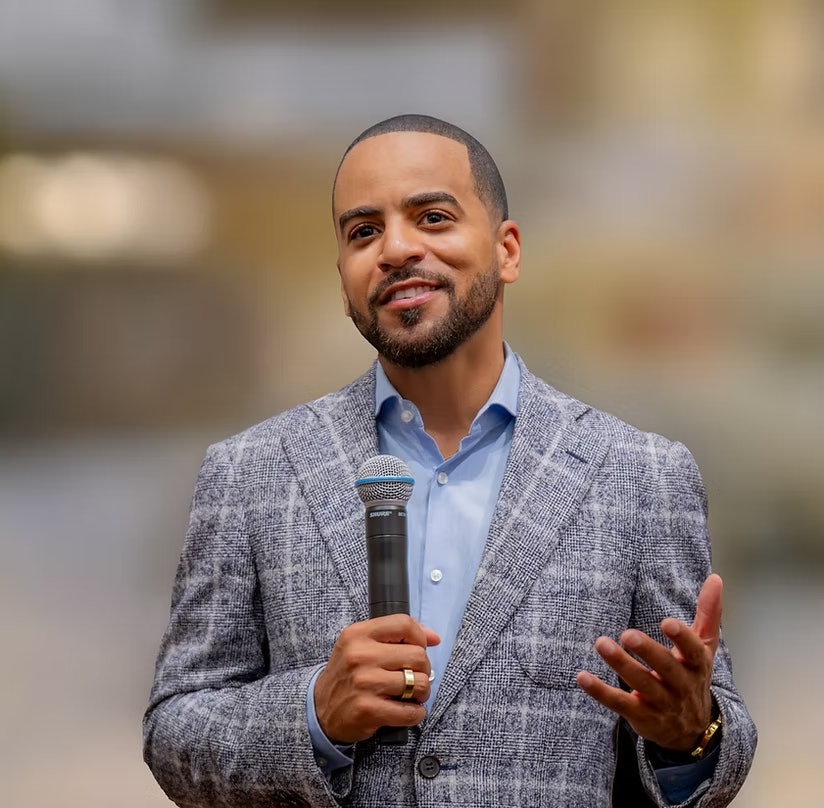
NDr. Tryan McMickensorth Carolina Central University has received a $500,000 grant from the Walton Family Foundation to launch a research initiative addressing the systemic barriers that prevent young men in the Research Triangle region from accessing career pathways and educational opportunities.
The two-year study, titled “Understanding Education as a Career Choice for NC Research Triangle Youth,” will focus on what researchers term “opportunity youth” – young men between ages 18 and 24 who have become disconnected from both education and employment systems. Despite broader national gains in educational access, this demographic continues to face significant obstacles that contribute to high dropout rates and limited postsecondary success.
Dr. Tryan McMickens, professor of higher education and coordinator of NCCU’s higher education administration program, will lead the initiative alongside Dr. Jim Harper II, professor of history and associate dean of the School of Graduate Studies. Their research team will include faculty members, six graduate students from the higher education administration and history programs, and a dedicated project manager. Dr. Jim Harper II
“I am thrilled that the Walton Foundation has chosen to invest in NCCU faculty to advance research on postsecondary attainment among boys and young men,” said Dr. Ontario Wooden, NCCU provost and vice chancellor for academic affairs. “This support highlights the importance of this critical area and empowers our faculty to deliver meaningful, evidence-based results. I eagerly anticipate the insights and impact this work will bring.”
The research aims to move beyond simply identifying problems to developing concrete solutions through research-based interventions, community engagement, and policy recommendations. The project will culminate in a two-day conference planned for 2026, where findings and potential interventions will be shared with stakeholders across the region.
McMickens brings extensive expertise in higher education access and the experiences of Black male students to the project. His research centers on college mental health and historically Black colleges and universities, and he authored Black Male College Students’ Mental Health: Providing Holistic Support in Higher Education. Harper’s scholarship focuses on African and African American education and innovative uses of technology for public engagement with history. He co-authored With Faith in God and Heart in Mind: A History of Omega Psi Phi Fraternity, Inc.
The Research Triangle region, encompassing Raleigh, Durham, and Chapel Hill, represents one of the nation’s most concentrated areas of higher education institutions and technology companies. However, the economic opportunities created by this educational and technological hub have not been equally accessible to all young people in the region, particularly young men from underserved communities.
The Walton Family Foundation, established by descendants of Walmart founders Sam and Helen Walton, focuses its philanthropic efforts on three primary areas: improving K-12 education, protecting rivers and oceans along with their communities, and investing in Northwest Arkansas and the Arkansas-Mississippi Delta. The foundation also supports projects reflecting individual family members’ personal interests.
The timing of this research initiative comes as higher education institutions nationwide are examining their role in addressing broader social and economic inequities, particularly those affecting young men of color who face disproportionate barriers to educational and career advancement.
Dr. Charles Lee Isbell Jr.In a move that signals both continuity and transformation in higher education leadership, Dr. Charles Lee Isbell Jr. has been named the 11th chancellor of the University of Illinois Urbana-Champaign, bringing with him a distinguished record of academic innovation and an unwavering commitment to expanding access in STEM fields.
The appointment, announced by University of Illinois System President Tim Killeen, represents more than just a leadership transition. It marks the arrival of a scholar-administrator whose career has been defined by his efforts to democratize technology education and create pathways for underrepresented students in computing and artificial intelligence.
Isbell, currently serving as provost at the University of Wisconsin-Madison, will formally assume his new role on August 1. The 56-year-old computer scientist brings more than two decades of experience in higher education leadership to one of the nation’s premier public research institutions.
What sets Isbell apart in the landscape of academic leadership is his dual expertise in cutting-edge technology and social justice advocacy. As a Fellow of both the Association for the Advancement of Artificial Intelligence and the Association for Computing Machinery, his technical credentials are impeccable. Yet it’s his work as a nationally recognized advocate for broadening participation in STEM fields that may prove most transformative for Illinois.
“His efforts to create more inclusive academic pathways have influenced national conversations on the importance of making a way for all to access, contribute to and benefit from technology education,” the university noted in announcing his appointment, highlighting work that has garnered attention from major national publications.
This focus on inclusion comes at a critical time for higher education, as universities nationwide grapple with questions of access, affordability, and representation in rapidly evolving technological fields. Isbell’s approach has been to build bridges rather than barriers, recognizing that the future of computing depends on drawing talent from all corners of society.
Isbell’s innovative approach to education was perhaps most visible during his tenure at the Georgia Institute of Technology, where he spent 20 years climbing the academic ranks. As dean of the College of Computing, he helped transform the program into one of the largest and most diverse computing programs in the nation—a testament to his ability to scale inclusive excellence.
His most groundbreaking achievement at Georgia Tech was the launch of the university’s Online Master of Science in Computer Science program, the first of its kind offered at scale by a leading research university. The program broke new ground in making graduate-level computer science education accessible to students who might otherwise be excluded by geography, work schedules, or financial constraints.
This innovation in educational delivery demonstrates Isbell’s understanding that true accessibility requires not just opening doors but reimagining how those doors function. The success of the Georgia Tech program has since influenced online graduate education across the country, proving that rigorous academic standards and broad accessibility need not be mutually exclusive.
Killeen’s enthusiasm for Isbell’s appointment centers on his “clear, creative and inspiring vision for what public higher education can and should be.”
“He brings a deep understanding of not only technology and its fast-evolving, far-reaching impacts, but also the vast range of disciplines that are integral to any great university and our society,” Killeen noted, emphasizing Isbell’s appreciation for the interconnectedness of academic disciplines.
This interdisciplinary perspective may prove crucial as Illinois faces the challenges common to public research universities: maintaining excellence while expanding access, securing adequate funding while controlling costs, and preparing students for a rapidly changing economy while preserving the liberal arts traditions that create engaged citizens.
Isabell said that he is excited to take the helm of a university with more than 56,000 students and nearly 13,000 faculty and staff.
“It’s the honor of a lifetime to be appointed to the role of chancellor and I’m deeply grateful to President Killeen and the Board of Trustees,” Isbell said upon his appointment. “I’m energized by this chance to serve the citizens of Illinois and advance the mission of learning, discovery, engagement and economic development.”