Category: Featured on eSchool News

  • Students learn the basics of AI as they weigh its use in their future careers

    Students learn the basics of AI as they weigh its use in their future careers

    This story was originally published by Chalkbeat. Sign up for their newsletters at ckbe.at/newsletters.

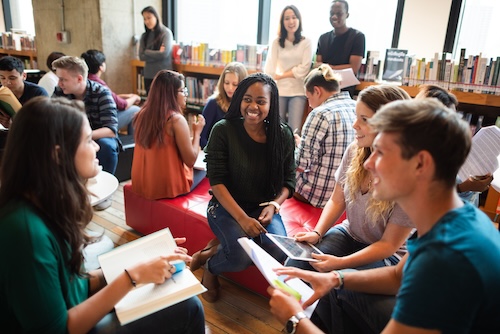
    On a recent Thursday morning, Michael Taubman asked his class of seniors at North Star Academy’s Washington Park High School: “What do you think AI’s role should be in your future career?”

    “In school, like how we use AI as a tool and we don’t use it to cheat on our work … that’s how it should be, like an assistant,” said Amirah Falana, a 17-year-old interested in a career in real estate law.

    Fernando Infante, an aspiring software developer, agreed that AI should be a tool to “provide suggestions” and inform the work.

    “It’s like having AI as a partner rather than it doing the work,” said Infante during class.

    Falana and Infante are students in Taubman’s class called The Summit, a yearlong program offered to 93 seniors this year and expanding to juniors next year that also includes a 10-week AI course developed by Taubman and Stanford University.

    As part of the course, students use artificial intelligence tools – often viewed in a negative light due to privacy and other technical concerns – to explore their career interests and better understand how technology could shape the workforce. The class is also timely, as 92% of companies plan to invest in more AI over the next three years, according to a report by global consulting firm McKinsey and Company.

    The lessons provide students with hands-on exercises to better understand how AI works and how they can use it in their daily lives. They are also designed so teachers across subject areas can include them as part of their courses and help high school students earn a Google Career Certificate for AI Essentials, which introduces AI and teaches the basics of using AI tools.

    Students like Infante have used the AI and coding skills they learned in class to create their own apps while others have used them to create school surveys and spark new thoughts about their future careers. Taubman says the goal is to also give students agency over AI so they can embrace technological changes and remain competitive in the workfield.

    “One of the key things for young people right now is to make sure they understand that this technology is not inevitable,” Taubman told Chalkbeat last month. “People made this, people are making decisions about it, and there are pros and cons like with everything people make and we should be talking about this.”

    Students need to know the basics of AI, experts say

    As Generation Z, those born between 1997 and 2012, graduate high school and enter a workforce where AI is new, many are wondering how the technology will be used and to what extent.

    Nearly half of Gen Z students polled by The Walton Family Foundation and Gallup said they use AI weekly, according to the newly released survey exploring how youth view AI. (The Walton Family Foundation is a supporter of Chalkbeat. See our funders list here.) The same poll found that over 4 in 10 Gen Z students believe they will need to know AI in their future careers, and over half believe schools should be required to teach them how to use it.

    This school year, Newark Public Schools students began using Khan Academy’s AI chatbot tutor called Khanmigo, which the district launched as a pilot program last year. Some Newark teachers reported that the tutoring tool was helpful in the classroom, but the district has not released data on whether it helped raise student performance and test scores. The district in 2024 also launched its multimillion project to install AI cameras across school buildings in an attempt to keep students safe.

    But more than just using AI in school, students want to feel prepared to use it after graduating high school. Nearly 3 in 4 college students said their colleges or universities should be preparing them for AI in the workplace, according to a survey from Inside Higher Ed and College Pulse’s Student Voice series.

    Many of the challenges of using AI in education center on the type of learning approach used, accuracy, and building trust with the technology, said Nhon Ma, CEO of Numerade – an online learning assistant that uses AI and educators to help students learn STEM concepts. But that’s why it’s important to immerse students in AI to help them understand the ways it could be used and when to spot issues, Ma added.

    “We want to prepare our youth for this competitive world stage, especially on the technological front so they can build their own competence and confidence in their future paths. That could potentially lead towards higher earnings for them too,” Ma said.

    For Infante, the senior in Taubman’s class, AI has helped spark a love for computer science and deepened his understanding of coding. He used it to create an app that tracks personal milestones and goals and awards users with badges once they reach them. As an aspiring software developer, he feels he has an advantage over other students because he’s learning about AI in high school.

    Taubman also says it’s especially important for students to understand how quickly the technology is advancing, especially for students like Infante looking towards a career in technology.

    “I think it’s really important to help young people grapple with how this is new, but unlike other big new things, the pace is very fast, and the implications for career are almost immediate in a lot of cases,” Taubman added.

    Students learn that human emotions are important as AI grows

    It’s also important to remember the limitations of AI, Taubman said, noting that students need the basic understanding of how AI works in order to question it, identify any mistakes, and use it accordingly in their careers.

    “I don’t want students to lose out on an internship or job because someone else knows how to use AI better than they do, but what I really want is for students to get the internship or the job because they’re skillful with AI,” Taubman said.

    Through Taubman’s class, students are also identifying how AI increases the demand for skills that require human emotion, such as empathy and ethics.

    Daniel Akinyele, a 17-year-old senior, said he was interested in a career in industrial and organizational psychology, which focuses on human behavior in the workplace.

    During Taubman’s class, he used a custom AI tool on his laptop to explore different scenarios where he could use AI in his career. Many involved talking to someone about their feelings or listening to vocal cues that might indicate a person is sad or angry. Ultimately, psychology is a career about human connection and “that’s where I come into play,” Akinyele said.

    “I’m human, so I would understand how people are feeling, like the emotion that AI doesn’t see in people’s faces, I would see it and understand it,” Akinyele added.

    Falana, the aspiring real estate attorney, also used the custom AI tool to consider how much she should rely on AI when writing legal documents. Similar to writing essays in schools, Falana said professionals should use their original writing in their work but AI could serve as a launching pad.

    “I feel like the legal field should definitely put regulations on AI use, like we shouldn’t be able to, draw up our entire case using AI,” Falana said.

    During Taubman’s class, students also discussed fake images and videos created by AI. Infante, who wants to be a software developer, added that he plans to use AI regularly on the job but believes it should also be regulated to limit disinformation online.

    Taubman says it’s important for students to have a healthy level of skepticism when it comes to new technologies. He encourages students to think about how AI generates images, the larger questions around copyright infringement, and their training processes.

    “We really want them to feel like they have agency in this world, both their capacity to use these systems,” Taubman said, “but also to ask these broader questions about how they were designed.”

    Chalkbeat is a nonprofit news site covering educational change in public schools.

    For more on AI in education, visit eSN’s Digital Learning hub.

    Latest posts by eSchool Media Contributors (see all)

    Source link

  • Empowering school staff with emergency response protocols

    Empowering school staff with emergency response protocols

    Key points:

    Safety response protocols are foundational to creating a culture of safety in schools. District leaders should adopt and implement response protocols that cover all types of emergencies. Schools should have building-level response protocols and protocols for incidents when first responders are needed. These practices are critical to keeping the community safe during emergencies.

    When staff members are empowered to participate in emergency planning and response, their sense of safety is improved. Unfortunately, many staff members do not feel safe at school.

    Thirty percent of K-12 staff think about their physical safety when at work every day, and 74 percent of K-12 staff said they do not feel supported by their employer to handle emergency situations at work.

    Staff disempowerment is a “central problem” when it comes to district emergency planning, said Dr. Gabriella Durán Blakey, superintendent of Albuquerque Public Schools: “What does safety mean for educators to really be able to feel safe in their classroom, to impact student achievement, the well-being of students? And how does that anxiety play with how the students feel in the classroom?”

    School leaders should implement response protocols that empower staff to understand and participate in emergency response using a two-tiered system of emergency response:

    • A building-level emergency planning and response team should develop an Emergency Operations Plan, which includes an emergency response protocol
    • Administrators should adopt protocols to follow when they need first responders to intervene

    For guidance on crafting emergency response protocols and plans, click here.

    Laura Ascione
    Latest posts by Laura Ascione (see all)

    Source link

  • Student-created book reviews inspire a global reading culture

    Student-created book reviews inspire a global reading culture

    Key points:

    When students become literacy influencers, reading transforms from a classroom task into a global conversation.

    When teens take the mic

    Recent studies show that reading for pleasure among teens is at an all-time low. According to the National Assessment of Educational Progress (NAEP), only 14 percent of U.S. students read for fun almost every day–down from 31 percent in 1984. In the UK, the National Literacy Trust reports that just 28 percent of children aged 8 to 18 said they enjoyed reading in their free time in 2023.

    With reading engagement in crisis, one group of teens decided to flip the narrative–by turning on their cameras. What began as a simple classroom project to encourage reading evolved into a movement that amplified student voices, built confidence, and connected learners across cultures.

    Rather than writing traditional essays or book reports, my students were invited to create short video book reviews of their favorite titles–books they genuinely loved, connected with, and wanted others to discover. The goal? To promote reading in the classroom and beyond. The result? A library of student-led recommendations that brought books–and readers–to life.

    Project overview: Reading, recording, and reaching the world

    As an ESL teacher, I’ve always looked for ways to make literacy feel meaningful and empowering, especially for students navigating a new language and culture. This video review project began with a simple idea: Let students choose a book they love, and instead of writing about it, speak about it. The assignment? Create a short, personal, and authentic video to recommend the book to classmates–and potentially, to viewers around the world.

    Students were given creative freedom to shape their presentations. Some used editing apps like Filmora9 or Canva, while others recorded in one take on a smartphone. I offered a basic outline–include the book’s title and author, explain why you loved it, and share who you’d recommend it to–but left room for personal flair.

    What surprised me most was how seriously students took the project. They weren’t just completing an assignment–they were crafting their voices, practicing communication skills, and taking pride in their ability to share something they loved in a second language.

    Student spotlights: Book reviews with heart, voice, and vision

    Each student’s video became more than a book recommendation–it was an expression of identity, creativity, and confidence. With a camera as their platform, they explored their favorite books and communicated their insights in authentic, impactful ways.

    Mariam ElZeftawy: The Fault in Our Stars by John Green
    Watch Miriam’s Video Review

    Mariam led the way with a polished and emotionally resonant video review of John Green’s The Fault in Our Stars. Using Filmora9, she edited her video to flow smoothly while keeping the focus on her heartfelt reflections. Mariam spoke with sincerity about the novel’s themes: love, illness, and the fragility of life. She communicated them in a way that was both thoughtful and relatable. Her work demonstrated not only strong literacy skills but also digital fluency and a growing sense of self-expression.

    Dana: Dear Tia by Maria Zaki
    Watch Dana’s Video Review

    In one of the most touching video reviews, Dana, a student who openly admits she’s not an avid reader, chose to spotlight “Dear Tia,” written by Maria Zaki, her best friend’s sister. The personal connection to the author didn’t just make her feel seen; it made the book feel more real, more urgent, and worth talking about. Dana’s honest reflection and warm delivery highlight how personal ties to literature can spark unexpected enthusiasm.

    Farah Badawi: Utopia by Ahmed Khaled Towfik
    Watch Farah’s Video Review

    Farah’s confident presentation introduced her classmates to Utopia, a dystopian novel by Egyptian author Ahmed Khaled Towfik. Through her review, she brought attention to Arabic literature, offering a perspective that is often underrepresented in classrooms. Farah’s choice reflected pride in her cultural identity, and her delivery was clear, persuasive, and engaging. Her video became more than a review–it was a form of cultural storytelling that invited her peers to expand their literary horizons.

    Rita Tamer: Frostblood
    Watch Rita’s Video Review

    Rita’s review of Frostblood, a fantasy novel by Elly Blake, stood out for its passionate tone and concise storytelling. She broke down the plot with clarity, highlighting the emotional journey of the protagonist while reflecting on themes like power, resilience, and identity. Rita’s straightforward approach and evident enthusiasm created a strong peer-to-peer connection, showing how even a simple, sincere review can spark curiosity and excitement about reading.

    Literacy skills in action

    Behind each of these videos lies a powerful range of literacy development. Students weren’t just reviewing books–they were analyzing themes, synthesizing ideas, making connections, and articulating their thoughts for an audience. By preparing for their recordings, students learned how to organize their ideas, revise their messages for clarity, and reflect on what made a story impactful to them personally.

    Speaking to a camera also encouraged students to practice intonation, pacing, and expression–key skills in both oral language development and public speaking. In multilingual classrooms, these skills are often overlooked in favor of silent writing tasks. But in this project, English Learners were front and center, using their voices–literally and figuratively–to take ownership of language in a way that felt authentic and empowering.

    Moreover, the integration of video tools meant students had to think critically about how they presented information visually. From editing with apps like Filmora9 to choosing appropriate backgrounds, they were not just absorbing content, they were producing and publishing it, embracing their role as creators in a digital world.

    Tips for teachers: Bringing book reviews to life

    This project was simple to implement and required little more than student creativity and access to a recording device. Here are a few tips for educators who want to try something similar:

    • Let students choose their own books: Engagement skyrockets when they care about what they’re reading.
    • Keep the structure flexible: A short outline helps, but students thrive when given room to speak naturally.
    • Offer tech tools as optional, not mandatory: Some students enjoyed using Filmora9 or Canva, while others used the camera app on their phone.
    • Focus on voice and message, not perfection: Encourage students to focus on authenticity over polish.
    • Create a classroom premiere day: Let students watch each other’s videos and celebrate their peers’ voices.

    Literacy is personal, public, and powerful

    This project proved what every educator already knows: When students are given the opportunity to express themselves in meaningful ways, they rise to the occasion. Through book reviews, my students weren’t just practicing reading comprehension, they were becoming speakers, storytellers, editors, and advocates for literacy.

    They reminded me and will continue to remind others that when young people talk about books in their own voices, with their personal stories woven into the narrative, something beautiful happens: Reading becomes contagious.

    Latest posts by eSchool Media Contributors (see all)

    Source link

  • Helping students evaluate AI-generated content

    Helping students evaluate AI-generated content

    Key points:

    Finding accurate information has long been a cornerstone skill of librarianship and classroom research instruction. When cleaning up some materials on a backup drive, I came across an article I wrote for the September/October 1997 issue of Book Report, a journal directed to secondary school librarians. A generation ago, “asking the librarian” was a typical and often necessary part of a student’s research process. The digital tide has swept in new tools, habits, and expectations. Today’s students rarely line up at the reference desk. Instead, they consult their phones, generative AI bots, and smart search engines that promise answers in seconds. However, educators still need to teach students the ability to be critical consumers of information, whether produced by humans or generated by AI tools.

    Teachers haven’t stopped assigning projects on wolves, genetic engineering, drug abuse, or the Harlem Renaissance, but the way students approach those assignments has changed dramatically. They no longer just “surf the web.” Now, they engage with systems that summarize, synthesize, and even generate research responses in real time.

    In 1997, a keyword search might yield a quirky mix of werewolves, punk bands, and obscure town names alongside academic content. Today, a student may receive a paragraph-long summary, complete with citations, created by a generative AI tool trained on billions of documents. To an eighth grader, if the answer looks polished and is labeled “AI-generated,” it must be true. Students must be taught how AI can hallucinate or simply be wrong at times.

    This presents new challenges, and opportunities, for K-12 educators and librarians in helping students evaluate the validity, purpose, and ethics of the information they encounter. The stakes are higher. The tools are smarter. The educator’s role is more important than ever.

    Teaching the new core four

    To help students become critical consumers of information, educators must still emphasize four essential evaluative criteria, but these must now be framed in the context of AI-generated content and advanced search systems.

    1. The purpose of the information (and the algorithm behind it)

    Students must learn to question not just why a source was created, but why it was shown to them. Is the site, snippet, or AI summary trying to inform, sell, persuade, or entertain? Was it prioritized by an algorithm tuned for clicks or accuracy?

    A modern extension of this conversation includes:

    • Was the response written or summarized by a generative AI tool?
    • Was the site boosted due to paid promotion or engagement metrics?
    • Does the tool used (e.g., ChatGPT, Claude, Perplexity, or Google’s Gemini) cite sources, and can those be verified?

    Understanding both the purpose of the content and the function of the tool retrieving it is now a dual responsibility.

    2. The credibility of the author (and the credibility of the model)

    Students still need to ask: Who created this content? Are they an expert? Do they cite reliable sources? They must also ask:

    • Is this original content or AI-generated text?
    • If it’s from an AI, what sources was it trained on?
    • What biases may be embedded in the model itself?

    Today’s research often begins with a chatbot that cannot cite its sources or verify the truth of its outputs. That makes teaching students to trace information to original sources even more essential.

    3. The currency of the information (and its training data)

    Students still need to check when something was written or last updated. However, in the AI era, students must understand the cutoff dates of training datasets and whether search tools are connected to real-time information. For example:

    • ChatGPT’s free version (as of early 2025) may only contain information up to mid-2023.
    • A deep search tool might include academic preprints from 2024, but not peer-reviewed journal articles published yesterday.
    • Most tools do not include digitized historical data that is still in manuscript form. It is available in a digital format, but potentially not yet fully useful data.

    This time gap matters, especially for fast-changing topics like public health, technology, or current events.

    4. The wording and framing of results

    The title of a website or academic article still matters, but now we must attend to the framing of AI summaries and search result snippets. Are search terms being refined, biased, or manipulated by algorithms to match popular phrasing? Is an AI paraphrasing a source in a way that distorts its meaning? Students must be taught to:

    • Compare summaries to full texts
    • Use advanced search features to control for relevance
    • Recognize tone, bias, and framing in both AI-generated and human-authored materials

    Beyond the internet: Print, databases, and librarians still matter

    It is more tempting than ever to rely solely on the internet, or now, on an AI chatbot, for answers. Just as in 1997, the best sources are not always the fastest or easiest to use.

    Finding the capital of India on ChatGPT may feel efficient, but cross-checking it in an almanac or reliable encyclopedia reinforces source triangulation. Similarly, viewing a photo of the first atomic bomb on a curated database like the National Archives provides more reliable context than pulling it from a random search result. With deepfake photographs proliferating the internet, using a reputable image data base is essential, and students must be taught how and where to find such resources.

    Additionally, teachers can encourage students to seek balance by using:

    • Print sources
    • Subscription-based academic databases
    • Digital repositories curated by librarians
    • Expert-verified AI research assistants like Elicit or Consensus

    One effective strategy is the continued use of research pathfinders that list sources across multiple formats: books, journals, curated websites, and trusted AI tools. Encouraging assignments that require diverse sources and source types helps to build research resilience.

    Internet-only assignments: Still a trap

    Then as now, it’s unwise to require students to use only specific sources, or only generative AI, for research. A well-rounded approach promotes information gathering from all potentially useful and reliable sources, as well as information fluency.

    Students must be taught to move beyond the first AI response or web result, so they build the essential skills in:

    • Deep reading
    • Source evaluation
    • Contextual comparison
    • Critical synthesis

    Teachers should avoid giving assignments that limit students to a single source type, especially AI. Instead, they should prompt students to explain why they selected a particular source, how they verified its claims, and what alternative viewpoints they encountered.

    Ethical AI use and academic integrity

    Generative AI tools introduce powerful possibilities including significant reductions, as well as a new frontier of plagiarism and uncritical thinking. If a student submits a summary produced by ChatGPT without review or citation, have they truly learned anything? Do they even understand the content?

    To combat this, schools must:

    • Update academic integrity policies to address the use of generative AI including clear direction to students as to when and when not to use such tools.
    • Teach citation standards for AI-generated content
    • Encourage original analysis and synthesis, not just copying and pasting answers

    A responsible prompt might be: “Use a generative AI tool to locate sources, but summarize their arguments in your own words, and cite them directly.”

    In closing: The librarian’s role is more critical than ever

    Today’s information landscape is more complex and powerful than ever, but more prone to automation errors, biases, and superficiality. Students need more than access; they need guidance. That is where the school librarian, media specialist, and digitally literate teacher must collaborate to ensure students are fully prepared for our data-rich world.

    While the tools have evolved, from card catalogs to Google searches to AI copilots, the fundamental need remains to teach students to ask good questions, evaluate what they find, and think deeply about what they believe. Some things haven’t changed–just like in 1997, the best advice to conclude a lesson on research remains, “And if you need help, ask a librarian.”

    Steven M. Baule, Ed.D., Ph.D.
    Latest posts by Steven M. Baule, Ed.D., Ph.D. (see all)

    Source link

  • 7 new and engaging virtual field trips

    7 new and engaging virtual field trips

    Key points:

    Virtual field trips have emerged as an engaging resource, offering students immersive experiences and allowing them to explore global landmarks, museums, and natural wonders without leaving their classrooms.​

    Virtual field trips connect students to places that, due to funding, geography, or other logistical challenges, they may not otherwise have a chance to visit or experience.

    These trips promote active engagement, critical thinking, and cater to diverse learning styles. For instance, students can virtually visit the Great Wall of China or delve into the depths of the ocean, fostering a deeper understanding of subjects ranging from history to science.

    If you’re looking for a new virtual field trip to bring to your classroom, here are a few to investigate:

    Giant Panda Cam at the Smithsonian National Zoo: Watch Bao Li and Qing Bao–the two new Giant Pandas at Smithsonian’s National Zoo–as they explore their indoor and outdoor habitats at the David M. Rubenstein Family Giant Panda Habitat. The Giant Panda Cam is live from 7 a.m. to 7 p.m. ET daily. After 7 p.m., the cam feed will switch to a pre-recorded view of the last 12 hours.  

    The Superpower of Story: A Virtual Field Trip to Warner Bros. Studios: Students will go behind the scenes on an exclusive virtual field trip to DC Comics headquarters at Warner Bros. Studios in Burbank, California!.They’ll step into the world of legendary superheroes and blockbuster films, uncovering the secrets of how stories evolve from bold ideas to iconic comics to jaw-dropping live-action spectacles on the big screen. Along the way, they’ll hear from the creative minds who shape the DC Universe and get an insider’s look at the magic that brings their favorite characters to life.

    Mount Vernon: Students can enter different buildings and click on highlighted items or areas for explanations about their significance or what they were used for.

    Arctic Adventures: Polar Bears at Play Virtual Field Trip: Do polar bears play? The LEGO Group’s sustainability team, Polar Bears International, and Discovery Education travel to Churchill Manitoba and the Polar Frontier habitat at the Columbus Zoo and Aquarium in search of polar bears at play. Students will meet polar bears and play experts and uncover how arctic animals use play to learn just like humans, while inspiring students to use their voice to change their planet for the better.

    The Manhattan Project: Join The National WWII Museum for a cross-country virtual expedition to discover the science, sites, and stories of the creation of the atomic bomb. Student reporters examine the revolutionary science of nuclear energy in the Museum’s exhibits and the race to produce an atomic weapon in complete secrecy. 

    The Anne Frank House in VR: Explore the hiding place of Anne Frank and her family in virtual reality using the Anne Frank House VR app. The app provides a very special view into the Secret Annex where Anne Frank and the seven other people hid during WWII. In the VR app, all of the rooms in the Secret Annex are furnished according to how it was when occupied by the group in hiding, between 1942 and 1944. 

    Night Navigators: Build for Bats Virtual Field Trip: Join Discovery Education, the LEGO Group’s Social Responsibility Team, and Bat Conservation International as we travel across Texas and Florida in search of bat habitats. Students will meet play experts as they explore how these nighttime pollinators use play to learn and discover the critical role of bats in protecting farmers’ crops from pests and what we can do to help bats thrive.

    Laura Ascione
    Latest posts by Laura Ascione (see all)

    Source link

  • Career-connected learning builds a more employable, future-ready generation

    Career-connected learning builds a more employable, future-ready generation

    Key points:

    Abraham Maslow’s Hierarchy of Needs is a fundamental psychological theory that explains human motivation. At its base are physiological and safety needs, followed by love and belonging, esteem, and self-actualization at the peak. While this theory is universally recognized for understanding personal growth in human development, it can also be applied to an individual’s educational journey.

    Had Maslow been an educator, he might have reconsidered the foundation of our education system to one that would align student aptitudes and interests to sustain the rapidly changing workforce. Consider the phrase, “If you give a man a fish, he will be hungry tomorrow. If you teach a man to fish, he will be richer forever.” It could be applied here, too. If we pair students’ strengths and aptitudes with in-demand careers through personalized learning, we are ensuring the success of our students and tomorrow’s workforce, thus realigning motivation and fulfilling the individuals Hierarchy of Needs.

    States have begun investing in career-connected learning (CCL) to connect learning to career pathways as a means to boost employability and inevitably support businesses and the local economy.

    Students are rarely guided toward career paths that match their aptitudes (or natural talents). But if our districts began doing so, we would likely see higher levels of employment and job satisfaction, and lower economic instability and gaps in the job market. This could ultimately impact our communities and the national economy at large.

    While work is being done, there is still plenty to do as the career exposure gap grows, particularly in IT, manufacturing, finance, and more. It’s time for educational stakeholders–policy, K-12 decision makers, guidance counselors and parents alike–to rethink how we prepare young people for their futures.

    The foundation: Addressing basic needs first

    It has become ever so clear that every student, starting as early as junior high, should have the opportunity to take an aptitude assessment. Researchers have identified that students’ natural aptitudes solidify by age 14, forming the foundation for understanding what they’re inherently good at. If Maslow were designing today’s educational experience, this would be the starting point–helping students discover their strengths and setting the stage for growth.

    Students’ ability to learn, and therefore their level of education, has always shown to have direct correlations to their physical well-being and sense of security. Often, students feel discouraged and unengaged in their coursework because it doesn’t connect to their innate strengths, making it harder to feel confident in their abilities and motivated to tap into potential future pathways for employment. 

    When these foundational supports are provided, students are likely to feel ready to explore career opportunities and develop the workplace-ready skills needed in today’s economy.

    Building confidence: Belonging and self-esteem in education

    Students thrive when they feel a sense of belonging–both in the classroom and in the broader community. They also need to build self-esteem by experiencing achievement, recognition, and purpose. Connecting education with natural aptitudes and real-world career experiences can foster this sense of belonging and achievement.

    Encouraging students to participate in internships, apprenticeships, or mentorship programs can bridge the connection between their talents and real-world job opportunities. This fosters a sense of community and a personal identity tied to their future careers and success. CCL helps students understand that they have valuable contributions to make, both in school and beyond, which often leads to students taking ownership of their educational journeys.

    Path to self-actualization: Unlocking career potential

    At the pinnacle of Maslow’s hierarchy is self-actualization. Students are no longer just attending school to pass tests–they are actively seeking knowledge and skills to help them achieve their dreams. Students are often more motivated when they see the relevance of their learning, especially when they understand how it connects to their future aspirations.

    Tech solutions have helped districts provide personalized career assessments and work-based learning experiences for students, which empowers them to explore their career interests in-depth. When we offer students opportunities for hands-on exploration and real-world application, they find greater fulfillment in their educational experiences and a stronger desire to achieve higher learning goals.

    The crisis: How the current system is failing to meet Maslow’s vision

    Most high school graduates (75 percent) do not feel prepared to make college or career decisions after graduation.

    Simultaneously, 40 percent of employers stated that educational institutions do not sufficiently prepare students for their future careers, and 90 percent emphasized the need for stronger partnerships between K-12 schools and postsecondary institutions.

    Despite the clear benefits of linking education to career pathways, more often schools solely focus on academic success, neglecting the broader skills students need to thrive in the workforce. And CCL is frequently seen as a nice-to-have, rather than an essential piece of education. The growing career exposure gap is evidence of this disconnect.

    Closing this disconnect begins with helping people understand where to invest in their skills. 

    A new model: Career-connected learning as the solution

    By ensuring basic needs are met, fostering belonging and esteem, and unlocking students’ potential, we equip students with the real-world skills they need to succeed. CCL benefits every student and should be seen as an essential part of education, not just a nice-to-have.

    Personalized learning platforms, aptitude assessments, career identification, and skill-based learning tools provide the foundation for this transformation. But it’s the convergence among educators, employers, policymakers, and technology providers that will ultimately ensure that every student has the opportunity to realize their full potential. 

    My final thoughts: Maslow would remind us that education isn’t just about filling students’ heads with knowledge–it’s about inspiring them to dream, grow, and discover their limitless opportunities. This vision offers not just hope for individual students, but economic benefits for society as a whole.

    Latest posts by eSchool Media Contributors (see all)

    Source link

  • Reimagining readiness in Indiana education

    Reimagining readiness in Indiana education

    Key points:

    Across the country, education is on the brink of significant change. As schools, districts, and policymakers grapple with the realities of a rapidly evolving workforce that requires discipline-specific knowledge, high-tech know-how, and hands-on skills, there is a growing recognition that the traditional approaches to preparing students for the real world no longer suffice. 

    This shift brings uncertainty and anxiety for district leaders here in Indiana. Change can be intimidating, especially when the stakes are as high as the future success of our students. Yet, this moment also holds immense potential to redefine what it means to truly ready them for a workplace that is continually reinventing itself.

    To confront the challenges future-focused schools face, we’re sharing our approach from two distinct, but complementary, perspectives. One, from the superintendent of Eastern Hancock Schools, a small, rural district in Indiana that is deeply rooted in its community and focused on creating opportunities for students through strong local partnerships. The other, from the president and CEO of Project Lead The Way (PLTW), a national nonprofit organization that provides schools with innovative, hands-on, project-based STEM curriculum designed to develop critical skills and knowledge, while preparing students for careers beyond the classroom. 

    While we work in different contexts, our shared mission of preparing students and educators for an ever-changing world unites us. Together, we aim to highlight the excitement and possibility that change can bring when approached with readiness and purpose.

    Redefining what it means to be ready

    The jobs of tomorrow will demand far more than technical knowledge. As industries transform at warp speed, accelerated by AI, automation, and other technological advancements, many of today’s students will enter careers that don’t yet exist. 

    Preparing them for this reality requires educators to focus on more than just meeting academic benchmarks or prepping for the next standardized test. It demands fostering critical thinking, collaboration, communication skills, and, perhaps most importantly, confidence–characteristics many employers say are lacking among today’s graduates.

    At Eastern Hancock, this preparation begins by creating opportunities for students to connect their learning to real-world applications. The district’s robust work-based learning program allows juniors and seniors to spend part of their day in professional placements across industries, such as construction, healthcare, engineering, and education, where they receive hands-on training. These experiences not only provide exposure to potential careers but also help students develop soft skills, including teamwork and problem-solving, that are critical for success in any field.

    We also know that when students have earlier access to STEM learning and concepts, they are more inclined to pursue a STEM-driven career, such as computer science and engineering. Students in PLTW programs tackle meaningful problems as capable contributors, such as designing prototypes to address environmental issues, exploring biomedical innovations, and solving arising problems like cybersecurity and information safety.

    Preparation, however, is about more than providing opportunities. Many students dismiss career paths because they lack the self-assurance to see themselves thriving in those roles. Both Eastern Hancock and PLTW work to break down these barriers–helping students build self-esteem, explore new possibilities, and develop confidence in chosen fields they may have once considered out of reach.

    Empowering educators to lead with confidence

    While students are at the heart of these changes, educators are the driving force behind them. For many teachers, however, change can feel overwhelming, even threatening. Resistance to new approaches often stems from a fear of irrelevance or a lack of preparation. To truly transform education, it is essential to support teachers with the resources, tools, and confidence they need to thrive in evolving classrooms.

    PLTW’s professional development programs equip educators with training that builds their capacity to lead transformative learning experiences. Teachers leave PLTW sessions with practical strategies, a renewed sense of purpose, and the self-assurance to inspire their students through immersive classroom experiences.

    At Eastern Hancock, the promise of growth drives efforts to support educators through professional development that aligns with their goals and the district’s vision. Teachers collaborate to set meaningful objectives, fostering a culture of innovation and shared purpose. This approach ensures that educators feel prepared not only to guide students but also to grow alongside them.

    Blending a local approach and national reach illustrates how schools and organizations at every level can work together to address the shared challenge of preparing and supporting educators for the future. By empowering teachers with the tools and confidence they need, both Eastern Hancock and PLTW demonstrate how readiness can ripple outward to transform entire communities.

    Delivering on the promises of education

    Indiana’s reimagined graduation requirements offer schools the chance to redefine what it means to be truly prepared for the future. At Eastern Hancock, we’ve seen how aligned values–like those we share with PLTW–can inspire new ways of thinking about career readiness. We’re both deeply committed to ensuring students are equipped with the skills, experiences, and confidence they need to thrive in an unpredictable world.

    Change may cause anxiety, but it also creates opportunities for innovation, growth, and excitement. When educators, students, and communities embrace readiness, the future of education becomes a source of hope and possibility-for Indiana and for the nation.

    Latest posts by eSchool Media Contributors (see all)

    Source link

  • White House order prioritizes AI in schools

    White House order prioritizes AI in schools

    Key points:

    • The Trump administration is elevating AI programs in K-12 education
    • The human edge in the AI era
    • Report details uneven AI use among teachers, principals
    • For more news on AI in education, visit eSN’s Digital Learning hub

    A new executive order signed by President Trump takes aim at AI policies in K-12 education by “fostering interest and expertise in artificial intelligence (AI) technology from an early age to maintain America’s global dominance in this technological revolution for future generations.”