Category: Featured on eSchool News

  • Preserving critical thinking amid AI adoption

    Preserving critical thinking amid AI adoption

    Key points:

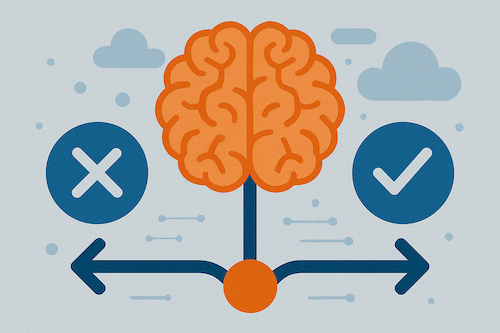
    AI is now at the center of almost every conversation in education technology. It is reshaping how we create content, build assessments, and support learners. The opportunities are enormous. But one quiet risk keeps growing in the background: losing our habit of critical thinking.

    I see this risk not as a theory but as something I have felt myself.

    The moment I almost outsourced my judgment

    A few months ago, I was working on a complex proposal for a client. Pressed for time, I asked an AI tool to draft an analysis of their competitive landscape. The output looked polished and convincing. It was tempting to accept it and move on.

    Then I forced myself to pause. I began questioning the sources behind the statements and found a key market shift the model had missed entirely. If I had skipped that short pause, the proposal would have gone out with a blind spot that mattered to the client.

    That moment reminded me that AI is fast and useful, but the responsibility for real thinking is still mine. It also showed me how easily convenience can chip away at judgment.

    AI as a thinking partner

    The most powerful way to use AI is to treat it as a partner that widens the field of ideas while leaving the final call to us. AI can collect data in seconds, sketch multiple paths forward, and expose us to perspectives we might never consider on our own.

    In my own work at Magic EdTech, for example, our teams have used AI to quickly analyze thousands of pages of curriculum to flag accessibility issues. The model surfaces patterns and anomalies that would take a human team weeks to find. Yet the real insight comes when we bring educators and designers together to ask why those patterns matter and how they affect real classrooms. AI sets the table, but we still cook the meal.

    There is a subtle but critical difference between using AI to replace thinking and using it to stretch thinking. Replacement narrows our skills over time. Stretching builds new mental flexibility. The partner model forces us to ask better questions, weigh trade-offs, and make calls that only human judgment can resolve.

    Habits to keep your edge

    Protecting critical thinking is not about avoiding AI. It is about building habits that keep our minds active when AI is everywhere.

    Here are three I find valuable:

    1. Name the fragile assumption
    Each time you receive AI output, ask: What is one assumption here that could be wrong? Spend a few minutes digging into that. It forces you to reenter the problem space instead of just editing machine text.

    2. Run the reverse test
    Before you adopt an AI-generated idea, imagine the opposite. If the model suggests that adaptive learning is the key to engagement, ask: What if it is not? Exploring the counter-argument often reveals gaps and deeper insights.

    3. Slow the first draft
    It is tempting to let AI draft emails, reports, or code and just sign off. Instead, start with a rough human outline first. Even if it is just bullet points, you anchor the work in your own reasoning and use the model to enrich–not originate–your thinking.

    These small practices keep the human at the center of the process and turn AI into a gym for the mind rather than a crutch.

    Why this matters for education

    For those of us in education technology, the stakes are unusually high. The tools we build help shape how students learn and how teachers teach. If we let critical thinking atrophy inside our companies, we risk passing that weakness to the very people we serve.

    Students will increasingly use AI for research, writing, and even tutoring. If the adults designing their digital classrooms accept machine answers without question, we send the message that surface-level synthesis is enough. We would be teaching efficiency at the cost of depth.

    By contrast, if we model careful reasoning and thoughtful use of AI, we can help the next generation see these tools for what they are: accelerators of understanding, not replacements for it. AI can help us scale accessibility, personalize instruction, and analyze learning data in ways that were impossible before. But its highest value appears only when it meets human curiosity and judgment.

    Building a culture of shared judgment

    This is not just an individual challenge. Teams need to build rituals that honor slow thinking in a fast AI environment. Another practice is rotating the role of “critical friend” in meetings. One person’s task is to challenge the group’s AI-assisted conclusions and ask what could go wrong. This simple habit trains everyone to keep their reasoning sharp.

    Next time you lean on AI for a key piece of work, pause before you accept the answer. Write down two decisions in that task that only a human can make. It might be about context, ethics, or simple gut judgment. Then share those reflections with your team. Over time this will create a culture where AI supports wisdom rather than diluting it.

    The real promise of AI is not that it will think for us, but that it will free us to think at a higher level.

    The danger is that we may forget to climb.

    The future of education and the integrity of our own work depend on remaining climbers. Let the machines speed the climb, but never let them choose the summit.

    Laura Ascione
    Latest posts by Laura Ascione (see all)

    Source link

  • Truth vs. risk management: How to move forward

    Truth vs. risk management: How to move forward

    Key points:

    In the world of K-12 education, teachers are constantly making decisions that affect their students and families. In contrast, administrators are tasked with something even bigger: making decisions that also involve adults (parents, staff culture, etc.) and preventing conflicts from spiraling into formal complaints or legal issues. Therefore, decisions and actions often have to balance two competing values: truth and risk management.

    Some individuals, such as teachers, are very truth-oriented. They document interactions, clarify misunderstandings, and push for accuracy, recognizing that a single misrepresentation can erode trust with families, damage credibility in front of students, or most importantly, remove them from the good graces of administrators they respect and admire. Truth is not an abstract concept–it is paramount to professionalism and reputation. If a student states that they are earning a low grade because “the teacher doesn’t like me,” the teacher will go through their grade-book. If a parent claims that a teacher did not address an incident in the classroom, the teacher may respond by clarifying the inaccuracy via summarizing documentation of student statements, anecdotal evidence of student conversations, reflective activities, etc.

    De-escalation and appeasement

    In contrast, administrators are tasked with something even bigger. They have to view scenarios from the lens of risk management. Their role requires them to deescalate and appease. Administrators must protect the school’s reputation and prevent conflicts or disagreements from spiraling into formal complaints or legal issues. Through that lens, the truth sometimes takes a back seat to ostensibly achieve a quick resolution.

    When a house catches on fire, firefighters point the hose, put out the flames, and move on to their next emergency. They don’t care if the kitchen was recently remodeled; they don’t have the time or desire to figure out a plan to put out the fire by aiming at just the living room, bedrooms, and bathrooms. Administrators can be the same way–they just want the proverbial “fire” contained. They do not care about their employees’ feelings; they just care about smooth sailing and usually softly characterize matters as misunderstandings.

    To a classroom teacher who has carefully documented the truth, this injustice can feel like a bow tied around a bag of garbage. Administrators usually err on the side of appeasing the irrational, volatile, and dangerous employee, which risks the calmer employee feeling like they were overlooked because they are “weaker.” In reality, their integrity, professionalism, and level-headedness lead administrators to trust the employee will do right, know better, maintain appropriate decorum, rise above, and not foolishly escalate. This notion aligns to the scripture “To whom much is given, much is required” (Luke 12:48). Those with great abilities are judged at a higher bar.

    In essence, administrators do not care about feelings, because they have a job to do. The employee with higher integrity is not the easier target but is easier to redirect because they are the safer, principled, and ethical employee. This is not a weakness but a strength in the eyes of the administration and that is what they prefer (albeit the employee may be dismissed, confused, and their feelings may be hurt, but that is not the administration’s focus at all).

    Finding common ground

    Neither perspective (truth or risk management) is wrong. Risk management matters. Without it, schools would be replete with endless investigations and finger-pointing. Although, when risk management consistently overrides truth, the system teaches teachers that appearances matter more than accountability, which does not meet the needs of validation and can thus truly hurt on a personal level. However, in the work environment, finding common ground and moving forward is more important than finger-pointing because the priority has to be the children having an optimal learning environment.

    We must balance the two. Perhaps, administrators should communicate openly, privately, and directly to educators who may not always understand the “game.” Support and transparency are beneficial. Explaining the “why” behind a decision can go a long way in building staff trust, morale, and intelligence. Further, when teachers feel supported in their honesty, they are less likely to disengage because transparency, accuracy, and an explanation of risk management can actually prevent fires from igniting in the first place. Additionally, teachers and administrators should explore conflict resolution strategies that honor truth while still mitigating risk. This can assist in modelling for students what it means to live with integrity in complex situations. Kids deserve nothing less.

    Lastly, teachers need to be empathetic to the demands on their administrators. “If someone falls into sin, forgivingly restore him, saving your critical comments for yourself. You might be needing forgiveness before the day’s out. Stoop down and reach out to those who are oppressed. Share their burdens, and so complete Christ’s law. If you think you are too good for that, you are badly deceived” (Galatians 6:1-3). This scripture means that teachers should focus less on criticizing or “keeping score” (irrespective of the truth and the facts, and even if false-facts are generated to manage risk), but should work collaboratively while also remembering and recognizing that our colleagues (and even administrators) can benefit from the simple support of our grace and understanding. Newer colleagues and administrators are often in survival mode.

    Latest posts by eSchool Media Contributors (see all)

    Source link

  • How CTE inspires long and fulfilling careers

    How CTE inspires long and fulfilling careers

    This post originally published on iCEV’s blog, and is republished here with permission.

    A career-centered education built on real experience

    One of the most transformative aspects of Career and Technical Education is how it connects learning to real life. When students understand that what they’re learning is preparing them for long and fulfilling careers, they engage more deeply. They build confidence, competence, and the practical skills employers seek in today’s competitive economy.

    I’ve seen that transformation firsthand, both as a teacher and someone who spent two decades outside the classroom as a financial analyst working with entrepreneurs. I began teaching Agricultural Science in 1987, but stepped away for 20 years to gain real-world experience in banking and finance. When I returned to teaching, I brought those experiences with me, and they changed the way I taught.

    Financial literacy in my Ag classes was not just another chapter in the curriculum–it became a bridge between the classroom and the real world. Students were not just completing assignments; they were developing skills that would serve them for life. And they were thriving. At Rio Rico High School in Arizona, we embed financial education directly into our Ag III and Ag IV courses. Students not only gain technical knowledge but also earn the Arizona Department of Education’s Personal Finance Diploma seal. I set a clear goal: students must complete their certifications by March of their senior year. Last year, 22 students achieved a 100% pass rate.

    Those aren’t just numbers. They’re students walking into the world with credentials, confidence, and direction. That’s the kind of outcome only CTE can deliver at scale.

    This is where curriculum systems designed around authentic, career-focused content make all the difference. With the right structure and tools, educators can consistently deliver high-impact instruction that leads to meaningful, measurable outcomes.

    CTE tools that work

    Like many teachers, I had to adapt quickly when the COVID-19 pandemic hit. I transitioned to remote instruction with document cameras, media screens, and Google Classroom. That’s when I found iCEV. I started with a 30-day free trial, and thanks to the support of their team, I was up and running fast. 

    iCEV became the adjustable wrench in my toolbox: versatile, reliable, and used every single day. It gave me structure without sacrificing flexibility. Students could access content independently, track their progress, and clearly see how their learning connected to real-world careers.

    But the most powerful lesson I have learned in CTE has nothing to do with tech or platforms. It is about trust. My advice to any educator getting started with CTE? Don’t start small. Set the bar high. Trust your students. They will rise. And when they do, you’ll see how capable they truly are.

    From classroom to career: The CTE trajectory

    CTE offers something few other educational pathways can match: a direct, skills-based progression from classroom learning to career readiness. The bridge is built through internships, industry partnerships, and work-based learning: components that do more than check a box. They shape students into adaptable, resilient professionals.

    In my program, students leave with more than knowledge. They leave with confidence, credentials, and a clear vision for their future. That’s what makes CTE different. We’re not preparing students for the next test. We’re preparing them for the next chapter of their lives.

    These opportunities give students a competitive edge. They introduce them to workplace dynamics, reinforce classroom instruction, and open doors to mentorship and advancement. They make learning feel relevant and empowering.

    As explored in the broader discussion on why the world needs CTE, the long-term impact of CTE extends far beyond individual outcomes. It supports economic mobility, fills critical workforce gaps, and ensures that learners are equipped not only for their first job, but for the evolution of work across their lifetimes.

    CTE educators as champions of opportunity

    Behind every successful student story is an educator or counselor who believed in their potential and provided the right support at the right time. As CTE educators, we’re not just instructors; we are workforce architects, building pipelines from education to employment with skill and heart.

    We guide students through certifications, licenses, career clusters, and postsecondary options. We introduce students to nontraditional career opportunities that might otherwise go unnoticed, and we ensure each learner is on a path that fits their strengths and aspirations.

    To sustain this level of mentorship and innovation, educators need access to tools that align with both classroom needs and evolving industry trends. High-quality guides provide frameworks for instruction, career planning, and student engagement, allowing us to focus on what matters most: helping every student achieve their full potential.

    Local roots, national impact

    When we talk about long and fulfilling careers, we’re also talking about the bigger picture:  stronger local economies, thriving communities, and a workforce that’s built to last.

    CTE plays a vital role at every level. It prepares students for in-demand careers that support their families, power small businesses, and fill national workforce gaps. States that invest in high-quality CTE programs consistently see the return: lower dropout rates, higher postsecondary enrollment, and greater job placement success.

    But the impact goes beyond metrics. When one student earns a certification, that success ripples outward—it lifts families, grows businesses, and builds stronger communities.

    CTE isn’t just about preparing students for jobs. It’s about giving them purpose. And when we invest in that purpose, we invest in long-term progress.

    Empowering the next generation with the right tools

    Access matters. The best ideas and strategies won’t create impact unless they are available, affordable, and actionable for the educators who need them. That’s why it’s essential for schools to explore resources that can strengthen their existing programs and help them grow.

    A free trial offers schools a way to explore these solutions without risk—experiencing firsthand how career-centered education can fit into their unique context. For those seeking deeper insights, a live demo can walk teams through the full potential of a platform built to support student success from day one.

    When programs are equipped with the right tools, they can exceed minimum standards. They can transform the educational experience into a launchpad for lifelong achievement.

    CTE is more than a pathway. It is a movement driven by student passion, educator commitment, and a collective belief in the value of hard work and practical knowledge. Every certification earned, every skill mastered, and every student empowered brings us closer to a future built on long and fulfilling careers for everyone.

    For more news on career readiness, visit eSN’s Innovative Teaching hub.

    Latest posts by eSchool Media Contributors (see all)

    Source link

  • 10 reasons to upgrade to Windows 11 ASAP

    10 reasons to upgrade to Windows 11 ASAP

    K-12 IT leaders are under pressure from all sides–rising cyberattacks, the end of Windows 10 support, and the need for powerful new learning tools.

    The good news: Windows 11 on Lenovo devices delivers more than an upgrade–it’s a smarter, safer foundation for digital learning in the age of AI.

    Delaying the move means greater risk, higher costs, and missed opportunities. With proven ROI, cutting-edge protection, and tools that empower both teachers and students, the case for Windows 11 is clear.

    There are 10 compelling reasons your district should make the move today.

    1. Harness AI-powered educational innovation with Copilot
    Windows 11 integrates Microsoft Copilot AI capabilities that transform teaching
    and learning. Teachers can leverage AI for lesson planning, content creation, and
    administrative tasks, while students benefit from enhanced collaboration tools
    and accessibility features.

    2. Combat the explosive rise in school cyberattacks
    The statistics are alarming: K-12 ransomware attacks increased 92 percent between 2022 and 2023, with human-operated ransomware attacks surging over 200 percent globally, according to the 2024 State of Ransomware in Education.

    3. Combat the explosive rise in school cyberattacks
    Time is critically short. Windows 10 support ended in October 2025, leaving schools running unsupported systems vulnerable to attacks and compliance violations. Starting migration planning immediately ensures adequate time for device inventory, compatibility testing, and smooth district-wide deployment.

    Find 7 more reasons to upgrade to Windows 11 here.

    Laura Ascione
    Latest posts by Laura Ascione (see all)

    Source link

  • How tutors can support student thinking

    How tutors can support student thinking

    Key points:

    Consider the work of a personal trainer. They can explain and model a workout perfectly, but if the athlete isn’t the one doing the lifting, their muscles won’t grow. The same is true for student learning. If students only copy notes or nod along, their cognitive muscles won’t develop. Cognitive lift is the mental work students do to understand, apply, and explain academic content. It’s not about giving students harder problems or letting them struggle alone. It’s about creating space for them to reason and stretch their thinking.

    Research consistently shows that students learn more when they are actively engaged with the material, rather than passively observe. Learners often forget what they’ve “learned” if they only hear an explanation. That’s why great tutors don’t just explain material clearly–they get students to explain it clearly. 

    Tutoring, with its small group format, is the ideal space to encourage students’ cognitive lift. While direct instruction and clear explanations are essential at the right times in the learning process, tutorials offer a powerful opportunity for students to engage deeply and productively practice with support.

    The unique power of tutorials

    Small-group tutorials create conditions that are harder to foster in a full classroom. Having just a few students, tutors can track individual student thinking and adjust support quickly. Students gain more chances to voice reasoning, test ideas, and build confidence. Tutorials rely on strong relationships, and when students trust their tutor, they’re more willing to take risks, share half-formed thoughts, and learn from mistakes. 

    It’s easier to build space for every student to participate and shine in a tutorial than in a full class. Tutors can pivot when they notice students aren’t actively thinking. They may notice they’re overexplaining and can step back, shifting the cognitive responsibility back to the students. This environment gives each learner the opportunity to thrive through cognitive lift.

    What does cognitive lift look like?

    What does cognitive lift look like in practice? Picture two tutorials where students solve equations like they did in class. In the first, the tutor explains every step, pausing only to ask quick calculations like, “What’s 5 + 3?” The student might answer correctly, but solving isolated computations doesn’t mean they’re engaged with solving the equation.

    Now imagine a second tutorial. The tutor begins with, “Based on what you saw in class, where could we start?” The student tries a strategy, gets stuck, and the tutor follows up: “Why didn’t that work? What else could you try?” The student explains their reasoning, reflects on mistakes, and revises. Here, they do the mental heavy lifting–reaching a solution and building confidence in their ability to reason through challenges.

    The difference is the heart of cognitive lift. When tutors focus on students applying knowledge and explaining thinking, they foster longer-term learning. 

    Small shifts, big impact

    Building cognitive lift doesn’t require a complete overhaul. It comes from small shifts tutors can make in every session. The most powerful is moving from explaining to asking. Instead of “Let me show you,” tutors can try “How might we approach this?” or “What do you notice?” Tutoring using questions over explanations causes students to do more work and learn more.

    Scaffolds–temporary supports that help students access new learning–can support student thinking without taking over. Sentence stems and visuals guide thinking while keeping responsibility with the student. Simple moves like pausing for several seconds after questions (which tutors can count in their heads) and letting students discuss with a partner also create space for reasoning. 

    This can feel uncomfortable for tutors–resisting the urge to “rescue ” students too quickly can be emotionally challenging. But allowing students to wrestle with ideas while still feeling supported is where great learning happens and is the essence of cognitive lift.

    The goal of tutoring

    Tutors aren’t there to make learning easy–they’re there to create opportunities for students to think and build confidence in facing new challenges. Just like a personal trainer doesn’t lift the weights, tutors shouldn’t do the mental work for students. As athletes progress, they add weight and complete harder workouts. Their muscles strengthen as their trainer encourages them to persist through the effort. In the same way, as the academic work becomes more complex, students strengthen their abilities by wrestling with the challenge while tutors coach, encourage, and cheer.

    Success in a tutorial isn’t measured by quick answers, but by the thinking students practice. Cognitive lift builds independence, deepens understanding, and boosts persistence. It’s also a skill tutors develop, and with the right structures, even novices can foster it. Imagine tutorials where every learner has space to reason, take risks, and grow. When we let students do the thinking, we not only strengthen their skills, we show them we believe in their potential.

    Latest posts by eSchool Media Contributors (see all)

    Source link

  • How school IT teams lock down QR-based SSO without hurting usability

    How school IT teams lock down QR-based SSO without hurting usability

    Key points:

    Schools can keep QR logins safe and seamless by blending clear visual cues, ongoing user education, and risk-based checks behind the scenes

    QR-based single sign-on (SSO) is fast becoming a favorite in schools seeking frictionless access, especially for bring-your-own-device (BYOD) environments.

    The BYOD in education market hit $15.2 billion in 2024 and is projected to grow at a 17.4 percent CAGR from 2025 to 2033, driven by the proliferation of digital learning and personal smart devices in schools.

    However, when attackers wrap malicious links into QR codes, school IT leaders must find guardrails that preserve usability without turning every login into a fortress.

    Phishing via QR codes, a tactic now known as “quishing,” is where attackers embed malicious QR codes in emails or posters, directing pupils, faculty, and staff to fake login pages. Over four out of five K-12 schools experienced cyber threat impacts with human-targeted threats like phishing or quishing, exceeding other techniques by 45 percent.

    Because QR codes hide or obscure the URL until after scanning, they evade many traditional email spam filters and link scanners.

    Below are three strategies to get that balance between seamless logins and safe digital environments right.

    How to look out for visual signals

    Approximately 60 percent of emails containing QR codes are classified as spam. Branded content, such as the school or district logo, consistent with the look and feel of other web portals and student apps, will help students identify a legitimate QR over a malicious one.

    Frontier research shows that bold colors and clear iconography can increase recognition speed by up to 40 percent. This is the kind of split-second reassurance a student or teacher needs before entering credentials on a QR-based login screen.

    Training your users to look for the full domain or service name, such as “sso.schooldistrict.edu” under the QR, is good practice to avoid quishing attacks, school-related or not. However, this will be trickier for younger students.

    The Frontier report demonstrates how younger children rely more heavily on color and icon cues than on text or abstract symbols. For K-12 students, visual trust cues such as school crests, mascots, or familiar color schemes offer a cognitive shortcut to legitimacy.

    Still, while logos and “Secured by…” badges are there to reassure users, attackers know this. Microsoft, Cisco Talos, and Palo Alto Unit42 have documented large-scale phishing campaigns where cybercriminals cloned Microsoft 365 and Okta login pages, complete with fake security seals, to harvest credentials.

    For schools rolling out QR-based SSO, pairing visible trust cues with dynamic watermarks unique to the institution makes it harder for attackers to replicate.

    User education on quishing risk

    Human error drives most breaches, particularly in K-12 schools. These environments handle a mix of pupils who are inexperienced with security risks and, therefore, are less likely to scrutinize QR codes, links, or credentials.

    Students and teachers must be taught the meaning of signs and the level of detail to consider in order to respond more quickly and correctly. A short digital literacy module about QR logins can dramatically cut phishing and quishing risk, reinforcing what legitimate login screens should look like. These should be repeated regularly for updates and to strengthen the retrieval and recognition of key visual cues.

    Research in cognitive psychology shows that repeated exposure can boost the strength of a memory by more than 30 percent, making cues harder to ignore and easier to recall. When teaching secure login habits, short, repeated micro-lessons–for example, 3-5 min videos with infographics–can boost test scores 10-20 percent. Researcher Piotr Wozniak suggests spacing reviews after 1 day, then 7 days, 16 days, 35 days, and later every 2-3 months.

    With proper education, students should instinctively not trust QRs received via text message or social media through unverified numbers or accounts. Encouraging the use of a Secure QR Code Scanner app, at least for staff and perhaps older students, can be helpful, because it will verify the embedded URL before a user opens it.

    When to step up authentication after a scan

    QR codes make logging in fast, but after a scan, you don’t have to give full access right away. Instead, schools can use these scans as the first factor and decide whether to require more proof before granting access, depending on risk signals.

    For example, if a student or teacher scans the QR code with a phone or tablet that’s not on the school’s “known device” list, the system should prompt for a PIN, passphrase, or MFA push before completing login. The same applies to sensitive systems that include student data or financial information.

    Microsoft’s 2024 Digital Defense Report shows that adding MFA blocks 99.2 percent of credential attacks. That means a simple SMS or push-based MFA can drastically slash phishing and quishing success rates. By adding a quick MFA prompt only when risk signals spike, school IT teams preserve the speed of QR logins without giving up security.

    Schools can also apply cloud-security platforms to strengthen QR-based SSO without sacrificing ease of use. These tools sit behind the scenes, continuously monitoring Google Workspace, Microsoft 365, and other education apps for unusual logins, risky devices, or policy violations.

    By automatically logging every QR login event, including device, time, and location, and triggering alerts when something looks off, IT teams gain visibility and early warning without adding extra friction for staff or students. This approach lets schools keep QR sign-ins fast and familiar with risk-based controls and data protection running in the background.

    Schools can keep QR logins safe and seamless by blending clear visual cues, ongoing user education, and risk-based checks behind the scenes. Students and staff learn to recognize authentic screens, while IT teams add extra verification only when behavior looks risky. Simultaneously, continuous monitoring tracks every scan to catch problems early and improve education resources, all without slowing anyone down.

    Latest posts by eSchool Media Contributors (see all)

    Source link

  • Understanding how inflation affects teacher well-being and career decisions

    Understanding how inflation affects teacher well-being and career decisions

    Key points:

    In recent years, the teaching profession has faced unprecedented challenges, with inflation emerging as a significant factor affecting educators’ professional lives and career choices. This in-depth examination delves into the complex interplay between escalating inflation rates and the self-efficacy of educators–their conviction in their capacity to proficiently execute their pedagogical responsibilities and attain the desired instructional outcomes within the classroom environment.

    The impact of inflation on teachers’ financial stability has become increasingly evident, with many educators experiencing a substantial decline in their “real wages.” While nominal salaries remain relatively stagnant, the purchasing power of teachers’ incomes continues to erode as the cost of living rises. This economic pressure has created a concerning dynamic where educators, despite their professional dedication, find themselves struggling to maintain their standard of living and meet basic financial obligations.

    A particularly troubling trend has emerged in which teachers are increasingly forced to seek secondary employment to supplement their primary income. Recent surveys indicate that approximately 20 percent of teachers now hold second jobs during the academic year, with this percentage rising to nearly 30 percent during summer months. This necessity to work multiple jobs can lead to physical and mental exhaustion, potentially compromising teachers’ ability to maintain the high levels of energy and engagement required for effective classroom instruction.

    The phenomenon of “moonlighting” among educators has far-reaching implications for teacher self-efficacy. When teachers must divide their attention and energy between multiple jobs, their capacity to prepare engaging lessons, grade assignments thoroughly, and provide individualized student support may be diminished. This situation often creates a cycle where reduced performance leads to decreased self-confidence, potentially affecting both teaching quality and student outcomes.

    Financial stress has also been linked to increased levels of anxiety and burnout among teachers, directly impacting their perceived self-efficacy. Studies have shown that educators experiencing financial strain are more likely to report lower levels of job satisfaction and decreased confidence in their ability to meet professional expectations. This psychological burden can manifest in reduced classroom effectiveness and diminished student engagement.

    Perhaps most concerning is the growing trend of highly qualified educators leaving the profession entirely for better-paying opportunities in other sectors. This “brain drain” from education represents a significant loss of experienced professionals who have developed valuable teaching expertise. The exodus of talented educators not only affects current students but also reduces the pool of mentor teachers available to guide and support newer colleagues, potentially impacting the professional development of future educators.

    The correlation between inflation and teacher attrition rates has become increasingly apparent, with economic factors cited as a primary reason for leaving the profession. Research indicates that districts in areas with higher costs of living and significant inflation rates experience greater difficulty in both recruiting and retaining qualified teachers. This challenge is particularly acute in urban areas where housing costs and other living expenses have outpaced teacher salary increases.

    Corporate sectors, technology companies, and consulting firms have become attractive alternatives for educators seeking better compensation and work-life balance. These career transitions often offer significantly higher salaries, better benefits packages, and more sustainable working hours. The skills that make effective teachers, such as communication, organization, and problem-solving, are highly valued in these alternative career paths, making the transition both feasible and increasingly common.

    The cumulative effect of these factors presents a serious challenge to the education system’s sustainability. As experienced teachers leave the profession and prospective educators choose alternative career paths, schools face increasing difficulty in maintaining educational quality and consistency. This situation calls for systematic changes in how we value and compensate educators, recognizing that teacher self-efficacy is intrinsically linked to their financial security and professional well-being.

    Latest posts by eSchool Media Contributors (see all)

    Source link

  • More parents are homeschooling–and turning to podcasts for syllabus support

    More parents are homeschooling–and turning to podcasts for syllabus support

    Key points:

    A revolution quietly underway in American education: the rise of homeschooling. In the past decade, there’s been a 61 percent increase in homeschool students across the United States, making it the fastest growing form of education in the country. You might not have noticed (I didn’t, at first), because only about 6 percent of students are homeschooled nationally. But that number is nearly double what it was just two years ago.

    Then I noticed something that made me take a closer look closer to home. At Starglow Media, the podcast company I founded in 2023, nearly 20 percent of our listenership comes from homeschool families. That substantially overindexes against the national population. In other words, podcasts were particularly popular in the homeschool community.

    I was curious, for my business and in general. We make podcasts for kids (and their parents)  without any specific content for homeschool families. Why was audio resonating so well with this audience? I did some digging, and the answers surprised me.

    First, I wanted to find out why homeschooling was booming. According to the Washington Post, the explosive growth is consistent across “every measurable line of politics, geography, and demographics.” Experts have offered multiple explanations. Some families started homeschooling during COVID and never went back, others want greater say in what their children learn. Some families feel their kids are safer from violence and discrimination at home, others think it’s a better environment for children with disabilities. All these reasons collectively suggest a broader motivation: people are dissatisfied with the traditional education system and are taking it into their own hands.

    None of these factors, however, explained why podcasts were popular among homeschool families. So I decided to ask the question myself. I reached out to some Starglow listeners in the Starglow community to hear what about the format was appealing to them. Three main themes emerged.

    Many people told me that podcasts are uniquely well-suited to address educational hurdles facing homeschool families. When you’re a homeschool parent, it can be difficult to navigate all the resources that inform lesson planning while ensuring that the content is age- and subject-appropriate. Parents have found podcasts to be an intuitive way to elevate their curricula. They can search for subjects, filter by age group, and trust that the content is suitable for their kids. Ads on the network add another layer of value–because parents can trust the content, they tend to trust further educational materials promoted via the same channels. Simply put, the podcast ecosystem offers a reliable means to supplement lesson plans.

    They also offer a clear financial benefit. Homeschooling can be expensive, especially in STEM, but the majority of states don’t offer government subsidies for homeschool education. Podcasts have proven to be a cost-effective way to supplement at-home learning modules. Parents appreciate that it’s free to listen.

    Lastly–and this came up in nearly every conversation–they fit in well to homeschool life. Routine is a critical part of any educational context, and podcasts are useful anchors in the school day. Parents can easily pair podcasts with lessons at any point in their day, whether it’s a current events primer paired with a news podcast over breakfast or a specific episode of “Who Smarted” (our most popular educational podcast) about how snow forms worked into a science lesson. In this way, podcasts are becoming an integral part of family life in the homeschool community. Educational content like “Who Smarted” or an age-appropriate audiobook of “Moby Dick” may be the gateway, but families tend to co-listen throughout the day, whether it’s to KidsNuz over coffee or a Koala Moon story at night.

    What does all this mean? Homeschooling is growing, and with it is the need for flexible, affordable, and trustworthy educational content. To meet that demand, families are turning to audio, which offers age-appropriate solutions that can be worked into family life through regular co-listening.

    I expect that the homeschool movement will continue to grow, because new formats and strategies are offering families new opportunities. That’s good news, because we need innovation in education right now. Test scores are falling, literacy is in decline, and school absenteeism hasn’t fully bounced back from the pandemic. The homeschool surge is just one indicator of our increased dissatisfaction with the status quo. If we want to course correct, we all need to embrace new resources, podcasts or otherwise, to enhance education at home and in the classroom. New media has the potential to transform how people teach–we should embrace the opportunity.

    Latest posts by eSchool Media Contributors (see all)

    Source link

  • Creating a classroom built for success

    Creating a classroom built for success

    Key points:

    For decades, curriculum, pedagogy, and technology have evolved to meet the changing needs of students. But in many schools, the classroom environment itself hasn’t kept pace. Classic layouts that typically feature rows of desks, limited flexibility, and a single focal point can often make it harder for educators to support the dynamic ways students learn today.

    Classrooms are more than places to sit–when curated intentionally, they can become powerful tools for learning. These spaces can either constrain or amplify great teaching. By reimagining how classrooms are designed and used, schools can create environments that foster engagement, reduce stress, and help both teachers and students thrive.

    Designing a classroom for student learning outcomes and well-being

    Many educators naturally draw on their own school experiences when shaping classroom environments, often carrying forward familiar setups that reflect how they once learned. Over time, these classic arrangements have become the norm, even as today’s students benefit from more flexible, adaptable spaces that align with modern teaching and learning needs.

    The challenge is that classic classroom setups don’t always align with the ways students learn and interact today. With technology woven into nearly every aspect of their lives, students are used to engaging in environments that are more dynamic, collaborative, and responsive. Classrooms designed with flexibility in mind can better mirror these experiences, supporting teaching and learning in meaningful ways, even without using technology.

    To truly engage students, the classroom must become an active participant in the learning process. Educational psychologist Loris Malaguzzi famously described the classroom as the “third teacher,” claiming it has just as much influence in a child’s development as parents or educators. With that in mind, teachers should be able to lean on this “teacher” to help keep students engaged and attentive, rather than doing all the heavy lifting themselves.

    For example, rows of desks often limit interaction and activity, forcing a singular, passive learning style. Flexible seating, on the other hand, encourages active participation and peer-to-peer learning, allowing students to easily move and reconfigure their learning spaces for group work or individual work time.

    I saw this firsthand when I was a teacher. When I moved into one of my third-grade classrooms, I was met with tables that quickly proved insufficient for the needs of my students. I requested a change, integrating alternative seating options and giving students the freedom to choose where they felt most comfortable learning. The results exceeded my expectations. My students were noticeably more engaged, collaborative, and invested in class discussions and activities. That experience showed me that even the simplest changes to the physical learning environment can have a profound impact on student motivation and learning outcomes.

    Allowing students to select their preferred spot for a given activity or day gives them agency over their learning experience. Students with this choice are more likely to engage in discussions, share ideas, and develop a sense of community. A comfortable and deliberately designed environment can also reduce anxiety and improve focus. This means teachers experience fewer disruptions and less need for intervention, directly alleviating a major source of stress by decreasing the disciplinary actions educators must make to resolve classroom misbehavior. With less disruption, teachers can focus on instruction.

    Supporting teachers’ well-being

    Just as classroom design can directly benefit student outcomes, it can also contribute to teacher well-being. Creating spaces that support collaboration among staff, provide opportunities to reset, and reduce the demands of the job is a tangible first step towards developing a more sustainable environment for educators and can be one factor in reducing turnover.

    Intentional classroom design should balance consistency with teacher voice. Schools don’t need a one-size-fits-all model for every room, but they can establish adaptable design standards for each type of space, such as science labs, elementary classrooms, or collaboration areas. Within those frameworks, teachers should be active partners in shaping how the space works best for their instruction. This approach honors teacher expertise while ensuring that learning environments across the school are both flexible and cohesive.

    Supporting teacher voice and expertise also encourages “early adopters” to try new things. While some teachers may jump at the opportunity to redesign their space, others might be more hesitant. For those teachers, school leaders can help ease these concerns by reinforcing that meaningful change doesn’t require a full-scale overhaul. Even small steps, like rearranging existing furniture or introducing one or two new pieces, can make a space feel refreshed and more responsive to both teaching and learning needs. To support this process, schools can also collaborate with learning environment specialists to help educators identify practical starting points and design solutions tailored to their goals.

    Designing a brighter future for education

    Investing in thoughtfully designed school environments that prioritize teacher well-being isn’t just about creating a more pleasant workplace; it’s a strategic move to build a stronger, more sustainable educational system. By providing teachers with flexible, adaptable, and future-ready classrooms, schools can address issues like stress, burnout, and student disengagement. When educators feel valued and empowered in their spaces, they create a better work environment for themselves and a better learning experience for their students. Ultimately, a supportive, well-designed classroom is an environment that sets both educators and students up for success.

    Latest posts by eSchool Media Contributors (see all)

    Source link

  • The triple Rs of scholastic esports

    The triple Rs of scholastic esports

    Key points:

    I know what it feels like to stand in front of a classroom that does not have enough. Not enough computers. Not enough up-to-date software and technical tools. Not enough resources to give every student the experience they deserve. When students notice these gaps, they notice more than the missing tools. They begin to question whether their education and, by extension, their potential really matters. That doubt can quietly drain their confidence.

    This is why dependable resources are not simply a bonus in education. They are a lifeline. In my role leading the Scholastic Esports Academy in the Five Carat Choice Program at Palm Beach Lakes High School, I have watched how access to quality equipment and meaningful project-based learning transforms students from the inside out. It is not only about what they learn but about how they begin to see themselves.

    I have been fortunate to develop partnerships with organizations like Cleverlike Studios, changing the game for my students by bringing advanced technology and creativity directly into the classroom. For example, they learned how to create new characters for Minecraft and designed custom esports jerseys for their Minecraft characters. Students were engaged while learning in games they know and love. These experiences allow them to express their creativity and see their ideas come to life while building complex skills such as coding, digital media, and game design.  

    When students make the leap from simple play to design, careers in technology and digital media suddenly seem accessible, even if they have never seen themselves in these fields before. Scholastic esports is an avenue within the educational landscape that merges the captivating realm of the video game industry with project based learning and educational objectives. It capitalizes on students’ existing interests for STEM subjects, including gamification, digital media, robotics, and financial literacy, directing them towards a structured and educational setting.

    In just five years, the Palm Beach Lakes Scholastic Esports Academy has grown from a small club of ten students to more than five hundred, becoming a full CTE academy that operates both during the school day and after school. Through this experience, students are earning four to five industry certifications along their four year pathway. Their success demonstrates what happens when resources are reliable, relatable, and creativity is encouraged. Students are now able to see themselves in real time through 3D models and their own digital designs, creating new characters for Minecraft and customizing their own esports jerseys.

    Recognizing this success, the Pew Foundation invested nearly $500,000 to expand our infrastructure and transform the program from an after school club into a full daytime classroom experience, creating even greater opportunities for growth and student success. Now, when our students walk into the Esports classroom, they enter a space built around their passions. They see powerful gaming computers, professional streaming equipment, and projects that speak their language. Suddenly, the skills they once thought were only for others become reachable. They begin to realize that their love for video games, robotics, and digital media can open doors to real world careers and college opportunities.

    The results speak for themselves:

    • In FY23 Palm Beach Lakes High School used a Pew Grant to launch the esports course and compared outcomes with a matched group of students.
    • Students who participated in esports had significantly lower rates of in-school or out-of-school suspension, with about half as many incidents as their non-esports peers.
    • Absenteeism among esports students was also slightly lower.
    • While GPA and certification pass rates were similar, the behavioral improvements were clear and meaningful.

    These numbers match what I see every day. Students who once struggled to stay engaged now show up early to practice. They stay late to collaborate. They treat each other with a level of respect and teamwork that carries over into their other classes.

    None of this would be possible without reliable and relatable resources that connect directly to students’ interests and experiences. In a Title I school, these tools make learning meaningful by turning abstract ideas into hands-on projects that students can see, touch, and create. Expanding their minds through hands-on learning and project based materials from companies like Cleverlike Studios, our students gain access to educational tools that connect classroom lessons to real world applications. Coding challenges, game design projects, and digital media activities inspire creativity, critical thinking, and collaboration. Most importantly, this work helps students see that their ideas and talents have value and that their creativity can open doors to future opportunities. 

    For many of my students’ resources have always been scarce. But in the Scholastic Esports Academy they find more than equipment. They find opportunity. They discover that their skills have value beyond the game and that their voices and ideas matter. They begin to picture themselves as leaders in technology, media, and STEM fields.

    Student Alyssa Chavez said, “Last year, we completed an assignment to design a jersey for our esports teams to wear on Minecraft. The Esports Jersey assignment was very helpful and even inspiring to me because it helped me learn to adapt and appeal to the suggestions and requirements that a client or partner would want me to apply to a project.   The use of the Blockbench program helped me to understand the importance of knowing how to navigate and use a program to do my best work for certain projects. When making the jersey, I took the elements and colors of our ‘Retro Rams’ branding and applied them to the jersey to create a design that represents unity and teamwork, showcasing the unity of our esports team.”

    This is why I believe scholastic esports is not just about gaming. It is about creating a bridge between curiosity and opportunity. It is about giving students in under-resourced communities the confidence to dream bigger and the tools to make those dreams real.

    The ongoing success of our academy is proof that when education is supported with vision, dedication, and the right resources, students will rise. We have created a space where learning feels real, where creativity thrives, and where confidence is built through experience. Partners like Cleverlike Studios have played a part in this progress by providing educational tools that enhance what we do every day. Together, we are demonstrating that reliable and relatable learning environments not only inspire achievement but also prepare students to succeed beyond the classroom.

    Latest posts by eSchool Media Contributors (see all)

    Source link