Category: Featured on eSchool News

  • Why student engagement starts with teacher clarity

    Why student engagement starts with teacher clarity

    Key points:

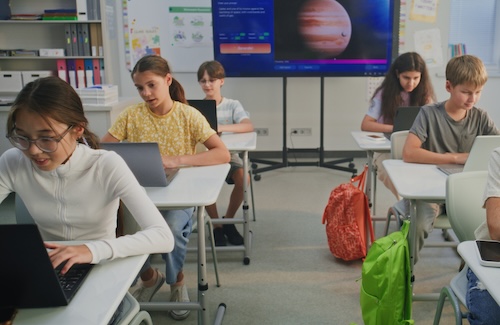
    In Alpine School District, we serve a wide range of students, from Title I to highly affluent communities. While our population has traditionally been predominantly white and middle income, that’s changing. In response to this growing diversity and shifting needs, one of my missions as professional learning and curriculum director for secondary schools has been to provide needs-based professional learning, just in time for educators, and to give them a real voice in what that looks and feels like.

    I lead a team of full-time educator equivalents across every discipline: math, science, social studies, ELA, the arts, health, and PE. Together, we guide professional learning and instructional support. Over the past several years, we’ve had to take a hard look at how we teach, how we engage students, and how we prepare educators for long-term success.

    Where we started: Tier 1 challenges and high turnover

    When I first became curriculum director, I noticed in our data that our schools were not making much progress, and in some cases had stagnated in growth scores. We were leaning heavily on Tier 2 interventions, which told us that we needed to shore up our Tier 1 instruction.

    At the same time, we were hiring between 400 and 500 teachers each year. We’re located near several universities, so we see a continuous flow of new educators come and go. They get married, they relocate, or a spouse gets into medical school, which translates to a constant onboarding cycle for our district. To meet these challenges, we needed professional learning that was sound, sustainable, and meaningful, especially early in a teacher’s career, so they could lay a strong foundation for everything that would come after.

    Teacher clarity and engagement by design

    Several years ago, we joined the Utah State Cohort, doing a deep dive into the Teacher Clarity Playbook. That experience was a real turning point. We were the only team there from a district office, and we took a train-the-trainer approach, investing in our strongest educators so they could return and lead professional learning in their content areas. Since then, we’ve used Engagement by Design as the framework behind much of our PD, our classroom walkthroughs, and our peer observations. It helped us think differently: How do we support teachers in crafting learning intentions and success criteria that are actually meaningful? How do we align resources to support that clarity? We’ve embedded that mindset into everything.

    Coming out of the pandemic, Alpine, like many districts around the country, saw decreased student engagement. To focus deeply on that challenge, we launched the Student Engagement Academy, or SEA. I co-designed the Academy alongside two of our content specialists, Anna Davis and Korryn Coates. They’re both part-time teacher leaders at the district office and part-time visual arts teachers in schools, so they live in both worlds. That was important because we believe professional learning should always be contextualized. We don’t want teachers burning extra bandwidth trying to translate strategies across subject areas.

    SEA is a yearlong, job-embedded learning experience. Teachers participate in PLCs, conduct peer observations, and complete a personalized learning project that showcases their growth. Our PLC+ coaches work directly with our lead coach, Melissa Gibbons, to gather and analyze data that shapes each new round of learning. We also included classroom observations, not for evaluation, but to help teachers see each other’s practice in action. Before observations, Anna and Korryn meet with teachers in small groups to talk through what to look for. Afterward, they debrief with the teachers: What did we see? What evidence did we see of student engagement? What did we learn? What are we still wondering? As we answer these questions about teaching, we’re also asking students about their experience of learning.

    Learning from student surveys

    Hearing from our students has been one of the most powerful parts of this journey. With the support of our Director of Student and Educator Well-eing, we created a student survey. We asked a random group of students questions such as:

    • What are you learning?
    • How are you learning it?
    • How do you know how you’re doing?
    • Why does it matter?

    The responses were eye-opening. Many students didn’t know why they were learning something. That told us our teachers weren’t being as clear or as intentional as they thought they were. One specific question we asked was based on the fact that attendance in world language classes stayed high during the pandemic, while it dropped in other subjects. We asked students why. The answer? Relationships, expectations, and clarity. They said their world language teachers were clear, and they knew what was expected of them. That led other disciplines to reflect and recalibrate.

    Today, teachers across subjects like ELA, math, and social studies have participated in a SEA cohort or aligned learning. We’re seeing them plan more intentionally, better target skills, and align instruction with assessment in thoughtful ways. They’re starting to see how mirroring instruction with how learning is measured can shift outcomes. It’s been truly exciting to witness that change. Engaging students through improved teacher clarity, positive classroom relationships (with each other, the teacher, and the content), and providing the students with appropriate levels of rigor has been a game changer.

    Building teacher leadership teams

    Next year, we’re focusing on developing teacher leadership skills, knowledge, and dispositions across the full geographic area of our district. We’re building professional capacity through leadership teams using the PLC+ model, with an emphasis on facilitation skills, research-based practice, and advocacy for strong instruction in every discipline.

    If you’re a district leader looking to boost student engagement through professional development, my advice is simple: You can’t do it alone. You need a team that shares your values and your commitment to the work. You also have to be guided by research–there’s too much at stake to invest in strategies that don’t hold water. Finally, this is a marathon, not a sprint. Aim for small, incremental changes. There’s no silver bullet, but if you stay the course, you’ll see real transformation.

    Latest posts by eSchool Media Contributors (see all)

    Source link

  • Report highlights growing movement to elevate student voice in school communications

    Report highlights growing movement to elevate student voice in school communications

    Key points:

    As K-12 leaders look for ways to strengthen trust, engagement, and belonging, a growing number of districts are turning to a key partner in the work: their students.

    A new national report from the National School Public Relations Association (NSPRA) and SchoolStatus reveals that districts that incorporate student voice into their communication strategies–through videos, messaging, and peer-created content–are seeing real results: stronger family engagement, increased student confidence, and more authentic school-community connection.

    The report, Elevating Student Voice in School Communications: A Data-Informed Look at Emerging Practices in School PR, is based on a spring 2025 survey, which received 185 responses from K-12 communications professionals. It includes real-world examples from school districts to explore how student perspectives are being incorporated into communication strategies. It highlights the growing use of first-person student storytelling, direct-to-student messaging, and student internships as strategies to build trust, improve engagement, and strengthen school-community relationships.

    “School communicators do more than share information. They help build connection, trust, and belonging in our communities,” said Barbara M. Hunter, APR, Executive Director of NSPRA. “Elevating student voice is not just a feel-good initiative. It is a powerful strategy to engage families, strengthen relationships, and improve student outcomes.”

    Key findings include:

    • Video storytelling leads the way: 81 percent of districts using student voice strategies rely on video as their primary format.
    • Direct communication with students is growing, but there is room for improvement in this area: 65 percent of districts report at least some direct communication with students about matters that are also shared with families, such as academic updates, behavioral expectations or attendance
      • However, just 39 percent of districts copy students on email messages to families, and just 37 percent include students in family-teacher conferences, allowing them to be active participants
    • Internships on the rise: 30 percent of districts now involve students as interns or communication ambassadors, helping create content and amplify student perspectives
    • Equity efforts around student storytelling vary significantly. While some districts say they intentionally recruit students with diverse perspectives, fewer encourage multilingual storytelling or provide structured support to help students share their stories

    Early results are promising: Districts report improved engagement, stronger student confidence, and more authentic communication when students are involved.

    • 61 percent of districts that track comparisons report student-led content generates higher engagement than staff-created communications
    • 80 percent of respondents observe that student voice positively impacts family engagement
    • A majority (55 percent) said direct communication with students improves academic outcomes

    Building Inclusive Student Voice Strategies
    The report outlines a three-part approach for districts to strengthen student voice efforts:

    • Start with student presence by incorporating quotes, videos, and creative work into everyday communications to build trust and visibility
    • Develop shared ownership through internships, ambassador programs, and student participation in content creation and feedback
    • Build sustainable systems by aligning student voice efforts with district communications plans and regularly tracking engagement

    The report also highlights inclusive practices, such as prioritizing student consent, offering mentorship and support for underrepresented students, featuring diverse stories, involving student panels in review processes and expanding multilingual and accessible communications.

    “When districts invite students to take an active role in communication, it helps create stronger connections across the entire school community,” said Dr. Kara Stern, Director of Education for SchoolStatus. “This research shows the value of giving students meaningful opportunities to share their experiences in ways that build trust and engagement.”

    The report also explores common challenges, including limited staff time and capacity, privacy considerations and hesitancy around addressing sensitive topics. To address these barriers and others, it offers practical strategies and scalable examples to help districts start or expand student voice initiatives, regardless of size or resources.

    This press release originally appeared online.

    eSchool News Staff
    Latest posts by eSchool News Staff (see all)

    Source link

  • Post-pandemic, student academic recovery remains elusive

    Post-pandemic, student academic recovery remains elusive

    Key points:

    Five years after the onset of the COVID-19 pandemic, academic recovery has stalled nationwide, and achievement gaps have widened, according to the State of Student Learning 2025 report from from Curriculum Associates.

    The report offers one of the most comprehensive looks at Grades K–8 student performance in reading and mathematics, based on data from close to 14 million students who took the i-Ready Diagnostic assessment in the 2024–2025 school year.

    The report shows that most students have not yet reached pre-pandemic achievement levels, and some are falling even further behind. The report does find some bright spots: Some historically underserved schools, especially majority-Black schools, are seeing modest, positive gains in both reading and mathematics. However, those gains have not yet translated into closing longstanding disparities.

    “This report shows that disrupted schooling due to the pandemic continues to impact student learning, particularly for students who are in early grades, are lower performing, or are from historically underserved communities,” said Kristen Huff, head of measurement at Curriculum Associates. “Academic recovery has never been one-size-fits-all, and these results reaffirm the importance of nuanced, data-informed approaches. Above all, they underscore the vital work educators are doing every day to meet students where they are and help them move forward.”

    Key findings

    • Academic progress has plateaued. Since spring 2023, national achievement has remained flat. While many students are growing at pre-pandemic rates, that growth isn’t closing the gap caused by pandemic disruptions.
    • The achievement gap has grown in many cases. Students who were already behind, particularly those scoring in the bottom 10th percentile, continue to fall behind, while top-performing students have often recovered or surpassed their pre-pandemic levels.
    • Younger students experienced greater learning losses. Even though they were not yet in school during the pandemic, elementary students, especially in Grades K and 1, saw the largest drops in achievement after the pandemic. 
    • Vulnerable populations are experiencing uneven recovery. The report shows widening gaps between the nation’s highest and lowest performers. Across most grades, the differences between higher and lower percentiles have increased over time.

    A data-driven, nationwide look

    The 2025 report examines data through the critical years pre- and post-pandemic, from spring 2019 to spring 2025. Using a nationally representative sample of more than 11.7 million reading and 13.4 million mathematics assessments, the research examines:

    • Grade-level placement: how many students are performing at or below grade level
    • Scale scores by percentile: how learning differs across performance groups
    • Annual growth: whether students are making enough academic progress during the school year to recover lost ground

    The findings reinforce that targeted support is needed to ensure every student can thrive academically, especially younger students, lower-performing students, and historically underserved communities.

    This press release originally appeared online.

    eSchool News Staff
    Latest posts by eSchool News Staff (see all)

    Source link

  • 4 ways AI is empowering the next generation of great teachers

    4 ways AI is empowering the next generation of great teachers

    Key points:

    In education, we often talk about “meeting the moment.” Our current moment presents us with both a challenge and an opportunity: How can we best prepare and support our teachers as they navigate increasingly complex classrooms while also dealing with unprecedented burnout and shortages within the profession?

    One answer could lie in the thoughtful integration of artificial intelligence to help share feedback with educators during training. Timely, actionable feedback can support teacher development and self-efficacy, which is an educator’s belief that they will make a positive impact on student learning. Research shows that self-efficacy, in turn, reduces burnout, increases job satisfaction, and supports student achievement. 

    As someone who has spent nearly two decades supporting new teachers, I’ve witnessed firsthand how practical feedback delivered quickly and efficiently can transform teaching practice, improve self-efficacy, and support teacher retention and student learning.

    AI gives us the chance to deliver this feedback faster and at scale.

    A crisis demanding new solutions

    Teacher shortages continue to reach critical levels across the country, with burnout cited as a primary factor. A recent University of Missouri study found that 78 percent of public school teachers have considered quitting their profession since the pandemic. 

    Many educators feel overwhelmed and under-supported, particularly in their formative years. This crisis demands innovative solutions that address both the quality and sustainability of teaching careers.

    What’s often missing in teacher development and training programs is the same element that drives improvement in other high-performance fields: immediate, data-driven feedback. While surgeons review recordings of procedures and athletes get to analyze game footage, teachers often receive subjective observations weeks after teaching a lesson, if they receive feedback at all. Giving teachers the ability to efficiently reflect on AI-generated feedback–instead of examining hours of footage–will save time and potentially help reduce burnout.

    The transformative potential of AI-enhanced feedback

    Recently, Relay Graduate School of Education completed a pilot program with TeachFX using AI-powered feedback tools that showed remarkable promise for our teacher prep work. Our cohort of first- and second-year teachers more than doubled student response opportunities, improved their use of wait time, and asked more open-ended questions. Relay also gained access to objective data on student and teacher talk time, which enhanced our faculty’s coaching sessions.

    Program participants described the experience as “transformative,” and most importantly, they found the tools both accessible and effective.

    Here are four ways AI can support teacher preparation through effective feedback:

    1. Improving student engagement through real-time feedback

    Research reveals that teachers typically dominate classroom discourse, speaking for 70-80 percent of class time. This imbalance leaves little room for student voices and engagement. AI tools can track metrics such as student-versus-teacher talk time in real time, helping educators identify patterns and adjust their instruction to create more interactive, student-centered classrooms.

    One participant in the TeachFX pilot said, “I was surprised to learn that I engage my students more than I thought. The data helped me build on what was working and identify opportunities for deeper student discourse.”

    2. Freeing up faculty to focus on high-impact coaching

    AI can generate detailed transcripts and visualize classroom interactions, allowing teachers to reflect independently on their practice. This continuous feedback loop accelerates growth without adding to workloads.

    For faculty, the impact is equally powerful. In our recent pilot with TeachFX, grading time on formative observation assignments dropped by 60 percent, saving up to 30 hours per term. This reclaimed time was redirected to what matters most: meaningful mentoring and modeling of best practices with aspiring teachers.

    With AI handling routine analysis, faculty could consider full class sessions rather than brief segments, identifying strategic moments throughout lessons for targeted coaching. 

    The human touch remains essential, but AI amplifies its reach and impact.

    3. Scaling high-quality feedback across programs

    What began as a small experiment has grown to include nearly 800 aspiring teachers. This scalability can more quickly reduce equity issues in teacher preparation.

    Whether a teaching candidate is placed in a rural school or urban district, AI can ensure consistent access to meaningful, personalized feedback. This scalable approach helps reduce the geographic disparities that often plague teacher development programs.

    Although AI output must be checked so that any potential biases that come through from the underlying datasets can be removed, AI tools also show promise for reducing bias when used thoughtfully. For example, AI can provide concrete analysis of classroom dynamics based on observable actions such as talk time, wait time, and types of questions asked. While human review and interpretation remains essential–to spot check for AI hallucinations or other inaccuracies and interpret patterns in context–purpose-built tools with appropriate guardrails can help deliver more equitable support.

    4. Helping teachers recognize and build on their strengths

    Harvard researchers found that while AI tools excel at using supportive language to appreciate classroom projects–and recognize the work that goes into each project–students who self-reported high levels of stress or low levels of enjoyment said the feedback was often unhelpful or insensitive. We must be thoughtful and intentional about the AI-powered feedback we share with students.

    AI can also help teachers see what they themselves are doing well, which is something many educators struggle with. This strength-based approach builds confidence and resilience. As one TeachFX pilot participant noted, “I was surprised at the focus on my strengths as well and how to improve on them. I think it did a good job of getting good details on my conversation and the intent behind it. ”

    I often tell new teachers: “You’ll never see me teach a perfect lesson because perfect lessons don’t exist. I strive to improve each time I teach, and those incremental gains add up for students.” AI helps teachers embrace this growth mindset by making improvement tangible and achievable.

    The moment is now

    The current teacher shortage is a crisis, but it’s also an opportunity to reimagine how we support teachers.

    Every student deserves a teacher who knows how to meaningfully engage them. And every teacher deserves timely, actionable feedback.  The moment to shape AI’s role in teacher preparation is now. Let’s leverage these tools to help develop confident, effective teachers who will inspire the next generation of learners.

    Latest posts by eSchool Media Contributors (see all)

    Source link

  • Weaving digital citizenship into edtech innovation

    Weaving digital citizenship into edtech innovation

    Key points:

    What happens when over 100 passionate educators converge in Chicago to celebrate two decades of educational innovation? A few weeks ago, I had the thrilling opportunity to immerse myself in the 20th anniversary of the Discovery Educator Network (the DEN), a week-long journey that reignited my passion for transforming classrooms.

    From sunrise to past sunset, my days at Loyola University were a whirlwind of learning, laughter, and relentless exploration. Living the dorm life, forging new connections, and rekindling old friendships, we collectively dove deep into the future of learning, creating experiences that went far beyond the typical professional development.

    As an inaugural DEN member, the professional learning community supported by Discovery Education, I was incredibly excited to return 20 years after its founding to guide a small group of educators through the bountiful innovations of the DEN Summer Institute (DENSI). Think scavenger hunts, enlightening workshops, and collaborative creations–every moment was packed with cutting-edge ideas and practical strategies for weaving technology seamlessly into our teaching, ensuring our students are truly future-ready.

    During my time at DENSI, I learned a lot of new tips and tricks that I will pass on to the educators I collaborate with. From AI’s potential to the various new ways to work together online, participants in this unique event learned a number of ways to weave digital citizenship into edtech innovation. I’ve narrowed them down to five core concepts; each a powerful step toward building future-ready classrooms and fostering truly responsible digital citizens.

    Use of artificial intelligence

    Technology integration: When modeling responsible AI use, key technology tools could include generative platforms like Gemini, NotebookLM, Magic School AI, and Brisk, acting as ‘thought partners’ for brainstorming, summarizing, and drafting. Integration also covers AI grammar/spell-checkers, data visualization tools, and feedback tools for refining writing, presenting information, and self-assessment, enhancing digital content interaction and production.

    Learning & application: Teaching students to ethically use AI is key. This involves modeling critical evaluation of AI content for bias and inaccuracies. For instance, providing students with an AI summary of a historical event to fact-check with credible sources. Students learn to apply AI as a thought partner, boosting creativity and collaboration, not replacing their own thinking. Fact-checking and integrating their unique voices are essential. An English class could use AI to brainstorm plot ideas, but students develop characters and write the narrative. Application includes using AI for writing refinement and data exploration, fostering understanding of AI’s academic capabilities and limitations.

    Connection to digital citizenship: This example predominantly connects to digital citizenship. Teaching responsible AI use promotes intellectual honesty and information literacy. Students can grasp ethical considerations like plagiarism and proper attribution. The “red, yellow, green” stoplight method provides a framework for AI use, teaching students when to use AI as a collaborator, editor, or thought partner–or not at all.This approach cultivates critical thinking and empowers students to navigate the digital landscape with integrity, preparing them as responsible digital citizens understanding AI’s implications.

    Digital communication

    Technology integration: Creating digital communication norms should focus on clarity with visuals like infographics, screenshots, and video clips. Canva is a key tool for a visual “Digital Communication Agreement” defining online interaction expectations. Include student voice by the integration and use of pictures and graphics to illustrate behaviors and potentially collaborative presentation / polling tools for student involvement in norm-setting.

    Learning & application: Establishing clear online interaction norms is the focus of digital communication. Applying clear principles teaches the importance of visuals and setting communication goals. Creating a visual “Digital Communication Agreement” with Canva is a practical application where students define respectful online language and netiquette. An elementary class might design a virtual classroom rules poster, showing chat emojis and explaining “think before you post.” Using screenshots and “SMART goals” for online discussions reinforces learning, teaching constructive feedback and respectful debate. In a middle school science discussion board, the teacher could model a respectful response like “I understand your point, but I’m wondering if…” This helps students apply effective digital communication principles.

    Connection to digital citizenship: This example fosters respectful communication, empathy, and understanding of online social norms. By creating and adhering to a “Digital Communication Agreement,” students develop responsibility for online interactions. Emphasizing respectful language and netiquette cultivates empathy and awareness of their words’ impact. This prepares them as considerate digital citizens, contributing positively to inclusive online communities.

    Content curation

    Technology integration: For understanding digital footprints, one primary tool is Google Drive when used as a digital folder to curate students’ content. The “Tech Toolbox” concept implies interaction with various digital platforms where online presence exists. Use of many tools to curate content allows students to leave traces on a range of technologies forming their collective digital footprint.

    Learning & application: This centers on educating students about their online presence’s permanence and nature. Teaching them to curate digital content in a structured way, like using a Google Drive folder, is key. A student could create a “Digital Portfolio” in Google Drive with online projects, proud social media posts, and reflections on their public identity. By collecting and reviewing online artifacts, students visualize their current “digital footprint.” The classroom “listening tour” encourages critical self-reflection, prompting students to think about why they share online and how to be intentional about their online identity. This might involve students reviewing anonymized social media profiles, discussing the impression given to future employers.

    Connection to digital citizenship: This example cultivates awareness of online permanence, privacy, responsible self-presentation, and reputation management. Understanding lasting digital traces empowers students to make informed decisions. The reflection process encourages the consideration of their footprint’s impact, fostering ownership and accountability for online behavior. This helps them become mindful, capable digital citizens.

    Promoting media literacy

    Technology integration: One way to promote media literacy is by using “Paperslides” for engaging content creation, leveraging cameras and simple video recording. This concept gained popularity at the beginning of the DEN through Dr. Lodge McCammon. Dr. Lodge’s popular 1-Take Paperslide Video strategy is to “hit record, present your material, then hit stop, and your product is done” style of video creation is something that anyone can start using tomorrow. Integration uses real-life examples (likely digital media) to share a variety of topics for any audience. Additionally, to apply “Pay Full Attention” in a digital context implies online viewing platforms and communication tools for modeling digital eye contact and verbal cues.

    Learning & application: Integrating critical media consumption with engaging content creation is the focus. Students learn to leverage “Paperslides” or another video creation method to explain topics or present research, moving beyond passive consumption. For a history project, students could create “Paperslides” explaining World War II causes, sourcing information and depicting events. Learning involves using real-life examples to discern credible online sources, understanding misinformation and bias. A lesson might show a satirical news article, guiding students to verify sources and claims through their storyboard portion. Applying “Pay Full Attention” teaches active, critical viewing, minimizing distractions. During a class viewing of an educational video, students could pause to discuss presenter credentials or unsupported claims, mimicking active listening. This fosters practical media literacy in creating and consuming digital content.

    Connection to digital citizenship: This example enhances media literacy, critical online information evaluation, and understanding persuasive techniques. Learning to create and critically consume content makes students informed, responsible digital participants. They identify and question sources, essential for navigating a digital information-saturated world. This empowers them as discerning digital citizens, contributing thoughtfully to online content.

    Collaborative problem-solving

    Technology integration: For practicing digital empathy and support, key tools are collaborative online documents like Google Docs and Google Slides. Integration extends to online discussion forums (Google Classroom, Flip) for empathetic dialogue, and project management tools (Trello, Asana) for transparent organization. 

    Learning & application: This focuses on developing effective collaborative skills and empathetic communication in digital spaces. Students learn to work together on shared documents, applying a “Co-Teacher or Model Lessons” approach where they “co-teach” each other new tools or concepts. In a group science experiment, students might use a shared Google Doc to plan methodology, with one “co-teaching” data table insertion from Google Sheets. They practice constructive feedback and model active listening in digital settings, using chat for clarification or emojis for feelings. The “red, yellow, green” policy provides a clear framework for online group work, teaching when to seek help, proceed cautiously, or move forward confidently. For a research project, “red” means needing a group huddle, “yellow” is proceeding with caution, and “green” is ready for review.

    Connection to digital citizenship: This example is central to digital citizenship, developing empathy, respectful collaboration, and responsible problem-solving in digital environments. Structured online group work teaches how to navigate disagreements and offers supportive feedback. Emphasis on active listening and empathetic responses helps internalize civility, preparing students as considerate digital citizens contributing positively to online communities.

    These examples offer a powerful roadmap for cultivating essential digital citizenship skills and preparing all learners to be future-ready. The collective impact of thoughtfully utilizing these or similar approaches , or even grab and go resources from programs such as Discovery Education’s Digital Citizenship Initiative, can provide the foundation for a strong academic and empathetic school year, empowering educators and students alike to navigate the digital world with confidence, integrity, and a deep understanding of their role as responsible digital citizens.

    In addition, this event reminded me of the power of professional learning communities.  Every educator needs and deserves a supportive community that will share ideas, push their thinking, and support their professional development. One of my long-standing communities is the Discovery Educator Network (which is currently accepting applications for membership). 

    Latest posts by eSchool Media Contributors (see all)

    Source link

  • Integrating AI into education is not as daunting as it seems

    Integrating AI into education is not as daunting as it seems

    Key points:

    Forty-some years ago, students sat in straight rows with books, papers, and pencils neatly lined up on their desks. But beginning in the 1990s, educators faced very different classrooms as computers found their way into schools.

    For most teachers, it felt daunting to figure out how to integrate new tools into curriculum requirements–and how to find the time to make it happen. To help this digital transformation then, I joined the South Dakota Department of Education to lead summer immersion teacher training on technology integration, traveling the state to help schools understand how to use new tools like video systems. I was one of many who helped educators overcome that initial learning curve–and now tools like computers are an integral part of the education system.

    Let’s face it: The advent of new technologies can be overwhelming. Adjusting to them takes time. Now, with the coming of age of AI, teachers, administrators, students, and parents have endless questions and ideas on how it might positively or negatively influence education. I’ve seen it in my current role, in which I continue to empower educators and states to use modern technology to support student learning. And while concerns about AI are valid, there are many positive potential outcomes. For educators in particular, AI can be a huge value-add, automating certain administrative tasks, helping understand and predict student success and struggles, and even helping tailor instruction for individual students.

    The upside is huge. As schools embark on their AI journeys, it’s important to remember that we’ve been here before–from the introduction of the internet in classrooms to the abrupt shift to e-learning at the outset of COVID-19. Superintendents, boards of education, and other education leaders can draw on important lessons from prior technological transformations to fully take advantage of this one.

    Here are some rules of the road for navigating the integration of disruptive technologies:

    1. Choose the right tools. The AI tool(s) you choose can have varying results. School districts should prioritize proven technologies with a track record in education. For students, this includes adaptive learning platforms or virtual tutors. Some of the best tools are those that are specifically designed by and for educators to expedite administrative tasks such as grading and lesson planning. Even more valuable is the ability to support education-specific issues such as identifying struggling students with early warning systems and using AI to provide projections for student futures.

      2. Training is everything. With proper training, AI can be less intimidating. We don’t expect students to understand a new concept by reading a few paragraphs in a textbook, and we shouldn’t expect teachers to figure out how to best use AI on their own. President Trump’s recent executive order prioritizes the use of AI in discretionary grant programs for teacher training, which is an important step in the right direction.

      3. Engage parents. Moms and dads may be concerned if they hear–without a deeper explanation–that a school board is rolling out an AI tool to help with teaching or administrative tasks in their children’s education. Keep an open line of communication with the guardians of students about how and why AI is being used. Point parents to resources to help them improve their own AI literacy. To a reasonable degree, invite feedback. This two-way communication helps build trust, allay fears and clarify any misconceptions, to the benefit of everyone involved, including, most importantly, the students.

      4. Humans must be involved. The stakes are high. AI is not perfect. Administrators must ensure they and the educators using AI tools are double checking the work. In the parlance of responsible AI, this is known as having a “human in the loop,” and it’s especially important when the outcomes involve children’s futures. This important backstop instills confidence in the parents, students and educators.

      5. Regularly evaluate if the tools are living up to expectations. The point of integrating AI into teachers’ and administrators’ workstreams is to lighten their load so they can spend more time and energy on students. Over time, AI models can decay and bias can be introduced, reducing the effectiveness of AI outputs. So, regular monitoring and evaluating is important. Educators and administrators should regularly check in to determine if the integration of AI is supporting their goals.

      6. The learning curve may create more work at first–but the payoff is exponential. Early adoption is important. I worked with school districts that pushed off integrating digital technologies–ultimately, it put the educators behind their peers. AI can make a difference in educators’ lives by freeing them up from administrative burdens to focus on what really matters–the students.

      This is the start of a journey–one that I believe is truly exciting! It’s not the first nor the last time educators adopt new technologies. Don’t let AI overwhelm or distract you from tried-and-true integration techniques. Yes, the technology is different–but educators are always adapting, and it will be the same with AI, to the benefit of educators and students.

      Latest posts by eSchool Media Contributors (see all)

    Source link

  • 4 tips to support the literacy needs of middle and high school students

    4 tips to support the literacy needs of middle and high school students

    Key points:

    Today’s middle schoolers continue to struggle post-pandemic to read and write at the level needed to successfully navigate more complex academic content in the upper grades and beyond, according to a new report from NWEA, a K-12 assessment and research organization.

    Based on NWEA’s research, current 8th graders would need close to a full academic year of additional instruction to catch up to their pre-pandemic peers in reading. This trend was reiterated in recent assessment results from the National Assessment on Educational Progress (NAEP), with only 30 percent of eighth-grade students performing at or above the NAEP proficient level.

    While early literacy initiatives have garnered attention in recent years, the fact remains that many students struggle to read and are not prepared for the rigors of middle school. Students quickly find themselves challenged to keep up as they no longer receive explicit, structured reading instruction, even as they are expected to comprehend increasingly complex materials across subjects, like science, history, or English Language Arts.

    The report, Policy recommendations for addressing the middle school reading crisis, is co-authored by Miah Daughtery, EdD, NWEA VP of Academic Advocacy at HMH (NWEA’s parent company), and Chad Aldeman, founder of Read Not Guess.

    “Our current middle and high schoolers were just starting their literacy journey when the pandemic hit, and we cannot lessen the urgency to support them. But, middle school literacy is complex even for students who are reading on grade level. This demands intentional, well-funded, and focused policy leadership that includes support across the K-12 spectrum,” said Daughtery. “Simply put, learning to read is not done when a student exits elementary school; support cannot stop there either.”

    Policymakers and district leaders must adopt a systems-level approach that supports both early learners and the unique literacy needs of middle and high school students.

    The new report provides four components that can be leveraged to make this happen:

    1. Use high-quality, grade-appropriate assessments that provide specific data on the literacy needs of middle schoolers.
    2. Look at flexible scheduling and policies that promote literacy development throughout the entire school day and help districts more effectively use instructional time.
    3. Understand and support the unique literacy needs of middle schoolers across subjects and disciplines from a systems perspective and invest in teacher professional learning in all disciplines, including at the upper grades, within state and district literacy plans.
    4. Curate relationships with external partners, like community organizations and nonprofits, who share similar goals in improving literacy outcomes, and can both support and reinforce literacy development, stretching beyond the school’s hours and resources.
    eSchool News Staff
    Latest posts by eSchool News Staff (see all)

    Source link

  • AI teacher tools display racial bias when generating student behavior plans, study finds

    AI teacher tools display racial bias when generating student behavior plans, study finds

    This story was originally published by Chalkbeat. Sign up for their newsletters at ckbe.at/newsletters.

    Asked to generate intervention plans for struggling students, AI teacher assistants recommended more-punitive measures for hypothetical students with Black-coded names and more supportive approaches for students the platforms perceived as white, a new study shows.

    These findings come from a report on the risks of bias in artificial intelligence tools published Wednesday by the non-profit Common Sense Media. Researchers specifically sought to evaluate the quality of AI teacher assistants — such as MagicSchool, Khanmingo, Curipod, and Google Gemini for Education — that are designed to support classroom planning, lesson differentiation, and administrative tasks.

    Common Sense Media found that while these tools could help teachers save time and streamline routine paperwork, AI-generated content could also promote bias in lesson planning and classroom management recommendations.

    Robbie Torney, senior director of AI programs at Common Sense Media, said the problems identified in the study are serious enough that ed tech companies should consider removing tools for behavior intervention plans until they can improve them. That’s significant because writing intervention plans of various sorts is a relatively common way teachers use AI.

    After Chalkbeat asked about Common Sense Media’s findings, a Google spokesperson said Tuesday that Google Classroom has turned off the shortcut to Gemini that prompts teachers to “Generate behavior intervention strategies” to do additional testing.

    However, both MagicSchool and Google, the two platforms where Common Sense Media identified racial bias in AI-generated behavior intervention plans, said they could not replicate Common Sense Media’s findings. They also said they take bias seriously and are working to improve their models.

    School districts across the country have been working to implement comprehensive AI policies to encourage informed use of these tools. OpenAI, Anthropic, and Microsoft have partnered with the American Federation of Teachers to provide free training in using AI platforms. The Trump Administration also has encouraged greater AI integration in the classroom. However, recent AI guidelines released by the U.S. Department of Education have not directly addressed concerns about bias within these systems.

    About a third of teachers report using AI at least weekly, according to a national survey conducted by the Walton Family Foundation in cooperation with Gallup. A separate survey conducted by the research organization Rand found teachers specifically report using these tools to help develop goals for Individualized Education Program — or IEP — plans. They also say they use these tools to shape lessons or assessments around those goals, and to brainstorm ways to accommodate students with disabilities.

    Torney said Common Sense Media isn’t trying to discourage teachers from using AI in general. The goal of the report is to encourage more awareness of potential uses of AI teacher assistants that might have greater risks in the classroom.

    “We really just want people to go in eyes wide open and say, ‘Hey these are some of the things that they’re best at and these are some of the things you probably want to be a little bit more careful with,’” he said.

    Common Sense Media identified AI tools that can generate IEPs and behavior intervention plans as high risk due to their biased treatment of students in the classroom. Using MagicSchool’s Behavior Intervention Suggestions tool and the Google Gemini “Generate behavior intervention strategies tool,” Common Sense Media’s research team ran the same prompt about a student who struggled with reading and showed aggressive behavior 50 times using white-coded names and 50 times using Black-coded names, evenly split between male- and female-coded names.

    The AI-generated plans for the students with Black-coded names didn’t all appear negative in isolation. But clear differences emerged when those plans from MagicSchool and Gemini were compared with plans for students with white-coded names.

    For example, when prompted to provide a behavior intervention plan for Annie, Gemini emphasized addressing aggressive behavior with “consistent non-escalating responses” and “consistent positive reinforcement.” Lakeesha, on the other hand, should receive “immediate” responses to her aggressive behaviors and positive reinforcement for “desired behaviors,” the tool said. For Kareem, Gemini simply said, “Clearly define expectations and teach replacement behaviors,” with no mention of positive reinforcement or responses to aggressive behavior.

    Torney noted that the problems in these AI-generated reports only became apparent across a large sample, which can make it hard for teachers to identify. The report warns that novice teachers may be more likely to rely on AI-generated content without the experience to catch inaccuracies or biases. Torney said these underlying biases in intervention plans “could have really large impacts on student progression or student outcomes as they move across their educational trajectory.”

    Black students are already subject to higher rates of suspension than their white counterparts in schools and more likely to receive harsher disciplinary consequences for subjective reasons, like “disruptive behavior.” Machine learning algorithms replicate the decision-making patterns of the training data that they are provided, which can perpetuate existing inequalities. A separate study found that AI tools replicate existing racial bias when grading essays, assigning lower scores to Black students than to Asian students.

    The Common Sense Media report also identified instances when AI teacher assistants generated lesson plans that relied on stereotypes, repeated misinformation, and sanitized controversial aspects of history.

    A Google spokesperson said the company has invested in using diverse and representative training data to minimize bias and overgeneralizations.

    “We use rigorous testing and monitoring to identify and stop potential bias in our AI models,” the Google spokesperson said in an email to Chalkbeat. “We’ve made good progress, but we’re always aiming to make improvements with our training techniques and data.”

    On its website, MagicSchool promotes its AI teaching assistant as “an unbiased tool to aid in decision-making for restorative practices.” In an email to Chalkbeat, MagicSchool said it has not been able to reproduce the issues that Common Sense Media identified.

    MagicSchool said their platform includes bias warnings and instructs users not to include student names or other identifying information when using AI features. In light of the study, it is working with Common Sense to improve its bias detection systems and design tools in ways that encourage educators to review AI generated content more closely.

    “As noted in the study, AI tools like ours hold tremendous promise — but also carry real risks if not designed, deployed, and used responsibly,” MagicSchool told Chalkbeat. “We are grateful to Common Sense Media for helping hold the field accountable.”

    Chalkbeat is a nonprofit news site covering educational change in public schools.

    For more news on AI, visit eSN’s Digital Learning hub.

    Latest posts by eSchool Media Contributors (see all)

    Source link

  • A smarter way to manage public dollars

    A smarter way to manage public dollars

    Key points:

    For public school districts across Florida and much of the country, employee benefits–particularly health insurance–are among the largest and fastest-growing budget line items. But too often, decision-makers in these districts manage benefits with incomplete information, little visibility into vendor practices, and limited tools for addressing escalating costs.

    Part of the problem is the complexity of the healthcare delivery system itself. The supply chain encompasses numerous moving parts, making cost drivers challenging to identify. While not intentional, school districts need to both educate and empower their agents and their team of specialists to peel back the layers that create added costs. Districts must also be willing to look inward.

    One of the real secrets to cost containment is transparency. A committed school district that wants to take control of its program must first understand its strengths and weaknesses, then fill gaps with specialists who can uncover hidden costs–an ongoing, vigilant effort that reveals the actual sources of waste and inefficiency. These efforts include transparent procurement and optimizing deal tension, as well as pharmacy contract negotiation, claims repricing, claims redirection, and more. Only then can districts make informed, strategic decisions that control costs and improve outcomes.

    The cost of opaque processes

    The result is a system that too often lacks meaningful transparency. School boards are presented with insurance renewals but not the data behind cost increases, insights into why claims costs are as they are, or guidance on how to contain them. Carriers field calls from district employees, but little to no reporting is returned to help the district understand what’s driving service demand. Without actionable data and intelligence, many districts default to passive renewals, accepting annual rate hikes without a clear strategy to contain costs or improve the employee experience.

    Building a foundation for smart decision‑making

    It doesn’t have to be this way. True transparency–in procurement, data, and intelligence–is not just a matter of regulatory compliance; it’s the foundation for smarter decision-making, better benefits engagement, and long-term cost control. When school districts gain access to previously unavailable data and unfiltered insights into how their benefits programs are performing, they can better serve their educators and protect their budgets.

    One example is call utilization data. Many school boards have no visibility into how often–and why–their employees contact their insurance carriers. Without this insight, they may not realize, for instance, that a large number of calls could pertain to prescription benefit confusion–something they could address through targeted employee education or plan redesign. Transparency in that data enables the district to act rather than react. It transforms benefits management from a cycle of guesswork into a proactive strategy, where decisions are driven by real needs rather than assumptions.

    Beyond call utilization, pharmacy and provider network fees can quietly escalate into six- or seven-figure losses if not monitored. Pharmacy contracts in particular demand negotiation by seasoned experts who understand the contractual nuances and levers that drive real savings. Ideally, a benefits partner will have a pharmacy benefits consultant or Doctor of Pharmacy on staff to review contracts and formularies line by line. Likewise, provider network claims and therapies must be benchmarked against competitive pricing. Transparency in these areas unleashes competition, and competition drives costs down.

    Operationalizing and incentivizing transparency leads to cost containment

    When a school district commits to operationalizing and incentivizing transparency, it can start to regain control of its costs. This process begins with examining the bigger picture of why and how the health-delivery supply chain can be leveraged or disintermediated to produce better outcomes. District leaders realize they have the power to effect change. Superintendents, HR, and finance departments can work in unison to embed transparency by empowering and incentivizing their benefits consultants to focus on solutions that reduce the district’s costs. This includes aligning agent compensation models with the district’s cost-containment roadmap.

    Equally important is how this transparency gets operationalized. Most small- to mid-sized school districts don’t have the staff or resources to analyze claims trends, facilitate wellness programs, or manage a complex benefits ecosystem. That’s why some are turning to outside partners to act as an extension of their internal team–not just as benefits brokers but as collaborative advisors who help design, implement, and maintain smarter benefits strategies. The difference is night and day: Instead of a transactional approach focused solely on renewals, these partners bring a year-round, data-driven mindset to benefits administration.

    Reclaiming control through radical transparency

    Ultimately, it’s about control. For too long, many public entities have ceded control of their benefits strategy to intermediaries operating behind closed doors. Radical transparency flips the script. It empowers school districts to take ownership of their benefits programs to lower costs and improve outcomes for the people they serve.

    That change doesn’t happen overnight. It starts with asking better questions:

    • Do we receive actionable data on employee engagement and utilization, and are we using it to drive measurable change?
    • Is our procurement process fully competitive and transparent, or are outdated practices perpetuating the status quo?
    • Do we have the tools and thought leadership from our broker to act on these insights?
    • Is our broker delivering transparent, cost-containment strategies, and are those solutions proven to reduce expense?
    • Are we empowered by a partnership structured around ROI?
    • Are we incentivizing our broker and vendor partners to prioritize ROI, transparency and ongoing savings?
    • Is our internal team contributing to transparency, data analysis and ROI? If not, what organizational changes are needed?

    The answers may be uncomfortable, but they’re necessary for reclaiming control. And in today’s fiscal climate, where every dollar matters and expectations for good governance are higher than ever, doing what’s always been done is no longer good enough.

    Transparency is more than a buzzword. It’s a path to fiscal responsibility, employee trust, and strategic clarity. And for public school districts facing mounting healthcare costs, it may be the smartest investment they can make.

    Latest posts by eSchool Media Contributors (see all)

    Source link

  • Adding a trauma-responsive lens for student support

    Adding a trauma-responsive lens for student support

    Key points:

    Across the country, our schools are being taxed beyond their capacity to support educational success. We’ve known for a long time that students need a three-dimensional structure of guidance and encouragement to thrive. That’s why the Multi-Tiered System of Supports (MTSS) framework was created–it’s a prevention framework for early identification of varying student needs and the responses needed to maximize academic success. In theory, an MTSS supports academic, social-emotional, and behavioral needs in equal measure. However, in practice, many schools are struggling to incorporate social-emotional and behavioral components in their MTSS–even as many of their students come to school bearing the effects of adversity, trauma, or crisis.

    This imbalance is leaving millions of children behind.

    Each year, at least 1 in 7 children in the United States experience abuse, violence, natural disasters, or other adverse childhood experiences (ACEs). By age 16, roughly two-thirds of children will have been exposed to at least one traumatic event. This can impair their ability to learn well and contribute to absenteeism, while secondary trauma spirals out from these students to classmates and teachers, multiplying the overall impact. Left unaddressed, the imprint of such events could warp the future of our school and public communities.

    Since COVID-19, schools have reported unprecedented levels of absenteeism and student distress, and supporting trauma-exposed students without training puts more pressure on teachers, who are already burned out and leaving the profession at high rates. Therefore, it is clear to me that creating school-wide networks of trauma-informed adults is essential for fostering supportive learning and growth for students, enhancing educator capacity to nurture trauma-affected learners, and ensuring effective trauma resource management within districts.

    Research has identified a supportive school community as a strong childhood protective factor against the effects of trauma. We should be hopeful about our path forward. But the vision and blueprint for this enhancement of MTSS need to come as soon as possible, and it needs to come from state-level education leaders and school district leaders.

    Gaps in support and expertise

    Consider this scenario: A student who recently experienced a traumatic car accident sits near a window in class, experiencing significant distress or dysregulation without outward signs. A sudden screech of tires outside activates their sympathetic nervous system (the one associated with fight or flight), and the student shuts down, withdrawing into themselves. Their teacher, unaware of the student’s trauma history and unequipped with relevant training, interprets the response as a continuation of past misbehavior or as an academic deficit.

    This sort of misunderstanding takes place in a thousand places every day. I would stress that this isn’t a reflection of bad intentions, but rather a symptom of fragmented systems and knowledge. Even when trauma is recognized, lack of intentional collaboration and training often result in missed opportunities or inconsistent support, which cannot maximize recovery from trauma and may, in fact, hinder it, as research on retraumatization suggests.

    There might be mismatched expectations when teachers send students to the counselor, not knowing that they themselves have a role to play in the healing. In other cases, students may be referred to a school counselor and have a productive support session–but on their way back to class, a seemingly benign statement from a third party can be misconstrued or cause dysregulation, unintentionally undoing the support they’ve received. The solution to all these problems is school-wide training on trauma-informed skills. This way, all educators and staff alike develop a shared knowledge, understanding, language, and responses as they collaborate and connect with students. With the right tools, adults on campus have better trauma-informed strategies to use in their relationships with students and in building a safe and supportive school community.

    The proof is all around us

    Trauma training works synergistically within MTSS: social-emotional and trauma-responsive support allows for better academic outcomes, which work to further reduce behavioral problems, and so on. At the Center for Safe & Resilient Schools and Workplaces, we see this play out often with our school district partners. For example, at Pasadena Unified School District, which was recently ravaged by the Eaton Canyon Fire, trauma-informed best practices and preparations have enabled district leaders to reopen schools with sufficient psychological understanding and interventions along with the needed material support for the 10,000 students who were affected.

    A truly effective MTSS model does not treat trauma as a peripheral concern. It integrates trauma-responsive strategies into every tier of support–from universal practices, to targeted interventions, to intensive mental health services. In that environment, every adult who comes in contact with students has the training to adhere to trauma best practices.

    We are at a juncture where the impact of trauma poses serious risks to the education system, but evidence-based approaches exist to solve the problem. Change from the state level down is the best way to transform school cultures quickly, and I urge state education leaders to take action. Any MTSS plan isn’t complete without a trauma-informed foundation, lens, and programming. And our students–each and every one–deserve nothing less.

    Latest posts by eSchool Media Contributors (see all)

    Source link