Category: Featured

  • AI In Academic Publishing: Disruption or Evolution? – Faculty Focus

    AI In Academic Publishing: Disruption or Evolution? – Faculty Focus

    Source link

  • Penn Graduate Students (GET-UP) Authorize Strike as Contract Talks Falter

    Penn Graduate Students (GET-UP) Authorize Strike as Contract Talks Falter

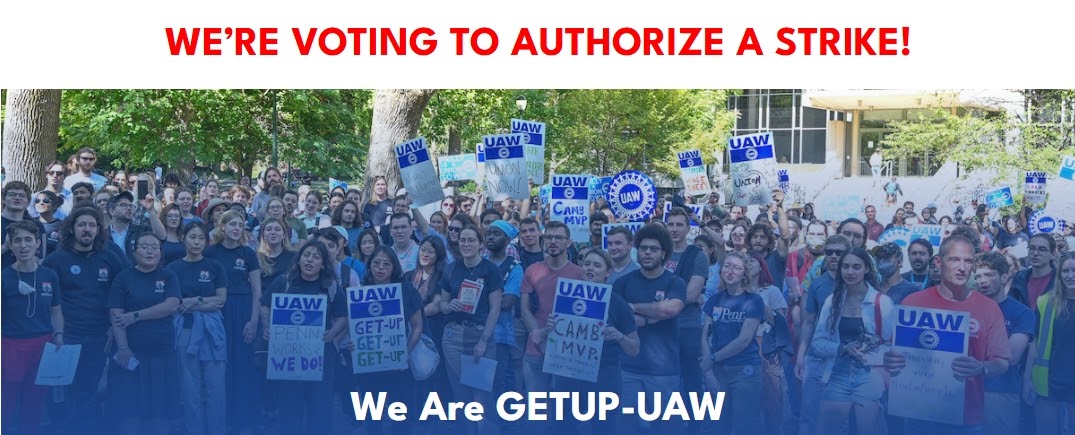
    Graduate student workers at Penn have overwhelmingly authorized a strike — a decisive move in their fight for fair pay, stronger benefits, and comprehensive protections. The vote reflects not only deep frustration with stalled negotiations but also the growing momentum of graduate-worker organizing nationwide.

    A year of bargaining — and growing frustration

    Since winning union recognition in May 2024, GET‑UP has spent over a year negotiating with Penn administrators on their first collective-bargaining agreement. Despite 35 bargaining sessions and tentative agreements on several non-economic issues, key demands — especially around compensation, benefits, and protections for international students — remain unmet.

    Many observers see the strike authorization as long overdue. “After repeated delays and insulting offers, this was the only way to signal our seriousness,” said a member of the bargaining committee. Support for the strike among graduate workers is overwhelmingly strong, reflecting a shared determination to secure livable wages and protections commensurate with the vital labor they provide.

    Strike authorization: a powerful tool

    From Nov. 18–20, GET‑UP conducted a secret-ballot vote open to roughly 3,400 eligible graduate employees. About two-thirds voted, and 92% of votes cast authorized a strike, giving the union discretion to halt academic work at a moment’s notice.

    Striking graduate workers, many of whom serve as teaching or research assistants, would withhold all academic labor — including teaching, grading, and research — until a contract with acceptable terms is reached. Penn has drafted “continuity plans” for instruction in the event of a strike, which union organizers have criticized as strikebreaking.

    Demands: beyond a stipend increase

    GET‑UP’s contract demands include:

    • A living wage for graduate workers

    • Expanded benefits: health, vision, dental, dependent coverage

    • Childcare support and retirement contributions

    • Protections for international and immigrant students

    • Strong anti-discrimination, harassment, and inclusive-pronoun / gender-neutral restroom protections

    While Penn has agreed to some non-economic protections, many critical provisions remain unresolved. The stakes are high: graduate workers form the backbone of research and teaching at the university, yet many struggle to survive on modest stipends.

    Context: a national wave of UAW wins

    Penn’s graduate workers are part of a broader wave of successful organizing by the United Auto Workers (UAW) and allied graduate unions. Recent years have seen UAW-affiliated graduate-worker locals achieve significant victories at institutions including Cornell, Columbia, Harvard, Northwestern, and across the University of California (UC) system.

    At UC, a massive systemwide strike in 2022–2023 involving tens of thousands of Graduate Student Researchers (GSRs) and Academic Student Employees (ASEs) secured three-year contracts with major gains:

    • Wage increases of 55–80% over prior levels, establishing a livable baseline salary.

    • Expanded health and dependent coverage, childcare subsidies, paid family leave, and fee remission.

    • Stronger protections against harassment, improved disability accommodations, and support for international student workers.

    • Consolidation of bargaining units across ASEs and GSRs, strengthening long-term collective power.

    These gains demonstrate that even large, resource-rich institutions can be compelled to recognize graduate labor as essential, and to provide fair compensation and protections. They also show that coordinated, determined action — including strike authorization — can yield significant, lasting change.

    What’s next

    With strike authorization in hand, GET‑UP holds a powerful bargaining tool. While a strike remains a last resort, the overwhelming support among members signals that the union is prepared to act decisively to secure a fair contract. The UC precedent, along with wins at other UAW graduate-worker locals, suggests that Penn could follow the same path, translating student-worker momentum into meaningful, tangible improvements.

    The outcome could have major implications not just for Penn, but for graduate-worker organizing across the country — reinforcing that organized graduate labor is increasingly a central force in higher education.


    Sources

    Source link

  • Union to hold confidence vote for UTS VC – Campus Review

    Union to hold confidence vote for UTS VC – Campus Review

    The tertiary education union will this week ask staff whether they are confident in the leadership of University of Technology Sydney (UTS) vice-chancellor Andrew Parfitt.

    Please login below to view content or subscribe now.

    Membership Login

    Source link

  • CSIRO cuts hit environment, biosecurity areas – Campus Review

    CSIRO cuts hit environment, biosecurity areas – Campus Review

    CSIRO staff will have to wait until the new year to find out if they still have a job, as Australia’s premier science research organisation begins consultations to determine how it will divide up to 350 job losses.

    Please login below to view content or subscribe now.

    Membership Login

    Source link

  • What do students need? – Campus Review

    What do students need? – Campus Review

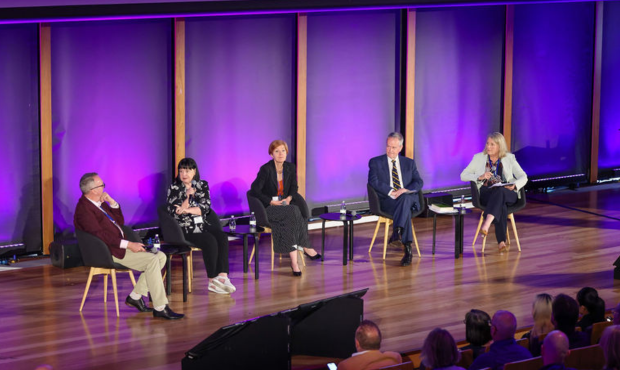
    A panel of university leaders and unionists answered the question ‘What do students need?’ at a recent HEDx event.

    Please login below to view content or subscribe now.

    Membership Login

    Source link

  • The future of financial hardship support needs to be flexible

    The future of financial hardship support needs to be flexible

    The government’s recent white paper on Post-16 Education and Skills places flexibility and choice at the centre of the future student experience.

    When it comes to students, the government wants universities and colleges to adapt to a much wider range of demographics and to further embrace diversity – while continuing to break down the barriers to opportunity for students from all backgrounds.

    One of the ways to strengthen opportunity is through the additional forms of financial support (via bursaries, scholarships and special-case funds) that higher education institutions provide for those students most at risk of dropping out, or those simply denied opportunity in the first place.

    When it comes to this funding, the sector needs to work much harder in supporting a more varied set of future students, whilst making better use of data to design support packages, and adapting to the real-time user requirements for this type of funding.

    Beyond the post-school model

    The majority model of financial support is still designed primarily for a post-school entrant market (in line with access and participation plans) but we now need to evolve this for a much broader range of working students, part-time students, later life students and so on – based on the white paper’s steer for different student demographics and for more support for students from lower income backgrounds. This will require more agility. It will also require a closer and more strategic, data driven approach to the timing, delivery and use of such student funding.

    Universities will increasingly be expected to meet the needs of a more diverse and complex learner population, one that is typically older, more financially stretched, and balancing work, family, caring responsibilities, and study. While the student body is evolving at pace, and there are encouraging signs of greater flexibility and adaptability across the sector, as highlighted in The Shape of Student Financial Support in 2025, there is also clear recognition that more progress is needed.

    In our work with universities (designed to strengthen the effective delivery and impact of student financial support) we refer to this sea-change in funding as enabling both more optionality (for the funders) and greater agency (for the beneficiaries). Too much of the sector’s current model still assumes the profile and rhythms of the traditional 18-year-old school leaver. Policy momentum is pushing us firmly beyond this, and institutions will need to rethink not just how much financial support they provide, but how, when and in what form it is provided, and crucially, who it is designed for.

    A new student majority

    Commuter students, part-time learners, those studying while working full-time, and individuals returning to education later in life are no longer outliers. They are becoming a significant and growing segment of the student population, and the white paper’s direction of travel signals that this growth will continue.

    These learners typically have different cost profiles, different pressures, and different expectations around support. Rent and food costs matter, of course, but so do childcare, caring responsibilities, travel to placements and campus, and the financial instability that often comes with shift-based or zero-hours work. Their support needs do not fall neatly around term dates.

    A modern student support system must reflect that reality.

    Beyond the “once-a-year” mindset

    One of the strongest messages emerging from our work with universities is that timing of support is as critical as the pound value that support. Students increasingly need support that works with the grain of real life, not against it. That means agility: funds that can be released quickly during a crisis; support that can be drawn down in a way that helps with budgeting; and options that reflect different lifestyles, responsibilities, and individuals preferences around how they manage their finances.

    For mature learners, the notion of a predictable “start of term” pressure point is often irrelevant. Housing, employment and family commitments create fluctuating financial pinch-points throughout the year. A forward-looking and agile hardship and support model must therefore allow universities to intervene dynamically, reacting to student need rather than institutional calendar.

    Across the more than 40 institutions we partner with, we see a growing shift toward more targeted, purpose-led and flexible support. Although institutions are facing significant financial constraints, they are adapting, often rapidly, to ensure funding reaches the right students in a way that genuinely makes a difference.

    We are seeing:

    • A move toward more tailored interventions, with universities reshaping bursaries and hardship schemes around specific learner profiles, including mature and commuter students.
    • Increased use of real-time payment mechanisms, enabling rapid support when a financial shock threatens continuation.
    • Greater use of data to understand how different types of students use support, and what interventions are most likely to prevent financial distress, disengagement or withdrawal.
    • Growing recognition that support must be designed around lived experience, responsive to trends and feedback, not just institutional tradition.

    This shift is encouraging, but the system as a whole is not yet optimised for the demographic change that the White Paper anticipates.

    Where policy meets practice: recommendations for a modernised support model

    To prepare for a more diverse learner population, the sector will need to reimagine its support architecture. From our work with universities and our ongoing analysis of funding patterns, several recommendations emerge:

    We should build support models around life-stage, not simply level of study. Mature and non-traditional learners experience costs and vulnerabilities that differ from the archetypal school-leaver. Support schemes should explicitly recognise this, particularly around childcare, travel, digital access, and household stability.

    There is a need to shift from fixed-cycle payments to flexible, real-time support. Financial crises rarely occur conveniently during scheduled disbursement windows. Universities need mechanisms that allow for rapid, secure, and dignified disbursement of funds whenever needed.

    It is time to explore hybrid support models that blend cash, credit and vouchers. Different pressures require different tools. Cash support is essential in alleviating hardship. Credit and voucher mechanisms can help direct funds toward participation, learning, and targeting food poverty. Mature learners often benefit from a mixture of both.

    We must make data central to decision-making. With financial pressure mounting across the sector, institutions must allocate limited resources with precision. Data on spending patterns, draw-down behaviour and student feedback can inform more effective and equitable holistic support strategies.

    We should co-design support with the students who rely on it. There is no substitute for listening to those living the experience. Mature and non-traditional students frequently report that support systems “aren’t designed for people like me”. Bringing their voices into design and evaluation will be vital.

    A financial support system fit for the future

    The white paper’s direction is clear: widening participation will no longer be defined simply by access for school leavers from underrepresented groups. It will increasingly require a system capable of supporting learners from every life stage, people retraining, upskilling, switching careers, balancing caring responsibilities, or returning to education for the first time in decades.

    This transition will require institutions to be flexible, evidence-led, and prepared to evolve their traditional models of support. Our latest annual report provides one lens on how this evolution is taking place, and where further change is needed. But the wider policy moment demands more than reflection: it demands intentional redesign.

    If universities are to deliver opportunity for all, as the white paper sets out, they will need financial support systems that reflect the real, diverse, year-round lives of today’s and tomorrow’s students. Flexibility is no longer a helpful addition; it is the foundation on which effective, equitable support must be built.

    Source link

  • Five challenges faced by the Welsh tertiary sector

    Five challenges faced by the Welsh tertiary sector

    Wales’ tertiary education and research sector is something we should all be proud of.

    This is why I want to ensure it not only remains sustainable but continues to build on the achievements of the past five years.

    These achievements include our progressive higher education funding policy, which has ensured financial barriers do not hold back talent and ambition. Welsh full-time undergraduates studying away from home outside London are entitled to £12,345 in maintenance support, with up to £8,100 in grants for those from the lowest income household.

    Our financial package for part-time study has opened higher education to thousands more students since 2018.

    Welsh universities led the UK for the proportion of their research whose impact is considered internationally excellent or world-leading in REF 2021.

    The pandemic had a tremendous impact on every aspect of education, but the tide has started to turn. Further education has seen a revival in participation in recent years, helped by increased funding for colleges and the continuation of the Education Maintenance Grant and Welsh Government Learning Grant. Last year there was an 8.5 per cent increase in school leavers progressing to college and it is promising that early data suggests a similar increase this year.

    A time of challenges

    But I am mindful that there are significant challenges facing tertiary education, not just in Wales, but across the UK.

    Yesterday in the Senedd I set out what I believe are now the five most pressing challenges for higher and further education in Wales in the coming years, and how I will use the remainder of the Senedd term to work with the sector to address them.

    Increasing participation must continue to be a priority. Wales has a smaller proportion of young people attaining level 3 (A Levels and equivalent) than other UK nations. Our higher education entry rate at age 18 is also the lowest in the UK at 30 per cent, and although a larger proportion of students appear to enter HE in Wales in their twenties, we want more to see university as part of their future at 18.

    The Welsh Government has a long-standing goal of 75 per cent of working age people being qualified to level 3 or higher by 2050. To achieve this, we need to expand access to a full range of vocational, technical, and academic pathways from age 16, which is why we are already reforming both 14-16 and post-16 qualifications.

    And our tertiary education sector must be ready for a significant decline in the numbers of young people. The number of 16-year-olds in Wales is expected to fall by 17 per cent between 2027 and 2037. As a result, demand for university places across the UK could fall by almost 20 per cent in the 2030s.

    Lifelong learning is already well ingrained in Welsh higher education. In 2022-23, 36 per cent of Welsh students studied part-time, compared with 23 per cent of English students, and 44 per cent of Welsh students were aged 25 and above compared with 36 per cent of English students. And during this Senedd term we have been able to increase the numbers of part-time learners in further education for the first time in a decade.

    This is a platform to build from, but we will need to go further to enable adults to upskill around work and family commitments, at all levels, by providing more flexible, part-time and lifelong learning opportunities.

    Unintended consequences

    Another challenge relates to the unintended consequences of growing competition between providers. The competition in student recruitment is fundamental to the financial challenges now facing our universities and it will only intensify from 2030.

    The removal of student number caps has permitted some UK universities to grow their domestic enrolments – often by lowering entry requirements – at the expense of the rest of the sector, including many of our excellent universities here in Wales. A future where higher-tariff providers continue to expand their enrolments at the rate of the past few years cannot be sustainable for the wider UK sector.

    So I agree with the UK Government’s white paper that the future for tertiary education lies not in greater competition, but in increased collaboration. We have already worked with the Competitions and Markets Authority (CMA) to clarify the position on collaboration between universities. Medr is working to map subject provision so we can better understand which subjects may be at risk in the future from growing competition and changes in student preferences. Now we must look at how we enable closer collaboration in practice, and create the right incentives in funding and regulation for institutions to act more collaboratively.

    I believe working in partnership will also be key to addressing the financial challenges facing not only institutions, but also students.

    Our financial support for tertiary education and students is significant, totalling over £1.2bn this year alone. Despite taking the difficult decision to increase tuition fees in the past two years and again next year, education must remain affordable. This is why we provide generous student support and a more progressive repayment policy in Wales. We will therefore consider cost-of-living pressures for students and learners in the ongoing evaluation of the Diamond reforms. But the challenges facing the public finances are likely to last, and we need to consider how every penny spent to support institutions and students is delivering the greatest value possible.

    Delivery

    Finally, a thriving tertiary education sector must deliver for our economy. There are already excellent examples of this – such as the role of Cardiff University to support the compound semiconductor manufacturing hub, or the work of the North Wales Tertiary Alliance to power the new reactors at Wylfa with a skilled workforce. But we will need to change our approaches to vocational skills and research and innovation, both to respond to UK Government reforms, and to ensure that our economy has the skills and ideas to boost productivity and reduce inequality.

    We have begun some of the work needed to meet these five challenges but must go further. In the coming weeks, we will publish an evidence paper, alongside a call for submissions from stakeholders, which will set out the challenges in much greater depth, and call on the sector to comment and advise on what more we need to understand about them.

    I have also invited representatives from across the Welsh sector to join a new Ministerial Advisory Group, to consider these challenges in depth and in the spirit of social partnership.

    Together, this work will provide a comprehensive evidence base upon which to deliver further reform, and help us to secure a thriving future for our tertiary education sector in Wales in these challenging times.

    Source link

  • Higher Education and Its Complicity in U.S. Empire

    Higher Education and Its Complicity in U.S. Empire

    For more than a century, U.S. higher education has been intertwined with American empire. Universities have served as ideological partners, intelligence hubs, policy workshops, and training grounds for the managers of U.S. global power. When Washington supports authoritarian allies, fuels regional conflicts, or looks away during humanitarian disasters, the academy rarely stands apart. Instead, it aligns itself—through silence, research partnerships, and selective outrage—with the priorities of the federal government and the corporations that profit from U.S. foreign policy.

    Recent U.S. actions in Venezuela, Ukraine, Yemen, South Sudan, and Palestine reveal how deeply embedded this pattern has become.

    In Venezuela, the United States pursued years of sanctions, covert pressure, and diplomatic isolation as part of a regime-change strategy. Throughout this period, universities repeated a narrow range of policy narratives promoted by the State Department and U.S.-aligned think tanks. Panels and conferences elevated experts connected to defense contractors, oil interests, and government-funded NGOs, while the humanitarian consequences of sanctions and the legality of U.S. interference were often ignored. The atmosphere of academic neutrality masked a clear alignment with Washington’s objectives.

    Universities also showed a troubling degree of complicity during Russia’s assault on Ukraine, a war marked by the systematic killing of civilians, mass displacement, and the kidnapping and forced transfer of Ukrainian children into Russia. Even after international human rights organizations and war-crimes investigators documented atrocities, some U.S. institutions maintained partnerships with Russian universities aligned with the Kremlin, accepted visiting scholars linked to state propaganda outlets, or avoided direct condemnation of Putin’s actions for fear of disrupting scientific or financial relationships. In certain cases, academic centers framed the invasion as a “complex geopolitical dispute” rather than a brutal, unilateral attack on a sovereign population, allowing Russian narratives about NATO, Western “provocation,” or Ukrainian illegitimacy to seep into public programming. While some campuses cut ties, others hesitated, revealing how financial incentives, research networks, and institutional caution can blunt moral clarity even in the face of internationally verified crimes against civilians and children.

    Higher education’s relationship with the Gulf states adds another dimension to this complicity. As Saudi Arabia waged a catastrophic war in Yemen—with U.S. weapons, logistical support, and diplomatic protection—American universities deepened their financial partnerships with Saudi and Emirati institutions. Engineering programs, medical schools, cybersecurity labs, and energy research centers accepted major gifts and expanded joint research agreements. Few leaders questioned these ties, even as human rights groups documented atrocities in Yemen or as the UAE’s role in proxy conflicts, including episodes in South Sudan, came into sharper focus. Protecting revenue streams took precedence over confronting abuses committed by powerful allies.

    Nowhere is the failure of higher education more visible than in its response to Israel’s assault on Gaza. As civilian deaths soared and international human rights organizations sounded alarms about the scale and intent of the military campaign, most universities responded with repression rather than reflection. Administrators disciplined student protesters, sanctioned faculty for political speech, and issued public statements carefully aligned with prevailing U.S. political positions. Research partnerships with Israeli institutions linked to defense industries persisted without scrutiny. Universities that once examined apartheid with clarity struggled to acknowledge parallels when the subject was Palestine. Donor sensitivities, political pressures, and fear of congressional retaliation overwhelmed any commitment to moral consistency or academic freedom.

    The same institutional behavior is likely if U.S. policy shifts in East Asia. Should Washington move toward accommodating the People’s Republic of China’s ambitions regarding Taiwan—whether through diplomatic recalibration or reduced willingness to intervene—universities will likely adapt quickly. The history of U.S.-China normalization in the 1970s showed how fast higher education can reorient itself when geopolitical winds change. Partnerships, narratives, and research agendas would shift to align with new federal signals, demonstrating again that universities follow the imperatives of state power more readily than they challenge them.

    The deeper issue is structural. U.S. higher education relies on federal research funding, defense and intelligence partnerships, corporate relationships, overseas investment programs, and philanthropic networks shaped by geopolitical interests. Endowments are tied to global markets that profit from conflict. Study-abroad and academic exchange programs depend on diplomatic priorities. Administrators understand that openly challenging U.S. foreign policy—from Venezuela to Ukraine, from Yemen to Gaza—can threaten institutional stability and funding. Silence or selective engagement becomes the safest administrative posture.

    If the academy hopes to reclaim its integrity, it must learn to confront rather than replicate state power. That requires transparency about foreign funding and defense contracts, protection for dissenting scholars and students, genuine engagement with global South perspectives, and ethical evaluation of partnerships with authoritarian governments. Universities cannot prevent wars, but they can refuse to serve as intellectual and financial enablers of violence.

    Until such changes occur, higher education will remain entangled in the machinery of U.S. empire, complicit not through passivity but through the routine normalization of policies that inflict suffering around the world.

     
    Sources

    Amnesty International; Human Rights Watch; United Nations Office for the Coordination of Humanitarian Affairs; U.S. Congressional Research Service; Quincy Institute for Responsible Statecraft; Brown University’s Costs of War Project; Washington Post and New York Times reporting on U.S. sanctions and foreign policy; Investigations by the Associated Press, Reuters, and Al Jazeera on Yemen, Gaza, Venezuela, and South Sudan; HEI archives and independent higher education researchers.

    Source link

  • ED Names Five New NACIQI Members

    ED Names Five New NACIQI Members

    Education Secretary Linda McMahon appointed on Tuesday five new members to the National Advisory Committee on Institutional Quality and Integrity, a body that advises on accreditation, including which organizations should be recognized by the federal government.

    A sixth member is expected to be appointed later, according to the Department of Education. The five members announced on Tuesday are below:

    —Robert Eitel is president of the Defense of Freedom Institute, a conservative think tank. Eitel previously served as senior counselor to the Secretary of Education from 2017 through 2020, during the first Trump administration, and as Deputy General Counsel of the U.S. Department of Education from 2005 until 2009. Eitel has a background in for-profit education, serving past stints at for-profit college operators Bridgepoint Education Inc. and Career Education Corp.

    —Joshua Figueira is currently the deputy general counsel and managing director of the Office of Compliance, Risk, and Legal Affairs at Brigham Young University–Idaho. Prior to joining BYU-Idaho in 2017, he worked on First Amendment and religion issues at Utah law firm, Kirton McConkie.

    —Jay Greene is a senior research fellow for the Center for Education Policy at the Heritage Foundation. Greene previously taught at the University of Arkansas, University of Texas at Austin, and the University of Houston and also worked for The Manhattan Institute for a decade. He is a school choice advocate and frequent critic of diversity, equity and inclusion initiatives.

    —Steven Taylor is the policy director and senior fellow in economic mobility at Stand Together Trust. Taylor also serves on the State Council for Higher Education for Virginia. His past posts include almost six years at the American Council on Education. Taylor has argued that the current accreditation model needs an overhaul and “rewards compliance over performance, fails to track outcomes, and leaves students burdened with debt and weak returns” among other concerns.

    —Emilee Reynolds is a student at Western Carolina University.

    The Higher Education Act dictates that ED appoints six of 18 total NACIQI members while Congress names the other 12. The department cast its most recent picks as reformers needed to help fix a broken accreditation system in a Tuesday news release.

    “Americans recognize that the accreditation process needs reform to better serve students and families, and the Trump Administration is addressing this, in part, through these reform-minded appointees,” Under Secretary Nicholas Kent said in the news release announcing the new members.

    Kent said he was confident the appointees will help the administration “realign the accreditations system and get it back on track.”

    “We can no longer accept a protectionist system in which a few powerful non-governmental entities gatekeep billions in federal student aid and licensure opportunities, overlook poor student outcomes, contribute to rising college costs and degree inflation, and prioritize divisive DEI standards over the skills students need to compete in the next-generation workforce,” he said.

    NACIQI’s next meeting is scheduled for December 16. The meeting was originally scheduled for July but pushed to October, and was then delayed again because of the government shutdown.

    Source link

  • Abbott’s blacklist: America’s tradition of branding dissent as treason

    Abbott’s blacklist: America’s tradition of branding dissent as treason

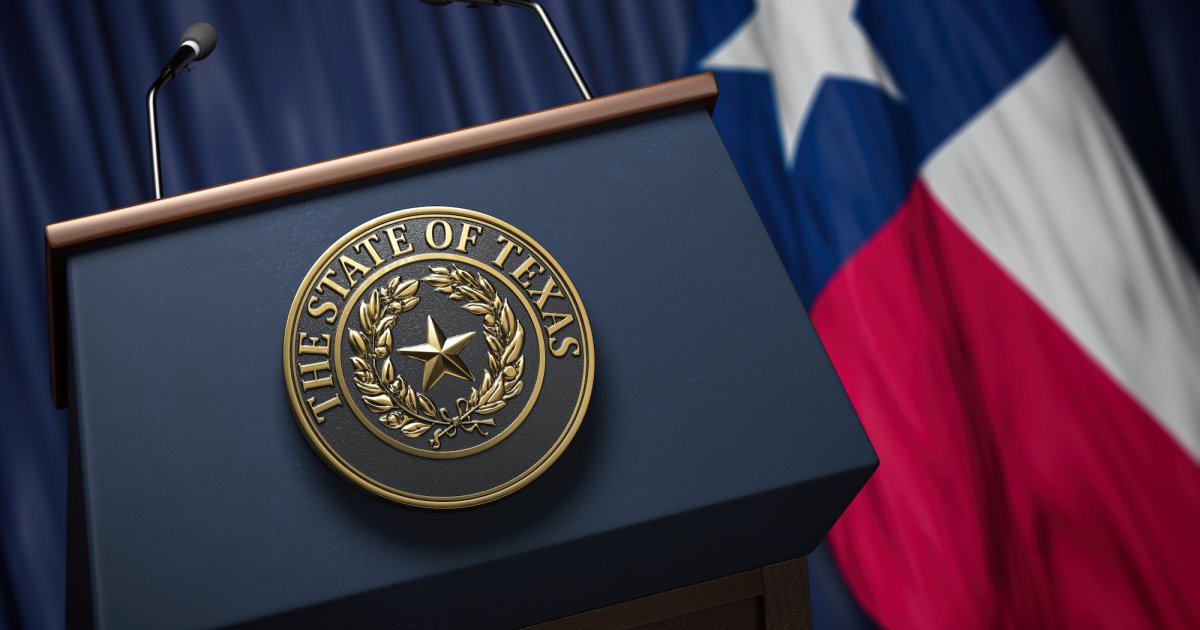
    This week, Texas Gov. Greg Abbott labeled the Council on American-Islamic Relations a foreign terrorist organization, and prohibited them from purchasing land in the state. That move doesn’t just have practical ramifications for CAIR’s ability to operate in Texas — it follows an all-too-familiar pattern in American history. In moments of perceived crisis, public officials cast unpopular ideological minorities as internal enemies, exploiting “security” concerns to trample on speech and belief. 

    CAIR is a D.C.-based, national organization whose mission is to “enhance understanding of Islam, protect civil rights, promote justice, and empower American Muslims.” CAIR has been fiercely critical of Israel and American efforts to support Israel’s military campaign in Gaza. Recently, CAIR successfully sued Abbott’s administration over executive orders that targeted pro-Palestinian campus protesters. CAIR also defended EPIC City, a Muslim-oriented development in Texas that Abbott investigated in September. 

    Against that backdrop, Abbott’s order designating CAIR cites to the organization’s protected speech and viewpoints, alleges that CAIR supports terrorism, and says they are “radical extremists” who “are not welcome in our state.” He then offers the vague assertion that CAIR wants “to forcibly impose Sharia law and establish Islam’s ‘mastership of the world.’” CAIR has since sued Abbott’s administration for the terror designation.

    Using the language of “terrorism” and “foreign enemy” is not a new tactic to quash disfavored speech. In 1918, on the heels of World War I and the ensuing anti-German and anti-Bolshevik fervor, Montana passed its Sedition Act. The Act made it a crime to “utter, print, write or publish any disloyal, profane, violent, scurrilous, contemptuous, slurring or abusive language” about the U.S. government, Constitution, flag, military, or any language “calculated to incite or inflame resistance” to federal or state authority during the war. In other words, it made criticizing the U.S. illegal. 

    Under Montana’s Sedition Act, hundreds of Montanans were arrested and 79 ultimately convicted for things as minor as making offhand anti-war remarks in a bar. One convict, Slovenian native Josef Gocevar, said “President Wilson had no business getting into this war.” He was sentenced to six years in prison. Another convict, Fay Rumsey, made the mistake of saying that he “wished the Germans would come in and clean up the U.S.” He received a two-year sentence. By proscribing one side of the debate over the war, Montana’s Sedition Act effectively criminalized dissent. 

    When First Amendment rights are at stake, such speculative connections are nowhere near sufficient to impose sweeping punishments.

    The Sedition Act also proved useful for pressuring anti-war Montanans into violating their consciences by buying war bonds. Local patriotic councils created lists of dissenters. Mobs weaponized the lists, threatening to report fellow citizens to the authorities if they did not purchase war bonds. It worked: One council boasted that Montana subscribed to war bonds at a level “far exceeding national projections.” 

    When men pressured Earnest V. Starr, an Ohio native who moved to Montana, to buy war bonds and kiss an American flag, Starr refused, stating that the flag was “nothing but a piece of cotton with a little paint on it.” Starr was sentenced to 10 years in prison and had to pay a $500 fine, which is about $9,000 in today’s dollars. Another mob threatened to lynch German immigrant Herman Bausch for refusing to buy war bonds, instead interrogating him for several hours. After Bausch admitted that he was “opposed to war” and that he would “not contribute financially to this world calamity,” he was convicted and sentenced to four years in prison.

    Dissenters during the Second World War fared similarly, particularly Jehovah’s Witnesses. Jehovah’s Witnesses are pacifists, and categorically opposed the war. Their opposition — and refusal to salute the American flag — drew accusations that they were fifth columnists, a term for a group that secretly sympathizes with the enemy. Between 1940 and 1942, there were hundreds of attacks on Jehovah’s Witnesses in the US, almost always with the support of local law enforcement. In a sick twist, Nazi Germany similarly persecuted Jehovah’s Witnesses for refusing to participate in Hitler’s patriotic exercises. Many were ultimately murdered in Nazi concentration camps. 

    The Jehovah’s Witnesses and the First Amendment

    Between 1938 and 1943, the Jehovah’s Witnesses had an astonishing 30 cases before the Supreme Court that mostly expanded First Amendment liberties. The result was a much stronger and richer jurisprudence.


    Read More

    In Minersville School District v. Gobitis (1940), the Supreme Court held that public schools did not violate the First Amendment when they compelled Jehovah’s Witnesses to salute the American flag and recite the Pledge of Allegiance. Within days of the Gobitis ruling, members of the American Legion (in conjunction with the local police chief) in Richwood, West Virginia, forced Jehovah’s Witnesses to drink castor oil and march to the post office to salute the flag. Similar attacks were carried out elsewhere: Litchfield, Illinois jailed all 60 Witnesses in the town, while a mob burned a Witness building to the ground in Maine. As one Southern sheriff put it: “they’re traitors; the Supreme Court says so. Ain’t you heard?” 

    But the Jehovah’s Witnesses persevered. Only three years after the Gobitis-inspired fervor, the Supreme Court reversed course. In West Virginia State Board of Education v. Barnette (1943), the Court overruled Gobitis, famously holding that the government cannot “prescribe what shall be orthodox in politics, nationalism, religion, or other matters of opinion.” 

    That reversal fit into a broader rethinking of how far officials can go to marginalize “disloyal” speech. Early World War I prosecutions under the federal Sedition Act ended in victories for the government. But in Abrams v. United States (1919)Justices Brandeis and Holmes cautioned in dissent that punishing unpopular dissidents for their words alone was incompatible with a free society. It took decades, but their view eventually prevailed: Brandenburg v. Ohio (1969) held that even ugly, extremist advocacy is protected unless it is intended and likely to spur imminent lawless action. The logic that undergirded Montana’s Sedition Act no longer holds water, which should make us very skeptical when today’s officials reach for “national security” to silence opposition. 

    Yet in Texas today, you can hear the same soundtrack playing underneath Abbott’s rhetoric about CAIR. He says CAIR has taken “actions . . . to support terrorism across the globe and subvert our laws through violence, intimidation and harassment” and calls them “radical extremists” who “are not welcome in our state.” That line about support for terrorism does the same work as “disloyal, profane, scurrilous . . . language” in the Montana Sedition Act: It collapses speech and advocacy into treason. Much like Gobitis’ effect on Jehovah’s Witnesses during World War II, Abbott’s decision singles out CAIR as a potential fifth column — and asks the state government to treat it as such.

    Of course, if CAIR has broken the law, state law enforcement may follow its regular processes for criminal or civil investigations. That means opening investigations based on actual evidence of legal violations, not based on a target’s viewpoints and speech. When constitutional rights are at stake, evidence like Abbott’s is too thin. For example, Abbott cites an FBI agent who claimed that CAIR was a “front group” for Hamas, but that was only one agent, 17 years ago, and the federal government (across Democratic and Republican administrations) has brought zero material support for terrorism charges against CAIR. Abbott also cites a War on Terror-era case where a judge denied CAIR’s motion to file an amicus brief. In denying the motion, the judge suggested that CAIR was connected to terrorists. But that’s not an evidence-based ruling by a judge — it’s an aside in a decision that didn’t touch the core issues of the case. When First Amendment rights are at stake, such speculative connections are nowhere near sufficient to impose sweeping punishments.

    The Montana Sedition Act and Gobitis should mark the outer boundary for what we should tolerate in a free society. States cannot demand ideological conformity from individuals, interest groups, or religious minorities to operate in their state. If a blue state banned pro-Israel or Jewish groups — claiming that those groups sponsored violations of international law by supporting the war in Gaza or violence in the West Bank — that would be just as much of a red flag for civil liberties as Abbott’s order. Whether one agrees with CAIR or not, the entire point of the First Amendment is that government officials do not get to decide which critics are patriots and which are enemies of the state.

    Source link