The Institute for Free Speech’s Bradley Smith and Brett Nolan join the show to discuss two upcoming Supreme Court arguments involving donor disclosure (First Choice Women’s Resource Centers, Inc. v. Platkin) and political party contributions to candidates (National Republican Senatorial Committee v. FEC).
The conversation also explores the broader landscape for political speech and campaign regulation, what legal battles may be next for the Supreme Court, and how both guests found their way into First Amendment advocacy.
Enjoy listening to the podcast? Donate to FIRE today and get exclusive content like member webinars, special episodes, and more. If you became a FIRE Member through a donation to FIRE at thefire.org and would like access to Substack’s paid subscriber podcast feed, please email [email protected].
Since the fallout of Occupy Wall Street in 2011, a small but persistent movement has sought to expose the widening inequities and systemic failures in U.S. higher education. We have agitated, analyzed, and educated, warning that the “market-driven” model championed by elite managers—presidents, trustees, CFOs, and state policymakers—would erode both academic quality and access. Today, that warning has become reality.
The College Meltdown is not a metaphor. It is a literal unraveling of an ecosystem where public support has eroded, tuition has skyrocketed, and students are left with crushing debt. Colleges are shuttering campuses, programs are disappearing, and adjuncts—already the backbone of instruction—face insecure employment. Meanwhile, neoliberal administrators, entrusted with guiding institutions through turbulence, have mostly engaged in cosmetic pruning rather than systemic reform.
This is not accidental. The managerial class in higher education—driven less by pedagogy than by budgets, branding, and financialization—has embraced austerity measures that protect elite interests while passing costs to students and staff. Endowment growth, athletics spending, and executive compensation often take priority over the academic mission. HBCUs and tribal colleges, already underfunded, bear the brunt of this mismanagement.
Efforts to stabilize the system have been tepid at best. Proposals for meaningful structural reform, from debt relief to state reinvestment, are watered down by political and market pressures. Neoliberals tout efficiency and innovation, yet rarely address the underlying moral crisis: the deliberate prioritization of profit over learning, and the failure to cultivate a socially responsible citizenry.
Our own engagement, since 2011, has aimed to shine light on these contradictions. We have chronicled how policies favoring privatization, corporate partnerships, and debt-financed tuition have created conditions ripe for collapse. We have amplified voices of students and faculty navigating these pressures. And we have challenged complacency in the academy, insisting that higher education be measured not just by financial metrics but by its capacity to educate, empower, and expand human potential.
“Pruning in Chernobyl” captures the essence of this moment: managerial actors trimming the edges while radioactive structural failures spread unchecked. Unless institutions confront the root causes—inequality, extractive financial models, and an erosion of public purpose—the meltdown will deepen. Our work remains to educate the public, hold decision-makers accountable, and imagine a higher education system that nurtures learning rather than merely managing decline.
The U.K.’s Information Commissioner’s Office (ICO) recently warned of a surge in cyberattacks from “insider threats”–student hackers motivated by dares and challenges–leading to breaches across schools. While this trend is unfolding overseas, it underscores a risk that is just as real for the U.S. education sector. Every day, teachers and students here in the U.S. access enormous volumes of sensitive information, creating opportunities for both mistakes and deliberate misuse. These vulnerabilities are further amplified by resource constraints and the growing sophistication of cyberattacks.
When schools fall victim to a cyberattack, the disruption extends far beyond academics. Students may also lose access to meals, safe spaces, and support services that families depend on every day. Cyberattacks are no longer isolated IT problems–they are operational risks that threaten entire communities.
In today’s post-breach world, the challenge is not whether an attack will occur, but when. The risks are real. According to a recent study, desktops and laptops remain the most compromised devices (50 percent), with phishing and Remote Desktop Protocol (RDP) cited as top entry points for ransomware. Once inside, most attacks spread laterally across networks to infect other devices. In over half of these cases (52 percent), attackers exploited unpatched systems to move laterally and escalate system privileges.
That reality demands moving beyond traditional perimeter defenses to strategies that contain and minimize damage once a breach occurs. With the school year underway, districts must adopt strategies that proactively manage risk and minimize disruption. This starts with an “assume breach” mindset–accepting that prevention alone is not enough. From there, applying Zero Trust principles, clearly defining the ‘protect surface’ (i.e. identifying what needs protection), and reinforcing strong cyber hygiene become essential next steps. Together, these strategies create layered resilience, ensuring that even if attackers gain entry, their ability to move laterally and cause widespread harm is significantly reduced.
Assume breach: Shifting from prevention to resilience
Even in districts with limited staff and funding, schools can take important steps toward stronger security. The first step is adopting an assume breach mindset, which shifts the focus from preventing every attack to ensuring resilience when one occurs. This approach acknowledges that attackers may already have access to parts of the network and reframes the question from “How do we keep them out?” to “How do we contain them once they are in?” or “How do we minimize the damage once they are in?”
An assume breach mindset emphasizes strengthening internal defenses so that breaches don’t become cyber disasters. It prioritizes safeguarding sensitive data, detecting anomalies quickly, and enabling rapid responses that keep classrooms open even during an active incident.
Zero Trust and seatbelts: Both bracing for the worst
Zero Trust builds directly on the assume breach mindset with its guiding principle of “never trust, always verify.” Unlike traditional security models that rely on perimeter defenses, Zero Trust continuously verifies every user, device, and connection, whether internal or external.
Schools often function as open transit hubs, offering broad internet access to students and staff. In these environments, once malware finds its way in, it can spread quickly if unchecked. Perimeter-only defenses leave too many blind spots and do little to stop insider threats. Zero Trust closes those gaps by treating every request as potentially hostile and requiring ongoing verification at every step.
A fundamental truth of Zero Trust is that cyberattacks will happen. That means building controls that don’t just alert us but act–before and during a network intrusion. The critical step is containment: limiting damage the moment a breach is successful.
Assume breach accepts that a breach will happen, and Zero Trust ensures it doesn’t become a disaster that shuts down operations. Like seatbelts in a car–prevention matters. Strong brakes are essential, but seatbelts and airbags minimize the harm when prevention fails. Zero Trust works the same way, containing threats and limiting damage so that even if an attacker gets in, they can’t turn an incident into a full-scale disaster.
Zero Trust does not require an overnight overhaul. Schools can start by defining their protect surface – the vital data, systems, and operations that matter most. This typically includes Social Security numbers, financial data, and administrative services that keep classrooms functioning. By securing this protect surface first, districts reduce the complexity of Zero Trust implementation, allowing them to focus their limited resources on where they are needed most.
With this approach, Zero Trust policies can be layered gradually across systems, making adoption realistic for districts of any size. Instead of treating it as a massive, one-time overhaul, IT leaders can approach Zero Trust as an ongoing journey–a process of steadily improving security and resilience over time. By tightening access controls, verifying every connection, and isolating threats early, schools can contain incidents before they escalate, all without rebuilding their entire network in one sweep.
Cyber awareness starts in the classroom
Technology alone isn’t enough. Because some insider threats stem from student curiosity or misuse, cyber awareness must start in classrooms. Integrating security education into the learning environment ensures students and staff understand their role in protecting sensitive information. Training should cover phishing awareness, strong password practices, the use of multifactor authentication (MFA), and the importance of keeping systems patched.
Building cyber awareness does not require costly programs. Short, recurring training sessions for students and staff keep security top of mind and help build a culture of vigilance that reduces both accidental and intentional insider threats.
Breaches are inevitable, but disasters are optional
Breaches are inevitable. Disasters are not. The difference lies in preparation. For resource-strapped districts, stronger cybersecurity doesn’t require sweeping overhauls. It requires a shift in mindset:
Assume breach
Define the protect surface
Implement Zero Trust in phases
Instill cyber hygiene
When schools take this approach, cyberattacks become manageable incidents. Classrooms remain open, students continue learning, and communities continue receiving the vital support schools provide – even in the face of disruption. Like seatbelts in a car, these measures won’t prevent every crash – but they ensure schools can continue to function even when prevention fails.
Gary Barlet, Illumio
Gary Barlet is the public sector chief technology officer at Illumio, where he works with government agencies, contractors, and the broader ecosystem to incorporate Zero Trust Segmentation, or microsegmentation, as a strategic enabler of Zero Trust architecture. He can be reached at [email protected].
Latest posts by eSchool Media Contributors (see all)
This is part one of a two-part series on the 50th anniversary of the Individuals with Disabilities Education Act. For part two, click here.
When Antoinette Banks’ daughter, Nevaeh, was diagnosed with intellectual disabilities in 2011, Banks was told her 5-year-old daughter would have a 0% chance of living independently as an adult.
“What I’m hearing is that my kid doesn’t have a future,” Banks says. “It broke me for a little bit.”
To fill in all the unanswered questions she had about her daughter’s future, Banks began trying to better understand the special education system she and her daughter were now a part of.
Just understanding all the processes and paperwork — individualized education programs, evaluations, assessments, procedural notices and more — got “super confusing sometimes,” says Banks, who lives in Sacramento, California.
Even after she filed all the special education documents in a three-ring binder, Banks still struggled to organize documents critical for monitoring the interventions provided by multiple teachers and therapists, as well as for tracking information from doctors and diagnosticians.
She created what she called an online “spreadsheet on steroids” to share with her daughter’s support teams. As she improved her homemade tool, she began sharing the template with other families in similar situations.
Antoinette Banks (right) stands with her daughter Nevaeh in northern California in spring 2025.
Permission granted by Lana Andruh
That prototype evolved into Expert IEP, a platform that’s now powered by artificial intelligence to help families, school districts, therapists and doctors collaborate on services for children with disabilities, Banks says.
“I thought that if I could get everyone to just communicate with one another and not be so siloed and not telling me what they think, but what does the data say about my daughter, then maybe we can get focused on what she actually needs in her learning environment,” Banks says.
Fast forward to today: Banks’ daughter is 19 years old and graduated in June from a public California high school with a general education diploma. Nevaeh is now studying biological systems engineering at a northern California college and wants to become a nanotechnologist, according to her mother.
“I feel so very, very blessed to have been able to be on this wild roller coaster ride with my daughter and continue to advocate and refine, because anything is possible,” Banks says.
The tool Banks created — which she said was born out of both frustration and necessity — is but one example of the many tools and techniques developed over the past five decades to support students with disabilities and their families and teachers.
On Nov. 29, the landmark Individuals with Disabilities Education Act turns 50. President Gerald Ford signed the legislation, originally known as the Education for All Handicapped Children Act, guaranteeing students with disabilities the right to a free and appropriate public education. Before then, no federal requirement existed that schools must educate students with disabilities.
In addition to opening public schools to a whole population of children, the law became the catalyst for legions of innovative practices and tools cultivated from both public and private sources. The transformations, special education experts say, were spurred by an ongoing need to individualize student supports while helping children with disabilities progress in general education classrooms.
IDEA eligibility grows over 5 decades
Since the Individuals with Disabilities Education Act was enacted, the portion of all public school students qualifying for special education services almost doubled.
Many of these practices and technologies — such as universal design for learning, assistive technology, and positive behavioral interventions and supports — would not only be proven to help students with disabilities, but also to benefit their peers without disabilities.
Innovative and proven practices that are effective for a student with disabilities are “going to work with a student without disabilities,” says Lindsay Kubatzky, director of policy and advocacy for the National Center for Learning Disabilities.
To mark IDEA’s 50th anniversary, K-12 Dive spoke with special education experts about approaches, practices and technologies that have revolutionized how students with disabilities are supported — and how these innovations keep evolving.
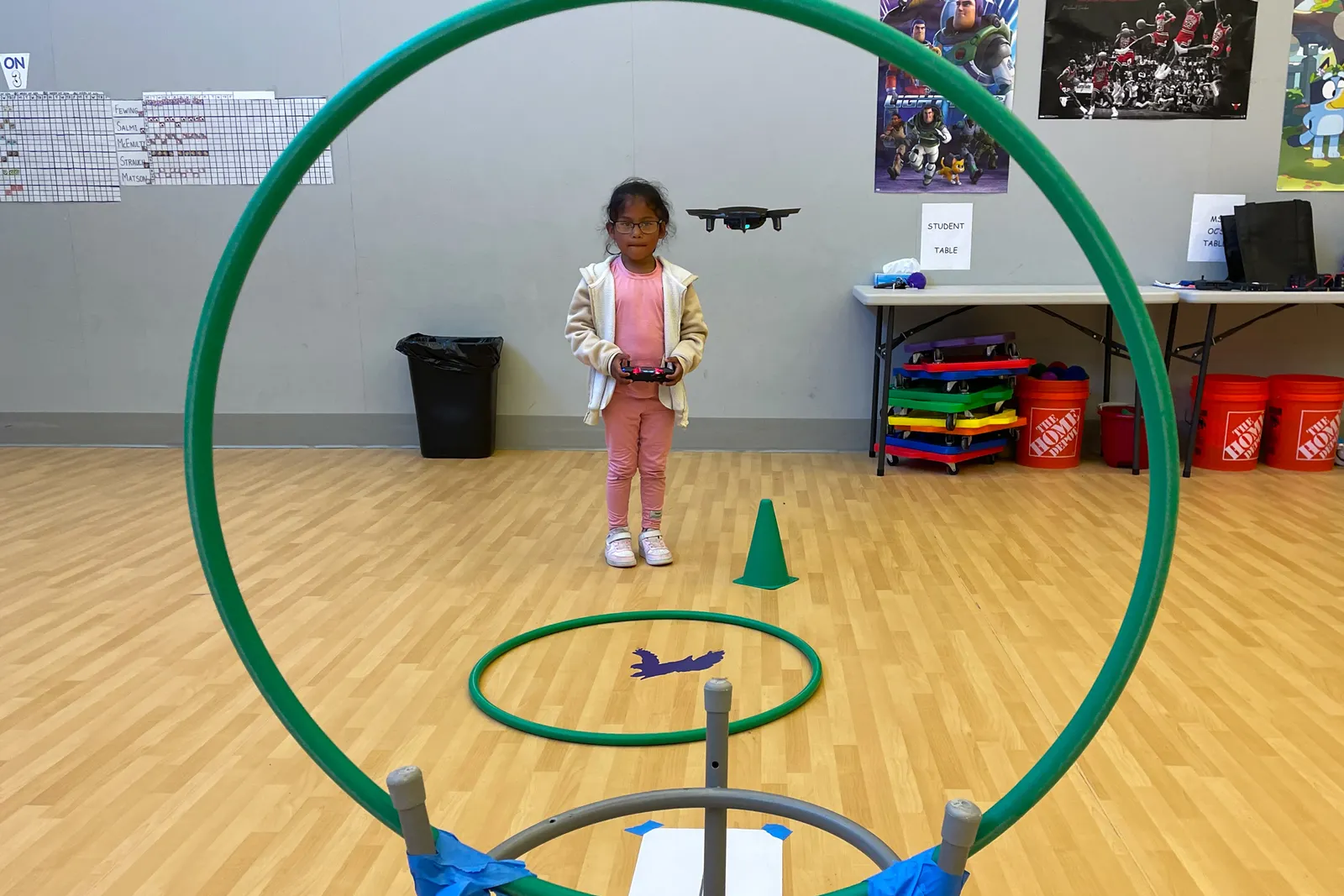
In rural Oregon, K-2 students at Warrenton Grade School take part in the CAST Take Flight drone curriculum in October 2025, showcasing how universal design for learning principles enable meaningful STEM learning for even the youngest learners.
Permission granted by Carolyn Peterson
Eliminating learning barriers with UDL
Delana Robles spends her day problem solving. As the universal design for learning resource teacher in New Mexico’s Albuquerque Public Schools, Robles helps teachers make learning accessible for students who have dyslexia, hearing or vision impairments, learning disabilities or other conditions.
“UDL is a way to include every student in the classroom by looking at who they are as a learner and as a person, versus seeing them as someone with a deficit,” Robles says. If educators understand each student’s strengths and needs and how to support them, “education will improve across the board,” she says.
The UDL framework can be applied across all ages and learning environments to reduce instructional barriers through classroom design, assistive technology and engaging teaching and learning practices. These could include using text-to-speech features or large fonts, or allowing students to choose how they demonstrate their knowledge by writing a report, creating a slideshow or performing a skit, for example.
UDL got its start in 1984 when neuroscience researchers were looking for ways computers — which were just becoming more widely used for personal and professional use — could improve learning for students with disabilities. A group of five clinicians from North Shore Children’s Hospital in Salem, Massachusetts, formed the nonprofit Center for Applied Special Technology.
Lindsay Jones is the CEO of CAST.
Permission granted by Lindsay Jones
Lindsay Jones, CEO of CAST and former president and CEO of the National Center for Learning Disabilities, says one of the biggest developments in special education over the past 50 years has been the acceptance of learner variability — the idea that each student processes and demonstrates learning differently. UDL, Jones says, helps schools use technology, classroom designs and instructional practices to make learning more effective and inclusive for each student.
Jones calls UDL “future proof,” meaning demand will only grow to customize learning so as to propel student understanding, engagement and agency. “I think it’s exciting that special education has driven a lot of the research that’s impacted all of education,” she says.
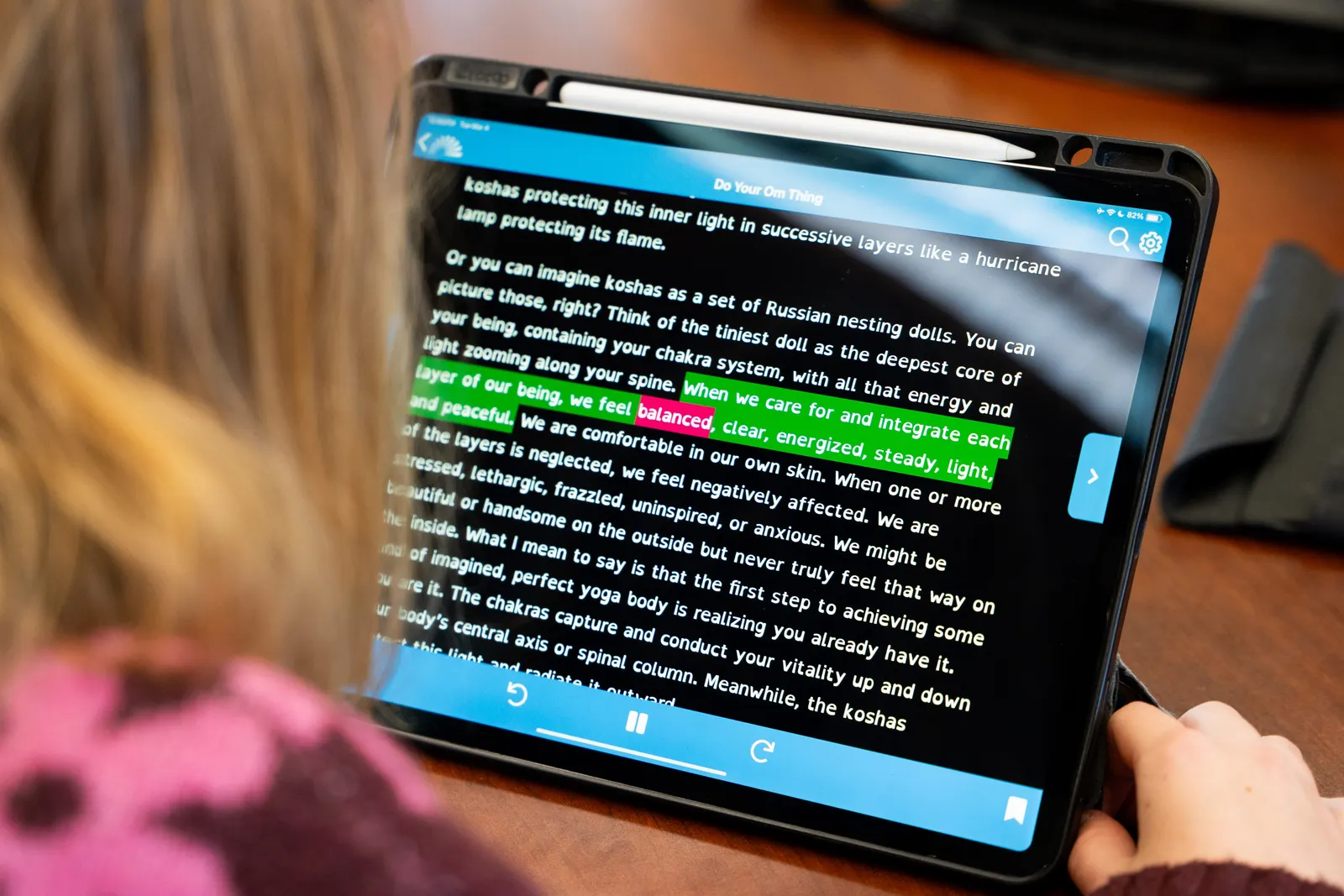
A student from the California School for the Blind in Fremont, Calif., reads a book using Bookshare’s accessibility features on March 4, 2025.
Permission granted by Erick Salazar
Making reading accessible through Bookshare
Obtaining books in accessible formats for students who have low vision or are blind used to be a slow and laborious process. Schools typically had to manually request large-print or Braille editions that could take weeks or months to arrive.
In some cases, schools could track down the limited number of large-print or Braille copies that existed. Schools in rural areas faced even greater barriers to obtaining accessible books, according to historical accounts. And when obtained, these books were big and heavy for students to carry around.
Schools also relied on staff or volunteers to make audio recordings of entire books — another time-consuming process.
All this meant that students rarely got the accessible content in time to participate in learning along with their peers, and that delay impacted their learning outcomes.
But as technology evolved, and as the 1997 reauthorization of IDEA required schools to consider assistive technology for every student with disabilities, schools became more equipped to serve students who had difficulty processing or comprehending printed words.
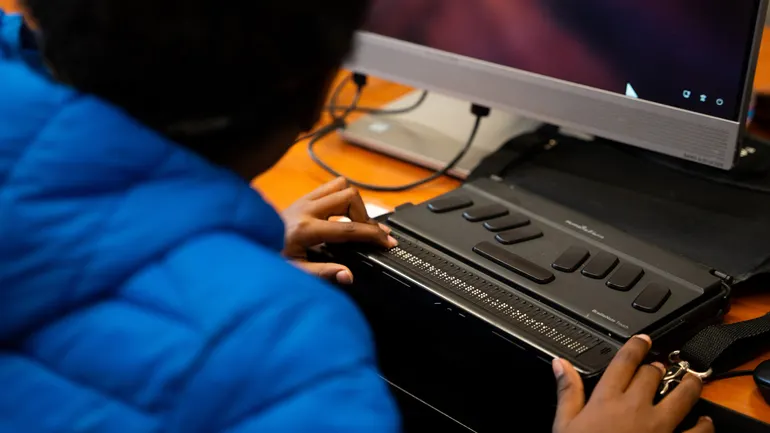
One tool that opened access to learning for students with disabilities is Bookshare. The free repository of titles allows students to customize how they see or hear text on a screen and to physically manage how to flip pages on reading devices.
It’s the world’s largest library of audio and ebooks — with 1.4 million titles, according to the organization. And access is free for qualifying U.S. students in public, private and home schooling because it is supported through grants from the U.S. Department of Education’s Office of Special Education Programs. In fiscal year 2025, OSEP awarded $9 million to Bookshare.
Part of Benetech, a nonprofit software organization focused on improving accessibility, Bookshare is the largest distributor of accessible textbooks in America. It operates through the National Instructional Materials Access Center, a federally funded, searchable online repository of source files for K-12 instructional materials that was created through the 2004 reauthorization of IDEA.
For schools, this means educators can request an accessible book for anyone from an early elementary school student who is struggling with decoding, to a high schooler who is blind and studying for Advanced Placement exams. Bookshare is also free for qualifying students in postsecondary, graduate, vocational and continuing education classes.
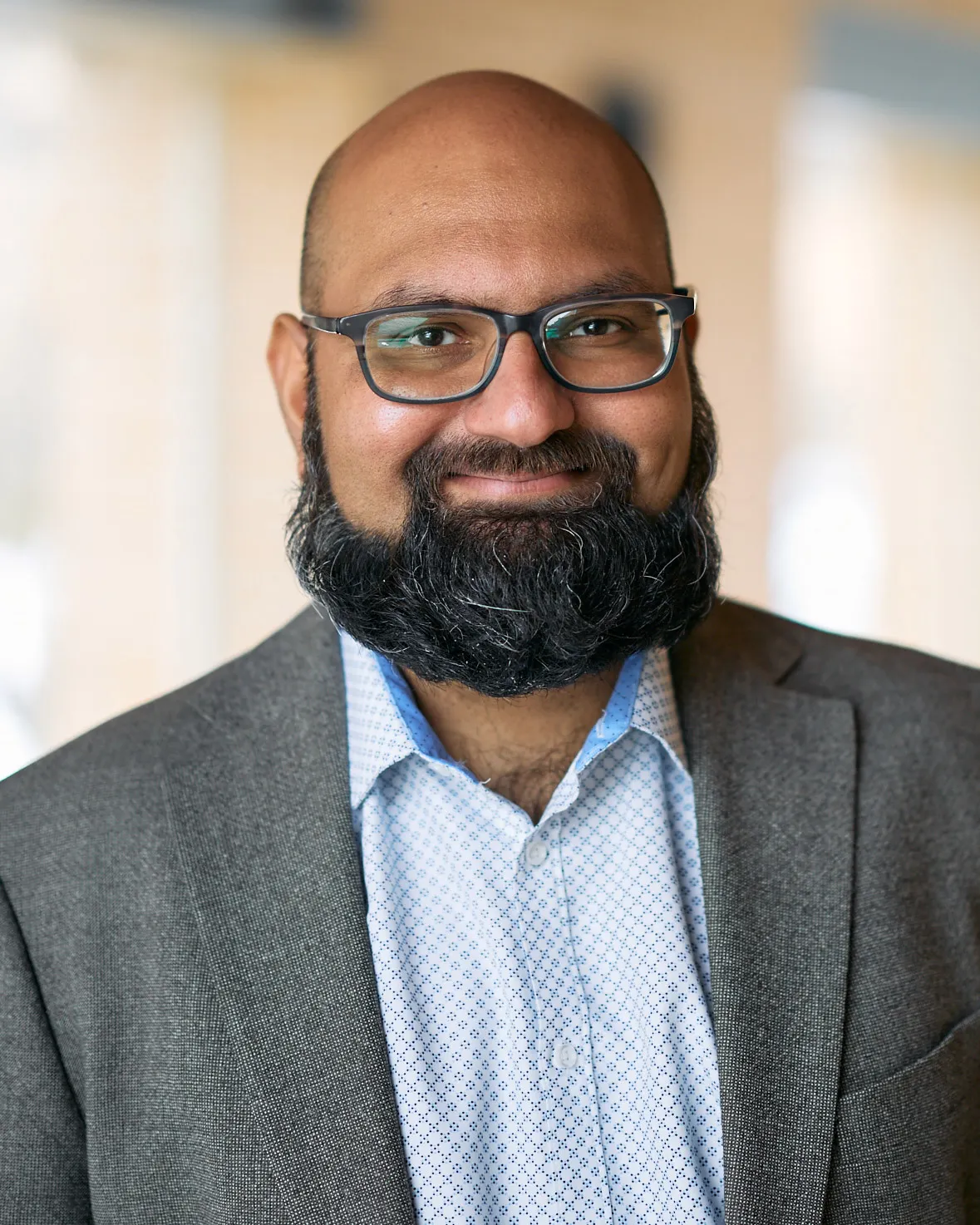
Ayan Kishore, Benetech CEO, says giving pre-K-12 students access to Bookshare materials helps put them on a pathway for postsecondary success and beyond.
Ayan Kishore is CEO of Benetech.
Permission granted by Benetech
“Bookshare started because we zoomed into a huge challenge. There are many challenges, but one challenge is accessibility,” he says. “The books that are used in a classroom are just simply not accessible for someone who is blind or dyslexic or has other sorts of disabilities.”
Guidance issued by the Education Department in January 2024 urges schools to consider an array of assistive technologies for students with disabilities. These include text-to-speech software, word prediction devices to help with writing and communication, augmentative and alternative communication devices, and visual schedules and timers. Low tech tools, such as pencil grips and modified scissors are also encouraged to remove barriers to learning.
I think it’s exciting that special education has driven a lot of the research that’s impacted all of education.
Lindsay Jones
CEO of CAST
Rebecca Thomas, a coach at New Mexico UDL, a state-funded grant program, helps teachers remove barriers to learning. Bookshare, assistive technology and UDL approaches are helping drive student engagement and close learning gaps through accessible tools, she says.
Supporting teachers in their jobs is also core to New Mexico UDL’s mission. “We love finding new tools that will help take things off teachers’ plates,” Thomas says.
Kishore says Bookshare keeps evolving. Several years ago that meant adding accessible STEM content. Now in development is Bookshare Plus, which aims to use AI to make any educational content — such as classroom handouts and worksheets — accessible.
Nonetheless, the future of Bookshare, which is celebrating its 25th anniversary this year, is tenuous. President Donald Trump’s FY 2026 request would cut all funding for the Education Department’s Education Technology, Media, and Materials for Individuals with Disabilities program under IDEA, which provides accessibility technology and services for students with disabilities. Rather, the proposed budget recommends states use Part B grants to set their own priorities for special education spending.
Earlier this month, after a prolonged federal government budget impasse and shutdown, Congress agreed to a continuing resolution to fund the Education Department through Jan. 30, 2026, at fiscal year 2025 funding levels.
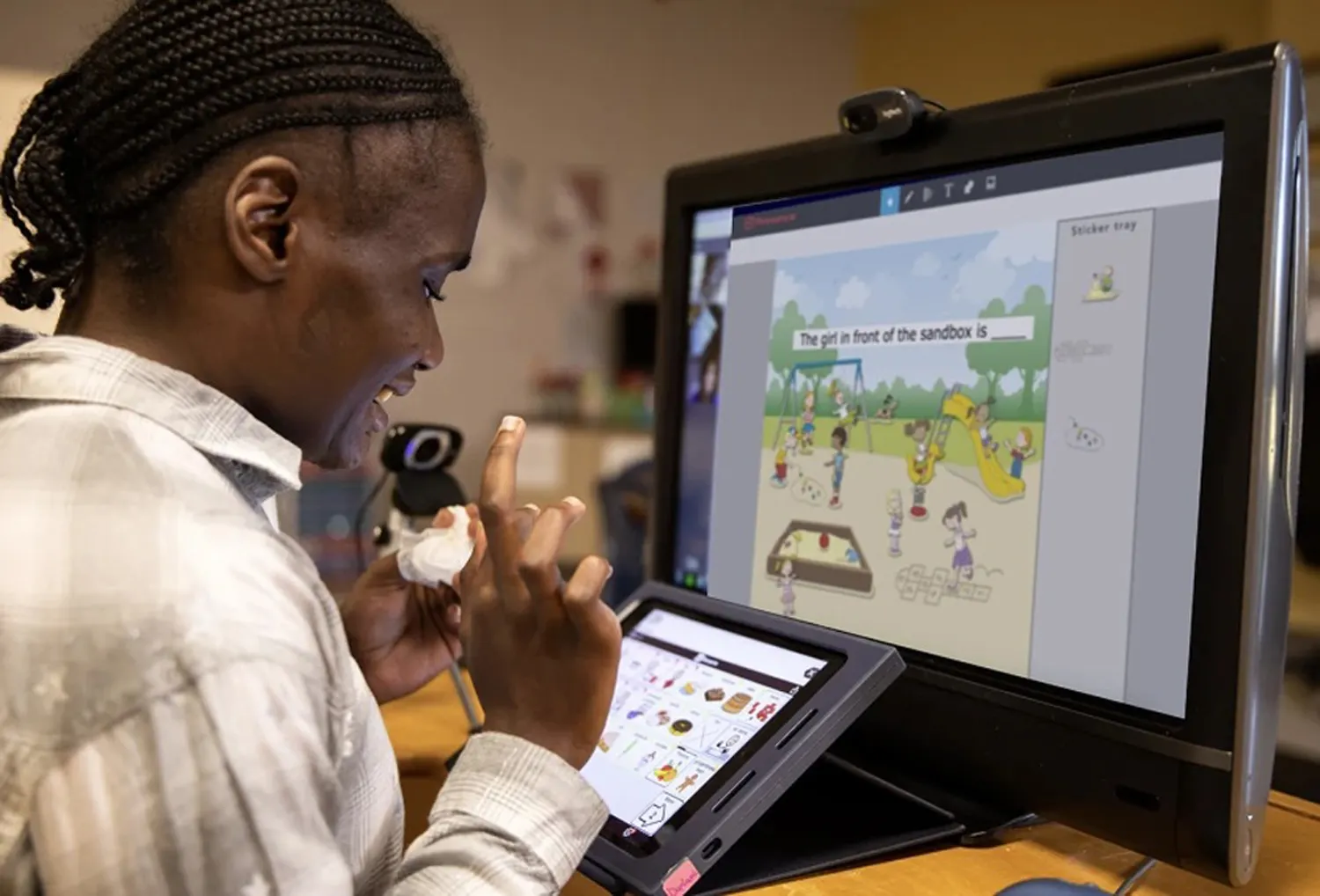
A student at Kershaw County School in South Carolina uses an augmentative and alternative communication device during teletherapy speech and language intervention in 2020.
Permission granted by Kathryn Boyd-Batstone
Addressing student needs through teletherapy
When Missouri’s Carthage Intermediate Center’s only speech-language pathologist moved away in 2023, the grade 4-5 school in the Carthage R-9 School District struggled to find a replacement who could support students whose IEPs required speech and language interventions.
Then, the next year, the center’s two feeder elementary schools lost their speech-language pathologists, too. The void — which couldn’t easily be filled because of a shortage of these specialists in the area — led the three schools to use teletherapy to supplement their services, says Susan Hatcher, assistant principal of Carthage Intermediate Center.
During online asynchronous sessions, a remote speech-language pathologist works 1-to-1 or with small groups of students on their communication skills while an in-person paraprofessional keeps them on task.
“We’ve got lots of examples of where kids have just really done well with this particular service and have really made some great growth,” says Hatcher.
Teletherapy, which began in the medical field, has allowed school districts, particularly in rural areas, to provide student services in the face of significant shortages of special education and related service providers.
Exact numbers are difficult to pin down on how many schools or students are taking this route. But several teletherapy platforms, including Presence, eLuma and Parallel Learning are working directly with school districts.
Presence alone has delivered more than 7 million teletherapy sessions to partner schools since its founding in 2009, according to the company. The company works with about 10,000 public, charter, private and virtual schools.
Bonnie Contreras, senior director of clinical solution engineering at Presence and a former school counselor, says that while the vast majority of students do well with the virtual interaction, it is not a replacement for special education teachers and other in-person experts.
“At the end of the day, the goal is for the student to really thrive with the resources that they need to do their best,” she says.
Hatcher says the district “would have been holding out hope” to attract and hire a qualified speech-language expert. The schools might have been able to partner with neighboring districts to share a provider, she says. But in the worst case scenario, a lack of available services would have required the schools to provide compensatory services or additional interventions, which can be costly, she adds.
While more in-person speech-language pathologists would be ideal, teletherapy allows the flexibility and customization to provide services to students when and how they need them, Hatcher says. In the end, these services are “very individualized, which, of course, is very much the spirit of IDEA.”
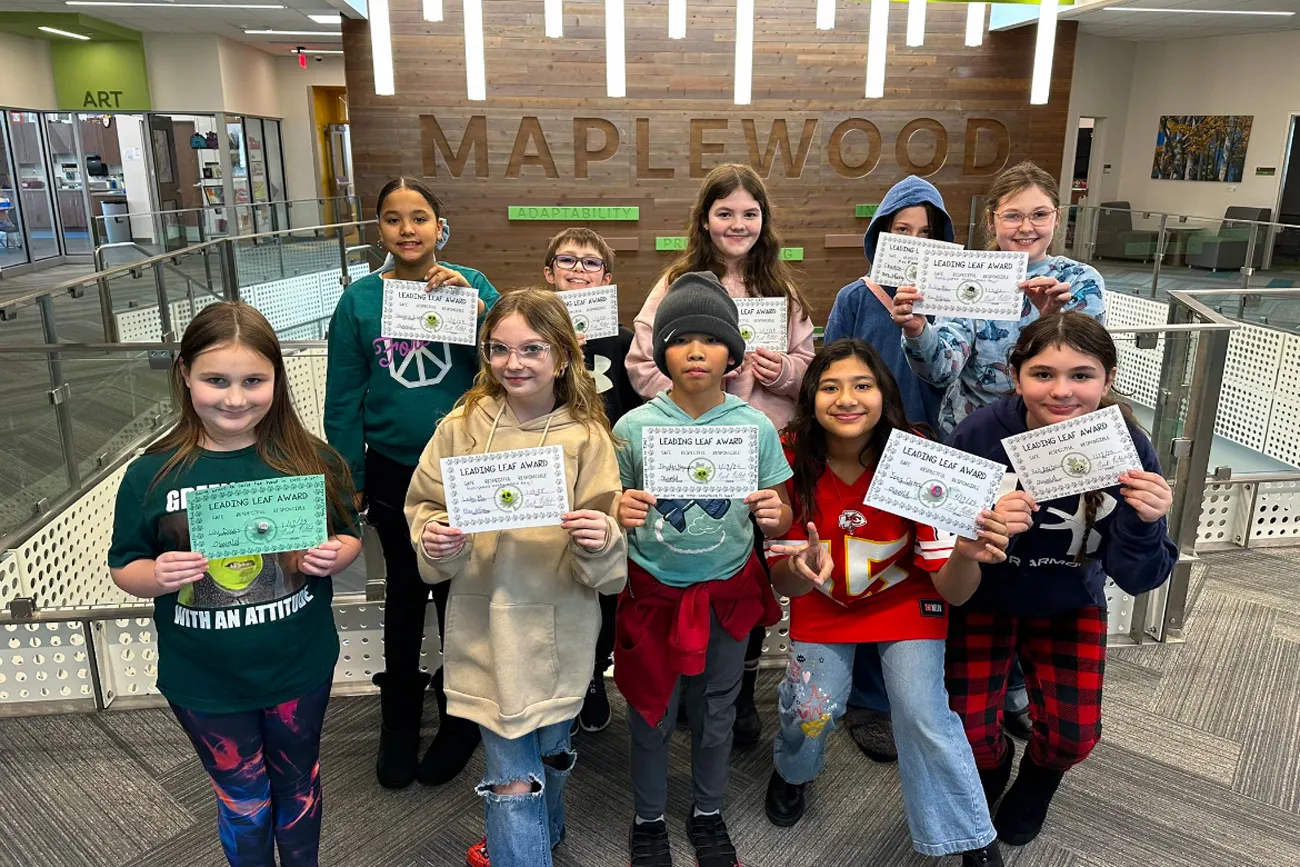
Students from Maplewood Elementary, in Maplewood, Mo., are being recognized in April 2025, for meeting school expectations — Safe, Respectful, and Responsible — that school staff have taught and practiced with the students through their school-wide PBIS program.
Permission granted by Maplewood Elementary School
Supporting learning through PBIS
Would you punish a student for failing a math test?
That’s the question Timothy Lewis asks people when he explains how positive behavioral interventions and supports in a school can be just as vital as academic interventions and supports.
If a student failed a math test, educators might review the material, organize learning supports and monitor the student’s progress, Lewis says. But when he began working with students and young adults with challenging behaviors as a special educator in the 1980s, the common approach was to discipline students for disruptive behaviors.
Lewis, director of the University of Missouri Center for School-wide Positive Behavior Support and a professor of special education, wanted to find a way to avoid punitive approaches and increase students’ academic performances by teaching appropriate and expected behaviors.
“Here’s the key about behavior,” Lewis says. “Behavior is functionally related to the teaching environment, meaning kids do behaviors because they can predict outcomes. And if you’re a really good teacher, you set up your environment to increase the likelihood kids learn.”
Timothy Lewis is the director of the University of Missouri Center for School-wide Positive Behavior Support.
Positive behavioral interventions and supports got their origins in the late 1980s from researchers like Lewis, along with George Sugai, Robert Horner and others at the University of Oregon. Their work on PBIS evolved from research on improving student behavior supports not just for individual students, but for entire classrooms and schools.
PBIS is built on a multi-tiered system of supports where all students gain an understanding of classroom and school expectations and appropriate social, emotional, and behavioral skills. Interventions intensify for the students who need more individualized supports.
Nearly 27,800 schools in the U.S. used PBIS in 2024, according to the Center on PBIS, a technical assistance center that began in 1998 and is funded through federal grants from OSEP and the Office of Elementary and Secondary Education.
PBIS practices contributed to improved attendance, teacher retention, and English and math achievement, along with reduced substance abuse and bullying, according to various research.
For instance, students with and without disabilities attending Missouri schools with universal PBIS showed better attendance, and students with disabilities spent more time in a general education classroom, than students at schools without PBIS, according to a report from the 2022-23 school year published by the Missouri Schoolwide Positive Behavior Support team. Moreover, schools with high levels of PBIS implementation over time showed more positive outcomes for both students with and without disabilities.
PBIS can also lead to cost savings. For every dollar spent on implementing PBIS schoolwide, about $105 is saved through decreased suspensions that also reduce dropout rates, according to a 2017 report published by the federal PBIS technical assistance center.
“PBIS is probably the most researched and has probably some of the best gold standard research to show its effectiveness of anything out there, and OSEP supported that,” says Larry Wexler, a longtime former director of research to practice at OSEP.
Lewis says the PBIS work, through the national center and statewide programs, keeps evolving. The PBIS framework in schools has been used to address school crisis situations, opioid addiction, mental well-being and other challenges. In terms of scope, it has been implemented in everything from a one-room K-12 school to large urban schools, he says.
“No one in education can make kids behave, nor can we make them learn. It’s all about building an environment to increase the likelihood” of learning for students with and without disabilities, Lewis says.
Visuals Editor Shaun Lucas contributed photo support to this story.
This audio is auto-generated. Please let us know if you have feedback.
Dive Brief:
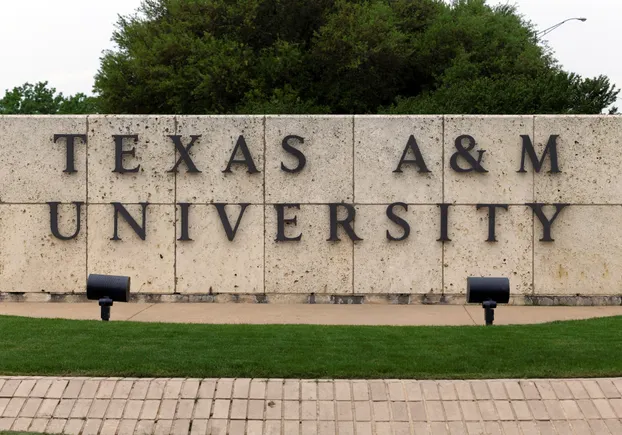
A Texas A&M University committee unanimously ruled last week that the public institution wrongly fired an English professor amid conservative furor over her classroom instructionon gender identity.
The university terminated Melissa McCoulin September after a conservative state lawmaker shared a video of her teaching about gender and called for her to be fired. Texas Gov. Greg Abbott joined the lawmaker’s call to fire McCoul.
On Nov. 18, the university’sCommittee on Academic Freedom, Responsibility and Tenurevoted 8-0 that Texas A&M “had no justification for dismissing” McCoul and “failed to follow required procedures at multiple stages,” according to a Sunday statement from the Texas A&Mchapter of the American Association of University Professors.
Dive Insight:
In September,Texas State Rep. Brian Harrison posted a video to social media of McCoul teaching about gender identity in children’s literature and accused both her and Texas A&M of perpetuating “DEI and LGBTQ indoctrination.” Although Harrison didn’t name McCoul at the time and the video did not show her face, she was later confirmed to be the professor.
He called for both McCoul and then-President Mark Welsh III to be fired.
The university terminated McCoul just a day after Harrison’s social media posts. Welsh said she was fired for teaching coursework that did not match the class’s catalog description.
“This isn’t about academic freedom; it’s about academic responsibility,” Welsh said at the time. “Our degree programs and courses go through extensive approval processes, and we must ensure that what we ultimately deliver to students is consistent with what was approved.”
McCoul’s firing quickly drew backlash from free speech and academic freedom groups, including PEN America,the Foundation for Individual Rights and Expression, the Texas American Federation of Teachers,and the Texas AAUP conference.They raised concerns about due process and accused the university of acquiescing to political pressure.
A Texas A&M faculty council in late September determined that the university’s decision to fire McCoul violated her academic freedomand that Welsh failed to follow university rules when dismissing her, according to The Texas Tribune. It also found that McCoul’s syllabus was consistent with the corresponding course catalog entry and description.
But a senior Texas A&M administrator dismissed those findings in an October memo, saying the matter had not been assigned to the council and that the group had acted outside of its purview.
The administrator classified McCoul’s firing as “largely unrelated to academic freedom” and said the council should not have reviewed the incident without the approval of the university’sFaculty Affairs office, according to the Tribune.
Last week, the university’s Committee on Academic Freedom, Responsibility and Tenure — which reviews faculty appeals of dismissals — ultimately voted in McCoul’s favor when reviewing her case.
The committee did not find evidence Texas A&M discussed its plans to fire McCoul with her, nor did it give her meaningful notice, according to excerpts of the decision shared by Texas A&M’s AAUP chapter.
CAFRT also disputed the university’s assertion that McCoul was responsible for the alleged discrepancy between her class’s course description and her instruction.
“The CAFRT committee found no documentary evidence that Dr. McCoul was included in discussions about the special topics course,” it said. “More critically, Dr. McCoul does not have the authority to designate her own courses; it is the College of Arts and Sciences and the English department administration’s responsibility to do so.”
Texas A&M’s interim president, Tommy Williams, may either accept or reject the committee’s findings. McCoul will be reinstated if he accepts them, but her dismissal will be final if he rejects them, according to a university webpage detailing the process.
A university spokesperson said Monday that Texas A&M officials “are aware of the non-binding findings.”
“Williams has received the committee’s report and will review it carefully before making a decision in the coming days or weeks,” the spokesperson said in an email.
McCoul’s lawyer, Amanda Reichek, told the Associated Press that Texas A&M appears poised to fight the committee’s decision amid continued political pressure. The dispute, she said, seems headed for court.
“Dr. McCoul asserts that the flimsy reasons proffered by A&M for her termination are a pretext for the University’s true motivation: capitulation to Governor Abbott’s demands,” Reichek said in a statement.
Texas A&M’s AAUP chapter on Sunday called the university’s rationale to fire the professor “troubling and bizarre” and called for her to be reinstated, saying the university had “improperly shifted blame for its own repeated failures to follow established written policies onto Dr. McCoul.”
“Dr. McCoul has a long and distinguished record of exceptional teaching and service to Texas A&M,” the group said. “The vilification, trauma, and reputational harm she has endured at the hands of Texas A&M for simply doing her job must be acknowledged and corrected.“
Last week’s news comes after the Texas A&M system implemented significant policy changes related to the conservative contretemps around McCoul.
On Nov. 13, Texas A&M regents announced that none of the courses at the system’s 12 universities “may teach race or gender ideology or topics related to sexual orientation or gender identity.” To teach such topics, professors will be required to get advanced authorization from their institution’s president.
The change similarly spurred outcry from academic and free speech advocates.
This audio is auto-generated. Please let us know if you have feedback.
Dive Brief:
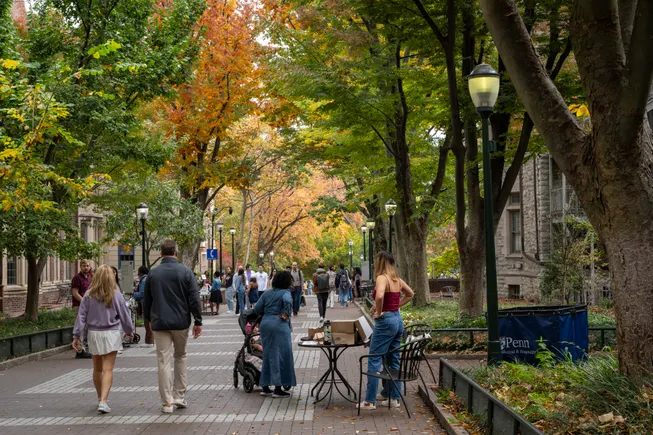
A Pennsylvania federal district court should force the University of Pennsylvania to comply with a subpoena requesting information in an ongoing investigation of alleged discrimination against Jewish employees at the institution, the U.S. Equal Employment Opportunity Commission said in a Tuesday filing.
EEOC said it first issued the subpoena in July, to which Penn submitted a petition to revoke the subpoena in its entirety. EEOC denied the petition but served Penn with a partially modified subpoena that it said addressed objections raised by the university. EEOC claimed Penn did not comply with a response deadline of Sept. 23.
The agency asked the U.S. District Court for the Eastern District of Pennsylvania to direct Penn to produce all requested information, including data pertaining to discrimination complaints made by employees as well as participants in listening sessions held by a Penn antisemitism task force. In an email, a Penn spokesperson denied EEOC’s claims, stating that the university “responded in good faith to all the subpoena requests” but objected to providing personal and confidential information of Jewish employees without their consent.
Dive Insight:
The filing is part of an ongoing EEOC investigation as well as a broader series of inquiries regarding alleged Jewish discrimination and antisemitism at prominent U.S. universities. In a press release, EEOC said Tuesday’s filing stemmed from a 2023 commissioner’s charge filed by Andrea Lucas, its current chair.
Per court documents, EEOC said the charge alleged a pattern of antisemitic behavior and that Penn subjected Jewish employees to a hostile work environment based on national origin, religion and race.
“An employer’s obstruction of efforts to identify witnesses and victims undermines the EEOC’s ability to investigate harassment,” Lucas said in EEOC’s press release. “In such cases, we will seek court intervention to secure full cooperation.”
The Penn spokesperson told HR Dive that Penn “cooperated extensively with the EEOC, providing over 100 documents, totaling nearly 900 pages” but refused to provide lists of, or personal contact information for, Jewish employees, Jewish student employees and persons associated with Jewish organizations.
The spokesperson also denied EEOC’s claims that the university obstructed access to employees who may have submitted discrimination claims and said that it provided the information of employees who consented to doing so. EEOC rejected Penn’s offer to help the agency reach employees who were willing to speak with EEOC, the spokesperson said.
“Penn has worked diligently to combat antisemitism and protect Jewish life on campus,” the spokesperson said.
The agency’s investigation mirrors similar probes of alleged antisemitic discrimination at California State University and Columbia University. Faculty members at Columbia and Columbia-affiliated Barnard College reportedly received text messages from EEOC asking them to complete a survey last April.
Penn and other institutions drew criticism and scrutiny for their handling of on-campus demonstrations and other related incidents amid the Israel-Hamas war. Former Penn President Elizabeth Magill was among the administrators asked to testify before the U.S. House of Representatives in 2023 — just months after the conflict began — on responding to antisemitism. House Republicans later launched their own probe of Penn’s and other universities’ antisemitism responses, Higher Ed Dive reported.
Penn convened an antisemitism task force in response to these developments, which published a report in May 2024 containing findings and recommendations for the university and condemning antisemitism.
Lucas and EEOC have since publicly encouraged workers who have experienced antisemitism on college campuses to submit employment discrimination charges to the agency.
This is part two of a two-part series on the 50th anniversary of the Individuals with Disabilities Education Act. For part one, click here.
Special education staff turnover is a constant challenge at Godwin Heights Public Schools in Michigan.
Sometimes a special education role will turn vacant just a month or six weeks after the district hired someone because they start and leave so quickly, says Derek Cooley, the district’s special education director.
“We used to have staff that would spend their whole careers in special education” at Godwin Heights, Cooley says. “We just don’t see that anymore.”
People often enter the special education field because they have family members with disabilities, or they come from a family of public educators, says Cooley. Throughout his own hiring history and over 20-year education career, he’s noticed this pattern, he says.
But what keeps special educators in schools “isn’t just passion,” Cooley says. “It’s also having strong mentoring and coaching, a manageable workload, and practical supports like tuition reimbursement that make the job sustainable and rewarding.”
Godwin Heights Public Schools is not alone in the struggle to recruit and retain special education staff. In fact, this field is typically cited as one of the top staffing problem areas among districts nationwide. During the 2024-25 school year, 45 states reported teacher shortages in special education, according to the Learning Policy Institute.
45
The number of states that reported teacher shortages in special education during the 2024-25 school year.
Source: Learning Policy Institute
These shortages can also lead to costly litigation between districts and families for missed special education services. To fill special educator vacancies, schools often rely on teachers not certified in special education or hire outside contractors to fill these roles.
These widespread shortages — which researchers and special education experts say were exacerbated by the COVID-19 pandemic — continue to be a sticking point as the education community celebrates the 50th anniversary of the Individuals with Disabilities Education Act. The historic legislation, signed into law on Nov. 29, 1975, guaranteed students with disabilities the right to a free and appropriate public education nationwide. Until then, there was no federal requirement that schools must educate students with disabilities.
But five decades later, special education experts and advocates say much work remains to ensure that all students with disabilities indeed have access to a high-quality education.
Since the 1990s, special education has been the top staffing shortage area in U.S. schools, said Bellwether Education Partners in a 2019 data analysis.
Meanwhile, the number of students with disabilities ages 3-21 served by IDEA has surged by nearly 20% since 2000-01, to 7.5 million students in the 2022-23 school year, according to the National Center for Education Statistics.
Derek Cooley is special education director at Godwin Heights Public Schools in Wyoming, Mich.
Permission granted by Derek Cooley
While all students are falling behind academically since the pandemic, as measured by the Nation’s Report Card and other data collections, students with disabilities are performing even worse than their general education peers. A majority — 72% — of 4th graders with disabilities scored below basic in reading, and 53% scored below basic in math on the 2024 National Assessment of Educational Progress. That’s compared to the 34% of 4th grade students without disabilities who scored below basic in reading, and the 19% who scored below basic in math.
Research and special education experts agree that special educator turnover and student outcomes are inextricably tied. A study released in May by the Center for Analysis of Longitudinal Data in Education Research, for instance, found that in Washington state, high turnover among special educators is “especially detrimental to students with disabilities” and their academic performance.
“I think we’re far from the vision” and commitments of IDEA, says Heather Peske, president of the nonprofit National Council on Teacher Quality. As the latest scores from the Nation’s Report Card reveal, “there is the need for access to effective teachers, and so states and districts really need to focus on the opportunities available to them to increase both the quantity and the quality of special ed teachers,” Peske says.
But hope remains alive — and is actively fueling efforts by researchers and state education leaders to implement innovative strategies to address the widespread, decades-long struggle to staff special education.
When we fail to fully staff our classrooms, we fail to deliver on the promise of a free and appropriate public education for students with disabilities.
Abby Cypher
Executive director of the Michigan Association of Administrators of Special Education
In late September, the U.S. Commission on Civil Rights released a report acknowledging that the special education teacher shortage is more than a staffing problem — it’s also a civil rights issue.
“I 100% agree with that,” says Abby Cypher, executive director of the Michigan Association of Administrators of Special Education. “When we fail to fully staff our classrooms, we fail to deliver on the promise of a free and appropriate public education for students with disabilities.”
Viewing the special education shortage as a civil rights issue is what keeps pushing Cypher to improve special educator recruitment and retention in Michigan. And it also reminds her that this is a problem that needs urgent solutions.
In recent years, Cypher says, the Michigan association has implemented new strategies to tackle the shortages as recommended by a state Legislature task force known as OPTIMISE, or Opening the Pipeline of Talent into Michigan’s Special Education. While the work is only just beginning, early results are promising, she said.
Special educators commonly leave the profession for a myriad of reasons, including low pay, poor working conditions, large workloads and heavy paperwork, as well as lack of school leadership support and professional development, according to special education experts.
With IDEA’s 50th anniversary upon us, K-12 Dive spoke with special education leaders and researchers about promising innovations to tackle special education teacher shortages and best practices for implementing the ideas at state and local levels.
Special educator shortages persist as a top staffing issue
The percentage of surveyed public schools that anticipated a need to fill certain teaching positions by subject areas before the start of the next school year.
Targeted compensation
Eighteen states differentiate compensation for special education teachers by paying them more than general education teachers. But Hawaii is the only one that offers over $5,000 in additional annual pay — the amount that research suggests could make a meaningful impact, according to a September NCTQ report.
The Hawaii Department of Education found in an October study that its $10,000 differential pay for special education teachers boosted teacher retention. But lower amounts had no impact on recruitment or retention in that state, the department said. The state’s average annual salary for all teachers is $78,124.
Increasing compensation or creating student loan forgiveness opportunities for special educators could boost both recruitment and retention, says Laurie VanderPloeg, associate executive director for professional affairs at the Council for Exceptional Children. “People are going to stay if they feel that they are being compensated for their workload and the time and the effort that they’re putting in.”
One way districts could cover higher salaries for special educators would be to stop paying teachers more across the board for having a master’s degree, Peske says. “We found that 90% of large school districts across the U.S. pay teachers more for having a master’s degree, and nearly one-third of states require districts to pay for these master’s degrees despite the evidence that master’s degree premiums are bad policy for almost everyone.”
In NCTQ’s own research, the nonprofit has found that master’s degrees for teachers do not correlate with effectiveness in the classroom, Peske said.
If we don’t have a strong climate and culture within the building, if we don’t have the administrative support, if we don’t have other areas to incentivize staff … they’re not going to stay.
Laurie VanderPloeg
Associate executive director for professional affairs at the Council for Exceptional Children
Meanwhile in Michigan, several educator unions have been able to negotiate higher wages for paraprofessionals who complete training developed by MAASE, Cypher says.
But VanderPloeg emphasizes that higher compensation is just “one piece of the puzzle.”
“If we don’t have a strong climate and culture within the building, if we don’t have the administrative support, if we don’t have other areas to incentivize staff … they’re not going to stay,” says VanderPloeg, who served as director of the federal Office of Special Education Programs during the first Trump administration.
Tammy French, autism special education teacher at Bishop Elementary School in Rochester, Minn., goes over a new educational tool with autism paraprofessional Marion Fosdick after class on March 14, 2019.
Ken Klotzbach/The Rochester Post-Bulletin via AP
Training and professional development
In Michigan, Cypher says schools face a lot of turnover among paraprofessionals who often say in exit interviews that they left because they had neither the skills nor access to the training they needed to be successful. Paraprofessionals don’t need teaching licenses, and they typically are paid significantly less than full-time licensed teachers. These staffers perform various roles, such as assisting teachers in their classrooms through tutoring, helping to manage student behaviors or organizing instructional materials.
To address the paraprofessional turnover challenge and hopefully improve paraeducator retention, Cypher says that MAASE developed paraeducator standards with CEC. Since March, the Michigan association has trained nearly 5,000 paraeducators through this new professional development program, she says.
Special education administrators in schools don’t always have the capacity to provide high-quality professional development for their paraprofessionals, Cypher says. The new training empowers those administrators, including instructing them separately on how to effectively and consistently train staff across their districts.
But targeted training needs to go beyond paraprofessionals and special education administrators.
Prospective special education teachers, during their clinical training, should work with mentor teachers who are certified in special education, Peske says. This strategy has been proven to boost a new teacher’s efficacy in the classroom later on, she adds.
School principals also need more training in special education, according to industry experts and leaders. That is especially true given that special education teachers often cite a lack of support from their building administrators as a factor for leaving, says Natasha Veale, a special education leadership consultant.
States should require principal preparation programs to include more content and instruction on special education, Veale says.
And districts should provide principals with professional and personal development opportunities to help foster relationships with their special education teachers, she says.
Veale expresses optimism about the future of special education staffing given the increasing conversations at education conferences she’s seen about integrating a deeper understanding of special education issues more into school leadership.
Michigan is looking to tackle the leadership challenge through a new 18-month program called Developing Inclusive Leaders. This initiative, also from the Michigan Association of Administrators of Special Education, trains principals and building administrators on special education law, inclusive practices and collaboration with educators, families and communities.
A year into the program, Cypher said the association is already starting to see meaningful gains in school leaders’ knowledge of and confidence with overseeing school inclusion practices.
Developing pipelines
In recent years, grow-your-own programs have gained steam as an innovative approach for recruiting and retaining teachers across all instructional areas.
While these programs vary by district and state, they typically focus on bringing high school students into the education field or moving paraprofessionals into fully professional positions. Such initiatives can offer college tuition assistance to prospective teachers as they gain classroom experience working alongside veteran teachers — with the ultimate goal of earning a teaching degree or certification.
Illinois alone has 15,000 paraprofessionals with a bachelor’s degree, says Daniel Maggin, associate dean of research and professor in special education at the University of Illinois Chicago. If the state trained all those paraprofessionals as special education teachers, he said, its special educator shortage would be solved and there would even be a surplus.
That’s because paraprofessionals represent the group with the most accessible and fastest on-ramp for getting a special education license and endorsement, Maggin says.
Those professionals are local and they’re right there, and they’re familiar with students in the area, and it just makes more sense to capitalize on that population.
Natasha Veale
Special education leadership consultant
While that gives Maggin hope about addressing Illinois’ special education teacher shortage, he says it’s still unclear how the state could train that many people — and where the money would come from to do so. Such an effort would require district, state and federal support, he says.
Veale says most paraprofessionals have a strong desire to teach in special education full time, so grow-your-own programs for these staffers can be “a great way” to help alleviate the shortage.
“Those professionals are local and they’re right there, and they’re familiar with students in the area, and it just makes more sense to capitalize on that population,” Veale says.
Districts and states are indeed using the model to build up the special educator pipeline.
In 2024, Arizona launched two grow-your-own programs for special educators. One program offers tuition reimbursement to school districts for general education teachers who want to move into special education. Another Arizona program provides tuition reimbursement to school districts helping paraprofessionals earn a teaching certificate in the field.
And two years before that, North Dakota invested in an online grow-your-own program that trains paraprofessionals in rural areas to become licensed full-time special education teachers.
A group of high school students from Charlevoix-Emmet Intermediate School District in Michigan participate in a paraprofessional boot camp together in April 2025.
Permission granted by Michigan Association of Administrators of Special Education
In Michigan, grow-your-own programs often focus on training paraprofessionals for full-time and licensed teaching roles, according to Cypher. But without a pipeline to backfill their roles, that can lead to a deficit in paraprofessionals, she says.
To address that gap, Cypher says, the Michigan Association of Administrators of Special Education worked with the state education department to help high schoolers participate in a similar grow-your-own program, known as a paraprofessional boot camp, that started in March 2025.
The boot camp is offered as a career and technical education course where high school students train and work in elementary schools for several hours in a day. Then after graduating high school, they can immediately step into a paraprofessional role.
This new initiative not only helps fill paraprofessional positions but could lead to more interest in full-time special educator roles, Cypher says. “Once students have access to those standards on being a paraeducator, it might entice them to consider going into teaching as well.”
News Graphics Developer Julia Himmel contributed data and graphics support to this story.
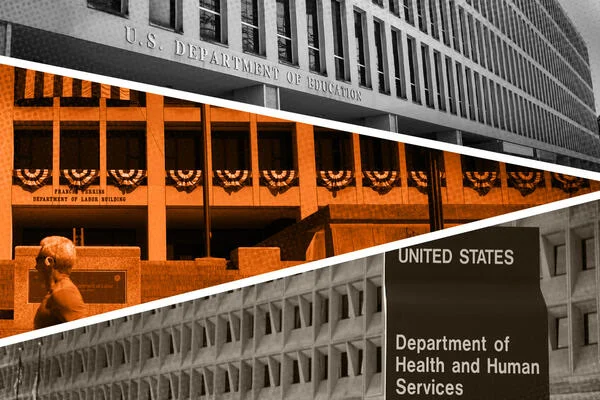
Dozens of the Education Department’s programs were scattered across Washington D.C. last week, but a few core components remain at the Lyndon B. Johnson Building on Maryland Avenue: the offices for civil rights, special education and federal student aid (FSA).
These three offices, particularly FSA, oversee some of the department’s most direct services to taxpayers—including the Pell grant, federal student loans, discrimination complaints and individualized education programs for students with disabilities—so moving them would likely be more complicated and controversial.
Since President Trump first took office, some of the more vocal pushback to his plan for shutting down the department has come from the parents, families and advocacy groups who depend on these offices. But other programs at ED, including those in the Office of Postsecondary Education, were outsourced to other agencies Tuesday through a series of six interagency agreements as part of a broader effort to diminish the department. And even though the three offices were spared in this latest round of dismantling, they may not be safe in the long run.
President Trump has talked about moving FSA to the Small Business Association and sending special education to the Department of Health and Human Services. Plus, as the Department of Justice has become increasingly involved in education issues, several experts anticipate OCR could be relocated there.
A senior department official told reporters last week that ED is “still exploring the best plan” for those offices and the programs they oversee.
In the meantime, here’s a rundown of what we know about Trump’s latest effort to dismantle ED.
Why is ED Doing This?
The Trump administration has been clear from the start: its “final mission” is to shut down the department. Officials touted this latest action as a key step toward that goal.
Even though ED is still going to oversee the programs, this move is a way for Trump officials to show they don’t need the department itself to ensure “the effective and uninterrupted delivery of services, programs, and benefits on which Americans rely,” as stated in Trump’s executive order.
don’t delete this space/it’s for the chart
Education Secretary Linda McMahon told department staff last week that it’s all part of an effort to “streamline bureaucracy” and “return power to the states.” But she acknowledged that the agreements are a temporary solution and that Congress will need to sign off eventually.
Further, she told staff that it’s important to explain to the American public that, in the long run, shutting down the department doesn’t mean getting rid of all its programs.
“So it is important how we message that,” McMahon said, citing survey data that showed the majority of Americans opposed shutting down the department but that changed when they learned the programs would remain. “Because honestly, folks, and I’m not trying to sugarcoat this, in the end of this the goal will be to have Congressional votes to close the Department of Education.”
This move comes after years of conservatives lambasting the department for being too woke. They, like McMahon, have said reducing the federal role in education will be a way to protect students’ and parents’ rights.
“Each of us in this room has a chance to be part of history,” McMahon said.
What’s Actually Changing?
Many higher education policy analysts say not much. Aside from outsourcing dozens of grant programs and adding extra steps to the award allocation process, little is expected to change (at least directly). Still, higher ed experts are divided on whether the funding system can survive such a transition.
Congress will still decide how much money is available and what it should go toward. And the Department of Education will still receive funding, post grant applications and set guidelines for the competitions. But now, rather than that money going directly from ED to institutions, it will be funneled through four other agencies: the Departments of Health, Interior, Labor, and State, which will then dole out the money to colleges and universities.
These agencies, particularly the Department of Labor and its Employment and Training Administration, will now be the ones to actually run the competition, decide who wins and allocate the funds. When colleges have questions about drawing down federal dollars or staying in compliance with department policies, it won’t be ED they contact.
don’t delete // space for chart
Why the Department of Labor?
Most of the higher education grant programs are heading to the Department of Labor, including TRIO, programs supporting historically Black colleges and universities and the Fund for the Improvement of Postsecondary Education.
This shift follows a growing push across the country to better align higher education with workforce demands. Some, including the Trump administration argue that it makes sense to move college grant programs to the Department of Labor, where the mission is improving “the welfare of the wage earners” and “advanc[ing] opportunities for profitable employment.”
Nineteen higher ed programs at moving to the Labor Department.
Photo by Andrew Harnik/Getty Images
One senior department official told reporters that if education is about creating the workers of tomorrow then “nowhere is it better housed than at the Department of Labor [which] thinks about this night and day.” In fact, the department has already integrated its Office of Career Technical and Adult Education with Labor and a handful of states have merged their departments of education and workforce. (During President Trump’s first term, officials briefly proposed merging Education and Labor, though that idea didn’t move forward.)
But critics fear that Labor won’t be able to effectively oversee grants for short-term, technical training programs, let alone broader initiatives focused on college access, equity and student success. Largely, they worry that the plan could sow confusion, weaken accountability measures and eventually lead to the consolidation of programs that are similar but not duplicative and intentionally separate.
Angela Hanks, a Democrat who previously served as ETA’s acting assistant secretary, said in a social media post that “it’s hard to describe” the “nonsensical” nature of what Trump and McMahon are doing and compared the transfer of power to “having a frog carry a camel on its back.”
Currently, Hanks said, the main youth-focused program at Labor serves about 130,000 students while TRIO alone serves about 870,000. The office would also take on even larger programs like Title I funding for low-income kids at K-12 schools, which serve up to 26 million students.
What’s in the Fine Print?
The interagency agreements do appear to maintain the operation of existing programs for now, but critics argue details both large and small in the text that add bureaucracy and confusion to the process rather than reducing it.
For example, while the seven grant programs for minority-serving institutions are still expected to continue, various parts are being sent off to different agencies. Four grants that involve Alaskan-, Native American–, Asian American– and Pacific Islander–serving institutions will be housed at the Department of Interior. Labor will oversee the remaining three, which support HBCUs as well as predominantly Black- and Hispanic-serving institutions.
Federal policy restricts some institutions from receiving multiple awards across different grant designations despite being eligible, but spreading out various MSI grants could still create complications. Historically, when deciding which grant program is the best fit or clarifying compliance standards, institutions could go to one office for the answers. Now, they may have to contact multiple different staffers.
Multiple higher ed experts have also expressed the concern that rather than cutting grant funds, which only Congress can do, the Trump administration may try to consolidate programs that are similar but not identical.
For example, CCAMPIS, a program focused on subsidizing child care for student parents, is being moved to HHS, which already oversees the Community Services and Child Care and Development Block Grants. These programs target a broader swath of low-income individuals and families, so college access advocates fear that if the funding pots are merged, it could pull grant dollars away from the student parents they were intended for.
Language describing such efforts to “integrate” programs appears in the announcement’s news release, as well as in the fact sheets and agreements. But legal experts say that’s what Congress was trying to avoid by creating ED, and they expect the agreements to face court challenges.
“The Department’s actions will expand federal involvement, rather than streamline it,” said Josie Eskow Skinner, a former general counsel attorney at ED who is now a partner at Sligo Law Group. “As a result of these agreements, states will now have to deal with the potentially conflicting or duplicative demands of multiple federal agencies with no central point of coordination or technical assistance.”
How Does It Align With Project 2025?
In a hearing held by the House Education and Workforce Committee the day after McMahon announced the interagency agreements, Rep. Suzanne Bonamici, an Oregon Democrat, said the Heritage Foundation’s Project 2025 “laid the groundwork for this illegal move of this program and shutting down the Department of Education.”
Project 2025, a sweeping 900-page manual, outlines a multitude of recommended changes across nearly all sectors of the federal government, including how to shut down ED. Following last week’s decision, the Trump administration has made several of the suggested changes including moving career education and postsecondary programs to Labor and transferring tribal college programs to the Interior Department. (Lindsey Burke, who now serves as ED’s deputy chief of staff for policy and programs, authored the manual’s education chapter.)
Still remaining on the Project 2025 to-do list include moving the Office for Civil Rights to the Department of Justice and giving Treasury control of federal student aid.
Trump has repeatedly denied involvement with the project, even though actions in the first few months closely follow the project’s recommendations.
But there’s one key way McMahon’s actions so far differ from Project 2025—she’s not making funding cuts or eliminating programs. Project 2025 recommends doing so through an act of Congress.
There are moments in leadership when no one is watching but everything is at stake.
Not because a policy is in question or a metric is missing, but because our moral compass is being tested in the quiet. In these moments, we do not lean on politics or public opinion. We ought to lean on what we believe to be true and on moral principles that will benefit the community we serve.
As someone who has spent more than two decades leading within both faith-based and secular institutions, I’ve learned that leadership is rarely defined in the spotlight. It is shaped in the gray, those murky places where values and pressures collide, and where courage often whispers instead of roars. The stakes can feel even higher for those who lead while navigating systems not originally designed with their perspective or presence in mind. From these grey spaces, I’ve learned that faith-based leadership is not about dogma or doctrine—it is about discernment.
Faith, for me, has always been an anchor. It is the lens through which I evaluate the tension between institutional demands and human dignity. It is what helps me pause before I act, reflect before I speak and evaluate performance through the lens of humanity. Especially now, in a time when higher education is under ideological, financial and political attack, we must ask: What anchors our decisions when accountability fades?
Years ago, I found myself at one of those crossroads. The enrollment numbers were tight. The budget even tighter. Unspoken pressure from senior leadership grew to admit students who didn’t meet our standards. No one explicitly said it, but every conversation implied it: “Make the numbers work.”
My team had worked tirelessly to bring in a strong incoming class, but there was a gap we couldn’t close without compromising. The students in question showed promise, but our institution lacked the resources to support them adequately. To admit them would have appeared like we were giving these students access but, in reality, we would have been abandoning them.
I wrestled deeply with this dilemma. The pressure of “just this once” was real. I had built my career on delivering results, but I couldn’t betray the very students we were claiming to serve. In the stillness of that decision, I chose to hold the line.
I didn’t know then how that choice would shape me. It didn’t earn applause. But it allowed me to become the kind of leader I could live with.
Leadership in higher education has always been complex. But today, it feels more fragile than ever.
The visible dismantling of DEI, the silencing of courageous faculty and staff, and the marginalization of people of color, immigrants and international students have left many campuses in moral freefall. While we cannot always name these tensions politically, we must acknowledge them ethically.
What we’re witnessing isn’t just a crisis of policy; it’s a crisis of conscience.
Who protects students when there’s no legal mandate?
Who ensures inclusion when there’s no board directive?
Who speaks up when accountability becomes optional?
Without a guiding light, institutions can drift into decisions that prioritize image over impact. In these moments, faith-based leadership is not about quoting scripture or invoking theology. It is about rooting decisions in dignity, humanity and justice. It is about remembering that our roles are not just managerial; they are moral.
This kind of leadership also requires what I’ve come to call inner work. It asks us to slow down in a culture of acceleration. To pause and reflect, even when the next decision is already overdue. In my own journey, that has meant cultivating space for prayer, silence and spiritual grounding. For others, it might mean mindfulness, meditation or journaling. The practice doesn’t matter as much as the posture: a willingness to look inward before leading outward.
This is the discipline that prepares us to lead in the gray. And in those quiet moments, when we must choose between what is convenient and what is right, it reminds us who we are.
For women of color, the cost of courage is often compounded. The gray areas we navigate are more scrutinized. We are expected to perform flawlessly, represent perfectly and resist quietly. Yet, in the face of these impossible expectations, holding to our values is more than leadership. It is resistance. It is testimony.
I’ve learned that some of the most powerful leaders don’t lead by title, but by presence. They embody something steady in an era of volatility. Many of them began by following, listening and learning. They lead with service. At its best, faith-based leadership is a return to that posture. One that centers care over control, humility over hierarchy and courage over convenience.
The challenge is not whether faith belongs in higher education. It’s whether we can afford leadership without it, especially now.
This is not a call for religiosity. It’s a call for reflection. A call to return to the moral interior that higher education was once known for cultivating, not just in students, but in leaders. A call to build not only institutional credibility, but institutional character.
Discernment is what helps us pause when the world demands urgency. It reminds us that justice is not always expedient, that compassion is not always visible in key performance indicators, and that leadership is not measured solely by who follows you but on what you refuse to compromise.
So, when the pressures mount, when budgets are cut, policies shift and accountability weakens, we must ask: What must we still protect?
Higher education doesn’t just need bold visionaries. It needs quiet stewards. Leaders who can sit in the gray and still choose light. Leaders who understand that faith is not the opposite of reason, but the companion of moral clarity.
Because when the spotlight fades, and the metrics change, what remains is the integrity of our decisions, and the dignity of the people for whom we serve.
Denise Williams Mallett, Ed.D., is a higher education consultant, former vice president for enrollment management and student affairs, and author of The Village Effect: Leadership, Faith, and The Power of Community (July 2025).