Category: Featured

  • Liverpool University’s India campus to open in major Bangalore township

    Liverpool University’s India campus to open in major Bangalore township

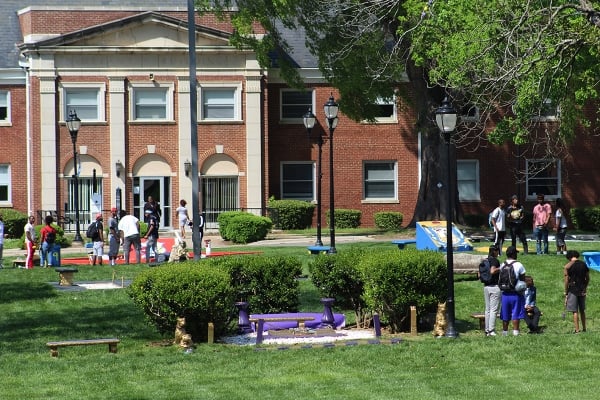
    While more details are expected at the University of Liverpool India’s launch event in Bangalore on December 15, the campus in the integrated township — which includes residential, commercial, and institutional facilities — will feature “flexible spaces”, according to the university.

    The campus will have smart classrooms, research and collaborative spaces, specialised labs, and comprehensive co-working hubs for faculty, students, and entrepreneurs, offering a “state-of-the-art, 360-degree learning environment” for its inaugural cohort, set to begin in August 2026.

    “We are looking forward to welcoming our inaugural cohort of talented students in 2026 and providing them with an exceptional learning experience that strengthens their skills and employability,” said Lucy Everest, chief operating officer, University of Liverpool.

    She visited Bangalore and Mumbai this week to meet educators, potential applicants, and alumni as the university plans to grow the campus to 5,000 students in five years and 10,000 in 10.

    “Alembic City is the perfect place to realise this vision and our new campus will provide our students with the very best facilities to support their learning journey with us.”

    By the time we open next summer, we’ll have developed relationships with a wide range of businesses and social enterprises in Bangalore, which will be really important for students
    Tim Jones, University of Liverpool

    The university has also opened admissions for 2026, offering postgraduate programs in accounting and finance and computer science, alongside undergraduate courses in business management, biomedical sciences, computer science, accounting and finance, and a game design program — “which combines the university’s music and computer science departments, something not many other UK campuses are offering in India”, according to vice-chancellor, Tim Jones.

    “What we will ensure is that there’s a ‘Liverpool feel’ to the campus. Students who come to the University of Liverpool, Bangalore, should experience the distinctive elements of Liverpool,” Jones told The PIE News.

    “There will be unique features in the design that I hope students will really appreciate.”

    For Jones — who was part of the 126-member UK delegation to India led by Prime Minister Keir Starmer, which included entrepreneurs, cultural figures and university leaders following the landmark trade deal between the two countries — Bangalore was a natural choice for the new campus for a range of reasons.

    The city, a major IT hub with leading Indian and multinational tech and biotech firms, is familiar ground for the red-brick Russell Group university, which has a long-standing, research partnership with the National Institute of Mental Health and Neurosciences (NIMHANS) and ongoing collaborations with the Indian Institute of Science (IISc) in Bangalore. Both institutions also happen to have two of the world’s oldest and most prominent biochemistry departments.

    Moreover, one of the University of Liverpool’s biggest corporate partners is Unilever, which has an R&D centre in Bangalore, with pharmaceutical companies such as AstraZeneca and IT firms like Wipro also expected to play a role in research, innovation and industry collaboration through the India campus.

    “We did explore other cities, but it was quite easy for us to pick Bangalore because we had already begun building strong relationships in the city and the wider Karnataka region,” stated Jones, who praised the city’s tech-entrepreneurial culture and the opportunities it offers for a university to “engage, collaborate and grow”.

    “By the time we open next summer, we’ll have developed relationships with a wide range of businesses and social enterprises in Bangalore, which will be really important for students. This is a big focus for us this year — we have already started, and we’ll be doing much more.”

    In the lead-up to the campus opening next year, the University of Liverpool will focus on faculty exchanges between the Liverpool and Bangalore campuses, attracting international students, and expanding scholarship opportunities for its India-based cohort, according to Jones.

    But the university — which views global engagement and partnerships as central to its Liverpool 2031 strategy — is not the only UK institution advancing its India campus plans.

    Nine UK universities now have approval to establish campuses in the South Asian country, with the University of Southampton leading the pack, already welcoming around 150 students in the first cohort at its Gurugram campus in August this year.

    In this landscape, the University of Liverpool aims to distinguish itself from other UK institutions by offering distinctive programs and embedding research from “day one”, drawing on lessons from its only other international branch campus — the Xi’an Jiaotong–Liverpool University (XJTLU) in Suzhou, China — as it shapes its approach in India.

    “We have experience from our successful campus in China, which is celebrating its 20th anniversary and has nearly 30,000 students. That experience gives us confidence that we can succeed in India as well,” stated Jones.

    “The funding model was also different 20 years ago. But the exchange of staff and students is embedded in what we do in China. I see the same happening with India as the campus develops.”

    However, despite the China campus’s success, recent reports suggest it may require stronger oversight amid concerns about teaching methods, class sizes, and students’ English proficiency.

    While the rapid push to establish branch campuses in India has also sparked debate about the trend among major UK universities, Jones says he is focused on making Liverpool’s India launch a “big success”.

    “It took us 20 years to go from China to India. There will likely be other ventures in the future, but right now, I’m very focused on making this a big success — for the students, for the university, and for India,” stated Jones.


    Source link

  • Can you believe it? | News Decoder

    Can you believe it? | News Decoder

    Can you tell the difference between a rumor and fact?

    Let’s start with gossip. That’s where you talk or chat with people about other people. We do this all the time, right? Something becomes a rumor when you or someone else learn something specific through all the chit chat and then pass it on, through chats with other people or through social media.

    A rumor can be about anyone and anything. The more nasty or naughty the tidbit, the greater the chance people will pass it on. When enough people spread it, it becomes viral. That’s where it seems to take on a life of its own.

    A fact is something that can be proven or disproven. The thing is, both fact and rumor can be accepted as a sort of truth. In the classic song “The Boxer,” the American musician Paul Simon once sang, “a man hears what he wants to hear and disregards the rest.”

    Once a piece of information has gone viral, whether fact or fiction, it is difficult to convince people who have accepted it that it isn’t true.

    Fact and fiction

    That’s why it is important — if you care about truth, that is — to determine whether or not a rumor is based on fact before you pass it on. That’s what ethical journalists do. Reporting is about finding evidence that can show whether something is true. Without evidence, journalists shouldn’t report something, or if they do they must make sure their readers or listeners understand that the information is based on speculation or unproven rumor.

    There are two types of evidence they will look for: direct evidence and indirect evidence. The first is information you get first-hand — you experience or observe something yourself. All else is indirect. Rumor is third-hand: someone heard something from someone who heard it from the person who experienced it.

    Most times you don’t know how many “hands” information has been through before it comes to you. Understand that in general, stories change every time they pass from one person to another.

    If you don’t want to become a source of misinformation, then before you tell a story or pass on some piece of information, ask yourself these questions:

    → How do I know it?

    → Where did I get that information and do I know where that person or source got it?

    → Can I trace the information back to the original source?

    → What don’t I know about this?

    Original and secondary sources

    An original source might be yourself, if you were there when something happened. It might be a story told you by someone who was there when something happened — an eyewitness. It might be a report or study authored by someone or a group of people who gathered the data themselves.

    Keep in mind though, that people see and experience things differently and two people who are eyewitness to the same event might have remarkably different memories of that event. How they tell a story often depends on their perspective and that often depends on how they relate to the people involved.

    If you grow up with dogs, then when you see a big dog barking you might interpret that as the dog wants to play. But if you have been bitten by a dog, then a big dog barking seems threatening. Same dog, same circumstance, but contrasting perspectives based on your previous experience.

    Pretty much everything else is second-hand: A report that gets its information from data collected elsewhere or from a study done by other researchers; a story told to you by someone who spoke to the person who experienced it.

    But how do videos come into play? You see a video taken by someone else. That’s second-hand. But don’t you see what the person who took the video sees? Isn’t that almost the same as being an eyewitness?

    Not really. Consider this. Someone tells you about an event. You say: “How do you know that happened?” They say: “I was there. I saw it.” That’s pretty convincing. Now, if they say: “I saw the video.” That’s isn’t as convincing. Why? Because you know that the video might not have shown all of what happened. It might have left out something significant. It might even have been edited or doctored in some way.

    Is there evidence?

    Alone, any one source of information might not be convincing, even eyewitness testimony. That’s why when ethical reporters are making accusations in a story or on a podcast, they provide multiple, different types of evidence — a story from an eyewitness, bolstered by an email sent to the person, along with a video, and data from a report.

    It’s kind of like those scenes in murder mysteries where someone has to provide a solid alibi. They can say they were with their spouse, but do you believe the spouse?

    If they were caught on CCTV, that’s pretty convincing. Oh, there’s that parking ticket they got when they were at the movies. And in their coat pocket is the receipt for the popcorn and soda they bought with a date and time on it.

    Now, you don’t have to provide all that evidence every time you pass on a story you heard or read. If that were a requirement, conversations would turn really dull. We are all storytellers and we are geared to entertain. That means that when we tell a story we want to make it a good one. We exaggerate a little. We emphasize some parts and not others.

    The goal here isn’t to take that fun away. But we do have a worldwide problem of misinformation and disinformation.

    Do you want to be part of that problem or part of a solution? If the latter, all you have to do is this: Recognize what you actually know and separate it in your head from what you heard or saw second hand (from a video or photo or documentary) and let people know where you got that information so they can know.

    Don’t pass on information as true when it might not be true or if it is only partially true. Don’t pretend to be more authoritative than you are.

    And perhaps most important: What you don’t know might be as important as what you do know.


    Questions to consider:

    1. What is an example of an original source?

    2. Why should you not totally trust information from a video?

    3. Can you think of a a time when your memory of an event differed from that of someone else who was there?


    Source link

  • Why Satire, Journalism, and Marches Are Not Enough

    Why Satire, Journalism, and Marches Are Not Enough

    In moments of democratic crisis, societies often turn to familiar tools: satire, journalism, and public demonstrations. Today—amid intensifying authoritarian rhetoric, rising political violence, and fraying institutions—forms of dissent like South Park, The New York Times, and the No Kings marches reflect a country struggling to assert democratic values.

    These efforts matter. But they are not enough.

    If democracy is to endure, millions—not just artists, reporters, or marchers—must engage in coordinated, creative, nonviolent resistance. And they must do so in solidarity.


    Satire as Resistance: When South Park Breaks the Spell

    For decades, South Park has peeled back the layers of American political absurdity. In the Trump era, its depictions of autocratic posturing and the cult of personality have helped audiences see through the spectacle.

    But satire remains commentary, not coordination. It can spark awareness, but it cannot restrain authoritarian power on its own.


    Journalistic Resistance: The New York Times and the Weight of Truth

    The New York Times has played a crucial role in exposing corruption, extremism, disinformation networks, and democratic backsliding. Its reporters have often faced harassment and threats simply for revealing the truth.

    Yet journalism cannot mobilize the public by itself. Facts require action—and action requires organization.


    Street Resistance: The No Kings Marches and Public Defiance

    The No Kings marches—an umbrella for decentralized, anti-authoritarian street demonstrations—represent a powerful expression of nonviolent public resistance. Emerging across cities and campuses, these marches assert a simple moral principle: no leader, party, or faction is entitled to unchecked power.

    Their message is clear:

    • Democracy requires constraints.

    • Political leaders are not royalty.

    • The people, not a single figure, hold ultimate sovereignty.

    The No Kings marches reclaim public space from fear and resignation. They remind communities that resistance does not require weapons—only bodies, voices, and courage.

    But marches alone cannot build the long-term structures needed to protect democracy. They ignite momentum; they do not sustain it without broader collective support.


    Universities Have Failed to Defend Democratic Dissent

    Historically, universities were vital sites of moral courage and mass mobilization. Today, however, university presidents have aggressively squelched campus protests—through police intervention, restrictive rules, suspensions, and pressure from wealthy donors.

    This chilling effect has not recovered. Student activism remains suppressed at the very moment when democratic engagement is most essential.


    The Growing Possibility of a General Strike

    As institutional stability deteriorates, Americans increasingly discuss the possibility of a General Strike—a nationwide, multi-sector refusal to work until political abuses are addressed. General strikes have played decisive roles in democratic movements around the world.

    A U.S. General Strike could:

    • Halt the economic machinery that enables authoritarian governance

    • Force political leaders to negotiate rather than intimidate

    • Demonstrate the nonviolent power of ordinary workers

    The concept is no longer fringe. It is a rational response to a political system in crisis.


    Another Government Shutdown: A Flashpoint for Resistance

    The threat of another federal government shutdown exposes a political class willing to damage the public in pursuit of ideological power. Shutdowns harm millions of workers, families, and communities.

    But they also clarify a crucial truth:

    the government depends entirely on ordinary people showing up.

    If a shutdown occurs, it could accelerate conversations about coordinated nonviolent resistance—boycotts, demonstrations, strikes—and push more Americans to see the system’s fragility and their own collective power.


    Nonviolent Resistance Must Be Mass-Based and Rooted in Solidarity

    Satire, journalism, and street marches each contribute to political consciousness. But democratic survival requires:

    • Coordinated labor action, including sector-wide strikes

    • Mass protests, sit-ins, and civil disobedience

    • Boycotts and divestment aimed at authoritarian enablers

    • Digital resistance against disinformation

    • Local mutual aid networks and coalition-building

    • Cross-racial, cross-class, and interfaith solidarity

    Democracy is not self-sustaining. It requires collective, creative noncooperation with authoritarian drift.


    Solidarity Is the Strategy

    Authoritarianism thrives on isolation and fear.

    Nonviolent movements thrive on courage and connection.

    Satire can puncture illusions.

    Journalism can expose wrongdoing.

    The No Kings marches can reclaim public space.

    Students can still spark moral clarity—if administrators allow it.

    Workers can stop the machine entirely.

    But only mass, sustained, nonviolent solidarity can protect democracy now.

    And the moment to act is now.


    Sources on Nonviolent Movements and Civil Resistance

    Books & Academic Works

    • Gene Sharp, The Politics of Nonviolent Action

    • Erica Chenoweth & Maria J. Stephan, Why Civil Resistance Works

    • Jonathan Pinckney, From Dissent to Democracy

    • Jamila Raqib & Gene Sharp, Self-Liberation

    • Srdja Popović, Blueprint for Revolution

    • Peter Ackerman & Jack DuVall, A Force More Powerful

    Research Centers & Reports

    • International Center on Nonviolent Conflict (ICNC)

    • Albert Einstein Institution

    • U.S. Institute of Peace publications on civil resistance

    • Freedom House reports on democratic erosion

    Historical Case Studies

    • U.S. Civil Rights Movement

    • Solidarity Movement (Poland)

    • People Power Revolution (Philippines)

    • Anti-Apartheid Struggle (South Africa)

    • Selected Arab Spring movements

    Source link

  • Higher education outlook remains negative for 2026, Moody’s says

    Higher education outlook remains negative for 2026, Moody’s says

    This audio is auto-generated. Please let us know if you have feedback.

    Dive Brief:

    • Moody’s Ratings anticipates another tough year ahead financially for U.S. colleges as the sector navigates enrollment pressures, rising expenses and political headwinds under the Trump administration. 
    • The ratings agency recently issued a negative outlook for the higher education sector for fiscal 2026 amid economic uncertainty and shrinking margins.
    • “Federal policy and a shrinking population of high school graduates create an increasingly difficult and shifting operating environment for colleges and universities,” analysts said in a report last week.

    Dive Insight:

    Higher ed started the year with a stable outlook overall from Moody’s. That changed less than two months after President Donald Trump retook office, when the ratings agency downgraded its 2025 outlook to negative. 

    By then, the Trump administration had begun curtailing research funding, increasing investigations into colleges over antisemitism-related claims, cracking down on immigrants and international students, and supporting massive changes to higher ed policy like higher endowment taxes

    The political challenges have only intensified since then, with the summer passage of Republicans’ massive spending bill that contains major higher ed policy shifts. The administration has also moved to start dismantling the U.S. Department of Education, slow down the visa system, and impose ideological and operational changes on colleges. 

    In last week’s report, Moody’s analysts highlighted changes to the student loan system as potentially the most painful. 

    Under the spending bill, the federal government next year will begin phasing out the Grad PLUS loan program, which helps graduate students finance their programs up to the cost of attendance. The government will also cap student borrowing at $100,000 for most graduate programs, with a $200,000 limit for professional programs such as medical school. 

    “Institutions with large master’s degree offerings will be particularly vulnerable to shifts in student demand if prospective students are not able to fully access the private loan market,” analysts said.

    All of those disruptions come on top of economic trends already pressuring the sector. Moody’s highlighted demographic challenges as the national population of high school graduates is projected to decline beginning next year. 

    For colleges, that means a slowdown in revenue growth. Moody’s estimates 3.5% growth overall in revenue, down from 3.8% in 2025. For smaller colleges, the 2026 increases could be even smaller — 2.5% for small public institutions and 2.7% for small privates.

    Expenses, on the other hand, will grow 4.4% by Moody’s estimates. While that represents more modest inflation compared to this year’s 5.2% increase, it’s still higher than revenue growth and will eat into institutions’ margins. 

    Moody’s forecast that the share of private colleges with negative earnings margins (before taxes, depreciation and amortization) will increase to 16% next year. That’s compared to an estimated 12.2% in 2025 and 7.2% in 2024. 

    “Given the strained revenue forecast, management’s ability to control costs and identify creative operational efficiencies will take on even greater importance even at the largest and wealthiest institutions,” analysts said. 

    Margin pressures could lead to more early retirement buyouts, workforce cuts, benefit reductions, shared services and mergers to “address fundamental business model weakness,” they added.

    Source link

  • Test yourself on the past week’s K-12 news

    Test yourself on the past week’s K-12 news

    This audio is auto-generated. Please let us know if you have feedback.

    How well did you keep up with this week’s developments in K-12 education? To find out, take our five-question quiz below. Then, share your score by tagging us on social media with #K12DivePopQuiz.

    Source link

  • Powering college readiness through community partnerships

    Powering college readiness through community partnerships

    Key points:

    Texas faces a widening gap between high school completion and college readiness. Educators are already doing important and demanding work, but closing this gap will require systemic solutions, thoughtful policy, and sustained support to match their efforts.

    A recent American Institutes for Research report shows that just 56.8 percent of Texas’ graduating seniors met a college-readiness standard. Furthermore, 27 percent of rural students attend high schools that don’t offer Advanced Placement (AP) courses. This highlights a significant gap in preparedness and accessibility.

    This summer, distinguished K-12 educators and nonprofit leaders discussed how to better support college-bound students.

    The gap widens

    Among them was Saki Milton, mathematics teacher and founder of The GEMS Camp, a nonprofit serving minority girls in male-dominated studies. She stressed the importance of accessible, rigorous coursework. “If you went somewhere where there’s not a lot of AP offerings or college readiness courses … you’re just not going to be ready. That’s a fact.”

    Additional roundtable participants reminded us that academics alone aren’t enough. Students struggle considerably with crucial soft skills such as communication, time management, and active listening. Many aspiring college-bound students experience feelings of isolation–a disconnect between their lived experiences and a college-ready mentality, often due to the lack of emotional support.

    Says Milton, “How do we teach students to build community for themselves and navigate these institutions, because that’s a huge part? Content and rigor are one thing, but a college’s overall system is another. Emphasizing how to build that local community is huge!”

    “Kids going to college are quitting because they don’t have the emotional support once they get there,” says Karen Medina, director of Out of School Time Programs at Jubilee Park. “They’re not being connected to resources or networking groups that can help them transition to college. They might be used to handling their own schedule and homework, but then they’re like, ‘Who do I go to?’ That’s a lot of the disconnection.”

    David Shallenberger, vice president of advancement at the Boys & Girls Club of Greater Dallas, indicates that the pandemic contributed to that soft skills deficit. “Many students struggled to participate meaningfully in virtual learning, leaving them isolated and without opportunities for authentic interaction. Those young learners are now in high school and will likely struggle to transition to higher education.”

    Purposeful intervention

    These challenges–academic and soft skills gaps–require purposeful intervention.

    Through targeted grants, more than 35,000 North Texas middle and high school students can access college readiness tools. Nonprofit leaders are integrating year-round academic and mentorship support to prepare students academically and emotionally.

    Latoyia Greyer of the Boys & Girls Clubs of Greater Tarrant County introduced a summer program with accompanying scholarship opportunities. The organization is elevating students’ skills through interview practice. Like ours, her vision is to instill confidence in learners.

    Greyer isn’t alone. At the Perot Museum of Nature and Science, Development Officer Elizabeth Card uses the grant to advance college readiness by strengthening its high school internship program. She aims to spark students’ curiosity, introduce rewarding career pathways, and foster a passion for STEM. She also plans to bolster core soft skills through student interactions with museum guests and hands-on biology experiments.

    These collaborative efforts have clarified the message: We can do extraordinary things by partnering. Impactful and sustainable progress in education cannot occur in a vacuum. Grant programs such as the AP Success Grant strengthen learning and build equity, and our partners are the driving force toward changing student outcomes.

    The readiness gap continues to impact Texas students, leaving them at a disadvantage as they transition to college. School districts alone cannot solve this challenge; progress requires active collaboration with nonprofits, businesses, and community stakeholders. The path forward is clear–partnerships have the power to drive meaningful change and positively impact our communities.

    Latest posts by eSchool Media Contributors (see all)

    Source link

  • Education Department breakup divides K-12 community

    Education Department breakup divides K-12 community

    This audio is auto-generated. Please let us know if you have feedback.

    Reaction to the U.S. Department of Education’s announcement this week that it is shifting management of a handful of programs to other federal agencies ranged from celebration to condemnation.

    The moves fulfill “a promise made and a promise kept to put students first and return education to the states,” said Rep. Burgess Owens, R-Utah, on X on Tuesday. 

    Jeanne Allen, founder and CEO of the Center for Education Reform, applauded the federal education management shifts in a Tuesday statement. “It won’t be seamless, and it won’t succeed unless the new agencies clearly communicate with states, communities, and parents about their new flexibility — how funds can be better spent, and how to avoid getting snared in fresh compliance traps. But shifting power closer to communities is the right direction.”

    But opponents say the transfers will create more burdens and inefficiencies. 

    MomsRising, a grassroots organization focused on economic security and anti-discrimination practices against women and moms, called the moves “reckless, harmful, and unlawful” in a Wednesday statement.

    “Further dismantling the Department of Education will undermine learning opportunities for children in every state, harming families and undermining our workforce, our economy, and our country as a whole for generations to come,” MomsRising said.

    Although management of special education, civil rights enforcement and federal student aid is not moving out of the Education Department, the agency is still exploring the best options for the structure of those activities, a senior department official said during a press call on Tuesday.

    The ​​six new interagency agreements will help “break up the federal education bureaucracy, ensure efficient delivery of funded programs, activities, and move closer to fulfilling the President’s promise to return education to the states,” the Education Department said in a Tuesday statement.

    Management of career and technical education moved out of the Education Department to the U.S. Department of Labor earlier this year. CTE and K-12 administrative organizations had voiced reservations, saying they feared CTE would lose its education and career exploration focus and that programming would be driven solely by workforce needs.

    Spreading education responsibilities across agencies

    Interagency agreements and other cross-agency collaborations have been used by the Education Department in the past, under both Democratic and Republican administrations. These practices typically have broad support, because they address alignment on specific programs between two or more agencies through shared funding and programming.

    Tuesday’s announcement was significant for the large-scale movement of certain core programs out of the agency. Included in the new partnerships is an IAA with the U.S. Department of Labor to handle the management of about $28 billion in K-12 funding for low-income school districts, homeless youth, migrant students, academic support, afterschool programs, districts receiving Impact Aid, as well as other activities.

    This partnership, the Education Department said, would streamline the administration of K-12 programs and align education programs with DOL’s workforce programs to improve the nation’s education and workforce systems.

    Denise Forte, president and CEO of EdTrust, a nonprofit that seeks to eliminate economic and racial barriers in schools, said in a Tuesday statement that the changes will exacerbate hardships faced by underserved students.  

    “These new directives only serve to further distance students — particularly students of color, those from low-income backgrounds, students with disabilities, and multilingual learners — from educational opportunities,” Forte said. “The other agencies that are now charged with protecting students’ educational civil rights simply do not have the relationships, expertise, or staff capacity to do so.”

    On the flip side, the America First Policy Institute applauded the changes in a Thursday statement, saying the move would “preserve program service levels and responsiveness while reducing costs and giving states more flexibility to meet the needs of students and families.”

    While many organizations and individuals praised or criticized the shift in management, several others said they want more details about logistics and exactly what would change.

    Source link

  • Total NSF, NIH Funding Didn’t Plunge in Fiscal 2025

    Total NSF, NIH Funding Didn’t Plunge in Fiscal 2025

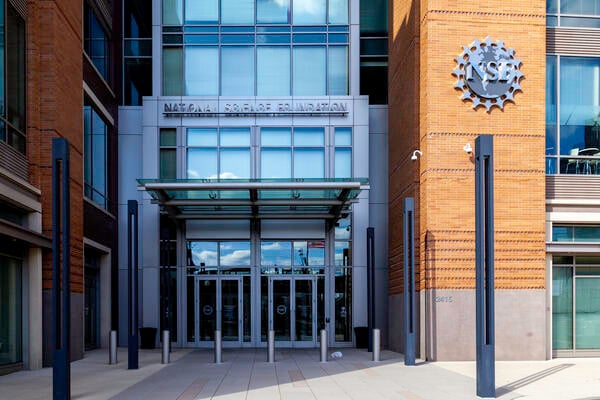
    The National Science Foundation and National Institutes of Health doled out about as much total grant funding in the recently ended fiscal year as they did the year before, despite the Trump administration’s “unprecedented” earlier slowdown of federal science funding, Science reported Wednesday.

    According to the journal’s analysis, “NSF committed approximately $8.17 billion to grants, fellowships, and other funding mechanisms in the 2025 fiscal year”—which ended Sept. 30—“about the same as in 2024.” It found that NIH spending also remained level.

    But both federal research funding agencies still reduced the number of new grants they awarded, Science reported. It wrote that NSF funded about 8,800 new research project grants, down from 11,000 in 2024, adding that an anonymous NSF staffer said this “was one of several changes designed to reduce the agency’s future financial obligations, in case Trump’s proposed budget cut is realized.” The analysis also found that the agency reduced from 2,600 to 1,100 “the number of new continuing grants, and ‘forward funded’ a number of existing continuing grants.”

    NSF declined to confirm or deny Science’s figures. NIH spokespeople didn’t return Inside Higher Ed’s requests for comment Thursday.

    Congress has yet to decide how much to fund NSF in the current fiscal year; most of the federal government is currently funded by a continuing resolution that expires Jan. 30, and the government could shut down again if lawmakers don’t pass appropriations bills by then. But Republicans from both chambers have indicated they don’t plan to cut $5 billion from NSF, as Trump has requested; in July, Senate appropriators put forth a cut of only $16 million, while the suggestion in the House was to slash the NSF budget by $2 billion.

    Source link

  • St. Augustine’s Offers to Help Shape Trump’s Compact

    St. Augustine’s Offers to Help Shape Trump’s Compact

    Saint Augustine’s University

    Saint Augustine’s University, a historically Black college in North Carolina, has expressed interest in signing the Trump administration’s higher ed compact, Fox News reported, joining New College of Florida and Valley Forge Military College.

    However, Verjanis Peoples, the interim president of Saint Augustine’s University, and board chair Sophie Gibson wrote in a letter to the Education Department that several provisions of the proposed compact are not “compatible with the statutory mission and federal mandate under which HBCUs operate.” Those include restrictions on the use of race in admissions or for financial support. 

    “As noted in our institutional analysis, such provisions would unintentionally force HBCUs to choose between compliance and survival, a position that is neither feasible nor consistent with congressional intent,” wrote Peoples and Gibson in a letter posted by Fox News. 

    Other requirements that raise concerns include a cap on international students and a five-year tuition freeze. “Without mission-sensitive accommodations, these sections risk unintended consequences that would impede our ability to serve students effectively,” they added.

    Saint Augustine’s has struggled in recent years amid declining enrollment and financial challenges. The university had 175 students as of October 2024; more recent enrollment figures aren’t available. Late last year, Saint Augustine’s lost its accreditation, though a federal court overturned that decision. Classes were held online this fall. 

    The 158-year-old university is the first HBCU to show interest in the compact, which would require colleges to make a number of changes to their policies and practices in exchange for potential benefits such as an edge in federal grant competitions. The Trump administration first invited nine universities to give feedback on the document, and none in the group decided to sign on. Since the proposal was made public in early October, several universities have rejected it, arguing the federal funding should be based on merit—not adherence to a president’s priorities.

    The administration has initially aimed to finalize the compact by Nov. 21, but that deadline has reportedly been extended.

    Peoples and Gibson wrote that they support the compact’s goal to strengthen academic excellence, accountability and transparency in higher ed, and they see alignment between Saint Augustine’s historic mission and the administration’s proposal.

    Despite their other reservations, “Saint Augustine’s University remains eager to participate as a constructive partner and early-engagement institution,” they wrote. They asked the department to work with HBCUs to shape a final agreement that upholds “both the letter and spirit of the Compact while safeguarding our statutory purpose.”

    Source link

  • Public Universities Don’t Want to Discuss the Compact

    Public Universities Don’t Want to Discuss the Compact

    As the stated deadline to sign the “Compact for Academic Excellence in Higher Education” arrived Friday, multiple universities have already rejected the deal while only a few institutions have expressed interest.

    But among the public universities that were either formally invited to sign the compact or that participated in a call with the White House to provide feedback on higher education issues, none are willing to discuss their deliberations about the proposal or interactions with federal officials.

    Last month, Inside Higher Ed sent public records requests to Arizona State University, the University of Arizona, the University of Kansas, the University of Texas at Austin and the University of Virginia, seeking emails, text messages, internal presentations and other documents related to how presidents, trustees and other officials discussed the compact.

    As of Friday, none had provided those records. Only the University of Kansas indicated a willingness to do so, but it requested an up-front $100 fee for staff time to conduct the search. However, officials said they could not guarantee the requested records would be provided.

    Texas, meanwhile, has appealed to the state attorney general to avoid releasing the requested records. Now uncertainty abounds about what UT Austin will do on the day of the initial deadline, though conservative media has reported the Trump administration could push that date back (which officials did not confirm Thursday) as it struggles to find signatories.

    Texas

    Some public universities, such as Arizona and Virginia, have rejected the compact outright, but others, like Arizona State, have noted they never received a formal invitation to join and therefore they have nothing to decline. But UT Austin has remained silent about whether it will sign the compact.

    Although University of Texas system Board of Regents chairman Kevin P. Eltife issued an early statement saying that he welcomed the “the new opportunity presented to us and we look forward to working with the Trump Administration on it,” officials have said little since then.

    In response to an Oct. 22 public records request from Inside Higher Ed, UT Austin shared only the initial emails exchanged by federal and university officials inviting the university to consider the compact, a copy of the proposal itself, and Eltife’s statement. The rest it wants to keep private.

    UT system officials argued in a letter sent Tuesday to the attorney general’s office that the requested records are protected by attorney-client privilege and should not be disclosed.

    “In the information at issue, University and UT System attorneys are providing legal counsel, gathering information in order to provide legal counsel, or their clients are seeking legal advice from the attorneys and include the necessary background information so that counsel will be able to render an opinion on a given situation,” UT system attorney Jennifer Burnett wrote in the letter. “From the text of the communications, it is evident that the University and UT System attorneys for were [sic] involved in providing legal counsel to employees of the University.”

    Now the attorney general’s office has 10 business days to make a determination on the request.

    Gunita Singh, a staff attorney for the Reporters Committee for Freedom of the Press, told Inside Higher Ed by email that the university “is within its rights to argue that the records are privileged but they need to make a particularized showing that that is the case,” proving the requested documents “pertain to the provision of legal advice” and have been confidential at all times.

    Virginia

    The University of Virginia has yet to provide documents requested Oct. 22 in what appears to be a pattern of delayed responses, according to others who sought records from the public university in recent months.

    UVA’s student newspaper, The Cavalier Daily, reported that it has submitted 25 public records requests to the university, but UVA officials have reportedly not provided records since July 1. Other journalists across the commonwealth have taken to social media to note that they have struggled to get information on athletic staffing and internal communications.

    State Senator Creigh Deeds, a Democrat who has represented the Charlottesville area for more than two decades, also struggled to get public records out of the university related to the resignation of former UVA president Jim Ryan, who stepped down in June under federal pressure. Deeds initially reached out to the university Aug. 1 seeking information, which he only obtained after submitting a public records request and paying $4,500 for the documents.

    Chris Seaman, a law professor at Washington and Lee University, requested public records related to costs for outside legal counsel on July 2. But Seaman still has not “received a substantive response from UVA regarding my FOIA request,” he told Inside Higher Ed by email. In an August email exchange shared by Seaman, a UVA official noted a delay in processing his request and wrote that “in the last few weeks, our office has received an unusually large volume of requests with limited staff to process them.” They also promised to “expedite handling” of his request, but more than three months later, Seaman said, he is still awaiting those documents.

    UVA spokesperson Brian Coy did not address the pattern of delays in a response to Inside Higher Ed, writing that the university “has received this request and is processing it in accordance with Virginia law” and is “preparing an estimate of anticipated costs” for review.

    Arizona and Arizona State

    Public records requests at Arizona State and the University of Arizona also remain unfulfilled after 30 days.

    Arizona State spokesperson Jerry Gonzalez said that he would check on the state of the request but noted that ASU was not invited to sign the compact, and so “there is nothing for the university to accept, reject, or negotiate.” (However, President Michael Crow has said he’s had discussions with Education Secretary Linda McMahon and other officials about higher education issues.)

    University of Arizona spokesperson Mitch Zak said that Inside Higher Ed’s public records request “remains in process” and “response time varies.” He noted that factors such as “the specificity of the request, the volume of requests received, and the time required to locate, review, and redact materials subject to disclosure” all shape public records response times.

    Arizona law does not specify how long public entities have to hand over documents but instructs that they do so “promptly.” Singh, the RCFP attorney, pointed to past legal cases in which Arizona courts found that 24 business days “satisfied the promptness standard” but that “a delay of 49 days, or 34 working days, did not meet the promptness standard” outlined in state law.

    Currently, she said, Arizona and Arizona State are “inching toward noncompliance territory.”

    Source link