Category: Featured

  • Trump Political Appointees in Charge of Grant Decisions

    Trump Political Appointees in Charge of Grant Decisions

    Wesley Lapointe/The Washington Post via Getty Images

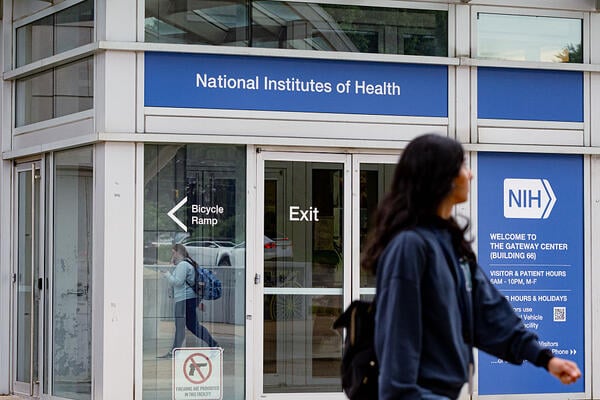
    President Donald Trump is now requiring grant-making agencies to appoint senior officials who will review new funding opportunity announcements and grants to ensure that “they are consistent with agency priorities and the national interest,” according to an executive order issued Thursday. And until those political appointees are in place, agencies won’t be able to make announcements about new funding opportunities.

    The changes are aimed at both improving the process of federal grant making and “ending offensive waste of tax dollars,” according to the order, which detailed multiple perceived issues with how grant-making bodies operate. 

    The Trump administration said some of those offenses have included agencies granting funding for the development of “transgender-sexual-education” programs and “free services to illegal immigrants” that it claims worsened the “border crisis.” The order also claimed that the government has “paid insufficient attention” to the efficacy of research projects—noting instances of data falsification—and that a “substantial portion” of grants that fund university-led research “goes not to scientific project applicants or groundbreaking research, but to university facilities and administrative costs,” which are commonly referred to as indirect costs.  

    It’s the latest move by the Trump administration to take control of federally funded research supported by agencies such as the National Science Foundation, the National Institutes of Health and the Department of Energy. Since taking office in January, those and other agencies have terminated thousands of grants that no longer align with their priorities, including projects focused on vaccine hesitancy, combating misinformation, LGBTQ+ health and promoting diversity, equity and inclusion. 

    Federal judges have since ruled some of those terminations unlawful. Despite those rulings, Thursday’s executive order forbids new funding for some of the same research topics the administration has already targeted.  

    It instructs the new political appointees of grant-making agencies to “use their independent judgment” when deciding which projects get funded so long as they “demonstrably advance the president’s policy priorities.” 

    Those priorities include not awarding grants to “fund, promote, encourage, subsidize, or facilitate” the following:

    • “Racial preferences or other forms of racial discrimination by the grant recipient, including activities where race or intentional proxies for race will be used as a selection criterion for employment or program participation;
    • “Denial by the grant recipient of the sex binary in humans or the notion that sex is a chosen or mutable characteristic;
    • “Illegal immigration; or
    • “Any other initiatives that compromise public safety or promote anti-American values.”

    The order also instructs senior appointees to give preference to applications from institutions with lower indirect cost rates. (Numerous agencies have also moved to cap indirect research cost rates for universities at 15 percent, but federal courts have blocked those efforts for now.)

    Source link

  • Teaching About Class in a Post-DEI Era (opinion)

    Teaching About Class in a Post-DEI Era (opinion)

    When I taught about social class in my Intimacy, Marriages and Families course this past semester, I began with reflection and a sticky note, not with a lecture or statistics.

    This wasn’t the first time I used sticky-note prompts in class. Earlier in the semester, I introduced a similar activity during our unit on race, ethnicity and immigration. That experience inspired me: It showed how a simple sentence starter could help students unpack the emotional weight of identity, belonging and difference. It also helped me refine how to frame and facilitate the conversation in a more impactful way.

    So when we arrived at the unit on families and social class, I returned to the sticky notes—this time with more complexity of prompts. And what followed was one of the most meaningful moments of the semester.

    The Sticky Note Activity: A Gentle Way Into a Hard Topic

    I gave students a set of sentence starters and asked them to complete them anonymously on a sticky note. After writing, they placed their notes on the walls, windows, doors and whiteboard—spreading them out wide enough so everyone could read at the same time. Then students walked silently around the room, taking in what their classmates had shared. After the walk, I invited each student to share one or two statements that resonated with them.

    Here are some of the prompts:

    • “I didn’t realize how class shaped me until …”
    • “One thing my family couldn’t afford growing up was …”
    • “I noticed others had more when …”
    • “I felt lucky to have _______ when others didn’t.”
    • “At school, I learned to stay quiet about …”
    • “An opportunity I almost missed because of money was …”
    • “I was taught to always …”

    These prompts are simple but emotionally rich. They allow students to enter the topic from their own lived experience—before theory, before data, before the academic discourse.

    The range of responses students shared was both personal and eye-opening. To the prompt “I didn’t realize how class shaped me until …,” one student reflected on “seeing how much my mother worked just to provide a roof over our heads.” In response to “An opportunity I almost missed because of money was …,” students listed things such as education, rent, bills, Air Jordan shoes, going to college and even a football trip—while one noted simply, “Nothing,” suggesting a contrasting perspective. When asked “I was taught to always …,” many shared values shaped by scarcity and resilience: “be grateful and humble,” “earn money for life by myself after high school” or “bite my tongue to maintain peace.” Responses to “One thing my family couldn’t afford growing up was …” included extracurricular activities, having their own rooms, brand-new items, frequent family time and vacations.

    Furthermore, students noticed class differences with reflections such as “I had to wait for things my friends got in a blink of an eye.” Others shared the silence they learned to carry, responding to “At school, I learned to stay quiet about …” with reflections on their home situations, financial aid or how much their parents made. Some added the inverse: “I learned to stay quiet about other kids’ struggles.”

    A prompt asking students for one moment that made them aware of inequality yielded responses such as “having to work in high school while others went out,” “facing racial discrimination at a young age” and “realizing some classmates couldn’t afford meals.” Finally, to the prompt “I realized not everyone had _______ like I did,” students shared privileges they had come to recognize: “the options to choose,” “the ability to study abroad” or “having parents, food, shelter and protection.” Together, these reflections painted a vivid and humanizing picture of the many ways class difference shapes lived experience—often invisibly.

    After the gallery walk, the room felt palpably different—softer, more thoughtful. While the reflections I’m about to share were originally expressed during a similar activity in our earlier unit on race, ethnicity and immigration, I chose to include them here because they speak to the same core theme. Several students had shared that the activity helped them “see how diverse people in the class are—the values, backgrounds” and one added, “It helped humanize people.”

    This activity then helped me transition smoothly to my key take-home message for students. After the sticky note reflections and class discussion, I prompted them to pause and consider this:

    “Not everyone grows up with the same set of tools. Some of us had parents who could advocate for us, who knew how to navigate systems—others had to figure it all out on their own. Some kids are encouraged to raise their voices; others are expected to stay in line. We’re often told that success is about effort—but what if the race isn’t the same for everyone?”

    I then connected some of the sticky-note reflections back to this statement—helping students draw the line between their lived experiences and structural patterns.

    Why It Matters More Than Ever

    In a political climate in which diversity, equity and inclusion efforts are being rolled back, educators may hesitate to bring up inequality in their classrooms. But this is precisely when it matters most.

    Class disparities are getting wider. Students are balancing coursework while managing food insecurity, housing challenges or caregiving responsibilities. Others arrive with generational wealth, college prep resources and family support networks. If we don’t name these disparities, we risk reinforcing them through silence.

    Teaching about social class isn’t about shame or blame—it’s about giving students the tools to understand their place in the world and the systems that shape it.

    Tips for Teaching Social Class

    There are several strategies educators can use to teach social class in a way that is welcoming and engaging. First, start with stories, not stats—students already live within systems of inequality, so grounding the conversation in their lived experiences builds emotional buy-in before introducing abstract concepts. One effective way to do this is to use low-stakes writing prompts, such as the sticky-note activity, which encourages honest reflection while creating a safe, low-pressure environment.

    It’s also important to create space for silent voices; not all students are comfortable speaking aloud, so alternatives like gallery walks or anonymous digital boards help everyone to feel comfortable participating. After reflection, connect students’ lived experiences with research by introducing concepts such as cultural capital and texts like Unequal Childhoods (University of California Press, second edition, 2011) by Annette Lareau, which explores how social class influences parenting styles and shapes children’s life chances.

    Closing the Loop

    At the end of the unit, I asked students, what can we do?

    I introduced them to the concept of social capital, after earlier discussions on cultural and human capital. I introduced the article “What the Privileged Poor Can Teach Us” by Anthony Abraham Jack, which shows how first-generation and low-income students can build academic support networks—particularly by building relationships with professors.

    Before that, I shared Rita Pierson’s TED Talk “Every Kid Needs a Champion,” a moving reminder that in education, relationships can change lives. Her story exemplifies how connection itself becomes a form of capital, especially for those who grow up without material advantage.

    This pairing helped students see how they could move from understanding class inequality to navigating it—and even challenging it—with critical thinking, empathy and advocacy.

    Teaching about inequality is not partisan—it’s fundamental to education. If we want to graduate students who are not only career-ready but human-ready—who understand structural inequality and social responsibility—then we must create space for conversations about class.

    Sothy Eng is an associate professor of human development and family science at the University of Hawai‘i at Mānoa. He received the 2024 Board of Regents Medal for Excellence in Teaching and is currently contributing to Psychology Today (previously to HuffPost). His work focuses on social capital, family dynamics, parenting and relationship-based education.

    Source link

  • Equity Gaps in Academic Advising

    Equity Gaps in Academic Advising

    Recently published research has found equity gaps in the impact of academic advising support on various student groups. While students from racial minorities are more likely to meet with an adviser compared to their white peers, they’re less likely to see improvements in their GPA or graduate on time.

    The research points to a need for improved advising processes, not just in increasing access to and knowledge of academic advising, but in developing holistic student support programs, said lead author Hua-Yu Sebastian Cherng, vice dean for research and equity at New York University’s Steinhardt School of Culture, Education and Human Development.

    The background: Academic advising is a critical part of student retention and progression, but not every student receives the support. A 2023 survey by Tyton Partners found one-third of student respondents were not aware of academic advising on campus, despite 98 percent of college employees saying the resource was available to their students.

    Similarly, a spring 2023 survey by Inside Higher Ed and College Pulse found, when asked what types of assistance students had received during academic advising, 8 percent of students said they had received no assistance since starting college. Additionally, 5 percent of respondents said they had never met with an academic adviser. Twenty-three percent of respondents said they have to set up meetings with an academic adviser if they’d like to meet, and 10 percent of all respondents said it was difficult to get an appointment with their academic adviser.

    The study: Hua-Yu’s study evaluated data from a large public research institution (total enrollment of 80,000) between 2017 and 2021, considering students’ grades, graduation rates, demographics and the number of appointments made with advisers.

    To ensure relevant comparisons, researchers matched students in the same school or academic program because advising requirements and processes varied by school, Hua-Yu said.

    Across the university, nonwhite and international student groups met with advisers more frequently than white domestic students, disrupting commonly held notions about who is aware of and using services on college campuses, Hua-Yu said.

    But the impact of advising was not affected by the frequency of appointments. Rather, despite meeting with advisers less frequently than minoritized students, white students were more likely to have higher GPAs compared to their white peers who didn’t meet with an adviser. White students’ frequency of meeting with an adviser also correlated with their graduation rates, the only racial or ethnic group that saw benefits in this way.

    “This is really damning evidence that advising is not doing what it’s supposed to be doing,” Hua-Yu said.

    Even among students with undeclared majors, where this institution felt it had a gold standard of advising supports and resources, data showed similar patterns: White students had better outcomes after meeting with advisers, despite their nonwhite peers having more meetings.

    Continuing-generation students were more likely to see benefits from advising appointments, compared to their first-generation peers, and low-income students who met with an adviser had slightly higher graduation rates compared to their higher-income classmates.

    The why: Hua-Yu theorizes that institutional messaging encouraging students to take advantage of advising could have been effective, resulting in more students having appointments with their advisers. But if marginalized students have complex concerns or are looking for advice on which path to choose, they are more likely to walk away from appointments without all the information they need or feeling like they don’t belong.

    A 2024 Student Voice survey by Inside Higher Ed and Generation Lab found 75 percent of students said they had at least some trust in academic advisers on campus; 20 percent said they didn’t have much trust in them.

    First-generation students were 7 percent less likely to meet with an adviser and less likely to graduate, compared to their continuing generation peers, the IHE survey found.

    According to Hua-Yu, continuing-generation students are less likely to seek advice on changing their major when talking to staff, compared to their first-generation peers, because they have other support systems that can offer that insight. Instead, they’re using advising appointments to address logistical and bureaucratic impediments to reaching their goals, he noted.

    Building better: The findings, Hua-Yu emphasized, do not fault advisers but rather underline concerns with academic advising structures and staffing issues at colleges and universities across the country. A 2024 report by Tyton Partners found high caseloads and adviser burnout and turnover are some of the top challenges for the field.

    Advisers have caseloads as high as 400 students, which can limit their ability to engage with students intentionally and address their concerns at a deeper level, Hua-Yu said. Instead, leaders at institutions should recognize that quality advising can make a substantial difference in student outcomes and, in turn, advocate for resources and support to improve advising experiences.

    Hua-Yu called for more training for advisers on how to work with students in a specific program of study, as well as with a variety of student identities. Academic advisers cannot become social workers or mental health professionals, but improving how advisers are onboarded and supported can make substantial differences, Hua-Yu said.

    Advisers can also be given a set of questions to encourage more meaningful relationships with students during advising appointments, such as asking about students’ lives, their goals and their support systems.

    What’s next: Using the same data set, Hua-Yu and his team plan to investigate the use of flags or kudos within the advising system to see how early intervention could affect student success.

    The researchers are also exploring the role of gender on advising supports; initial results show white male students are less likely to engage in advising compared to other student groups.

    Incidentally, the data set covers a period of remote instruction during the COVID-19 pandemic, so Hua-Yu and his team are exploring shocks to advising processes and supports after spring 2020. So far, researchers noted there were more advising meetings taking place, just remotely, and these advising appointment levels remained higher than pre-pandemic.

    Seeking stories from campus leaders, faculty members and staff for our Student Success focus. Share here.

    Source link

  • Rubio sued over international student deportations

    Rubio sued over international student deportations

    The legal challenge takes aim at Rubio’s use of statutes to deport legal noncitizens, namely international students Mahmoud Khalil and Rümeysa Öztürk, for their speech alone. It was filed by the Foundation for Individual Rights and Expression (FIRE) on August 6.  

    “In the United States of America, no one should fear a midnight knock on the door for voicing the wrong opinion,” said FIRE attorney Conor Fitzpatrick: “Free speech isn’t a privilege the government hands out. Under our constitution it is the inalienable right of every man, woman and child.” 

    FIRE, a non-partisan advocacy group, is seeking a landmark ruling that the first amendment trumps the statutes that the government used to deport international students and other lawfully present noncitizens for protected speech earlier this year. 

    It cites the case of Mahmoud Khalil, an international student targeted by the Trump administration for his pro-Palestinian activism, who was held in detention for three months after being arrested by plain clothed immigration officers in a Columbia University building.  

    The complaint also highlights the targeting of Tufts University student Rümeysa Öztürk, detained on the street and held for nearly seven weeks for co-authoring an op-ed calling for Tufts to acknowledge Israel’s attacks on Palestine and divest from companies with ties to Israel.  

    FIRE has said that that Rubio and Trump’s targeting of international students is “casting a pall of fear over millions of noncitizens, who now worry that voicing the ‘wrong’ opinion about America or Israel will result in deportation”.  

    This spring, thousands of students saw their visas revoked by the administration, after a speech from Rubio warning them: “We give you a visa to come and study to get a degree, not to become a social activist that tears up our university campuses”. 

    Free speech isn’t a privilege the government hands out

    Conor Fitzpatrick, FIRE

    Though the students’ statuses have since been restored following a court hearing deeming the mass terminations to be illegal, some students opted to leave the US amid fears of being detained or deported.  

    This summer, international student interest in the US fell to its lowest level since mid-pandemic, with new estimates forecasting a potential 30-40% decline in new international enrolments this fall following the state department’s suspension of new visa interviews.  

    Plaintiffs in the lawsuit include The Stanford Daily – the independent, student newspaper at Stanford University – and two legal noncitizens with no criminal record who fear deportation and visa revocation for engaging in pro-Palestinian speech.  

    “There’s real fear on campus and it reaches into the newsroom,” said Greta Reich, editor-in-chief of The Stanford Daily.  

    “I’ve had reporters turn down assignments, request the removal of some of their articles, and even quit the paper because they fear deportation for being associated with speaking on political topics, even in a journalistic capacity.  

    “The Daily is losing the voices of a significant portion of our student population,” said Reich.  

    The complaint argues that Rubio’s wielding of two provisions of the Immigration and Nationality Act is unconstitutional when used to revoke a visa or deport someone for the first amendment right of free speech. 

    “The first allows the secretary of state to render a noncitizen deportable if he ‘personally determines’ their lawful ‘beliefs, statements, or associations’ ‘compromise a compelling United States foreign policy interest’”, explains the document.  

    “The second allows the secretary ‘at any time, in his discretion, revoke’ a ‘visa or other documentation’”.  

    The complaint argues that both provisions are unconstitutional as applied to protected speech, based on the first amendment promise “that the government may not subject a speaker to disfavoured treatment because those in power do not like his or her message”. 

    In our free country, you shouldn’t have to show your papers to speak your mind

    Will Creeley, FIRE

    According to the claimants, Trump and Rubio’s targeting of international students is evidence of noncitizens not being afforded the same free speech protections as US nationals, which, they say, runs against America’s founding principles.  

    “Every person – whether they’re a US citizen, are visiting for the week, or are here on a student visa – has free speech rights in this country,” said FIRE. 

    “Two lawful residents of the United States holding the same sign at the same protest shouldn’t be treated differently just because one’s here on a visa,” said FIRE legal director Will Creeley.  

    “The First Amendment bars the government from punishing protected speech – period. In our free country, you shouldn’t have to show your papers to speak your mind.” 

    The lawsuit comes amid heightened scrutiny of international students in the US, with the state department ordering consular officers to ramp up social media screening procedures. 

    As of June 2025, US missions abroad will now vet students for instances of “advocacy for, aid, or support of foreign terrorists and other threats to US national security,” as well as any signs of “anti-Semitic harassment and violence” among applicants.  

    Source link

  • With Reform UK on the rise, what impact would their higher education policy have?

    With Reform UK on the rise, what impact would their higher education policy have?

    This HEPI guest blog was kindly authored by Fred Jacques, a Year 12 student who recently completed a week of work experience at HEPI.

    (Have you completed the HEPI survey? If not, time is running out! It will only take a few minutes and will help inform our future output. You can access the survey here.)

    With Reform UK gaining significant ground in recent elections and opinion polls, the prospect of a future Reform government is now plausible. The party discusses education very little, instead focusing on their big, vote-winning issues such as opposing immigration and net zero. But what are Reform’s plans for higher education and what impact would these have? Their 2024 manifesto is lacking in detail, but it outlines a handful of proposals that suggest the direction a Reform government might take. They promised to:

    • bar international student dependents
    • make universities provide two-year undergraduate courses
    • cut funding for universities that undermine free speech; and
    • scrap interest on student loans.

    Scrapping tuition fees for STEM degrees

    Additionally, in an interview with ITV following the release of the manifesto, Nigel Farage stated that he would abolish tuition fees for STEM (science, technology, engineering and mathematics) degrees while maintaining them for all other courses. Although this policy was not included in the 2024 manifesto, it did appear in Farage’s 2015 UKIP manifesto, suggesting it is a long-standing idea of his and therefore one that could be implemented if Reform were to win power.

    While this proposal is intended to attract more students into these fields, it may not be effective. In his HEPI report, Peter Mandler argues that the current increase in the uptake of STEM degrees (the ‘swing to science’) is due to numerous factors: demographic and cultural changes, perceptions of future job prospects and subject choice at A level primarily. Government policy is less influential than these factors. Therefore, given that the swing to science is happening of its own accord because of high student demand, this policy is not even necessary, especially considering the enormous cost. If Reform do want to accelerate this trend, though, then removing the barrier of poor A level results by improving attainment in secondary schools may be more effective than targeting STEM at degree level.

    Despite its possible shortcomings in attracting more students to STEM courses, the policy could still accelerate the decline in the popularity of arts and humanities degrees. While those with arts or humanities A levels are unlikely (and probably unable) to switch to a completely different field purely for financial reasons, the disparity in fee structure may discourage them from pursuing a university degree altogether. This appears to be Farage’s intention: he suggests that arts and humanities degrees are not worthwhile and ’[students would] have been better off learning trades and skills’. If this aspect of the policy is successful, then it would negatively impact students, institutions and the country. Humanities degrees are incredibly valuable: they help students develop transferable skills like communication and critical thinking that are needed in any workplace and they are a pathway into careers in law, business, or media. And without humanities degrees, who will teach Reform’s ‘patriotic’ curriculum in primary and secondary schools? The arts, meanwhile, are also valuable to the economy and positively impact culture and society.

    Overall, while efforts to increase the number of students pursuing STEM degrees are commendable, this should not come at the expense of arts and humanities students. Higher education institutions should work with Reform to ensure that the contributions of these subjects are properly recognised and supported by the party, should they win power.

    Two-year undergraduate courses

    Reform’s policy of expanding two-year undergraduate courses to all universities across the UK would be beneficial to higher education, provided they do not replace the typical three-year degrees. These accelerated degrees are already offered by universities like Buckingham and Northumbria and have many benefits, such as allowing students to enter into work sooner and reducing the amount of debt they incur. Furthermore, students on accelerated courses are generally more focused and motivated and the more intensive nature of the courses prepares students for the workplace. These degrees are well suited to subjects like law or business and could therefore act as an alternative to some arts and humanities students who feel discouraged by Reform’s tuition fee policy.

    But although these courses are a good idea in theory, there is little evidence to suggest that there is a high demand for them. Slightly older students entering higher education for the first time and wanting to progress into the workplace faster may find these courses appealing, but most typical 18-year-old undergraduates prefer the more flexible three or four-year courses. Perhaps this is due to a lack of awareness, which Reform could work to correct, but as it stands, it is unrealistic for them to expect all universities to provide these accelerated programmes, given the low demand.

    Conclusion

    This blog has not covered the entirety of Reform’s higher education policy, and some proposals, such as cutting funding for universities that undermine free speech, raise challenges of their own. Nonetheless, the policies discussed here do show some promise: expanding the availability of two-year undergraduate courses and encouraging more people into STEM degrees could be beneficial to the country. However, the apparent lack of regard for arts and humanities degrees is concerning and the effectiveness of the tuition fee policy is debatable, as is the achievability of the accelerated degree policy.

    Perhaps the greatest flaw with Reform’s education policy, and wider policy platform, is the achievability. The party’s plans to scrap tuition fees on STEM degrees and encourage all universities to provide two-year undergraduate programmes will all come at a massive cost to the government and institutions. Reform’s policy of barring international student dependents (presumably beyond current restrictions) will also worsen the issue, as this could lead to lower numbers of international students, meaning that universities’ incomes are significantly reduced. Reform need a way to fund their policies, but according to the Institute for Fiscal Studies, Reform’s proposed savings did not add up in 2024, and they remain vague today.

    With this unrealistic funding, it is debatable whether these policies would be implemented, even if Reform do win power. And with the unpredictability of modern politics, who knows if they will even get to that stage. Regardless, universities have the opportunity to work with this emerging party to challenge and shape their policy proposals to produce the best outcomes for students and the nation as a whole.

    Source link

  • UK unis could take £620m hit from international student levy

    UK unis could take £620m hit from international student levy

    Based on the latest HEPI data, the Institute estimates the levy could “hamper universities’ ability to compete with institutions in other countries,” said independent researcher Mark Fothergill, who compiled the data. 

    The proposed 6% levy on international students’ tuition fees was first introduced in the government’s highly anticipated immigration white paper, coming as a surprise to many in the sector.  

    HEPI has warned that the policy will hit both large internationally engaged universities and smaller specialist institutions. According to the analysis, the largest financial losses are expected to hit big metropolitan universities with high proportions of international students.  

    Namely, University College London (UCL), which derives 79% of its fee income from non-UK students, could be faced with financial losses of £42m. 

    Meanwhile, Manchester University and King’s College London (KCL) could also be hit with heavy losses of £27m and £22m respectively, with 19 institutions paying at least £10m. 

    Stakeholders have pointed out that while the levy is intended to raise money for the “higher education and skills system”, it is unclear if all the money will come back out of the treasury, and how it will be spent if it does. 

    “International students are the backbone of our higher education system, contributing over £10 billion in fees to English universities – around £4.50 of every £10 of fee income,” Fothergill said. 

    “No wonder the 6% levy is seen as a tax on one of the country’s best-performing sectors,” he added.  

    With more details expected in the autumn budget, universities are left with two options: pass the cost onto students and become less competitive or absorb the costs and leave less funding for teaching and research, HEPI suggested.  

    While universities haven’t announced to what extent they would try to absorb the extra costs, a reduction in international student numbers – whose fees subsidise university research – would also hamper sector finances.  

    Speaking at a conference last month, the UK skills minister Jacqui Smith maintained the government was “not levying international students directly”, suggesting it would help show students’ economic contribution to local communities.  

    The levy is a shadow looming large over universities as they prepare for the next academic year

    Nick Hillman, HEPI

    “Threatening an expensive new tax on one of the country’s most successful sectors with only a rough idea of how the money will be used seems far from ideal,” said HEPI director Nick Hillman.  

    “Currently, the levy is a shadow looming large over universities as they prepare for the next academic year,” he added.  

    Amid policy volatility in other markets, the UK has increasingly been cited by students as the most stable of the ‘big four’ study destinations, with stakeholders keen to preserve this reputation.

    “There are good reasons why Australia opted not to implement a levy when it was proposed there a couple of years ago,” warned Fothergil.  

    With the UK higher education sector already facing severe financial headwinds, Hillman said university leaders were worried the levy will be “yet another weight dragging them down in the struggle to remain globally competitive”. 

    According to OfS data, 72% of providers could be in deficit by 2025/26, with a sector-wide deficit totalling £1.6bn.  

    Alongside the levy, the government’s white paper proposed shortening the graduate route visa from two years to 18 months, and tougher Basic Compliance Assessments (BCA), with the latter set to be introduced in September.  

    Source link

  • Promoting and Sustaining a Growth Mindset in Online Classrooms – Faculty Focus

    Promoting and Sustaining a Growth Mindset in Online Classrooms – Faculty Focus

    Source link

  • Promoting and Sustaining a Growth Mindset in Online Classrooms – Faculty Focus

    Promoting and Sustaining a Growth Mindset in Online Classrooms – Faculty Focus

    Source link

  • Trump issues directives on college admissions data and research grants

    Trump issues directives on college admissions data and research grants

    This audio is auto-generated. Please let us know if you have feedback.

    President Donald Trump issued two sweeping directives Thursdayone that orders colleges to hand over additional data about their applicants and another mandating that political appointees approve federal grant funding

    Colleges will now be required to report additional admissions data to the National Center for Education Statistics, including data on the race and sex of their applicants, their admitted students and those who chose to enroll, per a memo from Trump to the U.S. Department of Education. Previously, institutions were only required to provide racial data for enrolled students. 

    Institutions must provide the data for undergraduate students and for certain graduate and professional programs, the Education Department said. 

    Separately, Trump signed an executive order directing his political appointees to review both grant awards and funding opportunity announcements. These appointees, along with subject matter experts, will evaluate grant decisions to align with the Trump administration’s policy priorities, according to a White House fact sheet.   

    Together, the two orders take aim at areas the Trump administration is attempting to tightly control — who colleges and universities enroll, and which research projects get federal funding. 

    In an announcement Thursday, the Education Department said the additional admissions data is needed “to ensure race-based preferences are not used in university admissions processes.” 

    Along with data on applicants’ race and gender, colleges must also include the prospective students’ standardized test scores, GPAs and other academic qualifications. This data will also be collected about admitted and enrolled students. 

    At the same time, U.S. Education Secretary Linda McMahon is ordering the National Center for Education Statistics to develop a process to audit the data to ensure its accuracy. 

    “We will not allow institutions to blight the dreams of students by presuming that their skin color matters more than their hard work and accomplishments,” McMahon said. “The Trump Administration will ensure that meritocracy and excellence once again characterize American higher education.”

    The order comes two years after the U.S. Supreme Court struck down race-conscious college admissions in a landmark case involving Harvard University and the University of North Carolina at Chapel Hill. Since then, colleges have overhauled their admissions practices, and many selective institutions enrolled lower shares of Black and Hispanic students in the aftermath, according to an analysis from The New York Times

    A new landscape for grants

    Trump’s executive order on grant funding castigated much of the current research landscape, decrying awards that went to projects such as developing transgender sexual education programs and training graduate students in critical race theory. 

    The directive accused other grants of promoting “Marxism, class warfare propaganda, and other anti-American ideologies in the classroom, masked as rigorous and thoughtful investigation.”

    Researchers and other groups have sued over past Trump administration attempts to control grant funding, including the cancellation of vast swaths of National Institutes of Health awards to comply with the president’s orders against diversity, equity and inclusion. A federal judge has ruled against the NIH’s grant cancellations, and the U.S. Government Accountability Office has likewise determined they were illegal

    Still, Thursday’s order directs agency heads to revise the terms of existing discretionary grants, “to the maximum extent permitted by law,” to allow them to be immediately terminated, including if an award “no longer advances agency priorities or the national interest.” 

    When assessing grant applications, senior appointees should weigh if they advance Trump’s policy priorities, according to the directive. 

    The order says grants should not be used to deny that sex is binary — a view at odds with scientific understanding — or promote “anti-American values.” They also should not be used to promote racial discrimination by awardees, including by using race or proxies to select employees or program participants, the order stated. 

    In addition, the order says preference for discretionary grants should be given to institutions “with lower indirect cost rates” — all things being equal. 

    Source link

  • Trump Orders Colleges to Supply Data on Race in Admissions

    Trump Orders Colleges to Supply Data on Race in Admissions

    Brendan Smialowski/AFP/Getty Images

    President Donald Trump issued an executive action Thursday afternoon mandating colleges and universities submit data to verify that they are not unlawfully considering race in admissions decisions.

    The order also requires the Department of Education to update the Integrated Postsecondary Education Data System to make its data more legible to students and parents and to “increase accuracy checks for data submitted by institutions through IPEDS,” penalizing them for late, incomplete or inaccurate data. 

    Opponents of race-conscious admissions have hailed the mandate as a victory for transparency in college admissions, but others in the sector have criticized its vague language and question who at the department is left to collect and analyze the data.

    “American students and taxpayers deserve confidence in the fairness and integrity of our Nation’s institutions of higher education, including confidence that they are recruiting and training capable future doctors, engineers, scientists, and other critical workers vital to the next generations of American prosperity,” the order reads. “Race-based admissions practices are not only unfair, but also threaten our national security and well-being.”

    It’s now up to the secretary of education, Linda McMahon, to determine what new admissions data institutions will be required to report. The administration’s demands of Columbia and Brown Universities in their negotiations to reinstate federal funding could indicate what the requirements will be. In its agreement with Brown, the government ordered the university to submit annual data “showing applicants, admitted students, and enrolled students broken down by race, color, grade point average, and performance on standardized tests.” Colleges will be expected to submit their admissions data for the 2025–26 academic year, according to the order.

    What resources are in place to enforce the new requirements remains to be seen. Earlier this year the administration razed the staff at the Department of Education who historically collected and analyzed institutional data. Only three staff members remain in the National Center for Education Statistics, which operates IPEDS.

    ‘It’s Not Just as Easy as Collecting Data’

    Since taking office, the Trump administration has launched a crusade against diversity, equity and inclusion in higher education, often using the Supreme Court’s 2023 ruling against race-conscious admissions as a weapon in the attacks.

    Students for Fair Admissions, the anti–affirmative action advocacy group that was the plaintiff in the 2023 cases, called the action a “landmark step” toward transparency and accountability for students, parents and taxpayers.

    “For too long, American colleges and universities have hidden behind opaque admissions practices that often rely on racial preferences to shape their incoming classes,” Edward Blum, SFFA president and longtime opponent of race-conscious admissions, said in a press release.

    But college-equity advocates sounded the alarm, arguing that the order—which also claims that colleges have been using diversity and other “overt and hidden racial proxies” to continue race-conscious admissions post-SFFA—aims to intimidate colleges into recruiting fewer students of color.

    “I will say something that my members in the higher education community cannot say. What the Trump administration is really saying is that you will be punished if you do not admit enough white students to your institution,” Angel B. Pérez, CEO of the National Association for College Admission Counseling, told Inside Higher Ed.

    Like many of Trump’s other orders targeting DEI, that mandate relies on unclear terms and instructions. It does not define “racial proxies”—although a memo by the Department of Justice released last week provides examples—nor does it outline what data would prove an institution is or is not considering race in its admissions process.

    In an interview with Inside Higher Ed, Paul Schroeder, the executive director of the Council of Professional Associations on Federal Statistics, questioned the government’s capacity to carry out the president’s order.

    “Without NCES, who’s going to actually look at this data? Who’s going to understand this data? Are we going to have uniform reporting or is it going to be just a mess coming in from all these different colleges?” Schroeder said.

    “It’s not just as easy as collecting data. It’s not just asking a couple questions about the race and ethnicity of those who were admitted versus those who applied. It’s a lot of work. It’s a lot of hours. It’s not going to be fast.”

    Source link