Category: Featured

  • FSA Launches Beta Version of FAFSA

    FSA Launches Beta Version of FAFSA

    Photo illustration by Justin Morrison/Inside Higher Ed | SimoneN/iStock/Getty Images

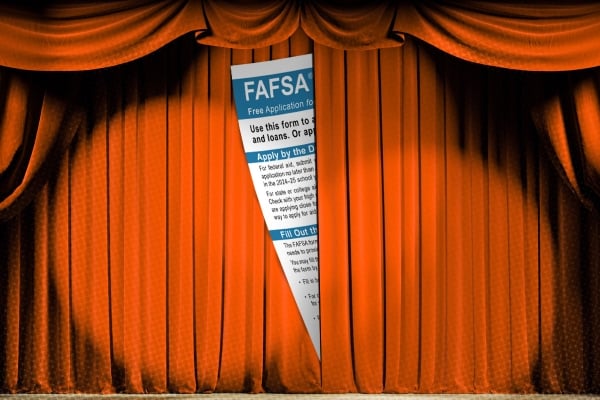
    The Office for Federal Student Aid made history this week, launching the test version of this year’s Free Application for Federal Student Aid earlier than ever before, Aaron Lemon-Strauss, executive director of the FAFSA program, announced in a LinkedIn post Monday. 

    It marks the beginning of “the next chapter in making higher ed more accessible,” he wrote.

    This comes less than two years after the botched rollout of what was supposed to be a simpler FAFSA form for the 2024–25 academic year. The opening of that year’s application platform, which typically occurs in October, was delayed until the very end of the year. And even when it launched in late December 2023, it had a myriad of glitches, significantly delaying financial aid award processing for colleges and students.

    For the next FAFSA cycle, the Education Department revamped its planning processing, bringing in an outsider to lead the effort. The launch of the 2025–26 FAFSA was slightly delayed, but the agency spent months testing the form before opening it up to all students. Now, for the 2026–27 FAFSA, the application is set to open on time on Oct. 1.

    To meet that deadline, the department kicked off several weeks of selective beta testing this week, starting with a small number of students and families. The plan is for the beta version to become public in early September. By launching ahead of schedule, the department hopes to boost application completion rates, improve troubleshooting tools for financial aid advisers and increase overall speed of the process, Lemon-Strauss explained.

    “As we celebrate this milestone, we also push forward,” he said, “building a FAFSA that truly meets the evolving needs of students, families, and schools.”

    Source link

  • The Resilience of First-Generation Students

    The Resilience of First-Generation Students

    First-generation students face a host of barriers when they go to college. Terms commonly used in higher ed, like “registrar,” “provost” or “credit hours,” can be mystifying. They’re confronted with a hidden curriculum, a set of unspoken expectations for how to succeed. And they don’t always know whom to turn to for help.

    But a new book, the first of three volumes on first-generation students, argues that these challenges, while important to study, offer an incomplete picture of who these students are.

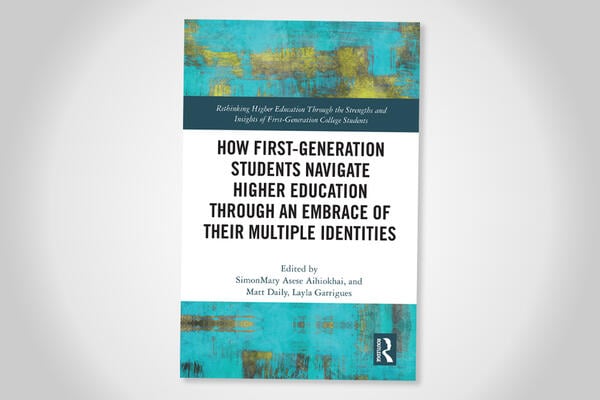
    The book, How First-Generation Students Navigate Higher Education Through an Embrace of their Multiple Identities (Routledge, 2025), explores in a series of essays how different identities, including class and race, affect the first-generation student experience and how these students bring unique strengths and assets to the classroom. It also offers guidance to different types of institutions about how to support first-generation students better and highlights colleges and universities that have modeled successful reforms and programs. Some of the essays are research-focused and written by scholars, while others are personal narratives authored by first-generation college graduates.

    Co-editor Matt Daily, assistant vice president and dean of students at Idaho State University, spoke with Inside Higher Ed about why he’s working to change the discourse around first-generation students, alongside his co-editors, University of Portland professors SimonMary Asese Aihiokhai and Layla Garrigues. The conversation has been edited for length and clarity.

    Q: A theme throughout this book is the idea that too often first-generation students are studied through a deficit-focused lens that emphasizes their challenges rather than their strengths. Why was it important to you to shift that approach?

    A: For a long time, when we’ve talked about first-gen, we’ve come in thinking that they need something, that they are lacking something, and I think for the last five years or so, that narrative has really shifted. It’s shifted from “What are they lacking?” to “What are they contributing?”

    As we were doing a lot of research, as we were having a lot of conversations, while that’s something that we’re talking about at our respective institutions and starting to do more across the United States and beyond, it’s still something that we have to keep reminding ourselves is important—to really focus on the assets or the strengths that students bring.

    And so, we thought that when we were dreaming up this project—and that’s a fun story, too, about how it came to be—we thought it really needs to be based in the strengths. And it would be so nice for practitioners, scholars, students, that they could find that the real theme and the real foundation and the real thread through it is the strengths of first-gen students, and what it is that they’re really bringing to these college campuses.

    Q: What are some of the strengths and assets of first-generation students that you think are too often overlooked?

    A: There’s really no one-size-fits-all for first-gen. Each first-gen student is as unique as the experience itself. I think that’s actually one trap we fall into: We really have to take each case as they come in and create that space.

    In the introduction, I mention how Tara Yosso talks about her “community cultural wealth” model and cultural capital and talks about this idea of [ties to] family and culture [as] strengths. I think those are strengths that are really important. Laura Rendón also talks about—what Yosso was saying and building on it—this idea of ganas or perseverance, which is that ability to really develop inner strength and becoming self-reliant and determined to succeed.

    There’s something about first-gen students where they are just so gritty. They really stick with it, and they are so inspiring. I love the way that they’re able to sort of exist in multiple worlds. I could have my college world, my peers, but also a lot of first-gen students work, so I can have that world, and then my family, and then maybe I’m from a different country. Really understanding how to exist in all those different worlds and being able to do that successfully, I think that is an incredible strength.

    My biggest criticism of first-gen students is that they are too humble. They don’t think that their story is worthy enough to share. They don’t think it has worth, and I think they’re dismissive [of themselves], and that is my biggest criticism. Because for the amount of different first-gen students we have, there are an equal amount of stories that come with them. We need to encourage them to really share those and know that they have worth.

    Q: Going off of that, you interspersed scholarly research with student narratives in this essay collection. Why was it important to you to include both perspectives?

    A: That was really intentional. I think that the student voice gets ignored if we’re just talking about theory. If we’re going to talk about students, we need to hear their voice, right? It needs to be expressed, and we need to really have that authentic perspective. And so that was something we talked about early on in the project … especially in the last chapter, where we wanted to have students themselves or recent graduates share.

    And I think that there’s equally as much value in terms of the research as to what the students are expressing, as they’re sort of in the moment, so to speak. I think [it’s important] even just coaching students that their voice matters … that you can go up and talk to senior administrators … and there’s value in that. I think that was one thing we were really hoping with this anthology was that maybe a graduate student or an undergraduate student could read that and feel inspired and go, “Oh, you know, this is something I could see myself doing,” and really get that spark, too. Gosh, if that happened, I would be over the moon.

    Q: The book also emphasizes taking an intersectional approach to serving first-generation students. What does that mean to you? And what do you think we miss when we don’t factor in these students’ other identities?

    A: I think that’s just so important. And I have to kind of acknowledge my own positionality. I’m a white male. And I am not first-gen. I will never understand a lot of these identities because I don’t identify that way. And so that’s something that’s been a part of my own journey. That was why it was so important with Simon, myself and Layla—we’re just a diverse collection. And then when you get to the other contributors, they do identify in a variety of different ways.

    But that being said, identity is so important to the cultural richness of our college campuses. When I talk to college students, we talk about their gender identity, and sometimes that can be fluid; we talk about their racial or ethnic identity. We talk about their sexual identity, even their academic identity—meaning, what does it mean when I go from high school to college? Does that academic identity come into question when I experience different levels of success? But I think a lot of those identities we talk about, they’re visible. A lot of those identities we can see.

    First-gen is not one of them. And that’s what’s interesting about being first-gen is you will never see physically if someone is first-gen. And so, it’s sort of this hidden identity. In a lot of my experiences working with first-gen students, I almost feel that I’ve outed them. When I explain to them, “Hey, I think you’re first-generation based on the information you’ve given me,” there’s a variety of different reactions, because it’s sort of a later-emerging identity. It’s not maybe one that’s discussed when a student is in elementary school, [with someone telling them], “Hey, you’re going to be a first-generation college student.” And so, I think what’s interesting is when you talk about this identity with other first-gen students, it’s one of many that intersect. But I think the timing of the intersection is so different for every first-gen student, if that makes sense.

    In my previous role in Portland, when I would reach out to say, “I think you’re a first-gen student,” a lot of students would say, “No, I don’t want to be a first-gen student,” because they would think me identifying them in that way is something that’s negative. And part of that was really [making] that shift and going, “I am identifying you based on your mom and dad’s educational history or parent or guardian, and you might be first-gen—and that is so beautiful. Let’s celebrate that.”

    I can be first-gen and a male or first-gen and African American male or I can be first-gen and a student athlete. What do those identities mean? Just being able to share what that identity means is so important for why a student is in college.

    And I think that they forget that even as they graduate and go on to whatever’s next after college, to share that they’re first-gen is something that graduate schools, employers, what have you—they really value that.

    It’s been programmed for so long that this is such a deficit. We’re working really hard at institutions to say, “Yeah, share that out—because of those qualities we talked about, this makes you a valuable part of this community.”

    Q: I thought it was interesting that multiple chapters described how first-generation students can feel isolated from campus life, but also that campus life made them feel isolated from their home lives and families. How do you see the role of family and community for first-generation students’ success, and how do you think higher ed institutions can better account for that?

    A: We assume that for first-gen students, when they go to college, that their families are behind it 100 percent, and that is not always the case. I think a lot of times the person that’s the most in favor of them going to college is themselves. And there’s a lot of, you know, “Why don’t you just work at the store?” The argument to convince others to go to college sometimes falls on the first-gen student, and we forget that. And so that kind of carries on through the experience, [family] going, “Why do you need to go to these programs?” or “Why do you need to go abroad?” It’s sort of having to be the explainer and the decoder for college life, and that is a lot for one student.

    And so, I think that there is some push and pull with families sometimes, because the family wants to be supportive, but they don’t know how to be supportive strategically. In talking to a lot of families, I’ve coached them, saying, “Hey, you can just call your daughter or son and just say, ‘I love you. I support you doing this. I don’t know how I can strategically do that, but I want you to know I support you.’” That type of thing just goes so far.

    The thing that’s also interesting, to your point about feeling isolated, we talk about programs and strategies that can really help first-gen students. But also on college campuses, the onus is on the student. You need to go do these things to be successful. And that’s not a first-gen thing, that’s a college thing. And I sort of push back on that. I think it’s on the institution to really create these spaces, to make students feel welcome, that they belong, that they matter, that they feel that they can have some sense of value in these spaces with their peers. And going back to first-gen identity, they’re not going to know who else is first-gen unless we create spaces where the students can find who else among their peer group is. And so, I think you kind of have to shift it a little bit.

    They maybe feel isolated from family because we’re asking them to do a lot of things, such as engage with campus community, campus life, but sometimes that might come into conflict with what they’re being asked to do with their families, whether it’s watch my little brother or go to Grandma’s birthday party. That happened one time where a student really had to negotiate why they had to be on campus that first weekend of school for a lot of the programming [when] they were going to miss Grandma’s birthday. It really puts them in this code-switching situation where they feel isolated because they don’t feel anyone really gets what they’re going through.

    Q: The book also offers a lot of concrete advice on how to better structure services and support for first-generation students and ensure they’re engaged and able to take advantage of opportunities like internships and study abroad. What do you think are some of the practical action steps you want to see higher ed leaders take away after reading this book?

    A: I think high-impact practices are so important.

    We talk so much about what student success means—what does it mean to have a sense of belonging, that type of thing—but I think one thing we really don’t talk a lot about is, other than the degree that the students are seeking, what is it that we really want them to take away from the college experience? What type of skills? Do we want them to think critically? Do we want them to be really engaged with the community? I think that we need to be really intentional on our college campuses about talking about what we want the students to take away, besides the degree. That can really help them in their next step. And I hope that maybe this book can talk a little bit about that. Can we really reimagine what we’re trying to do rather than just be very transactional about the degree?

    I hope that they realize that it’s important to invest in this, that we need to invest in sustainable programs. Because I think a lot of times, what you have happen is different leaders or champions of first-gen work will leave institutions and then these initiatives really fizzle out. So, how can we think strategically that it’s not about the person, it’s about the program and initiatives. I think some of the things we talk about in here are almost a love letter to higher education institutions to say, “Look, this population is worth investing in, and it’s not just a one-size-fits-all, but if we can all adopt something that’s really creative and sustainable, all these students across the United States and even globally can benefit.”

    Source link

  • Community College Instructor Quits Over Barring Noncitizens From Adult Ed

    Community College Instructor Quits Over Barring Noncitizens From Adult Ed

    Matthew Fowler/iStock/Getty Images

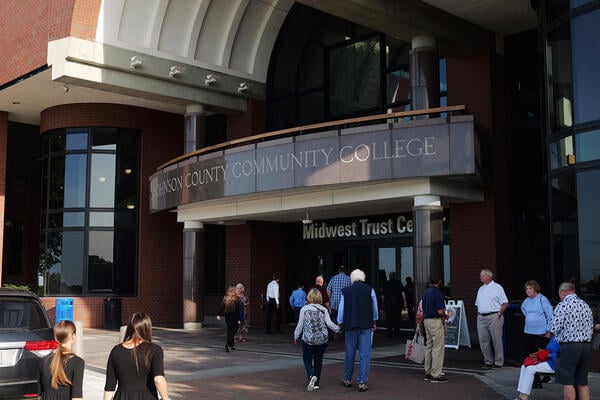
    An adult education instructor at Johnson County Community College in Kansas resigned after finding out the college would require proof of immigration status for adult ed programs in response to federal policy shifts, The Kansas City Star first reported.

    Daniel Tyx, previously a middle school Spanish teacher, started teaching English to adults part-time at the college last year. He told the Inside Higher Ed that he took the job because he has a passion for working with immigrant students, and he planned to stay if not for the new policy. He described the college’s English language learner program as thriving, with over 800 students.

    These students “always come to class. They’re always excited to be there. They’re full of questions. It’s just a dream job,” Tyx said.

    But Tyx quit his job last Friday after he was told that he would have to verify students’ immigration statuses.

    “That was not in alignment with my values,” Tyx said. “And I didn’t feel like, as a matter of conscience, that I was going to be able to continue.”

    The college’s decision came after a February executive order demanded “no taxpayer-funded benefits go to unqualified aliens.” The U.S. Department of Education then announced in July that, to comply with the order, it would end Clinton-era guidance that allowed undocumented students to participate in adult and career and technical education programs. The department insisted that institutions receiving federal funds for these programs begin verifying that students are eligible to benefit from them.

    “Under President Trump’s leadership, hardworking American taxpayers will no longer foot the bill for illegal aliens to participate in our career, technical, or adult education programs or activities,” U.S. Secretary of Education Linda McMahon said in the announcement. “The department will ensure that taxpayer funds are reserved for citizens and individuals who have entered our country through legal means who meet federal eligibility criteria.”

    Checking a student’s immigration status is not a typical practice for community colleges, which are now grappling with how to comply with the federal edicts and continue to serve students, and staffers are uncertain how to move forward. Another complication for community colleges and other public institutions is the Trump administration’s crackdown on policies that allow undocumented students to pay in-state tuition if they meet other requirements. After Texas overturned its policy, state officials asked universities to identify undocumented students. At least one Texas institution, the University of Texas at Austin, now requires students to submit proof of immigration status, as well, KVUE reported.

    The department’s guidance to bar undocumented students was the second blow to adult education programs after the Trump administration held up about $716 million in federal funds to these programs as part of a wider review of education-related grants in early July. The funds have since been released.

    Johnson County Community College now has a message on its website saying that, starting in late July, students are required to show a Real ID, birth certificate, U.S. passport or their most recent immigration documents when they register for adult education classes.

    Chris Gray, vice president of strategic communications and marketing at JCCC, said in an email to Inside Higher Ed that the college’s “compliance with federal requirements in this matter allows us to continue to serve qualified individuals” in adult education programs.

    Tyx said he felt that college administrators were trying to get ahead of the federal guidance, which he considers “cruel and unjust.” He’s worried for his students, who have been peppering him with questions about whether their documents will suffice.

    “My students make such sacrifices to come to class,” he said. “They have so many different reasons to want to learn English, and they’re all good ones. My students want to be able to connect better with their children or their children’s schools. They want to be able to employ the skills that they already have at work and progress in their work lives … It’s very weird that would be something that would be considered to be not desirable by our government.”

    Source link

  • Harnessing AI to advance translational research and impact

    Harnessing AI to advance translational research and impact

    In July, HEPI, with support from the publisher Taylor & Francis, hosted a roundtable dinner to discuss harnessing AI to advance translational research and impact. This blog considers some of the themes that emerged from the discussion

    Travel through a major railway station in the near future and you may see, alongside the boards giving train times, a video of someone using British sign language. This could be an AI-generated signer, turning the often difficult-to-hear station announcements into sign language so that deaf people can understand what is being said. It is just one example of how artificial intelligence is increasingly being used in the real world.

    The question this roundtable focused on was how AI could be used to advance translational research. That is, taking curiosity-driven research and turning it into a real-world application. What role can academic leaders and publishers play in shaping ethical, inclusive and innovative uses of AI in such research? How can AI enhance collaboration across disciplines, and what are the potential barriers, ethical dilemmas and risks involved in the process?

    The discussion, attended by senior university and research leaders, publishers and funders, was held under the Chatham House rule, by which speakers express views on the understanding they will be unattributed.

    Advantages and risks

    Speakers agreed that AI has huge potential to allow researchers to analyse large datasets cheaply, quickly, and accurately, turning research into real-world applications, as well as improving accessibility to scientific knowledge. They noted that AI can help provide plain language summaries of research and present them in different formats, including multilingual or multimedia content, while also opening useful ways for learned societies to disseminate research findings among their member practitioners.

    But risks were identified too. How could the use of AI affect creativity and critical thinking among researchers? How can academics guard against bias and ensure transparency in the data on which AI tools are based? And what about environmental concerns – in terms of maintaining the energy-guzzling AI system and managing electronic waste?  Most worryingly, when AI is involved in research and its application, who is ultimately accountable if something goes wrong?

    Such concerns were addressed in a guide for researchers on Embracing AI with integrity, published by the research integrity office UKRIO in June. https://ukrio.org/wp-content/uploads/Embracing-AI-with-integrity.pdf.

    Delegates at the roundtable were told that one message to draw from this guide was that researchers using AI should be asking themselves three essential questions:

    1. Who owns the information being inputted into the AI?
    2. Who owns the information once it is in the AI?
    3. Who owns the output?

    Working together

    Collaboration is key, said one speaker. That means breaking down existing academic silos and inviting in the experts who will be responsible for applying AI-driven research. It is also crucial to consider the broader picture and the kind of future society we want to be.

    One concern the roundtable identified was that power over AI systems is concentrated in the hands of just a few people, which means that rather than addressing societal problems, it is creating divides in terms of access to information and resources.

    ‘We are not in the age of AI we actually want’, said one speaker. ‘We are in the age of the AI that has been given to us by Big Tech.’

    Tackling this issue is likely to involve the development of new regulatory and legal frameworks, particularly to establish accountability. Medical practitioners are particularly concerned about ‘where the buck stops’ and how, for example, potentially transformative AI diagnosis tools can be used in a safe manner.

    Others at the roundtable were concerned that placing the bulk of ethical responsibility for AI on researchers might discourage them from testing boundaries.

    ‘When you do research, you can never have that control completely or you will never do novel things’, said one. Responsibility must therefore be shared between the researcher, implementer and user. That means everyone needs education in AI so they understand the tools they have been given and how to use them effectively.

    Reliable data

    Being able to rely on the underlying datasets used in AI is essential, said one speaker,  who welcomed the government’s decision to open up public datasets through the AI Opportunities Action Plan https://www.gov.uk/government/publications/ai-opportunities-action-plan/ai-opportunities-action-plan and to curate a national data library https://datalibrary.uk/

    There was a difference, it was agreed, between research driven by commercially available AI tools when it was not possible to see ‘inside the black box’ and research based on AI tools in which the datasets and algorithms were reliable and transparent. The former was like presenting a research paper that provided the introduction, results, and analysis without explaining the methodology; it was suggested.

    Educating users

    Yet AI is not just about the data on which it is based but also about the competence of the people using it. How can higher education institutions ensure that students and researchers, particularly early career researchers, have the know-how they need to use AI correctly? (The Taylor and Francis AI Policy may be of interest here.)

    It was pointed out that the independent review of the curriculum and assessment system in schools in England, due to publish its recommendations later this year, is likely to be a missed opportunity when it comes to ensuring that pupils enter university with AI skills.

    Meanwhile, politicians are struggling to establish the right framework for AI research, as they often lack expertise in this field.

    This is a problem since the field is moving so fast. It was suggested that rather than wait for action from policymakers and a regulatory framework, researchers should get on with using AI or risk the UK being left behind.

    Social vision

    The roundtable agreed that making decisions on all this was not just the responsibility of academia. But where academic research could be useful was in filling the gaps in AI development that big commercial companies neglected because they prioritised business models.

    Here, researchers, including in the arts and humanities, could be important in deciding what society ultimately wants AI to achieve. Otherwise, one speaker suggested, it would be driven by the ‘art of the possible’.

    Meanwhile, what skills do universities want researchers to have? Some raised the fear that outsourcing work to AI could mean researchers being deskilled. Evidence already suggests that the use of AI can reduce students’ metacognition – the understanding of their own thought processes.

    ‘If we think it’s important for researchers to be able to translate their findings, don’t let a machine do it’, said one speaker. Another questioned whether researchers should ever be using tools they do not understand.

    Artificial colleagues

    One suggestion was that rather than outsourcing their work to AI, researchers should be using it to enhance their existing practices.

    And while some were concerned about the effect AI could have on creativity, one speaker suggested that, by calibrating AI tools to investigate concepts at the edge of scientific consensus, they could be used to spark more original approaches than a human group would achieve alone.

    Another positive identified was that while biases in AI can be a problem, they can also be easier to identify than human biases.

    The roundtable heard that successfully accommodating AI should be about teamwork, with AI seen as another colleague – there to advise and reason but not do all the work.

    ‘The AI will be the thing that detects your biases, it will be the thing that reviews your work, and it will support that process, but it shouldn’t do the thinking, ’ was the message from one speaker. ‘Ultimately, that should come back to humans. ’

    Taylor & Francis are a partner of HEPI. Taylor & Francis supports diverse communities of experts, researchers and knowledge makers around the world to accelerate and maximize the impact of their work. We are a leader in our field, publish across all disciplines and have one of the largest Humanities and Social Sciences portfolios. Our expertise, built on an academic publishing heritage of over 200 years, advances trusted knowledge that fosters human progress. Under the Taylor & Francis, Routledge and F1000 imprints, we publish 2,700 journals, 8,000 new books each year and partner with more than 700 scholarly societies.

    We will be working together to develop a HEPI Policy Note on the use of AI in advancing translational research. If you have a fantastic case study or AI-related translational approach at your institution, we would love to hear from you. To tell us more about your work, please email [email protected].

    Source link

  • Beyond Digital Literacy: Cultivating “Meta AI” Skills in Students and Faculty – Faculty Focus

    Beyond Digital Literacy: Cultivating “Meta AI” Skills in Students and Faculty – Faculty Focus

    Source link

  • Reactions to intl student cap increase – Campus Review

    Reactions to intl student cap increase – Campus Review

    The international student cap in Australia will increase from next year with an extra 25,000 placements on offer for universities.

    Please login below to view content or subscribe now.

    Membership Login

    Source link

  • UOW reduces job cuts again – Campus Review

    UOW reduces job cuts again – Campus Review

    The University of Wollongong (UOW) on Monday announced it now only needs to cut between 85 and 118 full-time positions instead of the originally proposed 155 to 185 jobs.

    Please login below to view content or subscribe now.

    Membership Login

    Source link

  • Call to promote university racism survey – Campus Review

    Call to promote university racism survey – Campus Review

    The Australian Human Rights Commission’s landmark Racism@Uni survey will appear in student and staff inboxes from August 11.

    Please login below to view content or subscribe now.

    Membership Login

    Source link

  • Be a Visible Expert with Dr Lily Rosewater of Pitch Science

    Be a Visible Expert with Dr Lily Rosewater of Pitch Science

    Dr Lily Rosewater designs websites, brand assets, and has a service for social media on demand at her company, Pitch Science. I knew she’d be a great expert to share with you. She joins me live from Australia to talk about what it means to be a visible expert for scientists and researchers.

    Lily is an expert for scientist websites, social media, and branding through her company, Pitch Science. What about you? What would it mean to be more visible as an expert yourself? We talk about how many academics are known in their communities, but hidden online. Are you one of the HiddenExperts™? Whether it’s been intentional for you or not, you may want people to find you and your research online. Lily can help you too.

    This interview will be also be shared on Spotify soon.

    Dr Lily Rosewater is a science communicator, neuroscientist, and founder of Pitch Science. Armed with experience in both scientific research and digital marketing, Lily helps life science organisations and individual scientists share their brilliant ideas with the public to produce meaningful change.

    Lily Rosewater, PhD

    At Pitch Science, she turns science into stories through her purposeful, strategic, and human-centred online science content. Lily’s branding and website design services transform HiddenExperts™️ into VisibleExperts, so that scientists and science brands are ready to guide online conversations and get their work seen by those who matter. She is also empowering scientists to do science communication themselves and extend their reach beyond traditional academic channels with science communication training sessions and her Pitch Lab community. Because the more research expertise is shared online, the more it benefits everyone.

    Source link

  • The rise of the ghost academic

    The rise of the ghost academic

    The conference circuit, once lively with questioning and dialogue, now contends with a new problem: the “ghost academic”.

    These are scholars whose names appear in conference programmes and proceedings, whose abstracts are listed, yet who never turn up to deliver their presentations.

    They accrue the CV line, but never share the substance.

    At first glance, this may seem a minor oddity, a logistical blip among myriad research meetings. But look closer and the phenomenon hints at deeper problems within higher education; changes driven by the mounting pressures of the marketised university.

    These invisible delegates are not simply absent individuals, they are symptoms of a system that increasingly privileges the performance of productivity over the practice of scholarship, with worrying consequences for academic life and the exchange of knowledge.

    The academic CV arms race

    The last two decades have seen universities across the UK, and elsewhere, adopt an increasingly commercial approach to governance and funding. Driven by competition for students, research income, and global rankings, institutions have shifted towards a marketised logic in which outputs, metrics, and performative achievements are central. Performance is tracked through an ever-more elaborate system of audits, league tables, and key performance indicators.

    For academics, this means living under the constant scrutiny, whether at a national level as in the REF (Research Excellence Framework), or internally through job criteria and annual reviews. The message is clear: career progression is tied to visible productivity. For early career researchers and established scholars alike, the need to have CVs brimming with publications, conference papers and other outputs has become existential.

    The ghost academic emerges

    It is within this climate that the ghost academic thrives. The defining feature is simple: the submission and acceptance of a conference abstract, sometimes even the appearance of a full paper in published proceedings, without any intention (or ability) to actually present at the conference. For academics faced with the paradox of decreased funding paired with ever-increasing demands of evidence of impact, having a conference paper publicly available from a conference which was never attended is one way to satisfy the metrics.

    By simply having a paper accepted and your name in the programme, you can pad your achievements in your CV and cite the research as being delivered at an international or national event, regardless of whether you gave the talk, fielded questions, or participated in the event itself.

    Sometimes, this “ghosting” is genuine. Travel plans change, funding falls through, or illness intervenes. Nobody begrudges a legitimate absence. But conference organisers increasingly report a more deliberate pattern: a growing number of accepted speakers who register for an event in order to secure their place, who don’t respond to follow-up communication and fail to turn up, without explanation. The paper often remains in the official record, granting the appearance of participation with none of the substance.

    This is an escalation from another known practice: academics who attend conferences only to deliver their own paper, then promptly depart without engaging in the rest of the event. Ghost academics take it one step further, they do not bother to show up at all.

    More than just an empty chair

    It might be tempting to dismiss the rise of the ghost academic as an organisational nuisance, an inconvenience for conference planners and session chairs. But the long-term consequences are more profound. Conferences are not just mechanisms to present findings, they are vital spaces for academic exchange, where ideas evolve, collaborations form, and feedback improves research. When “ghosting” becomes common, it devalues these functions, turning conferences into mere career-filling rituals rather than platforms for genuine engagement.

    The damage is most acute for those who stand to gain the most from conferences—early career researchers, postgraduate students, and scholars from underrepresented backgrounds. For them, conferences offer spaces to connect with mentors, get feedback on work in progress, and gain visibility in their fields. When speakers don’t show, or when panels are left half-empty, these opportunities diminish.

    There is also a subtler, cultural cost: the erosion of academic citizenship. At its best, the academic conference represents a collective endeavour to advance knowledge through dialogue, questioning, and debate. The ghost academic is a warning sign that the culture is shifting from collegiality to calculation, from dialogue to box-ticking.

    Rethinking academic incentives

    If the rise of the ghost academic is the result of systemic pressures, it follows that only systemic change will address it. First, universities and research funders must reconsider how conference contributions are evaluated. Rather than relying solely on the number of acceptances or proceedings entries, hiring panels and promotion committees should reward substantive forms of participation, such as evidence of engagement in discussion, collaboration with other attendees, or contributions to follow-up outputs.

    Some conference organisers are experimenting with stricter attendance and participation requirements: only registered attendees are permitted in the final programme; attendance is tracked; non-attending speakers are required to submit a video or withdraw altogether. Others are moving towards smaller, more genuinely interactive models, which foster engagement over mass participation.

    Hybrid and virtual conferences, while easier to ghost, can be designed to promote accountability and inclusion. Live question sessions, post-event fora, and real-time engagement metrics offer ways to ensure that participants are more than names on a slide.

    Ultimately, though, the solution must lie in a recalibration of values. As long as academic cultures reward the appearance of productivity over its substance, and as long as institutional structures idolise the performance of output, the ghost academic will remain. We must begin to value intellectual engagement—sharing, questioning, and collaboration, as much as, if not more than, abstract lines on a CV.

    The spectre of the ghost academic serves as a potent warning for higher education. At stake is more than just the orderliness of conference schedules or the hassle faced by organisers. What is imperilled is the tradition of lively, open intellectual exchange that has long been the hallmark of scholarly life.

    Addressing the rise of the ghost academic will not be easy. It will require courage from individuals to resist box-ticking, from institutions to rethink how they view publication and dissemination, and from the sector to restore the culture of engagement which gives academia its enduring value. Only by doing so can conferences reclaim their status as genuine meeting grounds—where knowledge is truly shared, tested, and brought to life.

    Source link