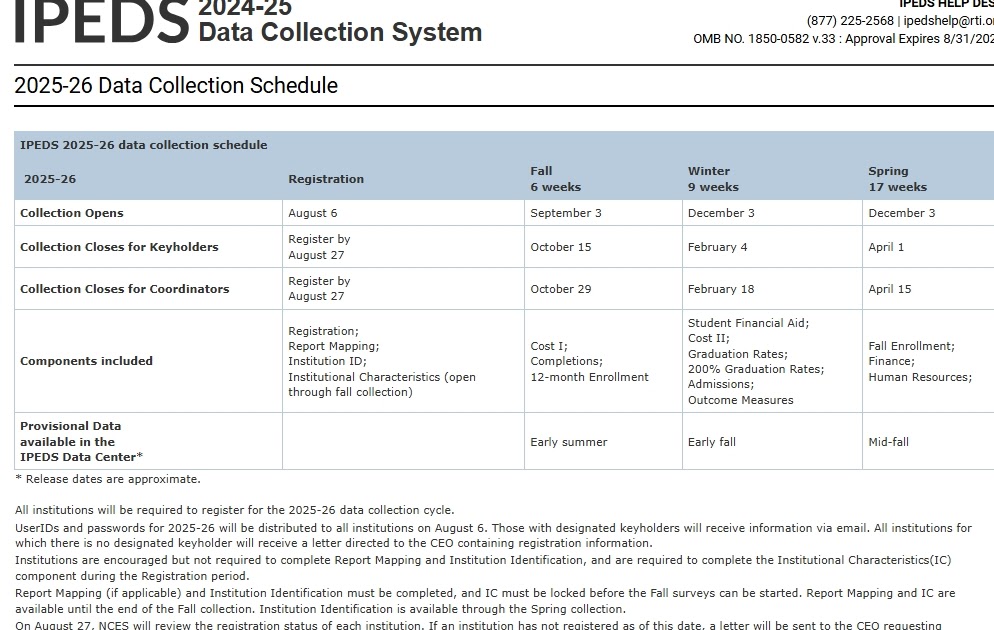
IPEDS is the Integrated Postsecondary Education Data System. It is a system of interrelated surveys conducted annually by the U.S. Department of Education’s National Center for Education Statistics (NCES). IPEDS gathers information from every college, university, and technical and vocational institution that participates in the federal student financial aid programs. The Higher Education Act of 1965, as amended, requires that institutions that participate in federal student aid programs report data on enrollments, program completions, graduation rates, faculty and staff, finances, institutional prices, and student financial aid. These data are made available to students and parents through the College Navigator college search Web site and to researchers and others through the IPEDS Data Center. To learn more about IPEDS Survey components, visit https://nces.ed.gov/Ipeds/use-the-data/survey-components.
How is IPEDS Used?
IPEDS provides basic data needed to describe — and analyze trends in — postsecondary education in the United States, in terms of the numbers of students enrolled, staff employed, dollars expended, and degrees earned. Congress, federal agencies, state governments, education providers, professional associations, private businesses, media, students and parents, and others rely on IPEDS data for this basic information on postsecondary institutions.
IPEDS forms the institutional sampling frame for other NCES postsecondary surveys, such as the National Postsecondary Student Aid Study.
Which Institutions Report to IPEDS?
The completion of all IPEDS surveys is mandatory for institutions that participate in or are applicants for participation in any federal student financial aid program (such as Pell grants and federal student loans) authorized by Title IV of the Higher Education Act of 1965, as amended (20 USC 1094, Section 487(a)(17) and 34 CFR 668.14(b)(19)).
Institutions that complete IPEDS surveys each year include research universities, state colleges and universities, private religious and liberal arts colleges, for-profit institutions, community and technical colleges, non-degree-granting institutions such as beauty colleges, and others.
To find out if a particular institution reports to IPEDS, go to College Navigator and search by the institution name.
What Data are Collected in IPEDS?
IPEDS collects data on postsecondary education in the United States in eight areas: institutional characteristics; institutional prices; admissions; enrollment; student financial aid; degrees and certificates conferred; student persistence and success; and institutional resources including human, resources, finance, and academic libraries.
In 2001, conservative activist Grover Norquist declared that his goal was to shrink government “to the size where I can drag it into the bathroom and drown it in the bathtub.” More than two decades later, under the leadership of Secretary Linda McMahon, the U.S. Department of Education’s March 2025 reorganization delivers on that radical vision—not with fire and fury, but with vacancies, ambiguity, and quiet institutional collapse.
Vacant Seats, Hollow Power
With dozens of senior leadership roles left vacant, enforcement functions gutted, and policymaking handed over to political allies and industry insiders, the Department no longer resembles a federal agency tasked with protecting students and public investment. Instead, it has become a hollowed-out vessel primed for deregulation, privatization, and corporate exploitation.
The new organizational chart is littered with the word “VACANT.” From Chiefs of Staff and Deputy Assistant Secretaries to senior advisors in enforcement, civil rights, and postsecondary education, entire divisions have been effectively immobilized. The Office of Civil Rights is barely staffed at the top. The Rehabilitation Services Administration is leaderless. The General Counsel’s office lacks oversight in key regulatory areas. This is not streamlining—it is strategic self-sabotage.
Federal Student Aid (FSA), overseeing over $1.5 trillion in loans, is run by an acting chief. Critical offices such as the Office of Postsecondary Education (OPE) are fragmented, missing key leadership across multiple branches—especially those charged with accreditation, innovation, and borrower protections.
The Kent Controversy: A Symptom of Systemic Rot
The collapse of federal oversight is not only evident in the vacancies—it is also embodied in controversial political appointments. As education policy watchdog David Halperin has reported, the Trump administration’s nominee for Under Secretary of Education, Nicholas Kent, epitomizes the revolving door between the Department of Education and the for-profit college industry.
Kent’s career includes roles at Education Affiliates, which in 2015 paid $13 million to settle a Department of Justice case involving false claims for federal student aid, and later at Career Education Colleges and Universities (CECU), the lobbying group for the for-profit college sector. Under Kent’s policy leadership at CECU, the organization actively fought against borrower defense rules, gainful employment regulations, and other safeguards meant to protect students from exploitative educational institutions.
Despite this record, the Senate Health, Education, Labor and Pensions (HELP) Committee advanced Kent’s nomination on May 22, 2025, in a party-line 12–11 vote—without a hearing. HELP Ranking Member Bernie Sanders objected, saying, “In my view, we should not be confirming the former lobbyist that represented for-profit colleges.” Advocates, including Halperin and six education justice organizations, sent a letter to Chairman Bill Cassidy calling for public scrutiny of Kent’s background and the Trump administration’s destructive higher education agenda.
Among their concerns are the elimination of key enforcement staff and research arms at the Department, the cancellation of ongoing research contracts, the rollback of borrower defense and gainful employment protections, the $37 million fine reversal against Grand Canyon University for deceptive practices, and the Department’s silence on accreditation reform and oversight of predatory schools. These developments, the letter argued, mark a decisive return to the era of unchecked corporate education—where taxpayer dollars are funneled to dubious institutions and students are left with mountains of debt and worthless credentials.
“Mission Accomplished” for the Privatization Movement
This version of the Department of Education, stripped of its regulatory muscle and stocked with industry sympathizers, is not an accident. It’s the culmination of decades of libertarian, neoliberal, and religious-right agitation to disempower public education. The policy pipeline now flows directly from organizations like the Heritage Foundation and ALEC to appointed officials with deep ties to the industries they were once charged with policing.
Rather than serving the public, the department’s primary role now appears to be facilitating the private sector’s conquest of higher education—through deregulation, outsourcing, and the erosion of civil rights protections.
A Shrinking Federal Presence, an Expanding Crisis
The consequences are far-reaching. Marginalized students—Black, brown, low-income, first-generation, disabled—depend disproportionately on federal guarantees, oversight, and funding. As these protections recede, so too does their access to meaningful educational opportunity. Instead, they are increasingly funneled into high-debt, low-return programs or shut out entirely.
Meanwhile, the political vacuum left by this strategic dismantling is being filled by corporate actors, right-wing religious institutions, and profit-seeking “ed-tech” startups. The dream of public education as a democratic equalizer is being replaced by a market of extraction and exploitation.
The Dream Realized
Grover Norquist’s fantasy of drowning the government has now been partially fulfilled in the U.S. Department of Education. What remains is an agency in name only—a shell that no longer enforces its core mission. In the name of efficiency and deregulation, the department has abandoned millions of students and ceded its authority to those who view education as a commodity rather than a public right.
The danger now is not only what’s been lost, but what is being built in its place. The Higher Education Inquirer will continue to monitor the ongoing capture of education policy and fight for a system that serves students, not shareholders.
Sources:
U.S. Department of Education, Organizational Chart, March 17, 2025
David Halperin, Republic Report, “The Senate Shouldn’t Vote on Trump Higher Education Pick without a Hearing”
U.S. Department of Justice press releases on Education Affiliates
Politico Pro Education updates, May 2025
Senate HELP Committee voting record, May 22, 2025
Heritage Foundation and CECU policy recommendations
The report by the Universities of Dundee and Cambridge highlights concerns about “the preparedness of students admitted through less traditional tests” as well as worries about the “security, validity and perceived inadequacy” of tests run by Duolingo and Oxford Education Group (OIEG).
The study draws on evidence from 50 UK universities, though its critics point out that many of the statements seem to be based on qualitative perspectives and anecdotal evidence from a small sample – comments that the report’s authors have hit out against.
It is causing disturbance in the ELT world, with Duolingo highlighting that four out of the five authors are affiliated with a “single competitor test” – the IELTS test. For their part, the report’s authors have maintained that the study was carried out objectively.
The study found the IELTS test to be widely regarded as the “common currency” of SELT, “largely due to the high level of trust in IELTS as a reliable and valid measure of language proficiency”, said the authors.
The most widely accepted English language test by UK universities, IELTS, is co-owned by IDP, Cambridge University Press and the British Council.
Other tests including TOEFL, C1 Advanced, and the Pearson Test of English (PTE), were found to be accepted by a high number of the institutions surveyed, while Duolingo was only accepted by six universities.
“Unfortunately, this study is based on the perceptions of a small group and relies on outdated views rather than robust empirical evidence,” a spokesperson for Duolingo told The PIE News in response to the findings.
They commented: “Every Ivy League university accepts the Duolingo English Test (DET), as do a third of Russell Group institutions and over 5,900 institutions worldwide,” adding that the DET “combines academic rigour and integrity with accessibility and affordability”.
Meanwhile, English testing expert Michael Goodine advised test takers “to keep in mind that the criticisms mentioned in the study are anecdotal and not presently supported by comparative data”.
What’s more, at the time of the survey, Duolingo was only accepted at six universities, compared to IELTS. which was accepted at all 50.
Given the experiences of surveyed staff sharing their worries about declining standards of English: “Clearly, then, Duolingo isn’t the problem,” suggested Goodine. “Maybe the traditional tests are also problematic,” he posed.
For its part, Cambridge University Press & Assessment maintained the study was independently peer-reviewed, objecting to comments about the research being conducted on a “small” group or to their views being “outdated”.
“The researchers did not seek views on any specific test,” said the spokesperson, adding that interviewees were asked about their personal experiences with the tests, changes since the pandemic, internal decision-making processes around test selection and their experience of the English levels of students admitted with such tests.
“We hope this evidence will help universities to consider the relative merits of different modes of language assessment. Now is the time to put quality first,” they added.
Maybe the traditional tests are also problematic
Michael Goodine, Test Resources
The report’s authors note that the shift to online learning and testing during the pandemic “has led to a perceived decline in language standards, with many staff members worried that students are not meeting the necessary threshold for successful academic engagement”.
“The lack of transparency and external validation, especially for newer tests, exacerbates these concerns, as many of these tests provide little evidence of comparability beyond marketing information,” they say, calling for universities to use evidence-based approaches when selecting which English language tests to use.
In addition to the choice of test, much of the report is dedicated to findings highlighting the growing concerns among university personnel about the declining English language proficiency of international students.
When asked to evaluate the academic literacy of the international students they teach, 44% of respondents said it was ‘poor’, 47% deemed it to be ‘mixed’ or ‘varied’, with less than 10% judging it to be ‘good’.
“Admitting students without sufficient English jeopardises their educational experience and places strains on institutions and faculty,” said Pamela Baxter, managing director for IELTS at Cambridge University Press & Assessment.
“These are some of the highest stakes exams around – that enable people to migrate and study”, said Baxter, adding that international students comprise 23% of the UK’s total student population, and “greatly enrich” universities, but must be admitted with the right standards.
The study finds a “great divide” between EAP and academic staff placing a greater emphasis on test validity and language proficiency, as compared to recruitment and admissions personnel who tend to priorities accessibility and cost.
Such a disparity highlights the “need for a more integrated approach to decision-making”, the authors argue.
The report comes as the UK SELT sector is bracing for a dramatic overhaul, caused by the government’s ongoing development of a dedicated Home Office English Language Test (HOELT), for which a tender process is currently underway.
Most recently, the Home Office launched a fourth round of market engagement about digital testing, exploring the viability of incorporating remote testing into the HOELT service.
2025 Annual Conference Cancellations and Substitutions
Use this form to cancel your conference registration or to designate a substitute attendee. See the conference registration policies for more information.
What happened to the President of UVA is devastating. And we have let ourselves believe it is surprising. But, while it should be shocking that the federal government – one that has been repeatedly talking about the return of education to the states – is interfering with the administration of a public university, it should have been expected if you were paying attention.
Amanda Fuchs MillerWhy is that? This Administration, as promised in Project 2025 and as evidenced by the appointees placed in Trump’s White House and the Department of Education, laid out a roadmap they would take to undermine higher education, as they are doing with other democratic institutions. Using colleges’ responses to October 7th, and in the name of fighting antisemitism, the Trump Administration has taken steps since January 20th to undermine colleges and universities – not chipping away but taking a sledgehammer and finding everything to be a nail.
The tools in this Administration’s toolbox include cancelling funding, slashing federal student aid, investigating and auditing schools, removing and threatening international students and immigrants, and increasing the costs of higher education institutions doing their work – from indirect cost increases on research funds to attempting to revoke tax-exempt status, and the list goes on.
These actions have, and will, hit institutions across the board hard – from Columbia and Harvard to public state schools to small independent colleges to community colleges. All of these schools – and their students – rely on and benefit from public investments in higher education.
And the damage is not just to the schools and students. The communities, cities, and states where these schools are located benefit economically when colleges and their students thrive. Our nation’s standing as a leader in innovation – in technology, medical advancements, and other fields – will be threatened without federal investments in higher education. And, without academic freedom ensuring a diversity of viewpoints at our institutions, free from political interference, our democracy will be at risk.
So, what lessons can we take from what happened at UVA and the forced resignation of President Ryan?
First, this has never been just about the Ivies. There has been a belief that the elite schools are the target. Just take a look at the list of the 60 colleges that the Trump Administration opened investigations into, under the pretext of antisemitism, in March – Ivy League schools but also publics (in blue states and red states), privates, and small independent colleges. The reconciliation bill, which was signed into law last week, eliminated Grad PLUS loans and capped Parent PLUS loans – programs that help students at all schools, including HBCUs. And, the President’s FY26 budget would eliminate programs that fund wraparound services which will hurt community college students who rely most heavily on those federal investments.
Second, it is not just about the words used. Following UVA President Ryan’s resignation, DOJ Assistant Attorney General for Civil Rights Harmeet Dhillon told CNN that although UVA decided in March 2025 to dissolve its DEI office, it “used a series of euphemisms to simply rebrand and repackage the exact same discriminatory programs that are illegal under federal law.”
This raises a couple of lessons that can be learned as higher ed institutions look ahead. Following the President’s executive orders on diversity, equity and inclusion, many organizations began scrubbing their websites, shuttering DEI offices, and disbanding committees with diversity and equity in their titles. Schools instead need to first do a campus-wide review of their activities. Then, they should undertake a risk assessment to both determine which activities can be viewed as being in contrast to Trump’s executive orders and the new certifications being tied to federal funding and to determine which activities are actually in violation of current state and federal antidiscrimination laws. The first bucket of activities – those that do not follow the executive orders – may put schools’ funding at risk but are not necessarily illegal. This Administration is using a chilling effect to stop allowable initiatives that are in contrast with their ideology and politics. Understanding the risk is important for schools to protect themselves but schools must also continue to fulfill their missions of serving all students and providing diverse environments and inclusive communities and must be ready to push back when wrongly being accused of engaging in “illegal DEI,” which isn’t in and of itself a thing.
Sometimes changing the words, or renaming or eliminating an office, may be necessary. In fact, for federal grants, agencies are utilizing AI to do word searches so there may be a reason to use different words and reframe proposals for federal funds. But, if schools are going to do so, they need to engage in genuine stakeholder outreach to explain what is and what isn’t changing. In addition to the closing of UVA’s DEI office now being criticized as irrelevant in the eyes of the Trump Administration, the school leadership faced criticism from faculty, students and other university community members when they did so, which likely caused them to lose some of the support they needed to push back against the false charges by DOJ. Explaining which changes are being made early – and which aren’t and why – can help college leaders on multiple fronts.
Third, this Administration is continuing to not tell the truth about what the U.S. Supreme Court 2023 ruling in Students for Fair Admissions vs. Harvard (SFFA) meant. Assistant Attorney General Dhillon told CNN in her interview about UVA, “It’s not just admissions part, it’s also preferences in special programs while students are at the school … this is all illegal under Students for Fair Admissions.” Well, no. The Supreme Court’s decision in SFFA was about admissions. Telling schools to stop activities because of SFFA in other areas is again a scare tactic that must be pushed back on both in courts and in the court of public opinion.
This is the time for higher ed institutions and their stakeholders to come together and fight back. Institutions must think outside the box and do the hard work so that they can continue to fulfill their missions of serving all students and being inclusive communities while not increasing the risks of harmful actions that will hurt their students, their communities, the economy, and our democracy.
_____________
Amanda Fuchs Miller served as the Deputy Assistant Secretary for Higher Education Programs at the U.S. Department of Education in the Biden-Harris Administration. She is the president of Seventh Street Strategies, which provides advocacy and policy supports to higher ed institutions, nonprofit organizations, and foundations.
Crucial Insights: Understanding College Financial Aid Dynamics
(00:02:56) Variety of College Financial Assistance Options
(00:05:18) Scholarships: Balancing Merit and Financial Need
(00:10:00) Student Selection Strategies in College Admissions
(00:21:40) Financial Aid Strategy at Competitive vs. Smaller Schools
(00:26:29) Major-based Financial Aid Allocation in Colleges
Nearly two-thirds of teachers utilized artificial intelligence this past school year, and weekly users saved almost six hours of work per week, according to a recently released Gallup survey. But 28% of teachers still oppose AI tools in the classroom.
The poll, published by the research firm and the Walton Family Foundation, includes perspectives from 2,232 U.S. public school teachers.
“[The results] reflect a keen understanding on the part of teachers that this is a technology that is here, and it’s here to stay,” said Zach Hrynowski, a Gallup research director. “It’s never going to mean that students are always going to be taught by artificial intelligence and teachers are going to take a backseat. But I do like that they’re testing the waters and seeing how they can start integrating it and augmenting their teaching activities rather than replacing them.”
At least once a month, 37% of educators take advantage of tools to prepare to teach, including creating worksheets, modifying materials to meet student needs, doing administrative work and making assessments, the survey found. Less common uses include grading, providing one-on-one instruction and analyzing student data.
A 2023 study from the RAND Corp. found the most common AI tools used by teachers include virtual learning platforms, like Google Classroom, and adaptive learning systems, like i-Ready or the Khan Academy. Educators also used chatbots, automated grading tools and lesson plan generators.
Most teachers who use AI tools say they help improve the quality of their work, according to the Gallup survey. About 61% said they receive better insights about student learning or achievement data, while 57% said the tools help improve their grading and student feedback.
Nearly 60% of teachers agreed that AI improves the accessibility of learning materials for students with disabilities. For example, some kids use text-to-speech devices or translators.
More teachers in the Gallup survey agreed on AI’s risks for students versus its opportunities. Roughly a third said students using AI tools weekly would increase their grades, motivation, preparation for jobs in the future and engagement in class. But 57% said it would decrease students’ independent thinking, and 52% said it would decrease critical thinking. Nearly half said it would decrease student persistence in solving problems, ability to build meaningful relationships and resilience for overcoming challenges.
In 2023, the U.S. Department of Education published a report recommending the creation of standards to govern the use of AI.
“Educators recognize that AI can automatically produce output that is inappropriate or wrong. They are well-aware of ‘teachable moments’ that a human teacher can address but are undetected or misunderstood by AI models,” the report said. “Everyone in education has a responsibility to harness the good to serve educational priorities while also protecting against the dangers that may arise as a result of AI being integrated in ed tech.”
Hrynowski said teachers are seeking guidance from their schools about how they can use AI. While many are getting used to setting boundaries for their students, they don’t know in what capacity they can use AI tools to improve their jobs.
The survey found that 19% of teachers are employed at schools with an AI policy. During the 2024-25 school year, 68% of those surveyed said they didn’t receive training on how to use AI tools. Roughly half of them taught themselves how to use it.
“There aren’t very many buildings or districts that are giving really clear instructions, and we kind of see that hindering the adoption and use among both students and teachers,” Hrynowski said. “We probably need to start looking at having a more systematic approach to laying down the ground rules and establishing where you can, can’t, should or should not, use AI In the classroom.”
Disclosure: Walton Family Foundation provides financial support to The 74.
Early in our careers, when we were fresh-faced and idealistic (we still are!) the prepackaged curriculum and the advice of more experienced colleagues was the go-to resource. Largely, we were advised that teaching writing was a simple matter of having students walk through and complete organizers, spending about one day for each “stage” of the writing process. At the end of the writing unit, students had finished their compositions–the standardized, boring, recreated ideas that we taught them to write.
As we matured and grew as teachers of writing, we learned that teaching writing in such simplistic ways may be easier, but it was not actually teaching students to be writers. We learned with time and experience that writing instruction is a complex task within a complex system.
Complex systems and wicked problems
Complexity as it is applied to composition instruction recognizes that there is more than just a linear relationship between the student, the teacher, and the composition. It juggles the experiences of individual composers, characteristics of genre, availability of resources, assignment and individual goals, and constraints of composing environments. As with other complex systems and processes, it is non-linear, self-organizing, and unpredictable (Waltuck, 2012).
Complex systems are wicked in their complexity; therefore, wicked problems cannot be solved by simple solutions. Wicked problems are emergent and generative; they are nonlinear as they do not follow a straight path or necessarily have a clear cause-and-effect relationship. They are self-organizing, evolving and changing over time through the interactions of various elements. They are unpredictable and therefore difficult to anticipate how they will unfold or what the consequences of any intervention might be. Finally, they are often interconnected, as they are symptoms of other problems. In essence, a wicked problem is a complex issue embedded in a dynamic system (Rittel & Webber, 1973).
Writing formulas are wicked
As formulaic writing has become and remains prevalent in instruction and classroom writing activity, graphic organizers and structural guides, which were introduced as a tool to support acts of writing, have become a wicked problem of formula; the resource facilitating process has become the focus of product. High-stakes standardized assessment has led to a focus on compliance, production, and quality control, which has encouraged the use of formulas to simplify and standardize writing instruction, the student writing produced, and the process of evaluation of student work. Standardization may improve test scores in certain situations, but does not necessarily improve learning. Teachers resort to short, formulaic writing to help students get through material more quickly as well as data and assessment compliance. This serves to not only create product-oriented instruction, but a false dichotomy between process and product, ignoring the complex thinking and design that goes into writing.
As a result of such a narrow view of and limited focus on writing process and purpose, formulas have been shown to constrain thinking and limit creativity by prioritizing product over the composing process. The five-paragraph essay, specifically, is a structure that hinders authentic composing because it doesn’t allow for the “associative leaps” between ideas that come about in less constrained writing. Formulas undermine student agency by limiting writers’ abilities to express their unique voices because of over-reliance on rigid structures (Campbell, 2014; Lannin & Fox, 2010; Rico, 1988).
An objective process lens: A wicked solution
The use of writing formulas grew from a well-intentioned desire to improve student writing, but ultimately creates a system that is out of balance, lacking the flexibility to respond to a system that is constantly evolving. To address this, we advocate for shifting away from rigid formulas and towards a design framework that emphasizes the individual needs and strategies of student composers, which allows for a more differentiated approach to teaching acts of writing.
The proposed framework is an objective process lens that is informed by design principles. It focuses on the needs and strategies that drive the composing process (Sharples, 1999). This approach includes two types of needs and two types of strategies:
Formal needs: The assigned task itself
Informal needs: How a composer wishes to execute the task
“What” strategies: The concrete resources and available tools
“How” strategies: The ability to use the tools
An objective process lens acknowledges that composing is influenced by the unique experiences composers bring to the task. It allows teachers to view the funds of knowledge composers bring to a task and create entry points for support.
The objective process lens encourages teachers to ask key questions when designing instruction:
Do students have a clear idea of how to execute the formal need?
Do they have access to the tools necessary to be successful?
What instruction and/or supports do they need to make shifts in ideas when strategies are not available?
What instruction in strategies is necessary to help students communicate their desired message effectively?
Now how do we do that?
Working within a design framework that balances needs and strategies starts with understanding the type of composers you are working with. Composers bring different needs and strategies to each new composing task, and it is important for instructors to be aware of those differences. While individual composers are, of course, individuals with individual proclivities and approaches, we propose that there are (at least) four common types of student composers who bring certain combinations of strategies and needs to the composition process: the experience-limited, the irresolute, the flexible, and the perfectionist composers. By recognizing these common composer types, composition instructors can develop a flexible design for their instruction.
An experience-limited composer lacks experience in applying both needs and strategies to a composition, so they are entirely reliant on the formal needs of the assigned task and any what-strategies that are assigned by the instructor. These students gravitate towards formulaic writing because of their lack of experience with other types of writing. Relatedly, an irresolute composer may have a better understanding of the formal and informal needs, but they struggle with the application of what and how strategies for the composition. They can become overwhelmed with options of what without a clear how and become stalled during the composing process. Where the irresolute composer becomes stalled, the flexible composer is more comfortable adapting their composition. This type of composer has a solid grasp on both the formal and informal needs and is willing to adapt the informal needs as necessary to meet the formal needs of the task. As with the flexible composer, the perfectionist composer is also needs-driven, with clear expectations for the formal task and their own goals for the informal tasks. Rather than adjusting the informal needs as the composition develops, a perfectionist composer will focus intensely on ensuring that their final product exactly meets their formal and informal needs.
Teaching writing requires embracing its complexity and moving beyond formulaic approaches prioritizing product over process. Writing is a dynamic and individualized task that takes place within a complex system, where composers bring diverse needs, strategies, and experiences. By adopting a design framework, teachers of writing and composing can support students in navigating this complexity, fostering creativity, agency, and authentic expression. It is an approach that values funds of knowledge students bring to the writing process, recognizing the interplay of formal and informal needs, as well as their “what” and “how” strategies; those they have and those that need growth via instruction and experience. Through thoughtful design, we can grow flexible, reflective, and skilled communicators who are prepared to navigate the wicked challenges of composing in all its various forms.
These ideas and more can be found in When Teaching Writing Gets Tough: Challenges and Possibilities in Secondary Writing Instruction.
References
Campbell, K. H. (2014). Beyond the five-paragraph essay. Educational Leadership, 71(7), 60-65.
Lannin, A. A., & Fox, R. F. (2010). Chained and confused: Teacher perceptions of formulaic writing. Writing & Pedagogy, 2(1), 39-64.
Rico, G. L. (1988). Against formulaic writing. The English Journal, 77(6), 57-58.
Rittel, H. W. J., & Webber, M. M. (1973). Dilemmas in a general theory of planning. Policy Sciences, 4(2), 155–169.
Sharples, M. (1999). How we write : writing as creative design (1st ed.). Routledge. https://doi.org/10.4324/9780203019900
Waltuck, B. A. (2012). Characteristics of complex systems. The Journal for Quality & Participation, 34(4), 13–15.
Brett Stamm, University of Southern Mississippi & Tiffany Larson, University of Central Oklahoma
Brett Stamm is a husband, dad, educator, and persistent learner with 20 years of K-8 public school teaching and administrative experiences. He currently serves as Assistant Professor of Elementary Education at the University of Southern Mississippi and is an AERA Study of Deeper Learning Fellow.
Tiffany Larson is a teacher educator who is passionate about literacy education.She worked in secondary schools for 12 years as an English teacher and campus administrator before moving to higher education.She is currently an Assistant Professor at the University of Central Oklahoma where she is the program coordinator for English Education.
Latest posts by eSchool Media Contributors (see all)
Student loan debt in the United States has ballooned into a $1.7 trillion crisis, affecting over 43 million borrowers.Beyond the staggering figures, this debt exacts a profound human cost, influencing personal relationships, family dynamics, and long-term financial stability.
Student debt doesn’t just affect individual borrowers; it reverberates across generations.Parents and grandparents often co-sign loans or take on debt themselves to support their children’s education.The TIAA and MIT AgeLab study revealed that 43% of parents and grandparents who took out loans for their children or grandchildren plan to increase retirement savings once the student loan is paid off. This shift in financial priorities underscores the long-term impact of educational debt on family financial planning.
The student loan crisis is more than a financial issue; it’s a pervasive force affecting the fabric of American life.From delayed life milestones and strained family relationships to mental health challenges and economic repercussions, the impact is profound and far-reaching.Addressing this crisis requires comprehensive policy reforms that consider the human stories behind the debt figures.Only then can we hope to alleviate the burden and restore financial freedom to millions of Americans.
Share Your Story
The student loan crisis is more than a financial issue; it’s a pervasive force affecting the fabric of American life.From delayed life milestones and strained family relationships to mental health challenges and economic repercussions, the impact is profound and far-reaching.
We want to hear from you.If you or someone you know is grappling with the weight of student debt, please consider sharing your story.Your experiences can shed light on the real-world implications of this crisis and help others understand they’re not alone.
To share your story, please email us at [email protected]with the subject line “Student Debt Story.”Include your name, location, and a brief summary of your experience.We may feature your story in an upcoming article to highlight the human toll of student debt.
Together, we can bring attention to this pressing issue and advocate for meaningful change.
This audio is auto-generated. Please let us know if you have feedback.
The “One, Big, Beautiful Bill,” a major tax and spending package narrowly passed by Congress and signed by President Donald Trump on July 4, includes a Republican-led national school choice provision that public school advocates and some researchers say will disrupt the traditional public school K-12 model by driving more competition with public schools.
This controversial issue has been debated at the local, state and national levels for decades, but this is the first federally funded, nationwide private school choice program. While unknowns remain about how many students, schools and states will participate, reaction has been swift, with opponents calling the law harmful to public schools and supporters labeling it as a historic move for educational freedom.
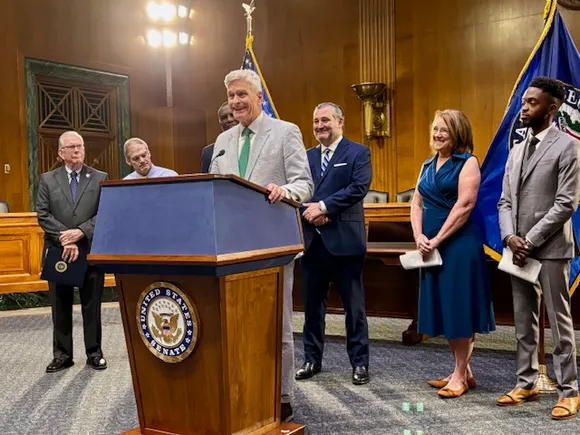
“Parents should decide where their kids go to school. This bill helps them do that,” said Sen. Bill Cassidy, R-La., author of the Educational Choice for Children Act included in the “One, Big, Beautiful Bill” and chair of the Senate Health, Education, Labor and Pensions Committee, in a Thursday statement.
Here’s what you need to know about the newly enacted measure:
What the new school choice provision says
The law provides a federal tax incentive to generate funds for families’ educational expenses, including private school tuition at secular and religious schools, as well as costs incurred for children at public and private schools such as fees, tutoring, educational therapies, transportation, technology and other expenses. It would also apply to homeschooling costs.
To be eligible, families’ household incomes must not exceed 300% of the median gross income for their locality. The means, for example, students in Memphis living in households with incomes of up to $364,400 could be eligible, based on a median family income of $91,100.
States, however, can opt out of participating, meaning none of the students in that state would be eligible for the program. It was not immediately clear which state agency or leader decides this.
Under the new school choice law, any taxpayer who donates up to $1,700 annually to a scholarship granting organization — a 501(c)(3) charity organization — would be eligible for a 100% federal income tax credit for their contribution, or the equal amount in a reduction of taxes owed. According to the Institute on Taxation and Economic Policy, there is no other charitable giving structure that allows this type of dollar-for-dollar tax incentive.
ITEP’s analysis of Internal Revenue Service data shows that more than 138 million people could use this tax credit in 2027 if they choose to. But some might not participate because of the paperwork involved or because they disagree with private school vouchers, ITEP said.
If 43% of taxpayers — which would be about 59 million people — participate, the cost to the federal government would be $101 billion per year, according to ITEP.
The law does not cap the program’s cost, despite earlier versions of the bill limiting it to $4 billion or $5 billion per year. In addition, the program is permanent with no expiration date.
The scholarship-granting organizations that will distribute tuition vouchers for education expenses must be independent entities and cannot be affiliated with a school, according to ACE Scholarships, a nonprofit scholarship-granting organization that has analyzed the law. The organization, in an FAQ, also said parents cannot direct their tax credit directly to their child’s education expenses.
Rather, the scholarship-granting organizations will be charged with independently determining students’ eligibility.
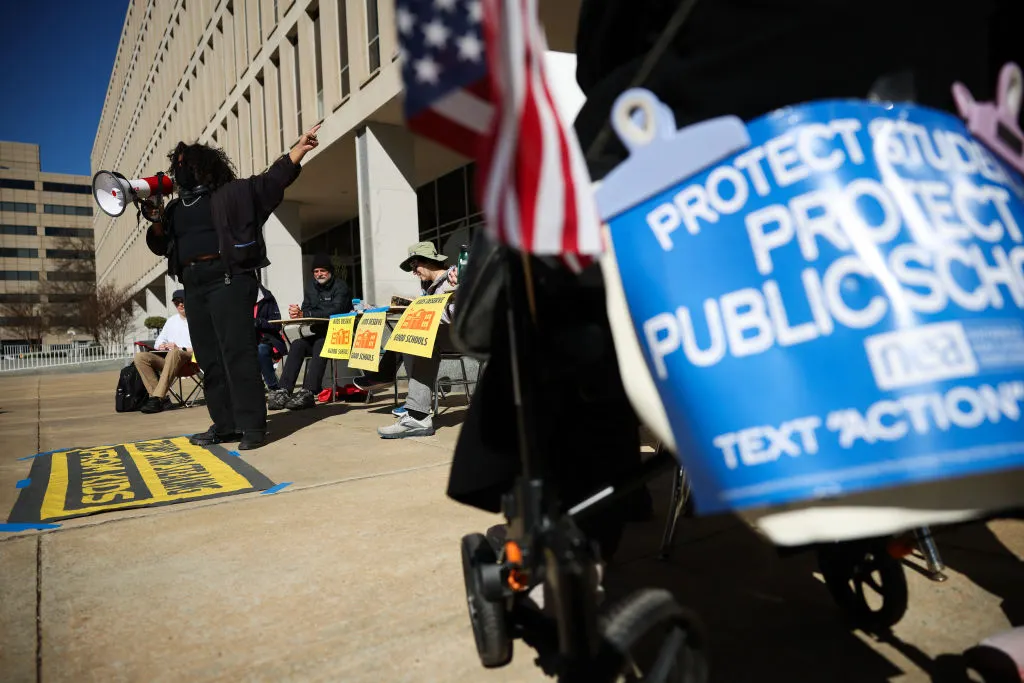
Protestors participate in a “study-in” in front of the U.S. Department of Education on March 21, 2025, in Washington, D.C.
Kayla Bartkowski via Getty Images
What people are saying
Reaction to the law was swift, with critics voicing concern about the impacts on public school budgets and supporters applauding what they call a significant step toward parental empowerment in K-12 education.
Robert Kim, executive director of the Education Law Center, blasted the new program. Studies have shown private school vouchers “sweep aside civil rights protections, support segregation, decimate public school budgets, and do not improve student outcomes,” Kim said in a statement.
He added, “Vouchers undermine public education, the cornerstone of our democracy, and have no place in federal policy.”
EdTrust, a nonprofit organization that works to improve outcomes for students of color, lambasted the law as an “extremely costly federal voucher program that will spend billions in public money to subsidize wealthy families accessing private schools.” and will operate with “little oversight.”
EdTrust has nicknamed the law the “Great American Heist” for its private school choice provision and changes to Medicaid, food stamps and college loan repayment programs. The law “would dismantle the very programs that make education and economic advancement possible for students of color, first-generation college students, and low- and middle-income families,” EdTrust’s statement said.
Rachel Laser, president and CEO of Americans United for Separation of Church and State, said in a statement that the school choice program “will divert billions of taxpayer dollars to private religious schools that indoctrinate and can discriminate against students and their families based on the schools’ beliefs.”
Supporters of private school choice, however, struck a different note. They said parents have become frustrated at disappointing student academic performances in public schools and want more options for their children.
“This is a huge victory for American families that have been praying and hoping for a financial lifeline to provide their children with the education they need to thrive,” said Anthony J. de Nicola, chairman of the board of Invest in Education Coalition, an organization that has promoted a federal school choice program, in a statement.
Tommy Schultz, CEO of the American Federation for Children, a school choice advocacy organization, said the law’s passage will “supercharge” school choice across the country.
“For a generation, our movement has fought to give all families, especially lower-income families, the freedom to choose the best K-12 education for their sons and daughters, and now President Trump has signed into law the single biggest advancement of that goal,” Schultz said in a statement.
Even with the praise, however, some supporters urged caution.
In an interview with Catholic News Agency published July 3, John DeJak, executive director of the Secretariat of Catholic Education for the U.S. Conference of Catholic Bishops, applauded the law’s passage but also pointed to “unknowns” like how the program would address religious liberty protections.
Success! Not only does the OBBB include historic tax cuts and cost savings for American families – the bill also
✅ Includes massive expansion in school choice
✅ Adds accountability measures for higher ed institutions
✅ Reduces federal student loan borrowing amounts to help…
— Secretary Linda McMahon (@EDSecMcMahon) July 3, 2025
What happens next
The tax incentive starts with the taxable years ending after Dec. 31, 2026, — and there’s a lot to work out before then.
For starters, the new law says that the U.S. secretary of education must draft regulations for how the program will operate, including recordkeeping and reporting, as well as enforcement of a state’s certification of scholarship-granting organizations.
The U.S. Department of Education did not provide a time frame for this by press time on Monday.
Details such as state participation and how the national private school choice program would operate in conjunction with state-level choice programs also need to be worked out. According to EdChoice, an organization that advocates for school choice, 35 states, the District of Columbia and Puerto Rico have private school choice programs that together serve nearly 1.3 million students.
It’s also unclear how this new school choice program will meld into Republican-led plans to close the Education Department.
In the meantime, school choice advocates and supporters of public schools vow to continue advocating for and against the controversial law.