Category: Featured

  • N.C. Gov. Vetoes Bills Targeting ‘DEI,’ ‘Divisive Concepts’

    N.C. Gov. Vetoes Bills Targeting ‘DEI,’ ‘Divisive Concepts’

    North Carolina’s Democratic governor has vetoed two bills the Republican-led General Assembly passed targeting what lawmakers dubbed “diversity, equity and inclusion”; “discriminatory practices”; and “divisive concepts” in public higher education.

    Senate Bill 558 would have banned institutions from having offices “promoting discriminatory practices or divisive concepts” or focused on DEI. The bill defined “discriminatory practices” as “treating an individual differently [based on their protected federal law classification] solely to advantage or disadvantage that individual as compared to other individuals or groups.”

    SB 558’s list of restricted divisive concepts mirrored the lists that Republicans have inserted into laws in other states, including the idea that “a meritocracy is inherently racist or sexist” or that “the rule of law does not exist.” The legislation would have prohibited colleges and universities from endorsing these concepts.

    The bill would have also banned institutions from establishing processes “for reporting or investigating offensive or unwanted speech that is protected by the First Amendment, including satire or speech labeled as microaggression.”

    In his veto message Thursday, Gov. Josh Stein wrote, “Diversity is our strength. We should not whitewash history, police dorm room conversations, or ban books. Rather than fearing differing viewpoints and cracking down on free speech, we should ensure our students learn from diverse perspectives and form their own opinions.”

    Stein also vetoed House Bill 171, which would have broadly banned DEI from state government. It defined DEI in multiple ways, including the promotion of “differential treatment of or providing special benefits to individuals on the basis of race, sex, color, ethnicity, nationality, country of origin, or sexual orientation.”

    “House Bill 171 is riddled with vague definitions yet imposes extreme penalties for unknowable violations,” Stein wrote in his HB 171 veto message. NC Newsline reported that lawmakers might still override the vetoes.

    Source link

  • Extortion in plain sight | The Foundation for Individual Rights and Expression

    Extortion in plain sight | The Foundation for Individual Rights and Expression

    This essay was originally published by The Dispatch on July 4, 2025.


    Paramount Global’s decision to pay $16 million to end President Donald Trump’s lawsuit over a 60 Minutes interview with Kamala Harris was a “win for the American people,” according to Trump’s lawyers. And it happened because “CBS and Paramount Global realized the strength of this historic case and had no choice but to settle.”

    Well, not quite.

    The case is “historic” for sure, but not in a good way or because the advocates came up with profound theories of media law. Quite to the contrary: The case is so baseless, so devoid of factual or legal support, and so diametrically opposed to basic First Amendment principles it is hard to imagine how those who filed it sleep at night. 

    The main question about Paramount’s decision to settle this comically frivolous lawsuit is not why the company decided to settle, but why did resolving it take this long if the “historic case” were so “strong?” The reason for the settlement is obvious. Paramount, the corporate parent of the CBS television network, had a gun to its head. 

    Paramount must get approval from the Federal Communications Commission for its proposed $8 billion merger with Skydance Media (which includes the transfer of 28 CBS-owned and -operated broadcast stations). The merger agreement expired April 7 but was extended to July 7. So it was pay-up or shut-up time.

    The holdup, in every sense of that word, came in the form of FCC Chairman Brendan Carr, whom President Trump elevated to head the commission on Inauguration Day. As one of his first official acts, Carr opened his own investigation of the Harris interview over supposed “news distortion,” and he slow-rolled the FCC’s merger review process. The Securities and Exchange Commission and European regulators had approved the merger back in February, but the FCC continued to “ponder” the matter as the deal clock ticked down.

    Trump’s $16M win over ’60 Minutes’ edit sends chilling message to journalists everywhere

    Trump’s $16M win over a “60 Minutes” edit sends a chilling message to journalists everywhere. FIRE’s Bob Corn-Revere calls it what it is: the FCC playing politics.


    Read More

    But let’s give him the benefit of the doubt: Couldn’t it be that Carr was just carefully considering nuanced issues of media law in order to safeguard the public from big-network media bias? After all, Trump had claimed that CBS had edited its interview deceptively to make Harris “look better” — something he called “totally illegal,” an “UNPRECEDENTED SCANDAL,” and for which the FCC should “TAKE AWAY THE CBS LICENSE.” Never mind that networks are not licensed by the FCC (stations are), the rant led to the lawsuit in Texas and later the FCC investigation.

    Loopy all-cap social media posts aside, there was never a legitimate basis either for the lawsuit or the FCC action. Every day, from the smallest newspaper to the largest network, reporters and editors must digest and condense the information they collect — including quotes from politicians and other newsmakers — to tell their stories concisely and understandably. For instance, Trump has repeatedly received the same treatment. Fox News repeatedly edited interviews with then-candidate Trump during the campaign, editing answers to enhance coherence, eliminate digressions, and excise insults. Making sense of the stuff that pours from politicians’ mouths is not easy. And here, CBS was accused of something unforgivable: committing standard journalism. 

    This was never about swapping out answers to different questions or rewriting answers, as Trump and his supporters falsely claim. During the interview, 60 Minutes correspondent Bill Whitaker asked then-Vice President Harris a question about the Biden administration’s relationship with Israeli Prime Minister Benjamin Netanyahu: 

    MR. BILL WHITAKER: But it seems that Prime Minister Netanyahu is not listening. The Wall Street Journal said that he — that your administration has repeatedly been blindsided by Netanyahu, and in fact, he has rebuffed just about all of your administration’s entreaties.

    VICE PRESIDENT KAMALA HARRIS: Well, Bill, the work that we have done has resulted in a number of movements in that region by Israel that were very much prompted by, or a result of many things, including our advocacy for what needs to happen in the region. And we’re not going to stop doing that. We are not going to stop pursuing what is necessary for the United States to be clear about where we stand on the need for this war to end.

    CBS broadcast two excerpts of Harris’ answer on two separate programs: On Face the Nation, CBS aired the first sentence of Harris’ answer. On 60 Minutes, CBS aired the last sentence of the answer. Really — that’s all this is about.

    The FCC in the past has never defined the editing process as “news distortion.” In fact, it has steadfastly maintained the First Amendment bars it from doing so. Chairman Carr’s decision to reopen a closed complaint in a matter he knows to be baseless and beyond the FCC’s authority is unprecedented and indefensible.

    We need a far stronger word than ‘hypocrite’ to capture this moment. We have a president who on day one issued an executive order purporting to ‘restore free speech’ … [then] deployed agency heads to retaliate against news organizations that displease him.

    And the arguments in the now-settled lawsuit are even more frivolous (if that’s even possible). Trump’s lawyers argued that the Harris interview violated the Texas Deceptive Trade Practices Act and the federal Lanham Act as a “false, misleading, or deceptive act or practice” and asserted $20 billion in damages. Those laws are designed to prevent consumer deception in marketing practices (like turning back the odometer on a used car) or false advertising. They simply don’t apply to editorial judgments by news organizations. No court in any jurisdiction has ever held that such a cause of action might be valid, and few plaintiffs have ever attempted to bring such outlandish claims. Those who have done so were promptly dismissed.

    But who needs good arguments or supporting legal authority when federal regulators are willing to ignore their oath to uphold the Constitution and back your political power play?

    Of course, Carr has maintained that there was no link between the Texas lawsuit and the FCC’s merger review or news distortion investigation. But let’s get real. Before he was named chairman, Carr said he didn’t think the 60 Minutes interview “should be a federal case,” and “we don’t want to get into authenticating news or being a Ministry of Truth.”

    But once Trump announced Carr as his pick to head the agency, Carr changed his tune, telling Fox News the FCC would review the 60 Minutes complaint while considering whether to approve the Paramount-Skydance merger. The hypocrisy here is staggering. As chairman, Carr has routinely boasted that he wants to move quickly to spur business and investment. Yet here, he mysteriously lagged in reviewing the Paramount Global-Skydance merger (coincidentally, no doubt) as settlement negotiations dragged on in Texas.

    We need a far stronger word than “hypocrite” to capture this moment. We have a president who on day one issued an executive order purporting to “restore free speech” and to bar any federal official from engaging in censorship. At the same time, the very same president deployed agency heads to retaliate against news organizations that displease him and to do so in support of his private litigation efforts. And we have an FCC chairman who used to say things like “[a] newsroom’s decision about what stories to cover and how to frame them should be beyond the reach of any government official, not targeted by them,” who has made micromanaging news editing a defining principle of his administration.

    Meanwhile, settlement of Trump’s case against CBS and the anticipated merger approval raise some significant questions. Sens. Elizabeth Warren, Bernie Sanders, and Ron Wyden have asked whether the settlement might violate federal bribery laws, which prohibit corruptly giving anything of value to public officials to influence an official act. In a similar vein, the Freedom of the Press Foundation has threatened (as a Paramount shareholder) to bring a derivative action against the company for conflict of interest, and last May filed a shareholder information demand. 

    Whatever else may happen, this week’s settlement announcement is not the end of this saga. But one thing is clear: The bullying tactics that led to this settlement stain our nation’s character and taint not just those who engage in them but also those who give in.

    Source link

  • Trump Team Weakens Bipartisan Law That Protects Students and Veterans From Predatory Colleges (David Halperin)

    Trump Team Weakens Bipartisan Law That Protects Students and Veterans From Predatory Colleges (David Halperin)

    On the eve of the 4th of July holiday, when they probably hoped no one was paying attention, the Trump Department of Education issued an Interpretive Rule that will make it easier for for-profit colleges to evade regulations aimed at protecting students, and especially student veterans and military service members, from low-quality schools.

    The Department’s 90-10 rule, created by Congress, requires for-profit colleges to obtain at least ten percent of their revenue from sources other than taxpayer-funded federal student grants and loans, or else — if they flunk two years in a row — lose eligibility for federal aid. The purpose is to remove from federal aid those schools of such poor quality that few students, employers, or scholarship programs would put their own money into them.

    For decades, low quality schools have been able to avoid accountability through a giant loophole: only Department of Education funding counted on the federal side of the 90-10 ledger, while other government funding, including GI Bill money from the VA, and tuition assistance for active duty troops and their families from the Pentagon, counted as non-federal. That situation was particularly bad because it motivated low-quality predatory schools, worried about their 90-10 ratios, to aggressively target U.S. veterans and service members for recruitment.

    After years of efforts by veterans organizations and other advocates to close the loophole, Congress in 2021 passed, on a bipartisan basis, and President Biden signed, legislation that appropriately put all federal education aid, including VA and Defense Department money, on the federal side of the ledger.

    The Department was required by the new law to issue regulations specifying in detail how this realignment would work, and the Department under the Biden administration did so in 2022, after engaging in a legally-mandated negotiated rulemaking that brought together representatives of relevant stakeholders. In an unusual development, that rulemaking actually achieved consensus among the groups at the table, from veterans organizations to the for-profit schools themselves, on what the final revised 90-10 rule should be.

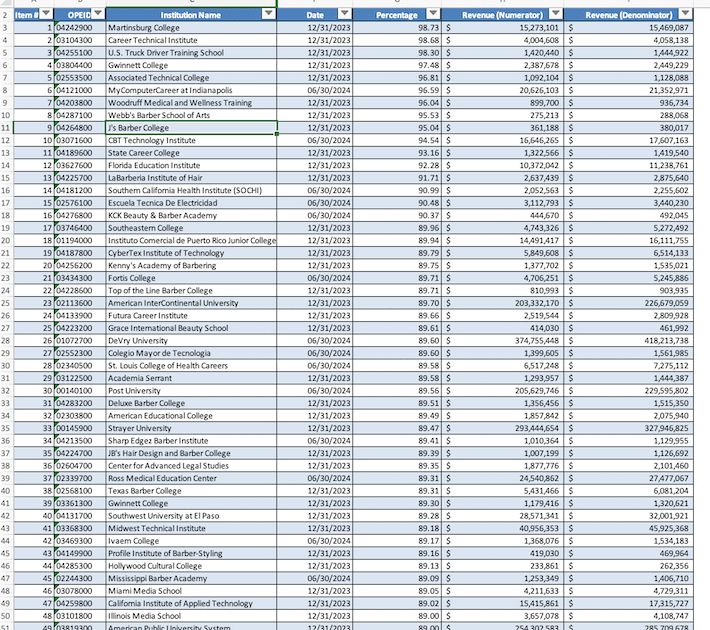
    The new rule took effect in 2023, and when the Department released the latest 90-10 calculations, for the 2023-24 academic year, sixteen for-profit colleges had flunked, compared with just five the previous year. These were mostly smaller schools, led by West Virginia’s Martinsburg College, which got 98.73 percent of its revenue from federal taxpayer dollars, and Washington DC’s Career Technical Institute, which reported 98.68 percent. Another 36 schools, including major institutions such as DeVry University, Strayer University, and American Public University, came perilously close to the line, at 89 percent or higher.

    The education department last week altered the calculation by effectively restoring an old loophole that allowed for-profit colleges to use revenue from programs that are ineligible for federal aid to count on the non-federal side. That loophole was expressly addressed, via a compromise agreement, after Department officials discussed the details with representatives of for-profit colleges, during the 2022 negotiated rulemaking meetings.

    All the flunking or near-flunking schools can now get a new, potentially more favorable, calculation of their 90-10 ratio under the Trump administration’s re-interpretation of the rule.

    In the lawless fashion of the Trump regime, the Department has now undermined a provision of its own regulation without going through the required negotiated rulemaking process. (The Department’s notice last week included a labored argument about why its action was lawful.)

    As it has done multiple times over its first six months, the Trump Department of Education, under Secretary Linda McMahon, has again taken a step that allows poor-quality predatory for-profit colleges to rip off students and taxpayers.

    Source link

  • Jailed for basic journalism, Texas reporter takes free speech fight to Supreme Court

    Jailed for basic journalism, Texas reporter takes free speech fight to Supreme Court

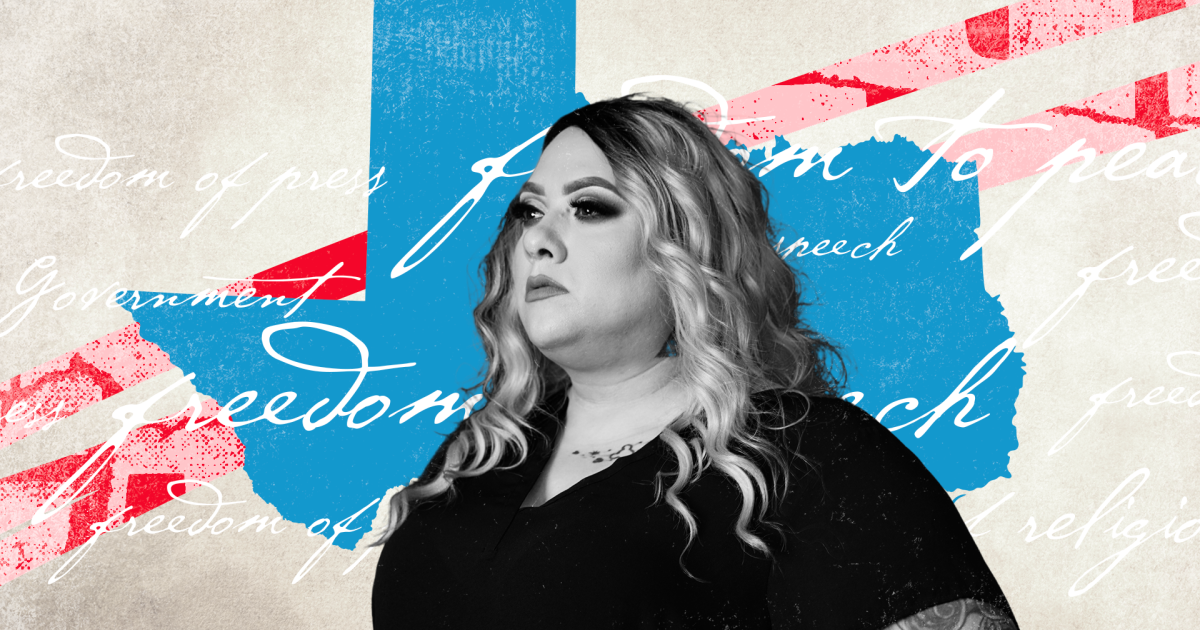
    For years, Priscilla Villarreal has fought to hold officials accountable when they violate Americans’ First Amendment rights, including the Laredo officials who threw her in jail just for asking police to verify facts as part of her everyday news reporting. 

    Priscilla sued, and last fall, the Supreme Court gave her a shot at justice, granting her petition and ordering the U.S. Court of Appeals for the Fifth Circuit to reconsider Priscilla’s case against the officials who tried to turn routine journalism into a felony.

    But in April, a divided Fifth Circuit doubled down, holding the Laredo officials had qualified immunity, a doctrine that often shields government officials from lawsuits even when they violate the Constitution. In his dissent, one judge lamented that the court had simply reinstated what it “mistakenly said before, just in different packaging.”

    So Priscilla and FIRE are doubling down, too. We’re heading back to the Supreme Court, asking it to make crystal clear that Americans have every ability to hold officials accountable for violating core First Amendment rights — like the right to ask government officials questions, and publish what they share.

    That’s exactly what Priscilla has been doing for years, reporting on local crime, traffic, and other news for her 200,000 Facebook followers. She’s made a name for herself too. The New York Times describes her as “arguably the most influential journalist in Laredo.”  But despite her experience, her journey from Laredo, a city on the Mexican border, to the Supreme Court has been a long one.

    In 2017, she reported on a high-profile suicide and a fatal car accident. For both stories, Priscilla received tips from private citizens and verified those facts by asking a Laredo police officer. The First Amendment squarely protects this routine journalistic practice. After all, at the heart of the First Amendment is the freedom to ask government officials and institutions questions, even tough ones.

    Angered by Priscilla’s reporting on these incidents, Laredo officials tried to bully her into silence by arresting her. But with no legitimate basis on which to charge her with a crime, police and prosecutors turned to a decades-old statute that no local official had ever enforced. 

    That law makes it a felony to ask for or receive non-public information from a government official with the intent to benefit from that information. Laredo police and prosecutors pursued two warrants for Priscilla’s arrest under the statute. In short, Priscilla went to jail for basic journalism. 

    So in 2019, she sued the officials for violating her First and Fourth Amendment rights. As Judge James Ho later remarked in his dissent at the Fifth Circuit, it “should’ve been an easy case for denying qualified immunity.”

    But it hasn’t been. A Texas federal district court dismissed her claims on the basis of qualified immunity. A three-judge panel of the Fifth Circuit reversed that decision, denying qualified immunity. But when the whole Fifth Circuit reheard the case at the government’s request, it reversed the panel ruling in a splintered 9-7 decision.

    In 2024, Priscilla and FIRE took her fight to the Supreme Court for the first time. The Court granted Priscilla’s petition to review the Fifth Circuit’s decision and ordered it to reconsider her case in light of the Supreme Court’s 2024 decision, Gonzalez v. Trevino. That decision affirmed the ability to sue government officials when they retaliate against protected speech by selectively enforcing statutes.

    But last April, a splintered Fifth Circuit decided against Priscilla again, granting qualified immunity to the officials who defied longstanding Supreme Court precedent and core principles of American liberty by orchestrating her arrest.

    The Fifth Circuit’s ruling not only denies Priscilla justice, but gives police and prosecutors a free pass to turn core First Amendment rights into a crime. That result cannot stand. And that’s why Priscilla and FIRE are going back to the Supreme Court.

    Priscilla’s fearless reporting has made her a local “folk hero.” Now, she’s channeling the same grit into defending not just her own rights, but the First Amendment rights of all Americans.

    Source link

  • Release of NAEP science scores

    Release of NAEP science scores

    UPDATE: After this story was published, the Education Department issued a press release Monday afternoon, July 7, announcing that Matthew Soldner will serve as acting commissioner of the National Center for Education Statistics, in addition to his role as acting director of the Institute of Education Sciences. The job of statistics chief had been vacant since March and had prevented the release of assessment results.

    The repercussions from the decimation of staff at the Education Department keep coming. Last week, the fallout led to a delay in releasing results from a national science test.

    The National Assessment of Educational Progress (NAEP) is best known for tests that track reading and math achievement but includes other subjects, too. In early 2024, when the main reading and math tests were administered, there was also a science section for eighth graders. 

    The board that oversees NAEP had announced at its May meeting that it planned to release the science results in June. But that month has since come and gone. 

    Why the delay? There is no commissioner of education statistics to sign off on the score report, a requirement before it is released, according to five current and former officials who are familiar with the release of NAEP scores, but asked to remain anonymous because they were not authorized to speak to the press or feared retaliation. 

    Related: Our free weekly newsletter alerts you to what research says about schools and classrooms.

    Peggy Carr, a Biden administration appointee, was dismissed as the commissioner of the National Center for Education Statistics in February, two years before the end of her six-year term set by Congress. Chris Chapman was named acting commissioner, but he was fired in March, along with half the employees at the Education Department. The role has remained vacant since.

    A spokesman for the National Assessment Governing Board, which oversees NAEP,  said the science scores will be released later this summer, but denied that the lack of a commissioner is the obstacle. “The report building is proceeding so the naming of a commissioner is not a bureaucratic hold-up to its progress,” Stephaan Harris said by email.

    The delay matters. Education policymakers have been keen to learn if science achievement had held steady after the pandemic or tumbled along with reading and math. (Those reading and math scores were released in January.)

    The Trump administration has vowed to dismantle the Education Department and did not respond to an emailed question about when a new commissioner would be appointed. 

    Related: Chaos and confusion as the statistics arm of the Education Department is reduced to a skeletal staff of 3

    Researchers hang onto data

    Keeping up with administration policy can be head-spinning these days. Education researchers were notified in March that they would have to relinquish federal data they were using for their studies. (The department shares restricted datasets, which can include personally identifiable information about students, with approved researchers.) 

    But researchers learned on June 30 that the department had changed its mind and decided not to terminate this remote access. 

    Lawyers who are suing the Trump administration on behalf of education researchers heralded this about-face as a “big win.” Researchers can now finish projects in progress. 

    Still, researchers don’t have a way of publishing or presenting papers that use this data. Since the mass firings in mid-March, there is no one remaining inside the Education Department to review their papers for any inadvertent disclosure of student data, a required step before public release. And there is no process at the moment for researchers to request data access for future studies. 

    “While ED’s change-of-heart regarding remote access is welcome,” said Adam Pulver of Public Citizen Litigation Group, “other vital services provided by the Institute of Education Sciences have been senselessly, illogically halted without consideration of the impact on the nation’s educational researchers and the education community more broadly.  We will continue to press ahead with our case as to the other arbitrarily canceled programs.”

    Pulver is the lead attorney for one of three suits fighting the Education Department’s termination of research and statistics activities. Judges in the District of Columbia and Maryland have denied researchers a preliminary injunction to restore the research and data cuts. But the Maryland case is now fast-tracked and the court has asked the Trump administration to produce an administrative record of its decision-making process by July 11. (See this previous story for more background on the court cases.)

    Related: Education researchers sue Trump administration, testing executive power

    Some NSF grants restored in California

    Just as the Education Department is quietly restarting some activities that DOGE killed, so is the National Science Foundation (NSF). The federal science agency posted on its website that it had reinstated 114 awards to 45 institutions as of June 30. NSF said it was doing so to comply with a federal court order to reinstate awards to all University of California researchers. It was unclear how many of these research projects concerned education, one of the major areas that NSF funds.

    Researchers and universities outside the University of California system are hoping for the same reversal. In June, the largest professional organization of education researchers, the American Educational Research Association, joined forces with a large coalition of organizations and institutions in filing a legal challenge to the mass termination of grants by the NSF. Education grants were especially hard hit in a series of cuts in April and May. Democracy Forward, a public interest law firm, is spearheading this case.

    Contact staff writer Jill Barshay at 212-678-3595, jillbarshay.35 on Signal, or [email protected].

    This story about delaying the NAEP science score report was written by Jill Barshay and produced by The Hechinger Report, a nonprofit, independent news organization focused on inequality and innovation in education. Sign up for Proof Points and other Hechinger newsletters.

    The Hechinger Report provides in-depth, fact-based, unbiased reporting on education that is free to all readers. But that doesn’t mean it’s free to produce. Our work keeps educators and the public informed about pressing issues at schools and on campuses throughout the country. We tell the whole story, even when the details are inconvenient. Help us keep doing that.

    Join us today.

    Source link

  • How worried are we about the future? Let’s quantify it.

    How worried are we about the future? Let’s quantify it.

    Fear. Uncertainty. Those are human emotions that many people are feeling these days. It turns out you can quantify fear and uncertainty by looking at the stock market.

    Stocks are shares of a business that people can buy on a public market, betting that the business will grow and profit and the shares will be more valuable over time. But share prices also rise and fall based on how people feel about the economic future. 

    So individual stocks, as well as whole sectors of an industry or the overall market in general, can rise or fall on economic or company reports, politics, geopolitical events, unexpected news and whether investors are optimistic or pessimistic about the future. 

    When these kinds of changes or reports cause stocks to suddenly and frequently rise and fall, we say the market is “volatile.” 

    Throughout 2025, the U.S. stock market, which is the biggest in the world, has been pretty volatile. One way to measure it is through the Standard and Poor’s 500 Index, which is a snapshot of 500 major company stocks. 

    Politics and plunging markets

    From mid-February to early April, the S&P 500 index plummeted 19% as U.S. President Donald Trump launched a trade war that raised fears of inflation, a recession, job losses and a swelling national debt.  

    The U.S. market has largely recovered those losses in response to Trump pausing his tariff wars and lowering tariffs from scary levels. As of 30 June 2025, the stock market was dancing in record high territory. 

    Robert Whaley, a finance professor at Vanderbilt University and director of its Financial Markets Research Center, developed a way to measure a stock market’s volatility by keeping track of stock options — contracts that gives investors the right, but not an obligation, to buy or sell a stock at a predetermined price at a set future date. 

    It is popularly known as the “fear index” and goes by the symbol VIX. 

    The fear index is a measure of how much volatility is expected in the next month. Historically, its long-term average has been 17. During April, it was 40-50. In comparison, the index was at 85 in the COVID-19 market crash of March 2020 and at 89.5 during the global financial crisis of 2008-2009. 

    Buying and selling on fear

    What happens during market volatility? High volatility usually implies higher risk because price movements are less predictable. While some short-term stock traders can make money during market volatility, longer-term buy-and-hold investors might get jittery. 

    Mutual fund cash holdings were at a 15-year high in March. That means that professional money managers held onto cash and stayed on the sidelines. What do global investors crave? Stability and predictability. 

    “The VIX as of now (intraday June 30) is at 17 so things are calmer which is surprising given what is happening in Ukraine and Iran,” Whaley said. “It seems the markets have become quite comfortable about it.” 

    He underscored that the fear index is intended to help institutional investors — such as those who manage pension funds or retirement accounts that many people invest in — predict market volatility over the next 30 days. For people who might not be actively involved in the stock market, all of this still matters. 

    “It reflects how institutions are feeling about the marketplace,” Whaley said. “An analogy would be if you own a house on the beach and learn a hurricane is coming. How much might insurance cost if you could actually buy it that late?” 

    Reading the market

    Whaley said that young people should develop an intuitive feel of stock market volatility, since it is an expression of nervousness. 

    “In essence, it’s a fear gauge,” he said. “If people are getting nervous buying put options [that gives investors a right to buy] that drives up put prices. If VIX was at 30-40% institutions are scared to death. Right now at 17%, there’s no concern in the short run.”

    Whaley said the index is normally around 15-20%, but a reading below 15% would reflect that investors are complacent. 

    As for the limitations of the fear index, Whaley said some people read too much into it and some institutions might overpay for VIX options and futures to try to insure their investments against losses. 

    While the fear index was born on a real-time basis in 1993, Whaley calculated that it would have reached an intraday high of 172 and closed at 156 on October 19, 1987, the date of the global stock market crash known as Black Monday. Whaley said other market earthquakes that caused big percentage drops included the 2008 financial crisis and Trump’s tariffs. 

    Whaley said viewed in a historical context, the fear index is like any other index — like the Dow Jones Industrial Average — that has a market value. “Indices are useful in terms of their history,” he said. “A barometer of fear. If VIX is higher, figure out what is going on.” 


    Questions to consider:

    1. What type of news might cause fear in a stock market?

    2. If there is a lot of uncertainty in a stock market, what do many professional investors do? 

    3. Can you think of another way to measure how fearful people are about the future?


    Source link

  • On the Sensibility of Cognitive Outsourcing (opinion)

    On the Sensibility of Cognitive Outsourcing (opinion)

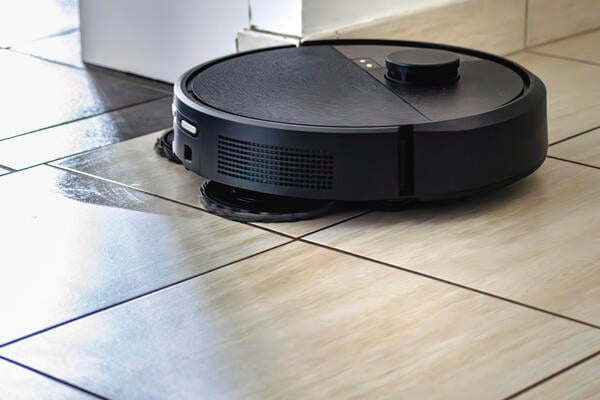
    I am deeply worried about my vacuuming skills. I’ve always enjoyed vacuuming, especially with the vacuum cleaner I use. It has a clear dustbin, and there’s something cathartic about running it over the carpet in the upstairs hallway and seeing all the dust and debris it collects. I’m worried, however, because I keep outsourcing my downstairs vacuuming to the robot vacuum cleaner my wife and I bought a while back. With three kids and three dogs in the house, our family room sees a lot of foot traffic, and I save a lot of time by letting the robot clean up. What am I losing by relying on my robot vacuum to keep my house clean?

    Not much, of course, and I’m not actually worried about losing my vacuuming skills. Vacuuming the family room isn’t a task that means much to me, and I’m happy to let the robot handle it. Doing so frees up my time for other tasks, preferably bird-watching out the kitchen window, but more often doing the dishes, a chore for which I don’t have a robot to help me. It’s entirely reasonable for me to offload a task I don’t care much about to the machines when the machines are right there waiting to do the work for me.

    That was my response to a new high-profile study from a MIT Media Lab team led by Nataliya Kosmyna. Their preprint, “Your Brain on ChatGPT: Accumulation of Cognitive Debt When Using an AI Assistant for Essay Writing Task,” details their experiment. The team enlisted 54 adult participants to write short essays using SAT prompts over multiple sessions. A third of the participants were given access to ChatGPT to help with their essay writing, a third had access to any website they could reach through a Google search engine but were prohibited from using ChatGPT or other large language models and a third had no outside aids (the “brain-only” group). The researchers not only scored the quality of the participants’ essays, but they also used electroencephalography to record participants’ brain activity during these writing tasks.

    The MIT team found that “brain connectivity systematically scaled down with the amount of external support.” While the brain-only group “exhibited the strongest, widest‑ranging [neural] networks,” AI assistance in the experiment “elicited the weakest overall coupling.” Moreover, the ChatGPT users were increasingly less engaged in the writing process over the multiple sessions, often just copying and pasting from the AI chat bot by the end of the experiment. They also had a harder time quoting anything from the essay they had just submitted compared to the brain-only group.

    This study has inspired some dramatic headlines: “ChatGPT May Be Eroding Critical Thinking Skills” and “Study: Using AI Could Cost You Brainpower” and “Your Reliance on ChatGPT Might Be Really Bad for Your Brain.” Savvy news readers will key into the qualifiers in those headlines (“may,” “could,” “might”) instead of the scarier words, and the authors of the study have made an effort to prevent journalists and commentators from overplaying their results. From the study’s FAQ: “Is it safe to say that LLMs are, in essence, making us ‘dumber’? No!” As is usually the case in the AI-and-learning discourse, we need to slow our roll and look beyond the hyperbole to see what this new study does and doesn’t actually say.

    I should state now for the record that I am not a neuroscientist. I can’t weigh in with any authority on the EEG analysis in this study, although others with expertise in this area have done so and have expressed concerns about the authors’ interpretation of EEG data. I do, however, know a thing or two about teaching and learning in higher education, having spent my career at university centers for teaching and learning helping faculty and other instructors across the disciplines explore and adopt evidence-based teaching practices. And it’s the teaching-and-learning context in the MIT study that caught my eye.

    Consider the task that participants in this study, all students or staff at Boston-area universities, were given. They were presented with three SAT essay prompts and asked to select one. They were then given 20 minutes to write an essay in response to their chosen prompt, while wearing an EEG helmet of some kind. Each subject participated in a session like this three times over the course of a few months. Should we be surprised that the participants who had access to ChatGPT increasingly outsourced their writing to the AI chat bot? And that, in doing so, they were less and less engaged in the writing process?

    I think the takeaway from this study is that if you give adults an entirely inauthentic task and access to ChatGPT, they’ll let the robot do the work and save their energy for something else. It’s a reasonable and perhaps cognitively efficient thing to do. Just like I let my robot vacuum cleaner tidy up my family room while I do the dishes or look for an eastern wood pewee in my backyard.

    Sure, writing an SAT essay is a cognitively complex task, and it is perhaps an important skill for a certain cohort of high school students. But what this study shows is what generative AI has been showing higher ed since ChatGPT launched in 2022: When we ask students to do things that are neither interesting nor relevant to their personal or professional lives, they look for shortcuts.

    John Warner, an Inside Higher Ed contributor and author of More Than Words: How to Think About Writing in the Age of AI (Basic Books), wrote about this notion in his very first post about ChatGPT in December 2022. He noted concerns that ChatGPT would lead to the end of high school English, and then asked, “What does it say about what we ask students to do in school that we assume they will do whatever they can to avoid it?”

    What’s surprising to me about the new MIT study is that we are more than two years into the ChatGPT era and we’re still trying to assess the impact of generative AI on learning by studying how people respond to boring essay assignments. Why not explore how students use AI during more authentic learning tasks? Like law students drafting contracts and client memos or composition students designing multimodal projects or communications students attempting impossible persuasive tasks? We know that more authentic assignments motivate deeper engagement and learning, so why not turn students loose on those assignments and then see what impact AI use might have?

    There’s another, more subtle issue with the discourse around generative AI in learning that we can see in this study. In the “Limitations and Future Work” section of the preprint, the authors write, “We did not divide our essay writing task into subtasks like idea generation, writing, and so on.” Writing an essay is a more complicated cognitive process than vacuuming my family room, but critiques of the use of AI in writing are often focused on outsourcing the entire writing process to a chat bot. That seems to be what the participants did in this study, and it is perhaps a natural use of AI when given an uninteresting task.

    However, when a task is interesting and relevant, we’re not likely to hand it off entirely to ChatGPT. Savvy AI users might get a little AI help with parts of the task, like generating examples or imagining different audiences or tightening our prose. AI can’t do all the things that a trained human editor can, but, as writing instructor (and human editor) Heidi Nobles has argued, AI can be a useful substitute when a human editor isn’t readily available. It’s a stretch to say that my robot vacuum cleaner and I collaborate to keep the house tidy, but it’s reasonable to think that someone invested in a complex activity like writing might use generative AI as what Ethan Mollick calls a “co-intelligence.”

    If we’re going to better understand generative AI’s impact on learning, something that will be critical for higher education to do to keep its teaching mission relevant, we have to look at the best uses of AI and the best kinds of learning activities. That research is happening, thankfully, but we shouldn’t expect simple answers. After all, learning is more complicated than vacuuming.

    Derek Bruff is associate director of the Center for Teaching Excellence at the University of Virginia.

    Source link

  • The ART of Professionalism (opinion)

    The ART of Professionalism (opinion)

    A career is much like a work of art: We select an area to study—a medium, of sorts—in which to pursue an interest or a desire. We start by obtaining foundational knowledge before creating something that contributes to the greater society. Some may benefit from what is produced; others may not. Some will appreciate the output; others will not gain much, if anything, from what is constructed. At the center of the result is the artist themselves. Others along the way lend their own expertise, time and insights toward the outcome. However, it is the unique skills, perspectives, knowledge, choices and behaviors of the artist that determine what is created.

    We are all artists in the making. We have a profession in which we have chosen to engage. As graduate students or postdoctoral scholars, we gain the foundations needed for our chosen discipline. During our time training in higher education, we focus on acquiring technical skills and techniques to contribute to sustaining and expanding our fields of study. We set upon the path to becoming experts through trial and error, discovery and disappointments, gains and losses.

    Like with a work of art, we may start from a place of uncertainty: What can appear to be confounding fragments of a greater idea can coalesce in ways that surprise and satisfy us. We pull together parts and pieces to make something whole or even construct something unique. Yet while we are engaged in this creative and intellectual process, we must also work within defined boundaries. Expectations and ethical standards guide our professional conduct. Understanding these nuances is essential to forming a professional identity.

    Each profession carries its own expectations for behavior, decision-making and accountability. Cambridge defines “professionalism” as “the qualities connected with trained and skilled people.” We can have strong technical skills and deep knowledge in our particular disciplines; however, these alone do not guarantee our level of professionalism when we are actually in the workforce interfacing with supervisors, colleagues, team members and clients.

    While having the foundational skills and understanding may guarantee some success within a career, it is actually the capacity for acquiring and applying what I’ve termed “human-centered competencies” that ensures a greater degree of career fulfillment. Human-centered competencies consist of behaviors that involve a deeper sense of self-awareness. Recognizing and managing our behaviors, and understanding how they may impact those interacting with us, helps us relate to others in ways that forge effective communication, efficacious decision-making, constructive conflict resolution and fruitful work endeavors.

    With this in mind, let’s explore the ART of professionalism through some simple reflective exercises. Think about the questions presented here as intended to encourage an honest reflection on the art we are creating within our own spheres of influence.

    Attitude

    Our attitude is an outward reflection of what we are thinking and how we are feeling. Our attitude toward an assignment, toward a co-worker, toward ourselves or toward life itself is exemplified through our behaviors. Are we respectful and kind to others? Do we smile at who we see in the mirror or constantly chastise ourselves for what we have done (or not done)? Do we tend to jump to negative conclusions regarding those with whom we interact? Do we shake hands, look people in the eye and smile? Or are we downcast, avoidant and possibly even surly? How do we appear? Are we dressed for the part—one in which we want to be respected and taken seriously—or do we look like we would rather be on the couch bingeing on Netflix and eating potato chips?

    Our attitude says a lot about ourselves, and sometimes we do not even have to open our mouths to reveal it. Our internal dialogue can have an impact on our external behaviors, so we need to be aware of our attitude. We can improve it, if needed. We can start by examining how we carry ourselves, as our posture and physical appearance convey nonverbal messages. How we show up is also important to consider. Are we prepared for meetings? Do we speak up with confidence? Do we actively listen to others and appreciate their contributions?

    Our attitude reflects our frame of mind, and we illustrate who we are through our attitude. We also should keep in mind that each of us represents more than ourselves; we reflect the values and credibility of our professional communities.

    Responsibility

    Within the work environment we all have duties, projects or assignments that we manage. Responsibility involves taking ownership of our decisions, our actions and our outcomes. Work involves interdependence; it is rare that we can achieve a goal all on our own. Even artists need people who help them develop their skills, manufacture their tools, market their work and provide venues to exhibit their talent. Within the workplace, we will need others and others will need us.

    Responsibility, therefore, is a crucial competency to have as a professional. Exhibiting responsibility involves both dependability and accountability. Being dependable is a choice, and this can involve time management, setting boundaries and fulfilling obligations; we show up on time and we follow through with what we say we are going to do. Accountability means that we acknowledge when things have not worked out as planned, we recognize our contributions to successes and we face the consequences of our decisions and actions, whether positive or negative. Instead of evaluating situations as win or lose, we can choose to look at outcomes as win or learn. Whether we experience a victory or suffer a defeat, we can always learn from the process. In essence, responsibility is about us doing our part so that we contribute, in a mindful way, to the success and well-being of our colleagues and co-workers.

    Trust

    Trust is by far the most important component of professionalism. Trust looks different in a professional atmosphere than it does in personal life. Trust involves being genuine with others. We want to be able to count on others and to believe that they are being honest with us. The same expectations for honesty should hold when it comes to our own behavior.

    Trust involves being reliable, striving to meet expectations, fulfilling obligations, avoiding gossip and feeling secure in the knowledge that harm will not be done or betrayal will not occur. As professionals, it is imperative that we are trustworthy, as this is a fundamental component of human interactions. Being competent at trust involves building goodwill, being cooperative, displaying integrity, adhering to our values, engaging in sincere interactions and forming strong alliances. Without trust, bonds are broken, relationships are destroyed and organizations fail. We need to examine our words and our actions to evaluate how trustworthy we may seem to others. Being empathetic, reliable and ethical will serve us well as we pursue our passion and contribute our talents to the well-being of those with whom we work, as well as those who benefit from what our teams and organizations produce.

    Conclusion: Building a Body of Work

    As professionals, we are not just building careers; we are creating something much more enduring: a body of work, a reputation, a legacy. The skills we acquire in our chosen disciplines are only part of the equation. Equally important are the attitudes we embody, the responsibilities we accept and the trust we build. It takes time, reflection and endurance to create a great work of art; the same is true for our careers. The process may be unpredictable, but the core elements—our values, our character and our professionalism—will determine how our work is received and remembered.

    So ask yourself: What kind of professional artist do you want to be? What are you creating through your everyday choices? How will your ART— attitude, responsibility and trust—shape your path forward?

    Rhonda Sutton is dean of professional development at North Carolina State University’s Graduate School. She oversees a team that provides programming focused on career readiness, communication skills and teaching for graduate students and postdoctoral scholars. She also facilitates professional development initiatives on leadership, mentoring and wellness. Rhonda is a member of the Graduate Career Consortium, an organization providing an international voice for graduate-level career and professional development leaders.


    Source link

  • Can a university be civic if it fails to invest in local relationships?

    Can a university be civic if it fails to invest in local relationships?

    The Government wants English universities to play a greater civic role in their localities. But new research shows universities are failing to invest in the people who perform this work, putting local relationships at risk.

    A new report from the National Civic Impact Accelerator (NCIA) programme, funded by Research England to support civic universities and hosted by Sheffield Hallam University, finds that universities’ work with their communities and local partners is particularly vulnerable to the financial crisis now engulfing higher education. This is despite a strong message from education secretary Bridget Phillipson that the civic role should be one of five top priorities.

    In her letter to university leaders on 4 November last year, Phillipson highlighted that universities should ‘play a full part in both civic engagement, ensuring local communities and businesses benefit fully from your work; and in regional development, working in partnership with local government and employers…’

    Yet there is increasing evidence that those tasked with this work are facing a loss of resources, redundancies, and downgrading as universities focus on balancing the books. Some institutions, such as the University of Staffordshire, have disbanded their civic teams entirely; others have failed to renew employees’ short-term contracts or demanded that staff part-fund their civic roles by generating income.

    Faced with this situation, we at the NCIA decided to explore further the impacts of this trend. We did so initially through an online survey and then through three focus groups in which we explored the situation in detail with 25 participants from 20 universities in England and one in Wales. The participants were all in ‘civic’ roles with responsibility for local partnerships. While some held academic posts, most were in management or professional services positions. The discussions were held under the Chatham House Rule to encourage participants to speak freely.

    “There has been constant restructuring… it is expensive to lose all that valued knowledge.”

    We identified four key risks to universities’ civic activities and relationships. Taken together, these pose a serious threat to universities’ status as ‘anchor institutions’ in their localities.

    The first risk is that universities lose focus as they concentrate on their financial survival, generating uncertainty among local stakeholders about their reliability as partners. The second is a loss of institutional memory: as staff leave or are moved to other roles, relationships are abandoned and need to be rebuilt.

    This risk was summed up by one participant in the discussions: ‘…because of the constant restructuring which seems to be repetitive over so many years … there’s not that continuation of learning, and all the knowledge and those relationships and that richness of what we do feels like it’s been lostIt’s expensive to lose all that valued knowledge.’

    The third risk is a loss of credibility: partners in local government, healthcare or business see a growing gap between universities’ rhetoric about their civic role and their reduction of investment in relationships, or the junior status of the staff assigned to civic activities. This leads to a fourth risk, which is a loss of relevance, reinforcing the populist notion that higher education has little to contribute to issues that matter to local people.

    As one participant commented: ‘If you’re sitting in rooms with leaders of councils and hospitals, for that to be a junior role is a big ask, especially if it’s a junior role on a temporary contract.’

    From the discussions we identified five ‘civic capitals’ that now need to be rebuilt. These are economic (direct investment in local communities); social (relationships and networks); cultural (institutional support and resources); symbolic (leadership and ‘buy-in’ by senior staff); and emotional (the personal commitment and passion of those who do the work).

    We make five policy recommendations for university leaders based on our findings, and three for national government.

    University leaders should:

    1. Set clear local priorities in strategic documents such as Civic University Agreements
    2. Make room for ideas and organic development by fostering a civic culture
    3. Resource civic teams with long-term budgets
    4. Ensure the sustainability of civic activities through long-term commitments
    5. Be accountable both internally and externally for delivering these commitments, with regular reporting supported by locally agreed metrics

    Government policymakers should:

    1. Articulate a clear narrative about the value of civic engagement and expectations of local impact
    2. Incentivise civic activity by ensuring resources are consistently available through the core funding mechanisms for higher education
    3. Foster conditions to make civic activity sustainable by coordinating place-based policies between government departments

    We recognise that universities and government both face challenging times and multiple financial and political pressures. Yet if universities are to play a long-term civic role in their communities, and if government wants higher education to support its ambitions to tackle local inequalities, then sustained investment in civic work is a prerequisite.

    Source link

  • America’s future depends on more first-generation students from underestimated communities earning an affordable bachelor’s degree

    America’s future depends on more first-generation students from underestimated communities earning an affordable bachelor’s degree

    I recently stood before hundreds of young people in California’s Central Valley; more than 60 percent were on that day becoming the first in their family to earn a bachelor’s degree.

    Their very presence at University of California, Merced’s spring commencement ceremony disrupted a major narrative in our nation about who college is for — and the value of a degree.

    Many of these young people arrived already balancing jobs, caregiving responsibilities and family obligations. Many were Pell Grant-eligible and came from communities that are constantly underestimated and where a higher education experience is a rarity.

    These students graduated college at a critical moment in American history: a time when the value of a bachelor’s degree is being called into question, when public trust in higher education is vulnerable and when supports for first-generation college students are eroding. Yet an affordable bachelor’s degree remains the No. 1 lever for financial, professional and social mobility in this country.

    Related: Interested in innovations in higher education? Subscribe to our free biweekly higher education newsletter.

    A recent Gallup poll showed that the number of Americans who have a great deal of confidence in higher education is dwindling, with a nearly equal amount responding that they have little to none. In 2015, when Gallup first asked this question, those expressing confidence outnumbered those without by nearly six to one.

    There is no doubt that higher education must continue to evolve — to be more accessible, more relevant and more affordable — but the impact of a bachelor’s degree remains undeniable.

    And the bigger truth is this: America’s long-term strength — its economic competitiveness, its innovation pipeline, its social fabric — depends on whether we invest in the education of the young people who reflect the future of this country.

    There are many challenges for today’s workforce, from a shrinking talent pipeline to growing demands in STEM, healthcare and the public sector. These challenges can’t be solved unless we ensure that more first-generation students and those from underserved communities earn their degrees in affordable ways and leverage their strengths in ways they feel have purpose.

    Those of us in education must create conditions in which students’ talent is met with opportunity and higher education institutions demonstrate that they believe in the potential of every student who comes to their campuses to learn.

    UC Merced is a fantastic example of what this can look like. The youngest institution in the University of California system, it was recently designated a top-tier “R1” research university. At the same time, it earned a spot on Carnegie’s list of “Opportunity Colleges and Universities,” a new classification that recognizes institutions based on the success of their students and alumni. It is one of only 21 institutions in the country to be nationally ranked for both elite research and student success and is proving that excellence and equity can — and must — go hand in hand.

    In too many cases, students who make it to college campuses are asked to navigate an educational experience that wasn’t built with their lived experiences and dreams in mind. In fact, only 24 percent of first-generation college students earn a bachelor’s degree in six years, compared to nearly 59 percent of students who have a parent with a bachelor’s. This results in not just a missed opportunity for individual first-generation students — it’s a collective loss for our country.

    Related: To better serve first-generation students, expand the definition

    The graduates I spoke to in the Central Valley that day will become future engineers, climate scientists, public health leaders, artists and educators. Their bachelor’s degrees equip them with critical thinking skills, confidence and the emotional intelligence needed to lead in an increasingly complex world.

    Their future success will be an equal reflection of their education and the qualities they already possess as first-generation college graduates: persistence, focus and unwavering drive. Because of this combination, they will be the greatest contributors to the future of work in our nation.

    This is a reality I know well. As the Brooklyn-born daughter of Dominican immigrants, I never planned to go away from home to a four-year college. My father drove a taxi, and my mother worked in a factory. I was the first in my family to earn a bachelor’s degree. I attended college as part of an experimental program to get kids from neighborhoods like mine into “top” schools. When it was time for me to leave for college, my mother and I boarded a bus with five other students and their moms for a 26-hour ride to Vanderbilt University in Nashville, Tennessee.

    Like so many first-generation college students, I carried with me the dreams and sacrifices of my family and community. I had one suitcase, a box of belongings and no idea what to expect at a place I’d never been to before. That trip — and the bachelor’s degree I earned — changed the course of my life.

    First-generation college students from underserved communities reflect the future of America. Their success is proof that the American Dream is not only alive but thriving. And right now, the stakes are national, and they are high.

    That is why we must collectively remove the obstacles to first-generation students’ individual success and our collective success as a nation. That’s the narrative that we need to keep writing — together.

    Shirley M. Collado is president emerita at Ithaca College and the president and CEO of College Track, a college completion program dedicated to democratizing potential among first-generation college students from underserved communities.

    Contact the opinion editor at [email protected].

    This story about first-generation students was produced by The Hechinger Report, a nonprofit, independent news organization focused on inequality and innovation in education. Sign up for Hechinger’s weekly newsletter.

    The Hechinger Report provides in-depth, fact-based, unbiased reporting on education that is free to all readers. But that doesn’t mean it’s free to produce. Our work keeps educators and the public informed about pressing issues at schools and on campuses throughout the country. We tell the whole story, even when the details are inconvenient. Help us keep doing that.

    Join us today.

    Source link