Category: Featured

  • McMahon Breaks Up More of the Education Department

    McMahon Breaks Up More of the Education Department

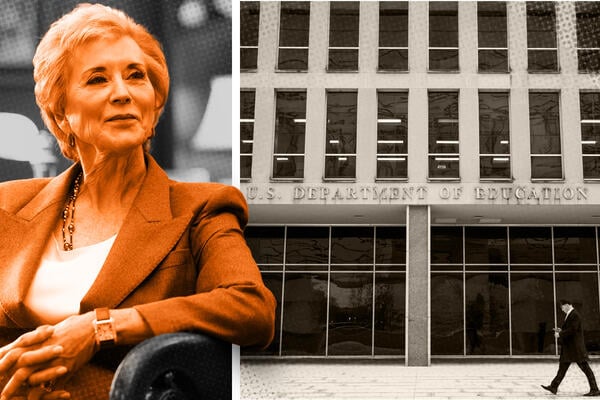
    Photo illustration by Justin Morrison/Inside Higher Ed | Anna Moneymaker/Getty Images | Pete Kiehart for The Washington Post via Getty Images

    The Education Department is planning to move TRIO and numerous other higher education programs to the Labor Department as part of a broader effort to dismantle the agency and “streamline its bureaucracy.”

    Instead of moving whole offices, the department detailed a plan Tuesday to transfer certain programs and responsibilities to other agencies. All in all, the department signed six agreements with four agencies, relocating a wide swath of programs. 

    For instance, the Labor Department is set to take over most of ED’s higher education programs, which include grants that support student success, historically Black colleges and universities, and other minority-serving institutions. Meanwhile, the State Department will handle Fulbright-Hays grants as well as those administered by the International and Foreign Language Education office. Indian Education and programs for tribal colleges are moving to the Interior Department. 

    Several of the offices that have overseen these grant programs were gutted in recent rounds of layoffs, but any staff members who are still managing them will move to the other agencies. ED also has sought to defund some of the grants, deeming them unconstitutional, so it’s not clear what is moving to the other agencies.

    The agreements were signed Sept. 30—the day before the government shut down. ED officials expect the transition to take some time.

    No programs, however, have been moved from the Office for Civil Rights, the Office of Federal Student Aid or the Office of Special Education and Rehabilitation Services. The department is still “exploring the best plan” for those offices, a senior department official said in a press call Tuesday afternoon.

    “These partnerships really mark a major step forward in improving management of select programs and leveraging these partner agencies’ administrative expertise, their experience working with relevant stakeholders and streamlines the bureaucracy that has accumulated here at ED over the decades,” the senior department official said. “We are confident that this will lead to better services for grantees, for schools, for families across the country.”

    Education Secretary Linda McMahon hinted at the sweeping announcement in a social media post Tuesday morning. The secretary posted an ominous video of a ticking clock followed by President Ronald Reagan urging Congress to dissolve the Department of Education. The video ended with a flickering screen that read “The Final Mission,” an echo of her first letter to Education Department staff in which she outlined how she would put herself out of a job.

    President Donald Trump directed McMahon in March to close down her department “to the maximum extent appropriate and permitted by law.”

    Liz Huston, a White House spokesperson, applauded the announcement  describing it as a “bold, decisive action to return education where it belongs—at the state and local level.”

    “The Trump Administration is fully committed to doing what’s best for American students, which is why it’s critical to shrink this bloated federal education bureaucracy while still ensuring efficient delivery of funds and essential programs,” she said in a statement. 

    These moves are the most significant steps McMahon has taken beyond the layoffs to comply with the president’s directive.

    Congress has pressed McMahon multiple times to acknowledge that neither she nor the president can fully shut the department down without lawmakers’ approval. But when addressing these concerns, McMahon has made a point to note that shutting the department and its programs down entirely is different than dismantling bureaucracy and co-managing operations with other cabinet-level departments.

    The department official echoed this Tuesday when talking with reporters, saying that policy and statutory oversight of the programs will still rest with employees at the Department of Ed. But execution of processes, particularly as it pertains to grants, will be managed by other agencies.

    “Education has broad authority under several statutes to contract with other federal agencies to procure services, and the department has had that authority since its inception,” the official said. “We at the Department of Ed have engaged with other partner agencies over 200 times through [inter-agency agreements] to procure various services of other partner agencies over the years—even the Biden administration did it.”

    The department has already moved Career, Technical and Adult Education to the Department of Labor. McMahon has said that effort was essentially a test run to see how other agencies could handle the department’s responsibilities. Democrats in Congress have decried the plan to move CTE to Labor as illegal. 

    Many of the department’s offices have already experienced dramatic disruptions this year, as McMahon used two reductions in force to cut the head count of her staff by more than 50 percent. The latest mass layoff, which took place during the government shutdown, has since been enjoined by a federal court. President Trump also agreed to return affected employees to “employment status” administration when he signed a stopgap bill to temporarily end the 43-day shutdown. 

    But it remains unclear whether those staff members have returned or will ever return to work. Multiple sources told Inside Higher Ed that the language of the bill may allow Trump to leave employees on paid administrative leave until the bill is no longer effective on Jan. 30 and then re-administer the pink slips.

    Prior to Tuesday’s announcement, many higher education experts as well as current and former ED employees were hesitant to declare the department dead. Some said as long as the department and its functions remain codified, it will still be alive. But one former staff member put it this way: “If you take the major organs out of a human, do you still have a human or do you have a corpse?” 

    Amy Laitinen, senior director of the higher education program at New America, a left-leaning think tank, said moving the offices to other federal agencies would not save tax dollars.

    “It fractures and weakens oversight of those dollars, it’s duplicative and it’s wasteful,” she said. “How are you tracking student outcomes to ensure taxpayer dollars are well spent when all of the entities responsible are scattered to the wind? For example, separating the agency in charge of financial aid policy (OPE) from the entity responsible for financial aid implementation (FSA) makes no sense.”

    Source link

  • Strategic Planning for Legacy Programs: Rejuvenating Degrees

    Strategic Planning for Legacy Programs: Rejuvenating Degrees

    Don’t Let Legacy Programs Stall Your Growth

    In higher education today, generating buzz around new program launches is often viewed as the key to growth and market relevance. While there’s nothing wrong with investing in new programs when it makes sense, institutions tend to do so at the expense of existing offerings — including those that built their reputation. Yet legacy programs, when strategically audited and repositioned, can become some of the strongest assets in an institution’s portfolio.

    The challenge is that these programs often don’t receive the same level of attention or investment as new launches. Over time, many become overshadowed — not necessarily because they’ve lost relevance, but because the institution’s focus has shifted. Without consistent evaluation and modernization, the programs may begin to stagnate — enrollments flatten, marketing efforts diminish — while they continue to drain resources and faculty energy.  

    At the same time, legacy programs often hold unique advantages that newer offerings lack: established reputations, loyal alumni networks, and faculty with deep expertise. When they’re reexamined and repositioned through a strategic lens — leveraging internal data, market insight, and refreshed messaging — legacy programs can drive renewed growth in an increasingly competitive marketplace. 

    Auditing Programs for Their Growth Potential 

    A deliberate, data-informed audit of an institution’s programs can be the first step toward revitalizing those that are underperforming. A well-designed audit doesn’t just identify weaknesses — it also can uncover opportunities for renewal and growth. 

    A program life cycle audit assesses the current health of existing programs and tracks their performance over time. Key metrics in an audit might include:

    • Enrollment and retention trends, to gauge the program’s long-term viability
    • Course completion and graduation rates, as indicators of students’ satisfaction and support
    • Employment outcomes, to measure the program’s industry relevance and career alignment
    • Faculty-learner ratio, to ensure efficient use of instructional resources
    • Program search demand trends, to gauge the market’s interest in the program

    This process helps institutions identify whether their legacy programs are declining, stable, or experiencing renewed interest. These insights enable academic leadership teams to direct resources toward the programs that are most likely to drive growth — or sunset programs that no longer advance the institution’s goals.

    Audits shouldn’t rely solely on internal data. Comparing a program’s performance results with market demand data — such as regional job growth projections and competitors’ offerings — can clarify what the program’s challenges are and whether they stem from internal execution or broader shifts in the field. 

    Measuring Program-Market Fit 

    Analyzing a program’s market fit is just as important as evaluating its internal performance. It can help institutions decide which legacy programs need retooling, which ones are suitable for scale, and which ones should be phased out.   

    A program’s market fit analysis doesn’t have to be overly complex. It can begin with three fundamental questions:

    • Is there still demand?
      The analysis should start with a review of labor market data, industry trends, search trends, and alumni outcomes to determine whether a particular field remains robust or if demand is shifting toward other subjects or credentials.
    • How does our program compare?
      The next step is to assess what other institutions are offering in terms of delivery format (such as in-person versus online learning), curriculum, and pricing for similar programs. Understanding the competitive landscape helps identify areas where an institution’s program overlaps with others and where there may be opportunities to differentiate.
    • Does the program align with our institutional strengths?
      Legacy programs often reflect areas where the institution already has deep expertise or established credibility. If those strengths still align with current market demand, they can serve as a solid foundation for a program’s revitalization rather than a reason for its retirement. 

    Evaluating these three dimensions helps determine whether a program needs a full-blown relaunch or a more subtle refresh. The goal isn’t to reinvent for the sake of reinvention. It’s to make sure that each offering continues to serve students while also supporting the institution’s objectives. 

    Relaunching Programs With Purpose: Marketing Strategies 

    When a legacy program still holds value but needs renewed visibility, a structured relaunch can help ensure its continued relevance. Effective relaunches align academic updates, marketing strategy, and admissions communication so that all teams are working toward the same goal: positioning the program for growth. 

    A comprehensive relaunch checklist can help guide this process. Elements to consider include:

    • Program curriculum and delivery updates that reflect today’s learning preferences — such as hybrid or online models to accommodate adult learners — and industry expectations
    • Consistent messaging across marketing and admissions, ensuring that both internal and external audiences understand what’s new
    • Refreshed and tested marketing materials, including program pages and collateral materials that articulate outcomes, flexibility, and value to prospective students

    Refreshing a program’s branding and positioning is a crucial step. Students’ needs evolve, so the program’s story should evolve too. Simple adjustments — such as updating program names for clarity, refining messaging to align with search trends, or highlighting regional workforce connections — can make legacy programs more discoverable and relevant.

    Faculty also play a vital role in rebranding. Leveraging their expertise lends authenticity and authority to program relaunches. Featuring their research and industry partnerships in marketing materials reinforces the program’s real-world impact and signals that it’s grounded in experience, not just theory. 

    Key Takeaways

    • New program launches aren’t the only pathway to growth. Sustainable success also stems from repositioning existing programs.
    • Strategic audits of legacy offerings that assess their long-term performance and market fit enable your institution to relaunch them with intention.
    • Institutions that regularly review and refresh their degree portfolios are better positioned to achieve scalable, market-responsive growth while honoring the programs that built their foundation. 

    Reinvigorate Your Programs — and Your Growth Strategy

    Archer Education partners with dozens of institutions to help them launch new programs and revitalize existing ones to amplify their visibility and drive real growth. In a competitive market, data-driven program strategies enable greater institutional alignment and better market fit. 

    Contact our team today and let us help you rejuvenate your degree portfolio.

    Source link

  • How one young woman broke free of a media addiction

    How one young woman broke free of a media addiction

    I knew every word to the saddest songs on my playlist. Not because I loved music, but because depression had become my language. I was 14, lying in my room with my family just beyond the door, close enough to hear their voices, far enough that they might as well have been in another country.

    I had been expelled from school months earlier. “Disciplinary issues,” they called it. My family’s disappointment sat heavy in our home, unspoken but everywhere. We lived together, ate together, but there was no closeness, no one I could talk to.

    I tried to find help. I downloaded mental health apps, desperate for someone, anyone, to talk to. Every single one wanted money: subscriptions, fees, payments I couldn’t afford. I stared at those payment screens feeling like I was drowning, watching help float just out of reach.

    That’s when the screen became my only escape. It started two years earlier, in Primary 6, when house workers casually showed me explicit images on their phones. I was just a child; curious, confused, not understanding what I was seeing. Then it continued at school with friends, and something awakened in me that I didn’t know how to name or control.

    Now, alone and depressed, pornography became my refuge. Not because it made me happy, but because for a few minutes, it made me feel something other than suffocating sadness. It was free. It was always available. And unlike everyone in my life, it didn’t judge me.

    A cycle begins

    I didn’t wake up one morning and decide to be addicted. At first, it felt harmless, a way to escape. I told myself, It’s just this once. I’m in control. But addiction is a liar. Soon, it wasn’t me making the choices, the choices were making me.

    I became a professional actor: smiling, joking, saying “I’m fine.” Inside, I was drowning. Mornings brought disgust and broken promises. “This is the last time,” I would whisper. By evening, I was back in the same cycle.

    Being a Christian made it worse. How could I worship on Sunday and fall back into the same pit during the week? I carried my Bible with trembling hands, wondering: Does God still want me? Is He tired of forgiving me?

    What made everything harder was the silence; not just mine, but from my entire community.

    In many African homes, conversations about struggles don’t happen. Children are raised to “be strong,” “obey,” and “not bring shame.” So, when addiction creeps in, we already know: I can’t tell my parents because we know the response is often punishment and disappointment rather than compassion and feeling secure.

    The things we don’t discuss

    My family was no different. We shared meals, went to church together. But I couldn’t tell them about the depression that made me want to die, or the addiction consuming me. Not because they were cruel, but because we’d never learned how to talk about things that hurt.

    In many communities, struggles like pornography are labeled as spiritual weakness rather than human pain. Youth are told to “pray harder” while root wounds remain untouched. Girls especially face pressure to be “good daughters” because any confession can bring family shame.

    After my expulsion, I carried not just my own shame, but my family’s disappointment, the fear of being labeled a failure, the burden of disgrace.

    Addiction thrives in that silence. It feeds on fear; fear of punishment, of shame, of losing respect. So, we hide behind grades, church attendance, fake smiles. Inside, we are prisoners.

    For Christians struggling with addiction, the battle isn’t linear. One day you pray and feel close to God; the next, guilt crashes down. You confess, repent, hope but relapse comes again. I can’t get free. I’m weak. I keep failing.

    Faith meets struggle.

    Each fall reinforces the lie that you’re beyond redemption. You watch others grow in faith and compare your hidden failures to their visible victories. The church can make this harder. Fear of gossip or rejection stops you from seeking support. If they knew, would they still respect me?

    I struggled with this constantly. Sundays brought worship and hope. By Tuesday, I’d be back in the cycle, convinced I’d disappointed God one too many times. Everyone seemed to have faith figured out while I failed again and again.

    It’s strange having a full contact list but feeling completely alone. People assume you’re fine. “You’re always smiling,” they say. That image becomes a trap. If you break the mask, they might judge.

    The worst I’ve discovered is that the more people around you, the lonelier you feel. Addiction thrives in isolation. Your mind becomes a battlefield of self-condemnation and guilt. You wonder if anyone could love you as you are not as the image you show.

    When you reach out, friends often laugh it off or assume you’re exaggerating. Each failed attempt reinforces that isolation is safer than vulnerability. Trust issues build. You question whether anyone can handle your truth.

    Small steps forward 

    I haven’t stopped struggling. But I’ve discovered steps that help me keep moving forward. God’s presence never left me, even when I couldn’t feel it. Even in the darkest moments, there was a whisper: You are not finished. I’m still here.

    I’ve learned to pray honestly. One night I prayed: God, I’m tired. I failed again.” That messy prayer brought relief. God doesn’t need eloquence, He wants honesty.

    Scripture became my anchor: “My grace is sufficient for you, for my power is made perfect in weakness” (2 Corinthians 12:9). These words remind me that weakness doesn’t disqualify me.

    I’ve sought godly friendship. Sharing my struggle with a mentor brought prayer, guidance, and relief I hadn’t felt in years. Accountability isn’t about judgment; it’s about having allies who speak truth when you’re too weary.

    I celebrate small wins: resisting harmful content one morning, admitting a relapse to a friend, choosing honesty over shame. These moments prove God is working, even if change feels slow.

    Most importantly, I keep returning to God. After rough weeks, I kneel and whisper, “I’m here again, God,” and find quiet peace. The journey isn’t linear, but persistent return is how healing begins.

    Lessons and hope 

    Silence makes struggle worse; speaking lifts the burden. Faith doesn’t remove struggle, but gives hope and a path forward. Vulnerability is strength. Grace works in the mess. Small wins matter.

    If you feel trapped by addiction, shame or loneliness: you are not alone, and your story isn’t finished. God sees every hidden struggle, every tear, every relapse, every moment you’ve smiled while breaking inside. His love is stronger than any fear or guilt you carry.

    Change may be slow. You may stumble again. But every honest step toward God, every whispered prayer, every confession is victory. The times you felt weakest may be when God was shaping your heart for strength.

    Do not be discouraged by setbacks. Healing is a process. God’s timing is perfect, his grace persistent. You are not defined by your struggles; you’re defined by the God who pursues you relentlessly and turns brokenness into testimony.

    To my fellow young Africans carrying battles in silence: I see you. Your pain is real. The silence in your home is real. But so is God’s grace, the possibility of healing, and the chance that your story could be the hope someone else needs.

    I am still on this journey. There are days when old habits call, when depression threatens, when I feel eight years of struggle. But I’m learning that every day I turn back to God, I choose life over death, hope over despair, truth over silence.

    Remember: hope is not passive. It’s a daily choice to trust that God sees you, values you and has a purpose for you. Your story is not over. It is still being written, and your struggles are chapters, not the conclusion. Break the silence. Reach out. Trust that there is grace enough for every fall, love enough for every shame and hope enough for every tomorrow.

    You are not alone.


    Questions to consider:

    1. Why might someone turn to media, like pornography, as a way to escape depression or loneliness?

    2. Why do you think media addiction is so difficult to break from?

    3. If you knew of someone with an addiction, how might you help them free themselves from it?

    Source link

  • Preparing for a new era of teaching and learning

    Preparing for a new era of teaching and learning

    Key points:

    When I first started experimenting with AI in my classroom, I saw the same thing repeatedly from students. They treated it like Google. Ask a question, get an answer, move on. It didn’t take long to realize that if my students only engage with AI this way, they miss the bigger opportunity to use AI as a partner in thinking. AI isn’t a magic answer machine. It’s a tool for creativity and problem-solving. The challenge for us as educators is to rethink how we prepare students for the world they’re entering and to use AI with curiosity and fidelity.

    Moving from curiosity to fluency

    In my district, I wear two hats: history teacher and instructional coach. That combination gives me the space to test ideas in the classroom and support colleagues as they try new tools. What I’ve learned is that AI fluency requires far more than knowing how to log into a platform. Students need to learn how to question outputs, verify information and use results as a springboard for deeper inquiry.

    I often remind them, “You never trust your source. You always verify and compare.” If students accept every AI response at face value, they’re not building the critical habits they’ll need in college or in the workforce.

    To make this concrete, I teach my students the RISEN framework: Role, Instructions, Steps, Examples, Narrowing. It helps them craft better prompts and think about the kind of response they want. Instead of typing “explain photosynthesis,” they might ask, “Act as a biologist explaining photosynthesis to a tenth grader. Use three steps with an analogy, then provide a short quiz at the end.” Suddenly, the interaction becomes purposeful, structured and reflective of real learning.

    AI as a catalyst for equity and personalization

    Growing up, I was lucky. My mom was college educated and sat with me to go over almost every paper I wrote. She gave me feedback that helped to sharpen my writing and build my confidence. Many of my students don’t have that luxury. For these learners, AI can be the academic coach they might not otherwise have.

    That doesn’t mean AI replaces human connection. Nothing can. But it can provide feedback, ask guiding questions, and provide examples that give students a sounding board and thought partner. It’s one more way to move closer to providing personalized support for learners based on need.

    Of course, equity cuts both ways. If only some students have access to AI or if we use it without considering its bias, we risk widening the very gaps we hope to close. That’s why it’s our job as educators to model ethical and critical use, not just the mechanics.

    Shifting how we assess learning

    One of the biggest shifts I’ve made is rethinking how I assess students. If I only grade the final product, I’m essentially inviting them to use AI as a shortcut. Instead, I focus on the process: How did they engage with the tool? How did they verify and cross-reference results? How did they revise their work based on what they learned? What framework guided their inquiry? In this way, AI becomes part of their learning journey rather than just an endpoint.

    I’ve asked students to run the same question through multiple AI platforms and then compare the outputs. What were the differences? Which response feels most accurate or useful? What assumptions might be at play? These conversations push students to defend their thinking and use AI critically, not passively.

    Navigating privacy and policy

    Another responsibility we carry as educators is protecting our students. Data privacy is a serious concern. In my school, we use a “walled garden” version of AI so that student data doesn’t get used for training. Even with those safeguards in place, I remind colleagues never to enter identifiable student information into a tool.

    Policies will continue to evolve, but for day-to-day activities and planning, teachers need to model caution and responsibility. Students are taking our lead.

    Professional growth for a changing profession

    The truth of the matter is most of us have not been professionally trained to do this. My teacher preparation program certainly did not include modules on prompt engineering or data ethics. That means professional development in this space is a must.

    I’ve grown the most in my AI fluency by working alongside other educators who are experimenting, sharing stories, and comparing notes. AI is moving fast. No one has all the answers. But we can build confidence together by trying, reflecting, and adjusting through shared experience and lessons learned. That’s exactly what we’re doing in the Lead for Learners network. It’s a space where educators from across the country connect, learn and support one another in navigating change.

    For educators who feel hesitant, I’d say this: You don’t need to be an expert to start. Pick one tool, test it in one lesson, and talk openly with your students about what you’re learning. They’ll respect your honesty and join you in the process.

    Preparing students for what’s next

    AI is not going away. Whether we’re ready or not, it’s going to shape how our students live and work. That gives us a responsibility not just to keep pace with technology but to prepare young people for what’s ahead. The latest futures forecast reminds us that imagining possibilities is just as important as responding to immediate shifts.

    We need to understand both how AI is already reshaping education delivery and how new waves of change will remain on the horizon as tools grow more sophisticated and widespread.

    I want my students to leave my classroom with the ability to question, create, and collaborate using AI. I want them to see it not as a shortcut but as a tool for thinking more deeply and expressing themselves more fully. And I want them to watch me modeling those same habits: curiosity, caution, creativity, and ethical decision-making. Because if we don’t show them what responsible use looks like, who will?

    The future of education won’t be defined by whether we allow AI into our classrooms. It will be defined by how we teach with it, how we teach about it, and how we prepare our students to thrive in a world where it’s everywhere.

    Latest posts by eSchool Media Contributors (see all)

    Source link

  • Texas v. Texas: State AG sues higher ed board over work-study programs

    Texas v. Texas: State AG sues higher ed board over work-study programs

    This audio is auto-generated. Please let us know if you have feedback.

    Dive Brief:

    • Texas Attorney General Ken Paxton is suing his state’s higher education coordinating board to end three work-study programs, alleging they are “unconstitutional and discriminatory” against religious students. 
    • Under the rules established by the Texas Legislature, the programs require participating employers to provide students with nonsectarian work. Two of the programs also make students attending seminary or receiving religious instruction ineligible to participate.
    • The lawsuit filed Wednesday alleges that those provisions amount to the Texas Higher Education Coordinating Board “prohibiting participants from engaging in sectarian activities, including sectarian courses of study, to be eligible to receive state benefit.” He asked a state judge to bar the board from administering the programs.

    Dive Insight:

    Paxton argued in the lawsuit that the state work-study programs — all of which are need-based — exclude otherwise eligible students “based solely on the religious character of their course of study,” violating the First Amendment. 

    Texas is home to at least 14 seminary schools, according to The Association of Theological Schools.

    The work-study programs also “effectively eliminate religious organizations with only sectarian employment opportunities from participating,” Paxton said.

    The state board did not immediately respond to questions Monday.

    The three programs being contested are:

    • The Texas College Work-Study Program.
    • The Texas Working Off-Campus: Reinforcing Knowledge and Skills Internship Program, better known as the TXWORKS internship.
    • The Texas Innovative Adult Career Education, or ACE, Grant Program.

    The work-study program and TXWORKS internship partially fund jobs for eligible students to help them pay for college. The ACE program provides grants to nonprofits “for use in job training, vocational education, and related workforce development” for eligible students, according to the lawsuit.

    All the programs are geared toward low-income students, though some also target other demographic groups as well, such as ACE’s focus on veterans.

    In a Friday statement, Paxton called the laws governing the programs “anti-Christian” and said they should “be completely wiped off the books.”

    This is not the first time Paxton, who is running for U.S. Senate, has sought to overturn Texas state law through the courts. In June, he worked with the Trump administration to have a federal judge strike down Texas’ decades-old law offering in-state tuition rates to undocumented students.

    Paxton’s lawsuit comes after a federal judge earlier this year struck down a Minnesota law that excluded some religious colleges from participating in a publicly funded dual enrollment program.

    Minnesota’s dual enrollment program previously barred colleges from participating if they required students to sign faith statements. In August, U.S. District Judge Nancy Brasel ruled that the law infringed on the colleges’ constitutional rights by making them choose between participating in the program and practicing their religion.

    Source link

  • School bus driver shortage improves slightly with bump in hiring, pay

    School bus driver shortage improves slightly with bump in hiring, pay

    This audio is auto-generated. Please let us know if you have feedback.

    Dive Brief:

    • Higher hourly wages are credited for modest growth in the number of school bus drivers over the past year, but employment in the field remains down 9.5% compared to 2019 staffing levels, according to a recent analysis from the Economic Policy Institute.
    • The median hourly wage for school bus drivers was $22.45 on Aug. 1, a 4.2% increase year over year when accounting for inflation.
    • Nonetheless, the K-12 staffing outlook overall shows instability as school systems continue adjusting to the end of federal COVID-19 emergency funding and as changes implemented by the Trump administration put more fiscal pressures on state and local school systems, EPI said.

    Dive Insight:

    Employment for all K-12 positions is up 1.4% from August 2019 to August 2025, EPI found.  Custodian positions dropped 12.4%, joining school bus drivers among those seeing the largest decreases. Slots for paraprofessionals, on the other hand, increased 16.5% during the same period, according to EPI. 

    The recent wage growth for school bus drivers is not the typical pattern seen over the past 15 years, EPI said. In fact, from Nov. 1, 2012, through June 1, 2015, school bus drivers saw negative year-over-year wage growth. Negative growth also occurred for this role in July 2018, November 2018 and September 2019.

    EPI said the split-shift schedule required for the beginning and end of school days makes it difficult to recruit bus drivers. Moreover, school bus drivers — along with paraprofessionals, custodians and food service workers — tend to receive low pay. These jobs also are disproportionately held by women, Black and brown workers, and older employees, according to a 2024 EPI report.

    School bus driver employment has grown by about 2,300 jobs over the past year. This growth is due to state and local government school bus driver employment, which saw an increase of nearly 9,900 drivers since the fall of 2024. Private-sector school bus employment fell by 8,200 jobs over the same period.

    The institute’s most recent report said it’s hard to draw meaningful conclusions about the school bus driver wage growth over the last few years due to COVID-influenced changes in the labor market, as well as difficulty collecting labor data during the pandemic. 

    Still, EPI said “the wage growth for school bus drivers in the last year stands out as a much-needed investment in this critical segment of the education workforce.”

    Several schools in Pennsylvania and one school system in Ohio closed for at least a day this school year due to school bus driver shortages, according to local news reports. Other localities have consolidated bus routes or made other adjustments to respond to driver shortages.

    Source link

  • College Students Want Work-Based Learning Experiences

    College Students Want Work-Based Learning Experiences

    The economy is uncertain, but eight in 10 undergraduates somewhat or strongly agree that their college is preparing them with the skills, credentials and experiences they need to succeed in today’s job market. At the same time, most students are stressed about the future. Their biggest stressors vary but include not being to afford life after graduation, not having enough internship or work experience to get a job, and feeling a general pressure to succeed. That’s all according to new data from Inside Higher Ed’s annual Student Voice survey of more than 5,000 two- and four-year students with Generation Lab.

    What can colleges do to help? The No. 1 thing Student Voice respondents want their institution to prioritize when it comes to career readiness is help finding and accessing paid internships. No. 2 is building stronger connections with potential employers. Colleges and universities could also help students better understand outcomes for past graduates of their programs: Just 14 percent of students say their college or university makes this kind of information readily available.

    About the Survey

    Student Voice is an ongoing survey and reporting series. Our 2025–26 cycle, Student Voice: Amplified, gauged students’ thoughts on trust, artificial intelligence, academics, cost of attendance, campus climate, health and wellness, and campus involvement.

    Some 5,065 students from 260 two- and four-year institutions, public and private nonprofit, responded to this main annual survey about student success, conducted in August. Explore the data captured by our survey partner Generation Lab here and here. The margin of error is plus or minus one percentage point.

    Shawn VanDerziel, president and CEO of the National Association of Colleges and Employers (NACE), said there’s “no doubt that the college experience equips students with a lifelong foundation for the general job market,” so it’s “heartening to hear” they have confidence that their academic programs are setting them up to succeed.

    The challenge, however, “often becomes putting that learning and experience into the job market context—translating and articulating the experience that is meaningful to employers,” he added.

    Beyond helping students frame what they’ve learned as competencies they can clearly communicate to prospective employers (who are increasingly interested in skills-based hiring), colleges also need to scale experiential learning opportunities. NACE has found that paid internships, in particular, give students a measurable advantage on the job market, and that Gen Z graduates who took part in internships or other experiential learning opportunities had a more favorable view of their college experience than those who didn’t. These graduates also describe their degree as more relevant to their eventual job than peers who didn’t participate in experiential learning.

    While paid internships remain the gold standard for experience, student demand for them vastly outstrips supply: According to one 2024 study, for every high-quality internship available, more than three students are seeking one. Other students can’t afford to leave the jobs that fund their educations in order to take a temporary internship, paid or unpaid; still others have caring or other responsibilities that preclude this kind of experience. VanDerziel said all of this is why some institutions are prioritizing more work-based learning opportunities—including those embedded in the classroom.

    Many institutions are “working toward giving more of their students access to experiential learning and skill-building activities—providing stipends for unpaid experiential experiences and ensuring that work-study jobs incorporate career-readiness skills, for example,” he said. “There is positive movement.”

    One note of caution: Colleges adding these experiences must ensure that they have “concrete skill-building and job-aligned responsibilities in order to maximize the benefits of them for the students,” VanDerziel added.

    Here are the career readiness findings from the annual Student Voice survey, in five charts—plus more on the experience gap.

    1. Program outcomes data is unclear to students.

    Across institution types and student demographics, a fraction of respondents (12 percent over all) say they know detailed outcomes data for their program of study. A plurality of students say they know some general information. Just 14 percent indicate this information is readily available.

    outcomes-1h0n25opyx3xz4p
    View online

    1. Students remain lukewarm on career services.

    Similar to last year’s survey, students are more likely to describe career services at their institution as welcoming (31 percent) than effective (17 percent), knowledgeable about specific industries and job markets (15 percent), or forward-thinking (9 percent). Career centers across higher education are understaffed, which is part of the reason there’s a push to embed career-readiness initiatives into the curriculum. But those efforts may not be made plain enough, or come across as useful, to students: Just 8 percent of respondents this year indicate that career services are embedded in the curriculum at their institution. Double that, 16 percent, say that career services should be more embedded in the curriculum. Three in 10 indicate they haven’t interacted with career services, about the same as last year’s 30 percent.

    1. Students still want more direct help finding work-based learning opportunities.

    Also similar to last year, the top thing students want their institution to prioritize regarding career readiness is help finding and accessing paid internships. That’s followed by stronger connections with potential employers and courses that focus on job-relevant skills. A few differences emerge across the sample, however: Adult learners 25 and older are less likely to prioritize help finding internships (just 26 percent cite this as a top need versus 41 percent of those 18 to 24); their top want is stronger connections with potential employers. Two-year college students are also less likely to prioritize help finding internships than are their four-year peers (30 percent versus 41 percent).

    1. Most students are worried about life after college, but specific stressors vary.

    Just 11 percent of students say they’re not stressed about life postgraduation, though this increases to 22 percent for students 25 and older and to 17 percent among community college students. Top stressors vary, but a slight plurality of students (19 percent) are most concerned about affording life after college. Adult learners and community college students are less likely than their respective traditional-age and four-year counterparts to worry about not having enough internship or work experience.

    1. Despite their anxiety, students have an underlying sense of preparation for what’s ahead.

    Some 81 percent of all students agree, strongly or somewhat, that college is preparing them with the skills, credentials and experiences they need to succeed in today’s job market. This is relatively consistent across institution types and student groups, but the share decreases to 74 percent among students who have ever seriously considered stopping out of college (n=1,204).

    The Widening Experience Gap

    Students increasingly need all the help they can get preparing for the workforce. For the first time since 2021, the plurality of employers who contributed to NACE’s annual job outlook rated the hiring market “fair,” versus good or very good, on a five-point scale. Employers are projecting a 1.6 percent increase in hiring for the Class of 2026 when compared to the Class of 2025, comparable to the tight labor market employers reported at the end of the 2024–25 recruiting year, according to NACE.

    Economic uncertainty is one factor. Artificial intelligence is another. VanDerziel said there isn’t meaningful evidence to date that early-talent, professional-level jobs are being replaced by AI, and that even adoption of AI as a tool to augment work remains slow. Yet the picture is still emerging. One August study found a 13 percent relative employment decline for young workers in the most AI-exposed occupations, such as software development and customer support. In NACE’s 2026 Job Outlook, employers focused on early-career hiring also reported that 13 percent of available entry-level jobs now require AI skills.

    The August study, called “Canaries in the Coal Mine? Six Facts about the Recent Employment Effects of Artificial Intelligence,” frames experience as a differentiator in an AI-impacted job market. In this sense, AI may be widening what’s referred to as the experience gap, or when early-career candidates’ and employers’ expectations don’t align—a kind of catch-22 in which lack of experience can limit one from getting the entry-level job that would afford them such experience.

    Ndeye Sarr, a 23-year-old engineering student at Perimeter College at Georgia State University who wants to study civil and environmental engineering at a four-year institution next fall, believes that her studies so far are setting her up for success. Earlier this year, she and several Perimeter peers made up one of just 12 teams in the country invited to the Community College Innovation Challenge Innovation Boot Camp, where they presented RoyaNest, the low-cost medical cooling device they designed to help babies born with birth asphyxia in low-resource areas. The team pitched the project to a panel of industry professionals and won second-place honors. They also recently initiated the patenting process for the device.

    Ndeye Sarr, a young Black woman wearing a black head scarf and a pink blouse under a dark jacket.

    Ndeye Sarr

    “This has helped me have a bigger vision of all the problems that are happening in the world that I might be able to help with when it comes to medical devices and things like that,” Sarr said, adding that faculty mentorship played a big role in the team’s success. “I think that’s what we’re most grateful for. Perimeter College is a pretty small college, so you get to be in direct contact with most of your mentors, your professors, which is very rare in most settings. We always get the support we need it anytime we’re working on something, which is pretty great.”

    RoyaNest was born out of a class assignment requiring students to design something that did not require electricity. Sarr said she wishes most courses would require such hands-on learning, since it makes class content immediately relevant and has already helped put her in touch with the broader world of engineering in meaningful ways. This view echoes another set of findings from the main 2025 Student Voice survey: The top two things students say would boost their immediate academic success are fewer high-stakes exams and more relevant course content. And, of course, there are implications for the experience gap.

    Sometimes you can even be in your senior year, and you will be like, ‘I don’t think I have all these skills!’ Even for an entry-level job, right?”

    —Student Ndeye Sarr

    “Mostly it’s like you go to class, and they will give you a lecture because you have to learn, and then you go do a test,” Sarr said of college so far. “But my thinking is that you can also do those hands-on experiences in the classroom that you might have to do once we start getting into jobs. Because when you look at the job descriptions, they expect you to do a lot of things. Sometimes you can even be in your senior year, and you will be like, ‘I don’t think I have all these skills!’ Even for an entry-level job, right?”

    This challenge also has implications for pedagogy, which is already under pressure to evolve—in part due to the rise of generative AI. Student success administrators surveyed earlier this year by Inside Higher Ed with Hanover Research described a gap between the extent to which high-impact teaching practices—such as those endorsed by the American Association of Colleges and Universities—are highly encouraged at their institution and widely adopted (65 percent versus 36 percent, respectively). And while 87 percent of administrators agreed that students graduate from their institution ready to succeed in today’s job market, half (51 percent) said their college or university should focus more on helping students find paid internships and other experiential learning opportunities.

    In addition to the national innovation challenge, Sarr attended the Society of Women Engineers’ annual conference this year, where she said the interviewing and other skills she’s learned from Perimeter’s career services proved helpful. Still, Sarr said she—like most Student Voice respondents—worries about life postgraduation. Top concerns for her are financial in nature. She also feels a related pressure to succeed. Originally from Senegal, she said her family and friends back home have high expectations for her.

    “You pay a lot of money to go to college, so imagine you graduate and then there’s no way you can find a job. It’s very stressful, and I am from a country where everybody’s like, ‘OK, we expect her to do good,’” Sarr said. But the immediate challenge is paying four-year college expenses starting next year, and financing graduate school after that.

    “I want to go as far as I can when it comes to my education. I really value it, so that’s something I am very scared about,” she said. “There’s a lot of possibilities. There are scholarships, but it’s not like everybody can get them.”

    VanDerziel of NACE said that, ultimately, “Today’s labor market is tough, and students know it. So it doesn’t surprise me that they are feeling anxiety about obtaining a job that will allow them to afford their postgraduation life. Many students have to pay back loans, are uncertain of the job market they are going to be graduating into and are concerned about whether their salary will be enough.”

    This independent editorial project is produced with the Generation Lab and supported by the Gates Foundation.

    Source link

  • Gender disparity in university leadership: what lessons can East Africa learn from the UK and Europe?

    Gender disparity in university leadership: what lessons can East Africa learn from the UK and Europe?

    This blog was kindly authored by Naomi Lumutenga, Executive Director and co-founder of Higher Education Resource Services (East Africa).

    Despite commendable interventions in recent decades, a gendered leadership gap persists at varying levels within higher education institutions. In 2024, women led 27% of the top 200 universities in the US; 36% in the top UK universities; 55% in the Netherlands’ top 11; and 29% in Germany’s top 21. In contrast, female leadership was far less common in Sub-Saharan Africa: only two of Ethiopia’s 46 universities, two of Tanzania’s 60, and six of South Africa’s 26 public universities were headed by women. While some may argue that comparisons with Western institutions are unfair due to their longstanding systems, the disparity highlights persistent structural barriers to gender parity in university leadership. Shifting focus from individual to organisational transformation can deliver change. As an example, long-standing financial systems have been leapfrogged. Currently, it is quicker to wire money to and within many African countries, compared to Europe or the USA. Linear comparisons along time periods, to effect change, do not, therefore, tell the full story; the real focus should be on the political will from within universities to acknowledge the value in and shift leadership towards gender parity.

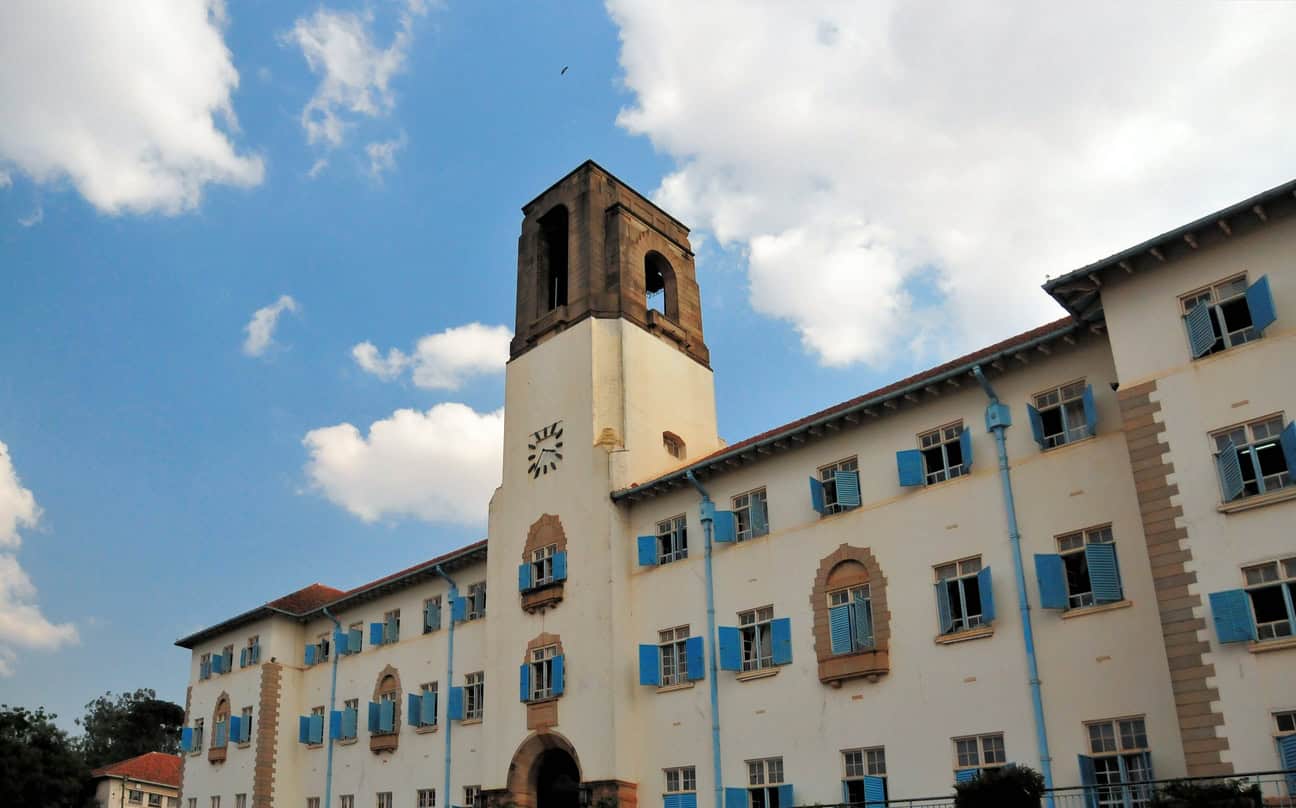
    Our organisation, (Higher Education Resource Services East Africa) addresses gender equality in universities, as these institutions shape future leaders. Prestigious institutions like the University of Oxford have produced multiple prime ministers and policymakers across the globe, as the recent HEPI / Kaplan Soft Power Index demonstrates. In East Africa, notable alumni of Uganda’s Makerere University include past and serving national leaders like veteran Mwalimu Julius Nyerere and Benjamin Mkapa (Tanzania); Mwai Kibaki (Kenya); Paul Kagame (Rwanda); Milton Obote (Uganda); and Joseph Kabila (Democratic Republic of Congo). However, Makerere University (unlike the University of Oxford) has never had a female Vice Chancellor.

     The structure and landscape of such institutions matter because they model frameworks and practices for the communities they serve. The persistent unequal representation triggered the work of HERS-EA that culminated, in part, in our recent publication.

    Findings from our unpublished study conducted in 2024 across 35  universities in East Africa illustrated the situation starkly.  This study was conducted by Makerere University in collaboration with HERS-East Africa, supported by the Bill and Melinda Gates Foundation. The aim was to analyse the underlying barriers that prevent women from progressing into leadership and, for those who advance, from thriving. While some of the findings might be culturally unique to East African contexts, the majority were acknowledged, at the annual Engagement Scholarship Consortium conference in Portland, USA (October 2024), as being relevant to any higher education institution. In Japan, for example, there is evidence of cultural pressure exerted differently when women seek promotion; as Kathy Matsui asserts, women decline promotional offers for fear of how they might be treated when/if they get pregnant.

    Our study of premier universities in East Africa found that, despite gender equality policies, female leadership remains rare: only two of seven top universities had a female Chancellor (a ceremonial role), none had a female Vice Chancellor, and just one had a female Deputy Vice Chancellor (who was nearing retirement). With respect to enrolment, while most institutions claimed gender parity at admission, few tracked or reported gender disaggregated data at graduation or PhD completion, and evidence of tracking progress was limited.

    PhDs, research leadership, and grant management are important for university leadership, so we highlighted these areas and addressed implicit institutional norms.   Drawing on these lived experiences, we concluded that gender discrimination in university leadership persists through biased job criteria, age limits, and interview questions. Other barriers include a lack of accountability, inadequate strategies against sexual harassment, and poor support for women to complete PhDs.

    Co-created recommendations included trialling an adapted equivalent of the non-punitive Athena Swan Charter, which develops a culture of self-assessment while mitigating potential backlash. The Athena Swan Charter was initiated in the UK in 2005, and it is gaining global traction. It provides a sliding scale of progression towards gender equality, from bronze to silver and gold. Other proposed interventions included providing writing bootcamps with childcare and research advisors present, away from family and other distractions. Aspects of the quota system and structural frameworks in Scandinavian countries were discussed, but while lessons can be learnt from these transformational shifts, the real stumbling block is the lack of political will for changing norms rather than individual women within East African institutions. However, change is possible. Rwanda’s post-1994 Genocide national policies include quotas, and they are revised every three years to assess progress towards gender equality in all sectors. Currently, women hold 61.3% of the total seats in parliament, and they occupy 66% of the total seats in cabinets. Overall, Rwanda is now considered one of the best achievers in the world for gender equality. Perhaps lessons can be learnt from Rwanda’s progress that can give us all reason to hope.

    Source link

  • Eviction sets single mom on a quest to keep her kids in their schools

    Eviction sets single mom on a quest to keep her kids in their schools

    by Bianca Vázquez Toness, The Hechinger Report
    November 18, 2025

    This story was produced by the Associated Press and reprinted with permission.

    ATLANTA — It was the worst summer in years. Sechita McNair’s family took no vacations. Her younger boys didn’t go to camp. Her van was repossessed, and her family nearly got evicted — again.

    But she accomplished the one thing she wanted most. A few weeks before school started, McNair, an out-of-work film industry veteran barely getting by driving for Uber, signed a lease in the right Atlanta neighborhood so her eldest son could stay at his high school.

    As she pulled up outside the school on the first day, Elias, 15, stepped onto the curb in his new basketball shoes and cargo pants. She inspected his face, noticed wax in his ears and grabbed a package of baby wipes from her rental car. She wasn’t about to let her eldest, with his young Denzel Washington looks, go to school looking “gross.”

    He grimaced and broke away.

    “No kiss? No hugs?” she called out.

    Elias waved and kept walking. Just ahead of him, at least for the moment, sat something his mother had fought relentlessly for: a better education.

    The link between where you live and where you learn

    Last year, McNair and her three kids were evicted from their beloved apartment in the rapidly gentrifying Old Fourth Ward neighborhood of Atlanta. Like many evicted families, they went from living in a school district that spends more money on students to one that spends less.

    Thanks to federal laws protecting homeless and evicted students, her kids were able to keep attending their Atlanta schools, even though the only housing available to them was in another county 40 minutes away. They also had the right to free transportation to those schools, but McNair says the district didn’t tell her about that until the school year ended. Their eligibility to remain in those schools expired at the end of last school year.

    Still wounded by the death of his father and multiple housing displacements, Elias failed two classes last year, his freshman year. Switching schools now, McNair fears, would jeopardize any chance he has of recovering his academic life. “I need this child to be stable,” she says.

    Related: Become a lifelong learner. Subscribe to our free weekly newsletter featuring the most important stories in education.

    With just one week before school started, McNair drove extra Uber hours, borrowed money, secured rental assistance and ignored concerns about the apartment to rent a three-bedroom in the Old Fourth Ward. At $2,200 a month, it was the only “semi-affordable” apartment in the rapidly gentrifying ward that would rent to a single mom with a fresh eviction on her record.

    On Zillow, the second-floor apartment, built in 2005, looked like a middle-class dream with its granite countertops, crown molding and polished wood floors. But up close, the apartment looked abused and held secrets McNair was only beginning to uncover.

    The first sign something was wrong came early. When she first toured the apartment, it felt rushed, like the agent didn’t want her to look too closely. Then, even as they told her she was accepted, the landlord and real estate agent wouldn’t send her a “welcome letter” laying out the agreement, the rent and deposit she would pay. It seemed like they didn’t want to put anything in writing.

    When the lease came, it was full of errors. She signed it anyway. “We’re back in the neighborhood!” she said. Elias could return to Midtown High School.

    But even in their triumph, no one in the family could relax. Too many things were uncertain. And it fell to McNair — and only McNair — to figure it out.

    The first day back

    Midtown is a high school so coveted that school administrators investigate student residency throughout the year to keep out kids from other parts of Atlanta and beyond. For McNair, the day Elias returned to the high school was a momentous one.

    “Freedom!” McNair declared after Elias disappeared into the building. Without child care over the summer, McNair had struggled to find time to work enough to make ends meet. Now that the kids were back in class, McNair could spend school hours making money and resolving some of the unsettled issues with her new apartment.

    McNair, the first person in her family to attend college, studied theater management. Her job rigging stage sets was lucrative until the writers’ and actors’ strike and other changes paralyzed the film industry in 2023. The scarcity of work on movie sets, combined with her tendency to take in family and non-family alike, wrecked her home economy.

    The family was evicted last fall when McNair fell behind on rent because of funeral expenses for her foster daughter. The teen girl died from an epileptic seizure while McNair and everyone else slept. Elias found her body.

    McNair attributes some of Elias’s lack of motivation at school to personal trauma. His father died after a heart attack in 2023, on the sidelines of Elias’s basketball practice.

    On his first day back at school this August, Elias appeared excited but tentative. He watched as the seniors swanned into school wearing gold cardboard crowns, a Midtown back-to-school tradition, and scanned the sidewalk for anyone familiar.

    If Elias had his way, his mom would homeschool him. She’s done it before. But now that he’s a teenager, it’s harder to get Elias to follow her instructions. As the only breadwinner supporting three kids and her disabled uncle, she has to work.

    Elias hid from the crowds and called up a friend: “Where you at?” The friend, another sophomore, was still en route. Over the phone, they compared outfits, traded gossip about who got a new hairdo or transferred. When Elias’s friend declared this would be the year he’d get a girlfriend, Elias laughed.

    When it was time to go in, Elias drifted toward the door with his head down as other students flooded past.

    The after-school pickup

    Hours later, he emerged. Despite everything McNair had done to help it go well — securing the apartment, even spending hundreds of dollars on new clothes for him — Elias slumped into the backseat when she picked him up after class.

    “School was so boring,” he said.

    “What happened?” McNair asked.

    “Nothing, bro. That was the problem,” Elias said. “I thought I was going to be happy when school started, since summer was so horrible.”

    Of all of the classes he was taking — geometry, gym, French, world history, environmental science — only gym interested him. He wished he could take art classes, he said. Elias has acted in some commercials and television programs, but chose a science and math concentration, hoping to study finance someday.

    After dinner at Chick-fil-A, the family visited the city library one block from their new apartment. While McNair spoke to the librarian, the boys explored the children’s section. Malachi, 6, watched a YouTube video on a library computer while Derrick, 7, flipped through a book. Elias sat in a corner, sharing video gaming tips with a stranger he met online.

    Related: Schools confront a new reality: They can’t count on federal money 

    “Those people are learning Japanese,” said McNair, pointing to a group of adults sitting around a cluster of tables. “And this library lets you check out museum passes. This is why we have to be back in the city. Resources!”

    McNair wants her children to go to well-resourced schools. Atlanta spends nearly $20,000 per student a year, $7,000 more than the district they moved to after the eviction. More money in schools means smaller classrooms and more psychologists, guidance counselors and other support.

    But McNair, who grew up in New Jersey near New York City, also sees opportunities in the wider city of Atlanta. She wants to use its libraries, e-scooters, bike paths, hospitals, rental assistance agencies, Buy Nothing groups and food pantries.

    “These are all resources that make it possible to raise a family when you don’t have support,” she said. “Wouldn’t anyone want that?”

    Support is hard to come by

    On the way home, the little boys fall asleep in the back seat. Elias asks, “So, is homeschooling off the table?”

    McNair doesn’t hesitate. “Heck yeah. I’m not homeschooling you,” she says lightly. “Do you see how much of a financial bind I’m in?”’

    McNair pulls into the driveway in Jonesboro, the suburb where the family landed after their eviction. Even though the family wants to live in Atlanta, their stuff is still here. It’s a neighborhood of brick colonials and manicured lawns. She realizes it’s the dream for some families, but not hers. “It’s a support desert.”

    As they get out of the car, Elias takes over as parent-in-charge. “Get all of your things,” he directs Malachi and Derrick, who scowl as Elias seems to relish bossing them around. “Pick up your car seats, your food, those markers. I don’t want to see anything left behind.” Elias would be responsible for making the boys burritos, showering them and putting them to sleep.

    McNair heads out to drive for Uber. That’s what is necessary to pay $450 a week to rent the car and earn enough to pay her rent and bills.

    But while McNair is out, she can’t monitor Elias. And a few days after he starts school, Elias’s all-night gaming habit has already drawn teachers’ attention.

    “I wanted to check in regarding Elias,” his geometry teacher writes during the first week of school. “He fell asleep multiple times during Geometry class this morning.”

    Elias had told the teacher he went to bed around 4 a.m. the night before. “I understand that there may be various reasons for this, and I’d love to work together to support Elias so he can stay focused and successful in class.”

    A few days later, McNair gets a similar email from his French teacher.

    That night, McNair drives around Atlanta, trying to pick up enough Uber trips to keep her account active. But she can’t stop thinking about the emails. “I should be home making sure Elias gets to bed on time,” she says, crying. “But I have to work. I’m the only one paying the bills.”

    Obstacles keep popping up

    Ever since McNair rented the Atlanta apartment, her bills had doubled. She wasn’t sure when she’d feel safe giving up the house she’d been renting in Clayton County, given the problems with the Atlanta apartment. For starters, she was not even sure it was safe to spend the night there.

    A week after school started in August, McNair dropped by the apartment to check whether the landlords had made repairs. At the very least, she wanted more smoke detectors.

    She also wanted them to replace the door, which looked like someone had forced it open with a crowbar. She wanted a working fridge and oven. She wanted them to secure the back door to the adjoining empty apartment, which appeared to be open and made her wonder if there were pests or even people squatting there.

    But on this day, her keys didn’t work.

    She called 911. Had her new landlords deliberately locked her out?

    When the police showed up outside the olive-green, Craftsman-style fourplex, McNair scrolled through her phone to find a copy of her lease. Then McNair and the officer eyed a man walking up to the property. “The building was sold in a short sale two weeks ago,” he told McNair. The police officer directed the man to give the new keys to McNair.

    Related: The new reality with universal school vouchers: Homeschoolers, marketing, pupil churn

    The next day, McNair started getting emails from an agent specializing in foreclosures, suggesting the new owners wanted McNair to leave. “The bank owns the property and now you are no longer a tenant of the previous owner,” she wrote. The new owner “might” offer relocation assistance if McNair agreed to leave.

    McNair consulted attorneys, who reassured her: It might be uncomfortable, but she could stay. She needed to try to pay rent, even if the new owner didn’t accept it.

    So McNair messaged the agent, asking where she should send the rent, and requested the company make necessary repairs. Eventually, the real estate agent stopped responding.

    Some problems go away, but others emerge

    Finally, McNair moved her kids and a few items from the Jonesboro house to the Atlanta apartment. She didn’t allow Elias to bring his video game console to Atlanta. He started going to bed around 11 p.m. most nights. But even as she solved that problem, others emerged.

    It was at Midtown’s back-to-school night in September that McNair learned Elias was behind in most of his classes. Some teachers said maybe Midtown wasn’t the right school for Elias.

    Perhaps they were right, McNair thought. She’d heard similar things before.

    Elias also didn’t want to go to school. He skipped one day, then another. McNair panicked. In Georgia, parents can be sent to jail for truancy when their kids miss five unexcused days.

    McNair started looking into a homeschooling program run by a mother she follows on Facebook. In the meantime, she emailed and called some Midtown staff for advice. She says she didn’t get a response. Finally, seven weeks after the family’s triumphant return to Midtown, McNair filed papers declaring her intention to homeschool Elias.

    It quickly proved challenging. Elias wouldn’t do any schoolwork when he was home alone. And when the homeschooling group met twice a week, she discovered, they required parents to pick up their children afterward instead of allowing them to take public transit or e-scooters. That was untenable.

    Elias wanted to stay at home and offered to take care of McNair’s uncle, who has dementia. “That was literally killing my soul the most,” said McNair. “That’s not a child’s job.”

    Hell, no, she told him — you only get one chance at high school.

    Then, one day, while she was loading the boys’ clothes into the washing machine at the Atlanta apartment, she received a call from an unknown Atlanta number. It was the woman who heads Atlanta Public Schools’ virtual program, telling her the roster was full.

    McNair asked the woman for her opinion on Elias’s situation. Maybe she should abandon the Atlanta apartment and enroll him in the Jonesboro high school.

    Let me stop you right there, the woman said. Is your son an athlete? If he transfers too many times, it can affect his ability to play basketball. And he’d probably lose credits and take longer to graduate. He needs to be in school — preferably Midtown — studying for midterms, she said. You need to put on your “big mama drawers” and take him back, she told McNair.

    The next day, Elias and his mother pulled up to Midtown. Outside the school, Elias asked if he had to go inside. Yes, she told him. This is your fault as much as it’s mine.

    Now, with Elias back in school every day, McNair can deliver food through Uber Eats without worrying about a police officer asking why her kid isn’t in school. If only she had pushed harder, sooner, for help with Elias, she thought. “I should have just gone down to the school and sat in their offices until they talked to me.”

    But it was easy for her to explain why she hadn’t. “I was running around doing so many other things just so we have a place to live, or taking care of my uncle, that I didn’t put enough of my energy there.”

    She wishes she could pay more attention to Elias. But so many things are pulling at her. And as fall marches toward winter, her struggle continues. After failing to keep up with the Jonesboro rent, she’s preparing to leave that house before the landlord sends people to haul her possessions to the curb.

    As an Uber driver, she has picked up a few traumatized mothers with their children after they got evicted. She helped them load the few things they could fit into her van. As they drove off, onlookers scavenged the leftovers.

    She has promised herself she’d never let that happen to her kids.

    Bianca Vázquez Toness is an Associated Press reporter who writes about the continuing impact of the pandemic on young people and their education.

    The Associated Press’ education coverage receives financial support from multiple private foundations. AP is solely responsible for all content. Find AP’s standards for working with philanthropies, a list of supporters and funded coverage areas at AP.org.

    This <a target=”_blank” href=”https://hechingerreport.org/she-wanted-to-keep-her-son-in-his-school-district-it-was-more-challenging-than-it-seemed/”>article</a> first appeared on <a target=”_blank” href=”https://hechingerreport.org”>The Hechinger Report</a> and is republished here under a <a target=”_blank” href=”https://creativecommons.org/licenses/by-nc-nd/4.0/”>Creative Commons Attribution-NonCommercial-NoDerivatives 4.0 International License</a>.<img src=”https://i0.wp.com/hechingerreport.org/wp-content/uploads/2018/06/cropped-favicon.jpg?fit=150%2C150&amp;ssl=1″ style=”width:1em;height:1em;margin-left:10px;”>

    <img id=”republication-tracker-tool-source” src=”https://hechingerreport.org/?republication-pixel=true&post=113392&amp;ga4=G-03KPHXDF3H” style=”width:1px;height:1px;”><script> PARSELY = { autotrack: false, onload: function() { PARSELY.beacon.trackPageView({ url: “https://hechingerreport.org/she-wanted-to-keep-her-son-in-his-school-district-it-was-more-challenging-than-it-seemed/”, urlref: window.location.href }); } } </script> <script id=”parsely-cfg” src=”//cdn.parsely.com/keys/hechingerreport.org/p.js”></script>

    Source link

  • As the supply of applicants declines, college admissions gets kinder and gentler

    As the supply of applicants declines, college admissions gets kinder and gentler

    by Jon Marcus, The Hechinger Report
    November 18, 2025

    PLEASANTVILLE, N.Y. — As she approached her senior year in high school, the thought of moving on to college was “scary and intimidating” to Milianys Santiago — especially since she would be the first in her family to earn a degree.

    Once she began working on her applications this fall, however, she was surprised. “It hasn’t been as stressful as I thought it would be,” she said.

    It’s not that Santiago’s anxiety was misplaced: The college admissions process has been so notoriously anxiety inducing that students and their parents plan for it for years and — if social media is any indication — seem to consider an acceptance as among the greatest moments of their lives.

    It’s that getting into college is in fact becoming easier, with admissions offices trying to lure more applicants from a declining pool of 18-year-olds. They’re creating one-click applications, waiving application fees, offering admission to high school seniors who haven’t even applied and recruiting students after the traditional May 1 cutoff.

    The most dramatic change is in the odds of being admitted. Elite universities such as Harvard and CalTech take as few as 1 applicant in 33, but they are the exception. Colleges overall now accept about 6 in 10 students who apply, federal data show. That’s up from about 5 out of 10 a decade ago, the American Enterprise Institute calculates.

    “The reality is, the overwhelming majority of universities are struggling to put butts in seats. And they need to do everything that they can to make it easier for students and their families,” said Kevin Krebs, founder of the college admission consulting firm HelloCollege.

    This has never been as true as now, when the number of high school graduates entering higher education is about to begin a projected 15-year drop, starting with the class now being recruited. That’s on top of a 13 percent decline over the last 15 years.

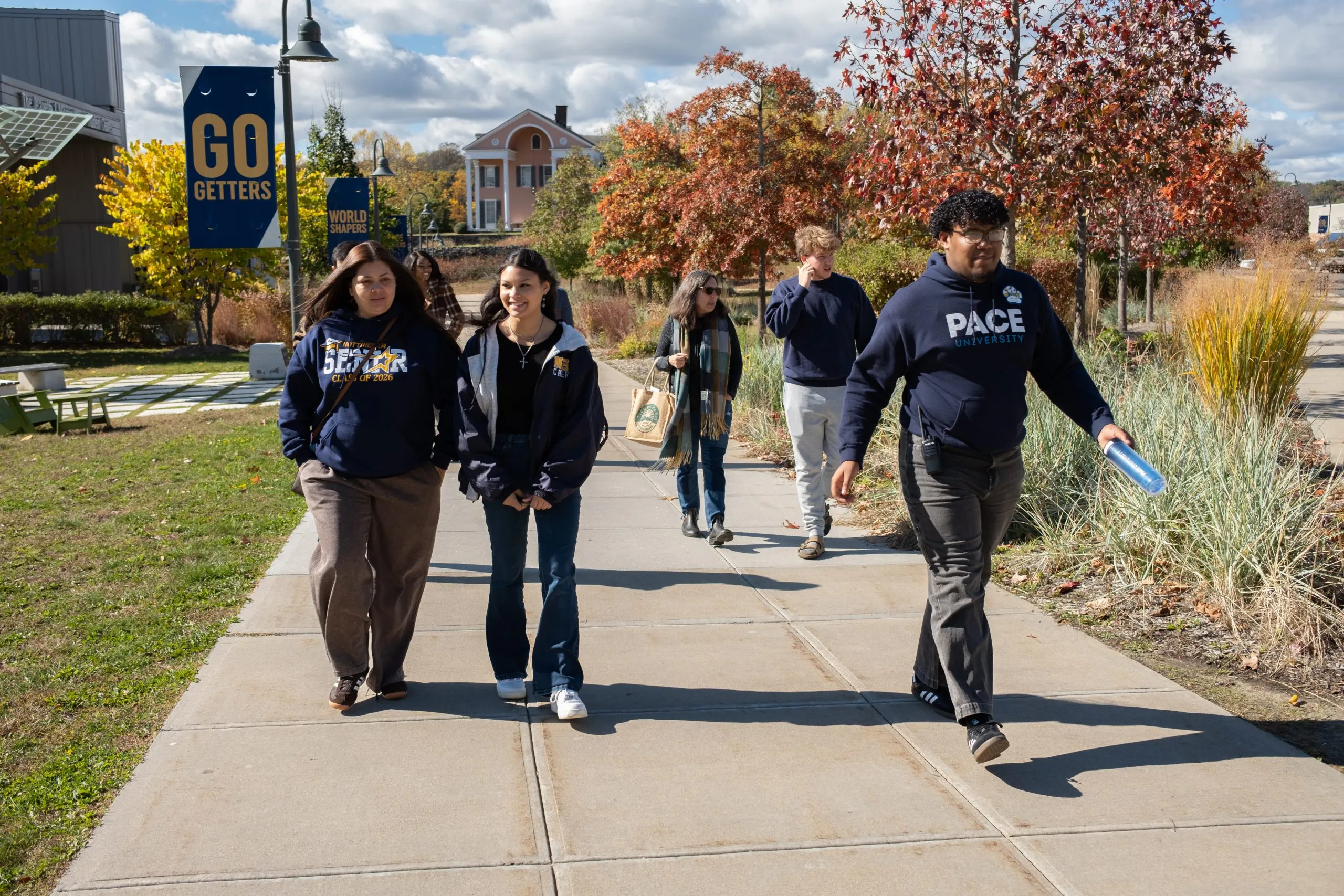
    Santiago, who lives in Hamilton, New Jersey, was waiting for a tour to start at Pace University as a video on repeat showed exuberant students and drone footage of the leafy, 200-acre grounds about 30 miles north of New York City, where the university also has a campus. 

    Related: Interested in more news about colleges and universities? Subscribe to our free biweekly higher education newsletter.

    Pace was one of 130 New York state colleges and universities that during October waived their application fees of from $50 to $90 per student, per school. That’s just one of the ways it’s trying to make admissions easier. 

    “That was a little eye-opening, when we received that letter,” Sueane Goodreau of Ithaca, New York, said about the free application offer as she waited for a tour of Pace’s campus with her high school senior son, Will. Compared to when her older daughter applied to college just three years ago, said Goodreau, “it does feel a little more receptive.”

    There was an even bigger incentive offered by Pace: Prospects such as Santiago and Goodreau who visit are promised an additional $1,000 a year of financial aid if they enroll. Applicants who come to visit a campus are twice as likely to enroll as those who don’t, research has found.

    The students’ names awaited them on a welcome sign at the reception desk in the office where tours depart. “You Belong Here,” pronounced another placard, on an easel in the waiting area. There was a QR code they could scan if they wanted to chat one-on-one with an admissions officer — who, in earlier times at many schools, were often unapproachable.

    “I feel like I’m already a student here,” Santiago quipped.

    The reason the university encourages that feeling? It’s simple, said Andre Cordon, dean of admission, in the distinctive pink Choate House at the center of the campus: “We want more students to apply. We don’t want to put up hurdles.”

    So many hurdles previously stood along the route to college admission, it’s become a part of popular culture. “Everyone thinks we’re sadists — that we like saying no,” noted Tina Fey in her role as a Princeton admissions officer in the 2013 movie “Admission.” 

    Related: The number of 18-year-olds is about to drop sharply, packing a wallop for colleges — and the economy 

    Perceptions such as those are hard to change. Not only do young Americans aged 18 to 29 believe it isn’t any easier to get into college than it was for people in their parents’ generation, 45 percent of them think it’s harder, a Pew Research Center survey found. More than three-quarters say the admissions process is complex, and more than half that it’s more stressful than anything else they’ve done during their time in elementary, middle or high school, according to a separate survey, by the National Association for College Admission Counseling, or NACAC.

    “People have that notion that all campuses are in the same category as MIT, Harvard, Stanford” with their impossibly low acceptance rates, said Cordon. (Pace took 76 percent of its applicants last year, university statistics show.) And “teenagers are still teenagers. There’s anxiety no matter what. They overthink things, and they overthink the admissions process.”

    There’s also still a lot of genuine emotion in the process, he said. For many parents, “It’s a pride thing. It’s a status thing. It’s showing off. Or from the student’s side, it’s, ‘I want to make my parents proud.’ ”

    In the new world of university admissions, however, that no longer necessarily even requires filling out an application.

    “Congratulations! You’ve been admitted,” a new California State University website tells prospective students, before they enter a single piece of information about themselves. 

    Cal State is the latest system to deploy so-called direct admission: They will automatically accept any student who earns at least a C in a list of required high school courses, starting in January for students in some and expanding the following year to every high school in the state.

    Related: To fill seats, more colleges offer credit for life experience

    Public universities or systems in Alabama, Arizona, Connecticut, Georgia, Hawai’i, Idaho, Illinois, Indiana, Minnesota, New York, North Carolina, Tennessee, Texas, Utah, Washington and Wisconsin also now offer various forms of direct admission — some beginning this fall — accepting students automatically if they meet certain high school benchmarks.

    Several systems now allow students to apply to several public universities and colleges with a single application, avoiding the time-consuming process of completing different forms, writing essays, collecting letters of recommendation or paying fees. 

    Through Illinois’s new One Click College Admit, for instance, high school students can have their transcripts provided instantly to 10 of the state’s 12 four-year public universities and all of its community colleges and get back a guaranteed offer of admission to at least one, depending on their grades.

    “Especially first-generation students, they don’t have that knowledge of how to apply to college,” said José Garcia, spokesman for the Illinois Board of Higher Education. “That’s among the people we’re trying to reach — those who might be intimidated by the name of an institution or not feel confident in their academic abilities or their grades.”

    Several of these programs have been advocated for public institutions by governors and legislatures worried about a continued supply of college-educated workers in their states as the proportion of high school graduates going on to get degrees declines.

    “Basically we need to have a bigger pipeline,” said David Troutman, deputy commissioner for academic affairs at the Texas Higher Education Coordinating Board. “We have to do everything we can to open that door to all students, not just a few. So we have to make sure we’re making the process as painless as we can.”

    Now private colleges are jumping aboard the direct-admission bandwagon. More than 210 have arranged through the Common App — an online application used by about 1,100 institutions nationwide — to extend offers of direct admission for the coming academic year to students who filed the Common App but have not applied. That’s almost twice as many as signed on last year, when Common App says 119 institutions in 35 states made more than 733,000 unsolicited offers. 

    It’s still early to definitively know the effect of this on whether students ultimately enroll. In Idaho, which in 2015 became the first state to try direct admission, enrollment of first-time undergraduates at participating public universities rose 11 percent

    Direct admission by itself does not resolve the other reasons students forgo college, however, said James Murphy, director of postsecondary policy at the nonprofit Education Reform Now, which advocates for more access to and diversity in higher education.

    “It’s the furthest thing from a panacea,” Murphy said. “How do we know? Because colleges embraced it so quickly. Any reform taken up so quickly by colleges is likely to have more benefit to colleges than to students.”

    While direct admission might help colleges get closer to enrollment targets, for example, he said, “it works best when it’s paired with financial aid and other resources that actually make it easier” to pay.

    Waiving application fees has driven increases in applications, some research has shown. During the month that fees were waived last fall in New York state, a quarter of a million students applied to the public State University of New York, up 41 percent from the same period the year before, according to the state’s Higher Education Services Corporation, or HESC. 

    Related: After years of quietly falling, college tuition is on the rise again

    While college applications may not seem expensive, at around $50 each, many students “aren’t just paying one application fee. They can be paying multiple fees,” which add up, said Angela Liotta, HESC’s director of communication. 

    Universities and colleges are trying other ways to ease the process. More than 2,000 continue to make submitting the results of SAT and ACT scores optional, for instance, something many started doing during the pandemic. More have extended their deadlines or recruited after the traditional May 1 cutoff, when incoming classes were previously considered locked in. 

    Students are noticing. One way is through the massive amount of marketing materials they’re getting, begging them to apply. The median high school student gets more than 100 letters and emails from colleges and universities each month, a survey by the education technology company CollegeVine found — an old-style approach that CollegeVine found turns out for this generation to be generally ineffective.

    Will Goodreau, who was visiting Pace, for instance, got “so many emails and texts,” he said, laughing. “I must have given somebody my number for something.”

    All of these things appear to be slowly changing students’ perception of admission. In that NACAC survey, fewer of those who had already gone through the process — while they still found it challenging — considered it as challenging as students who hadn’t started yet.

    There could be more changes ahead. A lawsuit was filed in August against 32 colleges and universities that practice so-called early decision, under which students who apply before the usual admission period are more likely to get in, but are obligated to enroll. The practice, which the lawsuit seeks to end, helps colleges fill their classes, but prevents students from shopping around for better offers of financial aid.

    Whatever happens, students and their parents should know that “they’re actually the ones in control of this process,” said Krebs, of HelloCollege. “The reality is that at a lot of schools, if you have the grades, you’re going to get in.”

    Contact writer Jon Marcus at 212-678-7556, [email protected] or jpm.82 on Signal.

    This story about applying to college was produced by The Hechinger Report, a nonprofit, independent news organization focused on inequality and innovation in education. Sign up for our higher education newsletter. Listen to our higher education podcast.

    This <a target=”_blank” href=”https://hechingerreport.org/colleges-ease-the-dreaded-admissions-process-as-the-supply-of-applicants-declines/”>article</a> first appeared on <a target=”_blank” href=”https://hechingerreport.org”>The Hechinger Report</a> and is republished here under a <a target=”_blank” href=”https://creativecommons.org/licenses/by-nc-nd/4.0/”>Creative Commons Attribution-NonCommercial-NoDerivatives 4.0 International License</a>.<img src=”https://i0.wp.com/hechingerreport.org/wp-content/uploads/2018/06/cropped-favicon.jpg?fit=150%2C150&amp;ssl=1″ style=”width:1em;height:1em;margin-left:10px;”>

    <img id=”republication-tracker-tool-source” src=”https://hechingerreport.org/?republication-pixel=true&post=113378&amp;ga4=G-03KPHXDF3H” style=”width:1px;height:1px;”><script> PARSELY = { autotrack: false, onload: function() { PARSELY.beacon.trackPageView({ url: “https://hechingerreport.org/colleges-ease-the-dreaded-admissions-process-as-the-supply-of-applicants-declines/”, urlref: window.location.href }); } } </script> <script id=”parsely-cfg” src=”//cdn.parsely.com/keys/hechingerreport.org/p.js”></script>

    Source link