Category: Featured

  • Austin Community College Joins Fight Against DOJ and Texas

    Austin Community College Joins Fight Against DOJ and Texas

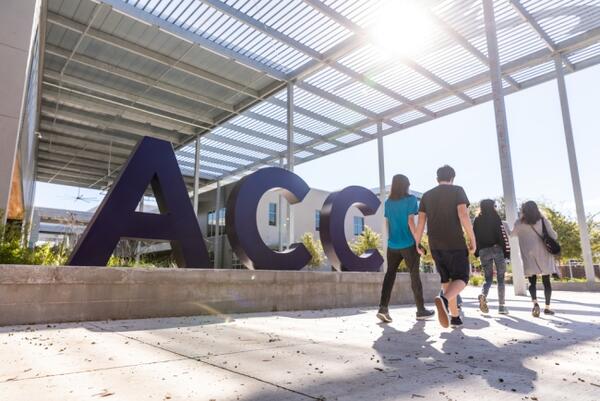
    Civil rights groups have been piling on to intervene in the recent Texas court case that ended in-state tuition for noncitizens living in the state. Now Austin Community College and a Texas undocumented student are joining the effort to defend the now-defunct law.

    College officials worry they’ll lose students and revenue if undocumented students’ tuition prices suddenly skyrocket. Austin Community College is the first Texas college to try to join the lawsuit.

    The Texas Dream Act, which allowed noncitizens who grew up in the state to benefit from in-state tuition, was overturned last month after the Department of Justice sued Texas over the law. The state didn’t fight back and instead sided with the DOJ mere hours after the legal challenge. A week later, the Mexican American Legal Defense and Educational Fund, a Latino civil rights organization, filed a motion on behalf of a group of Texas undocumented students to intervene in the lawsuit. The group argued the swift resolution of the DOJ’s legal challenge denied those affected any chance to weigh in, so the students should become intervenors, or a party to the case, and have their day in court.

    Other groups quickly followed MALDEF’s lead. Since last week, the American Civil Liberties Union of Texas, the Texas Civil Rights Project, Democracy Forward and the National Immigration Law Center have joined the fight, representing the activist group La Unión del Pueblo Entero, the Austin Community College District’s Board of Trustees and Oscar Silva, a student at University of North Texas. The groups filed emergency motions on their behalf to intervene in the lawsuit and get relief from the judgment that killed the law. If these legal efforts are successful, a case so quickly open and shut by Texas and the DOJ could be reopened.

    Austin Community College board chair Sean Hassan said in a news release from the Texas ACLU chapter that college officials deserved to have their say on the policy shift.

    “Employers and taxpayers are looking to community colleges to produce a sufficient number of highly skilled graduates to meet workforce needs,” Hassan said. “If legislation or court decisions will impact our ability to meet these expectations, we should have a seat at the table to help shape responsible solutions. The action by our board asks the court to ensure our voice is heard.”

    Calculating the Costs

    In court filings, Austin Community College leaders argue that the institution will lose revenue because of the abrupt end of the Texas Dream Act. They estimated that about 440 students will see their tuition rates quadruple, and as a result, hundreds of students will stop out and prospective students will avoid enrolling in the first place. College leaders also argued in the motion to intervene that the need for scholarships will rise, putting extra financial pressure on the community college.

    They cited other potential costs as well, including setting up new processes to identify and notify noncitizen students of tuition rate changes and ramping up public relations efforts so the college can continue to “market itself as an accessible, inclusive, and affordable institution for all Texas high school graduates,” despite the policy change.

    “The loss of these students will have a cascading effect on campus life, academic programs, and student support services,” Austin Community College chancellor Russell Lowery-Hart said, according to court filings.

    The motion also detailed how Silva, the student, would likely have to withdraw from his joint bachelor’s and master’s program at the University of North Texas if he lost his in-state tuition benefits. He was expected to graduate next spring. Silva has lived in Texas since the age of 1 and attended Texas K–12 schools.

    “The Texas Dream Act means everything to me,” Silva said in the ACLU of Texas news release. “This law has made my education possible. Without it, college would’ve been out of reach for me as a first-generation college student.”

    The motion comes after Wynn Rosser, commissioner of higher education for the Texas Higher Education Coordinating Board, sent out a June 18 memo directing colleges and universities to determine which of their students are undocumented and need to be charged higher tuition starting this fall.

    Trouble Over Timelines

    Texas, the DOJ and civil rights groups have since been haggling over how fast the U.S. District Court should move in response to the new motions.

    The civil rights groups want a decision soon. But, in a joint submission to the court on June 30, the Trump administration and Texas argued emergency motions were uncalled-for and the legal proceedings shouldn’t be expedited, though they acknowledged the intervenors raised issues “which merit response.”

    “Expediting responses to intervenors’ motions would only serve [to] put the United States and Texas at a disadvantage, having to brief and respond to intervenors’ myriad of arguments in a drastically shorter timeframe than would otherwise be necessary, and would do nothing to help intervenors expedite any potential relief,” the response read.

    But the civil rights groups representing Austin Community College and other intervenors weren’t having it. On July 1, they asked that the court deny the request.

    The attorneys argued that the state and the federal government moved quickly to resolve the DOJ’s lawsuit and end the Texas Dream Act, but “when asked to respond on an expedited basis to the consequences of their actions and the imminent harm raised” by the motions, “the parties balk, insisting that the court should postpone its consideration of these motions until well past the point when the looming harms become irreversible.”

    That same day, Judge Reed O’Connor gave the Trump administration and Texas until July 14 to respond to the motion to intervene, which aligns with their requested timeline. He also delayed briefings on the motions to stay the judgement and for relief until he rules on the motion to intervene.

    As this fight plays out in Texas, the DOJ is targeting other states that offer in-state tuition benefits to undocumented students. Last month the Trump administration filed similar lawsuits in Kentucky and Minnesota, which have yet to be resolved.

    Source link

  • University Autonomy Stems From Corporate Rights (opinion)

    University Autonomy Stems From Corporate Rights (opinion)

    In an April 21 article entitled “We Haven’t Seen a Fight Like Harvard vs. Trump in Centuries,” Steven Brint wrote that the ongoing dispute between Harvard University and the federal government is “the most important showdown between state power and college autonomy since 1816, when the New Hampshire Legislature attempted to convert Dartmouth College into a public entity.”

    While the Dartmouth College case, which the U.S. Supreme Court decided in 1819 in Dartmouth’s favor, looms large in American history, universities have, prior to and since that decision, regularly fought for their rights—their corporate rights.

    Today, we call this institutional academic freedom. But, as Richard Hofstadter wrote in his portion of The Development of Academic Freedom in the United States (1955), co-authored with Walter Metzger, “academic freedom is a modern term for an ancient idea.” That ancient idea holds that university freedom is based on corporate rights, which is why Hofstadter begins with a section subtitled “Corporate Power in the Middle Ages.” Recovering that old idea could not be more important today.

    It is no exaggeration to say that, in spring 2025, we may have entered the nadir of American academic freedom. Austin Sarat rightfully urged us, even before then, to find new ways to guard academic freedom “against external threats.” Now, in the face of ongoing hostility from both state and federal governments, it is imperative that universities deploy the full range of arguments at their disposal, including those based on their forgotten corporate rights. In other words, it’s time for universities to invoke their corporate rights. Allow me to explain.

    Corporateness is the university’s hidden superpower. While every university is constituted differently, they are all corporations, regardless of whether they present themselves as public or private. That is because “corporation” is a general legal term denoting a unity at law.

    “Incorporation,” David Ciepley has written, “is a powerful tool.” Corporations can sue and be sued in their own names, hold property, enter contracts, use their own seals and legislate. Importantly, the university’s corporateness bears no necessary relationship to its current autocratic constitution, whereby, according to Timothy V. Kaufman-Osborn, universities are “ruled by external lay governing boards vested with the panoply of powers customarily granted to corporations, including the power to adopt, amend, and revoke its basic rules of institutional governance.” Thus, we can use the university’s corporateness to rebuff external attacks, while also working, as Arjun Appadurai wrote recently, “to break the unilateral power of boards of trustees.”

    The university’s cherished autonomy springs from its corporate rights. In the U.S., these rights were first articulated in a now-forgotten line of cases starting with the 1805 North Carolina Supreme Court case Trustees of University of North Carolina v. Foy, a decision issued more than a century before the American Association of University Professors’ famous 1915 Declaration of Principles on Academic Freedom and Academic Tenure—and the U.S. Supreme Court’s 1957 discovery of a theretofore unknown academic freedom right in the First Amendment to the U.S. Constitution.

    Like Dartmouth College, these cases were about corporate rights. But, unlike Dartmouth College, they concerned universities we now consider public; they were decided by state supreme courts, rather than by the U.S. Supreme Court; and, when they implicated constitutional rights, they implicated rights protected by state constitutions, rather than by the federal one.

    What I call the corporate theory of academic freedom explains why the rights that originally protected the American scholarly enterprise, including in the Dartmouth College case, were corporate rights by emphasizing that universities are, by law, corporations. (It’s actually in the name itself: “university,” derived from the Latin universitas, simply means “corporation.”)

    Rather than an individual right, academic freedom is, properly understood, what Stanley Fish called “a guild concept.” More specifically, it is a concept belonging to the incorporated guild of professors and students (and others). This theory bases academic freedom not on freedom of speech—a troublesome basis for academic freedom—but on the university’s corporate rights. These corporate rights, not infrequently finding expression in constitutions, are also sometimes constitutional rights. By substituting corporate rights for freedom of speech, we turn a foundation of sand into stone.

    It might prove difficult for some in the university to embrace a term they associate only with business corporations, but corporate rights have been, and still can be, used to protect universities. In this connection, it might help to recall the many corporations that are not business corporations, including municipal corporations, nonprofit corporations (often euphemized as “organizations”), church corporations and university corporations.

    At a moment when the U.S. Supreme Court seems keen on granting corporate rights to business corporations, one might wonder why business corporations should get all the rights. With state and federal governments increasingly targeting universities, we simply cannot afford to leave these arguments on the table. Understanding and utilizing these neglected corporate rights cases requires shifting our focus, on the one hand, from private to public universities, and, on the other hand, from federal to state courts (where Dartmouth College began).

    While the federal government’s recent attacks on Columbia and Harvard have captured headlines across the country, state legislatures continue to menace public universities. Although these universities have, through centuries of experience, become highly familiar with governmental intrusion, they have become less adept at repulsing it than they once were. As a result, one recent article in The Chronicle of Higher Education could observe that “it’s well understood that public colleges are in the thrall of their state lawmakers.” The corporate theory of academic freedom challenges this understanding.

    Consider two post–Dartmouth College cases about universities we call public today. The first is an 1887 Indiana Supreme Court case about Indiana University. The second is an 1896 Michigan Supreme Court case about the University of Michigan. Each case furnishes ideas about how to address academic freedom’s most vexing and persistent challenge: protecting public universities from state legislatures.

    In an 1887 case called Robinson v. Carr, the Indiana Supreme Court considered what interest rate applied to a fund established by the Indiana Legislature for Indiana University. The statute that established the university fund indicated that any loan made from the university fund would carry a 7 percent interest rate. The trustees of Indiana University, who were established as a “body politic” by the Indiana Legislature, could then use the interest to cover annual university expenses. But a later statute repealed laws concerning certain funds, including “public funds,” and applied an 8 percent interest rate instead. The question as to which interest rate applied therefore turned on whether the university fund was a “public fund.” If it was a public fund, an 8 percent rate would apply; if it was not, the 7 percent rate would remain.

    The Indiana Supreme Court concluded that the university fund was not a public fund because “the university, although established by public law, and endowed and supported by the state, is not a public corporation, in a technical sense.” The court meant by this that the Board of Trustees “has none of the essential characteristics of a public corporation.” The university was “not a municipal corporation,” and “its members are not officers of the government, or subject to the control of the legislature in the management of its affairs.”

    The court reasoned, “That the university was established under the direct authority of the state, through a special act of the legislature, or that the charter contains provisions of a purely public character, nor yet that the institution was wisely established, and is and should be perpetually maintained at the public expense, for the public good, does not make it a public corporation, or constitute its endowment fund a public fund.” In the final analysis, “the legal status of the state university being that of a technically private, or at most a quasi public, corporation, the university fund, of which it is the sole beneficiary, is therefore not a public fund, within the meaning of the law.” In short, the court’s careful analysis under the corporate framework led it to conclude that the university’s legislative establishment and public funding did not make it public.

    Less than a decade after Robinson, the Michigan Supreme Court decided a case called Regents of the University of Michigan v. Sterling. There, the court had to decide whether the Michigan Legislature could require the University of Michigan Board of Regents to relocate its homeopathic medical college from Ann Arbor to Detroit. The Michigan regents had refused to comply with the Legislature’s relocation law, and Charles Sterling, a private citizen, then asked the Michigan Supreme Court to order the Regents to comply.

    The court denied Sterling’s request, noting that, “under the [Michigan] constitution of 1835, the legislature had the entire control and management of the university and the university fund. They could appoint regents and professors, and establish departments.” But, after the university languished under this governance model, the people of Michigan withdrew the power of the Legislature to control the university. To that end, the 1850 Michigan Constitution ordained that “the board of regents shall have the general supervision of the university, and the direction and control of all expenditures from the university interest fund.”

    The court offered three “reasons to show that the legislature has no control over the university or the board of regents.” First, both entities “derive their power from the same supreme authority, namely, the constitution,” and, “in so far as the powers of each are defined by that instrument, limitations are imposed, and a direct power conferred upon one necessarily excludes its existence in the other, in the absence of language showing the contrary intent.”

    Second, the Board of Regents “is the only corporation provided for in the constitution whose powers are defined therein”—whereas “in every other corporation provided for in the constitution it is expressly provided that its powers shall be such as the legislature shall give.” Third, “in every case except that of the regents the constitution carefully and expressly reposes in the legislature the power to legislate and to control and define the duties of those corporations and officers.”

    Because the constitution entrusted “the general supervision” of the university to the regents, “no other conclusion … is possible than that the intention was to place this institution in the direct and exclusive control of the people themselves, through a constitutional body elected by them.” The people of Michigan had entrusted the university’s governance to the regents directly, thereby removing the university from the Legislature’s purview. As a result, the Legislature could no longer govern the university.

    These 19th-century cases, together with many other state cases like them, contain resources that universities can use to meet today’s extraordinary challenges. (Edwin D. Duryea lists many, but not all, of these cases in the first appendix to his 2000 monograph, The Academic Corporation: A History of College and University Governing Boards.) Indeed, the cases remain relevant today. The Montana Supreme Court’s 2022 decision affirming the Montana regents’ “exclusive authority to regulate firearms on college campuses” borrowed, with slight alterations and no attribution, one of the aforementioned passages from Sterling.

    Harvard’s battle with the federal government is truly momentous, but it is one of many that American universities—public and private—have consistently waged for centuries. When these universities rose up to defend their corporate rights, state supreme courts across the country often affirmed those rights. The time has come to assert those rights once again. As state governments, along with the federal government, apply new and in some ways unprecedented pressure, universities can no longer ignore their powerful claims to corporate rights. Continuing to do so may incur costs none of us are willing to pay.

    Michael Banerjee, a 2019 graduate of Harvard Law School, is a doctoral candidate in jurisprudence and social policy at the University of California, Berkeley, where his dissertation focuses on universities’ corporate rights.

    Source link

  • Setting learners up for success in the global workforce

    Setting learners up for success in the global workforce

    • By Sidharth Oberoi, VP of Global Strategy at Instructure.

    Imagine a world where anyone who wants to work in a different city or country can simply share all their skills and learning achievements – including those obtained through formal and informal settings – in a unified, digital format with a prospective employer. Imagine employers having an easy way to verify a candidate’s diverse skills and clearly being able to identify the applicable competencies across international boundaries.

    For anyone who has ever tried to work abroad and navigated all the paperwork and certification processes, this could sound like a very futuristic idea. However, this is precisely what digital learning portfolios are making possible – fostering student mobility and facilitating cross-institutional collaboration among universities worldwide to dynamise the global workforce.

    A digital learning portfolio is an online collection of a student’s verified skills, qualifications and learning experiences, often captured across various formal and informal settings. By functioning as a form of digital credentialling, this portfolio allows students to document and present their learning achievements in a unified, digital format. Students can seamlessly showcase a combination of academic degrees, microcredentials, short courses and experiential learning, giving domestic or international prospective employers a more comprehensive view of their capabilities.

    As more educational institutions look to expand their international reach, digital credentials present a transformational opportunity to track learning experiences and position students more competitively in the global job markets. With a structured, verifiable digital portfolio, students can demonstrate their formal and informal learning experiences in real time and highlight an array of microcredentials, skills and qualifications.

    Enabling cross-institution collaboration

    Global collaboration in higher education is growing steadily, marking a crucial step for universities – even as countries like the UK, Canada, and Australia impose tighter restrictions on international students. This trend highlights the increasing importance of cross-border partnerships in advancing research, innovation, and academic excellence.

    Students continue to seek study-abroad opportunities and universities are increasingly partnering across borders to offer joint programmes and exchange initiatives. This has been highlighted in Europe with programmes like the European Universities Initiative. However, differing approaches to credentialling can often pose challenges. These challenges are further compounded by the fact that some institutions still rely on traditional methods—such as print and paper—to manage and distribute official transcripts and certificates. This not only slows down the process but also hinders the seamless exchange of academic records across borders.

    Digital credentials and badges can help address these issues by offering a consistent and verifiable way for students to record their achievements. This consistency simplifies joint programmes, exchange students and curriculum alignment across countries. With a universal standard, students can more easily navigate international educational pathways and access opportunities that may have been limited by varying credentialing systems.

    For institutions, investing in technology to leverage digital credentials and badges will streamline the process of building and strengthening global partnerships. They can provide a reliable way to attract international students, create robust pathways to global learning opportunities and ensure smooth credit transfers between institutions in different countries. This can significantly prevent credential fraud and enhance an institution’s global appeal, as students can trust that their academic achievements and skills will be recognised no matter where they go.

    Transforming the global workforce

    Today’s employers are gradually favouring skills over traditional degrees and looking for agility and flexibility in their hiring processes. Digital credentialling supports a skills-driven hiring process that’s more responsive to the needs of a global, fast-evolving workforce.

    Digital credentials and badges will become essential for documenting and validating shorter, targeted learning experiences such as microcredentials, apprenticeships and other skill-focused learning experiences that may not necessarily fit within traditional degree frameworks. This transparency helps employers better assess candidates based on relevant, demonstrated competencies.

    Supporting global workforce readiness

    One of the key benefits of digital credentials is their ability to support lifelong career mobility. As people change roles, industries, and even countries throughout their careers, having the opportunity to access 24/7 digital credentials will provide them with an adaptable, portable record of qualifications. This flexibility empowers students to carry their skills and experiences with them, regardless of where their careers take them.

    For these students, a digital portfolio that evolves with them throughout their lives opens doors to greater global mobility and ensures that achievements from one part of the world are recognised and respected in another, strengthening graduates’ ability to apply to job opportunities abroad, or pursue additional international degrees, short courses or microcredentials and thrive in diverse job markets.

    While AI is reshaping industries by automating routine tasks, leading to the evolution of existing roles and the creation of new ones, higher education institutions must focus on the importance of lifelong learning, as continuous skill development becomes essential in an AI-driven economy.

    More than ever, universities need to invest in modern cloud-based virtual learning environments that can support and scale a lifelong learning strategy, including microcredentials and digital credentials. By offering students the tools to maintain dynamic portfolios throughout their careers, institutions can better prepare graduates to succeed in an interconnected and global workforce and stay relevant.

    Lifelong recognition

    Education is no longer confined to traditional phases of life; it’s a continual journey of growth and adaptation. By enabling seamless transitions between learning opportunities and career stages, universities can empower individuals to thrive in a world where constant upskilling is essential, and skill recognition should go beyond the boundaries of traditional learning.

    In today’s interconnected world, digital credentials and learning portfolios provide a structured way to document and share skills, supporting both students’ career ambitions and employers’ workforce needs across the globe. Institutions and employers must collaborate to integrate digital credentials into the skills journey, ensuring a seamless link between education and workforce readiness to dynamically prepare students for a global economy, paving the way for a more adaptable, skilled and mobile workforce.

    Source link

  • Reimagining the Flipped Classroom: Integrating AI, Microlearning, and Learning Analytics to Elevate Student Engagement and Critical Thinking – Faculty Focus

    Reimagining the Flipped Classroom: Integrating AI, Microlearning, and Learning Analytics to Elevate Student Engagement and Critical Thinking – Faculty Focus

    Source link

  • The crisis in the youth sector is a big problem for universities

    The crisis in the youth sector is a big problem for universities

    It is hard for universities to see beyond their own sector crisis right now, but the crisis facing the youth sector today will be the problem of universities tomorrow.

    The youth sector in the UK greatly contributes towards supporting students and graduates of the future, but it is currently under threat and the deepest impact will come for those young people who face the highest barriers to accessing higher education.

    The youth sector engages young people to develop their critical skills for life, including how to build relationships with peers; resilience and developing social and emotional skills; and how to integrate into a community. Many within the higher education sector will recognise these as areas which students and graduates are also struggling with.

    At a time where universities are being called upon to widen access for young people, the reality is young people are facing narrower opportunities than ever. The challenge for widening participation teams will be multifaceted, including supporting attainment raising in schools; tackling entrenched views from schools and families of expectations of what their children can achieve; and providing the support needed for widening participation students to progress well once in higher education.

    So how can the higher education sector help ensure that the challenges the youth sector are facing today don’t become a nightmare for widening participation teams to tackle in the future?

    What is happening in the youth sector?

    The youth sector includes large organisations such as UK Youth, Scouts and Girlguiding, to smaller grassroots organisations who run clubs and activities in and out of schools and community centres across the country.

    There are many similarities between the crises facing the higher education sector and that of the youth sector. Much like universities, the youth sector has faced years of substantial defunding. A YMCA England and Wales report on The state of funding for youth services found that “local authority expenditure on youth services has fallen 73% in England and 27% in Wales since 2010-11” which “represents a real-term cut of £1.2bn to youth services between 2010-11 to 2023-24 in England, and £16.6m in Wales.”

    At the same time as these cuts, the rate of young people who are NEET (not in education, employment or training) is growing, with 13.2 per cent of 16-24 year olds reported as NEET in 2024, and 15.6 per cent of 18-24 year olds NEET. Both figures have increased compared to previous years, particularly in young men. These young people need support and youth services are increasingly unable to provide it.

    Organisations and charities who have been supporting the youth sector are closing at a rapid rate. The National Citizen Service (NCS), a national youth social action programme which has been running since 2009, has been cut by the Labour Government. Student Hubs, the social action charity I worked with which supported students to engage in social and environmental action, has closed. YMCA George Williams College, an organisation which supported the youth sector to improve monitoring, evaluation and impact of their activities closed on 31 March 2025 to the shock of many across the youth sector.

    Whilst the Government’s National Youth Strategy announced in November 2024 is welcome, it will not fix years of systematic underfunding of youth sector services.

    How will this crisis impact universities?

    David Kernohan’s analysis of the UCAS 2025 application figures shows that applications are down, with only applicants from the most advantaged quintile, IMD quintile 5, having improved. We are in the midst of what could be a big decline in the rate of students coming from disadvantaged backgrounds entering higher education, despite the transformative opportunities it provides.

    This comes at a time where there is greater expectation by the government and the regulator for universities to be proactive in supporting students’ and young people’s skills, learning and access to opportunity. In February the Office for Students announced successful providers in their latest funding round to deliver projects which tackle Equality of Opportunity Risk Register areas. The register supports universities to consider barriers in the student life cycle and how they might mitigate against these.

    Seeing the range of projects which have been awarded funding, it is clear that universities are being pushed to go further in imagining what their role is in shaping the lives of the students they engage, and it starts significantly earlier than freshers’ week. This funding shows that more emphasis is being put on universities to address barriers to participation by the Office for Students, and with the youth sector in crisis, this may need to become even wider if universities are to fulfil their access missions.

    Thankfully, there are actions universities can take now which will make a difference both to young people and widening participation teams.

    Tackling the problems together

    The youth sector cannot afford to wait. If universities want to be ready to meet the challenges of tomorrow, they need to build strong collaborative relationships with organisations already situated in communities whilst they are still here. Partnership with the youth sector offers an opportunity to enhance university strategic activity whilst making genuine social and economic impact.

    Universities could be doing more to provide expertise on monitoring and evaluation of youth activities, enhancing quality of local activities, and conducting research to support future outcomes. There’s an opportunity for universities to learn from these partnerships too, particularly because the youth sector has a range of expertise which is highly applicable to the work the sector is doing in broadening their widening participation and civic strategies. These partnerships will sometimes be informal and sometimes they might be formalised through knowledge exchange programmes like student consultancy.

    Students can play a big role in linking universities and youth services. Research conducted by the National Youth Agency in 2024 found “that fewer than seven per cent of respondents to a national survey of youth workers are under 26 years old”. There is a desperate need for youth workers and particularly under-30s to support the sector. Student Hubs’ legacy resources detail the approach we took to supporting students to volunteer in local schools, libraries and community centres to provide free support to young people as part of place-based programmes with universities.

    Universities and students’ unions have spaces they are looking to commercialise, whilst also trying to give students jobs on campus. Universities and students’ unions could work collaboratively with community groups to use spaces on campus, provide student work through staffing them, and in turn support young people and families to access campus facilities.

    The time is now

    One of the hallmarks of a crisis is communities coming together to meet challenges head on, and universities shouldn’t wait to be invited. Trust will need to be built and relationships take time to forge.

    The best time to start is now. Universities should mobilise whilst there is still a youth sector left to support, or the void left by the lack of youth services means universities’ involvement in young people’s lives is going to become even larger.

    Source link

  • Still Turning Borrowers into Political Pawns (Student Borrower Protection Center)

    Still Turning Borrowers into Political Pawns (Student Borrower Protection Center)

    Day 2 of the U.S. Department of Education (ED)’s Neg Reg aimed at weaponizing Public Service Loan Forgiveness (PSLF) was… just as damning as Day 1. Here’s the recap:

    Session Summary:

    The session got SPICY right off the bat. ED began the day by presenting their newly revised language. Here are some key moments:

    • Abby Shafroth, legal aid negotiator, stated CLEARLY for the record that this Neg Reg is not about protecting PSLF; it’s about the Department of Education (ED) using it as a tool to coerce nonprofits and universities to further the Trump Administration’s own goals. The government’s response was not convincing. Watch her remarks here.
    • Betsy Mayotte, the negotiator representing consumers, brought more fire: “When reading the statute of PSLF, I don’t see where the Education Secretary has the authority to remove employer eligibility definition from a 501(c)(3) or government organization…but my understanding of the regulations and executive order is that they cannot be contrary to the statute. There are no ifs, ands, or buts under government or 501(c)(3).” Watch the exchange here.
    • In a heated discussion on ED’s proposal to exclude public service workers who provide gender-affirming care to transgender minors, Abby further flagged that no one in the room had any medical expertise, so no one had qualifications to weigh in on medical definitions like “chemical and surgical castration.”
    • The non-federal negotiators held a caucus to talk about large employers that fall under a single federal Employer Identification Number. They are CONCERNED that the extreme breadth of this rule could potentially cut out thousands of workers only because a subset of people work on issues disfavored by this Administration—all without any right to appeal. Negotiators plan to submit language that would allow employers to appeal a decision to revoke PSLF eligibility by ED.
    • Borrowers and other experts and advocates came in HOT with public comment today—calling out ED for using this rulemaking to unlawfully engage in viewpoint discrimination and leave borrowers drowning in debt, unable to keep food on their tables, or provide for their families.

    Missing From the Table:

    Today, our legal director, Winston Berkman-Breen, who was excluded from the committee (but still gave powerful public comment yesterday!) has some thoughts on what was missing from the conversation:

    For two days now, negotiators have raised legitimate questions and important concerns about the Secretary of Education’s authority to disqualify certain government and 501(c)(3) employers from PSLF. And for two days now, ED’s neg reg staff—inlcuding the moderator!—have engaged in bad faith negotiations.

    Jacob, ED’s attorney, asserted that the Secretary has broad authority in its administration of the PSLF program—true, but only to an extent. The Secretary cannot narrow the program beyond the basic requirements set by Congress. When pushed for specific authority, Tamy—the federal negotiator—simply declined.

    It doesn’t stop there—ED representatives sidestepped, dismissed, or outright ignored negotiators’ questions and concerns. That’s because this isn’t a negotiation—it’s an exercise in gaslighting. ED is proposing action that exceeds the Secretary’s statutory authority and likely violates the U.S. Constitution—all the while telling negotiators to fall in line.

    The kicker? By pushing this proposal, ED itself is engaged in an activity with “substantial illegal purpose.” Let that sink in.

    Public Comment Mic  Drops:

    And Satra D. Taylor, a student loan borrower, Black woman, and SBPC fellow, who was also not selected by ED to negotiate, shared more thoughts during public comment:

    “I am disheartened and frustrated by what I have witnessed over the last few days… It has become clear that this Administration is intent on… making college once again exclusive to white, male, and wealthy individuals. These political attacks, disguised as rulemaking, are inequitable and target communities from historically marginalized backgrounds. The PSLF program has provided a vital incentive for Americans interested in serving our country and local communities, regardless of their political affiliation. The Department’s efforts to engage in rulemaking and to change PSLF eligibility are directly related to the goal of Trump’s Executive Order and exceed the Administration’s authority…”

    Source link

  • ATEC starts work with reform agenda – Campus Review

    ATEC starts work with reform agenda – Campus Review

    Tertiary education’s new steward will focus on allocating university funding, harmonising tertiary education and negotiating mission-based contracts, according to its Terms of Reference released on Tuesday.

    Please login below to view content or subscribe now.

    Membership Login

    Source link

  • Alleged WSU hacker out on bail – Campus Review

    Alleged WSU hacker out on bail – Campus Review

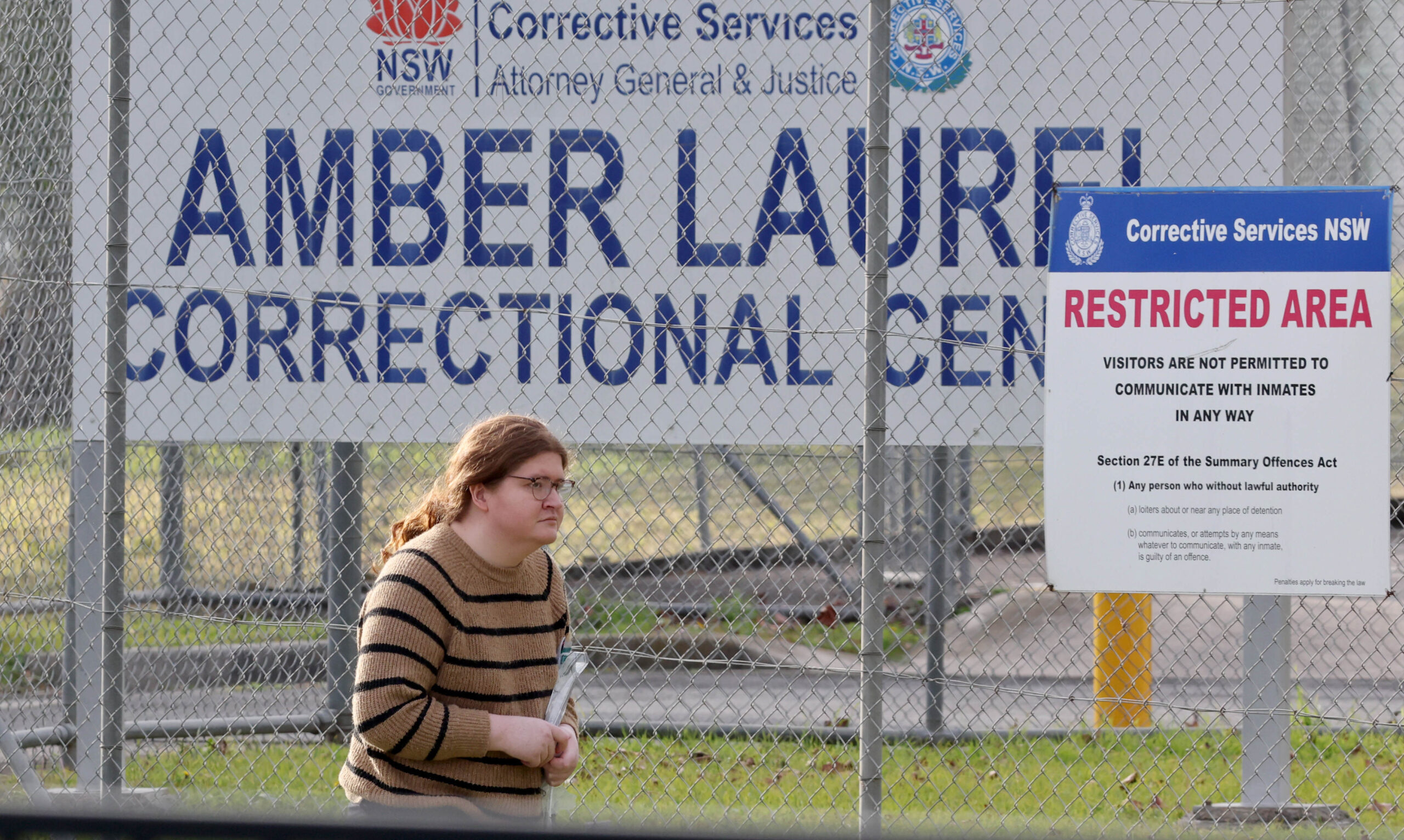
    An alleged hacker accused of ransoming gigabytes of data stolen from Western Sydney University (WSU) has been released on bail but only after her housemate handed over her smart TV.

    Please login below to view content or subscribe now.

    Membership Login

    Source link

  • Call for unis to ditch teacher education – Campus Review

    Call for unis to ditch teacher education – Campus Review

    A conservative research centre has recommended initial teacher education (ITE) courses be removed from universities and be once again set up through independent colleges.

    Please login below to view content or subscribe now.

    Membership Login

    Source link

  • What’s inside the Senate megabill for higher education?

    What’s inside the Senate megabill for higher education?

    The Senate on Tuesday passed its mammoth domestic policy package, which would reshape the federal student lending system and delay major higher education regulations. 

    Vice President JD Vance cast the tie-breaking vote to pass the legislative package 51-50. Lawmakers passed the bill through the reconciliation process, which allows the Senate to bypass the usual 60 votes needed to overcome a filibuster. 

    The House and the Senate will have to reconcile their two versions of the bill before they can send it to President Donald Trump’s desk. 

    That could prove difficult. Although the two proposals would both extend tax cuts and fund Republican priorities like increased immigration enforcement, some aspects are dramatically different. 

    That includes for the higher education sector. For instance, while the House version would put colleges on the hook for their former students’ unpaid student loans, the Senate’s version creates an entirely different system intended to hold institutions accountable for their student outcomes. 

    Below, we’re rounding up some of the Senate bill’s major provisions. 

    Cutting off student loan eligibility to college programs

    One of the biggest provisions in the Senate’s bill would prevent college programs from being eligible to receive student loan funding if their graduates can’t meet certain earnings thresholds. 

    For undergraduate degree programs, they would have to prove that at least half of their graduates earn more than the typical worker in their state with only a high school diploma. Similarly, graduate programs would have to show their graduates earn more than the typical bachelor’s degree holder working in the same field and region. 

    College programs would lose their eligibility for federal student loans if they fail the earnings test in two out of three consecutive years. 

    Reshaping federal student loans

    Like the House-passed version, the Senate bill would end Grad PLUS loans, which allow graduate students to borrow up to the cost of the attendance for their programs, including tuition, fees, textbooks and living expenses. 

    The bill would moreover cap graduate student lending to $100,000 per borrower, or $200,000 for students enrolled in professional programs, such as law or medicine. It would also cap Parent PLUS loans to $65,000 per student. 

    Additionally, the Senate’s plan would consolidate the number of repayment options for federal student loans. Starting July 1, 2026, borrowers taking out new loans would only have access to two plans: one standard plan with fixed payments and one income-driven repayment plan with remaining balances forgiven after 30 years. 

    Major changes to Pell

    The Senate’s version of the bill would allow Pell Grants to be used for short-term programs between eight and 15 weeks. 

    However, lawmakers took out a controversial provision that would have also extended short-term Pell Grants to unaccredited providers. The move came after the Senate’s parliamentarian said the original provision should be subject to a 60-vote approval versus the simple majority needed for reconciliation.

    The package also would increase funding for Pell Grants to cover expected shortfalls while removing eligibility for students if they receive scholarships that cover their full cost of attendance. 

    Endowment tax hikes

    The Senate’s version of the bill would raise the tax that wealthy private nonprofit colleges pay on their endowment returns. The new system would introduce a tiered tax, starting at the current rate of 1.4% and jumping up to 4% and 8% based on endowment assets per student. 

    Currently, only colleges with at least $500,000 in endowment assets and 500 tuition-paying students pay the tax. But the new bill provides an exemption for smaller colleges, excluding those with 3,000 tuition-paying students or fewer from having to pay the tax. Like the initial short-term Pell proposal, lawmakers took out an earlier proposed exemption for religious colleges after scrutiny from the chamber’s’s parliamentarian.

    Delays to Biden-era regulations

    The Senate’s original plan would have rolled back permanently two Biden-era versions of regulations: the borrower defense to repayment and closed school discharge rules. The former allows borrowers to receive debt relief if they were defrauded by their colleges while the latter offers forgiveness if their institutions closed before they could finish their programs. 

    Source link