Dr. Andrew J. SeligsohnHigher education in the United States has come under increasing scrutiny — but not always for the right reasons. Critics claim that colleges and universities award degrees with little economic value, limit ideological expression on campus, and operate primarily for their own financial interests, rather than as institutions of shared public value. While much in this narrative is false, it nonetheless affects the public’s attitude toward higher education and individuals’ decisions about pursuing a postsecondary degree, which may be detrimental to their economic interest.
When these critiques are made in bad faith, we should counter them with facts about the value of college attainment. It remains true for example, that a college degree is likely to yield a significant boost in earnings. Nonetheless, anyone who cares about higher education must also ask why these arguments resonate so deeply with the public. Where real frustrations are fueling legitimate skepticism, addressing those concerns can both improve higher education’s reputation and enhance its value for students, families, and society. Since the experiences that give rise to frustration and receptivity to attacks on higher education are personal experiences, it pays to drill down into the particulars to figure out what’s going on.
In that spirit, Public Agenda, in partnership with Sova and the Beyond Transfer Policy Advisory Board, set out to deepen our collective understanding of learner experiences with the credit transfer process. We knew from research on enrolled students that transfer was a source of pain for many learners. But we didn’t know how many people were affected, how much it mattered to them, and how it shaped their views of higher education more broadly. With support from ECMC Foundation, we fielded a national survey of adult Americans that interrogates transfer experience and outcomes.
Dr. Lara CouturierThe findings were striking, and they should serve as a call to action for institutions of higher education. Nearly 4 in 10 respondents reported that they had tried to transfer credit toward a college degree or credential. This included credits earned at a previous college or university, as well as credits earned from nontraditional sources. In fact, more than a third attempted to transfer credits earned from workplace training, military experience, industry certification, vocational or trade school, or other prior learning. With more households feeling the cost of inflation and needing to upskill to survive in this economy, and more higher education institutions facing enrollment declines, we should be finding ways to develop more on-ramps and clear the path to a college degree.
Unfortunately, the survey revealed that Americans who attempt to transfer encounter convoluted paths, often losing credit hours, money, and motivation along the way. One in five respondents reported having to repeat a class they had already taken because their credits didn’t transfer. Thirteen percent reported running out of financial aid as a result of having to repeat courses. And, most concerning, 16% reported that they gave up on pursuing a college degree or credential because the process of transferring was so difficult. It’s clear difficulties with transfer are not only inconveniences — they’re significant financial burdens and barriers to completion.
We also sought to understand how these direct experiences shape individuals’ broader attitudes toward higher education. We found it profoundly troubling that 74% of respondents who had tried to transfer credit agreed with the statement that two- and four-year higher education institutions care more about making money than about educating students. In fact, respondents who had tried to transfer credit were more likely to hold this jaded view than those who had attended college but had not transferred or those who had no prior experience with higher education. So while some of the current attacks on higher education may be in bad faith, it should not be surprising that they find a receptive audience among so many Americans who recall feeling personally misled.
We know, then, that credit transfer needs reform — but what exactly does that look like? Public Agenda also surveyed Americans about potential interventions, and the results are promising. First, when asked what should happen to a college with a track record of not accepting many credits for transfer, Americans felt public accountability would be more helpful than heavy-handed punitive approaches. Fifty-four percent of Democrats and 47% of Republicans agreed that institutions should have to make a plan to improve credit transfer rates. Conversely, just one-third of Republicans and Democrats thought colleges should lose their funding. But what might go into a plan for improvement? Our survey found broad support among Republicans, Democrats, and independents for a variety of policies intended to make it easier for students to transfer credits. Support is notably strong for requiring that students have free and easy access to their transcripts, credentials, and degrees; requiring institutions to create public databases with transfer information; and requiring that prospective transfer students are quickly told how many credits will be accepted.
The benefits of a better transfer process are clear and compelling. Students would face fewer obstacles to completing their degrees, leading to higher graduation rates, better individual economic outcomes, and broader prosperity. Just as importantly, higher education would rebuild trust with the public by showing that institutions are committed to serving students—not just collecting tuition dollars. And the benefits of this renewed trust extend beyond the higher education system. The perception that public institutions don’t care about ordinary Americans is a key element of the challenge our broader democracy is facing. Since the education system is a direct way many people interact with our government, restoring confidence that higher education works for all Americans can further inspire faith in public institutions.
If we ignore issues like the broken credit transfer system, skepticism about higher education will continue to fester. Worse, more students may give up on college altogether, missing out on opportunities for personal and professional growth—all of which ultimately erodes our democracy. Pushing back against misinformation isn’t the only way to defend higher education; we must acknowledge and address the real barriers students face. Credit transfer is an experience shared by many with cross-partisan support for reform—now is the time to act. Reforming the transfer process won’t solve every challenge facing higher education, but it’s a clear and necessary step toward improving the system for the good of both students and institutions themselves.
Dr. Andrew J. Seligsohn is president of Public Agenda, a national research-to-action organization. Dr. Lara Couturier is a partner at Sova, a higher ed advocacy organization.
Roughly half of middle and high schoolers report losing interest in math class at least half the time, and 1 in 10 lack interest nearly all the time during class, a new study shows.
In addition, the students who felt the most disengaged in math class said they wanted fewer online activities and more real-world applications in their math classes.
Feeling bored in math class from time to time is not an unusual experience, and feeling “math anxiety” is common. However, the RAND study notes that routine boredom is associated with lower school performance, reduced motivation, reduced effort, and increased rates of dropping out of school.
Perhaps unsurprisingly, the study found that the students who are the most likely to maintain their interest in math comprehend math, feel supported in math, are confident in their ability to do well in math, enjoy math, believe in the need to learn math, and see themselves as a “math person.”
Dr. Heather Schwartz, a RAND researcher and the primary investigator of the study, noted that the middle and high school years are when students end up on advanced or regular math tracks. Schwartz said that for young students determining their own sense of math ability, “Tracking programs can be a form of external messaging.”
Nearly all the students who said they identified as a “math person” came to that conclusion before they reached high school, the RAND survey results show. A majority of those students identified that way as early as elementary school. In contrast, nearly a third of students surveyed said they never identified that way.
“Math ability is malleable way past middle school,” Schwartz said. Yet, she noted that the survey indicates students’ perception of their own capabilities often remains static.
The RAND study drew on data from their newly established American Youth Panel, a nationally representative survey of students ages 12-21. It used survey responses of 434 students in grades 5-12. Because this was the first survey sent to members of the panel, there is no comparable data on student math interest prior to the pandemic, so it doesn’t measure any change in student interest.
The RAND study found that 26% percent of students in middle and high school reported losing interest during a majority of their math lessons. On the other end of the spectrum, a quarter of students said they never or almost never lost interest in math class.
There weren’t major differences in the findings across key demographic groups: Students in middle and high school, boys and girls, and students of different races and ethnicities reported feeling bored during a majority of math class at similar rates.
Dr. Janine Remillard, a professor at the University of Pennsylvania Graduate School of Education and expert in mathematics curriculum, said that in many math classes, “It’s usually four or five students answering all the questions, and then the kids who either don’t understand or are less interested or just take a little bit more time — they just zone out.”
Over 50% of students who lost interest in almost all of their math classes asked for fewer online activities and more real-world problems, the RAND study shows. Schwartz hypothesizes that some online math programs represent a “modern worksheet” and emphasize solo work and repetition. Students who are bored in class instead crave face-to-face activities that focus on application, she said.
During Remillard’s math teacher training classes, she puts students in her math teacher training class into groups to solve math problems. But she doesn’t tell them what strategy to use.
The students are forced to work together in order to understand the process of finding an answer rather than simply repeating a given formula. All of her students typically say that if they had learned math this way, they would think of themselves as a math person, according to Remillard, who was not involved in the RAND study.
Chalkbeat is a nonprofit news site covering educational change in public schools.
For more news on STEM learning, visit eSN’s STEM & STEAM hub.
Norah Rami, Chalkbeat
Norah Rami is a Dow Jones education reporting intern on Chalkbeat’s national desk. Reach Norah at [email protected].
Latest posts by eSchool Media Contributors (see all)
The increasing exposure of higher education sectors worldwide to market mechanisms (eg privatisation in and of higher education, platformisation and assetization) generates market-making pressures, technologies and relations that are changing university missions and academic practices in both research and teaching, altering not only forms of knowledge production but also academic identities (Lewis et al, 2022). These corporate, competitive systems operate in and through regimes of time acceleration and compression (Rosa & Trejo-Mathys, 2013; Wajcman & Dodd (eds), 2017) that enable capitalist accumulation via a proliferation of calculative practices and surveillance techniques driven by instrumental logics. In essence, the timescapes of the ‘accelerated academy’ (Vostal, 2016) have come to be not just dominated but defined by the linear rhythms of knowledge production, accumulation, consumption, and distribution.
In this context, ever-present tensions continue to pit institutional time scarcity/pressure against the often non-linear times, rhythms and practices that characterise the craft of intellectual work. These are acutely visible in doctoral education, which is considered both a liminal space-time of profound transformation for students and a rite of passage through which doctoral candidates enter the academic community.
Doctoral students in the accelerated academy experience tremendous institutional pressures to complete their research projects within tight timeframes punctuated by developmental milestones. At the same time, they are pressed to publish and participate in externally funded projects before completing their course of studies, to secure a positional advantage in a hyper-competitive, precarious job market.
Much less attention is devoted to reading as an autonomous practice in relation to educational research. Reading is generally approached instrumentally for research and mostly equated with a strategic, extractive process whereby academics retrieve, survey or review the information needed for writing to maximise efficiency and speed (Fulford & Hodgson (eds) 2016; Boulous Walker, 2017).
Doctoral students are taught to tackle the volume of readings by deploying selective, skim and speed-reading techniques that ‘teach’ them a practical method to ‘fillet’ publications (Silverman, 2010 p323) or ‘gut(ting) an article or book for the material you need’ (Thomas, 2013 p67). Without dismissing the validity of these outcome-oriented techniques, I argue that reading should be approached and investigated as research, which is to say as a philosophical orientation whose intimate relation with thinking (meditation and contemplation) and writing (as a method of inquiry) constitutes a conjuncture with transformative potential for both the reader and the text (Hoveid & Hoveid, 2013; Dakka & Wade, 2018). [RC1][FD2]
In 2024, I was awarded a BA/Leverhulme grant that allowed me to examine, in collaboration with Norwegian colleagues, the under-researched area of reading habits, rhythms and practices among doctoral students in two countries, the UK and Norway, characterised by a markedly different cultural political economy of higher education. The project set out to explore how a diverse group of doctoral students related to, made sense of, and engaged with reading as a practice, intellectually and emotionally. Through such exploration, the team intended to examine pedagogical and philosophical implications for doctoral education, supervision, and, more generally, higher education through a distinct spatiotemporal lens.
The project experimented with slow reading (Boulous Walker, 2017) as an ethico-political countermovement that invites us to dwell with the text and reflect on the transformations it can produce within the self and the educational experience tout-court. Examining the practice of reading is, therefore, vital to foster the development of the criticality and creativity that inform the students’ thinking and, ultimately, their writing, helping to create better conditions for meaningful educational engagement.
As briefly mentioned earlier, there is a dearth of literature in educational research focused explicitly and directly on reading as a research practice. Conversely, Reading Theory and Reader-Response criticism (Bennett, 1995) are well-established strands in literary studies.
Two contributions inspired the project in the cognate fields of philosophy, pedagogy, and education ethics, underpinning the theoretical and methodological framework adopted: Aldridge (2019), exploring the association between reading, higher education and educational engagement through the phenomenological literary theorisations of Rita Felski (2015) and Marielle Macé (2013). Reading here is considered as a phenomenological ‘orientation’ with ontological character: the entanglement of body, thought, and sense makes reading an ‘embodied mode of attentiveness’ with ‘rhythms of rapprochement and distancing, relaxation and suspense, movement and hesitation’ (Felski 2015, p176). Lastly, Boulous Walker (2017) introduces the concept of ‘slow reading’, or reading philosophically against the institution. This practice stands in opposition to the institutional time, efficiency, and productivity pressures that prevent the intense, contemplative attitude toward research that is typical of active educational engagement. The author calls, therefore, for slow reading, careful reading, and re-reading as antidotes against institutional contexts dominated by speed and the cult of efficiency.
Bridging cultural sociology and philosophy of education, the project combined Hermeneutic Phenomenology (Schutz, 1972; Ricoeur, 1984) and Rhythmanalysis (Lefebvre, 2004) to gain insight into the lived experiences, embodied and cognitive processes of meaning-making, and spatiotemporal (rhythmic) dimensions of reading among doctoral students.
The complementarity of these frameworks enabled a richer and deeper understanding of the phenomenon from a socio-cultural and philosophical perspective. The rhythmanalytical dimension drew on the oeuvre of the French philosopher and sociologist Henri Lefebvre. Conceived as both a sensory method and a philosophical disposition, Rhythmanalysis (2004) foregrounds the question of the everyday and its rhythms, offering insightful takes on repetition, difference, appropriation and dwelling. Lefebvre’s analysis of the conflicting rhythms of the social and the critical moments that revive/subvert the humdrum of the quotidian pivot on the experience and resonance of bodies in space-time, their imbrication with the fabric of the social and the multiplicity of their perceptual interrelations with human and more-than-human environments. Methodologically, Rhythmanalysis enabled a closer look at the students’ reading habits, rhythms and practices in relation to their doctoral studies. The emphasis on spatio-temporality and (auto-)ethnographic observations made it possible to register and grasp the tensions that derive from clashes between meso institutional constraints and demands (eg set timeframes for completion; developmental milestones), micro individual responses and circumstances (eg different modes of study, private and/or professional commitments) and macro societal context (eg cognitive, extractive capitalism).
The phenomenological facet of the project drew on the hermeneutic, existential, and ontological dimensions found in Ricoeur’s and Schutz’s philosophy, which are concerned with grasping experiential meanings and understanding the complexity of human lifeworld. Acknowledging the entanglement of being and Dasein as an ontological standpoint, human lived experiences are situated within a contingent spatiotemporality and understood through an interpretivist epistemology founded on intersubjectivity, intentionality and hermeneutics.
This phenomenological-rhythmanalytical inquiry was therefore designed to explore students’ cognitive and affective experiences and practices of reading as they unfolded in the spaces and times of their doctoral education. The project involved two groups of doctoral candidates based in the Education department of, respectively, a teaching-intensive university in the West Midlands of England (Birmingham, UK), and a large, research-intensive university in Norway (Trondheim).
The first phase of data collection involved Focus Groups and Reflective Diaries. It foregrounded the times, places, and rhythms of reading, considering reading modalities and patterns of doctoral students in the context of institutional demands vis-à-vis personal and professional constraints. Rhythmanalysis was employed both as a method (reflective diaries) and as an interpretive, diagnostic tool to uncover and critically reflect on arrhythmias (ruptures) and/or eurythmic pockets in the reading patterns of doctoral students.
The second data collection phase relied on hermeneutic phenomenological techniques, such as Episodic Narrative Interviews (Mueller, 2019), to delve deeper into the affective, material, and cognitive experience that connects and transforms students and their readings.
The final stage of data collection involved an experiment in collective slow reading and re-reading against the institution, inspired by Boulous Walker’s philosophical reading and Felman’s description of the interpretative process as a never-ending ‘turn of the screw’ (Felman, 1977) that generates a hermeneutical spiral of subsequent, ever richer, and different textual interpretations.
Initial findings point to a complex and layered reading time experience, captured in its nuanced articulation by a rhythmic analysis of the students’ everyday practices, habits and affective responses.
Commonsensical as it may sound, reading takes time. Engaging with a text to interpret and understand it is time-consuming, and most of our respondents in this project discussed this. Reading seems to project an experience of oneself as a slow reader, followed by a feeling of guilt for ‘just’ reading.
Interestingly, clock time and phenomenological time appear to be juxtaposed in the reading process, creating conflicts and productive tensions for most of the PhD students in the project. For example, the students often welcome writing deadlines, as they create a linear rhythm that provides structure to their reading time. At the same time, the idea that reading should be done quickly and targeted to extract material for their thesis hovers over many participants, generating performance-related pressure and anxiety. Procedural aspects of reading, particularly managing volume and note-taking, are treated as a sign of success or failure, reinstating Rosa’s neoliberal equation of fast-winner, slow-loser in the accelerated, competitive academy (Rosa, Chapter 2 in Wajcman & Dodd (eds), 2017).
However, a deeper engagement with reading both opposes and coexists with this tendency, evoking the notion of Barthes’ idiorrhythmy (Dakka, 2024) to describe the process of discovering and imposing one’s own rhythm. This rhythm typically resists linearity and dominant structure, requiring slowness as a disposition or a mode of intense attention to oneself and the world through the encounter with text. Even more intriguingly, slowness as heightened focus and immersion often occurs within short and fragmented bursts of reading, strategically or opportunistically carved into the students’ everyday lives, resulting from an incessant act of negotiation over and encroachments with personal, professional, and institutional times.
The project explored, examined, and interpreted the rhythms and practices of reading in contemporary doctoral education along three axes: times (institutional, personal, inner, tempo, duration); spaces (physical, digital, mental); and affects as ways of relating (joy, guilt, anxiety, surprise, fantasy, etc). Together, these elements combine in unique and shifting configurations of dominant rhythms and idiosyncratic responses (rhuthmόs or idiorrhythmy), exposing the irreducibility of students’ experiences to harmful binaries (eg fast versus slow academia) while revealing the pedagogic affordances of a rhythmic and phenomenological analysis for contemporary universities. Spotlighting different approaches to reading, thinking, and writing enhances awareness of and attunement to developing one’s voice, listening and resisting capacity.
Fadia Dakka is an Associate Professor in Philosophy and Theory of Higher Education at Birmingham City University. Her interests lie at the intersection of philosophy, sociology and theory of higher education. She is currently working toward theorising Rhythm as a form of ethics underpinning critical pedagogy in higher education. She recently received a BA/Leverhulme small grant (2024-25) to examine doctoral reading habits and practices in the UK and Norway.
Everyone makes mistakes. To be credible you have to fess up when you get things wrong. Doing so doesn’t make you look bad. It shows you care about the truth.
Let’s face it, the news cycle is a pretty gloomy place at the moment, so we’ve decided to take a different perspective. This is our attempt to find our happie place (notice the pun we’ve got going here?).
This regular column aims to bring you positive news, flashes of inspiration and a warm, fuzzy feeling that will nourish your soul. We want to celebrate international student success and colleagues who go above and beyond. Get involved and send us the good stuff so we can share the love.
We recognise that in this unpredictable market, real challenges exist – and that this is nothing more than a sticking plaster – but sometimes there’s strength in looking for the positives.
I was born in Lagos, but I was made in Swansea Michael Ijaiyemakinde, international student
This week, we decided to check in with some of the international graduates we’ve met in the UK over the years to see how they’re getting on.
These stories are a simple reminder of why we believe in the transformational power of study abroad and the power to change individual lives (including our own).
Franka Zlatic – Studying abroad reinvigorated my worldview
“Spending six years studying in the UK profoundly shaped my academic and personal development.
“Immersed in a diverse, intellectually stimulating environment, I gained both theoretical grounding and the confidence to pursue independent research. Living abroad also allowed me to travel extensively across Europe and beyond, which broadened my horizons in ways I hadn’t anticipated.
“I met people from all walks of life, encountered different worldviews, and had the time of my life – experiences that have deeply influenced how I relate to others and approach my work. Later, working at a law school in India further deepened my understanding of migration, identity, and postcolonial dynamics – topics central to my academic focus.
Franka cuddling an elephant while teaching in India
“Engaging with students and scholars in a culturally different yet intellectually rich context challenged me to adapt, reflect, and grow. Both experiences, academic rigour in the UK and practical, cross-cultural engagement in India, equipped me with a unique combination of analytical insight, global perspective, and resilience.
“Returning to my home country, Croatia, I brought back not only knowledge but also a sense of purpose and a desire to contribute to local academic debates with a broader, transnational understanding.
“These international experiences positioned me competitively for a postdoctoral role in Croatia and reaffirmed my commitment to inclusive, globally engaged scholarship.”
Michael Ijaiyemakinde – studying in Wales was the making of me
“I was born in Lagos, but I was made in Swansea.
“Every time I say this, I get the same reaction – raised eyebrows, shocked expressions, and sometimes even pushback: you’re not patriotic.
“But here’s what I really mean. Growing up in Nigeria, life was fast-paced, driven by results, and often defined by expectations. While it gave me resilience, it didn’t speak my love languages or give me the space to find myself. I was always doing – but rarely being.
“At 17, I moved to study at Swansea University in Wales. Swansea’s a small city, often overlooked. But for me? It became a sanctuary. It was in Swansea that I experienced support that wasn’t transactional. I met managers, mentors, and everyday people who lived out values like empathy, service, and patience – people just like you who are reading this now.
Michael found his happie place on the southwest coast of Wales thanks to people just like you
“You didn’t just teach me – you showed me. Through kindness. Through consistency.
“You helped me shed temper issues, rebuild my self-esteem, and rediscover my voice. Swansea didn’t change who I was. It simply gave me permission to become it.
“What positive message am I trying to pass on here? What thoughts to help my colleagues stay positive in difficult times?
“The right environment can change everything: not because where you’re from is bad – but because sometimes you need a new setting to unlock the next chapter of your growth.
“Is the current environment you’re in helping you become the best version of yourself? Or is it holding you back from discovering who that version really is?
“If not, maybe it’s time to find your Swansea.”
Filip-Matej Pfeifer
Born in Slovenia, Filip attended the University of Ljubljana Faculty of Sport, then transferred to the UK in September 2024 to pursue his master’s degree and continue his rowing career.
This summer he will not only graduate with his degree in international business from Oxford Brookes University (OBU) – he will also compete at the world-famous Henley Royal Regatta in July.
Imagine if we could get everyone in the sector all rowing in the same direction. Kudos to Filip for showing us the way.
Filip represented OBU at the 2025 BUCS Regatta where he took the silver medal in the men’s Single Sculls, setting a new rowing record for his UK university team and has competed internationally in both the European Rowing Championships and the World Rowing Cup.
On May 30, he reached the semi-finals of the Single Sculls at the 2025 European Rowing Championships in Bulgaria.
Huge thanks to the Student Sports Company for keeping us up to speed with Filip’s achievements as an international student athlete in the UK. We’re all cheering him on!
Have you got some positive news to share?
Help us to showcase the best of international education by sending us your testimonials, love letters and inspirational thoughts to [email protected] labelled ‘Happie place’. And remember – good vibes only.
As the final school bells ring and students head into summer vacation, educators and parents alike are turning their attention to the phenomenon known as the summer slide–the learning loss that can occur when children take a long break from structured academic activity.
NWEA research notes that students can lose up to two months of math skills over the summer, and reading abilities can also decline, particularly for students from underserved communities.
But the summer slide isn’t inevitable. With the growing availability of engaging, high-quality online learning tools, students have more opportunities than ever to keep their skills sharp. These tools offer interactive lessons, personalized learning paths, and fun activities that reinforce what students learned during the school year–without making summer feel like school.
Here are five standout online resources designed to help K-12 students stay on track over the summer months:
1. Khan Academy: Khan Academy’s free online platform offers comprehensive lessons in math, science, history, and more. Its summer learning programs provide structured plans for students in grades K-12, including daily activities tailored by grade level. Each lesson includes short instructional videos, interactive quizzes, and mastery challenges. For students who want to get ahead or reinforce tricky concepts from the previous school year, Khan Academy is an ideal, self-paced resource.
Khan Kids, a separate app for younger learners (ages 2-8), combines educational videos, stories, and games that focus on early literacy, math, and social-emotional development.
2. PBS LearningMedia: PBS LearningMedia curates thousands of free videos, lesson plans, and interactive activities aligned to state and national standards. The content is engaging and age-appropriate, drawing from trusted PBS programs like Wild Kratts, NOVA, and Peg + Cat. During the summer, PBS typically offers special themed weeks–like “Summer of Reading” or “Science Week”–featuring playlists and activity bundles to help children stay curious and engaged.
For younger children, PBS Kids also provides games and shows that reinforce foundational skills in reading, math, and critical thinking.
3. ReadWorks: Reading skills are among the most vulnerable to decline during the summer, especially for students who do not have regular access to books or structured reading activities. ReadWorks is a nonprofit platform offering free, research-based reading comprehension materials for grades K-12. Teachers and parents can assign grade-level texts, paired with vocabulary lessons and comprehension questions. The platform also features an Article-A-Day challenge that encourages students to build background knowledge and reading stamina with just 10 minutes a day. ReadWorks is especially helpful for English Language Learners, offering audio versions and question supports to aid comprehension.
4. Prodigy: For students who struggle to stay motivated during math practice, Prodigy turns learning into a role-playing adventure game. Students solve math problems to earn rewards and level up characters, making the experience both educational and fun. Aligned with state standards and suitable for grades 1-8, Prodigy adapts to each learner’s skill level, offering targeted practice without the pressure of grades or tests. Parents can access dashboards to track progress and set goals over the summer. Prodigy also offers a version for English Language Arts, expanding the platform’s reach beyond numbers.
5. Smithsonian Learning Lab: For families looking to incorporate cross-curricular learning, the Smithsonian Learning Lab provides a treasure trove of multimedia collections that blend history, science, art, and culture. Students can explore virtual exhibits, complete inquiry-based lessons, and create their own digital portfolios. The platform is well-suited for middle and high school students, especially those interested in project-based learning and critical thinking. Whether studying the Civil Rights Movement or learning about ecosystems, students can explore real artifacts, images, and primary sources from the Smithsonian’s vast collection.
Keeping minds active and curious
Experts emphasize that summer learning doesn’t need to mirror the structure of the traditional classroom–keeping students intellectually engaged as they explore their personal interests reinforces academic skills in an low-stress environment.
Families can also incorporate daily routines that promote learning–reading together before bed, practicing math while cooking, or exploring nature to spark scientific curiosity.
As the digital learning landscape expands, there are more tools than ever to support students year-round. With just 20-30 minutes of meaningful academic engagement each day, students can maintain their momentum and return to the classroom in the fall ready to learn.
Laura Ascione is the Editorial Director at eSchool Media. She is a graduate of the University of Maryland’s prestigious Philip Merrill College of Journalism.
This audio is auto-generated. Please let us know if you have feedback.
States suing the U.S. Department of Education over its mass layoffs claim the reduction in force is impacting the agency’s legally required functions, including research and grant distribution. But in documents submitted to the U.S. Supreme Court on Monday, the Education Department said states “have no statutory right to any particular level of government data or guidance.”
The department is pushing the high court to let its massive RIF go through after being paused by both a federal district judge and the 1st U.S. Circuit Court of Appeals. In court documents, the agency said “it can carry out its statutorily mandated functions with a pared-down staff and that many discretionary functions are better left to the States.”
Its request to carry through on the RIFs comes even as the agency notified “all impacted employees” on administrative leave in a June 6 email obtained by K-12 Dive that it is “actively assessing how to reintegrate you back to the office in the most seamless way possible” to comply with the court orders.
On June 16 — the same day as the agency’s latest Supreme Court filing — it also emailed RIFed staff for information to help the department in “understanding potential reentry timelines and identifying any accommodations that may be needed.”
However, several of the more than 1,300 department employees put on administrative leave in March told K-12 Dive last week that they do not think the agency intends to actually bring them back. This is despite many of the employees having worked on legally required tasks the department has lagged on or trimmed down since the layoffs, as well as the department’s efforts to seemingly comply with the court orders.
“While they’re saying we’re coming back, they’re also still appealing the [RIF] process,” said one Education Department employee who is on administrative leave because of the RIF. “It feels like they’re slow-walking it.”
Employees ‘in limbo’ as department lags on statutory tasks
The department is still paying all these employees’ salaries — amounting to millions of dollars — only for them to sit tight.
According to an email from American Federation of Government Employees Local 252, the union representing a majority of the laid-off employees, the Education Department is spending at least $7 million in taxpayer dollars per month to workers on leave.
That amount is, in fact, only for 833 of the 962 laid-off Education Department workers that the union represents and whom it was able to reach for its analysis. Thus, much more than $7 million is actually being spent per month to keep the more than 1,300 laid-off employees on payroll.
Since March, the department has spent approximately $21.5 million on just those 833 employees, according to data provided by AFGE Local 252.
While the Education Department emailed laid-off employees multiple times in the past month to gather information for “reintegration and space planning efforts” on government IDs, retirement plans and devices, among other things, several employees called this a superficial effort to comply with court orders.
In the meantime, employees are free to apply to other jobs, start their own organizations, and go on vacation if they so choose, according to employees K-12 Dive spoke with as well as an AFGE Local 252 spokesperson.
“We feel like we’re in limbo,” said an employee who has been on administrative leave since March. “They haven’t talked to us.”
This employee and the others who spoke to K-12 Dive asked to remain anonymous for fear that identification could negatively affect their employment status or severance terms.
Condition of Education report falls behind
This employee would have been working at the National Center for Education Statistics on data related to the Condition of Education Report, which is required by law — and for which the department missed its June 1 deadline “for the first time ever,” according to Sen. Patty Murray, D-Wash.
After leaving just a handful of employees in NCES, the department has so far released only a webpage titled “Learn About the New Condition of Education 2025: Part I,” which includes significantly less information than in previous years.
“Now all we have is a bare-bones ‘highlight’ document with no explanation to Congress or to the public,” Murray said in a June 5 Senate Health, Education, Labor and Pensions Committee hearing. “And that is really unacceptable — students, families, teachers all deserve to see a full report.”
In 2024, the report was a 44-page document including new analysis, comparisons with past years, and graphs to visualize the data. It included over 20 indicators grouped by topics from pre-kindergarten through secondary and postsecondary education, labor force outcomes and international comparisons. Individual indicators ranged from school safety issues like active shooter incidents to recovery from the coronavirus pandemic. This year, the department said it would be “updating indicators on a rolling basis” due to its “emphasis on timeliness” and would determine “which indicators matter the most.” More than two weeks after its missed June 1 deadline, however, the report still only includes a highlights page with five indicators linking to data tables, many of which had already been released.
Meanwhile, Democratic lawmakers have also expressed concerns that the department lagged on its statutory responsibilities to disburse key federal funds, including for Title I-A — which they said took three times as long to distribute than under the last administration. The delay in funding distribution gave states and districts less time to plan for helping underserved students, including those experiencing homelessness, lawmakers said.
The U.S. Department of Education did not respond to K-12 Dive’s requests for comment on its missed June 1 deadline for the report or on how it will increase government efficiency and cut costs while spending millions on salaries for employees who are not working.
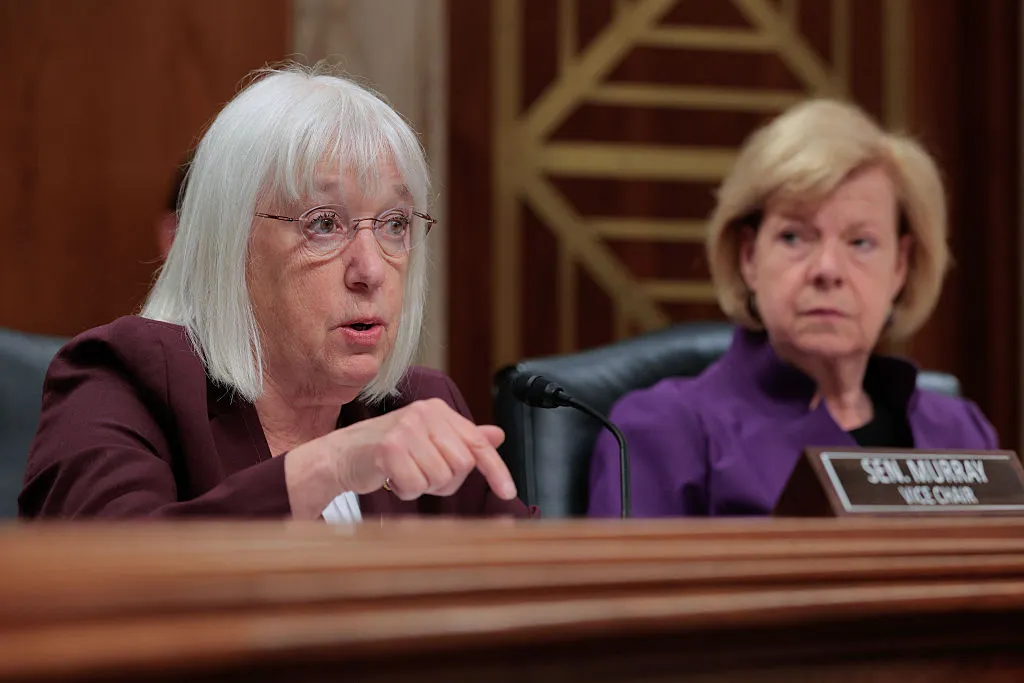
Senate Appropriations Committee ranking member Sen. Patty Murray, D-Wash., questions McMahon during a hearing about the proposed 15% cut to the Education Department’s budget on Capitol Hill June 3, 2025, in Washington, D.C. The budget was consistent with President Trump’s executive order to wind down the Education Department.
Chip Somodevilla/Getty Images via Getty Images
Department says RIF impacts are “speculative”
However, in its Supreme Court filing on Monday, the department dismissed as “speculative allegations” states’ complaints of disruptions to services as a result of the RIFs.
The states, in their filing last week seeking to block the RIFs, said that “collection of accurate and reliable data is necessary for numerous statutory functions within the Department that greatly affect the States.”
The department relies on this data “to allocate billions of dollars in educational funds among the States under Title I of the Elementary and Secondary Education Act,” the states said in their June 13 response to the administration’s plea to the Supreme Court to let its RIFs take effect. The department has given “no explanation of how such allocation can occur without the collection and analysis of underlying data, or of how the data can be collected or analyzed without staff,” their filing said.
In its Monday response, the department maintained that it is not required by law to maintain “a particular quality of audit.” The states arguing to maintain the department’s previous staffing levels are trying to “micromanage government staffing based on speculation that the putative quality of statutorily mandated services will decline,” the agency said.
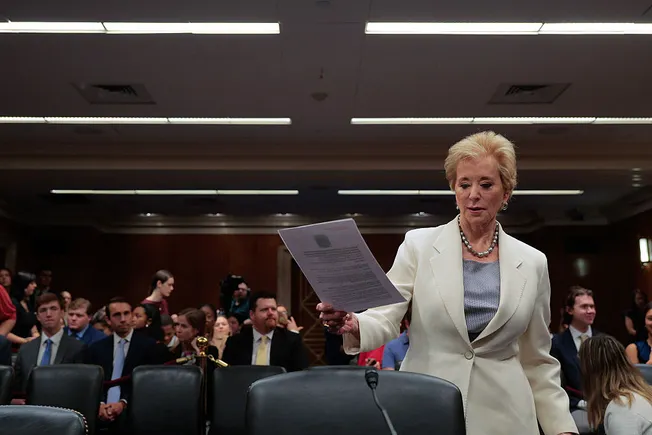
However, when pressed by Sen. Murray in a budget hearing earlier this month, Education Secretary Linda McMahon said “no” analysis was conducted about how the firings would impact the agency’s functions or how it would continue its statutorily required responsibilities without much of its staff. The department did read “training manuals and things of that nature” prior to the layoffs, she said, and had conversations with “the department.”
But several laid-off staffers told K-12 Dive that they were never spoken to about how their responsibilities would continue to be fulfilled after their departure.
“They don’t understand what they’ve cut,” an employee said.
This week on the podcast we examine the Office for Students’ new free speech guidance as controversial requirements prepare to take effect from August 1st.
What do the “deeply disturbing” YouGov findings about academic self-censorship really tell us, and how should universities navigate campus protests and challenging research topics?
Plus we discuss outgoing UKRI chief Ottoline Leyser’s stark warning about “inevitable consolidation” in university research.
With Mark Peace, Professor of Innovation in Education at King’s College London, Arti Saraswat, Senior Policy Manager for Higher Education at the Association of Colleges, Livia Scott, Partnerships Coordinator at Wonkhe, and presented by Jim Dickinson, Associate Editor at Wonkhe.
Across Texas, students entering dual-credit programs with the goal of becoming educators often face unclear pathways and unnecessary obstacles. But in the North Texas region, a multisector group is working to change that—starting as early as high school.
Through programs like Pathways in Technology Early College High School (P-TECH) and early-college high schools, students can begin working toward their teaching credentials before they graduate. The Acceleration to Credential (A2C) Working Group—convened by Educate Texas—brings together local independent school districts, Dallas College and four-year university partners to create clearly defined pathways that connect high school, community college and bachelor’s-level educator preparation.
While the intention behind many dual-credit programs is to offer students more opportunity, the reality is that inconsistent requirements across institutions often create confusion. A student may graduate high school having earned college credits, only to find those credits don’t transfer toward a four-year degree. Or they may complete an associate degree that doesn’t align with bachelor’s programs in education.
To address this, A2C partners designed a coordinated model known as Target Pathways, which:
Aligns associate degree pathways to all bachelor’s education programs in the region.
Meets both high school graduation and Texas Core Curriculum requirements.
Creates space for local adaptation within a unified regional framework.
Provides students with clear maps of all degree and certification requirements.
These streamlined pathways aim to improve student outcomes, reduce excess credit accumulation and increase the number of teacher candidates completing their degrees on time and with less debt.
The associate of art in teaching (A.A.T.) degrees that students earn in these P-TECH programs have shown promising outcomes when it comes to entering education careers. Between 2010 and 2023, 49 percent of A.A.T. earners in Dallas–Fort Worth became paraprofessionals or teachers or advanced into education leadership positions, according to an analysis by Wesley Edwards at the University of North Texas (Wesley Edwards, AAT Analysis, University of North Texas, April 23, 2024, and Sept. 21, 2024). As these pathways expand across more high schools, partners across the state should continue investing in the supports students need to enter the education workforce.
“Developing a robust pathway for high school students to not only earn credentials but also gain valuable exposure to industry is critically important as we look to meet workforce needs,” said Robert DeHaas, vice provost of the School of Education at Dallas College.
This work is about more than academic alignment—it’s about building the relationships and trust needed to create meaningful change.
“This work requires close coordination between large systems that haven’t always worked together,” DeHaas said. “The collaborative has helped foster the coalition-building needed to break down these historical silos and create a college road map that supports the upward economic mobility of our students.”
Educate Texas will continue supporting A2C by helping school districts implement these pathways and facilitating collaboration with higher education partners. By investing in regional alignment and early access, the A2C model offers a promising solution for expanding the teacher pipeline in Texas and beyond.
Joseph Reyes is deputy director of teaching and leading at Educate Texas, an initiative of Communities Foundation of Texas. In this role, he manages programs that increase access to high-quality educator preparation and works with school districts and higher education partners to strengthen the teacher workforce across the state.
When I was teaching, I always thought of this time on the calendar as the “postexhale” period.
The end of the semester is a headlong sprint to the finish, which, unlike a race where you get to break the tape and coast to a stop, is more like hitting a wall and collapsing on the spot. At least that’s how it always felt to me, at least until I started ending the semester at week 13 (of 15) and using the last two weeks for wind-down and reflection on what we’d all learned.
In the immediate aftermath of the semester, particularly spring semester, I couldn’t be bothered with any thinking or planning for the next semester. The next scheduled activity, usually something I started around the first week of August, would be the specific planning for the forthcoming semester, but there is also this postexhale period where no work needs to be done, conditions that are fertile for thinking and dreaming before the planning.
The postexhale period is the spot where you’re likely to gestate your best ideas, because at least for the next month or so, you don’t have to do anything with them.
I want to plant a seed of thought for anyone who is confronting having to or wanting to make changes to their course in order to accommodate the reality of generative AI technology being in the world.
Here it is: Next semester, do less that means more.
As I’ve been traveling around talking to people about how we can (and should) adjust how we think about teaching writing, one of the persistent worries is that introducing some AI-related content or experiences around ethics or safe use or whatever requires layering something new on what’s already happening. For many instructors, it’s an uninvited and therefore unwelcome burden.
I get it. We can never cover everything to begin with. Here’s one more thing to cover.
But what if we can use this as an opportunity to rethink what learning looks like? As we move through this period where we can reflect and reconsider, we can think about how to boil the experiences in the classroom down to an essence that can be reflected in learning experiences.
Consider the learning that has proved most enduring from the full trajectory of your education and I think you’ll find that it clusters around essential, deep lessons. What has mattered are the moments where we have learned how to learn and think and act inside a particular domain. It is this learning that allows us to go forth and continue to learn eagerly, ceaselessly.
Even as a decidedly and well-documented overall mediocre student, there are numerous learning experiences (in and out of class) that I can point to as inflection points that made a significant difference in the overall trajectory of my life because they provided something essential to my journey forward.
One moment I invoke frequently is when my third-grade teacher asked us to write instructions for making a peanut butter and jelly sandwich and then had us try to make the sandwiches following the instructions to the letter. Because I forgot to say that you should use a knife to spread the peanut butter on the bread, I ended up sticking my hand in the jar of peanut butter to fulfill my own directive. I have a picture memorializing the occasion.
That moment introduced me to the rhetorical situation and the fact that writing has a purpose and an audience—and careless writing has consequences. I’m sure I learned all kinds of other things in third grade and maybe some of them were important, but only one moment was indelible, and that’s all I needed.
In high school, excited about the subject matter for my junior-year English term paper (the New Journalism of Tom Wolfe), while being not enthused about the parameters of what I was supposed to do with that subject matter, I decided to write my term paper in the style of Tom Wolfe, earning a not-so-great grade from my teacher, but a meaningful lesson in how to keep myself interested with a task. (I wrote in more detail about this previously.)
Some reflection unearths other moments. A college nonfiction writing class had us pretending we were writing for specific publications and producing columns that could fit under the editorial banner. I chose Esquire, imagining myself a sophisticated male, I guess. We were required to understand how to write for very specific audiences with very specific aims, excellent practice for all kinds of different futures. At the end of the semester, we had a competition where we voted for the “best” columns across a number of different categories. I was a finalist in several but won zero, losing out to one specific classmate’s work every time.
In a conference with the instructor, I must’ve expressed some kind of disappointment, and he said something that stuck with me: “X’s stuff sounds like themselves writing for a publication. You sound like someone doing an imitation of someone writing for a publication.” I walked away believing that authenticity was ultimately the differentiator in connecting with readers.
I could name more moments. My first semester of grad school, my professor, Robert Olen Butler, had us do an in-class writing exercise based in sense memory (which can be found in his book From Where You Dream), and I experienced what it was like to tap into my artistic subconscious for an extended, focused period. Bob was not the most engaged of mentors, but I’m not sure I’d still be writing if I hadn’t had that experience.
When I started teaching, the indelible lessons delivered by my students came even more often, possibly because I recognized my responsibility over the work in ways I hadn’t achieved as a student.
All these moments are rooted in very specific and specifically designed experiences. These kinds of experiences are not threatened by the existence of large language models, because it was clear to me that the point of the exercise is to have the experience.
Of course, generative AI tools could be present as part of an important learning experience, but when generative AI is used by students as a substitute for the experience, the learning is obviously deformed. Injecting LLMs into our courses simply because it seems like something we have to be doing is not a great recipe for learning.
There are some, perhaps many, places where it is not and should not be welcome because it is not conducive to the experience of learning we’re trying to instantiate.
As I think about these experiences, what I learned was really contained in a crystallizing moment made possible by the earlier experience of that class, or even before that class. This is not necessarily predicated on the amount of material covered or the volume of what students are exposed to.
As you enjoy this exhale period, maybe spend some time thinking how little you could do in your course and still have students walk away with something that will be meaningful years down the road. That may be the core of your course when you come back and start thinking about it for real in a month.


 Dr. Lara Couturier