Category: Featured

  • Social mobility needs a whole-university rethink

    Social mobility needs a whole-university rethink

    For more than two decades, widening access has been the sector’s flagship social mobility project. But what if that narrow focus is holding us back?

    A new report from the Social Market Foundation, Leave to Achieve?, urges us to think more expansively. Sponsored by the University of Warwick and the University of Southampton, the project was commissioned to recognise and champion the significant work that universities already do to improve social mobility. This report presents a positive picture with some excellent case studies of good practice. Yet we wanted to challenge the status quo by posing a new question of how this role could be further strengthened in an evolving political, economic and demographic landscape.

    It’s a timely intervention. In November 2024, the Secretary of State for Education wrote to university leaders setting out five clear priorities: improved access and outcomes for disadvantaged students, stronger civic engagement, enhanced contributions to economic growth, higher teaching standards, and greater financial efficiency. Leave to Achieve? presents a compelling blueprint for how institutions might meet that challenge – not by doing more of the same, but by doing things differently.

    Getting in isn’t the same as getting on

    Yes, disadvantaged students are more likely to go to university than they were 20 years ago. But gaps remain – especially at high-tariff providers, where the life-changing graduate premium is highest. And even when disadvantaged students do get in, they’re less likely to complete, more likely to graduate with lower-class degrees, and face a persistent class pay gap.

    These access gains have also been geographically uneven. In parts of the country, a student’s chances of going to university – let alone a selective one – remain depressingly slim.

    This aligns with long-standing evidence from the Sutton Trust and the Social Mobility Commission, both of which have consistently highlighted the enduring impact of regional inequality and the limits of “national” mobility narratives. The Social Mobility Commission’s “State of the Nation” reports, for example, show that young people from some post-industrial regions are still far less likely to progress to higher education than their peers elsewhere – despite similar levels of talent and ambition.

    The takeaway? Real social mobility is not just about “getting in” – it’s about outcomes, belonging, and fair access to local opportunity.

    What about staff?

    If universities want to be credible agents of social mobility, we also need to look inward.

    The socioeconomic makeup of the university workforce remains largely invisible. Few institutions collect data on the class background of their staff. The 2010 Equality Act doesn’t treat social class as a protected characteristic, so there’s no legal driver to act, and no institutional accountability.

    This gap has been highlighted in HEPI’s recent work on equity in academic careers, which shows that the absence of robust data on social class in recruitment and promotion processes limits our ability to understand – and address – barriers to entry and progression in the sector.

    But this blind spot matters. Academia as a career is often inaccessible to those without a financial safety net. Structural inequalities in postgraduate progression and insecure early-career contracts compound the problem. If our own workforce doesn’t reflect the diversity we champion in student access, what message does that send?

    A civic role still waiting to be realised

    We often describe universities as anchor institutions. But Leave to Achieve? finds that civic engagement is still too often a patchwork of well-meaning projects rather than a systemic strategy.

    Too few universities are meaningfully embedded in local education and skills ecosystems. Too few are co-producing knowledge with communities. And too many are still seen – particularly in more deprived regions – as distant, elite, and not “for people like us.”

    This is not just a moral imperative. It’s a political one. The Secretary of State’s 2024 letter was clear: universities must be more visible and valuable in their localities. Delivering on that expectation will require more than community outreach – it will require rethinking institutional purpose.

    The Civic University Network and UPP Foundation’s Civic University Agreements have laid important groundwork here. But Leave to Achieve? argues for more consistent policy incentives and accountability mechanisms that can embed civic engagement as a core strategic function across the sector.

    Rethinking research impact

    Research and innovation are often positioned as universities’ contribution to economic growth. But what if we rethought them as tools for regional social mobility?

    The report argues that embedding social equity in research priorities – not just in outputs, but in who defines the questions and who benefits – can help ensure that innovation serves local communities, not just national agendas.

    That also means investing in more diverse academic pipelines, better knowledge exchange structures, and partnerships that extend beyond the usual suspects. The Research England-funded Participatory Research Fund is an example of how the research ecosystem can be better aligned with inclusive growth goals.

    So what’s next?

    The SMF’s recommendations are pragmatic and targeted: a national strategy for social mobility, delivered through regional structures. Legal recognition of social class in equality legislation. Better socioeconomic workforce data. And, crucially, incentives for local recruitment and regional collaboration.

    In short, they point to a version of the future that aligns closely with the government’s own vision – if policymakers are willing to resource it. A recent HEPI blog from the Social Market Foundation’s Dani Payne poses some important questions for universities to consider.

    This project wasn’t commissioned to critique, but to catalyse. It’s also about recognising what the sector already does well. From transformative widening participation work and contextual admissions schemes to place-based partnerships and pioneering civic strategies, many universities are already expanding opportunity within their regions and communities.

    Collaboration is central to this mission. A renewed social mobility agenda must galvanise universities, colleges, employers, charities, and public sector partners to work together to address local and regional need – creating a coherent, joined-up ecosystem of opportunity that supports people to thrive in the places they call home.

    The broader message is this: we need a whole-university approach to social mobility. That means moving beyond access targets to consider our roles as employers, civic actors, and knowledge producers. It means recognising that social mobility is about place as much as potential. And it means being honest about what we haven’t yet achieved.

    Our goal now is to ensure this debate doesn’t get lost in the long grass, but to extend an arm to the sector and other key actors to develop a long-term shared mission for social mobility.

    Source link

  • ResearchPlus: a manifesto for a new collaborative of universities

    ResearchPlus: a manifesto for a new collaborative of universities

    We are a collaboration between UK research-focused universities with a common purpose – to advance economic growth, prosperity, and societal wellbeing for the benefit of the places where we are located and for the wider world. Our aim in collaborating is to achieve this through excellence in research and innovation, pursued in conjunction with excellence in research-informed education and advanced skills development.

    ResearchPlus is a new collaboration bringing together long-established and highly regarded research-focused universities that constitute a critical element of the broad foundation upon which the UK’s globally leading research and innovation system is built. Each of us has outstanding research teams and specialist areas that are recognised as being amongst the very best in the world, attracting global talent in staff and students, and we are essential to the success of the industrial and business ecosystems, public services, and community and cultural life in the places where we operate.

    ResearchPlus universities provide a wide range of the most important UK research capabilities, as well as a number of distinctive specialisms. There are many areas in which, to drive ongoing economic, social, and technological development and to secure national interests, the UK must maintain and grow the research capacity, the related specialist education, and the advanced skills development that we provide. Most ResearchPlus universities have our foundations in successive initiatives by government and industry to invest in economic growth, through the advancement of technology and public services, and the expansion of educational opportunity and social mobility. We remain true to those missions, and we are key partners for government, businesses, and communities in re-imagining the contribution of universities to the public good as we enter the second quarter of the 21st century. We will play a vital role in delivering the ambitions of the Industrial Strategy across all eight high-growth sectors.

    The need for a new voice

    The UK has achieved its world-leading position in research and innovation because it has a diverse higher education system, but it needs to hear the voices of all parts of that sector if it is to maintain that position. Over the past 30 years, the sector has organised itself around representative groups with distinct missions focused on advancing specific agendas and interests. By articulating policy positions, and through their organised interventions, these groups have engaged government and have enabled understanding of their various strengths amongst a range of stakeholders, including government departments, industry research partners, inward investors, students, and others. Higher education in the UK is stronger as a consequence.

    However, there is no collective voice or visibility for the research-focused universities outside the Russell Group. We see this as a problematic gap and a weakness in the system. Our collaboration seeks to address this in a complementary way that will enable us to work better with each other and with existing groups across the national research and innovation system. Several universities in our collaboration are categorised as ‘large, highly research intensive and broad-discipline universities’ by Research England, and demonstrate high levels of excellence in research, knowledge exchange, and research-informed and inclusive education. Others are more specialised, delivering excellent research in particular subject areas, or are oriented to technological research and innovation, in combination with research-informed skills education.

    In bringing many of the universities of this type together, we have huge potential to deliver the UK’s research, innovation, and advanced skills agenda. We have substantial strength in these areas, and we possess both great agility and capacity for growth: we are ready and able to do much more to serve the public good. We attract a substantial proportion of public funding for research and innovation and span the UK’s cities and regions. Together we offer research that is competitive nationally and globally, that is recognised across the full breadth of disciplines and interdisciplinary fields, and much more. We provide excellent research, education, and knowledge exchange to many areas beyond the major cities across the country.

    In addition to the research we conduct, we are making distinctive contributions to:

    • Innovation and impact
    • Industry partnerships and knowledge exchange
    • Research-informed education and advanced skills development
    • Civic life and community development
    • Cultural life and creativity
    • Social inclusion and social mobility

    It is for this reason that we are calling our collaborative partnership ResearchPlus.

    ResearchPlus will contribute to the flourishing of our communities and their people through our comprehensive collective higher education and research capabilities. By working together, we will further enhance the national research, innovation, and higher education system. We believe that collaboration and proactive engagement across our universities can drive the change and strategic coordination that is so urgently needed in the higher education system, as well as in the wider world, and we intend both to support each other and our distinctive contributions, and to be a positive voice for the whole sector and for the public good.

    We are establishing ResearchPlus as a national university collaborative committed to strengthening the UK higher education sector and working together, as a partner for government, to drive UK growth, prosperity, and societal wellbeing through excellence in research, innovation, and engagement, and in research-informed education and advanced skills development.

    The ResearchPlus collaborative will enable research-focused universities that are currently under-represented in the national conversation to marshal enhanced visibility and a coherent augmented voice with government and the wider public, including the media, schools, colleges, prospective students, industry, and third sector partners. The establishment of ResearchPlus will provide a collective source of information, advocacy and expertise which will aim to strengthen the whole UK higher education and research and innovation system, and public and governmental interaction with it.

    ResearchPlus will be formally launched at a parliamentary event in October.

    • Brunel University of London
    • City St George’s, University of London
    • Keele University
    • Royal Holloway, University of London
    • SOAS, University of London
    • The University of Essex
    • The University of Hull
    • The Open University
    • The University of Sussex
    • Ulster University

    Welcoming the formation of ResearchPlus, the Secretary of State for Science, Innovation and Technology, the Rt Hon Peter Kyle MP, said:

    ‘The UK is home to some of the best universities in the world, making ResearchPlus an exciting opportunity to bring that top talent together to solve challenges and unlock new innovations that improve lives across our country.

    By strengthening collaboration between universities, industry and government we can break down barriers to opportunity and work together to drive the economic growth that is central to the Government’s Plan for Change.

    Source link

  • Modern Student Portal: Transforming the Student Journey

    Modern Student Portal: Transforming the Student Journey

    Reading Time: 11 minutes

    Higher education enrollment no longer begins with a handshake on campus; it starts the moment a student finds your website. That first digital interaction sets the tone for everything that follows. If the process feels outdated, impersonal, or clunky, students move on.

    Modern applicants are tech-native. They expect fast responses, personalized support, and mobile-first tools that feel like the apps they use every day. Schools that deliver that level of experience build trust and convert more students. Those that don’t? They lose out, often silently.

    A well-built student portal is your opportunity to meet those expectations head-on. It centralizes the entire admissions process, from initial inquiry to application to enrollment, into one streamlined, student-friendly platform. It also reduces stress, automates admin work, and gives admissions teams the tools they need to focus on students instead of paperwork.

    This blog post breaks down how a modern portal transforms the student experience and what your institution needs to build one that works.

    Looking for an all-in-one student information and CRM solution tailored to the education sector?

    Try the HEM Student Portal!

    What Is a Student Portal?

    A student portal is more than an application tool. It’s a fully integrated digital experience that connects prospective students with your institution at every stage of their journey. The best portals:

    • Guide students through applying, uploading documents, paying fees, and accepting offers
    • Offer real-time updates and personalized communication
    • Integrate with back-end systems to eliminate double entry and bottlenecks

    In short, it simplifies life for students while maximizing your admissions team’s productivity.

    What is the purpose of a student portal application tool? A student portal provides a centralized, secure platform for applicants and students to access essential services, like submitting documents, tracking applications, receiving updates, and completing enrollment tasks, streamlining communication between the institution and the student.

    Why Student Portals Matter More Than Ever

    The rise of Gen Z and Gen Alpha has transformed expectations. These are digital natives. They don’t tolerate friction, and they certainly don’t want to print forms or play email tag with admissions.

    To put this into context, nearly 70% of students believe their university’s digital experience should match the quality of commercial platforms like Amazon or Facebook.

    And it’s not just about convenience. A poor online experience can actively damage your brand and lead to lost enrollments. Whether you’re a large research university or a small career college, students expect you to meet them where they already are: online, on-demand, and on mobile.

    A New Standard: Digital-First From First Click

    The student journey doesn’t begin with an application form. It starts at the moment of first contact; usually a website visit, ad click, or social media link. A well-designed student portal captures this moment and turns it into momentum.

    Replicating the admissions process online is all about providing prospective students with a valuable experience from the moment they land on your website until the day they start their courses.

    That starts with smart lead capture tools:

    • “Download a brochure.”
    • “Schedule a virtual tour.”
    • “Chat with our admissions team.”
    • “Apply now.”

    Each of these CTAs feeds into a connected CRM. That’s where the magic happens: the CRM begins tracking the prospect’s interests and behaviors and triggers follow-ups that feel personal, not automated.

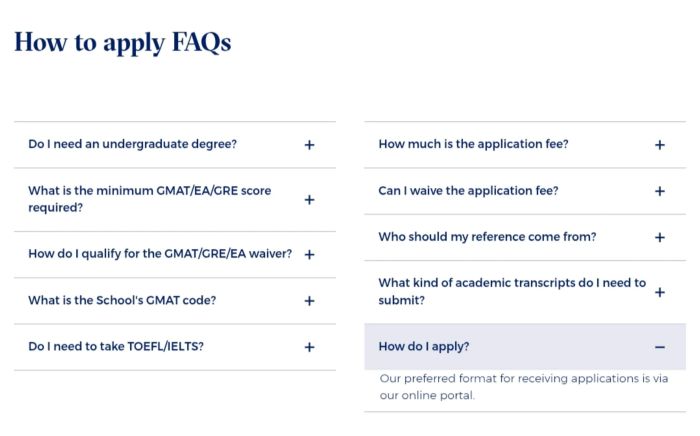
    Example: London Business School attracts applicants worldwide to its MBA program, so it streamlines the process by funneling everything through its online system. In fact, the school states that its preferred format for receiving applications is via our online portal.” London Business School sends accepted candidates a series of email workflows that highlight unique aspects of the LBS experience, including video messages from faculty. These aren’t generic updates; they’re trust-building touchpoints.

    Jun 25 - HEM BP Image 2Jun 25 - HEM BP Image 2

    Source: London Business School

    From Interest to Application: Streamlining the Process

    How does a student portal improve the admissions process? A student portal automates manual tasks, improves application visibility, accelerates document collection, and enhances communication. This reduces staff workload and provides a seamless experience for students, resulting in higher conversion rates and faster admissions cycles.

    Once a student decides to apply, the expectations only grow. They want simplicity. They want speed. And they want control.

    A modern student portal delivers all three by centralizing the application process into a single, intuitive interface. Students can:

    • Create an account
    • Save progress and return later
    • Upload documents (transcripts, ID, essays)
    • Track their application status in real-time
    • Pay application fees securely

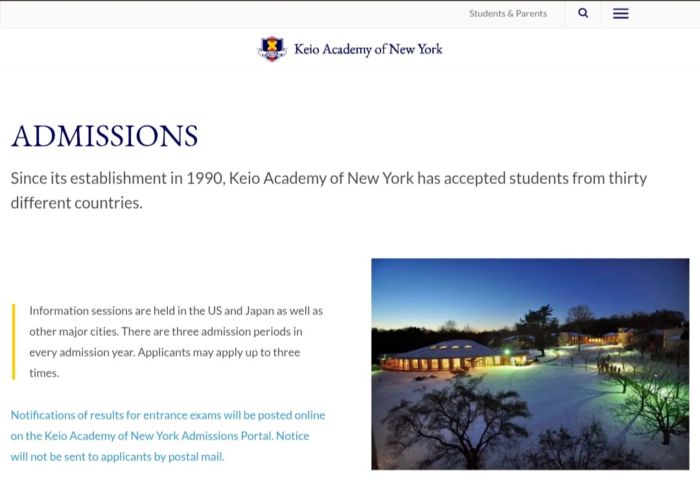
    Example: Keio Academy of New York (a boarding school with students from over 30 countries) manages its intake via a dedicated Admissions Portal. Applicants create an account and complete all steps through the portal, downloading required forms and submitting their documents online. Importantly, exam results and admission decisions are posted on Keio’s portal as well; they do not send results by postal mail.

    Jun 25 - HEM BP Image 3Jun 25 - HEM BP Image 3

    Source: Keio Academy of New York

    What students expect in a digital application portal:

    • A secure login system
    • A mobile-friendly design
    • Dynamic forms with autosave
    • Document upload support
    • Progress tracking
    • In-portal or multi-channel messaging
    • Transparent decision notifications

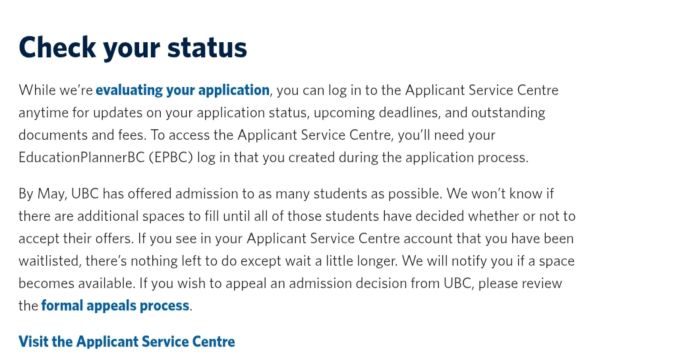
    Example: University of British Columbia’s Applicant Service Centre provides a 24/7 window into one’s application. Applicants can log in to see real-time status updates, upcoming deadlines, and any outstanding items or fees needed to complete their file. Once admitted, UBC uses the same portal to guide students through the next steps: from accepting the offer online to planning finances and registering for courses, each step is laid out in order.

    Jun 25 - HEM BP Image 4Jun 25 - HEM BP Image 4

    Source: University of British Columbia

    Portals also cut down administrative chaos on the backend. Admissions teams benefit from CRM and SIS integration, automated workflows, and centralized communication tools. Instead of wasting time on data entry or chasing down missing documents, staff can focus on what matters: building relationships.

    With centralized, automated workflows, institutions can save time and resources and improve tracking and reporting for better decision-making.

    Beyond the Application: Supporting Students After Acceptance

    Here’s a critical truth: admissions doesn’t end with an acceptance letter.

    There’s a critical period between “You’re in!” and “I’m enrolled.” This is where many institutions experience summer melt: when admitted students silently drift away before showing up on campus.

    A modern portal helps close that gap. Once accepted, students often get access to a new-student dashboard with a personalized checklist:

    • Confirm acceptance
    • Pay deposit
    • Submit housing preferences
    • Sign up for orientation
    • Upload immunization records
    • Apply for financial aid

    The portal handles checklists, deadlines, and reminders, so students stay on track and don’t ghost between acceptance and enrollment.

    Schools that automate this process don’t just reduce summer melt. They create a sense of structure, confidence, and connection before students even arrive.

    Each task is tracked. Each deadline is visible. And the portal nudges students forward with timely reminders via email, text, or even WhatsApp.

    And it’s not just about logistics. Portals can foster community through:

    • Access to student forums
    • Links to private social groups
    • Welcome videos from faculty or alumni

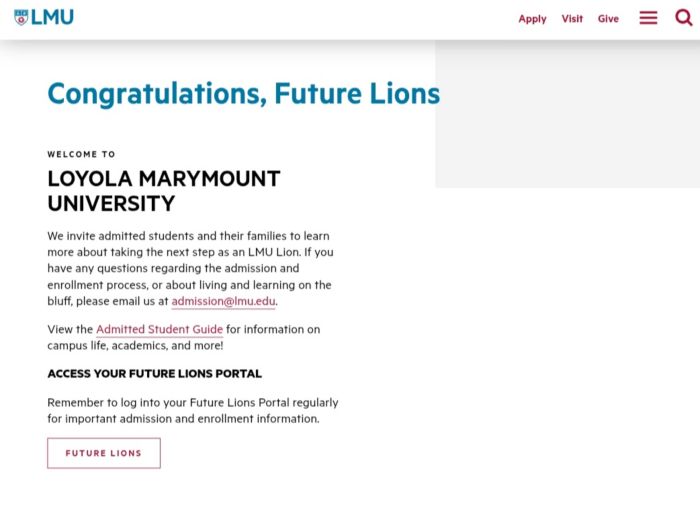
    Example: Loyola Marymount University takes engagement a step further with its “Future Lions” portal for admitted students. LMU’s portal serves as a one-stop welcome platform: new Lions are reminded to log in regularly for important enrollment information, access orientation resources, and even find roommates through a dedicated matching system. By consolidating these tools, LMU’s portal is actively building a community, connecting future classmates and helping them feel at home before they even set foot on campus.

    Jun 25 - HEM BP Image 5Jun 25 - HEM BP Image 5

    Source: Loyola Marymount University

    Choosing the Right Portal: What to Look For

    What features should I look for in a student portal? Look for CRM and SIS integration, mobile optimization, multilingual support, payment processing, real-time messaging, automated reminders, customizable dashboards, and secure document uploads.

    These are the features you can’t compromise on:

    1. Mobile-Optimized Application Forms

    Students are on their phones, and your application process better be, too. Forms should adapt to any screen size, load quickly, and allow uploads and progress saving without hassle.

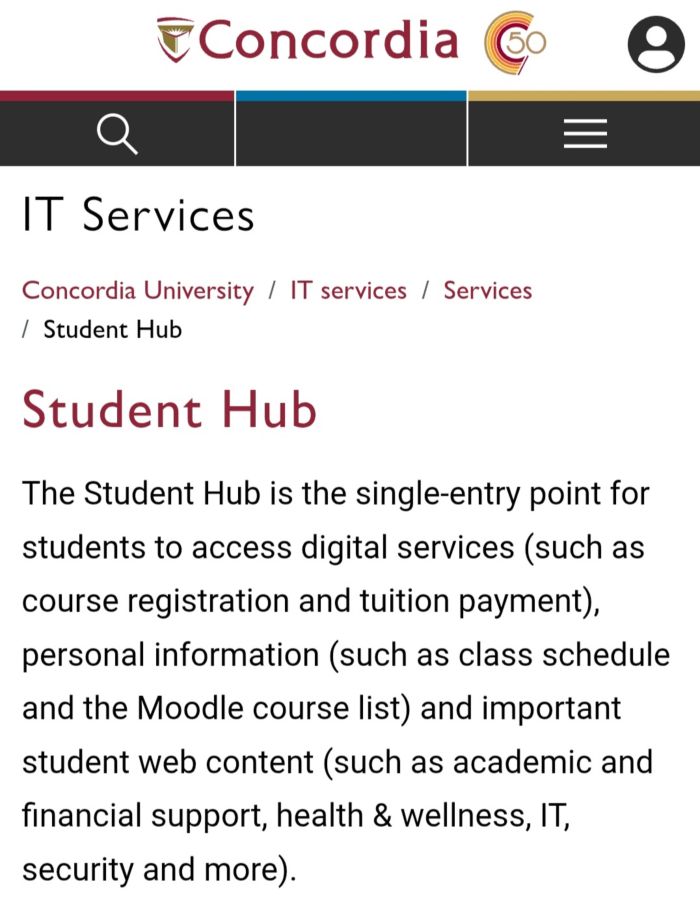
    Example: Concordia University (Canada) recently replaced its old applicant site with a unified Student Hub that offers single sign-on access to all student services – from applications to course registration – in one convenient interface. This new portal features a more modern user interface and is fully mobile-responsive.

    Jun 25 - HEM BP Image 6Jun 25 - HEM BP Image 6

    Source: Concordia University

    2. CRM Integration for Lead Management

    Your portal should talk to your CRM in real time. Every form submission, download, or contact should create or update a record automatically, so no prospect slips through the cracks.

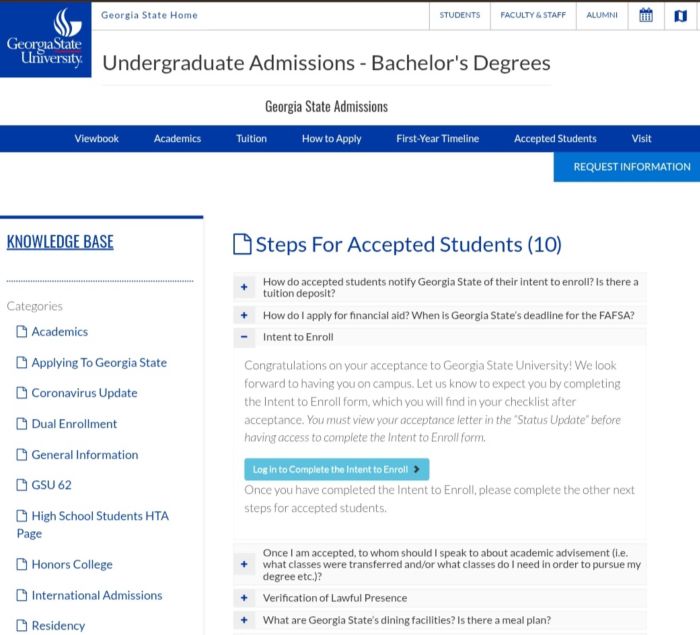
    Example: Georgia State University’s admissions portal doesn’t stop at the acceptance letter; it presents each admitted student with a personalized “Next Steps” checklist to smoothly transition them toward enrollment. Upon acceptance, students unlock an Intent to Enroll form in their status checklist, allowing them to confirm their enrollment online without delay. All subsequent requirements – from submitting final transcripts to signing up for orientation – are tracked through the same portal, so nothing falls through the cracks.

    Jun 25 - HEM BP Image 7Jun 25 - HEM BP Image 7

    Source: Georgia State University

    3. Student Information System (SIS) Sync

    From applicant to enrolled student, data should flow seamlessly. Integration with your SIS means no double entry and a smoother transition into class registration, billing, and campus life.

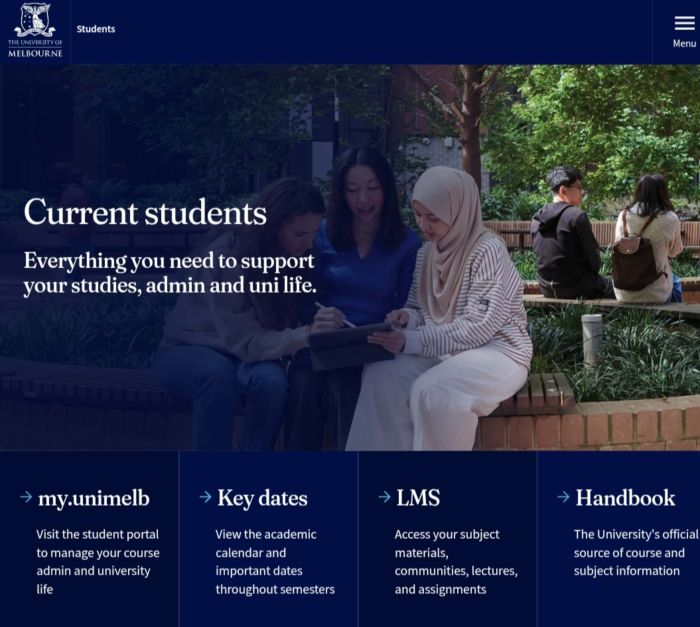
    Example: The University of Melbourne provides a one-stop solution through its portal. This student portal provides a single place for students to manage course administration and university life. In practice, that means a student logs into one dashboard for everything: enrolling in classes, viewing schedules, checking financials, and accessing support resources.

    Jun 25 - HEM BP Image 8Jun 25 - HEM BP Image 8

    Source: University of Melbourne

    4. Automation for Reminders and Follow-Ups

    Set up triggers for missing documents, incomplete applications, or upcoming deadlines. Automated nudges keep students moving forward and reduce the load on your staff.

    5. Multichannel Communication Tools

    Meet students where they are: email, SMS, chat, ideally all three. Your portal should support direct messaging, automatic confirmations, and personalized updates through multiple channels.

    6. Live Application Tracking

    Students hate waiting in the dark. Let them see whether their application is submitted, under review, or accepted, along with their checklist status and next steps.

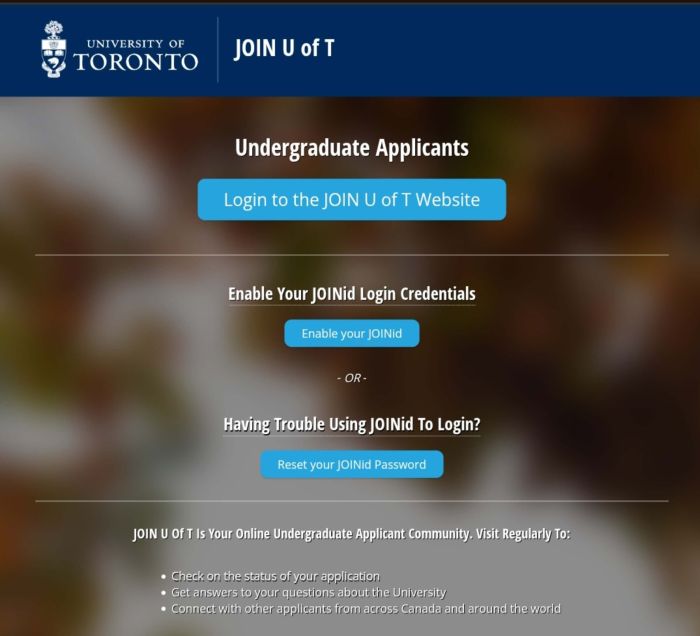
    Example: The University of Toronto directs every applicant to its “Join U of T” portal, where they can track application status, upload documents, and receive admission decisions all in one place. About a week after applying, students get instructions to access the portal and are told to check it regularly for status updates, required documents, and eventual offers. In fact, U of T applicants even accept their offers of admission through the portal instead of mailing forms.

    Jun 25 - HEM BP Image 9Jun 25 - HEM BP Image 9

    Source: University of Toronto

    7. Secure File Uploads and e-Signatures

    From transcripts to ID cards and essays: make it simple and safe for students to submit everything online. Support all common file formats and include e-signing where needed.

    8. Role-Based Access for Staff

    Admissions, faculty reviewers, and financial aid each group needs the right level of access. Role-based permissions let your team collaborate efficiently without compromising security.

    9. Internationalization Support

    If you’re enrolling global students, your portal should handle different time zones, document types, phone number formats, and (ideally) multiple languages.

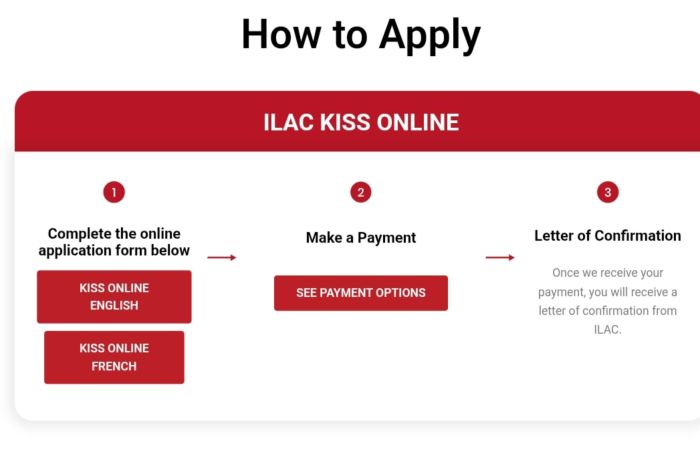
    Example: The International Language Academy of Canada (ILAC), which enrolls students from dozens of countries in its English programs, emphasizes a fully digital application. Prospects are invited to “start your journey” by completing ILAC’s online form and making a payment, after which they receive an electronic letter of acceptance needed for visa processing; no paper forms or international mail delays.

    Jun 25 - HEM BP Image 10Jun 25 - HEM BP Image 10

    Source: ILAC

    10. Post-acceptance Workflow Tools

    The portal shouldn’t stop working after admission. Use it for onboarding: orientation sign-ups, housing applications, deposit payments, and beyond. A one-stop platform improves both experience and yield.

    A quick rule of thumb is, the more customizable and connected your system, the more you can reduce friction and boost results.

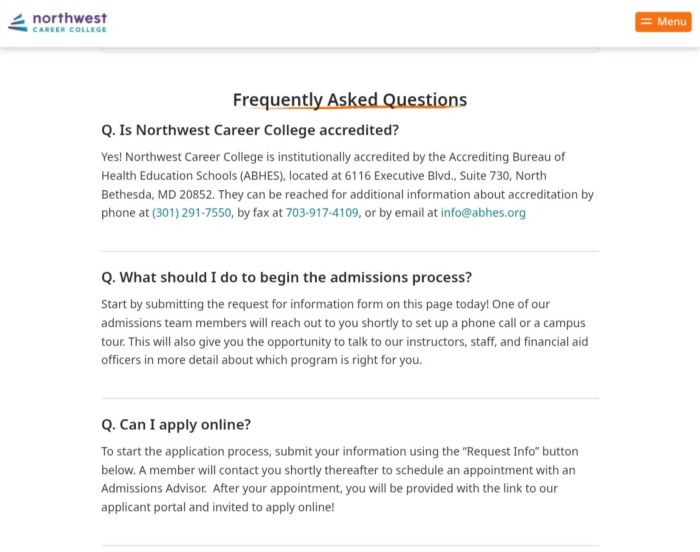
    Example: Northwest Career College in Las Vegas is a more intimate vocational school that prides itself on personal guidance. Their admissions process blends human interaction with digital convenience: a prospective student first speaks with an admissions advisor (often by phone or in person) and only then receives an invite to the online student portal to formally apply. In doing so, Northwest ensures that every applicant gets one-on-one support in navigating requirements, while the portal handles the data capture, document uploads, and progress tracking in the background.

    Jun 25 - HEM BP Image 11Jun 25 - HEM BP Image 11

    Source: Northwest Career College

    Transforming the Student Journey With HEM-SP

    At Higher Education Marketing, we’ve built HEM-SP. A purpose-built student portal that integrates CRM for higher education, student enrollment systems, and behavioral analytics. It enables institutions to centralize data, improve the student experience, and meet digital expectations.

    HEM-SP Offers:

    • End-to-end application processing
    • Real-time behavior tracking
    • Personalized email/SMS/WhatsApp comms
    • Custom dashboards for staff and students
    • Cohort, class, and instructor management
    • Seamless SIS integration

    Request a free demo here!

    What’s Next: Why This Matters Now

    Implementing a student portal isn’t just a digital transformation; it’s a mindset shift.

    You’re not just moving forms online. You’re creating a student-centric experience that matches the speed and personalization of the rest of their digital life. That makes your school more attractive, more trustworthy, and ultimately more successful.

    In the era of digital admissions, a student portal is no longer a luxury; it’s rapidly becoming a standard. Institutions that modernize are already seeing:

    • Higher completion rates
    • Lower melt
    • Better data
    • More efficient staff workflows
    • Stronger enrollment outcomes

    Those that don’t? Risk losing applicants to schools that are simply easier to work with.

    Partner With Hem for Success

    From the first click to the first day, every moment matters. A student portal connects those moments into one seamless experience.

    It’s the digital front door. The application guide. The welcome mat. The checklist. The counselor. The map.

    When built right, it becomes more than software; it becomes part of your institutional promise: we’re here to make your education journey clear, personal, and achievable. Do you want help evaluating or implementing a student enrollment system that works for your institution? Get a free demo and see what HEM’s Student Portal can do for you today!

    Looking for an all-in-one student information and CRM solution tailored to the education sector?

    Try the HEM Student Portal!

    Frequently Asked Questions

    Question: What is the purpose of a student portal?
    Answer: A student portal provides a centralized, secure platform for applicants and students to access essential services, like submitting documents, tracking applications, receiving updates, and completing enrollment tasks, streamlining communication between the institution and the student.

    Question: How does a student portal improve the admissions process?
    Answer: A student portal automates manual tasks, improves application visibility, accelerates document collection, and enhances communication. This reduces staff workload and provides a seamless experience for students, resulting in higher conversion rates and faster admissions cycles.

    Question: What features should I look for in a student portal?
    Answer: Look for CRM and SIS integration, mobile optimization, multilingual support, payment processing, real-time messaging, automated reminders, customizable dashboards, and secure document uploads.

    Source link

  • a-closer-look-two-areas-changes-in-student-expectations The Cengage Blog

    a-closer-look-two-areas-changes-in-student-expectations The Cengage Blog

    Reading Time: 3 minutes

    As the world of higher ed continues to evolve at lightning speed, many students are understandably feeling some pressure to keep up. And that’s having a significant impact on the way they’re operating day-to-day in and out of the classroom. Over the past few years, faculty have reported noticeable changes in student expectations, with 49% recently telling us that the need to adapt to those expectations is a top challenge.

    So, what’s shifting, and how can faculty better adapt to meet their students where they are without going overboard? Let’s examine two examples of how needs and expectations are changing: AI use and deadline extension requests.

    The line between responsible AI use and cheating is fuzzy for some students

    Last year, 46% of those we surveyed in our annual Faces of Faculty report named combating cheating and plagiarism as a top challenge, down only slightly from 49% in 2023. And as AI becomes a bigger, more integral part of the higher ed experience, it’s growing increasingly difficult for many students to distinguish between responsible AI use and academic dishonesty.

    Forty-two percent of faculty we surveyed say they see significant or severe ethical and legal risks associated with generative AI in education, with 82% of instructors expressing concern specifically about AI and academic integrity. While today’s students expect AI to play some kind of role in the learning process, many stand on shaky ground when it comes to applying it ethically in their coursework.

    How instructors are responding

    As we reported, many instructors are taking a proactive approach when it comes to combatting this issue:

    • Many faculty have told us that they like to set clear expectations at the beginning of the semester/term around AI-use, either verbally or within their syllabus. By doing so, they can provide students with clear-cut guidance on how they should approach their coursework.
    • Faculty are finding that the more they know about AI, the better they can safeguard assignments from potential overreliance. One educator from Missouri told us, “I am learning more about Al and Al detection this year, and am making quite a few adjustments to my assignments so they are more personal and reflective, rather than Al-tempting assignments.”
    • Using anti-cheating software has become a very popular method for instructors, with many using online plagiarism detection tools like turnitin or “locked down” browsers.

    “Spending a lot more time and effort identifying and using reliable plagiarism detection software, especially AI detectors.” – Faculty member


    Extension requests: pushing deadlines and boundaries

    Another example of changing student needs is the growing expectation from students that their extension requests will be granted. But this has left many instructors feeling overwhelmed, not only by the number of requests to keep track of, but by a rising uncertainty over which requests are based on legitimate reasons. This may very well be a contributing factor for 35% of faculty who cited perceived dishonesty and lack of accountability from students as a top driver of dissatisfaction in 2024.

    An adjunct professor from Virginia told us, “I leaned into adapting to students’ expectations, but this became somewhat unmanageable when teaching multiple courses. I am also concerned with setting a precedent for future students in my courses if current students share that accommodations are easily given.”

    How instructors are responding

    Despite the challenges that this shift presents, many instructors are jumping in to accommodate extension requests from students, offering both patience and a generally high level of understanding. Faculty acknowledge that today’s students have a lot to contend with these days — from financial stressors to academic and social pressures — and they’re prepared to flex to those challenges.

    “I became more flexible. I get annoyed by professors my age who ignore the fact that today’s students are under ten times the pressure we were when we were undergraduates. Some of these students are carrying a full course load while working two jobs.” – Other professor role/lecturer/course instructor, Ontario

    While they’re empathic to students’ evolving needs, instructors are ready to set their own boundaries when necessary. One faculty member told us, “For the most part, I held firm in my deadlines. I did however increase the number of reminders I sent.”

    Regardless of the approach, clear communication with students remains at the heart of how faculty are dealing with this particular shift. Another instructor said, “I look at the individual situation and adapt…I remind students to complete items early to avoid unexpected delays. If there is a technology issue, then I will extend if it is communicated timely.”

    We’re happy to see our faculty skillfully weaving through these obstacles while remaining committed to adapting to new student expectations.


    To get a full picture about what 1,355 surveyed U.S. and Canadian faculty had to say about changes in student expectations, read our 2024 Faces of Faculty report.

    Source link

  • China Select Committee Launches AI Campaign with Legislation to Block CCP-Linked AI from U.S. Government Use

    China Select Committee Launches AI Campaign with Legislation to Block CCP-Linked AI from U.S. Government Use

    FOR IMMEDIATE RELEASE:

    June 25, 2025

    Contact:

    Alyssa Pettus

    Brian Benko

    WASHINGTON, D.C. — As the House Select Committee on the China opens its landmark hearing, “Authoritarians and Algorithms: Why U.S. AI Must Lead,” Committee leaders are unveiling new bipartisan legislation to confront the CCP’s growing exploitation of artificial intelligence.

    Chairman John Moolenaar (R-MI) and Ranking Member Raja Krishnamoorthi (D-IL) today announced the House introduction of the “No Adversarial AI Act” bipartisan legislation also being championed in the Senate by Senators Rick Scott (R-FL) and Gary Peters (D-MI). The bill would prohibit U.S. executive agencies from acquiring or using artificial intelligence developed by companies tied to foreign adversaries like the Chinese Communist Party. The House legislation is cosponsored by a bipartisan group of Select Committee members, including Reps. Ritchie Torres (D-NY) and Darin LaHood (R-IL). 


    “We are in a new Cold War—and AI is the strategic technology at the center,” said Chairman Moolenaar. “The CCP doesn’t innovate—it steals, scales, and subverts. From IP theft and chip smuggling to embedding AI in surveillance and military platforms, the Chinese Communist Party is racing to weaponize this technology. We must draw a clear line: U.S. government systems cannot be powered by tools built to serve authoritarian interests.”

    What the No Adversarial AI Act Does:

    • Creates a public list of AI systems developed by foreign adversaries, maintained and updated by the Federal Acquisition Security Council.
    • Prohibits executive agencies from acquiring or using adversary-developed AI—except in narrow cases such as research, counterterrorism, or mission-critical needs.
    • Establishes a delisting process for companies that can demonstrate they are free from foreign adversary control or influence.


    “Artificial intelligence controlled by foreign adversaries poses a direct threat to our national security, our data, and our government operations,” said Ranking Member Raja Krishnamoorthi. “We cannot allow hostile regimes to embed their code in our most sensitive systems. This bipartisan legislation will create a clear firewall between foreign adversary AI and the U.S. government, protecting our institutions and the American people. Chinese, Russian, and other adversary AI systems simply do not belong on government devices, and certainly shouldn’t be entrusted with government data.”

    Senator Rick Scott said“The Communist Chinese regime will use any means necessary to spy, steal, and undermine the United States, and as AI technology advances, we must do more to protect our national security and stop adversarial regimes from using technology against us. With clear evidence that China can have access to U.S. user data on AI systems, it’s absolutely insane for our own federal agencies to be using these dangerous platforms and subject our government to Beijing’s control. Our No Adversarial AI Act will stop this direct threat to our national security and keep the American government’s sensitive data out of enemy hands.”

    The legislation marks a major action in the Select Committee’s AI campaign, which aims to secure U.S. AI supply chains, enforce robust export controls, and ensure American innovation does not fuel authoritarian surveillance or military systems abroad.


    Today’s hearing and legislation continues the series of new proposals and messaging the Committee will roll out this summer to confront the CCP’s exploitation of U.S. innovation and prevent American technology from fueling Beijing’s AI ambitions.

    Source link

  • VICTORY: New York high school to strengthen First Amendment protections following FIRE lawsuit

    VICTORY: New York high school to strengthen First Amendment protections following FIRE lawsuit

    CHAPPAQUA, NY, June 25, 2025 — The Foundation for Individual Rights and Expression agreed to drop its First Amendment lawsuit against Chappaqua Central School District after the district’s board of education adopted a robust First Amendment regulation that will protect the constitutional free speech rights of its students.

    FIRE sued the district in 2024 on behalf of O.J., an LGBTQ+ student suspended for violating the district’s “hate speech” definition in its code of conduct because he used the words “faggot” and “twink” in a rap song recorded in his friend’s home after school. In the song, O.J. rapped the refrain, “faggot, fart, balls.” The song also included another person’s lyrics, which contained violent imagery. After O.J.’s friend uploaded the song to a music-sharing website, the school received three complaints and promptly suspended the student.

    “In the Supreme Court’s decision in Mahanoy Area School District v. B.L., the Court held that students’ off-campus, nondisruptive speech is protected by the First Amendment,” said FIRE attorney Colin McDonell. “That is true even when the speech receives criticism.”

    In communications with the district, O.J.’s father cited Mahanoy and argued the school could not punish his son for his off-campus speech because it did not disrupt the educational environment. When this proved unsuccessful, O.J.’s father reached out to FIRE for assistance. On April 15, 2024, FIRE sued the district on behalf of O.J. and his father in the federal district court for the Southern District of New York.

    After commencement of the lawsuit, FIRE and the district worked together to craft a First Amendment regulation that would protect its students’ rights to express themselves both on and off school campus, consistent with and reconciled with Mahanoy and the New York State Dignity for All Students Act and its regulations. The district’s insurer also agreed to pay $70,000 to FIRE, encompassing attorneys’ fees, and the district removed the disciplinary action based on the song from the student’s file.

    “With its adoption of a First Amendment regulation, the board of education has affirmed the rights of its students to engage in protected speech on and off campus,” said FIRE Senior Attorney Greg H. Greubel. “We’re pleased that we could work with the board to avoid further litigation and turn this situation into a positive outcome for our client and all students in the district.”


    The Foundation for Individual Rights and Expression (FIRE) is a nonpartisan, nonprofit organization dedicated to defending and sustaining the individual rights of all Americans to free speech and free thought — the most essential qualities of liberty. FIRE educates Americans about the importance of these inalienable rights, promotes a culture of respect for these rights, and provides the means to preserve them.

    CONTACT:

    Karl de Vries, Director of Media Relations, FIRE: 215-717-3473; [email protected]

    Source link

  • First-Year Registration Barriers Impact Student Success

    First-Year Registration Barriers Impact Student Success

    An estimated 57 percent of college students cannot complete their degree on time because their institution does not offer required courses during days and times—or in a format, such as online—that meet their needs, according to data from Ad Astra.

    A recently published study from the National Bureau of Economic Research found that female students are more likely than their male peers to be shut out of a college course, which can have long-term implications for their success and outcomes.

    The findings point to the role course shutouts can play in students’ major and career choices, with those unable to enroll in science, engineering, math or technology courses in their first term less likely to attempt a STEM course at any point during college.

    The background: A common way for colleges to navigate budget cuts is to reduce course offerings or academic majors. But that can increase the number of students who are unable to enroll in, or find themselves shut out of, courses they want to take. Students at community colleges in particular are less likely to remain enrolled if they face a shutout, choosing instead to take zero credits that term or to transfer.

    Federal funding cuts by the Trump administration have ramped up some institutions’ existing budget woes, requiring them to reduce program offerings. Some groups have advocated for minimizing costs via course sharing, which allows students to meet requirements and earn credits for their home institution while enrolling in a shared online course.

    Methodology: The research, authored by faculty from Purdue and Brigham Young Universities, analyzed registration processes at Purdue in fall 2018, when first-year students were enrolled using a batch algorithm. Researchers considered a student shut out of a course in their first year if their primary request was not met or the student enrolled in a different, secondary course instead.

    The data: Among the 7,646 first-year students studied, only 49 percent received their preferred schedule, meaning 51 percent were shut out from at least one of their top six requested courses. Eight percent of shutouts made it into their course eventually, according to the report.

    Of the 241 courses that were oversubscribed, required English and communications courses were most likely to shut students out; the other overbooked courses represented a variety of subject areas.

    The effects of a student not taking a preferred course in the first term were seen throughout their academic career. First-year students who were initially shut out from a course were 35 percentage points less likely to complete the course while enrolled and 25 percentage points less likely to ever enroll in a course in the same subject.

    While a student’s first-term GPA was not impacted by the shutout, by senior year, students had a GPA two hundredths of a point lower compared to their peers who enrolled in their preferred classes. The study also found that each course shutout led to a 3 percent decrease in the probability of a student graduating within four years, which is economically meaningful but statistically insignificant.

    Registration barriers also made it less likely that students would choose STEM majors, which researchers theorize could be due to a lack of substitution options to meet major prerequisites. Each shutout a student faced in a STEM course decreased the probability that a student majored in STEM by 20 percent.

    The impact was especially striking for female students. For each course a female student was unable to enroll in during her first year, her first-semester credits dropped by 0.4, cumulative GPA by 0.05 and the probability of her majoring in a STEM field by 2.9 percentage points. The long-term effects extended into life after college: A shutout female student’s probability of graduating within four years dropped 7.5 percent and had an expected cost of approximately $1,500 in forgone wages and $800 in tuition and housing costs.

    “In contrast, for male students, shutouts do not have a significant effect on credits earned, cumulative GPA, choosing a STEM major or on-time graduation,” researchers wrote.

    Male students who didn’t get into their top-choice courses first semester were more likely to switch to a major in the business school and have a higher starting salary as well. “At this university, men are 19 percent more likely than women to major in business and this entire gender gap can be explained by course shutouts,” researchers wrote.

    Researchers therefore believe finding ways to reduce course shutouts, particularly in STEM courses, can improve outcomes for women and others to widen the path to high-return majors.

    Do you have an academic intervention that might help others improve student success? Tell us about it.

    Source link

  • Ed Department Announces FAFSA Changes, Oct. 1 Launch Date

    Ed Department Announces FAFSA Changes, Oct. 1 Launch Date

    Richard Stephen/iStock/Getty Images Plus 

    The Department of Education plans to launch this year’s Free Application for Federal Student Aid on Oct. 1, the agency announced Monday.

    It would be the first time since 2022 that the form is released by the traditional deadline date, after a major overhaul and technical issues pushed back the 2023–24 launch to January and the 2024–25 launch to late November.

    The department will also repeat a new beta-testing period that was piloted last fall. Officials plan to gradually roll out the FAFSA to a limited number of school districts and college-access organizations starting in August and will begin sending test Institutional Student Information Records to colleges at the same time.

    They’re also introducing a simplified process for inviting contributors to the form, a step that frustrated many families over the past two years and stymied completion of the new FAFSA. Instead of requiring a unique Contributor ID code, this year students can invite a parent or guardian to contribute to the form by entering their email, and contributors don’t have to be registered on StudentAid.gov beforehand.

    Source link

  • Building a More Inclusive, Personalized Learning Environment

    Building a More Inclusive, Personalized Learning Environment

    In today’s higher education landscape, the idea that future students will need more academic support is far from a catchphrase—it reflects a profound shift in both student needs and faculty responsibilities.

    Over the past few decades, the demands on faculty have surged due to an increasing number of accommodation requests and the diverse challenges that students bring from their varied high school experiences and personal lives. Consequently, educators are now expected to deliver a more personalized and differentiated education than ever before.

    As the student population becomes increasingly diverse and faces new external pressures, traditional support models are proving inadequate. We must move beyond reactive accommodations and embrace a comprehensive, tailored and proactive system of academic support. This transformation is essential for empowering both students and educators to thrive in an increasingly complex academic environment.

    Expanding Accommodation Needs

    One of the most noticeable changes in today’s academy is the sharp increase in the number of students requiring accommodations. As many as a quarter of my students have a registered disability, and the accommodations that I am required to provide have changed in significant ways post-pandemic.

    Previously, universal design principles were seen as adequate to ensure accessibility for all. Courses were retrofitted with extended deadlines, recorded lectures and online resources, providing a common platform without isolating individual needs.

    However, today’s reality demands a more nuanced and tailored approach. Accommodations now often involve significant modifications—such as flexible attendance policies, alternative assessment formats and even exemptions from standard class participation—that alter the very nature of the educational experience.

    These changes necessitate careful planning and ongoing communication between faculty, students and disability services to create a learning environment where every student can succeed. It also requires more training, resources and support for faculty and students—which hasn’t taken place.

    The Legacy of Uneven Educational Backgrounds

    Another key challenge arises from the uneven educational experiences that many students received in high school. Over the past several decades, the disparity in academic preparation has widened significantly. As a result, students now enter college with a much broader range of skills, background knowledge and even vocabulary than in previous generations.

    For some, high school provided a strong foundation, equipping them with the critical thinking skills and subject mastery necessary for the rigors of higher education. These students are well prepared to dive into complex course material and participate actively in academic discussions.

    In contrast, others come from educational environments where resources were limited or where the curriculum was less challenging. These students frequently struggle to meet the high standards expected at the collegiate level, finding themselves overwhelmed by the pace and depth of instruction.

    This variation in preparation places an additional burden on faculty, who must continuously adapt their teaching strategies to meet the needs of an unevenly prepared student body. In many classes, instructors face the daunting task of simultaneously engaging students who excel academically while also providing targeted support for those who are less prepared.

    This often means developing multiple instructional approaches, creating supplementary materials and offering additional feedback and tutoring sessions. Faculty must work diligently to ensure that every student has the opportunity to succeed, balancing the needs of advanced learners with those who require more foundational support.

    The challenge of uneven educational backgrounds underscores the critical need for a more flexible and individualized approach to teaching. Institutions must recognize this disparity and invest in innovative teaching methods, robust academic support services and ongoing faculty development. Only through such concerted efforts can educators ensure that all students, regardless of their starting point, are given the tools they need to thrive in college and beyond.

    Increasing Demands on Students’ Time

    Today’s students confront unprecedented pressures on their time. The demands of balancing work, extracurricular activities and family responsibilities have become an everyday reality, leaving many with significantly less time to devote to their studies. This predicament is not merely an inconvenience—it directly affects students’ academic performance and well-being.

    One of the most critical challenges is that these competing demands can hinder students’ ability to engage fully with challenging course material. I expect my students to tackle lengthy, demanding texts that demand deep concentration and sustained effort. When students are pressed for time, they often resort to skimming or incomplete reading, which can lead to gaps in understanding and ultimately a shortfall in academic achievement.

    This phenomenon not only compromises the quality of their learning but also contributes to a broader pattern of stress and burnout. The cumulative effects of these pressures can have long-lasting impacts on both academic performance and overall mental health.

    Given these realities, it is incumbent upon faculty to recognize the multiple challenges faced by today’s students. Traditional teaching methods and rigid assessment schedules may no longer be effective or equitable. Instead, educators must explore flexible teaching methods and alternative assessment strategies that allow students to manage their time more effectively.

    For example, integrating online discussion or tutoring sessions, offering modular coursework and incorporating a mix of formative assessments can provide students with the flexibility they need to engage with the material at their own pace. Such approaches not only accommodate the varied schedules of modern students but also help maintain academic integrity by ensuring that learning outcomes are met without forcing students to sacrifice quality for convenience.

    Adapting teaching strategies to reflect the realities of modern student life is not just a matter of convenience—it is a necessity for fostering academic success and reducing stress. By creating more flexible, responsive learning environments, faculty can help students overcome the challenges of time management and ensure that they have the resources needed to thrive both academically and personally.

    This rethinking of academic support is essential in an environment where the well-being of students must remain at the heart of the educational experience.

    Cultural and Socioeconomic Diversity

    Higher education’s student body is more diverse than ever, encompassing a wide range of cultural, linguistic and socioeconomic backgrounds. This diversity enriches the academic environment, infusing classrooms with a wealth of perspectives and experiences. However, it also brings significant challenges, particularly when it comes to addressing varied perspectives on identity, language and values.

    In today’s classrooms, educators are tasked not only with delivering academic content but also with navigating a complex array of social sensitivities and assertive demands for cultural responsiveness.

    One emerging trend is that many students have become increasingly sensitive about their peers’ feelings. They are cautious about expressing opinions that might inadvertently harm or offend, reflecting a heightened awareness of diversity and the impact of language on identity. They worry about appearing stupid or out of touch. This sensitivity, while rooted in a genuine desire for inclusivity, can lead to self-censorship in discussions and a reluctance to engage in the robust debates that have long been a hallmark of academic inquiry.

    In contrast, another segment of the student population is more assertive and less deferential than in the past. These students actively demand that the curriculum reflects their interests and addresses the realities of their lives. They expect academic content to be culturally responsive—incorporating diverse voices and challenging traditional perspectives. This shift in attitude is not merely about political correctness; it is about ensuring that the educational experience is relevant and reflective of the complex, diverse, globalized world in which they live.

    To meet these evolving needs, courses must be designed with a keen awareness of these differences. Faculty must create learning environments that are both safe and intellectually challenging, where discussions are inclusive yet rigorous and where students feel empowered to express themselves without fear of causing unintended harm.

    This requires a deliberate shift in curriculum design and pedagogical approaches. Educators must become facilitators of cultural dialogue, employing strategies such as structured debates, reflective exercises and collaborative projects that allow students to explore multiple perspectives. In doing so, instructors not only address academic objectives but also help students develop the critical communication skills needed to advocate for themselves and engage in meaningful discourse.

    Moreover, institutions must invest in professional development for faculty, ensuring that they are well equipped to navigate these complexities. Workshops on culturally responsive teaching and conflict resolution can provide valuable tools for managing sensitive discussions and balancing diverse viewpoints. By integrating these practices into everyday teaching, universities can foster a dynamic academic community that respects individual differences while promoting shared learning.

    The challenges posed by a more sensitive yet assertive student body underscore the need for a broader rethinking of the educational experience. True academic support must be proactive and individualized—transcending one-size-fits-all accommodations to embrace a model that is responsive to the unique needs and cultural contexts of each student. This holistic approach not only enhances academic performance but also enriches the overall learning environment, creating a space where every student can thrive.

    Rethinking Course Design

    In the past, courses were often structured around a standardized curriculum intended to serve a homogeneous student body. Universal design for learning provided a foundation for making courses accessible, yet it was designed as a one-size-fits-all solution. Today, however, students enter higher education with vastly different backgrounds, learning styles and personal challenges. These differences demand a more nuanced approach. Faculty must now consider how to build courses that not only accommodate diverse needs but actively build on each student’s unique strengths.

    This involves reimagining traditional assignments and assessments to allow for multiple avenues of expression—whether through essays, presentations, projects or creative multimedia formats—ensuring that mastery of the subject matter is measured in ways that align with individual capabilities.

    Faculty as Facilitators of Inclusive Learning

    To implement these changes effectively, educators must transition from being mere transmitters of information to becoming facilitators of a dynamic, inclusive learning environment. This shift requires faculty to develop new skills and adopt innovative teaching strategies that go beyond conventional lectures.

    For instance, incorporating collaborative learning methods, peer mentoring and structured feedback sessions can help create a classroom culture where students feel empowered to engage with the material and with one another. Such methods not only support individual learning journeys but also foster a sense of community and shared responsibility for academic success.

    Beyond Reactive Disability Accommodations

    One of the most glaring weaknesses in current disability policies at many colleges, including mine, is their failure to equip students with the practical skills and resources necessary for long-term academic success.

    While accommodations—such as extended deadlines, modified attendance requirements or alternative assessment methods—are undoubtedly important, they often function as a one-way street. Disability centers, overwhelmed by demand and constrained by limited resources, focus primarily on implementing reactive measures rather than providing proactive, skill-building support.

    This approach leaves many students without the essential tools they need to navigate the rigors of higher education independently. For instance, while accommodations may allow a student to attend class remotely or receive extra time on exams, they rarely come with training in self-advocacy. Students who struggle to articulate their needs or negotiate further modifications remain at a disadvantage, potentially compromising their academic performance.

    Similarly, critical skills such as effective study techniques, note taking and time management are often overlooked. Without guidance in these areas, students may continue to face obstacles that hinder their ability to fully engage with course material and meet academic expectations.

    The result is a support system that, while well intentioned, treats accommodations as the end point rather than the beginning of a broader educational strategy. True academic support should empower students to develop self-reliance and resilience, ensuring that they are not merely recipients of modified policies but active participants in their own learning journeys.

    This requires a fundamental shift from a model that simply reacts to student needs toward one that proactively builds the skills necessary for lifelong success.

    In order to address this critical shortfall, institutions must invest in comprehensive support programs that extend beyond traditional accommodations. Workshops on self-advocacy, time management and effective study habits should be integrated into the academic framework.

    Moreover, disability centers need to establish stronger partnerships with academic departments to create a seamless support network that bridges the gap between accommodations and skill development. Only by adopting a holistic approach can colleges ensure that students with disabilities are not just surviving within the academic system, but truly thriving.

    The Need for Ongoing Professional Development

    One of the biggest challenges is that most faculty members were neither expected to learn nor trained in these inclusive teaching practices. The rapidly evolving educational landscape demands continuous professional development. Institutions must invest in workshops, seminars and training programs that equip faculty with the latest strategies in inclusive pedagogy and collaborative teaching.

    By learning to use new digital tools and adapting to flexible teaching methods, educators can better address the wide range of learner needs. Ongoing training is crucial for fostering an environment where faculty feel supported and empowered to experiment with innovative teaching practices without compromising academic rigor.

    Faculty members face mounting pressure to adapt to new teaching methodologies, technological advancements and evolving accommodation practices. While universities routinely mandate training on issues like conflicts of interest, Title VI and IX compliance and technology risks, support in the core areas of pedagogy and assessment remains minimal. To address this gap, institutions must invest in comprehensive, ongoing in-service training for faculty. This training should cover inclusive teaching practices, innovative assessment strategies and the effective integration of digital tools into the classroom.

    Moreover, faculty should have continuous access to expert guidance and peer support. Dedicated centers for teaching excellence or mentoring programs need to offer real-time assistance, enabling instructors to navigate challenges as they arise. By fostering a culture of professional development and collaboration, universities can empower educators to experiment with new approaches and refine their methods over time—ensuring that teaching remains both rigorous and responsive to the diverse needs of modern students.

    A Call for a Comprehensive Reimagining

    The current model of academic support—with its patchwork of reactive accommodations and sporadic training sessions—is no longer sufficient to address the evolving challenges facing both faculty and students. The demands of modern higher education have shifted dramatically, requiring more than temporary fixes; they demand a radical reimagining of the educational experience that is individualized, personalized and differentiated to meet the unique needs of every member of the academic community.

    At the heart of this transformation lies a fundamental shift in institutional priorities. Universities must reallocate resources toward continuous professional development for educators and establish robust support systems for students. This means creating structured, ongoing training programs that equip faculty with the latest inclusive teaching strategies and digital tools, enabling them to adapt their methods to the diverse learning styles and backgrounds of today’s students.

    Such an investment not only enhances academic performance but also cultivates the critical skills and self-advocacy that are essential for lifelong success.

    Moreover, we must move beyond the reactive, one-size-fits-all accommodations that have characterized the past. Instead, academic support should be integrated into every aspect of teaching and learning, forming the backbone of a dynamic and responsive educational ecosystem.

    For example, early intervention strategies, such as formative assessments and iterative feedback, ensure that learning gaps are addressed before they widen and personalized learning plans can be developed to build on each student’s unique strengths.

    The benefits of such a comprehensive approach are twofold. First, it supports academic success by creating an inclusive learning environment that is adaptable to the individual needs of each student. Second, it alleviates the burden on faculty, who currently face the daunting task of juggling research, administrative duties and the increasing diversity of student needs.

    By establishing a framework of proactive support, institutions can empower both educators and learners to thrive in a challenging, rapidly shifting academic landscape.

    As higher education continues to evolve, so too must our strategies for academic support. The traditional model of reactive accommodations and ad hoc training is no longer adequate in the face of growing student diversity, uneven preparation and heightened external pressures on students’ time.

    Only by embracing a comprehensive, proactive and flexible approach can we ensure that every student—and every educator—is equipped to navigate the complexities of modern academic life.

    This reimagined support system will not only boost academic performance but also enrich the overall educational experience, fostering a vibrant, inclusive and resilient community that is prepared to meet the challenges of the future.

    In an era of tightening institutional finances and overburdened faculty, the shift toward a more individualized approach to education may seem like an overwhelming challenge. However, this shift is not optional—it is both a legal requirement and an essential strategy for improving student retention, graduation rates and postgraduation outcomes.

    As student populations become increasingly diverse and face complex external pressures, campuses must prioritize academic and faculty support to create a learning environment where every student can thrive.

    The Legal Mandate for Individualized Support

    Legislation such as the Americans with Disabilities Act and Section 504 of the Rehabilitation Act mandate that institutions provide equal access to education for all students. These legal frameworks require not only reactive accommodations but also proactive, individualized support that anticipates and addresses the diverse needs of the student body.

    In practice, this means that colleges and universities must design courses, develop teaching methods and implement support systems that are flexible and tailored to individual learning styles. Ignoring this mandate not only risks legal repercussions but also undermines the institution’s commitment to inclusivity and equal opportunity.

    Enhancing Academic Success and Student Outcomes

    In addition, the current challenges faced by students—ranging from increased accommodation needs and uneven educational backgrounds to intense time pressures and cultural diversity—demand more than a one-size-fits-all solution.

    When students receive personalized academic support, retention and graduation rates improve significantly. Tailored support enables students to engage deeply with course material, develop critical skills and ultimately achieve better postgraduation outcomes. By creating a comprehensive support system, institutions can help bridge the gap between diverse student needs and the rigorous demands of higher education, ensuring that every student has the opportunity to succeed.

    The Burden on Faculty and the Need to Rethink Institutional Priorities

    For faculty, the shift to an individualized educational model requires a significant rethinking of traditional teaching methods.

    Instructors must balance the needs of advanced learners with those requiring additional support, all while managing other academic responsibilities such as research and grant writing. This challenge is compounded by the lack of sufficient training and resources currently available to help educators implement inclusive teaching practices. Institutions must respond by reallocating resources and prioritizing continuous professional development.

    Only by providing faculty with the necessary tools and support can universities foster a dynamic, responsive learning environment that benefits both teachers and students.

    The move toward a more individualized, personalized and differentiated approach to education is no longer a luxury—it is a legal and institutional imperative. As student needs evolve in a rapidly changing world, institutions must reframe academic support as a core element of the educational experience.

    By prioritizing continuous faculty training, investing in robust support systems and rethinking course design, colleges and universities can enhance academic performance, improve student retention and graduation rates and ensure better outcomes after graduation.

    There is no way around this transformation: If we are to equip every student and educator to thrive in an increasingly complex academic environment, the shift to a comprehensive, proactive and flexible support model must become the cornerstone of higher education.

    Steven Mintz is professor of history at the University of Texas at Austin and recipient of the AAC&U’s 2025 President’s Award for Outstanding Contributions to Liberal Education.

    Source link

  • Reframing student voice through a rights-based lens

    Reframing student voice through a rights-based lens

    Student voice has never been more central to the higher education conversation.

    Across the sector, there’s growing consensus that higher education institutions must not only listen to their students but actively build institutions around their insights and experiences.

    Yet, for all the best intentions and sincere efforts, turning student feedback into meaningful, institution-wide change remains a challenge.

    At the University of Kent, we’ve been reflecting critically on our own approach. Like many, we’ve long celebrated the volume of student engagement we facilitate, such as surveys, focus groups, informal conversations.

    But we’ve come to recognise that collecting feedback isn’t the same as using it, and that celebrating the act of “listening” can sometimes obscure a harder truth – we didn’t always know what to do with what we heard.

    Reframing student voice through a rights-based lens

    Our turning point came through an unlikely source – the work of Professor Laura Lundy. Originally developed to support children’s rights under Article 12 of the UN Convention on the Rights of the Child, Lundy’s model provides a practical framework for ensuring young people’s voices are not only heard, but also acted upon.

    It centres around four interdependent elements – Space, Voice, Audience, and Influence.

    We began to ask – what if we adapted this model to the higher education widening participation context?

    Applying Lundy’s model in this way helped us shift our thinking from engagement as consultation, to engagement as partnership.

    It challenged us to ask harder questions about power, process, and accountability in the way we involved underrepresented students in our outreach and access work.

    We already had a thriving cohort of over 300 student ambassadors – many young, idealistic, and deeply committed to helping shape a more inclusive university. But too often, when they shared ambitious or creative ideas, we found ourselves retreating behind operational constraints – “That won’t get through the next committee,” or “It’s a great idea, but we don’t have the budget.”

    We weren’t dismissing their input out of disinterest, on the contrary, we were invested. But in practice, without the power to act, we were unintentionally reinforcing the idea that their contributions didn’t lead to change.

    Feedback gathered with care and enthusiasm was left to languish in reports and spreadsheets. There was no systematic way of translating insight into action, and no clear feedback loop to close the gap.

    Space

    The development of our new Access and Participation Plan (APP) back in 2023 offered the ideal opportunity to put this into practice. The Office for Students made student involvement a clear expectation and we chose to go beyond compliance.

    In partnership with Kent Students’ Union, we launched a Widening Participation Student Advisory Panel, inspired by a successful model from the University of Southampton. We recruited 25 students, most from underrepresented backgrounds, and built a structure that allowed their contributions to be actioned.

    Voice

    If we wanted students to play a meaningful role in shaping our widening participation strategy, we had to go beyond asking for ideas. We had to equip them to contribute in an informed way.

    That meant building knowledge, not just platforms. We didn’t just ask for feedback, we trained them:

    • We explained the regulatory context
    • We shared internal data and metrics
    • We discussed financial constraints and institutional parameters
    • We connected them directly to our APP Operations and Steering Groups

    Our aim wasn’t to dampen creativity, but to anchor it in context. Students needed to understand the world they were trying to change. That understanding made their input sharper, more strategic, and ultimately more powerful.

    Audience

    Students invest time and energy into sharing thoughtful feedback. They deserve more than tokenistic “thank yous” or vague assurances that their views have been “noted.”

    We took steps to ensure student voice reached the people who could act on it. That meant involving senior leaders and decision-makers in engagement processes, creating spaces where feedback was taken seriously and visibly discussed and being transparent with students about the limits of our authority, namely what we could or couldn’t change.

    One of the students was even elected to sit on the operations group itself, ensuring a direct student voice at the decision-making table.

    Honesty builds trust. And trust is the foundation of sustained, meaningful student engagement.

    Influence

    Acting on feedback is only half the equation. The other half is showing that we acted.

    We’ve become intentional about creating “You said, we did” moments: making visible the link between student insight and institutional change.

    We’ve made sure those changes are not just confined to our team, but acknowledged at all levels – in committees, in strategic plans, and in senior leadership conversations.

    Influence should be traceable. Students should be able to see evidence of their ideas across the university.

    One powerful example of student-led change is the revision of the Kent Financial Support Package (KFSP), driven directly by student feedback. We co-created the process by modelling different support options and inviting students to choose the approach they felt was most equitable.

    While we initially considered concentrating funds among fewer students, students overwhelmingly voiced the importance of broader support, even though this meant slightly lower individual amounts, to ensure more of their peers could benefit.

    They also pushed for smaller changes which would make a big difference, including support for students repeating a year and extended eligibility for those who become estranged during their studies.

    We listened, we acted, and now they can see their voices reflected in a policy that benefits future students.

    From consultation to co-creation

    This is still a work in progress.

    But adapting Lundy’s model has helped us ask better questions about how we build student voice into the DNA of our widening participation work. It’s helped us move from hearing students views to embedding them into decision-making, and from consultation to co-creation.

    If we’re serious about equitable access and success in higher education, then the voices of those most affected must not be optional extras. They must be at the centre, resourced, respected and able to help shape the institutions they are a part of.

    Source link