Category: Featured

  • Research and innovation in the industrial strategy

    Research and innovation in the industrial strategy

    The UK needs a plan for growth and innovation – an industrial strategy is a way of picking winners in terms of sector investments and prioritisation.

    Today’s iteration (the fourth in recent times, with Theresa May’s government providing the previous one) chooses eight high-potential sectors to prioritise funding and skills interventions, with the overall intention of encouraging private investment over the long term.

    Picking winners for the long term

    The choices are the important bit – as the strategy itself notes

    Past UK industrial strategies have not lasted because they have either refused to make choices or have failed to back their choices up by reallocating resources and driving genuine behaviour change in both government and industry.

    And there are clear commonalities between previous choices and the new ones. Successive governments have prioritised “clean growth”, data and technology, and health – based both on the potential for growth and the impact that investment could have.

    What is different this time is the time scales on which the government is thinking – much of the spending discussed today is locked in to the next five years of departmental spending via the spending review, and of course we have those infamous 10-year research and development plans in some areas: the Aerospace Technology Institute (linked to Cranfield), the National Quantum Computing Centre (at the Harwell STFC campus), the Laboratory of Molecular Biology (MRC supported at Cambridge), and the new DRIVE35 automotive programme are the first to be announced.

    The headlines

    My colleague Michael Salmon has analysed the skills end of the strategy elsewhere, here we are looking at investments in research and innovation – both in the industrial strategy itself and the five (of eight) IS-8 sector plans published alongside it (Advanced manufacturing, Creative industries, Clean energy, Digital and technologies, Professional and business services – with defence, financial services, and life sciences pending)

    Government funded innovation programmes will prioritise the IS-8, within a wider goal to focus all of research and development funding on long term economic growth. This explicitly does not freeze out curiosity delivered research – but it is clear that there will be a focus on the other end of the innovation pipeline.

    At a macro level UKRI will be pivoting financial support towards the IS-8 sectors – getting new objectives around innovation, commercialisation, and scale-up. If you are thinking that this sounds very Innovate UK you would be right, the Catapult Network will also get tweaks to refocus.

    The £500m Local Innovation Partnerships Fund is intended to generate a further £1bn of additional investment and £700m of value to local economies, and there are wider plans to get academia and industry working together: a massive expansion in supercomputer resources (the AI research resource, inevitably) and a new Missions Accelerator programme supported by £500m of funding. And there’s the Sovereign AI Unit within government (that’s another £500m of industry investments) in “frontier AI”. On direct university allocation we get the welcome news that the Higher Education Innovation Fund (HEIF) is here to stay.

    There’s an impressively hefty chunk of plans for getting the most out of public sector data – specifically the way in which government (“administrative”) data can be used by research and industry. Nerds like me will have access to a wider range of data under a wider range of licenses – the government will also get better at valuing data in order to maximise returns for the bits it does sell, and there will be ARDN-like approaches available to more businesses to access public data in a safe and controlled way (if parliamentary time allows, legislation will be brought forward) – plus money (£12m) for data sharing infrastructure and the (£100m) national data library.

    By sector

    The sector plans themselves have a slant towards technology adoption (yes even the creative sector – “createch” is absolutely a thing). But there’s plenty of examples throughout of specific funding to support university-based research, innovation, and bringing discoveries to market – alongside (as you’ll see from Michael’s piece) plenty on skills.

    Clearly the focus varies between sectors. For example, there will be a specific UKRI professional and business services innovation programme; while digital and technologies work is more widely focused on the entirety of the UK’s research architecture: there we get promises of “significant” investment via multiple UKRI and ARIA programmes alongside a £240m focus on advanced communication technologies (ACT). The more research-focused sectors also get the ten-year infrastructure-style investments like the £1bn on AI research resources.

    Somewhat surprisingly clean energy is not one of the big research funding winners – there’s just £20m over 7 years for the sustainable industrial futures programme (compare the £1bn energy programme in the last spending review). With sustainability also being a mission it also gets a share of the missions accelerator programme (£500m), but for such a research-intensive field that doesn’t feel like a lot.

    The creative industries, on the other hand, get £100m via UKRI over the spending review period – there’s a specific creative industries research and development plan coming later this year, alongside (£500m) creative clusters, and further work on measuring the output of the sector.  And “createch” (the increasingly technical underpinnings of the creative industries) is a priority too.

    It’s also worth mentioning advanced manufacturing as a sector where business and industry are major funders. Here the government is committing “up to £4.3bn” for the sector, with £2.8bn of this going to research and development. Key priorities include work on SME technology adoption, and advanced automotive technologies – the focus is very much on commercialisation, and there is recognition that private finance needs to be a big part of this.

    Choice cuts?

    The IS-8 are broadly drawn – it is difficult to think of an academic research sector that doesn’t get a slice. But there will be a shaking out of sub-specialisms, and the fact that one of the big spenders (health and medicine) is currently lacking detail doesn’t help understand how the profile of research within that area will shift during the spending review period.

    Industrial policy has always been a means of picking winners – focusing necessarily limited investment on the places it will drive benefits. The nearly flat settlement for UKRI in the spending review was encouraging, but it is starting to feel like new announcements like these need to be seen both as net benefits (for the lucky sectors) and funding cuts (for the others).


    Source link

  • US study visa applicants told to make social media accounts ‘public’ amid vetting crackdown

    US study visa applicants told to make social media accounts ‘public’ amid vetting crackdown

    • New social media privacy requirements come just as US government lifts four week-long study visa interview freeze, leading to fears of a backlog.
    • Concerns of added complications where consular officers responsible for social media vetting do not speak the applicant’s language.
    • Policy extends even to those who have been issued US visas in the past.

    In an update sent to consulates last week, the US government has advised that all those applying for F, M or J nonimmigrant visas are “requested” to make their social media accounts available to view by anybody so that their identity can be verified and they can be thoroughly vetted before entering the country.

    Immigration experts have criticised the move because of the huge additional workload it will place on immigration officers, meaning that visa issuance is likely to slow down considerably.

    US immigration lawyer James Hollis said he “almost [felt] bad” for consular officers.

    “It’s going to grind processing to a halt and will likely result in increased wait times for all nonimmigrant visas, let alone the student and exchange visitor applicants,” the business immigration specialist at the McEntee Law Group warned – noting that there are added complications where applicants were posting on social media in their own local language if officers do not understand what they have written.

    It appears that the new policy will be mandatory from June 25 onwards, and all applicants will be vetted in this way even if they have been issued a US visa in the past.

    It’s going to grind processing to a halt and will likely result in increased wait times for all nonimmigrant visas, let alone the student and exchange visitor applicants
    James Hollis, McEntee Law Group

    Consulates are advised that they should consider whether active social media privacy settings “reflect evasiveness or otherwise call into question the applicant’s credibility”.

    Officers have been told to reject a visa application in cases where the applicant has:

    • expressed “hostile attitudes” toward the US in terms of its citizens, culture, government, institutions, or founding principles;
    • advocated for or supported “designated foreign terrorists and other threats to US national security”;
    • shown or supported anti-semitism;
    • even if they have otherwise proven they are not an immigration risk;
    • and are not already ineligible for a visa (ie does not post a risk to US national security).

    In these cases, the US can deny entry on national security or foreign policy grounds.

    The US has asked visa applicants to provide social media information on their application forms for the past five years – including all social media names or handles of every platform they have used over the past five years. Failing to include this information could lead to an applicant’s visa being denied and being ineligible for future visas.

    It comes after a tumultuous few weeks for prospective international students eyeing a place at US institutions. After stretching a study visa interview freeze into its fourth week – despite assurances that the pause would be quick – officials last week resumed interviews with additional social media vetting for applicants.

    US stakeholders have repeatedly expressed concerns that the Trump administration’s extreme social media crackdown could inflict untold damage upon the country’s international education sector.

    Source link

  • McDonald’s Faces National Boycott as Economic Justice Movement Builds Momentum

    McDonald’s Faces National Boycott as Economic Justice Movement Builds Momentum

    McDonald’s, the fast-food titan with global reach and billion-dollar profits, is the latest corporate target in an escalating campaign of economic resistance. Starting June 24, grassroots advocacy organization The People’s Union USA has called for a weeklong boycott of the chain, citing the need for “corporate accountability, real justice for the working class, and economic fairness.”

    Branded the Economic Blackout Tour, the campaign seeks to channel consumer power into political and structural change. According to The People’s Union USA, Americans are urged to avoid not only McDonald’s restaurants but also fast food in general during the June 24–30 protest window. Previous actions have focused on companies like Walmart, Amazon, and Target—corporate behemoths long criticized for their low wages, union-busting tactics, and monopolistic behavior.

    John Schwarz, founder of The People’s Union USA, has emerged as a vocal critic of corporate greed. In a recent video statement, Schwarz accused McDonald’s and its peers of dodging taxes and lobbying against wage increases. “Economic resistance is working,” he declared. “They’re feeling it. They’re talking about it.”

    The movement is tapping into deep and widespread frustration—fueled by stagnant wages, rising living costs, and mounting corporate profits. While many Americans struggle with student loan debt, inadequate healthcare, and job insecurity, companies like McDonald’s have been accused of shielding their profits offshore and benefiting from political influence in Washington.

    This is not the first time McDonald’s has come under fire. The company has faced criticism from labor rights groups for paying low wages, offering unpredictable schedules, and relying heavily on part-time or precarious employment. More recently, pro-Palestinian activists have also launched boycotts, citing alleged ties between McDonald’s franchises and Israeli military actions in Gaza.

    As part of the current boycott, The People’s Union USA is pushing for a broader shift in spending—away from multinational corporations and toward local businesses and cooperatives. In line with previous actions, the group is also encouraging Americans to cut back on streaming, online shopping, and all fast-food purchases during the boycott period.

    With Independence Day on the horizon, Schwarz and his allies are framing the protest as not just economic, but patriotic. “It’s time to demand fairness,” Schwarz said, “and to use our economic power as leverage to fight for real freedom—the kind that includes fair wages, democratic workplaces, and tax justice.”

    While McDonald’s has not released an official response to the boycott, a 2019 letter from company lobbyist Genna Gent suggested the chain would not actively oppose federal minimum wage increases. For Schwarz and his supporters, such declarations ring hollow without meaningful action.

    The July target for The People’s Union USA? Starbucks, Amazon, and Home Depot—three more corporate giants with long histories of labor disputes and political entanglements. The next wave of boycotts will extend throughout the entire month, further testing the staying power and impact of this new consumer-led resistance.

    At a time when higher education, particularly the for-profit and online sectors, often channels students into low-wage service jobs with crushing debt, these campaigns raise larger questions about the role of universities in perpetuating corporate power and economic inequality.

    The Higher Education Inquirer will continue to follow these developments, especially as they intersect with issues of labor, student debt, corporate influence, and the broader fight for economic justice in the United States.

    Source link

  • Can you eliminate a gender gap by segregating genders?

    Can you eliminate a gender gap by segregating genders?

    In her 23 years as an educator at Hunter College High School, a highly-competitive coeducational high school in New York City, Jana Lucash has found that boys in her class will often participate even when they are not prepared. Her female students, in contrast, seem to be unwilling to participate unless they absolutely know the correct answer. 

    This is one reason that many parents choose to send their daughters to all-girls schools. These schools are known for fostering connections and developing academic success. 

    But do social pressure, competition and other negative consequences outweigh the benefits of a predominantly female environment?

    I attend an all-girls school and so I decided to explore the positive and negative aspects of being a part of this type of environment.

    All-girls schools are educational institutions catering exclusively to female students, allowing them to grow intellectually and socially in a single-gender environment. 

    Gender segregation

    These schools generally have a reputation for creating a supportive and empowering atmosphere for young girls and women. The purpose of an all-girls school is to encourage academic excellence, build confidence and teach leadership skills to their students. 

    While these institutions around the world often leave positive impacts on their attendees, like increased participation in class and eliminating distractions, they are also critiqued for their competitive nature, which could negatively affect student mental health. 

    These issues raise serious concerns and questions about how beneficial and positively impactful these all-girls schools truly are for the population that they serve.  

    Research has shown that all-girls schools increase student participation in the STEM field and other male-dominated fields after graduation. A study conducted by Goodman Research Group, back in 2005 asked some 1,000 recent graduates of all-girl schools to participate in a survey, which focused on the academic and social impact of single-gender institutions. 

    After conducting the survey, the authors found that 74% of the grads felt more encouragement in math, science and technology by attending an all-girls school. Additionally, they found that all-girls school graduates were six times more likely to major in science, math and technology, in comparison to girls attending coeducational schools. 

    Girl empowerment

    All-girls institutions cultivate an environment where female students feel empowered to explore their interests and academic pursuits, specifically in male-dominated fields. This not only encourages young women to follow their aspirations, but allows them to challenge the stereotypical gender barriers in professional fields where women are underrepresented. 

    All-girls schools also offer students a social environment with a strong sense of community and an emphasis on building strong relationships. Many young women feel more connected to their peers and lose the social pressures that are typically present in coeducational schools. 

    A 2013 survey, which was conducted on behalf of the National Coalition for Girls Schools, asked a series of questions to 2,000 students from schools that were all-girls, with an additional 5,000 girls who attended coed private schools and another 5,000 girls who attended coed public schools. 

    The study concluded that almost 97% of all-girls school students felt their ideas and opinions were more respected at their single-gender school compared to 58% of girls at coeducational schools.

    Without feeling pressure and judgement from their male counterparts, female students tend to feel more safe and are more inclined to express themselves and their ideas. This environment allows students to feel a sense of belonging, confidence and power that is not always found in a coed environment.

    Coed education versus single-gender schools

    At coeducational schools, girls’ voices and opinions might be self silenced or silenced by the more rambunctious boys in the room. In addition, these institutions and faculty can further undermine the confidence and self-worth of their female students.

    Lucash at Hunter College High School, for example, found that girls tend to self-silence and boys have no trouble expressing themselves throughout class. 

    This sentiment is echoed by a 10th-grade student at The Hewitt School, which I attend. Abby Potenza attended a coeducational school prior to switching to Hewitt.

    “Being at an all-girls school has given me both confidence and a sense of comfort to express my opinions and ask questions, which I did not receive at a coed school,” Potenza said. “I feel the environment, both social and educational, is stronger and more supportive at an all-girls school.”

    When I was an elementary school student in a progressive, coeducational environment, I too experienced the detrimental impact of being silenced, both institutionally and by an educator. 

    Being silenced and self-silencing

    In an advanced math class in fourth grade, I found myself one of three girls in a class of 20 students. For a school which valued diversity and equity, it was disturbing that the institution itself could not see that as a problem.

    This shows that many institutions in the 21st century do not prioritize creating a supportive and empowering environment for girls.

    Most positive associations with single-gender education can be countered by certain challenges and all-girls schools are no exception. While these schools empower young women and can foster a supportive environment, a sense of competition can often emerge.

    Miriam Walden teaches English at The Hewitt School and sees a similar competitive nature. 

    “Even when you take away the boys in the classroom, there is still competition between girls, a lot of competition,” Walden said. “It’s very subtle and it’s very insidious and so there is a lot of harm that happens at the school, socially, around status, academic success, wealth, where you are going to college. All of this stuff becomes extremely damaging to many students.”

    The global popularity of single-gender education

    Outside of the United States, single-gender education is popular in many countries. The reasoning for attending these single-gender schools varies from community to community, country to country. Some of the variables that impact the choice to attend these schools include religion, socio-economic status and geography. 

    In 2022, University of Oslo researcher Sadaf Basharat looked at math achievement in Saudi Arabia where single-gender education is mandatory and found that girls do better than boys in math, according to international assessment standards known as TIMSS. 

    Other countries in the Middle East, such as Oman, Iran, Kuwait and Bahrain, which have a high proportion of single-gender schools, have also seen female students in recent years outperforming their male classmates in math.

    While single-gender schools open the opportunity for girls and young women to be educated, countries such as Afghanistan are prohibiting women from attending secondary schools, whether single-gender or coeducational.

    The academic effect single-gender schools in the United States have on their students is equal to the ones at international single-gender schools. A 2016 study in the Caribbean Educational Research Journal found that students at all-girls schools in the Caribbean have a higher passing rate than both girls attending coeducational schools, as well as boys in coeducational schools and single-gender schools.  

    Due to the demographics of the students who attend all-girls schools outside of the United States, the data is not as conclusive as to the negative impact of these types of schools on their students’ competitive nature. 

    For instance, UNESCO published a study by the London Business School’s Global Entrepreneurship Monitor that found that all-girl’s schools in countries such as Trinidad and Tobago and Thailand attract a wealthier subset of the population, which could create a false representation of what the possible positive outcomes are. 

    Competition between girls

    All-girls schools offer an educational environment with both important benefits and possible limitations for students. On one hand, these institutions offer students a supportive atmosphere which encourages them to reach their full potential and cultivate a strong sense of confidence. This environment can lead to higher academic success and a greater likelihood of breaking gender norms in the workplace. 

    They also encourage young women to move past gendered expectations regarding future intellectual pursuits and challenges them to break societal barriers by moving into STEM-based fields specifically. 

    On the other hand, all-girls schools can create a bubble of competition and rivalry that can limit a young woman’s development and aspirations. The focus on academic achievement is only intensified in a single-gender educational environment and can be pressuring and damaging. 

    Weighing out the benefits and drawbacks of an all-girls school is important when making the decision on whether to attend one, or in determining how you perceive single-gender schools in general. The question is, what would be best for you or your daughter?


    The views and citations expressed by this student journalist are their own and not those of their school or any person or organization affiliated or doing business with their school.


    Questions to consider:

    1. Why might a parent choose to send a child to a single-gender school?

    2. Why do some teachers think girls don’t do as well when there are boys in the class?

    3. Do you think you would do better or worse by changing to an single-gender school if you attend a coed school now or vice versa? Why?


    Source link

  • Week in review: Major universities take steps to rein in budgets

    Week in review: Major universities take steps to rein in budgets

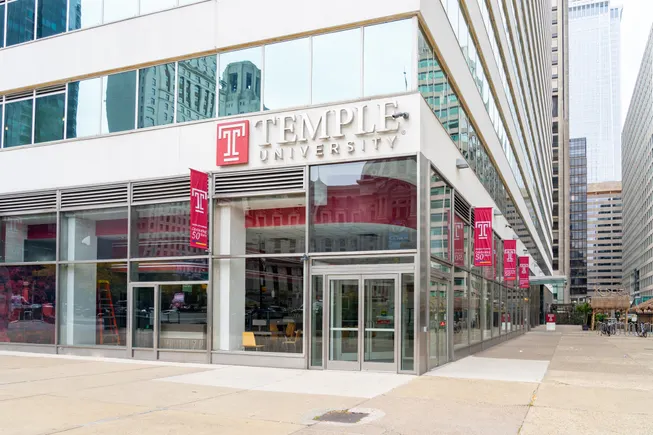
    We’re rounding up recent stories, from Temple University’s plan to address a $60 million deficit to the Senate’s proposal for a lower endowment tax increase.

    Source link

  • Phone bans proliferate as digital media’s harm to students grows clearer

    Phone bans proliferate as digital media’s harm to students grows clearer

    This audio is auto-generated. Please let us know if you have feedback.

    Even as school cellphone bans proliferate, a growing body of evidence suggests digital media — and cellphone use specifically — is harming child and teen development.

    A meta-analysis of 117 studies published in June found that the relationship between screen time and socioemotional well-being is somewhat of a Catch-22: Increased screen time can lead to emotional and behavioral problems, and children with those problems rely on screens to cope with them. 

    Another study of 4,285 U.S. teens published last week found nearly a third showed increasing addictive behaviors related to social media and almost a quarter for cellphones. These addictive behaviors — rather than screen time alone — were linked to increased risks of suicidal behaviors or thoughts. 

    School phone bans have gained traction across political divides nationwide in recent years, with educators and lawmakers citing both student mental health and academic performance as reasons to restrict cellphones during the school day. 

    As of May, 21 states ranging from California to Utah had instituted a ban or limit on cellphones in the classroom, according to Ballotpedia. 

    Most recently, Nevada Gov. Joe Lombardo signed a law requiring school districts to adopt policies regulating cellphone use during the school day and limiting classroom cellphone use in most cases.

    A separate study released in March — this time examining about 1,500 11- to 13-year-olds in Florida, where cellphones have been banned during class time since 2023 — suggested that restricting cell phones would boost grades and mental health for children who use screens more heavily. 

    The 22% of Florida students surveyed who reported using their favorite app for six or more hours per day were also three times more likely to report getting mostly D’s and F’s than their peers.

    Those students were also 6 times more likely than less-frequent users to report severe depression symptoms — even when ruling out factors like age, household income, gender, parent education, race and ethnicity. 

    Students who always had their cellphone push notifications turned on, which made up about 20% of the sample, were also more likely to report worse grades and to experience anxiety. 

    “Banning students’ access to phones at school means these kids would not receive notifications for at least that seven-hour period and have fewer hours in the day to use apps,” the study’s authors wrote in an overview of the study published by The Conversation, a nonprofit publication written by academic experts. 

    However, that same study found 17% of Florida students who attend schools that ban or confiscate phones report severe depressive symptoms, quadruple the 4% who attended schools that allowed limited phone use and reported those symptoms. 

    Correlation in this case did not necessarily mean causation, however. “We are not suggesting that our survey shows phone bans cause mental health problems,” the authors wrote. “It is possible, for instance, that the schools where kids already were struggling with their mental health simply happened to be the ones that have banned phones. ” 

    Source link

  • Four Principles for Hosting More Impactful Gatherings (opinion)

    Four Principles for Hosting More Impactful Gatherings (opinion)

    Have you attended a research seminar that managed to deepen faculty members’ understanding of the topic, while also encouraging trainees new to the field to engage with the speaker? When you hosted your last career panel, were you able to intentionally moderate conversations with professionals from different fields while also allowing serendipitous tangents inspired by audience questions?

    Higher education is filled with gatherings intended to engage various audiences and deepen understanding of diverse topics. Hosting and facilitating these gatherings (be they large-scale conferences, interactive workshop discussions or weekly team meetings with office staff) is no easy feat and rarely comes with a guidebook.

    Priya Parker’s The Art of Gathering (Riverhead, 2018) is that guidebook. Reading it has influenced how I think about organizing and facilitating seminars, events and group meetings for graduate students and postdocs.

    Reflecting ahead of time on defining the event’s purpose, inviting with intention, understanding your role as a host and ending well can elevate professional gatherings and make even a simple seminar more meaningful.

    Establish the Purpose

    An alum is coming to visit your department: The first idea you have is, “They should give a department seminar!” I’ve done this, too, but it’s not the starting point. When picking the type of event to have, don’t conflate its classification with its intention.

    Applying the purpose filter to your event planning will help dictate the format to best serve your specific goal. If an occasion requires many goals to be met, consider creating multiple avenues to address these different purposes and audiences. If your intent is too broad, no one will feel like the event is for them.

    Maybe an alum visiting is a great chance for graduate students to learn about alternative career paths. With this purpose in mind, a roundtable discussion could be a more effective format. Maybe the alum is a star in the field and the faculty will want to learn about their research. In this case, a seminar would be best. Maybe the alum has made it big in the business world and the department is looking for a new donor. Perhaps a lab or building tour and one-on-one meetings can serve this goal.

    Make the Invite Clear

    No event can please everyone, and that shouldn’t be the goal. We should not be discriminatory in our invitations, but instead think of protecting those who are attending. In the above example, if the purpose of an alum visiting the department is for career development programming and to expose trainees to unique career paths, the invites and advertising should be consistent with that purpose.

    Intentional invitations can start even earlier when contacting guest speakers or panelists. If you’ve decided a department symposium should be focused on allowing trainees to share their research, inviting an alumnus of the department to talk about their current research could enhance this intention. Carefully considering and reaching out to potential guests requires an understanding of the purpose first.

    Another element of the invite is physical logistics: the number of people attending, where it is, the setup of the venue. Again, these should be influenced by the goals of the gathering. A roundtable discussion limited to 20 people could be more conducive to trainees learning about the career journey of an alum. In contrast, if the speaker is giving a groundbreaking research talk, a large lecture hall with a high capacity would suit better.

    As Parker writes, “Gatherings that please everyone occur, but they rarely thrill. Gatherings that are willing to be alienating—which is different from being alienating—have a better chance to dazzle.” Anyone can see a seminar poster hanging in the hall and decide to come. The content, however, should be clear, and the invite specific enough, so the guests understand whom the seminar is intended for.

    Be an Intentional Host

    I have been organizing events, outside and inside higher ed, for many years. But only recently have I understood the power and influence that the host can have. For years, I strove to have oversight of all logistics and ensure an airtight planning timeline—but once the event started, I took a hands-off approach so as to not interfere with the guest’s experience. I have come to realize that abdicating host power in an attempt to be easygoing is actually counterproductive.

    The host sets the stage, from the first announcement email to when people enter the room. Rules and limitations are necessary and appreciated. Having a generous authority lets people know what to expect early on. This can be achieved by finding the right balance of warmth and order—by developing a method to confidently run a gathering and steer the ship, while selflessly protecting the guest’s connection and experience. The host isn’t controlling the situation but is responsible for creating a container for the experience to expand into.

    With seminars and panel discussions, the host is crucial for orchestrating the flow of conversation. If multiple people are on a panel, being clear whom your question is addressed to and directing the order eases the speakers and creates less tension. It may feel uncomfortable having this power, but this is not the time to relinquish it.

    When moderating a Q&A or panel discussion, listen carefully to the speakers and be perceptive of the audience and energy flow. Summarizing and synthesizing what was said, transitioning to new topics, and keeping the momentum is tricky when all eyes are on you.

    It is vulnerable to be a host, and it’s a responsibility from start to finish.

    Finish Strong

    People often remember the beginning and end of something (a movie, a speech, an event) the most. Finishing strong means making the event memorable. As a host, you’ve constructed this container for others to learn and connect. You’ve thought of all the logistical details and brought the speakers and audience through a journey. Now it’s time to be mindful about how you end by facilitating looking inward and turning outward.

    Looking inward is about asking the guests to reflect on what they’ve learned or experienced. If you’ve been moderating a panel discussion, pose a final question that requires reflection. Ask the speakers to reiterate the one thing they hope everyone takes away from the session. Technology has made it easier to request interaction from the audience. Ask everyone to share one lesson learned, or how they’re feeling now. This can be typed in the chat box for an online event or submitted using programs such as Slido. The goal is to make space for synthesis.

    Turning outward involves encouraging everyone to take the experience back out into the world. Ask the audience, “What is one action you plan to do following this?” Or ask the speakers to suggest the next small step someone can take. Help the audience bring what they learned to others outside of the event. Remind everyone what the purpose of the gathering was, what was achieved and where they can go from here.

    After an event ends, there are ways to continue the inward and outward response. Follow up thank-you notes and feedback forms can be methods to encourage participants to look inward and offer ideas for the future. Providing any resources or content from the event can help the audience turn outward and use their learnings in the real world.

    When you build in time to define a gathering’s purpose, incorporate intentional invitations and pay attention to your influence as a host, you can shape the event from beginning to end and revolutionize how we connect. These are the first steps to take a program or event from routine to meaningful.

    What’s one upcoming gathering that you can apply even one of these four principles to?

    Anne Meyer-Miner is the manager of graduate and postdoctoral affairs in the Faculty of Pharmacy at the University of British Columbia. She holds a Ph.D. in molecular genetics from the University of Toronto and is an active member of the Graduate Career Consortium—an organization providing an international voice for graduate-level career and professional development leaders. The views expressed here are Anne’s alone.

    Source link

  • Financial Pressures Could Have Cascading Effects (opinion)

    Financial Pressures Could Have Cascading Effects (opinion)

    In April, Harvard University, despite its $53.2 billion endowment, announced plans for a $750 million bond issuance to bolster liquidity amid uncertainties over federal funding. Similarly, Brown University concluded its decade-long BrownTogether fundraising campaign, raising more than $4.4 billion, yet soon after secured a $300 million loan in the face of a structural budget deficit and the cancellation of federal grants. And in May, Columbia University announced layoffs of approximately 180 staff members after the federal government revoked $400 million in federal grants and contracts, citing the university’s handling of antisemitic harassment on campus.

    Together, these actions underscore that even the nation’s most selective and well-resourced universities are vulnerable to financial strain and are recalibrating rapidly in response to shifting economic and political forces. By contrast, less well-resourced, tuition-dependent institutions often confront the same headwinds, or their downstream effects, with fewer financial options and diminished capacity to respond.

    Liquidity and the Endowment Misconception

    A common misconception is that universities can freely tap into their endowments to address financial shortfalls. In reality, a significant portion of endowment assets are legally restricted by external donor agreements, regulatory frameworks and board policies. According to the NACUBO-Commonfund Study of Endowments, an average 71.1 percent of endowment funds are restricted by donor agreements alone. These funds are typically earmarked for specific purposes such as scholarships, endowed faculty positions or capital projects.

    Endowments are vital to institutional operations but are not unbounded. In fiscal year 2024, colleges and universities withdrew a total of $30 billion from their endowments, representing a 6.4 percent increase over the prior year, with nearly half of that spending (48.1 percent) dedicated to student financial aid. On average, endowments funded 15.3 percent of institutional operating budgets, underscoring their importance in day-to-day fiscal planning.

    At the same time, most institutions cap annual withdrawals at approximately 4.5 to 5 percent of a rolling three-year average to preserve long-term value. Exceeding these thresholds can jeopardize an endowment’s sustainability and may violate both donor restrictions and regulatory requirements. Consequently, when immediate cash needs surpass allowable draws, universities often turn to bond markets or bank loans, trading short-term liquidity for future debt obligations. According to a Forbes report, U.S. universities issued a record $11.6 billion in municipal bond debt in the first quarter of 2025 to safeguard operations amid federal funding cuts.

    Fiscal and Legal Acumen: A New Leadership Imperative

    In the current climate, effective university leadership requires not only academic vision but also robust financial and legal expertise. Leaders must navigate complex debt covenants, bond rating pressures and donor restrictions while transparently communicating difficult decisions to trustees, faculty, students and the public. These challenges, at least financially, arguably surpass those faced during the COVID-19 pandemic, when federal relief funds temporarily masked underlying vulnerabilities.

    Rising Insolvency Risk Beyond Public Campuses

    Recent announcements by private Research-1 universities suggest several well-known institutions—among them Duke and Northwestern Universities—could encounter significant fiscal strain if current federal research funding trends persist. While nonselective public research universities are often viewed as the most vulnerable to federal funding cuts, some prominent private institutions also face rising risk. High fixed costs, tuition and/or research dependency, and limited unrestricted endowment income create financial fragility as grants plateau.

    Enrollment Shocks: A Cascade in Waiting

    An often-overlooked but potentially destabilizing factor is the cascading effect on enrollment should elite institutions expand freshman classes and nonresearch focused graduate programs by aggressively tapping wait lists to compensate for financial shortfalls. While larger cohorts can spread overhead costs and generate additional tuition revenue, rapid expansion without strategic planning can strain housing, advising and support services, potentially degrading the student experience and affecting retention.

    For example, if the top 50 universities each increase enrollment by even 5 percent, thousands of well-qualified students may shift upward, siphoning tuition dollars from regional publics, tuition-dependent privates and community colleges. For institutions already operating on thin margins, this loss of yield could prove existential.

    This scenario recalls the 2008 financial crisis: a shock at the top reverberated across sectors. Here, if highly selective colleges “catch a cold,” more vulnerable campuses may suffer a deeper freeze.

    Equity and Access Under Pressure

    The most severe consequences are likely to impact lower-income students. Potential elimination of federal support programs like federal TRIO programs and Gaining Early Awareness and Readiness for Undergraduate Programs, coupled with the potential cascading effects outlined above, risk widening the affordability gap. To shore up budgets, financially stressed institutions may tighten aid packages and prioritize full-pay applicants. Simultaneously, regional institutions that disproportionately serve these populations face their own budget constraints, compounding threats to access and social mobility. Conversely, other financially stressed colleges may opt to elevate unfunded tuition discount rates to unsustainable levels in order to meet enrollment targets, an action we have witnessed during less stressful periods.

    Summer Melt: An Immediate Barometer

    The impending summer melt period—when students who have submitted deposits ultimately decide not to enroll—may serve as a real-time stress indicator. Historically, national melt rates hover around 10 to 20 percent, but even a two- to three-percentage-point uptick for small, tuition-driven colleges can force emergency cuts. If selective universities reach deeper into their wait lists this summer, downstream institutions could experience sudden enrollment gaps as fall semesters are about to begin.

    Toward Long-Term Resilience: Strategic Levers

    As the financial headwinds intensify, universities must couple urgency with discipline. Ensuring alignment among institutional leaders, preserving trust and activating institutional flexibility will be key. The following strategic levers offer a practical framework for leaders aiming to build resilience without losing sight of mission.

    1. Ensure board and leadership alignment: Any misalignment between governing boards and executive teams can slow decision-making and erode credibility. Clear alignment around scenario planning, liquidity thresholds and contingency triggers is paramount.
    2. Embrace shared governance: Genuine engagement with faculty, staff and students in fiscal deliberations can enhance adaptability and morale. Institutions that bypass shared governance risk midcareer talent attrition, as well as diminishing instructional quality and grant productivity.
    3. Rethink spending policies: Regular reassessment of endowment draw methodologies, debt covenants and liquidity lines is essential. Short-term borrowing can bridge operational gaps but should be paired with disciplined multiyear plans that include potential program realignment and other austerity measures.
    4. Diversify revenue streams: Institutions must increase nontraditional tuition income, such as from online certificates, executive education and micro-credentials. Commercializing research can generate revenue, however, safeguards are necessary to prevent a slide into “University Inc.” cynicism—the sense that institutions are prioritizing profit over scholarship.
    5. Strengthen financial transparency: Open dashboards tracking liquidity ratios, debt service coverage ratios and aid spending cultivate trust and temper rumor-driven resistance. Responsible transparency should extend to explaining why certain programs may face review in the name of institutional sustainability.

    The Faculty and Staff Dimension

    Financial pressures inevitably affect human capital. Institutions that announce austerity plans without clear road maps invite uncertainty and, ultimately, attrition among faculty and staff. Retention of human capital is crucial not only for educational quality but also for grant productivity and student success. Engaging employees in strategic trade-offs—such as phased retirement options, the cross-training of staff to handle multiple roles as part of new revenue initiatives or shared services efficiencies—can transform potential resistance into collaborative resilience. But these strategic trade-offs also impact human capital.

    What About Academic Mission?

    Some argue that larger entering classes could enhance diversity or increase institutional reach. Others worry that an aggressive growth mindset dilutes faculty engagement and student mentorship. Both perspectives merit consideration. Growth for growth’s sake, particularly when propelled by crisis rather than strategy, risks eroding the very qualities that make a campus distinctive.

    A Crucible Moment

    Higher education has weathered wars, recessions and a global pandemic, but today’s convergence of shrinking research support, demographic shifts and rising debt costs presents a challenge not witnessed in recent history. Liquidity stress is reaching even elite campuses.

    The lessons from recent bond issuances, emergency loans and layoffs are clear: Action must come before distress spreads further. Institutions that act now by aligning leadership, engaging stakeholders, adjusting spending, diversifying revenue and communicating clearly will emerge stronger and more mission‑focused.

    Those that delay risk letting early warning signs become full‑blown alarms.

    As summer melt data arrives and fiscal year budgets close, we will soon learn whether these echoes from the Ivies were just noise—or the first tremors of something more.

    Joseph E. Nyre served as president of Seton Hall University from 2019 to 2023 and of Iona University from 2011 to 2019. He is the founder and managing director of Veritas Solutions Advisors, a higher education and nonprofit consulting company.

    Source link

  • Raising the Bar: A Graduate Design Engineer’s Path in Engineering

    Raising the Bar: A Graduate Design Engineer’s Path in Engineering

    • By Professor Lisa-Dionne Morris, Professor of Public & Industry Understanding of Capability Driven Design in the School of Mechanical Engineering, and Engagement Champion for the EPSRC EDI Hub+ at the University of Leeds.

    International Women in Engineering Day, Monday 23 June 2025, provides an essential platform to celebrate the contributions of women designers and engineers while also highlighting persistent gender disparities in the profession. In 2021, only 16.5% of engineers in the UK were women, a figure that underscores the continued need for structural reform and targeted support for women pursuing careers in STEM disciplines.

    Preparing the next generation of female international design engineers requires more than the delivery of technical content. It necessitates a systemic, institution-wide approach that equips graduates with the attributes, knowledge, resources, skills, and confidence to navigate a professional landscape that is rapidly changing and, in many cases, still being defined for future careers. The increasing global demand for roles in areas like sustainable product design, AI-integrated manufacturing, inclusive user interface systems, and human-centred engineering is underpinned by the foundational importance of STEM, making the empowerment of women designers and engineers in these fields crucial for driving innovation and achieving sustainable development goals. These emerging sectors demand not only technical competence but also a blend of creativity, emotional intelligence, and social awareness that diverse females in STEM demonstrate.

    Holistic Support: Design Engineering as Ecosystem

    The development of a graduate designer and engineer can be likened to nurturing a tree within a complex ecosystem. While academic performance remains important, the capacity to thrive in uncertain, transdisciplinary, and innovation-driven contexts depends upon institutional ecosystems that foster global awareness, adaptability, collaboration, and resilience.

    Universities play a vital role as critical enablers and a resource. This extends beyond curricula to the people, processes, and environments that scaffold student growth, from technical staff and personal tutors to administrative teams and peer mentors. The university must therefore shift its conceptualisation of employability from curriculum-contained instruction to community-wide responsibility.

    Barriers and Micro-inequities

    For female design and engineering graduates, these ecosystems are even more consequential. While overt discrimination may be declining, micro-barriers, such as imposter syndrome, limited visibility of role models, cultural dissonance and inaccessible resources, continue to affect women disproportionately. The intersectionality of race, disability, and socioeconomic status further compounds these challenges.

    Support mechanisms such as inclusive wellbeing services, financial assistance schemes, mentoring networks, and accessible technical environments serve as critical interventions. These do not merely reduce dropout risk; they transform educational experiences and enhance graduate outcomes.

    Beyond KSA: Towards the ACRES Model

    Traditional employability frameworks such as the KSA model (Knowledge, Skills, Abilities) focus primarily on individual traits. While helpful, such models risk overlooking the social, ethical, and emotional dimensions necessary for future engineering practice. In response, I propose the ACRES framework — a holistic model centred on:

    • A – Adaptability: Developing the capacity to respond flexibly to change
    • C – Collaboration: Cultivating skills in teamwork and interdisciplinary cooperation.
    • R – Resilience: Building psychological robustness through reflective learning
    • E – Empathy: Encouraging emotional intelligence through inclusive design challenges
    • S – Social Responsibility: Engaging students with ethical, civic, and sustainability issues.

    These attributes are more than ideals; they represent the design specifications for the modern engineer.

    Educational Practice in Action

    Design engineering programmes across the UK are embedding these competencies through interdisciplinary projects, challenge-based learning, studio-based learning, sustainability modules, and community-based partnerships. At the University of Leeds, in the Faculty of Engineering and Physical Sciences, for example, students engage in industry-informed design briefs, receive feedback from career mentors, and co-produce portfolios that reflect both technical ability and human-centred thinking.

    Such practices are not incidental, they are fundamental. The preparation of women designers and engineers is a collective act; it is the result of intentional, inclusive, and collaborative university cultures that nurture talent through both “seen and unseen” interventions.

    The university must function not only as a centre of instruction but as a dynamic support system, enabling intersectionality such as first-generation, women, disabled, and underrepresented female students to flourish in STEM to become graduates. When we invest in raising future-ready women designer and engineers, we are not merely producing graduates, we are shaping leaders, changemakers, and innovators for careers that, in many cases, are yet to be invented.

    Source link

  • We have to work together to improve school culture and make our public schools great places to teach, work and learn

    We have to work together to improve school culture and make our public schools great places to teach, work and learn

    A torrent of controversy has erupted over the Trump administration’s decision to shutter the federal Department of Education. Critics howl that it will destroy public education in America. Supporters insist it will somehow make things better.

    The only thing that’s clear is that our public education system is broken. It’s time for politicians to stop using education as a political football, with blue and red teams competing for control rather than sharing the responsibility to prepare our children for their futures.

    The resulting chaos and confusion and rigid policies choke the joy out of learning and of working in our schools. Insufficient attention by leaders to education culture can result in fear and distrust, turf wars and a tendency to blame and make excuses for a lack of progress.

    Such behaviors produce a toxicity that disables learning and disempowers leadership. Instead of increasing our nation’s economic prosperity, we’re deepening inequality, limiting opportunity and sadly wasting the potential of many children, on whose ability to thrive our country depends.

    Poor work conditions, insufficient support, inadequate pay and limited career opportunities are among some of the reasons teachers are leaving and schools are struggling to attract top talent. Reductions in funding from the Great Recession through the present render our facilities dangerous in some instances and unwelcoming in others. Would you buy a house with barbed wire fencing and unkempt grounds that make you wonder whether the aim is to keep something out or in?

    Related: A lot goes on in classrooms from kindergarten to high school. Keep up with our free weekly newsletter on K-12 education.

    What should we do to change what is going on inside our schools?

    We must first of all start working together to make our public schools great places to teach and learn.

    Great places to work and learn are places that are well led, fueled by purpose and guided by shared, positive behaviors that advance learning goals and serve as “rules of the road” for how employees and students are expected to behave.

    In great schools, employees, students and families are respected and valued. Leaders in great schools inspire their employees — all of them — to do more than they think they can. Employees align behind the purpose of enabling learning, which creates momentum and camaraderie for what they are working to attain together.

    In great schools, leaders inspire their communities to join them in cheering for and supporting kids’ future successes. Families, no matter their socioeconomic status, feel a sense of belonging.

    Problems are perceived as opportunities to get better, not sources of indiscriminate blame. Solutions are found by looking in the mirror first. External threats to learning, such as poverty or parents’ underemployment, are acknowledged and addressed. Schools don’t dodge their responsibility to educate all kids.

    In great schools, kids are known by caring employees; they feel seen and heard and are deeply engaged and invested in their learning.

    Every employee working in a great school district feels responsible for achieving the district’s mission, no matter whether they work inside or outside of the classroom.

    When kids return after being absent, employees welcome them back, tell them they were missed and focus on catching them up. They do not judge the constraints of their families’ lives or mete out punishment as though missing school is a crime.

    Related: Horticulture, horses and ‘Chill Rooms’: One district goes all-in on mental health support

    Great places to learn must also be great places to work. We must reframe our concept of schools as not just places where kids learn. Great places to work care about the needs of all the human beings in their care, including and especially their employees.

    “To win in the marketplace, you must first win in the workplace,” Douglas R. Conant, former Campbell Soup Company CEO famously said. He knew what is becoming clearer within our public school systems — that unhappy, unfulfilled employees lead to high turnover, disengagement by students and staff and disaffected families turning to alternative educational offerings.

    It is no secret that attracting and retaining top talent to work in our schools is increasingly difficult as employees seek more stability. Attracting younger workers is even more difficult.

    Many of those who currently work in schools, especially teachers, are stressed, burned out and dissatisfied. Being stressed and burned out is not a normative experience; it’s a symptom of a weak culture, and an organizational problem to be solved. And employee turnover is no longer limited to teachers. There are increasing vacancies among principals, bus drivers and food service and facilities staff.

    The quality of the experiences of employees working in our schools must be higher. Every point along the employee experience continuum, from applying for a job to choosing to leave, is an opportunity to deepen employee engagement and commitment to being a high performer.

    We can fix what we have broken. Thinking differently about making our public schools great places to work and learn is a good place to start. No policy changes are required to demonstrate concern for the human beings the system employs and seeks to educate.

    Etienne R. LeGrand is a thought leader, writer and culture-shaping strategist and adviser at Vivify Performance.

    Contact the opinion editor at [email protected].

    This story about school culture was produced by The Hechinger Report, a nonprofit, independent news organization focused on inequality and innovation in education. Sign up for Hechinger’s weekly newsletter.

    The Hechinger Report provides in-depth, fact-based, unbiased reporting on education that is free to all readers. But that doesn’t mean it’s free to produce. Our work keeps educators and the public informed about pressing issues at schools and on campuses throughout the country. We tell the whole story, even when the details are inconvenient. Help us keep doing that.

    Join us today.

    Source link