Category: Featured

  • As Recession Risk Rises, Don’t Expect 2008 Repeat (opinion)

    As Recession Risk Rises, Don’t Expect 2008 Repeat (opinion)

    Months into the second Trump administration, clear trends are reshaping the higher education landscape. Economic uncertainty stemming from inconsistent tariff policies has left businesses and consumers grappling with unpredictability. Meanwhile, efforts by the administration and congressional leadership to overhaul federal funding for higher education, including cuts to research grants and proposed cuts to Pell Grants and student loans, have created significant challenges for the sector.

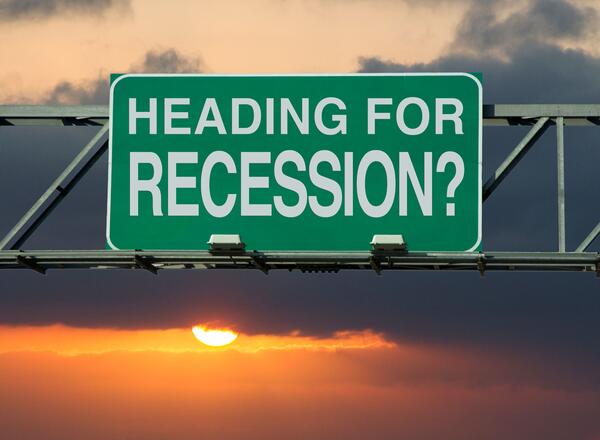
    The U.S. economy contracted slightly in the first quarter of 2025, with the administration’s erratic and unpredictable policies amplifying recession risks. These fluctuations have led some to draw comparisons to the 2008 Great Recession, particularly regarding public higher education. While some lessons of that recession for higher education, such as those related to state appropriations, remain relevant, others may not apply due to the administration’s unique policies and priorities.

    Since the 1980s, economic downturns have increasingly impacted public higher education, primarily due to state budget cuts. During the 1980 recession, state educational appropriations per full-time-equivalent student dropped by 6 percent but recovered to pre-recession levels by 1985. In contrast, during the 2008 Great Recession, funding fell by nearly 26 percent, and most states never fully restored funding to pre-recession levels before the COVID-19 pandemic once again disrupted budgets in 2020. This prolonged recovery left public institutions financially weakened, with reduced capacity to support students.

    More than a decade after the Great Recession, public institutions were struggling to regain the level of state funding they once received. This prolonged recovery significantly affected student loan borrowing. The Great Recession weakened higher education systems as states shifted funds to mandatory expenses and relied on the federal student loan system and Pell Grants to cover a growing share of students’ educational costs. As a result, when states reduce funding, students and their families shoulder more financial responsibility, leading to greater student loan debt.

    During the Great Recession, public institutions were operating with reduced funding and downsizing, even as rising joblessness drove more people to enroll in college. Before 2008, total enrollment in degree-granting institutions was about 18.3 million, but by 2011–12, it exceeded 21 million. This period marked the emergence of the modern student loan crisis. Public institutions, already strained by reduced funding, faced the dual challenge of accommodating more students while maintaining quality. For many students, especially those pursuing graduate degrees, borrowing became a necessity. The economic downturn exacerbated these trends, further entrenching reliance on debt to finance education.

    A future recession could have an even more pronounced impact on public higher education, particularly in terms of state funding. The recently passed House budget bill, which proposes substantial cuts to higher education and Medicaid, exacerbates this risk by forcing states to prioritize addressing these funding shortfalls. Consequently, as legislatures shift resources to more immediate needs, both states and students may find themselves unable to rely on federal aid to support education. Long-standing research indicates that states will prioritize health-care funding over higher education. This pattern suggests that recent state investments in higher education could be rolled back or significantly reduced, even before a recession takes hold.

    The financial pressures on public institutions are already evident. Some systems are considering closing branch campuses, while others are cutting programs, laying off staff or grappling with declining enrollments. In addition, public regional institutions are particularly at risk, as they depend heavily on state funding and serve many of the students most vulnerable to financial challenges. If a recession occurs, these institutions may face severe and rapid downsizing.

    Following downsizing, a key consideration is whether a future recession will lead to an enrollment rebound similar to that seen during the Great Recession. This issue can be analyzed through two key factors: (1) the severity of joblessness and (2) the availability of grants, scholarships and loans, as well as the repayment structures of those loans.

    During the 2008 crisis, unemployment peaked at 10 percent, double the pre-recession rate, with a loss of 8.6 million jobs. Higher unemployment historically benefits higher education as individuals seek to retool their skills during economic downturns. Economists predict that under the current administration, unemployment could rise from 4.1 percent to between 4.7 percent and 7.5 percent, though projections are uncertain due to volatile policies. While higher unemployment might lead more people to consider enrolling in college, proposed changes to financial aid policies could significantly dampen such trends.

    The House’s One Big Beautiful Bill Act introduces stricter eligibility requirements for Pell Grants, such as tying awards to minimum credit-hour thresholds. Students would need to enroll in at least 30 credit hours per year for maximum awards and at least 15 credit hours per year to qualify at all. Furthermore, the bill eliminates subsidized student loans, meaning students would accrue interest while still in school. This change could add an estimated $6,000 in debt per undergraduate borrower, increasing the financial burden on students and potentially deterring enrollment.

    On the repayment side, the proposed Repayment Assistance Plan would replace existing income-driven repayment options. Unlike current plans, RAP bases payments on adjusted gross income rather than discretionary income, resulting in higher monthly payments for lower-income borrowers. Although RAP ensures borrowers do not face negative amortization—which is important for borrowers’ financial and mental distress—the 30-year forgiveness timeline is longer than that of current IDR plans, and the lack of inflation adjustments makes it less appealing than current IDR plans. Together, these changes could discourage potential students, particularly those from low-income or disadvantaged backgrounds, and depress graduate student enrollment.

    The bill also introduces a risk-sharing framework that requires institutions to repay the federal government for a portion of unpaid student loans. This framework, based on factors such as student retention and default rates, could influence enrollment decisions. Institutions might avoid admitting students who pose financial risks, such as those from low-income backgrounds, with lower precollege performance or nonwhite students, thereby restricting access and perpetuating inequities. Alternatively, some institutions may opt out of the student loan system entirely, further limiting opportunities for those who rely on federal aid.

    Recent executive actions pausing international student visa interviews will hinder the ability to recruit international students and eliminate the potential for these students to help subsidize low-income domestic students. As a result, institutions have fewer resources to support key groups in the administration’s electoral base without burdening American taxpayers. These actions not only increase the cost of higher education but also appear inconsistent with a fiscally conservative ideology.

    Mass layoffs in the Department of Education have delayed financial aid processing and compliance and hindered institutions’ ability to support more low-income students during an economic downturn. These personnel play a critical role in ensuring that state higher education systems receive the funding needed to expand access for low-income students. During the last recession, their efforts were essential to fostering student success, but under the current administration, the federal government continues to be an unreliable partner.

    While lessons from the Great Recession may offer some insight for public higher education during a future recession, the financial context and the priorities of the administration and congressional majority leadership differ significantly. Unlike the Great Recession, the next economic downturn may not lead to a surge in higher education enrollment. Without proactive measures to protect funding, expand financial aid and increase opportunity, public higher education risks reduced capacity and declining student outcomes. These changes will likely undermine higher education’s role as a pathway to economic mobility and societal progress.


    Daniel A. Collier is an assistant professor of higher and adult education at the University of Memphis. His work focuses on higher education policy, leadership and issues like student loan debt and financial aid; recent work has focused on Public Service Loan Forgiveness. Connect with Daniel on Bluesky at @dcollier74.bsky.social.

    Michael Kofoed is an assistant professor of economics at the University of Tennessee, Knoxville. His research interests include the economics of education, higher education finance and the economics of financial aid; recent work has focused on online learning during COVID. Connect with Mike on X at @mikekofoed.

    Source link

  • Keystone College Merges With Think Tank

    Keystone College Merges With Think Tank

    Keystone College has completed a merger with ​​the Washington Institute for Education and Research, a fledgling think tank, after nearly three years of work, officials announced Monday.

    Last week, Keystone’s accreditor, the Middle States Commission on Higher Education, announced that it had reviewed and signed off on the ownership change, making it official at the end of May.

    The Pennsylvania Department of Education, the Pennsylvania Office of the Attorney General and the U.S. Department of Education already approved the merger.

    Keystone president John F. Pullo Sr. noted the merger effort was both lengthy and challenging.

    “I am pleased to report that the merger transaction between Keystone and WIER was concluded on Friday, May 30, finally joining the College with its strategic partner after nearly a three-year journey that at times threatened the future of the College,” Pullo said in a news release.

    Pullo’s remarks are a likely nod to Keystone’s precarious position in recent years. Last spring, MSCHE warned that the private college was “in danger of immediate closure.” However, Pullo noted at the time that officials were in talks with “an investment partner” to help stabilize the college. (Keystone’s accreditation was also at risk last year, but it remains accredited.)

    Keystone’s new owner is a largely unknown think tank based in Washington, D.C. 

    WIER, founded in 2023, describes its purpose on its website as “The establishment and operation of post-secondary degree-granting institutions for the instruction of students” and “Funding and supporting other post-secondary 501(c)(3) degree-granting institutions.” WIER does not list any staff members on its website except for founder and president Ahmed Alwani. 

    Alwani was previously president of Fairfax University of America in Northern Virginia, which quietly closed in December due to its inability to find a new accreditor after the Accrediting Council for Independent Colleges and Schools lost federal recognition, according to the FXUA website. The private, nonprofit institution, formerly known as Virginia International University, was almost shut down by state regulators in 2019 due to various issues highlighted by the State Council of Higher Education for Virginia, including a lack of academic rigor and other concerns.

    Source link

  • Opportunity is a shared challenge

    Opportunity is a shared challenge

    Despite a flurry of announcements for the higher education sector in the first half of 2025, much remains unknown about what is to come in this summer’s promised higher education reform plans. However, it is a pretty safe bet that opportunity and access will feature prominently. The Government has put ‘breaking down barriers to opportunity’ as one of its key missions for this Parliament, and higher education remains a core driver of social mobility.

    Data consistently show that higher education qualifications are clearly and unambiguously associated with increased earnings and employment prospects. Research from the Sutton Trust found that attending a Russell Group university narrows the existing gap between state school students eligible for school meals and their privately educated peers in the likelihood of becoming a top earner.

    At the same time, deeply entrenched inequalities prevail, as the UPP Foundation inquiry into widening participation highlights. The stark findings in its recent report included the difference in progression to higher education across the country: 71.6% of 18-year-olds in Battersea, compared to just 11.1% in Barrow-in-Furness. The Government is right to be looking at ways to address this striking imbalance, and universities are ready to be even more ambitious to reach more young people.

    It is undoubtedly a huge challenge – both the task itself, given these inequalities are largely set at primary school and are already entrenched by the time it comes to post-16 options; and the wider context, given the university sector’s own financial challenges.

    But good progress is being made. The number of young people from the most underrepresented backgrounds studying at Russell Group universities has seen a 56% increase since 2019. The number of Black placed applicants has increased by 62% in the same period. However, there is a mixed picture across the different measures of disadvantage – not helped by a cost-of-living crisis hot on the heels of the pandemic, both of which are still having an impact. 

    In this context, the Russell Group has today published a new paper, Building Opportunity For All. This sets out just some of the ambitious work our universities are already doing alongside new commitments they’ve made to going further. These commitments include expanding participation in regional partnerships, committing to a tailored support package for care leavers and care-experienced students, improving transparency around contextual admissions, and supporting the new TASO Evaluation Library to track the impact of activity.

    These new collective commitments build on the work already detailed in universities’ access plans. These are being supported by an investment of more than £250m a year across the Russell Group.

    Widening access is not a solo endeavour, which is why many of our ambitions involve making the most of partnerships with others inside and outside higher education. Combining ambitions and resources with others means our universities can go even further. Russell Group universities already spend millions of pounds a year on third sector partnerships, enabling us to provide almost 100,000 young people across the UK with practical support in achieving their university ambitions – from tutoring to advice on completing university applications.

    Across the UK, universities are thinking creatively about what participation in higher education means for different people and how we can open up our campuses and opportunities to everyone. At the University of Bristol, partnership working not only helps young people gain a place at the University but also improves community engagement more broadly. The university has two micro-campuses located in areas of the city with the lowest higher education participation rates. Since 2020, the Barton Hill campus has worked with over 60 partners annually and welcomes 160+ users each week as a hub for research, teaching and outreach. Meanwhile, the new Hartcliffe campus is co-developing a micro-qualification with local colleges, employers and community groups to create new routes into work and study.

    Our partnerships with further education are also developing more flexible learning pathways to raise attainment. The University of Glasgow, for example, runs Higher National Certificate (HNC) Articulation Programmes, developed with eight West of Scotland colleges. These enable eligible students – care-experienced individuals, estranged students, carers and those with refugee or asylum seeker status – to progress directly into Year 2 of some undergraduate degrees. Integrating college-based HNC study with university-led sessions and full access to campus resources fosters academic readiness and a sense of belonging, helping participants progress further in their educational journeys.

    Opportunity is a shared challenge, and the Government needs to be our partner on this. We expect the Department for Education – quite rightly – to put opportunity as a central pillar of higher education reform. Our universities are already responding by increasing their ambition and being creative in their thinking. For example, the care leaver support packages our universities are implementing encompass everything from assistance applying to university and finding accommodation, to providing kitchenware, luggage, vouchers and gym memberships to help with a smooth transition and settling into university life.

    But we can’t solve everything alone. We have long been calling on successive governments to improve student maintenance to remove financial barriers. Universities are doing what they can to support students. Over 60% of Russell Group universities’ £250m annual investment in access goes on direct financial support for students who need it the most. However, while significant, this is the context of the poorest students in 2025/26 being entitled to borrow around £1,125 (10%) less in real terms towards their living costs than in 2020.

    It is also challenging to narrow equality gaps that have been growing since childhood. It’s vital that the Government’s opportunity mission considers the whole lifecycle of a student’s journey, from early years to post-16 education and beyond. Universities are ready and willing to be a vital part of the picture of improving opportunity, but they are still just one element. If inequalities are addressed at a young age, it will become easier to ensure access to university for everyone – not only helping students achieve their individual ambitions, but also bringing greater rewards for the government’s skills and workforce ambitions.

    Source link

  • How Students Use Generative AI Beyond Writing – Faculty Focus

    How Students Use Generative AI Beyond Writing – Faculty Focus

    Source link

  • Brian Schmidt and Richard Holden on Australian research – Campus Review

    Brian Schmidt and Richard Holden on Australian research – Campus Review

    A Nobel laureate and an esteemed economist outlined the sub-par state of Australian research funding and sovereignty in a joint address to the National Press Club last Wednesday.

    Please login below to view content or subscribe now.

    Membership Login

    Source link

  • USyd makes $500m surplus, Mark Scott gets $150k pay rise – Campus Review

    USyd makes $500m surplus, Mark Scott gets $150k pay rise – Campus Review

    The University of Sydney (USyd) recorded a $500 million surplus in 2024 and boosted its vice-chancellor Mark Scott’s pay by $150,000 to a $1.349 million salary, its 2024 financial result showed.

    Please login below to view content or subscribe now.

    Membership Login

    Source link

  • USyd bans ‘lecture-bashing’ in wake of Israel-Gaza protests – Campus Review

    USyd bans ‘lecture-bashing’ in wake of Israel-Gaza protests – Campus Review

    University of Sydney (USyd) vice-chancellor Mark Scott on Monday wrote to students and staff to inform them that students will not be allowed to make non-course related announcements at the beginning of class.

    Please login below to view content or subscribe now.

    Membership Login

    Source link

  • Teaching-focused leadership – Episode 170 – Campus Review

    Teaching-focused leadership – Episode 170 – Campus Review

    Expert in student experience from the University of Queensland Kelly Matthews is guest host this week and interviews Monash University Associate Professor Tim Fawns and the University of Sydney’s Dr Stephen George-Williams.

    Please login below to view content or subscribe now.

    Membership Login

    Source link

  • Subject-level insights on graduate activity

    Subject-level insights on graduate activity

    We know a lot about what graduates earn.

    Earnings data—especially at subject level—has become key to debates about the value of higher education.

    But we know far less about how graduates themselves experience their early careers. Until now, subject-level data on graduate job quality—how meaningful their work is, how well it aligns with their goals, and whether it uses their university-acquired skills—has been missing from the policy debate.

    My new study (co-authored with Fiona Christie and Tracy Scurry and published in Studies in Higher Education) aims to fill this gap. Drawing on responses from the 2018-19 graduation cohort in the national Graduate Outcomes survey, we provide the first nationally representative, subject-level analysis of these subjective graduate outcomes.

    What we find has important implications for how we define successful outcomes from higher education—and how we support students in making informed choices about what subject to study.

    What graduates tell us

    The Graduate Outcomes survey includes a set of questions—introduced by HESA in 2017—designed to capture core dimensions of graduate job quality. Respondents are asked (around 15 months after graduation) whether they:

    • find their work meaningful
    • feel it aligns with their future plans
    • believe they are using the skills acquired at university

    These indicators were developed in part to address the over-reliance on income as a measure of graduate success. They reflect a growing international awareness that economic outcomes alone offer a limited picture of the value of education—in line with the OECD’s Beyond GDP agenda, the ILO’s emphasis on decent work, and the UK’s Taylor Review focus on job quality.

    Subject-level insights

    Our analysis shows that most UK graduates report positive early-career experiences, regardless of subject. Across the sample, 86 per cent said their work felt meaningful, 78 per cent felt on track with their careers, and 66 per cent reported using their degree-level skills.

    These patterns generally hold across disciplines, though clear differences emerge. The chart below shows the raw, unadjusted proportion of graduates who report positive outcomes. Graduates from vocational fields—such as medicine, subjects allied to medicine, veterinary science, and education—tend to report particularly strong outcomes. For instance, medicine and dentistry graduates were 12 percentage points more likely than average to say their work was meaningful, and over 30 points more likely to report using the skills they acquired at university.

    However, the results also challenge the narrative that generalist or academic degrees are inherently low value. As you can see, most subject areas—including history, languages, and the creative arts, often targeted in these debates—show strong subjective outcomes across the three dimensions. Only one field, history and philosophy, fell slightly below the 50 per cent threshold on the skills utilisation measure. But even here, graduates still reported relatively high levels of meaningful work and career alignment.

    Once we adjusted for background characteristics—such as social class, gender, prior attainment, and institutional differences—many of the remaining gaps between vocational and generalist subjects narrowed and were no longer statistically significant.

    This chart shows the raw proportion of 2018-19 graduates who agree or strongly agree that their current work is meaningful, on track and using skills, by field of study (N = 67,722)

    Employment in a highly skilled occupation—used by the Office for Students (OfS) as a key regulatory benchmark—was not a reliable predictor of positive outcomes. This finding aligns with previous HESA research and raises important questions about the appropriateness of using occupational classification as a proxy for graduate success at the subject level.

    Rethinking what we measure and value

    These insights arrive at a time when the OfS is placing greater emphasis on regulating equality of opportunity and ensuring the provision of “full, frank, and fair information” to students. If students are to make informed choices, they need access to subject-level data that reflects more than salary, occupational status, or postgraduate progression. Our findings suggest that subjective outcomes—how graduates feel about their work—should be part of that conversation.

    For policymakers, our findings highlight the risks of relying on blunt outcome metrics—particularly earnings and occupational classifications—as indicators of course value. Our data show that graduates from a wide range of subjects—including those often labelled as “low value”—frequently go on to report meaningful work shortly after graduation that aligns with their future plans and makes use of the skills they developed at university.

    And while job quality matters, universities should not be held solely accountable for outcomes shaped by employers and labour market structures. Metrics and league tables that tie institutional performance too closely to job quality risk misrepresenting what higher education can influence. A more productive step would be to expand the Graduate Outcomes survey to include a wider range of job quality indicators—such as autonomy, flexibility, and progression—offering a fuller picture of early career graduate success.

    A richer understanding

    Our work offers the first nationally representative, subject-level insight into how UK graduates evaluate job quality in the early stages of their careers. In doing so, it adds a missing piece to the value debate—one grounded not just in earnings or employment status, but in graduates’ own sense of meaning, purpose, and skill use.

    If we are serious about understanding what graduates take from their university experience, it’s time to move beyond salary alone—and to listen more carefully to what graduates themselves are telling us.

    DK notes: Though the analysis that Brophy et al have done (employing listwise deletion, examining UK domiciled first degree graduates only) enhances our understanding of undergraduate progression and goes beyond what is publicly available, I couldn’t resist plotting the HESA public data in a similar way, as it may be of interest to readers:

    [Full screen]

    Source link