Category: Featured

  • A Twilight Zone Warning for the Trump Era and the Age of AI

    A Twilight Zone Warning for the Trump Era and the Age of AI

    Rod Serling’s classic 1961 episode of The Twilight Zone, “The Obsolete Man,” offers a timeless meditation on authoritarianism, conformity, and the erasure of humanity. In it, a quiet librarian, Romney Wordsworth (played by Burgess Meredith), is deemed “obsolete” by a dystopian state for believing in books and God—symbols of individual thought and spiritual meaning. Condemned by a totalitarian chancellor and scheduled for execution, Wordsworth calmly exposes the cruelty and contradictions of the regime, ultimately reclaiming his dignity by refusing to bow to tyranny.

    Over 60 years later, “The Obsolete Man” feels less like fiction and more like a documentary. The Trump era, supercharged by the rise of artificial intelligence and a war on truth, has brought Serling’s chilling parable into sharper focus.

    The Authoritarian Impulse

    President Donald Trump’s presidency—and his ongoing influence—has been marked by a deep antagonism toward democratic institutions, intellectual life, and perceived “elites.” Journalists were labeled “enemies of the people.” Scientists and educators were dismissed or silenced. Books were banned in schools and libraries, and curricula were stripped of “controversial” topics like systemic racism or gender identity.

    Like the chancellor in The Obsolete Man, Trump and his allies seek not just to discredit dissenters but to erase their very legitimacy. In this worldview, librarians, teachers, and independent thinkers are expendable. What matters is loyalty to the regime, conformity to its ideology, and performance of power.

    Wordsworth’s crime—being a librarian and a believer—is mirrored in real-life purges of professionals deemed out of step with a hardline political agenda. Public educators and college faculty who challenge reactionary narratives have been targeted by state legislatures, right-wing activists, and billionaire-backed think tanks. In higher education, departments of the humanities are being defunded or eliminated entirely. Faculty governance is undermined. The university, once a space for critical inquiry, is increasingly treated as an instrument for ideological control—or as a business to be stripped for parts.

    The Age of AI and the Erasure of the Human

    While authoritarianism silences the human spirit, artificial intelligence threatens to replace it. AI tools, now embedded in everything from hiring algorithms to classroom assessments, are reshaping how knowledge is produced, disseminated, and controlled. In the rush to adopt these technologies, questions about ethics, bias, and human purpose are often sidelined.

    AI systems do not “believe” in anything. They do not feel awe, doubt, or moral anguish. They calculate, replicate, and optimize. In the hands of authoritarian regimes or profit-driven institutions, AI becomes a tool not of liberation, but of surveillance, censorship, and disposability. Workers are replaced. Students are reduced to data points. Librarians—like Wordsworth—are no longer needed in a world where books are digitized and curated by opaque algorithms.

    This is not merely a future problem. It’s here. Algorithms already determine who gets hired, who receives financial aid, and which students are flagged as “at risk.” Predictive policing, automated grading, and AI-generated textbooks are not the stuff of science fiction. They are reality. And those who question their fairness or legitimacy risk being labeled as backwards, inefficient—obsolete.

    A Culture of Disposability

    At the heart of “The Obsolete Man” is a question about value: Who decides what is worth keeping? In Trump’s America and in the AI-driven economy, people are judged by their utility to the system. If you’re not producing profit, performing loyalty, or conforming to power, you can be cast aside.

    This is especially true for the working class, contingent academics, and the so-called “educated underclass”—a growing population of debt-laden degree holders trapped in precarious jobs or no jobs at all. Their degrees are now questioned, their labor devalued, and their futures uncertain. They are told that if they can’t “pivot” or “reskill” for the next technological shift, they too may be obsolete.

    The echoes of The Twilight Zone are deafening.

    Resistance and Redemption

    Yet, as Wordsworth demonstrates in his final moments, resistance is possible. Dignity lies in refusing to surrender the soul to the machine—or the regime. In his quiet defiance, Wordsworth forces the chancellor to confront his own cowardice, exposing the hollow cruelty of the system.

    In our time, that resistance takes many forms: educators who continue to teach truth despite political pressure; librarians who fight book bans; whistleblowers who challenge surveillance technologies; and students who organize for justice. These acts of courage and conscience remind us that obsolescence is not a matter of utility—it’s a judgment imposed by those in power, and it can be rejected.

    Rod Serling ended his episode with a reminder: “Any state, any entity, any ideology that fails to recognize the worth, the dignity, the rights of man—that state is obsolete.”

    The question now is whether we will heed the warning. In an age where authoritarianism and AI threaten to render us all obsolete, will we remember what it means to be human?


    The Higher Education Inquirer welcomes responses and reflections on how pop culture can illuminate our present crises. Contact us with your thoughts or your own essay proposals.
    Source link

  • Week in review: Trump administration targets Chinese student visas

    Week in review: Trump administration targets Chinese student visas

    Most clicked-on story from last week: 

    House Republicans passed — by one vote — a massive spending bill backed by President Donald Trump with heavy implications for higher education. Among other proposals, it would raise and expand the endowment tax, introduce a risk-sharing program that would put colleges on the hook for unpaid student debt, nix subsidized loans and narrow eligibility for Pell Grants. Many expect the Senate to make changes to the bill.

    Number of the week


    7

    That’s how many regional branch campuses Pennsylvania State University is set to close after a 25-8 vote by its trustee board. The plan will pare down the university’s commonwealth campuses to 13 to cope with demographic declines and budget pressure. Detractors said the decision was made too hastily, ignored some campuses’ recent progress and could hurt the state’s rural areas.

    Trump administration updates:

    • The Trump administration aims to “aggressively revoke visas for Chinese students” while ramping up scrutiny and changing criteria for student visa applications from China and Hong Kong, U.S. Secretary of State Marco Rubio said Wednesday. With nearly 278,000 students from China studying in the U.S. during the 2023-24 academic year, the move could have a steep impact on U.S. colleges.
    • Sixteen states sued the National Science Foundation over the agency’s 15% cap on indirect research costs and its mass termination of grants related to diversity, equity and other topics. The states’ colleges “will not be able to maintain essential research infrastructure and will be forced to significantly scale back or halt research, abandon numerous projects, and lay off staff,” plaintiffs said in their complaint. 
    • The Trump administration plans to cut Harvard University’s remaining federal contracts, amounting to about $100 million. An official with the U.S. General Services Administration cited what he alleged was “Harvard’s lack of commitment to nondiscrimination and our national values and priorities.” The salvo is the latest in the federal government’s escalating battle with the Ivy League institution. 

    Texas legislators look to tighten control of colleges:

    • The Texas House approved a bill that would give the state’s regents — who are appointed by the governor — the power to recommend required courses at public colleges and to reject courses deemed too biased or ideological. Regents would also gain approval authority over the hiring of administrators. 
    • Another bill approved by the House would limit where and how students can protest on campuses. The Texas House and Senate are working to resolve their differences over the bill, according to The Texas Tribune. 

    Quote of the week:

    There’s a bit of anxiousness among accreditors and institutions and state legislators because of the uncertainty. Is it that they are intentionally being vague or general until they can work out all of the nuances of the policies that they want to implement? I can tell you, less is not more in this situation.”

    That’s Cynthia Jackson Hammond, president of the Council for Higher Education Accreditation, on the effects of Trump’s executive order on college accreditation.

    Source link

  • Aerial Aviators: Helping STEM minds soar one afternoon at a time

    Aerial Aviators: Helping STEM minds soar one afternoon at a time

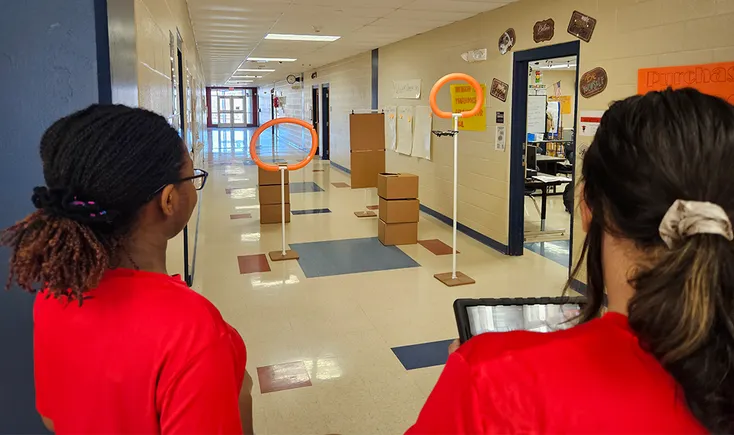
    After a long day of school, most kids are ready to head home—but in San Antonio, teachers across Northside Independent School District’s (NISD) several middle schools are giving them a reason to stay.

    Amanda Quick, NISD’s K–8 STEM Coordinator, organizes Aerial Aviators for the district—an out-of-school time (OST) program that skips the busy work. Instead, students are learning to fly drones, solve problems, and build real skills they can apply in school, at work, and in life. 

    The Newest OST Program Takes Off

    Middle school is when students start figuring out who they are—caught between wanting more independence and being open to new challenges. It’s also when out-of-school-time programs have the most potential to make an impact.

    “We were looking at additional afterschool STEM opportunities for our middle school students that would build upon the coding skills they learn in elementary STEM classes,” Amanda explains. “We already offered a robotics program and a solar-car design program that have been highly engaging. With all the local development that uses drones in industry, having an afterschool drone program was a natural addition.”

    In San Antonio—home to the nation’s second-largest cybersecurity hub—the answer was practically built into the landscape: drones.

    With Echo Drones in hand and a city full of real-world inspiration, NISD launched Aerial Aviators, a program that goes far beyond the basics. Students take part in flight challenges, work together on real missions, and build the kind of confidence that sticks. It’s not just about learning to fly—it’s about seeing where they’re capable of going.

    Never Leaving Relevance Up in the Air

    Even with exposure to aviation, cybersecurity, construction, and engineering, not every student saw themselves heading into those fields. Instead, many came to the afterschool program thinking drones would be fun—but not exactly tied to their future plans.

    While visiting one school’s Aerial Aviators program, Amanda noticed a girl who had more of an entrepreneurial spirit than an engineering one. “Drones don’t feel like something I can use in my future. I want to own a restaurant,” she explained.

    Despite the depth of her imagination, the girl struggled to see how drones could be connected to her ambitions. But with some critical thinking and a fresh perspective, Amanda helped her see things differently.

    “Remember the Covid pandemic? What if you didn’t have the option of using people to deliver food? How could you solve this problem to keep your business running?” 

    Suddenly, “women in STEM” took on new meaning for the girl as she realized how much her dream job depended on technology. “I could use drones!”

    Like the girl, some students had their futures already mapped out, while others hadn’t even started to imagine careers beyond what they saw through the classroom window. No matter whether the students had their sights set on adulthood, or just their afternoon, Amanda and campus program sponsors knew the right opportunity would be memorable for everyone.

    “We want kids to see drone knowledge as a skill, not just a trend. We can’t predict exactly how drones will be used in the future, but we want them to ask, ‘How does this connect to something I’m already passionate about?’”

    The goal wasn’t to change their dreams, but to mold them—and for some, to show how a STEM mindset could make those dreams more attainable.

    Skilled Students are Soaring Students

    Students don’t have to look far to see how STEM technology fuels innovation. Right in their own community, drones are elevating industries—helping strip and repaint airplanes to protect workers from harmful chemicals, and delivering medical supplies in emergencies. As students get hands-on with drones, they begin to see how industries are connected and how transferable skills—beyond coding, engineering, and tech literacy—are key to making it all happen.

    “We’re seeing a lot of students troubleshooting when they connect devices to the wrong drone,” Amanda shares. “They’re collaborating, thinking critically, communicating with peers and tech support, and developing grit—lots of it.”

    When students get the chance to lead flight challenges, they don’t just show off their skills—they gain the confidence to share what they’ve learned with others. The campus program sponsors have seen this firsthand, noting how eager the kids are to include everyone in the fun:

    “At a family event held at one of our high schools where Aerial Aviators students displayed their knowledge and skills, one mom was nervous about her child struggling or breaking something. But before she could worry too much, one student stepped up and reassured her: ‘Don’t worry! If he breaks it, we know how to fix it!’ That moment left everyone smiling.”

    Although each student has different interests, the drone program’s design and flight challenges make sure every kid feels their talents are recognized. And the results speak for themselves: 100% of students in the post-program survey said they had a great time.

    Just the Beginning

    Aerial Aviators has already made an impact on students. Even when things don’t go according to plan—like a broken propeller or a misconfigured drone—these middle schoolers stay motivated, always eager to learn from setbacks.

    Looking ahead, students are eager to deepen their STEM experience—especially through coding. Many have even expressed interest in competitions where they can showcase their skills. It’s a level of enthusiasm that educators are proud of—and one they’re ready to champion. Amanda and the campus sponsors are now exploring ways to weave these opportunities into the program, ensuring student voice continues to shape its future.

    The success of Aerial Aviators has sparked growing interest, with the program expanding from three schools last year to seven this year. With more funding, the goal is to continue this growth and reach even more students in the year ahead.

    No matter how the program evolves, it’s leaving a lasting legacy with the students—whether they’re back in class, opening their own restaurant, applying to college, or building with friends. Equipped with critical 21st century skills, these kids will step into high school, careers, and society as inspired leaders, ready to lend a hand so everyone’s dreams can take flight.

    More Out of School Time Resources

    Source link

  • College parents speak out in new survey: Weekly updates, mental health info and more access needed

    College parents speak out in new survey: Weekly updates, mental health info and more access needed

    As colleges nationwide double down on enrollment, retention, and student success strategies, one key voice is becoming harder to ignore: the family. According to the 2025 Current Families Report released by CampusESP, families want more updates, more access, and more say in the college journey, and they’re increasingly dissatisfied when they don’t get it. In addition, when parents do receive the information they need to support their student, research shows significant gains in student yield and retention.

    The survey, conducted across 81 colleges and universities and with more than 32,000 parents and supporters of current students, is the most comprehensive look at family engagement to date. And the findings are impossible to miss.

    Mental health, money, and mentorship

    Nearly half of all parents talk to their student daily, with the number jumping to over 60% for low-income and first-generation households. These families aren’t just chatting about weekend plans — they’re offering support on mental health (53%), academic advice (57%), and student life (69%).

    “Parents aren’t bystanders — they’re active advisors,” says the report. “And they need the right tools to guide their students.”

    Communication expectations are high

    A staggering 77% of families want to hear from their student’s college weekly or more, up 12% in just four years. While email is still the go-to channel, the demand for text messaging is surging, especially among Black, Hispanic, low-income, and first-gen families.

    However, a gap remains: 48% of families prefer text, but only 28% of colleges offer it.

    Trust wavers without transparency

    Families are becoming more skeptical about the return on their tuition investment. Only 59% say college is worth the cost — a sharp drop from 77% the year before. Their #1 request? More info on career services and job placement, which ironically ranked lowest in satisfaction.

    Families want in, but feel left out

    Even when they receive a high number of communications from their student’s college, families still feel sidelined. Just 46% are satisfied with their opportunities to get involved on campus, down from 63% last year. And only 30% feel they have good ways to connect with other families.

    Yet the desire is there: 38% want to be more involved, and 22% say they’re more likely to donate to their student’s college than their own alma mater.

    Financial aid frustration runs deep

    Navigating costs is a pain point. 59% say it’s hard to pay for college, and only 25% found financial aid information easy to understand.

    And with confusion comes attempts at self-education. Nearly half of families rely on their student’s login to access key financial records—posing serious data privacy concerns.

    The report confirms what many enrollment leaders have long suspected: families aren’t just part of the support system — they are the support system. The challenge for institutions? Reaching them with the right information, in the right format, at the right time.

    “Family engagement isn’t optional — it’s a strategic advantage,” the report concludes.

    Download the full 2025 Current Families Report from CampusESP to explore the findings and access actionable strategies for turning family influence into institutional success.

    Source link

  • Fake Citations Appeared in Federal Chronic Diseases Report

    Fake Citations Appeared in Federal Chronic Diseases Report

    The Department of Health and Human Services cited fake publications in a report on children’s health issues issued last week, The New York Times reported

    The Make America Healthy Again Commission claims its report—which blamed chronic disease in children on ultraprocessed foods, pesticides, lack of physical activity and excessive use of prescription drugs, including antidepressants—was produced with a “clear, evidence-based foundation.”

    However, some of the researchers it cited said they didn’t write the papers the report attributed to them. 

    In one example, the report cited a paper on the link between mental health and substance use in adolescents by Katherine Keyes, an epidemiology professor at Columbia University. But Keyes told the Times that she didn’t write the paper. And no paper by the title cited—written by anyone—appears to exist at all. 

    The report cited another paper about psychiatric medications and advertising that was allegedly published in 2009 in The Journal of Child and Adolescent Psychopharmacology by “Findling, R. L., et al.” But the Times confirmed that Robert L. Findling, who is a psychiatry professor at the University of Virginia, did not author the paper. 

    The newspaper also found numerous other instances of mischaracterized or inaccurate summaries of research papers. 

    After both the Times and NOTUS reported on the false citations Thursday, the White House promptly updated the report with corrections. In response to questions from reporters about whether generative artificial intelligence—which is notorious for “hallucinating” information and failing to provide accurate citations—was used to produce the errant report, Emily Hilliard, a spokesperson for HHS, did not provide an answer.

    Instead, she characterized the false citations as “minor citation and formatting errors,” according to the Times, and doubled down on the report’s “substance” as “a historic and transformative assessment by the federal government to understand the chronic-disease epidemic afflicting our nation’s children.”

    Source link

  • Accelerating Innovation From Lab to Market (opinion)

    Accelerating Innovation From Lab to Market (opinion)

    American universities are dynamic engines of deep technological innovation (deep tech), responding to a growing demand for STEM research innovations that can reach the market quickly and at scale. In order to remain competitive in a fast-moving global scientific landscape and strengthen national research dominance, universities need to accelerate their innovation outputs by shortening the time it takes for research products from graduate students and postdoctoral researchers in STEM fields to reach the market, while providing these early-career researchers with the necessary mentorship and resources needed to translate their academic research projects into high-impact startup companies. By targeting these highly qualified scientists at the juncture of innovative university research and entrepreneurial ambition, we can more effectively advance academic research discoveries from early-career STEM talent into commercially viable new companies (NewCos) at scale.

    To fully capitalize on this immense potential, America must transcend the current national innovation paradigms. We argue that our nation’s global leadership in science and technology could be maintained through strategically scaled and nationally coordinated approaches to innovation, including cross-cutting and cross-sectoral approaches. Additionally, to retain American scientific and technological leadership on the global stage, we must confront the inherent risks of deep tech ventures head-on and decisively maximize our national “shots on goal,” which can lead to developing a truly robust and self-sustaining innovation ecosystem.

    A Scalable Model for National STEM Innovation

    The foundation of a new American innovation model lies in the urgent creation of new and effective cross-sectoral partnerships involving universities, industry, government and philanthropic players. Existing models supporting American innovation rely heavily on public seed funding, which, while valuable, often falls short in meeting the needs for the capital-intensive process of commercializing deep tech ventures from university lab research. Historically, the federal government has borne much of the early risk for deep tech company formation such as through the Small Business Innovation Research (SBIR) and Small Business Technology Transfer (STTR) programs, administered by agencies including the Department of Defense, the National Institutes of Health and the National Science Foundation.

    These programs have served as important launchpads for many academic entrepreneurs, including early-career scientists. However, early-phase SBIR/STTR grants typically range around $150,000 for durations of six months to one year. While this funding provides critical seed capital, it represents only a fraction of the substantial investment required for R&D, prototyping and market validation for deep tech ventures. Compounding this challenge, the acceptance rate for SBIR grants has declined sharply, from approximately 30 percent in 2001 to just 10 percent in 2024 in some sectors, further straining the pipeline necessary for deep tech innovation.

    Current federally focused financial support systems are falling short. Start-up success rates remain low, and private venture capital is unlikely to close the funding gap, especially for university-based early-career scientists. As competition for SBIR funding intensifies and global venture capital investment drops by 30 percent, America’s scientific and technological competitiveness is at risk without stronger shared-risk models and expanded backing for academic innovation.

    In today’s highly commercialized and globally competitive research landscape, the quality and quantity of start-ups emerging from academic labs are critical parameters for developing the next generation of entrepreneurs. A strong pipeline of NewCos enables more innovations to be tested in real-world markets, increasing the chances that transformative companies will succeed and attract external investment from industry. To meet this challenge, America needs a bold vision focused on maximizing national shots on goal through strategic scaling, proactive risk management and innovative risk-sharing models. This framework must not only rely on investment from the federal government but also from a strategically blended funding model that includes state and local governments, industry, philanthropy, venture capital, mission-driven investors, and other nontraditional funding sources.

    A nationally coordinated cross-sector pooled NewCo fund, supported by federal agencies, universities, industry, philanthropy, private equity and venture capital, partnering together, is essential for rapidly advancing national innovation at scale.

    This idea is not unique to us; it has been proposed in Europe and Australia and has been part of the science policy conversation for some time. However, the current historical moment in American science offers a unique opportunity to move from conversation to action.

    Impacts of Research Funding Cuts

    This year, significant reductions in federal funding for R&D at multiple federal agencies have posed substantial challenges to universities striving to remain global-leading STEM innovation hubs. Reductions in staff at the NSF have implications for SBIR programs, which rely on robust institutional support and agency capacity to guide early-stage innovation effectively. In addition, proposed reductions in indirect cost reimbursements for grantees at multiple agencies including NIH, DOD, NSF and the Department of Energy may also pose a challenge to research institutions and resulting start-ups in covering essential overhead expenses, impacting the transition of federally-funded research from labs to market-ready applications.

    An Updated Framework

    The national shots on goal framework is a potential remedy to the currently changing landscape imposed by federal science funding cuts. By emphasizing public-private-philanthropic partnerships, scaled seed investments and improved use of existing infrastructure within universities, this framework can help mitigate the impact of research funding cuts at federal agencies on early-career researchers.

    This framework can be especially impactful for graduate students and postdoctoral researchers in STEM fields whose scientific projects, entrepreneurial endeavors and research careers require robust and sustained federal support from multiple funding sources over a longer period of time. It also allows universities to maintain and expand deep tech innovation without relying solely on federal agency funding.

    For example, targeted one-year investments of $200,000 per NewCo can provide an essential and low-risk commercialization runway, similar in scale to the NIH R21 program. This fund would be sustained through contributions from a broad coalition of federal agencies, philanthropies, state governments, regional industries, universities and venture and private equity partners. By distributing risk across the ecosystem and focusing on returns from a growing pipeline of NewCos, this coordinated effort could partially counteract the losses sustained by the research enterprise as a result of federal agency funding cuts and accelerate university-driven scientific innovation nationwide.

    To support the long-term sustainability of these start-up companies, a portion of national NewCo funds could be reinvested in traditional and emerging markets, including crypto. This would help grow the NewCo funds over time and de-risk a pipeline of start-ups led by early-career scientists pursuing high-risk research.

    A Pilot Program

    To validate the national shots on goal vision, we propose a targeted pilot program initially focused on graduate students and postdoctoral researchers in STEM fields pursuing NewCo formation at select U.S. land-grant universities. Land-grant universities, which are vital hubs for STEM research innovation, workforce development and regional workforce growth, are uniquely positioned to lead this effort. Below, we suggest a few elements of effective pilot programs, bringing together ideas for outreach, partnerships, funding and relevant STEM expertise.

    • Dedicated, national risk-mitigating funding pool: To minimize capital risk, provide one-year seed grants of $200,000, along with subsidized or free access to core facilities. By the end of the year, each venture must secure external funding from the commercial sector, such as venture capital, or it will be discontinued, given that follow-on support cannot come from additional federal grants or the seed fund itself.
    • Targeted, risk-aware STEM outreach and recruitment: Implement a national outreach campaign explicitly targeting STEM graduate students and postdoctoral researchers at land-grant universities, highlighting risk-managed opportunities and participation pathways. Industry and philanthropic partners should be included in outreach and recruitment steps, and promote projects that meet high-priority industrial and/or philanthropic R&D strategic interests.
    • Specialized, STEM-oriented risk management–focused support network: Develop a tailored mentorship network leveraging STEM expertise within land-grant universities. The network should include alumni with entrepreneurial talent and economic development partners. It should also include training for academic scientists on risk modeling and corporate strategy, and actively incorporate industry experts and philanthropists.
    • Earmarked funding for STEM-based graduate and postdoctoral programs: In addition to the above, new funding streams should be specifically allocated to graduate students and postdoctoral researchers in STEM fields. This framework would grant them an intensive year of subsidized financial support and access to the university’s core facilities, along with support from business experts and technology transfer professionals to help them launch a company ready for external venture funding within one year. Critically, during this process, the university where academic research was conducted should take no equity or intellectual property stake in a newly formed company based on this research.
    • Rigorous, risk-adjusted evaluation and iteration framework: Establish a robust national evaluation framework to track venture progress, measure performance and iteratively refine the framework based on data-driven insights and feedback loops to optimize risk mitigation.
    • Leverage existing programs to maximize efficiency and avoid duplication: Entrepreneurial talent and research excellence are nationally distributed, but opportunity is not. Select federal programs and initiatives can help level the playing field and dramatically expand STEM opportunities nationwide. For example, the NSF I-Corps National Innovation Network provides a valuable collaborative framework for expanding lab-to-market opportunities nationwide through the power of industry engagement.
    • Prioritize rapid deep tech commercialization through de-risking models that attract early-stage venture and private equity: Transformative multisector funding models can unlock NewCo formation nationwide by combining public investment with private and philanthropic capital. The Deshpande Center at MIT demonstrates this approach, offering one-year seed grants of $100,000, with renewal opportunities based on progress. These early investments can help deep tech entrepreneurs tackle complex challenges, manage early risk and attract commercial funding. ARPA-E’s tech-to-market model similarly integrates commercialization support early on. Additionally, the mechanism of shared user facilities at DOE national labs reduces R&D costs by providing subsidized access to advanced infrastructure for academic researchers in universities, thereby supporting the formation of NewCos through strong public-private partnerships.
    • Bridge the academic-industry gap: Given the central role of universities in national innovation, building commercially viable deep tech ventures requires bridging the science-business gap through integrated, campus-based STEM ecosystems. This requires strengthening internal university connections by connecting science departments with business schools, embedding training in risk modeling and corporate strategy and fostering cross-disciplinary collaboration. These efforts will support the creation of successful start-ups and equip the next generation of scientists with skills in disruptive and inclusive innovation.

    Conclusion

    As American scientific innovation continues to advance, this moment presents an opportunity to rethink how we can best support and scale deep tech ventures resulting in start-up companies emerging from university research labs. In the face of federal funding cuts and ongoing barriers to rapid commercialization at scale within universities, these institutions must adopt bold thinking, forge innovative partnerships and exhibit a greater willingness to experiment with new models of innovation.

    By harnessing the strengths of land-grant universities, deploying innovative funding strategies and driving cross-disciplinary collaboration, we can build a more resilient and globally competitive national research and innovation ecosystem.

    Adriana Bankston is an AAAS/ASGCT Congressional Policy Fellow, currently working to support sustained federal research funding in the U.S. House of Representatives. She holds a Ph.D. in biochemistry, cell and developmental biology from Emory University and is a member of the Graduate Career Consortium—an organization providing an international voice for graduate-level career and professional development leaders.

    Michael W. Nestor is board director of the Government-University-Industry-Philanthropy Research Roundtable at the National Academies of Sciences, Engineering and Medicine. He directed the Human Neural Stem Cell Research Lab at the Hussman Institute for Autism, where his work led to the founding of start-ups Synapstem and Autica Bio, and contributed to early-stage biotech commercialization at Johnson & Johnson Innovation–JLABS. He holds a Ph.D. in neuroscience from the University of Maryland School of Medicine and completed postdoctoral training at the NIH and the New York Stem Cell Foundation.

    The views expressed by the authors of this article do not represent the views of their organizations and are written in a personal capacity.

    Source link

  • Securing the Future: The case for Pension Reform in Post-92 Institutions

    Securing the Future: The case for Pension Reform in Post-92 Institutions

    • By Fiona Hnatow, Chief People Officer at the University of Portsmouth.

    In an era of mounting financial pressures across the UK higher education sector, the University of Portsmouth has not been immune to these difficulties. However, through considered efficiency programmes and an innovative approach to pension reform, we are emerging from the initial financial pressures into a stronger and sustainable position.  As one of the largest Post-92 institutions in the UK, the University plays a vital role in the local and national economy. With nearly 4,000 staff and 29,000 students, 6,000 of whom are international, the University is not only a major employer in the Solent region but also a hub of innovation, research and global engagement.

    In 2024 alone, the University contributed an impressive £1.4 billion to the UK economy, including £658 million in the Solent region and £505 million in Portsmouth, supporting over 8,800 jobs locally. These figures underscore the University’s critical role in regional development and its broader impact on the national landscape.

    By early 2023, it became increasingly clear that the UK higher education sector was heading towards a financial crisis. A combination of declining undergraduate and international student applications, rising utility and employment costs and inflexible pension obligations created a perfect storm, particularly for Post-92 universities.

    One of the most significant financial burdens facing these institutions is the Teachers’ Pension Scheme (TPS). Mandated by the Further and Higher Education Act 1992, Post-92 universities are required to offer TPS to all academic staff, with no option to opt out. In contrast, non-Post-92 institutions can offer alternative schemes, such as the Universities Superannuation Scheme (USS), which carry significantly lower employer contribution rates.

    As of April 2025, TPS employer contributions rose from 23.68% to 28.68%. This means that employing an academic on a £50,000 salary now costs Post-92 institutions nearly £9,000 more per year than their competitors. With further increases projected in 2026, the financial strain is only expected to intensify.

    The Reset Programme: A Strategic Pivot

    Recognising the urgency of the situation, the University of Portsmouth launched its ‘Reset’ programme in early 2023. This comprehensive initiative was designed to reduce both staff and non-staff costs, streamline operations and build a digitally enabled, efficient institution. The goal: to ensure both operational and financial sustainability in the face of unprecedented challenges.

    The Reset programme introduced a series of targeted workstreams over an 18-month period, including:

    • Creation of a staffing subsidiary (UASL) to employ new staff under a more affordable pension scheme.
    • Voluntary Severance Scheme to reduce the need for compulsory redundancies.
    • Enhanced vacancy management, filling only business-critical roles.
    • Non-pay budget reductions, including cuts to travel, training, printing, and consumables.
    • Removal of budget contingencies during annual planning.
    • Policy changes to limit professional accreditation and subscription costs.
    • Professional services reviews to centralise functions and reduce staffing levels.
    • Academic restructuring, including faculty mergers and rebalancing student/staff ratios.
    • Contracted services reviews to improve value for money.
    • Student retention initiatives to reduce withdrawals and protect tuition income.

    UASL: A Bold and Necessary Innovation

    In August 2024, the University launched University of Portsmouth Academic Services Limited (UASL), a wholly owned subsidiary created to employ new academic and professional services staff. While maintaining existing terms and conditions, UASL introduced a new Defined Contribution (DC) pension scheme through Aviva, offering a 12% employer contribution for permanent staff and 6% for casual staff. Additionally, the National Employment Savings Trust (NEST) scheme was introduced for casual workers, primarily students.

    This move was not taken lightly as the University recognises how important pensions are to attract and retain staff. However, it was essential to avoid the unsustainable costs associated with TPS and the Local Government Pension Scheme (LGPS). Importantly, all staff employed before August 2024 retained their existing pension arrangements, helping to maintain strong relationships with unions such as UCU and Unison.

    The TPS, and its statutory imposition on Post-92 providers, is a throwback to when institutions like the University of Portsmouth, as former polytechnics, were administered by their local authority. At the time, it made sense. But in the thirty years since we achieved full University status, it has become impossible to justify the retention of this outdated system. It is clear that those bodies responsible for setting and monitoring higher education funding, who are admittedly not known for their responsiveness, have failed to adapt to the realities of the higher education landscape. When vast swathes of the sector are faced with a worsening financial position, many of those being post-92 institutions, it is baffling that this outdated system remains to hinder determined efforts to manage institutional finances.

    The results have been significant. In 2024/25 alone, the University is on track to save over £1 million, with projected savings rising to £2.8 million in 2025/26 and £4.4 million in 2026/27. Moreover, the new pension schemes have proven attractive, particularly to early-career professionals, international staff, and those on lower salaries—groups that had previously opted out of TPS due to affordability concerns.

    Balancing Innovation with Risk

    While the creation of UASL has delivered substantial financial benefits, it has also introduced new challenges. Notably, Research England and UKRI have begun placing restrictions on the eligibility of subsidiary-employed academics for research funding and participation in the Research Excellence Framework (REF). This poses a significant risk to the University’s research ambitions and its ability to compete on a national and global scale.

    Despite these concerns, the University had to weigh the risks of innovation against the very real threat of insolvency. Without decisive action, the financial outlook would have been dire. In 2023/24, the University had budgeted for an income of £321 million but achieved only £304 million, resulting in a £9.2 million deficit—despite achieving £19.7 million in Resetsavings. For 2024/25, the budgeted income is £290.5 million, with a projected deficit of £2.9 million, inclusive of £24 million in planned savings.

    A Call for Sector-Wide Reform

    The University of Portsmouth’s experience is not unique. Many Post-92 institutions across the UK are being forced to consider similar measures, simply to remain viable. In Scotland, the government has stepped in to support institutions facing equivalent pension cost increases, highlighting the uneven playing field across the UK.

    The University is now calling on the Department for Education and the UK Treasury to reform elements of the Further and Higher Education Act 1992 that tie Universities to an outdated, restrictive and overly costly pension scheme and advocates for greater flexibility in pension arrangements. Such reform would allow institutions to manage their finances more effectively, attract and retain top talent, and avoid widespread job losses and regional economic disruption. Our view is that it is wholly unfair that the Government have subsidised schools and further education colleges in England to compensate for the rising cost of TPS, yet Higher Education Institutions have not.

    Conclusion: Leading Through Change

    The University of Portsmouth has demonstrated that with strategic foresight, bold decision-making, and a commitment to collaboration, it is possible to navigate even the most challenging financial landscapes. However, we continue to advocate that reform is urgently needed for the good of the sector as a whole, to ensure long-term sustainability.

    Source link

  • A South Dakota museum takes students on flights to the stars, but future trips are in question because of cuts from the Trump administration cuts

    A South Dakota museum takes students on flights to the stars, but future trips are in question because of cuts from the Trump administration cuts

    HAYTI, S.D. — “Are we actually in space?”

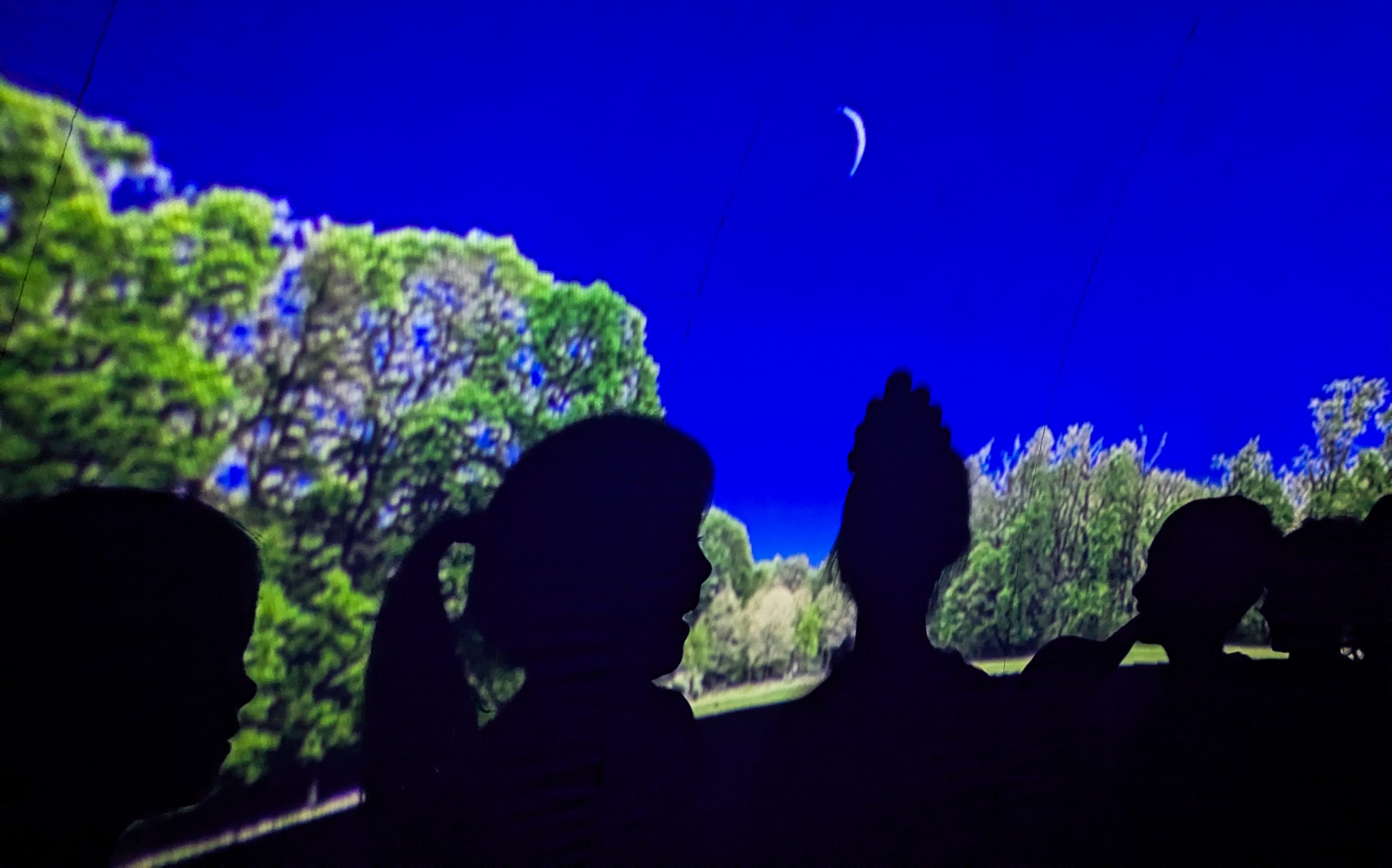
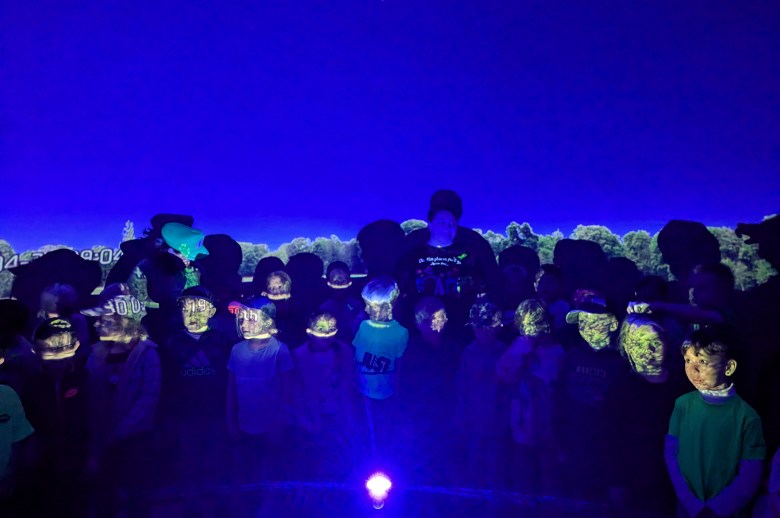
    The kindergartners of South Dakota’s Hamlin County are, in fact, in space. To be specific, they are on planet Earth, near the geographic center of North America, sitting crisscross applesauce inside an 11-foot-high inflatable planetarium set up in their school gym.

    The darkness is velvety. Childish whispers skitter around the dome like mice. The kids are returning from a short mission to Jupiter, piloted by Kristine Heinen, a young museum educator with a ponytail who knows how to make her voice BIG AND EXCITED and then inviting and quiet to hold little ones’ attention. 

    “Now we’re over China!” Heinen says.

    “My friend went to China!” a girl calls out.

    “The other side is nighttime and this side’s bright,” expounds a boy with a crew cut. “The sun shines here so it can’t shine over there.“

    The school is in eastern South Dakota, 34 miles northeast of the settlement where Laura Ingalls Wilder grew up and attended a one-room schoolhouse. The sprawling Hamlin Education Center is a modern-day analogue, serving an entire district in one building, with just under 900 students, pre-K through 12. Notable graduates include U.S. Homeland Security Secretary Kristi Noem, the former governor of South Dakota.

    The center is roughly equidistant from four tiny towns, surrounded by open fields where cornstalks shine in the sun; 95 percent of students arrive by bus, from up to 20 miles away. Over a third of them qualify for free or reduced-price lunch, said Dustin Blaha, the elementary school’s principal.

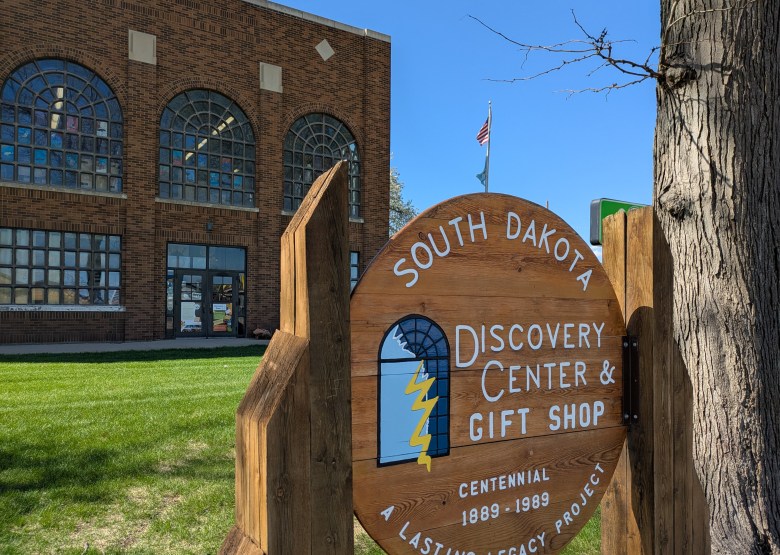
    Blaha said that most of these children have never been to the South Dakota Discovery Center, a hands-on science museum three hours west in the state capital. But thanks to a federal agency called the Institute of Museum and Library Services, a part of the museum can come to them.

    The IMLS was established in 1996, combining previously separate programs. The small agency became the largest source of federal funding for museums and libraries, last year awarding $266.7 million in program grants, research and policy development across all 50 states. IMLS awarded the South Dakota Discovery Center about $45,000 in 2023 to upgrade this traveling planetarium.

    But students around the state may be waiting a long time for the next upgrade.

    Related: Young children have unique needs and providing the right care can be a challenge. Our free early childhood education newsletter tracks the issues.

    President Donald Trump signed an executive order in mid-March calling for the agency to be “eliminated to the maximum extent consistent with applicable law.” Mass firings followed.

    On May 1, the U.S. District Court in Washington, D.C., issued a temporary restraining order to block the agency’s dismantling, followed on May 6 by a second federal judge finding the dismantling of this and two other agencies unconstitutional. On May 20, the American Library Association reported that employees are returning to work and some grants have been restored.

    But the administration is continuing its legal battle to all but shutter the IMLS. The latest post on the agency’s Instagram account is captioned, “The era of using your taxpayer dollars to fund DEI grants is OVER,” holding up for criticism grants that were aimed at addressing systemic racism in museums, equitable library practices, and diverse staff development. The IMLS and the Department of Government Efficiency did not respond to requests for comment.

    A veteran of the agency who asked to remain anonymous because of fear of reprisal said they first saw DOGE staffers meeting with leadership on March 28. “On the 31st, we were put on administrative leave. We had about two hours to turn in your key cards, your ID, get everything off your laptop you’re ever going to need. We were locked out of our computer systems by 3:30 and told to get out of the building.” A skeleton crew was hastily rehired the next day.

    The ex-staffer points out that the Institute of Museum and Library Services spends, or spent, just 7 percent of its budget on its 70 staff, passing the rest along as grants. “We are not a bloated agency.” They have two kids at home, one with special needs and are married to another federal employee whose job is also at risk; but they are almost as worried about their grantees as themselves.

    “After 20 years, I didn’t even get to put an out-of-office response up. Is someone emailing me right now and getting nothing, because all of a sudden their grant just ended? I hate that,” the former IMLS employee said. 

    Almost all grants awarded required a one-to-one cost share out of the local institution’s budget, the staffer said. Plus, typically the grantees pay for activities first and then apply to get reimbursed. “We’re leaving these often small rural museums and libraries on the hook.”

    Related: Facing declines in reading proficiency, rural libraries step in

    Anne Lewis, executive director of the South Dakota Discovery Center, said that organizations like hers would be “wobbly” without federal funding and would have to scale back on ambitious programs like the planetarium upgrade.

    “The new system has much better interaction and control,” said Heinen, the museum educator. An earlier version had a static point of view, but upgraded visual effects means that “now we have spaceship mode,” she said. “We can travel to destinations including planets, and go in a full 360-degree mode around galaxies.”

    With a flick of the touchscreen menu, she can also display the constellations of a dozen different cultures including Lakota, a significant benefit especially when she visits tribal schools.

    The South Dakota Discovery Center, based in Pierre, has used federal support from the Institute for Museum and Library Services to pay for a traveling planetarium exhibit. Credit: Anya Kamenetz for The Hechinger Report

    It’s a lean operation: Heinen drove solo nearly 200 miles from Pierre to Watertown the evening before and spent the night at an Econo Lodge. From there, it was another 20-some miles to Hayti, where she arrived at 7:30 in the morning, set up the dome herself, and ran 30-minute programs all day.

    The whole elementary school, about 500 kids in total, saw the planetarium, with each show customized to the children’s interest and grade level; and she also conducted a parent engagement program in the afternoon. Heinen said she never tires of being a “Santa Claus” for science. ”As soon as they see me, they know something fun is going to happen.”

    During this visit, the fan favorites were Jupiter, Mars and the sun. “It was cool when we went to Mars,” said Nash Christensen, 6. “And the volcano on that one moon, and the big hurricane on Jupiter. I think Jupiter is a dangerous place to live.”

    Grant recipients of the Institute of Museum and Library Services say the support from the federal government has been critical to running their programs. For example, the Boston Children’s Museum, the second-oldest children’s museum in the country, has used federal grant money to improve school readiness. One of the outcomes was a new exhibit in the museum, “Countdown to Kindergarten,” that mimics a kindergarten classroom, complete with a school bus you can sit in out front.

    “It’s helpful not only for the kids, but some of our caregivers who came from other countries and may not have gone to a school like this,” said Melissa Higgins, the museum’s vice president of programs and exhibits.

    Related: Tracking Trump: His actions to dismantle the Education Department, and more

    At the Madison Children’s Museum in Wisconsin, federal funds paid for a multistate partnership that provides climate education for young children and their families. In Fort Lauderdale, Florida, a grant covered five “STEMobiles,” which offer hands-on science activities for children ages 3-5 in low-income parts of Broward County. The Philadelphia School District won a two-year planning grant to try to improve its pipeline of school librarians; they were down to only a handful for a district of 200,000 students.

    But the greatest impact may come in rural, often deep-red areas.

    “Rural communities have particularly unique challenges,” said Lewis at the South Dakota Discovery Center. “There’s 800,000 people in the state, and they’re dispersed. We don’t have a concentration of funders and donors who can help support these enrichment activities.”

    She said the teachers she serves are “passionate, committed and, like every other place in the world, underfunded.” If not for institutions like hers, students would probably go without this kind of hands-on science experience, she said.

    Blaha, the elementary school principal, concurred. “The planetarium brings excitement and expertise that we don’t typically have in a community like this,” he said.

    For now, the excitement is coming to an end. The class has “landed” on a green lawn, under a deep blue sky. Heinen announces “It’s time to leave.” She’s met with a chorus of, “Noo!”

    “You guys, we were in here for a full 30 minutes.”

    “It felt like 10!”

    “It felt like a second!”

    Tonight, many of them will be able to look up at the dark sky over the prairie and show their parents Jupiter, Ursa Major and Mars. 

    Contact the editor of this story, Christina Samuels, at 212-678-3635 via Signal at cas.37 or [email protected].

    This story about South Dakota museums was produced by The Hechinger Report, a nonprofit, independent news organization focused on inequality and innovation in education. Sign up for the Hechinger newsletter.

    The Hechinger Report provides in-depth, fact-based, unbiased reporting on education that is free to all readers. But that doesn’t mean it’s free to produce. Our work keeps educators and the public informed about pressing issues at schools and on campuses throughout the country. We tell the whole story, even when the details are inconvenient. Help us keep doing that.

    Join us today.


    Source link

  • My Journey in Alternative Grading: From Curiosity to Clarity – Faculty Focus

    My Journey in Alternative Grading: From Curiosity to Clarity – Faculty Focus

    Source link

  • What we’ll be talking about at The Festival of Higher Education 2025

    What we’ll be talking about at The Festival of Higher Education 2025

    We’re not going to lie, we had to think really hard about what we want this year’s Festival of Higher Education to be about.

    If you’ve been to the event – returning to the University of London’s iconic Senate House this November – you’ll know by now to expect thoughtful analysis, discussion of the biggest issues facing higher education, and to hear from some key people who are leading and influencing the policy and political landscape. You can also expect to connect with people outside your professional area of work, find out about something new, drink buckets of coffee, and enjoy a jolly good party, if that’s your thing.

    None of that’s changing, obviously. Our reflections have been much more about the journey the HE sector has been on in the last year, and the potentially tough road ahead. The Westminster government has promised a package of higher education reform, possibly pegged to an annual inflationary uplift in undergraduate tuition fees, but there will most likely be no major injection of public funds. The straws in the wind from the last few years suggest that the steady trend in recruitment towards growth in home and international students is ebbing.

    When will there be good news?

    That means that across the UK higher education institutions are having to think hard, perhaps harder than they ever have before, about their core purpose and mission, about securing quality and excellence in education, continuing cutting edge research and scholarship, and deepening their compacts with their communities and regions to make the value of that education and research real to people.

    There is both potential and pain in that journey. If the HE sector was going to transform it would rather not be doing it under these circumstances. But with the right ideas and energy higher education should be able not just to cling on but to thrive – with a renewed sense of purpose and new ways of achieving the core mission for the generations to come.

    We think that potential can better be achieved through connection – with external perspectives, with the articulation of shared challenges, and with people and ideas who might be able to help. And that’s what we will be focused on as we develop the agenda for this year’s Festival of Higher Education. We can guarantee that this year’s agenda will be packed full of fresh ideas, innovation and inspiration!

    The Festival should offer the chance to hear from voices outside the sector who can speak to the wider public policy imperatives and global trends that UK higher education will need to think through. It should create space for deep reflection and new perspectives on the organisational challenges higher education is grappling with. And it should open up new thinking about the connections and relationships inside institutions and how to sustain and enhance academic community during times of change.

    Thematic, systematic

    Making that concrete, we think there are several really key policy themes that need to be unpacked.

    Economic growth and regional/national development – the number one priority of not just the Westminster government but arguably of all governments. Higher education is one of the most important tools available in efforts to create flourishing economic ecosystems but we need a stronger articulation of the role of higher education in developing skilled graduates, how institutions connect up in their regions and nationally, and how the innovation grown in universities is seeded in the wider economy.

    The regulatory environment and the relationship between the state and higher education institutions – with a new chair at the Office for Students, Medr implementing a new regulatory framework in Wales and reorganisation of FE/HE sector agencies in Scotland there are wide open questions about how best to find the balance between public accountability for quality, access and governance, and institutional freedom to innovate and offer something distinctive and sustainable – including deciding what not to do.

    The future student learning experience – as labour market opportunities for graduates evolve in response to AI, costs of study put increasing pressure on the traditional HE route and on students’ wellbeing, and governments consider how to upskill and reskill to increase opportunity throughout individuals’ lives, higher education institutions will need to think about the kind of educational and personal development experiences future students will need to help them build the lives they want.

    Organisational effectiveness of higher education institutions – it doesn’t sound that inspiring when you put it that way, but looking at challenges around effective governance and leadership for the current moment, the drive for efficiency and better use of data to inform decisions, and most importantly how higher education professionals experience their working environment, and are meaningfully engaged in change agendas, you realise just how important a theme this is. Evolution and adaptation might not be enough for many institutions – leadership teams and governing bodies will need to equip themselves to drive transformational change.

    Higher education in an increasingly uncertain world – while the Trump administration attacks US universities the shockwaves are being felt in the UK and beyond. The ongoing war between Russia and Ukraine; the growing risk of conflict between China and Taiwan; conflict in Gaza and wider Middle East tensions all have an impact on campuses in the UK. How can UK universities chart a path through this global turmoil?

    We’re certainly not claiming that a single event will answer all these challenges in their entirety. But we think these are the issues that are driving higher education change – and for that change to be experienced as renewal rather than decline, there’s still plenty of value in taking the time to talk and think about them outside your normal day to day.

    We remain immensely hopeful about the future for UK higher education – and we promise to create an event that you can sign up to now, confident that we’ll be working to build two days of insight, inspiration and fun that will be a highlight of your year. Join us – you won’t be disappointed.

    Reduced rate early bird tickets for the Festival of Higher Education are available until Friday 20 June and thereafter at the normal rate – click here for more information and to buy your ticket.

    Source link