Category: Featured

  • Maine Parents, Educators Describe Trauma from Restraint and Seclusion – The 74

    Maine Parents, Educators Describe Trauma from Restraint and Seclusion – The 74


    Get stories like this delivered straight to your inbox. Sign up for The 74 Newsletter

    Krystal Emerson never imagined her son would spend his days at school being forcibly moved against his will by school staff and shut in an empty room.

    But during the 2023-24 school year at Ellsworth Elementary-Middle School, that’s what happened — at least 18 times, according to Emerson and school district incident reports reviewed by the Maine Morning Star. Staff members put the 7-year-old boy in holds, forced him into empty rooms and did not let him out until he calmed down or his parents picked him up.

    “It broke him, and it broke me,” Emerson said.

    The trauma became so severe that her son, now a third grader, no longer attends school in person, she said.

    What happened to Emerson’s son is not an isolated case. Across Maine, schools use restraint and seclusion on students more than 10,000 times each year, according to Maine Department of Education data — with some districts resorting to the emergency tactics regularly while others have changed policies and taken other steps so that such interventions are only used as a last resort.

    ​In recent years, Maine as a whole has made an effort to reduce restraint and seclusion in schools, particularly for students with disabilities, with the U.S. Department of Education citing staff and student injuries and the resulting trauma for students as the reasons to curtail their use. The department has also condemned and discouraged these practices for years under multiple presidential administrations. Rare cases have resulted in serious injuries to students and even death.

    A 2021 state law limits restraint and seclusion to emergencies. But as Maine educators report more challenging student behavior in the years since pandemic school closures, there have been calls to allow school staff to restrain and seclude children more often. A newly proposed bill would broaden the circumstances under which school staff could restrain or seclude students, igniting debate among educators, parents and lawmakers about how to manage student behavior without inflicting harm.

    The Maine Education Association and the Maine School Management Association, representing teachers and administrators statewide, both support the proposal, citing increased reports of disruptive and violent student behavior — something educators nationwide have also reported in recent years.

    The Gardiner-area school system, Maine School Administrative District (MSAD) 11, has led the push for that proposal. Victoria Duguay, principal of River View Community School in Gardiner, and MSAD 11 Superintendent Patricia Hopkins shared stories with lawmakers of students who hit and spit at adults, scream in hallways, throw chairs and destroy other students’ schoolwork.

    Under the 2021 state law, school staff can only restrain students (immobilize them and move them against their will) or seclude them (isolate them in a room that they can’t leave) if their behavior “poses an imminent danger of serious physical injury” — requiring medical intervention beyond first aid, according to the Maine Department of Education regulations that govern restraint and seclusion.

    “Staff are being hit, they’re being bit, but it doesn’t meet the threshold of serious imminent danger, because a 5-year-old isn’t going to [cause] an injury that requires medical care,” Hopkins said during an April 23 public hearing.

    This extreme behavior, when it happens in a public place at school, traumatizes other students who witness it, Duguay said. The school sometimes has to close off access to common spaces — the gym or cafeteria — if a student acts out in a hallway through which students would need to pass.

    Under the legislation MSAD 11 is supporting, staff would be able to move students against their will to a seclusion room or another quiet space without it counting as a restraint, which districts have to record, document, and report to the state.

    But some educators who have pursued alternative training don’t agree that loosening restraint and seclusion requirements is the answer.

    “The consequences of passing this bill will only inflict more trauma on students,” said Audrey Bartholomew, associate professor and coordinator of special education programs at the University of New England, who trains special education teachers. “Additionally, the behavior will keep happening, because restraint and seclusion is not an appropriate response to challenging behavior, and it will in no way help students remediate their behavior. These should not be referred to as strategies, treatments or solutions.”

    Inside the three-hour restraint and seclusion of a 7-year-old

    In October 2023, Emerson’s son started a behavior plan to help with concentration and self-regulation. The plan, which Emerson shared with the Maine Morning Star, highlighted the mother’s concerns about her son’s anger, dysregulation, anxiety and ADHD, and noted Emerson’s finding that occupational therapy had helped her son better regulate.

    One week after the plan was put into place, the boy arrived at Ellsworth Elementary-Middle School already agitated, hit another student with a Pete the Cat stuffed animal and tried to leave the classroom, setting off a series of escalating interventions in which staff physically restrained him, relocated him against his will, and ultimately placed him in a small room where he stayed until his father arrived, according to incident reports shared with the Maine Morning Star.

    The reports, which staff or administrators are required to write, offer an inside look at the behavior leading up to the restraint, how the situation escalated as staff restrained and secluded the boy, and how it continued for three hours, ending when Seth Emerson picked his son up from a seclusion room.

    When the second grader initially tried to leave his classroom, two educators cornered the boy in a hallway nook, according to the report written by the school’s assistant principal. When he tried to push past them, they placed a mat between themselves and the child to block him from hitting them, and initiated the first of several physical holds. Each time he was released, he briefly calmed down but didn’t follow directions to sit still or stay in a designated spot, prompting a cycle: he would attempt to flee, staff would block him, the boy would resist, and staff would restrain him again, the report says.

    About an hour in, while hiding in a locker, he asked to go home. A staff member moved him to a classroom, where he hid under a desk, retrieved rocks from his backpack, and threw them at staff, the report said. While the report described the projectiles as rocks, Emerson said her son had pebbles in his backpack.

    Two hours in, staff called his parents. Even after he calmed down, they placed him in a seclusion room — referred to as a “quiet room” in the report — where they continued telling him to sit in a specific spot. When his father arrived, the boy walked out on his own, calm and cooperative.

    Incidents like that continued for several more months for reasons that Emerson said did not warrant these measures: After he pulled books off shelves, punched a door, or refused to accompany staff to a quiet room, staff would put him in a physical hold or placed him in a room alone, according to a complaint Emerson filed with the district.

    “I never condoned any of the behavior, whether he was throwing a book or whether he was yelling or running out of the classroom,” she said. “But he was not getting any education whatsoever last year. He was literally just going to school and being restrained and secluded.”

    Frequent seclusions push an educator to quit

    It’s not only students and their families who feel the trauma from restraints and seclusion. The educators who are told to put their hands on children feel it, too, several current and former teachers and education technicians told the Maine Morning Star.

    Ashley Rose took a job as an ed tech at SeDoMoCha Elementary School in Dover-Foxcroft in August while working toward a degree in special education. But after months of witnessing staff placing students in empty rooms as they screamed and cried to be let out, she changed course.

    In March, Rose switched her major, deciding she no longer wanted to become a teacher. On April 28, she resigned, writing to Superintendent Stacy Shorey that she had repeatedly raised concerns with supervisors about the school’s frequent use of seclusion, the lack of staff training on student behavior, and the absence of alternatives — without seeing meaningful change.

    SeDoMoCha Elementary School has “quiet rooms” located within special education classrooms — which Rose described as 10-by-6-foot rooms with no windows. Some have benches and one light, while others are entirely empty, she said. All the doors have windows in them so staff can monitor students.

    In her 10 years of working in special education, she has never seen such frequent use of quiet rooms, Rose said.

    In December, Rose found herself participating in her first seclusion. The student she was working with wasn’t physically aggressive, just loud, and Rose’s plan had been to escort her into the special education classroom — not the quiet room — to help her calm down.

    The student went with her voluntarily but was crying, she said. When they got to the classroom, another staff member who had worked at the school longer said it was part of that student’s behavior plan to go to the quiet room.

    “That wasn’t my plan,” Rose said. “That room scares me just looking at it as an adult.”

    As the student became more agitated, Rose said her own anxiety rose. If the student didn’t calm down, the other employee told Rose she had to shut the door. Rose complied, and then her colleague told her to hold the door shut with her foot to keep the student inside, she said.

    Inside the room, the student began having what appeared to be an anxiety attack and threatened to break the window. She calmed down after about 20 minutes, and Rose let her out. Rose said she was not directed to file an incident report, nor was she told if someone else in the district did, despite the requirement in state law that districts document every seclusion.

    Over the holiday break that followed, Rose said she had trouble sleeping. “All I can think about is the student I put in that room,” she said. “School should be their safe place, and these students were not feeling safe.”

    Shorey, the superintendent, said staff members are required to report every incident, but she did not know about the particular incident Rose described. Special Education Director Sue Terrill said it’s possible that a staff member other than Rose wrote a report, but the district was unable to locate any documentation of that event.

    The district trains employees in safety care — crisis management and prevention practices — Terrill said. It is open to other trainings, too, she said, including one that Rose brought to Terrill’s attention in February offered by the Maine nonprofit Lives in the Balance, which other districts have used to dramatically reduce their reliance on restraint and seclusion.

    Quiet rooms present a gray area

    Rose said she saw staff members keep students in seclusion rooms even when they were calm, using those same rooms for a variety of reasons beyond seclusion, which is banned or strictly regulated in at least seven states, according to the MOST Policy Initiative, a Missouri nonprofit. Maine came close to banning the rooms in 2021, but the final version of the law was amended to allow their use in emergencies.

    Rose said she saw staff place students in quiet rooms to calm down after acting out, and then not allow them to exit for 20 minutes after they calmed down. If the seclusion happened at the end of the school day, sometimes the student would be expected to return to the quiet room the next day, she said.

    Terrill recalled Rose raising this as an issue but denied keeping students in the rooms after they calmed down and no longer met the legal threshold for confinement.

    But the district does use these rooms as timeout spaces, either by student choice or by staff direction, Terrill confirmed. Often, Terrill said, staff members are positioned outside the rooms, as they would be in a seclusion incident, but the student is typically free to leave the room, which is not the case in a seclusion.

    Sometimes, the door is open, or a student can choose to shut the door with a staff member standing outside, she said.

    “It can be the same room used if the student was in seclusion,” she said. “But if they’re taking a break because of something that happened, and that’s being used as a break space, the student might continue to work in there until they’re ready to go back to the classroom.”

    Like RSU 68 in Dover-Foxcroft, districts across Maine also use seclusion rooms as quiet spaces, according to Ben Jones, a former Disability Rights Maine attorney who now works for Lives in the Balance.

    “I think it’s actually more the rare case that the school is like, ‘We’re going to build this room and we’re going to call it the seclusion room, and it’s going to be used just for seclusion,’” he said.

    If a student has voluntarily shut themselves in the seclusion room with a staff member outside and is free to go at any time, it would not count as seclusion under Maine law, he said. But if staff members ask students to stay in there to complete their work, as Rose described, whether it would count as a seclusion that districts are required to report to the state is “open to interpretation,” Jones said.

    “The overall thing is, the kid is not learning, not in the classroom, in something that could easily turn into seclusion,” he said. “It’s inappropriate at best and potentially illegal if it’s an unrecorded seclusion.”

    When are students and staff in “imminent danger”?

    Education technicians like Rose — aides who often work with students one-on-one or in small groups — are often the ones handling student outbursts or potential violence, said Greg Kavanaugh, who spent 13 years working as an ed tech and special education teacher in Biddeford, Portland, and Yarmouth.

    Ed techs are among the lowest-paid professionals in education, and often the least trained — including on behavior management techniques.

    “They’re having to make good decisions about when to restrain, when to seclude, and their judgment is going to be really hard because they’re so stressed, overwhelmed, underpaid,” Kavanaugh said. “That just leads to more mistakes, more lapses in judgment.”

    In his experience, Kavanaugh said, restraint and seclusion were consistently treated as last-resort measures — used only in extreme situations.

    Staff received training on managing student behavior, they debriefed after restraints and seclusions, and they held regular conversations with parents, he said, which disability rights advocates recommend as best practices.

    But working in a functional life skills program with students with moderate to severe disabilities, Kavanaugh said, deciding whether to restrain or seclude a child was never easy despite clear protocols in place. Even when a student threw a laptop across the room or hit him, he had to determine whether the behavior posed an imminent danger of serious injury that would require medical intervention beyond first aid — the standard in Maine law — and only intervene physically if it did. He also had to keep calm if students hit him, he said, because that still did not meet the legal standard.

    Every time he did restrain or seclude a child, it stayed with him long after. He said he often questioned whether it had been the right call, thought about how families would respond, and considered the lasting effects the practice might have on the student — and on himself.

    “Anytime there was a hold, a restraint or a seclusion, you’re taking that home, and you’re thinking about that kid when you’re at home, trying to move on with your day,” he said. “I’m a pretty strong-willed person, but there are plenty of times I would quietly be in tears, or going home and having an extra glass of wine, because I’m just not processing it well in the aftermath.”

    Other students in the classroom witnessing these incidents are also traumatized, Kavanaugh said.

    “You see the terror on their classmates’ faces, and you feel bad for the kid in a certain way because this is going to hurt their relationships,” he said.

    But talking to parents afterward would always make him feel better, Kavanaugh said, because parents of students with disabilities are often dealing with similar behavior challenges at home.

    District response to a parental complaint

    Emerson, the parent in Ellsworth, complained to the school board, Superintendent Amy Boles, and the Maine Department of Education in August 2024, alleging that staff members had not met the legal threshold for using restraint and seclusion so often on her son.

    Boles wrote back in October, saying in cases where Emerson’s son was hitting, scratching, and kicking staff, “it is my conclusion that active behavior like this toward another person does create an ‘imminent danger’ that the other person could be sufficiently injured that he or she may need more than ‘routine first aid.’”

    “The incident may not in fact have caused an injury requiring that level of care, but a reasonable and prudent person could reasonably conclude that this could occur,” Boles wrote in her letter, reviewed by Maine Morning Star.

    But the investigation the district launched in response to Emerson’s complaint found that staff had improperly restrained and secluded her son in at least five of the 18 incidents to which his mother objected. Some incident reports were also vaguely written, Boles wrote, which was the case for the three-hour incident in October 2023 — making it difficult to determine whether restraints and seclusion were warranted.

    Nonetheless, Boles concluded in her letter to Emerson that all staff need training on the proper use of restraint and seclusion, and she agreed the district should rely on the practice less often.

    Boles declined to comment on the investigation or specific incidents, but said district staff have undergone an initial training with Lives in the Balance, and followup trainings are planned.

    “Behavior is an issue across the board. I mean, it’s skyrocketing everywhere. It’s not just Ellsworth,” she said. “But we’re working really hard to try to be preventative before it gets to that extreme state, trying to teach staff day-to-day strategies to prevent the behavior before it escalates.”

    Emerson said her son is still visibly shaken every time he passes by the school, or even when someone mentions the word “school” around him.

    On April 23, she testified at a public hearing, telling Maine lawmakers restraint and seclusion in public schools must stop. The day before, her son had said he was still afraid to go to school in person.

    “His world has become so small since these events, he rarely leaves our home,” she said. “Everyone continues about their day, and yet I’m left to pick up the pieces.”

    Maine Morning Star is part of States Newsroom, a nonprofit news network supported by grants and a coalition of donors as a 501c(3) public charity. Maine Morning Star maintains editorial independence. Contact Editor Lauren McCauley for questions: [email protected].


    Get stories like these delivered straight to your inbox. Sign up for The 74 Newsletter

    Source link

  • Music as the lifeblood of a nation

    Music as the lifeblood of a nation

    The museum’s collection includes over 300 portraits of musicians — Vivaldi, Mozart, Rossini, Verdi — most of which are searchable online but rarely known to be housed in Bologna. “We are the Facebook of music history,” Tabellini joked. Some visitors come just for a selfie with Vivaldi’s portrait. “But they end up being amazed by everything else too.”

    One way the museum connects past and present is by bringing centuries-old traditions into modern classrooms and rehearsal spaces. Ancient manuscripts, Renaissance songs and Baroque instruments become starting points for young people to experiment, perform and imagine their own musical future.

    To reach new generations, the museum doesn’t just display music. It puts it in the hands of young people.

    “If you bring a 10-year-old into a museum filled with incomprehensible scores and portraits of musicians, you’re basically telling them that music isn’t for them,” Tabellini said.

    Connecting to music by playing it

    The museum invites students to make music before they study it. Its educational programs include workshops in singing, building instruments, experimenting with electronic music and more.

    “Only afterward do they visit the museum, already equipped with experience. That way the visit isn’t punitive but engaging,” Tabellini said. Many of these programs take place directly in schools and involve thousands of children each year.

    “You understand music by doing it. That’s our approach — accessible, inclusive, active. The museum visit should be a destination, not a starting point.”

    Today, the museum includes over 110,000 volumes — manuscripts, scores, treatises and rare documents. Only a fraction is on display, and much of the experience depends on guided interpretation. 

    “You need cultural mediation to really understand what you’re looking at,” Tabellini said.

    But two decades later, the title’s meaning has changed. “The UNESCO title has generally become a sort of brand, a designer label like those of high fashion,” he said. “It should be an incentive to preserve cultural heritage, but it doesn’t impose any real obligation to do so. It’s now a marketing tool, useful for tourism but not always returning value to the local community.”

    Exploring music by creating it

    The museum’s collections also hold stories that humanize even the greatest musicians. One of the most memorable involves a 14-year-old prodigy named Wolfgang Amadeus Mozart.

    In 1770, Mozart stayed in Bologna to study with Giovanni Battista Martini, a Franciscan friar and music theorist who laid the foundation for the city’s historic music archive. Mozart hoped to join the Accademia Filarmonica, but he had to pass a grueling composition exam.

    “These exams were called clausura, meaning ‘locked room’,” Tabellini said. “Candidates were literally locked in to write their scores. They could last hours, even days.”

    Mozart had spent the summer preparing with Martini, who was also the head of the Accademia. Still, the results were mixed.

    “We hold two of the three versions of Mozart’s exam,” Tabellini said. “The first is Mozart’s autograph — full of mistakes. The second, in Martini’s handwriting, is musically correct but full of corrections. The third, kept at the Accademia, is identical to Martini’s version, but written by Mozart. That version earned him admission.”

    The conclusion? “Mozart copied,” Tabellini said. “It’s one of the most fascinating musical mysteries we preserve. And telling it to visitors brings history to life. If even Mozart needed a helping hand … then there’s hope for all of us.”

    Breathing life into old music

    Connecting the old to today also means finding new ways to let historical documents speak to modern audiences. Through live events and storytelling, the museum ensures that ancient music isn’t just studied — it’s experienced in real time.

    The museum displays some 300 instruments, including one-of-a-kind rarities like the Clavemusicum omnitonum — a 16th-century “perfect keyboard” capable of playing every pitch imaginable. Unfortunately, its keys are too far apart to be playable by human hands.

    Other instruments, however, do come to life in the museum’s many live events: over 100 each year. These include concerts, lectures and series like Wunderkammer and Insolita.

    “In Insolita, we select a document from our collection and pair it with a live concert,” Tabellini said.

    Before the performance, we show the original manuscript and explain its history. It’s a way to give life to what would otherwise remain silent.”

    One audience favorite is “O felici occhi miei” by Arcadelt, a Renaissance madrigal — a form of secular, polyphonic vocal music — with 40 known editions. “We hold 19 of them,” Tabellini said. “When people see the actual pages before hearing the music, they realize that without those sheets, the music itself might never have survived.”

    Visitors sometimes wonder why music doesn’t constantly play in a museum of music. But there’s a reason.

    “If you just pipe background music through the rooms, it becomes ‘muzak’ — like in a supermarket,” Tabellini said.

    Instead, the museum is exploring meaningful ways to integrate sound: virtual manuscripts, interactive instruments and multimedia displays. 

    “We want to integrate music into the experience — but on our own terms,” Tabellini said. “It’s not just about hearing. It’s about understanding why you’re hearing it.”

    The challenge is to make a quiet space sing — not loudly, but purposefully. “We don’t want to entertain. We want to create an experience. Every object we preserve has something to say, and we want its voice to be heard.”


    Questions to consider:

    1. How do labels like “opera” or “love songs” influence — or distort — how we see Italian music today?

    2. In what way is highlighting cultural heritage important to for cities that rely on tourism?

    3. When was the last time you found yourself liking old music? What about it did you like?


    Source link

  • What happens to reading comprehension when students focus on the main idea

    What happens to reading comprehension when students focus on the main idea

    Why do so many students struggle to understand what they read, even after they learn how to read? 

    That’s a topic of hot debate among reading researchers. One camp has been arguing that schools have been going about it all wrong. These critics say that instead of drilling students on the main idea (similar to questions students will see on annual state exams), teachers should spend more time building students’ background knowledge of the world. 

    The theory is that the more familiar students are with science, history, geography and even art, the easier it will be for students to grasp new ideas when reading. Many educators are embracing this theory, and knowledge building lessons have been spreading rapidly across the country, from Baltimore to Mississippi to Colorado. 

    Related: Our free weekly newsletter alerts you to what research says about schools and classrooms.

    But the evidence for this approach is still emerging, and some reading researchers urge caution. They worry that sometimes, too much time is being spent on background knowledge rather than actually reading and discussing texts. These skeptics argue students aren’t going to magically understand what they are reading just from knowing more about the world, and they need to be explicitly taught how to identify the main idea and how to summarize. 

    Debates like this are common in education as new research addresses unresolved issues, such as exactly how to teach reading once students have learned phonics and how to decode the words on the page. 

    “Early research showed that background knowledge plays a part,” said Kausalai Wijekumar, a professor of education at Texas A&M University, who has been studying reading instruction and recently produced a study that sheds more light on the debate. “People with good background knowledge seem to be able to read faster and understand quicker.”

    For some children, particularly children from affluent families, she said, background knowledge is “enough” to unlock reading comprehension, but not for all. “If we want all the children to read, we have proven that they can be taught with the right strategies,” said Wijekumar. She has a body of research to back her position.

    Wijekumar agrees that drilling students on the main point or the author’s purpose isn’t helpful because a struggling reader cannot come up with a point or a purpose from thin air. (She’s also not a fan of highlighting key words or graphic organizers, both common strategies for reading comprehension in schools.) Instead, Wijekumar advocates for a step-by-step process, conceived in the 1970s by her mentor and research partner, Bonnie J.F. Meyer, a professor emeritus at Penn State. 

    The first step is to guide students through a series of questions as they read, such as “Is there a problem?” “What caused it?” and  “Is there a solution?” Based on their answers, students can then decide which structure the passage follows: cause and effect, problem and solution, comparisons or a sequence. Next, students fill in blanks — like in a Mad Libs worksheet — to help create a main idea statement. And finally, they practice expanding on that idea with relevant details to form a summary. 

    Related: The buzz around teaching facts to boost reading is bigger than the evidence for it

    Wijekumar analyzed the story of Cinderella for me, using her approach. The problem? Cinderella is bullied by her stepmother and stepsisters. We learn this because she’s forced to do extra chores and isn’t allowed to attend the ball. The cause of the problem? They’re jealous of her. That’s why they take away her pretty clothes. Finally, the solution: A fairy godmother helps Cinderella go to the ball and meet Prince Charming. Students can then put all these elements together to come up with the main idea: Cinderella is bullied by her stepmother and stepsisters because they are jealous of her, but a fairy godmother saves her.

    It’s a formulaic approach and there are certainly other ways of seeing or expressing the main idea. I wouldn’t have analyzed Cinderella that way. I would have guessed it’s a story about never giving up on your dreams even if your life is wretched now. But Wijekumar says it’s a helpful start for students who struggle the most. 

    “It’s very structured and systematic, and that provides a strong foundation,” Wijekumar said. “This is just the starting point. You can take it and layer on more things, but 99 percent of the children are having difficulty just starting.”

    Wijekumar transformed Meyer’s strategy into a computerized tutor called ITSS, which stands for Intelligent Tutoring using the Structure Strategy. About 200,000 students around the world use ITSS. Wijekumar’s nonprofit, Literacy.IO, charges schools $40 a student plus teacher training, which can run $800 per teacher, depending on school size. 

    The tutor allows students to practice reading comprehension at their own pace. ITSS was one of only three online learning technologies that demonstrated clear evidence for improving student achievement, according to a February 2021 report by the Institute of Education Sciences, the research and development arm of the U.S. Department of Education. 

    Related: Reading comprehension loses out in the classroom

    Since then, Wijekumar has continued to refine her reading program and test it with more students. Her most recent study, a large-scale replication in high poverty schools, was highly successful according to one yardstick, but not so successful, according to another measure. It was published last year in the Journal of Educational Psychology.  

    A team of six researchers led by Wijekumar randomly assigned 17 of 33 schools in the Northeast and along the Texas border to teach reading with ITSS, while the remaining 16 schools taught reading as usual. More than 1,200 fifth graders practiced their reading comprehension using ITSS for 45 minutes a week over six months. Their teachers received 16 hours of training in how to teach reading comprehension this way and also delivered traditional analog reading lessons to their students. 

    After six months, students who received this reading instruction posted significantly higher scores on a researcher-designed assessment, which measured students’ ability to write main ideas, recall key information and understand text structures. However, there was no statistically significant difference between the two groups on a standardized test, the Gray Silent Reading Test (GSRT), which measured students’ general reading comprehension. The researchers did not report state test scores. 

    Earlier studies with wealthier students showed improvements on the standardized reading comprehension test. It’s hard to make sense of why this study showed giant benefits using one measure, but none using another. 

    Substantial changes in the instruction were needed for these high-poverty students. Some were such weak readers that Wijekumar’s team had to draft easier texts so that students could practice the method. But the biggest change was 14 hours of additional teacher training and the creation of instructional guides for the teachers. Wijekumar’s strategies directly contradicted what their schools’ textbooks told them to do. At first, the students were confused with the teachers teaching them one way and ITSS another. So Wijekumar worked with the teachers to scrap their textbook instructions and teach her way.

    I consulted with Marissa Filderman, a respected reading expert who has reviewed the literature on comprehension instruction for children who struggle with reading and is an assistant professor at the University of Alabama. She said despite the imperfect evidence from this study, she sees Wijekumar’s body of research as evidence that explicit strategy instruction is important along with building background knowledge and vocabulary. But it’s still an evolving science, and the research isn’t yet clear enough to guide teachers on how much time to spend on each aspect.

    Improving reading comprehension is critical, and I’ll be watching for new research to help answer these questions for teachers. 

    Shirley Liu contributed reporting. 

    Contact staff writer Jill Barshay at 212-678-3595, jillbarshay.35 on Signal, or [email protected].

    This story about teaching the main idea was written by Jill Barshay and produced by The Hechinger Report, a nonprofit, independent news organization focused on inequality and innovation in education. Sign up for Proof Points and other Hechinger newsletters.

    The Hechinger Report provides in-depth, fact-based, unbiased reporting on education that is free to all readers. But that doesn’t mean it’s free to produce. Our work keeps educators and the public informed about pressing issues at schools and on campuses throughout the country. We tell the whole story, even when the details are inconvenient. Help us keep doing that.

    Join us today.

    Source link

  • Storm in the Quad: A Tale of Universities at the Crossroads

    Storm in the Quad: A Tale of Universities at the Crossroads

    • Rayhan Abdullah Zakaria, Senior Fellow of the Higher Education Academy (HEA).

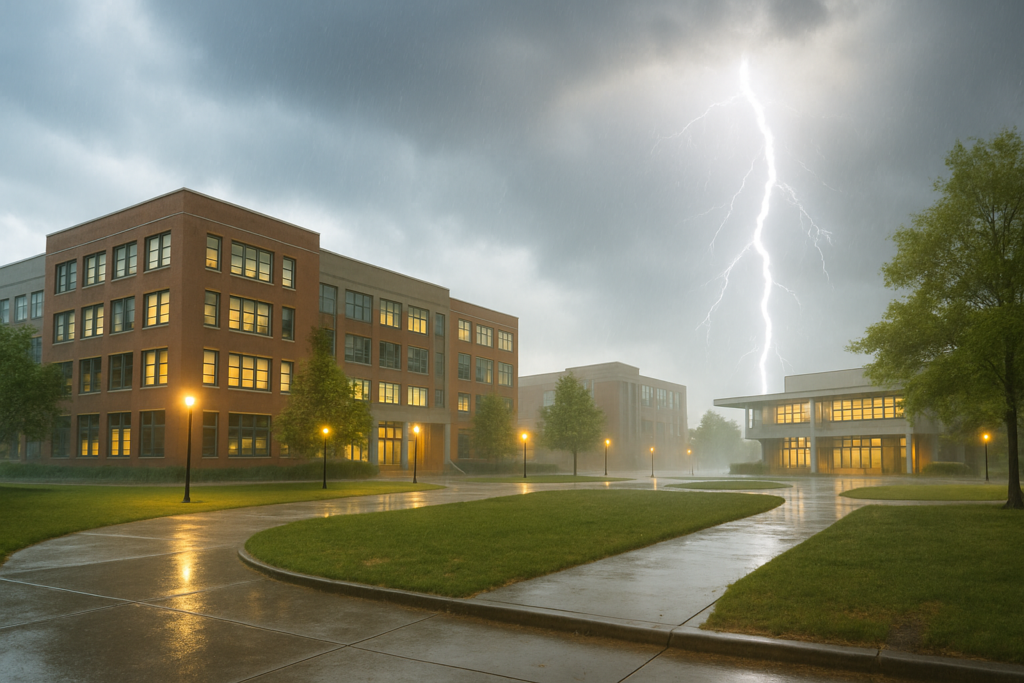
    It was a rainy Monday morning, the kind where the grey skies press low and the air smells like old books and wet leaves. I was huddled in our university’s coffee house, steam rising from a chipped mug, when a colleague leaned over and said something that’s stuck with me ever since:

    Universities are the last bastion of free thinking, the engines of progress. How can anyone try to silence that?

    He wasn’t being dramatic. We weren’t swapping dystopian movie ideas. What we were discussing was very real, and it’s happening now.

    Imagine a government freezing research funding, restricting international student recruitment, stripping universities of their tax exemptions, and tightening the grip through a maze of bureaucratic controls. It sounds like fiction, but for many institutions around the world, it’s a lived reality. Even here in the UK, where we pride ourselves on academic excellence, universities are feeling the squeeze,

    As I walked back from that coffee house with my thoughts churning like the storm outside, I realised that beneath the surface of daily lectures, research deadlines, and student support, two major fault lines threaten to destabilise the sector: governance and funding. These are not abstract issues—they shape how we teach, how we research, and how we serve society. Allow me to explain:

    I. The Financial Fault Line

      Higher education institutions in the UK are operating under increasing financial strain. According to recent analysis by Nick Hillman, universities are facing unsustainable deficits, largely due to a combination of frozen domestic tuition fees and rising operational costs.

      Frozen Tuition Fees

      Domestic tuition fees have remained capped at £9,250 since 2012. In real terms, inflation has steadily eroded their value. Universities UK (2024) estimates that this cap now equates to just £6,000 in 2012 money, leading to reduced investment in teaching quality, infrastructure, and student services.

      Over-Reliance on International Students

      Many institutions have sought to bridge the funding gap by increasing their intake of international students. While this has provided a temporary financial cushion, it is a fragile strategy. International enrolments are highly sensitive to visa policies, geopolitical tensions, and global economic shifts. The UK Home Office’s recent tightening of post-study work rights has already triggered concern across the sector.

      Rising Operational Costs

      Operational expenses—including staffing, estate maintenance, and digital infrastructure—continue to rise. Inflation and energy prices compound these challenges, placing institutions in a double bind: cut services or stretch resources even thinner.

      What Could Help?

      1. We need to lobby for a sustainable fee review mechanism that accounts for inflation and rising costs.
      2. We must diversify income streams beyond tuition: think industry partnerships, micro-credentials, alumni ventures, and lifelong learning platforms.
      3. We also need to invest in shared services and cost-efficient digital infrastructure that reduces overhead without compromising quality.

       II. The Governance Conundrum

      The falling rain speeds up crushing against the single pane of my office window.  I see a poor wood pigeon being blown off course by the rain and the wind, just like our university a small dingy lost in the chaotic ocean of governance. I do think alongside financial challenges, governance structures across many universities are in urgent need of reform. My first semester leadership postgrads know that effective governance is critical for institutional resilience, but UK universities current governance models often fall short.

      1. Overcentralisation of Power

      In some institutions, decision-making is concentrated in the hands of a powerful executive team. While strong leadership is essential, University governance HEPI (2024) should not drift toward corporate-style management that sidelines academic voices. This can lead to decisions that prioritise brand and market over mission and integrity.

      2. Ineffective Councils and Boards

      I think governing bodies should act as strategic stewards of the institution, ensuring transparency and long-term sustainability. Yet many lack the sectoral expertise or training to navigate complex challenges. The Committee of University Chairs has long advocated for better induction and development programmes, but uptake is uneven.

      3. Overregulation and Bureaucracy

      While regulation is necessary, the current landscape—especially under the Office for Students  —has created a burden of compliance that can stifle innovation and demoralise staff. As HEPI and others have argued, we need a shift towards smarter regulation: outcome-focused, proportionate, and enabling.

      What Could Help?

      1. We need to rebalance executive and academic leadership to support shared governance.
      2. We should work towards enhancing the capacity and diversity of governing councils.
      3. We must move toward more meaningful regulation that supports innovation rather than obstructs it.

      A Call for Sector-Wide Renewal

      As I left my office and stepped back into the drizzle of a typical term-time Monday, I recognised that the challenges ahead are not insurmountable – but they do demand courage and collective action.

      You see – reform must not be imposed from above but built through authentic dialogue across the sector. I do think that staff, students, alumni, employers, and policymakers all have a role to play. We must centre our vision not just on institutional survival, but on societal value. At the end of the day, universities are not corporations. They are civic institutions with a public mission.

      As I step into my class, I am greeted by my 3rd-semester post grads

      “Hey, how was the weekend?”

      I acknowledge, smile, nod, and make my way to the front to connect my laptop to the overhead projector. The last thought in my head is that if we are to sustain our university mission, we need to rethink how we fund, govern, and ultimately value higher education. Not tomorrow. Now.

    Source link

  • A big reason why students with math anxiety underperform — they just don’t do enough math

    A big reason why students with math anxiety underperform — they just don’t do enough math

    Math anxiety isn’t just about feeling nervous before a math test. It’s been well-known for decades that students who are anxious about math tend to do worse on math tests and in math classes.

    But recently, some of us who research math anxiety have started to realize that we may have overlooked a simple yet important reason why students who are anxious about math underperform: They don’t like doing math, and as a result, they don’t do enough of it.

    We wanted to get a better idea of just what kind of impact math anxiety could have on academic choices and academic success throughout college. In one of our studies, we measured math anxiety levels right when students started their postsecondary education. We then followed them throughout their college career, tracking what classes they took and how well they did in them.

    We found that highly math-anxious students went on to perform worse not just in math classes, but also in STEM classes more broadly. This means that math anxiety is not something that only math teachers need to care about — science, technology and engineering educators need to have math anxiety on their radar, too.

    We also found that students who were anxious about math tended to avoid taking STEM classes altogether if they could. They would get their math and science general education credits out of the way early on in college and never look at another STEM class again. So not only is math anxiety affecting how well students do when they step into a STEM classroom, it makes it less likely that they’ll step into that classroom in the first place.

    Related: A lot goes on in classrooms from kindergarten to high school. Keep up with our free weekly newsletter on K-12 education.

    This means that math anxiety is causing many students to self-sort out of the STEM career pipeline early, closing off career paths that would likely be fulfilling (and lucrative).

    Our study’s third major finding was the most surprising. When it came to predicting how well students would do in STEM classes, math anxiety mattered even more than math ability. Our results showed that if you were a freshman in college and you wanted to do well in your STEM classes, you would likely be better off reducing your math anxiety than improving your math ability.

    We wondered: How could that be? How could math anxiety — how you feel about math — matter more for your academic performance than how good you are at it? Our best guess: avoidance.

    If something makes you anxious, you tend to avoid doing it if you can. Both in our research and in that of other researchers, there’s been a growing understanding that in addition to its other effects, math anxiety means that you’ll do your very best to engage with math as little as possible in situations where you can’t avoid it entirely.

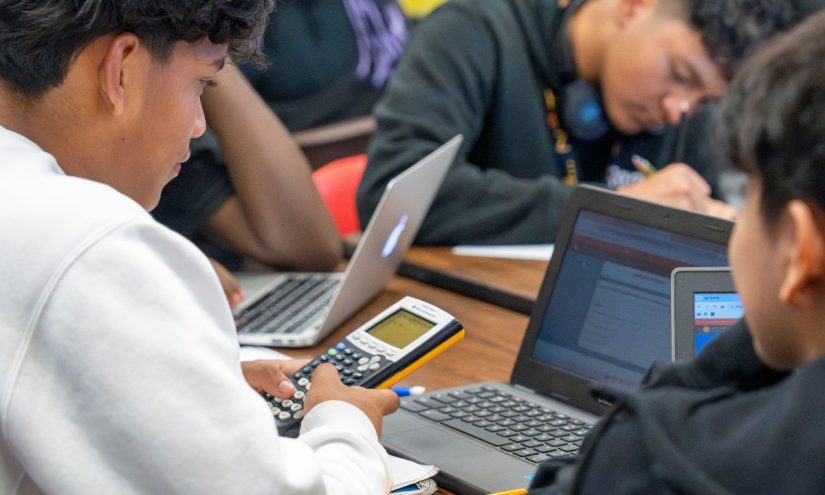
    This might mean putting in less effort during a math test, paying less attention in math class and doing fewer practice problems while studying. In the case of adults, this kind of math avoidance might look like pulling out a calculator whenever the need to do math arises just to avoid doing it yourself.

    In some of our other work, we found that math-anxious students were less interested in doing everyday activities precisely to the degree that they thought those activities involved math. The more a math-anxious student thought an activity involved math, the less they wanted to do it.

    If math anxiety is causing students to consistently avoid spending time and effort on their classes that involve math, this would explain why their STEM grades suffer.

    What does all of this mean for educators? Teachers need to be aware that students who are anxious about math are less likely to engage with math during class, and they’re less likely to put in the effort to study effectively. All of this avoidance means missed opportunities for practice, and that may be the key reason why many math-anxious students struggle not only in math class, but also in science and engineering classes that require some math.

    Related: Experts share the latest research on how teachers can overcome math anxiety

    Math anxiety researchers are at the very beginning of our journey to understand ways to make students who are anxious about math stop avoiding it but have already made some promising suggestions for how teachers can help. One study showed that a direct focus on study skills could help math-anxious students.

    Giving students clear structure on how they should be studying (trying lots of practice problems) and how often they should be studying (spaced out over multiple days, not just the night before a test) was effective at helping students overcome their math anxiety and perform better.

    Especially heartening was the fact that the effects seen during the study persisted in semesters beyond the intervention; these students tended to make use of the new skills into the future.

    Math anxiety researchers will continue to explore new ways to help math-anxious students fight their math-avoidant proclivities. In the meantime, educators should do what they can to help their students struggling with math anxiety overcome this avoidance tendency — it could be one of the most powerful ways a math teacher can help shape their students’ futures.

    Rich Daker is a researcher and founder of Pinpoint Learning, an education company that makes research-backed tools to help educators identify why their students make mistakes. Ian Lyons is an associate professor in Georgetown University’s Department of Psychology and principal investigator for the Math Brain Lab.

    Contact the opinion editor at [email protected].

    This story about math anxiety was produced by The Hechinger Report, a nonprofit, independent news organization focused on inequality and innovation in education. Sign up for Hechinger’s weekly newsletter.

    The Hechinger Report provides in-depth, fact-based, unbiased reporting on education that is free to all readers. But that doesn’t mean it’s free to produce. Our work keeps educators and the public informed about pressing issues at schools and on campuses throughout the country. We tell the whole story, even when the details are inconvenient. Help us keep doing that.

    Join us today.

    Source link

  • strategic implications for UK and Australian universities

    strategic implications for UK and Australian universities

    Aston Education, a Hong Kong-based international education consultancy, has long supported students in securing places at universities in the UK and Australia. However, Hong Kong’s outbound market is changing.

    According to the Hong Kong Education Bureau’s data for the 2023/24 academic year, the growth rate of local students studying abroad stands at just 2%, significantly lower than global market averages. Factors behind this include Hong Kong’s stable job market and rising tuition and living costs overseas—both encouraging families to reconsider traditional study-abroad pathways.

    At the same time, migration incentives such as the UK’s BNO visa scheme have encouraged significant numbers of Hong Kong residents to settle abroad. This movement has contributed to local talent gaps. To help fill these, the Hong Kong government introduced the Top Talent Pass Scheme (TTPS) in late 2022. By September 2024, over 100,000 applications had been received, with more than 95% of successful applicants coming from mainland China. The result is a rapidly changing demographic profile and increasing integration between Hong Kong and the mainland.

    These shifts are mirrored in student priorities. Families—particularly those newly settled in Hong Kong from mainland China—are placing greater emphasis on employment outcomes when considering overseas study. Choice of destination, university, and programme is increasingly shaped by how international qualifications align with career trajectories back in Hong Kong or across the region.

    Against this backdrop, Aston Education has evolved its strategy. The demand from mainland China, especially the GBA, is growing rapidly. In 2022, around 661,200 Chinese students pursued study abroad, a sharp increase from earlier years. And the GBA continues to emerge as an integrated educational and economic region. Several Hong Kong universities have established campuses in Shenzhen, Guangzhou, and Dongguan, further strengthening cross-border academic links.

    For education providers, the GBA presents a unique environment. Language, policy, and cultural familiarity create a landscape where nuanced, locally embedded strategies are vital. With deep roots in Hong Kong and a working understanding of both Cantonese and Mandarin, Aston Education is well positioned to navigate this space. Our approach differs from traditional mainland recruitment: we focus on a culturally blended student population, many of whom see Hong Kong as a stepping stone for international education and regional employment.

    This shift is not just geographical—it’s philosophical. Understanding why students choose to study abroad, and what they hope to gain, is key to engaging the next generation. By working closely with institutions in the UK and Australia, we aim to provide tailored recruitment support in markets that are evolving beyond traditional patterns.

    As the GBA continues to gain momentum, opportunities abound for international universities ready to think regionally and act locally. Aston Education looks forward to contributing to this conversation—and to building more agile, informed partnerships that reflect the changing realities of the Asian education landscape.

    About the author:

    Boyi Huang is the managing director of Aston Education with over 15 years of experience in international education planning. She holds a postgraduate diploma in international education from the University of Bath She has guided students to top universities across the UK (Oxbridge and G5), the US (Ivy League & Top 20), and Australia (Go8). With strong experience in cross-border admissions and institutional partnerships, Boyi specialises in helping students from Greater China and Southeast Asia access world-class higher education through personalised strategies.

    Source link

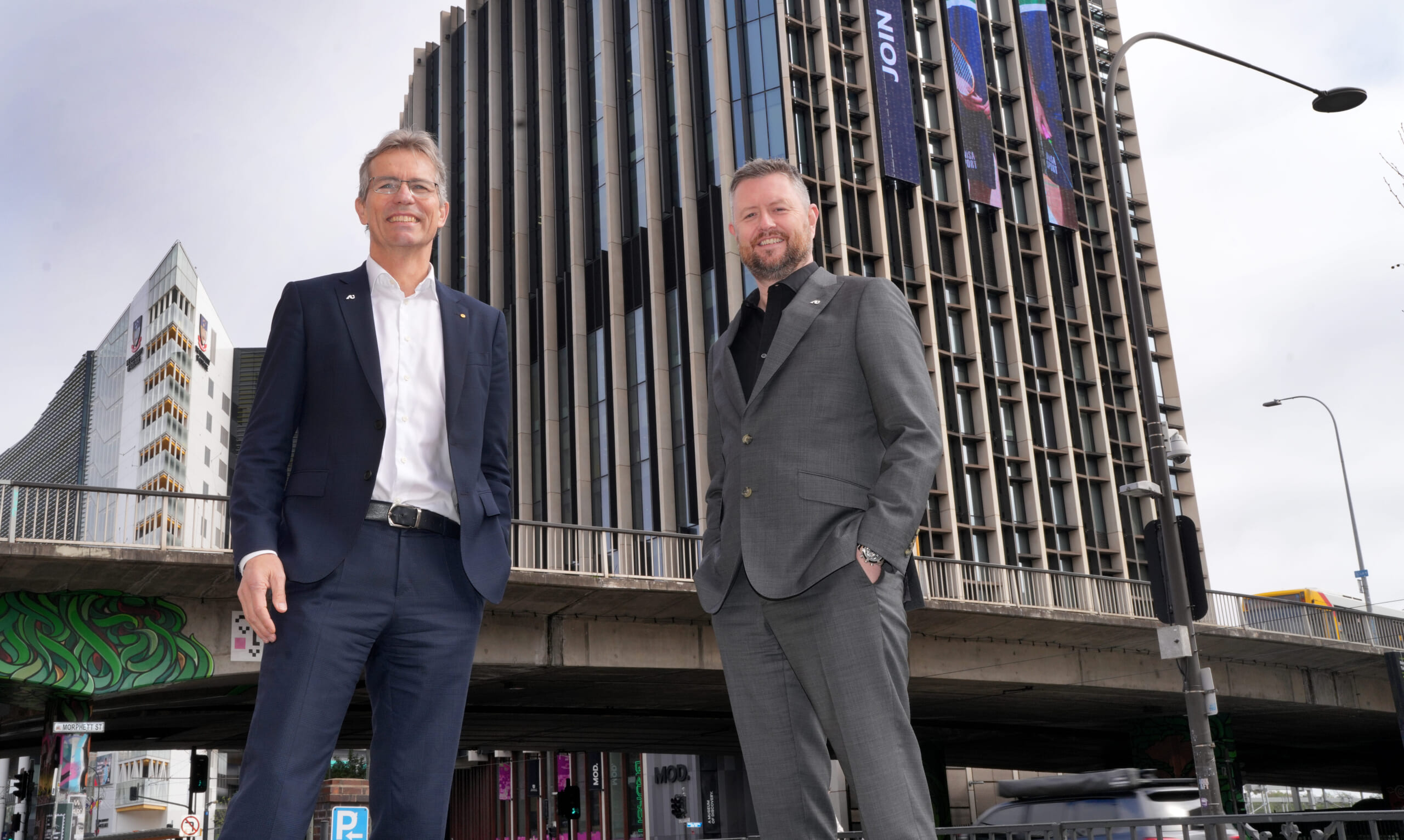
  • Adelaide Uni leaders talk merger – Campus Review

    Adelaide Uni leaders talk merger – Campus Review

    The new leaders of the merged Adelaide University are adamant the new institution will not be just a version of its parts, but an entirely unique place in curriculum and culture.

    Please login below to view content or subscribe now.

    Membership Login

    Source link

  • Applications to ITE increase due to new incentives – Campus Review

    Applications to ITE increase due to new incentives – Campus Review

    Student teacher enrolments are bouncing back nationally after they dipped during the Covid-19 pandemic, fuelling positivity that the pipeline of graduates can ease the profession’s workforce shortage.

    Please login below to view content or subscribe now.

    Membership Login

    Source link

  • 4 essential reads about international students’ broader impact – Campus Review

    4 essential reads about international students’ broader impact – Campus Review

    A federal judge in Boston on May 23, 2025, temporarily blocked a Trump administration order that would have revoked Harvard University’s authorisation to enroll international students.

    Please login below to view content or subscribe now.

    Membership Login

    Source link

  • How an Indiana Teacher Prepares Students for College Success – The 74

    How an Indiana Teacher Prepares Students for College Success – The 74


    Get stories like this delivered straight to your inbox. Sign up for The 74 Newsletter

    As new graduation requirements go into effect in Indiana, more students will likely take college and career courses to prepare for life after high school. But making sure students can access these classes — and succeed in them — takes some patience and creativity.

    When Sheridan High School teacher Jill Cali noticed her students struggling with the longer deadlines and open-ended questions typical of college assignments, she began to teach them how to break tasks into more manageable steps. Soon, her students were reaping the benefits.

    Other roadblocks to students’ success in college courses, especially in rural communities like Sheridan, a town of 3,000 people in northwest Hamilton County, include accessing these credits and paying for them.

    Cali said being part of the Rural Early College Network, sponsored by the Center of Excellence in Leadership of Learning at the University of Indianapolis, allows her students to earn college credits for free. The network also serves as a source of support, allowing her to exchange ideas with teachers at other schools.

    “The struggles that students typically have in early college courses are some of the same things that prevent many students from being confident that they will find success in college,” Cali told Chalkbeat. “When students believe they don’t have the ability to be successful in completing college-level work, their first instinct is to shy away from it.”

    Read on to learn more about how Cali approaches her early college classes.

    This interview has been lightly edited for length.

    How and when did you decide to become a teacher?

    I decided to become a teacher during my sophomore year of college when I realized that I was not meant to be an accountant! I had always loved working with kids and had a natural talent in Spanish, so becoming a [Spanish] teacher seemed like a good fit. The longer I teach, the more sure I am that this was the right path for me. I was made to be a teacher.

    What was the process like to become a dual-credit instructor?

    Our superintendent suggested I pursue a Master of Science in Curriculum and Instruction so I would be able to teach the dual-credit Education Professions courses. During our conversation, he convinced me that the degree program would be flexible enough to work with my busy single parenting and teaching schedule and that I would see the return on my investment very quickly. He was right.

    The following week, at the age of 42, I enrolled in a program to complete my master’s degree online, working at my own pace. I finished in six months, after working tirelessly to make sure that I only had to pay for one term.

    In order to be approved as a dual-credit instructor, I had to coordinate with my high school’s higher education partner, Ivy Tech Community College. This involved submitting my [college and grad school] transcripts, along with a proposed syllabus for each of the courses I planned to teach. The process was honestly pretty quick and painless.

    What’s your favorite lesson to teach and why?

    In my Principles of Teaching class, the introduction to teaching course, I teach about differentiation and making accommodations for students with special needs. My very favorite lesson to teach is the one in which I give students various tasks, but each has a different limitation. Their reactions, creative thinking, and “aha moments” are the reason it is my favorite lesson. During that lesson, my students realize that some of the most basic tasks can be entirely impossible with just one small limitation. Their internalization of how frustrating learning can be for some of our students really helps us to move forward with the unit of study in a productive manner.

    Tell us about your own experience with school and how it affects your work today.

    Throughout my childhood and into adulthood, I was a student who strived for excellence in every subject. Realizing that I finally understood a concept I had been trying to grasp or persevering through a tough problem to find an answer always gave me immense satisfaction. I loved the “light bulb moments” as a student, but I enjoy them even more now that I am the teacher. A natural lifelong learner myself, it has always been my goal to inspire my students to be inquisitive and curious investigators of anything that interests them.

    How is your early college classroom different from a standard high school classroom?

    At a glance, my classroom looks a bit more like a college classroom than many high school classrooms. I was fortunate enough to be able to use grant money to furnish the room with flexible seating options. What you can’t see is that my early college students work with elementary students, getting experience in the field. The flexible seating allows them to move seamlessly between working independently and cooperating and creating with their peers.

    How do you help students adjust to those expectations?

    Students in early college learn that when something feels overwhelming or difficult, they have the tools to tackle it on their own. This doesn’t mean that they can’t ask for help or guidance. It means that before asking for help, students should make sure they have exhausted all options for figuring it out on their own.

    I send a letter to each student and one home to their caregivers prior to the start of school in the fall, explaining what dual-credit means and what the expectations will look like in my early college class. This ensures that there is no confusion about what will be expected of early college students and also opens the lines of communication with students and families.

    Having taught these courses for a few years, I’ve found that students struggle with a course that has larger assignments and more time between deadlines. The first thing I do to support them in addressing this is to show them how they can break larger assignments and projects into smaller tasks on their own. Many students are used to having teachers do this for them. I show them how they can establish their own, smaller deadlines based on what they know about their personal schedule, how fast they tend to work, and the support they think they might need.

    Students also find it challenging to write nearly everything for their dual-credit courses using a formal tone with proper grammar and spelling. In addition, students tend to have trouble answering multi-part questions … particularly when they are higher-level thinking questions. I spend a full class period — more, if needed — showing them and having them practice how to appropriately respond to the types of writing prompts and questions they will typically see in their early college courses.

    Another area where students tend to struggle is with attendance and deadlines. During the COVID-19 pandemic, many schools insisted that students be shown grace in both of those areas. Unfortunately, this instilled in them the idea that as long as they completed all graded assignments, it didn’t matter whether they participated in class or how late assignments were submitted. Though their learning is always my primary focus, much of what my students learn builds on itself. In addition, much of the learning takes place through class discussions.

    What are some barriers your students face to postsecondary opportunities, and how does the Rural Early College Network help you help them overcome those?

    The greatest barrier to postsecondary opportunities for students in my school is the financial barrier. The dual-credit courses we offer are all free to our students, so when they successfully complete those courses, the number of semesters that will be required for them to complete their degree can be reduced. This translates to money saved for the student and makes their postsecondary options more affordable and attainable.

    Rural Early College Network schools meet throughout the school year to share ideas and support each other in building programs that provide our students with the tools they need to be successful in our classrooms, in college, and beyond.

    What’s the best advice you’ve ever received, and how have you put it into practice?

    The best advice I have ever received with regard to teaching is, “Student behavior and choices are almost never personal attacks against the teacher.” It was the great reminder that my teenage students’ brains are not fully developed. When they make poor choices or when they act out, it nearly never has anything to do with how they feel about me or anything even relating to me. Letting that go and remembering to see their behaviors as something completely separate from me has really made it much easier to create consequences when appropriate, support my students when needed, and establish a welcoming environment in which every student starts fresh every day.

    This story was originally published by Chalkbeat. Chalkbeat is a nonprofit news site covering educational change in public schools. Sign up for their newsletters at ckbe.at/newsletters.


    Get stories like these delivered straight to your inbox. Sign up for The 74 Newsletter
    Source link