Category: Featured

  • New Book Helps Academics Become Public Writers

    New Book Helps Academics Become Public Writers

    I’d be hard-pressed to find any person in higher ed who has had a larger influence on my own thinking than James Lang. Many folks will know Jim from his books like Cheating Lessons, Small Teaching and Distracted. He’s consistently ahead of the curve when it comes to identifying a problem in teaching and learning spaces—academic dishonesty, class disengagement, student attention problems—and proposing remedies that instructors can explore and make use of for themselves.

    His new book, Write Like You Teach: Taking Your Classroom Skills to a Bigger Audience, part of the University of Chicago Press series of guides to writing, editing and publishing, is the best book I’ve ever seen for showing academics how to translate their current skills and practices to another audience and purpose. I’m excited by this book because we need as many academics as possible putting their voices into the world, not just because they have so many interesting and worthwhile things to say as individuals, but because it also helps remind everyone about the value of institutions where this kind of work happens.

    I had a great time talking to Jim over email. This Q&A even breaks some news on Jim’s next book, too.

    Jim Lang is a professor of the practice at the Kaneb Center for Teaching Excellence at the University of Notre Dame, and an emeritus professor of English at Assumption University. He’s the author of multiple books, including Small Teaching and Distracted, and a longtime columnist for The Chronicle of Higher Education. You can follow him on Substack at A General Education or connect with him on LinkedIn.  

    John Warner: One of my favorite initial questions for people who write is if they enjoy writing. So that’s my question: Do you enjoy writing?

    James Lang: “Enjoyment” doesn’t seem like the right word for my feelings about writing. Writing has always been the activity that drives and gives meaning to my life. It helps me make sense of the world; if I have deep questions about the purpose of my life, or questions about anything important, I seek answers through writing, both within my published work and in my various notebooks. I have always been a very curious person who gets excited about learning new things, so writing has always been a way to satisfy those curiosities and push me into new places in my life.

    If I focus specifically on the emotion of enjoyment … I hate to admit it, but I don’t seem to enjoy the actual writing process quite as much as I used to. I think I had a more unreserved embrace of writing when I was younger, when I felt like I had a lot to say and was confident that I had the ability to say it. I think both of those feelings have diminished, which I attribute in equal parts to the stroke I had a few years ago and to my age. I had to learn to speak and write again after my stroke, and while I have regained all of the words and writing skills I had before, I have to work a little harder than I used to [to] call them up and apply them. But even beyond the stroke, I guess I feel less of a desire to announce my ideas confidently to the world than I once felt. I have a great family, lots of friends and ongoing interests in many areas of my life. As my appreciation for those things has increased, the available real estate in the enjoyment part of my brain has shrunk slightly.

    But the key word in that sentence is “slightly.” I do still take much pleasure from finding the perfect word, crafting a great sentence or launching a new essay or book. Writing still fills my life with meaning, and I could never envision my life without writing, or at least the desire to write, being part of who I am.

    Q: What you describe sounds a bit like a winding down or maybe a shift in focus? I often say about myself that I’m never going to retire because I can’t imagine not reading and writing, which is both my pleasure and my work. But I do sometimes wonder if there’s a space to do less of it, if that makes sense. But as you note, it seems impossible to shut off that curiosity that drives those activities.

    Where does that curiosity come from for you? You’ve had a varied career and it seems like every so often you shifted gears. Was that necessity or design or something else?

    A: It comes from both a negative and a positive place. The negative place is that I do get bored of routines in any form, and when I feel like my life has fallen into a routine place, I start getting this itch to break it. I received tenure in the usual time frame, and it was only a couple of years after that I was seeking a new challenge, so I applied to direct our honors program. I enjoyed that work tremendously, but then once again sought a change and founded a new teaching center on campus. Right after the pandemic, based on the success of Small Teaching and Distracted, I decided to give myself a new challenge: give up tenure and try to make it with a mix of writing, speaking and adjunct teaching. That plan was upended by my long medical ordeal, but even after I was able to return to that life, I realized that I missed deeply having a home on a campus, which led me to Notre Dame. So that has definitely been a pattern in my career and in my life.

    For the positive explanation for this restlessness, I would point to something my wife (an elementary school teacher) told me about the kids who come into her classrooms each year. She says that while we might be all born curious, by the time children get into school, they are already separating in terms of how much curiosity they bring to school. The differentiating factor she sees is how much exposure kids have to different kinds of life experiences. The kids who sit in their bedroom on their parents’ tablets all day or play video games in their rooms just don’t see as much of the world, and they aren’t being prompted to ask questions, wonder and explore. The ones who come in curious are the ones whose parents have deliberately tried to expose them to new things in some form—trips, walks outside, reading aloud, giving them books, etc.

    When I heard that, I realized that I had been raised as one of those latter kids. My mother was also an elementary school teacher, but her best years were in preschool. She had a special love, and special gift, for very young children. And while I have only a few memories of my preschool years, I know from seeing how she interacted with my children that I must have been raised to become a curious person.

    Q: I had a mini epiphany while reading the opening section of Write Like You Teach, which is that good teachers and good writers think of the needs of their audience (students/readers) first. This is something I think I’ve always done as a teacher, perhaps because I was a writer before I was a teacher, but you make it pretty explicit and then give it a little specific flesh. When did this connection first come to you?

    A: I actually can’t quite remember where that specific connection came from. I do know that this book really came out of my desire to write some more about attention, the subject of my previous book. I have written books about several major issues in teaching and learning, and some of them I finished and felt like I was done with that topic. That wasn’t true for attention. The more you read and learn about attention, the more you realize how it has a part in almost everything that matters in our lives. Work, play, relationships, spirituality, learning—all of them demand our attention. They often go well or poorly depending upon the quality of our attention. And so I still find attention fascinating, and I keep reading and thinking and writing about it. I also just really enjoyed writing the book Distracted. So I think maybe I was trying to determine what else I could write about attention which would relate to another area where I have some interest and expertise.

    Reading was the initial bridge to further thinking about attention. Anyone who reads a lot knows that some books capture our attention more than others. I think the teaching-writing connection that produced this book came from realizing both in classrooms and books, you have to be aware of the limits of a learner’s attention. Both as teachers and writers, we can either just expect people to pay attention or we can try to help them. I had made the case for the latter approach in Distracted and realized I could make the same case to writers: If you want readers to sustain their attention over the course of many pages, don’t just bang away at them with paragraph after paragraph of argument and idea. They need breaks, they need stories, they need space to pause and think—just as students do in the classroom. Seeing how attention informs both teaching and writing led to the basic idea of the book: The things we do in the classroom to help students learn can also be useful for our readers.

    Q: In a note at Substack, Arvind Narayanan (coauthor of AI Snake Oil) offered a “hypothesis on the accelerating decline of reading.” It’s got a bunch of bullets, so I’ll do my best to paraphrase: Essentially, people mostly read for pleasure or to obtain information. These functions have been replaced by other things. Video is more entertaining than reading. We can use large language models to summarize long texts and deliver information to us. He theorizes that most people will be happy with the trade-off of increased speed/efficiency, the same way we’ve gravitated toward “shallow web search over deeper reading.” He’s worried about this but also believes that merely “moralizing” about this is not going to be helpful. (I tend to agree.) I’ve argued for years that getting students engaged with writing is a great way to get them reading, because reading is the necessary fodder for writing. Writing is also a tremendous way to cultivate our ability to pay attention. I’m wondering if you’re worried in the same way as Narayanan or if you have any additional ideas of what we can do about this.

    A: First, thanks for sharing that note, which will be helpful to me as I am working on my next project—which I am happy to announce here. My next book will be The End of Reading?, which will be published by W. W. Norton, a publisher whose books I have been reading since high school and assigning in my courses for my entire teaching career. I’m so excited to dig into this project, but I am going to beg off on an answer here because I am just in the beginning of my thinking and writing and need more time to formulate my ideas. Put another way: Ask me that question again in two years!

    Q: I have sort of the opposite problem as the folks this book is addressed to, in that I find it very natural to write to regular people—because that’s where I started—while writing for more formal or academic audiences is something I can struggle with. What is it about the experience of the academic that makes the transition you’re writing about difficult?

    A: The problem here is that experts often lose track of what novices don’t know in their fields. The more we know in a discipline, the further away we get from our memories of what it was like to know very little about biology or literature or politics. When academics write to each other, they can assume their readers know certain things: basic facts, theories, common examples or cases, histories, major players in the field. Let’s say I’m a scholar of Victorian literature and want to write something about a work of Victorian literature. If I am writing to other scholars in that field, I can be confident that my readers know things I know: the expansion of the British Empire during that time period, the impact of Darwin and evolutionary theory on many writers in that era, the political turbulence and social unrest accompanying the Industrial Revolution.

    If I am writing to a more public audience, I can’t assume my reader knows any of that stuff. In a classroom, I can always stop and just ask students, “Have you heard of this before?” If they haven’t, I can give a quick introduction. But as a writer with deep expertise in a subject, I have no idea what a more public audience knows or doesn’t know. Faced with that problem, I think a lot of academics just say, “Never mind, I’ll just keep writing to my people.” And that writing is important and can be great! I love a good scholarly book, and I still read them regularly. That kind of writing also helps people get and keep academic jobs, so I am not on some crusade to encourage everyone to write for the public. But I think the major sticking point for people who do want to expand their audiences is thinking more deeply about their audiences: what they know or don’t know, why they are reading your work, and what you want them to take away from the experience.

    Q: Something I’ve often said about both writing and teaching is that they are “extended exercises in failure,” where failure means not missing the target entirely, but falling short of one’s initial expectations. I find this reality interesting, fascinating, really, because with both activities, you usually get a chance to try again. Does this make sense to you, or do you have any different frames for how you view these two activities?

    A: No absolutely, and in fact that framework applies to all of the pursuits that give me satisfaction, including the other major intellectual pursuit of my life: learning languages. I did not start learning other languages until my first year of high school, where I started with Latin. Immediately I was fascinated, and so in my junior year I added ancient Greek into my curriculum. When I got to college, I took classes in both those languages, and then also took French. Over the next 30 years I have gone back and forth with those original three languages and also tried to learn Spanish and Italian and German.

    I start every new language with this expectation that this time I’m going to really dig in and master this thing and become just totally fluent. The truth is that I have some basic knowledge in all six of those languages but know none of them particularly well. But I just love the fact that I can go back to any of them, at any time, and start trying again. I’m 55, and my brain has a different shape than it used to (because of the stroke), so I have to be realistic and acknowledge that it’s unlikely that I will ever become a fluent speaker in any other language than English. But gosh, I just love to keep trying.

    As you say, teaching and writing are the same. You start off with such hope and expectation and excitement: This will be the best class I will ever teach! This essay or book is the one that will change people’s lives! But it never quite works out that way. Even when you teach a great course, not every class period will be perfect. Not every student will have a great experience. When I look at my own books, I am proud of them but can see places where I cringe and wish I had done better. But I don’t feel defeated by those feelings: They make me want to keep trying.

    Q: The book is filled with practical approaches to writing for broader audiences, but I wouldn’t quite call it a book of “advice.” The word that comes to mind is “guidance.” Does that distinction make sense to you?

    A: This distinction matters a lot to me, actually. I think because of the success of Small Teaching, which had a lot of concrete pieces of advice, people can view me as a “teaching tips” guy. I do love learning and thinking about specific practices in the classroom, so I don’t wholly disavow that association. Presenting theories and big ideas about teaching only gets people so far; they need to envision what those theories look like when they are standing in the classroom on Tuesday of week seven with 20 blank faces in front of them. Describing examples of specific practices helps them with that imaginative work.

    But I always want people to understand that I am not advising them to do anything in particular: I am showing examples designed to spur their own creative thinking. Write Like You Teach, for example, has a chapter about the challenge of reader attention, and I do offer some very concrete pieces of advice based on writing strategies that I have observed in great writers. Ultimately, though, I want the readers of my book to move beyond these specific examples and develop their own strategies based on the principle readers are learners, and learners need support for their attention. With that principle in mind, I want people to analyze their classroom practices and see what translates to the page.

    That leads me to the final thing I want to say: The first and final goal of this book is to help academics feel empowered and enabled to write for the public. The prospect of doing that kind of writing can be intimidating, and many of us shy away from it. But if I can convince academics of this one principle—a great teacher can become a great writer—then I hope they will be able to develop their own writing practices based on their experiences in the classroom.

    Q: And finally, the last question I ask everyone: What’s one book you recommend that you think not enough people are aware of?

    A: When people ask me to recommend a novel to them, or when people ask me to share my favorite novel, I always mention two: Zadie Smith’s White Teeth and Arundhati Roy’s The God of Small Things. I am cheating a little bit here because both of these novels were very well-known when they were published, sold many copies and won prizes. But they are both a couple of decades old now, and I believe that their themes are as relevant today as they were when they were first published. If you are a word person, choose Roy, whose prose comes as close to poetry as a novel can get; if you love a great plot, choose Smith, whose genius shines through the ebullience of her narrative construction. If I were forced to choose between the two, I would choose … I can’t. I just can’t.
    Source link

  • Something’s Lost, but Something’s Gained

    Something’s Lost, but Something’s Gained

    In reflecting on my feelings about the advent of artificial intelligence in our lives, I must report they are mixed. I have the strong sense of the inevitability that this technology will meet and exceed its hype to alter the course of humanity, generally for the better. However, at the same time there is a measure of trepidation in my awe of the potential power and performance of AI.

    I am receiving more frequent emails from colleagues reporting renewed intransigence among faculty regarding the push to adapt to AI use by students, to integrate the technology into teaching and to help prepare learners for the AI-enhanced workplace. I see parallels to the 1990s and early 2000s, when faculty also resisted the advent of online and blended learning. That resistance gradually subsided until the pandemic, when remote learning, albeit a less refined use of the technology, came to the rescue of universities.

    In both instances, the resistance seems to be prompted by a general lack of understanding and comfort with the technology. This creates an elevated level of anxiety. It also requires a change in pedagogy to adapt to expanded capabilities in the hands of students. This involves reconceiving and rewriting lesson plans and, in some cases, learning outcomes for multiple classes. This can be time-consuming. Yet, this is not the first time that emerging technology has impacted teaching modes and methods.

    I am fortunate to remember, as a faculty member, the advent of the personal computer in the late 1970s, graphing calculators in the mid-1980s, the rise of the World Wide Web in the early 1990s, Google Search in 1998 and, in 2001, the launch of Wikipedia. Each one of these technologies demanded changes in the ways we presented and assessed learning. Questions of student integrity were raised in each of these cases. We also were urged to consider the students’ needs to become facile with these tools as they left to commence their careers. Imagine HR’s response to applicants who could not conduct an internet search or use a personal computer. The pressure was on to adapt to the emerging technologies while ensuring integrity.

    Each of the technologies has become incrementally more sophisticated and more capable. They have required more and more attention by faculty to maintain a quality learning environment, and to prepare students for the rapidly changing workplace environment. In the case of AI, larger leaps in sophistication are coming on a weekly or monthly basis. The stakes are high. The integrity of the instruction, the relevance of the learning and the future employment of the students hang in the balance. The pressure is on the faculty to maintain quality and security in a rapidly changing environment.

    Change in the AI field comes not on the rather pedestrian pace of new releases of the past, when we would see new versions released on annual schedules by just a handful of providers. Now, we must track 10 or 12 of the largest providers, as each of them releases new versions about every three or four months, or more often. Generative models still see improvements while agentic models offering awesome deep research and autonomous agents are flooding the market from around the world.

    In a TED talk recorded last month in Vancouver, former Google CEO and chairman Eric Schmidt explained that, if anything, artificial intelligence is wildly underhyped, as near-constant breakthroughs give rise to systems capable of doing even the most complex tasks on their own. He points to the staggering opportunities, sobering challenges and urgent risks of AI. Schmidt asserts that everyone will need to engage with this technology in order to remain relevant. Meanwhile, in an interview this month, the current Alphabet/Google CEO, Sundar Pichai, on the All In podcast, affirms the commitment of the company to developing AI. He describes the evolution from Google search through AI, while it continues on the continuum of a discovery path of quantum computing and pursuing the concept of autonomous robots.

    Just as Google is working to further develop and refine their multiple versions of AI, so too are many other major corporations and start-ups. What they come up with over the coming months and years will have a huge impact on higher education, the workplace, job market and society as a whole. The very nature of human jobs will change. Meanwhile, Elon Musk predicts smart robots will proliferate and will outnumber humans. His Optimus robots are to sell under the Tesla label, priced at $20,000 to $30,000. Of course, AI is central to the operation and functioning of such humanoid robots.

    So, what might the workplace, or more specifically the individual human work assignment within that workplace, look like? In his recent podcast, Wes Roth reviews “The Age of the Agent Orchestrator” by OpenAI’s Shyamal Hitesh Anadkat. In the article, Anadkat describes the key new role that humans may play in the AI-enhanced workplace, noting that in the future “the scarce thing is no longer ‘who knows how to do that task by hand.’ The scarce thing becomes ‘who can orchestrate resources well’—compute, capital, access to data, and human/expert judgment.” That role he describes as the “agent orchestrator.” In sum, Anadkat writes,

    “As always, the most important thing is to build something that users want. In a world where your marginal cost of expertise/knowledge goes to zero, your ability to turn cheap intelligence and expensive resources into valuable products is what will matter. i’m [sic] very excited to see the new companies, the new tools, and the new jobs that come out of this. Welcome to the Age of the Agent Orchestrator!”

    The human will orchestrate what may be a very large number of highly capable intelligent AI agents. That may not seem as creative of a job as many of us now hold, such as authors, researchers, graphic designers, Web developers and the diversity of positions in designing and enhancing instructional resources. Yet, there is creativity, and certainly impact, in marshaling the vast resources at hand in the workplace of the future. Implicitly, the job becomes one of orchestrating abundant resources in conducting a symphony of interacting virtual workers to achieve desired goals. Doing so in the very best way calls upon higher-order creative thinking, strategic planning and execution.

    All of these developments bring to mind the assertion of the pre-Socratic philosopher, Heraclitus, who is credited with saying 2,500 years ago, “The only constant is change.” We can expect much more change in the field of AI over the coming months and years. It will be far-reaching and long-lasting. It will penetrate the very essence of what it means to be a human in a technological society. We in higher education cannot ignore this change or make it stop simply because it is inconvenient or incompatible to our teaching style. The money, momentum and weight of advantages of AI make it an inevitable advance to civilization. It is not stoppable. We must change our practice to meet the needs of the students and society.

    I am left with a less-than-easy feeling to welcome artificial intelligence with all of its sweeping ramifications into our work, lives and future. Yet, at the same time, I know that we must move forward to meet that future, if not so much for ourselves, but rather for our students who will live the greater part of their lives alongside their AI companions.

    In the late 1960s, a gifted folk music composer and performer, Joni Mitchell, released an impactful song titled “Both Sides Now.” Within that song is a phrase that has stayed with me through the decades: “Well, something’s lost, but something’s gained in living every day.” I suppose it helps to sum up my feelings about this new technology that is rapidly gaining momentum and promising to change our learning systems, workplaces, lives, identities and society.

    Source link

  • UWF Taps Florida GOP Official as Interim President

    UWF Taps Florida GOP Official as Interim President

    Another former Florida lawmaker is stepping into a presidency after the University of West Florida Board of Trustees voted to hire Manny Diaz Jr. in an interim capacity Tuesday.

    Diaz, who is currently Florida’s education commissioner, served in Florida’s Senate from 2019 to 2022. The former GOP lawmaker is a close ally of the state’s Republican governor, Ron DeSantis. 

    The UWF board approved the hire despite the objections of two trustees who raised concerns about transparency and argued that the process of selecting an interim was rushed. UWF’s current president, Martha Saunders, announced her resignation earlier this month after a board member took issue with social media posts from the university dating back several years. Zach Smith, who works for the Heritage Foundation, said he was troubled by actions that included encouraging students to read a book about antiracism and promoting a drag event in 2019.

    Both board members and the public questioned Diaz’s qualifications at the meeting.

    Trustee Alonzie Scott noted that it was unusual to select an interim without considering internal options and questioned how Diaz was elevated as a sudden candidate without a prior board discussion. He also pressed board chair Rebecca Matthews on whom she spoke with before advancing Diaz as the pick, though she did not offer specifics on those conversations.

    “I don’t feel as if I have to run through that list with you today,” Matthews told Scott when he asked whom she had discussed the appointment with before adding it to the board agenda.

    Scott also questioned whether the board had violated state sunshine laws.

    “I can’t prove that any of us have violated the sunshine guidelines, but I can tell you everything that I read about all the different Florida news outlets, it appears that those decisions were made before this board even had a chance to even discuss. And to me, ma’am, that is a travesty in terms of how we operate,” Scott said, adding the process was “a disservice to the community.”

    Matthews defended the hire, noting Diaz’s past work in K-12 education and the State Legislature.

    Diaz will formally assume the interim presidency July 14. Despite tapping Diaz as interim, the board will begin a search for its next president, though some trustees argued that naming Diaz instead of an internal candidate to lead UWF would likely suppress the number of applicants.

    Of five presidents hired at Florida’s public universities this year (including interim roles), Diaz is one of four who are either former lawmakers or directly connected to the governor’s office. Santa Ono, who was hired as president of the University of Florida on the same day UWF tapped Diaz, is the outlier.

    Source link

  • Degrees and Skills: A More Promising Approach

    Degrees and Skills: A More Promising Approach

    Earlier this week, we announced a new partnership between the University of Michigan and Google to provide free access to Google Career Certificates and Google’s AI training courses for more than 66,000 students across U-M’s Ann Arbor, Dearborn and Flint campuses. These high-demand, job-ready programs are now available through the university’s platform for online and hybrid learning, Michigan Online. The courses and certificates help students to develop in-demand skills in areas like cybersecurity, data analytics, digital marketing, UX design, project management and foundational AI.

    We’re both proud graduates of the University of Michigan. Our undergraduate experiences in Ann Arbor were transformational, shaping how we think, who we are and the lives we’ve led. There are countless ways to take advantage of an extraordinary place like U-M. But with the benefit of hindsight, one lesson stands out: Learning how to learn may be the most valuable thing you can take with you.

    That has always been true. But it’s becoming more essential in a world where technological change is accelerating and the life span of a “job-ready” skill is shrinking.

    A False Choice We Can’t Afford to Make

    Today’s learners are navigating a noisy debate: Is a degree still worth it? Should they invest in college—or seek out a set of marketable skills through short-term training?

    Too often, this is framed as an either-or choice. But our new partnership underscores the power of both-and.

    A college degree is a powerful foundation. And when paired with flexible, high-impact programs like Google Career Certificates, AI Essentials and Prompting Essentials, students are positioned to thrive in a dynamic global workforce. This is not about diluting the value of higher education. It’s about enhancing it—by equipping students with the durable intellectual tools of a university education and the technical fluency to succeed in real-world roles.

    The stakes are high. Nearly 70 percent of recent college graduates report needing more training on emerging technologies, while a majority of employers expect job candidates to have foundational knowledge of generative AI. As noted in a New York Times opinion piece by Aneesh Raman, chief economic opportunity officer at LinkedIn, the rise of AI and automation is reshaping the skills required for many jobs, making it imperative for educational institutions to adapt their curricula accordingly. This underscores the importance of integrating practical, technology-focused training into traditional degree programs to ensure graduates are prepared for the modern workforce. The world of work is changing rapidly. Higher education can and must evolve with it.

    Rethinking What It Means to Prepare Students for the Future

    This partnership is part of a larger effort at the University of Michigan to reimagine what it means to support lifelong learning and life-changing education. Through Michigan Online, U-M students already have access to more than 280 open online courses and series created by faculty in partnership with the Center for Academic Innovation, as well as thousands of additional offerings from universities around the world. These new certificates and AI courses deepen that commitment, creating new on-ramps to opportunity for every student, regardless of background or campus.

    Through Google’s flexible online programs, we’ve seen how high-quality, employer-validated training can make a meaningful difference. More than one million learners globally have completed Google Career Certificates, and over 70 percent report a positive career outcome—such as a new job, raise or promotion—within six months of completion. Google’s employer consortium, including more than 150 companies like AT&T, Deloitte, Ford, Lowe’s, Rocket Companies, Siemens, Southwest, T-Mobile, Verizon, Wells Fargo and Google itself, actively recruits from this pool of talent. Google partners with over 800 educational institutions in all 50 states, including universities, community colleges and high schools, to help people begin promising careers in the Google Career Certificate fields.This new partnership extends these opportunities to U-M students to further support career readiness.

    By offering accessible, skill-based programs like the Google Career Certificates, we aim to provide additional scaffolding for student success and career readiness, alleviating some of the pressures associated with traditional academic routes and recognizing diverse forms of achievement.

    An Invitation to Higher Ed and Higher Ed Ecosystem Leaders

    We believe this partnership is a model for how industry and education can come together to create scalable, inclusive and future-forward solutions.

    But it’s just one step.

    As we reflect on this moment, we invite fellow leaders in higher education, industry and government to ask,

    • How can your institution better integrate career-relevant skills into the student journey without sacrificing the broader mission of a liberal arts education?
    • What partnerships or platforms might allow your students to benefit from both a degree and credentials with market value?
    • In an era defined by AI, how will your institution ensure students are not just informed users of new tools, but thoughtful, responsible and empowered innovators?
    • How can your institution or organization expand equitable access to high-value learning opportunities that lead to social and economic mobility?
    • What role should public-private partnerships play in shaping the future of education, work and innovation, and how can we design them for long-term impact?

    The path forward isn’t a binary choice. It’s a commitment to both excellence and access, both degrees and skills, both tradition and transformation.

    We’re honored to take this step together. And we look forward to learning alongside our students and our peers as we navigate what’s next. In a rapidly shifting higher education environment, we see reason for optimism: opportunities to reimagine student success, forge lasting strategic partnerships and strengthen the bridge between higher education and the future of work.

    James DeVaney is special adviser to the president, associate vice provost for academic innovation and the founding executive director of the Center for Academic Innovation at the University of Michigan.

    Lisa Gevelber is the founder of Grow with Google.

    Source link

  • Teaching Students Practical Life Skills

    Teaching Students Practical Life Skills

    Higher education is designed to prepare students for their future lives and careers by imparting technical and soft skills, but what about practical, hands-on tasks, like managing a home or vehicle?

    A 2023 survey found that young adults lack practical life skills, with two-thirds (68 percent) of millennials and Gen Z unable to change their car oil, nearly half (48 percent) unable to change a tire and 46 percent unable to tie a tie. Eighty percent of Gen Z respondents said they do not feel like they have figured out adulting.

    A workshop series at George Mason University in Virginia, titled Now What?, helps build students’ practical knowledge and well-being by giving them life advice and skills, such as how to change a tire.

    In this episode of Voices of Student Success, host Ashley Mowreader spoke with Ethan Carter, associate director of programs, well-being and assessment, and graduate student assistant Dianna Philipps, to learn more about the program offerings and how it supports student success.

    An edited version of the podcast appears below.

    Inside Higher Ed: I wonder if we can just start by talking about the inspiration for this program. Where did the idea come from?

    Ethan Carter: I came up with the idea, because as a [student activities] programmer, it is difficult to replicate things. When I thought a lot about being a college student—which was several years ago—I was like, “Man, what were the things that I wish I had known back then?” And so I kind of tried to think about something catchy, and I said, “Well, there were lots of things— I would do something, and then I’d be like, ‘So now what?’’ And so I was like, “Oh, that would be a really good little catchy phrase.”

    Also, from a programming standpoint, it is very adaptable to what we want to do. I don’t have to replicate my programs, but we can have the theme of Now What?, and seeking what students would want to know more about in their lives. Not that what I wanted to learn was bad. It was just, things change.

    Inside Higher Ed: When you address that question of Now What?, what are some of the themes you all have talked about? What has programming looked like practically?

    Dianna Philipps: One of our main ones would be the “how to change a tire” one. I feel like most people on campus have a car, [but] they don’t really think of the things that come with having a car.

    So when you see the tire-changing [workshop], you’re like, “Oh, what if I do get a flat tire? Like, maybe I should learn how to handle that if I’m on my own on the road or something.” I feel like things like that really stand out to students when they see it.

    Inside Higher Ed: Something I thought was cool is that your roles focus on well-being and recreation and this program is an interesting intersection of those two ideas. I wonder if you can talk about how this contributes to students’ well-being and thriving on campus.

    Carter: When you work on a college campus, and the big theme behind the campus is about well-being, you try and find out, where do you fit? And for us, it wasn’t just in the fitness realm. We wanted to think about something that was what we would consider our niche.

    I settled on practical well-being because it is adaptable and relatable. Recreation is usually seen as something that does provide movement, but I wanted to capitalize on that and build off of the aspect of, just, living in general can be tough. It also opens the door for us to be able to partner, because a lot of our programs within themselves are not things that we run, and it’s not our expertise, but it is a place where we can be a hub and connect individuals, which kind of ties in with the well-being aspect, like, you need to find your own well-being.

    Inside Higher Ed: Who are those partners across campus, and how do they participate in this?

    Carter: Anyone and everyone is actually who we get to partner with. The [change a] tire one is done with our facilities group and specifically the auto shop—they help us with any vehicle-based activities that we have going on.

    We’ve also connected with Student Health Services for ones that are related to health insurance, with anything about self-care. And then we did another [event] with academics for a little bit, talking about preparing for exams and test-taking and things like that.

    One of my other favorite [events] is intercollaboration within a department. So like, how to do a hike, how to change a flat tire on a bike.

    I think we had one more connection, oh, with dining. Dining teaches us how to cook, and so we’ve done a Super Bowl one where we made a special dip and some other little fun delicacies.

    Inside Higher Ed: What have you learned from students and their feedback as you’ve done the events over the past year or so? What did they enjoy about it?

    Philipps: I would say the main feedback is that it was very helpful for them. I think most of the people who have come to one event, they’re the ones who continue going to each of the events. I think it just helps them learn the things that they don’t know, because they’re like, you don’t know what you don’t know until you, I guess, go to the event. So that kind of helps them a lot.

    Inside Higher Ed: There are knowledge gaps for all students as they come on college campuses—whether that’s academic preparedness or just life skills that you might not know. If you’ve never owned a car before, you might not know how to jump your car or change a tire, or if you’ve never had a full-size kitchen before, you might not know how to cook a Super Bowl dish. So I think it’s really cool that you all give them the opportunity to identify what they don’t know, but then also just close those gaps and help them feel like they’re not left behind or unsure of what they do next.

    Carter: I would also add that they’ve enjoyed putting their hands on the tools that help them.

    We do one [workshop] on how to use hand tools, and sometimes the power drill is the [tool] that we get to play around with. Other times it’s a hammer and nail. Sometimes we play around with a tape measure. And I’ve appreciated the vulnerability of the students and admitting like, “Hey, this is what I don’t know,” and it provides an opportunity for me to talk more about like, “Hey, this is what I was feeling when I was a college student.”

    When you are thinking about all the resources that are available to you on campus, it’s important that you’re able to admit that you don’t know how to do something, and then go out and ask someone, because most of the time, most of those tools are readily available for you on campus. You just have to be pointed in the right direction, and people can’t give you what they don’t know you need. So that would be something else that I would say has been a great benefit for me in connecting with other campus partners and connecting with those students.

    Inside Higher Ed: I remember when I was a college student, I was really afraid of the makers’ studio, where the VR lab and the 3-D printing are. It just felt so intimidating to go in and actually try things out. But once you have an experience like this, where it’s a little more hands-on and assisted, you feel like you have the skills to do it.

    I bet there’s also an element of introduction to staff on campus. Maybe students have never met a facilities manager before, and now, after changing a tire with them, they can ask for help in other ways. Or if you’ve never talked to the Student Health Center, now you feel more comfortable talking about health insurance or other things like that.

    If you had to give advice or insight to another college or university that was looking to replicate your idea, what would you say you’ve learned? Or what are some best practices for people to know?

    Carter: First one is, what I actually tell the students all the time, is to be yourself within your organization. You maybe have a limited budget, and you only have certain resources available to you, so it’s important for you to not try and go and do what everybody else is doing. It’s important for you to do what you’re able to do, and then to connect with your students and allow them to be part of the construction of what your program is going to be.

    It may start out as just being something where you’re looking at budgets, and then another student comes in—because you are making this for the students. So if you don’t have the student audience that is available for what you’re providing, like, it isn’t super helpful.

    So do that, and then the adaptability aspect: Be OK with something not working. Because when you hear “no” or no one comes, that is good information; you know not to do that anymore. A lot of people get offended by that and are like, “Oh, I’m a horrible programmer” or whatnot.

    It could be that you’re doing it at the wrong time, or it’s just that students are not available for that. Why would we do something that’s related to budget and all the students that need to do the budget stuff are in class in the a.m., so maybe I should try it in the evening. Things of that nature. So be OK not always having everything get hit out of the ballpark. And then if you do find something, you try and make it better as you go.

    Inside Higher Ed: You mentioned that this is a different sort of programming and something that you all can adapt to reflect student needs. I’ve heard a lot from people who work on college campuses that post-COVID, it’s just been harder to get students to show up for things or feel like you’re being responsive to their needs. Have you felt like this has accomplished that goal in being adaptable, but also engaging students?

    Carter: I would say it depends, and it really depends on what’s going on and what the particular group you’re working with is all about. So, Dianna, if you don’t mind sharing some of your ideas to try and help us get some people coming.

    Philipps: One of the main ones would be changing locations. Especially if you’re on a bigger campus, trying to make it more central so it can target different types of people, either coming from class or coming from the dining hall or things like that.

    Just back to what Ethan had said about being creative with it, and if something doesn’t work, look at what did work, keep that and then change what didn’t work. You can learn from that. See what things people are actually going to, what they actually need help with. So, again, being adaptable to things.

    Inside Higher Ed: You mentioned earlier that students who come to one event might come to multiple—like, they really appreciate the skills that they’re building. Have you seen that that’s true of a handful of students or more?

    Carter: It makes you feel good when you see somebody that you’ve seen before; it kind of increases your self-esteem. You’re like, “Oh, I did something, right?”

    I think the bonus is that they invite their friends and they make them aware. I think that a lot of times, even as an adjunct professor, I’ve had to change my perspective of it isn’t what the student looks like, because most of the time when I’ve talked to my students, they look like they don’t care about my class. But then I mentioned that to them, and they’re like, “No, you’re one of the coolest professors that I’ve ever had.” I’m like, “I can’t tell from looking at your face.”

    So when we’re doing our programming, it may not be that the students don’t like it, they just may not be aware, which is why we’ve tried really, really hard to go to the students to make the things available—not just putting a flier in front of their face, but providing them an opportunity where they can go and do something.

    I would say we’ve gotten the greatest number of students coming to things when we went to another class with content that was in line with what we were doing; we were complimenting what an instructor was teaching. And then the students are like, “We had no idea that this was going on; what other programming do you have available?”

    So I would say that that has been super, super helpful, going to the students and just becoming more and more visible, shaking hands and getting to know people, which, again, it seems like it’s common sense, but you do have to become visible in a way that is helpful and not harmful.

    Inside Higher Ed: You mentioned working with other staff on campus; have faculty been a partner in this work as well?

    Carter: We have gotten to work with them. And like I said, when we invite ourselves to their class, it doesn’t work out so well. When we are paying attention to what it is that they’re teaching and ask them, “Hey, this is something that we’re offering. Is there, maybe, 15 or 20 minutes that we can come and complement some of the stuff that you’re teaching?” That actually ends up being a two-way thing, because usually that instructor is willing to come over to our workshops and provide some informational knowledge, and so that has been super, super helpful with that. So having a crossover is good.

    Inside Higher Ed: This series is all about helping Gen Z prepare for unknown futures and navigate their world after college. When we talk about the role of higher education, I think we talk a lot about careers, about students building life skills like critical thinking and things like that. But there’s also this idea of helping students just be people, having that practical wellness. I wonder if you can tie this all together—why this is important for colleges and universities to do, and how this is foundational to not only the students’ success, but also just being responsive to their needs?

    Carter: We have a saying in our well-being practices—our goal is to help students to live just as they breathe.

    When you think about well-being and the holistic aspect of it, it’s important that people realize that eating well can be tied into you, just coming and sitting in a facility, being around people. It can also be exercise. It can also be yoga. It can also be about you being able to get the job done, or even going through a bout of anxiety and finding out you know how to be resilient in that space, or how to ask for help.

    When it comes to our programming, we want to do what’s going to help people to be the best version of themselves. And that’s a journey that students have to take, and we’re on that journey with them.

    We want to walk alongside the student and provide the things that they need, to help them to feel like, “Hey, you know, I feel like I’m a better adult,” and at the end of the day, want to come back and give to other students. So being a human being is what we’re all about, and we want to support that in the best way possible, through our programming. And if we don’t have the programming, we can point them to other services and other individuals on a college campus, because that’s what universities are here for.

    In higher education, the more that we acknowledge the humanity of others, I think the better off that we’ll be, as opposed to trying to figure out things in a box. We’re not people built in boxes; we’re people with unique qualities and differences.

    Philipps: I would add that these events also teach us how to ask for help. Because I feel like that’s a big thing, especially when we’ll have actual careers and stuff, you don’t know everything as much as you may think you do. So just having that skill of asking for help, or just even getting assistance collaborating with others, is really important, and I think we get that from these events.

    Get more content like this directly to your inbox. Subscribe here.

    Source link

  • Everything Must Change So Everything Can Stay the Same: Internationalisation at a Crossroads

    Everything Must Change So Everything Can Stay the Same: Internationalisation at a Crossroads

    • By Vincenzo Raimo, an independent international higher education consultant and a Visiting Fellow at the University of Reading, where he was previously Pro Vice-Chancellor for Global Engagement.
    • Vincenzo Raimo will be joining David Pilsbury and Janet Ilieva at the International Higher Education Forum (IHEF 2025) on 4 June 2025 to discuss the topic: ‘Outdated policy and unfounded optimism drive British universities to the abyss.’

    “If we want things to stay as they are, things will have to change.”

    — The Leopard, Giuseppe Tomasi di Lampedusa

    UK universities are awash with the language of transformation. Internationalisation and Global Engagement strategies speak of partnerships, student mobility, intercultural learning and global citizenship. Vice-Chancellors and Pro Vice-Chancellors for Internationalisation describe international education as central to institutional values and academic mission. And yet, for many, the real driver is far simpler: money.

    There is a widening gap between the rhetoric of internationalisation and the reality of its execution. Strategic plans position it as an enabler of diversity, excellence and global reach, but the day-to-day reality is that it functions as a financial lifeline. In a sector facing significant funding pressures, international student income is often the difference between surplus and deficit. That tension matters. It undermines credibility, risks student experience and can lead institutions to prioritise volume over value.

    The quote from The Leopard, Lampedusa’s novel of aristocratic decline during the unification of Italy, captures a central paradox of institutional reform. It speaks to the instinct to embrace the appearance of change in order to preserve the status quo. In recent months, this sentiment has felt uncomfortably familiar in UK higher education. We appear to be entering a period of cosmetic transformation: new job titles, rebranded structures and revised plans, but all too often without the deeper shifts in strategy, culture or resourcing that genuine transformation demands.

    This is particularly evident in international student recruitment.

    Universities in the UK have long faced political headwinds. International students are welcomed in principle but scrutinised in practice. Brief moments of progress, such as allowing students to bring dependents, are quickly reversed in response to migration debates. The result is unpredictability, which undermines confidence in the UK offer.

    Despite this, the UK has historically benefited from a position of passive advantage in international recruitment. We speak the global language of higher education. Our qualifications are widely recognised. Many of our institutions enjoy long-established reputations. And our complex legacy of Commonwealth ties, colonial familiarity and cultural affinity has offered visibility and access in key markets.

    But that advantage is fading.

    Policy instability is only part of the challenge. Global competition is intensifying, and not just from the traditional English-speaking destinations. European countries are increasingly offering high-quality, English-taught programmes at lower cost, often with clearer post-study pathways. In Asia, more students are opting to stay closer to home, choosing emerging regional providers with improving reputations and stronger cultural fit. The UK can no longer assume it is the default choice.

    In response, institutions are making changes, or at least talking about them. The mood music is shifting: towards diversification, resilience and sustainability. Yet much of this amounts to cosmetic change. Beneath the surface, many universities are still operating on the same assumptions, deploying the same strategies, and relying on the same markets and channels as they have for years.

    I have argued that recruitment targets are vanity, quality and retention are sanity, but margin is king. Growth in international enrolments may look impressive, but it means little if acquisition costs are rising, if retention is falling, or if students leave feeling unsupported. In one recent project, I found that recruitment costs, dominated by agent commissions, amounted to nearly a third of the net tuition income per student. That model is unsustainable in the long term.

    And the consequences are already visible: redundancies, departmental reconfigurations and even the closure of entire disciplines. The pursuit of international income has not protected the sector from financial strain. Rather, it may simply have postponed the difficult decisions needed to build genuinely sustainable institutions.

    One apparent solution is transnational education (TNE). There is renewed enthusiasm for TNE as universities seek to diversify income and reach. I have worked with institutions developing long-term TNE partnerships that deliver real benefits: stronger reputation, broader access and more distributed risk. But TNE is not a short-term fix. It takes time to design and deliver well, requires significant investment and cannot plug immediate financial gaps.

    Nor can TNE substitute for a broader rethink of international strategy. In my International Student Recruitment Success and TNE Success scorecards, I offer practical frameworks for assessing capabilities, identifying risks and planning more strategically. These tools are designed to help institutions move beyond tactical fixes and focus on longer-term sustainability. Key questions include:

    • What is our purpose in internationalisation?
    • How distinctive and competitive is our offer?
    • Are our structures and resources aligned to support quality and retention?
    • And are we being honest about what our strategy is really for, and is that clearly communicated across the institution and to our wider stakeholders?

    Too often, international strategies present one set of values, while day-to-day activities pursue another. This misalignment makes success harder to define, measure and achieve.

    The danger today is that we confuse activity with progress. Structural tweaks and strategic refreshes may signal intent, but unless they are anchored in purpose and matched by investment, they will not deliver the resilience the sector needs.

    Lampedusa’s quote reminds us that change can be used either to preserve the status quo or to enable transformation. The UK higher education sector faces a choice: to make difficult, strategic changes now, or to continue changing just enough to maintain the illusion of stability, while the foundations quietly erode.

    Source link

  • Job Satisfaction and Retention in Higher Education – Faculty Focus

    Job Satisfaction and Retention in Higher Education – Faculty Focus

    Source link

  • Norwegian princess chooses Australia to attend university – Campus Review

    Norwegian princess chooses Australia to attend university – Campus Review

    A future monarch of Norway, Princess Ingrid Alexandra, will relocate to Sydney in August to study at the University of Sydney.

    Please login below to view content or subscribe now.

    Membership Login

    Source link

  • Centralising assessment doesn’t mean standardising pedagogy: Opinion – Campus Review

    Centralising assessment doesn’t mean standardising pedagogy: Opinion – Campus Review

    On CampusTechnology

    Adopting this approach has to be flexible and take into account different modalities used to assess students’ work, according to Piero Tintori

    Most universities dream of a future that embraces digital assessment and exams, but the journey to get there is complex and not universally supported.

    Please login below to view content or subscribe now.

    Membership Login

    Source link

  • AI compels us to re-evaluate the purpose of teaching – Episode 169 – Campus Review

    AI compels us to re-evaluate the purpose of teaching – Episode 169 – Campus Review

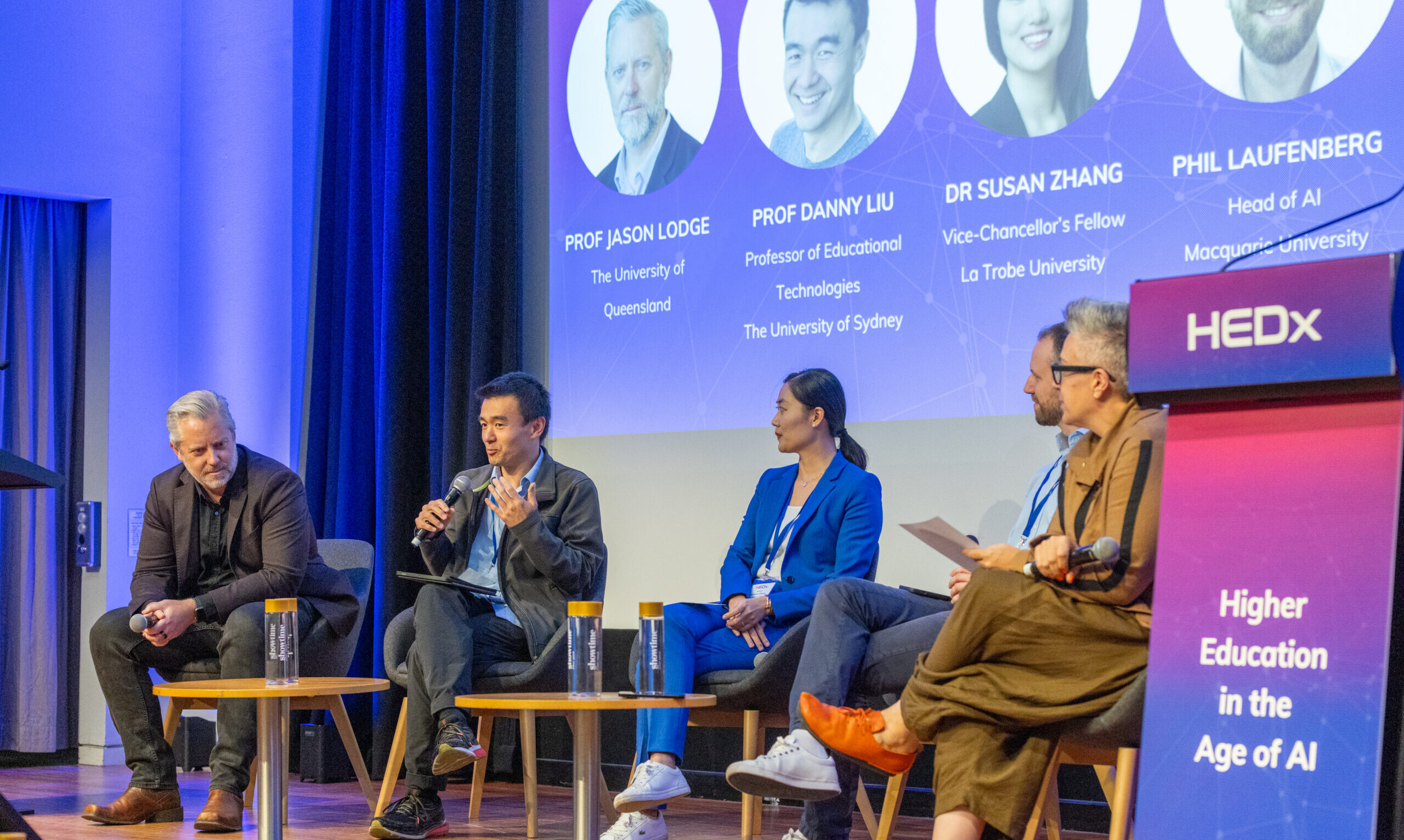
    Danny Liu from the University of Sydney posited that artificial intelligence compelled us to re-evaluate not just the methodology, but the very purpose of our teaching practices.

    Please login below to view content or subscribe now.

    Membership Login

    Source link