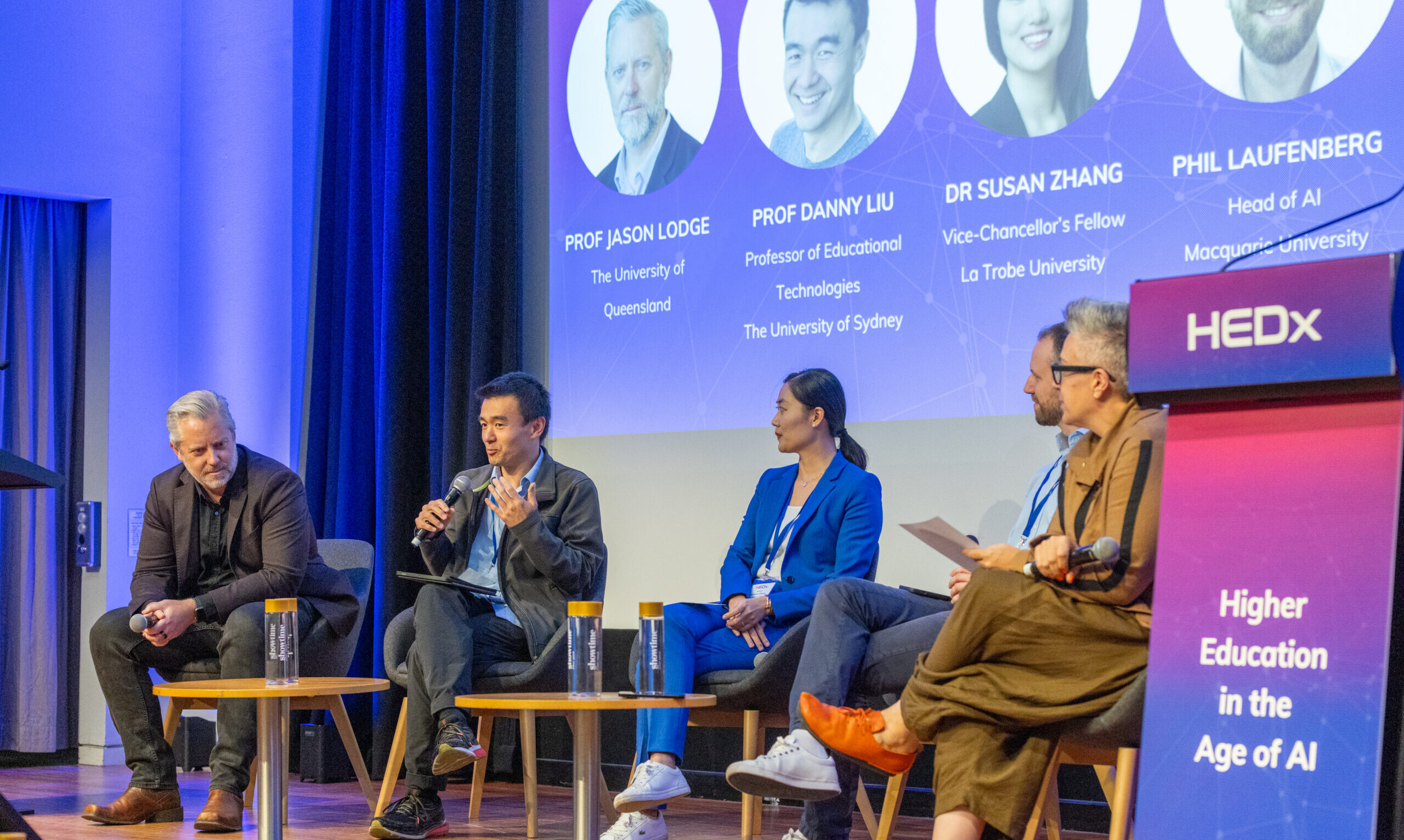
Danny Liu from the University of Sydney posited that artificial intelligence compelled us to re-evaluate not just the methodology, but the very purpose of our teaching practices.
Please login below to view content or subscribe now.
Are you on the job market or seeking a new career? Professors and researchers, this interview is especially for academics considering leaving academia (or if you’re forced to leave unexpectedly). I’m happy career coach, Dr. Jennifer Polk of From PhD to Life is back for this 2025 episode.
Jen’s been on The Social Academic to chat with me back in 2022 when we talked about Informational Interviews. She also joined me for a YouTube live in 2020 where she answered the question, What Is Networking? This year especially, mid-career and senior academics may be pivoting away from their more traditional academic career path. Many researchers and scientists in the United States of America have been let go. While there’s many resources out there to help with your next steps, such as the From PhD to Life blog, you may want personalized support from a career coach and community. We talk about Jen’s PhD Career Clarity Program which you may find helpful.
While we talk about a service for academics in this and other interviews on The Social Academic, I don’t receive any gift or monies if you choose to move forward with Jen’s PhD Career Clarity Program. I share people including Dr. Jen Polk with you, because I trust and recommend her to clients and friends.
In this interview
Reintroducing Dr. Jennifer Polk (@FromPhDToLife)
Jennifer Van Alstyne[‘Jennifer’]: Hi! Welcome back to The Social Academic, a podcast, blog, YouTube channel about online presence for professors, researchers, PhDs, people who are in academia. Dr. Jennifer Polk is back with me today. She’s someone who we featured here on The Social Academic in the past. She’s been live on the YouTube channel, but this time we have new things to talk about. I mean, the social media landscape has changed in 2025. Jen, would you start by introducing yourself?
Dr. Jennifer Polk [‘Jen’]: Oh no, I’m on the spot!
Yes, I’m Jen Polk. My business is called From PhD to Life. I work with professors, postdocs, and other PhDs who are ready to leave academia and go somewhere where they will be respected and valued and all that good stuff, even if they don’t yet know what the heck that could ever be. I’ll help them figure it out.
Jennifer: I love that. You’re a career coach who’s like, you’re not new to this space, right? You’ve been doing this for a while.
Jen: A while, indeed. What’s a while? More than 10 years? More than 10 years, yes.
Jennifer: Amazing.
Jen: Yes. Someone called me the OG PhD career coach. Am I saying that right? OG, is that what the kids say?
Social media climate for academics in 2025
Jennifer: OG, yeah. I love it. I love it. I’m curious because you’re actually like an early social media user, early online user. How have you seen things shifting or changing in social media in the past year or so?
Jen: Big sigh, sob, hysterics. [Sighs]. Okay, one way of putting it is Twitter is dead to me. I mean, Twitter is dead, right? Twitter is dead to me and Twitter is dead. And now that was a big problem. And please interrupt me when I go on and on and on about this. Most of my clients the last few years found me via Twitter. Not 100%, but that was a big place where people got to know me and eventually work with me. And that was true for individuals who wanted to work with me as like for career coaching, guidance on their own individual job searches, as well as the folks who work in universities and bring in speakers to do workshops and presentations. And so a lot of my business happened in part on Twitter.
Now, I don’t even go to Twitter anymore. So just for me personally, Elon Musk has ruined my life. No, I’m being dramatic. Yeah, just like that’s a small but sort of huge thing for me when it comes to social media. I mean, that’s the first thing that comes to mind.
Jennifer: I’m curious, like, gosh, you’ve been such a prolific Twitter user. Are you finding community elsewhere? Like, are you using other platforms the way you used to use Twitter or what?
Jen: Yeah, it’s a good question. And I don’t have a good answer because my answer right now is also a sigh. And I am on Bluesky, but I haven’t quite started using it for my career. Let’s put it that way. So it’s not that I’m not using it at all, but I tend to go on there more as like a personal, I want to share a thing. And ideally, if it was, if it made sense to spend the time, it would have a mix of like me as a person and me as a business owner that you could work with. That is how I always used Twitter. And Bluesky is different in terms of reach and engagement. That is not just because I’m bad at it, but that was like a deliberate, you know, that’s how it works.
Jennifer: I think that’s so helpful to share with people. I mean, like you are, you have a huge following on social media. Whether Twitter is dead or not, like people still follow you there. And yet on Bluesky, what was working for you in the past, maybe it doesn’t feel the same, maybe it doesn’t get the same engagement. The same thing on different platforms can have different results. And that’s something helpful for people to know when someone has an audience size of yours is still experiencing that, I don’t know, that frustration.
Jen: Yeah. And something else that might be interesting for your audience is that I have mixed feelings, I mean, I have mixed feelings about so many things in life, but including LinkedIn as well. I go through like seasons with LinkedIn. Last year, what is it, 2025 now. So back in 2024, for the first almost six months of the year, most days of the week, I would say I was posting on LinkedIn. And yeah, I did that consistently for those first six months and I got out of the habit and I’m much more sporadic now and I want to like it, but it’s just never, it’s just never really done it for me the way it’s . . . oh, lament, lament for Twitter of old.
I don’t know. I don’t know. I mean, I don’t know social media, you’re not doing it for me, but I want to like it.
Social media for academics who are job seekers in 2025
Jennifer: Mm. Hmm. Now, there are so many job seekers right now, whether they’ve been laid off in federal government and their PhDs or their academics who are finding funding issues that are now unexpectedly needing to search for jobsl for their financial future. I’m curious, what we just talked about in terms of social media, how might that impact job seekers?
Jen: Man, it’s such a scary time. One thing that comes to mind for the impact on job seekers is folks that do have jobs in the US federal government, in the US in general maybe, in universities, I think they might want to be a little bit more circumspect if that’s the right word. A little more cautious about what they put out there. I mean, we’re reading like insane things. Who knows if they’re true, but like, is Grok reading your tweets? Is DOGE [Department of Government Efficiency], are the teenagers surrounding Musk like turning the AI on your tweets and deciding who to fire that way? Like, I don’t mean to sound like a conspiracy theorist, but I think there’s some evidence that, anyways, I think people might be right to be a little bit more cautious about what they put out there. Even Bluesky, my understanding is that Bluesky is open. So you don’t even, I mean, even though it’s not owned by bad faith actors, foreign actors, it’s still maybe, you still want to maybe be a bit cautious about it. I don’t know if that’s what you were getting at with your question, but that’s one thing. That’s not the only thing, but I think that’s one thing that folks might want to think about.
Jennifer: Yeah, I really appreciate you saying that because that’s a question that’s been on my mind lately as professors who, this actually came up in a workshop, have sensitive topics. That was a good way of putting it. Sensitive in the sense that if they talk about it, the thing that they do in their research, in their work every day, they could attract hate. They could attract political controversy, even if they’re just posting about a new publication. And so this is actually something I brought up in a social media mastermind group that I’m in monthly because I wanted to hear how other people, how strategists who work on social media with companies and different agencies are handling the political divide. And it was really great to be open about the worries and fears that some professors are having right now. Yeah, everyone kind of said, “Airing on the side of caution.” Airing on the side of facts doesn’t even always work. It’s not enough anymore. And so really thinking about protecting yourself and having that feeling of safety, if you’re unsure before you post, maybe don’t do it. Ask a friend to look it over in advance. It’s hard.
Jen: I hate it, right? I hate it. I don’t want this. I have a client who is, well, let me not give away too many details, but who is a target of bad actors, right-wing bad actors as a person that shows up on lists, the kind of lists that you don’t want to be on and that is just total BS, right? And her solution, one solution anyways, to continue to be a public intellectual, to write because that’s important to her, is that she has changed the name that she uses. So it’s still kind of basically the same name, but the addition of like an initial or, I forget exactly what it was, the decision, but like of using like the first name instead of the middle name kind of thing as just one, it just makes it easier to differentiate herself from the person who’s being targeted on the internet. And I thought that was a nice, you know, partial kind of practical thing that was in her control, you know, because she can’t scrub the web, doesn’t have any control over that, but she could, you know, add an initial or anyways, you know what I’m saying?
Jennifer: I really like that. That’s such a, it’s a doable solution for people when you’re unsure, just know that you have that option. And maybe now is a time that anonymous accounts could protect you. If you’re someone who does want to say something politically, and you don’t want it to touch your professional or your personal kind of social media. I did hear from a couple of people who do like to say, what is truth? What is science? What is facts? And they need to protect themselves in order to do that by creating maybe an anonymous profile that’s not connected with themselves. So there are options, even though yes, it is scary. Yes, things have changed. [Sighs]
Jen: It’s just like you’re in that lament mode.
Jennifer: I know. I’m sorry. I’m kind of a downer. But honestly, I think that’s how people are feeling. And that’s what people are experiencing right now. So if we didn’t say it, it would be not right.
Jen: Yeah. The free speech brigade is, that’s not what they care about. I mean, this is obvious, right? But let’s just say we know that this is obvious. They don’t have consequences, but you might experience consequences.
Blogging and other ways to share online
Jennifer: Exactly. Exactly. Now, there are other ways to create content and you’re someone who’s actually for a long time tried different forms of content. Blogging is one of them.
Jen: [Laughs] In other words, you have failed so many times, Jen. You have failed to hit on the thing that works.
Jennifer: No. In other words, you’ve experimented with lots of different forms of media and you found things that really work for you for a time. And then sometimes you get curious about something else. And so you switch it up.
Jen: That’s a better way to put it.
Jennifer: I think that’s really what’s happened with you because you were prolific at the things that you do try and experiment with. And the From PhD to Life blog is one of them. I mean, when did you start that? That’s pretty old, right?
Jen: It’s old. So unless my memory is going, I started, so From PhD to Life started as a blog and a website the same day, December 12, 2012. I bought the domain and I got the WordPress site and I wrote my first two posts, I think, if memory serves. Yes, back in 2012, I was really excited about it. The internet was a different place back in 2012, but that is how I started and that is how I grew my business in the early years. I was on Twitter pretty quickly as well, but first the blog, then came Twitter. I think important for folks to know is that although I started my blog on my own website, within, I think I’m getting this right, within a few months, I got asked to blog on an external site. So universityaffairs.ca, which is a Canadian post-secondary ed sector magazine. I don’t know if they’re still a physical magazine, but they were like a 10 times a year kind of magazine and they also had a website. And so I was one of their bloggers, one of their columnists as they called me, but just online. So that was amazing for reach in Canada and beyond as a legitimizing place. Again, the internet is different now, but that was cool.
Jennifer: That is so cool. And you actually, I remember you won an award for that, didn’t you?
Jen: Three!
Jennifer: Three! You won three awards!
Jen: I mean, it’s been a few years now. I think back in 2015, 16, 17, I got the Gold Award in front of the Canadian Online Publishing Awards for best blog or column in the Blue category, which was for business.
Jennifer: Amazing. It’s amazing. I mean, it’s amazing because having a blog about PhDs seeking careers and finding a path that works for their life is like, that should be awarded. But I mean, it’s exciting that that’s the topic that they chose because your blog was so great. Now, the blog did win awards and it did have this big reach, but recently kind of disappeared from the university affairs website, which is typical. I will say like, websites do this. They take down the public writing sometimes in order to put new stuff up. And so when did you notice that it was gone?
Jen: Yeah. So I think I noticed maybe late fall 2024, something like that. I noticed because I think it was when a client alerted me to a broken link in our online platform for my online course. And I was like, “Oh. Oh, it’s all gone. Okay. Okay. All right. Fair enough.” I know. Gut punch, stab, but also, “Yeah, fair enough.” Okay. It’s been a few years. I stopped blogging for them back in 2020. So it’s been a few years. They owe me nothing. But there was a bit of a moment of, there was at least some good content there that, of course, I didn’t have a record of because who’s that organized? Maybe everybody else listening, but not me.
Jernnifer: No, when I’m thinking about it now, like my first two years of blogging, I backed up everything. Like I have like a word document of them at least. Recently, nothing. I don’t have anything saved outside of the website itself.
Jen: Well, it’s time.
Reclaiming online presence from out of the past
Jennifer: I know, it’s time, especially after what happened with the University Affairs version of your blog. Now, what did you do? Like, that stuff was just gone and you had a solution for actually finding the most important things and bringing it back. What happened?
Jen: Yeah. So the immediate issue was that there was this post that I’d linked to from my course that I think was a good one and useful. And I found it on Internet Archive. And so when it came time to think sort of beyond this immediate problem of like, “Okay, that one post, I want to continue to link to it. Oh, can I find all of the ones on Internet Archive?” In fact, I made a donation to Internet Archive because I was like, “Thank you so much!” Yeah. So then with your help JVA, I went through and picked out the blog posts that I thought were worth saving. I mean, there were, there were a handful that was like, “Eh, that was what I was thinking, you know, eight years ago, but whatever.” And yeah, you helped me put them on my website, copy and paste. Anyways, if you want to say more about that, I’ll let you say more about that. But I’m glad for that because now it’s on my site, I own it. Well, whoever owns the internet owns it. I feel like it’s a little bit more in my hands.
Jennifer: Yeah. I think that process is overwhelming for people. So it was kind of nice that we got to do it together. But my father-in-law, for instance, is a critic of art. And so he’s had a long career where he’s written, I mean, like hundreds, like thousands, I don’t know, like so many reviews and articles that, when art critics were being laid off quite a while ago and since then, his writing has disappeared from, a lot of his writing has disappeared from the website. And they did give him permission to pull all of the things that he wanted. But like, is he going to go back through the Internet Archive and pull all of those things? No, he doesn’t have the same drive or motivation that someone like you does. So a lot of that stuff, it’s not lost. He has it in physically bound, beautiful books, but it doesn’t mean that it’s like accessible for other people. And so when that’s the goal, when like that’s what you want, yeah, sometimes the project takes a little bit longer than we might want. It can be a little bit frustrating to have to search down old things, but then you have agency and choice in what you do about it next. And so for Jen, she got to pick the ones that were most important to her, we put them back on her blog, on her website FromPhDtolife.com. And that’s something that you could do for your own website. There’s so many options for you, but just knowing that the Wayback Machine and the Internet Archive exist for you to search, it’s a huge tip for people. Actually, after we worked together on that, I went back and I found some things that I’d written as like guest posts for other people in the past that had disappeared. Like they weren’t on the blog anymore because maybe the business had changed or what they were doing with the organization had changed. And so it was really easy for me to pull my original writing, which I didn’t have a good copy of, and put it back on my website so it could still help people. And when I did, I still put a little note at the bottom that said this has originally appeared on this place because I still want to honor that original purpose for the writing. And it’s really interesting to see how we can create afterlives for the things that we’ve written and created. So I love that.
Jen: Yeah, I will say one thing for folks to know, at least in my experience, the Internet Archive kind of crapped out after a few years. So if you’ve got stuff from like 20 years ago, well, is it even alive after 20 years, I don’t know. But anyways, just do it now. You know, put an hour or two in your calendar, do it now. Don’t wait for five years.
Jennifer: Yeah, right. Pull the content now and you can always do something with it later.
Jen: Yep. Yeah, it really only took me an hour or two-
Jennifer: Perfect.
Jen: And I didn’t have your father-in-law’s archive, but you know, I had a few years of stuff.
Jennifer: There was actually more than I expected in a good way, in the sense that like it really created new life for those pieces of writing that were just lost in the Internet Archive. Now, I’m curious about how your website has kind of changed over time, because the website is 2012. That’s a long time to have a website and actually add new things to it. Like, that’s a lot of new things. So what’s it been like to have a website for that long?
Jen: Whew, boy. Yeah. And for most of that time, I, and only I was the one doing all the things and you could tell. That’s okay, but you know. I always used a free WordPress. So it’s always been a WordPress and I, it’s always been on WordPress.org, is that right?
Jennifer: Yeah, that’s correct for you.
Jen: Yeah. And it’s always been connected to my domain FromPhDtolife.com. Anyways, I’m veering from your question. What was it, a year and a half ago that I hired you? Two years ago?
Jennifer: Yeah, something like that.
Jen: And you, so we’ve done this in two or three stages now. Which has felt manageable, you know, both financially and also in terms of my own need to do some homework, pre-work.
Jennifer: We only have so much capacity to do things for our own websites and stuff.
Jen: Yeah. So that was, I think that’s really a key point because I had not an outrageous number of pages, but it’s not, it’s not just a one page or two or three page website. There’s a few more pages than that. And for the most part I think my pages were ones that I wanted to keep, but they just over, over time they get longer like an academic CV, right? I’m thinking of like one or two pages in particular that they just, they just grow. You know, as if I was some sort of like tenured professor. So it was really good to say, “Okay, let’s focus on this page and this page and then let’s stop.” And then six months later, “Okay, now I’m ready to do this and this,” right? So that was, so yeah, it just made the process a lot more manageable. And now if you go to my website now, unless I’ve messed it up, unless I have messed it up, it’s looking so much more in-, it’s just more inviting and welcoming, easier for people to use and get at the information that will help them. Yeah, so that I can help them, whether they’re just looking at my website or wanting to take another step or two into working with me.
How to work with Dr. Jen Polk
Jennifer: Yeah. Like what, what does that look like? Like what if someone does come to your website and they want to take those next steps to work with you? How can PhDs, professors, researchers thinking of leaving academia, you know, work one-on-one with you, work in a group with you? How does that work?
Jen: Yeah. So folks that are like raring to go. They have options to just pay me money and start working with me immediately. Of course, that’s not going to be most people, especially if you’ve never heard of me before. The main thing that I recommend, so this is for individuals who are interested in their own job search, right? You know, getting another job. There is a free webinar, it’s a video on my website and then there’s like a yellow button kind of all over the place. So I recommend starting with that. You can sign up, you can watch this whenever, you can put it in your schedule and watch it later. It’s got captions and you can press pause, all that good stuff, right? So that I really recommend because it is a, a rich intro to what I teach my clients and the step-by-step process that I recommend everybody go through from like, “Uhh” to “Okay!” You know, I have a great offer and I’m starting a job. Yeah, and then at that point, what most folks do is of course, they feel more confident and more ready to, and they just have a sense of, “Okay, I’m going to stop doing that approach and,” you know, shift my energies more in this direction. And they can go off and do it on their own. There’s a couple of options after that. Individuals can sign up for a one-on-one with me, over Zoom, phone if you want and we can go more in depth for an hour on, you know, your particular issue, whether that’s networking or LinkedIn, or I don’t even know what I should be doing for the rest of my life. Or even better, depending on the person, I have a program. It’s an online course plus, plus other stuff, right? I called a PhD Career Clarity Program and that’s really great for professors, postdocs, other PhDs who are ready to leave academia and leaving academia can mean that you are right now working in academia, or it can mean like in some way you still identify with that profession even if you don’t currently work there. I often get clients who already got a job outside of academia, but that’s not the right fit. So anyways, that’s a very long answer. Start with the free thing and then take it from there.
Feeling hope with the PhD Clarity Program
Jennifer: I love that. And one of the things that we talked about when we were working on kind of the sales page for the PhD career clarity program is that feeling of hope that people have when they are joining this group and feeling like, “Oh, okay, now I can have that support.” What is the emotional journey for some of these people who are going through your program?
Jen: Yeah, it’s really interesting because I asked one of my clients a while back, asked somebody that was in the program like, “Why did you join?” And what my, the things that I thought that she would share or that I think sort of in general people share is that they’re feeling kind of like, despair. Maybe not completely, but like there’s some moment of, there’s some feeling of, “I can’t do anything. I’m no good for anybody. Nobody’s ever going to pay me money to do anything. I can’t do it.” And I think sometimes that’s relatable for some people, not everybody.
Jennifer: Yeah, yeah.
Jen: There are certainly other people that are like, “No, I’m feeling confident. I know I have something to offer. I don’t know what it is outside of academia. And so it’s not that I feel bad about myself. It’s that I need to figure out like, what is this called elsewhere?” So those are kind of two things that I had in mind, depending on the person. I mean, maybe you can tell resonated more personally with the first one.
Jennifer: I think my husband did too. He’s also a PhD who felt some despair. Yeah.
Jen: Yes. So okay, you’re in good company. If you consider me to be good company anyways.
Jennifer: Yes!
Jen: So there was a third option that I found when I asked my own client who was in the program. And, I think of course she probably felt both of those two things. And a third thing, which is the moment that she decided to join the program, she felt hope. Right? It was like, okay, I don’t know. I don’t know what it is that I’m going to do. Right? I don’t, I’m not entirely sure about my place in the world and what I have to offer and how to tell people about who I am and all of that stuff. But I’m hopeful and I’m going to invest that hope, that energy, that time, some money into moving myself forward. And I really, I love that, right? Cause that’s actually, that was I think a missing piece in my understanding of where people were at. Because yeah, I want you to bring some energy, some hope into this, which is not to downplay any of the other emotions: good, bad, ugly. But I think there’s some . . . Yeah, I think that’s a good, that’s a good, helpful thing to have and a hard thing, a hard thing, right?
Jennifer:The PhD Career Clarity Program has like a core course, it has workshops and resources. It also has a community. I’d love to hear a little bit more about that community aspect and how people from all these different fields are coming together and like actually finding support within their job search process?
Yeah. So the community I would say tends to exist, communities are amorphous things, but I would say it comes alive for the most part during our live meetings. And I, there’s two types of live meetings. One is the small group coaching sessions, which these days I do three times a month for an hour. Those are drop-in, you know, bring yourself and whatever’s going on. And then three of those a month. And then once a month, you mentioned I do live workshops. That’s really where the community comes alive, yeah? And it’s really great because the question that sometimes folks ask me is, “Oh, have you ever worked with, you know, a biochemical engineer, right? Or have you ever worked with somebody who goes into like X specific company, right? And the answer could very well be yes, but then the second part of the answer is it doesn’t matter. It doesn’t matter because it’s really magical what happens when people with disparate backgrounds and career trajectories and, you know, knowledge, expertise and skill areas. In fact, we have a lot in common and that there are differences really enrich the discussions that we have because of course, we’re all different. We’re all different men, women, trans folks, like we, you know, life is different: mothers, fathers, people without kids, et cetera. But it really, it’s really great what happens when we’re together sharing updates and commiserations and strategizing and putting our eyeballs, you know, on each other’s resumes and LinkedIn profiles. I think it really helps people feel much more confident. Academia can be so siloed within disciplines that it can be difficult to imagine yourself stepping into a professional world where you’re not surrounded by other chemists or other anthropologists or whoever, right?
Jennifer: Yeah.
Jen: So in a way this is like part of growing your confidence, is interacting in a semi-professional space with people from different backgrounds.
Jennifer: I think it sounds really warm. I think that I’m someone who personally had avoided community or group type things in the past and it was only in the last like five years or so that I have found not just comfort, but like comfortableness within myself because of group programs. Like because I feel more comfortable in smaller communities where we can actually get like a surprising amount of stuff done, whether it’s like emotional relationship building or whether it’s like really getting down and working on strategy and doing something harder. But like my resistance to group programs is like something that, I’m so glad that I have left behind because it really opens up my world to new things. So I’m glad you said that. Yeah.
Jen: You know, when I started my business, I was doing one-on-one coaching and that’s like the typical model for someone with a coaching approach. And I sometimes do that now, but the coaching I do for the most part is group coaching. And it’s facilitation, group discussions, And that I think is, yeah, is just really powerful and fun. You know, I’m happy to chat with anybody who’s interested but concerned because I know that, there are concerns that people have like, “Am I going to be drowning in all of these other people? Am I going to be the odd person out with nothing in common with anybody else,” etc. But let me know. Let’s chat about it. It’s not for everybody, but I think it’s probably for you.
Big sigh, last words
Jennifer: I appreciate you, Jen. I’m so glad you came back on The Social Academic. Is there anything else you’d like to add before we wrap up?
Jen: Big sigh. You know, I think there’s still connection to be made online. There’s still good people out there trying to make a difference in the world in the ways that they can, including online.
Jennifer: Yeah.
Jen: There’s still value in sharing what you’re about. Even if right now in some circumstances, you might choose to be a little bit more circumspect. There’s still value in that. And in the meantime, you may build community in other ways and that’s okay too. You know, you don’t owe your social media followers. Can I say this? You don’t owe them anything, right? You don’t owe them your presence. You don’t, you can choose to pause your activity and you don’t have to stress about it. I mean, what would you say?
Jennifer: Yeah, I think that’s really good. I think that last year, personally, I leaned into more of the pause in the sense that like, I didn’t put as much effort into social media. I really tried to be more relaxed about it. And that meant I was posting less. It meant I was taking some long breaks, sometimes weeks. And it made a difference for my mental health, but it also made a difference for like my brain and what I was able to focus on instead. Letting go of some of that need to post was helpful for me. But on the flip side of that, if you’re someone who struggles to post, being conscientious, being cautious does make sense, but also know that there’s other ways that you can have a strong online presence, whether it’s filling out your LinkedIn profile, creating a simple personal website or portfolio website. There’s so many options for you. And it’s okay if social media isn’t where you want to be spending your time.
Jen: Yeah, it’s great when people reach out and they write because they found you somewhere.
Jen: Thank you. Always, always nice to chat, even if it’s a bit formal like this.
Jennifer: And for everyone who’s listening, I’m going to drop the links to Jen and I’s past interviews on informational interviews and on what is networking so you can check those resources out too.
Jen: Can I say one more thing?
Jennifer: Yeah.
Jen: Just anybody who is thinking about hiring my friend JVA to help with your online presence, writing a bio, you know, let me be more specific, getting your website looking a little better, maybe a lot better. Do not hesitate. Act now. Run, don’t walk.
It’s been really, really fun to work with you, Jennifer. And we’re going to do it again. I’m warning you now. We’re not done.
Jen: Thank you. I love it. I love it. Thank you so much for coming on the Social Academic, Jen.
Dr. Jennifer Polk’s Bio
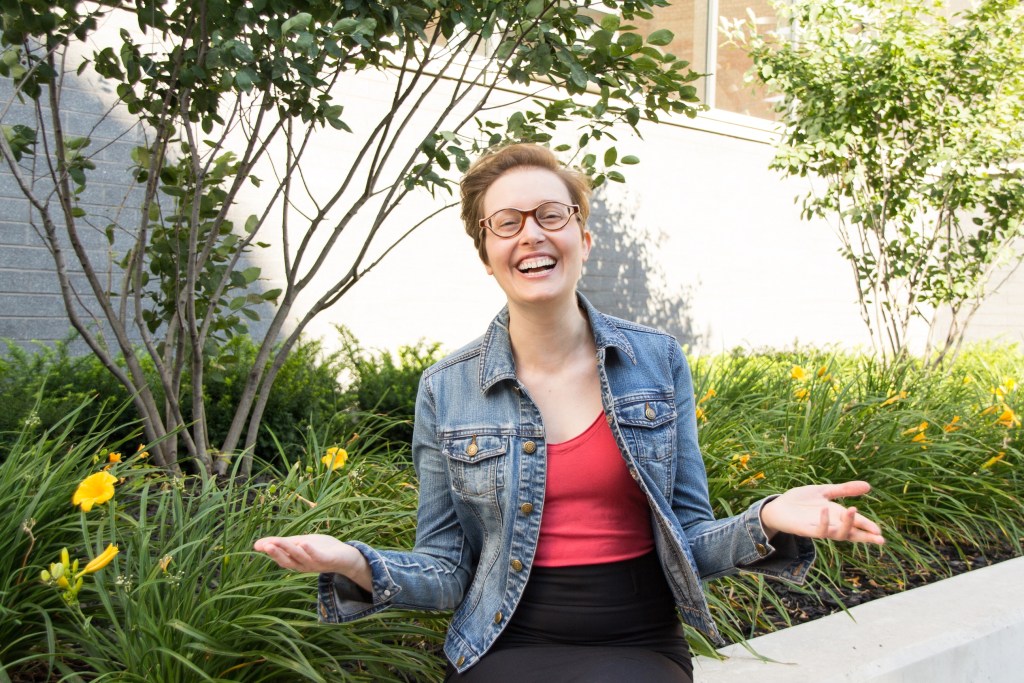
Dr. Jennifer Polk, photo by Nadalie Bardowell
Jennifer Polk, PhD, is a career coach and expert on PhD careers. Since 2013, she’s worked with graduate students and doctoral degree holders based in Canada, the United States, the UK, Australia, and elsewhere. Jen created her PhD Career Clarity Program to help PhDs navigate their career paths with confidence.
Jen has spoken on university campuses and at academic and professional conferences throughout North America on issues related to graduate education and career outcomes for PhDs. Jen regularly facilitates professional development workshops (now online) and delivers presentations for graduate students and postdocs. In addition, she currently serves on the board of directors for CAGS, the Canadian Association for Graduate Studies.
Her writing has appeared in University Affairs, Inside Higher Ed, the Chronicle of Higher Education, the Globe and Mail, and Academic Matters. Her University Affairs blog (2013–20), “From PhD to Life,” won three gold awards at the Canadian Online Publishing Awards. She’s also contributed essays to three books: Moving On: Essays on the Aftermath of Leaving Academia (2014), Reflections on Academic Lives: Identities, Struggles, and Triumphs in Graduate School and Beyond (2017), and How to Get Your PhD: A Handbook for the Journey (2021). Jen was also an expert panelist for the 2021 Canadian Council of Academies report, Degrees of Success, on the challenges PhDs face transitioning to employment.
Jen was co-founder of Beyond the Professoriate from the company’s founding until her departure in January 2020. Between 2014 and 2019 she co-produced and -hosted several online conferences attended by hundreds of graduate students, PhDs, and career education professionals. For several years she also ran Self-Employed PhD, an online network of freelancers, independent consultants, entrepreneurs, and small business owners. She hosted #withaPhD chat, a twice-monthly Twitter discussion, for three years.
Jen is actively engaged in online conversations about careers for PhDs, especially on social media. Follow her @FromPhDtoLife, or interact with her on LinkedIn and Facebook.
Jen earned her PhD in history from the University of Toronto in 2012, and an MA and BA from Carleton University.
Secondary schools, particularly those in regions with a high density of higher education providers, are inundated with offers of university outreach initiatives.
Meanwhile university widening participation and schools liaison teams, acting (in England) on the principles of their respective access and participation plans (APPs), channel their efforts towards regions, schools, and demographics currently underrepresented in their institution.
The result is a substantial duplication of effort and resources from institutions competing within the HE marketplace.
Variety pack
The typical set of university partnerships for many schools appears to be a local Russell Group university, a local post-92 university, and the designated Oxford and/or Cambridge link college for their region.
Encounters with local universities may be facilitated by a Uni Connect partnership, although a recent evaluation revealed inconsistencies in the extent to which partnerships offered a ‘joined up’ approach to locally targeted outreach. Local universities are undoubtedly convenient. Campus visits require minimal travel time and costs, and widening participation teams may have a strong knowledge of local issues and individual schools.
However, relying on the convenience of local institutions both reinforces the tendencies amongst applicants in many regions to stay close to home for university without considering other options, and risks perpetuating undermatch amongst when local universities do not provide a suitable academic match. For example, the Uni Connect East Anglia partnership, neaco, includes the University of Cambridge, Anglia Ruskin University, the University of East Anglia, and several others.
There exists a large gap between the ABB entry requirements for Engineering at UEA compared to the A*A*A asked for at Cambridge. Students with predicted grades within this gap have a substantial risk of undermatching if they narrow their options in line with the Uni Connect parameters.
Three at the point of use
The three-tiered university outreach provision, sometimes partially supported by Uni Connect, goes some way towards achieving Gatsby Benchmark 7:
encounters with further and higher education appropriate to the needs of each pupil
Yet it seems unlikely that three universities could represent the diverse spectrum of HE offerings across the country, nor truly provide a good match for every pupil.
There are two issues to address here: firstly, that locally-targeted outreach should not be solely conducted by local universities; and secondly, that universities must balance their widening participation and recruitment priorities to avoid duplication of resources and overwhelming target schools.
A university, admittedly with the resources to do so, can offer informed and meaningful regionally-targeted outreach despite not being located in the immediate vicinity of target schools. I am a long-standing proponent of the Oxbridge Link Area scheme, which provides schools with a point of contact at each university, and encourages WP practitioners to develop knowledge about and relationships with stakeholders in specific UK regions.
Most recently, I teamed up with the charity Aspire Liverpool for the latest iteration of the Magdalene College Liverpool Event – a day of super-curricular exploration for 700 Year 10 pupils led by academics and Student Ambassadors, held in Liverpool’s St George’s Hall.
From Cambridge to Merseyside
One of the comments I receive most from pupils when I visit schools in Merseyside and North Wales is that they are surprised, but pleased, that a representative from Cambridge showed up for them. In the case of the Liverpool event, my team arrived determined to show the pupils that a coachload of busy academics took the time to travel to Liverpool, because we think these pupils are worth investing time and resources in, and have the potential to apply to competitive universities should they choose to. With a recruitment hat on, I’m keen to continue to develop the institutional memory amongst our target schools of being the college and university who can be relied upon to deliver high-quality locally-targeted outreach provision.
Working with Aspire Liverpool helps us to target those schools which haven’t historically engaged with our outreach programmes, and helps to address the second issue I put forward, regarding the risk of duplication of outreach offerings from multiple universities. Attempting to collaborate with universities targeting similar groups of students can result in competition for recruitment. Whilst I have rarely delivered activities in partnership with, for example, the University of Liverpool or the University of Oxford, I liaise with their respective WP teams to develop an understanding of what activities students may be receiving from other providers, and to avoid clashes between the dates of our flagship events.
Universities are often more comfortable collaborating with third-sector organisations such as The Brilliant Club, if they can demonstrate quality and value, as promised by successful applicants to the recent Equality in Higher Education Fund. Such organisations can help to scale up activities which are challenging for a single university WP team to provide, such as the attainment-raising initiatives promised in many Access and Participation Plans.
So, where do we go from here?
How can students be presented with a sufficiently wide range of HE options to increase their likelihood of finding a suitable academic match, whilst avoiding the duplication of effort and resources by each individual HE provider? The UCAS Outreach Connection Service, launched to UCAS advisers in 2024, may go some way towards highlighting the range of opportunities available, and allowing teachers to point students in the right direction towards potentially suitable universities and courses.
And potential reforms to Uni Connect may establish a more defined strategic purpose for the partnerships, and perhaps space in the calendar to deliver campus visits or residentials for other partnerships’ target schools. Without overwhelming students by the sheer number of HE options available, it is doing them a disservice by not making them aware of the range of choices both in their home region and beyond.
It remains crucial to understand the local contexts in which students are making their university choices, and is the responsibility of WP teams to set aside their recruitment angle to some extent, to provide opportunities for students to engage with multiple universities in their search for the perfect match.
It’s a thankless job being a university governor at the best of times.
The structures and hierarchies – established over decades, even centuries – feel impenetrable.
You’re overwhelmed with papers and reading, never completely sure what’s going on at meetings.
Statutes and ordinances, rules and regulations, sub-committees and working groups. And all this you’re doing for free?
But during precarious times for the sector, the job gets even harder. Income lags further behind expenditure. The funding model seems loaded against you.
Doubt sets in. Have you really been holding institutional managers robustly to account? Are those course closures and staff redundancies really unavoidable?
Behind the seens
Governing bodies are the highest authorities in most institutions. Structures vary from one university to the next, as does the language of governance.
But in England, all boards are legally accountable to the sector regulator, the Office for Students, and hold significant powers, up to and including the authority to remove the vice chancellor if they so choose.
However, governing bodies remain a reticent and mostly unseen grouping. Students and staff may occasionally glimpse members at award ceremonies or public events, but closer forms of engagement tend to be discouraged (or carefully managed).
On policies that reshaped the sector in recent decades, like the 2012 fee rise, governors had little to say. During Covid, one commentator was moved to ask if anyone had seen the governing body.
Another had previously dismissed governors as “a small cadre talking amongst themselves.” Until a media exposé in 2018, almost all UK vice chancellors were members of the sub-committee that made recommendations on their own pay.
A 2019 investigation found “significant and systemic” failings in one governing body.
Yet many individual governors continue to invest substantial time and effort into their never-more-important role – lay members can bring vital external expertise to a sector that has too often been inward-looking and naïve, and staff and student members can help institutional managers see the campus from a ground-level perspective.
Last year, the Council for the Defence of British Universities (CDBU) conducted interviews with current or former governors at over forty English universities.
While most reported enjoying the opportunity to learn how universities operate, the same issues arose time and time again:
Membership was demographically and ideologically narrow, resulting in “business realist” discourses that privileged the university’s finance and estates over its educational purpose
Chairs were too close to senior managers to bring meaningful “challenge”;
Cliques had emerged, leading to some members’ views carrying more weight than others;
Power dynamics were problematic;
Meetings of the main board sometimes served as rubber-stamping exercises for decisions already taken;
Processes were reported to be opaque, with few governors understanding how the agenda was set, or knowing how to have an item added.
More worryingly, as OfS has increased the burden of regulatory and legal compliance, so governing bodies appear to have become more ideologically compliant. The logic of the market goes unchallenged, and the whims of policy-makers and the sector regulator courteously indulged.
Surprisingly, this critique emerged from lay members as strongly as from elected staff and student governors.
Relevant, useable and inclusive
Now the Council for the Defence of British Universities (CDBU) has launched a consultation for its new Code of Ethical University Governance. The sector already has a Higher Education Code of Governance, authored by the Committee of University Chairs (CUC Code) – the new Code supplements this, while presenting a vision of university governance that is more relevant, more useable and more inclusive.
Practical advice is offered to all members on what to expect from governance, how to navigate complex organisation structures, and – most crucially – how to impact decision-making processes.
The consultation is necessary so that the Code can be a co-produced document, capturing as many perspectives as possible. So please consider completing this short survey if you’re a current or former governor, a student, a university employee, someone with other connections to the higher education sector, or someone with no connections at all to the higher education sector.
So far, governing bodies have mostly avoided using their potentially formidable powers to intervene as the sector has been politicised and defunded. Over 10,000 campus jobs are currently at risk, and 40 per cent of universities face budget deficits.
But the aim of the Code is not to look backwards, let alone to apportion blame. It is to help give future generations of university governors the confidence and wherewithal to bring genuine, meaningful challenge.
At a time when higher education needs urgently to reclaim its status as a prized public asset, governing bodies have a duty to surpass the Nolan principles, and operate to the very highest standards.
The CDBU’s Code of Ethical University Governance may be the first step towards nudging governors beyond compliance, and empowering them to speak out. The long-term goal is for governing bodies to see their role as standing up for communities of students and staff, and for the value of higher education to everyone.
The draft Code can be found here, and the consultation here.
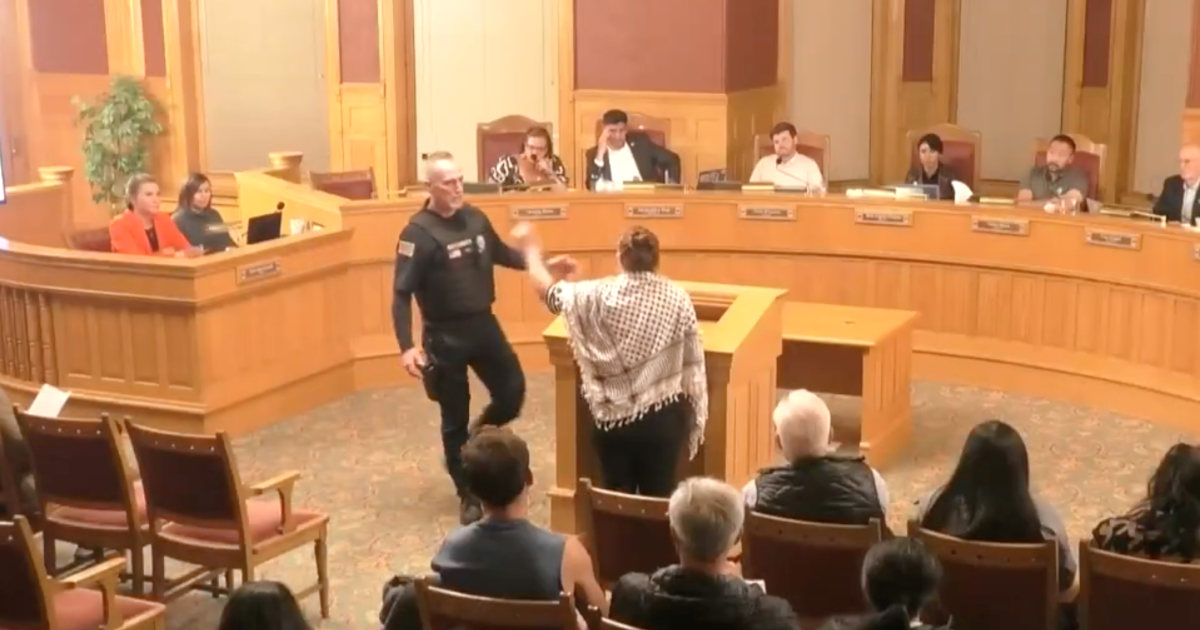
This month marks one year since Salt Lake City clocked possibly the shortest public comment in city council history when police removed activist Jenna Martin after only 20 seconds of speaking that began, “What the hell is wrong with you?”
Martin, who was wearing a keffiyeh pinned in the front like a shawl, then accused Mayor Erin Mendenhall of having police arrest local pro-Palestinian activist Michael Valentine on multiple occasions for “the most bullshit reasons.”
The council promptly ejected Martin, who could hardly be described as causing any type of disturbance given that she only had the floor for 20 seconds and her comments were entirely relevant to matters of public concern. But apparently, the council did not like people cursing in front of the mayor.
On Aug. 14, 2024, FIRE wrote the council, explaining that the First Amendment protects the public’s right to comment on matters related to the city and its leaders, even if the commentary is less than “respectful,” so long as the speaker is not disrupting the meeting. Pointed criticism is not the same as disruption.
Mandating respectful discourse is an example of unconstitutional viewpoint discrimination because the city is sure to enforce the rule only against criticism, not praise. It’s also vague because what qualifies as “respectful” is undefined, constitutes a matter of opinion, and falls to the complete discretion of the same elected officials who are often the subject of that very criticism. The law recognizes that you cannot have the fox guarding the hen house.
Although not pertinent to Martin’s case, FIRE also warned the council that its unqualified ban on “discriminatory” language is unconstitutional for the same reasons. After FIRE sent a second letter on Oct. 7, a city attorney acknowledged the council had no basis to eject Martin, confirmed the policy had been revised to comply with the First Amendment, and noted that the city implemented “First Amendment training after receiving FIRE’s notice and plans to continue to reinforce that training.”
Instead of vague and viewpoint-discriminatory categorical prohibitions on speech, the policy now encourages speakers to “avoid … intimidating or discriminatory language,” “profanity,” “threats,” and “personal attacks.” The policy also now explicitly acknowledges that speakers have free speech rights that the council cannot infringe upon:
The Council respects constitutional rights to free speech. It recognizes that some comments may be legally permissible under the U.S. and Utah Constitutions or other federal and state laws. However, the Council reserves the right to address behavior that creates disruption or safety risk or constitutes unprotected speech (such as true threats).
Salt Lake City’s previous decorum policy highlights a common misconception among elected officials across the country regarding the contours of the First Amendment. While they may encourage the public to be respectful, they absolutely cannot censor or eject a speaker on these grounds. The mere use of profanity does not justify censorship either. FIRE will watch to ensure the city actually enforces the new policy in line with the First Amendment.
Salt Lake City Council meetings are, at minimum, limited public forums. The U.S. Supreme Court has held that in limited public forums, towns can restrict speech only in a reasonable and viewpoint-neutral manner. For instance, Salt Lake City can decide when the public may speak, and may require comments to be relevant to city affairs — but it cannot cut off the public simply for using profanity or accusing the mayor of an abuse of power.
The First Amendment protects not just the content of speech but also the tone and intensity of that speech — an essential part of how people communicate opinions and ideas.
If Martin can’t hold the mayor accountable for a perceived abuse of authority at a city meeting, where can she voice her grievances? City meetings are supposed to encourage civic engagement and inform the public. Yet FIRE has had to repeatedly hold local government officials accountable for censoring public comments beyond constitutional bounds. Fortunately, we’ve recently secured a couple victories on that front.
We commend Salt Lake City for taking corrective action and realizing that salty speech is not a threat to democracy, but a sign of its good health.
FIRE defends the individual rights of all Americans to free speech and free thought — no matter their views. FIRE’s proven approach to advocacy has vindicated the rights of thousands of Americans through targeted media campaigns, correspondence with officials, open records requests, litigation, and other advocacy tactics. If you think your rights have been violated, submit your case to FIRE today.
Every few years, they pack up their lives, move across states—or oceans—and start over. New schools, new systems, new expectations.
For military learners, this isn’t a study abroad adventure or a career move; it’s a way of life. Yet while their reality is defined by mobility, too many of our systems in higher education still assume stability.
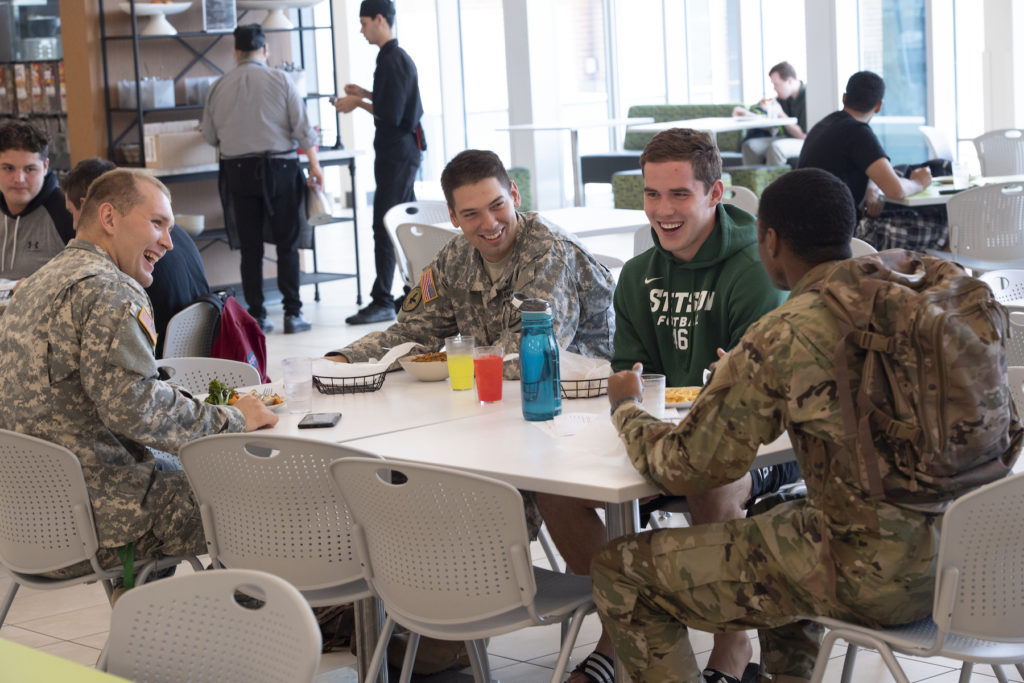
Military learners make up about five percent of the undergraduate population—roughly 820,000 students nationwide. But they aren’t a monolith. They’re active-duty service members juggling college coursework with operational demands like exercises, surprise inspections, and even deployments. They’re veterans navigating civilian life, often in isolation, and often while supporting a family. They’re National Guard and reserve members wearing multiple hats that opposing forces demand they change on command. And they’re spouses and dependents navigating new colleges, mid-degree or mid-semester, again and again, with each relocation.
Their stories are different, but the friction points are the same: staying on track academically while managing a life defined by mobility.
Unlike traditional students, military learners don’t choose when or where they go—on orders, deployments, or other permanent or temporary service-related relocations. And each move can derail progress. Credits don’t transfer, residency rules reset, tuition costs spike, and financial aid doesn’t always follow the same logic. These students bring resilience, discipline, and lived experience into our classrooms, but higher education hasn’t fully adjusted to meet them where they are.
The transfer tangle and financial aid maze
One of the biggest hurdles is transfer credit. While articulation agreements—formal arrangements for transferring credits between institutions—do exist, they often don’t reflect the realities of military learners, especially when it comes to military training or nontraditional learning experiences. Some accumulate credits from multiple institutions, only to be told their new school won’t accept them.
The result? Lost time, lost money, and unnecessary frustration.
Add to that the patchwork of residency rules. Even when learners are stationed in a state under military orders, they may not qualify for in-state tuition. While states like Virginia and Florida have implemented inclusive policies, others continue to lag, turning mobility into a penalty as well as a reality.
Financial aid adds another layer of complexity. Programs like tuition assistance and the GI Bill are essential, but they often fall short. Tuition assistance differs by branch and may not cover full tuition at private or out-of-state schools. The Post-9/11 GI Bill is a powerful benefit, but its eligibility rules and transfer limitations don’t always align with the unpredictable, stop-and-go nature of military life.
What states and institutions are doing right
There are promising models to build on. In Ohio, Military Transfer Assurance Guides standardize how public institutions accept military training as credit. Texas and New York offer additional tuition support for veterans, while Florida helps cover housing and textbook costs when GI Bill payments lapse between terms.
That’s not charity—that’s what equity looks like. When institutions commit, military learners succeed.
The power and promise of credit for prior learning
Credit for prior learning (CPL) may be one of the most powerful—and underused—tools to support military learners, who bring extensive work and life experience to their postsecondary studies that can be translated into credit.
CPL recognizes that learning happens outside the classroom: through military training, job experience, CLEP exams, or portfolio assessments. When applied effectively, it can shorten the path to graduation, reduce student debt, and boost confidence for learners who’ve already mastered real-world skills.
Tools like ACE’s Military Guide help institutions apply CPL consistently and responsibly. But here’s the problem: CPL isn’t consistently communicated, awarded, or valued. In some cases, it’s limited to elective credits rather than core degree requirements, undermining its purpose.
CPL isn’t just about transfer and awarding credit; it’s also about unlocking opportunity. Validated learning can, and should, play a role in admissions, satisfying prerequisites, waiving introductory or duplicative coursework, and advising military learners on the path that is best for them. When institutions fully embrace the broader utility of CPL, they open more doors for military learners to engage meaningfully with higher education from the very start of their journeys.
To change that, institutions need more than buy-in—they need system-wide strategies. CPL should be central to transfer reform conversations, especially when supporting learners who are older, more experienced, and balancing school with work or caregiving.
The role of advising and ecosystem support
Too often, military learners don’t get the tailored advice they need. On-base education centers can be vital entry points, but they need stronger bridges to campus advising teams who understand military culture, CPL, and transfer systems. Institutions sometimes resist broader CPL use over concerns about revenue loss or academic rigor, while students are left unaware of opportunities due to poor communication or advising gaps. Aligning on-base education centers with well-trained campus advisors is one step forward; improving internal communication across departments is another.
Student Veterans of America’s Success Hub, which includes the SVA Advising Center, supports all service members, veterans, and their families in making informed decisions about higher education opportunities and meaningful careers through the use of AI, success coaches, and expertise where the military, veterans, and higher education intersect.
Organizations like NACADA are doing the work to improve professional development in this area, but we need deeper, sustained collaboration. Cross-sector partnerships between colleges, employers, and the U.S. Department of Defense are where real impact happens.
Military learners aren’t asking for special treatment. They ask for systems to make sense for the lives they actually lead. With the right policy changes, institutional commitments, and collaborative frameworks, we can turn mobility from a barrier into a bridge.
But we also need better data, better pathways, and a better understanding of what success looks like for these students—not just access, but degree completion and career readiness. Military learners aren’t an exception. They are the future of an inclusive, prepared, and resilient workforce.
It’s time higher education met these students where they are because they’re already leading the way.
If you have any questions or comments about this blog post, please contact us.
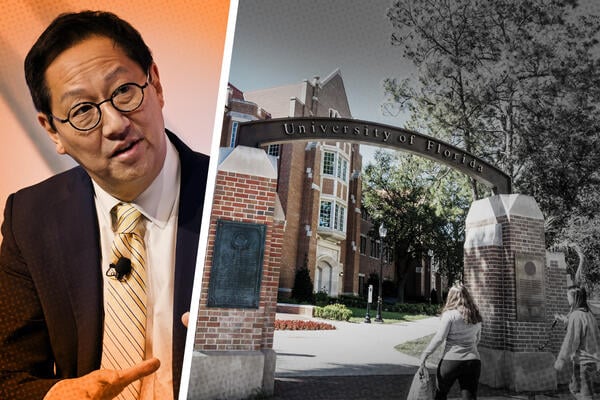
Despite mounting conservative criticism over Santa Ono’s stance on diversity, equity and inclusion, the University of Florida Board of Trustees on Tuesday overwhelmingly voted to hire the former University of Michigan president as its next leader.
Ono, who held three prior presidencies, was named the sole finalist for the top job at Florida in early May. As a traditional academic, Ono marks a break from the norm at Florida’s public universities, where the emphasis in the past few years has been on hiring former Republican lawmakers and others with political connections.
But his candidacy faced heavy criticism from conservative critics such as anti-DEI activist Chris Rufo, Heritage Foundation president Kevin Roberts and several Florida lawmakers, including Republican U.S. senator Rick Scott, who called for an investigation into the search that yielded Ono due to his past remarks on DEI. Some critics have claimed that Ono is a radical liberal academic who made an about-face on DEI due to careerist ambitions.
Ono, who made more than $1.3 million a year at Michigan, where he was under contract until 2032 before he stepped down to pursue the Florida job, could earn up to $3 million a year at UF, according to the salary range.
Ono’s Evolution on DEI
Rufo has led the charge among Ono’s conservative critics.
“Woke is threatening a return to power,” Rufo declared in an opinion piece in the conservative City Journal in which he argued that Ono’s noted past support of DEI policies was disqualifying.
(Although Rufo argued that Ono’s presidency would threaten to undo changes to education in the state driven by Republican Ron DeSantis, the governor has defended the pick.)
Prior to Tuesday’s meeting, Rufo circulated various videos of Ono speaking in favor of DEI policies and against systemic racism. While those videos gained traction on social media, the posts did not sway the UF Board of Trustees, which voted unanimously to hire Ono.
But Ono’s changing stances on DEI did hang over much of Tuesday’s meeting, popping up in multiple questions where Ono discussed his evolution on the issue and noted that he dismantled DEI initiatives at the University of Michigan after his perspective began to shift in late 2023.
“I did not come to bring DEI back; I came to make sure it never returns,” Ono told UF trustees.
Ono argued that while he initially agreed with the aims of DEI programs, while president of the University of Michigan he came to see that such initiatives were divisive and diverted resources from student success, leading to his decision to shutter the DEI office there earlier this year.
He argued that “large DEI bureaucracies” stifle open dialogue and erode trust on campus and that “it became clear to me through experience, not theory, that something had gone wrong.”
Ono sought to distance himself from his prior statements, arguing that what matters “is not what I said two to six years ago,” as depicted in the videos, but rather what he has done in the last 18 months, which includes winding down the DEI office at Michigan before he resigned last month. Although the move came after increased criticism of DEI spending at Michigan, Ono cast it as a move that grew out of conversations he began having in late 2023 in which he questioned the efficacy of such initiatives.
He also stressed again how his vision aligns with the goals of UF and DeSantis.
“I understand and support what Florida’s vision for higher education represents: a decisive move away from ideological bias and activist-driven culture that has come to define too many colleges and universities in this country and abroad,” Ono said. “The goal is not to replace one orthodoxy with another. It is to restore balance, to protect the pursuit of truth and create a university environment where all students can thrive, regardless of their viewpoint. Florida is showing the nation that it’s possible to elevate academic excellence without ideological indoctrination.”
While issues like faculty recruiting and retention, post-tenure review, college athletics, and other aspects of running the university were addressed in an almost three-hour public interview, much of that time, and the board’s questions, centered on DEI and campus protests.
For instance, Ono was asked multiple times about concerns of rising antisemitism on campus.
He responded that antisemitism is “a persistent threat, especially on college campuses” that “too often hides behind the language of political critique” and has been “normalized in the name of activism.” Ono also emphasized a commitment to keeping Jewish students safe at UF.
Asked about his decision to allow a pro-Palestinian encampment to remain at Michigan for 30 days, Ono said that the university did not want to escalate the situation and create an atmosphere of unrest close to commencement. He added that he spoke with Jewish students who were worried about how removing the encampment might disrupt commencement. Ono also said that Michigan subsequently updated its time, place and manner policies to prevent future encampment protests.
A Looming Battle?
Although the UF Board of Trustees approved the Ono hire, it’s not a done deal, as the Florida Board of Governors has the final say.
That board will meet in either mid-June or at a special meeting to consider Ono. That could provide another opportunity for Ono’s conservative critics to derail the hire if the Board of Governors comes out against the selection.
Florida representative Greg Steube, a Republican, immediately called for the board to block the hire.
“The @UF Board of Trustees has made a grave mistake. Today, Dr. Ono gave it his best ‘college try’ walking back his woke past, claiming he’s now ‘evolved.’ But I’m not sold. This role is too important to gamble on convenient conversions,” Steube wrote on social media Tuesday.
At least one member of the Board of Governors noted over the weekend that concerns about Ono will be addressed.
“The UF Board of Trustees is responsible for vetting the issues raised by concerned stakeholders, which their fiduciary obligations require they do, and which they need to do before making a decision. If/when the BOT acts, it will come to the Board of Governors, where the Board of Governors must agree to confirm the candidate for President of UF. The BOG takes this responsibility seriously, and issues will likely be fully reviewed and discussed publicly,” FLBOG member Alan Levine wrote in a Sunday social media post before Ono was hired.
While the Board of Governors does have the power to derail Ono’s selection, members could have done so earlier—and behind closed doors—if they had concerns. Under a policy established last year, the Board of Governors must sign off on a list of presidential finalists identified by search committees before those candidates can be considered by individual boards. So the board could’ve wielded that veto power of sorts to remove Ono before he was named as a sole finalist.
If confirmed, Ono will replace interim president Kent Fuchs, who came out of retirement after then-president Ben Sasse stepped down last July, weeks before a spending scandal emerged.
Elsewhere in the state, the University of West Florida tapped former Republican lawmaker and current Florida commissioner of education Manny Diaz Jr. as its interim president in a process some trustees argued was rushed and lacked transparency. As the fifth president hired to lead a public university in Florida this year (including those serving in an interim capacity), Ono is the only one who is not either a former Republican lawmaker or connected to the governor’s office.
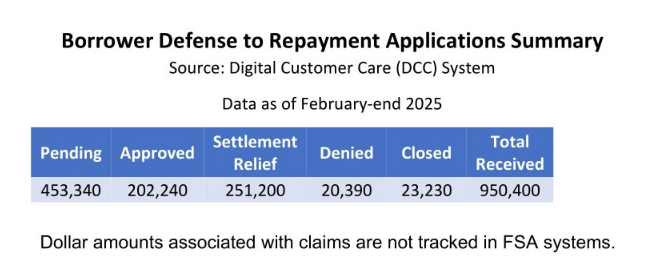
The Higher Education Inquirer has received information today from the US Department of Education about Borrower Defense to Repayment claims. Here are the results from ED FOIA 25-02047-F.
The opportunity to do something new within a sector that is challenged by legacy, tradition and archaic systems – and to drive real change. And to transform young people’s lives, of course…
Best work trip/Worst work trip?
Difficult, as there have been so many. Corny as it sounds, perhaps my best trip is the first trip I ever made – to Cyprus, the British Council Clearing Fair in August 2007. I had just started as Europe officer at London Metropolitan University, and it was my first time ever to travel for work. I can still remember walking into my poolside hotel room in the Hilton Park and pinching myself. I couldn’t believe my luck!
I met some great people that trip (again, poolside, and there may have been some cocktails involved) but mostly, it was a first realisation of how the work we do within this industry really matters. So I guess it was a trip of great promise – and in hindsight, one that cemented my subsequent career, and passion for what I do.
Worst – I could talk about being tear-gassed in Istanbul, stuck in a riot in the West Bank, ducking underneath the passenger seat of a car at a traffic light in Karachi for fear of standing out (as a blonde female) and being mugged, losing my luggage for a total of three months on a simple work trip to Berlin, being pushed against a wall by a frisky, groping male at a conference party who mistook my smile and friendliness for consent… but ultimately we are the sum of all our experiences and even the not-so-good ones make for good reflections and stories to tell.
If you could learn a language instantly, which would you pick and why?
Spanish. I am now at day 1,565 of Duolingo and still struggling. My husband and I got stuck in Spain during the pandemic and randomly ended up buying a house there, so we have been going back and forth a lot ever since. It would make my life a lot easier if I could instantly become fluent.
What makes you get up in the morning?
Birds singing outside my window. An over-enthusiastic dog named Ted Hilton. The sense of duty to complete my Spanish Duolingo lesson (see above).
Champion/cheerleader which we should all follow and why?
So many! In all honesty, I have met so many great people over the years, along the way – some of whom are now very close friends. I think all of us are doing our part in making a difference. But if I were to give one shoutout – one that’s only fitting considering this is The PIE – it’s Amy Baker. From humble beginnings around a kitchen table to what The PIE has grown into now, all with such grace, humility, great insight and kindness, and by building a kick-a*se team.
Best international ed conference and why
I loved the Innovative Universities Summit hosted in Korea by the New Challenge Foundation last year. Not only did it bring together some fascinating, passionate global leaders in the international higher education innovation space, the format was brilliant – intimate, lots of space for meaningful dialogue, and extra-curricular activities such as Makgeolli making and rainforest walks on the island of Jeju. It was possibly also the only four-day conference I ever attended where they gave us a weekend off in the middle to do our own thing. How civilised!
Worst conference food/beverage experience
I must admit, at any big conference such as NAFSA or ICEF or EAIE, I tend to sneak out for lunch. Not only do I despise the queues and the mediocre buffets, but I also like to take that moment in the day to NOT make small talk and find a nice place for lunch to enjoy a meal and glass of wine in silence.
Book or podcast recommendation for others in the sector?
I don’t really peruse any sector-related content, but I can recommend anyone to stick a copy of Alan Watts’ book of quotes There is never anything but the present in their travel bag. A reminder of how we can all benefit to pause and ground ourselves a little bit more in the here and now rather than rushing off to the next thing and find joy in the small things around us. To quote: “Instant coffee is a well-deserved punishment for being in a hurry to reach the future”. Amen.
Describe a project or initiative you’re currently working on that excites you
It’ll have to be The School of Innovation, an aspiring new university-in-the-making that I am currently consulting for as fractional co-CEO. An ambitious project aiming to launch with a first pilot cohort in the fall of 2025, TSOI is building a new university solely focused on the study, advancement and application of innovation.