Math anxiety isn’t just about feeling nervous before a math test. It’s been well-known for decades that students who are anxious about math tend to do worse on math tests and in math classes.
But recently, some of us who research math anxiety have started to realize that we may have overlooked a simple yet important reason why students who are anxious about math underperform: They don’t like doing math, and as a result, they don’t do enough of it.
We wanted to get a better idea of just what kind of impact math anxiety could have on academic choices and academic success throughout college. In one of our studies, we measured math anxiety levels right when students started their postsecondary education. We then followed them throughout their college career, tracking what classes they took and how well they did in them.
We found that highly math-anxious students went on to perform worse not just in math classes, but also in STEM classes more broadly. This means that math anxiety is not something that only math teachers need to care about — science, technology and engineering educators need to have math anxiety on their radar, too.
We also found that students who were anxious about math tended to avoid taking STEM classes altogether if they could. They would get their math and science general education credits out of the way early on in college and never look at another STEM class again. So not only is math anxiety affecting how well students do when they step into a STEM classroom, it makes it less likely that they’ll step into that classroom in the first place.
This means that math anxiety is causing many students to self-sort out of the STEM career pipeline early, closing off career paths that would likely be fulfilling (and lucrative).
Our study’s third major finding was the most surprising. When it came to predicting how well students would do in STEM classes, math anxiety mattered even more than math ability. Our results showed that if you were a freshman in college and you wanted to do well in your STEM classes, you would likely be better off reducing your math anxiety than improving your math ability.
We wondered: How could that be? How could math anxiety — how you feel about math — matter more for your academic performance than how good you are at it? Our best guess: avoidance.
If something makes you anxious, you tend to avoid doing it if you can. Both in our research and in that of other researchers, there’s been a growing understanding that in addition to its other effects, math anxiety means that you’ll do your very best to engage with math as little as possible in situations where you can’t avoid it entirely.
In some of our other work, we found that math-anxious students were less interested in doing everyday activities precisely to the degree that they thought those activities involved math. The more a math-anxious student thought an activity involved math, the less they wanted to do it.
If math anxiety is causing students to consistently avoid spending time and effort on their classes that involve math, this would explain why their STEM grades suffer.
What does all of this mean for educators? Teachers need to be aware that students who are anxious about math are less likely to engage with math during class, and they’re less likely to put in the effort to study effectively. All of this avoidance means missed opportunities for practice, and that may be the key reason why many math-anxious students struggle not only in math class, but also in science and engineering classes that require some math.
Math anxiety researchers are at the very beginning of our journey to understand ways to make students who are anxious about math stop avoiding it but have already made some promising suggestions for how teachers can help. One study showed that a direct focus on study skills could help math-anxious students.
Giving students clear structure on how they should be studying (trying lots of practice problems) and how often they should be studying (spaced out over multiple days, not just the night before a test) was effective at helping students overcome their math anxiety and perform better.
Especially heartening was the fact that the effects seen during the study persisted in semesters beyond the intervention; these students tended to make use of the new skills into the future.
Math anxiety researchers will continue to explore new ways to help math-anxious students fight their math-avoidant proclivities. In the meantime, educators should do what they can to help their students struggling with math anxiety overcome this avoidance tendency — it could be one of the most powerful ways a math teacher can help shape their students’ futures.
Rich Daker is a researcher and founder of Pinpoint Learning, an education company that makes research-backed tools to help educators identify why their students make mistakes. Ian Lyons is an associate professor in Georgetown University’s Department of Psychology and principal investigator for the Math Brain Lab.
The Hechinger Report provides in-depth, fact-based, unbiased reporting on education that is free to all readers. But that doesn’t mean it’s free to produce. Our work keeps educators and the public informed about pressing issues at schools and on campuses throughout the country. We tell the whole story, even when the details are inconvenient. Help us keep doing that.
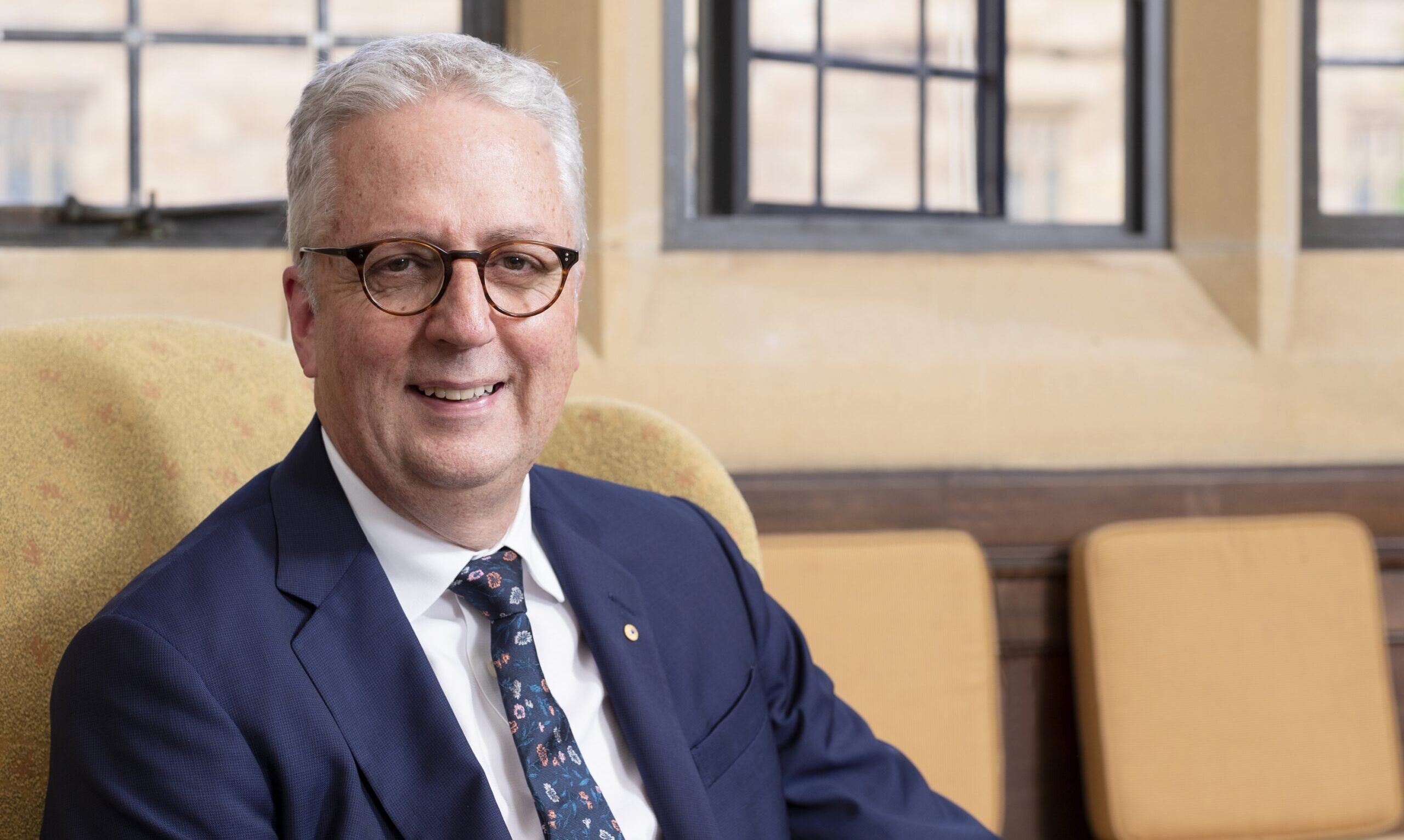
Peter Hoj (left) and David Lloyd. Picture: Dean Martin
The new leaders of the merged Adelaide University are adamant the new institution will not be just a version of its parts, but an entirely unique place in curriculum and culture.
Please login below to view content or subscribe now.
Professor Mark Scott said teaching course enrolments are up 30 per cent compared to last year. Picture: Louise Cooper
Student teacher enrolments are bouncing back nationally after they dipped during the Covid-19 pandemic, fuelling positivity that the pipeline of graduates can ease the profession’s workforce shortage.
Please login below to view content or subscribe now.
As new graduation requirements go into effect in Indiana, more students will likely take college and career courses to prepare for life after high school. But making sure students can access these classes — and succeed in them — takes some patience and creativity.
When Sheridan High School teacher Jill Cali noticed her students struggling with the longer deadlines and open-ended questions typical of college assignments, she began to teach them how to break tasks into more manageable steps. Soon, her students were reaping the benefits.
Other roadblocks to students’ success in college courses, especially in rural communities like Sheridan, a town of 3,000 people in northwest Hamilton County, include accessing these credits and paying for them.
Cali said being part of the Rural Early College Network, sponsored by the Center of Excellence in Leadership of Learning at the University of Indianapolis, allows her students to earn college credits for free. The network also serves as a source of support, allowing her to exchange ideas with teachers at other schools.
“The struggles that students typically have in early college courses are some of the same things that prevent many students from being confident that they will find success in college,” Cali told Chalkbeat. “When students believe they don’t have the ability to be successful in completing college-level work, their first instinct is to shy away from it.”
Read on to learn more about how Cali approaches her early college classes.
This interview has been lightly edited for length.
How and when did you decide to become a teacher?
I decided to become a teacher during my sophomore year of college when I realized that I was not meant to be an accountant! I had always loved working with kids and had a natural talent in Spanish, so becoming a [Spanish] teacher seemed like a good fit. The longer I teach, the more sure I am that this was the right path for me. I was made to be a teacher.
What was the process like to become a dual-credit instructor?
Our superintendent suggested I pursue a Master of Science in Curriculum and Instruction so I would be able to teach the dual-credit Education Professions courses. During our conversation, he convinced me that the degree program would be flexible enough to work with my busy single parenting and teaching schedule and that I would see the return on my investment very quickly. He was right.
The following week, at the age of 42, I enrolled in a program to complete my master’s degree online, working at my own pace. I finished in six months, after working tirelessly to make sure that I only had to pay for one term.
In order to be approved as a dual-credit instructor, I had to coordinate with my high school’s higher education partner, Ivy Tech Community College. This involved submitting my [college and grad school] transcripts, along with a proposed syllabus for each of the courses I planned to teach. The process was honestly pretty quick and painless.
What’s your favorite lesson to teach and why?
In my Principles of Teaching class, the introduction to teaching course, I teach about differentiation and making accommodations for students with special needs. My very favorite lesson to teach is the one in which I give students various tasks, but each has a different limitation. Their reactions, creative thinking, and “aha moments” are the reason it is my favorite lesson. During that lesson, my students realize that some of the most basic tasks can be entirely impossible with just one small limitation. Their internalization of how frustrating learning can be for some of our students really helps us to move forward with the unit of study in a productive manner.
Tell us about your own experience with school and how it affects your work today.
Throughout my childhood and into adulthood, I was a student who strived for excellence in every subject. Realizing that I finally understood a concept I had been trying to grasp or persevering through a tough problem to find an answer always gave me immense satisfaction. I loved the “light bulb moments” as a student, but I enjoy them even more now that I am the teacher. A natural lifelong learner myself, it has always been my goal to inspire my students to be inquisitive and curious investigators of anything that interests them.
How is your early college classroom different from a standard high school classroom?
At a glance, my classroom looks a bit more like a college classroom than many high school classrooms. I was fortunate enough to be able to use grant money to furnish the room with flexible seating options. What you can’t see is that my early college students work with elementary students, getting experience in the field. The flexible seating allows them to move seamlessly between working independently and cooperating and creating with their peers.
How do you help students adjust to those expectations?
Students in early college learn that when something feels overwhelming or difficult, they have the tools to tackle it on their own. This doesn’t mean that they can’t ask for help or guidance. It means that before asking for help, students should make sure they have exhausted all options for figuring it out on their own.
I send a letter to each student and one home to their caregivers prior to the start of school in the fall, explaining what dual-credit means and what the expectations will look like in my early college class. This ensures that there is no confusion about what will be expected of early college students and also opens the lines of communication with students and families.
Having taught these courses for a few years, I’ve found that students struggle with a course that has larger assignments and more time between deadlines. The first thing I do to support them in addressing this is to show them how they can break larger assignments and projects into smaller tasks on their own. Many students are used to having teachers do this for them. I show them how they can establish their own, smaller deadlines based on what they know about their personal schedule, how fast they tend to work, and the support they think they might need.
Students also find it challenging to write nearly everything for their dual-credit courses using a formal tone with proper grammar and spelling. In addition, students tend to have trouble answering multi-part questions … particularly when they are higher-level thinking questions. I spend a full class period — more, if needed — showing them and having them practice how to appropriately respond to the types of writing prompts and questions they will typically see in their early college courses.
Another area where students tend to struggle is with attendance and deadlines. During the COVID-19 pandemic, many schools insisted that students be shown grace in both of those areas. Unfortunately, this instilled in them the idea that as long as they completed all graded assignments, it didn’t matter whether they participated in class or how late assignments were submitted. Though their learning is always my primary focus, much of what my students learn builds on itself. In addition, much of the learning takes place through class discussions.
What are some barriers your students face to postsecondary opportunities, and how does the Rural Early College Network help you help them overcome those?
The greatest barrier to postsecondary opportunities for students in my school is the financial barrier. The dual-credit courses we offer are all free to our students, so when they successfully complete those courses, the number of semesters that will be required for them to complete their degree can be reduced. This translates to money saved for the student and makes their postsecondary options more affordable and attainable.
Rural Early College Network schools meet throughout the school year to share ideas and support each other in building programs that provide our students with the tools they need to be successful in our classrooms, in college, and beyond.
What’s the best advice you’ve ever received, and how have you put it into practice?
The best advice I have ever received with regard to teaching is, “Student behavior and choices are almost never personal attacks against the teacher.” It was the great reminder that my teenage students’ brains are not fully developed. When they make poor choices or when they act out, it nearly never has anything to do with how they feel about me or anything even relating to me. Letting that go and remembering to see their behaviors as something completely separate from me has really made it much easier to create consequences when appropriate, support my students when needed, and establish a welcoming environment in which every student starts fresh every day.
This story was originally published by Chalkbeat. Chalkbeat is a nonprofit news site covering educational change in public schools. Sign up for their newsletters at ckbe.at/newsletters.
The Department of Veterans Affairs, Office of Inspector General (VA OIG), is no longer accepting tips from veterans who have been ripped off by predatory subprime colleges–at least not via email. The Higher Education Inquirer, at one time, was an important source for information for the VA OIG, but the VA’s watchdogs stopped corresponding with us a few years ago for no apparent reason. This failure to communicate is part of a longstanding pattern of indifference by the US Government (VA, DOD, ED, and DOL) and veterans’ organizations towards military servicemembers, veterans, and their families who are working to improve their job skills and job prospects.
[Editor’s note: The Higher Education Inquirer is presenting this press release for information only. This is not an endorsement of the organizations mentioned in article.]
Ivy League institutions like Yale, Harvard, and MIT top the list, spending over $100K per student on academic support.
Yale University leads in both categories, investing $225K per student in academic support and $53K in student services.
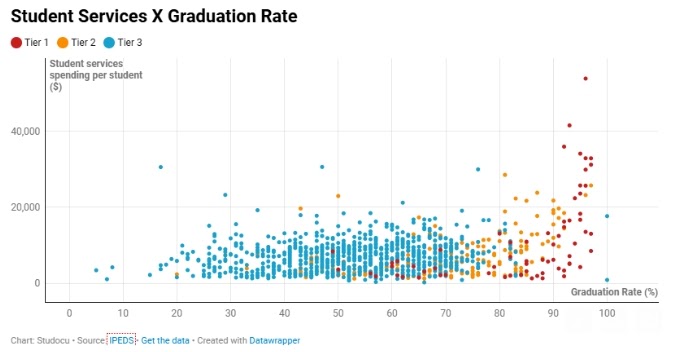
A modest but consistent correlation was found between student support spending and graduation rates, particularly among top-tier institutions.
A new report by Studocu highlights the U.S. colleges investing most heavily in academic and student services and explores whether that support is linked to graduation outcomes.
Drawing on the most recent fiscal year data from IPEDS (2023), the study found a positive relationship between support spending and graduation rates, suggesting that per-student spending on departments which directly support student learning and wellbeing improve outcomes.
The analysis covered over 1,000 degree-granting institutions across the United States, each enrolling more than 100 undergraduate students. Financial data was compared against graduation rates to uncover trends in institutional spending.
The findings show that top-tier schools like Yale, Harvard, and MIT spend significantly more per student than the national average:
National average for academic support: $2,933 per student
National average for student services: $4,828 per student
Top Institutions on Academic Support per Student
Top Institutions on Student Services per Student
When comparing graduation rates to institutional spending, the study found:
A 0.259 correlation between academic support spending and graduation rates
A 0.23 correlation between student services spending and graduation rates
While the correlations indicate a positive relationship between support spending and graduation rates, it’s important to note that other factors also play a role.
However, the findings still suggest that well-funded student support services may provide meaningful benefits especially for students who might otherwise might have failed.
About Studocu:
StuDocu is a student-to-student knowledge exchange platform where students can share knowledge, college notes, and study guides.
Methodology
Institutions were selected based on the following criteria:
Enrollment of over 100 undergraduate students
Offering degree-granting programs
For multi-campus institutions, the largest campus was used
Institutions were divided into tiers:
Tier 1: This typically includes Ivy League schools (Harvard, Yale, Princeton, etc.), as well as other top-tier highly selective institutions such as Stanford, MIT, and Caltech.
Tier 2: This category can include strong public universities, well-regarded liberal arts colleges, and other private universities. Examples might include schools like NYU, the University of Michigan.
Tier 3: These institutions are often regional colleges and universities.
Community colleges and technical colleges were not included in the study.
Spending was calculated per undergraduate student, and graduation rate was used as the primary indicator of academic success.
Sources
Data for this analysis was obtained from the IPEDS, including:
Graduation rates
Undergraduate enrolment
Academic support and student services expenditures
Caveats
Financial data is current through the 2023 fiscal year * the latest available data
Institutional reporting standards may vary, between public, private non-profit, and for-profit institutions
Decatur, Illinois, has been losing factory jobs for years. A training program at a local community college promises renewal and provides training for students from disenfranchised communities
DECATUR, IL. — A fistfight at a high school football game nearly defined Shawn Honorable’s life.
It was 1999 when he and a group of teen boys were expelled and faced criminal charges over the incident. The story of the “Decatur Seven” drew national headlines and protests led by the Rev. Jesse Jackson, who framed their harsh treatment as blatant racism. The governor eventually intervened, and the students were allowed to attend alternative schools.
Honorable, now 41, was encouraged by support “from around the world,” but he said the incident was traumatizing and he continued to struggle academically and socially. Over the years, he dabbled in illegal activity and was incarcerated, most recently after a 2017 conviction for accepting a large amount of marijuana sent through the mail.
Today, Honorable is ready to start a new chapter, having graduated with honors last week from a clean energy workforce training program at Richland Community College, located in the Central Illinois city of Decatur. He would eventually like to own or manage a solar company, but he has more immediate plans to start a solar-powered mobile hot dog stand. He’s already chosen the name: Buns on the Run.
“By me going back to school and doing this, it shows my nephews and my little cousins and nieces that it is good to have education,” Honorable said. “I know this is going to be the new way of life with solar panels. So I’ll have a step up on everyone. When it comes, I will already be aware of what’s going on with this clean energy thing.”
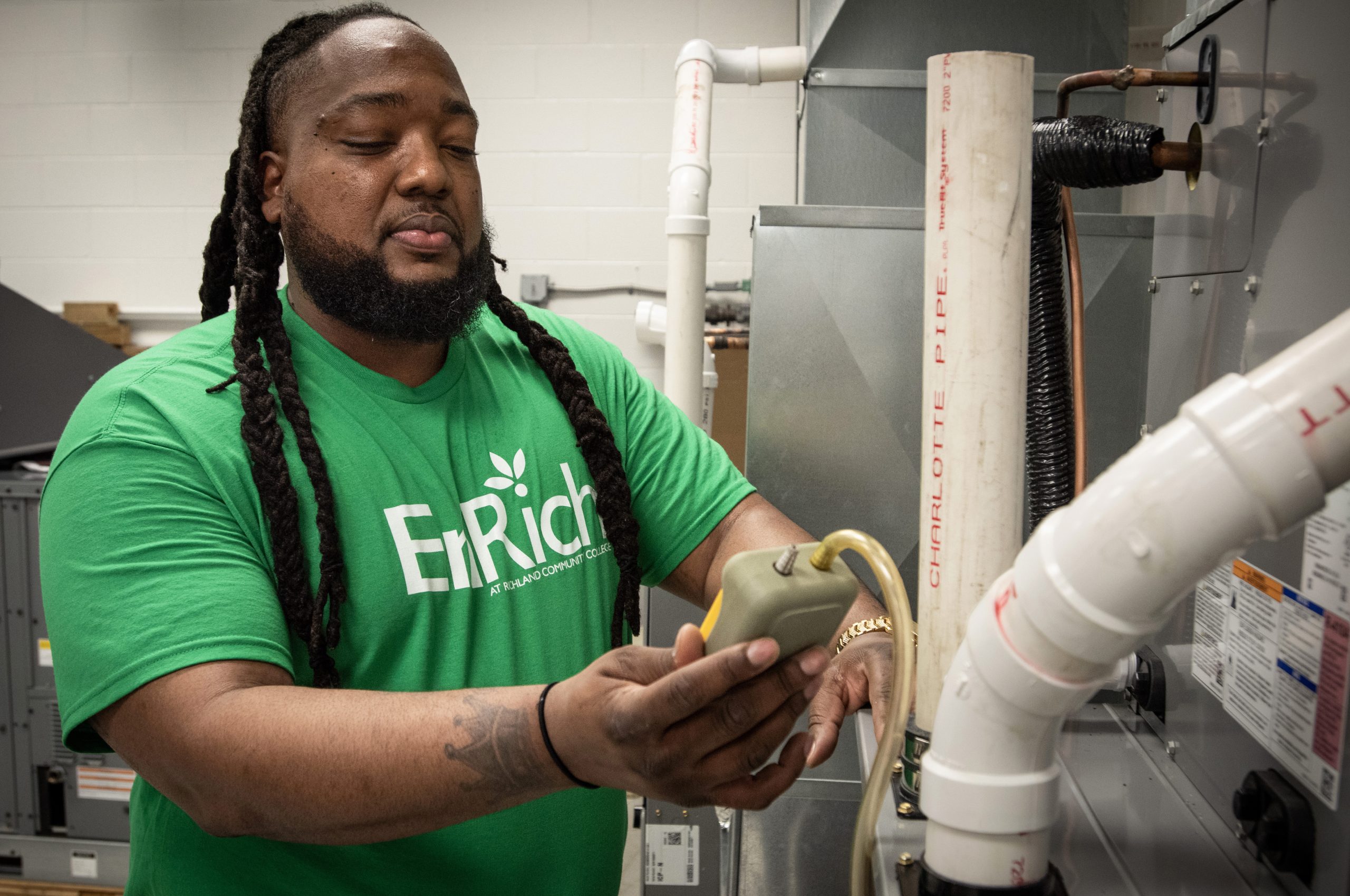
Shawn Honorable graduated with honors last week from Richland Community College’s clean energy workforce training program in Decatur, Illinois, part of a network of hubs funded by the state’s 2021 Climate and Equitable Jobs Act. Credit: Lloyd DeGrane/Canary Media
After decades of layoffs and factory closings, the community of Decatur is also looking to clean energy as a potential springboard.
Located amid soybean fields a three-hour drive from Chicago, the city was long known for its Caterpillar, Firestone Tire, and massive corn-syrup factories. Industrial jobs have been in decline for decades, though, and high rates of gun violence, child poverty, unemployment, and incarceration were among the reasons the city was named a clean energy workforce hub funded under Illinois’ 2021 Climate and Equitable Jobs Act (CEJA).
Decatur’s hub, based at Richland Community College, is arguably the most developed and successful of the dozen or so established statewide. That’s thanks in part to TCCI Manufacturing, a local, family-owned factory that makes electric vehicle compressors. TCCI is expanding its operations with a state-of-the-art testing facility and an on-site campus where Richland students will take classes adjacent to the manufacturing floor. The electric truck company Rivian also has a factory 50 miles away.
“The pieces are all coming together,” Kara Demirjian, senior vice president of TCCI Manufacturing, said by email. “What makes this region unique is that it’s not just about one company or one product line. It’s about building an entire clean energy ecosystem. The future of EV manufacturing leadership won’t just be on the coasts — it’s being built right here in the Midwest.”
Powering Rural Futures:Clean energy is creating new jobs in rural America, generating opportunities for people who install solar panels, build wind turbines, weatherize homes and more. This five-part series from the Rural News Network explores how industry, state governments and education systems are training this growing workforce.
Related: Want to read more about how climate change is shaping education? Subscribe toour free newsletter.
The Decatur CEJA program has also flourished because it was grafted onto a preexisting initiative, EnRich, that helps formerly incarcerated or otherwise disenfranchised people gain new skills and employment. The program is overseen by the Rev. Courtney Carson, a childhood friend of Honorable and another member of the Decatur Seven.
“So many of us suffer significantly from our unmet needs, our unhealed traumas,” said Carson, who was jailed as a young man for gun possession and later drag racing. With the help of mentors including Rev. Jackson and a college basketball coach, he parlayed his past into leadership, becoming associate pastor at a renowned church, leading a highway construction class at Richland, and in 2017 being elected to the same school board that had expelled him.
Carson, now vice president of external relations at the community college, tapped his own experience to shape EnRich as a trauma-informed approach, with wraparound services to help students overcome barriers — from lack of childcare to PTSD to a criminal record. Carson has faith that students can overcome such challenges to build more promising futures, like Decatur itself has done.
“We have all these new opportunities coming in, and there’s a lot of excitement in the city,” Carson said. “That’s magnificent. So what has to happen is these individuals who suffered from closures, they have to be reminded that there is hope.”
Richland Community College’s clean energy jobs training starts with an eight-week life skills course that has long been central to the larger EnRich program. The course uses a Circle of Courage practice inspired by Indigenous communities and helps students prepare to handle stressful workplace situations like being disrespected or even called a racial slur.
“Being called the N-word, couldn’t that make you want to fight somebody? But now you lose your job,” said Carson. “We really dive deep into what’s motivating their attitude and those traumas that have significantly impacted their body to make them respond to situations either the right way or the wrong way.”
The training addresses other dynamics that might be unfamiliar to some students — for example, some male students might not be prepared to be supervised by a woman, Carson noted, or others might not be comfortable with LGBTQ+ coworkers.
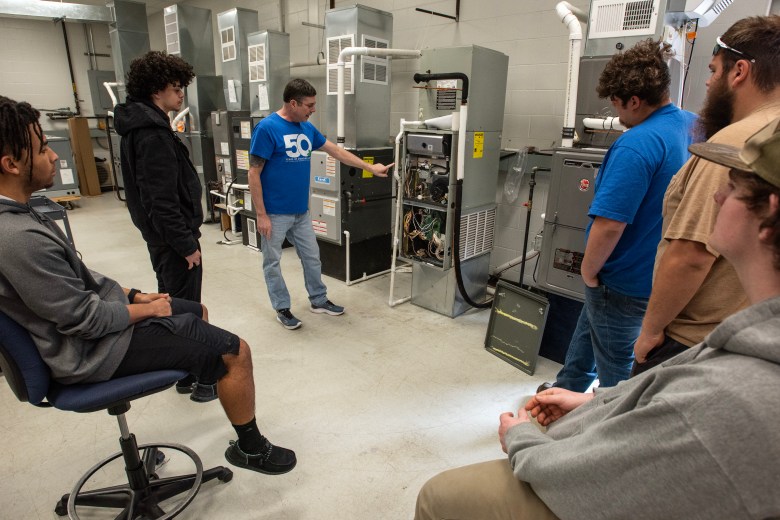
Karl Evans instructs Richland Community College students on the inner workings of a gas furnace. Credit: Lloyd DeGrane/Canary Media
Life skills are followed by a construction math course crucial to many clean energy and other trades jobs. During a recent class, 24-year-old Brylan Hodges joked with the teacher while converting fractions to decimals and percentages on the whiteboard. He explained that he moved from St. Louis to Decatur in search of opportunity, and he hopes to become a property manager overseeing solar panel installation and energy-efficiency upgrades on buildings.
Students take an eight-hour primer in clean energy fields including electric vehicles, solar, HVAC, and home energy auditing. Then they choose a clean energy track to pursue, leading to professional certifications as well as a chance to continue at Richland for an associate degree. Under the state-funded program, students are paid for their time attending classes.
Marcus James was part of the first cohort to start the program last October, just days after his release from prison.
He was an 18-year-old living in Memphis, Tennessee, when someone shot at him, as he describes it, and he fired back, with fatal consequences. He was convicted of murder and spent 12 years behind bars. After his release he made his way to Decatur, looking for a safer place to raise his kids. Adjusting to life on the outside wasn’t easy, and he ended up back in prison for a year and a half on DUI and drug possession charges.
Following his release, he was determined to turn his life around.
“After I brought my kids up here, I end up going back to prison. But at that moment, I realized, man, I had to change,” James told a crowd at an event celebrating the clean jobs program in March.
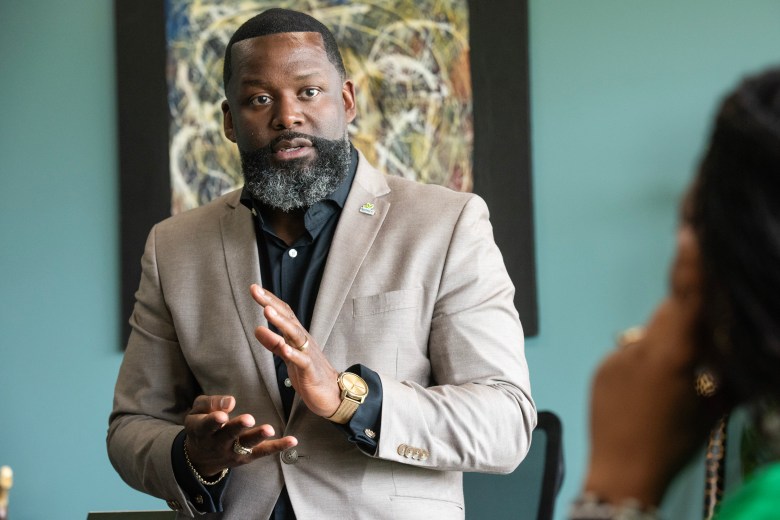
The Rev. Courtney Carson, vice president of external relations at the community college. Credit: Lloyd DeGrane/Canary Media
James said that at first, he showed up late to every class. But soon the lessons sank in, and he was never late again. He always paid attention when people talked, and he gained new confidence.
“As long as I put my mind to it, I can do it,” said James, who would like to work as a home energy auditor. Richland partners with the energy utility Ameren to place trainees in such positions.
“I like being out in the field, learning new stuff, dealing with homes, helping people,” James said, noting he made energy-efficiency improvements to his own home after the course.
Illinois’ 2017 Future Energy Jobs Act (FEJA) launched the state’s clean energy transition, baking in equity goals that prioritize opportunities for people who benefited least and were harmed most by the fossil fuel economy. It created programs to deploy solar arrays and provide job training in marginalized and environmental justice communities.
FEJA’s rollout was rocky. Funding for equity-focused solar installations went unspent while workforce programs struggled to recruit trainees and connect them with jobs. The pandemic didn’t help. The follow-up legislation, CEJA, expanded workforce training programs and remedied snafus in the original law.
Melissa Gombar is principal director of workforce development programs for Elevate, a Chicago-based national nonprofit organization that oversaw FEJA job training and subcontracts for a Chicago-area CEJA hub. Gombar said many community organizations tasked with running FEJA training programs were relatively small and grassroots, so they had to scramble to build new financial and human resources infrastructure.
“They have to have certain policies in place for hiring and procurement. The influx of grant money might have doubled their budget,” Gombar said. Meanwhile, the state employees tasked with helping the groups “are really talented and skilled, trying their best, but they’re overburdened because of the large lift.”
CEJA, by contrast, tapped community colleges like Richland, which already had robust infrastructure and staffing. CEJA also funds community organizations to serve as “navigators,” using the trust and credibility they’ve developed in communities to recruit trainees.
Richland Community College received $2.6 million from April 2024 through June 2025, and the Community Foundation of Macon County, the hub’s navigator, received $440,000 for the same time period. The other hubs similarly received between $1 million and $3.3 million for the past year, and state officials have said the same level of funding will be allocated for each of the next two years, according to the Illinois Clean Jobs Coalition.
CEJA hubs also include social service providers that connect trainees with wraparound support; businesses like TCCI that offer jobs; and affiliated entrepreneur incubators that help people start their own clean energy businesses. CEJA also funded apprenticeship and pre-apprenticeship programs with labor unions, which are often a prerequisite for employment in utility-scale solar and wind.
“The sum of the parts is greater than the whole,” said Drew Keiser, TCCI vice president of global human resources. “The navigator is saying, ‘Hey, I’ve connected with this portion of the population that’s been overlooked or underserved.’ OK, once you get them trained, send their resumes to me, and I’ll get them interviewed. We’re seeing a real pipeline into careers.”
The hub partners go to great lengths to aid students — for example, coordinating and often paying for transportation, childcare, or even car repairs.
“If you need some help, they always there for you,” James said.
In 1984, TCCI began making vehicle compressors in a Decatur plant formerly used to build Sherman tanks during World War II. A few decades later, the company began producing compressors for electric vehicles, which are much more elaborate and sensitive than those for internal combustion engines.
In August 2023, Gov. JB Pritzker joined TCCI President Richard Demirjian, the Decatur mayor, and college officials for the groundbreaking of an Electric Vehicle Innovation Hub, which will include a climatic research facility — basically a high-tech wind tunnel where companies and researchers from across the world can send EV chargers, batteries, compressors, and other components for testing in extreme temperatures, rain, and wind.
A $21.3 million capital grant and a $2.2 million electric vehicle incentive from the state are funding the wind tunnel and the new facilities where Richland classes will be held. In 2022, Pritzker announced these investments as furthering the state goal of 1 million EVs on the road by 2030.
Far from the gritty industrial environs that likely characterized Decatur workplaces of the past, the classrooms at TCCI feature colorful decor, comfortable armchairs, and bright, airy spaces adjacent to pristine high-tech manufacturing floors lined with machines.
“This hub is a game changer,” said Keiser, noting the need for trained tradespeople. “As a country, we place a lot of emphasis on kids going to college, and maybe we’ve kind of overlooked getting tangible skills in the hands of folks.”
A marketing firm founded by Kara Demirjian – Richard Demirjian’s sister – and located on-site with TCCI also received clean energy hub funds to promote the training program. This has been crucial to the hub’s success, according to Ariana Bennick, account executive at the firm, DCC Marketing. Its team has developed, tested, and deployed digital billboards, mailers, ads, Facebook events, and other approaches to attract trainees and business partners.
“Being a part of something here in Decatur that’s really leading the nation in this clean energy initiative is exciting,” Bennick said. “It can be done here in the middle of the cornfields. We want to show people a framework that they can take and scale in other places.”
With graduation behind him, Honorable is planning the types of hot dogs and sausages he’ll sell at Buns on the Run. He said Tamika Thomas, director of the CEJA program at Richland, has also encouraged him to consider teaching so he can share the clean energy skills he’s learned with others. The world seems wide open with possibilities.
“A little at a time — I’m going to focus on the tasks in front of me that I’m passionate about, and then see what’s next,” Honorable said. He invoked a favorite scene from the cartoon TV series “The Flintstones,” in which the characters’ leg power, rather than wheels and batteries, propelled vehicles: “Like Fred and Barney, I’ll be up and running.”
The Hechinger Report provides in-depth, fact-based, unbiased reporting on education that is free to all readers. But that doesn’t mean it’s free to produce. Our work keeps educators and the public informed about pressing issues at schools and on campuses throughout the country. We tell the whole story, even when the details are inconvenient. Help us keep doing that.
Tuesday Willaredt knew her older daughter, Vivienne, struggled to read.
She tentatively accepted teachers’ reassurances and the obvious explanations: Remote learning during the COVID pandemic was disruptive. Returning to school was chaotic. All students were behind.
Annie Watson was concerned about her son Henry’s performance in kindergarten and first grade.
But his teachers weren’t. There was a pandemic, they said. He was a boy. Henry wasn’t really lagging behind his classmates.
So Willaredt and Watson kept asking questions. So did Tricia McGhee, Abbey and Aaron Dunbar, Lisa Salazar Tingey, Kelly Reardon and T.C. — all parents who spoke to The Beacon about getting support for their kids’ reading struggles. (The Beacon is identifying T.C. by her initials because she works for a school district.)
After schools gave reassurances or rationalizations or denied services, the parents kept raising concerns, seeking advice from teachers and fellow parents and pursuing formal evaluations.
Eventually, they all reached the same conclusion. Their children had dyslexia, a disability that makes it more difficult to learn to read and write well.
They also realized something else. Schools — whether private, public, charter or homeschool — aren’t always equipped to immediately catch the problem and provide enough support, even though some estimates suggest up to 20% of students have dyslexia symptoms.
Instead, the parents took matters into their own hands, seeking diagnoses, advocating for extra help and accommodations, moving to another district or paying for tutoring or private school.
“You get a diagnosis from a medical professional,” Salazar Tingey said. “Then you go to the school and you’re like, ‘This is what they say is best practice for this diagnosis.’ And they’re like, ‘That’s not our policy.’”
Recognizing dyslexia
It wasn’t until Vivienne, now 12, was in sixth grade and struggling to keep up at Lincoln College Preparatory Academy Middle School that a teacher said the word “dyslexic” to Willaredt.
After the Kansas City Public Schools teacher mentioned dyslexia, Willaredt made an appointment at Children’s Mercy Hospital, waited months for an opening and ultimately confirmed that Vivienne had dyslexia. Her younger daughter Harlow, age 9, was diagnosed even more recently.
Willaredt now wonders if any of Vivienne’s other teachers suspected the truth. A reading specialist at Vivienne’s former charter school had said her primary problem was focus.
“There’s this whole bureaucracy within the school,” she said. “They don’t want to call it what it is, necessarily, because then the school’s on the hook” to provide services.
Missouri law requires that students in grades K-3 be screened for possible dyslexia, said Shain Bergan, public relations coordinator for Kansas City Public Schools. If they’re flagged, the school notifies their parents and makes a reading success plan.
Schools don’t formally diagnose students, though. That’s something families can pursue — and pay for — on their own by consulting a health professional.
“Missouri teachers, by and large, aren’t specially trained to identify or address dyslexia in particular,” Bergan wrote in an email. “They identify and address specific reading issues students are having, whether it’s because the student has a specific condition or not.”
Bergan later added that KCPS early elementary and reading-specific teachers complete state-mandated dyslexia training through LETRS (Language Essentials for Teachers of Reading and Spelling), an intensive teacher education program that emphasizes scientific research about how students learn to read.
In an emailed statement, the North Kansas City School District said staff members “receive training on dyslexia and classroom strategies,” and the district uses a screening “to help identify students who may need additional reading support.”
Public school students with dyslexia or another disability might be eligible for an individualized education program, or IEP, a formal plan for providing special education services which comes with federal civil rights protections.
But a diagnosis isn’t enough to prove eligibility, and developing an IEP can be a lengthy process that requires strong advocacy from parents. Students who don’t qualify might be eligible for accommodations through a 504 plan.
A spokesperson for Olathe Public Schools said in an email that the district’s teachers participate in state-mandated dyslexia training but don’t diagnose dyslexia.
The district takes outside diagnoses into consideration, but “if a student is making progress in the general education curriculum and able to access it, then the diagnosis alone would not necessarily demonstrate the need for support and services.”
Why dyslexia gets missed
Some families find that teachers dismiss valid concerns, delaying diagnoses that parents see as key to getting proper support.
Salazar Tingey alerted teachers that her son, Cal, was struggling with reading compared to his older siblings. Each year, starting in an Iowa preschool and continuing after the family moved to the North Kansas City School District, she heard his issues were common and unconcerning.
She felt validated when a Sunday school teacher suggested dyslexia and recommended talking to a pediatrician.
After Cal was diagnosed, Salazar Tingey asked his second grade teacher about the methods she used to teach dyslexic kids. She didn’t expect to hear, “That’s not really my specialty.”
“I guess I thought that if you’re a K-3 teacher, that would be pretty standard,” she said. “I don’t think (dyslexia is) that uncommon.”
Louise Spear-Swerling, a professor emerita in the Department of Special Education at Southern Connecticut State University, said estimates of the prevalence of dyslexia range from as high as 20% to as low as 3 to 5%. She thinks 5 to 10% is reasonable.
“That means that the typical general education teacher, if you have a class of, say, 20 students, will see at least one child with dyslexia every year — year after year after year,” she said.
Early intervention is key, Spear-Swerling said, but it doesn’t always happen.
To receive services for dyslexia under federal special education guidelines, students must have difficulty reading that isn’t primarily caused by something like poor instruction, another disability, economic disadvantage or being an English language learner, she said. And schools sometimes misidentify the primary cause.
Tricia McGhee, director of communications at Revolucion Educativa, a nonprofit that offers advocacy and support for Latinx families, has had that experience.
She said her daughter’s charter school flagged her issues with reading but said it was “typical that all bilingual or bicultural children were behind,” McGhee said. That didn’t sound right because her older child was grade levels ahead in reading.
“The first thing they told me is, ‘You just need to make sure to be reading to her every night,’” McGhee said. “I was like, ‘Thanks. I’ve done that every day since she was born.’”
McGhee is now a member of the KCPS school board. But she spoke to The Beacon before being elected, in her capacity as a parent and RevEd staff member.
Dyslexia also may not stand out among classmates who are struggling for various reasons.
Annie Watson, whose professional expertise is in early childhood education planning, strategy and advocacy, said some of Henry’s peers lacked access to high-quality early education and weren’t prepared for kindergarten.
“His handwriting is so poor,” she remembers telling his teacher.
The teacher assured her that Henry’s handwriting was among the best in the class.
“Let’s not compare against his peers,” Watson said. “Let’s compare against grade level standards.”
Receiving services for dyslexia
Watson cried during a Park Hill parent teacher conference when a reading interventionist said she was certified in Orton-Gillingham, an instruction method designed for students with dyslexia.
In an ideal world, Watson said, the mere mention of a teaching approach wouldn’t be so fraught.
Annie Watson with her son Henry, 11, before track practice. Henry went through intensive tutoring to help him learn to read well after his original school didn’t provide the services he needed. (Vaughn Wheat/The Beacon)
“I would love to know less about this,” she said. “My goal is to read books with my kids every night, right? I would love for that to just be my role, and that hasn’t been it.”
By that point, Watson’s family had spent tens of thousands of dollars on Orton-Gillingham tutoring for Henry through Horizon Academy, a private school focused on students with dyslexia and similar disabilities.
They had ultimately moved to the Park Hill district, not convinced that charter schools or KCPS had enough resources to provide support.
“I felt so guilty in his charter school,” Watson said. “There were so many kids who needed so many things, and so it was hard to advocate for my kid who was writing better than a lot of the kids.”
So the idea that Henry’s little sister — who doesn’t have dyslexia — could get a bit of expert attention seamlessly, during the school day and without any special advocacy, made Watson emotional.
“Henry will never get that,” she said.
While Watson wonders if public schools in Park Hill could have been enough for Henry had he started there earlier, some families sought help outside of the public school system entirely.
The Reardon and Dunbar families, who eventually received some services from their respective schools, each enrolled a child full-time in Horizon Academy after deciding the services weren’t enough.
Kelly Reardon said her daughter originally went to a private Catholic school.
“With one teacher and 26 kids, there’s just no way that she would have gotten the individualized intervention that she needed,” she said.
The Dunbars’ son, Henry, had been homeschooled and attended an Olathe public school part-time.
Abbey Dunbar said Henry didn’t qualify for services from the Olathe district in kindergarten, but did when the family asked again in second grade. Henry has a diagnosed severe auditory processing disorder, and his family considers him to have dyslexia based on testing at school.
She said the school accommodated the family’s part-time schedule and the special education services they gave to Henry genuinely helped.
“I never want to undercut what they gave and what they did for him, because we did see progress,” Dunbar said. “But we need eight hours a day (of support), and I don’t think that’s something they could even begin to give in public school. There’s so many kids.”
T.C., whose daughters attended KCPS when they were diagnosed, also decided she couldn’t rely on services provided by the school alone. One daughter didn’t qualify for an IEP because the school said she was already achieving as expected for her IQ level.
In the end, T.C. said, her daughters did get the support they needed “because I paid for it.”
She found a tutor who was relatively inexpensive because she was finishing her degree. But at $55 per child, per session once or twice a week, tutoring still ate into the family’s budget and her children’s free time.
“If they were learning what they needed to learn at school… we wouldn’t have had that financial burden,” she said. Tutoring also meant “our kids couldn’t participate in other activities outside of school.”
Support and accommodations
Tuesday Willaredt is still figuring out exactly what support Vivienne needs.
Options include a KCPS neighborhood school, a charter school that extends through eighth grade or moving to another district. Outside tutoring will likely be part of the picture regardless.
Willaredt is worried that her kids aren’t being set up to love learning.
Vivienne, 12 (left), and Harlow, 9, were both diagnosed with dyslexia earlier this year. (Vaughn Wheat/The Beacon)
“That’s where I get frustrated,” she said. “If interventions were put in earlier — meaning the tutoring that I would have had to seek — these frustrations and sadness that is their experience around learning wouldn’t have happened.”
When Lisa Salazar Tingey brought Cal’s dyslexia diagnosis to his school, he didn’t qualify for an IEP. But his classroom teacher offered extra support that seemed to catch him up.
In following years, though, Salazar Tingey has worried about Cal’s performance stagnating and considered formalizing his accommodations through a 504 plan.
She wants Cal, now 10, to be able to use things like voice to text or audiobooks if his dyslexia is limiting his intellectual exploration.
Before his diagnosis, she and her husband noticed that every school writing assignment Cal brought home was about volcanoes, even though “it wasn’t like he was a kid who was always talking about volcanoes.”
When he was diagnosed, they learned that sticking to familiar topics can be a side effect of dyslexia.
“He knows how to spell magma and lava and volcano, and so that’s all he ever wrote about,” Salazar Tingey said. “That’s sad to me. I want him to feel that the world is wide open, that he can read about anything.”
In the latest move in the government’s dramatic feud with the US’s oldest university – and a major victory for international education sector – district judge Allison Burroughs issued a temporary restraining order yesterday, halting the directive stripping Harvard of its eligibility to enrol students from overseas.
It follows the institution’s swift decision to mount a legal challenge against the administration’s demands that it hand over all disciplinary records for international students from the last five years if it wanted to regain its SEVP status.
In its lawsuit, Harvard said: “With the stroke of a pen, the government has sought to erase a quarter of Harvard’s student body, international students who contribute significantly to the University and its mission.” The next hearing in the case will be held in Boston on May 29.
If it comes to pass, the ban on international student enrolments would significantly harm Harvard’s financial situation – with last year’s 6,793 overseas students making up a sizeable 27% of the student body.
With the stroke of a pen, the government has sought to erase a quarter of Harvard’s student body, international students who contribute significantly to the University and its mission Harvard University
Orders from the Trump administration would not only prevent Harvard from enrolling any F-1 or J-1 students for the 2025/26 academic year, but also force current international students to transfer to another university if they want to stay in the country.
The move cause widespread panic among international students – especially given that some are set to graduate in just one week.
Students told The PIE News that they were worried about what was happening, but trusted Harvard to “have our backs”.
The institution’s row with Harvard stems from the stand it took – one of the only US institutions to do so – against the administrations raft of demands, including that it reform its admissions and hiring practices to combat antisemitism on campus, end DEI initiatives and hand over reports on international students.
When the institution refused to do so, the government froze $2.2 billion in the university’s funding, threatened to revoke its tax-exempt status, and demanded international students’ records if it didn’t want to lose its SEVP certification.
Although Harvard did send over some student information on April 30, and maintained that it had provided the information it was legally bound to supply, this seems to have been insufficient for the Trump administration.
In US homeland security secretary Kristi Noem’s letter to Harvard, she said: “This action should not surprise you and is the unfortunate result of Harvard’s failure to comply with simple reporting requirements”.