Category: Featured

  • Spring enrollment rises 3.2%, with community colleges leading the way

    Spring enrollment rises 3.2%, with community colleges leading the way

    This audio is auto-generated. Please let us know if you have feedback.

    Dive Brief:

    • College enrollment rose 3.2% year over year in spring 2025, increasing by 562,000 students and inching closer to pre-pandemic levels, according to new data from the National Student Clearinghouse Research Center
    • Total enrollment reached 18.4 million students. Undergraduate enrollment increased 3.5% to 15.3 million, while graduate enrollment rose 1.5% to 3.1 million. 
    • Community colleges again drove much of the growth in the sector, with a 5.4% increase in undergraduate enrollment at public two-year institutions. Among community colleges focused on vocations, enrollment rose 11.7%, a gain of about 91,000 students.

    Dive Insight:

    Colleges are continuing to make up ground lost during the pandemic, according to the clearinghouse’s latest report. While undergraduate enrollment this spring remained 2.4% lower than pre-pandemic levels, graduate enrollment grew 7.2% higher than in 2020. Spring enrollment at trade-focused colleges was up a whopping 20% since 2020, an increase of 871,000 students.

    Historically Black colleges and universities saw their highest upticks since the pandemic, with year-over-year growth of 4.6% for undergraduates and 7.7% for graduate students, according to the clearinghouse.

    Undergraduate enrollment grew among students in their 20s for the first time since the pandemic, with headcounts up 3.2% among students aged 21 to 24 and 5.9% for students aged 25 to 29. 

    Every kind of higher ed institution saw enrollment growth this semester, with community colleges taking center stage. 

    Public two-year institutions accounted for a little over half of the sector’s undergraduate growth in spring 2024 while making up slightly more than a third of the total undergraduate population, Doug Shapiro, executive director of the clearinghouse’s research center, noted during a media briefing Wednesday. However, community college enrollment is still “well below pre-pandemic numbers,” he noted. 

    At about 4.7 million students, public two-year college enrollment this spring is still nearly 350,000 students under its 2020 high, according to the clearinghouse report. 

    Along with two-year program enrollment increases, community colleges drove 4.8% enrollment growth in undergraduate certificate programs. 

    “Students are voting with their feet in favor of shorter-term credentials at lower costs and with more direct job-related skills,” Shapiro said.

    Four-year institutions also made progress this spring. Total spring enrollment was up 2.5% in public four-year colleges — compared to 1.7% growth in spring 2024. And private four-year nonprofits saw headcounts rise 1.4% — a slight deceleration from last spring’s 1.7% growth but still another mark of progress since the pandemic-era declines. 

    Most states in the U.S. experienced enrollment growth, with a handful of exceptions: Enrollment dropped 6.2% in Idaho, 3% in Alaska, 2% in Vermont, 1.6% in Oregon, 1% in Nebraska and 0.7% in Missouri

    The clearinghouse prefaced that the decline in Idaho, the biggest drop seen among the states, was largely driven by one college’s decision to stop reporting dual enrollment numbers, which include high school students taking college classes. 

    Earlier this year, the clearinghouse found that fall 2024 enrollment grew 4.5%, with first-year student headcounts rising 5.5% annually. 

    “College student attendance patterns this spring compared to spring 2024 are reinforcing and building on the growth that we saw in the fall,” Shapiro said Wednesday.

    Source link

  • Data breach reporting lags in education, study finds

    Data breach reporting lags in education, study finds

    This audio is auto-generated. Please let us know if you have feedback.

    Dive Brief:

    • It took the education sector 4.8 months on average to report data breaches following ransomware attacks between 2018 and 2025, according to a report released last week by Comparitech.
    • Colleges and schools had the highest average reporting time for ransomware data breaches when compared to the business, government and healthcare sectors, Comparitech found in its analysis of over 2,600 U.S. ransomware attacks. 
    • At the same time, education companies — counted separately from colleges and schools — saw even higher reporting times at 6.3 months. Waiting months to disclose a data breach is dangerous, given that stolen data can be on the dark web before victims even know a breach happened, wrote the researchers for Comparitech, a cybersecurity and online privacy product review website.

    Dive Insight:

    Delayed reporting of data breaches comes at a time when schools and ed tech companies alike are grappling with the ongoing threat of ransomware attacks.

    Illustrating the prolonged response times for ransomware breaches, the latest Comparitech report pointed to Texas’ Alvin Independent School District confirming just this month that a June 2024 data breach impacted nearly 48,000 people. The data involved names, Social Security numbers, credit and debit card numbers, financial account information, medical and health insurance information, and state-issued IDs. 

    Organizations often wait to disclose a data breach because they are unsure if data was stolen following a ransomware attack until the hacker posts the stolen information on the dark web, Comparitech said. 

    “Data theft is a common component of ransomware attacks, so it’s not unreasonable for companies to assume hackers stole data, even if there isn’t any evidence to suggest data theft at first,” researchers wrote. “The worst thing to do is to jump to the conclusion that data hasn’t been stolen.”

    The FBI also advises against paying threat actors following a ransomware attack. If organizations pay a ransom, it still doesn’t guarantee any data will be recovered, the agency’s website states, adding that ransom payments can actually encourage more attacks.

    K-12 school districts have been especially concerned about a widespread breach of student and staff data across North America following a December 2024 ransomware attack on ed tech provider PowerSchool. 

    Though PowerSchool disclosed the cybersecurity incident about a week later, the company allegedly told districts not to worry about sensitive student and staff information being exposed. Five months later, however, PowerSchool publicly confirmed that, despite paying a ransom to threat actors, multiple school districts were being extorted with the same information stolen in the December incident.

    Since then, over 100 school districts — including Tennessee’s largest school system, Memphis-Shelby County Schools — have sued PowerSchool for negligence, breach of contract and false advertising.

    Source link

  • Trump Adviser Blames “Scientific Slowdown” on DEI, Red Tape

    Trump Adviser Blames “Scientific Slowdown” on DEI, Red Tape

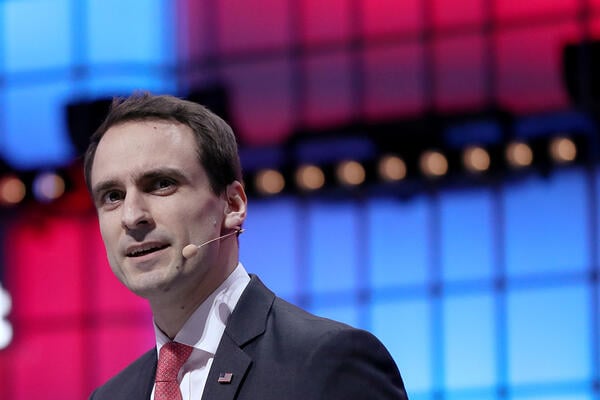
    President Donald Trump’s science adviser and director of the White House Office of Science and Technology Policy believes the recent, seismic cuts to federal research funding offer “a moment of clarity” for the scientific community to rethink its priorities, including the government’s role in supporting research.

    Michael Kratsios, who is pushing for increased private sector support of research, said that federal investment in scientific research—much of which happens at universities—has yielded “diminishing returns” over the past 45 years.

    “As in scientific inquiry, when we uncover evidence that conflicts with our existing theories, we revise our theories and conduct further experiments to better understand the truth,” Kratsios, a former tech executive with ties to tech titan and conservative activist Peter Thiel, said at a meeting of the National Academy of Sciences on Monday. “This evidence of a scientific slowdown should spur us to experiment with new systems, new models, new ways of funding, conducting and using science.”

    But some experts believe Kratsios’s comments mischaracterized trends in the nation’s academic research enterprise, which has been faced with decades of declining federal funding.

    “Kratsios may have things exactly backward. Our growth has slowed down over decades—the same decades where we have been funding science less and less as a share of GDP,” Benjamin Jones, an economics professor at Northwestern University and former senior economist for macroeconomics for the White House Council of Economic Advisers, said in an email to Inside Higher Ed. “Federally supported research is near its lowest level in the last 70 years. If the U.S. really wants to be ‘first’ in the world, the key will be how fast we advance. Cutting science is just a huge brake on our engine.”

    A wide body of literature confirms that federally funded research and development continues to produce enormous social returns. A 2024 paper from the Federal Reserve Bank of Dallas showed that rates of return on nondefense R&D spending range from 140 to 210 percent. Another report from United for Medical Research determined that for every dollar the National Institutes of Health spent on research funding in 2024, it generated $2.56 of economic activity. And yet another science policy expert has estimated that an additional dollar of government-sponsored R&D generates between $2 and $5 in public benefits via economic growth.

    But those facts were absent from Kratsios’s remarks, which accused scientists of focusing on “trying to score political points” and diversity, equity and inclusion initiatives instead of so-called gold-standard science. “Spending more money on the wrong things is far worse than spending less money on the right things,” he said. “Political biases have displaced the vital search for truth.”

    Kratsios also cited “stalled” scientific progress despite “soaring” biomedical research budgets and “stagnated” workforce training as proof that “more money has not meant more scientific discovery, and total dollars spent has not been a proxy for scientific impact.” Since 1980, he specified, “papers and patents across the sciences have become less disruptive,” and since the 1990s, “new drug approvals have flatlined or even declined.”

    The White House OSTP did not respond to Inside Higher Ed’s request for Kratsios’s sources of information, but some outside experts said those specific claims have merit, even if they lack additional context.

    A 2023 paper in Nature shows that patents and papers are indeed becoming less “disruptive” over time. But the authors themselves said the slowdown is “unlikely to be driven by changes in the quality of published science, citation practices or field-specific factors,” but rather “may reflect a fundamental shift in the nature of science and technology,” which is presenting increasingly difficult and complex problems for researchers. The authors also called on federal agencies to “invest in the riskier and longer-term individual awards that support careers and not simply specific projects.”

    (Many of the federal research grants the Trump administration has terminated in recent months supported those aims, including funding for graduate and postdoctoral students and multiyear projects that weren’t yet complete.)

    And even though new inventions may be decreasingly likely to push science and technology in new directions, as the Nature paper indicated, federally funded research has nonetheless expanded its reach to consumers since 1980—the same time frame Kratsios claims has been marked by diminishing returns that warrant an overhaul of federal research policy.

    Prior to the 1980s, the government owned the intellectual property of any discoveries made using federal research dollars. The policy gave universities little incentive to find practical uses for inventions, and fewer than 5 percent of the 28,000 patents held by federal agencies had been licensed for use, according to the U.S. Government Accountability Office.

    That changed when Congress passed the Bayh-Dole Act in 1980, allowing universities, not-for-profit corporations and small businesses to patent and commercialize federally funded inventions. Universities began transferring inventions to industry partners for commercialization. Between 1996 and 2020, academic technology transfers in the U.S. contributed $1.9 trillion in gross industrial output, supported 6.5 million jobs and resulted in more than 126,000 patents awarded to research institutions, according to data from the Association of University Technology Managers (AUTM).

    As for Kratsios’s claim that drug approvals have “flatlined,” Matt Clancy, a senior research fellow at Open Philanthropy, said that’s a matter of interpretation. “If you think it means discovery is dead and not happening, that’s clearly false,” he said, noting that while drugs had been getting steadily more expensive to develop in the late 20th and early 21st centuries, costs have started falling over the past decade. “If you think it means the rate of discovery has not increased in proportion to the increase in spending, I think that is correct.”

    ‘The Enemy of Good Science’

    Kratsios also tied those alleged declines in innovation to the assertion that researchers have fallen victim to a misguided “professional culture” and to “social pressures.” As an example, he pointed to the scientific community’s insistence on keeping schools closed to prevent the spread of the COVID-19 virus as an example of scientists’ unwillingness to question dominant viewpoints. “Convention, dogma and intellectual fads are the enemy of good science,” he said.

    Administrative burdens have also hamstrung the scientific enterprise, he added.

    “The money that goes to basic and blue-sky science must be used for that purpose, not to feed the red tape that so often goes along with funded research,” Kratsios said. “We cannot resign our research community and the laboratory and university staff who support them to die the death of a thousand 10-minute tasks. To assist the nation’s scientists in their vocation, we will reduce administrative burdens on federally funded researchers, not bog them down in bureaucratic box checking.”

    Expanding the role of private funders is part of Kratsios’s solution.

    “In particular, in a period of fiscal constraints and geopolitical challenges, an increase in private funding can make it easier for federal grant-making agencies to refocus public funds on basic research and the national interest,” he said at the NAS meeting, which was attended by university lobbyists and senior administrators.

    “Prizes, challenges, public-private partnerships and other novel funding mechanisms can multiply the impact of targeted federal dollars. We must tie grants to clear strategic targets while still allowing for the openness of scientific exploration and so shape a general funding environment that makes clear what our national priorities are.”

    According to Kratsios, private industry is well positioned to step in. He claims the sector spends “more than three times on R&D than does the federal government,” though it’s not clear from where he drew that statistic. Data from AUTM shows that in 2023, industry expenditures made up just 6.8 percent of all research spending in the United States, compared to 56.6 percent from the federal government. (Inside Higher Ed has previously reported on the challenges of looking to private funders to meaningfully make up for the Trump administration’s current and proposed cuts to academic research.)

    Shalin Jyotishi, senior adviser for education, labor and the future of work at the left-leaning think tank New America, said that while some of the issues that Kratsios raised regarding federal science policy have merit, the administration hasn’t put forth a clear vision for reform.

    “Instead, what we are seeing is ‘creative destruction’ playing out across the federal research enterprise—without the ‘creative’ part,” he said. “It’s not too late. The administration can and should still salvage the federal research enterprise and enact reform to make it even better.”


    Source link

  • Pasco-Hernando Taps DeSantis Ally as Interim President

    Pasco-Hernando Taps DeSantis Ally as Interim President

    Weeks after Pasco-Hernando State College president Jesse Pisors resigned abruptly, the board named Florida Department of Juvenile Justice secretary Eric Hall interim president Tuesday.

    Republican governor Ron DeSantis appointed Hall to the department in late 2021. Prior to that role, Hall served as senior chancellor of the Florida Department of Education from early 2019 to late 2021. Before that appointment, his educational experience was largely in the K-12 space.

    Hall was a finalist in the 2023 PHSC presidential search that ended with Pisors in the top job. 

    Pisors resigned after less than 18 months as president. His departure followed the release of a critical report by Florida’s version of the Department of Government Efficiency, which indicated the college was among the worst in the state in terms of student growth and retention. Board members alleged that they had not been made aware of those numbers, despite requests.

    However, The Tampa Bay Times reported that there has been skepticism around the validity of the report, which some critics argued was a flawed analysis of PHSC’s student outcomes.

    The newspaper also noted that DeSantis appointed Hall to a government efficiency task force in late 2023, an effort that was ultimately a forebear of the state’s DOGE apparatus.

    Hall is one of multiple DeSantis allies hired to lead a public institution in Florida this year. Others include Marva Johnson, a lobbyist, hired to lead Florida A&M University last week, and former Florida lieutenant governor Jeanette Nuñez at Florida International University, as well as former state lawmaker Adam Hasner at Florida Atlantic University, both of whom were hired in February. (Nuñez was hired as an interim but has since been named sole finalist for the job.)

    Prior political hires include Ben Sasse, a former Republican U.S. senator from Nebraska, who briefly led the University of Florida before stepping down amid a spending scandal, and former state lawmaker Richard Corcoran at New College of Florida. Another former GOP lawmaker, Ray Rodrigues, was hired as chancellor of the State University System of Florida in 2022.

    Source link

  • Trends in Hiring, 2025 Graduate Readiness for the Workforce

    Trends in Hiring, 2025 Graduate Readiness for the Workforce

    SDI Productions/E+/Getty Images 

    Commencement season brings excitement to college campuses as community members look to celebrate the accomplishments of the graduating class and usher them into their next chapter of life.

    The Class of 2025, however, is gearing up to enter a challenging environment, whether that’s a competitive application cycle for gaining admission to graduate school or a tighter job market compared to previous years.

    Inside Higher Ed compiled 25 data points regarding the Class of 2025 and the workforce they will enter, including levels of career preparedness, challenges in the workplace and the value of higher education in reaching career goals.

    1. Over half of seniors feel pessimistic about starting their careers because they worry about a competitive job market and a lack of job security.
    2. Seventy-eight percent of students rank job stability as a “very important” attribute in potential employers, followed by a healthy workplace culture.
    3. Eighty-eight percent of college juniors and seniors believe their coursework is adequately preparing them for entry-level roles in their chosen fields.
    4. Eight out of 10 soon-to-be graduates plan to start work within three months of graduating.
    5. Hiring for college graduates is down 16 percent compared to last year, and 44 percent below 2022 levels.
    1. Starting salaries are up 3.8 percent year over year, outpacing inflation’s growth of 2.4 percent, as of March.
    2. Seventy-nine percent of young adults say health benefits are a “high” or “very high” priority for them when considering a job opportunity.
    3. Desired location is a top priority for 73 percent of 2025 graduates in deciding which jobs to apply for, followed by job stability (70 percent). Over two-thirds said they’re looking for a job near their family.
    4. If they choose to relocate for work, cost of living is the most pressing issue for new graduates (90 percent), followed by a diverse and tolerant community (64 percent). Ninety-eight percent of young adults say cost of living is their No. 1 money stressor, as well.
    5. Flexibility remains key for graduates, with 43 percent looking for hybrid work, defined as being on-site for two or three days a week. Forty-four percent cited the ability to work from home as an important benefit, and over half want more than two weeks of vacation or paid time off in their first year of work.
    1. Roughly half of entry-level job postings employers plan to create will be hybrid, and about 45 percent will be for fully in-person roles.
    2. Engineering students are expected to be the highest paid of all the majors pursued by the class of 2025, earning an average of $78,731 this year.
    3. Recent college graduates who participated in experiential learning while in college earn on average $59,059, compared to their peers without internships, who earn an average of $44,048.
    4. As of last fall, only half of first-generation students in the Class of 2025 had completed an internship, compared to 66 percent of their peers.
    5. About 12 percent of students have not participated in an internship and do not expect to do so before finishing their degree—lower than the average of 35 percent of workers who enter the workforce without an internship or other relevant work experience.
    1. Ninety-eight percent of employers say their organization is struggling to find talent, but nearly 90 percent say they avoid hiring recent grads—in part, as 60 percent noted, because they lack real-world experience.
    2. One-third of hiring managers say recent graduates lack a strong work ethic, and one in four say graduates are underprepared for interviews.
    3. Over half (57 percent) of HR departments expect to increase spending on training and development in the year ahead.
    4. As of March, nearly 6 percent of recent graduates (ages 22 to 27 who hold a bachelor’s degree or higher) were unemployed, compared with 2.7 percent of all college graduates. The unemployment rate for all young workers (ages 22 to 27) is approximately 7 percent.
    5. Twenty-five percent of young adults are struggling to find jobs in their intended career fields; 62 percent aren’t employed in the career they intended to pursue after graduation.
    6. Nearly 90 percent of students chose their major with a specific job or career path in mind.
    7. Finding purposeful work is critical to Gen Z’s job satisfaction, and more than half say meaningful work is important when evaluating a potential employer.
    8. One-quarter of young adults already have a side hustle, and 37 percent of Gen Z want to start a side hustle.
    9. Ninety-seven percent of human resources leaders say it’s important that new hires have a foundational understanding of business and technology, including in such areas as artificial intelligence, data analytics and IT.
    10. Gen Y and Gen Z workers are more likely than their older peers to worry they will lose their job or their job will be eliminated by generative AI.

    We bet your colleague would like this article, too. Send them this link to subscribe to our newsletter on Student Success.

    Source link

  • English language requirements under the microscope: Do you have what it takes to meet your university’s English language entry requirements for international students?

    English language requirements under the microscope: Do you have what it takes to meet your university’s English language entry requirements for international students?

    • By Tamsin Thomas, Senior Strategic Engagement Manager, Duolingo English Test.

    The English language proficiency of international students is once again under the microscope. Heightened scrutiny is being driven by media coverage of international admissions, including The Times and BBC Radio 4’s File on 4, as well as the new immigration white paper. The Home Office is currently tendering for an English test for immigration purposes and has also undertaken a review of university English testing arrangements.

    There are growing questions about how UK universities assess English proficiency, which tests are accepted, and what governance arrangements are in place to ensure that students have the level of English they need to succeed. These are valid and necessary discussions.

    But it’s also true that much of the debate is happening without lived experience. Most contributors to this conversation — from media commentators to admissions professionals and policymakers — have never sat a high-stakes English language test themselves, certainly not as an entry requirement for studying in another country. That gap matters.

    How Do International Students Currently Meet English Language Requirements?

    UK universities have built robust and nuanced systems for assessing English proficiency, shaped by decades of global engagement. These typically fall into three broad categories:

    • Secondary school qualifications: Many countries offer high school-level English that meets UK university entry standards. For example, iGCSEs, the IB, Hong Kong’s HKDSE, or Germany’s Abitur are often accepted without additional testing.
    • Standardised English proficiency tests: Many international students – especially those from countries where English is not the primary language of instruction – take tests like IELTS, TOEFL, or the Duolingo English Test (DET) in addition to their school diplomas.
    • Evidence of prior study in English: If a student has completed at least three years of education in English at the tertiary level, this can meet requirements under a “Medium of Instruction” policy.

    In countries like India and Nigeria, the situation is more complex. Both operate parallel education systems – some in English, others in regional languages. Students with strong English scores in the Indian Standard XII (CBSE, ISC) or the West African WAEC are often accepted without further testing. Graduates of other boards may need to take a test.

    These frameworks are diverse by design – reflecting the deep, often country-specific, relationships and expertise UK universities have developed over time.

    While the media sometimes focuses on the small minority of international students whose English may fall short, it’s worth remembering that perfection is not the benchmark. Most international students meet entry requirements – and universities have systems in place to support language development throughout the degree. After all, only a small percentage of UK students get a Grade 9 in GCSE English, and developing academic English skills is part of what universities train students to do. Language proficiency exists on a spectrum – the question isn’t whether students are fluent on entry, but whether they have the foundation to succeed.

    What Happens When a New Test Enters the Market?

    As a relatively new entrant to this space, the Duolingo English Test – now accepted by over 40 UK universities – has seen firsthand how institutions evaluate and onboard new tests.

    Typically, the process reflects a practical need to expand the range of tests, paired with a careful scrutiny process – usually via committee:

    • Recruitment teams identify a test that meets student demand or addresses market access barriers.
    • Admissions teams assess delivery method, validity, and the external evidence base.
    • English-language colleagues evaluate whether the test provides evidence that students can succeed academically on campus.
    • Compliance teams consider immigration implications and policy compatibility – is the test secure?

    Tests are often accepted provisionally, with performance tracked for one to two years, however long it takes to build up enough data to make an informed decision. Institutions benchmark outcomes against long-accepted credentials: Do the score thresholds align, and are there heightened compliance risks?

    The process is rarely quick, but it is thorough.

    What Does Good Governance Look Like?

    While most UK universities use similar criteria for test evaluation, governance structures vary. In some institutions, decisions sit with dedicated English policy working groups; in others, with international admissions committees. Sometimes responsibility is split between professional services and academics. In others, it’s entirely devolved to professional services.

    This variation isn’t necessarily a problem but it does mean there’s no single ‘sector-wide’ process for evaluating or monitoring English tests.

    As an online test provider, one gap that has always seemed under-discussed is the practical reality of actually taking a test. If you’re a student in Afghanistan, where crossing borders is difficult and test centres don’t operate, how are you supposed to prove your English proficiency? If you’re a mobility-impaired test taker in a country without inclusive building regulations, how do you sit a test at all? The global distribution of test centres is far from comprehensive.

    Join the Conversation — Enter the DET University Challenge

    Here’s the challenge: put yourself in an international student’s shoes. Could you meet your own university’s English language entry requirements?

    The DET University Challenge 2025 invites UK university staff – whether English is their first language or not – to sit an English proficiency test similar to those taken by millions of international students each year.

    The Challenge offers a practical, engaging way for staff to experience a process usually reserved for students. It’s a prompt for reflection – and yes, maybe a little fun along the way.

    At a time when English requirements are under increasing public, political, and policy scrutiny, there’s real value in taking a closer look at the systems we rely on – and at how they feel from the other side.

    So: do you have what it takes to meet your university’s English language entry requirements?

    The DET University Challenge is open until 31 May 2025 with participants able to win up to £5,000 in prize money for their university or a designated Higher Education access charity. Terms and conditions apply.

    Source link

  • Why aren’t we addressing inequity of outcomes for postgraduates?

    Why aren’t we addressing inequity of outcomes for postgraduates?

    One of the major trends in UK higher education is the increasing number of postgraduate students.

    There are now as many postgraduate taught students graduating every year as there are undergraduates.

    However, the equity of postgraduate experience and outcomes is almost completely overlooked.

    Modern postgraduates

    The postgraduate population is large and increasingly diverse. Approximately 450,000 students complete a postgraduate qualification in UK higher education institutions every year. 11 per cent of those students have declared a disability. Some 28 per cent of postgraduate taught students with a permanent UK address identify as Global Majority, while 9 per cent identify as Black and 13 per cent as Asian and those proportions are increasing year-on-year. One in three postgraduate taught students pay international fees.

    Whereas 10 years ago most international students were from the EU or China, the diversity of nationalities in postgraduate cohorts is growing. Data on the socioeconomic demographics of postgraduates is not currently available, but it is likely that the increase in students from socioeconomically deprived areas undertaking undergraduate study population is mirrored at masters level. Half of postgraduate students study their programmes on a part-time basis. Excluding those on visas that prohibit working, we can assume that a significant proportion of postgraduates are combining study with paid employment. The diversity of the postgraduate population is therefore considerable.

    Given how widespread inequity of outcomes is at undergraduate level, it would be extraordinary if the outcome gaps we see on the basis of disability, ethnicity and socioeconomic status were not replicated at postgraduate level. They may even be more acute for postgraduates given the higher costs of tuition fees and the increased academic independence required for postgraduate study. Yet there is almost no awareness or activity around equity or outcomes for this huge cohort of students.

    Lack of activity

    At undergraduate level there has been significant progress made in terms of awareness of student outcomes and inequity. Institutional committees and working groups scrutinise split metric data to assess ‘gaps’ in outcomes between demographic groups. Action plans are in place to address inequity of access, continuation, degree completion, degree class awarded and progression. Senior leadership teams monitor progress against established equity key performance indicators. Providers are even bringing in consultancy companies whose sole business is to help institutions understand the language of Access and Participation Plans. Universities are at least talking the talk around improving equity of outcomes, even if progress lags significantly behind this.

    However, none of this activity is replicated for postgraduate students. There isn’t a data dashboard of split metrics for postgraduate student outcomes. We haven’t even established the equivalent of the undergraduate degree classification awarding gap. Why isn’t there an outcome gap focussed on demographic equity of distinctions awarded for postgraduate taught students? Why aren’t we looking at completion rates for postgraduate students through the lens of disability and socioeconomic status?

    Pragmatically, the answer to this question is that the Office for Students has thus far paid little attention to postgraduate student outcomes, let alone equity of outcomes. The Teaching Excellence Framework included undergraduate courses with a postgraduate component (e.g. an integrated masters), but excluded postgraduate taught and postgraduate research provision. Access and Participation Plans are linked to the ability to charge the higher rate of undergraduate tuition fee, so again exclude postgraduate students.

    League table providers also ignore postgraduates. HESA only publish data on postgraduate qualifications awarded, and the publically available data is not broken down by demographic factors other than gender. In the contemporary higher education landscape, what gets measured gets done. If universities are not prioritising postgraduate outcomes, it is because the regulatory landscape allows them not to.

    Entry and equity

    It is also important to note that many masters programmes will now accept students with a lower second class degree. Those same students who were disadvantaged by the awarding gap at undergraduate level are now likely to be the ones struggling with the increased academic requirements at masters level. If a student never got past the hidden curriculum in three years of undergraduate study, what are their chances of overcoming it in a one year masters course?

    Postgraduate programme leaders need to be aware of these issues, and adopt parallel approaches to those managing transition into undergraduate study. They need to design activities and assessments to address disparities in entry qualifications. They need to build the confidence of students who missed out on higher undergraduate grades.

    To really focus on equity at postgraduate level, we also need to address inequity for international students. The regulatory link between APP and the home undergraduate tuition fee means students with any other fee status are excluded. This has the inevitable result that the sector barely considers inequity for international students, but is more than happy to take their fees. This is deeply uncomfortable at undergraduate level, but even more concerning at postgraduate level, where one in three students is international.

    To make change, senior institutional leaders need to see postgraduate outcomes as a priority. In the current landscape, this strategic direction needs to come from the Office for Students. The equivalent data infrastructure developed for undergraduate outcomes needs to be built for postgraduates. Future iterations of the TEF need to go beyond undergraduates and include all students.

    We cannot justify ignoring postgraduates any more. The sector has an ethical responsibility to ensure equity of outcomes for all students, not just those paying the home undergraduate tuition fee.

    Source link

  • For those in HE cold spots, higher education isn’t presenting as a good bet

    For those in HE cold spots, higher education isn’t presenting as a good bet

    Bridget Phillipson has said she wants to work with universities to widen access, and participation for those from lower income backgrounds is one of the government’s five priorities for higher education.

    But the words of a 17-year-old trainee legal assistant in Doncaster reveals how much of a challenge it will be to overcome the scepticism towards the value of a university education in a “cold spot”’ town;

    I love jobs and I can’t wait to get another job, because I just love getting paid. I want to go to uni, to live on my own and to get drunk all the time – the uni party lifestyle, right? But if I do it just for that, then I’m getting into debt. If I just go straight into work, then I don’t have anything to pay back.

    This quote underlines the findings from the opening paper of the UPP Foundation’s inquiry into widening participation, which showed how alongside gender- and class-based inequalities in rates of progression to HE, there are huge gulfs in the rate at which young people progress to university at 18 across different areas of the country. Almost 70 per cent of Wimbledon 18-year-olds go to university, compared to just 25.9 per cent of those in Houghton and Sunderland South – Bridget Phillipson’s own constituency.

    With some local authorities lacking a university and also exhibiting rates of progression to HE lower than one might expect based on young people’s academic attainment, our new paper, published today, sets out how and why these “cold spots” for progression to HE struggle to inspire young people to go to university.

    Daunted by costs

    During our research trip to Doncaster – one of England’s worst-performing local authorities for progression to university at eighteen, and a case study for cold spots as a result – the scepticism towards university that our trainee legal assistant exhibited came up time and time again. None of the eight parents in our focus group selected university as their preferred post-18 option for their children, and only one of the 16-18 year olds we spoke to in our focus group intended to apply to university. The primary objection was cost.

    Parents, young people, and adults of all ages that we spoke to in our immersive work thought that university was simply too great an expense for most people in the area to justify. Among those who had been to university, or knew those who had, it seemed that everyone had a horror story to tell about a friend or relative who had been burned by astronomical living expenses, or resented being mired in debt after doing a degree that had only passing relevance to their eventual career.

    Even when the long-run opportunities that university provides seem enticing, the mounting cost of maintaining an undergraduate degree is a daunting prospect to many. Few thought that universities, colleges or schools had done a good job of making pathways through higher education seem clear, achievable and valuable.

    Crowd in communities

    The challenge for places like Doncaster is that the opportunities that university provides are anything but obvious. Residents were at pains to stress that Doncaster is a place that feels like the economy has left it behind, with jobs few and far between and graduate careers a luxury seemingly reserved for other places.

    As one woman we spoke to put it: “The jobs in Doncaster, a lot of them you don’t require a degree for – we’re an industrial type of town.” Across our conversations in the area, it became clear that since the job market could not provide the security, stability and prospects that people wanted, family and community took on that role instead.

    In this context, then, going to university is a double-edged sword: the aspirational youngsters we spoke to were excited by the opportunities that university could provide, but they recognised that this probably meant getting out of Doncaster and staying out. To many people we spoke to, leaving home, and one’s hometown, was a hidden psychological cost heaped on top of the very real financial burden of university.

    With all this in mind, the ambivalence of cold spot residents towards university seems not reckless, but rational. If we think of university as a “bet” that people make on the understanding that the “payoff” is a higher graduate salary in the long run, then it is easy to see why those in areas with no university and few graduate jobs would be reluctant to make that sort of commitment.

    If the government wants to make good on its commitment to widen university participation, it will require a multifaceted approach that crowds in whole communities, not just bright teenagers with good prospects. They will need to work with schools, colleges, universities and local employers to make the value of university clear across generations. Cold spots can make university feel like a reckless gamble – it’s up to the government to make it a good bet.

    This article is published in association with the UPP Foundation.

    Source link

  • LimmyTalks Talks College Preparedness – Education and Career News

    LimmyTalks Talks College Preparedness – Education and Career News

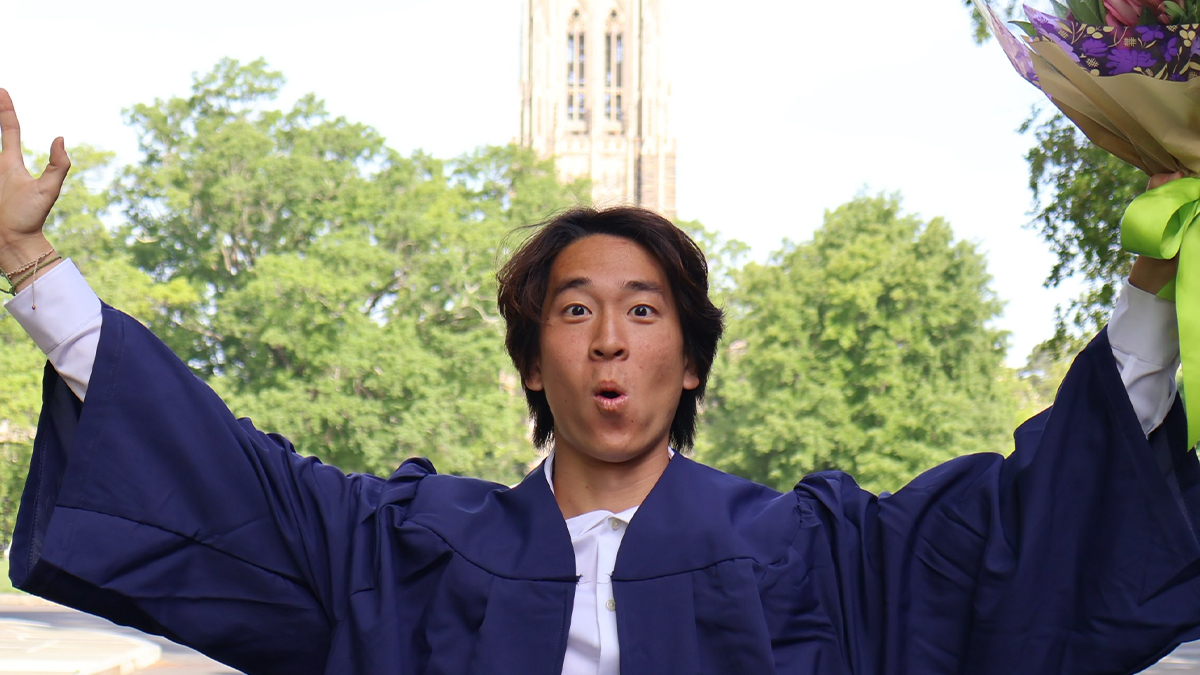
    Daniel Lim | Photo by Alina Lim

    Daniel Lim, also known as LimmyTalks online, shares his advice for college applications, finding mentors, and finding your place in the world.


    What’s one piece of advice you wish someone had told you when you were preparing for college?

    Talk to as many people as you can. I did this for the first month of college, and I probably met a couple hundred people in that month alone, going to everything I could and talking to every person on the bus and in the food court. I stopped doing that after the first month, and I wish I hadn’t — but now you know not to do what I did.

    Many students feel overwhelmed or unsure about their next steps. What’s your message to someone who doesn’t have it all figured out yet?

    There are two options: You can either work inhumanely hard at something that’s already established, or you can — and, in my opinion, should — experiment. One example of the former is basketball. If you become the best basketball player in the world, the NBA is a guaranteed job for you. Your interest in painting, poker, or the psychology behind love might not lead to a clear path for a career. However, that’s the beauty of it. Not knowing means you’re more likely to find something new to contribute to the world. Every major invention you can think of was a result of serendipitous experimentation. So, experiment with what you like! It won’t be clear immediately, but you’ll learn things that will eventually help you find the next stepping stone, then the next one, and the next one until you find yourself in a great spot — career-wise, fulfillment-wise, financially, or whatever else it is that worries you now.

    What’s one mindset shift or daily habit you think every high school or early college student should adopt starting today?

    Just stick to something. Do things. The worst thing you can do is not do anything. You learn way more from doing things than anything else. Just do stuff, don’t think too much, and dive in!

    What role do you think mentorship or guidance plays in making college feel more accessible, and how can students find that support?

    It’s immeasurable. I attribute a lot of my growth as a person to older friends I made at the tennis courts as a middle and high schooler. I also think it’s the No. 1 thing that can alter someone’s trajectory — having one person who believes in you, full stop.

    As for finding mentors, the common advice is to find a way to add value to their lives as well. The actual thing doesn’t matter much when you’re young, it’s the effort that counts. Just reach out to people who are cool to you!

    What’s your message to the student who doesn’t have straight A’s but still has big dreams?

    You’ve got this! Somebody needs to scream that in your ears until you actually believe it. Also, grades don’t mean anything if you have big dreams. They’re just one measurement — there are a billion other ways to show greatness. Your ambition is what’s truly valuable.

    What’s something you learned after high school that you wish you had known while applying to college?

    The admissions officers are not going to be impressed. You’re 17. They’re in their late 20s at the youngest — at this point in their life, they’ve seen a lot more than you. They’re looking for nice people. Don’t get me wrong, you need great grades and extracurriculars to get into a top university. However, beyond that, stress less about trying to come off as an intellectual person and just be a normal, nice human being in your essays.


    Source link

  • Meet the Students and Staff Shaping Your College Experience

    Meet the Students and Staff Shaping Your College Experience

    By knowing about and engaging with these key figures on campus, you can make the most of your college experience and set yourself up for success.

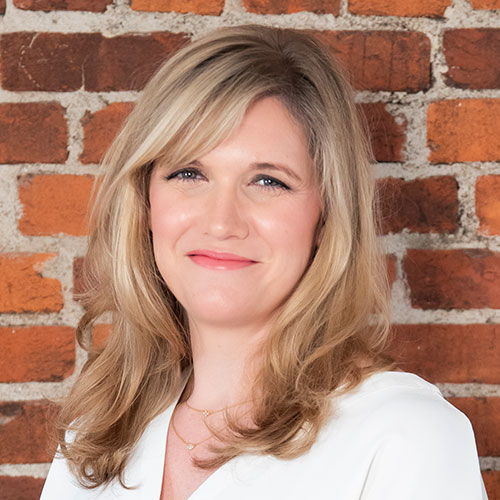
    Kate Lehman, Ph.D.

    Director, National Resource Center for the First-Year Experience and Students in Transition, University of South Carolina

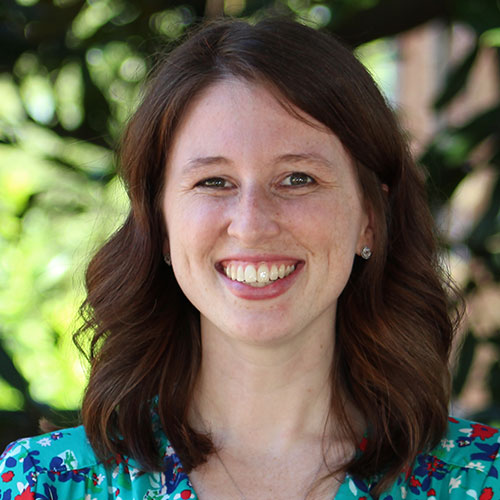
    Katie Hopkins

    Associate Director for Faculty Development and Resources, University 101 Programs, University of South Carolina

    Congratulations! You’ve made it to your first day of classes! You are excited by the opportunities before you…and overwhelmed. Colleges and universities employ a host of staff and faculty whose primary role is to support your success. Part of your tuition and fees go to support these folks — you should use them! Meet the 10 people you need to maximize your college experience.

    Faculty, instructors, and teaching assistants (TAs)

    You’re surely familiar with the folks teaching your courses. Use office hours to get to know your instructors. Ask them how they got into their fields and why they love their work. You might be interested in a similar topic, land yourself a research opportunity, or find yourself a new mentor!

    Academic advisers

    Course registration should not be the last time you speak with your academic advisor! Academic advisers help anytime you are thinking about your course of study, whether you want to drop a class, change your major, add a minor, take a summer class, or figure out how to work a study abroad program into your plan. 

    Librarians

    Librarians have magical skills to make your classwork so much easier. Okay, it’s not really magic, but they can help you find awesome sources for class papers and teach you about technical resources like citation management software to make your work a lot easier!

    Student success and academic support staff

    Is chemistry or calculus stressing you out? Your institution has a student success center or a tutoring center to help. Our advice: Get help as soon as you start feeling overwhelmed. Don’t wait until you’re really behind!

    Financial aid team

    You have probably already received your financial aid package, but life happens. If your financial situation changes, the financial aid office is your first call. They might adjust your aid package and/or connect you to additional financial resources. 

    Health center and counseling center staff

    You probably know to go to the health center if you sprain an ankle or have a sinus infection, but the medical and counseling team can help with a lot more. If you are feeling overwhelmed or are struggling, schedule an appointment to gain access to counseling sessions, support groups, and workshops to help you feel your best (all things which are included in your tuition and fees). 

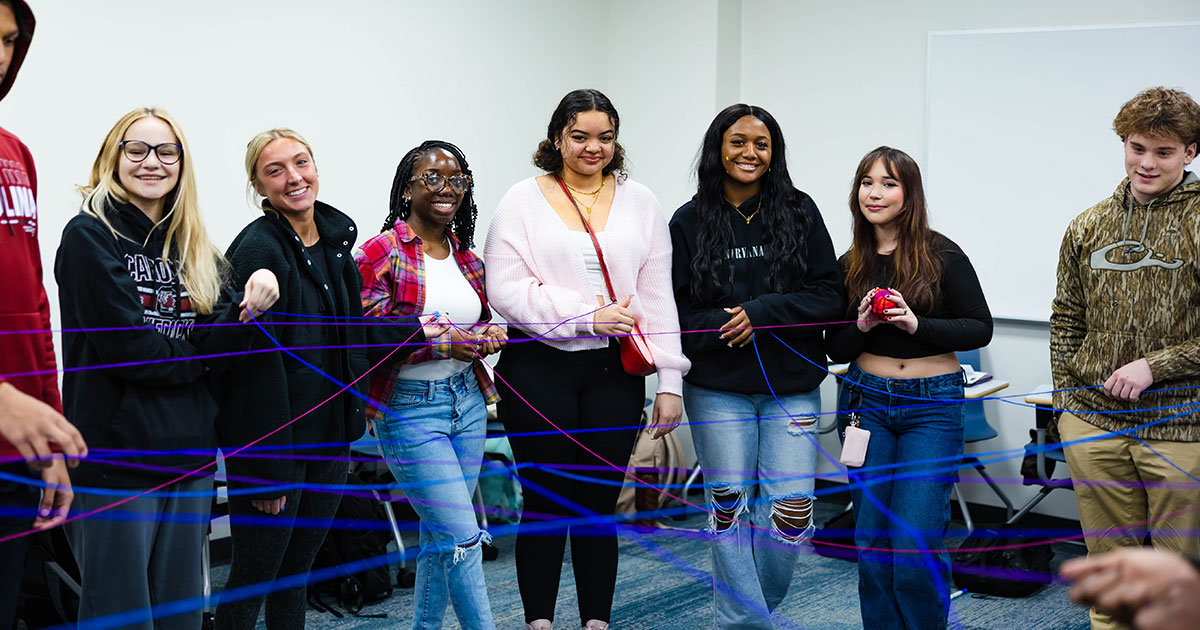
    First-year students at the University of South Carolina participate in a team-building activity in their first-year seminar course. | Photo by Logan White

    Career center staff

    Whether you have mapped out a career plan or have no clue what you want to do, your career center staff can help! It’s not just for seniors — career centers help with career exploration, internships, resume development, and interview skills. They might even be able to help you find an on-campus job so you can build career skills and start earning money while you’re a student. 

    Disability services staff

    If you received accommodations in high school, be sure to register with disability services on your campus, as those do not automatically roll over. These may be related to dietary restrictions, learning disabilities, or mental health conditions. They can work with you to ensure you have what you need to be successful! 

    Student activities and recreation services staff

    You didn’t just come to college to study and work, right? Join a student organization, attend fun events, play on an intramural sports team, or take a group exercise class! Besides having a good time, you’ll grow your leadership, teamwork, and communication skills and make friends.

    Friends and peer mentors

    Decades of research on college student success tell us that your fellow students, or your peers, are key to your success. Many of the campus offices employ student staff members, often called peer mentors. By getting involved on campus, you will make friends who support and encourage you. 

    The folks outlined here can help you get the most out of your college experience. Don’t ever hesitate to ask someone a question, introduce yourself, or try a new resource; it can only help! These amazing people will help find the opportunities that will shape your future. As you build connections with them, you will find friends and mentors to last a lifetime.

    Source link