Category: Featured

  • Lessons of the Fountain Pen (opinion)

    Lessons of the Fountain Pen (opinion)

    For the past two years, during the twilight of my academic career, I have become a devotee of the fountain pen, often pondering this seemingly retro act of putting pen to paper.

    Composing again by hand forced me to admit how often I succumb to the internet’s never-ending temptations. In the past, some of my best prose has come forth at 40,000 feet, while I was strapped in for a long flight—with no contact outside the streaking metal tube. But the wily digital devil never rests. Most jets now offer Wi-Fi, enticing you to check your email or the Yankees–Red Sox score as you cross the North Atlantic.

    My longing to write by hand, though, was undermined by largely illegible penmanship, a lifelong consequence of my naturally lefty self having been forced to write right-handed. No pen ever seemed to work for me, and I have tried most. Gel pens are the worst, producing a script that even I cannot decipher. Even so, during a research trip to Europe in fall 2022, where Wi-Fi was often unavailable, I found myself relying on a bound notebook during the day and my computer at night. The illegibility of my notes and journal entries made typing them out especially onerous and time-consuming, all the more so after I had returned home two months later. Then I remembered a fountain pen that my mother had gifted me so long ago—was it for my 50th birthday in 2005?—that its ink cartridges had dried up. A trip to Staples yielded a small pack, and I realized right away that there was enough friction between the nib and page to slow me down—enough for me to be able to decipher what I had written.

    Like most brainstorms, this one proved ephemeral. To write by hand and then enter text into a computer—with my mediocre keyboarding skills—was just too burdensome. Those who started their academic journeys during the typewriter era will remember with a whiff of despair those late-night, hours-long sessions spent typing the final draft. Correction tape, erasable bond, Wite-Out—my heart sinks just listing those essential tools from another era. If you want a taste of those times, just sample the acknowledgments in academic books or dissertations from the decades before computers, in which women, typically wives, are thanked for having typed the manuscript. The acknowledgements from Sacvan Bercovitch’s The American Jeremiad, which I just pulled from a shelf, reflect more rarefied academic circumstances, as the author notes the grant provided by the English Department at Columbia University “for the typing of the manuscript.”

    And then a light went off as I sat in my study, one that has changed my life as a writer. After struggling with incipient carpal tunnel syndrome a few years ago, I purchased voice recognition software. Dragon Naturally Speaking was powerful, especially if you spoke in complete phrases and sentences. My copy of the software is now old—it will not work with Windows 11—but proved a godsend with unexpected benefits. While dictating my notebook pages, I could hear the awkward sentences; I could conjure the better word on the spot, and I could detect those places where the tone needed adjusting. Sometimes inspiration would bless me and a new sentence or two would emerge like Athena.

    I’m no neo-Luddite longing to smash all computers, even when Windows or MS Word betray me, as they so often do. I recognize the realities and benefits of our digital age. But wielding a fountain pen these past two years has prompted me to wonder whether some challenges the humanities face regarding writing and reading might be overcome by heeding the pen’s simple lessons.

    The Importance of Touch

    For millennia the act of writing has been tactile. From Babylonian cuneiform on clay tablets to elaborate Medieval script on vellum and modern calligraphy on heavyweight wedding stationery, writing has always meant touching the surface, with words being physically imprinted as the pen journeys across. When I write well, my hands seldom leave the page. And when I stop to consider the right word or a more felicitous phrase, my pen often poises a mere quarter inch above, ready to strike.

    Compare this to composing on a laptop, where pauses can lead to disaster. Distractions fill your field of vision—apps, task bars, weather forecasts and seemingly never-ending notifications that another email has arrived or another appointment looms. When you grasp for the right combination of words, it’s all too easy to seek them beyond the screen, or, even worse, to succumb to the program suggesting what it believes should come next. And unless you are vigilant about shutting off endless features, the software will insist upon indicating that you just misspelled a word or used a questionable grammatical construction. Most of us then dutifully correct the “mistake,” only to lose the rhythm and even essence of our prose. More and more, the virtual page seems to be doing the writing.

    The Value of Tangibility

    We have all had the experience of composing and revising a document on a computer only to lose the effort because of a crash, a software freeze or a moment of forgetfulness in which we clicked “no” instead of “yes.” What might have seemed so real to us for an hour or more vanishes like a genie who returns to his bottle without granting our wish.

    When I compose by hand, my efforts are right in front of me. The crossed-out word—which turns out to be the right one—can still be recovered. The history of moving paragraphs, those arrows and circles that sometimes fill the page, are not lost as they would be in computer drafting. Even more satisfyingly tangible for me, however, is the physical evidence of my labors: the blue ink stains on my right hand, the ritual of refilling my pen from the bottle when I have gushed out a pool of words, the celebratory occasion when I empty a bottle of ink and need to open a new one. A similar mood of celebration arises when I fill the last page of my wide-ruled notebook and place it on the shelf next to its predecessors. Scrolling through thousands of documents and folders on my computer is certainly a humbling experience, as they represent the literal steps in a multidecade academic journey, but I regret not having found my fountain pen niche many years before. What a collection those notebooks would’ve been.

    The Pleasures of Portability

    Coinciding with my return to compositional roots has been my regular presence at a place where my words seem to flow so easily, the Hall Street Bakery in Grand Rapids. During my sabbatical, I was there at least five days a week and now continue to show up on nonteaching days. All I need is my notebook, a folder with ideas or drafts, a full pen and my regular—a large house coffee and a cranberry-almond scone—to set me up for a solid hour of writing. Conversations bubble from nearby tables, kids run around hopped up on sugar, drivers retrieve DoorDash orders—all set against the occasional counterpoint of the hissing espresso machine—and I am in my element. No need for Wi-Fi passwords or the elusive table next to an electrical outlet. I can walk across the room to speak with someone, order a refill, visit the men’s room—all without fearing that my laptop will disappear. And spilling coffee on my notebook or dropping it onto the floor is a minor inconvenience, not an expensive technological catastrophe. Traveling light, I can sweep up my possessions in an instant and head out the door.

    The Relevance to Reading

    In thinking about writing as a physical act that produces something you can hold, I recognized anew how relevant these same qualities are to reading. We seem today to be awash in words, yet paradoxically find ourselves in the midst of a reading crisis that extends from the youngest learners to those at America’s universities.

    An article by Rose Horowitch in The Atlantic, “The Elite College Students Who Can’t Read Books,” convinced me that my experience with the fountain pen might be relevant to the challenges she describes.

    Horowitch reports that students at elite colleges, who have already proven their ability to read complex texts, seem less and less able (or willing) to read long literary works. She mostly ascribes this to high schools emphasizing standardized tests, to teens distracted by smartphones and to college students who view their educations in strictly transactional terms, as means to specific, often exceedingly specific, ends—which seldom include pushing through Middlemarch.

    She may be right, but the teachers and faculty she interviewed offer little beyond assigning shorter texts: Kate Chopin’s The Awakening instead of Jane Austen’s Pride and Prejudice. Toni Morrison’s The Bluest Eye instead of Ralph Ellison’s Invisible Man. A book or two at most from The Iliad or Paradise Lost.

    Let me argue, though, that the very elements I associate with composing by hand—its tactile and tangible nature, its simple conveniences—should be drawn upon when encountering long, complex and sometimes life-changing texts. And that the cool distance of the digital interface works against these very qualities.

    Yes, I know it is possible to put all your books on a single device where you can search and annotate the texts. Even if you lose your Kindle, your digital library can be retrieved from the cloud. Yet the experience of reading on the screen tends to flatten all writing, making each screen much like any other, so that the unique feel and heft of Moby-Dick, for example, is lost, making Melville’s incandescent prose indistinguishable from any Substacker’s, and probably less visually enticing.

    Even if you can resist distraction on your laptop, you never get the sensory experience unique to each book: how it feels in your hands, how its page design pulls you in or pushes you away, how its very smell when brand-new or decades old can evoke its distinctive qualities, how the satisfying sound of turning pages reaches a crescendo when you get to the end and close the cover with a resonant thump. Like the angry slam of a telephone receiver, it’s a sound beyond our digital age. And it all leads to a final moment when you place the book on a shelf to stand as a tangible reminder of your ever-changing reading life—no internet connection required.

    The physical book, that container that our society, try as it might, cannot cast into the electronic darkness, will live on. At least I hope so. A recent visit to my university’s beautiful library leaves much room for doubt. In the popular Mary Idema Pew Library Learning and Information Commons—sorry, but that’s its official name, sans commas—hundreds of students gather at any given time. But to stroll through its busy floors soon makes this book lover feel like Diogenes in search of an honest man. My lamp has seldom shined upon a student with a physical book in hand; instead, they tap and scroll their way through reading assignments in much the same way they engage daily life.

    I see them as we share the bus that travels between our university’s two campuses, filling each moment with the small screens they find far more interesting than the passing world—the season’s first snowflakes, the glow cast upon the road as dusk approaches, the deer in a harvested cornfield who look up with more curiosity than my fellow travelers.

    With a sigh—and nod to the deer—I open my copy of Uncle Tom’s Cabin, touching its familiar pages with my ink-stained hands, and try to remember to text my wife that I’m on my way.

    After 37 years as a professor of English at Grand Valley State University, Rob Franciosi recently retired to devote his time to writing.

    Source link

  • Harvard Medical Researcher Detained by ICE Faces Charge

    Harvard Medical Researcher Detained by ICE Faces Charge

    The Harvard Medical School research associate and Russian native detained by Immigration and Customs Enforcement three months ago and sent to Louisiana now faces a criminal charge—for allegedly trying to smuggle frog embryos into the U.S.

    The Massachusetts U.S. Attorney’s Office announced the charge in a news release Wednesday, saying it could mean “a sentence of up to 20 years in prison, a term of up to five years of supervised release and a fine of up to $250,000.”

    Prosecutors allege that after the researcher, Kseniia Petrova, arrived from Paris at Boston’s Logan International Airport, a law enforcement canine “alerted its handler to the defendant’s checked duffel bag on the baggage carousel.” The release said Petrova “initially denied carrying any biological material in her checked baggage.”

    Petrova’s lawyer, Gregory Romanovsky, said in a statement Thursday that “less than two hours after the Vermont judge set a hearing on Kseniia’s release, she was suddenly transferred from ICE to criminal custody. This is not a coincidence. It is an attempt by the government to justify its outrageous and legally indefensible position that this scientist working for the U.S. on cures for cancer and aging research has somehow become a danger.”

    The government said in court Wednesday that it intends “to deport Kseniia to Russia,” Romanovsky said, “where it knows she will face grave danger for opposing the Putin regime.”

    He said he expects Petrova will be transferred to Massachusetts in the next few weeks. Romanovsky has previously said Petrova was transporting “a non-hazardous scientific sample,” for which authorities could’ve merely fined her instead of detaining her and revoking her visa.

    Source link

  • A New Project to Preserve HBCU History

    A New Project to Preserve HBCU History

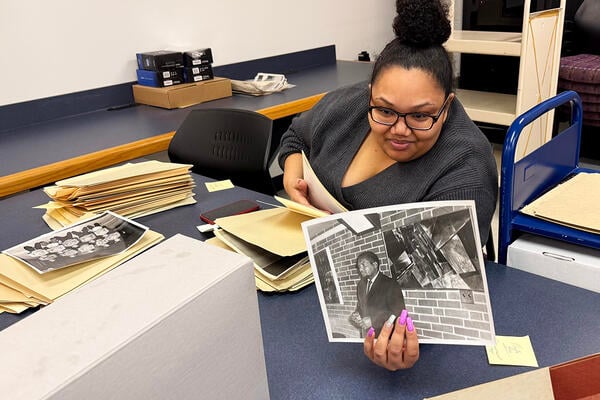
    A group of Claflin University students were perusing old campus photos when one image caught a student’s eye—it was a picture of his grandmother from her college days. He knew they attended the same historically Black university in South Carolina, but he had never seen a picture of her in her younger years.

    For Cassandra Illidge, vice president of global partnerships and executive director of the HBCU Grants Program at Getty Images, such moments both drive and affirm the company’s expanding work with HBCUs to preserve photos, documents and records in partnership with the genealogy website Ancestry.

    Identifying his grandmother gave that student “a deeper connection with that institution, with the history and that legacy,” Illidge said, “and that’s what we’re hoping everyone will enjoy with this relationship and this partnership.”

    Funded by Getty Images’ HBCU Grants Program, which started in 2021 with four institutions, the new partnership aims to digitize HBCU archival materials ranging from photos to student newspapers to course catalogs. Getty and Ancestry are working with 10 HBCUs—and counting—to create searchable digital archives for each institution, accessible to students and staff on Ancestry’s website. HBCUs maintain full copyright ownership of all their materials, and any money made from licensing the photos goes back into the digitization project. Meanwhile, students on each campus, who can receive stipends provided by the restaurant chain Denny’s, help to identify documents and photos to preserve and digitize them using scanners donated by Epson.

    The companies are also preserving current documents and records for students and alumni of the future.

    “You’ll see campus queens from the1950s and campus queens from 2025,” Illidge said, referencing a time-honored HBCU tradition of crowning royal courts.

    The project is an expansion of Getty Images’ ongoing work to preserve HBCU photography through its HBCU Grants Program. Illidge had long wanted to put HBCUs’ archival materials on Getty but found the institutions didn’t necessarily have the resources or technology to digitize their rich photography collections. The grant supported that work, but she soon realized that HBCUs needed resources to immortalize pieces of their histories beyond imagery, and Ancestry seemed like the right partner.

    “There were so many stories that needed to be told,” she said. “There’s so much material that still needs to be uncovered for research purposes, for licensing, for storytelling.”

    ‘History Coming to Life’

    Lincoln University in Pennsylvania, the first degree-granting HBCU in the country, was also the first to participate in the joint project. So far, about 700 of its archival photos have been digitized, with plans to add documents and records, dating back to its charter in 1854.

    Harry Stinson III, interim vice president of institutional advancement at Lincoln and the executive director of the university’s foundation, said prior to 1910, U.S. Census records for African Americans weren’t well-kept, but Lincoln has “impeccable records” of its students dating back to 11 years before Emancipation. So, the university is now digging up documents and information about people’s ancestors they’d be hard-pressed to find elsewhere, and making those materials available to students, employees and Ancestry users outside of campus.

    Lincoln University students and staff edit an edition of the campus newspaper, The Lincolnian, in 1954. 

    Lincoln University/Getty Images

    Stinson hopes people use Lincoln’s digital archive to “find their own story of themselves. That’s what college is for,” he said. The archive can “help you connect the dots of your family and your history, your heritage. We want people to learn more about themselves.”

    Meanwhile, students working on the project get to try their hand at archival work, photography restoration and other skills and learn about potential career paths.

    Already, people are uncovering their families’ stories. When Maryland governor Wes Moore came to campus recently to speak at commencement, for example, he was able to see his grandfather’s writing in Lincoln’s student newspaper, as well as his grades and photos.

    Stinson has also been excited to uncover photos of well-known Lincoln alumni and visitors to campus, including U.S. Supreme Court Justice Thurgood Marshall studying and actor Paul Robeson, whose father and grandfather attended Lincoln, coaching football.

    “It’s just seeing history coming to life,” he said.

    The Political Moment

    The project comes at a time when preserving and sharing Black history, and American history more broadly, has become a contentious political issue.

    President Donald Trump signed an executive order in March, titled “Restoring Truth and Sanity to American History,” which took issue with portrayals of the country as “inherently racist, sexist, oppressive, or otherwise irredeemably flawed.” The order accuses the Smithsonian museums of adopting a “divisive, race-centered ideology” and calls to “remove improper ideology” from these institutions—including the National Museum of African American History and Culture.

    A January executive order aimed at K-12 schools also demanded children be provided a “patriotic education” and included guidelines for the teaching of history. Further, the administration recently fired the librarian of Congress, in part for doing “concerning things” in “pursuit of DEI,” according to White House press secretary Karoline Leavitt.

    Meanwhile, many companies and academic institutions have backed off initiatives or projects focused on Black communities and perspectives amid a broader federal backlash to any initiatives officials perceive as DEI-related.

    Lincoln University Professor Willie Williams teaches students in a classroom.

    Lincoln University professor Willie Williams teaches students, 1970.

    Lincoln University/Getty Images

    Some civil rights groups have adopted a fighting stance against federal attempts to dictate how history is remembered and taught. For example, a coalition of groups, including the African American Policy Forum, the National Urban League and the National Action Network, signed an “affirmation in defense of Black history, texts and art” and held a demonstration earlier this month in support of the National Museum of African American History and Culture.

    “We must protect our history not just in books, schools, libraries, and universities, but also in museums, memorials, and remembrances that are sites of our national memory,” the affirmation reads. “Racial inequality remains real; if we are not able to understand it, tell its history, and honor those who have risked everything to solve it, then we lose our capacity to carry the legacy, brilliance and resilience of these freedom fighters in our lives and to future generations.”

    Stinson said it feels “fulfilling” to collect and digitize Lincoln’s history right now, and it’s “ideal timing.” He believes the documents and photos being preserved through Getty Images and Ancestry are of value to all Americans. He highlighted the fact that Thurgood Marshall and other Lincoln alumni are historical figures not just for Black Americans but for the country at large.

    “We’re not just talking about Black history, we’re talking about American history,” he said. The images and records collected show “what African Americans have been able to achieve when given the space and the opportunity to learn and to thrive.”

    Illidge emphasized that Getty Images is working to “preserve history … Black history, all history.”

    “This amazing material that’s coming from HBCUs is just another line of history that we can share with the world,” she said. “Regardless of administration, or any other changes, we’re not changing our goals and mission.”

    (This story has been updated to correct the sport Robeson coached.)

    Source link

  • NYU Withholds Diploma Due to Pro-Palestinian Grad Speech

    NYU Withholds Diploma Due to Pro-Palestinian Grad Speech

    New York University will withhold the diploma of a student commencement speaker who used his speech Wednesday to condemn what he called “the atrocities currently happening in Palestine.”

    According to a statement released by a university spokesperson after the speech, the student, Logan Rozos, “lied about the speech he was going to deliver and violated the commitment he made to comply with our rules.” The university is pursuing disciplinary actions and will withhold his diploma while that process proceeds.

    “NYU is deeply sorry that the audience was subjected to these remarks and that this moment was stolen by someone who abused a privilege that was conferred upon him,” the statement continued.

    Rozos spoke at the ceremony for the university’s Gallatin School of Individualized Study. He told the crowd he was “freaking out” about delivering the controversial speech, but that he felt a “moral and political” obligation to use the platform to speak out in support of Palestinians. Video of the speech shows graduates in caps and gowns clapping and cheering for Rozos and some giving him a standing ovation, though some boos and jeers can be heard off camera.

    Source link

  • U.S. Universities Eye Branch Campuses as Way to “Survive Trump”

    U.S. Universities Eye Branch Campuses as Way to “Survive Trump”

    Establishing branch campuses abroad—often used as a crisis mitigation strategy—could become more important for U.S. universities facing increasing threats at home, but scholars are divided on their likelihood of success.

    Illinois Institute of Technology has announced that it is to build a campus in Mumbai, while Georgetown University, one of six U.S. universities with satellite campuses in Doha, recently renewed its contract in Qatar’s Education City for another 10 years.

    Research-intensive colleges and universities in the U.S. are faced with “new and profound uncertainties” over future funding and the strength of their endowments under the Trump administration, said Geoff Harkness, formerly postdoctoral teaching fellow at Northwestern and Carnegie Mellon Universities’ Education City campuses.

    “This means that R-1 institutions will have to seek alternative sources of revenue, including partnering with nations in the Middle East. For Georgetown, which has a long-established branch campus at Education City, the renewal was a no-brainer in 2025.”

    It comes just a year after Texas A&M closed its campus in Education City, citing “instability” in the region. However, academics said the decision was more likely a reflection of growing pro-Israel politics in the U.S. and unease with Qatar’s role mediating for Hamas in the Gaza conflict.

    Harkness, now associate professor of sociology at Rhode Island College, said the Israel-Palestine conflict put Qatar in a difficult position but warned that Texas A&M could regret its decision to leave from a fiscal perspective.

    “The nation’s vast resources and relative political moderation make it an appealing partner for U.S. colleges and universities, particularly in light of current economic uncertainties.”

    Although not all partnerships are as lucrative as those with the Qatar Foundation, research by Jana Kleibert, professor for economic geography at the University of Hamburg, found that uncertainty around Brexit triggered U.K. universities to explore opening campuses in continental Europe—as Lancaster University did in Leipzig, Germany.

    “Branch campuses are often used as a crisis mitigation strategy by universities,” she said.

    “In this sense, it is no surprise to me that in situations of financial and geopolitical turbulence, branch campuses become more attractive to decision-makers at universities.”

    University leaders hope that overseas campuses can contribute financially to the well-being of the overall institution, either through direct transfers from these sites to the main institutions or through accessing a broader pool of students, said Kleibert.

    Recent figures show that U.S.-Chinese collaborative campuses have experienced record-breaking application numbers from both domestic and international students over the past few years.

    Illinois Tech began planning its Indian outpost long before President Trump’s unprecedented assault on the U.S. higher education system. But Nigel Healey, professor of international higher education at the University of Limerick, said Trump’s culture wars could increase the “push factors” toward overseas expansion in the future.

    “In the medium to long term, branch campuses may offer elite U.S. institutions an alternative way of maintaining their internationalization, accessing international talent and maintaining a global profile at a time when Trump is fostering a new national culture of xenophobia and isolationism,” he said.

    However, he warned that the risks of being pushed into a strategy by suddenly changing political winds is that poor, reactive decisions might be made.

    “The winds may change in the opposite direction, leaving the institution with a branch campus that is suddenly a white elephant.”

    Philip Altbach, professor emeritus at Boston College, agreed that there are significant risks in establishing branches overseas and that they are not a high priority for elite universities right now.

    “In the current situation of total instability in U.S. higher education due to the Trump administration, U.S. universities will not be thinking much about branch campuses but about their own survival.”

    Although partnering with many countries may be politically safe, he said universities are unlikely to want to risk making “controversial political moves in the current environment.”

    “Top U.S. universities are more interested in establishing research centers and joint programs overseas that can help their research and be a kind of embassy for recruiting students and researchers for the home campuses.”

    And Kevin Kinser, professor of education and head of the department of education policy studies at Pennsylvania State University, said overseas partners are not free from scrutiny from the White House.

    “The turmoil in the U.S. also includes scrutinizing foreign donations, contributions, collaborations and investments. Looking overseas does not create a safe haven for current federal attention.”

    As a result, he said, Texas A&M may have gotten ahead of the narrative on foreign activities by universities by quitting Education City when it did.

    Source link

  • Waivers Let Some N.C. Majors Keep “DEI” Requirements

    Waivers Let Some N.C. Majors Keep “DEI” Requirements

    Shortly after the second Trump administration began attacking higher education diversity initiatives, the University of North Carolina system ordered its 16 public universities to immediately stop requiring “course credits related to diversity, equity and inclusion.” The system was targeting DEI even before Trump retook office—the UNC Board of Governors repealed the system’s DEI policy a year ago—and its general counsel pointed to the federal government’s newly threatened funding cuts to justify this further step.

    But the system’s kibosh on DEI requirements came with caveats. Majors could continue requiring courses with diversity themes if university chancellors provided waivers.The system gave chancellors the final say on which major-specific courses would continue to be mandated, and chancellors said waivers were needed because state or national accreditation and licensure criteria require diversity education.

    “Approximately 95 percent of the programs identified for waivers at the chancellor level had accreditation and licensure requirements attached to them,” said David J. English, the system’s senior vice president for academic affairs, during a UNC board committee meeting this week. English said these programs are in counseling, education, nursing, psychology and social work.

    According to documents attached to this week’s board meeting agenda and previously reported by Raleigh’s News & Observer, dozens of courses will remain necessary for certain majors in the UNC system, which includes all four-year public universities in the state. Among them are Feminist Theory at UNC Asheville; Multicultural Counseling at UNC Charlotte; Social Work Policy and Restorative Justice at UNC Greensboro; Teaching Reading to Culturally Diverse Children at Fayetteville State University; Inclusion, Diversity and Equity in Agriculture at North Carolina A&T State University; and Diversity in Higher Education at North Carolina Central University.

    The UNC system is one example of universities across the country being asked to comply with vague statewide and national demands to excise DEI. Lacking detailed guidance, they’ve had to define that term for themselves as they seek to show compliance.

    The UNC system never defined for its component institutions what it meant by the verboten “course credits related to DEI.” The universities were left to determine for themselves what they should stop requiring; some administrations used keyword searches of course descriptions, looking for terms such as “cultural” to choose which courses to review.

    The Feb. 5 order from the system said universities’ general education requirements couldn’t include mandates for DEI-related courses at all. A few institutions, such as East Carolina University and UNC Asheville, responded by jettisoning broad diversity categories from their gen ed requirements. At UNC Chapel Hill, College of Arts and Sciences dean Jim White wrote that “Power, Difference, and Inequality”—a category within the gen ed curriculum there—“could be incorrectly read or understood to be ‘related’ to DEI,” so it was “streamlined” and is now called “Power and Society.”

    But when it came to specific majors’ mandates for DEI-related credits, the system let chancellors grant what it called “tailored waivers” to allow these requirements to continue.

    Appalachian State University’s acting provost initially asked the national Council on Social Work Education, which accredits social work programs, to waive accreditation standards that are specifically called “Anti-Racism, Diversity, Equity, and Inclusion.” But when the council refused, Appalachian State chancellor Heather Norris gave her university’s social work program a waiver to continue the education requirements.

    Halaevalu Fonongava’inga Ofahengaue Vakalahi, the Council on Social Work Education’s president and chief executive officer, told Inside Higher Ed in an email, “We do not issue waivers except in very limited circumstances as defined by our Educational Policy and Accreditation Standards. Those circumstances are not applicable in this case.

    “What we have done, and are continuing to do, is work with programs and institutions to ensure they are both meeting the appropriate standards for accreditation while also staying within the boundaries dictated by law,” Vakalahi wrote. “Social work is about healthy individuals, healthy families, and healthy communities. We value inclusion because we believe that social work is for everyone—no exceptions.”

    While the waiver documents released this week show course requirements that survived, they don’t specify whether universities dropped major-specific requirements—and if so, which ones—instead of having their chancellors grant waivers. Universities didn’t provide interviews this week to Inside Higher Ed for this article. But the fact that the system ordered statewide changes to curriculum rather than have the faculties of individual universities propose them has raised academic freedom and shared governance concerns.

    ‘Faculty Were Not Pleased’

    Wade Maki, chair of the UNC Faculty Assembly, said the faculty senates or councils of all 16 universities, plus the one specialized high school in the system, ratified a resolution calling the order to end DEI course requirements “an unnecessary and intolerable breach of the principle of academic freedom” that “deeply undermines” the system’s mission “to serve the people of our state.”

    Defending the place of faculty in setting curriculum, the resolution says, “Faculty, who are trained at the highest level of our disciplines, collaborate within our departments, universities and communities to design and lead programs—including defining the core curriculum and graduation requirements—to ensure our students’ growth and success.”

    While “faculty were not pleased” about the order, they stepped up to take part in the course review, Maki said. Because the system “did not prescribe how” to comply, “it was up to faculty and administrators to work together to determine what to do,” he said.

    “Each major had to look and say, ‘Do we think we’re at risk of being out of compliance here, and what’s the best course of action?’” he said.

    Herle McGowan, chair of North Carolina State University’s Faculty Senate, said her university dropped a general ed requirement in response to the system’s order—a requirement that had been created by faculty with student input.

    “The fact that it changed without consultation from faculty is definitely concerning to me,” McGowan said.

    She said she personally believes academic freedom rights should cover “the broader curriculum,” not just individual faculty teaching and research. Within majors, she said experts should agree on what students need to learn, and when it comes to gen ed, there should be “collaboration from faculty experts all across the university” in determining what students need to be good, well-rounded citizens prepared for life and work.

    Regardless of her own views on academic freedom, McGowan said, the fact that the system handed down such an order points to a need for constituents—from faculty to board members—to come to a consensus on what academic freedom means.

    Source link

  • Collaborative IT Services in UK Universities: A Necessary Evolution

    Collaborative IT Services in UK Universities: A Necessary Evolution

    ***Registration is now open for the HEPI Annual Conference on Thursday 12 June, Before, During, After: The route through higher education in changing times, with speakers including Neil O’Brien MP, Jo Saxton, Susan Lapworth and a video address from The Rt Hon Baroness Jacqui Smith. Sign up for your place here.***

    • By Pete Moss, Business Development Director at Ellucian.

    As resourcing pressures grow, the need for efficiencies in the UK higher education sector is well-known. Not only is every university reviewing its costs, systems and processes, but Universities UK too has set up a new Transformation and Efficiency Taskforce under Sir Nigel Carrington to accelerate solutions through collaboration.

    The old adage, ‘don’t reinvent the wheel’ seems apt when thinking about shared services in UK higher education.  In the USA, there is already a range of shared systems in operation in the university sector. While they differ on detail, they share the objective of saving money through strategies like systematisation, which can mean joining forces in a limited way, or full systems’ integration under one oversight. Forbes’ education writer, Derek Newton, explains in a report for education technology giant Ellucian, that ‘the benefits of system coordination or more complete integration are abundant and accessible, which helps explain the national trend in the direction of larger, more cohesive systems in higher education.’

    Newton’s report, based on several weeks of interviews with US university experts and those going through change programmes, explores university systems’ consortia on the East and West coasts and everywhere in between, spanning private, non-profit and public institutions. Collaborations involve any or all of data sharing, regulation and compliance processes, course and resource management, procurement and cybersecurity. Even some competitor institutions have found ways to collaborate. The scale is eye-watering: California’s Community Colleges alone serve 2.1 million students, which is roughly the same size as the UK’s undergraduate population in its entirety.

    Back in the UK, one voice which is critical to any efficiency drive is that of the Academic Registrar (AR).  Most ARs lead teams at the coal face, delivering the best student experience that they can. Their insights are crucial to success both at an institutional and at a national level.

    Ben Rogers, an experienced UK Academic Registrar, reflects below on the concept of collaborative models.

    ‘Higher education in the UK has been undergoing significant transformation. New initiatives, such as Degree Apprenticeships and Micro-credentials, have begun to reshape how institutions deliver education, particularly in terms of the skills and flexibility that they offer to more diverse and dynamic student body students as well as to employers.

    Degree Apprenticeships combine academic study with workplace learning and require universities to collaborate closely with industry partners. Micro-credentials, on the other hand, offer short, targeted learning opportunities to individuals who want to upskill or reskill without committing to a full degree. Both models demand flexibility, responsiveness and innovation in educational delivery, all of which can be supported by a strong, unified IT infrastructure.

    However, the current state of IT services in many UK universities is often bespoke and highly esoteric. Many institutions have their own systems which can lead to inefficiencies and inconsistent user experiences. The lack of standardisation often creates additional administrative burdens and can hinder new initiatives like the deployment of AI within their infrastructure.

    This is where collaborative IT services can play a pivotal role. The concept of collaborative IT services refers to the practice of consolidating technology infrastructure, applications and support across multiple institutions.

    The potential benefits of collaborative IT services for universities are significant. Firstly, collaborative IT services can provide a streamlined, consistent experience for students and staff. A centralised IT platform could allow students enrolled in Degree Apprenticeships to access both their academic materials and workplace-related resources through a single portal. Similarly, Micro-credential learners could benefit from a unified system that offers easy access to course content, assessment tools, and progress tracking, regardless of which institution or provider is delivering the learning.

    Collaborative IT services can also enhance the flexibility and scalability of universities’ offerings. The rapidly changing nature of the job market, particularly in sectors such as technology, healthcare, and engineering, demands that universities are agile and can, for example, rapidly design and adopt new programmes. These systems can also help universities maximise their resources. By pooling their technology investments, universities can take advantage of economies of scale, leading to cost savings that can be reinvested. This is particularly important at a time of tightening budgets and has happened already in other parts of the world such as in the conglomerate universities in North America and Sweden.

    However, the transition to new ways of working is not without its challenges. For many universities, particularly those with long-established IT systems, the process of moving to a shared infrastructure can feel like a monumental undertaking. But the challenges, whether at a technical, policy or behavioural level, can be overcome by a sensible change programme.

    There are several steps that universities can take to ensure a successful transition. The first is to build strong relationships with the educational technology providers (especially providers with expertise in this area) to understand what is possible. The second is to build a strong case for change. Institutions must recognise that, to stay competitive and relevant in the face of new educational initiatives, they must embrace collaboration and innovation. Collaborative IT services offer the opportunity to enhance the student experience, streamline processes, save institutional money, and improve educational delivery. There is a strong rationale here to think about a future roadmap which brings all institutions up to speed over time.

    The adoption of collaborative IT services in UK universities is a critical step towards realising the full potential of new educational initiatives. In the long run, collaborative IT services will not only improve the delivery of education but also contribute to the development of a more agile, adaptable, and future-ready higher education sector in the UK.’

    While the US and UK higher education systems differ as outlined in HEPI’s report on the subject, they can still learn from one another when it comes to collaborative systematisation. Ultimately, they share the need to be efficient, agile, student and researcher-focused and ultimately the best that they can be.

    Lucy Haire, Director of Partnerships at HEPI, also contributed to this piece.

    Source link

  • Canceling AmeriCorps grants threatens the future of education and workforce pipelines that power our nation’s progress

    Canceling AmeriCorps grants threatens the future of education and workforce pipelines that power our nation’s progress

    The recent decision to cancel $400 million in AmeriCorps grants is nothing short of a crisis. With over 1,000 programs affected and 32,000 AmeriCorps and Senior Corps members pulled from their posts, this move will leave communities across the country without critical services.

    The cuts will dismantle disaster recovery efforts, disrupt educational support for vulnerable students and undermine a powerful workforce development strategy that provides AmeriCorps members with in-demand skills across sectors including education.

    AmeriCorps provides a service-to-workforce pipeline that gives young Americans and returning veterans hands-on training in high-demand industries, such as education, public safety, disaster response and health care. Its nominal front-end investment in human capital fosters economic mobility, enabling those who engage in a national service experience to successfully transition to gainful employment.

    As leaders of Teach For America and City Year, two organizations that are part of the AmeriCorps national service network and whose members receive education stipends that go toward certification costs, student loans or future education pursuits, we are alarmed by how this crisis threatens the future of the education and workforce pipelines that power our nation’s progress, and it is deeply personal. We both started our careers as corps members in the programs we now lead.

    Related: A lot goes on in classrooms from kindergarten to high school. Keep up with our free weekly newsletter on K-12 education.

    Aneesh began his journey as a Teach For America corps member teaching high school English in Minnesota. Jim’s path began with City Year, serving at a Head Start program in Boston. We know firsthand that AmeriCorps programs are transformative and empower young people to drive meaningful change — for themselves and their communities.

    At Teach For America, AmeriCorps grants are essential to recruiting thousands of new teachers every year to effectively lead high-need classrooms across the country. These teachers, who have a consistent and significant positive impact on students’ learning, rely on the AmeriCorps education awards they earn through their two years of service to pay for their own education and professional development, including new teacher certification fees, costs that in some communities exceed $20,000.

    Termination of these grants threatens the pipeline of an estimated 2,500 new teachers preparing to enter classrooms over the summer. At a time when rural and urban communities alike are facing critical teacher shortages, cutting AmeriCorps support risks leaving students without the educators they need and deserve.

    City Year, similarly, relies on AmeriCorps to recruit more than 2,200 young adults annually to serve as student success coaches in K-12 schools across 21 states, 29 cities and 60 school districts.

    These AmeriCorps members serving as City Year student success coaches provide tutoring and mentoring that support students’ academic progress and interpersonal skill development and growth; they partner closely with teachers to boost student achievement, improve attendance and help keep kids on track to graduate. Research shows that schools partnering with City Year are two times more likely to improve their scores on English assessments, and two to three times more likely to improve their scores on math assessments.

    Corps members gain critical workforce skills such as leadership, problem-solving and creative thinking, which align directly with the top skills employers seek; the value of their experience has been reaffirmed through third-party research conducted with our alumni. The City Year experience prepares corps members for success in varied careers, with many going into education.

    AmeriCorps-funded programs like Breakthrough Collaborative and Jumpstart further strengthen this national service-to-workforce pathway, expanding the number of trained tutors and teacher trainees while also preparing corps members for careers that make a difference in all of our lives.

    Those programs’ trained educators ensure all students gain access to excellent educational opportunities that put them on the path to learn, lead and thrive in communities across the country. And the leaders of both organizations, like us, are AmeriCorps alumni, proof of the lasting effect of national service.

    Collectively, our four organizations have hundreds of thousands of alumni whose work as AmeriCorps members has impacted millions of children while shaping their own lives’ work, just as it did ours. Our alumni continue to lead classrooms, schools, districts, communities and organizations in neighborhoods across the country.

    Related: Tracking Trump: His actions to dismantle the Education Department, and more

    The termination of AmeriCorps grants is a direct blow to educators, schools and students. And, at a time when Gen Z is seeking work that aligns with their values and desire for impact, AmeriCorps is an essential on-ramp to public service and civic leadership that benefits not just individuals but entire communities and our country at large.

    For every dollar invested in AmeriCorps, $17 in economic value is generated, proving that national service is not only efficient but also a powerhouse for economic growth. Rather than draining resources, AmeriCorps drives real, measurable results that benefit individual communities and the national economy.

    Moreover, two-thirds of AmeriCorps funding is distributed by governor-appointed state service commissions to community- and faith-based organizations that leverage that funding to meet local needs. By working directly with state and local partners, AmeriCorps provides a more effective solution than top-down government intervention.

    On behalf of the more than 6,500 current AmeriCorps members serving with Teach For America and City Year, and the tens of thousands of alumni who have gone on to become educators, civic leaders and changemakers, we call on Congress to protect AmeriCorps and vital national service opportunities.

    Investing in AmeriCorps is an investment in America’s future, empowering communities, strengthening families and revitalizing economies. Let’s preserve the fabric of our national service infrastructure and ensure that the next generation of leaders, educators and community advocates who want to serve our nation have the ability to do so.

    Aneesh Sohoni is Teach For America’s new CEO. Previously, he was CEO of One Million Degrees and executive director of Teach For America Greater Chicago-Northwest Indiana. He is a proud alum of Teach For America.

    Jim Balfanz, a recognized leader and innovator in the field of education and national service, is CEO and a proud alum of City Year.

    Contact the opinion editor at [email protected].

    This story about AmeriCorps, Teach For America and City Year was produced by The Hechinger Report, a nonprofit, independent news organization focused on inequality and innovation in education. Sign up for Hechinger’s weekly newsletter.

    The Hechinger Report provides in-depth, fact-based, unbiased reporting on education that is free to all readers. But that doesn’t mean it’s free to produce. Our work keeps educators and the public informed about pressing issues at schools and on campuses throughout the country. We tell the whole story, even when the details are inconvenient. Help us keep doing that.

    Join us today.

    Source link

  • What Your Students Aren’t Telling You: Listening, Learning, and Leading with Empathy – Faculty Focus

    What Your Students Aren’t Telling You: Listening, Learning, and Leading with Empathy – Faculty Focus

    Source link

  • What Your Students Aren’t Telling You: Listening, Learning, and Leading with Empathy – Faculty Focus

    What Your Students Aren’t Telling You: Listening, Learning, and Leading with Empathy – Faculty Focus

    Source link